Choosing between glass and stainless steel kettles affects more than kitchen aesthetics; it impacts water purity, health safety, and long-term durability.
Both materials dominate the non-toxic kettle market, but they perform differently in critical areas like chemical inertness, taste preservation, and structural resilience.
Glass kettles offer complete visibility and guaranteed non-reactivity, while stainless steel provides superior durability and heat retention.
Understanding the behaviour behind each material helps identify which suits your priorities better.
This comprehensive comparison examines health implications, performance differences, maintenance requirements, and practical considerations.
Whether you prioritize absolute chemical safety or need a kettle that withstands daily family use, the right choice depends on your specific needs and usage patterns.
Why Kettle Material Matters for Health
Kettle material directly influences water safety since boiling amplifies chemical interactions between containers and contents, making material selection crucial for health.
Daily exposure to boiling water
Most households boil water multiple times daily for tea, coffee, cooking, and infant formula.
This frequent exposure means any contaminants leaching from kettle materials accumulate over time.
Unlike occasional cookware use, kettles contact water at maximum temperatures repeatedly throughout their lifespan.
The cumulative effect of daily exposure makes the kettle material safety more critical than most kitchen equipment.
Even trace amounts of metals or chemicals migrating into water add up significantly when consumed several times daily for years.
Heat increases chemical migration
Boiling temperatures accelerate chemical leaching from materials into water.
At 212°F, molecular activity increases dramatically, causing materials to release compounds more readily than at room temperature.
Lower-quality metals, plastic components, and reactive coatings become particularly problematic when heated.
How safe glass handles heat demonstrates why thermal stability matters for safety. The higher the temperature and the longer the contact time, the more substances potentially migrate into water.
This makes material selection especially important for kettles compared to cold-water containers.
Why “non-toxic” matters for kettles
Non-toxic materials remain chemically stable under heat stress, releasing no harmful substances into water.
Toxic metals like lead, cadmium, and nickel can leach from poor-quality kettles, creating health risks ranging from developmental issues to organ damage.
Plastics release hormone-disrupting compounds when heated. Even food-grade materials vary in safety—some stainless steel alloys contain higher nickel content that migrates more readily.
Truly non-toxic kettles use inert materials that maintain chemical stability regardless of temperature or frequency of use.
Glass vs Stainless Steel Kettle — Quick Comparison Table
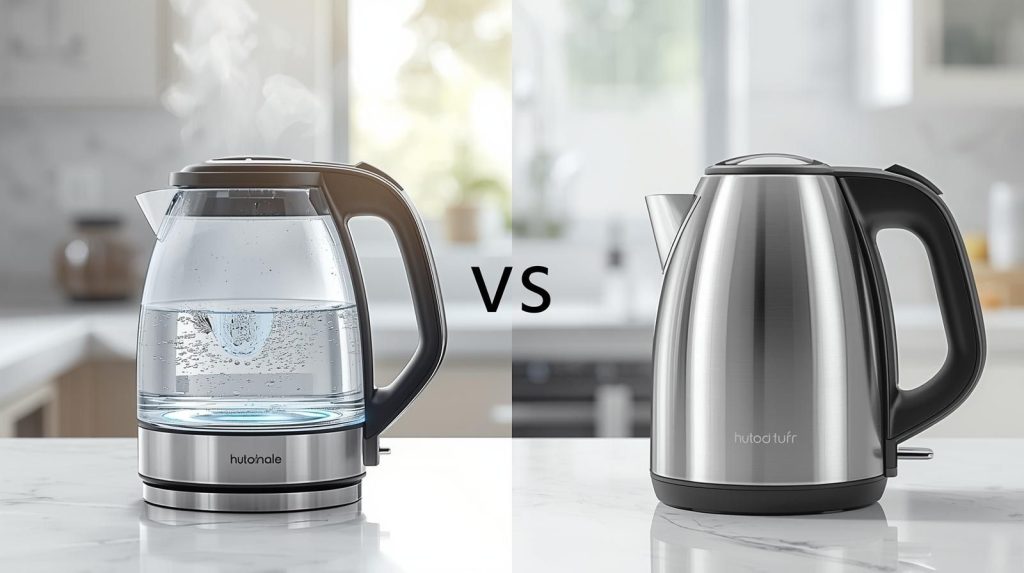
| Feature | Glass Kettle | Stainless Steel Kettle |
|---|---|---|
| Safety | 100% inert, zero leaching | Safe if food-grade (304/316), quality-dependent |
| Taste | Absolutely neutral | Neutral if high-grade, possible metallic notes in low-quality |
| Durability | Fragile, breaks from impacts or thermal shock | Highly durable, withstands drops and temperature extremes |
| Maintenance | Easy cleaning, visible scale buildup | Requires inspection, scale hidden |
| Visibility | Complete transparency shows water and cleanliness | Opaque, cannot monitor without opening |
| Cost | Depends on brand | Depends on the brand |
| Lifespan | 1-5 years average (breakage-dependent) | 10-20+ years with proper care |
| Heat Retention | Poor, cools quickly | Excellent, stays hot 15-30+ minutes |
| Weight | Light to moderate | Moderate to heavy |
| Aesthetic | Modern, transparent, LED options | Classic, professional, timeless |
Glass Kettles
Glass kettles utilise transparent, heat-resistant materials that provide visual appeal and chemical safety through complete inertness to water and heat.
Made from borosilicate or tempered glass
Quality glass kettles use borosilicate glass containing silica and boron trioxide, creating exceptional thermal shock resistance.
This composition allows rapid heating without cracking. The difference between borosilicate glass and ordinary glass explains why specialised glass handles kettle demands better.
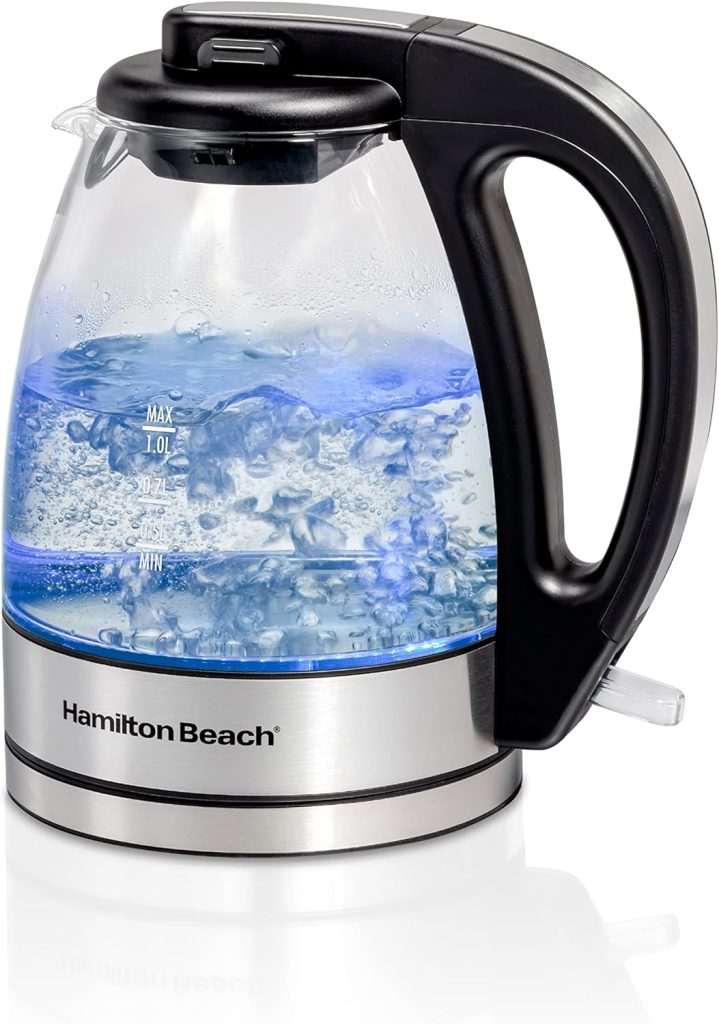
Some manufacturers use tempered soda-lime glass strengthened through controlled heating and cooling, though this offers less thermal stability.
Borosilicate remains the premium choice, withstanding temperature differentials of 330°F or more.
Always verify glass type when purchasing, since lower-quality options use standard glass prone to thermal failure.
Inert and non-reactive
Glass represents the most chemically inert material available for kettles. It releases absolutely no substances into boiling water regardless of temperature or duration.
Unlike metals that may leach trace elements or plastics that release compounds when heated, glass maintains complete stability.
This inertness ensures water purity remains unchanged from fill to pour. No metallic taste, no chemical migration, no interaction with minerals in water.
Glass’s molecular structure prevents any bonding with water molecules or dissolved substances, guaranteeing the cleanest possible boiling experience.
Full visibility of water & scale
Transparent construction allows visual monitoring of water levels, boiling progress, and mineral buildup.
You immediately notice scale accumulation on heating elements and glass walls, prompting timely cleaning that maintains efficiency.
Visibility reveals water clarity and any particles or contaminants that might be present.
Watching water boil provides satisfaction and confirms operation without opening lids.
The aesthetic appeal of illuminated boiling water, especially in LED-equipped models, adds kitchen visual interest while serving practical monitoring purposes.
Common designs (glass body + metal base)
Most electric glass kettles combine glass bodies with stainless steel or plastic bases, housing heating elements and electrical components.
The glass typically extends to a metal collar at the bottom, securing the heating assembly. Lids usually incorporate stainless steel or plastic elements for handles and locking mechanisms.
This hybrid construction balances glass’s health benefits with metal’s durability at stress points.
Check all components since plastic parts in lids, spouts, or handles may contact hot water or steam, potentially compromising the non-toxic advantage.
Stainless Steel Kettles
Stainless steel kettles dominate the market through durability and heat performance, though material quality significantly impacts safety and functionality.
Typically 18/8 or 18/10 stainless steel
Quality stainless steel kettles use 18/8 (18% chromium, 8% nickel) or 18/10 (18% chromium, 10% nickel) alloys designated as food-grade 304 stainless steel.
These compositions resist corrosion while maintaining structural integrity under repeated heating cycles. Comparing stainless steel and borosilicate glass reveals distinct material properties.
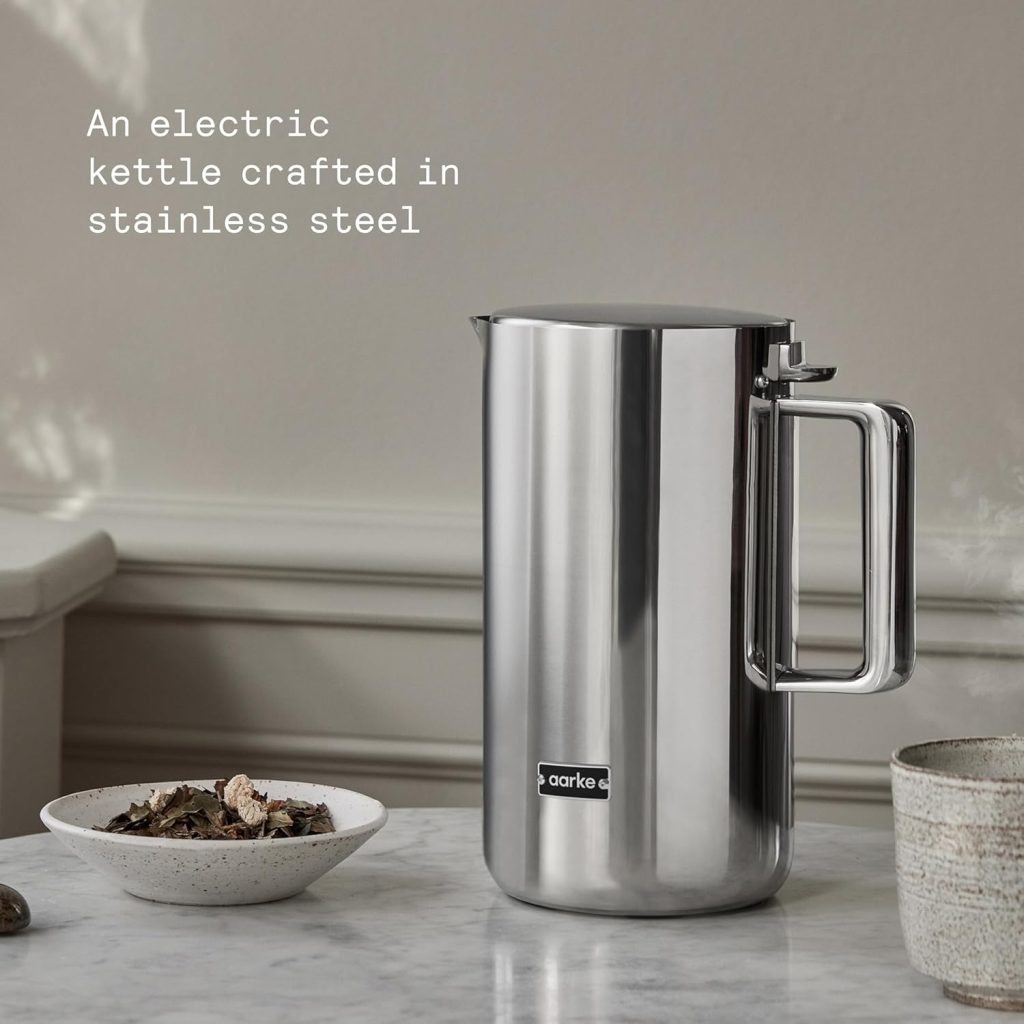
The chromium creates a passive oxide layer, preventing rust and pitting. Nickel enhances corrosion resistance and adds durability.
Lower-grade alloys like 201 stainless contain manganese instead of nickel, reducing quality and potentially increasing leaching risks.
Always verify grade specifications before purchasing.
Durable and impact-resistant
Stainless steel withstands drops, impacts, and rough handling that would shatter glass instantly.
The material dents rather than breaks, usually remaining functional even after accidents. This resilience makes steel ideal for busy households with children or clumsy users.
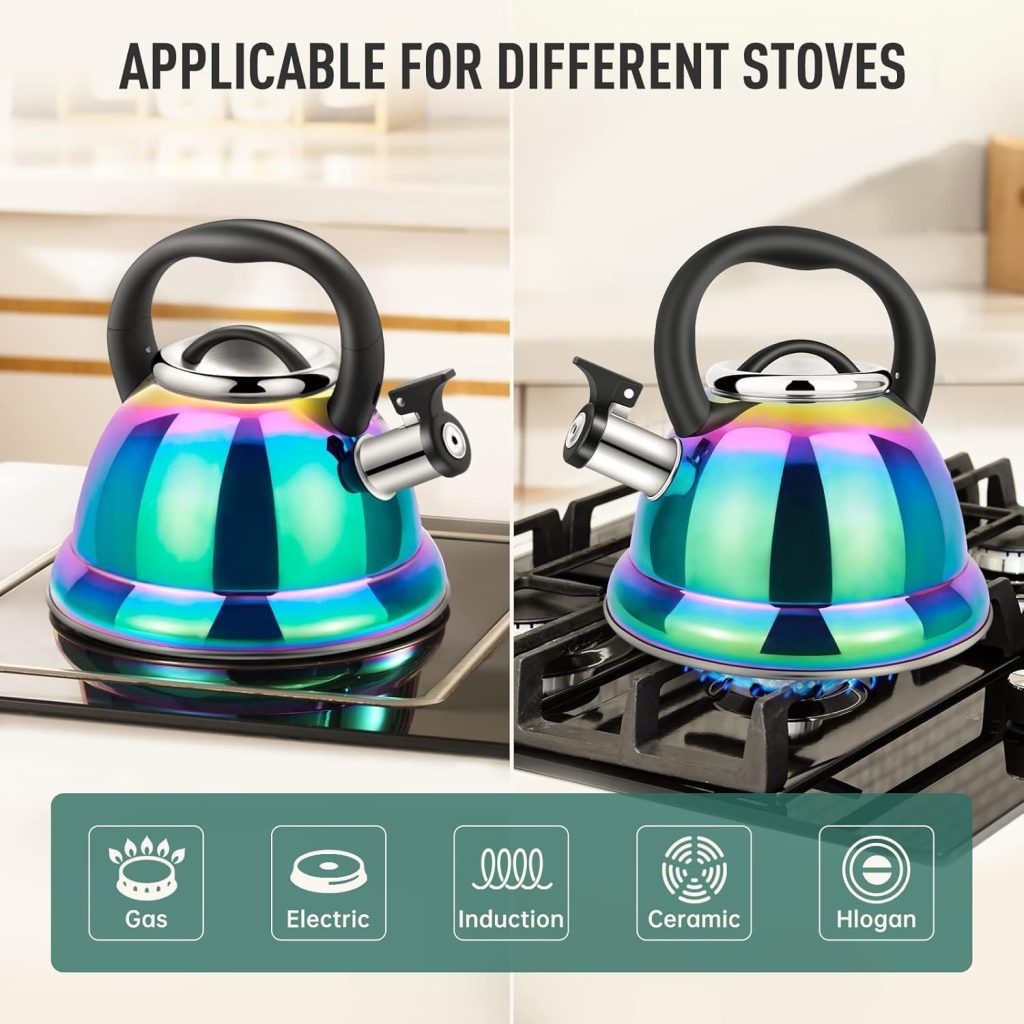
Travel kettles and camping models almost universally use stainless steel due to superior durability under challenging conditions.
The material tolerates temperature extremes without structural compromise.
Stainless steel kettles frequently last decades with proper care, outliving multiple glass replacements in active kitchens.
Often opaque interior
Solid stainless construction prevents seeing water levels, boiling action, or scale accumulation without opening lids.
This opacity reduces monitoring convenience compared to glass. You cannot visually confirm water quantity before boiling or assess cleanliness easily.
Some manufacturers add water level indicators, but these plastic windows introduce potential contamination points.
The hidden interior also conceals manufacturing defects, poor welds, or developing corrosion that glass makes immediately obvious.
Regular inspection becomes more critical with opaque kettles.
Importance of uncoated interiors
Bare stainless steel interiors ensure safety, while coatings may chip, degrade, or leach chemicals when heated.
Some manufacturers apply non-stick coatings to ease cleaning, but these introduce unnecessary chemical exposure risks.
High-quality kettles use brushed or polished stainless interiors without any surface treatments.
Painted or powder-coated exteriors are acceptable since they don’t contact water, but interior coatings compromise the safety advantages of stainless steel.
Verify that kettles specify uncoated, food-grade stainless interiors before purchasing.
Safety Comparison — Glass vs Stainless Steel
Material safety differences significantly impact health outcomes, with both options offering advantages depending on quality and construction standards.
Chemical Leaching
Glass provides absolute protection against chemical leaching—its inert nature guarantees zero substance migration into water regardless of temperature or duration.
No compounds exist in the glass structure that can transfer to water. Stainless steel safety depends entirely on the grade quality.
Food-grade 304 or 316 stainless steel releases negligible amounts of chromium and nickel within safe regulatory limits.
However, low-quality alloys, especially those from unverified manufacturers, may leach excessive nickel, manganese, or other metals.
Cheap stainless kettles sometimes use 201-grade steel with questionable safety profiles.
Plastic Exposure
Glass kettles often incorporate plastic components in lids, handles, spout filters, or base connections.
These parts may contact boiling water or steam, potentially releasing BPA, phthalates, or other compounds despite glass body purity.
Check whether plastics are rated for high-temperature exposure and certified BPA-free.
Stainless steel kettles similarly may hide plastic internal components invisible through opaque walls—water level indicators, filters, or gaskets that degrade with heat exposure.
Neither material guarantees complete plastic avoidance without careful component verification.
Heat Stability
Glass handles normal boiling temperatures excellently but remains vulnerable to thermal shock from rapid temperature changes or uneven heating.
Placing cold water in a just-boiled kettle or heating an empty kettle risks cracking. Quality borosilicate resists these stresses better than tempered glass.
Stainless steel tolerates all temperature variations effortlessly; it won’t crack from thermal shock, handles empty heating briefly without damage, and transitions between hot and cold water without concern.
This stability reduces user error risks and extends the kettle’s lifespan under less careful handling.
Taste & Water Purity Comparison
Material interactions with water affect flavor quality and purity, with noticeable differences between glass and stainless steel kettles.
Glass preserves a neutral taste
Glass maintains an absolutely neutral water taste since its inert nature prevents any flavor transfer.
Water boiled in glass kettles tastes identical to the source water with no metallic, plastic, or mineral notes added.
This purity makes glass ideal for tea enthusiasts and coffee connoisseurs who detect subtle flavor alterations.
The absence of any material interaction ensures that water chemistry remains unchanged, preserving mineral balance and pH levels exactly as they were before boiling.
Stainless steel can impart a metallic taste (low-quality steel)
High-grade 304 stainless steel typically produces no detectable taste in water.
However, lower-quality alloys, particularly those with higher manganese or iron content, can impart slight metallic flavors.
New stainless steel kettles sometimes transfer a metallic taste during initial uses that diminishes after several boiling cycles.
Individuals with sensitive palates may detect subtle differences even with quality steel. The effect varies between brands and manufacturing standards.
If metallic taste persists beyond break-in periods, it indicates inferior steel quality.
Scale the visibility advantage of glass
Transparent glass reveals mineral scale buildup immediately, showing white or brown deposits forming on heating elements and walls.
This visibility prompts timely descaling that maintains heating efficiency and prevents scale from entering the water.
You can assess cleanliness at a glance and clean precisely when needed rather than guessing.
Stainless steel hides scale accumulation inside opaque bodies until deposits become severe enough to affect performance or require opening to inspect.
Regular cleaning schedules become essential with steel since visual monitoring isn’t possible.
Durability & Longevity
Long-term performance and resistance to damage differ significantly between materials, affecting replacement frequency and overall value.
Glass kettles — risk of cracking or shattering
Glass kettles face inevitable breakage risks despite quality construction.
Thermal shock from temperature extremes, impacts from drops or collisions, and manufacturing defects all cause cracking or complete shattering.
Even careful users experience occasional accidents—knocking kettles against faucets when filling, placing hot kettles on cold surfaces, or sudden temperature changes.
Once cracked, glass kettles become unusable and require complete replacement.
Families with children or clumsy household members may replace glass kettles every 1-3 years, versus decades for steel options.
Stainless steel — denting, corrosion resistance
Stainless steel withstands physical abuse remarkably well. Drops cause dents that rarely affect functionality. Scratches remain cosmetic issues without compromising performance.
Quality food-grade stainless steel resists corrosion even with constant water exposure and high-mineral water.
However, prolonged exposure to chlorinated or highly mineralized water may cause pitting in lower-grade alloys.
Proper care, including regular descaling and drying, prevents most corrosion issues.
Well-maintained stainless steel kettles routinely last 10-20 years, making them excellent long-term investments despite higher initial costs.
Which lasts longer in daily use
Stainless steel clearly outlasts glass in typical household conditions.
The superior impact resistance, thermal shock immunity, and corrosion resistance translate to significantly longer lifespans.
Glass kettles eventually break in most households, regardless of care level. However, glass may outlast steel in careful, single-user environments where breakage risks remain minimal.
For families, frequent travelers, or users prone to accidents, stainless steel provides better longevity.
The durability difference becomes more pronounced with harder water, which accelerates scale buildup, requiring frequent aggressive cleaning.
Heating Performance & Energy Efficiency
Thermal characteristics affect how quickly water boils, energy consumption levels, and heat retention after boiling completes.
Heating speed comparison
Stainless steel heats slightly faster than glass due to superior thermal conductivity.
Metal transfers heat from heating elements to water more efficiently than glass, reducing boiling time by 10-20 seconds typically.
This difference matters little for single uses but accumulates over thousands of boiling cycles.
Glass requires marginally more energy to reach boiling temperatures. However, modern heating element technology minimizes these differences.
Both materials boil standard volumes in 3-5 minutes. Design factors like element wattage, kettle shape, and water volume affect speed more than material choice.
Heat retention after boiling
Stainless steel retains heat significantly longer than glass after boiling stops. The metal’s thermal mass and poor heat radiation keep water hotter for 15-30 minutes.
Glass loses heat more rapidly through radiation and convection, cooling noticeably faster.
If you need water to stay hot after boiling for sequential tea cups or delayed use, stainless steel performs better.
Glass works fine for immediate use, but requires reheating sooner. Insulated double-wall stainless steel kettles retain heat even longer, maintaining temperatures for hours.
Stovetop vs electric versions
Stovetop kettles use both materials, though stainless steel dominates due to superior thermal shock resistance and durability.
Glass stovetop kettles require gentle heating to prevent thermal stress. Electric kettles more commonly use glass since controlled heating elements reduce thermal shock risks.
Stainless steel electric kettles offer faster heating through better thermal conductivity.
Induction-compatible stovetop kettles require magnetic stainless steel bases, sometimes combined with glass bodies.
Choose based on your heat source—gas stovetops favor steel durability, while electric heating accommodates glass better.
Cleaning & Maintenance
Maintenance requirements differ between materials, affecting long-term usability and hygiene in daily operation.
Descaling glass kettles (easy visibility)
Glass transparency makes descaling straightforward. You see exactly where scale accumulates and can verify complete removal.
White vinegar or citric acid solutions work excellently—fill the kettle, boil, let sit for 30 minutes, then rinse thoroughly.
Visibility lets you assess whether one treatment suffices or requires repetition. Scrubbing glass interiors with soft cloths removes stubborn deposits without scratching.
The transparency also confirms complete rinsing, ensuring no cleaning solution residue remains. Regular descaling maintains heating efficiency and prevents scale from affecting the water taste.
Stainless steel interior cleaning
Opaque stainless steel requires feeling by hand or using a flashlight to inspect cleanliness.
Descaling follows similar protocols—vinegar or citric acid solutions dissolve mineral buildup.
However, you cannot easily verify complete removal without thorough inspection. Stainless steel scratches more easily than glass when scrubbing, potentially creating surface texture that harbors bacteria.
Polished interiors stay cleaner than brushed finishes. Some users report difficulty removing all scale from stainless crevices around heating elements.
Regular maintenance prevents excessive buildup that becomes difficult to remove.
Mineral buildup management
Hard water accelerates scale accumulation in both materials. Glass shows buildup immediately, prompting regular cleaning.
Stainless steel may develop substantial deposits before users notice performance degradation. Preventive descaling every 2-4 weeks maintains optimal function regardless of material.
Using filtered water reduces buildup significantly. Consider water hardness when selecting kettles—if your water is very hard, glass visibility advantages may outweigh other factors.
Soft water areas experience minimal scaling issues with either material.
Which Kettle Is Better for Different Use Cases?
Optimal choice varies based on individual priorities, household composition, and specific usage patterns, requiring tailored recommendations.
For health-conscious users
Glass kettles provide maximum assurance of zero chemical exposure through complete material inertness.
Health-focused consumers prioritizing absolute water purity should choose borosilicate glass kettles with minimal plastic components.
Verify that lids, spouts, and handles use stainless steel or silicone rather than questionable plastics.
If choosing stainless steel instead, insist on certified 304 or 316 grade with uncoated interiors.
Check for third-party testing certifications confirming no lead, cadmium, or excessive nickel leaching.
Glass eliminates uncertainty about metal migration entirely.
For families with kids
Stainless steel suits families better through superior durability and safety features.
Children’s accidents inevitably occur—dropped kettles, rough handling, thermal shock from improper use.
Steel withstands these challenges while glass shatters, creating hazards and requiring frequent replacement.
Steel kettles with stay-cool handles and automatic shut-off features enhance safety further.
The long-term cost savings from reduced replacement frequency justify higher initial prices.
Choose kettles with stable bases less prone to tipping when bumped by active children.
For durability & travel
Stainless steel clearly wins for travel, camping, or demanding environments.
The material’s impact resistance and thermal shock immunity handle rough transport and varied conditions reliably.
Portable stainless kettles fit in luggage without breakage concerns. Stovetop stainless kettles work over campfires or portable burners where glass would fail.
For users requiring maximum longevity or operating in challenging conditions, steel’s durability advantages outweigh glass’s purity benefits.
Choose compact, dent-resistant designs specifically marketed for travel use.
For aesthetic kitchens
Glass kettles with LED illumination create stunning visual centerpieces in modern kitchens. The transparent boiling water display adds ambiance and contemporary style.
Glass suits minimalist and high-tech design aesthetics better than traditional steel.
However, premium brushed or polished stainless steel offers timeless elegance, matching professional kitchen aesthetics.
Glass kettles require visible placement to showcase their design, while steel works well in any location.
Consider your kitchen style: glass for modern/contemporary themes, quality steel for traditional or professional looks.
FAQs — Glass vs Stainless Steel Kettles
Is a glass kettle safer than stainless steel?
Glass kettles are inherently safer regarding chemical exposure since glass never leaches substances into water.
However, quality stainless steel (304/316 grade) is also very safe with negligible metal migration within regulatory limits.
Glass eliminates any uncertainty about leaching. Safety concerns arise only with low-quality stainless alloys from unknown manufacturers.
Both materials are safe when purchased from reputable brands meeting food-safety certifications.
Can glass kettles crack from heat?
Yes, glass kettles can crack from thermal shock despite being heat-resistant.
Rapid temperature changes, like adding cold water immediately after boiling or placing hot kettles on cold surfaces, cause cracking.
Empty heating or manufacturing defects also lead to failure. Borosilicate glass resists thermal shock better than tempered glass.
Following proper usage guidelines, gradual temperature changes, and adequate water levels prevent most cracking incidents in quality kettles.
Is a stainless steel kettle non-toxic?
Food-grade stainless steel (304 or 316) is non-toxic and safe for boiling water.
These alloys release only trace amounts of chromium and nickel well below safety thresholds established by health authorities.
However, lower-grade stainless (201) or uncertified alloys may leach concerning metal levels.
Always verify steel grade and look for food-safety certifications. Uncoated interiors are essential—avoid kettles with interior coatings or paints.
Which kettle keeps water hot longer?
Stainless steel kettles retain heat significantly longer than glass kettles. Metal’s thermal mass and reduced radiation keep water hot for 15-30 minutes after boiling.
Glass loses heat rapidly through its transparent walls. Double-wall insulated stainless kettles maintain temperature for hours.
If you need water to stay hot for extended periods or multiple sequential uses, stainless steel clearly outperforms glass in heat retention capability.
Final Verdict — Glass or Stainless Steel?
Choose glass kettles if chemical purity and taste neutrality are your absolute priorities.
The guaranteed zero-leaching property and transparent monitoring make glass ideal for health-conscious individuals, tea enthusiasts, and those with sensitivities to metallic tastes.
Accept that glass requires careful handling and more frequent replacement. Select stainless steel kettles when durability, longevity, and heat retention matter most.
Families with children, frequent travelers, and budget-conscious users prioritizing long-term value benefit from steel’s resilience.
Ensure you purchase certified 304 or 316 grade stainless steel with uncoated interiors from reputable manufacturers.
Both materials serve safely when properly manufactured; the decision ultimately depends on whether you value glass’s absolute purity or steel’s practical durability more.
For maximum safety regardless of choice, verify all components, including lids and handles, and avoid questionable plastics.
Many health-focused users maintain both types, using glass for drinking water and beverages while reserving durable steel for cooking applications and high-traffic situations.