If you’re shopping for dinnerware or questioning the safety of your current plates, you’ve likely wondered: Are Corelle dishes BPA-free?
With growing awareness about harmful chemicals in household items, this question matters more than ever.
BPA, or Bisphenol-A, has been linked to health concerns ranging from hormonal disruption to developmental issues, making it a chemical many families want to avoid.
As consumers become increasingly conscious about what touches their food, understanding the materials in your dinnerware isn’t just smart, it’s essential for protecting your family’s health.
Corelle has been a trusted name in kitchens for decades, but with modern safety standards evolving, it’s worth examining whether these popular dishes meet today’s expectations for chemical-free living.
In this comprehensive safety guide, we’ll explore Corelle’s material composition, what makes it different from plastic alternatives, and how it compares to other dinnerware options on the market.
Whether you’re concerned about vintage pieces or modern designs, you’ll find clear, science-backed answers to all your safety questions here.
- Are Corelle Dishes BPA-Free?
- Understanding the Material Corelle Uses (Vitrelle Glass)
- Does Corelle Use Any Components That Could Contain BPA?
- Safety Certifications & Testing for Corelle Products
- Are Older (Vintage) Corelle Dishes BPA-Free?
- BPA-Free vs. Chemical Safety: What Consumers Really Want to Know
- FAQs About Corelle Safety & BPA
- Final Verdict: Corelle Is BPA-Free & Safe for Daily Use
Are Corelle Dishes BPA-Free?
Corelle dishes are 100% BPA-free because they’re made from Vitrelle glass, not plastic.
BPA is a chemical compound found exclusively in certain plastics and resins, which means glass-based products, such as Corelle, are inherently safe from this particular concern.
This makes Corelle a trusted choice for health-conscious consumers seeking BPA-free dinnerware brands.
Why Corelle Contains No BPA
Corelle’s manufacturing process uses a unique triple-layer tempered glass technology called Vitrelle.
This material is composed of three thermally bonded glass layers that undergo high-temperature treatment.
Since glass manufacturing doesn’t involve synthetic polymers that use BPA as a hardening agent, there’s zero possibility of BPA contamination.
The material safety of Corelle stems from its fundamental composition, pure glass with no plastic components whatsoever.
What BPA Is and Why Consumers Are Concerned
BPA, or Bisphenol-A, is an industrial chemical used to manufacture certain plastics and epoxy resins since the 1960s.
It’s commonly found in polycarbonate plastics used for food containers, water bottles, and some food can linings.
Scientific research has raised concerns about BPA’s ability to mimic estrogen in the body, potentially affecting hormone levels, brain development, and cardiovascular health.
These health risks have led to increased consumer demand for BPA-free materials in food-contact products.
The FDA has acknowledged these concerns and banned BPA from baby bottles and sippy cups, though it remains present in many plastic products today.
Summary of Corelle’s Safety Claims
Corelle confidently markets its products as safe for everyday use, emphasizing that Vitrelle glass contains no BPA or other plastic-derived chemicals.
The brand’s safety claims are backed by the material’s inherent properties and compliance with food-contact regulations.
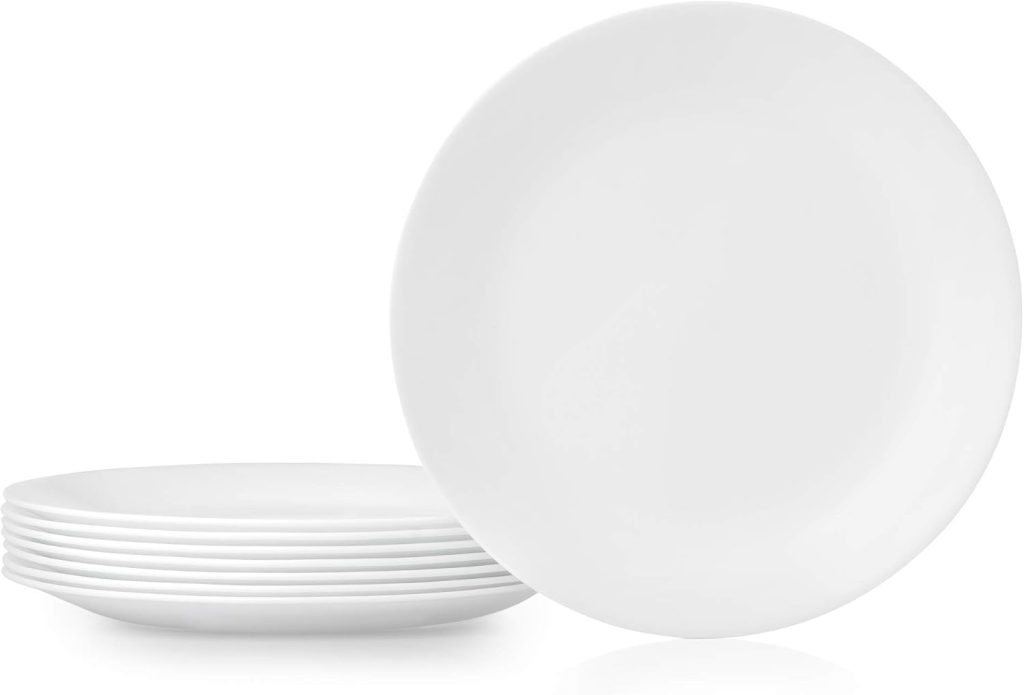
Corelle dishes meet FDA standards for dinnerware safety and have been tested for chemical leaching.
The company’s transparency about its glass composition gives consumers peace of mind that they’re choosing one of the safest options available for serving and storing food.
Understanding the Material Corelle Uses (Vitrelle Glass)
Corelle’s reputation for safety and durability comes from its proprietary Vitrelle glass material.
Understanding this unique composition helps explain why questions about BPA and Corelle material safety are easily answered with a definitive “no risk.”
What Is Vitrelle Triple-Layer Glass?
Vitrelle is a laminated glass product consisting of three layers of glass thermally bonded together.
The composition includes two outer layers of clear glass with a core layer of opaque white glass in between.
This sandwich structure undergoes intense heat treatment at temperatures exceeding 1,000 degrees Fahrenheit, creating molecular bonds that give Corelle its signature strength and chip-resistance.
Because the entire manufacturing process involves only glass materials, silica, soda ash, and limestone, there’s no opportunity for plastic additives like BPA to enter the equation.
This glass-only composition is why Corelle is naturally BPA-free.
Difference Between Glass-Based Dinnerware and Plastic Materials
The fundamental difference between glass and plastic dinnerware lies in their chemical structures.
Glass is an inorganic material made from melted sand and minerals, forming a non-porous, stable surface.
Plastic dinnerware, conversely, is manufactured from petroleum-based polymers that often require chemical additives like BPA to achieve desired properties such as flexibility or clarity.
While plastic can leach chemicals into food, especially when heated, glass remains inert and doesn’t interact with food or beverages.
This contextual comparison clarifies why BPA concerns apply to plastic products but not to Vitrelle glass. Is Corelle safe? Yes, precisely because it’s glass, not plastic.
Why Glass Products Are Naturally BPA-Free
From a material science perspective, glass products are inherently BPA-free because BPA serves no purpose in glass production.
BPA functions as a plasticizer and hardener in polycarbonate plastics and epoxy resins—materials that share no chemical relationship with glass.

Glass achieves its strength through thermal tempering and molecular structure, not chemical additives.
This means any product made from pure glass, including Corelle’s Vitrelle, cannot contain BPA by its very nature.
When consumers ask, “Is Vitrelle glass BPA-free?” the answer is an unqualified yes, rooted in fundamental chemistry rather than just manufacturing choices.
Does Corelle Use Any Components That Could Contain BPA?
Even though Corelle plates are made from glass, it’s reasonable to wonder if other components—coatings, decorations, or specific product types might introduce BPA into the equation.
Do Corelle Plates Have a Coating or Liner?
Corelle plates do not have any plastic-based coatings or liners. The surface you eat from is pure Vitrelle glass with decorative patterns applied using ceramic pigments.
These designs are then sealed under a layer of glass during the manufacturing process, ensuring they’re protected from scratching and wear.
Unlike some plastic dinnerware that uses surface coatings for appearance or protection, Corelle’s smooth finish is simply the natural result of polished glass.
This means there’s no hidden layer where BPA or similar chemicals could be present.
Are Corelle Mugs or Bowls Ever Made With Plastic?
Standard Corelle bowls and the majority of Corelle products are made entirely from Vitrelle glass.
However, some Corelle-branded mugs or travel containers may incorporate plastic lids or components for functionality.
When plastic parts are used, they’re typically in non-food-contact areas like outer sleeves or lid exteriors.
Corelle has transitioned to BPA-free plastics in these components as well, but the core dish, bowl, or mug body remains glass.
What About Printed Designs? Could They Contain BPA?
Corelle’s printed designs are created using ceramic pigments and metal oxides, not plastic-based inks.
These decorative patterns are applied to the glass surface and then sealed under an additional layer of glass through a high-temperature fusing process.
Because no plastic layer is involved in the decoration, there’s no pathway for BPA to be present.
The concern about chemicals in decorated dinnerware typically relates to heavy metals like lead or cadmium in older pigments, not BPA.
Modern Corelle designs comply with current safety standards, ensuring that decorative elements don’t compromise the product’s BPA-free status.
Safety Certifications & Testing for Corelle Products
Beyond material composition, regulatory compliance and testing provide additional assurance about Corelle’s safety profile.
FDA Regulations on BPA in Food-Contact Materials
The FDA regulates food-contact materials under the Federal Food, Drug, and Cosmetic Act, establishing safety standards for substances that touch food.
While the FDA banned BPA from baby bottles and sippy cups in 2012 due to safety concerns, BPA remains legal in other food-contact applications, though manufacturers must demonstrate safe use levels.
Food-contact regulations require that materials don’t transfer harmful substances to food in amounts that could pose health risks.
Glass products like Corelle automatically comply with these standards because glass is recognized as an inert material that doesn’t leach chemicals under normal use conditions.
Corelle’s Compliance with U.S. & International Safety Standards
Corelle products meet FDA requirements for food-contact safety and comply with international standards, including California’s Proposition 65, which has strict limits on chemicals known to cause cancer or reproductive harm.
The brand’s dinnerware safety record spans decades of consumer use without BPA-related concerns.
Corelle also adheres to standards set by organizations like NSF International, which tests products for public health protection.
This multi-layered compliance demonstrates that Corelle material safety extends beyond just being BPA-free to encompass a comprehensive approach to consumer protection across various regulatory frameworks.
Lead, Cadmium & Toxicity Testing (Additional Safety Insight)
While BPA isn’t a concern for glass dinnerware, other potential toxins deserve attention.
Lead and cadmium can be present in ceramic glazes and decorative pigments, particularly in vintage dinnerware.
Corelle conducts regular testing to ensure its products meet strict limits for lead and cadmium established by the FDA and Proposition 65.
Modern Corelle dishes consistently test well below these thresholds.
Third-party laboratories also test Corelle for chemical leaching under various conditions, including microwave heating and dishwasher cycles.
These comprehensive toxicity tests confirm that Corelle doesn’t release harmful substances into food, reinforcing its position among the safest BPA-free dinnerware brands available.
Are Older (Vintage) Corelle Dishes BPA-Free?
If you’ve inherited grandmother’s Corelle or picked up vintage pieces at an estate sale, you might wonder if older products have different safety profiles.
Composition of Pre-2000s Corelle Products
The excellent news for vintage Corelle collectors is that older dishes are just as BPA-free as modern ones.
Corelle has used the same basic Vitrelle glass formula since the brand launched in 1970.
The triple-layer tempered glass composition hasn’t changed fundamentally over the decades, meaning pre-2000s Corelle products are still glass through and through.
Since glass manufacturing doesn’t involve BPA, and the core material hasn’t changed, vintage Corelle BPA-free status is identical to contemporary products.
The manufacturing process and material composition have remained consistent, ensuring that age doesn’t introduce BPA concerns.
Potential Concerns with Vintage Designs (Lead, Not BPA)
While vintage Corelle dishes are BPA-free, some older decorative patterns may contain higher levels of lead or cadmium in their pigments.
Before stricter regulations were implemented, ceramic decorations sometimes used lead-based compounds for certain colors, particularly reds, oranges, and yellows.
This is an important distinction: the concern with vintage dinnerware relates to heavy metals in decorative glazes, not BPA in the material itself.
If you’re using vintage Corelle with bold, colorful patterns from the 1970s or 1980s, you might consider having them tested for lead, especially if using them for children.
However, this is a separate issue from BPA, which has never been present in any Corelle product.
How to Tell If a Dish Is Vintage Corelle
Identifying vintage Corelle is straightforward with a few simple checks.
Look at the back stamp on the bottom of the dish—older pieces typically have “Corning Ware” or “Corning” in the mark, while newer pieces have the “Corelle Logo” on the bottom with the inscription “Corelle” (sometimes with the “Vitrelle” mention and “Made in USA” stamp).
Vintage patterns like Spring Blossom Green, Butterfly Gold, and Old Town Blue are distinctive to specific decades.
The weight and feel remain similar across generations due to consistent Vitrelle construction.
Manufacturing location stamps can also indicate age, with earlier pieces often marked “USA” from when production was entirely domestic.
Regardless of age indicators, remember that all Corelle dishes, vintage or modern, share the same BPA-free glass composition.
BPA-Free vs. Chemical Safety: What Consumers Really Want to Know
Understanding that Corelle is BPA-free is important, but it’s part of a larger picture of overall dinnerware safety and chemical exposure.
BPA-Free Doesn’t Mean Free of All Chemicals
It’s crucial to understand that “BPA-free” is a specific claim about one particular chemical, not a guarantee of being completely chemical-free.
All materials contain chemical compounds; water is a chemical, glass is composed of chemical elements, and even air is a mixture of chemical substances.
The question isn’t whether chemicals exist, but whether harmful chemicals can leach into food.
When consumers ask, “Does Corelle contain chemicals?” the accurate answer is that Corelle contains the stable chemical compounds that make up glass—silica, sodium oxide, and calcium oxide—which are inert and don’t migrate into food.
Marketing terms like “chemical-free” can be misleading; what matters is whether a product releases toxic substances.
Why Corelle’s Material Is One of the Safest in the Market
Corelle stands out for dinnerware safety because Vitrelle glass combines multiple protective features.
The non-porous surface prevents bacterial growth and doesn’t absorb food particles, odors, or stains.
Glass is chemically stable across temperature ranges, meaning it won’t break down and leach substances, whether you’re serving ice cream or hot soup.
Unlike ceramic dinnerware that may have reactive glazes or plastic that can degrade with repeated washing, Vitrelle maintains its integrity indefinitely.
The triple-layer construction adds durability without compromising purity.
When evaluating “Are Corelle dishes toxic?” all evidence points to Corelle being among the safest options, with a decades-long track record and no documented cases of chemical-related health issues.
Practical Safety Tips for Everyday Use
To maximize safety with any dinnerware, including Corelle, follow these practical guidelines:
- Microwave safely: Corelle is microwave-safe, but avoid heating empty dishes and use appropriate power levels to prevent thermal shock.
- Dishwasher care: Load Corelle securely to prevent chips from impact, as damaged edges could harbor bacteria.
- Avoid extreme temperature changes: Don’t transfer dishes directly from freezer to oven or microwave, as sudden temperature shifts can cause breakage.
- Inspect regularly: Check for chips or cracks, and discontinue use of damaged pieces.
- Choose modern patterns: If concerned about lead in decorative elements, opt for newer designs manufactured under current regulations.
These practices ensure that your BPA-free dinnerware remains safe and functional for years of daily use.
FAQs About Corelle Safety & BPA
Are Corelle bowls BPA-free?
Yes, Corelle bowls are completely BPA-free. Like all Corelle products, bowls are made from Vitrelle triple-layer glass with no plastic components in the dish itself.
The glass composition eliminates any possibility of BPA presence. This applies to all Corelle bowl sizes and styles, from cereal bowls to serving bowls.
Are Corelle mugs BPA-free?
Corelle mugs are made from the same BPA-free Vitrelle glass as their plates and bowls. The mug body that contacts beverages contains no plastic or BPA.
Some Corelle travel mugs or insulated versions may have plastic lids or outer sleeves, which the company manufactures using BPA-free plastics. The drinking surface remains pure glass.
Are Corelle dishes safe for hot food?
Corelle dishes are completely safe for hot food. The Vitrelle glass can withstand temperatures from freezer to microwave to table without releasing any chemicals.
Glass doesn’t react with food at any temperature within normal cooking and serving ranges.
Unlike plastic containers that may leach chemicals when heated, Corelle’s material safety remains consistent whether serving cold salad or hot soup.
Can Corelle leach chemicals?
Corelle dishes do not leach chemicals into food. Glass is an inert material that doesn’t break down or release substances under normal use conditions.
The chemical leaching concerns that apply to plastic containers and some ceramic glazes don’t apply to Vitrelle glass.
Testing has confirmed that Corelle doesn’t transfer harmful substances to food, even when subjected to microwave heating, dishwasher cycles, and acidic foods.
Final Verdict: Corelle Is BPA-Free & Safe for Daily Use
After examining Corelle from every angle, material composition, manufacturing process, regulatory compliance, and practical use, the verdict is clear and definitive.
Corelle dishes are completely BPA-free because they’re made entirely from Vitrelle glass, a material that contains no plastic components where BPA could exist.
The triple-layer tempered glass construction ensures both safety and durability, making Corelle one of the most reliable BPA-free dinnerware brands available.
Whether you’re using vintage pieces from decades ago or purchasing new patterns today, the glass composition remains consistent and safe.
Corelle’s compliance with FDA regulations and international safety standards provides additional assurance beyond just BPA concerns.
While all dinnerware requires proper care to maintain safety and longevity, Corelle’s track record and material properties make it an excellent choice for health-conscious families seeking dependable, non-toxic dinnerware for daily use.