Category: Wheat Straw Dinnerware

  • Is Wheat Straw Dinnerware Suitable for Kids’ Meals?

    Watch any child eat a meal, and you’ll witness a performance that’s part choreography, part chaos.

    There’s the three-year-old who insists on carrying their own bowl to the table (you’re holding your breath with every wobbling step).

    The seven-year-old who’s just mastered the art of pouring their own juice without flooding the table.

    The pre-teen who can suddenly demolish an entire plate of pasta in four minutes fla,t whilst simultaneously scrolling through their tablet.

    Children eat differently from adults; that much is obvious to anyone who’s ever shared a table with them.

    They grip plates differently. They tip bowls at alarming angles. They use cups in ways that defy the original design intentions.

    And through all these eating adventures, dinnerware plays the supporting role, taking whatever your kids throw at it (sometimes literally).

    Wheat straw dinnerware has been turning up in family kitchens recently, and parents are wondering: Does it actually work for kids’ meals?

    Not the marketing version of that question, the real one. Can children actually eat from it comfortably? Does it fit into their daily eating routines? Let’s find out…

    How Children Use Dinnerware During Meals

    Eating Meals at the Table

    Children’s relationship with the dining table evolves dramatically from toddlerhood through the teenage years.

    Your eighteen-month-old views their plate as both a food delivery system and a potential Frisbee.

    The meal begins optimistically—food arranged on the plate, child secured in high chair, everyone hopeful this’ll go smoothly. Then reality sets in.

    Breakfast with kids means cereal bowls being pulled closer, pushed away, and occasionally used as boats for floating raisins.

    Your five-year-old reaches across the table for the toast rack, their sleeve dragging through the butter dish along the way.

    Is Wheat Straw Dinnerware Suitable for Kids' Meals

    Lunch involves plates being repositioned seventeen times because “it’s too close to my water” or “I don’t like it there.”

    Dinner brings the full performance, sitting, reaching for serving dishes, attempting to load their plate whilst simultaneously negotiating what counts as “enough vegetables.”

    The actual eating mechanics involve more plate interaction than you’d expect. Younger children hold their plates with one hand whilst attempting to spear peas with the other.

    Older kids anchor their bowl with a forearm while shoveling in pasta at impressive speeds.

    Somewhere around age eight, most children figure out that keeping the plate stationary makes eating significantly easier, but getting there involves years of dragging, sliding, and occasionally knocking dinnerware about the table.

    Snacks and Short Eating Moments

    Here’s what nobody tells you about parenting: the snacks. Oh, the endless snacks.

    Your kids consume an impressive array of short eating moments throughout the day, each requiring its own dinnerware deployment.

    After-school snacks hit around 3:30 PM—apple slices on a small plate, biscuits in a bowl, cheese cubes arrayed on whatever’s clean and within reach.

    These brief eating events lack the ceremony of proper meals but happen with remarkable frequency.

    Mid-morning fruit break. Post-swimming pool nibbles. Pre-dinner hunger emergencies (despite dinner being “literally right there, ready in ten minutes”).

    Each one involves a child grabbing a plate or bowl, loading it with food, eating while distracted, and abandoning the dish somewhere you’ll discover it hours later.

    The dinnerware for these moments gets treated more casually than meal plates. Kids carry snack bowls to the sofa, balance plates on their laps whilst reading, and transport cups of juice to places dinnerware probably shouldn’t venture.

    A single plate might see action four or five times between breakfast and bedtime, serving crackers, then grapes, then cheese, then whatever counts as “a proper snack” in the ongoing negotiations of childhood hunger.

    How Wheat Straw Dinnerware Fits Kids’ Eating Habits

    Handling Plates, Bowls, and Cups

    Children interact with dinnerware through touch far more than adults do. They don’t just eat from plates—they grip them, move them, lift them, turn them, and occasionally use them as shields during imaginary battles (you asked them to stop, they nodded, the battles continue).

    Watch a six-year-old at dinner: they’ll pick up their plate to examine what’s underneath, move their bowl closer for better spooning access, and handle their cup approximately forty-seven times during a single meal.

    Younger children use two hands for everything. Carrying a bowl from the kitchen to the table becomes a focused mission requiring full concentration and both hands wrapped around the sides.

    They pull plates towards themselves using a dragging motion across the table. Cups get gripped with determination, fingers wrapped entirely around the circumference because fine motor control is still a work in progress.

    As kids age, their dinnerware handling becomes more sophisticated. By seven or eight, they’re picking up plates with one hand whilst carrying a cup in the other.

    Pre-teens master the art of loading their plate at the serving table, balancing multiple items, and transporting everything back to their seat without incident (mostly).

    But even teenagers still interact with their dinnerware throughout the meal—pushing bowls around, repositioning plates, fidgeting with cups between bites.

    Using Dinnerware Independently

    There’s a particular satisfaction in watching your child successfully feed themselves without requiring your intervention every thirty seconds.

    This independence develops gradually, with dinnerware playing a central role in the learning process.

    Toddlers start by attempting to use spoons in bowls, creating what can generously be described as “food distribution patterns” across the table surface.

    Around age three or four, children begin managing their own plates during meals.

    They serve themselves from shared dishes (with varying accuracy), decide how much food goes on their plate (usually either far too much or insultingly little), and navigate the complex mechanics of getting food from plate to mouth without losing half of it en route.
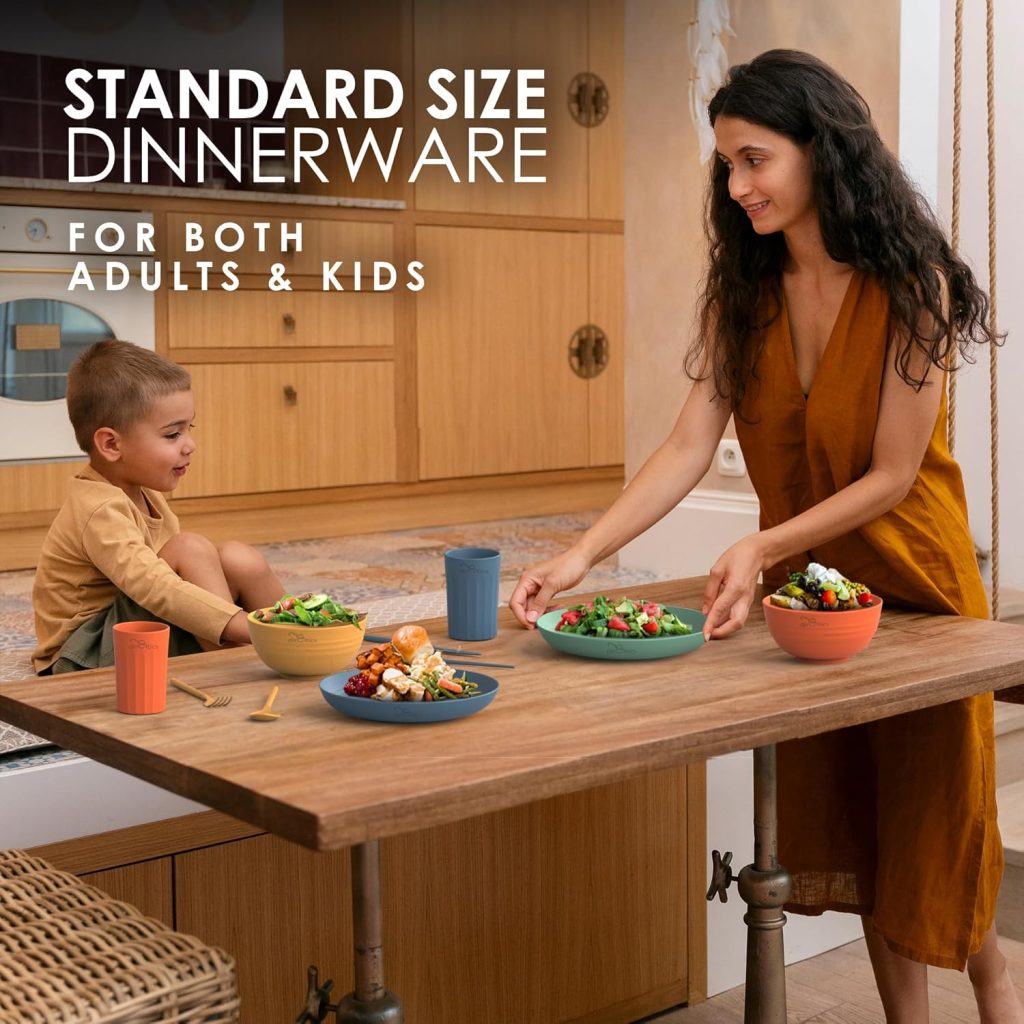
    Young child independently using wheat straw plate and utensils during mealtime

    Your dinnerware bears witness to this entire educational journey.

    Table habits emerge through repeated practice. Using a plate properly means keeping food on the plate rather than around it.

    Managing a bowl involves understanding that tipping it too far results in spillage. Drinking from a cup without flooding yourself requires hand-eye coordination that takes years to fully develop.

    Children learn these skills through thousands of meals, and the dinnerware itself becomes the teaching tool, providing immediate feedback when things go wrong, silent approval when techniques improve.

    Kids’ Mealtime Routines at Home

    Family Meals with Children

    When everyone eats together, children learn dining behaviors by observing and participating. Your eight-year-old watches you serve vegetables and attempts to replicate the motion, usually resulting in three peas making it to their plate whilst the rest scatter across the table.

    Family meals involve passing dishes, requesting items from across the table, and the general choreography of shared eating.

    Kids participate in this process using their dinnerware. “Pass your plate” means your child holding their plate up or sliding it across the table towards whoever’s serving.

    They learn to wait whilst food gets distributed, though this waiting is punctuated by fidgeting, plate-tapping, and inquiries about whether they’re allowed to start yet.

    Once eating begins, children mirror adult behaviors—using their plates as intended, attempting proper table manners, and (on good days) not treating dinner like a food fight waiting to happen.

    Clearing away afterwards involves children carrying their own plates to the kitchen. The journey from table to sink showcases their current coordination level—younger ones making the trip with exaggerated care, older kids managing it casually whilst maintaining conversation.

    This routine repeats daily, and the dinnerware becomes familiar through constant use.

    Meals with Siblings or Playmates

    The dynamics shift considerably when multiple children share a meal without adults at the table.

    School holiday lunches with siblings become freestyle events where table manners take a holiday alongside everything else.

    Playdate snacks involve your child and their friend negotiating who gets which plate (even though they’re identical) and whether sharing a bowl of crisps counts as “being fair.”

    Children’s social eating includes behaviors you’d never see at formal family dinners. Plates get pushed together so kids can compare portion sizes.

    Bowls are positioned for optimal reaching access by multiple hands. Cups occasionally get mixed up, leading to negotiations about whose drink is whose.

    Through all this, the dinnerware facilitates the social aspects of eating, sharing space, accessing food, and navigating the complex politics of childhood mealtimes.

    Brothers and sisters develop their own plate-based interactions. Younger siblings try to copy what older ones do, including dinnerware handling techniques.

    Older children demonstrate (sometimes with exaggerated patience) how to properly use a bowl or carry a plate.

    These moments of peer-to-peer learning happen naturally during everyday meals, with dinnerware serving as the props in this ongoing education.

    Types of Kids’ Meals Where Wheat Straw Dinnerware Is Used

    Breakfast and School-Day Meals

    Weekday mornings operate on a tight schedule, and breakfast becomes a race against the clock.

    Your children’s breakfast plates appear at the table already loaded or get filled quickly from cereal boxes and toast racks.

    There’s limited time for elaborate presentations—it’s functional eating designed to fuel the day ahead.

    School-day meals favor speed and simplicity. Toast on a plate. Cereal in a bowl. Orange juice in a cup.

    Your kids eat whilst simultaneously finishing homework, locating lost shoes, and explaining why they absolutely need to bring seventeen stuffed animals to school today.

    The dinnerware needs to work quickly and without fuss because nobody has time for complicated arrangements on a Tuesday morning.

    After-school meals occupy a strange middle ground—not quite dinner but more substantial than snacks.

    Children arrive home ravenous (despite having eaten lunch three hours ago) and require immediate feeding.

    Plates emerge loaded with whatever’s quick and filling. This daily eating event happens in the kitchen, often with kids still wearing backpacks, standing at the counter rather than sitting properly.

    The dinnerware adapts to these hurried eating moments.

    Weekend and Relaxed Meals

    Saturday and Sunday mornings gift families with time—that precious commodity you forgot existed during the weekday scramble.

    Weekend breakfast becomes an actual event rather than a pit stop. Children’s plates receive pancakes, fruit arrangements, and foods that require sitting down to properly enjoy.

    Nobody’s rushing, and the eating experience expands to fill the available time.
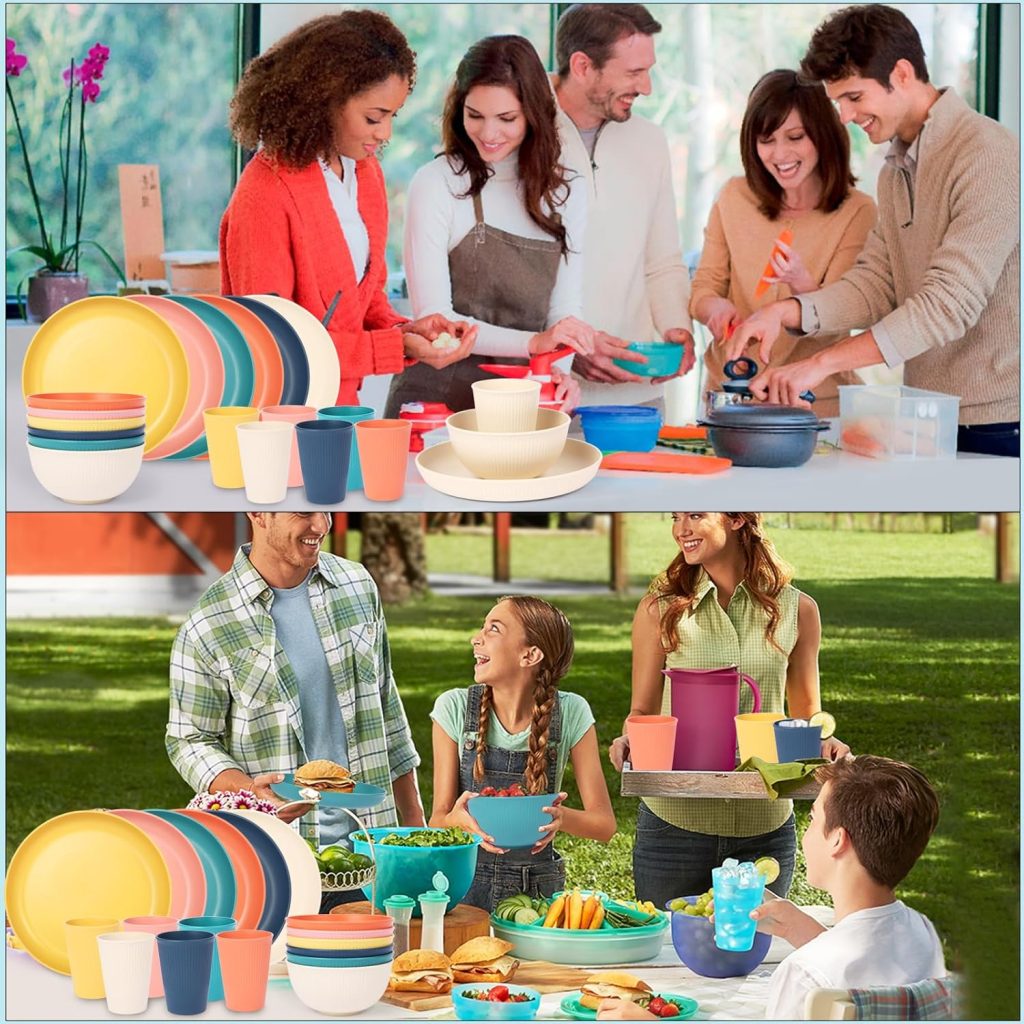
    Weekend family brunch with children using wheat straw dinnerware in relaxed setting

    These relaxed meals let children engage more fully with their dinnerware. They actually notice what’s on their plate rather than inhaling it whilst thinking about school.

    They might even eat slowly (shocking, we know). Weekend lunches and dinners follow similar patterns—less urgency, more conversation, and dinnerware that stays at the table longer because nobody’s dashing off to the next scheduled activity.

    Casual weekend eating also includes impromptu moments. Mid-afternoon snacks become small events.

    Late breakfast turns into early lunch without anyone particularly noticing or caring. Kids’ dinnerware sees more varied use on weekends simply because there’s time for more eating occasions throughout the day.

    Using Wheat Straw Dinnerware in Different Eating Settings for Kids

    Indoor Family Dining

    The kitchen table serves as command central for children’s eating.

    This is where breakfast happens before school, where homework gets done alongside after-school snacks, and where dinner brings everyone together.

    Your kids’ dinnerware makes countless trips from cupboard to table and back again, traveling the well-worn paths of daily domestic life.

    Different areas of your home host different eating events. The dining room appears for weekend family dinners and special occasions, children dressed slightly better than usual, dinnerware formally arranged, everyone pretending they eat this way every day.

    The kitchen island catches quick breakfasts and lunches where kids perch on stools, plates balanced whilst they eat standing or half-sitting.

    Children’s bedrooms occasionally become unauthorized eating zones despite your best efforts. Snack plates migrate upstairs during weekend movie marathons.

    Cups of juice end up on bedside tables.

    You’ve established rules about food staying in designated eating areas, and your children have established creative interpretations of what “designated” means.

    The dinnerware facilitates these adventures regardless of whether they align with your household policies.

    Outdoor Eating with Kids

    When the weather permits, meals migrate to the garden, and children’s eating behaviors shift accordingly.

    Garden table dinners feel like events even when you’re serving the same food you’d normally eat inside.

    Something about fresh air and sunshine transforms ordinary meals into occasions worth getting excited about.

    Kids handle outdoor eating differently from indoor meals. There’s more freedom, less formality, and a general sense that spillage matters less when you’re already outside.

    Children carry their plates to the garden table with varying degrees of success. Bowls of fruit or crisps get passed around the patio.

    Cups of squash travel from the kitchen to the garden and back multiple times as kids request refills between running around.

    Picnic-style eating represents the most casual outdoor dining situation. Blanket on the lawn, plates balanced on laps, cups positioned precariously on uneven ground.

    Your children think this is brilliant—all the food of a normal meal with none of the “sit still and use proper manners” requirements.

    The dinnerware adapts to these informal settings, functioning perfectly well whether placed on a stable table or a lumpy bit of grass.

    Why Parents Consider Wheat Straw Dinnerware for Kids’ Meals

    Let’s address the elephant in the room—or rather, the plates on the table. Why do parents specifically think about wheat straw dinnerware for their children’s meals?

    Daily usability

    Ranks high on the priority list. You’re using these plates, bowls, and cups multiple times every single day.

    Breakfast, lunch, dinner, and approximately eight thousand snacks mean your kids’ dinnerware sees constant action.

    Being able to grab any plate from the cupboard without worrying about whether it’s suitable for today’s meal simplifies your already complicated routine.

    Familiarity across meals

    Matters more than it might seem. When all your dinnerware looks and functions the same way, children know what to expect.

    They’re not relearning how to handle different plates depending on what meal it is. This consistency extends to all eating events—formal dinners and casual snacks both use the same plates.

    Kids develop confidence through this familiarity, building skills that transfer across every mealtime.

    Fit into children’s eating routines

    This is perhaps the most practical consideration. Does it work for how your kids actually eat? Can your five-year-old carry it without struggle?

    Will your teenager use it without complaint? Does it accommodate the various ways children interact with dinnerware throughout their developmental stages?

    These behavioral questions matter more than technical specifications when you’re trying to get dinner on the table while managing homework, bath time, and someone’s forgotten permission slip that’s due tomorrow.

    The decision isn’t about finding “perfect” dinnerware—it’s about finding what works for your family’s daily reality.

    Something that functions across all the eating moments you navigate every day. Something your children can use independently as they develop table skills.

    Something that shows up reliably for breakfast, lunch, dinner, and every snack in between.

    Conclusion

    So here’s the truth about wheat straw dinnerware and kids’ meals: children eat constantly, and whatever dinnerware you choose will get a proper workout.

    From morning toast through evening dinner and all the snacks in between, your kids interact with their plates, bowls, and cups hundreds of times weekly.

    We’ve explored how children actually use wheatstraw dinnerware, the gripping, moving, carrying, and occasional dropping that characterizes childhood eating.

    How wheat straw plates and bowls fit into family meals, sibling dinners, and solo snacking sessions.

    How kids’ eating routines vary from rushed school mornings to relaxed weekend brunches, and how wheat dinnerware adapts across all these moments.

    Your kids’ dinnerware needs to be a working tool, not a worry. Now you know how wheat straw dinnerware functions in the real world of children’s meals.
  • WHEAT STRAW PLATES MADE IN USA

    In recent years, the global push for sustainable and eco-friendly alternatives to traditional single-use plastics has gained significant momentum.

    One popular sustainable and eco-friendly dinnerware is wheat straw, and just as we have various brands of dinnerware made in America, do we have wheat straw plates made in USA?

    I have experienced the delight of purchasing American-made goods, and three things immediately spring to mind: superior craftsmanship, dependability, and the creation of dishes free of toxins.

    Are all of these qualities also applied to wheat straw dishes? Well, that is what we are here to find out.

    As always, wheat straw dinnerware offers affordability and ease of use to our modern lifestyle.

    Join us as we explore deeper into the fascinating world of these environmentally conscious dinner sets, examining all of the distinctive features.

    IS WHEAT STRAW GOOD FOR PLATES?

    Yes, wheat straws are perfect for manufacturing dinnerware because they are biodegradable, compostable, and safe for the environment.

    Secondly, wheat straw is an affordable and eco-friendly alternative to traditional disposable plates.

    WHEAT STRAW PLATES MADE IN USA

    Below are the 2 USA-owned companies that manufacture their wheat straw products in China:

    • Zlion wheat straw dinnerware
    • Greendish Wheat Straw Dinnerware

    ZLION WHEAT STRAW DINNERWARE

    Zlion wheat straw tableware was started as a family-owned business in Boston, Massachusetts, USA in 2016, but their manufacturing isn’t done in the USA but overseas.

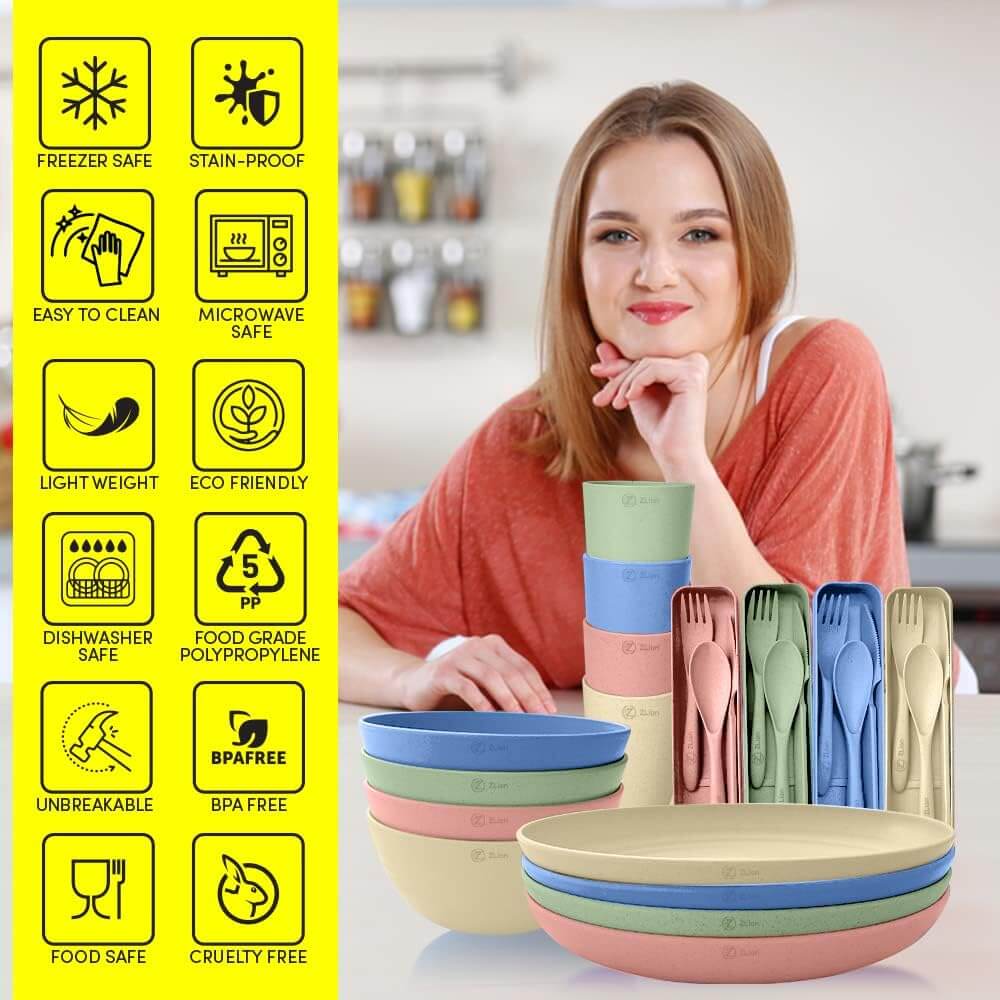
    The Zlion wheat straw dinnerware is a 28-piece set, and it contains premium-quality plates, bowls, cups, and cutlery (spoons and knives) with cases.

    Wheat straw plates made in USA

    Having qualities like Corelle, which includes: lightweight, non-toxic, odorless, and BPA-free, is a perfect choice for your healthy family!

    Heavy dishes are now out of fashion, the new trend is unbreakable dishes lightweight plates for the elderly and kids with special needs.

    They are microwave safe, dishwasher safe, and Freezer Safe. You can confidently stack the bowls and plates to save space in your small kitchen or RV/Camping/Picnic.

    Another beauty of the Zlion wheat straw dinnerware is that you can transport them without fear of them breaking, cracking, or chipping along the way; they stand strong and sturdy.

    When you eat with these premium quality wheat straw plates, you eat clean because they are designed with big lips on the sides, so you don’t end up spilling your food.

    For kids learning how to eat, this is your go-to, friendly, safe dish for toddlers.

    The colors of the Zlion beautiful wheat straw dinnerware will certainly complement your dining setting, and they hardly diminish.

    Finally, this is one of the most affordable wheat straw dinnerware sets you wouldn’t want to miss, great for daily use, parties, beach, barbecue, and even Montessori.

    GREENDISH WHEAT STRAW DINNERWARE

    Greendish wheat straw dinnerware is the second American-owned wheat straw dinnerware brand situated in Los Angeles, according to their website.

    However, a closer examination reveals that their production plant is not in the United States; even the location and Google map revealed a building that appears to be a warehouse.

    Greendish USA Made wheat straw dinnerware set

    So, while the Greendish wheat straw dinnerware is owned by Americans, it is manufactured in China.

    Greendish’s main goal is to create sustainable kitchenware solutions that reduce plastic waste and encourage a greener lifestyle.

    They are made with high-quality wheat straw fiber, which is BPA-free and food-safe PP material.

    The Greendish wheat straw dinnerware comes in 4 colors: Gray, Black, Coastal Multicolor, and Beige. Whichever you go for, they will complement your indoor or outdoor events.

    Some dinnerware is very hard to wash off after use, but not this beautiful, easy-to-clean American Greendish wheat straw dinnerware, perfect for use in the dishwasher or by hand

    Unlike poor quality wheat straw that stains easily, the Greendish wheat straw plates hardly stain, but we recommend you wash them off fast, especially with oily or acidic foods.

    Who says eco-friendly plates have to look boring? Not the greenish wheat straw dinner set, which appears trendy, combining nature and beauty!

    Are you planning a picnic, barbecue, baby shower, party, or camping? Then think of greenish wheat straw plates.

    In addition, it is perfect for use in schools, clubs, restaurants, cafes, bistros, and also for wedding gifts for family or colleagues.

    We highly recommend this gluten-free, odorless, and non-toxic American-owned wheat straw dinnerware today!

    Other popular and recommended wheat straw tableware for your home, kitchen, and special occasions are listed below:

    GROW FORWARD PREMIUM WHEAT STRAW PLATES AND BOWL SETS

    Who says you can’t have a wheat straw dinnerware that is both functional and fun? This is where the Grow Forward wheat straw brand comes in, they come in various designs like dinnerware sets, Bowls, plates, and even for kids.

    Grow Forward Premium Wheat Straw Plates and Bowls Set

    Aside from having wheat straw plates and bowls for kids, the Grow Forward Premium wheat straw plates and bowl set come in an adult-sized design that is created for the family.

    Nothing gives more joy than being able to easily wash off or rinse off a serving plate with ease, even for greasy or oily foods; that’s where the Grow Forward wheat straw dinnerware comes in handy.

    Eating healthy mustn’t be expensive because Grow Forward wheat straw dinnerware has made it easy with this affordable, eco-friendly dinner set.

    Completely unbreakable and disaster-proof kitchenware that will always add a touch of color and charm to your mealtime.

    Simple but elegant, not fluffy, meeting your need even with the microwave, sturdy wheat straw dinner set you will love.

    Perfect for everyday use, one disadvantage is that they will scratch when you use sharp utensils on them, so do not use them.

    PYRMONT REUSABLE WHEAT STRAW DINNER PLATE SET

    The Pyrmont reusable wheat straw dinner plates come in multiple shades that will complement your dining settings and whet your appetite and that of your guests.

    Pyrmont reusable durable wheat straw plates

    They are the perfect size needed for serving food, sturdy, microwave, and dishwasher safe. It is designed with a very high Lip that serves as a guard, especially when your plate is sitting on your Lap.

    Say goodbye to arthritis with this Lightweight, eco-friendly dinnerware set, the perfect replacement for heavy porcelain and stoneware dishes.

    Never plan your camping, RV, Patio, Entertainment, Poolside Party, or Family reunion without the Pyrmont reusable wheat straw dinner plate set.

    Finally, perfect for serving Pizza, Bread and Butter, Fruit, Appetizer, Cake, Cheese, Pasta, Sushi, Desserts, Snack, and even Salad.

    HOMEISH LIGHTWEIGHT UNBREAKABLE WHEAT STRAW PLATES

    The Homeish lightweight unbreakable wheat straw plates come in various delightful colors, which include Green, Beige, Pink, Yellow, Light Green, Navy, Orange, and Blue.

    One outstanding feature of this wheat straw dinnerware is that it is designed with a thick anti-slip bottom that is easy to hold and prevents the plate from slipping off easily.

    Homeish microwave and dishwasher safe wheat straw dinner sets

    The smooth, round edges make it comfortable to hold and feel, unlike other brands that have burrs and edgy marks.

    These lightweight, non-toxic, and 100% BPA-free wheat straw plates will complement your kitchen décor and appear beautiful in every environment.

    Just like the Corelle brand, they are easy to stack and great for parties, picnics, camping, home, school, office, outdoors, everyday meals, and traveling.

    A great option for corporate promotional gifts and holiday gifts!

    WROVA WHEAT STRAW BOWL SET

    Bowls, like plates and other utensils, are necessary. The Wrova wheat straw Bowl is no exception because it is deep enough to minimize spilling, is non-toxic, and is composed of biodegradable material.

    Wrova wheat straw bowls set for cereal

    The Wrova wheat straw bowl is much lighter than the traditional glass and other types of ceramic dishes. Super quick and easy to clean by hand and in the dishwasher.

    Easy to stack, but we recommend you place a paper towel strip between the bowls so you can easily remove them for use.

    Some other brands of wheat straw get so hot in the microwave that you need an oven mitt to remove them, but the Wrova gets warm when used in the microwave oven, but that doesn’t mean you shouldn’t apply caution.

    Perfect for eating, oatmeal, serving salad, mixing cereal, soup, you name it. Incredibly lightweight and will not break if dropped, such a huge advantage for those with weak hands.

    JUVALE WHEAT STRAW PLATE SET

    This is the best affordable wheat straw plate set to get for your home, as a gift, or when you are planning an outdoor event.

    Juvale chip resistant wheat straw plates

    In these modern times, safety and the care of the environment are paramount, which is why going for high-quality wheat straw material is a must.

    The Juvale wheat straw plate doesn’t have the potential to give off harmful chemicals when used in the microwave, unlike the melamine dinner set, because they are non-toxic and healthy.

    So, when used in the microwave oven, they won’t get too hot, the same trait possessed by the Corelle brand that hardly gets hot in the microwave oven.

    A sturdy and lightweight eco-friendly choice for arthritis sufferers. The perfect dishes for a camper or travel nurse.

    Finally, this is the perfect solution for those who always accidentally drop and break plates all the time.

  • Wheat Straw Plates vs Melamine: The Complete Dinnerware Comparison

    The modern dinnerware landscape presents consumers with compelling alternatives to traditional ceramic and glass options, with wheat straw plates and melamine dinnerware leading the charge in lightweight, durable tableware solutions.

    These two material categories represent fundamentally different approaches to addressing contemporary dining needs: wheat straw plates emphasize environmental sustainability and natural composition, while melamine plates prioritize durability and practical performance for high-use applications.

    Understanding the distinctions between these materials becomes crucial as households, restaurants, and institutions seek dinnerware that balances functionality, safety, aesthetics, and environmental responsibility.

    Both options offer significant advantages over traditional breakable dinnerware while presenting unique characteristics that make them suitable for different use cases and consumer priorities.

    Quick Comparison Table: Wheat Straw vs Melamine

    wheat straw plates vs melamine

    FeatureWheat Straw PlatesMelamine Plates
    Material BaseAgricultural waste (wheat straw)Melamine formaldehyde resin
    Environmental ImpactExcellent (biodegradable, waste utilization)Moderate (recyclable in some areas)
    DurabilityExcellent (durable, unbreakable, weather-resistant)Excellent (commercial-grade durability)
    Break ResistanceVery good (won’t shatter)Superior (virtually unbreakable)
    Microwave SafeVaries by brand (some yes, some no)No (not recommended)
    Dishwasher SafeYes (top rack recommended)Yes (commercial dishwasher safe)
    Temperature ResistanceModerate (up to 120°F typically)High (up to 160°F typically)
    Food SafetyExcellent (natural composition)Good (when properly manufactured)
    WeightLightweightLightweight
    AppearanceNatural texture, earth tonesSmooth, wide color range
    Price RangeBudget to mid-rangeBudget to premium
    Lifespan1-3 years typical use5-10 years with proper care
    Stain ResistanceModerate (may absorb some stains)Excellent (non-porous surface)
    Scratch ResistanceGood (natural texture hides marks)Excellent (hard surface)
    Commercial UseLight commercial, cafesHeavy commercial, institutions
    Outdoor UseExcellent (lightweight, unbreakable)Excellent (durable, unbreakable, weather resistant)
    Chemical ResistanceGoodExcellent
    BiodegradabilityYes (6-12 months in compost)No (requires special recycling)
    Manufacturing EnergyLowModerate to high
    Replacement CostLow to moderateModerate (offset by longevity)

    At-a-Glance Recommendation Guide

    Choose Wheat Straw Plates if you:

    • Prioritize environmental sustainability and biodegradability
    • Want natural aesthetics with unique textures
    • Need lightweight dinnerware for camping or picnics
    • Prefer minimal chemical processing in dinnerware
    • Support circular economy and waste reduction initiatives
    • Accept shorter lifespan for environmental benefits.

    Choose Melamine Plates if you:

    • Need maximum durability for heavy-use applications
    • Operate commercial kitchens, schools, or institutions
    • Want long-term cost effectiveness through an extended lifespan
    • Require consistent performance and appearance
    • Need dinnerware for outdoor entertaining or poolside use
    • Prioritize practical performance over environmental considerations.

    Wheat Straw Plates vs Melamine: Which is Better?

    Whether you choose melamine or wheat straw plates mostly depends on your priorities and intended use.

    If you are more concerned about the environment and your health, then you should go for wheat straw plates because, based on your need, we can say that Wheat straw plates are better than Melamine.

    However, if you are planning on having a prolonged outdoor occasion, then you can stick with Melamine dishes because they are far more robust and resistant to shattering than Wheat straw dinnerware and are readily available in various patterns.

    It is also a good option to customize your table settings.

    So, you can see that it all boils down to your preference and occasion. However, in our humble opinion, we prefer wheat straw dinnerware over Melamine dishes because of health and environmental concerns.

    Is Wheat Straw Better than Plastic?

    In comparison to conventional plastic plates, wheat straw plates are a better option, especially when taking environmental and health considerations into account.

    Wheat straw plates are BPA-free, making them a better alternative to plastic plates, which can contain dangerous BPA chemicals.

    Plastic plates raise the possibility of these chemicals leaking into your meals, which could eventually have harmful effects on your health.

    Contrarily, wheat straw plates allay this concern by guaranteeing that your meals are free of potentially dangerous ingredients, providing you with long-term health advantages.

    Furthermore, biodegradable wheat straw plates have a substantial environmental advantage over plastic.

    They organically degrade, lessening the load on landfills and promoting a more sustainable environment.

    Plastic plates may be strong and long-lasting, but the trade-off frequently comes at the expense of the environment and your health.

    It comes down to choosing between long-lasting health and a cleaner environment or long-lasting durability for the plates.

    In addition to offering peace of mind, choosing wheat straw plates also supports a more responsible and healthy lifestyle, which many people find to be a gratifying decision over time.

    Understanding Wheat Straw Plate Technology

    Wheat straw plates represent an innovative approach to sustainable dinnerware manufacturing that transforms agricultural waste into functional tableware.

    Green Wheat Straw Dinnerware Sets

    This technology utilizes the stalks and stems left over after wheat grain harvest, materials that would otherwise be burned or discarded, creating a circular economy approach to dinnerware production.

    Composition and Manufacturing Process

    Wheat straw plates are manufactured using a combination of wheat straw fibers, natural binding agents, and food-grade additives that create durable, lightweight dinnerware.

    The wheat straw undergoes processing that breaks down the cellulose structure into workable fibers that can be molded and shaped into various plate designs and sizes.

    The manufacturing process typically involves grinding wheat straw into fine particles, combining these particles with binding agents like cornstarch or other plant-based polymers, and then molding the mixture under heat and pressure to create finished dinnerware products.

    This process creates plates that retain the natural texture and appearance characteristics of wheat while providing the structural integrity needed for practical use.

    Modern wheat straw plate production incorporates quality control measures that ensure consistent thickness, durability, and food safety standards.

    The natural variation in wheat straw creates unique patterns and textures that give each plate a distinctive appearance while maintaining functional performance.

    RELATED: WHEAT STRAW DINNERWARE VS BAMBOO

    Environmental Benefits and Sustainability

    Wheat straw plates offer significant environmental advantages through their utilization of agricultural waste materials that would otherwise contribute to environmental challenges.

    Traditional wheat farming generates substantial quantities of straw waste that farmers often burn, contributing to air pollution and greenhouse gas emissions.

    By converting wheat straw into useful products, this dinnerware category reduces waste stream impacts while creating value from materials previously considered agricultural byproducts.

    The biodegradable nature of wheat straw plates means they break down naturally at the end of their useful life, unlike petroleum-based plastics that persist in landfills for centuries.

    The carbon footprint of wheat straw plate production is significantly lower than traditional ceramic manufacturing, which requires high-temperature kiln firing, or plastic production, which depends on fossil fuel feedstocks.

    This environmental advantage appeals to environmentally conscious consumers and businesses seeking to reduce their ecological impact.

    RELATED: ARE BAMBOO DINNERWARE SAFE?

    Performance Characteristics

    Wheat straw plates demonstrate surprising durability for their lightweight construction, though they require different handling considerations compared to traditional dinnerware materials.

    The natural fiber construction creates plates that resist breaking when dropped but may be susceptible to damage from sharp impacts or extreme temperature variations.

    Heat resistance varies among different wheat straw plate formulations, with some products suitable for microwave use and others designed primarily for room temperature applications.

    The natural composition means these plates don’t conduct heat as readily as metal or ceramic alternatives, making them comfortable to handle even when containing warm foods.

    Water resistance depends on the specific manufacturing process and binding agents used, with higher-quality wheat straw plates featuring protective coatings that prevent absorption and staining while maintaining the natural appearance and texture characteristics.

    Understanding Melamine Dinnerware

    Melamine dinner plates for indoor and outdoor use

    Melamine dinnerware represents a mature technology that has evolved significantly since its introduction in the 1930s, with modern formulations addressing early safety concerns while maintaining the durability and practical advantages that made melamine popular for institutional and outdoor dining applications.

    Chemical Composition and Manufacturing

    Melamine plates are manufactured using melamine formaldehyde resin, a thermosetting plastic that creates extremely durable, lightweight dinnerware through a molding process that combines melamine powder with various additives and colorants.

    Melamine Nautical modern dinnerware sets

    The manufacturing process involves heating the melamine compound to high temperatures and pressing it into molds that create the final plate shapes and designs.

    Modern melamine production incorporates strict quality control measures that ensure proper curing of the resin and minimize the potential for chemical migration into food products.

    The thermosetting nature of melamine means that once properly cured, the material becomes stable and resistant to heat, impact, and chemical exposure.

    Beautiful Melamine 12 Piece Unbreakable Dinnerware set

    Advanced melamine formulations may include additional materials like bamboo fiber or other natural additives that enhance appearance, reduce environmental impact, or improve performance characteristics while maintaining the fundamental durability advantages of melamine construction.

    Durability and Performance Advantages

    Melamine dinnerware excels in applications requiring maximum durability and resistance to breakage, making it the preferred choice for restaurants, schools, hospitals, and outdoor dining situations where traditional ceramic or glass dinnerware would be impractical or unsafe.

    The impact resistance of quality melamine plates far exceeds that of ceramic or glass alternatives, with properly manufactured melamine able to withstand drops, impacts, and rough handling that would destroy traditional dinnerware.

    This durability translates into lower replacement costs and reduced safety risks in high-volume dining environments.

    Heat resistance allows melamine plates to handle hot foods safely, though they should not be used in microwave ovens or exposed to extreme temperatures that could cause warping or chemical breakdown.

    The thermal properties of melamine make it comfortable to handle even when containing hot foods, unlike metal alternatives that conduct heat readily.

    Safety Considerations and Regulations

    Modern melamine dinnerware production operates under strict regulatory oversight that addresses earlier concerns about formaldehyde migration and chemical safety.

    The U.S. Food and Drug Administration (FDA) has established a tolerable daily intake (TDI) of 0.063 milligrams per kilogram of body weight per day for melamine to ensure safe human consumption, including exposure to food contact materials like plates.

    Properly manufactured and cured melamine dinnerware poses minimal health risks when used according to manufacturer guidelines, though certain usage restrictions apply.

    These restrictions typically include avoiding microwave use, preventing exposure to extreme temperatures, and replacing plates that show signs of damage or wear that could compromise the protective surface.

    Quality control testing for melamine dinnerware includes migration testing that ensures chemical compounds don’t leach into food products under normal use conditions.

    Reputable manufacturers provide certification documentation that confirms compliance with applicable food safety standards and regulations.

    Direct Performance Comparison

    Durability and Breakage Resistance

    Melamine plates demonstrate superior impact resistance compared to wheat straw alternatives, with properly manufactured melamine able to withstand significant physical stress without breaking or cracking.

    The thermosetting plastic construction creates a material that maintains structural integrity even under conditions that would damage other dinnerware materials.

    Wheat straw plates offer moderate impact resistance that exceeds ceramic or glass alternatives but falls short of melamine’s exceptional durability.

    The natural fiber construction can absorb impact energy effectively, though sharp impacts or extreme stress may cause cracking or splitting along fiber lines.

    For high-volume commercial applications or situations where maximum durability is essential, melamine typically provides superior performance and longevity.

    Wheat straw plates excel in applications where moderate durability requirements can be balanced against environmental benefits and natural aesthetics.

    Temperature Performance and Safety

    Melamine plates handle hot foods effectively within their temperature limitations, providing safe service for most dining applications while avoiding microwave use or extreme heat exposure.

    The material’s thermal properties prevent heat conduction that could make plates uncomfortable to handle.

    Wheat straw plates demonstrate variable temperature performance depending on their specific formulation and manufacturing process.

    Some wheat straw products are microwave-safe within certain temperature limits, while others are designed primarily for room temperature or moderately warm food service.

    Both materials require careful attention to manufacturer guidelines regarding temperature exposure, though melamine generally provides more predictable and consistent thermal performance across different brands and product lines.

    Food Safety and Chemical Concerns

    Modern melamine dinnerware, when properly manufactured and used according to guidelines, presents minimal food safety risks for typical dining applications.

    Regulatory oversight and quality control testing ensure that chemical migration remains within safe limits established by health authorities.

    Wheat straw plates generally present fewer chemical concerns due to their natural composition and minimal use of synthetic additives, though the binding agents and processing chemicals used in manufacturing require the same careful selection and quality control as any food-contact material.

    Both materials benefit from proper use practices, including avoiding extreme temperatures, replacing damaged items, and following manufacturer care instructions that maintain the protective properties of the dinnerware surfaces.

    Environmental Impact Analysis

    Life Cycle Assessment Considerations

    Wheat straw plates demonstrate superior environmental performance throughout their lifecycle, from raw material sourcing through end-of-life disposal.

    The utilization of agricultural waste reduces the environmental burden of wheat farming while creating useful products from materials that would otherwise be burned or discarded.

    The biodegradable nature of wheat straw plates means they can be composted at the end of their useful life, returning nutrients to the soil and completing a natural cycle.

    This end-of-life advantage significantly reduces long-term environmental impact compared to synthetic alternatives that require special disposal or recycling processes.

    Manufacturing energy requirements for wheat straw plates are typically lower than those for melamine production, which requires high-temperature processing and chemical synthesis.

    The reduced energy intensity translates into a lower carbon footprint and reduced environmental impact throughout the production process.

    Sustainability Metrics and Certifications

    Many wheat straw plate manufacturers pursue sustainability certifications such as biodegradable product certifications, organic processing standards, or environmental management system certifications that verify their environmental claims and production practices.

    Melamine manufacturers increasingly focus on sustainable production practices, including energy efficiency improvements, waste reduction programs, and recycling initiatives that help minimize environmental impact while maintaining product performance standards.

    Consumer choice between these materials often reflects broader environmental values and priorities, with wheat straw appealing to consumers who prioritize renewable resources and biodegradability, while melamine appeals to those who value longevity and resource efficiency through extended product life.

    Economic Analysis and Cost Considerations

    Initial Purchase Price Comparison

    Wheat straw plates typically offer competitive pricing in the budget to mid-range category, with costs varying based on manufacturing quality, design complexity, and brand positioning.

    The agricultural waste feedstock provides cost advantages that manufacturers can pass along to consumers seeking affordable, sustainable alternatives.

    Melamine plates span a broader price range from budget options suitable for basic applications to premium products featuring advanced formulations, sophisticated designs, and commercial-grade durability.

    The mature manufacturing technology and economies of scale help maintain competitive pricing across various quality levels.

    Both materials offer significant cost advantages compared to ceramic or glass dinnerware when breakage replacement costs are factored into long-term ownership calculations, though the specific cost benefits vary based on usage patterns and application requirements.

    Long-Term Value Analysis

    The economic analysis of wheat straw versus melamine plates requires considering both the initial purchase price and total cost of ownership over the expected lifespan of each material type.

    Wheat straw plates may require more frequent replacement, but often compensate through lower initial costs and reduced environmental disposal expenses.

    Melamine plates typically provide superior long-term value in high-use applications where durability and longevity justify a higher initial investment.

    Commercial operations particularly benefit from melamine’s extended lifespan and consistent performance characteristics that reduce replacement frequency and operational disruptions.

    Household users may find different value propositions depending on their usage patterns, environmental priorities, and aesthetic preferences, with neither material providing universal cost advantages across all use cases and consumer priorities.

    Specific Use Case Applications

    Household and Family Dining

    Wheat straw plates excel in household applications where families prioritize environmental responsibility while seeking practical alternatives to breakable dinnerware.

    The natural aesthetics and moderate durability make them suitable for everyday dining, children’s meals, and casual entertaining.

    Melamine plates serve household needs effectively when maximum durability is required, particularly in homes with young children, active lifestyles, or frequent outdoor dining.

    The extensive color and design options available in melamine allow coordination with various decor styles and preferences.

    Both materials offer significant safety advantages for families with children, eliminating the injury risks associated with broken ceramic or glass while providing attractive, functional dinnerware that encourages independent eating and reduces parental concerns about breakage.

    Commercial and Institutional Applications

    Restaurant and food service operations typically favor melamine plates for their exceptional durability, consistent performance, and ability to withstand commercial dish washing systems and high-volume use patterns.

    The long lifespan and low replacement frequency make melamine cost-effective for commercial applications.

    Healthcare facilities and schools often choose melamine for similar reasons, with the added benefit of easy sanitization and resistance to chemical cleaning agents used in institutional settings.

    The safety advantages of unbreakable dinnerware prove particularly valuable in these environments.

    Wheat straw plates may find applications in specialized commercial settings such as eco-conscious cafes, organic restaurants, or venues that emphasize environmental sustainability as part of their brand identity and customer appeal.

    Outdoor and Recreational Use

    Both materials excel in outdoor dining applications, camping, picnicking, and recreational activities where traditional dinnerware would be impractical or unsafe.

    The lightweight, unbreakable characteristics of both wheat straw and melamine plates make them ideal for portable dining solutions.

    Wheat straw plates offer particular advantages for environmentally sensitive outdoor activities where leaving no trace is important, as their biodegradable nature reduces environmental impact if accidentally left behind or damaged beyond use.

    Melamine plates provide superior performance for extended outdoor use, boat dining, or recreational vehicle applications where durability and longevity justify the investment and where disposal options may be limited.

    Making the Informed Choice

    Decision Framework and Evaluation Criteria

    Choosing between wheat straw and melamine plates requires evaluating multiple factors, including environmental priorities, durability requirements, aesthetic preferences, cost considerations, and specific use applications.

    Create a weighted decision matrix that reflects your personal or organizational priorities to guide the selection process.

    Consider the frequency and intensity of use, the importance of environmental impact, budget constraints, and aesthetic requirements when evaluating these materials.

    Neither option provides universal advantages, making careful assessment of specific needs essential for optimal satisfaction.

    Both wheat straw and melamine dinnerware continue evolving through technological improvements, environmental enhancements, and design innovations that address changing consumer needs and regulatory requirements.

    Staying informed about these developments helps ensure long-term satisfaction with dinnerware choices.

    Wheat straw technology increasingly incorporates improved binding agents, enhanced durability characteristics, and expanded design options that broaden its appeal and practical applications.

    Melamine innovations focus on environmental improvements, enhanced safety features, and advanced aesthetic options.

    The dinnerware market’s evolution toward sustainability and performance will likely continue driving improvements in both material categories, providing consumers with increasingly sophisticated options that balance environmental responsibility with practical performance requirements.

    Conclusion: Choosing Your Ideal Dinnerware Solution

    The choice between wheat straw plates and melamine dinnerware ultimately reflects different priorities and use requirements rather than a simple better-or-worse comparison.

    Wheat straw plates excel for environmentally conscious consumers who value sustainability, natural aesthetics, and biodegradable materials while accepting moderate durability and shorter lifespan.

    Melamine plates serve consumers and organizations that prioritize maximum durability, consistent performance, and long-term cost effectiveness while accepting the environmental trade-offs associated with synthetic materials and specialized disposal requirements.

    Both materials offer significant advantages over traditional breakable dinnerware while serving different market segments and use cases effectively.

    Your optimal choice depends on carefully weighing environmental priorities against performance requirements, initial costs against long-term value, and aesthetic preferences against practical considerations.

    Whether you choose the sustainable innovation of wheat straw plates or the proven performance of melamine dinnerware, both options provide modern solutions to contemporary dining challenges while offering distinct benefits that traditional dinnerware materials cannot match.

  • WHEAT STRAW PLATES VS BAMBOO

    In the quest for a more sustainable and eco-friendly dining experience, wheat straw plates and bamboo plates have emerged as compelling alternatives to traditional disposable tableware.

    In the following discussion, we will delve into a comparative analysis of wheat straw plates vs bamboo plates, delving into their production processes, durability, and overall ecological impact.

    The choice between these two environmentally conscious options, wheat straw plates and bamboo plates, represents a pivotal decision that showcases our commitment to reducing plastic waste and embracing renewable resources.

    With wheat straw plates utilizing the remnants of harvested wheat plants, and bamboo plates, hailing from the rapidly renewing bamboo plant, both offer biodegradability and a reduced carbon footprint.

    By illuminating the unique attributes of each choice, we aim to equip consumers and businesses with the knowledge needed to contribute positively to a greener future.

    BAMBOO DINNERWARE

    Dinnerware made of bamboo is both adaptable and environmentally friendly. Bamboo dish sets are mostly made of solid organic bamboo, which is 100% natural bamboo wood.

    One standout feature is that they don’t release dangerous toxins. This makes it a go-to choice for healthy alternatives, especially for kids.

    Disposable eco-friendly Bamboo plates for Parties

    Bamboo dinnerware sets are high-quality, handcrafted or machine-made, featuring a polished, smooth surface and a delicate appearance due to their food-grade varnish. They are sturdy and easy to use.

    The reusable bamboo plates are ideal for dessert, snack, and appetizer plates, as well as everyday use. Additionally, the size of these plates is also suitable for children.

    Dinnerware made of bamboo tends to be more durable for everyday use than wheat straw plates, although this highly depends on the user and the occasion at hand.

    Bamboo Fiber Dinner Plates for Indoor and Outdoor events

    Due to its innate strength, it can efficiently withstand normal wear and tear. While Eco-friendly, wheat straw plates may be a little less robust and may eventually show signs of wear.

    Dinnerware made of bamboo is typically safe to put in dishwashers, making cleanup easier. To maintain long-term integrity, it is crucial to review the manufacturer’s instructions, nevertheless.

    Bamboo dinnerware is a fantastic option for people who enjoy camping and traveling in RVs. It is perfect for outdoor adventures due to its lightweight and tough construction.

    Bamboo Dinnerware set

    Additionally, compared to some other materials, it is less likely to discolor or retain odors, improving its acceptability for various uses.

    Bamboo dinnerware’s best features include its everyday use and suitability for outdoor activities.

    Furthermore, because bamboo can be renewed, it’s a decision that respects the environment.

    Finally, to answer the question of whether bamboo dinnerware stains, it’s important to note that, despite being environmentally friendly, wheat straw dinnerware may be more prone to staining than bamboo tableware.

    This underlines how important it is to select the appropriate material for dining purposes.

    WHEAT STRAW PLATES VS BAMBOO

    wheat straw plates vs Bamboo

    Both bamboo and wheat straw plates are sustainable alternatives to conventional disposable tableware, but they differ in several important ways.

    See below the major differences between wheat straw plates and Bamboo plates:

    Wheat straw plates are made with wheat plant stalks, while Bamboo plates are made with natural (organic) bamboo wood.

    Wheat straw plates are more suitable for microwave and dishwasher use than Bamboo plates. In short, most Bamboo plates are not suitable for microwave and dishwasher use.

    Due to the plant fibers, wheat straw plates have a somewhat coarser texture, giving them a natural and rustic appearance, while Bamboo plates have a more polished appearance and a smoother finish, which are frequently admired for their chic and contemporary design.

    Both materials are biodegradable, but due to their plant-based content, wheat straw plates may disintegrate slightly faster.

    While bamboo plates take longer to break down, they are still regarded as a more sustainable alternative to plastics, which can take centuries to degrade.

    WHEAT STRAW VS CERAMIC

    wheat straw vs ceramic

    Wheat straw and ceramic plates are distinctive in their own right and work best when utilized with care and on occasions where their distinctiveness is maximized.

    Let’s examine their distinctions:

    Wheat straw plates are made from the stalks of wheat plants that remain after the grains have been harvested, while Ceramic plates, on the other hand, are created from a specific type of clay that is molded and then fired to extreme temperatures.

    Wheat straw plates are champions of the environment. They naturally degrade after use and disposal, returning to the ground. However, ceramic plates are not biodegradable and can last a very long time.

    The strength and durability of ceramic plates are well known. They are more resistant to heat, scuffs, and collisions than wheat straw plates, which are more durable than you may think but not as durable as ceramics.

    If you like variety, ceramic plates come in a wide choice of colors, patterns, and designs. Wheat straw plates appear more natural and understated.

    Ceramic plates are oven-safe and can withstand high temperatures with ease. Wheat straw plates may be less heat-resistant and may turn soft when exposed to hot food.

    If you’re looking for dishes that are simple to carry, wheat straw plates can be a consideration because they are typically lighter than ceramic plates.

    Complex procedures like shaping, glazing, and burning go into making ceramic plates. Conversely, wheat straw plates are produced using less energy-intensive techniques by compressing and molding the straw fibers.

    ARE BAMBOO PLATES SAFE?

    Bamboo plates are considered safe compared to other dinnerware materials for several reasons.

    First and foremost, bamboo is a naturally derived material, free from the harmful chemicals and toxins often found in plastics or melamine.

    This inherent safety reduces the risk of these harmful substances leaching into your food, making bamboo plates a healthier choice.

    Furthermore, bamboo exhibits excellent heat resistance. It doesn’t release harmful chemicals when exposed to high temperatures, which can be a concern with certain plastic materials.

    In contrast to materials like plastics or melamine, which can contain potentially hazardous compounds like BPA, bamboo offers a natural and non-toxic alternative.

    It’s worth noting that bamboo is also biodegradable and grows rapidly, making it an eco-friendly choice.

    As for the query, “Is wheat straw dinnerware safe?” similar principles generally apply. Wheat straw dinnerware is often considered safe for similar reasons—natural composition and absence of harmful chemicals.

    The safety of any individual product, whether bamboo or wheat straw, can, however, be affected by the manufacturer’s practices and quality standards.

    To ensure safety, select reputed brands that provide openness about their materials and manufacturing practices.

    WHEAT STRAW DINNERWARE SET

    Wheat straw plates make an excellent replacement for traditional melamine plates.

    Reusable unbreakable wheat straw plates

    Why? They are made from the wheat plant stalks that are left over after harvest, making them environmentally beneficial and biodegradable.

    They don’t include toxic substances or hazardous chemicals that might seep into your food, unlike melamine.

    They are also microwave-safe and heat-resistant, which is a quality melamine frequently lacks.

    The sustainability element, though, is what alters the game. Plates made of wheat straws help to protect the environment by reducing plastic waste.

    So keep in mind that choosing wheat straw plates over melamine not only keeps you safe and fashionable but also supports a future that is more environmentally friendly and corresponds with your values.

    Make the switch right away and enjoy your meal guilt-free!

    BEST WHEAT STRAW DINNERWARE

    The best wheat straw dinnerware will be from a reliable and trusted manufacturer, and the one that is less likely to stain compared to others.

    For this reason, my team and I have taken time to review a lot of wheat straw dinnerware so you won’t have to go through that.

    Below is one that stands out:

    WHEAT STRAW DINNERWARE SETS – 24 PCS LIGHTWEIGHT BLACK

    This is the ideal option for the Wheat Straw Dinnerware Set, created to satisfy all of your needs. This outstanding set of dinnerware includes cups, 10-inch dinner plates, 6-inch salad bowls, and fork-spoon-knife sets for each person in the party of four.

    Best wheat straw dinnerware

    With this compact and portable set, you can showcase your culinary ingenuity both indoors and outside.

    It’s made of natural materials, making it 100% BPA-free, gluten-free, non-toxic, and odorless dinnerware, making it ideal for school-age children.

    This hygienic, straw-based dinnerware combines sustainability and safety by providing light, unbreakable plates with smooth, rounded edges that are space-saving.

    You can rely on it to survive unintentional drops, ensuring both children’s and adults’ safety.

    With its smooth surface and high and low-temperature resistance, it is easy to clean and safe for use in dishwashers and microwaves.

    With this Wheat Straw Dinnerware Set, you can enhance your dining experience while being environmentally conscientious.

    IS WHEAT STRAW PLASTIC SAFE?

    Wheat straw plastic dinnerware can be a relatively safe choice for users, but it’s essential to consider various factors when making health-conscious decisions.

    Wheat straw plastic typically consists of a blend of wheat straw fibers and traditional plastic, often polypropylene or polyethylene.

    While it’s a more eco-friendly option compared to 100% plastic, it still has some potential drawbacks.

    One advantage is that wheat straw plastic usually doesn’t contain harmful substances like BPA, which can be found in some other plastics.

    However, it’s crucial to verify product labels for any added chemicals or coatings, as quality can vary among manufacturers.

    Compared to materials like traditional plastic or melamine, which can release toxic chemicals when exposed to heat or acidic foods, wheat straw plastic is generally a safer choice.

    In addition, for those seeking the healthiest option, exploring fully natural materials like bamboo or glass might be preferable, as they do not involve any plastics in their composition and pose minimal risks to health and the environment.

    WHAT ARE THE BENEFITS OF WHEAT STRAW DISHES?

    Below are the major benefits of wheat straw dishes:

    Eco-Friendly: Wheat straw dishes are made from renewable and biodegradable wheat straw fibers, reducing the environmental impact of traditional disposable or plastic tableware.

    Safe for Health: Typically free from harmful chemicals, wheat straw dishes are a safe choice for food consumption, eliminating the risk of toxins or chemicals leaching into your meals.

    Durability: Wheat straw dishes are surprisingly durable and can withstand everyday use, including microwave heating and dishwasher cleaning, making them a practical and long-lasting choice.

    Lightweight and Portable: These dishes are lightweight and easy to carry, making them ideal for picnics, camping, and outdoor activities, providing a convenient dining solution on the go.

    Space-Saving Design: Wheat straw dishes often feature a space-saving design with smooth, rounded edges. This not only makes them stackable but also resistant to breakage, ensuring they remain usable even after accidental drops.

    Microwave and Dishwasher Safe: Wheat straw dishes are generally safe for use in the microwave and dishwasher, offering convenience and versatility in meal preparation and cleanup.

    Natural Material: Wheat straw is a natural, non-toxic material, making these dishes a healthy and eco-conscious choice for both you and the planet.

  • DO WHEAT STRAW PLATES STAIN

    Wheat straw plates are famous among tableware because of one of their distinctive traits, which is their eco-friendliness; as a result, they stand out and are in great demand; yet, they are not flawless, just like any other dinnerware.

    One of its flaws that is frequently discussed is “Do wheat straw plates stain?” Because this is a sensitive subject among dinnerware enthusiasts, we will examine all potential aspects of wheat straw plates before deciding whether they stain or not.

    With all of this in mind, wheat straw plates will always be a useful tableware selection to have in the house.

    DO WHEAT STRAW PLATES STAIN WHITE?

    Do wheat straw plates stain white

    Wheat straw plates are generally more prone to staining than traditional plastic or glass plates due to their natural composition.

    While they are often advertised as being Eco-friendly and biodegradable, they can be more porous and absorbent, which can lead to discoloration or staining, especially if they come into contact with strongly colored or oily foods.

    It’s important to note that the extent of staining can vary depending on the specific quality and manufacturing process of the wheat straw plates.

    Some manufacturers might treat their plates to be more resistant to staining, but in general, you might observe that darker or strongly colored foods (like tomato sauce or curries) could potentially leave marks on white wheat straw plates.

    To minimize the risk of staining, you can try the following:

    Pre-Rinse:  Rinse the plates immediately after use to remove any residual food particles.

    Avoid Strongly Colored Foods: Be cautious when using foods or sauces that are known to stain surfaces.

    Use a Mild Detergent:  If needed, use a mild dishwashing detergent to clean the plates. Avoid using abrasive scouring pads, as they could damage the surface and make it more prone to staining.

    Avoid High-Temperature Dishwashers: High temperatures and strong detergents in dishwashers might worsen the staining, so consider hand-washing the plates or using a dishwasher with a gentler cycle.

    Sunlight: Exposing the stained areas to sunlight can sometimes help to lighten the stains.

    It’s important to set realistic expectations with wheat straw plates, understanding that their eco-friendly benefits might come with some trade-offs in terms of durability and resistance to staining.

    If maintaining a pristine appearance is a top priority, you might want to consider using traditional materials like glass or ceramic for your plates.

    DO WHEAT STRAW PLATES STAIN?

    Do Wheat Straw Plates Stain

    If dishes like tomato sauce or certain spices, which are highly colored or deeply pigmented, are placed on wheat straw plates, they may stain.

    Although they are typically more stain-resistant than conventional plastic plates, it is still vital to rinse or wash them right away to avoid any potential stains.

    Wheat straw plates can be kept looking nice by using mild cleaning techniques and avoiding prolonged contact with stains.

    DOES WHEAT STRAW STAIN EASILY?

    Yes, wheat straw has a propensity to discolor fairly easily. It can absorb colors and oils from food due to its naturally porous nature, which causes discoloration.

    Foods that are dark or colorful, such as curries or sauces made with tomatoes, are more prone to leaving stains on wheat straw products, such as plates and bowls.

    Although made of wheat straw, goods need a little more care to prevent and remove stains.

    Over time, prompt rinsing, avoiding meals with intense colors, and using mild cleaning techniques might help keep them looking good.

    HOW DO YOU GET STAINS OUT OF WHEAT STRAW PLATES?

    Follow these steps to remove stains from wheat straw plates:

    Take Action Right Away: Treat stains as soon as you can to stop them from setting in.

    Rinse: To get rid of any stray food particles, start by rinsing the soiled area with cold water.

    Soap and water: Warm water and light dishwashing soap should be blended. Apply a gentle sponge or cloth to the stained area, and then scrub it gently. Avoid applying anything abrasive that can harm the surface.

    Baking Soda Paste: To remove tough stains, combine baking soda and water to create a paste. Paste should be applied to the stain, allowed to soak for a bit, then scrubbed gently and rinsed.

    Solution with Vinegar: Vinegar can aid in the removal of stains. White vinegar and water should be mixed in a 1:1 ratio. After soaking the soiled area for a few minutes, scrub and rinse.

    Lemon Juice: Lemon juice also works well to remove stains. Lemon juice should be applied to the stain, and it should remain in the sun for a time before being rinsed.

    Sunlight: For a few hours, leave the plates out in the sun. Stains and odors can be naturally bleached by sunlight.

    Hydrogen Peroxide: You can use hydrogen peroxide to remove difficult stains by combining it with water (1:1) in a 1:1 ratio. After letting it sit for a while, scrub and rinse it.

    Avoid harsh chemicals: Although wheat straw plates are typically more environmentally friendly, avoid using harsh chemicals or bleach, as they could harm the substance.

    Repeat as required: Depending on how severe the stain is, you might need to repeat these procedures several times to get the stain entirely out.

    Keep in mind that the type of stain and the caliber of the wheat straw plates can affect how effective these techniques are.

    Before using any cleaning solution on the stain, try it on a small, discrete portion of the plate to make sure it won’t damage the plate.

    IS WHEAT STRAW DINNERWARE GLUTEN-FREE?

    Wheat straw tableware is often deemed gluten-free because it is created from the stalks of wheat plants rather than the gluten-containing grains themselves.

    This is why wheat straw plates are considered safe. Gluten is found largely in wheat seeds (or grains), such as wheat flour, wheat bread, and wheat pasta.

    Wheat straw is created from the non-edible parts of the wheat plant, which are hollow stems or stalks.

    These stalks are frequently considered a waste product after the grains have been collected. They can be recycled to make a variety of items, including dinnerware.

    However, depending on how the wheat straw tableware is created and handled, there may be discrepancies in production procedures or potential cross-contamination dangers, as with any product.

    If you have severe gluten allergies or sensitivities, always verify with the manufacturer to ensure that their wheat straw dinnerware is made in a gluten-free environment and is suitable for your use.

    GROW FORWARD WHEAT STRAW PLATES

    Grow forward wheat straw plates are crafted with care; the colorful wheat straw plates are a harmony of safety, quality, and style.

    Designed for the environmentally conscious, they prioritize well-being. The collection boasts exquisite bowls and plates that elevate any table setting.

    With Grow Forward wheat straw plates, your family’s health and happiness are of the utmost concern. Be at rest knowing the products are free from BPA and harmful toxins often encountered in typical dinnerware.

    Below is a carefully selected Grow Forward wheat straw plate:

    GROW FORWARD PREMIUM WHEAT STRAW PLATES AND BOWL SETS

    Introducing the remarkable Grow Forward premium Wheat Straw Plates and Bowl Sets, a versatile solution designed to enhance your dining experience while caring for the environment.

    Grow Forward Premium Wheat straw Plates and Bowls

    Unbreakable and microwave-safe, these dishes offer convenience without compromise. Crafted from reusable wheat straw, they’re the ideal alternative to traditional plastic plates and bowls, perfect for camping, RV trips, and space-saving at home.

    Engineered for your convenience, these sets are both microwave and dishwasher-safe, ensuring ease of daily use. The BPA-free material preserves your food’s taste and aroma, while the freezer-safe feature adds extra versatility.

    The unique 28 oz. Wheat straw bowls redefine practicality, catering to your needs from soup to ice cream.

    The plates feature an innovative upward-curving lip, minimizing spills and enhancing dorm living. Presenting a thoughtful gift for eco-conscious individuals and families.

    Grow Forward Wheat Straw Plates and Bowl Sets embody a blend of functionality and sustainability. Make a positive impact on your meals and the planet with this exceptional dining solution.

    DOES WHEAT STRAW DINNERWARE STAIN GREEN?

    Wheat straw dinnerware can potentially stain, and this might include stains that are green in color, particularly when exposed to certain strongly colored foods or liquids.

    Does Wheat straw dinnerware stain Green

    The natural and porous composition of wheat straw products can make them susceptible to absorbing colors and oils from different foods, which could lead to discoloration over time.

    The likelihood of green staining would depend on the specific foods or beverages that come into contact with the wheat straw dinnerware.

    Foods with vibrant green coloring, like spinach-based dishes or certain sauces, could potentially leave green stains on the dinnerware.

    To minimize the risk of staining, it’s advisable to follow proper care and cleaning instructions, including rinsing the dinnerware promptly after use and avoiding strongly colored foods that could cause staining.

    If maintaining the appearance of your wheat straw dinnerware is a top concern, you might also consider using separate plates for foods that are more likely to cause staining.

    DOES WHEAT STRAW DINNERWARE STAIN BLACK?

    Does wheat straw dinnerware stain black

    Wheat straw dinnerware can potentially stain, and this might include stains that appear black or dark in color.

    The natural composition of wheat straw products, which is porous, can make them susceptible to absorbing colors and oils from different foods, leading to discoloration over time.

    Stains that appear black could be a result of foods with strong pigments, like dark sauces or certain beverages, coming into contact with the wheat straw dinnerware. These pigments can transfer onto the porous surface of the dinnerware, causing visible discoloration.

    To minimize the risk of staining, it’s important to promptly rinse the dinnerware after use and avoid using foods or liquids that are more likely to cause staining.

    Regular and gentle cleaning methods can also help maintain the appearance of your wheat straw dinnerware over time.

  • Is Wheat Straw Dinnerware Safe? The Complete Truth About This Eco-Friendly Alternative

    The Direct Answer: The safety of Wheat straw dinnerware depends entirely on how it’s manufactured. Pure wheat straw fiber products are generally safe, but many commercial wheat straw dinnerware items contain plastic binders that can release harmful chemicals when heated.

    Recent regulatory warnings have raised significant concerns about certain types of plant-based tableware, making product selection critical for your family’s health.

    Understanding Wheat Straw Dinnerware: What You’re Buying

    Wheat straw dinnerware isn’t just compressed wheat stalks. Most commercial products combine wheat straw fibers with binding agents to create durable tableware.

    This agricultural byproduct, typically discarded after wheat harvesting, gets processed into what manufacturers market as “eco-friendly” alternatives to traditional plastic dinnerware.

    The key distinction lies in manufacturing methods. Pure wheat straw fiber products use natural lignin and cellulose as binders, while many commercial versions incorporate plastic resins, particularly melamine-formaldehyde, to achieve durability and water resistance.

    The Current Safety Landscape: Recent Regulatory Warnings

    Is wheat straw dinnerware safe

    The safety picture for wheat straw dinnerware has become more complex in recent years.

    The UK’s Food Standards Agency (FSA) has issued warnings about tableware made from plant-based materials, including wheat straw, citing concerns about chemical leakage, particularly with hot foods, which could potentially cause gastrointestinal problems and kidney damage over time.

    The FSA specifically advised against plastic utensils containing bamboo and similar unauthorized plant-based materials such as wheat straw, due to potential formaldehyde and melamine migration.

    This doesn’t mean all wheat straw products are dangerous, but it highlights the importance of understanding what you’re purchasing.

    Material Composition: The Science Behind Safety

    Wheat straw dinnerware typically contains:

    Natural Components:

    • Wheat straw fibers (cellulose and lignin)
    • Natural plant-based polymers
    • Compressed agricultural waste

    Potential Additives:

    • Melamine-formaldehyde resins (in lower-quality products)
    • PP (polypropylene) plastic binders
    • Food-grade adhesives
    • Colorants and stabilizers

    The safety concerns primarily arise from plastic additives, not the wheat straw itself. Research has shown that melamine-based tableware containing plant materials can be a significant source of human exposure to melamine and its derivatives.

    Health and Safety Considerations: What Parents Need to Know

    For Children’s Use: Wheatstraw dinnerware marketed for children requires extra scrutiny. Young children are more susceptible to chemical migration, and they often use tableware with hot foods like heated milk, soups, and microwaved meals.

    Temperature Sensitivity: The biggest safety concern involves heat exposure. When wheat straw dinnerware containing plastic binders gets heated (microwave use, hot foods, dishwasher cycles), it can release chemicals into food.

    Regulatory agencies noted that these products could lead to chemical migration at high temperatures, potentially posing health risks.

    Celiac Disease Considerations: For individuals with celiac disease or gluten sensitivity, wheat straw dinnerware generally poses no gluten-related risks. The manufacturing process removes gluten proteins, but those with severe sensitivities should verify with manufacturers about cross-contamination during processing.

    Comparing Safety Across Dinnerware Materials

    Wheat Straw vs. Traditional Plastic: Studies show pure wheat straw plates release significantly fewer harmful substances than plastic or melamine-based alternatives. However, this applies only to high-quality, plastic-free wheat straw products.

    Wheat Straw vs. Melamine: Traditional melamine dinnerware has well-documented safety concerns with heat exposure. Quality wheat straw products offer similar durability with potentially reduced chemical migration, but only when manufactured without melamine binders.

    To know more about melamine safety in comparison to Wheat straw, read our detailed guide on the difference between wheat straw and melamine dinnerware.

    Wheat Straw vs. Ceramic/Glass: Ceramic and glass remain the safest options for hot foods. They don’t contain binding agents that can migrate into food, making them ideal for families prioritizing safety over convenience.

    Manufacturing Quality: How to Identify Safe Products

    FDA safety certified wheat straw dinnerware set

    Red Flags to Avoid:

    • Products significantly cheaper than alternatives (often indicate low-quality binders)
    • Lack of specific safety certifications
    • Strong chemical odors when new
    • Manufacturers unable to provide detailed composition information
    • Products that feel unusually lightweight or fragile

    Quality Indicators:

    • FDA approval and BPA-free certification
    • Specific testing for formaldehyde and melamine migration
    • Clear labeling of all materials used
    • SGS, LFGB, or ROHS certifications
    • Detailed care instructions that acknowledge temperature limitations.

    Practical Usage Guidelines: Maximizing Safety

    Safe Usage Practices:

    • Avoid microwaving wheat straw dinnerware, especially with fatty or acidic foods
    • Use only lukewarm or cold foods when possible
    • Hand wash with mild detergent instead of high-temperature dishwasher cycles
    • Replace products that show signs of wear, cracking, or discoloration
    • Don’t use for prolonged storage of acidic foods (tomato-based sauces, citrus).

    When to Choose Alternatives:

    • Serving very hot foods (soups, heated beverages)
    • Microwave heating requirements
    • Long-term food storage needs
    • For individuals with compromised immune systems
    • In commercial food service environments

    Environmental vs. Health Trade-offs

    The environmental appeal of wheat straw dinnerware must be balanced against potential health considerations. While these products reduce agricultural waste and offer biodegradable alternatives to traditional plastics, safety should remain the primary concern, especially for families with young children.

    The Sustainable Safety Approach:

    Consider it as part of a mixed approach rather than a complete dinnerware replacement

    Choose certified, high-quality wheat straw products for cold and room-temperature foods

    Use glass or ceramic for hot foods and microwave heating

    Reserve wheat straw dinnerware for outdoor activities, picnics, and casual dining.

    Brand Selection: What to Look For

    Reputable Characteristics:

    • Transparent ingredient disclosure
    • Multiple international safety certifications
    • Clear temperature usage guidelines
    • Responsive customer service for safety questions
    • Independent third-party testing results

    Questions to Ask Manufacturers:

    • What specific binding agents are used?
    • Has the product been tested for chemical migration at various temperatures?
    • What are the maximum safe temperature limits?
    • Are there specific foods or liquids to avoid?

    Is Wheat Straw Dinnerware Microwave safe?

    Generally, yes, wheat straw plates are microwave safe and designed to handle moderate heat levels without warping or releasing harmful substances.

    However, there are important limitations:

    • Avoid prolonged exposure to high heat
    • Don’t microwave greasy or fatty foods in them
    • Maximum recommended temperature is typically 248℉ (120°C) for 5 minutes
    • Always check manufacturer specifications, as quality varies significantly between brands

    Important caveat: Pure wheat straw products are safer than those containing plastic binders. Many commercial wheat straw products contain melamine or other binding agents that can migrate when heated.

    Does Wheat Straw Dinnerware get hot in the Microwave?

    Wheat straw plates can effectively handle both hot and cold foods, but may not withstand high temperatures for extended periods.

    They do absorb some heat but generally remain cooler to the touch than ceramic or glass. However:

    • The plates themselves may become warm, but typically less so than traditional materials
    • Heat distribution can be uneven due to the fiber composition
    • Overheating can cause warping or damage to the material
    • They’re more heat-resistant than pure plastic but less than ceramic.

    Is Wheat Straw Dinnerware Dishwasher safe?

    Yes, most wheat straw plates are dishwasher safe and designed to withstand high temperatures, making them a convenient, eco-friendly option for easy cleaning.

    Key points:

    • Much easier to maintain than bamboo alternatives and more resistant to moisture
    • Can typically handle standard dishwasher temperatures
    • Always check the manufacturer’s instructions for specific temperature limits
    • Hand washing extends their lifespan
    • Avoid harsh detergents that can degrade the material over time

    Does Wheat Straw contain Melamine?

    Pure wheat straw fiber doesn’t naturally contain melamine, but many commercial wheat straw dinnerware products do contain melamine as a binding agent.

    We recommend you ONLY purchase from quality manufacturers, as cheaper products often contain more melamine-formaldehyde binders.

     Always check product specifications and certifications, and look for “melamine-free” or “100% wheat straw” labelling.

    The Bottom Line: Making Informed Decisions

    Wheat straw dinnerware can be safe when manufactured properly and used appropriately, but recent regulatory concerns highlight the importance of careful product selection. Choose items made purely from plant-based fibers without plastic additives for the safest option.

    For families prioritizing both sustainability and safety, a hybrid approach works best: use certified wheat straw products for cold foods and outdoor dining, while relying on glass or ceramic for hot foods and everyday kitchen use.

    The key lies in understanding that not all wheat straw dinnerware is created equal. Research products thoroughly, prioritize safety certifications over price, and when in doubt, choose traditional materials for hot food applications.

    Your family’s health should never be compromised for environmental benefits, but with careful selection, you can achieve both safety and sustainability.

    Final Recommendation: If you’re currently using wheat straw dinnerware, check your products for plastic content and avoid heating them. For new purchases, invest in certified, plastic-free options or consider wheat straw products only for specific use cases where temperature isn’t a factor.

    Related: Is Wheat Straw Dinnerware safe for Kid’s Meal?