There’s something deeply satisfying about setting your table with dishes that feel light as air yet remain unchipped, uncracked, and unbroken despite years of daily use.
If you’ve ever watched a plate slip from your hands and bounce instead of shatter, you know the relief that comes with truly durable tableware.
Corelle Dinnerware Sets have earned their place in millions of homes not through flashy marketing, but through decades of proving they can handle the chaos of real-life kids dropping bowls, dishwasher cycles five times a week, and microwave reheating that would crack lesser plates.
Whether you’re furnishing your first apartment, upgrading worn-out dishes, or searching for dinnerware that balances style with practicality, understanding what makes Corelle different matters.
This comprehensive guide explores everything from the innovative Vitrelle glass technology that gives these plates their legendary strength to the timeless patterns that have graced dinner tables since the 1970s, helping you make an informed choice for your home.
What Are Corelle Dinnerware Sets?
Corelle dinnerware sets are coordinated collections of plates, bowls, and serving pieces manufactured by Corelle Brands using a proprietary triple-layer glass laminate called Vitrelle.
Unlike traditional ceramic or porcelain tableware, these sets are specifically engineered to be exceptionally lightweight while maintaining superior strength and resistance to breaking.
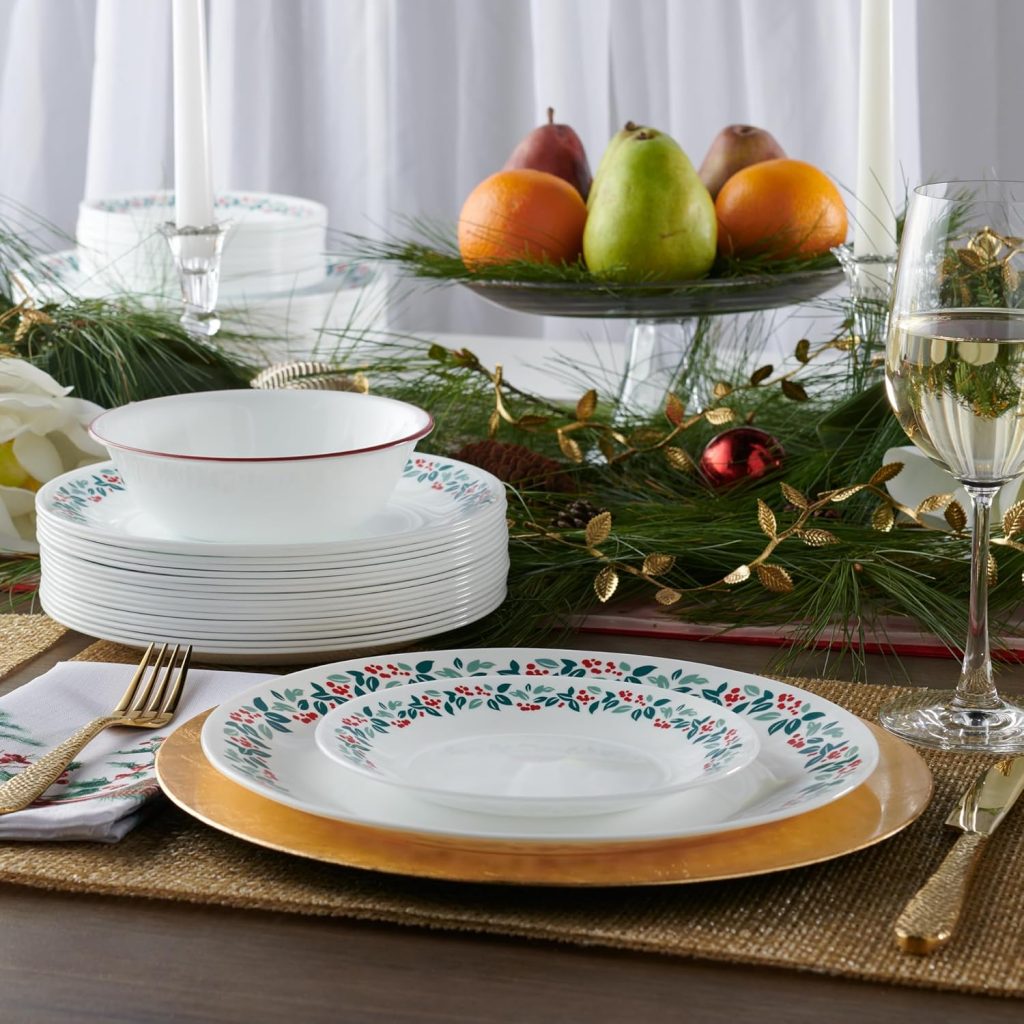
A standard Corelle 18-piece set typically includes six dinner plates, six salad plates, and six bowls—enough to serve a family while occupying minimal cabinet space.
The brand launched in 1970 and quickly revolutionized American kitchens by addressing common frustrations with heavy, easily chipped ceramic dishes.
Today, Corelle remains one of the most recognizable names in dinnerware, with patterns ranging from the iconic Winter Frost White to decorative designs like Butterfly Gold and Old Town Blue.
These sets cater to a range of household needs, from everyday family meals to more formal entertaining occasions.
Components of a Typical Corelle Set
Most Corelle dinnerware sets follow a standardized configuration designed for practical daily use.
The typical 18-piece set includes six 10.25-inch dinner plates, six 8.5-inch salad or dessert plates, and six 18-ounce cereal or soup bowls.
Many retailers also offer 16-piece sets that add four mugs to the basic plate and bowl combination, creating a complete starter collection for four people.
Larger families or those who entertain frequently can opt for expanded sets with 24, 30, or even 76 pieces.
These comprehensive collections include additional serving bowls, platters, and coordinating pieces that maintain the same pattern and material consistency.
Some specialty sets focus on specific meal types, such as breakfast sets with smaller plates and mugs or pasta sets featuring wide, shallow bowls designed for Italian cuisine.
Round vs Square Corelle Shapes
Corelle offers both traditional round plates and modern square dinnerware options to suit different aesthetic preferences.
Round Corelle plates represent the classic design that most consumers recognize, with gently curved edges and a timeless silhouette that fits comfortably in most cabinet configurations.
These circular plates stack efficiently and work well with standard table settings and placemats.
Corelle square dinnerware brings a contemporary edge to the table with clean lines and geometric precision.
The square plates typically measure 10.5 inches for dinner plates and 8.75 inches for salad plates, offering slightly more surface area than their round counterparts.
This modern shape appeals to those seeking restaurant-style presentation at home and pairs particularly well with minimalist décor.
However, square plates may require more careful stacking and slightly more storage space due to their corners.
Everyday Use vs Special Occasion Sets
Corelle’s versatility allows it to function equally well for casual family dinners and more formal gatherings, though some patterns lean toward specific uses.
Everyday sets often feature simple, neutral designs like Winter Frost White or subtle patterns that hide minor wear and complement any table setting.
These workhorse collections prioritize durability and dishwasher resilience over decorative flair, making them ideal for busy households with children.
Special occasion sets showcase more elaborate designs with floral motifs, geometric patterns, or seasonal themes.
Collections like Splendor or Country Cottage bring visual interest to holiday meals and dinner parties while maintaining the same practical benefits as simpler patterns.
Many families keep both types—plain white for daily use and decorated sets for hosting—since Corelle’s space-saving design makes storing multiple collections feasible even in smaller kitchens.
What Makes Corelle Unique? (Vitrelle Glass Technology)
The secret behind Corelle’s exceptional performance lies in Vitrelle glass dinnerware, a material innovation that fundamentally differs from standard glass, ceramic, or porcelain construction.
Developed through years of materials research, this patented technology creates tableware that defies conventional expectations about what glass dishes can withstand.
Understanding how Vitrelle works reveals why Corelle has maintained its reputation for reliability across five decades.
Traditional dinnerware faces a fundamental trade-off: materials strong enough to resist breaking tend to be heavy and bulky, while lightweight options chip easily or shatter on impact.
Vitrelle glass technology solves this dilemma through advanced lamination processes that bond multiple glass layers into a single, incredibly resilient unit.
This material science breakthrough allows Corelle to deliver both featherlight handling and remarkable toughness in the same product.
Triple-Layer Vitrelle Glass Construction
Vitrelle consists of three distinct layers of glass thermally bonded together at extremely high temperatures.
The outer two layers are made from clear glass that provides the smooth, non-porous surface ideal for food contact and easy cleaning.
Sandwiched between these transparent layers sits a core of opaque white glass that gives most Corelle pieces their characteristic bright white base color while contributing to overall structural integrity.
The bonding process creates a laminate where each layer supports and reinforces the others, distributing stress across the entire plate rather than concentrating it at weak points.
When force is applied to Vitrelle glass, the three layers work together to absorb and dissipate energy, preventing the localized failures that cause chips in ceramic dishes.
This molecular-level integration makes the material significantly stronger than any single layer could be independently, while maintaining the thin profile that keeps the weight minimal.
Why Corelle Is Lightweight Yet Durable
The remarkable lightness of Corelle plates comes from using glass rather than denser materials like stoneware or porcelain, combined with the ability to make each layer extremely thin without sacrificing strength.
A typical Corelle dinner plate weighs approximately 12 ounces—roughly half the weight of a comparable ceramic plate.
This reduction matters significantly when carrying stacked dishes, filling dishwashers, or managing table service for large groups.
Despite weighing so little, Corelle dinnerware’s durability exceeds most heavier alternatives because the triple-layer construction resists the stress fractures that lead to breakage.
The compressive forces created during the thermal bonding process leave the glass in a state of permanent tension that actually makes it tougher.
This engineered stress pattern means Corelle can flex slightly under impact rather than shattering immediately, giving it a resilience that seems almost contradictory to its delicate feel.
Chip-Resistance and Break-Resistance
Corelle’s reputation for chip-resistance stems from its non-porous glass surface and the way Vitrelle distributes impact forces.
Unlike ceramic glazes that can flake off to expose porous material underneath, Corelle’s glass construction remains consistent throughout.
The edges of plates receive additional attention during manufacturing to ensure smooth, rounded profiles that resist the contact damage that typically chips ceramic dinnerware.
Break-resistance comes from that same energy distribution system built into the laminate structure.
When a Corelle plate does eventually break, usually from extreme impacts like dropping on hard tile from counter height, it tends to fragment into larger pieces rather than creating the dangerous small shards associated with regular glass.
This failure mode, while still requiring careful cleanup, poses less risk than traditional glass breakage.
Most importantly, the threshold for causing breaks sits much higher than with standard dinnerware, meaning Corelle survives countless drops and bumps that would destroy other dishes.
Are Corelle Dishes Safe? (BPA-Free, Lead-Free & Toxicity)
Safety concerns about dinnerware have intensified as consumers become more aware of potential chemical exposures from everyday products.
Questions about whether plates and bowls leach harmful substances into food deserve careful examination, especially for dishes used daily by entire families.
Corelle has faced particular scrutiny because its long history means many households still use vintage pieces manufactured under different standards than today’s regulations.
The good news is that modern Corelle dinnerware meets or exceeds current FDA standards for food contact materials, with rigorous testing for the chemicals that most concern health-conscious consumers.
Understanding exactly what makes Corelle safe and what questions to ask about older sets—helps you make confident choices about the dishes touching your family’s food.
BPA-Free Material Clarification
One of the most frequent questions is whether Corelle BPA Free formulations exist.
The answer provides reassurance: Corelle dishes are made entirely from glass, which by its very nature contains no BPA (bisphenol A) whatsoever.
BPA is a chemical found in certain plastics and epoxy resins, but it has never been a component of glass manufacturing.
This means every Corelle plate, bowl, and serving piece, whether made yesterday or 50 years ago, is inherently BPA-free.
This glass composition also means Corelle avoids other plastic-related concerns like phthalates or styrene.
When comparing dinnerware materials, Corelle is free from melamine, a plastic resin sometimes used in lightweight tableware that has raised questions about potential formaldehyde release when heated.
The pure glass construction eliminates these polymer-based worries, making Corelle a solid choice for families seeking to minimize plastic exposure in their homes.
Lead and Cadmium Safety Tests
Lead and cadmium become concerns primarily in the decorative patterns applied to dinnerware surfaces rather than in the glass itself.
Historically, some colored glazes and decals contained lead-based pigments that could potentially leach into acidic foods.
Modern Corelle patterns produced after the 1990s use lead-free decorating materials that comply with California Proposition 65 limits and FDA regulations for food contact surfaces.
Corelle Brands conducts regular testing of its products through independent laboratories to verify that lead and cadmium levels remain well below regulatory thresholds.
The company’s quality control processes check both the raw materials used in decoration and the finished products sampled from production runs.
For patterns currently in production, consumers can trust that these heavy metals are either absent or present only in trace amounts far below levels that could pose health risks through normal use.
Are Vintage Corelle Dishes Safe?
The question “Are old Corelle dishes safe to use?” requires a more complex answer.
Vintage Corelle pieces from the 1970s and 1980s may contain higher levels of lead or cadmium in their decorative patterns, particularly in vibrant colors like the orange and gold hues found in Butterfly Gold or the deep blues of Old Town Blue.
While the glass substrate remains safe, the surface decorations may not meet current standards.
For households with vintage Corelle, consider these practical steps:
a) Reserve older decorated pieces for display or dry food service rather than hot, acidic dishes that might promote leaching.
b) If patterns show significant wear or fading, retire those pieces; plain white vintage Corelle carries essentially no risk since it lacks decorative elements.
Testing kits for lead can provide specific information about particular pieces if you have concerns.
Many families continue using older Corelle without problems, but those serving young children or pregnant women may prefer newer sets that guarantee compliance with current safety standards.
Most Popular Corelle Patterns & Collections
Pattern selection often proves as important as material considerations when choosing dinnerware, since the design you see every day affects your enjoyment of meals and your home’s aesthetic.
Corelle offers dozens of patterns spanning from utterly simple to intricately decorated, with certain designs achieving iconic status over decades of production.
Understanding which Corelle patterns resonate most with consumers helps narrow the overwhelming selection to options that balance your style preferences with proven appeal.
The brand’s pattern library reflects changing design trends while maintaining classics that transcend fashion cycles.
Some families inherit their pattern preferences, choosing the same design their parents used, while others seek contemporary options that reflect current interior design sensibilities.
Regardless of your aesthetic leanings, Corelle’s pattern diversity ensures options for nearly every taste.
Classic Patterns Loved for Decades
Winter Frost White stands as the undisputed champion of Corelle patterns, beloved for its pure simplicity and versatility.
This completely plain white design with no decorative elements works with any décor style, hides minor wear better than printed patterns, and allows your food to take visual center stage.
Its timeless neutrality explains why many restaurants, cafeterias, and institutions choose this pattern for durability and visual consistency.
Butterfly Gold holds nostalgic appeal for many consumers who remember this iconic yellow and orange design from the 1970s and 1980s kitchens.
The pattern features delicate wildflowers and butterflies in warm, retro hues that evoke period aesthetics.
While no longer in production, Butterfly Gold remains highly sought in secondary markets, with complete sets commanding premium prices from collectors and those recreating vintage kitchen looks.
Old Town Blue brought classic blue-and-white chinoiserie styling to everyday dinnerware with its delicate floral motifs in cornflower blue.
This pattern bridged traditional formal china aesthetics with Corelle’s casual durability, making elegant table settings accessible for daily use.
Though discontinued, it remains one of the most popular Corelle patterns in resale markets due to its sophisticated yet approachable design.
Modern Minimalist Patterns
Contemporary consumers who gravitate toward clean, uncluttered spaces appreciate Corelle’s minimalist offerings.
Splendor showcases subtle gray bands with delicate silver detailing for understated elegance that complements modern kitchen designs.
The pattern provides just enough visual interest to avoid looking institutional while maintaining the versatility needed for both everyday meals and entertaining.
Square dinnerware collections often feature minimalist aesthetics that emphasize geometric form over decorative pattern.
Pure White Square and similar designs let the distinctive plate shape provide the design statement, working particularly well in contemporary homes with stainless steel appliances and clean-lined cabinetry.
These patterns appeal to those who view dishes as functional objects that should recede visually, allowing food presentation to shine.
Floral, Nature-Inspired & Geometric Themes
Corelle regularly introduces patterns featuring botanical motifs that bring natural beauty to the table without overwhelming the senses.
Country Cottage presents soft pastel flowers scattered across white backgrounds for a fresh, garden-inspired look.
These designs work especially well in country-style or farmhouse kitchens where floral accents complement rustic décor elements.
Geometric patterns like Livingware’s various angular and abstract designs cater to those seeking artistic flair with a contemporary edge.
These collections use bold shapes, intersecting lines, and carefully chosen color palettes to create visual impact while maintaining the clean aesthetic modern consumers prefer.
Geometric patterns often hide minor scratches or utensil marks better than solid colors, providing practical benefits alongside their style contributions.
Discontinued Patterns Still in Demand
Several discontinued Corelle patterns maintain devoted followings in secondary markets, with collectors and enthusiasts actively seeking complete sets or replacement pieces.
Beyond Butterfly Gold and Old Town Blue, patterns like Spring Blossom Green (featuring bright green florals), Wildflower (delicate multicolored blooms), and Corning Ware’s coordinating patterns remain popular.
The secondary market for vintage Corelle spans online marketplaces, estate sales, and specialty dinnerware retailers who stock discontinued patterns.
Prices vary significantly based on pattern rarity, condition, and piece type, with serving pieces typically commanding premiums over basic plates and bowls.
Those committed to specific vintage patterns can usually assemble complete sets with patience, though matching patterns across different production years sometimes reveals slight variations in color or print quality.
Best Corelle Dinnerware Sets (Reviewed & Categorized)
Selecting which Corelle set suits your household requires matching your specific needs with available configurations.
While all Corelle sets share the same fundamental Vitrelle construction, sets differ in piece counts, patterns, shapes, and intended uses.
These categories help identify options aligned with your priorities, whether that’s feeding a large family economically, minimizing storage space, or finding presentation-worthy pieces for entertaining.
Best Corelle Set for Families
The Corelle Livingware 76-Piece Dinnerware Set or Corelle Vitrelle 78-Piece Service for 12 Dinnerware Set stands out for larger families, providing service for twelve with abundant extras.
This comprehensive collection includes twelve dinner plates, salad plates, and bowls, plus serving platters, vegetable bowls, and coordinating pieces that handle everything from weeknight dinners to holiday gatherings.
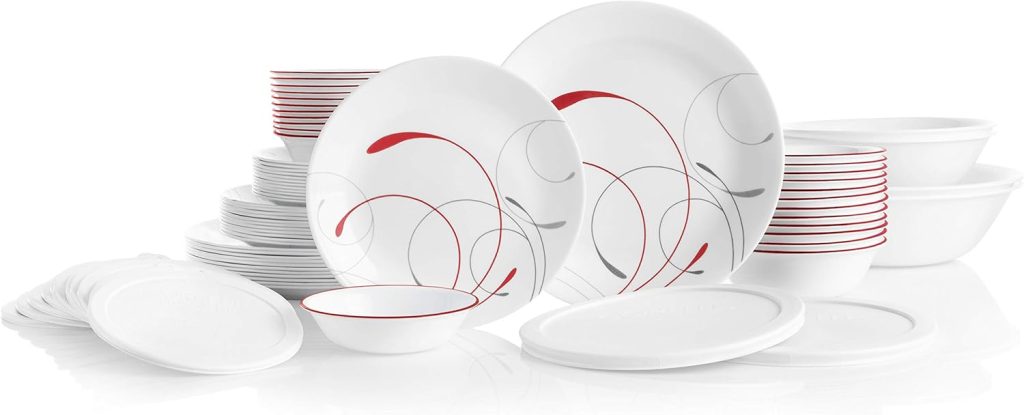
The substantial piece count means you can run the dishwasher less frequently since backup plates remain available.
For families prioritizing durability with children in the home, Winter Frost White in any configuration offers practical advantages.
The plain white surface hides minor scratches better than printed patterns, and the timeless design grows with your family rather than dating itself to a particular era.
The Corelle 18-piece set in this pattern provides an excellent starting point, with easy expansion through open stock purchases as needs change.
Best Budget-Friendly Set
Corelle’s 18-piece sets deliver exceptional value, typically costing significantly less per piece than comparable ceramic or porcelain collections while outlasting them by years.
These starter sets include everything needed for service for six, with dinner plates, salad plates, and bowls in coordinated patterns.
The space-saving design means you avoid the hidden cost of larger cabinets or storage solutions required for bulkier dinnerware.
Warehouse retailers and online marketplaces frequently offer promotional pricing on select patterns, making budget-conscious shopping even more rewarding.
Purchasing during seasonal sales events can reduce costs by 30-40% compared to regular retail prices.
Given Corelle’s longevity, even full-price sets represent sound investments when you calculate cost per use over decades of service.
Best Minimalist Set
For those embracing simple, unadorned aesthetics, the Corelle Winter Frost White 16-piece set epitomizes minimalist dinnerware.
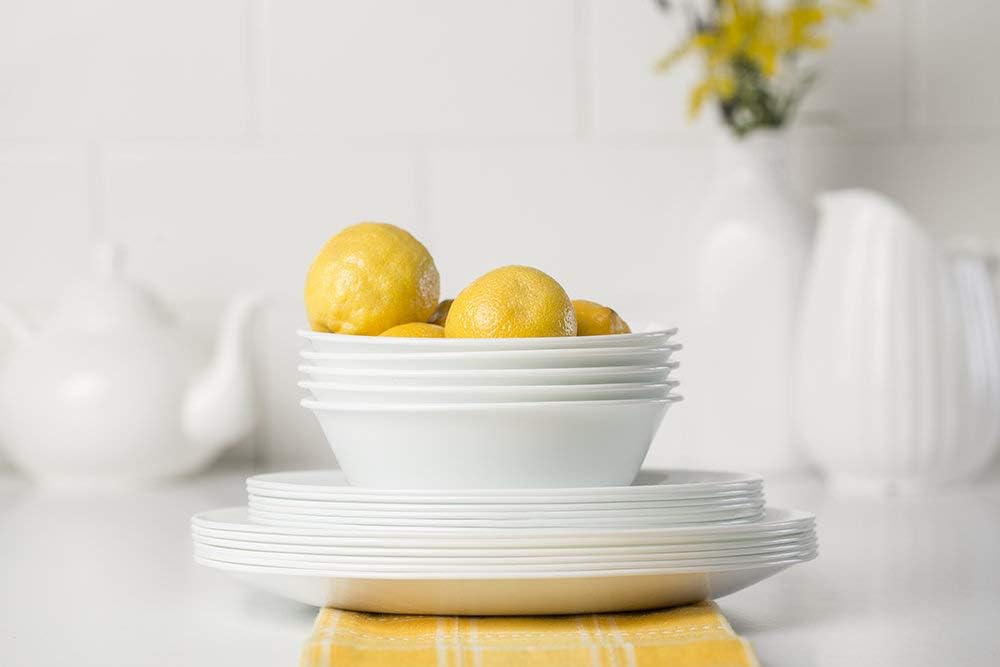
This collection provides the essentials—dinner plates, salad plates, bowls, and mugs for four—in pure, undecorated white that complements any color scheme and lets your food’s natural colors provide the visual interest.
The set’s restraint extends to packaging and presentation, reflecting the straightforward functionality that minimalists value.
Alternatively, the Square Pure White collection brings geometric minimalism to the table with clean right angles and brilliant white surfaces.
This modern interpretation of simplicity works particularly well in contemporary homes where form follows function and unnecessary ornament is consciously avoided.
The square shape provides a subtle design statement without venturing into pattern or color decoration.
Best Gift Bundle
The Corelle Splendor 16-piece set or the Corelle Splendor 18-piece makes an excellent gift for weddings, housewarmings, or graduations due to its sophisticated appearance and complete service for four.
The elegant gray banding with metallic accents elevates the presentation beyond basic white patterns while maintaining versatility for various table settings.
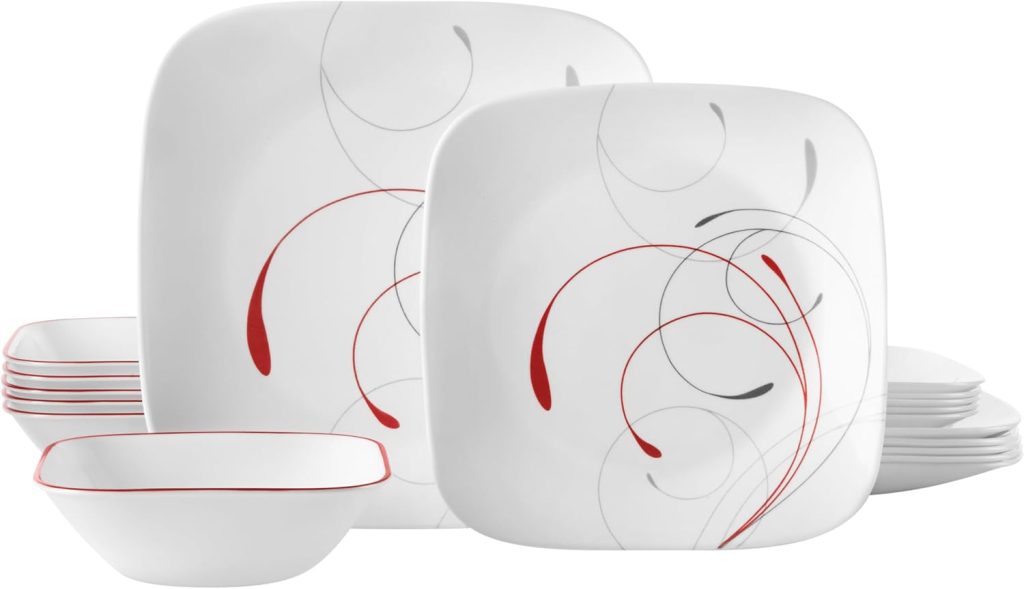
Including mugs in the 16-piece configuration creates a true starter collection that recipients can use immediately.
Gift-givers appreciate that Corelle’s brand recognition ensures recipients understand the quality they’re receiving, while the lightweight shipping reduces delivery costs for online purchases.
Many retailers offer gift boxing or registry services specifically for Corelle, simplifying the purchase process.
The brand’s wide availability means recipients can easily expand their collection or find replacement pieces as needed.
Best Set for Small Kitchens/RVs
Corelle’s space-saving design makes it virtually unmatched for compact living situations.
The standard 18-piece set occupies roughly one-third the cabinet space of equivalent ceramic dinnerware, a critical advantage in apartments, tiny homes, or recreational vehicles where every cubic inch matters.
Plates stack tightly without the bulk that makes ceramic towers unstable, and the lightweight construction prevents upper cabinet strain.
For RV owners specifically, Corelle offers additional benefits beyond space savings.
The break-resistance withstands road vibrations and the occasional bump from mobile living, while the microwave and dishwasher safety (many RVs feature compact versions of both appliances) maintain convenience on the road.
The 12-piece set provides service for four without excess pieces that become dead weight during travel, striking an ideal balance for couples or small families exploring in motorhomes or travel trailers.
Corelle vs Other Dinnerware: How Does It Compare?
Understanding how Corelle stacks up against alternative dinnerware materials helps you make informed decisions aligned with your priorities.
Each material offers distinct advantages and trade-offs regarding durability, weight, appearance, maintenance, and cost.
These comparisons examine the practical differences that affect daily use rather than abstract material properties, helping you identify which characteristics matter most in your kitchen.
The choice between dinnerware materials often comes down to balancing competing priorities.
No single option excels in every category, so understanding your household’s specific needs, whether that’s indestructibility for young children, formal elegance for entertaining, or extreme budget consciousness, guides you toward the material that makes the most sense.
Corelle vs Ceramic
Ceramic dinnerware represents the most common alternative to Corelle, with earthenware and stoneware falling under this broad category.
Traditional ceramic offers attractive hand-crafted aesthetics, with artisanal glazes and rustic textures that appeal to those valuing handmade character.
However, ceramic plates typically weigh two to three times more than equivalent Corelle pieces, and they chip far more easily around edges and handles.
The weight difference becomes particularly noticeable in cabinet storage and table service for groups.
Carrying stacks of ceramic plates requires more strength and caution, while the bulk they occupy limits storage capacity in smaller kitchens.
Ceramic’s porous body also absorbs stains more readily than Corelle’s non-porous glass, meaning coffee cups develop rings and bowls may discolor with repeated use of tomato-based sauces.
However, ceramic enthusiasts appreciate the warmth and texture that earthenware brings to table settings, qualities that some find lacking in Corelle’s smooth uniformity.
Corelle vs Porcelain
Porcelain dishes occupy the premium end of dinnerware markets, prized for their translucent white bodies and refined appearance.
High-quality porcelain features delicate, thin walls that transmit light beautifully and create elegant table presentations suitable for formal dining.
When comparing Corelle vs fiestaware material or fine porcelain, the aesthetic differences become clear. Porcelain offers sophistication that Corelle’s utilitarian efficiency doesn’t attempt to match.
However, this elegance comes with fragility and expense.
Porcelain chips and cracks more easily than Corelle, requiring careful handling and hand washing to preserve its pristine condition.
The material’s density makes it heavier than Corelle, though lighter than stoneware, finding a middle ground in weight.
Porcelain also commands significantly higher prices, with quality sets costing two to five times more than comparable Corelle collections.
For daily family use, Corelle’s durability advantage outweighs porcelain’s aesthetic refinement, while those prioritizing formal entertaining may prefer porcelain’s traditional elegance.
Corelle vs Stoneware
Stoneware represents the heavyweight category of dinnerware literally.
These thick, dense ceramic pieces offer rustic charm and exceptional heat retention that keeps food warm longer at the table.
Stoneware’s substantial heft conveys a sense of quality and craftsmanship that appeals to those who equate weight with durability.
The material also provides excellent chip resistance along edges due to its thickness.
Despite these strengths, stoneware’s considerable weight makes it less practical for everyday use in busy households.
A full place setting weighs multiple pounds, and stacking dinner plates can challenge cabinet shelf supports.
The bulk requires significantly more storage space than Corelle, making stoneware impractical for small kitchens or those with limited cabinet capacity.
Additionally, stoneware’s thickness makes it slow to heat in microwaves and prone to thermal shock if moved too quickly from hot to cold environments, a risk that Corelle’s thinner profile avoids through more uniform temperature distribution.
Which Material Is Best for You?
Selecting the right dinnerware material depends on weighing your specific priorities across multiple factors.
Choose Corelle if you value lightweight handling, space-efficient storage, exceptional durability for daily family use, and budget-friendly pricing.
This material excels in practical, high-use scenarios where dishes face frequent washing, occasional drops, and the general chaos of busy households with children.
Opt for ceramic or stoneware if aesthetic character and artisanal qualities matter more than weight and space efficiency, and you’re willing to handle dishes more carefully.
These materials suit those who view dinnerware as décor elements that contribute to their home’s artistic character.
Select porcelain when formal entertaining takes priority, and you can dedicate the attention needed to preserve delicate pieces.
Many households keep multiple sets of Corelle for everyday use and porcelain or ceramic for special occasions, combining the practical benefits of each material type.
How to Use Corelle Dinnerware (Microwave, Dishwasher & Oven Safety)
Proper usage extends Corelle’s already impressive lifespan and prevents the few breakage scenarios that can occur with this durable material.
While Vitrelle glass tolerates more abuse than ceramic alternatives, understanding its specific limitations helps you avoid the thermal shock and extreme impacts that occasionally damage even these robust dishes.
Following manufacturer guidelines ensures your Corelle dinnerware review stays positive for years.
Microwave Safe or Not?
Corelle plates and bowls are completely microwave safe for reheating and cooking foods.
The glass construction heats food efficiently without creating cold spots or uneven warming that can occur with some ceramic dishes.
Corelle won’t get excessively hot from microwave energy the way some ceramics do, though the food itself will heat the dish through conduction, so handles and edges may become warm depending on what you’re heating.
For best results, avoid taking Corelle directly from the freezer to the microwave or vice versa, as extreme temperature differentials can cause stress fractures.
Allow frozen foods to thaw slightly before microwaving, or use lower power settings for initial warming.
Never microwave empty Corelle dishes or those with metallic decorative trim, as some vintage patterns included metal accents that can spark or damage microwave interiors.
Dishwasher Guidelines
Corelle performs excellently in dishwashers, with the glass surface resisting the detergent abrasion and high temperatures that gradually dull some ceramic finishes.
Load plates in standard dish racks without special positioning requirements, though ensuring they don’t rattle against other items prevents the rare chance of impact damage during wash cycles.
The non-porous surface emerges completely clean and spot-free when used with quality detergent and adequate rinse aid.
For patterned Corelle, some older designs may experience gradual fading if washed at very high temperatures over many years.
Using dishwasher settings around 140-150°F preserves pattern longevity while still providing sanitary cleaning.
Plain white Corelle shows virtually no wear from dishwasher use, even after hundreds of cycles, maintaining its bright appearance indefinitely with normal care.
Heat Shock Risks & How to Avoid Them
The primary cause of Corelle breakage stems from thermal shock—subjecting the glass to rapid, extreme temperature changes that create differential expansion within the material.
This occurs most commonly when transferring very hot plates directly to cold surfaces like granite countertops or metal sink basins, or conversely, placing cold dishes directly into preheated ovens or under broilers.
Prevent thermal shock by using trivets or hot pads under plates removed from microwaves or conventional ovens, allowing gradual temperature equalization.
When using Corelle in conventional ovens (safe up to 350°F for plain pieces without metallic trim), preheat the dishes with the oven rather than placing cold dishes into hot environments.
Avoid subjecting hot Corelle to cold water or frozen foods, and never place Corelle under broilers or on stovetop burners where localized intense heat can exceed safe temperatures.
Following these simple precautions virtually eliminates breakage risk from thermal stress.
How to Maintain & Care for Corelle Sets
Proper maintenance keeps Corelle looking new for decades while preventing the minor issues that can diminish any dinnerware’s appearance over time.
Though Corelle requires less fussy care than many alternatives, a few simple practices preserve the bright white finish, prevent gray metal marks or brown stains, and ensure safe storage that protects your investment.
Cleaning Tips for Everyday Use
Daily cleaning of Corelle requires nothing special; standard dishwashing techniques work perfectly.
For hand washing, use any dish soap with warm water and a soft sponge or dishcloth.
The non-porous glass surface releases food residues easily without scrubbing, and you’ll notice that staining from coffee, tea, or tomato sauces simply doesn’t occur the way it does with porous ceramics.
For stuck-on foods, soaking in warm soapy water loosens residues without requiring abrasive scrubbers that might scratch the surface.
While Corelle resists scratching better than most materials, avoiding steel wool or harsh abrasive powders preserves the pristine finish.
Rinse thoroughly to remove all soap residue, as detergent film can create a dull appearance if allowed to dry on the surface.
Removing Scratches & Gray Marks
The most common cosmetic issue with Corelle involves gray metal marks left when stainless steel flatware rubs against the glass surface.
These marks don’t indicate damage but rather metal deposits left on the Corelle surface.
Remove them easily with a gentle abrasive cleanser like Bon Ami, Bar Keepers Friend, or baking soda paste.
Apply the cleaner with a damp sponge using circular motions, and the gray marks disappear completely.
Minor scratches in the glass surface itself can sometimes be reduced using glass polish or extremely fine-grit polishing compounds designed for glass surfaces, though deep scratches are permanent.
Prevention proves more effective than treatment.
Encourage family members to avoid cutting food directly on plates or using plates as cutting surfaces, and keep flatware in good condition without rough edges or burrs that contribute to marking.
How to Store Corelle Safely
Corelle’s stackability and thin profile make storage simple, but proper technique prevents the chips and cracks that can occur at contact points.
Stack plates of the same size together without mixing dinner and salad plates in a single stack, as size differences create unstable towers prone to toppling.
Place felt or paper dividers between stacks if your cabinets have wire rack shelving where plates might rock or shift.
Avoid overloading stacks. Eight to ten plates per stack provide stability without excessive weight on the bottom pieces.
Store bowls by nesting them together rim-to-rim rather than stacking upside down, which can trap moisture and create pressure points on rounded bases.
For long-term storage of sets not in regular rotation, consider wrapping in tissue paper or cloth napkins and boxing in sturdy containers that protect from jostling if moved.
Where to Buy Corelle Dinnerware Sets
Finding Corelle involves multiple retail channels, each offering advantages for different shopping priorities.
Whether you value in-person inspection before purchase, seek the best possible prices, or hunt for specific discontinued patterns, understanding where and how to shop helps you find exactly what you need at optimal prices.
Best Online Stores (Amazon, Walmart, Target)
Major online retailers provide convenient Corelle shopping with competitive pricing and a broad selection.
Amazon typically offers the widest pattern variety with robust customer review systems that help evaluate specific sets before purchase.
Prime membership provides free two-day shipping on many sets, though verifying that sellers are authorized Corelle retailers ensures authentic products backed by manufacturer warranties.
Walmart and Target both maintain substantial online Corelle inventories with frequent promotional pricing, particularly during seasonal sales events.
These retailers often allow in-store pickup for online purchases, combining online shopping convenience with immediate availability.
Their frequent sales events make timing purchases around promotions especially rewarding for budget-conscious shoppers seeking the best Corelle pattern for families.
Official Corelle Website Buying Guide
Shopping directly through the official Corelle website provides access to the complete current catalog, including exclusive patterns or configurations not available through other retailers.
The site offers detailed product information, high-quality images showing actual colors and patterns accurately, and customer service directly from the manufacturer for questions about specific products.
The official website frequently runs direct-to-consumer promotions offering discounts on bulk purchases or free shipping thresholds.
Creating an account enables wishlist features and notifications about sales on specific patterns you’re monitoring.
The site also provides comprehensive care instructions, warranty information, and access to open stock pieces for expanding or replacing items in existing sets.
Where to Find Discontinued or Vintage Corelle Patterns
Collectors and those seeking to match existing vintage Corelle patterns should explore specialized secondary markets.
Replacements.com maintains an extensive inventory of discontinued patterns, with search functionality helping identify specific pieces to complete partial sets.
Prices reflect rarity and demand, with popular vintage patterns commanding premiums over newer designs.
eBay offers auction and buy-it-now listings for vintage Corelle spanning decades of production, though condition varies significantly and requires careful evaluation of seller photos and descriptions.
Estate sales, antique malls, and thrift stores occasionally yield exceptional finds at fraction-of-retail prices for those willing to hunt patiently.
Facebook Marketplace and Craigslist provide local options where you can inspect pieces in person before purchasing, avoiding shipping risks for fragile vintage items.
FAQs About Corelle Dinnerware Sets
With proper care, Corelle dishes can last 20-30 years or even longer.
Many families report using the same Corelle sets daily for multiple decades without replacement due to breakage.
The glass construction doesn’t absorb stains, fade significantly, or develop the crazing (fine surface cracks) that eventually affect ceramic glazes.
Patterns may show some wear from decades of dishwasher use and utensil contact, but the structural integrity remains intact.
The exceptional longevity means Corelle offers superior value per year of use compared to cheaper ceramic options that require replacement every 5-10 years due to chips and cracks.
Do Corelle dishes break easily?
No, Corelle dishes are exceptionally break-resistant compared to standard ceramic or porcelain dinnerware.
The triple-layer Vitrelle glass construction distributes impact forces across the entire piece rather than concentrating stress at one point.
Most Corelle survives drops from counter height onto hard floors that would shatter ceramic plates.
However, Corelle can break under extreme conditions like very high falls onto concrete or direct impacts on edges against hard surfaces.
When breakage does occur, it typically happens suddenly with the dish fragmenting rather than developing gradual chips.
Final Thoughts: Why Corelle Dinnerware Sets Are a Top Choice for Modern Homes
We have examined every aspect of Corelle dinnerware sets, from the innovative Vitrelle glass technology to pattern selections, safety certifications, and practical usage guidelines, and the brand’s enduring popularity becomes clear.
Corelle succeeds because it addresses the real-world challenges that families face daily:
a) Dishes that survive active households with children
b) Sets that store efficiently in increasingly compact kitchens
C) Tableware that maintains its appearance through years of dishwasher cycles and microwave reheating.
The combination of exceptional durability, featherlight handling, and budget-friendly pricing creates a value proposition that few competitors match.
Whether you’re drawn to classic Winter Frost White simplicity or prefer decorated patterns that bring personality to your table, Corelle delivers reliable performance that outlasts trendier alternatives.
The brand’s commitment to safety through BPA-free glass construction and lead-free decorating provides peace of mind for health-conscious households.
For those furnishing first apartments, upgrading worn dinnerware, or seeking gifts that recipients will actually use for decades, Corelle dinnerware sets represent a smart, practical choice.
The space-saving design, microwave and dishwasher compatibility, and genuine break-resistance aren’t marketing exaggerations; they’re qualities proven through five decades of service in millions of homes.
While Corelle may not offer the artisanal character of handmade ceramics or the formal elegance of fine porcelain, it excels precisely where modern life demands excellence: affordable, durable, practical tableware that simply works, day after day, year after year.