You’re standing in your kitchen, looking at that familiar white Corningware dish you’ve used countless times for family dinners.
Maybe you’re pregnant, have young children, or simply care about what’s in your cookware.
Recently, you’ve heard scary stories about lead in dishes and cookware, and now you’re wondering if your trusted Corningware is safe.
The concern is real and completely understandable. Lead poisoning is serious, especially for children and pregnant women.
You want to protect your family, but you also don’t want to throw away perfectly good cookware without knowing the facts. So the big question on your mind is: Does Corningware contain lead?
Let’s clear up the confusion and give you the straight answer you need to make an informed decision about your cookware safety.
BOTTOM LINE: DOES CORNINGWARE CONTAIN LEAD?
Most CorningWare cookware is lead-free, but some vintage pieces made before 2005 may contain lead in their decorative patterns. The white Pyroceram base material is always lead-free, but painted designs on older pieces can contain 15,000-100,000 PPM lead, which exceeds safe levels.
UNDERSTANDING LEAD IN CORNING WARE: THE COMPLETE PICTURE
Lead was commonly used in ceramic paints and glazes before modern safety regulations. This affects how we need to think about vintage CorningWare safety.
The Pyroceram Base Material
The white Pyroceram material that forms the base of all CorningWare is completely lead-free. This glass-ceramic material has never contained lead in its composition.
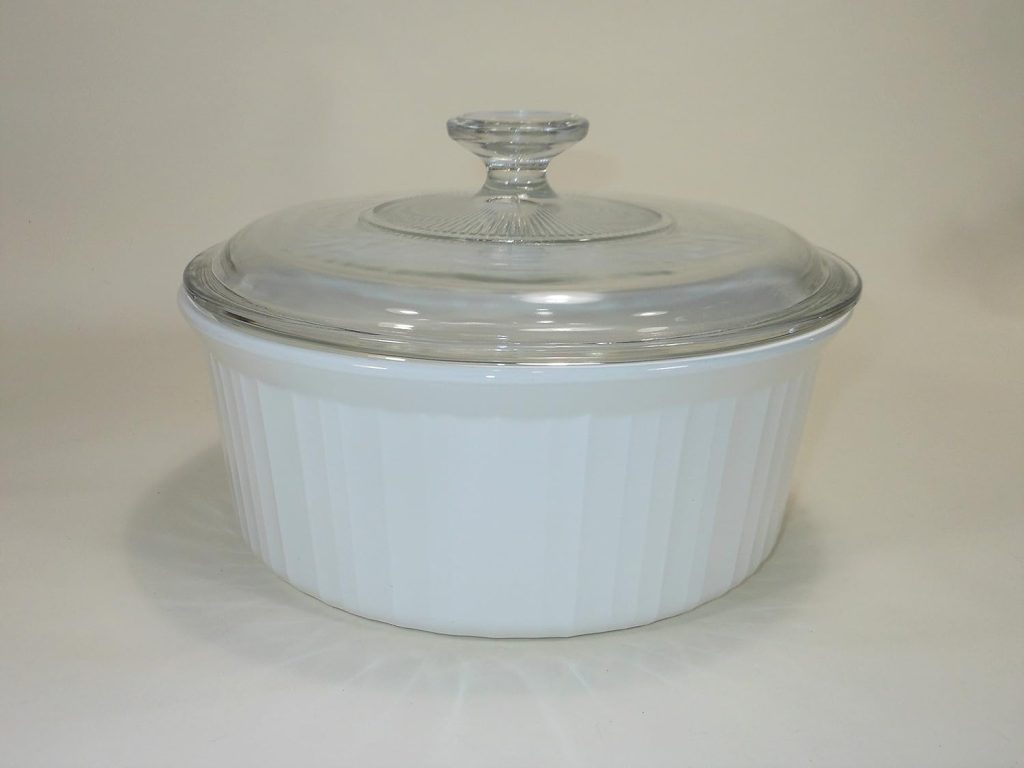
Corning designed Pyroceram to be chemically inert and safe for food contact.
Where Lead Problems Occur
Lead concerns arise from the decorative patterns painted on the outside of some vintage pieces. These paints were applied over the Pyroceram base and could contain lead compounds that made the colors more vibrant and durable.
Regulatory Changes Over Time
Before the 1970s, there were fewer restrictions on lead use in consumer products. Testing for lead on vintage Corningware products will likely detect around 15,000 – 100,000 PPM lead, but it’s mostly on the outer surface that’s been painted on.
Modern safety standards require much lower lead levels in items that contact food.
Recent Safety Warnings
Corelle has issued an urgent safety warning regarding high lead levels in their vintage dinnerware, advising consumers to cease using pre-2005 dishes for food service. This warning affects related Corning products and highlights the importance of testing vintage pieces.
Independent Testing Results
Consumer advocacy groups have conducted extensive testing on vintage CorningWare pieces.
With some very rare exceptions, the paint on the outside of both vintage Pyrex and vintage Corningware bowls and baking dishes will usually test positive for lead between 15,000 and 100,000 PPM lead.
The Consumer Product Safety Commission sets the safety limit for lead in items intended for children at 90PPM in coatings.
DOES BLUE CORNFLOWER CORNING WARE CONTAIN LEAD?
Blue Cornflower is one of the most popular and recognizable CorningWare patterns. The safety of this pattern has been extensively studied.
Testing Results for Blue Cornflower
Many of the vintage Corningware casserole dishes like this (specifically the ones with this blue cornflower pattern) that I have tested have been negative for Lead in the exterior painted decorative (blue) markings, but NOT all of them.
This means most Blue Cornflower pieces are safe, but testing individual pieces is still recommended.
Year-to-Year Variations
Not all Blue Cornflower pieces are identical in terms of lead content. Manufacturing processes and paint formulations changed over the decades of production.
Even within the same pattern, different production years might have different safety profiles.
Safe Use Recommendations
Most Blue Cornflower pieces can be used safely for food preparation and storage. However, if you have pieces from the 1960s or 1970s, consider having them tested or using them for display only.
1970s Blue Cornflower CorningWare Lead Test Results
Independent testing shows that most Blue Cornflower pieces from the 1970s test negative for lead. This makes them safer than many other vintage patterns from the same era.
Is 1970s CorningWare Safe to Use? 1970s CorningWare in the Blue Cornflower pattern is generally safe to use, but individual testing is the only way to be completely certain about your specific pieces.
IS WHITE CORNINGWARE LEAD FREE?
White Corning Ware has the simplest safety profile because it lacks decorative paints that could contain lead.
Pure Pyroceram Composition
White CorningWare is made entirely from Pyroceram glass-ceramic material. This material contains no lead and never has throughout its production history.
The white color comes from the natural appearance of the Pyroceram material, not from paint or glaze.
No Decorative Elements
Since white CorningWare has no painted patterns, there are no decorative elements that could contain lead. This makes it the safest vintage Corning Ware option for food use.
All Production Years Safe
Unlike patterned pieces, white Corning Ware from any production year is safe to use. The composition has remained consistent since the 1950s.
Testing Confirmation
Independent testing consistently shows zero lead content in white CorningWare pieces. The smooth, undecorated surface eliminates the primary source of lead contamination found in other vintage cookware.
White CorningWare Lead Test Results: All white CorningWare pieces tested by independent labs have shown non-detect results for lead, making them completely safe for food contact.
French White CorningWare Lead Status
French White CorningWare, a popular white pattern with subtle ribbed designs, is also lead-free. The texture comes from molding, not applied decorations.
DOES VINTAGE CORNINGWARE CONTAIN LEAD?
The age of your Corning Ware pieces significantly affects their lead content risk.
Pre-1980 Pieces Have Higher Risk:
Corning Ware made before 1980 has a higher likelihood of containing lead in decorative patterns. This was before stricter lead regulations were implemented for consumer products.
Pattern-Specific Risks:
Some patterns are more likely to contain lead than others. Bright colors like orange, red, and yellow were more likely to use lead-based pigments. Earth tones and certain floral patterns also show higher lead levels.
Spice of Life Pattern Concerns:
So far, I have tested designs dating to 1998 – all positive for Lead. The Spice of Life pattern, with its colorful vegetable designs, consistently tests positive for high lead levels across multiple decades of production.
Manufacturing Period Variations:
Even the same pattern can have different lead levels depending on when it was made. Changes in suppliers, regulations, and manufacturing processes all affected lead content over time.
High-Risk Vintage Patterns:
Patterns with bright reds, oranges, and yellows typically contain the highest lead levels. The tomato designs in vegetable patterns are particularly concerning, with the tomato in the vegetable pattern on the outside of the dish. Tamara found the lead levels to be nearly 300 times the acceptable amount.
Safe Vintage Options:
Some vintage patterns, particularly those with simple designs or muted colors, may be lead-free. However, testing is the only way to know for certain.
HOW TO TEST CORNINGWARE FOR LEAD
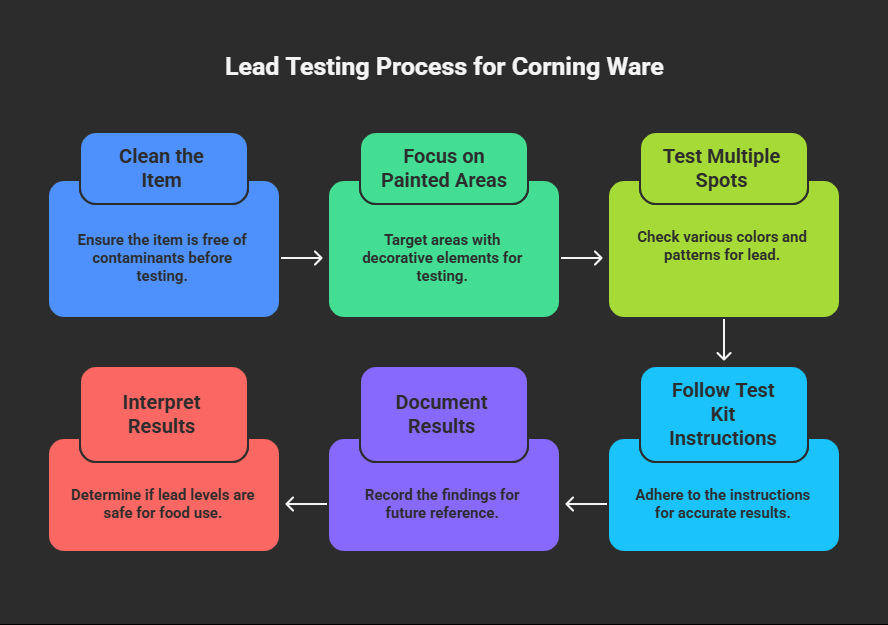
Testing your Corning Ware for lead is the most reliable way to ensure your family’s safety.
Professional XRF Testing XRF (X-ray fluorescence) analyzers provide the most accurate lead testing results. These devices can detect lead levels precisely and give immediate results. Professional testing services use XRF analyzers for definitive results.
Home Lead Test Kits Several home test kits can detect lead in cookware:
- 3M LeadCheck Swabs: Easy to use and widely available. Swab the painted areas and look for color changes that indicate lead presence.
- Lead Inspector Test Kits: More sensitive than basic swabs and can detect lower lead levels.
- Digital Lead Testing Devices: Consumer-grade XRF devices are becoming more affordable and accurate.
Testing Procedure Steps
- Clean the item thoroughly before testing
- Focus testing on painted or decorated areas
- Test multiple spots if the piece has various colors
- Follow the test kit instructions exactly for accurate results
- Document your results for future reference
What to Test: Focus on exterior decorative elements, not the white Pyroceram base. Test each color separately, as different pigments may have different lead levels.
Interpreting Results: Any detectable lead level above 90 PPM is considered unsafe for items that contact food. Many vintage pieces test much higher, making them unsuitable for food use.
Cost Considerations: Home test kits cost $10-30*(depending on the brand and retailer), while professional testing may cost $50-200* or even higher per item.
For valuable collections, professional testing may be worth the investment.
IS SCRATCHED CORNINGWARE SAFE TO USE?
Scratches and damage to CorningWare can create additional safety concerns beyond lead content.
Surface Damage Risks:
Scratches in the Pyroceram surface are generally not dangerous from a lead perspective since the base material is lead-free. However, deep scratches can harbor bacteria and make cleaning difficult.
Decorated Surface Scratches:
Scratches that go through decorative paint are more concerning. If the paint contains lead, damaged areas could allow lead to leach into food more easily.
Scratched surfaces also release paint particles that could be consumed.
When Scratches Are Dangerous:
Deep scratches that expose underlying paint layers or go through multiple coating layers pose the highest risk. Any scratch that catches food particles or is difficult to clean thoroughly should be avoided.
Safety Guidelines for Scratched Pieces
- Don’t use pieces with scratches in painted areas for food storage
- Avoid using scratched pieces with acidic foods, which could increase leaching
- Consider scratched vintage piece,s decorative only
- Replace any piece with extensive scratching
Micro-Scratches vs. Deep Damage: Light surface scratches that don’t catch your fingernail are usually safe. Deep scratches that you can feel or that collect debris are more problematic.
Scratched Vintage Cookware Lead Exposure:
Scratched vintage cookware increases lead exposure risk because damaged paint can release particles directly into food.
Even small amounts of lead-containing paint particles can be harmful, especially for children.
SAFE ALTERNATIVES TO RISKY VINTAGE PIECES
If your testing reveals lead in your vintage CorningWare, several safe alternatives are available.
Modern CorningWare: Current production CorningWare meets all modern safety standards. New pieces are regularly tested for lead and other contaminants and are safe for food use.
Other Lead-Free Glass Cookware: High-quality borosilicate glass cookware like Pyrex offers similar benefits to Corning Ware without vintage lead concerns. These products are specifically manufactured to be lead-free.
Ceramic and Stoneware Options: Modern ceramic cookware from reputable manufacturers is lead-free and safe. Look for products specifically labeled as lead-free and made for food use.
Stainless Steel Alternatives: Stainless steel cookware eliminates lead concerns. While it doesn’t offer the same temperature flexibility as glass-ceramic, it’s extremely durable and safe.
Safe Vintage Options: If you prefer vintage style, look for newer vintage pieces (post-1990) or stick with plain white CorningWare that lacks potentially problematic decorative elements.
WHAT TO DO WITH LEAD-POSITIVE PIECES
If your testing reveals lead in your Corning Ware, you have several options for handling these pieces safely.
Stop Food Use Immediately: Any piece that tests positive for lead should not be used for food preparation, cooking, or storage. This includes serving food, even if the food doesn’t directly touch decorated areas.
Display-Only Use: Many collectors choose to display lead-positive pieces rather than discard them. This preserves their value and memories while protecting family health.
Safe Disposal Methods: If you choose to dispose of lead-positive pieces, contact your local hazardous waste facility. Don’t put them in regular trash where they could harm sanitation workers or contaminate landfills.
Documentation for Insurance: If you’re disposing of valuable vintage pieces due to lead content, document their condition and testing results for potential insurance claims.
Replacement Strategies: Consider replacing risky pieces with safe alternatives that offer similar functionality and appearance.
EXPERT RECOMMENDATIONS AND CURRENT GUIDELINES
Food safety experts and regulatory agencies have clear positions on lead in cookware.
Industry sources and FDA-related enforcement letters indicate 90 ppm lead is commonly recognized as the limit for items intended for children and 100 ppm for general food contact items. Most problematic vintage CorningWare exceeds these limits by hundreds of times.
The FDA sets limits on lead in food contact materials but does not authorize lead as a food additive or color additive, including in foodware or cookware.
They require that lead levels be low enough to avoid food adulteration or health concerns. For ceramicware, the FDA has compliance guides that set limits on leachable lead, with stricter rules for items like cups, mugs, and pitchers due to longer contact times with food.
In ornamental and decorative ceramicware, high-lead-leaching items must bear a label warning against food use.
Pediatric Health Recommendations: “Individuals who are currently using traditional ceramic ware to prepare, cook, serve, or store food should speak with their doctor and request a blood lead test.” This is especially important for families with young children.
Independent Advocate Positions: Leading consumer safety advocates recommend testing all vintage cookware and avoiding any pieces that test positive for lead, regardless of sentimental value.
International Standards: European and Canadian safety standards are often stricter than U.S. requirements, providing additional safety margins for consumers.
HOW MUCH LEAD IS TOO MUCH?
Understanding lead level measurements helps you make informed decisions about your cookware.
PPM Measurements Explained: PPM stands for “parts per million.” Current safety limits are 90 PPM for children’s items and 100 PPM for general food contact surfaces.
Vintage Piece Typical Levels: Most problematic vintage CorningWare pieces test between 15,000-100,000 PPM lead. This is 150-1000 times higher than safe limits.
Health Impact Considerations: There is no safe level of lead exposure, especially for children and pregnant women. Even low levels can cause developmental problems and health issues over time.
Cumulative Exposure Risks: Using multiple lead-containing items increases total exposure. Even if each item contributes small amounts, the combined effect can be significant.
CONCLUSION AND KEY TAKEAWAYS
The question “Does Corning Ware contain lead?” has a complex answer that depends on the age and pattern of your pieces.
Key Safety Points:
- White Corning Ware is always lead-free and safe to use
- Blue Cornflower pattern is generally safe, but should be tested
- Most vintage patterns from before 2005 contain concerning lead levels
- Scratched pieces with decorative elements pose additional risks
- Testing is the only way to know for certain about individual pieces
Action Steps:
- Test any vintage Corning Ware with decorative patterns
- Stop using any pieces that test positive for lead
- Focus on white pieces or modern production for food use
- Consider display-only use for valuable vintage pieces with lead
Safe Options: White Corning Ware, modern production pieces, and properly tested vintage pieces without lead provide safe alternatives for cooking and food storage.
The most important message is that testing gives you definitive answers about your specific pieces.
When in doubt, prioritize your family’s health over convenience or sentimental attachment to potentially harmful cookware.