Tag: heat resistant cookware

  • Ocuisine vs Pyrex — Which Glass Bakeware Is Safer and Better?

    Choosing the right glass bakeware isn’t just about cooking performance; it’s about safety.

    Both Ocuisine and Pyrex dominate the market, but they differ significantly in material composition and failure behavior.

    Pyrex’s regional manufacturing split creates confusion: European Pyrex uses borosilicate glass, while American Pyrex switched to tempered soda-lime glass decades ago.

    This change affects thermal shock resistance and shattering patterns. Ocuisine maintains borosilicate construction across all markets, offering consistent performance.

    Understanding these differences helps you avoid dangerous kitchen accidents, from explosive glass failures to food contamination.

    This guide examines material makeup, behaviour, safety records, and real-world performance to determine which bakeware deserves space in your kitchen.

    Why Glass Bakeware Material Matters

    Glass bakeware isn’t created equal. The molecular structure determines how it responds to temperature changes, impacts, and daily stress.

    Borosilicate glass contains boron trioxide, giving it a low thermal expansion coefficient.

    Soda-lime glass, the most common type, expands more rapidly when heated. This fundamental difference affects everything from oven safety to longevity.

    Material choice also influences failure modes, whether glass cracks gradually or shatters explosively.

    For kitchens where bakeware transitions between freezer, countertop, and oven, material composition becomes a critical safety factor.

    Daily Exposure to Heat

    Glass bakeware faces intense thermal cycling. Roasting at 400°F, then cooling to room temperature, then dishwasher heat, these cycles stress the molecular bonds.

    Borosilicate glass handles this expansion and contraction with minimal stress accumulation.

    Tempered soda-lime glass, while strong against impact, develops internal tension from repeated heating.

    Over months of use, invisible stress patterns form, weakening the structure until sudden failure occurs.

    Thermal Shock vs Chemical Safety

    Thermal shock happens when temperature differentials create uneven expansion within glass.

    Placing cold bakeware into a hot oven generates rapid surface heating while the interior remains cool.

    Borosilicate’s low expansion coefficient minimizes this stress. Chemical safety is equally important—glass doesn’t leach chemicals into food, unlike some plastics or coated metals.

    Both Ocuisine and Pyrex excel at chemical inertness, but thermal shock resistance separates their performance profiles.

    Why Glass Type Determines Failure Mode

    Borosilicate glass cracks predictably, forming visible fractures that warn users before complete failure.

    The material’s flexibility allows it to absorb stress without catastrophic collapse. Tempered soda-lime glass stores internal tension throughout its structure.

    When this tension is released, from a chip, scratch, or thermal stress, the entire piece can explode into small fragments.

    This difference isn’t theoretical; consumer safety reports document injuries from explosive Pyrex failures, particularly with post-1998 American-made pieces.

    What Is Ocuisine?

    Ocuisine represents Arc International’s premium glass bakeware line, manufactured in France with consistent quality standards.

    The brand focuses on borosilicate construction across its entire product range, from baking dishes to storage containers.
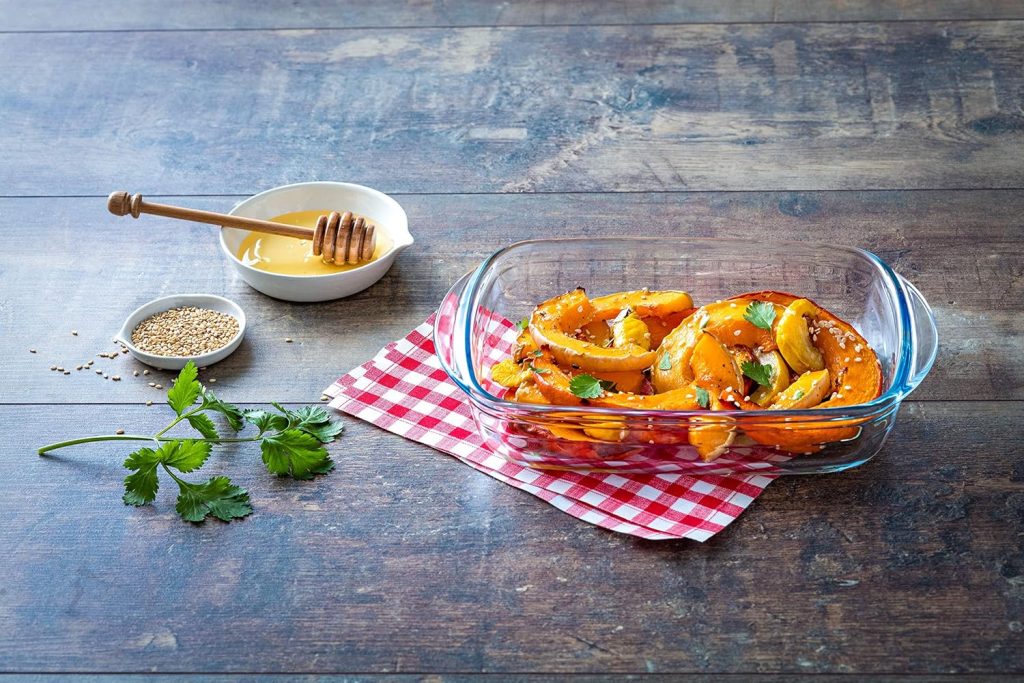
    Ocuisine Borosilicate Bakeware

    Unlike brands with regional manufacturing variations, Ocuisine maintains uniform material specifications globally.

    This consistency makes it easier for consumers to predict performance regardless of where they purchase.

    The brand emphasizes French engineering and thermal performance as core selling points.

    French Brand (Arc International)

    Arc International, founded in 1825, brings nearly two centuries of glass manufacturing expertise to Ocuisine.

    The company operates production facilities primarily in France, maintaining strict quality control over composition and tempering processes.

    This centralized manufacturing approach prevents the material inconsistencies that plague brands with multiple global suppliers.

    Arc International’s reputation in professional kitchenware adds credibility to Ocuisine’s safety claims.

    Made from Borosilicate Glass

    Borosilicate glass contains 70-80% silica and 7-13% boron trioxide, creating a material with exceptional thermal properties.

    This composition gives Ocuisine a thermal expansion coefficient of approximately 3.3 × 10⁻⁶ K⁻¹, roughly one-third that of soda-lime glass.

    The material withstands temperature differentials up to 220°C (400°F) without cracking.

    Laboratory testing confirms Ocuisine maintains structural integrity through repeated freezer-to-oven transitions that would shatter tempered soda-lime alternatives.

    Designed for Oven, Microwave, Freezer

    Ocuisine bakeware safely transitions between temperature extremes.

    The product line includes dishes rated for oven temperatures up to 300°C (572°F), though practical cooking rarely exceeds 250°C.

    Microwave safety comes from the glass’s transparency to microwave radiation; it heats food without absorbing energy itself.

    Freezer storage down to -40°C poses no risk, and pieces can move directly from freezer to preheated oven without gradual warming.

    Known for Thermal Shock Resistance

    Thermal shock resistance defines Ocuisine’s market positioning. Independent testing shows the bakeware withstands 165°C temperature differentials, meaning a dish at -15°C can enter a 150°C oven safely.

    This performance exceeds most cooking scenarios. The resistance comes from material properties, not just tempering.

    While tempered glass gains strength through compression, borosilicate inherently resists thermal stress through its molecular structure.

    What Is Pyrex? (Important Regional Differences)

    Pyrex began as a Corning Glass Works trademark in 1915, originally using borosilicate glass exclusively.

    In 1998, Corning licensed the Pyrex brand for kitchenware to World Kitchen, which reformulated American products using tempered soda-lime glass.

    Meanwhile, European Pyrex remained under different licensing, continuing borosilicate production.

    This split creates significant confusion; two products share the same name but use fundamentally different materials.

    Consumers often don’t realize that Pyrex’s safety profile depends entirely on manufacturing origin.

    Pyrex (Europe & International)

    European Pyrex, manufactured primarily by Arc International (the same company behind Ocuisine), maintains the original borosilicate formulation.

    Products sold in Europe, the Middle East, Africa, and most of Asia use this composition. The glass exhibits thermal shock resistance comparable to Ocuisine, with gradual failure modes that provide a warning before complete breakage.
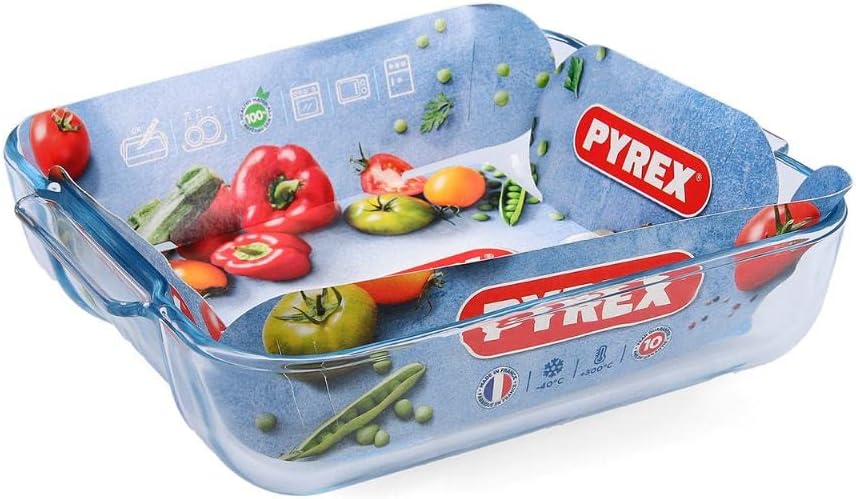
    Pyrex European Borosilicate roaster glassware

    European Pyrex carries manufacturing codes indicating borosilicate construction, though average consumers rarely check these markings.

    Borosilicate European Pyrex handles temperature differentials exceeding 150°C, suitable for all standard cooking applications.

    The material’s transparency and non-reactive surface make it ideal for acidic foods, marinades, and long-term storage.

    Users report decades of reliable service from European Pyrex, with pieces often outlasting their original owners.

    The consistency between European Pyrex and Ocuisine stems from shared manufacturing facilities and material sources.

    Pyrex (United States)

    American Pyrex switched to tempered soda-lime glass in 1998 when World Kitchen acquired the brand.

    This change reduced manufacturing costs while maintaining adequate performance for most users.

    Tempered soda-lime glass undergoes heat treatment, creating surface compression and internal tension, increasing impact resistance compared to annealed glass.
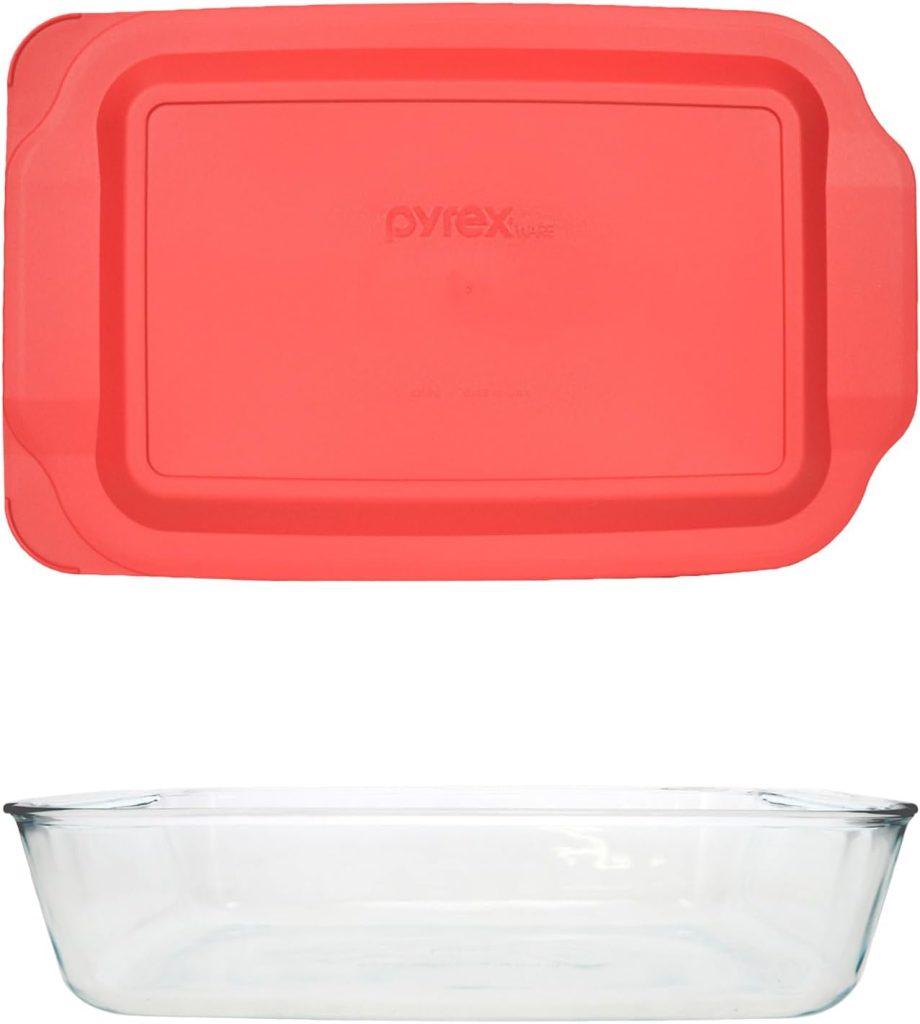
    Pyrex tempered USA made baking glassware

    However, thermal expansion remains three times higher thanthat of borosilicate, limiting thermal shock resistance.

    US Pyrex performs adequately when users follow instructions: no stovetop use, no broiler exposure, and avoid extreme temperature changes.

    Problems arise from the failure mode, when tempered glass breaks, it shatters into thousands of small fragments rather than cracking gradually.

    Consumer Product Safety Commission reports document injuries from explosive failures, particularly when cold dishes contact hot oven racks or hot dishes touch wet countertops.

    Ocuisine vs Pyrex — Material Comparison
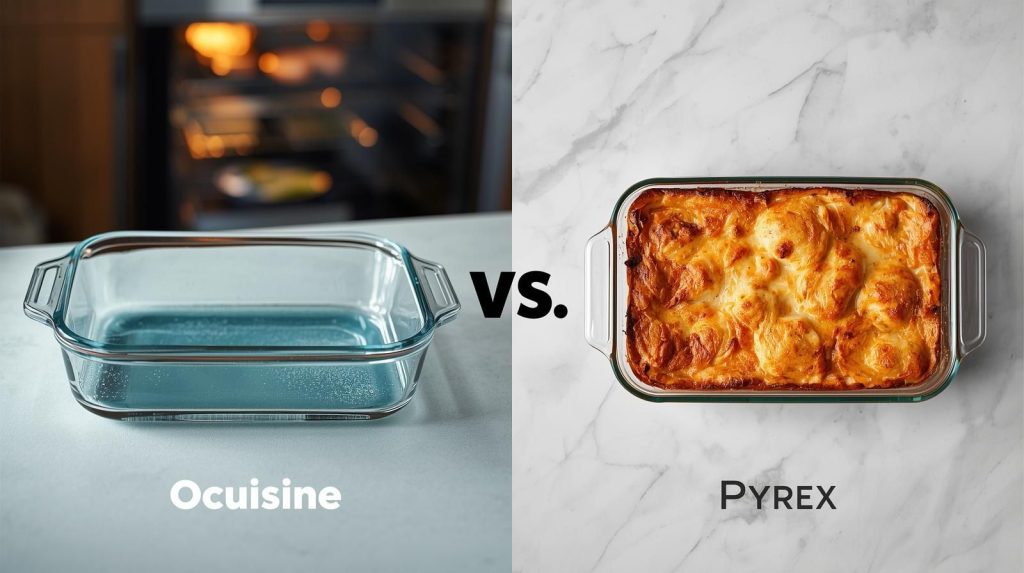
    Ocuisine vs Pyrex

    FeatureOcuisinePyrex (US)Pyrex (EU)
    Glass TypeBorosilicateTempered soda-limeBorosilicate
    Thermal Shock ResistanceHighLow-ModerateHigh
    Shattering BehaviorCracks graduallyCan explodeCracks gradually
    Oven SafetyExcellentGood with cautionExcellent
    Thermal Expansion Coefficient~3.3 × 10⁻⁶ K⁻¹~9 × 10⁻⁶ K⁻¹~3.3 × 10⁻⁶ K⁻¹
    Maximum Temperature Differential165°C60°C165°C
    Freezer-to-Oven SafetyYesNoYes
    Price PointMid-HighLow-MidMid-High

    Material composition creates the performance gap. Borosilicate’s boron trioxide content reduces thermal expansion by approximately 66% compared to soda-lime glass.

    This difference isn’t subtle; it fundamentally changes how the material responds to cooking stress.

    US Pyrex’s tempering process adds strength but cannot overcome the base material’s thermal expansion properties.

    For more brand comparison, read our guide on Pyrex vs Simax glassware.

    Thermal Shock — Why It Matters More Than Heat Resistance

    Heat resistance measures maximum temperature tolerance, while thermal shock resistance measures temperature change tolerance.

    Glass bakeware rarely approaches its absolute temperature limits; few home ovens exceed 300°C.

    However, thermal shock occurs constantly: removing hot lasagna from the oven onto a granite countertop, adding cold ingredients to a preheated dish, or placing frozen casseroles in preheated ovens.

    These everyday actions create rapid, uneven temperature changes that stress the glass structure.

    Cold-to-Hot Transitions

    Moving bakeware from the refrigerator or freezer directly into a hot oven creates maximum thermal shock.

    The dish’s exterior heats rapidly while the interior remains cold, causing differential expansion.

    Borosilicate glass accommodates this difference through its low expansion coefficient; the outer surface doesn’t expand significantly more than the cold interior.

    Tempered soda-lime glass experiences three times the expansion differential, creating internal stress that can exceed the material’s strength.

    Uneven Heating

    Oven heating isn’t uniform. Dishes near heating elements or on lower racks experience higher temperatures than those at the oven center.

    Food itself creates temperature variations; wet areas heat differently from dry spots. These gradients stress the glass unevenly.

    A casserole’s corners heat faster than its center, creating expansion differences across the dish.

    Borosilicate flexes to accommodate these differences; tempered soda-lime accumulates stress until failure occurs.

    Why Borosilicate Survives Stress Better

    Borosilicate’s molecular structure includes boron-oxygen bonds that require less energy to flex than silicon-oxygen bonds alone.

    This flexibility allows the material to absorb thermal stress without permanent damage.

    When stress exceeds the material’s limit, cracks form gradually, often starting at edges or existing flaws.

    Users notice these cracks before catastrophic failure. Tempered soda-lime stores stress in its compressed surface layer, creating a metastable state.

    Once this layer fails, stored energy releases explosively.

    Safety Comparison — Which Is Less Likely to Explode?

    Safety encompasses both failure frequency and failure severity. Borosilicate glass (Ocuisine and European Pyrex) fails less frequently under normal use but also fails predictably when it does.

    Cracks form visibly, allowing users to discard damaged pieces before complete breakage.

    US Pyrex tempered soda-lime glass withstands many uses successfully, but can shatter without warning when thermal stress or physical damage exceeds critical thresholds.

    The explosive failure mode poses risks beyond simple breakage.

    Ocuisine’s Predictable Failure Mode

    When Ocuisine experiences excessive stress, visible cracks appear first. These cracks propagate slowly, typically starting at corners, edges, or existing chips.

    Users spot the damage during inspection or cleaning, discarding the piece before it breaks during use.

    This graceful degradation prevents sudden failures during cooking.

    Even when borosilicate completely fractures, it produces larger fragments rather than fine shards, reducing injury risk and making cleanup simpler.

    Pyrex (US) Explosive Shattering Risk

    Tempered soda-lime glass stores internal tension throughout its structure. Surface compression balances interior tension, creating stability under normal conditions.

    When a defect penetrates the compressed surface from chips, deep scratches, or thermal stress exceeding the material’s limit, the stored tension releases catastrophically.

    The glass explodes into thousands of small, relatively uniform fragments. This temper pattern, designed to reduce sharp edges, creates different dangers: widespread contamination of food and cooking areas.

    Injury & Contamination Concerns

    Consumer reports document injuries from explosive Pyrex failures, including cuts from flying glass and burns when hot contents scatter.

    Food contamination represents another concern; small glass fragments can embed in food, potentially going unnoticed until consumed.

    Kitchen cleanup after an explosive failure requires thorough attention, as fragments travel several feet from the failure point.

    Borosilicate’s crack-then-break pattern keeps damage localized, with larger, more visible fragments that don’t embed in food as easily.

    Oven, Microwave & Freezer Safety

    Glass bakeware’s versatility comes from its temperature tolerance across cooking and storage methods.

    Understanding each brand’s limits prevents accidents and extends product life.

    Manufacturers provide maximum temperature ratings, but real-world safety depends more on temperature transitions than absolute limits.

    Microwave and freezer use present different challenges than oven cooking, requiring material properties beyond simple heat resistance.

    Oven Temperature Limits

    Ocuisine rates its bakeware to 300°C (572°F), exceeding most recipes’ requirements. European Pyrex carries similar ratings for borosilicate products.

    US Pyrex officially supports 232°C (450°F), adequate for most baking but limiting for high-temperature roasting.

    However, absolute temperature matters less than proper preheating practices.

    Both brands require gradual oven preheating with bakeware inside, preventing thermal shock from cold glass entering hot environments.

    Microwave Heating Behavior

    Glass remains cool during microwave heating while food heats rapidly. This creates internal thermal shock as hot food contacts relatively cool glass.

    Borosilicate better tolerates this stress, particularly with dense foods reaching high temperatures.

    All glass types handle microwave use safely when food doesn’t superheat.

    Problems occur when reheating thick casseroles or fatty foods that exceed 100°C locally, creating hot spots against glass surfaces.

    Adequate stirring and power level adjustment prevent issues across all brands.

    Freezer-to-Oven Risks

    This transition creates maximum thermal shock, bakeware at -18°C enters a 180°C oven, generating a 198°C differential.

    Borosilicate handles this stress; manufacturers explicitly allow the practice with Ocuisine and European Pyrex.

    US Pyrex instructions strictly prohibit freezer-to-oven transitions, requiring gradual warming to room temperature first.

    Violating this guidance accounts for many reported US Pyrex failures. The three-times-higher thermal expansion of soda-lime glass makes this transition fundamentally unsafe regardless of tempering quality.

    Which Brand Handles Transitions Better

    Ocuisine and European Pyrex tie for transition tolerance, both using borosilicate with similar thermal properties.

    US Pyrex requires careful temperature management, avoiding rapid changes and always allowing gradual adjustment between extreme temperatures.

    For users who frequently move between freezer storage and oven cooking, borosilicate variants eliminate worry and extra steps.

    US Pyrex demands disciplined adherence to temperature transition protocols that many home cooks find inconvenient.

    Durability & Longevity

    Glass durability depends on accumulated stress rather than simple age. Each thermal cycle, impact, and cleaning session potentially weakens the structure.

    Borosilicate and tempered soda-lime glass degrade differently over time.

    Understanding these patterns helps predict replacement timing and identify dangerous damage before failure occurs.

    Proper handling extends service life significantly, but material properties ultimately determine maximum longevity.

    Chip Sensitivity

    Edge chips expose internal glass structure to stress, creating crack initiation points.

    Borosilicate tolerates minor chips better, as its lower thermal expansion generates less stress concentration around defects.

    Small rim chips rarely propagate into complete failure. Tempered soda-lime’s compressed surface layer, once breached by chips, loses its strengthening effect locally.

    Even small chips can trigger catastrophic failure when thermal stress or impact occurs near the damaged area.

    Scratch & Stress Accumulation

    Surface scratches accumulate from contact with utensils, abrasive cleaning, and stacking in storage.

    Borosilicate’s softer surface scratches more easily but tolerates scratches better; the material’s inherent flexibility prevents scratch-induced failure under thermal stress.

    Tempered glass’s harder surface resists initial scratching but turns scratches into potential failure points.

    Deep scratches penetrating the compression layer create weak spots that can cause the entire piece to shatter when stressed.

    Which Lasts Longer with Daily Use

    Reports suggest borosilicate bakeware serving 20-30 years isn’t uncommon. The material’s flexibility and gradual failure mode mean pieces remain functional until visible cracks appear.

    Users report tempered Pyrex lasting 5-15 years, typically, though careful handling can extend this.

    The unpredictable failure mode means some pieces break after minimal use, while others last decades.

    Borosilicate offers more consistent longevity, though careful users achieve good results with either material.

    Cleaning & Maintenance

    Maintenance practices affect both hygiene and structural integrity.

    Glass bakeware’s non-porous surface resists bacterial growth and doesn’t absorb food odors, but cleaning methods can introduce damage.

    Dishwasher use, thermal cycling during washing, and cleaning chemical exposure all impact long-term durability.

    Regular inspection for damage becomes part of effective maintenance, particularly with tempered glass that can fail without visible warning.

    Dishwasher Impact

    Both materials tolerate dishwasher cleaning, and chemical detergents don’t degrade the glass structure.

    However, dishwasher thermal cycling adds stress. Water temperature reaches 60-80°C during washing, then the pieces cool to room temperature.

    This cycle repeats hundreds of times over the bakeware’s life. Borosilicate handles this stress easily.

    Tempered glass accumulates minor stress with each cycle, contributing to eventual failure.

    Positioning matters contact with metal racks during wash cycles, which can chip edges or scratch surfaces.

    Visibility of Stress Cracks

    Borosilicate cracks appear as clear fracture lines, easily visible during inspection.

    Holding pieces up to the light reveals damage before it progresses. Tempered glass rarely shows visible stress before failure.

    The compressed surface maintains optical clarity even as internal tension builds.

    Cloudiness or surface changes can indicate damage, but tempered glass often looks perfect immediately before shattering.

    This makes pre-failure detection nearly impossible with US Pyrex.

    Descaling & Residue Buildup

    Hard water leaves mineral deposits on glass surfaces. Both materials accumulate these deposits equally.

    Acidic cleaners (vinegar, citric acid) dissolve deposits without damaging the glass structure.

    Abrasive scrubbing removes stubborn residue but risks scratching. Borosilicate’s softer surface shows scratches more readily but tolerates them structurally.

    Tempered glass’s harder surface resists scratching initially but turns deep scratches into potential failure points.

    Plastic scrubbers provide effective cleaning without excessive scratch risk for either material.

    Which Should You Choose? (Use-Case Based Verdict)

    Selection depends on cooking habits, risk tolerance, and availability. No single answer suits everyone.

    Safety-conscious users prioritize borosilicate’s predictable behavior. Budget-focused shoppers accept US Pyrex’s limitations in exchange for lower cost and wide availability.

    Frequent freezer-to-oven transitions make borosilicate essential. Understanding your specific needs clarifies which trade-offs matter most for your kitchen.

    For Safety-Focused Users – Ocuisine

    Prioritizing safety makes Ocuisine or European Pyrex the clear choice.

    Borosilicate’s gradual failure mode, superior thermal shock resistance, and predictable degradation minimize injury and contamination risk.

    The material tolerates user error better; cold dishes placed in hot ovens or hot dishes set on wet surfaces rarely cause failure.

    Users report feeling confident with borosilicate bakeware, using it freely without constant worry about temperature management.

    For Availability & Cost – Pyrex (with Care)

    US Pyrex’s widespread availability and lower price point make it accessible. Walmart, Target, and grocery stores stock it extensively.

    Careful users who follow instructions and avoid extreme temperature changes achieve satisfactory results.

    The key is understanding limitations and never violating freezer-to-oven or cold-surface restrictions.

    Budget constraints make US Pyrex reasonable when users accept added responsibility for proper handling.

    For Frequent Freezer-to-Oven Use – Borosilicate Only

    Meal preppers who freeze casseroles and then bake them directly need borosilicate. The convenience of freezer-to-oven cooking eliminates

    US Pyrex from consideration—its material simply cannot handle this stress safely. Ocuisine and European Pyrex are specifically designed for this use case.

    The time savings and reduced planning make borosilicate worthwhile even at a higher cost for users who regularly employ this cooking method.

    FAQs — Ocuisine vs Pyrex

    Is Ocuisine better than Pyrex?

    Ocuisine uses borosilicate glass consistently across all products, offering superior thermal shock resistance and safer failure characteristics than US Pyrex’s tempered soda-lime glass.

    European Pyrex matches Ocuisine’s material performance since both use borosilicate construction.

    For American consumers, Ocuisine provides more predictable safety than domestically produced Pyrex.

    Does Pyrex still use borosilicate glass?

    European and internationally-sold Pyrex continues to use borosilicate glass, manufactured primarily by Arc International.

    The US-market Pyrex switched to tempered soda-lime glass in 1998 when World Kitchen acquired the brand.

    This regional difference means “Pyrex” describes two different materials depending on purchase location, causing significant consumer confusion about product capabilities.

    Why does Pyrex shatter suddenly?

    US Pyrex’s tempered soda-lime glass stores internal tension throughout its structure.

    When surface damage or excessive thermal stress penetrates the compressed outer layer, this stored energy releases explosively, shattering the entire piece instantaneously.

    Unlike borosilicate, which cracks gradually, tempered glass exhibits no warning signs before catastrophic failure occurs.

    Can Ocuisine go under the broiler?

    Ocuisine tolerates temperatures up to 300°C (572°F), exceeding typical broiler temperatures.

    However, broiler use creates extreme thermal gradients—intense top surface heating while the bottom remains cooler.

    While the material handles this technically, manufacturers often recommend against broiler use to prevent warranty issues. European Pyrex carries similar guidance for the same reasons.

    Final Verdict — Ocuisine vs Pyrex

    Ocuisine delivers superior safety through consistent borosilicate construction worldwide.

    Its thermal shock resistance, predictable failure behavior, and freezer-to-oven capability make it ideal for users prioritizing safety and versatility.

    European Pyrex offers equivalent performance at similar price points. US Pyrex provides adequate functionality at a lower cost but requires careful temperature management and acceptance of explosive failure risk.

    The material science is clear: borosilicate outperforms tempered soda-lime for thermal stress resistance.

    Regional Pyrex variations complicate purchasing decisions; verify manufacturing origin before buying.

    For most users, especially those frequently transitioning between temperature extremes,

    Ocuisine’s reliable borosilicate composition justifies its price premium.

    Safety-conscious cooks benefit from predictable degradation that warns before complete failure, while convenient freezer-to-oven transitions streamline meal preparation without safety concerns.
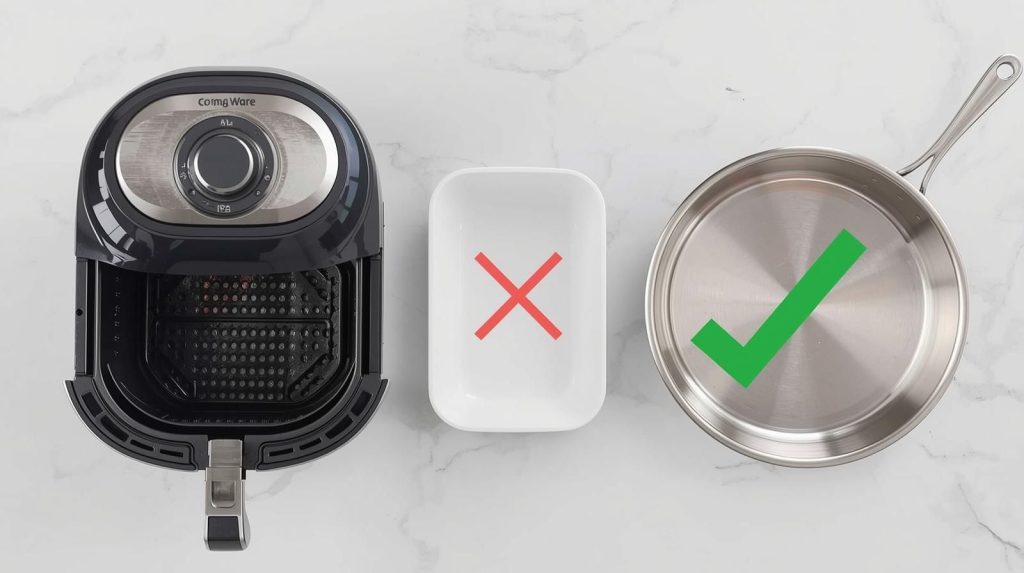
  • Can You Use CorningWare in an Air Fryer? (Safety, Risks & Best Practices)

    Air fryers have revolutionized home cooking by offering the promise of crispy, delicious food with minimal oil.

    As more households embrace this convenient appliance, questions arise about what cookware is safe to use inside them.

    CorningWare, a trusted name in kitchenware for decades, seems like a natural candidate for air fryer cooking.

    However, the answer isn’t straightforward. While CorningWare dishes are oven-safe, air fryers operate differently from conventional ovens, creating unique challenges for glass-ceramic and stoneware materials.

    This guide examines whether CorningWare is suitable for use in your air fryer, the associated risks, and what alternatives provide safer cooking experiences without compromising your meals or equipment.

    Is CorningWare Air Fryer Safe?

    can you use Corningware in an air fryer

    CorningWare is not recommended for use in an air fryer, despite being marketed as oven-safe cookware.

    Air fryers create a distinct heating environment compared to traditional ovens, characterised by rapid temperature changes and concentrated airflow that can stress glass-ceramic and stoneware materials.

    The risk of cracking, shattering, or thermal shock makes using CorningWare in air fryers a safety concern that outweighs the convenience.

    Depends on the type of CorningWare

    Not all CorningWare is created equal. Vintage CorningWare made from Pyroceram glass-ceramic is more heat-resistant than modern stoneware versions.

    However, even the more durable vintage pieces weren’t designed with air fryer technology in mind.

    Modern CorningWare, typically made from stoneware or ceramic, is more prone to cracking under intense, rapid heat exposure, making it particularly unsuitable for air fryers.

    Air fryer heat ≠ oven heat

    Understanding the difference between oven safe vs air fryer safe is crucial.

    Ovens provide gradual, ambient heat from all sides, while air fryers use high-velocity hot air directed at food in a compact space.

    This concentrated convection heating creates hotspots and rapid temperature fluctuations that oven-safe dishes aren’t necessarily designed to handle.

    The “oven-safe” label on your CorningWare doesn’t translate to air fryer compatibility.

    What Is CorningWare Made Of?

    Original CorningWare (glass-ceramic / Pyroceram)

    Vintage CorningWare produced from the 1950s through the late 1990s was made from Pyroceram, a revolutionary glass-ceramic material developed by Corning.

    This material could withstand extreme temperature changes, direct stovetop heat, and oven temperatures up to 500°F.

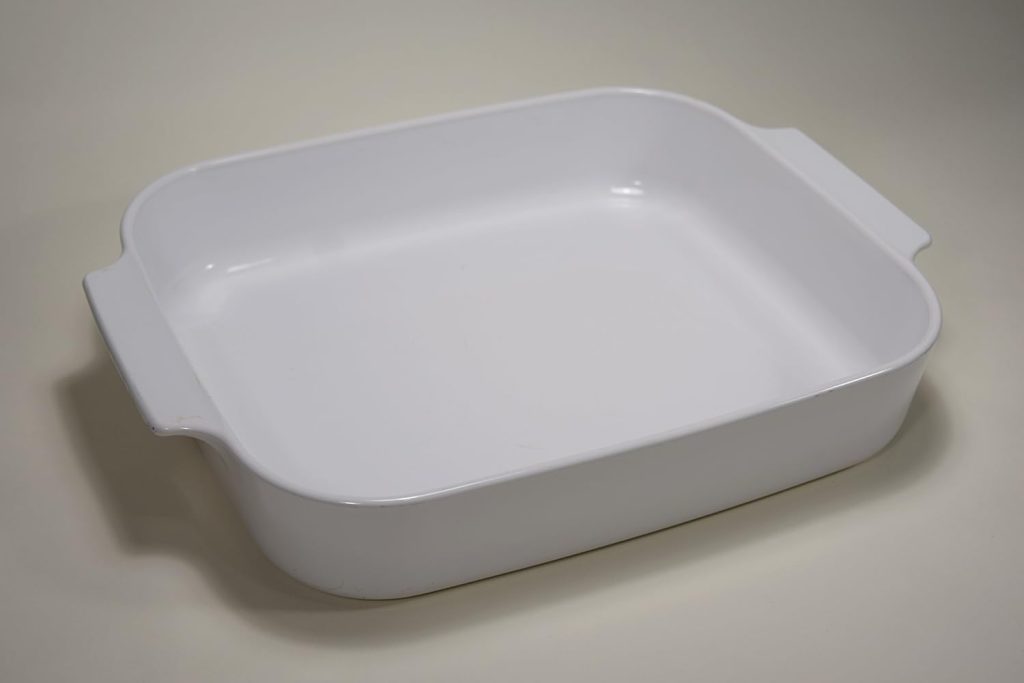
    Vintage Pyroceram CorningWare Casserole Baking Pan

    Pyroceram’s molecular structure made it exceptionally resistant to thermal shock, which is why these dishes became kitchen staples for generations.

    The iconic blue cornflower pattern typically marks these vintage pieces.

    Modern CorningWare (stoneware/ceramic)

    Since 2000, CorningWare has been manufactured primarily from stoneware or ceramic materials rather than the original Pyroceram.

    While still oven-safe to specific temperatures, modern CorningWare is less heat-resistant than its vintage counterpart.

    Ceramic Stoneware Modern CorningWare Bakeware

    This stoneware construction makes it more affordable but also more susceptible to cracking under rapid temperature changes.

    Read our guide on the difference between Corelle and Corningware, and understand material variations across the brand’s product lines.

    You’ll see how manufacturing changes have affected heat tolerance.

    Why material type matters for air fryers

    The material composition directly impacts how a dish responds to air fryer conditions.

    Glass-ceramic handles thermal stress better than stoneware, but neither was engineered for the intense, focused heat circulation of air fryers.

    Stoneware’s porous nature and lower heat tolerance make it particularly vulnerable to cracking.

    Even Pyroceram, despite its superior durability, faces risks from the unique heating pattern of air fryers that differ significantly from conventional ovens.

    How Air Fryers Heat Food (And Why That Matters)

    Rapid hot air circulation

    Air fryers work by circulating superheated air at high speeds around food, typically reaching temperatures between 350°F and 400°F.

    This rapid circulation creates a convection effect that cooks food quickly and produces crispy exteriors.

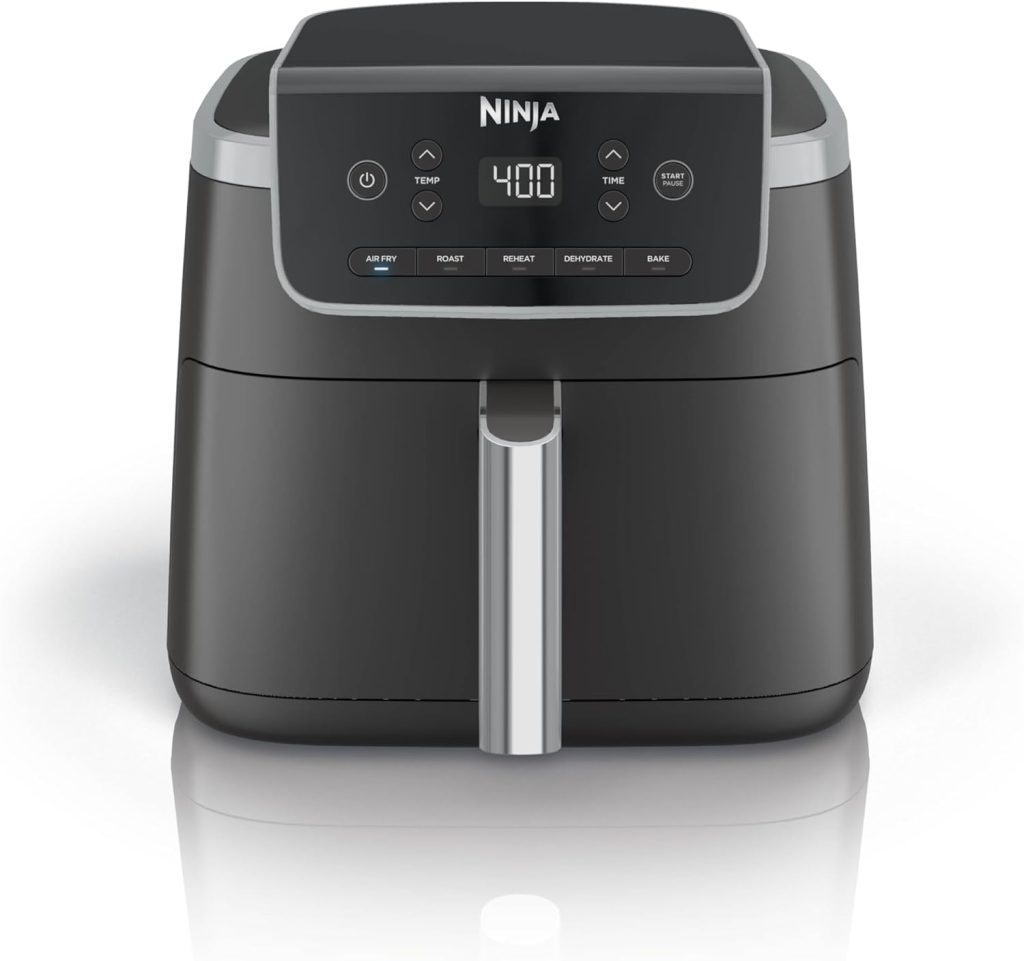
    Ninja Air Fryer

    Unlike ovens, where heat surrounds food gradually, air fryers blast hot air continuously, creating a more aggressive heating environment that can stress cookware not designed for such intense airflow.

    Concentrated heating elements

    The heating element in an air fryer sits directly above or around the cooking chamber, positioned much closer to your food than oven elements.

    This proximity creates intense, focused heat in a small space. When you place a dish inside an air fryer, it’s exposed to this concentrated heat source at close range, leading to faster temperature increases than what occurs in a spacious oven cavity.

    Smaller chamber = intense heat exposure

    Air fryer chambers are significantly smaller than conventional ovens, measuring just a few cubic feet compared to several cubic feet in standard ovens.

    This compact space means heat has nowhere to dissipate, creating a more intense thermal environment.

    Dishes placed inside experience more direct, sustained heat exposure with less air buffer than in a traditional oven, increasing the likelihood of thermal stress on materials.

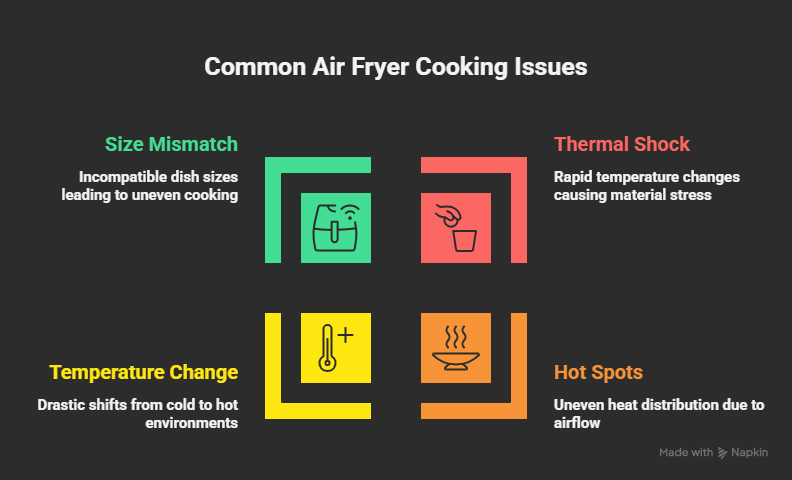
    Uneven heating and hotspots

    Despite rapid air circulation, air fryers often create hotspots where heat concentrates more intensely in certain areas.

    The bottom and sides of dishes may experience different temperatures simultaneously, while the top receives direct blasts of hot air.

    This uneven heating pattern stresses cookware materials differently across their surface, potentially causing weak points that can crack or shatter, especially in glass-ceramic or stoneware construction.

    Why CorningWare Can Crack or Break in an Air Fryer

    Why Corningware can crack or break in an air fryer

    Thermal shock from rapid preheating

    Thermal shock occurs when materials experience sudden, extreme temperature changes.

    When you place a room-temperature or cold CorningWare dish into a preheated air fryer, the rapid temperature spike can exceed the material’s ability to expand uniformly.

    This creates internal stress that can cause immediate cracking or weaken the structure for future failures.

    Understanding thermal shock risks helps explain why gradual heating is essential for glass-ceramic and stoneware cookware.

    Airflow hitting exposed edges

    Air fryers direct hot air forcefully around food, and this airflow often hits dish edges and exposed surfaces with significant force.

    CorningWare edges are particularly vulnerable points where the material is thinnest and most exposed to direct heat.

    When concentrated hot air repeatedly strikes these edges, it creates localised heating that can cause expansion cracks, especially in modern stoneware versions that lack the resilience of vintage Pyroceram.

    Cold dish → hot air fryer scenario

    Placing a cold dish directly from the refrigerator into a hot air fryer is the most dangerous scenario for CorningWare.

    The extreme temperature differential—potentially 350°F or more—forces the material to expand rapidly and unevenly.

    The outer surface heats and expands while the inner layers remain cold and contracted, creating internal stress that often results in catastrophic cracking or shattering mid-cook.

    Size mismatch is causing uneven heat

    When a CorningWare dish doesn’t fit properly in your air fryer basket, it can block airflow and create uneven heating patterns.

    A dish that’s too large may touch the heating element or basket sides, creating contact points that superheat while other areas remain cooler.

    Conversely, a very small dish in a large air fryer chamber may experience more direct heat exposure than intended, both scenarios increasing crack risk.

    Vintage vs Modern CorningWare — Important Differences

    Vintage CorningWare (Pyroceram)

    Vintage Pyroceram CorningWare was engineered to withstand extreme conditions, including direct stovetop heat and oven temperatures up to 500°F.

    The glass-ceramic material’s crystalline structure allowed it to handle thermal shock better than modern alternatives.

    These dishes, recognisable by their classic designs like blue cornflower or spice of life patterns, represent the peak of CorningWare’s heat resistance.

    However, even these superior pieces weren’t designed for air fryer convection patterns and lack manufacturer approval for such use.

    Modern CorningWare (Stoneware)

    Contemporary CorningWare made from stoneware is oven-safe but more brittle under stress.

    These pieces typically have temperature limits around 350-450°F and are more susceptible to thermal shock than Pyroceram.

    The stoneware construction, while perfectly adequate for conventional oven use, doesn’t have the same molecular structure that made vintage pieces so resilient.

    This makes modern CorningWare particularly risky in air fryers, where rapid heating and intense airflow dominate.

    Manufacturer Guidance — What CorningWare Recommends

    Designed for ovens, not air fryers

    CorningWare was engineered and tested for conventional oven use, where heat distribution and temperature changes are predictable and gradual.

    The manufacturer’s specifications don’t include air fryer use in their testing protocols.

    This means the dishes haven’t undergone safety evaluations under air fryer conditions, leaving users without official guidance on how the materials will perform under rapid convection heating.

    No official air fryer safety claim

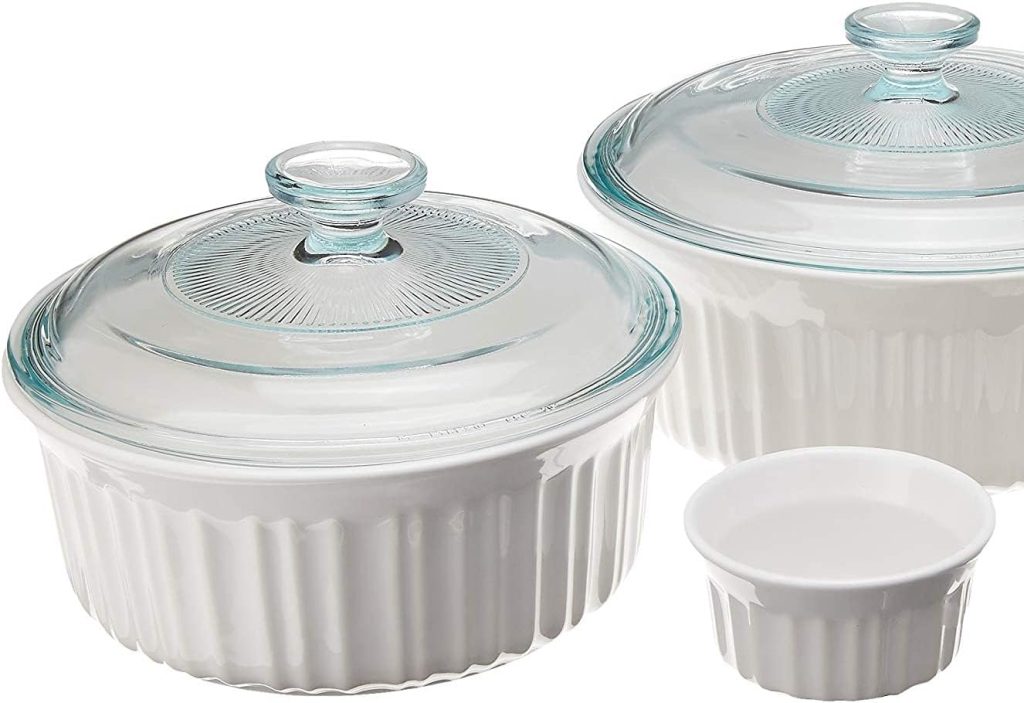
    CorningWare’s packaging and official documentation make no claims about air fryer compatibility, listing only dishwasher, freezer, microwave, and preheated-oven safety for stoneware dishes like the French White line.

    The absence of this specific safety rating is significant; if the manufacturer believed their products were safe for air fryers, they would advertise this feature, given the appliance’s popularity.

    The lack of endorsement suggests the company either hasn’t tested air fryer use or has chosen not to recommend it.

    Why “oven-safe” ≠ “air fryer safe”

    An “oven-safe” rating indicates a dish can withstand conventional oven temperatures and heating patterns, but this doesn’t automatically extend to air fryers.

    The heating mechanisms are fundamentally different: ovens use radiant heat in a large space, while air fryers use concentrated convection in a compact chamber.

    A dish that performs perfectly in an oven may fail under air fryer conditions due to rapid heating, intense airflow, and smaller clearances.

    When It Might Be Safer to Use CorningWare in an Air Fryer

    Low temperatures only (≤300°F)

    If you absolutely must use CorningWare in an air fryer, keep temperatures at or below 300°F.

    This lower temperature reduces thermal stress and gives the material more time to heat gradually.

    However, many air fryer recipes require higher temperatures for proper cooking, making this limitation impractical.

    Even at lower temperatures, risks remain; this is damage reduction, not elimination.

    No preheating with an empty dish

    Never preheat your air fryer with an empty CorningWare dish inside. Always add food to the dish first, then place it in the air fryer and turn it on.

    The food acts as a buffer, absorbing some heat and slowing the dish’s temperature rise.

    Preheating an empty dish subjects it to maximum thermal stress with nothing to moderate the rapid temperature increase.

    The dish fits comfortably with the airflow space

    Ensure at least one inch of clearance around your CorningWare dish to allow proper airflow. The dish shouldn’t touch the air fryer basket sides, top, or heating element.

    Adequate spacing prevents hotspot formation and ensures more even heating.

    If your dish doesn’t fit with proper clearance, choose a smaller container or use alternative cookware designed for air fryers.

    Food is already at room temperature

    Always bring refrigerated food and CorningWare to room temperature before air frying. Let cold items sit out for 20-30 minutes before cooking.

    This simple step significantly reduces thermal shock risk by minimising the temperature differential the dish experiences.

    However, even with room temperature starting points, risks remain due to air fryer heating intensity.

    ⚠️ Important Safety Note: Even following these precautions doesn’t guarantee safety. CorningWare can still crack or shatter in air fryers under seemingly safe conditions. The safest approach is to avoid using CorningWare in air fryers entirely and choose cookware specifically rated for air fryer use.

    What Happens If CorningWare Breaks in an Air Fryer

    Glass or ceramic shards in food

    When CorningWare shatters mid-cook, tiny glass-ceramic or ceramic fragments contaminate your food.

    These shards may be difficult to see, especially in similar-colored foods, but they’re extremely dangerous if consumed.

    Even small fragments can cause internal injuries to the mouth, throat, or digestive tract.

    Once contamination occurs, the entire batch of food must be discarded; no amount of picking through can guarantee safety.

    Risk of burns or cuts

    Broken CorningWare creates sharp edges that can cut hands when you attempt to remove the dish or clean the air fryer.

    The fragments are often superhot, adding burn risk to the equation.

    Cleaning up shattered cookware from a hot air fryer is particularly hazardous, requiring careful handling with protective gloves and time for cooling before safe cleanup is possible.

    Air fryer damage

    Glass-ceramic or ceramic shards can damage your air fryer’s non-stick coating, heating element, or fan mechanism.

    Small fragments may lodge in crevices or the fan assembly, potentially causing mechanical problems or creating ongoing safety hazards for future cooking sessions.

    Replacing a damaged air fryer can be more expensive than the CorningWare dish that broke, making this a costly mistake.

    Food contamination

    Beyond visible shards, broken CorningWare can release fine ceramic dust that settles on food surfaces.

    This contamination is invisible but equally dangerous. The entire interior of the air fryer may need thorough cleaning to remove all traces of ceramic particles.

    Food that was cooking during the break must be thrown away, wasting ingredients, time, and potentially leaving you without the meal you planned.

    Safer Alternatives to CorningWare for Air Fryers

    Stainless steel air fryer pans

    Stainless steel is the gold standard for air fryer cookware. It withstands high temperatures without warping, handles thermal shock effortlessly, and doesn’t react with acidic foods.

    Stainless steel pans designed for air fryers often feature perforated bottoms that allow hot air to circulate food, ensuring even cooking and maximum crispiness.

    These pans are durable, dishwasher-safe, and will last for years of regular use.

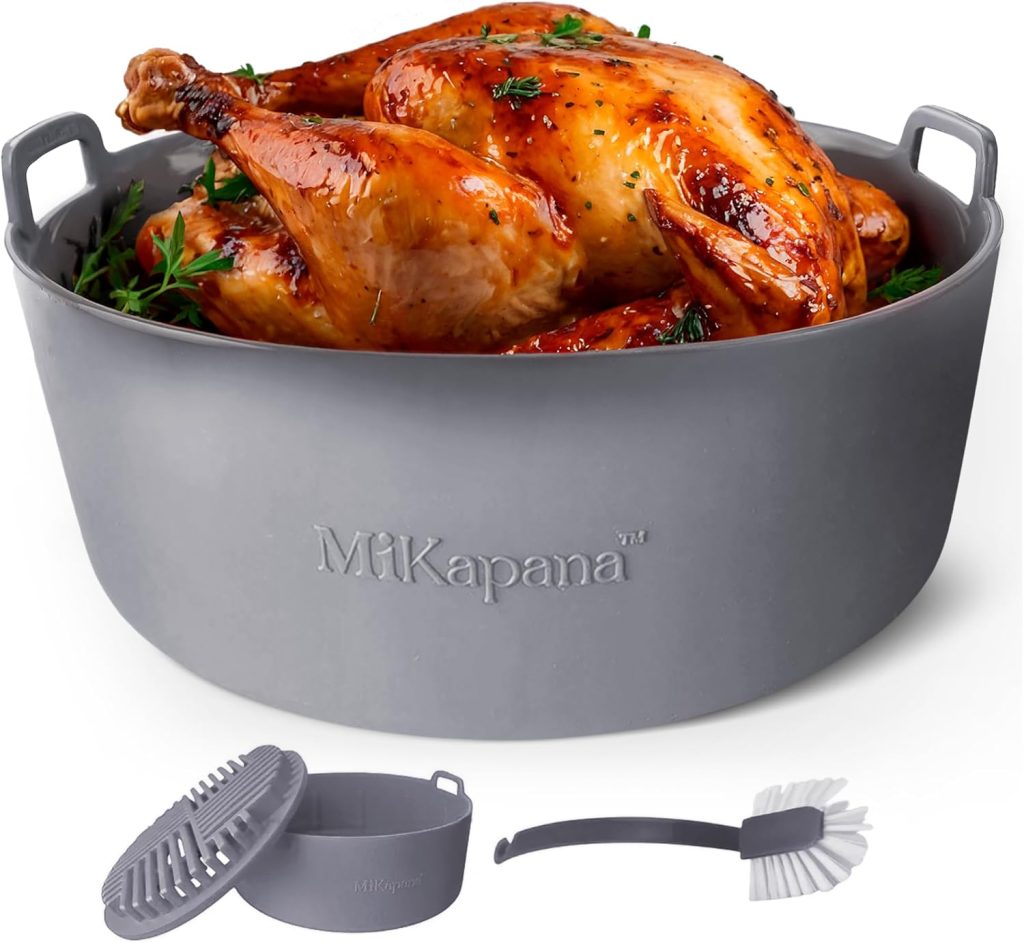
    Silicone air fryer baskets

    Food-grade silicone baskets offer non-stick convenience and are safe up to 450°F or higher.

    They’re flexible, making food removal easy, and won’t scratch your air fryer’s basket. Silicone is naturally non-reactive and easy to clean.

    Silicone air fryer baskets

    Some designs include perforations for airflow while containing smaller food items that might fall through standard baskets.

    For more information, read our guide on safe use of Corelle plates for steaming, which discusses similar temperature considerations.

    Air fryer–approved ceramic inserts

    Unlike standard ceramic cookware, air fryer-specific ceramic inserts are tested and rated for convection cooking environments.

    These products carry explicit air fryer compatibility labels and are designed to handle the rapid heating and intense airflow.

    They offer the non-stick benefits of ceramic with the peace of mind that comes from manufacturer-approved air fryer use.

    Enamel-coated steel

    Enamel-coated steel combines metal’s heat tolerance with ceramic’s non-stick properties.

    These pans handle high temperatures well and resist thermal shock better than pure ceramic or glass-ceramic.

    The steel core provides structural strength while the enamel coating prevents food from sticking and makes cleanup easy.

    Look for enamel cookware specifically marketed as air fryer-safe for best results.

    What Cookware Is Air Fryer Safe?

    Metal (stainless steel, aluminum)

    Metal cookware is generally the safest choice for air fryers.

    Stainless steel and aluminum pans handle high temperatures without issue and won’t crack or shatter.

    Ensure metal containers fit properly with adequate clearance and avoid using metals with plastic or wooden handles that could melt or burn.

    Uncoated metals are ideal, though some non-stick metal pans work well if rated for high temperatures.

    Silicone

    Silicone bakeware rated for at least 400°F works excellently in air fryers. It’s flexible, non-stick, and won’t react chemically with foods.

    Silicone muffin cups, cake pans, and basket liners designed specifically for air fryers are widely available.

    Always verify the temperature rating on silicone products before use, as not all silicone cookware handles air fryer heat levels.

    Air fryer–rated ceramic

    Ceramic cookware explicitly labelled as air fryer-safe has been tested under convection conditions and meets safety standards for this specific use.

    These products differ from standard ceramic bakeware in their construction and material composition, designed to handle rapid heating and intense airflow.

    Don’t assume all ceramic is air fryer-safe—only use products with clear air fryer compatibility statements.

    Parchment & liners

    Parchment paper and perforated air fryer liners made from parchment are safe and convenient options.

    These disposable liners prevent sticking and simplify cleanup while allowing airflow through perforations.

    Never use regular parchment paper without food weighing it down, as air circulation can blow it into the heating element.

    Silicone mats designed for air fryers provide reusable alternatives that perform similarly to parchment.

    FAQ — CorningWare & Air Fryers

    Can vintage CorningWare go in an air fryer?

    Vintage Pyroceram CorningWare is more heat-resistant than modern versions, but it still isn’t designed for air fryers.

    While it may withstand conditions better than stoneware, the manufacturer provides no air fryer safety rating.

    The risk of thermal shock and cracking remains due to rapid heating and intense airflow patterns.

    Why does CorningWare crack under convection heat?

    CorningWare cracks in air fryers due to thermal shock from rapid temperature changes and concentrated heat exposure.

    The intense, unevenly distributed convection heat causes different parts of the dish to expand at different rates, creating internal stress that results in cracks or complete shattering.

    Can I put a CorningWare lid in an air fryer?


    CorningWare lids, whether glass or ceramic, should not be used in air fryers.

    Lids trap moisture and prevent proper air circulation, defeating the air fryer’s purpose.

    They also face the same thermal shock risks as the dishes themselves and may crack or shatter under air fryer conditions.

    What’s the safest dish to use in an air fryer?


    Stainless steel pans specifically designed for air fryers are the safest option.

    They handle high temperatures without issue, don’t crack or shatter, and allow proper airflow.

    Look for perforated designs that maximise air circulation while containing food, ensuring both safety and optimal cooking results.


    Final Verdict — Avoid Using CorningWare in an Air Fryer

    The evidence is clear: CorningWare doesn’t belong in air fryers despite being excellent for conventional oven use.

    The fundamental differences between oven heating and air fryer convection create conditions that stress glass-ceramic and stoneware beyond their design specifications.

    Whether you own vintage Pyroceram or modern stoneware CorningWare, the risks of cracking, shattering, and food contamination far outweigh any potential convenience.

    Manufacturers don’t endorse air fryer use for good reason—these dishes weren’t tested or designed for such intense, rapid heating environments.

    Instead, invest in cookware specifically rated for air fryers, such as stainless steel pans, silicone baskets, or air fryer-approved ceramic.

    These alternatives provide safe, reliable performance without compromising your meals, your air fryer, or your safety.

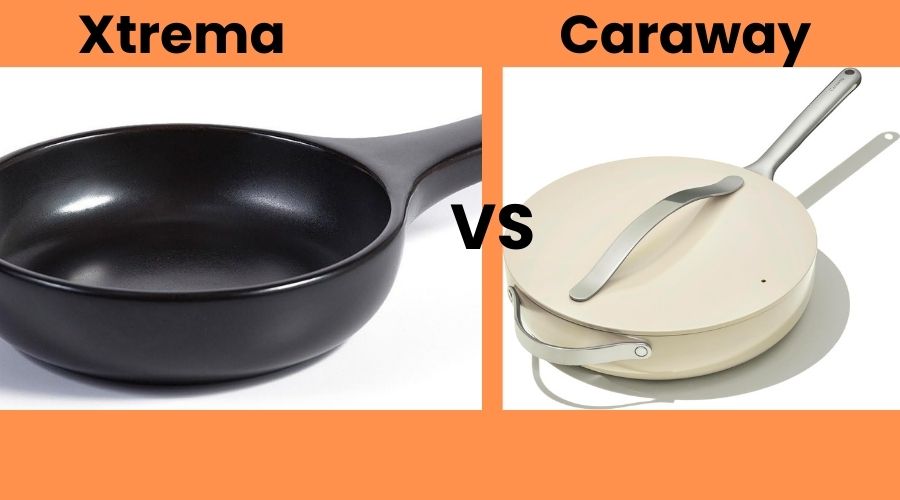
  • Xtrema vs Caraway Cookware

    Choosing the right cookware can feel overwhelming, especially when your family’s health is on the line.

    If you’ve been researching non-toxic options, you’ve likely encountered two popular names: Xtrema and Caraway cookware.

    Both brands promise safer cooking experiences, but they take dramatically different approaches.

    Xtrema offers 100% pure ceramic construction with zero coatings, while Caraway uses aluminum cores with ceramic coatings. Which is safer, xtrema or caraway?

    The answer depends on what matters most to you, absolute purity or beginner-friendly convenience.

    This comprehensive comparison will help you understand the real differences in materials, safety testing, durability, and performance, so you can make the best decision for your kitchen and your family’s well-being.

    Xtrema vs Caraway Cookware — Quick Comparison Table

    Xtrema vs Caraway Cookware

    Before diving deep into specifics, here’s a snapshot of how these non-toxic cookware brands compare against each other.

    Material

    Xtrema is made from 100% pure ceramic with no metal core, no coatings, and no chemical additives.

    Caraway features an aluminum core with a sol-gel ceramic coating applied to the cooking surface.

    This fundamental difference impacts everything from heat distribution to long-term safety.

    Safety Features

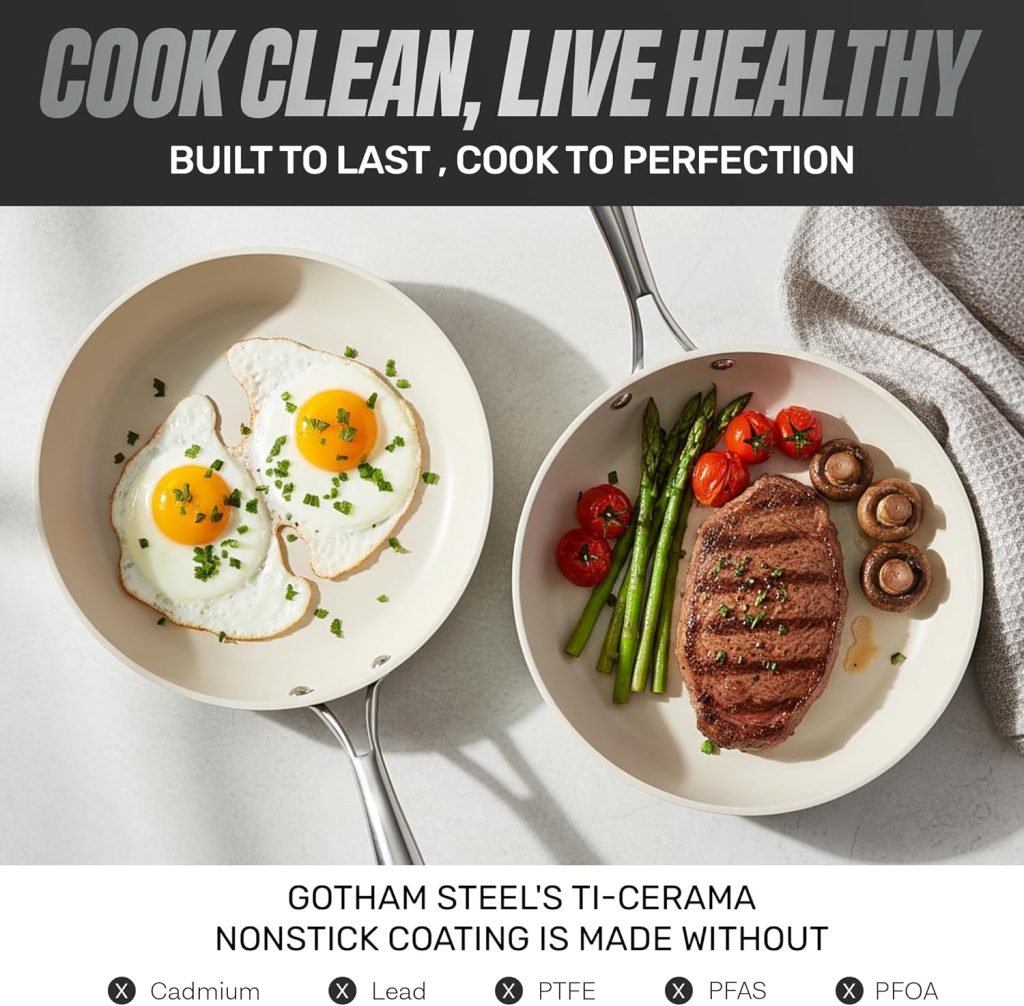
    Xtrema undergoes third-party testing for heavy metals and contains zero PFAS, PTFE, PFOA, lead, or cadmium.

    Caraway is also PFAS-free and PTFE-free, but it does contain aluminum, which some health-conscious consumers prefer to avoid.

    Both brands prioritize safer cooking, but Xtrema’s metal-free construction offers an extra layer of reassurance for those concerned about heavy metal safety in ceramics.

    Oven & Stove Compatibility

    Xtrema can withstand temperatures up to 2,700°F and works on all stovetops, including induction, gas, electric, and even open flames.

    Caraway is oven-safe up to 550°F and compatible with gas, electric, and induction stovetops, making it versatile for most home cooking needs.

    Longevity

    Xtrema cookware can last decades if handled carefully, though it’s susceptible to thermal shock and chipping if dropped.

    Caraway’s ceramic coating typically lasts 1-3 years with proper care before the non-stick properties begin to diminish.

    Price Comparison

    Xtrema pieces range from $60-$200 (*depending on the marketplace) per item, representing a higher upfront investment.

    Caraway sets start around $395 (*depending on the marketplace) for a 7-piece collection (single collection cost lower), offering better initial value but requiring replacement sooner due to coating wear.

    What Is Xtrema Cookware?

    Xtrema represents a unique approach in the cookware industry, focusing on absolute material purity rather than performance convenience.

    Understanding its construction helps explain both its benefits and limitations.

    100% Ceramic (Not Ceramic-Coated)

    Unlike most “ceramic” cookware on the market, Xtrema is made entirely from ceramic materials—specifically, a proprietary blend called Ceramcor.

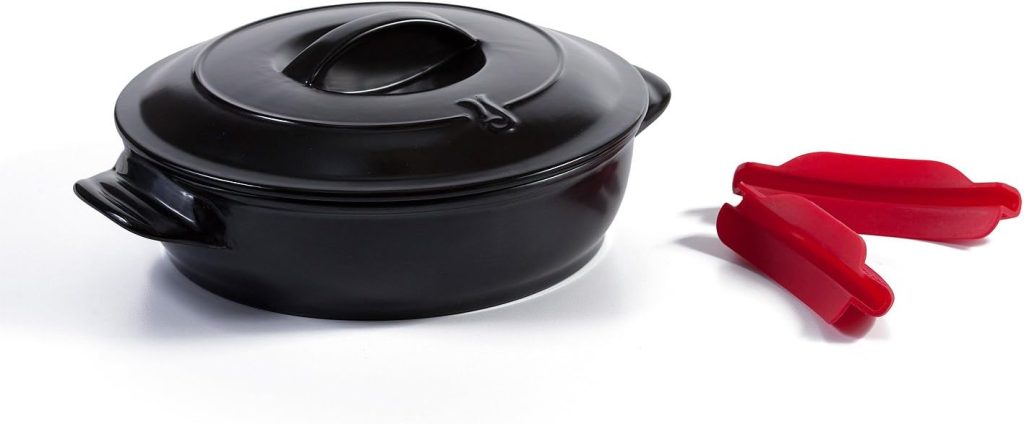
    Xtrema 100% pure ceramic cookware

    There’s no metal core hidden beneath a coating. The entire pot or pan is molded and fired from ceramic clay, similar to pottery but engineered for cooking.

    This means what you see is what you get throughout the entire thickness of the cookware.

    No Metals, No PFAS, No Coatings

    Is Xtrema cookware really non-toxic?

    According to independent lab testing, yes. Xtrema contains zero aluminum, copper, iron, or any other metals.

    It’s completely free from PFAS, PTFE (Teflon), PFOA, lead, cadmium, and other harmful chemicals.

    Because there’s no coating to apply, there are no binding agents or chemical treatments involved.

    To learn about pure ceramic safety, it’s important to understand this distinction from conventional cookware.

    Extremely High Heat Tolerance

    Xtrema’s pure ceramic construction can withstand temperatures up to 2,700°F without degrading or releasing fumes.

    This makes it suitable for high-heat searing, oven roasting at any temperature, and even campfire cooking.

    The material won’t warp, and its safety profile remains unchanged regardless of temperature.

    Potential Brittleness and Heaviness

    The trade-off for chemical purity is physical fragility. Xtrema cookware is heavy—a 10-inch skillet weighs around 4 pounds.

    More importantly, it can chip or crack if dropped on hard surfaces or subjected to sudden temperature changes (thermal shock).

    Users need to preheat gradually and avoid placing hot pans directly into cold water.

    What Is Caraway Cookware?

    Caraway has gained popularity through social media marketing and its aesthetic appeal, but understanding what lies beneath its attractive exterior is crucial for informed decision-making.

    Aluminum Base + Sol-Gel Ceramic Coating

    Caraway cookware features an aluminum core that provides excellent heat conduction and keeps the pans lightweight.

    This aluminum base is covered with a ceramic coating applied through a sol-gel process, which creates a slick, non-stick surface.

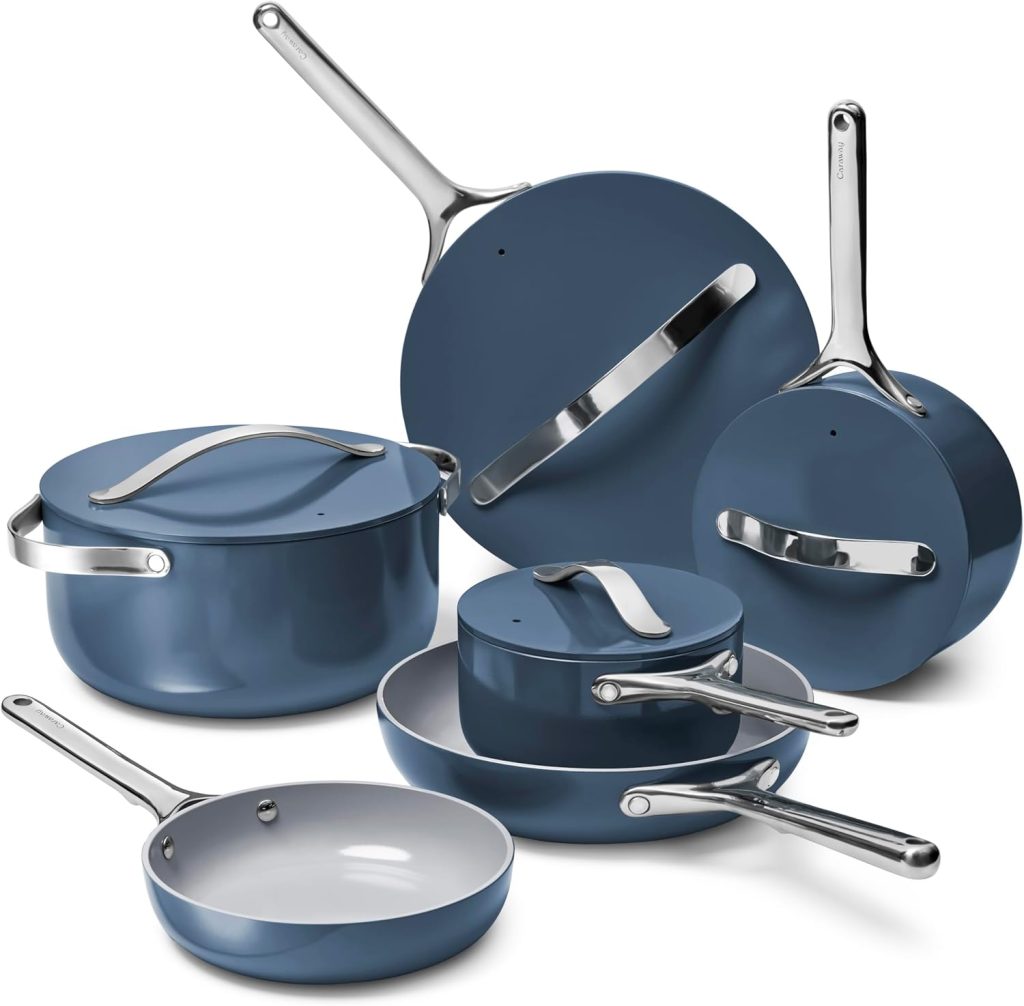
    Caraway Deluxe non-stick ceramic cookware

    This construction method is standard among modern “ceramic” cookware brands and differs significantly from pure ceramic options.

    Understanding why ceramic coatings differ from pure ceramics helps clarify performance expectations.

    PFAS-Free, PFOA-Free, PTFE-Free

    Caraway’s marketing emphasizes its absence of traditional non-stick chemicals.

    The brand doesn’t use PFAS (per- and polyfluoroalkyl substances), PFOA (perfluorooctanoic acid), or PTFE (polytetrafluoroethylene, commonly known as Teflon).

    Is caraway safer than Teflon? Absolutely.

    The ceramic coating provides a non-stick surface without these controversial chemicals.

    To understand PFAS vs PFAS-free coatings, consumers should recognize that Caraway belongs to the PFAS-free category.

    Coating Is “Non-Stick” but Not Permanent

    While Caraway’s ceramic coating performs impressively when new, it’s important to understand that all ceramic coatings are temporary.

    With regular use, the coating gradually wears down, reducing non-stick performance.

    Most users report noticeable degradation within 1-3 years, depending on cooking habits and care practices.

    Lightweight and Beginner-Friendly

    Caraway’s aluminum construction makes it significantly lighter than pure ceramic alternatives.

    A 10.5-inch Caraway fry pan weighs about 2.5 pounds—nearly half the weight of a comparable Xtrema pan.

    This makes it easier to handle, especially for those with limited grip strength, and more forgiving for cooking beginners.

    Material & Construction Differences

    The fundamental material differences between these brands create distinct user experiences that extend far beyond initial impressions.

    Pure Ceramic vs Coated Aluminum

    This is the core distinction in the Xtrema vs Caraway durability comparison.

    Xtrema’s pure ceramic is the same material throughout, meaning there’s no coating to wear off.

    Caraway’s aluminum core provides superior heat conduction but relies on a coating for its non-stick properties and safety profile.

    When comparing pure ceramic vs ceramic-coated cookware, consider whether you prioritize unchanging material integrity or optimized thermal performance.

    Coating Lifespan

    Xtrema has no coating, so this concern doesn’t apply; the cooking surface remains identical to how it was on day one (assuming no chips or cracks).

    Caraway’s coating lifespan depends on usage frequency, heat levels, utensils used, and cleaning methods.

    Even with perfect care, ceramic coatings inevitably degrade. When the coating wears significantly, the pan should be replaced rather than risking aluminum exposure.

    Heat Retention & Distribution

    Aluminum conducts heat more efficiently than ceramic, meaning Caraway pans heat up faster and distribute heat more evenly across the cooking surface.

    Xtrema requires longer preheating (5-7 minutes on medium-low) but retains heat exceptionally well once hot.

    This makes Xtrema ideal for simmering and braising, while Caraway excels at quick sautés and precise temperature control.

    Weight Differences

    The weight contrast is substantial. Xtrema’s 10-inch skillet weighs approximately 4 pounds, while Caraway’s 10.5-inch fry pan weighs around 2.5 pounds.

    For some cooks, Xtrema’s heft provides stability and feels premium; for others, it’s cumbersome.

    Caraway’s lighter weight makes it easier to flip foods, pour liquids, and maneuver around the kitchen.

    Safety Comparison — PFAS, Metals & Heavy Metals

    When evaluating Xtrema cookware safety and Caraway cookware safety test results, the details matter significantly for health-conscious consumers.

    Xtrema – Third-Party Tested, Lead-Free, Metal-Free

    Xtrema publishes third-party laboratory test results confirming the absence of lead, cadmium, and other heavy metals.

    The Xtrema vs Caraway heavy metals comparison strongly favors Xtrema because it contains zero metals of any kind.

    No aluminum core could potentially be exposed through coating wear, no copper lining, and no iron components.

    This makes it the preferred choice for those with metal sensitivities or those following strict non-toxic protocols.

    Caraway – PFAS-Free but Has a Metal Core

    Caraway’s ceramic coating is genuinely PFAS-free, which represents a significant safety improvement over traditional non-stick cookware.

    However, the aluminum core remains present beneath the coating.

    While aluminum exposure through intact ceramic coatings is minimal to nonexistent, the potential exists if the coating becomes severely damaged.

    Most health experts consider this risk negligible with proper use and timely replacement.

    Coating Wear Issues (Caraway) vs Thermal Shock Risk (Xtrema)

    Each brand has its own safety considerations. Caraway users must monitor coating integrity and replace pans when the coating shows significant wear, scratching, or peeling.

    Xtrema users must prevent thermal shock by avoiding sudden temperature changes and handling pieces carefully to prevent chips or cracks.

    Both require mindful use, but in different ways.

    Prop 65 & FDA Compliance

    Both brands comply with FDA food-contact regulations. Neither carries California Proposition 65 warnings for lead or cadmium.

    However, those interested in going deeper should check heavy metal safety in ceramics by reviewing independent test results rather than relying solely on manufacturer claims.

    Cooking Performance — Which Works Better?

    Real-world cooking performance often matters more than theoretical safety advantages, especially for those cooking daily meals.

    Non-Stick Performance (Caraway Wins Early)

    When brand new, Caraway offers superior non-stick performance.

    Eggs slide effortlessly, pancakes release cleanly, and delicate fish fillets lift off without tearing.

    Xtrema requires proper seasoning (coating with oil and heating) and adequate preheating to achieve similar results.

    Even then, it never becomes as slippery as Caraway’s coated surface. For the first year or two, Caraway clearly wins this category.

    High-Heat Performance (Xtrema Wins)

    Xtrema excels at high-heat cooking methods. You can preheat it thoroughly and sear steaks at temperatures that would damage Caraway’s coating.

    Xtrema’s heat tolerance means you can move it from the stovetop to a 500°F oven without concern.

    Caraway’s 550°F limit is adequate for most home cooking, but Xtrema offers more versatility for advanced techniques.

    Searing, Sautéing, Simmering

    For searing meat or vegetables, Xtrema’s heat retention creates better browning once properly preheated.

    Caraway’s aluminum core provides more responsive temperature control for sautéing, making it easier to prevent burning.

    Both work well for simmering sauces and soups, though Xtrema’s superior heat retention means you can use lower heat settings once the pan is hot.

    Cooking Without Oil

    Neither option truly allows oil-free cooking despite marketing claims.

    Caraway requires less oil than traditional stainless steel but still needs some fat for optimal non-stick performance.

    Xtrema requires adequate oil or butter, especially before it’s properly seasoned.

    Anyone seeking genuinely oil-free cooking should consider that both brands perform better with at least minimal fat.

    Durability & Lifespan

    Long-term value depends not just on initial cost but on how long each option maintains its performance and safety characteristics.

    Xtrema Lasts Decades If Not Dropped

    With careful handling, Xtrema cookware can serve you for 20+ years.

    The cooking surface doesn’t degrade because there’s no coating to wear away.

    Users report pieces maintaining their performance characteristics indefinitely.

    The primary failure mode is physical damage to chips from impact or cracks from thermal shock.

    If you can avoid these issues, Xtrema represents a buy-it-for-life investment.

    Caraway Coating Lasts 1–3 Years

    Most Caraway users report a noticeable decline in non-stick performance within 1-3 years of regular use.

    Some pieces last longer with exceptionally gentle care, while others degrade faster with high-heat cooking or metal utensil use.

    This isn’t a defect; it’s inherent to ceramic coating technology. Plan to replace Caraway pieces every few years to maintain optimal performance and safety.

    Scratch Resistance vs Chip Resistance

    Caraway’s coating can scratch if metal utensils are used, which accelerates degradation.

    However, it won’t chip or crack from drops like Xtrema. Xtrema’s solid ceramic construction is scratch-resistant (though not scratch-proof) but vulnerable to impact damage.

    The question becomes whether you’re more likely to scratch a coating through daily use or drop a heavy pan.

    Replacement Frequency

    Over 10 years, you might purchase Xtrema once, but you need to replace Caraway pieces 3-4 times.

    This significantly impacts the true cost comparison. Xtrema’s higher upfront cost becomes more economical over time, assuming you don’t chip or crack the pieces.

    When considering options like Xtrema vs Greenpan cookware brands, a similar replacement frequency applies to all ceramic-coated options.

    Maintenance & Care

    Proper maintenance extends lifespan and maintains performance, but the required care differs substantially between these brands.

    Xtrema: Easy to Clean but Heavy

    Xtrema cleanup is straightforward—hot water, dish soap, and a non-abrasive sponge handle most situations.

    Stuck-on food can be removed by soaking or gentle scrubbing with baking soda.

    The pieces are dishwasher-safe, though hand-washing is gentler.

    The main maintenance challenge is physical handling due to the weight, especially when wet and soapy.

    Caraway: Hand-Wash Only; Avoid Metal Utensils

    Caraway specifically recommends hand-washing only, despite some users reporting dishwasher use without immediate problems.

    Dishwasher detergents and high heat can accelerate coating degradation. Always use wood, silicone, or nylon utensils—metal tools will scratch the coating.

    Avoid cooking sprays, which leave residue that builds up on ceramic coatings and reduces non-stick performance.

    How to Avoid Coating Wear

    For Caraway, coating preservation means cooking on low to medium heat (never high), using adequate oil, avoiding abrasive scrubbers, and storing carefully with pan protectors between stacked pieces.

    Never use cooking sprays or aerosol oils. For Xtrema, avoiding thermal shock is crucial; always preheat gradually and never place hot cookware under cold water.

    Dishwasher Considerations

    Xtrema is genuinely dishwasher-safe with no concerns about coating damage.

    Caraway technically can survive dishwasher cycles, but doing so regularly will shorten coating lifespan.

    If convenience is your priority, Xtrema offers easier long-term maintenance.

    Similar care considerations apply when comparing the difference between Xtrema and Le Creuset or All Clad vs Le Creuset stainless steel cookware brand options.

    Environmental Impact

    For eco-conscious consumers, the environmental implications extend beyond just PFAS-free claims to include manufacturing, lifespan, and end-of-life disposal.

    Xtrema – Fully Ceramic, Recyclable, Long Lifespan

    Xtrema’s pure ceramic composition means it contains no toxic materials that could leach into the environment.

    When a piece finally breaks, the ceramic material is inert and can be recycled or disposed of safely.

    The decades-long lifespan means fewer replacements, reducing manufacturing demand and shipping emissions.

    The production process requires high-temperature firing, which consumes energy, but this is offset by the extended use period.

    Caraway – Less Durable, but Eco-Friendly Branding

    Caraway emphasizes sustainability in its marketing, packaging, and company practices.

    However, the 1-3 year replacement cycle means more manufacturing, more shipping, and more disposal over time.

    The aluminum core is recyclable, but the ceramic coating complicates recycling processes.

    Most ceramic-coated cookware ends up in landfills when the coating fails.

    PFAS Absence = Sustainability Win

    Both brands deserve credit for avoiding PFAS chemicals, which persist in the environment indefinitely and accumulate in living organisms.

    PFAS contamination has become a significant environmental concern, affecting water supplies and ecosystems globally.

    Choosing either Xtrema or Caraway over traditional non-stick cookware represents an environmental improvement.

    Manufacturing Emissions Comparison

    Xtrema’s high-temperature ceramic firing process is energy-intensive, but happens once per piece.

    Caraway’s manufacturing involves aluminum smelting (extremely energy-intensive) plus coating application.

    However, Caraway’s lighter weight reduces shipping emissions.

    The environmental calculus is complex, but Xtrema’s longer lifespan likely makes it the more sustainable choice overall.

    Which Brand Is Best for You? (Use-Case Breakdown)

    The right choice depends on your specific priorities, cooking habits, and lifestyle factors rather than any universal “best” option.

    Best for Toxin-Free Cooking – Xtrema

    If absolute chemical purity is your top priority, perhaps due to health conditions, chemical sensitivities, or commitment to toxin-free living, Xtrema is the clear winner.

    Its metal-free, coating-free construction eliminates even theoretical exposure risks.

    This makes it ideal for those following strict clean-living protocols or cooking for young children.

    Best for Beginners – Caraway

    New cooks will find Caraway more forgiving and easier to use successfully.

    The lighter weight, faster heating, and superior initial non-stick performance reduce the learning curve.

    Caraway requires less technique mastery than Xtrema, which demands proper preheating and temperature management for optimal results.

    Best for Searing & High Heat – Xtrema

    Professional-level searing, high-temperature roasting, and techniques requiring extreme heat favor Xtrema.

    Its 2,700°F tolerance and exceptional heat retention create restaurant-quality browning and caramelization.

    Chefs and serious home cooks who frequently use high-heat methods will appreciate Xtrema’s capabilities.

    Best for Low-Oil Cooking – Caraway

    Those trying to minimize cooking oil will have better success with Caraway’s slicker coating, at least while it’s new.

    Xtrema requires adequate fat for proper release, making it less suitable for strict low-oil diets.

    However, both brands require some oil for optimal performance despite “oil-free cooking” marketing claims.

    Best for Long-Term Value – Xtrema

    Despite higher upfront costs, Xtrema’s decades-long lifespan makes it more economical over time.

    If you’re willing to handle the pieces carefully and can afford the initial investment, Xtrema delivers superior cost-per-use value.

    Calculate the total cost over 10 years, including replacements, to see the true economic picture.

    FAQs About Xtrema vs Caraway Cookware

    Is Xtrema better than Caraway for health?

    Yes, Xtrema offers a more comprehensive non-toxic option due to its metal-free, coating-free, pure ceramic construction.

    While Caraway is PFAS-free and safe when the coating is intact, Xtrema eliminates any theoretical concerns about aluminum exposure or coating degradation affecting safety.

    Which is more non-stick?

    Caraway provides superior non-stick performance when new, allowing easier food release with less oil.

    Xtrema can achieve good non-stick properties with proper seasoning and preheating, but it never matches the slickness of Caraway’s coating.

    However, Xtrema’s performance remains consistent over decades, while Caraway’s declines within a few years.

    Do either contain PFAS or PTFE?

    No, both brands are completely free from PFAS (including PFOA) and PTFE (Teflon).

    This represents a significant safety advantage over traditional non-stick cookware.

    Both use alternative approaches to create non-stick or low-stick cooking surfaces without these controversial chemicals.

    Final Verdict — Xtrema Wins for Safety, Caraway Wins for Convenience

    After examining materials, safety testing, performance, durability, and value, the verdict depends entirely on your priorities.

    Xtrema represents the most truly non-toxic cookware option available, with pure ceramic construction that contains zero metals, coatings, or chemicals.

    It lasts decades and maintains consistent performance throughout its lifespan.

    However, it’s heavy, requires careful handling to prevent damage, and demands technique mastery for optimal results.

    Caraway offers PFAS-free cooking in a beginner-friendly, lightweight package with excellent initial non-stick performance.

    It’s more affordable upfront and easier to use successfully. The trade-off is a shorter lifespan due to inevitable coating degradation and the presence of an aluminum core beneath the coating.

    For health-conscious cooks prioritizing absolute chemical purity and long-term value, Xtrema is the superior choice.

    For those wanting PFAS-free convenience without the learning curve or higher initial investment, Caraway delivers excellent results.

    Both brands significantly outperform traditional non-stick cookware in terms of safety.

    Your decision should reflect whether you value unchanging material purity or user-friendly convenience more highly.

    Finally, for a list of other non-toxic cookware brands, explore our guide on the best and safest PTFE and Teflon-free pots and pans, the perfect match for all your cooking needs.

  • Carbon Steel vs Ceramic Pans


    You’re standing in your kitchen, spatula in hand, watching your breakfast eggs stubbornly glue themselves to your pan.

    Again, you’ve heard the promises non-stick this, chemical-free that, but which cookware actually delivers on safety AND performance?

    If you’re weighing carbon steel vs ceramic pans, you’re asking the right questions.

    These two popular options dominate the non-toxic cookware conversation, but they couldn’t be more different.

    One is a time-tested metal workhorse that gets better with age; the other is a modern mineral-coated convenience tool.

    Both claim to be PFAS-free, but only one can truly stand the test of decades.

    Whether you’re a health-conscious parent, a culinary enthusiast, or simply tired of replacing pans every year, understanding the real differences between ceramic vs carbon steel cookware will transform how you cook and how safe your kitchen really is.

    What Is a Carbon Steel Pan?

    Carbon steel pans are crafted from a simple yet powerful alloy: approximately 99% iron and 1% carbon.

    Carbon Steel Wok

    This straightforward composition creates a durable cooking surface that professional chefs have trusted for centuries, particularly in French and Asian cuisines.

    Iron + Carbon Alloy (99% Iron, 1% Carbon)

    The magic of carbon steel lies in its minimalist formula. Unlike complex alloy pans or those with synthetic coatings, carbon steel contains just two elements.

    The high iron content provides strength and excellent heat conductivity, while the small percentage of carbon adds hardness and allows the pan to withstand extreme temperatures without warping.

    Naturally Non-Stick via Seasoning (Polymerization)

    Carbon steel develops its non-stick properties through seasoning, a process in which oils polymerise onto the metal surface at high heat.

    This creates multiple layers of carbonized oil that form a natural, slick patina.

    Premium Carbon Steel frying pan

    The more you cook with fats and oils, the better the non-stick surface becomes.

    Unlike chemical coatings that degrade, this natural barrier actually improves with proper use.

    No Coating, No Chemicals – PFAS-Free

    Because carbon steel is bare metal with only natural seasoning, it contains absolutely no synthetic coatings.

    This means zero PFAS (per- and polyfluoroalkyl substances), no PTFE, and no questionable chemical additives.

    When you compare ceramic vs PTFE coatings, carbon steel stands apart entirely; it requires neither.

    Similarities to Cast Iron but Lighter

    Carbon steel shares cast iron’s durability and heat retention, but with a significant advantage: weight.

    A 12-inch carbon-steel pan typically weighs 4-5 pounds, compared to 8-9 pounds for a cast-iron pan.

    This makes it easier to manoeuvre, flip foods, and handle during extended cooking sessions while maintaining similar performance characteristics.

    What Is a Ceramic Pan?

    Ceramic pans have surged in popularity as consumers seek alternatives to traditional non-stick cookware.

    Ceramic non-toxic deep frying pan skillet

    However, “ceramic” in cookware terminology doesn’t mean pure pottery; it refers to a specific type of coating technology.

    Sol-Gel (Silica-Based) Non-Stick Coating

    Ceramic cookware features a sol-gel coating derived from silica (sand).

    This mineral-based layer is applied in liquid form and then cured at high temperatures to create a hard, smooth, glass-like surface.

    The coating aims to provide non-stick properties without synthetic polymers like Teflon.

    Often Applied Over an Aluminum Base

    Most ceramic pans use aluminum as the base metal because it’s lightweight and conducts heat well.

    The ceramic coating is sprayed onto this aluminum core.

    non-stick ceramic sauce pan with Lid for all stovetops

    Some higher-end versions use stainless steel bases, but aluminum remains the industry standard due to cost and heat distribution benefits.

    If you want to learn about ceramic coating safety, understanding this layered construction is essential.

    PFAS-Free but May Contain Pigments or Adhesives

    While ceramic coatings themselves don’t contain PFAS, the complete picture is more complex.

    Some manufacturers add pigments for color or use adhesive primers to help the coating bond to the metal base.

    Quality varies significantly between brands, and lower-quality options may contain trace contaminants.

    It’s crucial to ensure your pan is free from heavy metals by choosing reputable brands with third-party testing.

    Coating Lifespan Concerns (1–3 Years Typical)

    The primary drawback of ceramic cookware is coating degradation.

    Even with careful use, most ceramic pans lose their non-stick properties within one to three years.

    High heat, metal utensils, and abrasive cleaning accelerate this wear.

    Once the coating breaks down, food begins sticking, and the pan’s performance declines significantly.

    Key Differences Between Carbon Steel & Ceramic Pans

    carbon steel vs ceramic pans

    Understanding which is safer between carbon steel and ceramic requires examining their fundamental differences across multiple dimensions.

    Material Structure (Metal vs Mineral Coating)

    Carbon steel is solid metal throughout what you see is what you get.

    Ceramic pans are composite products with a metal core covered by a mineral coating.

    This structural difference affects everything from durability to repair potential.

    Carbon steel can be re-seasoned indefinitely; ceramic coatings cannot be reapplied at home once damaged.

    Weight Differences

    Carbon steel pans feel substantial but manageable, typically weighing 4-5 pounds for a standard skillet.

    Ceramic pans vary based on their core material, with aluminum-core versions being quite light (2-3 pounds) and stainless steel-core options being heavier.

    For daily cooking tasks, carbon steel offers an ideal balance between heft and manoeuvrability.

    Heat Tolerance

    This is where the carbon steel vs ceramic non-stick differences become dramatic.

    Carbon steel handles temperatures exceeding 1200°F, making it suitable for broilers, grills, and even campfires.

    Ceramic coatings typically max out around 400-500°F before degrading.

    Exceeding these limits causes the ceramic coating to break down, releasing its non-stick properties prematurely.

    Cooking Versatility

    Carbon steel seamlessly transitions from stovetop to oven to grill.

    It excels at high-heat searing, deglazing, and building fond (those flavorful browned bits).

    Ceramic pans work well for low-to-medium heat cooking—eggs, pancakes, delicate fish—but struggle with high-heat applications and aren’t ideal for developing deep caramelization or crust.

    Safety Comparison — PFAS, Metals & Coating Risks

    When evaluating non-toxic carbon steel vs ceramic pans, safety encompasses multiple factors beyond just PFAS content.

    Carbon Steel – Iron Leaching (Safe Unless Iron-Sensitive)

    The question “Does carbon steel leach iron?” has a straightforward answer: yes, in small amounts.

    Cooking acidic foods like tomato sauce can transfer trace amounts of iron into your food—typically 1-2mg per serving.

    For most people, this is harmless and may even help meet dietary iron needs.

    However, individuals with hemochromatosis (iron overload disorder) should consult healthcare providers before using carbon steel regularly.

    Ceramic – PFAS-Free but May Wear, Chip, or Contain Trace Heavy Metals if Low Quality

    Ceramic coatings avoid PFAS chemicals, earning them a place in health-conscious kitchens.

    However, coating wear presents concerns. As the ceramic deteriorates, you may ingest coating particles with your food.

    Additionally, some low-quality ceramic pans have tested positive for lead or cadmium in the coating or underlying glaze.

    When you compare how ceramic pans perform against non-stick PFAS pans, both avoid PFAS, but ceramic pans introduce different potential risks.

    Chemical Off-Gassing Comparison – Carbon Steel Wins

    Carbon steel produces no chemical off-gassing at any temperature—it’s simply metal.

    Ceramic coatings, while marketed as safe, can release fumes if overheated beyond their rated temperature threshold.

    These emissions aren’t as toxic as overheated PTFE (Teflon), but they’re still concerning for indoor air quality and pet safety, particularly birds.

    Which Is Safest for Kids & Pregnancy? – Carbon Steel or High-Quality Ceramic

    For families with young children or pregnant women, carbon steel offers the most predictable safety profile, pure metal with no coatings to degrade.

    High-quality ceramic from reputable manufacturers (like Xtrema vs Caraway cookware comparisons often highlight) can also be safe, but requires more research into brand-specific testing and certifications.

    Carbon steel eliminates the variable of coating quality.

    Non-Stick Performance Comparison

    The non-stick capabilities of ceramic vs carbon steel frying pans differ significantly in both mechanism and longevity.

    Ceramic: Strong Initial Non-Stick but Degrades Over Time

    Fresh ceramic pans perform impressively—eggs slide off effortlessly, and cleanup takes seconds.

    This initial performance often exceeds even well-seasoned carbon steel.

    However, this advantage is temporary. After months of use, even gentle cooking gradually wears the coating, creating microscopic scratches that trap food particles and diminish the slick surface.

    Carbon Steel: Improves with Seasoning

    Carbon steel follows the opposite trajectory. New pans require initial seasoning and a break-in period where food may stick occasionally.

    But with continued use and proper care, the seasoning layers multiply and strengthen.

    A five-year-old carbon steel pan significantly outperforms a new one—its patina becomes nearly indestructible and rivals any non-stick surface.

    Best for Eggs, Pancakes, Sautéing

    For carbon steel vs ceramic for eggs, both can excel. Ceramic wins immediately out of the box with zero-effort egg cooking.

    Carbon steel requires proper preheating and adequate seasoning, but eventually matches this performance.

    For pancakes and delicate sautés, well-seasoned carbon steel provides reliable release while tolerating higher temperatures for achieving golden-brown crusts.

    Best for High-Heat Searing

    Carbon steel dominates high-heat applications. Searing steaks, blackening fish, or achieving wok hei (breath of wok) requires temperatures that would destroy ceramic coatings.

    Carbon steel thrives in these conditions, developing fond and Maillard reactions that create complex flavors impossible with ceramic’s heat limitations.

    Heat Performance & Control

    Temperature management separates everyday cooking from exceptional results, making this comparison crucial.

    Carbon Steel: Excellent for High Heat & Searing

    Carbon steel’s ability to withstand and distribute extreme heat makes it the professional choice for searing proteins.

    The pan heats relatively quickly, reaches very high temperatures safely, and maintains heat during cooking.

    This prevents temperature drops when cold ingredients hit the surface, a common problem with lighter materials.

    Ceramic: Limited to Medium Heat

    Ceramic coatings begin degrading above 400-500°F, restricting these pans to low and medium heat applications.

    While adequate for most everyday cooking, this limitation prevents developing deep caramelization, achieving restaurant-quality crust on meats, or using high-heat cooking techniques that define many cuisines.

    Oven Use Comparison

    Carbon steel transitions to oven use without restrictions; use it at any temperature your oven reaches.

    Most ceramic pans claim oven-safety up to 350-450°F, but repeated oven exposure at these upper limits accelerates coating breakdown.

    Additionally, if your ceramic pan has plastic or silicone handles, oven use may be impossible or limited regardless of the coating’s tolerance.

    Heat Retention vs Responsiveness

    Carbon steel strikes a balance between heat retention and temperature responsiveness.

    It holds heat better than aluminum (providing consistent cooking temperatures) but responds to heat adjustments faster than cast iron.

    Ceramic pans, usually aluminum-based, respond quickly to temperature changes but don’t retain heat as effectively.

    Foods may stew rather than sear when the pan is crowded.

    Durability & Lifespan

    Long-term value depends not just on purchase price but on how many years of quality cooking each pan provides.

    Carbon Steel – Decades; Gets Better with Age

    Carbon steel pans routinely last 20-30 years with proper care, and many chefs use pans passed down through generations.

    The metal itself doesn’t wear out; only the seasoning layer needs occasional maintenance.

    Each cooking session adds to the pan’s seasoning, creating an ever-improving cooking surface. This represents the ultimate in ceramic pan vs carbon steel durability.

    Ceramic – Coating Wears Off

    Even premium ceramic cookware typically requires replacement within 1-3 years of regular use.

    The coating simply cannot withstand repeated heating cycles, cooking oils, and cleaning without degrading.

    Some users report satisfactory performance up to five years with extremely careful use, but this is exceptional rather than typical.

    Scratch Resistance – Carbon Steel Wins

    Metal utensils won’t damage properly seasoned carbon steel—in fact, metal spatulas work better than plastic for certain techniques.

    Ceramic coatings require wooden or silicone utensils to prevent scratching.

    Even careful use can’t prevent all scratches, and each one becomes a point where food sticks and coating deterioration accelerates.

    Long-Term Value Comparison

    A quality carbon steel pan may cost *$40-100 and lasts decades, potentially $2-3 per year of use.

    Ceramic pans range from *$30-150 but need replacement every 1-3 years, costing $10-50 per year of use.

    Over a decade, carbon steel costs significantly less while providing superior performance in its later years compared to repeatedly replacing ceramic pans.

    Maintenance & Care

    The care requirements differ substantially, affecting daily convenience and long-term performance.

    Seasoning Carbon Steel (Simple but Required)

    Carbon steel requires initial seasoning before first use and periodic re-seasoning to maintain the non-stick patina. The process involves:

    • Washing and drying the pan thoroughly
    • Applying a thin layer of high-smoke-point oil
    • Heating the pan until the oil polymerizes (stovetop or oven method)
    • Repeating 3-5 times for initial seasoning

    Once established, normal cooking with fats maintains the seasoning, and full re-seasoning becomes rare.

    Cleaning Ceramic (Gentle, No Abrasives)

    Ceramic pans demand gentle handling during cleaning.

    Use soft sponges and mild dish soap, never abrasive scrubbers or harsh chemicals.

    Even baking soda, often recommended for natural cleaning, can micro-scratch ceramic coatings over time.

    Food buildup requires soaking rather than aggressive scrubbing.

    Dishwasher Safety

    Carbon steel should never go in the dishwasher (except otherwise recommended by the manufacturer), the harsh detergents and extended moisture exposure strip seasoning and promote rust.

    Hand washing takes 30 seconds: hot water, quick scrub, immediate drying.

    Many ceramic pans claim dishwasher-safe status, but hand washing extends their lifespan by protecting the coating from the dishwasher’s harsh environment.

    Proper Storage to Prevent Scratching or Rust

    Carbon steel pans need dry storage with a light oil coating to prevent rust in humid environments.

    Stack them with pan protectors or hang them to avoid scratching other cookware.

    Ceramic pans also benefit from pan protectors when stacked, as contact with other cookware’s edges can chip or scratch the coating.

    Environmental Impact

    Sustainability-minded cooks increasingly consider cookware’s environmental footprint alongside performance and safety.

    Carbon Steel – Fully Recyclable, Lasts Decades

    Carbon steel represents minimal environmental impact over its lifetime.

    The pans last 20-30+ years, dramatically reducing consumption and waste.

    When a carbon steel pan finally reaches end-of-life (extremely rare), it’s 100% recyclable metal with no coating separation required; simply melt it down for reuse.

    Ceramic – Coating Degradation = Shorter Lifespan

    The 1-3 year replacement cycle of ceramic cookware creates ongoing waste.

    The composite nature (metal base plus coating) complicates recycling coatings must be removed before metal recycling, and ceramic coatings themselves aren’t recyclable.

    Most ceramic pans end up in landfills rather than recycling facilities.

    Manufacturing Energy Differences

    Carbon steel production requires significant energy to smelt and form the metal, but this one-time environmental cost is amortized over decades of use.

    Ceramic pan manufacturing involves aluminum production (energy-intensive) plus the additional energy for coating application and curing.

    When multiplied by frequent replacements, the cumulative environmental cost exceeds carbon steel’s initial impact.

    Waste Comparison

    A household might purchase one carbon steel pan that lasts 30 years—one item eventually recycled.

    That same household might purchase 10-15 ceramic pans over the same period, with most ending up in landfills.

    The waste differential is substantial, making carbon steel the clear choice for environmentally conscious consumers.

    Which Should You Choose? (Use-Case Recommendations)

    The carbon steel vs ceramic pan comparison ultimately depends on your priorities, cooking style, and willingness to maintain your cookware.

    Choose Carbon Steel If You Want Longevity & High Heat

    Carbon steel suits cooks who value:

    • Long-term investment over immediate convenience
    • High-heat cooking techniques (searing, stir-frying, blackening)
    • Natural materials without synthetic coatings
    • Cookware that improves with age
    • Versatility across stovetop, oven, grill, and campfire

    Choose Ceramic If You Want Non-Stick Convenience

    Ceramic pans appeal to cooks who prioritize:

    • Immediate non-stick performance without seasoning
    • Low-maintenance cleaning
    • Lightweight cookware
    • Cooking at low-to-medium temperatures
    • Budget-friendly initial investment (accepting future replacement costs)

    Best for Toxin-Free Kitchens – Carbon Steel or Pure Ceramic

    For eliminating chemical concerns, carbon steel provides the most straightforward solution—bare metal with no coatings or additives.

    High-quality ceramic from verified brands also achieves toxin-free status, but requires research into specific manufacturers’ testing and ingredient transparency.

    Best for Beginners – Ceramic

    New cooks often find ceramic pans more forgiving. The instant non-stick surface reduces initial frustration, and the lower learning curve builds confidence.

    However, beginners should understand they’re trading long-term performance for short-term ease.

    Carbon steel’s learning period pays dividends for decades, while ceramic’s easy start leads to performance decline and replacement.

    FAQs — Carbon Steel vs Ceramic

    Is carbon steel safer than ceramic?

    Both carbon steel and quality ceramic pans can be safe choices.

    Carbon steel offers simplicity; it’s pure metal with no coatings to degrade or leach questionable substances.

    Ceramic eliminates PFAS but depends heavily on the manufacturer’s quality. For the safest option with the fewest variables, carbon steel edges ahead.

    Which is better for beginners?

    Ceramic pans are initially more beginner-friendly due to immediate non-stick performance and simpler care requirements.

    However, carbon steel teaches fundamental cooking techniques that improve all future cooking, making it arguably the better choice for those willing to invest in learning proper heat management and seasoning.

    Which is more non-stick?

    Brand-new ceramic pans are more non-stick than new carbon steel. However, well-seasoned carbon steel (after several months of use) matches or exceeds ceramic’s performance.

    Over the pan’s lifespan, carbon steel maintains consistent non-stick properties while ceramic degrades significantly.

    Which is oven-safe?

    Carbon steel is oven-safe at any temperature without restrictions.

    Ceramic pans typically handle 350-450°F but suffer accelerated coating breakdown from repeated high-oven use.

    For serious oven cooking, braising, or finishing dishes under the broiler, carbon steel is the clear choice.

    Final Verdict — Ceramic for Convenience, Carbon Steel for Longevity & Safety

    After comparing every dimension of performance, safety, and value, clear patterns emerge in the ceramic vs carbon steel cookware dilemma.

    Ceramic delivers PFAS-free convenience with excellent initial non-stick performance.

    For users who prioritize ease of use, don’t use high heat, and accept replacing cookware every few years, ceramic pans serve well.

    They offer accessibility to non-toxic cooking without the learning curve of seasoned cookware.

    Carbon steel provides ultra-durable, naturally non-stick performance that improves over decades.

    The simple iron-and-carbon composition eliminates coating concerns while offering unmatched heat tolerance and cooking versatility.

    The investment of learning proper seasoning and care pays returns for 20-30+ years.

    For the best long-term option, carbon steel wins decisively. It costs less over its lifetime, performs better as it ages, handles any cooking technique, and creates zero waste through decades of use.

    For low-effort convenience, ceramic remains appealing, but understand you’re trading future performance and value for present ease.

    Ready to build a truly non-toxic kitchen that lasts? Explore the safest PFAS-free cookware options and discover why professional chefs have trusted carbon steel for generations.

  • Ceramic vs Non-Stick Cookware

    Standing in the cookware aisle, staring at gleaming pans promising effortless cooking, you’re faced with a decision that affects more than just tonight’s dinner.

    The ceramic vs non-stick cookware comparison has intensified as aspiring chefs or food lovers become increasingly aware of what’s actually touching their food.

    One promises chemical-free peace of mind, the other delivers that legendary slippery surface where eggs glide like magic.

    But which one truly belongs in your kitchen? With conflicting claims about safety, durability, and performance swirling around both options, you need clear answers, not manufacturer hype.

    This guide cuts through the confusion, examining the real differences between ceramic and traditional non-stick cookware, so you can make an informed choice that protects both your health and your wallet.

    What Is Ceramic Cookware?

    Ceramic cookware has surged in popularity as consumers seek alternatives to traditional chemical coatings.

    Understanding what ceramic actually means and what it doesn’t is essential before investing in these trendy pans.

    Pure ceramic vs ceramic-coated aluminum

    True ceramic cookware comes in two distinct forms. Pure ceramic pieces are made entirely from clay hardened at high temperatures, creating naturally non-stick surfaces without any metal base.

    These are relatively rare and expensive. Most “ceramic cookware” on the market is actually aluminum or stainless steel with a ceramic-style coating applied to the cooking surface.

    Gotham Steel non-stick Ceramic Cookware Set

    This ceramic coating mimics the properties of pure ceramic but allows for lighter, more affordable pans.

    If you want to learn about ceramic toxicity & composition, understanding this distinction is critical; the base metal matters as much as the coating.

    Sol-gel silica-based coating process

    The ceramic coating on most modern pans isn’t traditional kiln-fired clay.

    Instead, manufacturers use a sol-gel process that creates a silica-based coating derived from sand.

    This liquid solution is sprayed onto the metal base and then cured at high temperatures, forming a hard, glass-like surface.

    Calphalon ceramic non-stick pots and pans

    The result is a smooth, naturally slick finish that doesn’t rely on synthetic polymers.

    This mineral-based technology represents a significant departure from chemical coatings, though the quality varies dramatically between manufacturers.

    Why is ceramic marketed as PFAS-free?

    Ceramic cookware’s primary selling point is its complete absence of PFAS chemicals—the “forever chemicals” associated with health concerns.

    Unlike conventional non-stick surfaces that require fluoropolymers, ceramic coatings achieve their slickness through inorganic mineral compounds.

    This PFAS-free status appeals to health-conscious consumers worried about chemical exposure.

    However, “PFAS-free” doesn’t automatically mean “completely safe,” as we’ll explore in the next section.

    Potential risks (cheap imports, heavy metals, chipping)

    Not all ceramic cookware is created equal. Cheap imports, particularly from manufacturers with lax quality control, have tested positive for lead, cadmium, and other heavy metals in the coating or glaze.

    The ceramic coating can also chip or flake with improper care, potentially exposing the aluminum base underneath.

    Additionally, low-quality ceramic loses its non-stick properties quickly, sometimes within months.

    Investing in reputable brands with third-party testing certifications is crucial for safety and longevity.

    What Is Traditional Non-Stick Cookware?

    Traditional non-stick cookware has dominated kitchens for decades, offering unmatched cooking convenience.

    Traditional non-stick Pots and Pans

    But understanding what makes these pans so slippery requires looking at the chemistry beneath the surface.

    PTFE / Teflon polymer coating

    Non-stick cookware relies on polytetrafluoroethylene (PTFE), commonly known by the brand name Teflon.

    This synthetic fluoropolymer creates an incredibly smooth, low-friction surface that repels food, oil, and water.

    PTFE’s unique molecular structure makes it one of the slipperiest substances on Earth.

    When you see pans marketed as “non-stick,” they almost certainly feature PTFE unless specifically labelled otherwise.

    To get a full guide on PTFE/PFAS risks, you need to understand how this coating interacts with heat and cooking conditions.

    Aluminum base + polymer layering

    Most non-stick pans feature an aluminum body chosen for its excellent heat conductivity and lightweight properties.

    The PTFE coating is applied in multiple thin layers, sometimes with a primer layer to improve adhesion.

    10pcs Calphalon non-stick cookware with aluminum

    Higher-end non-stick cookware may include reinforced coatings with harder particles mixed into the PTFE for improved durability.

    The aluminum base heats quickly and evenly, while the polymer coating provides the non-stick performance, a combination that explains traditional non-stick’s enduring popularity.

    PFAS chemicals (PFOA, GenX)

    PTFE itself is chemically stable, but its manufacturing historically involved PFOA (perfluorooctanoic acid), a PFAS compound linked to health problems.

    While PFOA was phased out in 2013, it’s been replaced by similar chemicals like GenX.

    These substances can persist in the environment and accumulate in human bodies.

    Modern “PFOA-free” labels only address one specific chemical, not the entire class of PFAS compounds potentially used in production.

    This semantic distinction matters when evaluating safety claims.

    Why PTFE remains widely used

    Despite concerns, PTFE cookware remains the best-selling non-stick option globally.

    Its superior non-stick performance, affordability, and longer lifespan compared to ceramic make it hard to replace.

    For many passionate cooks, the convenience of truly effortless egg cooking and minimal oil requirements outweighs potential concerns, especially when used properly at recommended temperatures.

    The food industry also relies heavily on PTFE for commercial cooking, further cementing its position in the market.

    Key Differences Between Ceramic and Non-Stick Coatings

    ceramic vs non-stick cookware

    When you compare ceramic to PTFE-based coatings, several fundamental differences emerge beyond just marketing claims.

    These distinctions affect everything from daily cooking to long-term safety.

    PFAS-free mineral coating vs synthetic polymer

    The core difference lies in material composition.

    Ceramic coatings are inorganic, mineral-based surfaces derived from silica, while PTFE is an organic synthetic polymer containing carbon-fluorine bonds.

    Ceramic achieves its non-stick properties through an exceptionally smooth glass-like finish, whereas PTFE’s molecular structure inherently repels other substances.

    This fundamental chemical difference means they respond differently to heat, wear, and potential health impacts.

    Ceramic’s PFAS-free mineral coating appeals to those avoiding all synthetic chemicals, while PTFE’s engineered performance satisfies cooks prioritising function.

    Chemical stability differences

    PTFE is remarkably chemically stable at cooking temperatures below 500°F, resisting degradation from acids, oils, and cleaning agents.

    Ceramic coatings are also stable but can be more reactive to thermal shock and abrasive cleaning.

    However, PTFE breaks down at high temperatures (above 500°F), releasing potentially harmful fumes—a risk ceramic doesn’t share.

    Conversely, ceramic coatings can lose their bonding to the metal base over time, leading to surface degradation that PTFE typically avoids when properly maintained.

    Heat tolerance (ceramic higher)

    Ceramic cookware typically tolerates temperatures up to 850°F before any coating degradation occurs, making it safer for high-heat searing, broiling, and oven use.

    Traditional non-stick with PTFE should never exceed 500°F due to polymer decomposition risks.

    This heat tolerance difference makes ceramic the clear winner for versatile cooking techniques requiring higher temperatures.

    However, most stovetop cooking stays well below 500°F, meaning the heat advantage matters primarily for oven use and searing applications.

    Surface smoothness & non-stick ability

    PTFE delivers superior non-stick performance, especially when new. Food slides off effortlessly with minimal oil, making it unbeatable for delicate items like eggs and fish.

    Ceramic starts with decent non-stick properties but never quite matches PTFE’s slickness, and ceramic’s performance degrades more quickly.

    Within 6-12 months, many ceramic pans require more oil and develop sticky spots, while quality PTFE can maintain performance for years.

    This performance gap explains why professional cooks often stick with traditional non-stick despite health concerns.

    Safety Comparison — PFAS, Lead & Chemical Exposure

    Safety concerns drive much of the ceramic vs Teflon comparison.

    Understanding the actual risks, not just marketing fear, helps you make informed decisions about which is safer, ceramic or non-stick, for your household.

    Ceramic – PFAS-free, may contain trace metals if poorly manufactured

    Ceramic cookware eliminates PFAS exposure, a significant advantage for health-conscious consumers. However, “PFAS-free” doesn’t guarantee complete safety.

    Lower-quality ceramic, especially imports without proper certification, can contain concerning levels of lead, cadmium, or other heavy metals in glazes or decorative elements.

    These metals can leach into acidic foods over time. Reputable brands undergo third-party testing to ensure heavy metal compliance, but cheap ceramic pans pose genuine risks.

    Always verify metal safety in cookware through certifications like FDA compliance or California Prop 65 testing.

    Non-Stick – PFAS/PTFE fumes released at high heat

    The primary concern with PTFE cookware involves overheating.

    When non-stick pans exceed 500°F, the coating begins breaking down and releasing fumes containing PFAS compounds and other potentially toxic substances.

    These fumes can cause flu-like symptoms in humans (“polymer fume fever”) and can be lethal to pet birds.

    At normal cooking temperatures below 400°F, PTFE remains stable and doesn’t release measurable fumes.

    The danger lies in empty preheating, forgotten pans, or high-heat searing—scenarios that responsible cooking practices can avoid.

    Testing data (SGS, FDA, consumer advocacy reports)

    Independent testing from organisations like SGS, Consumer Reports, and the FDA reveals nuanced safety profiles.

    Modern PTFE cookware from reputable manufacturers shows minimal chemical migration into food when used properly.

    However, scratched or degraded non-stick surfaces show increased PFAS release.

    Ceramic cookware testing shows wide variability. Premium brands pass with flying colors, while budget options sometimes fail heavy metal tests.

    The dangers of Teflon vs ceramic aren’t absolute; quality and proper use determine actual risk levels in both categories.

    What modern “PFOA-free” labels really mean

    “PFOA-free” labels on non-stick cookware are technically true but potentially misleading.

    PFOA was banned in 2013, so virtually all cookware is now PFOA-free.

    However, manufacturers replaced PFOA with chemically similar PFAS compounds like GenX, PFBS, or other fluorinated chemicals.

    These alternatives haven’t been studied as extensively as PFOA, and early research suggests some may carry similar concerns.

    “PFOA-free” doesn’t mean PFAS-free or chemical-free; it simply means one specific compound is absent.

    For truly PFAS-free cookware, ceramic remains the only widely available non-stick option.

    Non-Stick Performance Comparison

    Beyond safety, performance matters. How well does each coating actually work for everyday cooking?

    The ceramic vs PTFE non-stick performance gap is significant and changes over time.

    Best low-oil cooking (non-stick wins)

    For minimal-oil or oil-free cooking, traditional PTFE non-stick remains unbeatable.

    You can literally cook eggs in a PTFE pan with zero added fat—they’ll slide around like they’re on ice.

    Ceramic requires at least a light coating of oil for best results, even when new.

    This difference matters for those following low-fat diets or simply preferring easier cleanup.

    PTFE’s superior low-oil performance makes it the standard in commercial kitchens where speed and consistency trump all other concerns.

    Natural non-stick performance (ceramic early-stage only)

    Ceramic pans perform impressively when brand new, offering decent non-stick properties from their smooth, glass-like surface.

    However, this performance is notoriously short-lived. Most ceramic coatings begin losing their slickness within 6-12 months, even with careful use.

    Food starts sticking in spots, requiring more oil and scrubbing. By contrast, quality PTFE maintains consistent performance for 2-5 years with proper care.

    The question of does ceramic cookware lasts with maintained non-stick properties has a disappointing answer, usually not beyond the first year.

    High-heat cooking (ceramic wins)

    Ceramic’s heat tolerance gives it a decisive edge for high-temperature techniques.

    You can safely sear steaks, char vegetables, or finish dishes under the broiler without coating breakdown.

    PTFE’s temperature ceiling of 500°F makes it unsuitable for these applications, limiting cooking versatility.

    However, most everyday cooking—sautéing, scrambling eggs, making pancakes—occurs well below 400°F, where this advantage becomes theoretical rather than practical for many home cooks.

    Which works better for eggs, fish, and pancakes

    This comparison reveals the core trade-off. For ceramic vs nonstick for eggs, PTFE wins decisively—eggs release perfectly with zero sticking throughout the pan’s lifetime.

    Fish fillets slide off cleanly without tearing delicate flesh. Pancakes flip effortlessly with beautiful, even browning.

    Ceramic handles these tasks adequately when new, but struggles as the coating ages, often leaving stuck bits and requiring more oil.

    If these delicate foods dominate your cooking, traditional non-sticks’ superior performance is hard to ignore, even considering safety concerns.
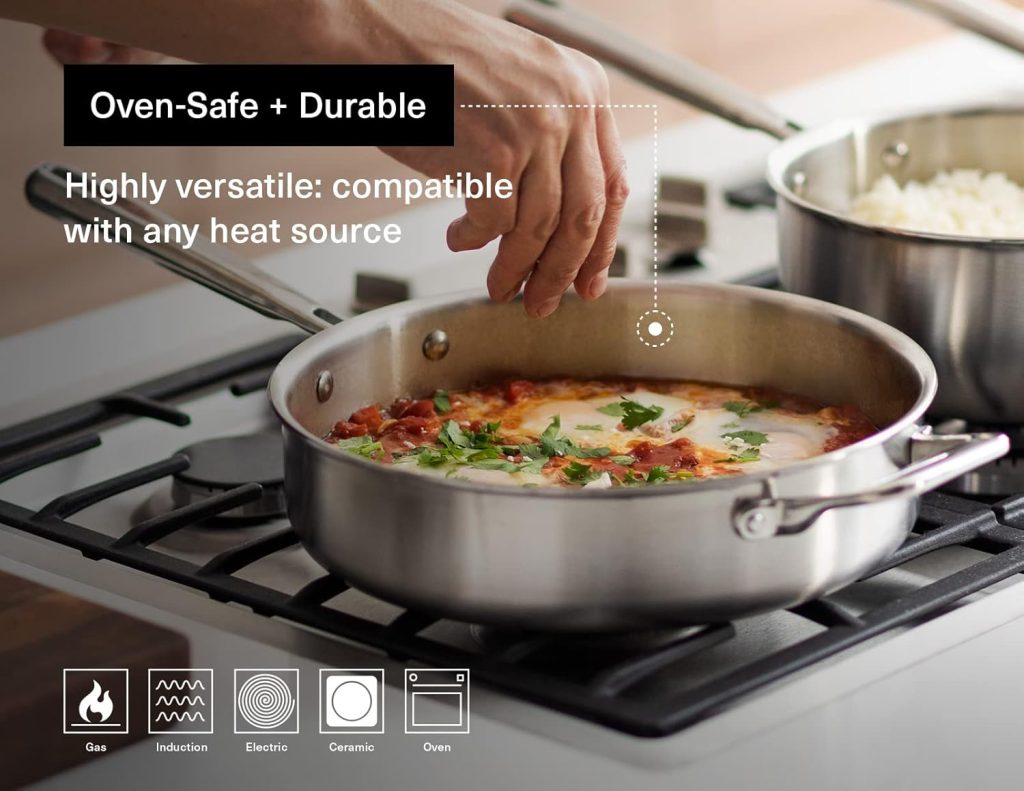
    Durability & Lifespan

    Understanding how long these pans actually last and what “longevity” really means is crucial for evaluating true value.

    The non-stick vs ceramic durability comparison reveals surprising truths about replacement frequency.

    Ceramic coating lifespan (1–3 years typical)

    Most ceramic cookware delivers peak performance for just 6-12 months before noticeable degradation begins.

    By 2-3 years, even well-maintained ceramic pans often lose most non-stick properties, developing sticky spots and requiring significantly more oil.

    The coating doesn’t necessarily chip or flake—it simply stops working effectively.

    This short functional lifespan disappoints many buyers who expected better durability from the premium prices that ceramic commands.

    Only the highest-quality ceramic brands with reinforced coatings consistently exceed the 2-year mark.

    Non-stick PTFE – longer durability, but chemical concerns

    Quality PTFE cookware typically maintains effective non-stick performance for 3-5 years, sometimes longer, with exceptional care.

    The coating proves more resilient to daily use, temperature cycling, and cleaning than ceramic.

    However, scratches from metal utensils accelerate degradation and potentially increase chemical exposure.

    This creates a paradox: PTFE lasts longer but raises ongoing safety questions throughout its extended lifespan.

    For those comparing options, the choice often comes down to whether you’d rather replace ceramic frequently or use PTFE longer while accepting potential chemical exposure.

    Scratch/chip resistance

    Both coatings require careful handling, but PTFE generally shows better scratch resistance than ceramic.

    Reinforced PTFE formulations with hard particles embedded in the coating can withstand more abuse.

    Ceramic coatings, despite their glass-like hardness, tend to chip at edges and scratch from abrasive scrubbing more readily than quality non-stick.

    Once scratched, a ceramic’s non-stick performance deteriorates rapidly in damaged areas.

    Neither coating should ever contact metal utensils, but PTFE tolerates accidental scrapes better than ceramic.

    Replacement frequency

    Expect to replace ceramic cookware every 1-2 years if you cook frequently—a significant ongoing expense that catches budget-conscious buyers off guard.

    Traditional non-stick might last 3-5 years, reducing replacement costs over time despite similar or lower initial prices.

    When considering the PFAS-free ceramic cookware comparison, factor in total ownership costs, including replacements.

    Frequent ceramic replacement also generates more waste, somewhat undermining its eco-friendly marketing.

    The most economical approach might involve reserving ceramic for high-heat applications while using PTFE for everyday cooking, or switching to stainless steel or non-stick cookware for certain tasks.

    Maintenance & Care Differences

    Proper care dramatically affects performance and lifespan for both cookware types.

    Following specific maintenance requirements can extend your investment and maintain safety.

    Safe cleaning for ceramic

    Ceramic requires gentle hand-washing with soft sponges and mild dish soap.

    Avoid abrasive scrubbers, steel wool, or harsh cleansers that scratch the coating. Let pans cool completely before washing to prevent thermal shock that can crack the coating.

    Stubborn residue can be removed by soaking in warm, soapy water or using a paste of baking soda and water.

    Never use cooking sprays, as they build up a sticky residue that ruins ceramic’s non-stick properties faster than almost anything else.

    Many manufacturers void warranties if cooking sprays are detected.

    Non-stick: avoid metal utensils, high heat

    PTFE cookware demands wood, silicone, or plastic utensils; only metal scratches compromise both performance and safety.

    Never preheat empty non-stick pans, as they reach dangerous temperatures quickly without food to absorb heat.

    Keep burners on low to medium settings; most foods cook perfectly below 400°F anyway.

    Once PTFE shows visible scratching, peeling, or chipping, replace the pan immediately to minimise chemical exposure.

    These restrictions feel limiting to some cooks, making the care requirements a significant practical consideration.

    Dishwasher safety

    Most manufacturers recommend hand-washing both ceramic and non-stick cookware, even if labelled “dishwasher safe.”

    Dishwasher detergents are highly alkaline and abrasive, degrading coatings faster than hand-washing.

    The intense heat and harsh chemicals strip the ceramic’s non-stick properties quickly.

    For PTFE, dishwashers can cause coating delamination and premature failure.

    If you value dishwasher convenience, consider our guide on carbon steel vs ceramic pan comparison or other options that tolerate machine washing better.

    Ventilation needs for non-stick cooking

    When using PTFE cookware, ensure adequate kitchen ventilation, especially at higher temperatures.

    Turn on exhaust fans to remove any potential fumes before they accumulate.

    Pet bird owners should avoid PTFE cookware entirely, as birds’ respiratory systems are extremely sensitive to polymer fumes—even normal cooking temperatures can be dangerous.

    Ceramic requires no special ventilation considerations, offering peace of mind for households with pets or concerns about indoor air quality.

    Environmental Impact

    Both cookware types carry environmental consequences that extend beyond your kitchen.

    Understanding these impacts provides a more complete picture for environmentally conscious consumers.

    PFAS persistence & environmental harm (non-stick)

    PFAS chemicals earned the nickname “forever chemicals” because they don’t break down in the environment—they persist indefinitely in soil and water.

    Manufacturing PTFE cookware releases PFAS into ecosystems, where they accumulate in wildlife and eventually human bodies through food and water.

    Even “PFOA-free” non-stick involves PFAS compounds with similar persistence.

    This environmental burden continues long after your pan reaches the landfill.

    Disposal of scratched or degraded PTFE cookware contributes to PFAS contamination in waste streams and potentially drinking water.

    Ceramics’ eco-marketing vs short lifespan reality

    Ceramic cookware markets itself as the eco-friendly alternative, highlighting natural materials and PFAS-free composition.

    However, its 1-2 year lifespan creates a sustainability paradox.

    Frequently replacing ceramic pans generates more waste, requires repeated manufacturing (an energy-intensive process), and increases shipping environmental costs.

    The aluminum base in most ceramic cookware is recyclable, but the ceramic coating contaminates recycling streams.

    True environmental impact calculation must include disposal frequency, not just material composition.

    Waste generation & recyclability

    Neither cookware type recycles well. The bonded coating-metal construction prevents easy separation, and most recycling facilities reject these pans.

    PTFE creates toxic smoke when incinerated, making disposal particularly problematic. Ceramic-coated pans can’t be recycled due to coating contamination.

    Both typically end up in landfills, where ceramics’ heavy metal risks and PTFE’s chemical persistence create different environmental concerns.

    The most sustainable choice might be longer-lasting options like cast iron or stainless steel that last for decades.

    Energy use in manufacturing

    Manufacturing both ceramic and PTFE coatings requires significant energy.

    Ceramic’s sol-gel process and high-temperature curing consume substantial electricity.

    PTFE production involves complex chemical synthesis at elevated temperatures and pressures.

    However, PTFE’s longer functional lifespan means fewer replacements and potentially lower lifetime manufacturing impact per cooking hour.

    Ceramics’ need for frequent replacement may ultimately require more total manufacturing energy despite using “natural” materials.

    Neither option clearly wins from a pure manufacturing energy perspective.

    Which Should You Choose? (Use-Case Recommendations)

    The right choice depends entirely on your priorities, cooking style, and personal values. Here’s how to decide based on specific use cases.

    Best for low-oil frying – Non-stick

    If minimal-oil cooking is your priority, whether for health reasons or convenience, traditional PTFE non-stick remains unmatched.

    Nothing else allows truly fat-free cooking with consistently good results.

    For daily egg breakfasts, delicate fish, or low-fat meal prep, PTFE’s superior performance justifies its use despite chemical concerns.

    Just follow temperature guidelines strictly and ensure proper ventilation.

    Best for toxin-free cooking – Ceramic

    For households eliminating all PFAS exposure, ceramic is the only viable non-stick option.

    If you’re pregnant, have young children, or simply want to minimise chemical exposure, ceramic’s PFAS-free composition provides peace of mind.

    Accept the shorter lifespan and performance limitations as the cost of avoiding synthetic chemicals.

    Choose certified brands to ensure the ceramic itself is free from heavy metals.

    Best for high heat – Ceramic

    For searing, broiling, or high-temperature oven use, ceramic’s superior heat tolerance makes it the clear choice.

    You can safely push temperatures that would destroy PTFE and potentially release harmful fumes.

    However, consider whether you actually cook at these high temperatures regularly; if most cooking stays below 400°F, this advantage becomes less relevant.

    Best budget-friendly choice – Non-stick

    Traditional PTFE offers better value over time due to a longer lifespan despite similar upfront costs.

    Replacing ceramic every 1-2 years costs more than replacing quality non-stick every 3-5 years.

    For budget-conscious cooks who cook daily and need reliable performance, traditional non-stick provides better cost-per-use economics.

    The cheapest quality option, however, might be learning to cook with stainless steel or cast iron that lasts decades.

    Best for long-term health – Ceramic or stainless steel

    For minimising lifetime chemical exposure while maintaining some non-stick convenience, ceramic wins among coated options.

    However, truly prioritising long-term health might mean skipping coated cookware entirely.

    Stainless steel and cast iron eliminate all coating concerns while lasting indefinitely.

    Many health-conscious cooks use ceramic for eggs and delicate foods while relying on uncoated cookware for everything else, a hybrid approach that balances convenience and safety.

    FAQs — Ceramic vs Non-Stick Cookware

    Which is truly safest?

    Ceramic is safer regarding PFAS chemical exposure, containing zero fluoropolymers or forever chemicals.

    However, low-quality ceramics can contain heavy metals.

    High-quality ceramic from certified manufacturers offers the safest non-stick option.

    PTFE is safe when used below 500°F, but it releases potentially harmful fumes at higher temperatures.

    For absolute safety, uncoated stainless steel or cast iron remains the gold standard.

    Is ceramic really non-toxic?

    Quality ceramic from reputable manufacturers is non-toxic and free from PFAS, PTFE, lead, and cadmium.

    However, “ceramic” is not automatically “non-toxic”—cheap imports sometimes contain concerning levels of heavy metals.

    Always choose ceramic cookware with third-party safety certifications and test results.

    The coating itself is inert and safe, but manufacturing quality determines actual toxicity levels.

    Is non-stick totally safe if used on low heat?

    When used below 400°F, PTFE non-stick is generally considered safe and doesn’t release measurable fumes or chemicals.

    The coating remains stable at normal cooking temperatures.

    However, scratched or damaged PTFE may release small particles into food, and proper temperature control requires vigilance.

    For those uncomfortable with any PFAS exposure or unable to strictly monitor cooking temperatures, ceramic offers greater peace of mind despite performance compromises.

    Final Verdict — Ceramic Wins for Safety, Non-Stick Wins for Convenience

    The ceramic vs non-stick cookware comparison has no universal winner; your ideal choice depends on what you value most.

    Ceramic delivers PFAS-free peace of mind, higher heat tolerance, and appeals to health-conscious cooks willing to sacrifice some performance and accept a shorter lifespan.

    Traditional non-stick offers superior cooking performance, better durability, and unmatched low-oil convenience, but carries chemical concerns requiring careful temperature management.

    For most households, the safest long-term approach combines high-quality ceramic for high-heat cooking and eggs with stainless steel or cast iron for everyday use.

    If choosing between only these two options, ceramic edges are ahead for health-focused households, while traditional non-stick suits performance-oriented cooks who follow safety guidelines strictly.

    The cookware industry continues evolving, with newer technologies promising both safety and performance.

    Until then, understanding these trade-offs empowers you to choose cookware aligned with your health priorities, cooking style, and budget, not just commercial claims.

  • Ceramic vs Stainless Steel Cookware

    Standing in the cookware aisle, you’re faced with a decision that affects more than just tonight’s dinner; it shapes your family’s health for years to come.

    The comparison between ceramic vs stainless steel cookware isn’t merely about preferences; it’s about safety, performance, and the peace of mind that comes from knowing what touches your food.

    With conflicting claims flooding the market, ceramic brands promising toxin-free cooking while stainless steel advocates tout unmatched durability, how do you separate marketing hype from kitchen reality?

    This comprehensive guide cuts through the confusion, examining everything from chemical leaching risks to long-term cost efficiency.

    Whether you’re a home chef or kitchen novice seeking healthier options or simply tired of replacing worn-out pans, understanding the real differences between these two popular cookware materials will transform how you equip your kitchen.

    What Is Ceramic Cookware?

    Ceramic cookware has surged in popularity as consumers seek alternatives to traditional non-stick options.

    However, understanding what “ceramic” actually means in the cookware context is essential for making informed decisions about ceramic vs stainless steel safety.

    Pure ceramic vs ceramic-coated (aluminum base)

    True ceramic cookware comes in two distinct forms.

    Pure ceramic pieces are made entirely from clay hardened at high temperatures, creating naturally non-stick surfaces without any metal base.

    Affordable ceramic nonstick cookware

    These are relatively rare and expensive. Most products marketed as ceramic cookware are actually aluminum or another metal base coated with a ceramic-derived non-stick layer.

    This ceramic coating provides the non-stick benefits consumers seek while keeping costs manageable and improving heat conductivity through the metal core.

    Sol-gel, silica-based coating explanation

    The ceramic coating on most modern cookware uses sol-gel technology, a process that creates a silica-based (sand-derived) layer bonded to the metal surface.

    This coating is applied as a liquid solution that hardens through a curing process, forming a glass-like surface.

    Carote ceramic cookware with removable handles

    The silica particles create a smooth, naturally slippery layer that allows food release without synthetic chemicals.

    This technology represents a significant departure from traditional polymer-based non-stick coatings.

    PFAS-free + non-stick claims

    One of ceramic cookware’s strongest selling points is its PFAS-free formulation.

    Unlike conventional non-stick pans that may contain per- and polyfluoroalkyl substances (PFAS), ceramic coatings achieve their slickness through inorganic mineral compounds.

    When comparing ceramic with non-stick coatings, ceramic options avoid the “forever chemicals” associated with Teflon and similar surfaces.

    However, the non-stick performance of ceramic typically doesn’t match that of traditional PTFE coatings and diminishes more quickly over time.

    Heavy metal considerations (lead/cadmium in cheap imports)

    The most concerning safety issue with ceramic cookware involves heavy metal contamination.

    Inexpensive ceramic pieces, particularly imports lacking proper certification, have tested positive for lead and cadmium in their glazes or coatings.

    These toxic metals can leach into food, especially when cooking acidic ingredients.

    It’s crucial to check if your cookware is heavy-metal safe by purchasing from reputable brands that provide third-party testing certificates and comply with FDA standards for food-contact surfaces.

    What Is Stainless Steel Cookware?

    Stainless steel has long been the professional chef’s choice, valued for its durability and versatility.

    Understanding its composition helps explain why it performs differently than ceramic alternatives in the which is better, ceramic or stainless steel question.

    304 vs 316 stainless steel (nickel content)

    Stainless steel cookware primarily uses two grades: 304 (18/8) and 316 (18/10).

    The numbers indicate chromium and nickel percentages—304 contains 18% chromium and 8% nickel, while 316 has 18% chromium and 10% nickel.

    GreenPan 3 Ply 10pcs stainless steel cookware

    The 316 grade also includes molybdenum, making it more resistant to corrosion and pitting.

    Both grades are food-safe, though individuals with severe nickel sensitivities should be aware that small amounts may leach when cooking highly acidic foods for extended periods.

    Multi-ply construction (3-ply, 5-ply)

    Quality stainless steel cookware features multi-ply construction, bonding layers of different metals.

    A 3-ply pan typically sandwiches an aluminum or copper core between two stainless steel layers, combining stainless steel’s durability with aluminum’s superior heat conductivity.

    Misen 5 Ply Stainless Steel Cookware

    Five-ply construction adds additional layers for even better heat distribution and control.

    This layered approach addresses stainless steel’s naturally poor heat conductivity while maintaining its non-reactive cooking surface.

    Non-reactive metal surface

    Stainless steel’s chromium content creates a passive oxide layer that makes it non-reactive with acidic or alkaline foods.

    Unlike bare aluminum or cast iron, stainless steel won’t impart metallic flavors to tomato sauces, wine reductions, or citrus-based dishes.

    This chemical stability makes it ideal for diverse cooking applications without concerns about unwanted reactions that could alter taste or potentially increase metal exposure.

    Why professional chefs use stainless steel

    Professional kitchens overwhelmingly favor stainless steel for several practical reasons.

    It withstands high heat without damage, allows for proper browning and fond development (those flavorful browned bits), survives the rigors of commercial dishwashers, and lasts decades under intense daily use.

    When comparing stainless steel vs ceramic heat performance, stainless steel’s ability to tolerate broiler-level temperatures and transition from stovetop to oven makes it indispensable for serious cooking.

    Key Differences Between Ceramic and Stainless Steel

    ceramic vs stainless steel cookware

    Understanding the fundamental distinctions between these materials reveals why they perform so differently in real-world cooking scenarios.

    The ceramic cookware vs stainless steel comparison centers on several key factors.

    Coating vs uncoated metal

    The most fundamental difference lies in surface composition.

    Ceramic cookware relies on an applied coating that sits atop a metal base, creating a barrier between food and the underlying material.

    This coating delivers non-stick properties but represents a vulnerable layer that can degrade.

    Stainless steel, conversely, features an uncoated metal surface what you see is what contacts your food.

    There’s no coating to wear away, chip, or break down over time, though this also means it lacks inherent non-stick properties.

    Weight differences

    Ceramic-coated cookware typically feels lighter than comparable stainless steel pieces.

    The aluminum base commonly used beneath ceramic coatings weighs less than stainless steel, making ceramic pans easier to maneuver for some cooks.

    However, quality stainless steel’s substantial weight provides stability on the stovetop and indicates solid multi-ply construction.

    The weight difference becomes noticeable when handling larger skillets or saucepans during cooking and cleaning.

    Heat response & control

    Ceramic-coated aluminum heats quickly due to aluminum’s excellent thermal conductivity, making it responsive to temperature changes.

    However, ceramic coatings can develop hot spots if the underlying metal is thin.

    Stainless steel, especially in multi-ply construction, heats more slowly but offers superior heat retention and more even temperature distribution once warmed.

    Professional cooks value this predictability for precise cooking techniques requiring consistent heat.

    Cooking versatility

    Stainless steel handles virtually any cooking method, searing, deglazing, oven-finishing, broiling, and even metal utensil use. Its durability permits high-heat techniques that would damage ceramic coatings.

    Ceramic cookware excels at low-to-medium heat cooking, where its non-stick properties shine, but struggles with high-heat applications.

    The coating can break down above 500°F, and rapid temperature changes may cause damage. This versatility gap significantly impacts which cookware suits your cooking style.

    Safety Comparison — Chemicals, Leaching & Coating Risks

    Health considerations drive many consumers toward ceramic options, but the ceramic vs stainless steel safety picture is more complex than marketing suggests.

    Ceramic – PFAS-free but may wear or chip

    Ceramic coatings legitimately avoid PFAS chemicals, offering a genuine advantage over traditional non-stick surfaces. However, this doesn’t guarantee complete safety.

    As ceramic coatings age, they may chip or flake, potentially introducing coating particles into food.

    While generally considered inert, ingesting coating fragments isn’t ideal.

    More concerning, if the coating deteriorates enough to expose the underlying aluminum, direct contact between acidic foods and aluminum becomes possible.

    When you learn the safety profile of ceramic coatings, understanding both the PFAS-free benefit and degradation risks provides a complete picture.

    Stainless steel – nickel leaching in acidic foods

    The primary safety concern with stainless steel involves nickel leaching, particularly relevant for those with nickel allergies or sensitivities.

    Research shows that stainless steel does leach nickel in measurable amounts when cooking highly acidic foods like tomato sauce for extended periods, especially in new cookware, before the passive chromium oxide layer fully develops.

    This nickel leaching depends on factors such as the grade of stainless steel, cooking time, and cookware usage history.

    For example, the study using tomato sauce, nickel leaching was as high as 88 micrograms per serving even after the tenth cooking cycle, with new cookware showing the largest increases.

    However, the amounts are typically minimal and pose risk primarily to individuals with diagnosed nickel sensitivity. For most users, stainless steel presents minimal health concerns.

    Lead & cadmium risks (ceramic glaze vs pure ceramic)

    Heavy metal contamination represents the most serious safety issue in ceramic cookware.

    Low-quality ceramic glazes have tested positive for lead and cadmium—neurotoxic heavy metals with no safe exposure level.

    These metals may leach into food, especially when cooking acidic dishes. Pure ceramic from reputable manufacturers undergoes testing to ensure safety, but cheap imports often skip these safeguards.

    Always verify third-party testing certificates and FDA compliance when purchasing ceramic cookware to avoid this hidden danger.

    Prop 65 warnings, FDA standards, and safety testing

    California’s Proposition 65 requires warnings for products containing certain chemicals, and some cookware carries these labels.

    FDA standards regulate materials that contact food, setting limits for metal leaching. Reputable stainless steel manufacturers easily meet these standards.

    For ceramic cookware, look for certification from independent labs confirming lead-free, cadmium-free status and compliance with FDA food-contact regulations.

    These certifications assure that marketing claims match actual safety performance.

    Cooking Performance Comparison

    Beyond safety, how these materials perform during actual cooking significantly impacts user satisfaction in the stainless steel vs ceramic nonstick choice.

    Non-stick performance (ceramic wins)

    Ceramic cookware delivers superior non-stick performance, especially when new.

    Eggs slide effortlessly, pancakes release cleanly, and delicate fish fillets lift without tearing.

    This ease of use makes ceramic appealing for everyday cooking tasks. However, this advantage proves temporary ceramic’s non-stick properties diminish noticeably after several months of regular use.

    Stainless steel offers no inherent non-stick qualities, requiring proper preheating, adequate fat, and technique to prevent sticking.

    Experienced cooks master these skills, but beginners often struggle initially.

    Searing & browning (stainless steel wins)

    For developing rich flavors through Maillard reactions, the browning that creates complex tastes in seared steaks, caramelized onions, and pan-roasted chicken, stainless steel excels.

    Its uncoated metal surface tolerates the high heat necessary for proper browning without degrading.

    The fond that develops on the stainless steel surface becomes the foundation for pan sauces through deglazing.

    Ceramic coatings can’t handle the same heat intensity and don’t develop fond effectively, limiting flavor development in certain dishes.

    Heat retention & responsiveness

    Ceramic-coated aluminum responds quickly to temperature adjustments, heating and cooling rapidly.

    This responsiveness helps prevent overcooking but may lead to temperature fluctuations.

    Quality multi-ply stainless steel retains heat more effectively, maintaining steady temperatures even when adding ingredients.

    This stability proves valuable for techniques requiring consistent heat.

    However, stainless steel’s slower response means adjusting heat takes longer to affect cooking temperature—a trade-off between stability and adaptability.

    Which one needs more oil?

    Ceramic cookware requires minimal oil or butter when new, making it attractive for health-conscious cooking.

    As the coating ages, more fat becomes necessary to prevent sticking. Stainless steel consistently demands adequate fat for most cooking tasks—not excessive amounts, but enough to create a barrier between food and metal.

    Proper preheating and the “water droplet test” (when water beads and rolls) signal readiness, allowing cooking with moderate oil use. Neither material enables truly oil-free cooking long-term.

    Durability & Lifespan

    Does ceramic cookware last long question frequently arises when comparing long-term value against stainless steel’s renowned longevity.

    Stainless steel – decades of usage, scratch-resistant

    Quality stainless steel cookware routinely lasts 20-30 years or more with proper care.

    Its solid metal construction resists scratching from metal utensils, though abrasive scrubbing may leave minor marks that don’t affect performance.

    The uncoated surface means there’s nothing to wear away—what starts as a scratch-resistant, durable pan remains that way indefinitely.

    Many families pass down stainless steel cookware across generations, a testament to its extraordinary lifespan.

    This durability makes the higher upfront cost more palatable when calculated per year of use.

    Ceramic – coating wears in 1–3 years

    Ceramic coatings typically maintain optimal non-stick performance for 1-3 years with careful use.

    Daily cooking accelerates wear, as does high heat, metal utensils, and dishwasher cycles.

    The coating gradually loses its slickness, requiring more oil and making food stick increasingly problematic.

    While the pan remains usable, it no longer delivers the non-stick experience that justified the purchase.

    Some users replace ceramic cookware every 2-3 years, making the long-term cost comparable to or exceeding stainless steel despite lower initial prices.

    Chip vs scratch resistance

    Ceramic coatings are prone to chipping, especially around edges and rivets.

    Thermal shock from rapid temperature changes, accidental impacts, and metal utensil use all risk damaging the coating.

    Once compromised, chips may expand with continued use. Stainless steel scratches rather than chips—these surface marks don’t progress or compromise functionality.

    Scratches are largely cosmetic, whereas ceramic chips expose the underlying metal and create surfaces where bacteria might harbor and food can stick.

    Long-term cost efficiency

    Initial price comparisons favor ceramic cookware, but lifespan dramatically affects true cost efficiency.

    A $100 ceramic pan replaced every 2-3 years costs $300-500 over 10 years.

    A $200 stainless steel pan lasting 20+ years costs $200 over that period, half the expense with superior performance throughout.

    Factor in frustration from degraded non-stick performance, and stainless steel’s value proposition strengthens considerably.

    Budget-conscious consumers should calculate the cost per year of satisfactory use rather than the purchase price alone.

    Ease of Use & Maintenance

    Daily care requirements influence long-term satisfaction with either material. Understanding maintenance needs helps set realistic expectations.

    Cleaning ceramic (gentle, non-abrasive)

    Ceramic cookware demands gentle cleaning to preserve coating integrity.

    Use soft sponges or cloths with mild dish soap—never abrasive scrubbers, steel wool, or harsh cleansers that accelerate coating breakdown.

    Most food residue releases easily when soaked in warm, soapy water.

    Avoid temperature extremes like plunging hot pans into cold water, which may crack the coating.

    While initially easy to clean thanks to non-stick properties, maintenance becomes more challenging as the coating ages and food begins sticking more readily.

    Cleaning stainless steel (deglazing + powder cleaners)

    Stainless steel tolerates aggressive cleaning without damage.

    Stuck-on food responds to deglazing, adding liquid to a hot pan to loosen fond, or soaking followed by scrubbing with powder cleansers like Bar Keeper’s Friend.

    The metal surface withstands steel wool and abrasive sponges when necessary.

    While stainless steel requires more effort to clean than fresh ceramic, its durability means you needn’t worry about damaging it.

    Learning proper cleaning techniques, including using baking soda pastes for stubborn stains, makes maintenance straightforward.

    Dishwasher safety

    Most stainless steel cookware is genuinely dishwasher-safe, though hand washing extends its aesthetic appeal by preventing water spots and mineral deposits.

    The harsh detergents and high heat of dishwashers don’t damage the metal.

    Ceramic cookware manufacturers often claim dishwasher safety, but repeated dishwasher cycles accelerate coating degradation.

    Hand washing with gentle methods preserves ceramic coatings longer.

    If convenience matters most, stainless steel better accommodates dishwasher use without compromising performance or longevity.

    Handling stains & discoloration

    Stainless steel develops rainbow-hued heat stains and white calcium deposits from hard water.

    These discolorations are harmless and removable with vinegar or specialized cleaners. The metal itself doesn’t stain permanently.

    Ceramic coatings may develop permanent discoloration from high heat or certain foods, creating brown or darkened areas that won’t clean away.

    While cosmetic, these stains affect appearance. Neither material’s discoloration issues impact food safety, but stainless steel’s stains prove easier to remove when desired.

    Environmental & Sustainability Impact

    Eco-conscious consumers increasingly consider environmental factors when choosing between eco-friendly ceramic vs stainless steel options.

    Ceramic – eco-marketed but shorter lifespan

    Ceramic cookware benefits from eco-friendly marketing emphasizing PFAS-free coatings and “natural” materials.

    These claims hold merit regarding chemical content. However, the short 1-3 year lifespan creates significant waste.

    Frequently replacing cookware generates manufacturing emissions for each new piece, consumes raw materials repeatedly, and sends old pans to landfills, where ceramic coatings and aluminum bases persist.

    The environmental cost of repeated production and disposal undermines initial “green” advantages, making ceramics’ overall sustainability profile less impressive than marketing suggests.

    Stainless steel – fully recyclable, long-lasting

    Stainless steel’s exceptional durability represents its greatest environmental strength.

    A single piece lasting 20-30 years eliminates the manufacturing impact and waste generation of multiple replacements.

    When stainless steel eventually reaches end-of-life, it’s 100% recyclable—the metal retains value and can be endlessly reprocessed without quality degradation.

    Recycled stainless steel requires less energy than virgin production.

    This combination of longevity and recyclability makes stainless steel one of cookware’s most sustainable choices, despite higher initial resource requirements.

    Manufacturing emissions differences

    Ceramic coating production involves chemical processes and high-temperature curing that generate emissions.

    The aluminum bases frequently used beneath ceramic coatings require energy-intensive production.

    Stainless steel manufacturing also demands significant energy, particularly for mining, refining, and forming the alloys.

    However, stainless steel’s longer lifespan means these manufacturing emissions are amortized over decades rather than years.

    Per year of use, stainless steel’s manufacturing footprint becomes considerably smaller than repeatedly producing ceramic cookware.

    Waste generation comparison

    Short-lived ceramic cookware creates more frequent waste streams.

    When coatings fail, entire pans become refuse despite functional metal bases underneath—recycling programs rarely accept coated cookware due to material separation challenges.

    Stainless steel generates minimal waste over its lifetime, and end-of-life recycling captures material value.

    For those prioritizing waste reduction, stainless steel’s durability advantage translates directly into environmental benefit. The most sustainable cookware is that which never needs replacing.

    Which Cookware Should You Choose? (Use-Case Recommendations)

    Selecting between ceramic and stainless steel depends on your priorities, cooking style, and willingness to develop technique. Consider these specific scenarios.

    Best for searing – Stainless Steel

    For achieving restaurant-quality sears on steaks, chops, and fish, stainless steel is unmatched.

    Its ability to withstand high heat without degradation, develop flavorful fond, and tolerate metal utensils makes it ideal for searing techniques.

    The uncoated surface promotes proper browning through direct contact with hot metal.

    When you compare enamel vs non-stick coating for high-heat cooking, uncoated stainless steel consistently outperforms coated options.

    Ceramic coatings simply cannot handle the temperatures necessary for optimal searing results without risking damage.

    Best for low-oil cooking – Ceramic

    New ceramic cookware enables cooking with minimal added fats, making it appealing for health-focused diets.

    Eggs, pancakes, and delicate proteins cook successfully with light oil application or even cooking spray.

    This advantage makes ceramic attractive for weight management and heart-healthy cooking styles.

    However, recognize this benefit diminishes as coatings age—plan to use progressively more oil or replace the cookware every few years to maintain low-fat cooking capabilities.

    Best for longevity – Stainless Steel

    Nothing rivals stainless steel’s lifespan. Quality pieces last generations with basic care, making them true investment pieces.

    The absence of coatings eliminates wear-related failure modes—there’s nothing to degrade except aesthetics.

    For consumers tired of replacing cookware or wanting pieces that last decades, stainless steel is the clear choice.

    The learning curve for preventing sticking proves worthwhile, given the extended service life and consistent performance year after year.

    Best for toxin-free – High-quality stainless steel or pure ceramic (not coated ceramic)

    For genuinely toxin-conscious cooking, high-quality stainless steel from reputable manufacturers offers the safest option for most people.

    It avoids PFAS, and minimal nickel leaching poses risk only to those with specific sensitivities.

    If choosing ceramic, invest in pure ceramic from certified manufacturers with third-party testing confirming no lead, cadmium, or other heavy metals.

    Avoid inexpensive ceramic-coated options lacking proper certification; the heavy metal risk outweighs any potential benefits.

    Stainless steel’s transparency and established safety record make it a more reliable choice than non-toxic alternatives.

    FAQs — Ceramic vs Stainless Steel

    Which heats better?

    Ceramic-coated cookware heats faster due to aluminum cores, but quality multi-ply stainless steel distributes heat more evenly.

    Ceramic’s quick response helps with temperature-sensitive cooking, while stainless steel’s even heating prevents hot spots and provides better control for precise techniques.

    Is ceramic safer than steel?

    Not necessarily. While ceramic avoids PFAS chemicals, cheap ceramic pieces may contain lead or cadmium.

    Quality stainless steel poses minimal risk for most people, with only those highly sensitive to nickel needing caution.

    Both can be safe when purchased from reputable manufacturers with proper certifications.

    Is stainless steel good for non-stick cooking?

    Stainless steel isn’t naturally non-stick, but proper technique—preheating, using adequate fat, and timing food release correctly—achieves satisfactory results.

    It requires more skill than ceramic but delivers consistent performance indefinitely without coating degradation affecting non-stick qualities over time.

    Final Verdict — Ceramic for Convenience, Stainless Steel for Safety & Longevity

    The ceramic vs stainless steel cookware decision ultimately hinges on your priorities.

    Ceramic delivers beginner-friendly convenience with excellent initial non-stick performance and minimal oil requirements, making everyday cooking effortless.

    However, these benefits prove temporary as coatings inevitably degrade within a few years.

    Stainless steel demands more technique but rewards users with superior durability, consistent performance across decades, and fewer chemical concerns.

    It handles high-heat cooking that develops complex flavors, transitions seamlessly from stovetop to oven, and withstands the rigors of daily use without meaningful deterioration.

    For most everyday cooks who prioritize long-term value, safety, and versatility, stainless steel represents the better investment.

    Its learning curve becomes manageable with practice, while its advantages compound over the years of reliable service.

    Ceramic suits those wanting immediate non-stick convenience and are willing to accept frequent replacement costs.

    Consider purchasing one quality stainless steel skillet for high-heat tasks while using ceramic for gentler, everyday cooking.

    Combining both materials provides the benefits of each while minimizing their respective limitations.