Walk into almost any American kitchen, and there’s a good chance you’ll find one or both. Corelle vs CorningWare is a comparison that confuses a lot of people, and understandably so.
Both brands were born out of Corning Glass Works, both have been kitchen staples for decades, and both carry a reputation for durability that’s hard to argue with.
But they are not the same thing. Corelle is lightweight glass dinnerware built for everyday dining. CorningWare is oven-safe cookware and bakeware engineered for the heat of cooking.
Same family, different jobs, and knowing the difference matters when you’re buying for your kitchen.
Corelle vs CorningWare: Quick Comparison Table
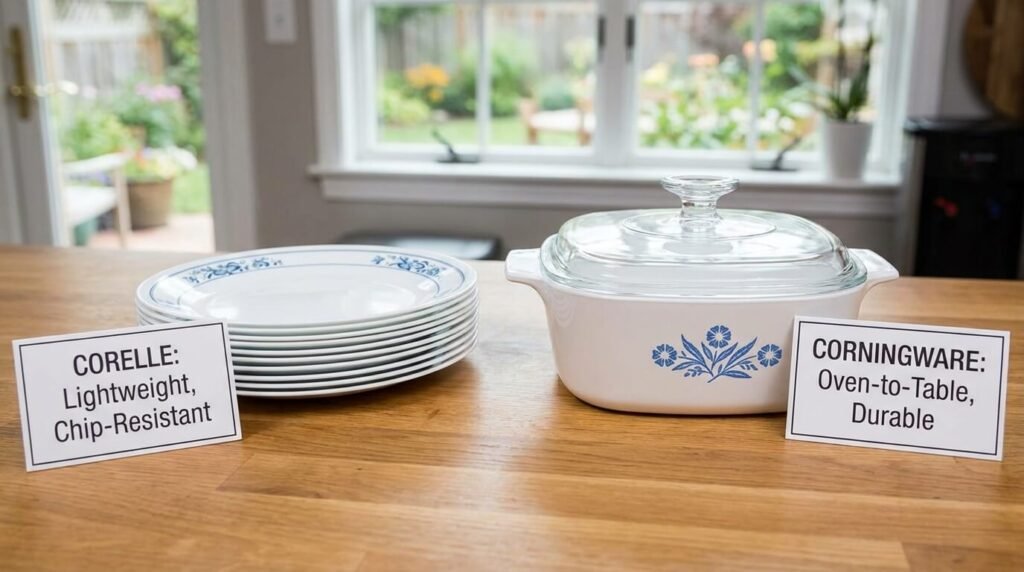
Here’s a side-by-side overview of how these two brands compare before we break down the details.
| Feature | Corelle | CorningWare |
| Primary Use | Everyday dinnerware | Cookware & bakeware |
| Material | Vitrelle (triple-layer laminated glass) | Pyroceram glass-ceramic or stoneware |
| Weight | Very lightweight | Moderately heavy |
| Oven Safe? | No | Yes (up to 450°F–500°F) |
| Stovetop Safe? | No | Yes (original Pyroceram only) |
| Microwave Safe? | Yes | Yes |
| Dishwasher Safe? | Yes | Yes |
| Freezer Safe? | Yes (storage only) | Yes (avoid thermal shock) |
| Freezer-to-Oven? | No | Yes (Pyroceram versions) |
| Chip Resistance | Excellent | Moderate |
| Thermal Shock Resistance | Low | High (Pyroceram) / Moderate (stoneware) |
| Stackability | Highly stackable | Moderate |
| Vintage Collectibility | Moderate (Butterfly Gold, Spring Blossom) | High (Blue Cornflower, nesting sets) |
| Best For | Daily dining, family meals | Baking, cooking, oven-to-table serving |
What Is Corelle?
Overview of the Corelle Brand
Corelle launched in 1970 as a Corning Glass Works product, and it didn’t take long to become one of the most recognized dinnerware brands in American homes.
Its appeal was immediate — thin, light, and surprisingly strong plates and bowls that didn’t feel fragile. Today, Corelle Brands manages the product line, which has expanded into global markets.
The brand’s enduring popularity comes down to a simple proposition: practical, good-looking everyday tableware that survives real family life.
Whether you’ve seen the classic Butterfly Gold pattern at your grandmother’s house or picked up a modern minimalist set recently, Corelle has stayed relevant across generations.
What Corelle Is Made Of
Corelle dishes are made from Vitrelle glass, a proprietary triple-layer laminated glass technology that Corning developed specifically for dinnerware.
The construction bonds two hard outer glass layers around a softer glass core, creating a product that’s thinner and lighter than ceramic while still being genuinely durable.
This glass lamination process is what distinguishes Corelle from standard tempered glass dinnerware.
Vitrelle isn’t just heat-treated glass; it’s an engineered multi-layer structure designed to resist the chips and breaks that come from everyday handling, stacking, and dishwashing.
The material is also non-porous, which helps with hygiene and stain resistance.
Common Corelle Products
Corelle’s product range is focused entirely on tableware. The core lineup includes dinner plates, salad and dessert plates, soup and cereal bowls, mugs, and complete dinner sets sold as coordinated collections.
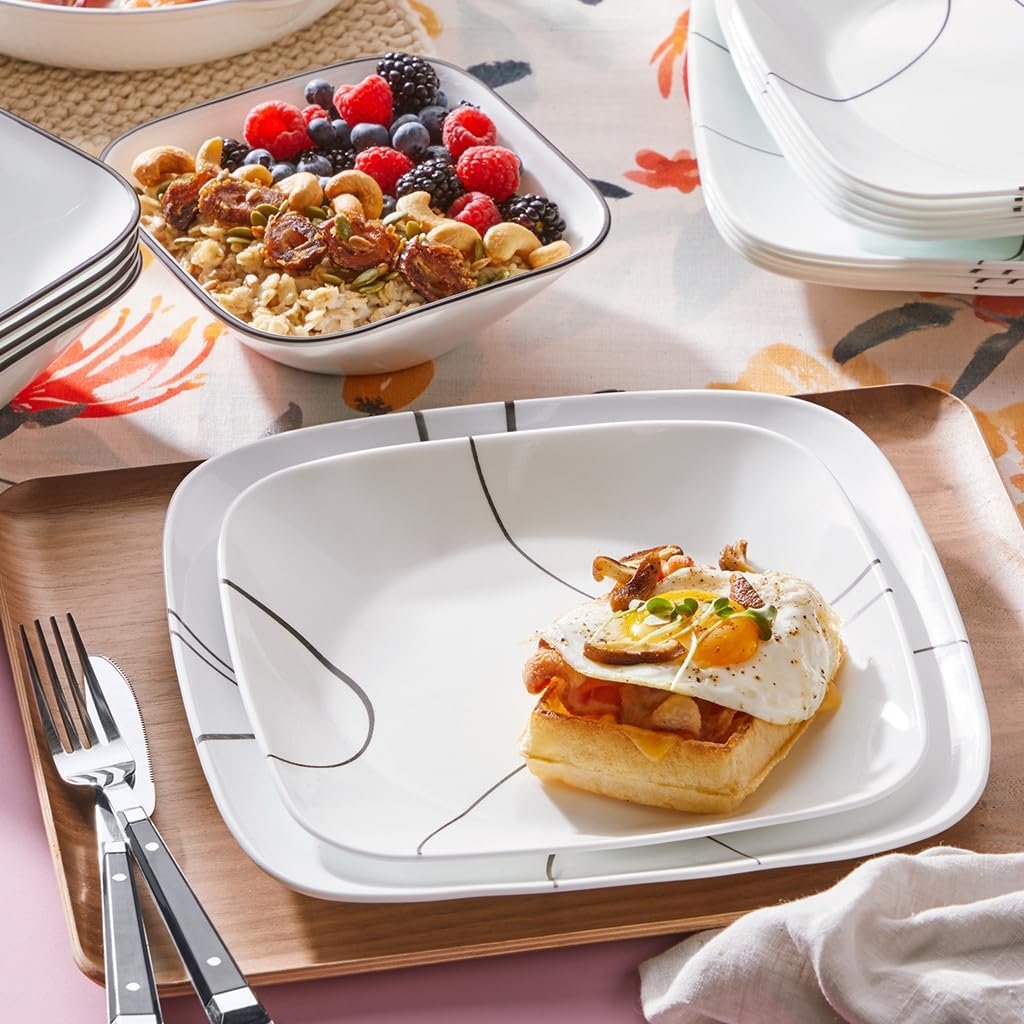
Many sets also include serving bowls and platters. The Corelle Livingware line is the most widely known, offering dozens of pattern options from vintage-inspired designs to clean contemporary styles.
All Corelle dishes are stackable, which makes them practical for kitchens where storage space is limited. You’ll typically find them sold in sets of four, six, or twelve, making it easy to stock a full kitchen in one purchase.
Main Benefits of Corelle
The three things Corelle does better than almost any competing dinnerware are lightness, stackability, and chip resistance.
The Vitrelle glass construction makes each piece noticeably lighter than ceramic or stoneware alternatives, which matters for daily handling, especially in households with kids or elderly users.
Stacking a full set of Corelle plates takes up a fraction of the cabinet space that ceramic sets require.
And the chip resistance of the laminated glass construction means these dishes genuinely hold up through years of everyday dishwasher cycles and regular table use without developing the ragged edges that plague most ceramic dinnerware over time.
What Is CorningWare?
Overview of the CorningWare Brand
CorningWare has been a staple of American cooking since 1958, when Corning Glass Works introduced it as a revolutionary oven-safe cookware solution.
The brand built its reputation on bakeware and casserole dishes that could handle the full range of kitchen tasks — from freezer to oven to table — without missing a beat.
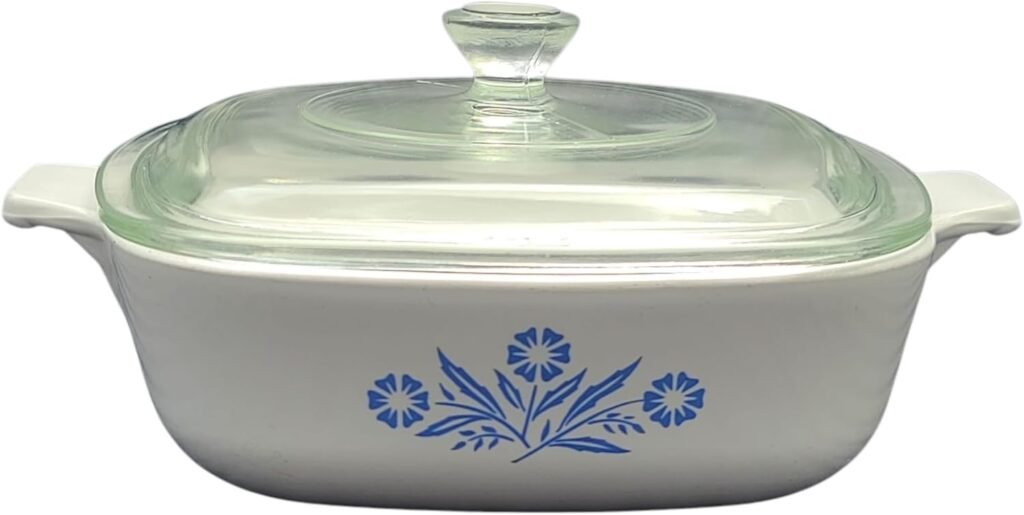
For generations, CorningWare casserole dishes were the go-to for potlucks, holiday meals, and Sunday roasts. That iconic Blue Cornflower pattern became one of the most recognized designs in American kitchen history.
Today, the brand continues to produce oven-safe cookware, though the product line has evolved to include both classic and modern collections.
What CorningWare Is Made Of
Original CorningWare was made from Pyroceram, a glass-ceramic material developed by Corning scientist Dr. Donald Stookey in the 1950s.
Pyroceram is a hybrid material that combines the properties of glass and ceramic through a controlled crystallization process, giving it extraordinary thermal shock resistance and the ability to withstand dramatic temperature changes without cracking.
This is why original CorningWare could go directly from freezer to stovetop or oven.
Modern CorningWare collections have shifted toward stoneware for some product lines, which offers a more traditional ceramic aesthetic but lacks the extreme thermal performance of the original Pyroceram glass-ceramic material.
Common CorningWare Products
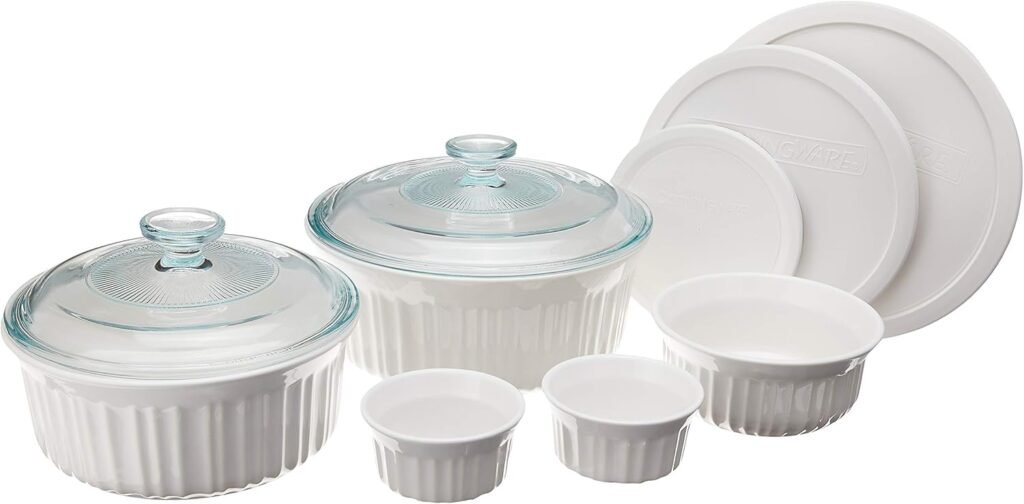
CorningWare’s product range centers on cookware and bakeware. The most iconic products are casserole dishes and baking dishes in various sizes, designed for oven cooking and oven-to-table serving.
The lineup also includes food storage containers with plastic or glass lids, roasting pans, and saucepans in the classic Pyroceram collections.
Modern CorningWare has expanded into sets that mix baking dishes with storage-ready lids, making them useful for both cooking and refrigerating leftovers.
For anyone who bakes regularly or prepares large meals, CorningWare’s range of glass-ceramic cookware provides a durable, heat-resistant solution that ceramic bakeware simply can’t match.
Main Benefits of CorningWare
CorningWare’s core strengths are oven safety, heat retention, and cooking versatility.
The Pyroceram glass-ceramic construction allows it to withstand oven temperatures up to 450°F to 500°F, and the material retains heat well after removal from the oven — keeping food warmer at the table longer than most alternatives.
Its cooking versatility is real: original Pyroceram CorningWare can go from freezer to oven to table in a single journey, minimizing dishes and cleanup.
For home cooks who want a reliable, long-lasting baking dish that also serves as a presentable serving vessel, CorningWare delivers in a way that metal bakeware simply can’t replicate.
Corelle vs CorningWare: Key Differences
Dinnerware vs Cookware Purpose
The most important distinction between Corelle and CorningWare is purpose. Corelle is everyday tableware, the plates, bowls, and mugs you eat from at the table.
CorningWare is cookware and bakeware, the dishes you cook in, bake in, and serve from. These are fundamentally different roles in a kitchen, which is why comparing them as if they’re direct competitors misses the point.
You wouldn’t bake a casserole in a Corelle plate, and most people wouldn’t use a CorningWare dish as their everyday dinner plate.
Each product is optimized for its specific purpose, and that purpose determines everything about how it’s engineered and used.
Material Technology Comparison
Corelle uses Vitrelle glass — a triple-layer laminated glass engineered for lightweight chip resistance. CorningWare uses Pyroceram glass-ceramic (in classic versions) or stoneware (in modern lines).
These materials represent completely different engineering approaches. Vitrelle prioritizes structural thinness and chip resistance through glass lamination.
Pyroceram prioritizes thermal shock resistance through glass-ceramic crystallization. Tempered glass, by comparison, is heat-strengthened but doesn’t achieve the same thermal performance as Pyroceram or the same chip resistance as Vitrelle.
Understanding the material difference helps explain why Corelle excels at the table, and CorningWare excels in the oven. Each material is built for its environment.
Heat Resistance Comparison
CorningWare is the clear winner in terms of heat resistance.
Pyroceram glass-ceramic cookware handles oven temperatures up to 450°F to 500°F and, in classic versions, can also handle direct stovetop use — something almost no other glass cookware can do.
Corelle dinnerware is not oven-safe. Vitrelle glass is not engineered for high-heat cooking environments, and placing Corelle in a conventional oven risks breakage.
Corelle handles microwave reheating fine, but that’s where its heat tolerance ends. If your priority is cooking, roasting, or baking, CorningWare is the right tool. Corelle’s role is at the table, not in the oven.
Weight and Thickness Differences
Corelle is one of the lightest dinnerware options available. Its Vitrelle laminated glass construction produces plates and bowls that are significantly thinner and lighter than ceramic, stoneware, or even standard glass alternatives.
CorningWare dishes are thicker and heavier, which is a trade-off for the heat tolerance and structural integrity needed in a baking and cooking context.
For daily dining, especially in households with children, elderly users, or anyone who values easy handling, Corelle’s lightweight design is a genuine practical advantage.
CorningWare’s weight is acceptable in a cooking context where you’re not repeatedly lifting and stacking dishes throughout the day.
Durability and Break Resistance
Both brands are durable, but in different ways. Corelle’s Vitrelle glass resists chips and minor impacts extremely well, making it the more durable choice for everyday tableware use.
It handles the routine of daily stacking, dishwashing, and handling better than ceramic. CorningWare’s Pyroceram glass-ceramic is highly resistant to thermal stress — the kind of durability that matters in an oven context.
Neither brand is indestructible under severe impact. Corelle can crack under a hard drop. CorningWare can crack if subjected to sudden extreme temperature changes when using modern stoneware versions.
Both outperform their respective material categories under normal use conditions.
Which Is Better for Everyday Use?
Best for Daily Meals
For daily meals, Corelle is the more practical choice. It’s lightweight, easy to handle, and holds up exceptionally well through the repetitive cycle of daily use, dishwashing, and stacking.
Setting the table with Corelle is effortless. Cleaning up is quick. And the chip resistance of the Vitrelle glass means your dishes stay looking good through years of real use without developing the worn edges that ceramic dinnerware typically shows over time.
If your goal is reliable, low-maintenance everyday tableware for family dining, Corelle delivers better than CorningWare, which isn’t really designed for the role of a dinner plate.
Best for Baking and Cooking
For baking and cooking, CorningWare wins by a wide margin. Its Pyroceram glass-ceramic construction handles sustained oven heat, distributes temperature evenly, and retains warmth well after being removed from the oven.
Whether you’re making a lasagna, roasting vegetables, or baking a fruit crumble, CorningWare performs consistently in ways that glass dinnerware like Corelle simply cannot.
The oven-to-table functionality is also a practical bonus — you cook in the dish, bring it to the table, and serve from it directly, eliminating the need for a separate serving vessel.
For any cooking task involving the oven, CorningWare is the appropriate tool. You can also compare Pyrex vs CorningWare if you’re deciding between two oven-safe glass options.
Microwave and Dishwasher Safety
Both Corelle and CorningWare are microwave-safe dishes and dishwasher-safe kitchenware. Corelle handles microwave reheating well without absorbing heat or affecting food flavor.
Its smooth Vitrelle surface is resistant to staining and odor after repeated dishwasher cycles.
CorningWare is equally safe in the microwave for reheating, and most modern pieces are dishwasher compatible, though hand washing is sometimes recommended for vintage Pyroceram pieces to preserve condition.
If you’re using lids with CorningWare storage containers, check them separately. Plastic lids are microwave-safe for warming but not for high-heat use. Both brands fit comfortably into the appliance routines of modern kitchens.
Storage and Stackability Comparison
Corelle has a clear edge on storage and stackability. Its thin Vitrelle construction means a full set of dinner plates stacks into a compact column that takes up far less cabinet space than ceramic or stoneware equivalents.
This is a genuine practical advantage in any kitchen where cabinet space is at a premium. CorningWare products stack reasonably well within their own product families, but the thicker glass-ceramic construction takes up more space.
CorningWare storage containers with lids also add storage flexibility for leftovers and meal prep, but they’re not designed for the tight-stack efficiency that makes Corelle particularly useful in compact kitchens.
Best for Small Kitchens
For small kitchens, Corelle is the smarter dinnerware choice. Its stackable, lightweight design maximizes limited cabinet space in a way that heavier ceramic or stoneware dinnerware can’t match.
A full eight-piece Corelle set takes up roughly the same cabinet space as a four-piece ceramic set of the same plate size; that difference matters in a studio apartment or compact kitchen.
CorningWare’s value in a small kitchen lies in its versatility: a single dish can go from freezer to oven to table, reducing the total number of cooking vessels you need to store.
Both brands support kitchen organization in different ways, but for pure space efficiency at the table, Corelle leads.
Corelle vs CorningWare Safety Comparison
Lead-Free and Food-Safe Standards
Modern Corelle and CorningWare products are both manufactured to meet current FDA food contact standards and are marketed as lead-free and cadmium-free.
The glass and glass-ceramic base materials of both brands are inherently food-safe. The more relevant safety consideration relates to decorative patterns — older vintage pieces from both brands may have used glazes or paints that contained lead or other materials no longer considered safe by current standards.
If you’re using vintage Corelle or vintage CorningWare for daily meals, it’s worth being aware of this, particularly for pieces where the decoration shows wear or flaking that could transfer to food.
Thermal Shock Resistance
Thermal shock resistance is a major differentiator between these two brands, and it matters for safety as well as performance.
CorningWare’s original Pyroceram glass-ceramic material was specifically engineered for thermal shock resistance; it handles sudden temperature changes that would crack or shatter most glass cookware.
This is what enabled the freezer-to-oven use case that made CorningWare famous. Modern stoneware CorningWare has less thermal shock resistance than classic Pyroceram versions.
Corelle’s Vitrelle glass has low thermal shock resistance and should not be subjected to sudden extreme temperature changes. Microwave to room temperature is fine; freezer to hot oven is not.
Oven and Stovetop Safety
CorningWare is oven-safe; Corelle is not. That’s the clearest safety boundary between the two brands, and it’s worth emphasizing.
Placing Corelle dinnerware in a conventional oven creates a genuine breakage risk.
Classic Pyroceram CorningWare goes further than most glass-ceramic cookware — it’s also stovetop-compatible on gas and electric burners, which is a capability that modern stoneware versions don’t share.
Always check which version of CorningWare you own before using it on the stovetop. For oven-safe cookware and bakeware, CorningWare is the right choice. For microwave reheating and table use, Corelle is perfectly safe and well-suited to the task.
Vintage Product Safety Concerns
Vintage CorningWare and vintage Corelle both attract passionate collectors, but there are some practical safety considerations worth knowing.
The most significant is the potential for lead in older decorative patterns, a concern for pieces made before modern safety standards were widely adopted.
The iconic Blue Cornflower pattern on vintage CorningWare has generally been regarded as safe, but highly decorated or brightly colored vintage pieces merit more caution.
For vintage Corelle patterns like Butterfly Gold or Spring Blossom, the same principle applies. If you’re using vintage pieces for food, inspect them carefully and avoid using any piece where the decorative surface shows significant wear.
Design and Style Comparison
Corelle’s Lightweight Minimalist Aesthetic
Corelle’s design identity has always leaned toward clean, practical aesthetics. The thinness of Vitrelle glass gives Corelle dishes an almost porcelain-like refinement without the weight or fragility of actual porcelain.
Modern Corelle collections offer solid colors, subtle geometric patterns, and updated takes on classic styles that fit comfortably in contemporary kitchen settings.
The slim profile and lightweight construction give the tableware a refined appearance at the dining table without drawing attention to itself. It looks like good dishware, which is exactly what everyday tableware should do.
Decorative dinnerware patterns range from understated to bold, giving buyers genuine options across different aesthetic preferences.
CorningWare’s Functional Cookware Design
CorningWare’s design is built around function first. The classic white glass-ceramic aesthetic with simple pattern accents like the Blue Cornflower is clean, presentable, and practical. It moves from oven to table without looking out of place in either setting.
That oven-to-table capability is part of what defines CorningWare’s visual identity: it needs to look good enough to serve from directly, and it does.
Modern CorningWare collections have introduced updated colorways and patterns while maintaining the core functional aesthetic.
The design communicates what the product does: it’s honest, well-made glass-ceramic cookware that doesn’t try to be fine china.
Vintage Collectible Patterns
Both brands have devoted collector communities, but vintage CorningWare, particularly pieces featuring the Blue Cornflower, Spice of Life, and Wildflower patterns, is among the most actively traded collectible kitchenware in the market.
Complete nesting sets in good condition can command significant prices at estate sales and online auctions. Vintage Corelle patterns like Butterfly Gold and Spring Blossom also attract collectors drawn to mid-century kitchen nostalgia.
The retro kitchen décor appeal of these pieces connects them to a specific era of American domestic life that many people find genuinely appealing. Kitchen nostalgia is a real market, and both brands benefit from it.
Modern Product Collections
Both Corelle and CorningWare continue to release modern collections that update their classic identities for contemporary kitchens. Corelle’s newer lines include streamlined patterns and neutral colorways that suit modern minimalist interiors.
CorningWare has expanded beyond its classic white-with-pattern aesthetic into colored stoneware and updated glass-ceramic designs.
Consumer kitchen trends toward cleaner aesthetics, reduced plastic use, and multi-functional products have benefited both brands.
Corelle fits into the modern preference for lightweight, practical dinnerware. CorningWare aligns with the growing interest in oven-to-table cooking and reducing single-use containers.
Both brands have adapted without losing the core identity that made them household names.
Conclusion
So, which is better, Corelle or CorningWare? Neither, on its own, tells the full story.
Corelle excels as lightweight everyday dinnerware. Its chip-resistant Vitrelle glass, slim stackable profile, and dishwasher-friendly construction make it the smarter choice for daily meals and family dining.
CorningWare specializes in heat-resistant cookware and baking dishes. Its Pyroceram glass-ceramic construction handles what Corelle simply cannot — the oven, the freezer-to-table journey, and sustained cooking heat.
They’re not rivals; they’re built for different jobs. The best-equipped kitchen has both. Know what each one does, buy accordingly, and you’ll get decades of reliable use out of either brand.