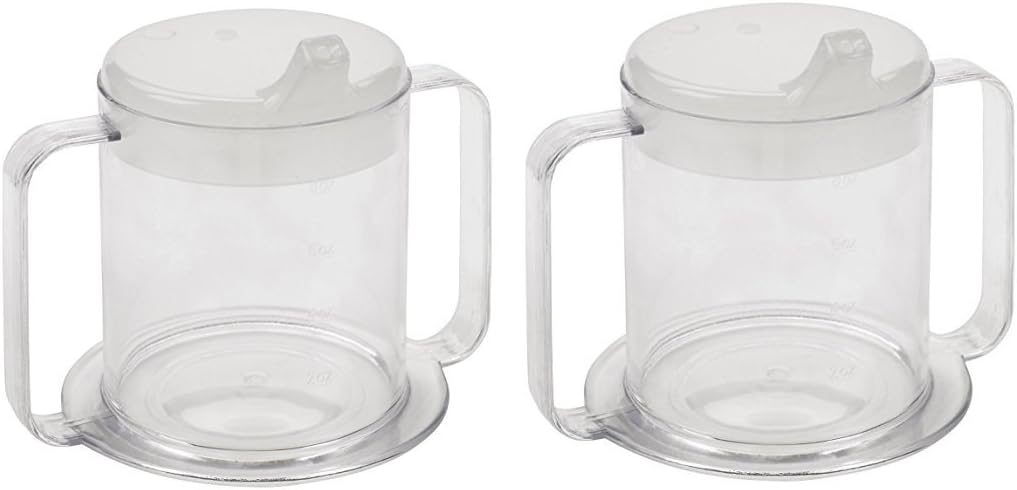
Tag: mobility assist dinnerware

  • Dinner Plates That Keep Food Warm (Best Options That Actually Work)

    Nothing ruins a carefully prepared meal faster than cold food hitting the table.

    While most people focus on cooking techniques, the plate itself plays a crucial role in maintaining temperature.

    Standard dinner plates made from thin ceramic or porcelain act as heat sinks, rapidly drawing warmth away from your food.

    Fortunately, specific plate materials and designs solve this problem effectively.

    From thick stoneware that retains heat naturally to innovative thermal-core plates with built-in warming technology, options exist for every dining situation.

    This guide explains the science behind heat retention, compares materials, and identifies the best plates for keeping meals warm from first bite to last.

    Why Food Gets Cold So Fast on Regular Plates

    Understanding heat loss mechanisms reveals why typical dinner plates fail at temperature retention and how material choices dramatically affect performance.

    Heat transfer from food to the plate

    Food loses heat through direct contact with cooler surfaces beneath it. When hot food touches a room-temperature plate, thermal energy transfers from the warmer object to the colder one until equilibrium occurs.

    This conduction process happens instantly and continuously. Thin plates with low thermal mass absorb heat quickly from food without storing it effectively, acting as temperature drains rather than insulators.

    The larger the temperature difference between the food and the plate, the faster heat transfers away.

    Thin ceramic plates lose heat quickly

    Standard ceramic dinnerware typically measures 3-5mm thick, providing minimal thermal mass.

    This thinness means plates heat up rapidly when food touches them, but also release that heat just as quickly into the surrounding air.

    The ceramic material itself conducts heat moderately well, efficiently pulling warmth from food.

    Once heated, thin plates radiate energy into cooler environments fast. Mass matters more than material alone—insufficient thickness prevents adequate heat storage regardless of composition.

    Room temperature surfaces & convection

    Plates sitting on tables or counters lose heat through their undersides via conduction to cooler surfaces.

    Simultaneously, air moving across the top surface carries away warmth through convection currents.

    Room air constantly flows over exposed plate edges and food surfaces, accelerating cooling.

    Wider plates expose a larger surface area to air, thereby increasing convective losses. Even slight air movement from heating systems or open windows can dramatically speed up cooling rates.

    How Plates Can Help Keep Food Warm

    Plates maintain food temperature through specific physical properties and preparation methods that slow inevitable heat loss during dining.

    Thermal mass vs insulation

    Thermal mass refers to a material’s ability to absorb and store heat energy.

    Heavy, dense plates with high thermal mass stay warm longer after heating, releasing stored energy back to the food gradually.

    Insulation works differently by creating barriers that resist heat flow between surfaces. Double-walled plates trap air gaps that insulate warm food from cool environments.

    Both approaches work, but thermal mass requires preheating while insulation works without preparation. Combining both properties produces optimal results.

    Pre-heated plates

    Warming plates before serving gives them thermal energy to share with food rather than steal from it.

    A pre-heated plate maintains food temperature rather than lowering it. The practice originated in fine dining establishments where presentation and temperature both matter.

    Safe plate preheating prevents damage while maximizing effectiveness. Pre-warmed plates can extend food temperature by 10-20 minutes, depending on thickness and material.

    The technique transforms any plate into a better warming vessel.

    Plate thickness & density

    Thickness directly determines how much heat a plate stores. A 10mm thick stoneware plate holds twice the thermal energy of a 5mm ceramic one.

    Density matters equally; materials with tightly packed molecular structures store more energy per volume.

    Cast iron’s exceptional density explains its superior heat retention despite moderate thickness.

    Combining substantial thickness with high-density materials creates plates that maintain warmth for extended periods.

    Surface area exposure

    Larger plates expose more food surface to air, accelerating cooling through increased convection.

    Smaller plates with taller rims shield food better by reducing air circulation across surfaces.

    Covered serving dishes maintain temperature better than flat plates for this reason. Deep bowls outperform flat plates when keeping soups and stews warm.

    Consider portion size when selecting plate dimensions; oversized plates with small portions cool food faster than appropriately sized options.

    Best Types of Dinner Plates That Keep Food Warm
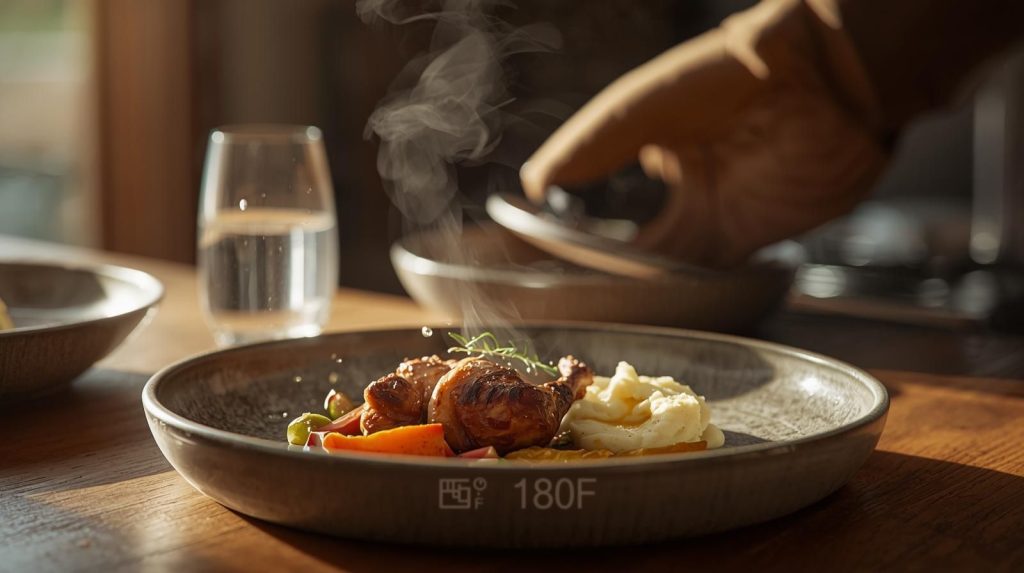
    dinner plates that keep food warm

    Different materials offer varying heat retention capabilities, with thickness and density creating performance differences within each category.

    Stoneware Plates

    Stoneware represents the ideal choice for home dining temperature retention.

    These plates typically measure 8-12mm thick with dense, vitrified clay bodies that store substantial thermal energy.
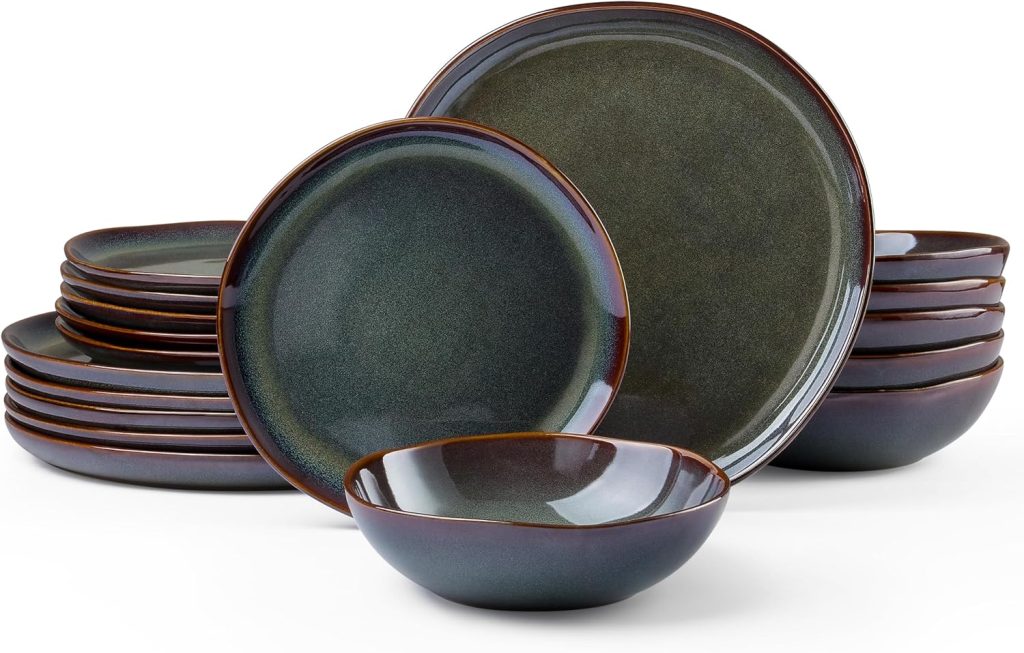
    thick stoneware dinnerware that can keep food warm

    The material composition includes natural clay fired at high temperatures, creating a semi-porous structure that holds heat effectively.

    Stoneware plates feel noticeably heavier than standard ceramic, indicating their superior thermal mass.

    When preheated, quality stoneware maintains food temperature for 15-25 minutes.

    The material handles oven temperatures safely, dishwasher cleans easily, and comes in attractive finishes suitable for everyday use.

    Ceramic Plates (High-Fire)

    High-fire ceramic refers to porcelain and stoneware blends fired above 2,200°F, creating denser structures than earthenware.

    These plates offer moderate heat retention, better than thin porcelain but less effective than pure stoneware.
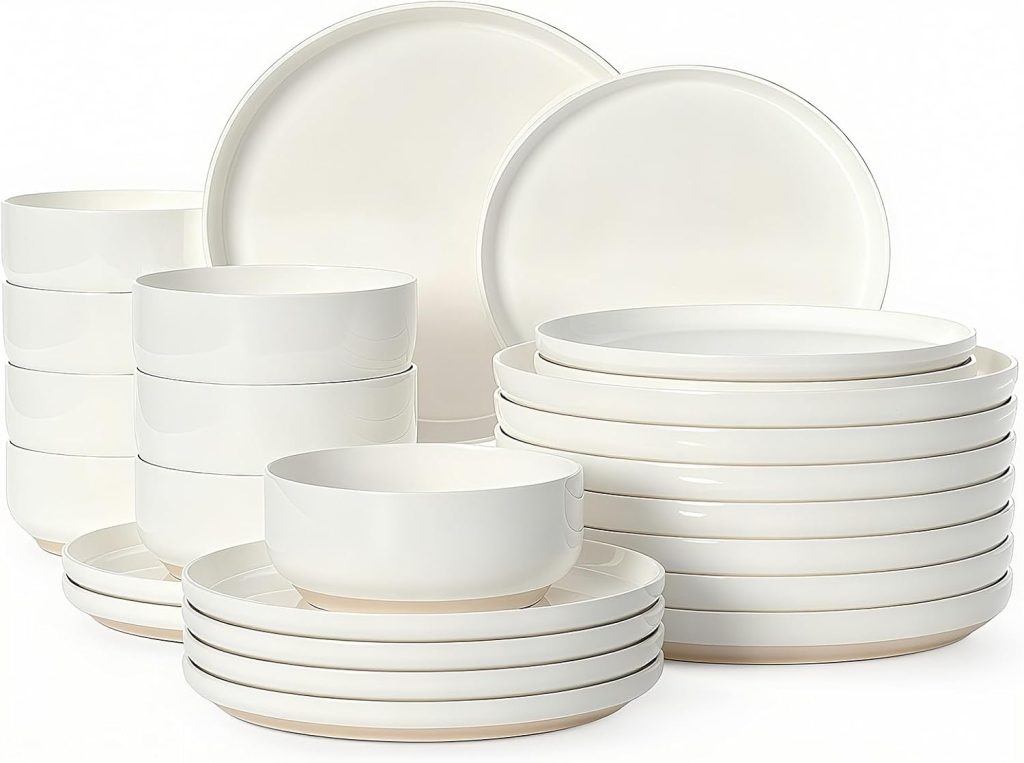
    high fired ceramic dinnerware for heat retention

    The material provides excellent food safety with non-reactive glazes that don’t leach chemicals.

    Most quality ceramic dinnerware falls into this category, balancing aesthetics with functionality.

    Thickness varies significantly between manufacturers, so seek options exceeding 7mm for better temperature maintenance.

    High-fire ceramic withstands thermal shock better than low-fire alternatives.

    Cast Iron Serving Plates

    Cast iron delivers exceptional heat retention unmatched by ceramic materials.

    Restaurants use these plates for sizzling fajitas and steaks because the dense metal maintains high temperatures throughout meals.
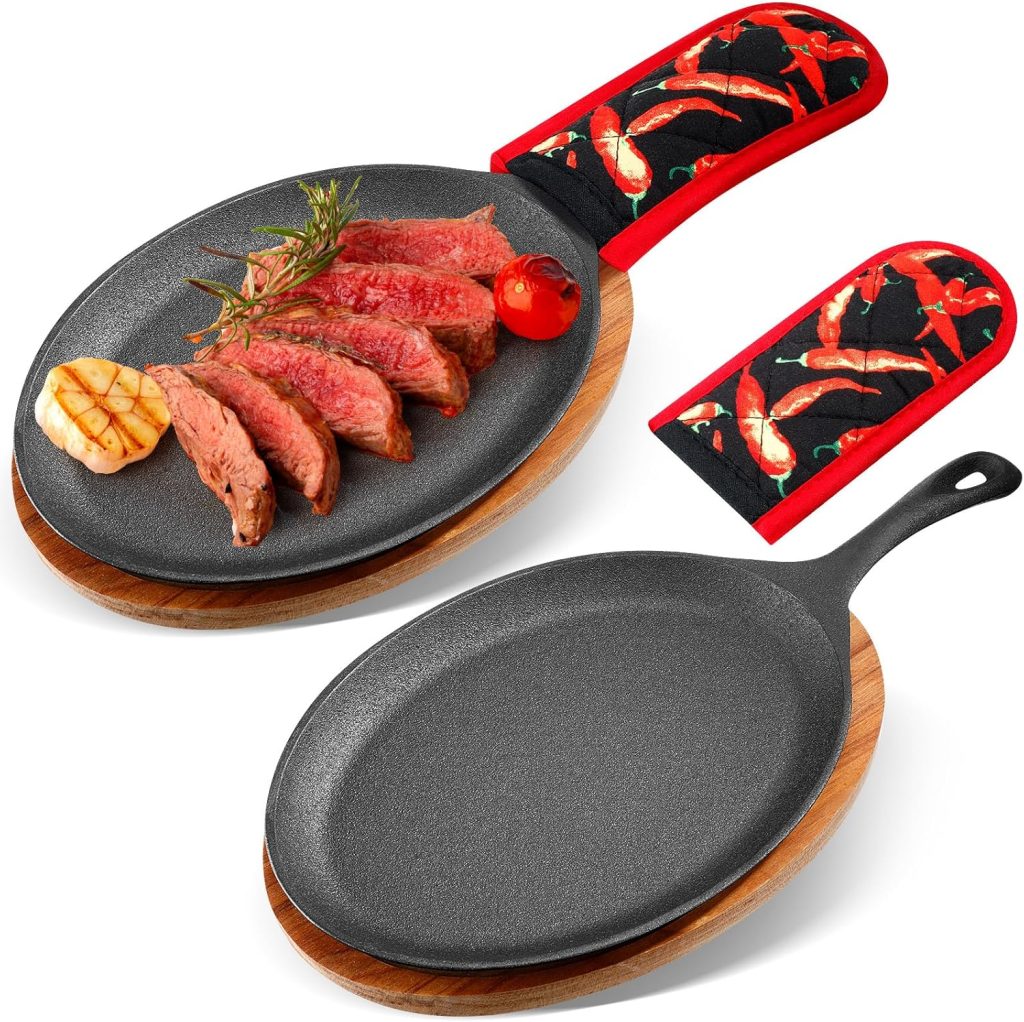
    cast iron serving plate

    Individual cast iron plates typically feature handles since the material conducts heat too well for direct handling.

    Pre-seasoned surfaces prevent sticking and add non-toxic protection. However, cast iron requires careful maintenance, including hand washing and occasional seasoning.

    The weight makes daily use impractical for some, but performance justifies the effort for special occasions.

    Insulated / Double-Walled Plates

    Specialized insulated plates feature air gaps or foam layers between inner and outer walls that resist heat transfer.

    These designs work without preheating by preventing food warmth from escaping quickly.
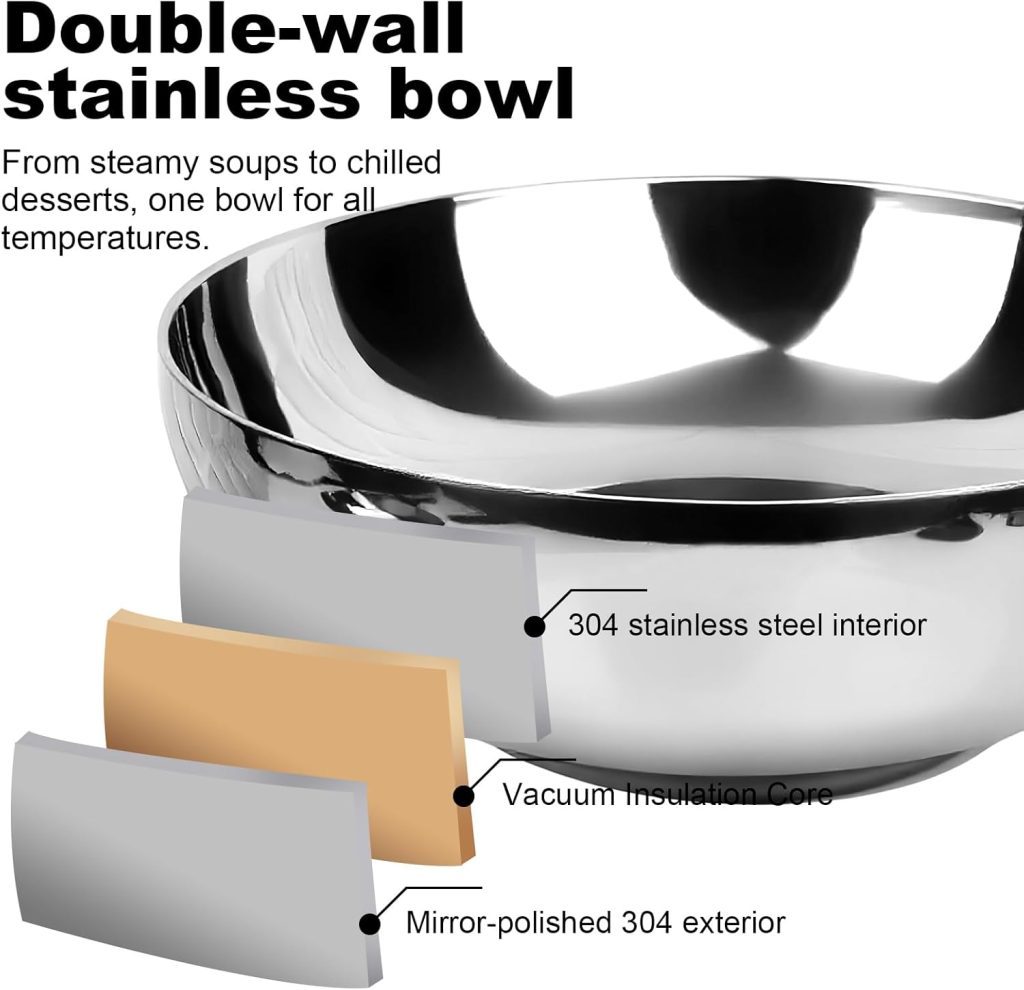
    Stainless Steel double walled insulated Bowl

    Popular for children’s dinnerware, they maintain temperature for picky eaters who take longer to finish meals.

    Solutions for slow eaters often include these plate types.

    Construction quality varies significantly. Premium versions use stainless steel with vacuum insulation, while budget options use plastic with simple air gaps.

    Check material safety certifications before purchasing.

    Stainless Steel Plates (with insulation)

    Stainless steel plates combine durability with good heat retention when properly designed.

    Single-wall steel conducts heat away quickly, but double-wall insulated versions trap air for better performance.

    The material withstands drops and rough handling better than ceramic, making it ideal for outdoor dining or children.

    Food-grade stainless steel poses no toxicity concerns and cleans effortlessly.

    When preheated in warm water or low ovens, insulated stainless maintains food temperature comparably to stoneware.

    The metal’s lightweight nature appeals to users who find heavy ceramic cumbersome.

    Plates Designed Specifically to Keep Food Warm

    Innovative designs incorporate active warming elements beyond passive heat retention, extending temperature maintenance significantly.

    Thermal-core plates

    Thermal-core technology embeds heat-storing materials between plate layers.

    Manufacturers use substances like silica gel, paraffin wax, or specialized ceramics that absorb and release heat slowly.

    Users warm these plates in microwaves or ovens, charging the core material. The stored thermal energy then radiates to food for extended periods—often 30-45 minutes.

    The cores add weight and thickness but provide superior performance. Check whether specific models allow microwave charging or require oven heating before purchasing.

    Gel-filled warming plates

    Gel-filled designs use non-toxic thermal gels sandwiched between food-safe plates.

    These products are typically microwaved for 2-3 minutes, heating the gel, which then maintains plate warmth.

    The gel distributes heat evenly across surfaces, preventing hot spots that might damage food quality.

    Most gel plates work only for reheating since excessive temperatures damage gel cores. They excel at maintaining moderate warmth rather than searing-hot serving.

    Durability concerns arise if plates crack, potentially leaking gel, so inspect regularly.

    Heat-activated plates

    Some specialty plates use chemical reactions or phase-change materials that activate at specific temperatures.

    These innovative designs release stored energy gradually as food cools. The technology remains relatively expensive and limited in availability compared to traditional thermal-mass approaches.

    Restaurant and healthcare sectors use these more commonly than home consumers.

    Performance justifies costs in institutional settings serving large groups requiring synchronized service.

    Microwave-warmed base plates

    Several manufacturers produce plate systems with removable bases that microwave separately.

    Users heat the base for 60-90 seconds, then click the dining surface on top.

    This modular approach allows quick reheating between courses without exposing food directly to microwave energy.

    The bases typically contain ceramic cores or thermal gels. Systems work well for sequential serving where multiple courses need individual warming.

    Cost exceeds conventional plates significantly, but provides active heating without electrical components.

    Best Plates for Slow Eaters

    Individuals who eat slowly need plates that maintain temperature for extended periods, requiring specific materials and preparation techniques.

    Longer meal duration needs

    Slow eaters face food cooling below appetizing temperatures before finishing portions. Children, elderly individuals, and those with certain medical conditions often eat gradually.

    Standard plates cool food within 10-15 minutes, creating unpleasant dining experiences.

    Addressing this requires both appropriate plate selection and proper warming preparation.

    Understanding that meals might last 30-45 minutes guides material choices toward maximum thermal mass and insulation properties.

    Plate material importance

    Thick stoneware plates exceeding 10mm provide optimal performance for slow eaters, maintaining warmth for 20-30 minutes when preheated.

    Cast iron offers even longer retention but presents handling challenges. Insulated double-wall plates work well without preheating requirements, suiting situations where preparation time is limited.

    Avoid thin ceramic or glass entirely, as these materials cool food within minutes. Prioritize weight and thickness when selecting plates for extended meal durations.

    Pre-heating techniques

    Pre-warming plates transforms performance dramatically for slow eaters. Place stoneware or ceramic plates in 200°F ovens for 10-15 minutes before serving.

    Alternatively, fill plates with hot water for 5 minutes, then dry thoroughly before plating food.

    Microwave-safe plates can be warmed for 60-90 seconds on high power. Always test the temperature before serving to prevent burns.

    Consistent preheating routines ensure food stays appetizing throughout extended meals.

    Portion placement strategies

    Mounding food toward the plate center minimizes surface area exposure to air, slowing convective cooling.

    Avoid spreading thin layers across entire surfaces. Use smaller plates appropriate to portion sizes rather than oversized options.

    Consider transferring food to fresh, pre-warmed plates mid-meal for very slow eaters.

    Covering plates partially with lids or other plates between bites reduces heat loss significantly while maintaining accessibility.

    How to Preheat Plates Safely

    Proper warming techniques maximize heat retention while preventing damage to both plates and users from excessive temperatures or thermal shock.

    Oven warming (low temp only)

    Ovens provide effective, even heating for ceramic and stoneware plates. Set temperatures between 175°F-225°F—higher heat risks burns and may damage some glazes.

    Place plates directly on racks, spacing them for air circulation. Warm for 10-15 minutes before serving time.

    Use oven mitts when removing hot plates, as handles heat too. Never exceed manufacturer temperature ratings.

    This method works best when warming multiple plates simultaneously for family meals or dinner parties.

    Hot water bath method

    Filling plates with near-boiling water for 3-5 minutes safely warms them without oven access. Use your hottest tap water or heated kettle water, ensuring complete surface coverage.

    This gentle method prevents thermal shock while effectively raising plate temperatures.

    Dry plates thoroughly with clean towels before plating food to prevent dilution of sauces or sogginess.

    The water bath works particularly well for quick single-plate warming when cooking individual portions.

    Microwave safety rules

    Only microwave plates explicitly labeled microwave-safe. Heat empty plates for 30-60 seconds, checking temperature carefully.

    Some decorative elements contain metals that spark dangerously in microwaves. Plates heat unevenly in microwaves, potentially creating hot spots that burn users.

    Rotate plates halfway through warming cycles for better distribution.

    Never microwave plates with metallic trim, hand-painted decorations, or chips that might contain moisture, causing explosive heating.

    Avoiding thermal shock

    Thermal shock occurs when extreme temperature changes cause materials to crack. Never place frozen or refrigerated plates directly into hot ovens.

    Allow cold plates to reach room temperature first, or warm gradually, starting at lower temperatures.

    Similarly, don’t pour ice water onto hot plates or place hot plates on cold stone counters.

    Safe plate preheating prevents costly damage while extending dinnerware life. Quality stoneware resists thermal shock better than thin porcelain or glass.

    What Plates Do NOT Keep Food Warm

    Understanding poor performers helps avoid disappointment and guides better purchasing decisions for temperature-sensitive dining needs.

    Thin porcelain

    Fine china and thin porcelain plates typically measure 3-5mm thick with low density, providing minimal thermal mass.

    These elegant plates prioritize aesthetics over function, cooling food rapidly. The thin construction heats quickly from food contact but releases that warmth almost immediately into the surrounding air.

    Delicate porcelain also restricts safe preheating since thermal shock easily damages thin materials.

    Reserve these plates for cold salads or room-temperature appetizers rather than hot entrees requiring temperature maintenance.

    Glass plates

    Glass combines poor insulation with rapid heat conduction, making it the worst choice for keeping food warm.

    Why glass plates lose heat fast explains the material’s thermal properties. Thin glass construction, typical in dinnerware, provides negligible thermal mass.

    The material conducts heat efficiently into table surfaces while simultaneously radiating warmth into the air.

    Glass plates feel cold to the touch within minutes of serving hot food. Only use glass for cold dishes, desserts, or presentations where temperature maintenance doesn’t matter.

    Melamine (unsafe for heat)

    Melamine plastic plates cannot withstand high temperatures, making preheating impossible and heat retention poor.

    Heating melamine above 160°F releases toxic chemicals into food, creating health hazards. The lightweight plastic provides no thermal mass regardless of thickness.

    Melamine plates cool hot food rapidly while offering no safe warming options. These plates suit cold sandwiches, salads, and outdoor dining where temperature control isn’t critical.

    Never use for hot foods requiring temperature maintenance or attempt heating in ovens or microwaves.

    Plastic plates

    Standard plastic dinnerware shares melamine’s limitations without even melamine’s moderate durability.

    Thin construction provides zero thermal mass, cooling food immediately upon contact. Heat warps and melts plastic plates, eliminating any preheating possibility.

    Chemical leaching concerns arise when hot food contacts plastic surfaces. While convenient for outdoor events and children’s parties, plastic plates offer no temperature retention whatsoever.

    Use exclusively for cold foods, room-temperature snacks, or situations where immediate consumption occurs.

    Plates vs Plate Warmers — Which Is Better?

    Comparing passive heat retention from proper plates against active heating from electric warmers reveals distinct advantages for different situations.

    Passive heat retention (plates)

    Quality plates with high thermal mass maintain warmth through stored heat without electricity or special equipment.

    Stoneware and cast-iron plates work independently once preheated, requiring no cords or monitoring.

    This passive approach suits regular dining where preheating routines become habitual.

    Initial investment costs remain reasonable since quality plates last for decades.

    Passive retention works reliably for 15-30 minutes, adequate for typical meal durations. The simplicity appeals to users wanting straightforward solutions without technology complications.

    Active heating (warmers)

    Electric plate warmers actively maintain or increase temperatures throughout meals using heating elements.

    These devices accommodate any plate type, from thin porcelain to heavy stoneware. Warmers extend temperature maintenance indefinitely as long as power continues.

    Restaurant buffets and catering operations rely on warmers for hours-long service. However, warmers require counter space, electrical outlets, and careful monitoring to prevent overheating.

    Operating costs include electricity consumption, and units require storage when not in use.

    Safety considerations

    Both approaches present safety concerns requiring attention. Pre-heated plates can burn unwary diners touching hot surfaces without warning.

    Active warmers pose greater risks through electrical hazards, cord tripping, and continuous high temperatures.

    Warmers need stable placement away from water sources and flammable materials.

    Children and elderly individuals face increased burn risks with both methods.

    Proper warnings and careful handling mitigate dangers, but passive plates generally present fewer ongoing hazards.

    Cost & convenience

    Quality thermal-mass plates may cost $15-$40 (depending on the store) each but require no ongoing expenses beyond occasional replacement.

    Plate warmers range from $30 for basic models to $200+ for commercial units, plus electricity costs.

    Plates integrate seamlessly into existing kitchen workflows with minimal added effort once preheating becomes routine.

    Warmers demand counter space and electrical access, complicating kitchen organization. For occasional use, preheated plates offer better value.

    Frequent entertainers or those serving large groups might justify warmer investments.

    Safety Considerations When Using Warming Plates

    Proper precautions prevent burns, material damage, and health concerns when implementing temperature-retention strategies.

    Burn risk

    Pre-heated plates reach temperatures between 150°F-180°F, hot enough to burn skin on contact.

    Always warn diners before serving on warmed plates. Children and elderly individuals with reduced sensation face elevated injury risks.

    Use trivets or placemats providing insulation between hot plates and bare hands. Consider color-coding or marking warmed plates to signal caution.

    Train family members to use utensils for plate adjustment rather than direct contact. Allow cooling time before handling plates for clearing.

    Food-contact safety

    Some materials release harmful chemicals when heated or maintain food contact at elevated temperatures.

    Verify all plates meet food-safety certifications before warming. Avoid heating plates with decorative elements that might contain lead or cadmium.

    Damaged glazes may leach more readily when hot. Only use oven-safe plates rated for the intended temperatures.

    Materials like melamine become toxic when heated. Stick to ceramic, stoneware, and stainless steel from reputable manufacturers with proper safety testing.

    Non-toxic materials

    Select plates manufactured without lead and cadmium, or other heavy metals that leach into food.

    Modern ceramics from established brands typically meet safety standards, but imported products and vintage dishes may contain toxins.

    High-fire stoneware and porcelain present minimal leaching risks due to vitrification during firing.

    Food-grade stainless steel offers inherent safety. Request test certificates or check for FDA certification when purchasing.

    Hand-painted decorations sometimes contain unsafe pigments—avoid heating plates with extensive painting.

    Children & elderly considerations

    Vulnerable populations need additional protection when using warming plates. Children lack judgment about hot surfaces and may touch plates instinctively.

    Use insulated plate holders or ensure plates cool to safe temperatures before serving. Supervise closely until children understand burn risks.

    Elderly individuals with neuropathy or dementia may not perceive heat danger appropriately.

    Consider moderate warming temperatures, sacrificing some performance for enhanced safety.

    Label warm plates clearly and maintain consistent placement routines so users anticipate hot dishes.

    FAQ — Dinner Plates That Keep Food Warm

    Do heated plates keep food warm longer?


    Yes, preheated plates significantly extend food warmth duration.

    Warm plates don’t steal heat from food like cold plates do, instead maintaining temperature through stored thermal energy.

    Thick stoneware or cast iron heated to 175°F-200°F keeps food appetizing for 20-30 minutes versus 10-15 minutes on room-temperature plates.

    The effect increases with plate thickness and density.

    Are warming plates safe for kids?


    Warming plates require careful supervision with children due to burn risks. Heated plates reach temperatures that can injure skin on contact.

    Use moderate warming temperatures rather than maximum heat when serving children.

    Insulated plate holders or trivets provide protection.

    Alternatively, consider insulated double-wall plates that maintain warmth without dangerous surface temperatures, making them inherently safer for young diners.

    Can you microwave warming plates?


    Only microwave plates explicitly labeled microwave-safe. Many warming plates contain materials or cores that shouldn’t be microwaved.

    Gel-filled and thermal-core plates often specify microwave instructions. Standard ceramic and stoneware typically microwave safely when empty.

    Check manufacturer guidelines before microwaving.

    Never microwave plates with metallic decorations, as these create dangerous sparks and may damage both the plate and the microwave.

    What restaurants use to keep food hot?


    Restaurants use multiple methods: thick ceramic plates preheated in warming ovens, cast iron serving platters heated to high temperatures, heat lamps over plated dishes, and heated plate cabinets maintaining ready plates at serving temperature.

    High-end establishments often have dedicated plate warmers built into service areas.

    Some use heated bases under plates or induction warmers for tableside service.

    Commercial plate warmers maintain temperatures continuously during busy service periods.

    Final Verdict — The Best Plates for Keeping Food Warm

    Thick stoneware plates offer the optimal balance of performance, safety, and practicality for home dining.

    When preheated properly, 10-12mm stoneware maintains food temperature for 20-30 minutes, sufficient for typical meals.

    The material handles daily dishwasher use, resists chipping better than thin porcelain, and costs reasonably for quality that lasts decades.

    For slow eaters requiring extended warmth, consider insulated double-wall plates that work without preheating or cast iron for special occasions, despite maintenance requirements.

    Avoid thin ceramic, glass, and all plastic materials that provide no meaningful temperature retention.

    The simple practice of preheating existing thick plates transforms dining experiences more effectively than expensive specialty products.

    Match plate thickness to typical meal duration, preheat consistently using safe methods, and select materials based on household needs.

    Temperature-controlled dining enhances enjoyment without requiring complicated equipment or significant investment beyond choosing appropriate dinnerware.
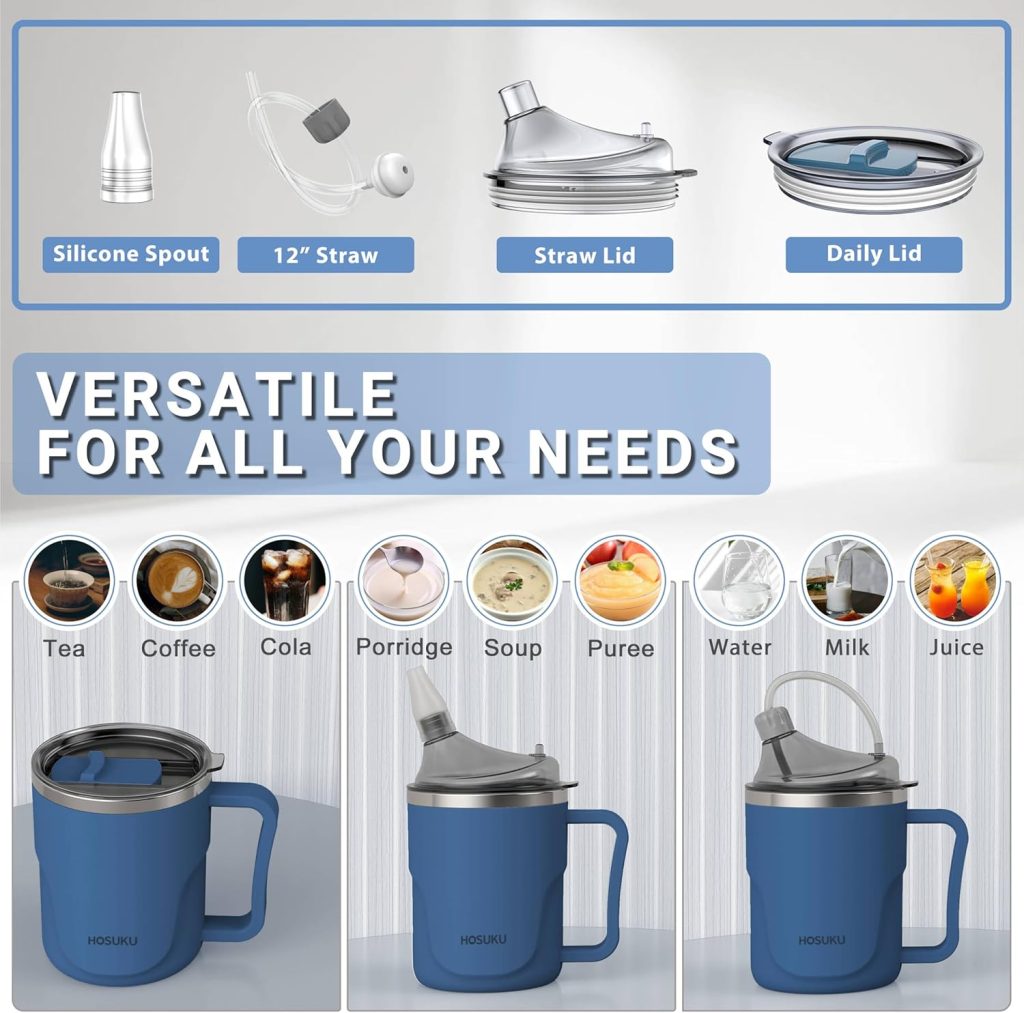
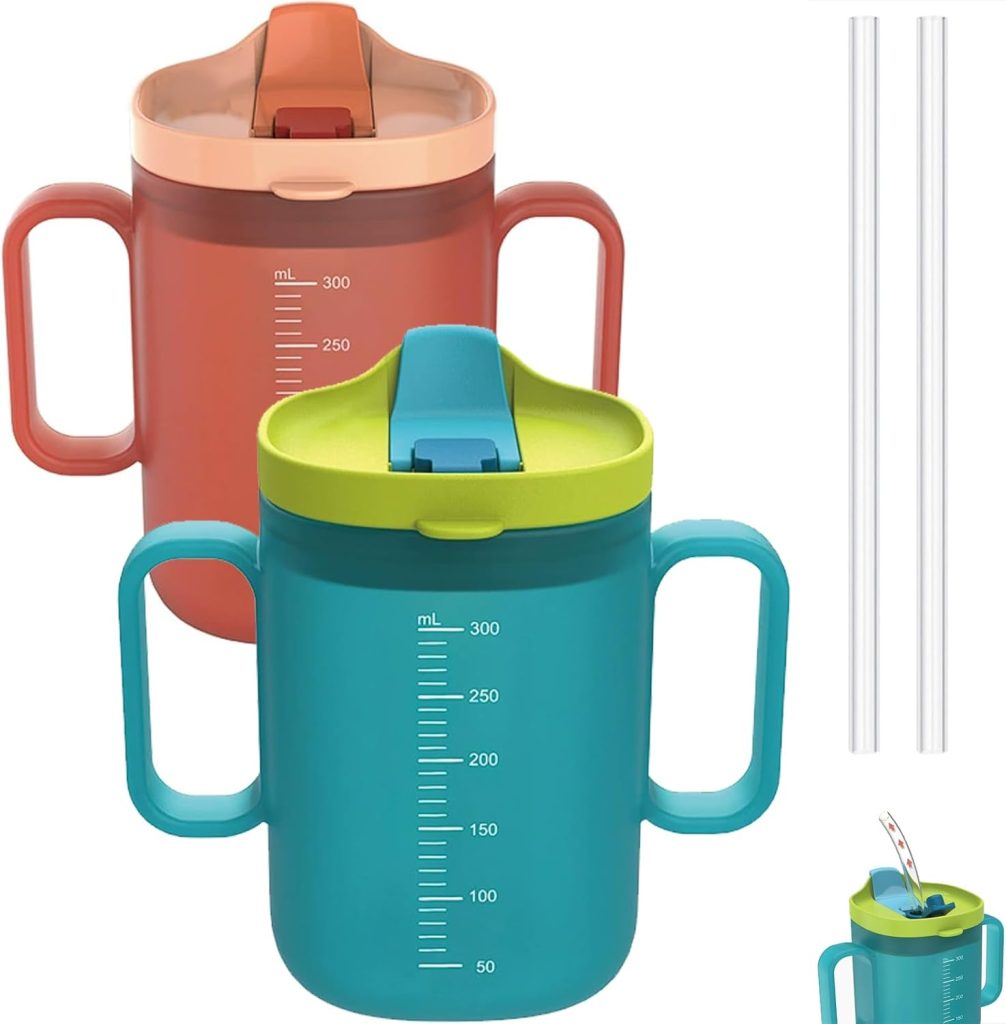
  • Spill Proof Coffee Cups for Elderly: The Complete Safety and Independence Guide

    For many elderly individuals, enjoying a simple cup of coffee or tea becomes a source of anxiety rather than pleasure.

    Tremors from Parkinson’s disease, weakness from stroke, arthritis-related grip difficulties, or cognitive decline from dementia can transform the routine act of drinking into a potential safety hazard involving spills, burns, and embarrassment.

    Spill-proof coffee cups designed specifically for elderly users address these challenges by combining innovative leak-prevention technology with lightweight, easy-to-handle designs that restore confidence and independence.

    Unlike standard travel mugs that prioritize portability over accessibility, elderly-focused spill-proof coffee cups incorporate thoughtful design elements that balance complete spill prevention with ease of use for individuals with limited strength, dexterity, or cognitive function.

    These specialized cups prevent dangerous hot liquid spills that could cause burns, reduce cleaning burden for caregivers, eliminate the embarrassment of accidents, and, most importantly, encourage adequate hydration by removing the fear and anxiety associated with drinking.

    In this comprehensive guide, we’ll explore everything you need to know about spill-proof coffee cups for elderly users: how they work, key features to prioritize, specific designs for different needs, and how to select the perfect cup for various conditions and situations.

    Understanding Spill-Proof Technology for Elderly Users

    Spill-proof coffee cups utilize various mechanisms to prevent liquid from escaping when the cup tips, shakes, or gets knocked over.

    Spill Proof Coffee Cups for Elderly

    The most effective designs for elderly users balance complete leak prevention with accessibility—ensuring the spill-proof features don’t create new barriers that prevent independent use.

    Sealed Lid Systems

    The most common and effective spill-proof design features a tightly sealed lid with a controlled drinking spout or valve-activated opening.

    These lids create an airtight seal that prevents spills even when the cup is tipped significantly or turned upside down.

    The drinking mechanism typically includes a valve that opens only when the user actively sips, automatically closing between drinks to maintain the seal.

    360-Degree Valve-Activated Rims

    Some innovative spill-proof cups feature valve-activated edges that allow drinking from any point around the rim, similar to a regular cup, but automatically seal when pressure is released.

    This design feels more natural and dignified for elderly users who may be resistant to cups that look too “special” or childlike.

    Weighted Anti-Tip Bases with Splash Guards

    Another approach combines a heavily weighted base that makes the cup extremely difficult to knock over with a splash-guard lid that minimizes spills from sloshing during tremors or unsteady handling.

    While not completely spill-proof if forcefully tipped, these cups provide significant protection during normal use.

    Combination Handle and Lid Systems

    The most sophisticated designs integrate ergonomic handles with secure, easy-to-operate spill-proof lids, creating a comprehensive solution that addresses both grip security and liquid containment.

    Why Spill-Proof Coffee Cups Matter for Elderly Safety and Independence

    The benefits of spill-proof coffee cups extend far beyond simple convenience:

    Prevents Serious Burn Injuries

    Hot coffee or tea spills pose significant burn risks, particularly for elderly individuals whose skin has become thinner and more fragile with age.

    Even moderate-temperature liquids that might cause minor discomfort to younger people can create serious burns on elderly skin.

    Spill-proof lids contain hot liquids even during severe tremors, accidental bumps, or drops, dramatically reducing burn risk.

    This protection is especially crucial for individuals with Parkinson’s disease, essential tremor, or post-stroke weakness, where hand stability is severely compromised.

    Eliminates Anxiety and Embarrassment

    Many elderly individuals develop profound anxiety around drinking beverages, fearing the mess, embarrassment, and burden they might create if spills occur.

    This anxiety can actually suppress fluid intake, leading to dehydration and related health problems.

    Spill-proof cups remove this psychological barrier, allowing seniors to drink confidently anywhere in their home without constant worry.

    Encourages Adequate Hydration

    Dehydration is a serious problem among elderly populations, contributing to urinary tract infections, kidney problems, confusion, falls, and hospitalizations.

    When elderly individuals avoid drinking because they fear spills, their health suffers.

    Spill-proof cups eliminate this barrier, promoting the consistent fluid intake essential for cognitive function, kidney health, medication effectiveness, and overall well-being.

    Supports Independence During Cognitive Decline

    For individuals with dementia or Alzheimer’s disease, spill-proof cups provide a critical safety net during moments of confusion, disorientation, or agitation.

    Even if the cup is set down carelessly, forgotten on its side, or knocked during an episode of restlessness, the spill-proof mechanism protects both the user and the environment from dangerous hot liquid exposure.

    Reduces Caregiver Burden

    Frequent spills create significant extra work—cleaning floors and furniture, changing clothing and bedding, and laundering soiled items.

    Spill-proof cups dramatically reduce this burden, freeing caregivers to focus on more meaningful interactions and care activities rather than constant cleanup.

    Enables Bedside and Recliner Independence

    Spill-proof cups can safely remain on bedside tables, wheelchair trays, or beside recliners, allowing elderly individuals to take nighttime medications with water, enjoy morning coffee before rising, or stay hydrated throughout the day without calling for assistance.

    This independence is psychologically valuable and practically important for maintaining autonomy.

    Spill-Proof Coffee Cups for the Elderly with Lids

    Lid design is the most critical factor determining both spill prevention effectiveness and ease of use for elderly individuals.

    The ideal lid must be completely leak-proof while remaining simple enough for arthritic hands, weakened grip, or confused minds to operate independently.

    Types of Spill-Proof Lids for Elderly Users

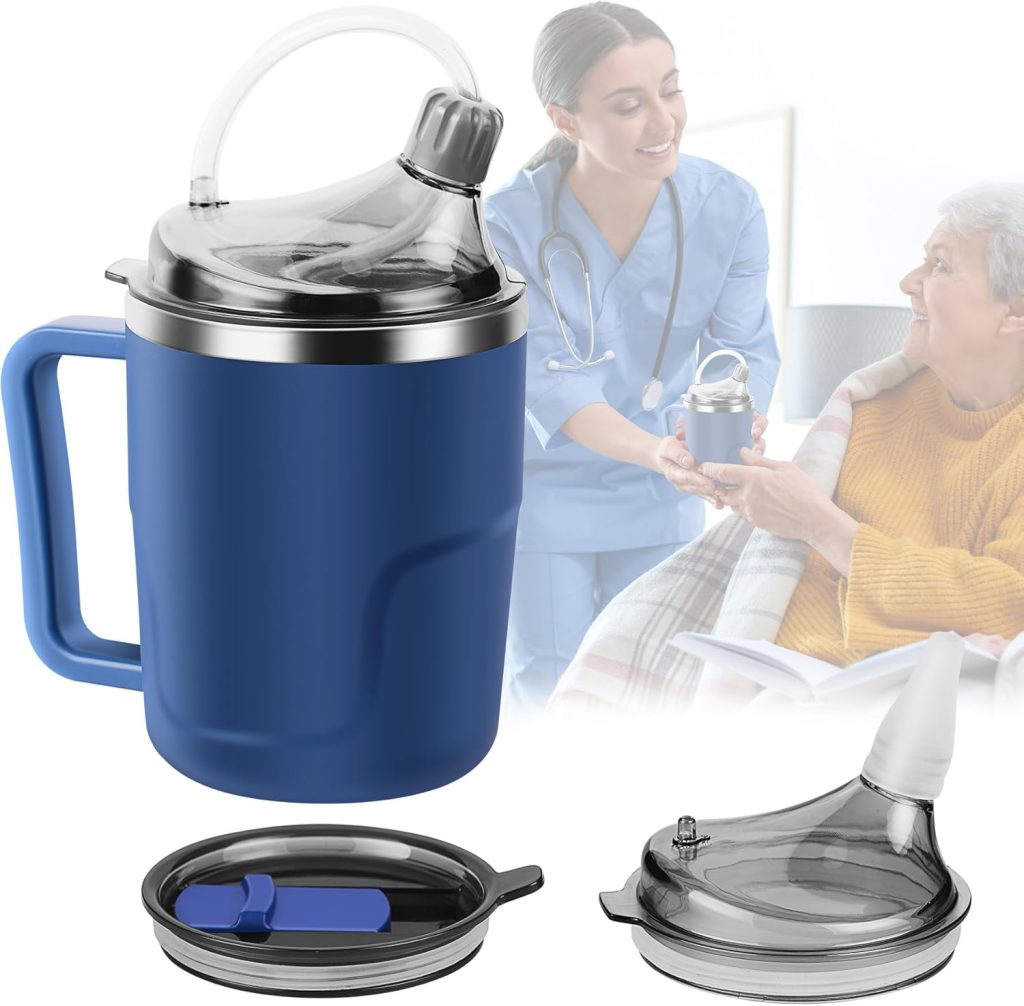
    Flip-Top Spout Lids: These feature a hinged spout that flips open with light pressure from a thumb or finger, revealing a drinking opening.

    When closed, the spout creates a tight seal. The best flip-top designs require minimal finger strength—look for large, textured flip tabs that are easy to grasp and operate even with limited dexterity.

    Slide-Open Mechanisms: These lids feature a sliding panel that covers the drinking spout. Users slide the panel to one side to drink, then slide it closed for spill protection.

    While intuitive, ensure the sliding mechanism operates smoothly without requiring excessive force that arthritic fingers cannot provide.

    Senior Water Cup Sippy Cups for Elderly, Safe Silicone Spill Proof Cups

    Twist-Off Lids with Valve Inserts: Some cups feature a simple twist-off lid that reveals a valve-controlled drinking spout underneath.

    The outer lid provides spill protection during storage or transport, while the valve spout allows drinking without complete lid removal.

    This two-stage system works well for users who can manage simple twisting motions.

    Straw-Style Lids with Closeable Spouts: These incorporate a built-in straw or straw port with a flip or slide cover.

    The straw draws liquid up, reducing the need to tip the cup beneficial for users with neck mobility limitations or tremors that make tilting difficult.

    Key Features for Elderly-Friendly Lids

    Large, Easy-to-Grip Opening Mechanisms: Avoid tiny buttons, small latches, or mechanisms that require precise finger placement.

    The opening mechanism should be large enough for multiple fingers to operate simultaneously and positioned where it’s easily visible and accessible.

    Color-Coded or Textured Indicators: Lids should have obvious visual or tactile cues showing where to drink from and whether the lid is properly sealed.

    Bright colored indicators (red for closed, green for open) or raised markings help users with vision problems identify the drinking spout and verify correct closure.

    One-Handed Operation: The lid should open and close using only one hand, accommodating stroke survivors or individuals with one weak arm.

    Test this by attempting to open the lid while holding the cup with the same hand.

    Positive Closure Feedback: The lid should click, snap, or provide clear resistance when properly closed, giving users tactile confirmation that the spill-proof seal is engaged.

    Ambiguous closures create anxiety about whether the cup is truly safe.

    Wide Drinking Opening: While the lid must seal tightly, the drinking opening should be large enough for comfortable sipping without requiring precise lip placement—important for users with tremors or limited fine motor control.

    Dishwasher-Safe and Easy to Clean: Lids with complex valve systems can harbor bacteria if not cleaned properly.

    Choose designs that disassemble easily for thorough cleaning and are top-rack dishwasher safe to reduce caregiver burden.

    Best Spill-Proof Lids for Specific Conditions

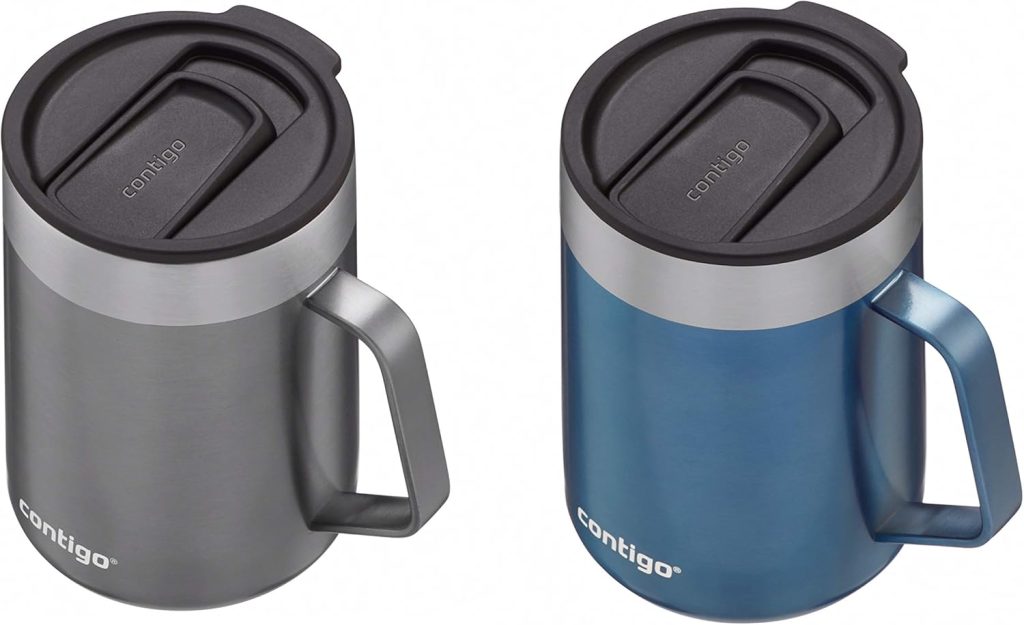
    For Arthritis: Choose flip-top lids with large, textured tabs that require minimal pinch strength. The Contigo AutoSeal lid design works well, though verify the button isn’t too stiff.

    Contigo Streeterville Stainless Steel Travel Mug with Splash-Proof Lid

    For Parkinson’s or Tremors: Slide-open mechanisms often work better than flip-tops because they don’t require the sustained pinch grip that’s difficult during tremors.

    Look for wide slide tracks that tolerate imprecise finger movements.

    For Dementia: Simple twist-off lids with permanent valve spouts underneath eliminate the step of remembering to open/close a spout.

    Once the outer lid is removed, the cup is ready to drink from, regardless of cognitive state.

    For Stroke Recovery (One-Handed Use): Flip-top lids that operate with thumb pressure while fingers grasp the cup body enable complete one-handed operation from opening through drinking to closing.

    Spill-Proof Coffee Cups for the Elderly with Handles

    Handle design dramatically affects whether elderly individuals can successfully use spill-proof coffee cups independently.

    Poor handle design can negate all the benefits of spill-proof technology if users cannot grip the cup securely enough to lift it safely.

    Why Handles Matter for Elderly Users

    Arthritis, reduced grip strength, hand tremors, and reduced finger dexterity make grasping and lifting cups increasingly difficult as people age.

    Handles provide a secure gripping point that distributes lifting force across more of the hand, reducing the precision and strength required compared to grasping the cup body directly.

    For elderly users, the right handle can mean the difference between independent drinking and requiring assistance.

    Types of Elderly-Friendly Handles

    Large Loop Handles: Handles with loops large enough to accommodate four fingers (or an entire hand for users with very weak grip) provide maximum security.

    Look for handle openings at least 2.5 to 3 inches wide and 3 to 4 inches tall. These oversized handles allow users to “hang” the cup from their hand rather than gripping it, reducing the strength required.

    Dual-Handle Designs: Some spill-proof cups feature two handles on opposite sides, providing options for two-handed lifting (both hands on the cup for maximum stability) or easy transfer between hands.

    Dual handles also accommodate users who have a weaker preferred side—they can choose which handle to use based on which hand is functioning better at any given moment.

    Ergonomic Contoured Handles: Rather than simple circular loops, the best handles feature ergonomic contours that fit the natural shape of relaxed fingers.

    These contours often include a thumb rest at the top and finger indentations along the grip surface, reducing the effort needed to maintain grip.

    Textured or Rubberized Grips: Handles with textured, grooved, or rubberized surfaces provide additional friction that prevents slipping even when hands are weakened or unsteady.

    This feature is particularly important for users with Parkinson’s or essential tremor, where maintaining consistent grip pressure is difficult.

    Key Handle Features for Elderly Users

    Adequate Size: The handle must be large enough that arthritic, swollen, or stiff fingers fit comfortably through the opening without forcing or squeezing.

    Comfortable Weight Distribution: The handle should be positioned to balance the cup’s weight naturally, preventing wrist strain.

    When the cup is lifted by the handle, it should hang in a comfortable drinking angle without requiring excessive wrist rotation.

    Smooth Edges: Handle edges should be rounded and smooth—never sharp or thin—to prevent discomfort or pressure points on fingers during prolonged holding.

    Secure Attachment: The handle must be extremely securely attached to the cup body, as elderly users may apply uneven or awkward force.

    Molded-in or reinforced handles are superior to glued-on designs that might separate over time.

    Insulated Handle Separation: For cups holding hot liquids, the handle should be thermally separated from the cup body so it remains cool to the touch even when the beverage is very hot.

    This prevents burns and allows comfortable gripping.

    Best Spill-Proof Coffee Cups with Handles for Specific Needs

    For Severe Arthritis: The Sammons Preston Dignity Mug features an exceptionally large D-shaped handle with 3-inch clearance that accommodates severely swollen or deformed arthritic hands.

    Sammons Preston Dignity Mug

    The lightweight construction (under 6 ounces empty) minimizes lifting strain.

    For Parkinson’s Disease: The Liftware Steady Mug incorporates stabilization technology along with a wide, rubberized handle.

    While heavier than standard cups, the active tremor compensation makes it worth the extra weight for Parkinson’s patients.

    For Stroke Recovery: The Aidapt Caring Mug features a large loop handle positioned for easy one-handed lifting, combined with a wide non-slip base and simple snap-on spill-proof lid.

    The 12-ounce capacity reduces refill frequency.

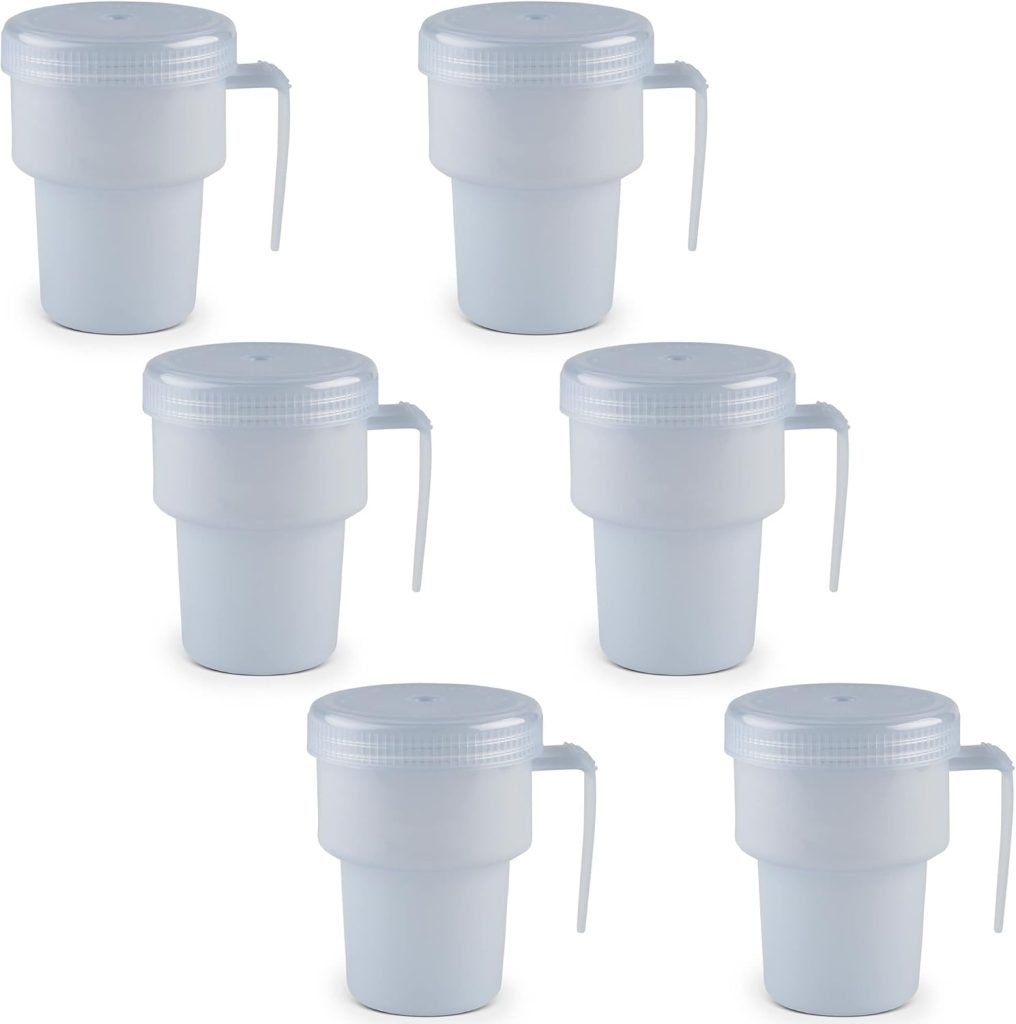
    Providence Spillproof Kennedy Cups

    For General Elderly Use: The Kennedy Cup with ergonomic handle offers a balanced design suitable for various conditions, featuring a comfortable contoured grip, 14-ounce capacity, and a completely sealed spill-proof lid.

    Two-Handle Designs for Maximum Stability

    For elderly users with severe tremors or bilateral weakness, cups with two handles provide exceptional stability:

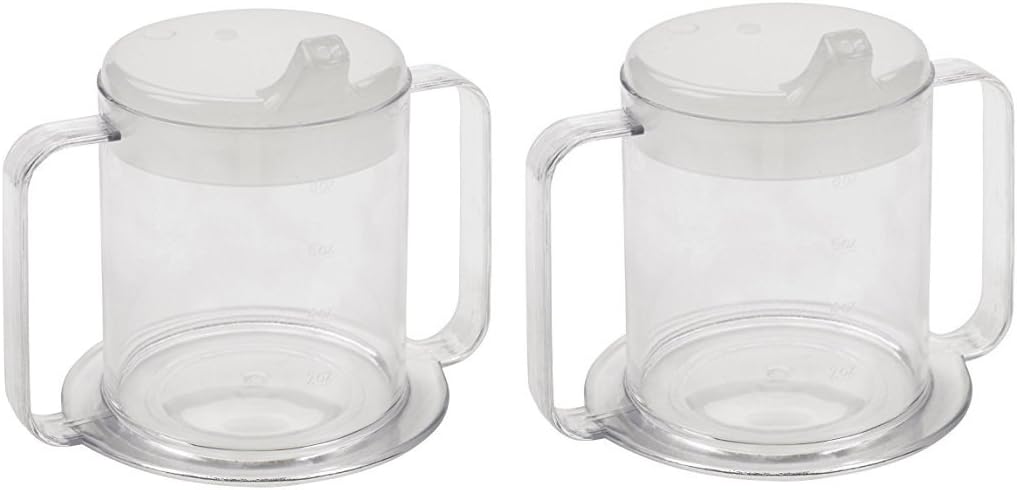
    Independence double Handle Lightweight  Spill-Resistant Adult Sippy Cup

    The Medline Double Handle Insulated Cup features two large loop handles on opposite sides, allowing users to grip with both hands for maximum control.

    The 16-ounce insulated design keeps beverages at safe temperatures longer, and the spill-proof lid with flip spout is easy to operate even with limited dexterity.

    The Patterson Medical Two-Handled Mug offers a more traditional appearance with its ceramic-style design, but includes dual ergonomic handles and a secure snap-on spill-proof lid.

    The 12-ounce capacity is appropriate for tea or coffee servings.

    Handle Positioning and Orientation

    Consider where the handle sits relative to the spill-proof lid’s drinking spout. Ideally, the handle should position the drinking spout naturally toward the user’s mouth when lifted, eliminating the need to rotate the wrist or adjust cup positioning movements that are difficult for many elderly individuals.

    Large Spill-Proof Coffee Cups for the Elderly

    Capacity is an often-overlooked but critically important factor when selecting spill-proof coffee cups for elderly users.

    Large-capacity cups (14-20 ounces) offer distinct advantages over standard 8-12 ounce cups, though they also present some challenges that must be carefully considered.

    Why Large Capacity Matters

    Reduces Refill Frequency: Each time an elderly person needs a refill, multiple steps are required: traveling to the kitchen, operating the coffee maker or kettle, pouring hot liquid (burn risk), and returning to their seat.

    Large capacity cups reduce how often these potentially dangerous trips occur, decreasing fall risk and burn exposure while supporting independence.

    Encourages Adequate Hydration: Larger cups make it easier to consume sufficient fluids throughout the day.

    Rather than needing to remember to refill multiple times (difficult for those with cognitive decline), a single large cup provides adequate hydration for several hours.

    Maintains Temperature Longer: Larger volumes of liquid retain heat longer, meaning the beverage stays at a comfortable drinking temperature throughout an extended period.

    This is particularly valuable for slow drinkers who might otherwise need to reheat their beverage multiple times.

    Accommodates Thickened Liquids: Many elderly individuals with dysphagia (swallowing difficulties) require thickened liquids.

    Thickening agents reduce the effective volume of drinkable liquid, so larger cups are necessary to provide adequate fluid intake.

    Better for Medication Schedules: Elderly individuals taking multiple medications throughout the day benefit from having a large volume of liquid readily available for medication administration without needing to refill constantly.

    Challenges of Large-Capacity Cups

    Increased Weight: A 16-ounce cup filled with liquid weighs over one pound—potentially too heavy for elderly users with significant weakness or advanced arthritis.

    This must be carefully balanced against the benefits.

    Stability Concerns: Taller cups (necessary for larger capacity) have a higher center of gravity, making them potentially easier to knock over.

    This is particularly concerning for users with tremors or impaired coordination.

    Temperature Safety: Larger volumes of hot liquid represent more potential burn damage if a spill does occur. The spill-proof features become even more critical with large-capacity cups.

    Drinking Difficulty: Very tall cups may require more neck extension or cup tilting to access the liquid, which can be difficult for users with neck arthritis or swallowing problems.

    Key Features for Large Spill-Proof Coffee Cups

    Wide, Weighted Base: Large cups absolutely must have wide, stable bases—ideally weighted or with non-slip features—to compensate for their higher center of gravity.

    Look for base diameters at least 3-4 inches wide for 16-20 ounce cups.

    Insulation: Large volumes cool slowly, but without insulation, they can become lukewarm and unpleasant.

    Double-walled construction maintains temperature without adding excessive weight compared to single-wall designs that would require thicker, heavier materials for the same insulation.

    Ergonomic Handle Placement: With larger, heavier cups, the handle design becomes even more critical.

    The handle must be positioned to distribute the increased weight comfortably and may need to be reinforced to handle the greater forces involved.

    Gradual Taper Design: Rather than straight cylindrical shapes, the best large cups taper slightly from bottom to top, creating a lower center of gravity while maintaining good capacity.

    This design improves stability significantly.

    Clear Volume Markings: Large cups should include measurement markings so users and caregivers can monitor fluid intake accurately, particularly important for those with medical conditions requiring fluid monitoring.

    Appropriate Lid Size: Larger cups need proportionally larger lids with bigger drinking openings to make accessing the liquid easier despite the greater depth.

    Ensure the lid’s spout or opening is designed for the cup’s height.

    Best Large Spill-Proof Coffee Cups for the Elderly

    The Contigo West Loop (20 oz): This large-capacity travel mug features AUTOSEAL technology that’s completely spill-proof, a comfortable handle, and excellent insulation.

    While designed as a travel mug, it works exceptionally well for elderly home use. The one-button operation is simple enough for most users.

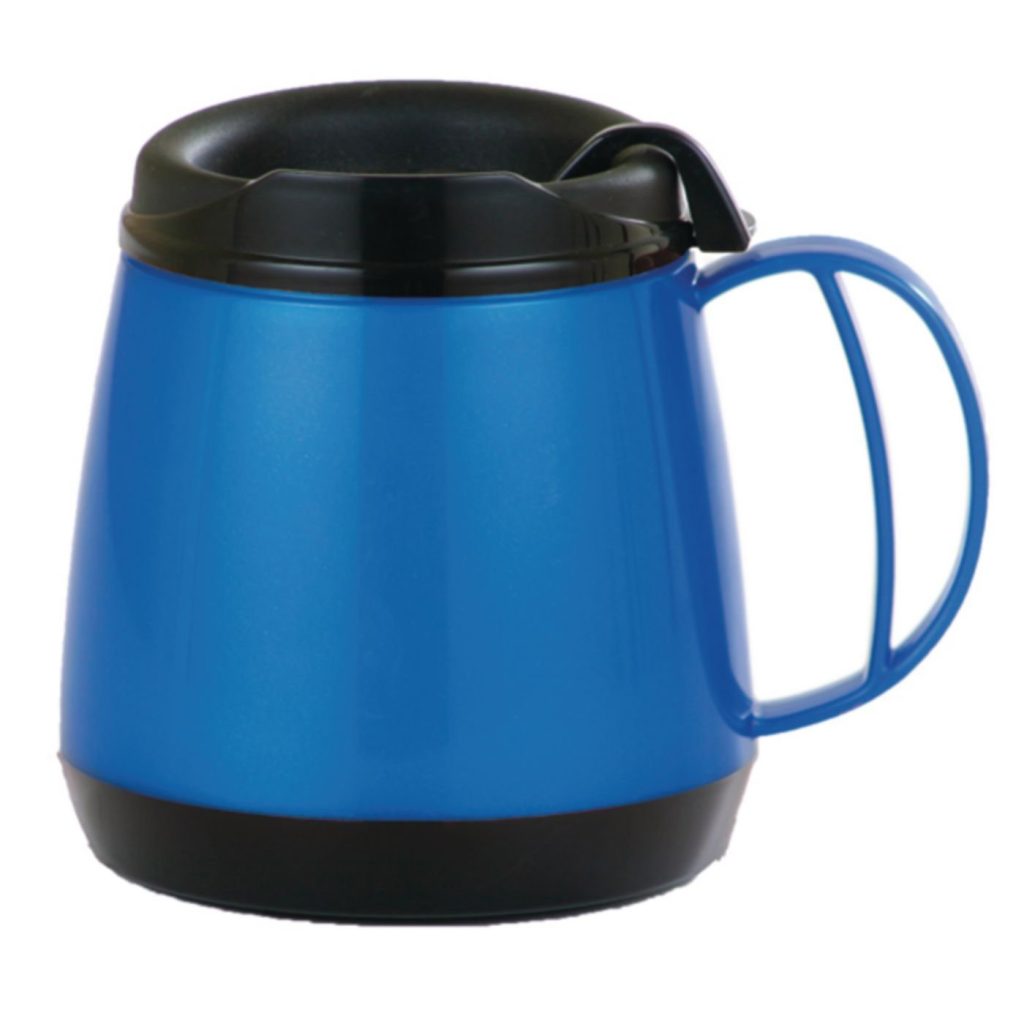
    Thermos Guardian Collection (18 oz): This large insulated mug includes a built-in handle, a wide stable base, and an easy-flip lid with a spill-proof seal.

    The soft-touch grip adds security, and the large capacity reduces refill frequency for elderly users.

    Medline Insulated Tumbler (16 oz): Specifically designed for elderly and healthcare settings, this large cup features a snap-on spill-proof lid, two handles for stability, excellent insulation, and a wide base.

    The institutional-grade construction withstands daily use.

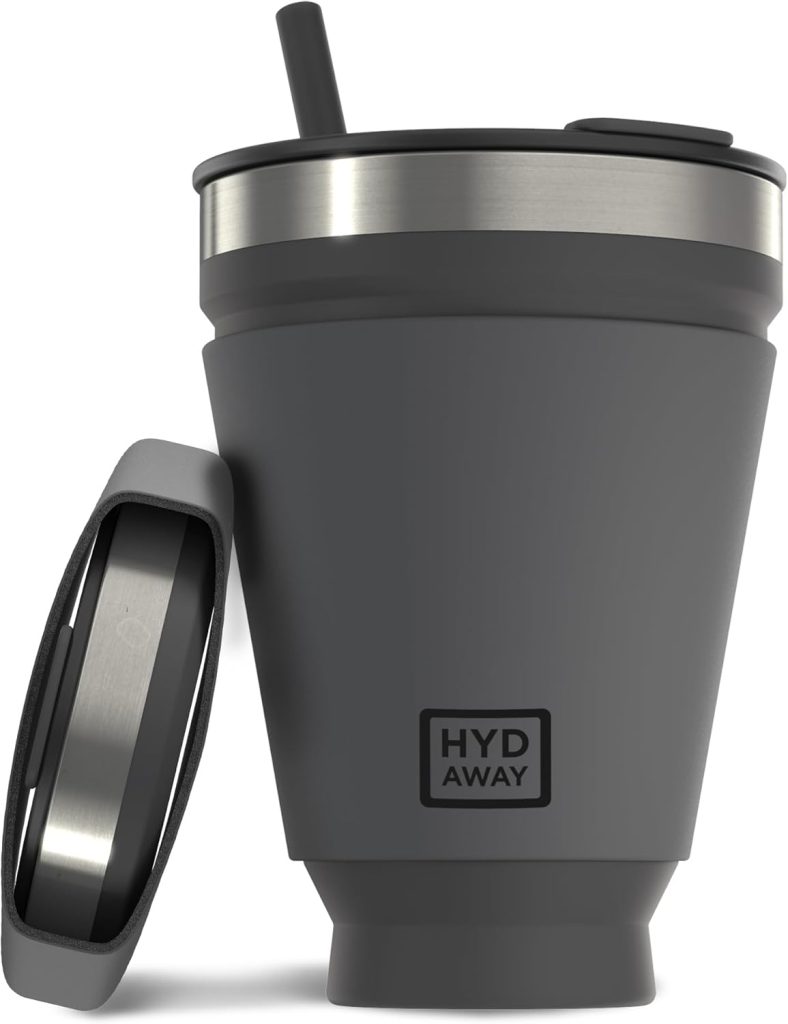
    Hydaway CollapsiBowl Travel Mug for Coffee and Travel

    Hydaway CollapsiBowl Travel Mug (16 oz): This innovative design offers large capacity with a weighted base for stability, 360-degree drinking edge (feels like a regular cup), and complete spill-proof protection when the lid is closed. The wide form factor creates a lower center of gravity.

    Sammons Preston Independence Mug (20 oz): This extra-large capacity mug features a huge ergonomic handle, stable weighted base, and simple twist-on spill-proof lid.

    While heavier than some alternatives, it’s ideal for elderly users with adequate strength who need maximum capacity.

    Balancing Capacity with User Ability

    Selecting the right capacity requires an honest assessment of the user’s physical capabilities:

    For users with good strength, 16-20 ounce cups provide maximum benefit with minimal downside. Choose models with excellent handles and wide bases.

    For users with moderate weakness: 12-14 ounce cups offer a good compromise—larger than standard but not so heavy as to be unmanageable.

    Focus on lightweight materials like BPA-free plastic rather than stainless steel.

    For users with significant weakness: Even with a large capacity available, 10-12 ounce cups may be the practical maximum.

    In these cases, consider using two smaller cups (one for morning, one for afternoon) rather than forcing a single large cup that’s too heavy.

    Partial Filling Strategy: Another approach is purchasing a large-capacity cup but only filling it halfway or two-thirds full.

    This provides the stability of a wide, weighted base while keeping the actual weight manageable.

    As liquid is consumed, the cup becomes even lighter while maintaining spill-proof protection.

    Testing and Adjustment

    When introducing a large spill-proof coffee cup, start with partial fills to ensure the user can safely handle the weight. Gradually increase the fill level as confidence builds.

    Monitor for signs of strain, dropping, or difficulty lifting. If a 16-ounce cup proves too heavy when full, it may still work perfectly with 10-12 ounces of liquid.

    Combining Features: The Ultimate Elderly-Friendly Spill-Proof Coffee Cup

    The ideal spill-proof coffee cup for elderly users combines multiple adaptive features into a single, comprehensive solution:

    Essential Features:

    • Complete spill-proof sealed lid with easy-to-operate mechanism
    • Large ergonomic handle or dual handles for secure grip
    • Lightweight construction (6-10 oz empty, depending on capacity)
    • Wide, non-slip or weighted base for stability
    • 12-16 oz capacity for reduced refill frequency
    • Thermal insulation to maintain a safe drinking temperature
    • BPA-free, food-grade materials for safety
    • Dishwasher safe for easy cleaning
    • Clear or bright colored body for visibility
    • Wide mouth opening for easy filling and cleaning

    Bonus Features:

    • Measurement markings for fluid intake monitoring
    • Textured or rubberized grip surfaces
    • High-contrast color design for visual impairment
    • Straw compatibility for users who prefer straw drinking
    • Microwave-safe construction for reheating

    Products that come closest to this ideal include the Medline Insulated Tumbler, the Aidapt Caring Mug, and specialized adaptive drinking cups from companies like Sammons Preston and Patterson Medical that focus specifically on the elderly and disability markets.

    Special Considerations for Different Conditions

    For Parkinson’s Disease: Choose cups with weighted bases (helps counter tremors), wide handles with rubberized grips, and flip-top lids rather than twist-off designs.

    The extra weight of insulated stainless steel cups can actually help stabilize drinking despite being heavier to lift.

    For Stroke Recovery: One-handed operation is paramount. Every feature—lid opening, cup lifting, drinking, lid closing—must be possible with a single hand. Large loop handles and flip-top lids work best.

    For Arthritis: Lightweight is critical. Choose the lightest materials available (BPA-free plastic over stainless steel), oversized handles that don’t require tight gripping, and lid mechanisms with large, easy-to-push buttons or tabs rather than twist-off designs.

    For Dementia: Simple, intuitive designs prevent confusion. Avoid complex multi-step lid operations. Bright colors help with visibility and recognition.

    Consider cups that are always “ready to drink” without needing to remember lid operations.

    For Dysphagia (Swallowing Difficulties): Some users need straw-based spill-proof cups that allow controlled sipping.

    Others benefit from cups with built-in flow restrictors that limit intake per sip, preventing choking. Consult with a speech therapist for specific recommendations.

    Introduction, Strategy, and User Acceptance

    Even excellent spill-proof coffee cups may face resistance from elderly users who view them as embarrassing or as symbols of declining independence. Successful introduction requires sensitivity:

    Positive Framing: Present the cup as a convenient modern product that “keeps drinks at the perfect temperature” or “prevents mess on furniture” rather than as medical equipment for disabilities.

    Gradual Adoption: Start using the spill-proof cup for specific situations—”your TV watching cup” or “your bedtime water cup”—rather than insisting on full-time replacement of favorite regular cups.

    Family Normalization: Have other family members use similar spill-proof cups, making it a household choice rather than “special equipment.”

    Choice and Control: Offer several options and let the elderly person choose their favorite color, style, or design. This preserves autonomy and increases acceptance.

    Emphasize Benefits: Focus on what the cup enables (“you can enjoy coffee in the living room without worry”) rather than what it compensates for.

    Cleaning and Maintenance

    Proper care ensures spill-proof cups remain hygienic and functional:

    Daily Cleaning: Disassemble all lid components completely and wash with warm, soapy water after each use. Pay special attention to valve mechanisms, spouts, and seal areas where bacteria can accumulate.

    Use a small bottle brush or straw cleaning brush for spouts and valve ports.

    Weekly Deep Clean: Soak lid components in a 1:1 white vinegar and water solution for 15-20 minutes weekly to prevent odor buildup and eliminate any mildew or bacteria. Rinse thoroughly afterward with clean water.

    Gasket and Seal Inspection: Check silicone gaskets, valve seals, and o-rings monthly for wear, cracks, stretching, or degradation.

    These components are critical for spill-proof function.

    Replace them promptly when they show wear or the cup begins leaking.

    Avoid Harsh Chemicals: Don’t use bleach or harsh abrasive cleaners on spill-proof cups, especially those with plastic components or silicone seals.

    These chemicals can degrade materials and compromise the spill-proof seal over time.

    Proper Drying: Store cups with lids removed and all components separated to allow complete air drying.

    This prevents mold and mildew growth, particularly important in humid climates or for users who may not use their cup daily.

    Dishwasher Precautions: Even when labeled dishwasher safe, hand washing extends the life of spill-proof mechanisms.

    If using a dishwasher, place all components on the top rack only and use gentle cycles to minimize heat exposure and mechanical stress.

    The Life-Changing Impact of Spill-Proof Coffee Cups

    While a spill-proof coffee cup might seem like a simple adaptive device, its impact on the elderly’s quality of life can be profound.

    The restoration of drinking independence, being able to enjoy a hot cup of coffee or tea without fear, assistance, or anxiety, represents much more than functional convenience.

    For many elderly individuals, morning coffee rituals, afternoon tea breaks, and evening relaxation with a warm beverage are cherished routines that provide comfort, structure, and pleasure.

    When physical limitations threaten these simple joys, quality of life diminishes significantly.

    Spill-proof coffee cups preserve these meaningful routines, allowing seniors to maintain normalcy, dignity, and independence despite physical challenges.

    The psychological benefit of mess-free, burn-free drinking cannot be overstated.

    Anxiety about spills creates a constant low-level stress that suppresses appetite, reduces fluid intake, and diminishes the pleasure of meals and beverages.

    By eliminating this anxiety, spill-proof cups restore the simple enjoyment of drinking—transforming it from a stressful challenge back into a pleasant, comforting activity.

    For caregivers and family members, spill-proof cups reduce worry, cleaning burden, and the need for constant supervision.

    This allows relationships to focus on connection and care rather than spill prevention and cleanup, improving the quality of interactions and reducing caregiver burnout.

    Conclusion

    Spill-proof coffee cups designed specifically for elderly users represent an essential tool for maintaining independence, safety, and dignity during the aging process.

    By combining leak-proof technology with lightweight construction, ergonomic handles, easy-to-operate lids, and appropriate capacity, these specialized cups address the multiple challenges elderly individuals face when trying to enjoy beverages independently.

    Whether addressing tremors from Parkinson’s disease, weakness from stroke, arthritis-related grip difficulties, cognitive decline from dementia, or general age-related coordination changes, the right spill-proof coffee cup can restore the simple pleasure of independent drinking.

    When selected thoughtfully based on individual abilities and needs, and introduced with sensitivity and respect, these adaptive cups become not symbols of limitation but tools of empowerment, enabling elderly individuals to continue enjoying their favorite beverages safely, confidently, and independently throughout their later years.

    The investment in a quality spill-proof coffee cup pays dividends in reduced injury risk, improved hydration, decreased caregiver burden, and, most importantly, preserved dignity and quality of life for elderly users who deserve to age with independence and comfort.

  • High Sided Dishes for Elderly: The Complete Guide to Spill-Proof Dining

    High-sided dishes, also known as scoop plates or plate guards, represent one of the most transformative adaptive dining solutions for elderly individuals struggling with mealtime independence.

    These specialized plates feature raised edges that typically range from 1 to 2 inches in height, creating a protective barrier that prevents food from sliding off the plate.

    For seniors dealing with tremors, limited hand-eye coordination, stroke recovery, or vision impairments, high-sided dishes can mean the difference between frustrating mealtimes and dignified, independent dining.

    Unlike standard plates with minimal or gently curved edges, high-sided dishes have substantially raised walls, sometimes nearly vertical, that keep food contained even when scooping becomes imprecise or hand movements are unsteady.

    This simple yet ingenious design modification addresses multiple challenges that elderly diners face, from physical limitations to psychological barriers around eating.

    In this comprehensive guide, we’ll explore everything you need to know about high-sided dishes: how they work, who benefits most, key features to look for, and how to select the perfect option for specific conditions and needs.

    What Are High-Sided Dishes and How Do They Work?

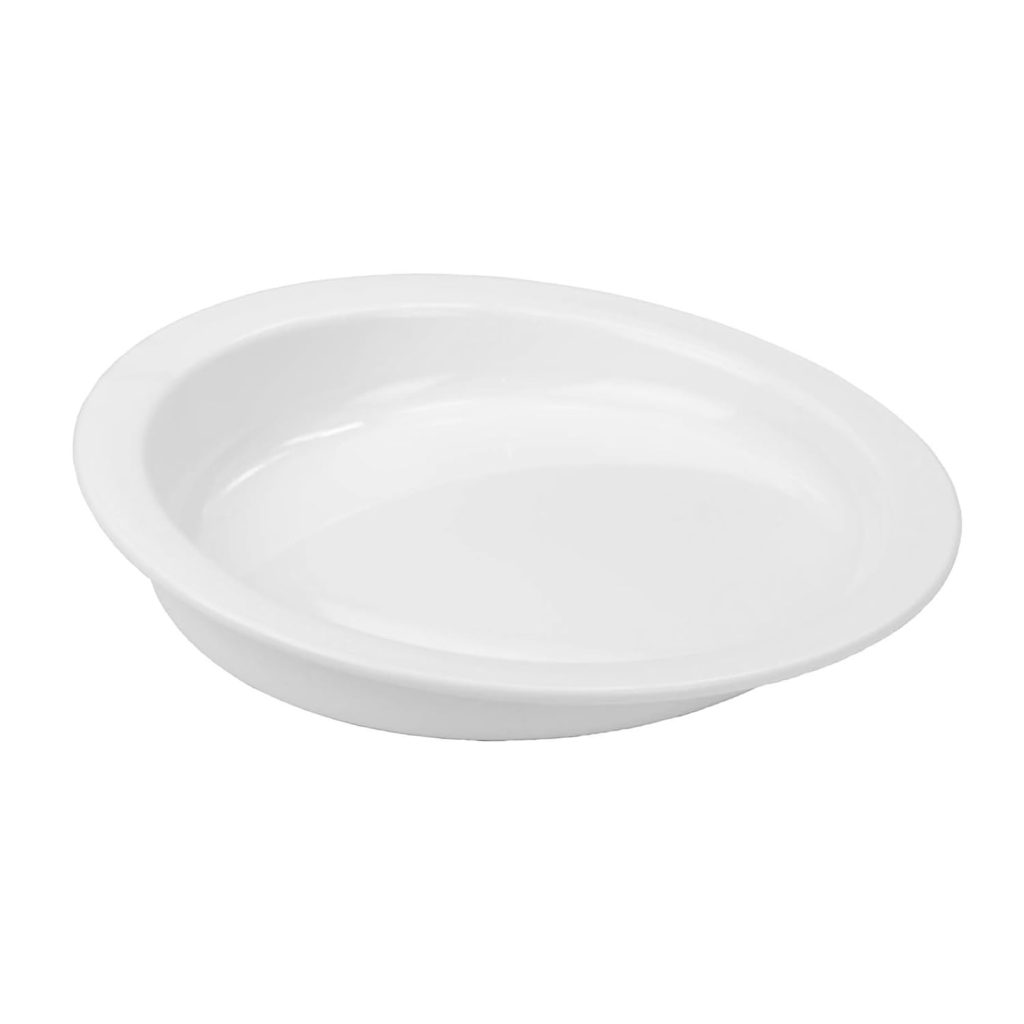
    High sided dish

    High-sided dishes are adaptive plates specifically designed with elevated edges that create a bowl-like containment system while maintaining the flat eating surface of a traditional plate.

    The raised walls typically measure between 1 and 2 inches high and can run continuously around the entire perimeter or feature a strategically lower section on one side to facilitate easier scooping.

    The Design Philosophy

    The concept behind high-sided dishes is elegantly simple: by adding vertical or near-vertical walls around a plate’s edge, food naturally stays within the eating area regardless of imprecise utensil movements, tremors, or limited motor control.

    This physical barrier acts as a “safety net” that compensates for various physical challenges without requiring the user to change their eating technique dramatically.

    Some high-sided dishes feature a continuous raised edge all around, providing maximum containment from every angle.

    Others incorporate what’s called a “scoop side”—a lower section (usually opposite the user’s dominant hand) that makes it easier to push food onto utensils by providing less resistance at the loading point while maintaining high sides everywhere else for containment.

    The Mechanics of Easier Eating

    When an elderly person uses a high-sided dish, the raised edge provides crucial resistance against which food can be pushed.

    This is particularly valuable for one-handed eaters who cannot stabilize their plate with a second hand.

    Instead of food sliding around a flat surface as the fork or spoon approaches, the high side stops the food’s movement, allowing it to be scooped up efficiently.

    high sided scoop plate with non slip base for handicapped and the elderly

    For individuals with tremors or unsteady hands, the high sides catch food that would otherwise fall off a regular plate when utensils miss their mark or when hands shake during the transfer from plate to mouth.

    This containment system dramatically reduces food waste, table mess, and the emotional distress that often accompanies difficult mealtimes.

    Why High-Sided Dishes Help Elderly Users

    The benefits of high-sided dishes extend far beyond simple spill prevention. These adaptive plates address physical, psychological, and practical challenges that impact elderly dining experiences:

    Prevents Food Spillage and Waste

    For elderly individuals with tremors, reduced hand-eye coordination, or neurological conditions like Parkinson’s disease, the high sides act as an effective safety barrier.

    When utensils miss the target or when scooping becomes imprecise due to shaking hands, the raised edge keeps food on the plate rather than on the table, lap, or floor.

    This prevents food waste, reduces cleaning burden, and eliminates the frustration of watching meals literally fall away.

    Facilitates One-Handed Eating

    Many stroke survivors experience hemiplegia (paralysis on one side of the body) or significant weakness that makes using both hands impossible.

    High-sided dishes provide the resistance that a second hand would normally offer. Users can push food against the raised edge and scoop it onto a fork or spoon using just their functional hand.

    Without this feature, food would simply slide around a flat plate, making independent eating nearly impossible.

    Makes Scooping Significantly Easier

    The vertical or near-vertical walls transform the scooping action from a challenging pursuit across a flat surface into a simple push-and-lift motion.

    This is particularly helpful for individuals with arthritis who have limited wrist mobility and cannot perform the complex rotation movements required to chase food around a regular plate.

    Foods like peas, rice, corn, and other small items that typically escape regular plates are easily corralled by high sides.

    Builds Confidence and Preserves Dignity

    Mealtime struggles can be profoundly demoralizing for elderly individuals who value their independence.

    The anxiety of making a mess, needing help, or appearing incompetent in front of family or caregivers can actually suppress appetite and lead to poor nutrition.

    High-sided dishes remove this anxiety by virtually guaranteeing mess-free eating, allowing users to focus on enjoying their meal rather than worrying about performance.

    This psychological benefit often translates into improved appetite, better nutrition, and enhanced quality of life.

    Supports Visual Impairments

    For seniors with low vision, macular degeneration, diabetic retinopathy, or other visual impairments, the distinct raised edge provides crucial tactile feedback.

    Users can feel where their plate ends by touching the raised wall with their utensils or fingers, helping them navigate their food more confidently.

    This sensory information reduces the likelihood of utensils sliding off the edge and helps users understand the spatial layout of their meal.

    Reduces Caregiver Burden

    While the primary focus is on user independence, high-sided dishes also significantly reduce the workload for caregivers and family members.

    Less mess means less cleanup time, fewer clothing changes, and reduced stress for everyone involved in mealtimes.

    This practical benefit makes high-sided dishes valuable even for users who receive dining assistance.

    Comparing High-Sided Dishes to Other Adaptive Plates

    Understanding how high-sided dishes compare to alternative adaptive dining solutions helps in making informed choices:

    High-Sided Dishes vs. Plate Guards

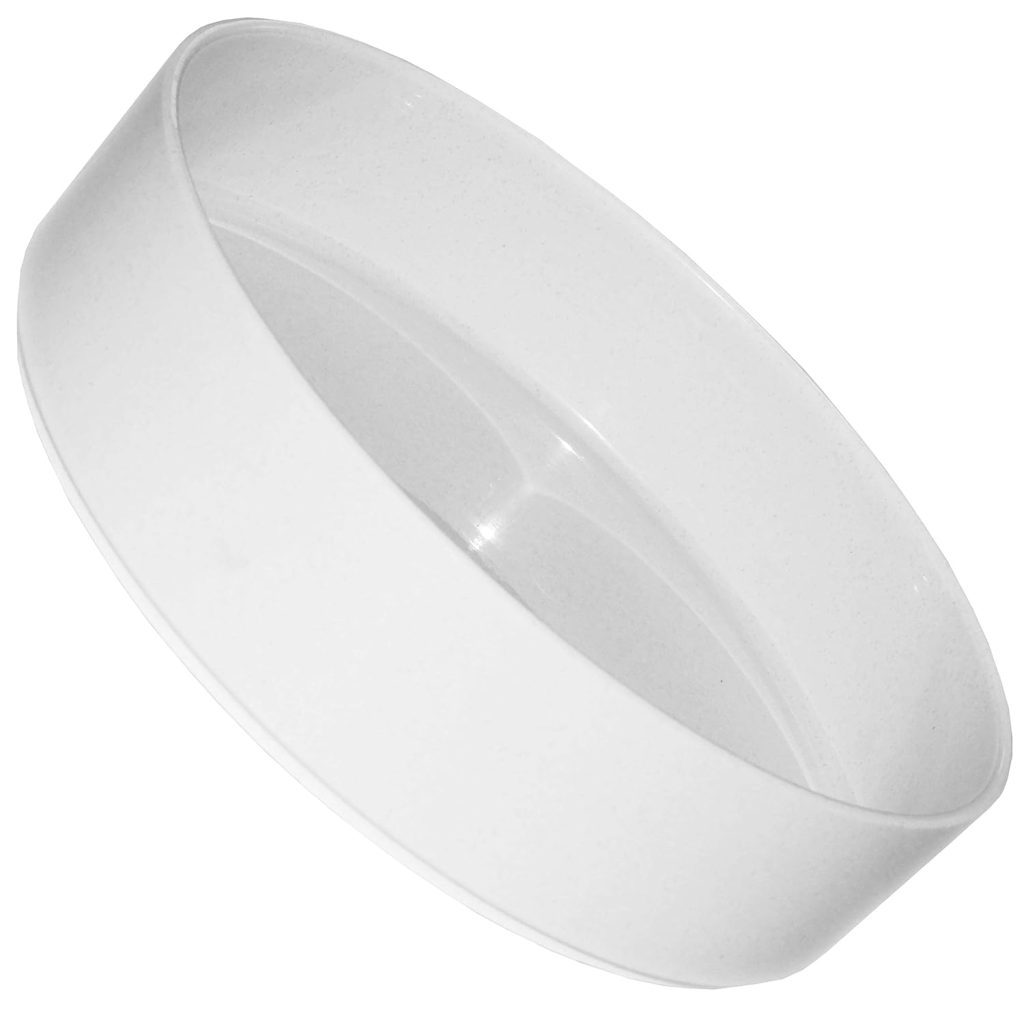
    Plate guards are removable clips or rings that attach to regular plates to create a temporary raised edge.

    While these offer portability and versatility, integrated high-sided dishes provide superior stability, eliminate gaps where food can escape, and don’t risk slipping or detaching during vigorous use.

    High-sided dishes are also fully dishwasher-safe without disassembly and present a more normalized appearance.

    High-Sided Dishes vs. Divided Plates

    Divided adaptive plates feature compartments to separate different foods, but often have relatively low dividing walls.

    High-sided dishes with divisions offer the best combination—food separation for picky eaters or portion control, plus substantial edge height for maximum containment and scooping assistance.

    High-Sided Dishes vs. Scoop Bowls

    While scoop bowls have curved sides that help with food loading, high-sided plates provide a flatter, wider eating surface that’s more familiar to users and better suited for foods like meat, sandwiches, or items that benefit from a cutting surface.

    High-sided plates feel more like traditional dining while offering similar functional benefits.

    Key Features to Look for in High Side Dish

    When selecting high sided dishes for elderly users, evaluate these critical characteristics:

    Edge Height

    The effectiveness of a high-sided dish depends largely on its wall height. Look for sides that are at least 1.5 inches high for maximum effectiveness.

    Some models offer up to 2-inch sides for users with more significant motor control challenges or very vigorous eating movements.

    However, excessively high sides (over 2 inches) can make it difficult to see or reach food.

    Base Stability

    Non-slip bases or suction cup bottoms are essential, particularly for one-handed users who cannot steady the plate with their other hand.

    Rubberized bases, silicone pads, or suction mechanisms prevent the plate from sliding during aggressive scooping or when pushed against by utensils.

    Test the stability by attempting to slide the plate across different surfaces—it should resist movement significantly.

    Material Quality

    Food-grade melamine or BPA-free plastic options are lightweight and virtually unbreakable—ideal for users with grip issues, tremors, or cognitive decline that might lead to dropped plates.

    These materials typically handle microwave and dishwasher use well.

    Ceramic or stoneware options provide a more traditional, dignified dining experience and excellent weight for stability, though they’re heavier to lift and can break if dropped.

    Choose these for users with adequate strength and coordination.

    Stainless steel high-sided dishes are durable and institutional-grade, but can be cold to the touch and may not be microwave-safe.

    Inner Lip Design

    The best high sided dishes feature a slightly curved or angled inner lip that guides food toward the center of the plate rather than trapping it in corners where it’s difficult to reach.

    This thoughtful design detail makes the scooping action even more efficient and prevents food from getting stuck along the edges.

    Size and Capacity

    Choose plates that are large enough for a full meal—typically 9 to 10 inches in diameter—but not so large that they become unwieldy or difficult for elderly users to manage.

    The plate should fit comfortably on standard tables and trays while providing adequate space for a balanced meal with proteins, vegetables, and starches.

    Weight Balance

    The plate should be heavy enough to remain stable during use but light enough for elderly users to lift comfortably when necessary (when passing to caregivers, moving from tray to table, etc.).

    Generally, empty plates should weigh between 8-14 ounces—substantial enough for stability but manageable for weakened hands.

    Microwave and Dishwasher Safety

    Ensure the high-sided dish can withstand regular cleaning and reheating without warping, degrading, or leaching chemicals. Look for products explicitly labeled as microwave and dishwasher-safe.

    This practical feature reduces caregiver burden and ensures the plate can be used daily without special care requirements.

    Aesthetic Considerations

    While functionality is paramount, appearance matters for elderly dignity and acceptance.

    Choose high-sided dishes that look as similar to regular dinnerware as possible, with attractive colors and finishes rather than institutional or medical appearances.

    Elderly users are more likely to embrace adaptive equipment that doesn’t look overly “special needs.”

    Best High-Sided Dishes for Specific Conditions

    Different conditions benefit from specific design features:

    For Parkinson’s Disease or Essential Tremor

    Select high-sided dishes with extra-deep walls (1.75 to 2 inches) and heavy-duty suction or weighted bases to accommodate significant involuntary movements.

    Sammons Preston Independence High Wall Plate

    The Medline Scooper Plate and Sammons Preston Independence Plate feature these specifications and have proven track records with Parkinson’s patients.

    For Stroke Recovery and One-Handed Eating

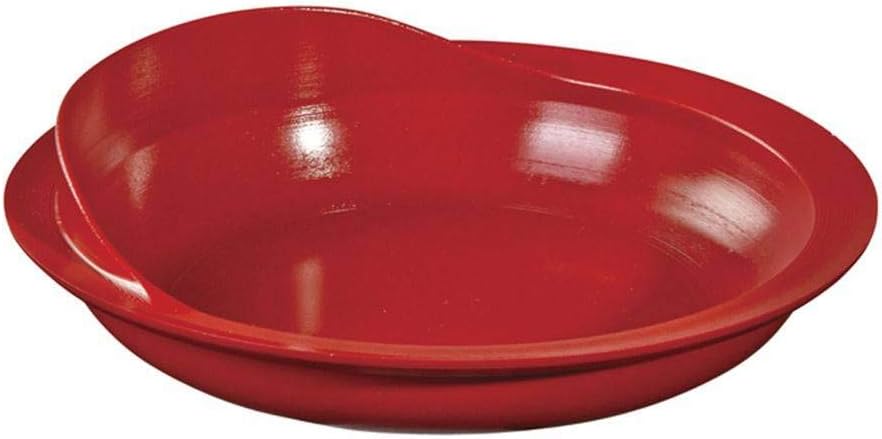
    Look for high-sided dishes with a lower “scoop section” on one side, often called scoop plates.

    These designs make one-handed eating significantly easier by reducing resistance on the loading side while maintaining high containment walls on the other three sides.

    SP Ableware high wall scoop plate for stroke and the elderly

    The Ableware Scooper Plate is specifically designed for hemiplegic users and features this configuration.

    For Arthritis

    Choose lightweight plastic or melamine high-sided dishes with smooth, rounded edges that won’t strain weak or painful joints.

    Avoid heavy ceramic options that require more grip strength to handle.

    Look for models under 10 ounces empty weight with ergonomic designs that minimize lifting and handling requirements.

    For Dementia or Alzheimer’s

    High contrast colors help users with cognitive decline distinguish their plate from the table and maintain focus on eating.

    Red or blue high-sided plates against white or light-colored tablecloths improve visibility and encourage eating by making the meal more visually obvious.

    Simple, solid colors without busy patterns reduce confusion.

    For Low Vision or Blindness

    Textured or brightly colored high-sided dishes with distinct, consistent tactile edges help visually impaired seniors navigate their food confidently.

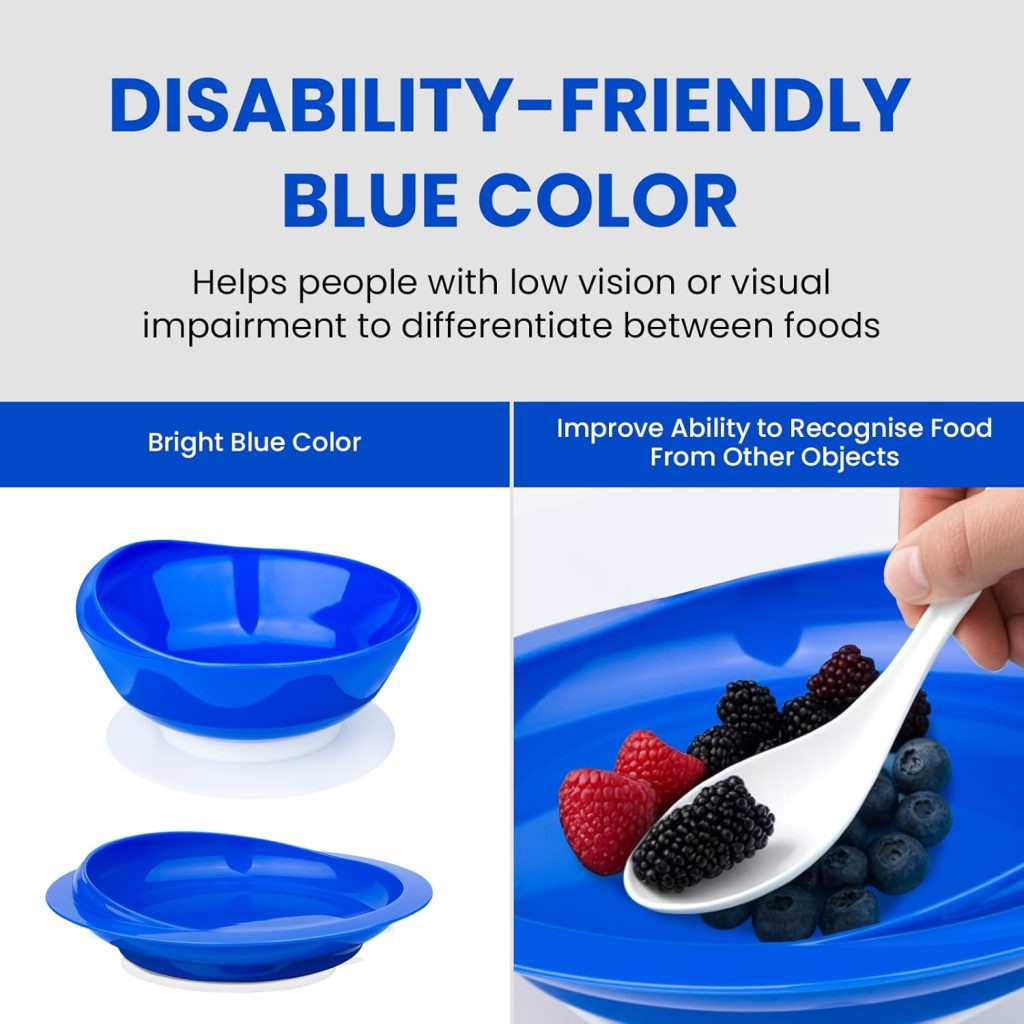
    visually impaired adpative spill proof scoop plate and bowl with suction base

    The raised sides provide essential sensory feedback that compensates for visual limitations.

    Consider plates with inner rim color contrast for additional visual cues for those with partial vision.

    Tips for Introducing High Side Dish Successfully

    Some elderly individuals may initially resist adaptive equipment, viewing it as a sign of declining independence or an admission of disability.

    Here’s how to introduce high-sided dishes in a positive, accepting way:

    Frame It as Convenience, Not Disability

    Present the high-sided dish as a practical, modern convenience that makes dining easier and more enjoyable, similar to other helpful kitchen tools everyone uses.

    Avoid medical or clinical language. Instead of saying “You need this because you’re having trouble,” try “I found this great plate that keeps food in place—I think you’ll really enjoy using it.”

    Start Gradually

    Introduce the high-sided dish for messier foods first—soups, stews, rice dishes, pasta, or foods with sauces that tend to spill.

    As the user experiences success and reduced stress with these meals, gradually expand use to all meals. This incremental approach builds confidence and acceptance.

    Maintain Familiar Routines

    Keep other aspects of mealtime completely consistent: same table setting, same timing, same favorite foods, same dining location.

    Make the plate the only change so it doesn’t feel like a wholesale transformation of the dining experience. Familiar routines reduce resistance to new equipment.

    Emphasize Cleanliness and Ease

    Many seniors appreciate practical benefits. Frame the high-sided dish as something that “keeps the table cleaner,” “makes eating easier,” or “reduces laundry” rather than focusing on the user’s limitations.

    These positive, practical benefits feel less threatening than discussing physical decline.

    Model Usage

    If possible, use high-sided dishes yourself or have other family members use them during shared meals.

    When adaptive equipment becomes “family equipment” rather than “special equipment,” acceptance typically increases dramatically.

    Offer Choice

    Present several high-sided dish options in different colors or styles and allow the elderly person to choose their favorite.

    This preserves autonomy and creates buy-in through personal preference rather than imposed solutions.

    Care and Maintenance

    Proper care extends the life and effectiveness of high-sided dishes:

    Daily Cleaning

    Most plastic and melamine high-sided dishes are dishwasher safe on the top rack, though hand washing with warm, soapy water and a soft sponge extends their lifespan by preventing gradual degradation from harsh dishwasher detergents and high heat.

    Avoid Abrasive Cleaners

    Don’t use steel wool, abrasive scrubbers, or harsh chemical cleaners that might scratch surfaces or remove non-slip coatings.

    Scratches can harbor bacteria and compromise hygiene. Stick with soft cloths or sponges and gentle dish soap.

    Check Suction Cups Regularly

    If your high-sided dish features suction cups or non-slip bases, inspect them regularly for wear, cracks, or reduced effectiveness.

    Clean suction cups with rubbing alcohol periodically to maintain grip. Replace plates when the base becomes less effective at preventing sliding.

    Inspect for Damage

    Regularly check for cracks, chips, or degradation, particularly along the high sides where stress concentrates.

    Even small cracks can harbor bacteria and compromise food safety. Replace damaged dishes promptly rather than continuing to use compromised equipment.

    Storage Considerations

    Store high-sided dishes where they’re easily accessible to reduce the temptation to use regular plates instead. If the adaptive plate is convenient to grab, it’s more likely to be used consistently.

    Conclusion

    High-sided dishes represent one of the most practical, immediately effective adaptive solutions for elderly dining challenges.

    By providing a simple physical barrier around the eating surface, they restore independence, reduce mealtime stress and mess, and help seniors maintain the dignity and pleasure of eating without constant assistance.

    Whether addressing tremors from Parkinson’s disease, one-handed limitations from stroke, visual impairments, arthritis, or general age-related decline in coordination, high-sided dishes offer a non-intrusive solution that preserves normalcy while dramatically improving function.

    When selected thoughtfully based on individual needs and introduced with sensitivity, these adaptive plates can transform frustrating mealtimes into dignified, independent experiences that support better nutrition and enhanced quality of life for elderly individuals.

  • Caregiver’s Guide to Adaptive Dining: Tools, Techniques, and Tips for Safe Eating

    Mealtimes should feel like a moment of comfort and connection, but for many caregivers, they come with anxiety, frustration, and worry.

    The person you care for is struggling to hold a spoon, choking on liquids, or losing interest in eating altogether.

    You want to help without taking over, but knowing exactly what to do is not always obvious.

    This caregiver’s guide to adaptive dining exists because those challenges are real, and the right tools and techniques make an enormous difference.

    Adaptive dining is not just about specialised equipment; it is about restoring dignity, encouraging independence, and making every meal safer and more enjoyable.

    What comes next might change how you approach every mealtime going forward.

    What Is Adaptive Dining?

    Adaptive dining refers to the practice of modifying eating tools, food textures, the physical environment, and caregiver techniques to support individuals who face physical or cognitive challenges during meals.

    The goal is not to take over the eating process; it is to remove the barriers that make independent eating difficult, unsafe, or exhausting.

    Definition of Adaptive Dining

    At its core, adaptive dining is about meeting people where they are physically and cognitively.

    That might mean swapping a standard fork for one with a built-up handle that is easier to grip, adjusting a chair so the person sits at the right height for the table, or modifying food textures to reduce choking risk.

    The tools and adjustments vary by individual, but the underlying principle is always the same: preserve as much independence and dignity as possible while keeping the person safe.

    Who Benefits from Adaptive Dining

    Adaptive dining supports a wide range of individuals. Older adults dealing with reduced grip strength, joint pain, or general mobility decline benefit significantly from thoughtfully chosen tools.

    People with neurological conditions such as Parkinson’s disease, multiple sclerosis, or stroke often face specific challenges with tremors, coordination, and swallowing that adaptive dining directly addresses.

    Individuals recovering from surgery, injury, or illness may also need temporary adaptive support while they regain function.

    The common thread is any condition that makes standard mealtimes harder than they need to be.

    Common Eating Challenges Caregivers May Encounter

    caregiver's guide to adaptive dining

    Understanding the specific challenges your person faces is the first step toward choosing the right tools and techniques.

    Adaptive dining is not one-size-fits-all — what helps one person may not be relevant for another.

    Limited Hand Strength or Dexterity

    Reduced grip strength is one of the most common barriers to independent eating. Arthritis causes joint pain and stiffness that makes gripping thin utensil handles genuinely painful.

    Tremors — whether from Parkinson’s, essential tremor, or medication side effects — make it difficult to guide food to the mouth without spilling.

    General weakness in the hands and fingers, common in older adults, adds to the challenge.

    Tools designed for adaptive utensils for poor grasp directly address these issues with wider handles, non-slip grips, and weight distribution that works with the hand rather than against it.

    Difficulty Swallowing (Dysphagia)

    Dysphagia — difficulty swallowing — is a serious and underrecognised challenge that affects many people with neurological conditions, stroke histories, and advanced age.

    It creates a real choking risk, increases the chance of food or liquid entering the lungs (aspiration), and can cause people to avoid eating altogether out of fear.

    Managing dysphagia involves modifying food textures to match what the person can safely swallow, from soft and moist foods through to fully pureed diets, and using appropriate cups and utensils that control the pace and volume of intake.

    Limited Mobility or Coordination

    Some individuals can grip a utensil adequately but struggle to lift it, guide it accurately, or coordinate the sequence of movements required to bring food to the mouth.

    This is particularly common after a stroke, with conditions affecting muscle control, or in advanced stages of neurological disease.

    Angled utensils, lightweight alternatives, and plate guards that give something to push food against can all help compensate for reduced coordination and range of motion.

    Cognitive Challenges

    Dementia and other memory-related conditions affect eating in ways that go beyond physical limitations.

    A person with dementia may forget they are eating mid-meal, become distracted easily, lose the ability to sequence the steps involved in eating, or no longer recognise food or utensils.

    Cognitive challenges require a different kind of adaptive approach, one that focuses on simplifying the environment, using familiar and clearly recognisable tools, providing gentle verbal cues, and maintaining a calm, consistent mealtime routine.

    Essential Adaptive Dining Tools

    The right tools genuinely change what is possible at mealtimes. This is not about gadgets for the sake of it — each category of adaptive equipment addresses a specific, real challenge.

    Adaptive Utensils

    Adaptive utensils are the foundation of any caregiver’s adaptive dining toolkit.

    Weighted silverware for tremors adds gentle resistance that helps steady the hand and reduces spilling during the journey from plate to mouth, a simple but highly effective intervention for people with essential tremor or Parkinson’s.

    adaptive dining tools

    Built-up handle utensils feature wider, cushioned grips that are far easier to hold for anyone with arthritis or reduced hand strength.

    Angled spoons and forks are bent at a fixed angle that keeps food on the utensil even when wrist rotation is limited, making self-feeding possible for people who would otherwise need full assistance.

    Adaptive Plates and Bowls

    Standard flat plates create a real problem for people with limited coordination — food slides off or gets pushed to the edge with no way to scoop it up.

    Adaptive plates for the elderly solve this through several design features. Plate guards clip onto the rim of a regular plate and create a raised edge to push food against.

    Scoop dishes have a curved inner wall built into the design that serves the same function.

    Non-slip bowls and plates with suction bases stay firmly in place on the table, removing the frustration of chasing a moving plate.

    These tools give people something to work with and dramatically reduce the mess and effort involved in self-feeding.

    Adaptive Cups and Drinking Aids

    Drinking presents its own set of challenges.

    Standard cups and glasses require two things that many people find difficult: the grip strength to hold them securely, and the ability to tilt the head back to drink without choking.

    Spill-proof cups with weighted bases reduce the risk of tipping. Cups designed with two handles distribute the weight and allow a more stable two-handed grip.

    Spill proof scoop Bowl and weighted angled adaptive utensils

    Nosey cutout cups allow the person to drink without tilting their head back, which is particularly useful for people with limited neck mobility or swallowing difficulties.

    Straws can help some individuals, but should be used cautiously with dysphagia, as they can increase the risk of aspiration if not properly supervised.

    Setting Up an Adaptive Dining Environment

    Effective feeding assistance technique

    The physical environment matters as much as the tools themselves.

    Even the best adaptive utensils will underperform if the person is seated awkwardly, distracted, or unable to reach their food comfortably.

    Proper Seating and Positioning

    Upright posture is essential for safe eating, particularly for anyone with swallowing difficulties.

    The person should be seated with their back in the chair, feet flat on the floor (or on a footrest), and the table at a height that allows elbows to rest comfortably on the surface.

    Slouching or reclining while eating significantly increases the risk of choking and aspiration.

    If the person uses a wheelchair, ensure it is locked and positioned close enough to the table that they do not need to reach or lean forward to eat.

    Creating a Calm Eating Environment

    Distractions make mealtimes harder for everyone, but for someone with cognitive challenges, a noisy or busy environment can derail eating entirely.

    Turn off the television, reduce background noise where possible, and limit the number of people moving around during the meal.

    Keep the table setting simple, only what is needed for the current meal.

    A calm, unhurried atmosphere communicates that there is no rush, which helps the person relax and focus on eating at their own pace.

    Ensuring Accessibility

    Everything the person needs for the meal should be within easy reach before the meal begins — utensils, cup, condiments, and napkin.

    Non-slip placemats under plates and bowls prevent sliding and give the person a stable surface to work with.

    For people with one-sided weakness (common after stroke), position tools on the stronger side.

    Minimise the number of items on the table to reduce cognitive load and make it easier to focus on the meal itself.

    Caregiver Techniques for Supporting Safe Eating

    How a caregiver behaves during meals is just as important as the tools being used.

    The right techniques protect dignity, encourage effort, and keep the person as independent as possible for as long as possible.

    Encouraging Independence

    The instinct to help is natural, but stepping in too quickly actually reduces the person’s ability to maintain their own skills over time.

    Allow extra time for self-feeding. Sit at eye level rather than standing over the person.

    Use eating utensils for the disabled that are specifically designed to enable independent feeding, and introduce them one at a time so the person can get comfortable with each tool.

    Acknowledge effort and small wins. The goal is not perfection — it is participation.

    Assisting Without Overhelping

    When assistance is genuinely needed, offer the minimum required.

    Hand-over-hand guidance — where the caregiver places their hand gently over the person’s hand to support the movement — allows the person to remain part of the action rather than being fed passively.

    Verbal cues (“pick up the spoon,” “take a small bite”) can help prompt the sequence of actions without physical intervention.

    Always ask before assisting, and frame it as support rather than takeover.

    Preserving dignity during meals has a real impact on a person’s overall well-being and willingness to engage at mealtimes.

    Monitoring for Safety

    Stay attentive throughout the meal without hovering anxiously. Watch for early signs of choking: coughing, throat clearing, a wet or gurgly voice after swallowing, or a pained expression.

    If the person eats very quickly, gently encourage them to slow down between bites.

    Check that food is being swallowed fully before the next bite is taken.

    If swallowing difficulties are a known issue, follow the advice of a speech-language therapist regarding safe food textures and positioning during meals.

    Nutrition Considerations in Adaptive Dining

    Adaptive dining is not only about safe eating — it is also about ensuring the person continues to receive adequate nutrition and hydration.

    Physical and cognitive challenges can quietly erode nutritional intake if they are not actively managed.

    Texture-Modified Diets

    When swallowing difficulties are present, food textures must be modified to match what the person can safely manage.

    Pureed diets involve blending all foods to a smooth, lump-free consistency. Soft diets allow moist, tender foods that require minimal chewing.

    The International Dysphagia Diet Standardisation Initiative (IDDSI) provides a standardised framework of texture levels that helps caregivers and healthcare professionals communicate clearly about what is appropriate for a specific individual.

    Always follow professional guidance when modifying textures. The wrong texture can increase rather than reduce risk.

    Maintaining Balanced Nutrition

    People who struggle with eating often consume less than they need, which leads to unintended weight loss, fatigue, and reduced resilience.

    Prioritise calorie and nutrient density in every meal, adding healthy fats like avocado, nut butter, or olive oil to foods increases caloric value without increasing volume.

    Small, frequent meals are often better tolerated than three large ones. Track weight and appetite over time, and flag any significant decline to the person’s healthcare team promptly.

    Hydration Support

    Dehydration is a serious and frequently underrecognised risk for older adults and people with physical limitations.

    Difficulty drinking — due to grip problems, swallowing concerns, or simply forgetting — can quickly lead to dehydration with consequences for cognition, energy, and health.

    Using plates that keep food warm alongside insulated cups that maintain fluid temperature can make meals and drinks more appealing and encourage better intake.

    Offer fluids regularly throughout the day rather than waiting for the person to ask, and consider thickened liquids if recommended by a speech therapist for dysphagia management.

    Common Mistakes Caregivers Should Avoid

    Rushing Meals

    Rushing is one of the most common and most damaging mistakes in adaptive dining.

    When a caregiver is pressed for time, the pace of the meal speeds up, the person feels pressured, and the risk of choking increases significantly.

    Build enough time into the daily schedule for meals to proceed at the person’s natural pace. A relaxed mealtime is a safer mealtime.

    Using Incorrect Utensils

    Using standard utensils out of habit or convenience — when adaptive tools are available and appropriate — makes every meal harder than it needs to be.

    The wrong utensil can turn an achievable task into a frustrating failure, which discourages the person from trying to feed themselves at all.

    Take the time to match each tool to the specific challenge the person faces, and revisit that match periodically as needs change.

    Ignoring Comfort and Positioning

    Poor positioning is one of the most overlooked contributors to difficult mealtimes.

    An uncomfortable person, leaning to one side, or seated too far from the table, will struggle regardless of how good the adaptive tools are.

    Make positioning checks part of the pre-meal routine every time, before the meal begins.

    It takes thirty seconds and makes a measurable difference to both safety and the person’s ability to eat independently.

    Tips for Improving the Adaptive Dining Experience

    Personalizing Tools for the Individual

    Adaptive dining works best when tools are chosen for the specific person rather than adopted generically.

    A utensil that works beautifully for someone with tremors may be unnecessary or even awkward for someone whose primary challenge is limited grip strength.

    Involve the person in choosing their tools where possible; having a say in what they use increases buy-in and willingness to engage with the tools consistently.

    Occupational therapists can provide valuable assessments and recommendations tailored to the individual’s exact needs.

    Practicing Consistent Mealtime Routines

    Consistency is particularly important for people with cognitive challenges, but it benefits everyone receiving adaptive dining support.

    Eating at the same time each day, in the same seat, with the same setup, reduces the cognitive load involved in getting started and helps the person know what to expect.

    Over time, a consistent routine builds a kind of muscle memory around mealtimes that supports more independent and confident eating.

    Consulting Healthcare Professionals

    No guide replaces the assessment of a qualified professional.

    An occupational therapist can evaluate the person’s specific physical limitations and recommend appropriate adaptive tools with far more precision than a general guide can offer.

    A speech-language therapist should be consulted whenever swallowing is a concern. A dietitian can address nutritional gaps.

    These professionals are allies; use them early, before challenges escalate, rather than as a last resort.

    Conclusion

    Adaptive dining is one of the most practical and impactful areas of caregiving and one of the most underestimated.

    The right tools, techniques, and environment turn mealtimes from a source of stress into a moment of genuine connection and restored independence.

    Start with the specific challenges the person you care for actually faces. Choose tools that match those challenges.

    Slow down, position well, and resist the urge to take over. Where swallowing, nutrition, or complex physical needs are involved, bring in the right professionals early.

    Every meal is an opportunity to support not just physical health but dignity, comfort, and quality of life, and that is always worth getting right.

  • Adaptive Utensils for Poor Grasp: Your Complete Guide to Independence

    You’re sitting at your favourite restaurant, surrounded by family, when suddenly your hand trembles as you reach for your fork.

    The embarrassment washes over you as soup spills across the table. Sound familiar? You’re not alone in this struggle.

    Millions of people across the US face daily challenges with grip strength and hand control.

    Whether it’s from stroke recovery, arthritis, or simply the natural effects of ageing, adaptive utensils for poor grasp can transform your dining experience from frustrating to fantastic.

    But here’s the thing, most people don’t realise: the right adapted cutlery for stroke patients and other conditions isn’t just about function, it’s about reclaiming your dignity, independence, and joy in eating.

    The question isn’t whether you need help; it’s about finding the perfect tools that work seamlessly with your unique situation.

    So, what makes one adaptive utensil better than another, and how do you know which one will change your life?

    UNDERSTANDING POOR GRASP AND ITS IMPACT ON DAILY LIFE

    Before diving into solutions, let’s understand what we’re dealing with. Poor grasp affects your ability to hold and manipulate objects effectively.

    It’s like trying to text with mittens on, frustrating and nearly impossible.

    What Causes Poor Grasp?

    causes of poor grasp

    Several conditions can lead to grip difficulties:

    Stroke Recovery: When a stroke affects your brain’s motor control areas, it can weaken one side of your body. This condition, called hemiparesis, makes simple tasks like cutting food feel like climbing Mount Everest.

    Arthritis: Both rheumatoid and osteoarthritis create joint pain and stiffness. Your fingers might feel like rusty hinges that need constant oiling.

    Parkinson’s Disease: This neurological condition causes tremors and muscle rigidity. It’s like having your body’s wiring crossed—what you want to do and what actually happens don’t always match.

    Multiple Sclerosis: MS affects nerve communication, leading to weakness and coordination problems. Tasks that once felt automatic now require conscious effort.

    Age-Related Changes: As we age, our grip strength naturally decreases. What felt effortless at 30 becomes challenging at 70.

    The Ripple Effect of Grip Problems

    Poor grasp doesn’t just affect eating—it impacts your entire quality of life. Many people experience:

    • Social isolation: Avoiding restaurants or family gatherings
    • Nutritional deficiencies: Difficulty preparing and eating proper meals
    • Loss of independence: Relying on others for basic tasks
    • Emotional distress: Feeling frustrated, embarrassed, or depressed
    • Safety concerns: Risk of cuts, burns, or choking.

    THE SCIENCE BEHIND ADAPTIVE UTENSILS

    Understanding how adaptive cutlery for a weak grip works helps you make better choices.

    These tools aren’t just bigger versions of regular cutlery; they’re engineered solutions based on occupational therapy principles.

    Key Design Features

    Built-up Handles: The optimal diameter for most people is 1.5 to 2 inches. This wider grip reduces the force needed to hold the utensil by up to 60%.

    Weight Distribution: Weighted utensils for hand weakness typically weigh 8-12 ounces. The extra weight provides sensory feedback and helps steady trembling hands.

    Ergonomic Shapes: Curved and angled designs reduce wrist strain and accommodate a limited range of motion.

    Non-slip Surfaces: Textured grips prevent the utensil from sliding, even with sweaty or weak hands.

    The Biomechanics of Better Eating

    According to Dr. Lucas on Wrist & Hand Anatomy, the human hand is made up of 27 bones, about 27 (sometimes cited as 29) joints, and more than 30 muscles working together to provide remarkable dexterity and function.

    When this complex system is compromised, adaptive utensils act as force multipliers and stability enhancers.

    Think of it like this: if your hand is a car with a faulty engine, adaptive utensils are the turbocharger that gets you back on the road.

    TYPES OF ADAPTIVE UTENSILS FOR POOR GRASP: FINDING YOUR PERFECT MATCH

    Not all adaptive utensils are created equal. Let’s explore the main categories and their specific benefits.

    Built-up Handle Utensils

    These are the versatile helpers of adaptive cutlery. Built-up handle utensils feature foam or rubber sleeves that increase grip diameter.

    Adaptive utensils for poor grasp

    Best for:

    • Arthritis sufferers
    • Stroke survivors with mild to moderate grip loss
    • People with hand tremors
    • Those with finger joint deformities

    Pros:

    • Affordable and accessible
    • Easy to clean
    • Available in various sizes
    • Can be added to existing cutlery

    Cons:

    • May feel bulky initially
    • Not suitable for severe grip loss
    • Foam can wear out over time

    Weighted and Balanced Utensils

    Weighted utensils for stroke patients use physics to your advantage. The extra weight provides stability and reduces the impact of tremors.

    Weighted adaptive utensils for stroke, parkinson's hand tremor and arthritis patient

    Key Features:

    • Weight ranges from 8-12 ounces
    • Balanced distribution prevents tipping
    • Stainless steel construction for durability
    • Ergonomic handles for comfort

    Scientific Evidence: Studies show that weighted utensils can reduce hand tremors by up to 45% in people with neurological conditions.

    FeatureRegular UtensilsWeighted Utensils
    Weight1-2 oz8-12 oz
    Tremor Reduction0%Up to 45%
    Grip Force Required100%60%
    StabilityLowHigh
    Cost$5-15$40-80

    Bendable and Flexible Utensils

    These innovative tools adapt to your needs literally. Ergonomic cutlery for disabilities often features bendable stems that can be shaped to accommodate a limited range of motion.

    Bendable adaptive utensils for hand tremors, arthritis and Parkinson's

    Benefits:

    • Customisable angles for each user
    • Reduces wrist strain
    • Accommodates contractures
    • One-time adjustment lasts months

    Rocker Knives and One-Handed Solutions

    For those with hemiplegia eating utensil needs, rocker knives are game-changers. They cut with a rocking motion instead of a sawing action.

    rocker knife one handed solution for weak tremor hands

    How They Work:

    • Curved blade concentrates cutting force
    • Single-handed operation
    • Reduces fatigue
    • Safer than traditional knives

    Universal Cuffs and Grip Aids

    When your grip is severely compromised, grip aids for utensils provide the missing link between your hand and the tool.

    universal cuffs and grip aids for the disabled

    Types Available:

    • Velcro strap cuffs
    • Rigid plastic holders
    • Elastic band systems
    • Magnetic attachments.

    CHOOSING THE RIGHT ADAPTIVE UTENSILS: A STEP-BY-STEP GUIDE

    how to select the right and best adaptive utensils for stroke, arthritis, parkinson's disabilities for elderly

    Selecting the best adaptive utensils after a stroke or other conditions requires careful consideration. Here’s your roadmap to success.

    Step 1: Assess Your Specific Needs

    Start by honestly evaluating your challenges:

    Grip Strength Test: Can you squeeze a stress ball firmly? If not, you’ll need built-up handles or grip aids.

    Range of Motion Check: Can you bend your wrist and move your fingers freely? Limited movement suggests bendable utensils.

    Tremor Assessment: Do your hands shake when reaching for objects? Weighted utensils might be your answer.

    Coordination Evaluation: Can you coordinate both hands together? One-handed solutions may be necessary.

    Step 2: Consider Your Lifestyle

    Your daily routine influences the best choice:

    Dining Habits: Do you eat out frequently? Portable solutions might be important.

    Cooking Frequency: If you cook regularly, consider a complete adaptive kitchen set.

    Social Situations: Some people prefer discrete options that don’t draw attention.

    Budget Constraints: Adaptive utensils range from £15 to £150 per set.

    Step 3: Trial and Error Approach

    Most occupational therapists recommend trying before buying. Many suppliers offer:

    • 30-day return policies
    • Equipment loan programmes
    • Trial sets with multiple options
    • Professional fitting services.

    THE BEST ADAPTIVE UTENSILS FOR SPECIFIC CONDITIONS

    Different conditions require tailored solutions. Let’s break down the optimal choices for each scenario.

    Stroke Recovery: Eating Utensils for Stroke Patients

    Stroke affects everyone differently, but common patterns emerge:

    Right-Side Weakness (Left Brain Stroke):

    • Weighted utensils for stability
    • Built-up handles for better grip
    • Rocker knives for one-handed cutting
    • Plate guards to prevent spills

    Left-Side Weakness (Right Brain Stroke):

    • May need additional cognitive support
    • Visual cues and reminders
    • Simplified utensil designs
    • Non-slip place mats

    Recommended Products:

    1. Good Grips Weighted Utensils: Perfect balance of weight and comfort
    2. Kinsman Bendable Cutlery: Customisable angles for any limitation
    3. Caring Cutlery Set: Comprehensive solution for stroke survivors

    Arthritis: Adaptive Cutlery for Weak Grip

    Arthritis creates unique challenges that require specific solutions:

    Rheumatoid Arthritis:

    • Soft, cushioned grips
    • Lightweight options to reduce joint stress
    • Ergonomic angles to minimise strain
    • Easy-clean surfaces

    Osteoarthritis:

    • Built-up handles for better grip
    • Spring-loaded mechanisms
    • Smooth operation tools
    • Heat-resistant materials for warm compresses

    Top Picks for Arthritis:

    1. Comfort Grip Utensils: Soft, non-slip handles
    2. Arthritis Foundation Approved Set: Tested by real users
    3. Ergonomic Angle Cutlery: Reduces wrist strain significantly

    Parkinson’s Disease Solutions

    Occupational therapy eating tools for Parkinson’s focus on tremor control:

    Essential Features:

    • Heavyweight for stability
    • Wide, secure grips
    • Spill-resistant designs
    • Easy-to-clean surfaces

    Recommended Options:

    1. Tremor-Steady Spoons: Electronic stabilisation technology
    2. Weighted Therapy Utensils: Clinically proven effectiveness
    3. Parkinsonian Dining Set: Complete solution with accessories

    General Weak Hands and Ageing

    For overall weakness without specific conditions:

    Key Considerations:

    • Gradual progression as strength declines
    • Multi-purpose functionality
    • Cost-effective solutions
    • Easy maintenance

    Best Choices:

    1. Progressive Grip Set: Adjustable difficulty levels
    2. Senior-Friendly Cutlery: Designed specifically for ageing hands
    3. Everyday Adaptive Tools: Discrete yet effective.

    HOW TO IMPROVE GRIP STRENGTH FOR EATING: BEYOND UTENSILS

    While adaptive utensils are essential, improving grip strength for eating through exercises and techniques can enhance your independence.

    Simple Grip Strengthening Exercises

    Squeeze Ball Therapy: Use a stress ball for 5-10 minutes daily. Start with soft resistance and gradually increase.

    Finger Extensions: Place a rubber band around your fingers and spread them apart. Hold for 5 seconds, repeat 10 times.

    Wrist Circles: Gentle circular motions help maintain flexibility and reduce stiffness.

    Putty Exercises: Therapeutic putty provides resistance training for individual fingers.

    Occupational Therapy Techniques

    Professional occupational therapists can teach:

    • Compensatory strategies
    • Energy conservation methods
    • Adaptive positioning
    • Equipment customisation

    Timing and Medication Considerations

    For those with neurological conditions, meal timing matters:

    Parkinson’s Disease: Eat during “on” medication periods when symptoms are better controlled.

    Stroke Recovery: Schedule meals when energy levels are highest, typically earlier in the day.

    Arthritis: Consider anti-inflammatory medications before meals to reduce joint pain.

    STROKE PATIENT INDEPENDENCE DINING: CREATING THE PERFECT ENVIRONMENT

    Your dining environment plays a crucial role in successful adaptive utensil use.

    Table Setup Optimisation

    Height Matters: Tables should be 28-30 inches high for wheelchair users, 30-32 inches for seated dining.

    Lighting: Adequate lighting prevents shadows and improves visibility. Aim for 50-100 lux at table level.

    Stability: Non-slip placemats and table pads prevent dishes from sliding.

    Accessibility: Keep frequently used items within easy reach—typically 18-24 inches from your seated position.

    Plate and Bowl Selection

    High-Contrast Colours: Dark food shows better on light plates and vice versa.

    Raised Edges: Plates with lips or guards prevent food from sliding off.

    Weighted Bases: Heavy bowls stay put during use.

    Appropriate Sizes: 8-9-inch plates work best for most adaptive utensils.

    Creating Independence

    Preparation Strategies:

    • Pre-cut foods when possible
    • Choose appropriate textures
    • Arrange foods for easy access
    • Have cleanup materials ready

    Safety Considerations:

    • Remove trip hazards
    • Ensure good lighting
    • Keep emergency contacts handy
    • Consider alert systems for living alone.

    COST ANALYSIS: INVESTMENT VS. INDEPENDENCE

    Understanding the financial aspects helps you make informed decisions about adaptive utensils.

    Price Ranges and Value

    Budget Options ($15-30*):

    • Basic built-up handle sets
    • Foam grips for existing utensils
    • Simple plate guards
    • Universal cuffs

    Mid-Range Solutions ($40-80*):

    • Weighted utensil sets
    • Bendable cutlery
    • Rocker knives
    • Complete dining systems

    Premium Options ($100-200*):

    • Electronic stabilising devices
    • Custom-fitted solutions
    • Professional-grade equipment
    • Comprehensive therapy sets

    N: B The prices above are not factual, kindly check with your most preferred retailer.

    MAINTENANCE AND CARE: KEEPING YOUR TOOLS IN TOP SHAPE

    Proper maintenance ensures your adaptive utensils last longer and remain hygienic.

    Daily Cleaning Routines

    Immediate Rinsing: Clean utensils immediately after use to prevent food buildup.

    Gentle Washing: Use warm, soapy water and avoid abrasive cleaners.

    Thorough Drying: Pay special attention to textured grips where moisture can hide.

    Sanitising: Weekly disinfection with mild bleach solution (1:10 ratio).

    Long-term Care

    Grip Replacement: Foam grips typically last 6-12 months with regular use.

    Hardware Checks: Inspect moving parts monthly for wear or damage.

    Storage: Keep utensils in a dry, clean drawer or container.

    Professional Servicing: Annual check-ups for electronic devices.

    When to Replace

    Signs It’s Time for New Utensils:

    • Visible wear on gripping surfaces
    • Loose or wobbly parts
    • Difficulty cleaning thoroughly
    • Changes in your condition requiring different features
    • Damage that affects function or safety.

    THE FUTURE OF ADAPTIVE UTENSILS: INNOVATION AND TECHNOLOGY

    The field of adaptive utensils continues to evolve with exciting developments on the horizon.

    Smart Technology Integration

    Electronic Stabilisation: Advanced gyroscopic systems that counteract tremors in real-time.

    Pressure Sensors: Utensils that adjust their grip assistance based on your current strength.

    Bluetooth Connectivity: Tools that track eating patterns and provide health insights.

    Voice Activation: Utensils that respond to voice commands for hands-free operation.

    Material Advances

    Shape-Memory Alloys: Utensils that automatically adjust their shape to your grip.

    Antimicrobial Coatings: Surfaces that actively prevent bacterial growth.

    Lightweight Composites: Materials that provide strength without excessive weight.

    Sensory Feedback Systems: Grips that provide tactile cues for proper positioning.

    PROFESSIONAL SUPPORT: WHEN TO SEEK HELP

    While this guide provides comprehensive information, professional support remains invaluable.

    Occupational Therapy Services

    Initial Assessment: Comprehensive evaluation of your specific needs and challenges.

    Equipment Trials: Access to various adaptive utensils for testing before purchase.

    Training Programs: Proper technique instruction for optimal benefit.

    Follow-up Support: Regular check-ins to adjust strategies as needed.

    Questions to Ask Your Therapist

    • Which specific utensils are best for my condition?
    • How long should the adjustment period take?
    • Are there exercises to improve my grip strength?
    • What warning signs should I watch for?
    • How often should I reassess my needs?

    LIVING WELL WITH ADAPTIVE UTENSILS: A HOLISTIC APPROACH

    Success with adaptive utensils extends beyond the tools themselves—it’s about embracing a new way of living.

    Mindset Shifts

    From Limitation to Adaptation: View adaptive utensils as tools for empowerment, not symbols of disability.

    Progress Over Perfection: Celebrate small improvements rather than comparing to past abilities.

    Independence Over Pride: Sometimes accepting help leads to greater long-term independence.

    Quality Over Quantity: Focus on enjoying meals rather than eating speed or efficiency.

    Building Support Networks

    Family Education: Teach loved ones about your tools and how to support you.

    Community Groups: Connect with others facing similar challenges.

    Online Forums: Share experiences and learn from others worldwide.

    Professional Networks: Maintain relationships with healthcare providers.

    Staying Motivated

    Set Realistic Goals: Celebrate achievements like eating an entire meal independently.

    Track Progress: Keep a journal of improvements and challenges.

    Reward Success: Treat yourself when you master new techniques.

    Stay Positive: Remember that adaptation is a process, not a destination.

    FREQUENTLY ASKED QUESTIONS

    How long does it take to get used to adaptive utensils?

    Most people need 1-2 weeks to feel comfortable with new adaptive utensils.
    The adjustment period varies based on your specific condition and the type of utensils you’re using. Start with shorter meals and gradually increase usage time.

    Can I use adaptive utensils in restaurants?

    Absolutely! Many people carry portable adaptive utensils when dining out. Most restaurants are accommodating when you explain your needs.
    Some adaptive utensils are designed to look similar to regular cutlery for discretion.

    Are weighted utensils safe for everyone?

    While weighted utensils help many people, they’re not suitable for everyone.
    Those with severe weakness, certain heart conditions, or specific neurological conditions should consult healthcare providers before using weighted utensils.

    How do I know if I need occupational therapy?

    Consider occupational therapy if you’re experiencing difficulty with daily activities, have recently been diagnosed with a condition affecting your hands, or are struggling despite using adaptive equipment. Your GP can provide referrals.

    CONCLUSION: YOUR PATH TO DINING INDEPENDENCE

    The journey with adaptive utensils isn’t just about eating, it’s about reclaiming your independence, dignity, and joy in life’s simple pleasures.

    Whether you’re recovering from a stroke, managing arthritis, or dealing with age-related changes, the right tools can transform your dining experience.

    Remember these key takeaways:

    Start Early: Don’t wait until difficulties become overwhelming. Early adoption leads to better outcomes.

    Seek Professional Guidance: Occupational therapists provide invaluable expertise in selecting and using adaptive utensils.

    Be Patient: Allow time for adjustment and celebrate small victories along the way.

    Stay Connected: Maintain social dining experiences; they’re crucial for mental health and quality of life.

    Embrace Innovation: New technologies and designs continue to improve adaptive utensil options.

    The right adaptive utensils aren’t just tools; they’re keys to independence, confidence, and continued enjoyment of life’s shared moments around the table.

    Are you ready to take the next step towards dining independence? Contact your local occupational therapy service or explore adaptive utensil options today.


    Resources and Further Reading:

    This article is for informational purposes only and should not replace professional medical advice. Always consult with healthcare providers before making significant changes to your eating habits or equipment.

  • Parkinson’s Disease Dining Aids: Managing Tremors and Motor Control

    Living with Parkinson’s disease presents unique challenges that extend far beyond the widely recognized tremors.

    For millions of individuals diagnosed with this progressive neurological condition, something as fundamental as eating a meal can become a source of frustration, embarrassment, and even danger.

    Research from PubMed indicates that up to 95% of people with Parkinson’s disease experience some form of eating difficulty during the course of their illness, ranging from mild tremor-related spills to severe swallowing complications such as dysphagia.

    Dysphagia in Parkinson’s disease can lead to malnutrition and aspiration pneumonia, significantly affecting quality of life and increasing mortality risk.

    The impact of Parkinson’s disease dining aids extends beyond physical symptoms. The social and emotional aspects of shared meals, which form the cornerstone of family life and social interaction, can become sources of anxiety and isolation.

    However, with the right combination of specialized eating utensils for Parkinson’s, occupational therapy guidance, and adaptive strategies, individuals with Parkinson’s disease can maintain their independence, dignity, and nutritional health throughout their journey with this condition.

    This comprehensive guide explores the specific challenges Parkinson’s disease presents during mealtimes and provides evidence-based solutions through carefully selected adaptive dining aids.

    By understanding how tremors, rigidity, and other motor symptoms affect eating, patients and caregivers can make informed decisions about the best eating utensils for Parkinson’s patients at every stage of the disease.

    UNDERSTANDING PARKINSON’S DINING CHALLENGES

    Parkinson’s disease affects the nervous system in ways that create a complex web of dining difficulties.

    The condition primarily damages dopamine-producing neurons in the brain, leading to motor symptoms that significantly impact the ability to eat safely and comfortably.

    Understanding these challenges is crucial for selecting appropriate interventions and adaptive equipment.

    The most visible symptom of Parkinson’s disease, tremor, occurs in approximately 70% of patients.

    However, not all tremors are the same, and their impact on dining varies significantly.

    Resting tremors, which occur when muscles are relaxed, may actually improve during the act of eating as the intentional movement can temporarily suppress the tremor.

    Conversely, action tremors, which occur during voluntary movement, can make it nearly impossible to bring food to the mouth without spillage.

    The frequency and amplitude of tremors fluctuate throughout the day, often correlating with medication timing.

    This phenomenon, known as “on-off” periods, means that a person may eat successfully during peak medication effectiveness but struggle significantly when medication levels drop.

    Understanding these patterns helps caregivers and patients time meals appropriately and select utensils that provide stability during challenging periods.

    Motor Control Complications

    Beyond tremors, Parkinson’s disease presents several other motor symptoms that affect dining.

    Bradykinesia, or slowness of movement, makes the entire eating process more time-consuming and can lead to food cooling before consumption is complete.

    This symptom also affects the ability to cut food efficiently, coordinate utensil use, and maintain proper posture during meals.

    Rigidity, another hallmark of Parkinson’s disease, creates muscle stiffness that limits the range of motion in joints.

    This can make it difficult to bring utensils to the mouth, particularly when rigidity affects the shoulders, elbows, or wrists.

    The combination of rigidity and bradykinesia often results in a shuffling, hesitant approach to eating that can be both physically exhausting and emotionally discouraging.

    Postural instability, while more pronounced in advanced stages of Parkinson’s disease, can affect dining posture and balance while seated.

    This instability can lead to difficulty maintaining proper positioning for safe swallowing and may require additional support systems beyond adaptive utensils.

    Non-Motor Symptoms Affecting Nutrition

    Parkinson’s disease extends beyond motor symptoms to include non-motor complications that significantly impact nutrition and dining.

    Dysphagia, or difficulty swallowing, occurs in up to 80% of people with Parkinson’s disease and presents serious safety concerns.

    This condition can make certain food textures dangerous and may require dietary modifications in addition to adaptive utensils.

    Cognitive changes, including executive function difficulties and attention problems, can make meal planning and preparation challenging.

    These changes may also affect the ability to learn new adaptive techniques or remember to use specialized utensils consistently.

    Gastrointestinal symptoms, including delayed gastric emptying and constipation, can affect appetite and meal timing.

    These symptoms often interact with medication schedules, creating additional complexity in meal planning and nutrition management.

    OCCUPATIONAL THERAPY INSIGHTS FOR PARKINSON’S DINING

    Occupational therapists play a crucial role in addressing dining challenges for people with Parkinson’s disease.

    Their expertise in analyzing daily living activities and recommending adaptive equipment makes them invaluable partners in maintaining nutritional independence.

    Professional Assessment and Intervention

    A comprehensive occupational therapy evaluation for dining difficulties includes assessment of fine motor skills, hand strength, range of motion, and cognitive function as they relate to eating tasks.

    Therapists also evaluate swallowing safety, often in conjunction with speech-language pathologists, to ensure that adaptive equipment recommendations align with dysphagia management needs.

    The timing of occupational therapy intervention is crucial. Early intervention, ideally shortly after diagnosis, allows patients to learn adaptive techniques while motor function is still relatively preserved.

    This proactive approach helps establish successful patterns before symptoms progress and makes the transition to more specialized equipment smoother.

    Occupational therapists also consider the progressive nature of Parkinson’s disease in their recommendations.

    Rather than simply addressing current difficulties, they anticipate future needs and may recommend equipment that can be modified or upgraded as symptoms advance.

    This forward-thinking approach helps families invest in solutions that will provide long-term value.

    Therapeutic Approaches and Strategies

    Beyond equipment recommendations, occupational therapists provide valuable training in compensatory techniques.

    These may include timing meals with medication peaks, using larger plates with raised edges to prevent food from sliding, and implementing rest periods during longer meals to manage fatigue.

    Environmental modifications often accompany equipment recommendations.

    Therapists may suggest optimal lighting to compensate for visual changes, appropriate seating height and support, and table modifications that improve accessibility and comfort during meals.

    The integration of adaptive equipment with therapeutic exercises is another key component of occupational therapy intervention.

    Therapists may prescribe specific exercises to maintain hand strength and dexterity, recommend stretching routines to address rigidity, and provide training in energy conservation techniques that make mealtimes less exhausting.

    SPECIALIZED UTENSILS FOR PARKINSON’S DISEASE

    The selection of appropriate eating utensils for Parkinson’s requires careful consideration of specific symptoms and individual needs.

    Parkinson's disease dining aids

    Unlike general adaptive equipment, utensils designed for Parkinson’s disease must address the unique combination of tremors, rigidity, and progressive motor decline that characterizes this condition.

    Weighted Utensils for Tremor Control

    Weighted utensils represent one of the most effective interventions for tremor-related dining difficulties.

    The additional weight, typically 8-10 ounces per utensil, provides proprioceptive feedback that helps stabilize hand movements and reduces the amplitude of tremors during eating.

    This increased weight works on the principle of momentum, making it more difficult for tremors to disrupt the smooth movement of the utensil.

    weighted utensils for tremor control

    The effectiveness of weighted utensils varies among individuals and may change as the disease progresses. Some patients find significant benefit from weighted options, while others may find them too heavy to manage comfortably.

    The key is finding the right balance between tremor control and manageable weight, which often requires trial and experimentation under professional guidance.

    Modern weighted utensils are designed with ergonomic considerations that extend beyond simple weight addition.

    Many feature balanced weight distribution that prevents the utensil from becoming top-heavy, comfortable grip surfaces that accommodate reduced hand strength, and designs that work effectively for both right- and left-handed users.

    Ergonomic Handle Designs

    The grip difficulties associated with Parkinson’s disease require utensils with specially designed handles that accommodate reduced hand strength and limited finger dexterity.

    Built-up handles, typically 1.5 to 2 inches in diameter, reduce the need for precise finger positioning and allow for a more comfortable grip that doesn’t require significant hand strength.

    Textured surfaces on utensil handles provide additional grip security, particularly important for individuals experiencing both tremors and reduced tactile sensation.

    Parkinsons drinking straw spill proof cup for Adult

    These textures range from soft, rubberized coatings to more aggressive grip patterns, allowing for customization based on individual preferences and needs.

    Some ergonomic designs incorporate finger guides or indentations that help position the hand correctly on the utensil.

    These features are particularly beneficial for individuals experiencing cognitive changes that affect motor planning and execution.

    The guides provide tactile cues that help maintain proper grip without requiring conscious effort.

    Stabilizing Features and Adaptive Designs

    Modern adaptive utensils incorporate various stabilizing features that address the multiple challenges of Parkinson’s disease.

    Anti-slip bases on plates and bowls work in conjunction with specialized utensils to create a stable eating system.

    These bases may use suction cup technology or weighted designs to prevent dishes from sliding during use.

    adaptive curved utensils for parkinsons and tremor for the elderly

    Bendable utensils offer a unique solution for individuals with limited range of motion due to rigidity or postural changes.

    These utensils can be bent to accommodate individual eating patterns and positioning needs, potentially eliminating the need for difficult arm movements that trigger tremors or cause fatigue.

    Good grip rocker adaptive knife for the disabled and parkinson patient

    Rocker knives represent another category of adaptive design specifically valuable for Parkinson’s patients.

    These single-handed cutting tools eliminate the need for coordinated two-handed cutting motions, which can be particularly challenging when tremors or rigidity affect both hands differently.

    Technology Integration

    Recent advances in assistive technology have produced battery-powered stabilizing utensils that actively counteract tremors through electronic sensors and compensatory movements.

    These devices, while more expensive than traditional adaptive equipment, can provide remarkable improvement in eating independence for individuals with significant tremor-related difficulties.

    The technology works by detecting tremor patterns and generating equal and opposite motions to stabilize the utensil tip.

    Users report significant improvements in their ability to eat soup, cereal, and other foods that were previously difficult or impossible to consume without assistance.

    However, technology-based solutions require consideration of factors such as battery life, maintenance requirements, and the learning curve associated with new devices.

    Occupational therapists can help evaluate whether high-tech solutions are appropriate for individual patients and provide training in their effective use.

    PRODUCT CATEGORIES AND RECOMMENDATIONS FOR PARKINSON’S DISEASE DINING AIDS

    Selecting the best eating utensils for Parkinson’s patients requires understanding the various product categories and their specific applications.

    Each category addresses different aspects of the dining challenges associated with Parkinson’s disease, and many patients benefit from combinations of products rather than single solutions.

    Tremor Control Solutions

    For individuals whose primary challenge is tremor control, weighted utensil sets provide comprehensive solutions for all eating tasks.

    Complete sets typically include a fork, spoon, knife, and teaspoon, all weighted to the same specifications for consistency in use.

    The uniformity helps users develop muscle memory and confidence with the equipment.

    Angled weighted adaptive utensils for hand tremors and Parkinsons elderly patients

    Stabilizing spoons with gyroscopic technology represent the premium option for tremor control.

    These battery-powered devices can reduce hand tremor at the spoon bowl by up to 70%, according to clinical studies.

    While significantly more expensive than traditional weighted utensils, they can provide dramatic improvements in eating independence for individuals with severe tremors.

    Some patients benefit from tremor-dampening gloves or wrist weights used in conjunction with standard utensils.

    These accessories provide stability without requiring investment in specialized utensils and can be particularly useful during the early stages of the disease when tremors are mild to moderate.

    Grip Enhancement Solutions

    Built-up handle utensils address the grip difficulties associated with Parkinson’s disease by increasing the diameter of the handle and providing cushioned surfaces.

    These utensils typically feature foam or rubber coating that compresses slightly under pressure, providing a secure grip without requiring significant hand strength.

    Universal cuffs represent another approach to grip difficulties, particularly for individuals with severe hand weakness or contractures.

    Adult spill feeding cup for patients that are disabled with tremor and parkinsons

    These devices strap around the hand and hold the utensil in place, eliminating the need for active gripping while still allowing for controlled movement.

    Angled utensils can reduce the wrist motion required for eating, which is particularly beneficial for individuals with rigidity affecting wrist flexibility.

    These utensils are bent at optimal angles to bring food to the mouth with minimal wrist deviation, reducing strain and improving comfort during meals.

    Cutting and Food Preparation Aids

    Rocker knives eliminate the need for coordinated two-handed cutting motions, which can be particularly challenging for Parkinson’s patients.

    These knives use a rocking motion rather than a sawing motion, allowing for effective food cutting with one hand while providing stability and control.

    Adaptive cutting boards with raised edges and non-slip surfaces create a stable work surface for food preparation.

    adaptive cutting board for stroke, one-handed, disabled and handicapped elderly

    Some designs include corner guards and suction cup bases that prevent the board from sliding during use.

    These features are particularly important for individuals with tremors who need additional stability during cutting tasks.

    Plate guards and food bumpers can transform regular plates into adaptive dining aids by preventing food from sliding off during eating.

    These removable accessories are particularly useful for individuals who experience tremors or have difficulty with precise utensil control.

    Drinking Solutions

    Weighted cups and mugs provide stability for individuals with tremors while drinking.

    The additional weight, combined with ergonomic handle designs, can significantly reduce spilling and improve confidence during beverage consumption.

    Spillproof lids and straws can prevent accidents and reduce anxiety about drinking in social situations.

    Two-handed cups with large handles for parkinsons disease

    Modern designs are nearly indistinguishable from regular drinkware while providing the safety and security needed for independent drinking.

    Two-handed cups with large handles accommodate the grip difficulties associated with Parkinson’s disease while providing the stability that comes from using both hands.

    These cups often feature wide bases and spillproof designs that provide additional security during use.

    OCCUPATIONAL THERAPY RECOMMENDATIONS BY DISEASE STAGE

    The progressive nature of Parkinson’s disease requires adaptive equipment recommendations that evolve with changing symptoms and abilities.

    Occupational therapists typically categorize recommendations based on disease stage, symptom severity, and individual functional capacity.

    Early Stage Interventions

    During the early stages of Parkinson’s disease, when symptoms are mild and primarily unilateral, occupational therapy focuses on maintaining existing skills while introducing adaptive strategies that will become more important as the disease progresses.

    Equipment recommendations at this stage often include lightweight built-up handle utensils and basic stabilizing accessories.

    The emphasis during early intervention is on establishing successful patterns and building confidence with adaptive equipment.

    Patients who begin using adaptive utensils early in their disease course often have better long-term outcomes and greater acceptance of more specialized equipment as needs change.

    Early stage recommendations also include education about energy conservation techniques, optimal meal timing in relation to medication schedules, and environmental modifications that will support continued independence as symptoms progress.

    Moderate Stage Adaptations

    As Parkinson’s disease progresses to moderate stages, characterized by bilateral symptoms and increasing motor difficulties, equipment recommendations become more specialized and comprehensive.

    Weighted utensils often become necessary at this stage, and patients may require multiple adaptive solutions for different eating tasks.

    The moderate stage is when many patients benefit most from comprehensive occupational therapy evaluation and equipment trials.

    The combination of preserved cognitive function and increasing motor difficulties creates an optimal window for learning new adaptive techniques and accepting more specialized equipment.

    Recommendations at this stage often include complete adaptive dining sets, environmental modifications such as specialized seating and table arrangements, and training in techniques that accommodate increasing symptoms while maintaining independence.

    Advanced Stage Solutions

    Advanced Parkinson’s disease requires the most specialized equipment and comprehensive support systems.

    At this stage, safety becomes the primary concern, and equipment recommendations often include technology-enhanced solutions and comprehensive support systems.

    Patients in advanced stages may require electronic stabilizing devices, modified food textures, and extensive environmental modifications.

    The focus shifts from maintaining independence to ensuring safety while preserving as much autonomy as possible.

    Advanced stage recommendations often involve interdisciplinary teams including occupational therapists, speech-language pathologists, and nutritionists to address the complex needs associated with advanced Parkinson’s disease.

    DAILY LIVING INTEGRATION AND PRACTICAL STRATEGIES

    Successfully integrating adaptive dining equipment into daily life requires more than simply purchasing specialized utensils.

    The transition to using eating utensils for Parkinson’s requires thoughtful planning, gradual implementation, and ongoing adjustment as needs change.

    Mealtime Routine Modifications

    Establishing consistent mealtime routines that accommodate Parkinson’s symptoms can significantly improve the success of adaptive equipment use.

    This includes timing meals with medication peaks when possible, allowing adequate time for eating without rushing, and creating a calm, distraction-free environment that supports concentration on eating tasks.

    Many patients benefit from smaller, more frequent meals rather than three large meals per day.

    This approach reduces fatigue and accommodates the slower eating pace that often accompanies Parkinson’s disease.

    Adaptive utensils work more effectively when patients are not rushed or overly fatigued.

    The social aspects of dining deserve special consideration.

    Family members and caregivers should be educated about the proper use of adaptive equipment and the importance of maintaining dignity and independence during meals.

    This education helps create supportive environments that encourage continued use of adaptive solutions.

    Environmental Considerations

    The dining environment plays a crucial role in the effectiveness of adaptive equipment.

    Proper lighting is essential for individuals with Parkinson’s disease, who may experience visual changes that affect their ability to see food clearly.

    Adjustable lighting that can be optimized for different times of day and meal types enhances the effectiveness of adaptive utensils.

    Seating arrangements should provide adequate support and positioning for safe swallowing and comfortable utensil use.

    This may include chairs with arms for stability, appropriate table height, and positioning that allows for optimal reach and manipulation of adaptive equipment.

    Noise reduction in the dining environment can help individuals with Parkinson’s disease concentrate on eating tasks and reduce the cognitive load associated with using adaptive equipment.

    This is particularly important for individuals experiencing cognitive changes that affect attention and concentration.

    Caregiver Training and Support

    Effective use of adaptive dining equipment often requires caregiver training and support.

    Caregivers should understand the proper use of equipment, cleaning and maintenance requirements, and how to assist without taking over tasks that the individual can still perform independently.

    The balance between assistance and independence is crucial in Parkinson’s care.

    Caregivers should be trained to recognize when help is needed and when stepping back allows for greater independence.

    This balance often changes as the disease progresses, requiring ongoing communication and adjustment.

    Caregivers should also be educated about the emotional aspects of dining difficulties and the importance of maintaining dignity and choice in food selection and eating methods.

    This understanding helps create supportive environments that encourage continued use of adaptive solutions.

    COST CONSIDERATIONS AND INSURANCE COVERAGE

    The financial aspects of acquiring appropriate eating utensils for Parkinson’s patients involve understanding insurance coverage, budgeting for progressive needs, and identifying cost-effective solutions that provide long-term value.

    Budget-Friendly Alternatives

    For individuals without insurance coverage or those seeking cost-effective solutions, several budget-friendly alternatives can provide significant benefits.

    Basic built-up handle utensils, foam padding for existing utensils, and simple plate guards can address many dining challenges at a fraction of the cost of specialized equipment.

    Many adaptive features can be added to existing utensils through modifications and accessories.

    Foam tubing can be used to build up handles, rubber grips can be added for better control, and simple weights can be attached to provide tremor-dampening effects.

    Community resources, including loan closets operated by Parkinson’s organizations and occupational therapy programs, may provide access to adaptive equipment for trial periods or temporary use.

    These resources can be particularly valuable for evaluating equipment before purchase or for addressing short-term needs.

    LOOKING FORWARD: MAINTAINING INDEPENDENCE AND QUALITY OF LIFE

    The journey with Parkinson’s disease and dining challenges is highly individual, requiring ongoing assessment, adaptation, and support.

    The key to successful management lies in proactive planning, professional guidance, and a willingness to adapt as needs change.

    Regular occupational therapy evaluations can help ensure that adaptive equipment continues to meet changing needs and that new solutions are introduced as they become beneficial.

    This ongoing relationship with healthcare providers helps maintain optimal function and safety throughout the disease course.

    The field of adaptive dining equipment continues to evolve, with new technologies and design innovations regularly becoming available.

    Staying informed about new options and maintaining relationships with occupational therapists and other healthcare providers helps ensure access to the most current and effective solutions.

    Perhaps most importantly, the use of adaptive dining equipment should be viewed as a tool for maintaining independence and quality of life rather than a symbol of limitation.

    The best eating utensils for Parkinson’s patients are those that allow individuals to continue enjoying meals safely and independently, preserving the social and nutritional aspects of dining that are so important to overall well-being.

    The investment in appropriate adaptive dining equipment pays dividends in maintained independence, improved nutrition, enhanced safety, and preserved dignity.

    For individuals with Parkinson’s disease and their families, these benefits represent not just practical improvements but fundamental contributions to quality of life and continued participation in the social and cultural significance of shared meals.

    By understanding the challenges, exploring the solutions, and working with healthcare professionals to implement appropriate interventions, individuals with Parkinson’s disease can continue to enjoy safe, independent, and dignified dining experiences throughout their journey with this condition.

    The right combination of adaptive equipment, professional guidance, and supportive environments can help ensure that mealtimes remain a source of nourishment, pleasure, and social connection rather than frustration and anxiety.


    This article is for informational purposes only and should not replace professional medical advice. Individuals with Parkinson’s disease should consult with their healthcare providers, including occupational therapists, to determine the most appropriate adaptive equipment for their specific needs and circumstances.