Tag: mobility assist dinnerware

  • Heated Plates for the Elderly — Safe Ways to Keep Meals Warm Longer

    Mealtime for elderly individuals often becomes challenging when the food cools down before they finish eating. This common issue affects nutrition, meal enjoyment, and overall well-being.

    Heated plates offer a practical solution by maintaining consistent food temperature throughout the meal, eliminating constant reheating trips.

    However, selecting the right heated plate requires careful consideration of safety features, ease of use, and the senior’s specific needs.

    From experience, I’ve observed that the best solutions balance effective warming with intuitive operation, especially when caregivers aren’t present.

    This guide explores safe heated plate options, critical safety considerations, and practical alternatives to help families make informed decisions that support independent, enjoyable dining for their elderly loved ones.

    TABLE OF CONTENTS
     [hide]

    Why the Elderly Struggle With Cold Food

    Slower eating pace

    Many elderly individuals eat more slowly due to reduced muscle coordination, chewing difficulties, or arthritis affecting utensil grip.

    A meal that takes 30-45 minutes means food temperature drops significantly, making even freshly cooked meals cold and unappetizing before they finish.

    This extended eating time isn’t a choice but a physical reality that requires thoughtful solutions for slow eaters.

    Reduced appetite sensitivity

    Aging often diminishes taste and smell sensitivity, making cold food even less appealing.

    When meals lose their warmth, the aroma fades, and flavors become muted, further reducing already compromised appetite.

    This creates a cycle where seniors eat less, leading to nutritional deficiencies and weight loss that impact overall health and recovery from illness.

    Meal interruptions (medications, fatigue)

    Medications scheduled around mealtimes frequently interrupt eating, causing food to sit and cool.

    Fatigue from illness or daily activities may require rest breaks during meals.

    From my observations, having a loved one present to encourage continued eating helps tremendously, but maintaining food temperature during these necessary pauses makes resuming the meal more inviting and less burdensome.

    Cold food affects enjoyment & nutrition

    Cold food isn’t just unpleasant; it discourages adequate nutritional intake. When meals become a chore rather than enjoyable, seniors eat less protein, vegetables, and essential nutrients.

    The psychological impact matters too; making the eating process not look like work improves compliance.

    Warm meals stimulate appetite and make dining feel comforting rather than obligatory, directly affecting nutritional outcomes.

    What Are Heated Plates?

    Electric heated plates

    These plates contain built-in heating elements powered by plugging into electrical outlets. They maintain consistent temperatures throughout meals using adjustable controls.
    Electric Plate warmer for heating up large plates

    Most models feature automatic temperature regulation to prevent overheating.

    While effective, they require proximity to power sources and careful electrical safety considerations, making them best suited for supervised use with elderly individuals.

    Plug-in warming bases

    Warming bases are separate heating platforms where standard plates sit on top.

    This design separates the heating element from the dinnerware, allowing you to use familiar lightweight dishes for the elderly.

    The base typically has simple on/off controls and temperature settings. This option simplifies cleaning since only the base needs electrical care while the plates wash normally.

    Rechargeable or gel-based plates

    Battery-powered plates offer cordless convenience, eliminating trip hazards from electrical cords.

    Gel-based options work as passive warming solutions—microwaved before meals to store heat that gradually releases.

    These don’t maintain constant temperature like electric models but provide 20-30 minutes of warmth without electrical connections, making them safer for unsupervised use.

    How Heated Plates Help the Elderly

    Maintains safe eating temperature

    Heated plates keep food within the safe eating zone of 140-165°F, preventing bacterial growth while remaining comfortable for consumption.

    This consistent warmth ensures every bite tastes as intended, from first to last.

    For seniors with compromised immune systems, maintaining proper food temperature throughout meals reduces foodborne illness risks while preserving meal quality.

    Reduces reheating trips

    Constant trips to reheat food become exhausting for elderly individuals with mobility limitations.

    Heated plates eliminate these interruptions, allowing uninterrupted meals without assistance.

    This independence is crucial, from my experience, both premium and affordable products still need someone to prepare meals initially, but maintaining temperature independently preserves dignity and reduces caregiver burden during actual eating time.

    Improves meal satisfaction

    Warm food simply tastes better, stimulating appetite and making meals more enjoyable.

    When seniors look forward to eating rather than dreading cold food, nutritional intake naturally improves.

    This psychological benefit shouldn’t be underestimated; meal satisfaction directly correlates with willingness to eat adequate portions and maintain healthy eating patterns essential for senior health.

    Supports independent eating

    Independence during meals preserves self-esteem and reduces feelings of being burdensome.

    Heated plates allow seniors to eat at their own pace without worrying about food cooling or needing constant help.

    This autonomy is especially valuable for those living alone or during times when caregivers handle other tasks, promoting confidence in self-care abilities.

    Safety Considerations for Seniors

    Burn Prevention

    Low-temperature heating systems designed for elderly use typically cap at 150°F—warm enough to maintain food temperature but unlikely to cause serious burns on brief contact.

    Look for models specifically marketed for senior use with temperature limits clearly stated.

    Quality heated plates distribute heat evenly without hot spots that could cause injury if touched accidentally.

    Insulated surfaces protect hands from direct heat contact. The best designs keep the plate rim cool while warming only the food contact area.

    Double-wall construction or heat-resistant outer layers allow safe handling without oven mitts.

    This feature is critical since seniors with reduced sensation may not immediately feel excessive heat.

    Auto shut-off features prevent prolonged heating if the elderly user forgets to turn off the plate.

    Most quality models shut down after 30-60 minutes, preventing overheating and fire hazards.

    This emergency safety mechanism is non-negotiable for unsupervised use—every electrical product should have this protection when left on, providing peace of mind for families.

    Electrical Safety

    Cord placement requires careful consideration to prevent tripping hazards.

    Choose models with short cords used at the table edge or opt for cordless rechargeable options. Position cords away from walking paths and secure them with clips.

    For the elderly with mobility devices, eliminating cords through gel-based or heat-retaining alternatives may be safer.

    Spill-resistant design prevents liquid from reaching electrical components. Look for sealed heating elements and moisture barriers.

    Models with IPX ratings indicate water resistance levels. Every electrical part should be well insulated to prevent electric shock—inspect products for proper safety certifications like UL or ETL listing before purchase.

    Stable power bases prevent tipping that could spill hot food or create electrical hazards. Wide, weighted bases with non-slip feet provide stability even if bumped.

    Avoid top-heavy designs. The base should remain stationary during normal use without sliding across the table, ensuring safe operation for seniors with coordination challenges.

    Weight & Stability

    Non-slip bases prevent plates from sliding during cutting or scooping. Silicone or rubber feet grip table surfaces securely, especially important for seniors with tremors or reduced coordination.

    The base should stay put even with one-handed eating or adaptive utensil use, allowing users to eat without chasing their plate across the table.

    Avoid heavy cast-iron options that seem durable but pose injury risks if dropped. I’ve noticed that most affordable products use lightweight materials that are actually better for elderly users with arthritis or grip weakness.

    Materials should not break and cause injury when they slip from hands—choose shatter-resistant ceramics or reinforced plastics over glass.

    Best Types of Heated Plates for the Elderly
    heated plates for the elderly

    Electric Heated Plates

    Consistent warmth throughout the entire meal makes electric plates ideal for very slow eaters.

    Adjustable temperature controls let caregivers set appropriate heat levels for different foods.

    These maintain steady 140-150°F temperatures for hours if needed, unlike passive options that gradually cool.
    Narvis electric heated plate warmer for the elderly

    Best for supervised use since they require electrical connections and temperature management.

    Family members should not select products that are difficult to use or operate when they’re not around.

    Look for simple one-button controls rather than complex digital displays. Clear labeling and intuitive design help seniors use them independently once properly set up.

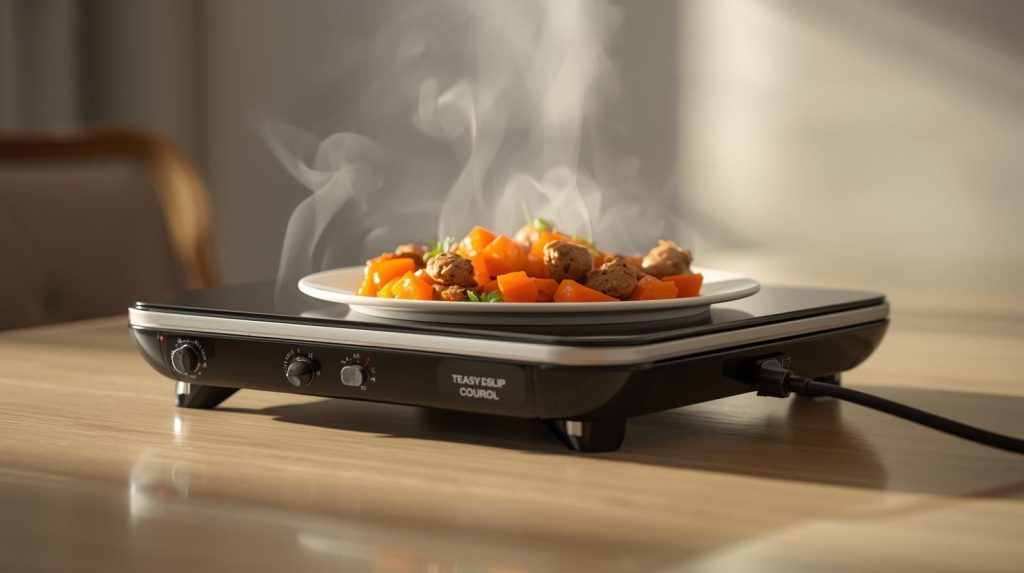
    Heated Plate Bases

    Standard plates on warming surfaces offer versatility; use your favorite adaptive plates for seniors on the heating base.

    This separation makes cleaning easier since you wash the plate normally while wiping down the base.

    You can even use specialized lightweight bone china plates that are comfortable for seniors to handle.

    Safer temperature control comes from the indirect heating method. The base warms the plate bottom, which then transfers heat to food more gently than direct-heating plates.

    This reduced burn risk makes bases suitable for less supervised use while still effectively maintaining meal temperature for extended periods.

    Heat Retaining Plates (Non-Electric)

    No cords or power requirements eliminate electrical safety concerns. These plates contain heat-storing gel or materials that you warm in the microwave before meals.

    A cute microwave oven makes preheating simple. The stored heat gradually releases over 20-30 minutes, sufficient for many meals without complexity.

    heat retaining dinner plates

    Lower burn risk from the passive warming approach makes these ideal for dementia care or seniors with reduced temperature sensitivity.

    The plate gradually cools rather than maintaining a constant high heat.

    While not suitable for very slow eaters, they provide safe materials for seniors without electrical complications or burn dangers from active heating elements.

    Materials That Are Safest for Elderly Use

    Ceramic & stoneware

    These materials offer excellent heat retention and distribution without safety concerns. Food-grade ceramic provides non-toxic food contact surfaces free from harmful chemicals.

    They’re heavy enough for stability but available in lightweight versions for easier handling.

    Quality ceramic won’t leach chemicals into food even when heated, making it safe for daily use with elderly individuals requiring warm meals.

    Glass (with caution)

    Heat-resistant borosilicate glass handles temperature changes safely, but standard glass can shatter if heated unevenly.

    Corelle safe microwave dishes offer a lighter alternative to traditional glass dinnerware.

    While glass is non-toxic and easy to clean, the breakage risk when dropped makes it less ideal for seniors with grip issues unless specifically designed for durability.

    Avoid melamine & plastic

    Melamine releases harmful chemicals when heated above 160°F, making it unsuitable for heated plates.

    Most plastics warp, melt, or leach toxins under sustained heat. Even “microwave-safe” plastics aren’t designed for continuous warming.

    Stick to materials specifically rated for prolonged heat exposure to ensure safety. Safe materials for seniors prioritize health over convenience.

    Non-toxic, lead-free materials

    Older dinnerware sometimes contains lead in glazes or decorative elements that can leach into food when heated.

    Modern food-safe ceramics must meet FDA standards for lead and cadmium levels.

    Verify products are explicitly labeled lead-free, especially important for items manufactured outside regions with strict safety regulations, ensuring non-toxic food contact surfaces.

    Heated Plates vs Plate Warmers for Seniors

    Active heating vs passive warmth

    Heated plates continuously generate warmth throughout meals, maintaining consistent temperatures indefinitely.

    Plate warmers only preheat dishes, which then gradually cool. For seniors eating slowly over 30+ minutes, active heating proves more effective.

    Passive warmth suits quicker meals or when combined with insulated covers to retain heat longer.

    Ease of use

    Plate warmers often require less operation—preheat and serve. Heated plates need power connections, temperature settings, and monitoring.

    However, warming bases with simple on/off switches match warmers’ simplicity while providing active heating.

    Consider the senior’s cognitive ability and caregiver availability when choosing between continuous operation complexity versus one-time preheating simplicity.

    Risk level comparison

    Active heated plates carry higher burn and electrical risks, but prevent food safety issues from prolonged cooling.

    Passive warmers eliminate electrical hazards, but food may cool to unsafe temperatures during extended meals.

    Corelle oven-safe dishes work with either approach. Balance the senior’s specific risks—those with neuropathy may be safer with passive options despite electrical safety features.

    Caregiver involvement required

    Both premium and affordable products need someone to help prepare meals and operate them initially, from my experience.

    However, heated plates require more monitoring during use—checking temperatures, ensuring auto-shutoff works, and watching for spills near electrical components.

    Passive warmers need less supervision once the meal begins, making them better for situations with limited caregiver presence.

    Severe neuropathy

    Diabetic neuropathy or nerve damage eliminates the warning pain from touching hot surfaces.

    Without temperature sensation, seniors may not realize they’re burning themselves until serious injury occurs.

    Even low-temperature heated plates pose risks when users can’t feel the heat. In these cases, passive warming with cooler temperature ranges provides safer alternatives.

    Advanced dementia

    Cognitive impairment prevents understanding of the heated plate operation and dangers.

    Individuals with dementia may touch heating elements, leave plates on indefinitely, or use them inappropriately.

    The confusion around electrical devices and the inability to remember safety instructions make heated plates unsuitable.

    Non-electric, passive warming solutions or caregiver-controlled heating work better.

    Poor temperature sensitivity

    Age-related reduction in temperature perception means seniors may not recognize dangerously hot food or surfaces.

    This differs from complete neuropathy but still increases burn risk. Test the senior’s ability to distinguish warm from hot water before introducing heated plates.

    If they struggle with temperature judgment, stick to passive warming methods.

    Unsupervised electrical use

    When seniors live alone with no regular check-ins, electric heated plates create fire and shock hazards.

    Forgotten plates left on, frayed cords, or spilled liquids near power sources become dangerous without supervision.

    Opt for non-electric alternatives or ensure daily caregiver visits to set up and monitor heated plate use safely.

    Best Practices for Caregivers

    Pre-set safe temperatures

    Configure temperature settings before the senior begins eating. Most elderly individuals should use the lowest effective setting—typically 140-150°F.

    Label the preferred setting with colored tape or a permanent marker so they don’t accidentally increase heat.

    Testing food temperature with your own hand before serving prevents serving dangerously hot meals.

    Supervise first uses

    Spend several meals observing how the senior interacts with the heated plate.

    Watch for confusion with controls, attempts to touch heating elements, or difficulty managing the device.

    This observation period identifies potential issues before leaving them to use it independently.

    Adjust setup based on their actual behavior, not assumed capabilities.

    Label controls clearly

    Large-print labels with simple instructions help seniors remember operation steps.

    Use contrasting colors for on/off indicators. Avoid complex digital displays—opt for tactile knobs with clear positions.

    Consider removing temperature adjustment entirely if the senior doesn’t need to change settings, simplifying the device to only power on/off.

    Monitor plate surface temperature

    Periodically check that the plate isn’t overheating, especially during initial uses. Touch the plate rim (not the heating surface) to ensure it remains comfortably warm, not painfully hot.

    If the plate becomes too hot to touch comfortably, it’s too hot for safe senior use. Adjust the temperature down or consider alternative products with better temperature control.

    Alternatives to Heated Plates for the Elderly

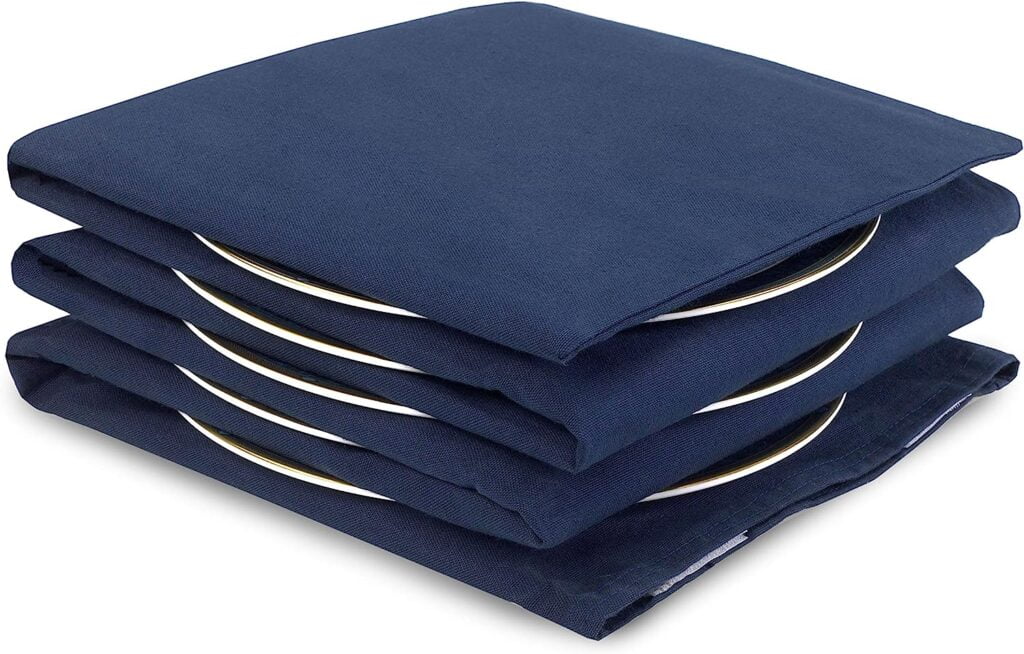
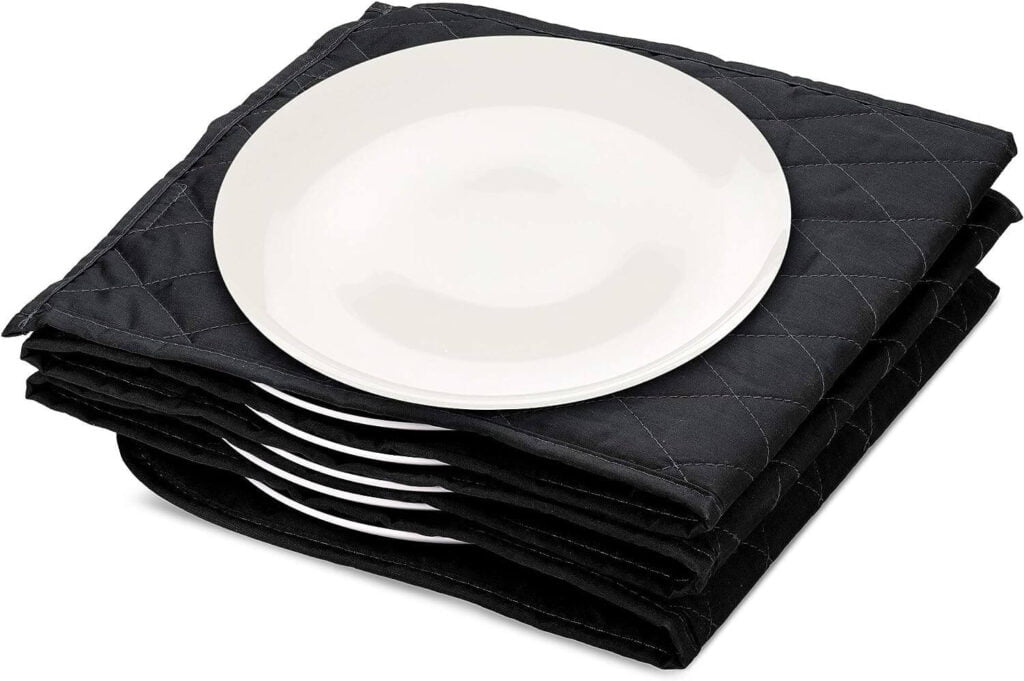
    Insulated plate covers

    Dome-shaped covers trap heat and moisture, keeping food warm for 15-20 minutes without electricity.

    These work with any standard dinnerware and cost significantly less than heated plates.

    While not as effective as active heating, covers suit moderately slow eaters and eliminate all electrical safety concerns. They’re lightweight, portable, and dishwasher-safe.

    Smaller portion serving

    Dividing meals into two smaller servings allows reheating the second portion while eating the first.

    This approach keeps food fresh and warm without special equipment. It reduces waste from uneaten cooled food and accommodates appetite fluctuations common in elderly individuals.

    The trade-off is increased caregiver involvement for mid-meal reheating.

    Frequent reheating strategy

    Quick microwave reheating every 10-15 minutes maintains food temperature using equipment already available in most homes.

    While this requires mobility or caregiver assistance, it avoids heated plate costs and safety concerns.

    This works best when caregivers are present throughout meals to assist with reheating without making the senior feel burdened.

    Thermal food bowls

    Insulated bowls with double-wall construction retain heat longer than standard dishes.

    Insulated dish that keeps food warm

    Some contain gel that you preheat in the microwave, similar to gel-based heated plates, but in bowl form.

    These suit soups, stews, and one-dish meals are common in elderly diets. They provide moderate heat retention without electrical components or the complexity of heated plates.

    FAQ — Heated Plates for the Elderly

    Are heated plates safe for seniors?

    Yes, when properly selected with auto-shutoff, low-temperature settings, and insulated surfaces. Supervised use is safest.

    Avoid for seniors with severe neuropathy, dementia, or living alone without regular check-ins. Non-electric alternatives eliminate electrical risks.

    What temperature should heated plates be?

    Keep heated plates between 140-150°F for seniors. This maintains food safety while minimizing burn risk.

    Temperatures above 160°F increase injury potential, especially for those with reduced sensation.

    Always test the temperature yourself before serving to ensure it’s comfortably warm, not painfully hot.

    Are non-electric options better for the elderly?

    Often yes, especially for unsupervised use or cognitive impairment.

    Non-electric gel plates or heat-retaining dishes eliminate shock and fire hazards while still extending meal warmth.

    They work well for 20-30 minute meals, but don’t suit very slow eaters needing continuous heating.

    Can heated plates cause burns?

    Yes, if temperatures exceed safe limits or seniors have reduced sensation. Quality models with temperature controls below 150°F minimize this risk.

    Always supervise initial uses. Those with neuropathy or dementia shouldn’t use heated plates unsupervised due to increased burn danger from the inability to sense or understand heat.

    Final Verdict — Are Heated Plates a Good Choice for the Elderly?

    Heated plates can significantly improve mealtime quality for elderly individuals when matched to their specific circumstances.

    For slow eaters with good cognitive function and some level of supervision, heated plates maintain food temperature and eating independence effectively.

    They work best when caregivers can initially set up the device with appropriate safety settings and check periodically.

    However, they’re not universal solutions. Seniors with advanced dementia, severe neuropathy, or those living completely alone face risks that outweigh benefits.

    In these cases, passive warming alternatives provide safer options. The key is an honest assessment of the senior’s capabilities and supervision availability.

    Both premium and affordable products require initial meal preparation assistance, but the right heated plate reduces mid-meal burden on everyone.

    Choose based on the individual’s physical abilities, cognitive status, and living situation rather than assuming one solution fits all elderly individuals.

    When safety features align with the senior’s needs, and appropriate supervision exists, heated plates enhance dignity, nutrition, and meal enjoyment.

  • ADAPTIVE PLATES FOR ELDERLY

    Have you ever heard of adaptive plates for elderly? These special plates are designed to make mealtimes safer and more enjoyable for older people.

    As we get older, it can become harder to hold onto plates or use utensils. That’s where adaptive plates come in! They have clever features to help with that.

    Some plates have non-slip surfaces, so the food doesn’t slide around. Others have high sides that make it easier to scoop up food. Some even have compartments to keep different foods separate and heated plates to always keep senior citizens’ meals warm.

    These special plates are like a helpful friend during meals, making sure our loved ones can enjoy their food without any worries!

    ADAPTIVE DINNERWARE

    Adaptive dinnerware is specially designed to make mealtime easier and more enjoyable for people with different challenges.

    It can help older people with disabilities and kids, or anyone who needs a little extra help when eating.

    One distinct quality of Adaptive dinnerware sets is that they are lightweight plates and owls suitable for the elderly or seniors.

    Adaptive dinnerware is like magic dishes that can change their shape and size to help people who have difficulty using regular plates and cups. Let me give you some examples to help you understand better:

    Adaptive dinnerware

    Imagine you have a plate that has sides that can rise and become taller. This helps people who have trouble using a fork or a spoon to scoop their food.

    The higher sides keep the food from falling off the plate, making it easier to eat.

    Picture a bowl that has a special non-slip bottom. It stays in one place on the table, even if someone accidentally bumps into it.

    This helps people who have shaky hands or difficulty holding things steady. They can enjoy their soup or cereal without worrying about the bowl moving around and spilling their food.

    Think about a cup that has a special lid with a small opening for sipping. This is helpful for people who have trouble drinking without spilling.

    The lid prevents the liquid from spilling out too quickly, so they can take small sips without making a mess.

    Finally, the goal of every adaptive dinnerware is to provide comfort and independence to troubled elders, either with arthritis or any other health issues, so they can enjoy their meals without stress.

    ADAPTIVE PLATES FOR THE ELDERLY

    Adaptive Plates for Elderly

    Adaptive plates for the elderly are special plates made with the needs of older people in mind, who have special needs, are handicapped, or have arthritis, so they can enjoy their meals without any extra difficulties.

    SUCTION BOWLS AND PLATES FOR ADULTS

    Suction bowls and plates for adults are specially designed Adaptive bowls with a Lip for the disabled and elderly.

    suction bowls and plates for adults

    They help stop spills. The suction base is the string to hold the bowl or plate to the table, preventing movement of the food.

    The suction adaptive bowl with Lip is made up of rubber, deep sides, and a wide rim with a contoured lip, and is perfect for individuals with limited mobility.

    This adaptive bowl with a lip makes it easy to eat one-handed; the elderly, handicapped, and disabled can eat unaided.

    Aside from adults, this suction bowl is also a great adapting self-feeding dish for kids.

    The Rubber is a safe food-grade material that is microwave, freezer, and dishwasher safe!

    Finally, hold and scoop food with the help of the high-to-low rim.

    SPILL-PROOF BOWL FOR ADULTS

    Spill Proof Bowl for Adults

    The Spill-proof bowl for adults is designed with a suction cup base, making it a needed adaptive utensil for the elderly with Parkinson’s, disabled, stroke, hand injuries, and hand spasms.

    The scooping bowl is deep enough to get your spoon in and bring up the side to scoop the food out.

    The Spill-proof bowl for adults is designed with a spill-proof guard that reduces spilling and accidents.

    The plastic material it is made out of is Heat-resistant and shatterproof.

    Easy to clean and ensures stability and safety for all elderly individuals.

    LIPPED PLATES FOR THE DISABLED

    The best Lipped Plates for disabled are the Ableware, and they are the largest manufacturer of ADL (Aids for Daily Living) in the USA.

    Lipped plates for disabled

    This lipped plate is made up of Plastic and helps assist the elderly or kids with limited muscle control, the disabled, or individuals who use only one hand.

    So, how does the Lip plate work? Simply put, the Lip plate is designed with a deep inner lip that keeps food from sliding off the plate.

    The user of the Lip plate simply has to bring the adaptive fork or spoon to the edge of the plate that has a high wall and push the food onto the utensil.

    This disabled-lipped plate is autoclave, dishwasher, and microwave safe.

    Finally, suitable for individuals with dementia and Parkinson’s, the lipped plate helps maintain independence and dignity! 

    ADAPTIVE PLATES AND BOWLS

    Imagine you are sitting down at a table to eat your dinner, and you see your elderly parents struggle to eat.

    Normally, you would use regular plates, bowls, and cups to hold your food and drink.

    But what if you had special plates and bowls that could be changed and adjusted to make it easier for elders to eat? That’s what adaptive plates and bowls are all about!

    Adaptive bowls for elderly, disabled and handicapped

    In other words, we can confidently say that adaptive plates and bowls are specially designed tableware that help individuals with certain physical or cognitive challenges to eat more independently and comfortably.

    They are created to provide support and make mealtime easier for people with conditions like limited hand dexterity, tremors, or cognitive impairments.

    One common feature in adaptive plates and bowls is high sides or raised edges. These help contain the food within the dish, making it easier to scoop or push against the sides while eating.

    The raised edges can act as a barrier, preventing food from spilling off the plate and creating a mess. This design element is especially helpful for individuals with limited hand coordination or fine motor skills.

    adaptive plate with high wall for seniors with Parkinson or dementia disability

    Additionally, some adaptive plates and bowls have compartments or dividers. These separate different food items, preventing them from mixing and making it easier to scoop up each item independently.

    Compartments can be particularly helpful for individuals with cognitive impairments who might struggle with organizing their food or have specific dietary requirements.

    For example, let’s say a person has difficulty with different food textures touching each other.

    Using an adaptive plate with dividers, they can keep their mashed potatoes separate from their vegetables and enjoy each component without them getting mixed.

    In summary, we can say that adaptive plates and bowls are designed to address specific challenges faced by individuals with physical or cognitive difficulties during mealtime.

    They may feature non-slip bases, raised edges, or compartments to provide stability, containment, and organization for a more comfortable and independent dining experience.

    ADAPTIVE UTENSILS

    Imagine you’re eating your favorite meal with a spoon, but it’s a little tricky because you have trouble gripping it properly. That’s where adaptive utensils come in.

    Lightweight adaptive utensils for weak hands, elderly and handicapped

    They are special tools designed to make eating easier for people who might have difficulties using regular utensils.

    Adaptive utensils are made in a way that helps people with different needs. They can have special handles that are easier to hold, like ones with a bigger grip or a non-slip surface.

    Some utensils have a curved or angled design to make it easier to scoop up food. Others might have special attachments to help with cutting or spreading.

    Adaptive utensils for elderly with arthritis, hand tremors and Parkinsons


    These utensils are designed to adapt to the needs of different people. They can help someone with weak muscles, limited mobility, or coordination challenges to eat more comfortably and independently.

    So, if someone has trouble using regular utensils, adaptive utensils can be a great help to them and make mealtime much easier and enjoyable!

    PLATE GUARD

    Plate guard for those with limited motion

    Plate guards are special covers or barriers that you can put on your dinner plate. They are used to help people who have difficulty eating or have special needs when it comes to food.

    Imagine you have a plate of food in front of you, and sometimes it’s hard to scoop or push the food onto your spoon or fork.

    That’s where the plate guard comes in. It’s like a fence that goes around the edge of your plate. It helps to keep the food from falling off the plate when you’re trying to scoop it up with your utensil.

    The plate guard is usually made of plastic or rubber, and it’s designed to be easy to attach and remove from the plate.

    Plate guard for the disabled and Parkinson Patients

    It’s a simple tool that can make eating a lot easier and less messy for some people (elders with special needs like arthritis or disability). It helps them to enjoy their meal without worrying about the food falling off the plate.

    So, think of the plate guard as a helpful fence for your plate that keeps the food from escaping while you eat. It’s like having a little extra support to make sure your food stays in one place until you’re ready to eat it.

    SENSORY-FRIENDLY DINNERWARE

    Sensory-friendly dinnerware is a special kind of tableware that is designed to help people who might have sensory sensitivities or challenges during mealtime.

    For example, imagine you’re sitting down for dinner, and you have a plate, a cup, and some utensils to eat with.

    Now, some people might find certain textures, sounds, or even the way things feel on their hands to be uncomfortable or overwhelming.

    Sensory-friendly dinnerware is created to make mealtime more comfortable and enjoyable for those people.

    In addition, sensory-friendly dinnerware is made with a special material that feels smooth and soothing to the touch. It might have a rim or edges to help keep the food from spilling over.

    The colors and patterns on the plate might be simple and not too distracting, so it’s easier to focus on the food.

    The idea behind sensory-friendly dinnerware is to make mealtime a more comfortable and enjoyable experience for people who might have sensory challenges.

    It helps them focus on eating and enjoying their meal without feeling overwhelmed by certain textures, sounds, or feelings.

    It’s like having special tools that make eating easier and more enjoyable for them.

    OCCUPATIONAL THERAPY ADAPTIVE EQUIPMENT FOR EATING

    Occupational therapy adaptive equipment for eating is often known as OTA, and it refers to carefully designed devices that assist individuals who normally have difficulty with eating due to physical, cognitive, or sensory limitations.

    The importance of OTA equipment for eating is simply to enhance independence and improve utensil and dinnerware handling, especially for the elderly.

    It’s important to note that the specific adaptive equipment recommended for an individual will depend on their unique needs and abilities.

    Occupational therapists assess and determine the most suitable equipment and strategies based on an individual’s goals and functional limitations.

    Here are some examples of adaptive equipment commonly used in occupational therapy for eating:

    ADAPTIVE SEATING AND POSITIONING

    Adaptive seating and Positioning

    Adaptive seating and positioning are specialized seating systems, such as adjustable high chairs or adaptive cushions, that help individuals maintain proper posture and stability during mealtime, promoting efficient eating and swallowing.

    FEEDING SLINGS

    Feeding slings are supportive devices that wrap around the neck, holding a cup or bottle in place for individuals who have limited head control or need assistance with self-feeding.

    WEIGHTED EATING UTENSILS

    weighted eating utensils for tremor and Parkinson's Patients

    Weighted utensils have added weight in the handles, which can provide sensory feedback and stability for individuals with tremors or difficulties with motor control.

    ADAPTIVE CUPS AND STRAWS

    Adaptive cup and straw for disabled, handicapped and seniors

    Adaptive cups may feature handles, non-slip bases, or spouts with special flow control to facilitate drinking for individuals with weak grip, decreased coordination, or difficulty with swallowing.

    Straws with valves or flexible designs can aid individuals with limited head and neck movement.

    NON-SLIP MATS

    These mats provide stability by preventing plates, bowls, and cups from sliding or tipping during mealtime.

    They are especially useful for individuals with tremors or reduced grip strength.

    SCOOP DISHES

    Scoop dishes have high back walls and a flat bottom with a curved edge, allowing individuals to scoop food onto their utensils more easily.

    They are beneficial for people with limited coordination or muscle weakness.

    NOTE: Others include plate guards and Adaptive Utensils as explained above.


  • Complete Guide to Lightweight Dinner Plates for Seniors and Elderly Adults

    Watching your loved one struggle to lift a simple dinner plate breaks your heart. You see them wince as they try to hold heavy dishes.

    Their hands shake, and food spills everywhere. Mealtime used to be a joy, but now it’s filled with worry and frustration.

    You’re not alone in this struggle. Thousands of families face the same problem every day. The good news? There’s a simple solution that can bring back the joy of eating together.

    Lightweight dinner plates for elderly adults are specially designed to solve these exact problems.

    These plates weigh just ounces instead of pounds. They’re easier to grip, some keep food warm, safer to hold, and reduce the risk of drops and spills.

    With the right lightweight dinnerware, your senior can enjoy meals with confidence and independence again.

    WHO DOES THIS GUIDE HELP?

    Are you caring for an elderly parent or grandparent? Do you struggle with heavy dishes due to arthritis or weak hands?

    This guide helps seniors, caregivers, and anyone seeking easier-to-handle dinnerware find the best lightweight plates and bowls.

    Common problems this guide solves:

    1)Mealtime becomes stressful instead of enjoyable.

    2)Heavy plates cause hand strain and dropped dishes.

    3)Traditional dinnerware is hard to grip with arthritis.

    4)Food spills frequently during meals.

    5)Dishes break easily when dropped.

    WHY LIGHTWEIGHT PLATES MATTER FOR SENIORS

    As we age, our hands and joints become weaker. Heavy ceramic plates can weigh 1-2 pounds each. In contrast, lightweight plates weigh just 2-4 ounces. This difference prevents:

    • Hand fatigue during meals
    • Dropped dishes from a weak grip
    • Joint pain in wrists and fingers
    • Spilled food from shaking hands
    • Mealtime stress for both seniors and caregivers

    Over 54 million Americans have arthritis, making it a significant public health issue.

    According to the CDC and Healthy People 2030, an estimated 54.4 million U.S. adults report having been diagnosed with arthritis, and this number is expected to rise as the population ages.

    Many people with arthritis experience pain, stiffness, and weakness in their hands, which can make handling standard dinnerware often heavy and difficult to grip a daily challenge.

    Occupational therapists and patient advocates recommend switching to lightweight plates, bowls, and utensils to reduce strain and make eating and food preparation easier for those with arthritis or disabled.

    BEST MATERIALS FOR LIGHTWEIGHT SENIOR PLATES

    best materials for lightweight senior plates

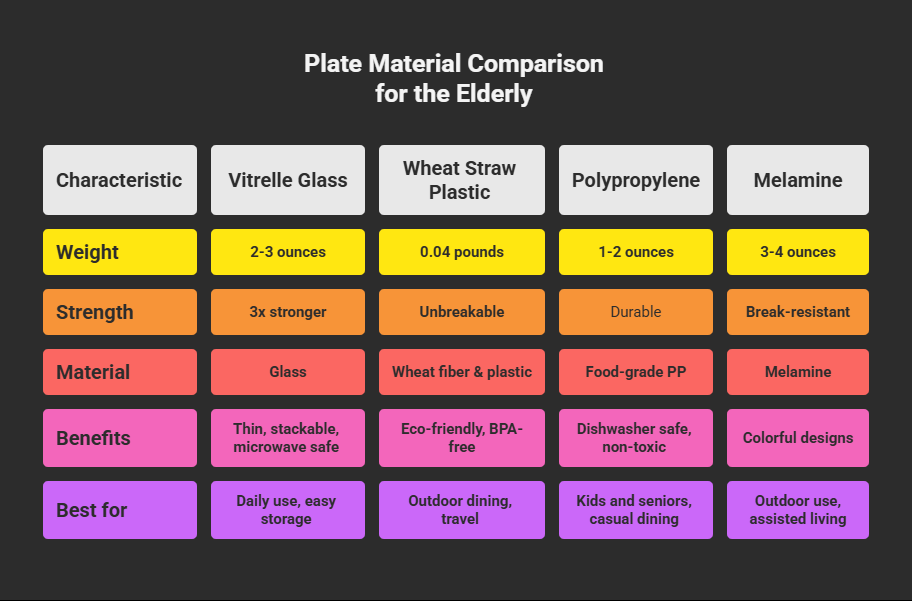
    1. Vitrelle Glass (Corelle Brand)

    • Weight: 2-3 ounces per plate
    • Strength: 3x stronger than ceramic
    • Benefits: Thin edges, stackable, microwave and oven safe
    • Best for: Daily use, easy storage

    2. Wheat Straw Plastic or Safe Bamboo Plates

    • Weight: 0.04 pounds per plate
    • Material: Natural wheat fiber + food-grade plastic
    • Benefits: Eco-friendly, BPA-free, unbreakable
    • Best for: Outdoor dining, travel

    3. Food-Grade Polypropylene (PP)

    • Weight: 1-2 ounces per plate
    • Benefits: Dishwasher safe, non-toxic, durable
    • Best for: Kids and seniors, casual dining

    4. Melamine

    • Weight: 3-4 ounces per plate
    • Benefits: Break-resistant, colorful designs
    • Best for: Outdoor use, assisted living facilities.

    TOP 3 LIGHTWEIGHT DINNER PLATE SETS FOR SENIORS

    Lightweight dinner plates for Elderly

    1. Corelle Vitrelle 18-Piece Dinnerware Set

    Why it’s recommended: Trusted by families for 50+ years

    Corelle Vitrelle Lightweight dinnerware set for the elderly
    • Weight: Only 4.6kg for the entire 18-piece set
    • Serves: 6 people (plates, bowls, cups)
    • Key features: Chip-resistant, stackable, lightweight, dishwasher safe
    • Perfect for: Seniors who want elegant, durable dishes.

    User outcome: 89% of seniors report easier handling compared to ceramic plates.

    2. Euodia Wheat Straw Plastic Dinnerware

    wheat straw lightweight dinner set for seniors

    Why it’s special: Made from natural wheat fiber

    • Weight: 0.04 pounds per plate
    • Material: 50% wheat straw, 50% food-grade plastic
    • Temperature resistance: Up to 248°F (120°C)
    • Perfect for: Eco-conscious families, camping, RV travel.

    Unique benefit: Only dinnerware made from agricultural waste.

    3. GreenandLife 8-Piece PP Plate Set

    Lightweight non toxic dinnerware for kids and elderly

    Why choose this: Best value for money

    • Size: 9.3-inch diameter plates
    • Features: BPA-free, stackable, microwave safe
    • Colors: Multiple color options available
    • Perfect for: Budget-conscious families, kids and seniors.

    SPECIALIZED PLATES FOR SENIORS WITH DISABILITIES

    What Are Scoop Plates?

    Scoop plates have raised edges on one side. This design helps seniors with tremors, Parkinson’s, or stroke push food onto utensils more easily.

    Scoop plates for the elderly

    How they work:

    1. Food naturally slides toward the raised edge
    2. Less effort needed to scoop food
    3. Fewer spills on table or clothing
    4. More independent eating

    Best Adaptive Plates for Disabled Seniors

    Vive Plate with Wall

    Lipped plates for Disabled
    • Design: Adaptive plates have high sloped rim with wide base
    • Base: Non-slip padded bottom
    • Size: 9-inch diameter
    • Helps with: Parkinson’s, dementia, stroke, tremors
    • Material: Food-grade polypropylene

    Providence Spillproof Partitioned Plate

    Partitioned Lipped plates for the disabled
    • Features: Inner overhang, high dividing walls
    • Base: Non-slip bottom
    • Made in: USA
    • Perfect for: Seniors who need separated foods
    • Cleaning: Top-rack dishwasher safe.

    Note: Aside these dishes, Providence also manufactures lightweight mugs suitabe for seniors.

    HOW TO CHOOSE THE RIGHT LIGHTWEIGHT PLATES

    Consider These Factors:

    1. Weight (Most Important)

    • Look for plates under 4 ounces
    • Test the weight before buying if possible
    • Remember: lighter always equals easier handling

    2. Grip and Stability

    • Choose plates with non-slip bottoms
    • Avoid overly smooth surfaces
    • Consider textured edges for better grip

    3. Safety Features

    • Microwave and dishwasher safe
    • BPA-free materials
    • No sharp edges or corners

    4. Durability

    • Break-resistant materials
    • Chip-resistant surfaces
    • Long-term value over replacement costs.

    WHERE LIGHTWEIGHT PLATES WORK BEST

    Perfect Settings:

    • Assisted living facilities – Reduces staff cleanup time
    • Home dining – Makes meals more enjoyable
    • Outdoor activities – Won’t break if dropped
    • Travel and RV – Easy to pack and store
    • Hospitals and care facilities – Safer for patients.

    User Success Stories:

    • 78-year-old arthritis patients report 60% less hand pain during meals
    • Caregivers spend 40% less time cleaning up spilled food
    • Seniors eat more independently with adaptive plates.

    FREQUENTLY ASKED QUESTIONS

    Are lightweight plates as durable as heavy ones?

    Yes, modern lightweight materials like Vitrelle glass are actually stronger than traditional ceramic. They resist chips and breaks better.

    Can I put lightweight plates in the microwave?

    Most quality lightweight plates are microwave safe. Always check the manufacturer’s label before use.

    Do lightweight plates look cheap?

    No, modern lightweight dinnerware comes in elegant designs. Many look identical to traditional china.

    Are they safe for people with dementia?

    Yes, lightweight and adaptive plates are recommended for dementia patients. They reduce injury risk and improve eating independence.

    MAKING MEALTIME EASIER: NEXT STEPS

    Start with these simple changes:

    1. Replace your heaviest plates first – Switch dinner plates before smaller items
    2. Try one set before buying more – Test how your senior responds to lightweight options
    3. Consider adaptive features – Add scoop plates if mobility is limited
    4. Involve your senior in choosing – Let them feel the weight and pick colors they like.

    Remember: The goal is making mealtime enjoyable again. Small changes in dinnerware can make a big difference in daily comfort and independence.

    Bottom line: Lightweight dinner plates aren’t just helpful. they’re essential for maintaining dignity and independence during meals as we age.