Tag: microwave appliances

  • Complete Guide to 800 Watt Microwaves: Best Models and Buying Tips

    “Why is my soup still cold after three minutes?” Sound familiar? You’re not alone. Thousands of people deal with weak microwaves that leave food half-heated and meals ruined daily.

    Maybe your old microwave takes forever to heat anything. Or perhaps it creates those annoying hot and cold spots that make every meal a guessing game.

    You want something that actually works without breaking your budget or taking up your entire counter.

    Finding the best 800 watt microwave oven feels overwhelming with so many options online. You need reliable heating power that won’t spike your electricity bill.

    You want even cooking that eliminates cold centers and overheated edges.

    The good news? 800-watt microwaves hit that sweet spot. They’re powerful enough for daily use but gentle enough to heat food properly.

    In this guide, we’ll show you exactly which models deliver consistent results and real value for your kitchen.

    PERFECT FOR THESE KITCHEN SITUATIONS

    This guide is perfect for anyone asking, “What’s the best 800-watt microwave?” or “How do I choose a microwave for my small kitchen?”

    Whether you’re a college student, young professional, or someone with limited counter space, this comprehensive review will help you find the right microwave.

    Common problems this guide solves:

    • Finding a microwave that heats food evenly without cold spots
    • Choosing the right size for small kitchens or apartments
    • Understanding microwave power levels and cooking times
    • Getting the best value for your budget.

    WHY CHOOSE AN 800-WATT MICROWAVE?

    The Sweet Spot for Most Households

    800-watt microwaves offer the perfect balance between power and efficiency. Here’s why they work well for most people:

    Energy Efficiency Benefits:

    • Up to 20% more energy-efficient than higher-powered models
    • Lower electricity bills over time
    • Suitable for most standard electrical outlets
    • Reliable performance without power surges

    Cooking Performance:

    • Heats food evenly and thoroughly
    • Fast enough for daily reheating tasks
    • Gentle enough to prevent overcooking
    • Perfect for defrosting frozen foods

    Ideal For These Situations:

    • Small to medium-sized households
    • Apartments and dorm rooms
    • Office break rooms
    • RVs and vacation homes
    • Anyone wanting reliable basic cooking.

    HOW 800 WATT POWER WORKS

    Understanding Microwave Power Settings:

    When someone asks, “What does 800 watts mean on a microwave?”, here’s the simple answer:

    800 watts is the maximum cooking power your microwave can produce. However, you can adjust this power in percentages:

    • 100% power = 800 watts (full strength for fast heating)
    • 50% power = 400 watts (medium strength for gentle cooking)
    • 30% power = 240 watts (low strength for defrosting)

    This flexibility lets you cook different foods properly. For example, you’d use full power for soup but medium power for delicate items like fish.

    Temperature vs. Power: What You Need to Know

    Many people wonder, “How hot does an 800-watt microwave get?” The answer depends on what you’re cooking:

    Temperature Range:

    • Most foods reach 70-100°C (158-212°F) at full power
    • Water reaches boiling point (100°C/212°F)
    • The temperature rises the longer you cook

    Important Note: Microwaves create heat through energy, not a fixed temperature like ovens. The food itself gets hot from the microwave energy.

    TOP 5 BEST 800 WATT MICROWAVE OVEN: DETAILED REVIEWS

    Best 800 Watt Microwave Oven

    1. Nostalgia Retro Microwave – Best Overall Choice

    Why It’s Our Top Pick: The Nostalgia Retro combines style with reliable performance. Users consistently rate it highly for even heating and attractive design.

    Top pick Nostalgia Retro 800 Watts Microwave oven

    Key Features:

    • 0.9 cubic foot capacity (25.5L)
    • 12 pre-programmed cooking settings
    • 5 power levels for precise control
    • Easy-to-use turn-and-push dial
    • Clear LED display
    • Rotating turntable for even heating

    Best For:

    • Small kitchens and apartments
    • People who want style and function
    • Basic cooking needs like reheating and defrosting
    • Anyone preferring simple controls

    From my experience, this microwave model is perfect for my small kitchen, heats evenly, and looks beautiful with my retro decor. It handles perfectly my reheating, defrosting, and basic cooking needs.”

    Practical Benefits:

    • Fits standard plates and bowls
    • Saves counter space
    • Easy to clean interior
    • Matches most kitchen decor
    • Removable turntable for larger dishes

    2. Toshiba Countertop Microwave – Best for Reliability

    Why Choose This Model: The Toshiba offers consistent performance with modern styling. It’s particularly good for people who want dependable daily use.

    Toshiba easy defrosting microwave oven

    Key Specifications:

    • 20L capacity
    • Compact size: 442 x 347 x 260mm
    • 270mm turntable fits most dinner plates
    • Stainless steel exterior
    • 5 power settings

    Special Features:

    • Easy defrosting by weight or time
    • Quiet operation
    • Simple, intuitive controls
    • Dishwasher-safe turntable

    Best Use Cases:

    • Busy professionals needing reliable heating
    • Families wanting consistent results
    • People who prefer modern styling
    • Anyone needing flexible defrost options

    3. Severin Unique Microwave – Best Innovation

    What Makes It Special: This microwave breaks the mold with its no-turntable design. Instead, it uses bottom heating with a ceramic plate for faster, more even cooking.

    Countertop Severin 800 watts Microwave oven

    Unique Features:

    • No turntable required
    • Free microwave-safe ceramic plate included
    • Bottom heating technology
    • 20-liter capacity
    • Black finish design

    Size Details:

    • Height: 12.99 inches
    • Width: 17.72 inches
    • Depth: 20.87 inches
    • Fits standard countertops

    Advantages:

    • Easier cleaning (flat ceramic surface)
    • Faster heating than traditional models
    • More even heat distribution
    • No rotating parts to break
    • Auto-shutoff safety features

    Perfect For:

    • People are tired of uneven heating
    • Anyone wanting easy maintenance
    • Those preferring innovative design
    • Households needing reliable daily use

    4. Emerson Retro Compact Microwave – Best Budget Style

    Why It’s Great Value: Combines vintage charm with practical function at an affordable price point.

    Emerson retro 800 watts microwave oven

    Key Features:

    • 0.9 cubic feet capacity
    • White finish with chrome accents
    • 5 power levels
    • 8 pre-set cooking programs
    • Dial control system
    • Both time and weight defrost options

    Pre-Set Programs Include:

    • Popcorn
    • Pizza
    • Vegetables
    • Beverages
    • And more

    User Benefits:

    • Easy-to-clean chrome buttons
    • Reminder beep system
    • Straightforward operation
    • Attractive retro styling
    • Reliable everyday performance

    Best For:

    • Budget-conscious buyers
    • Small kitchen spaces
    • People want retro aesthetics
    • Anyone needing basic functionality

    5. Inventum Microwave – Best Simple Design

    What Users Love: Clean, modern design with essential features and no unnecessary complexity.

    Inventum countertop Solo microwave oven

    Technical Specs:

    • 20-liter capacity
    • Silver stainless steel finish
    • Size: 44 x 37 x 26 cm
    • Interior space: 275 x 260 x 175 mm
    • 255mm glass turntable

    Control Features:

    • Rotary knob controls
    • 5 power settings
    • 8 pre-set cooking programs
    • Up to a 60-minute timer
    • Clear digital display

    Interior Benefits:

    • Enamel interior for easy cleaning
    • Built-in light for monitoring
    • Spacious cooking area
    • Dishwasher-safe turntable

    Ideal For:

    • People wanting simplicity
    • Modern kitchen designs
    • Anyone avoiding complicated controls
    • Households needing dependable performance

    COOKING GUIDE: GETTING THE BEST RESULTS

    Optimal Cooking Times by Food Type

    Food TypeQuantityCooking TimePower Level & Tips
    Rice250g12 – 14 minutes100% / Add extra water, stir halfway
    Vegetable300g4 – 6 minutes80% / Cover with vented lid
    Chicken400g8 – 10 minutes70% / Turn once, check temperature
    Soup300ml2 – 3 minutes100% / Stir before and after
    Frozen Meals350g6 – 8 minutes80% / Follow package instructions
    Coffee/Tea250ml1 – 2 minutes100% / Use microwave safe mugs

    Common Cooking Questions Answered:

    “How long to heat leftovers in 800-watt microwave?”

    • Most leftovers: 2-4 minutes at 80% power
    • Stir or flip halfway through
    • Check the temperature before eating

    “Can I cook raw meat in an 800-watt microwave?”

    • Yes, but use lower power (60-70%)
    • Always check the internal temperature
    • Let it rest for 2 minutes after cooking

    “Why is my food still cold in the middle?”

    1) Use proper microwave-safe dishes

    2) Reduce power to 70-80%

    3) Increase cooking time

    4) Stir or rearrange food halfway.

    MICROWAVE VS. AIR FRYER: UNDERSTANDING THE DIFFERENCE

    When people ask about conversions, many wonder, “How do I convert air fryer times to microwave?” Here’s the reality:

    These Are Different Cooking Methods:

    • Air fryers circulate hot air for browning and crisping
    • Microwaves use electromagnetic energy to heat from the inside
    • No direct time conversion exists

    General Guideline:

    • Air fryer recipe: 15 minutes at 200°C
    • Microwave equivalent: 4-5 minutes at full power
    • But remember: Microwaves won’t brown or crisp food

    Best Uses for Each:

    • Microwave: Reheating, defrosting, quick cooking, steaming
    • Air fryer: Crisping, browning, making “fried” foods healthier

    SAFETY TIPS FOR MAXIMUM EFFICIENCY

    Proper Food Positioning

    For Even Heating:

    1. Center placement – Put food in the middle of the turntable
    2. Even distribution – Spread food in a single layer when possible
    3. Proper containers – Use microwave-safe dishes only

    Container Guidelines:

    • Glass and ceramic work best
    • Avoid metal containers completely
    • Use vented covers for steaming
    • Choose appropriate sizes for your food

    Daily Safety Practices

    Before Each Use:

    • Check that the door closes properly
    • Ensure the turntable moves freely
    • Use only microwave-safe containers
    • Never operate empty

    During Cooking:

    • Don’t leave food unattended for long periods
    • Stop and stir dense foods halfway through
    • Use potholders for hot containers
    • Let food rest before eating

    MAINTENANCE AND CARE GUIDE

    Daily Maintenance

    After Each Use:

    • Wipe the interior with a damp cloth
    • Clean the turntable if needed
    • Check for food spills
    • Leave the door open briefly to air out

    Weekly Deep Cleaning

    Interior Cleaning:

    1. Place a bowl of water with lemon juice inside
    2. Heat for 2 minutes on high
    3. Let the steam sit for 5 minutes
    4. Wipe clean with a soft cloth
    5. Clean the turntable in the dishwasher

    Exterior Care:

    • Use mild soap and water
    • Avoid harsh chemicals
    • Clean the control panel gently
    • Polish stainless steel if applicable

    Monthly Safety Checks

    Important Inspections:

    • Door seal condition
    • Ventilation openings clear
    • Power cord not damaged
    • Interior light working
    • Turntable rotating smoothly

    MAKING YOUR FINAL DECISION

    Budget Considerations: Your budget determines which microwave you can choose. Basic models offer essential functions at lower prices.

    Mid-range options provide better features and reliability. Premium microwaves include advanced technology but cost significantly more.

    Long-term Value:

    • Energy efficiency saves money
    • Reliable brands need fewer repairs
    • Warranty coverage varies by manufacturer
    • Consider replacement part availability

    Space and Design Factors

    Measuring Your Space:

    • Counter depth and width
    • Clearance for door opening
    • Ventilation requirements around the unit
    • Height clearance above the microwave

    Design Compatibility:

    • Match existing appliance colors
    • Consider retro vs. modern styling
    • Think about control panel preferences
    • Evaluate cleaning ease

    Feature Priorities

    Essential Features:

    • Reliable heating performance
    • Easy-to-use controls
    • Appropriate capacity for your needs
    • Good warranty coverage

    Nice-to-Have Features:

    • Pre-set cooking programs
    • Multiple power levels
    • Digital display
    • Interior lighting
    • Removable turntable

    FREQUENTLY ASKED QUESTIONS

    Q: Is 800 watts enough power for a microwave? A: Yes, 800 watts handles most household cooking tasks efficiently. It’s powerful enough for reheating, defrosting, and basic cooking while being energy-efficient.

    Q: How much counter space do I need? A: Most 800-watt models need about 18-22 inches of width and 12-15 inches of depth, plus clearance for ventilation.

    Q: Can I use any dishes in my microwave? A: Only use microwave-safe containers. Glass, ceramic, and microwave-safe plastic work well. Avoid metal, aluminum foil, and dishes with metallic trim.

    Q: Why does my microwave heat unevenly? A: Try using lower power settings, stirring food halfway through, and ensuring proper food placement in the center of the turntable.

    Q: How long should an 800-watt microwave last? A: With proper care, expect 8-12 years of reliable service from quality brands.

    FINAL RECOMMENDATIONS

    The best 800-watt microwave for your kitchen depends on your specific needs, but our top picks offer excellent performance and value:

    For Most People: The Nostalgia Retro provides the best combination of style, performance, and user-friendly features.

    For Reliability Seekers: The Toshiba offers consistent performance with modern design and flexible defrosting options.

    For Innovation Lovers: The Severin’s no-turntable design provides superior heating evenness and easier cleaning.

    For Budget-Conscious Buyers: The Emerson Retro delivers vintage charm and solid performance at an affordable price.

    For Simplicity Fans: The Inventum offers a clean design with essential features and no unnecessary complexity.

    Whatever model you choose, an 800-watt microwave will serve you well for years of reliable cooking, reheating, and food preparation.

    These mid-range powerhouses strike the perfect balance between performance and efficiency for most households.

  • Is a 1000 Watt Microwave Powerful Enough? Complete Guide for Smart Buyers

    You’re standing in the kitchen store, staring at rows of microwaves. The price tags are confusing. The features sound fancy. But there’s one question bugging you: will this thing actually heat your food properly?

    Maybe your old microwave takes forever to warm up last night’s pizza. Or perhaps you’re tired of cold spots in your reheated soup.

    You want something that works fast and heats evenly. You don’t want to waste money on too little power or pay extra for more than you need.

    Is a 1000 watt microwave powerful enough? The wattage number seems important, but what does it really mean for your daily cooking?

    Before you spend your hard-earned money, you need to understand how this affects your kitchen routine, your electricity bill, and whether it’ll actually solve your heating problems.

    Let’s uncover the truth about microwave power and help you make the right choice.

    WHO SHOULD READ THIS GUIDE?

    This comprehensive guide is designed for homeowners, busy families, and anyone looking to buy a new microwave who wants to understand:

    • How microwave wattage affects cooking performance
    • Whether 1000 watts meets their specific heating needs
    • How to save money on electricity while getting faster results
    • Which wattage works best for different household sizes

    IS A 1000 WATT MICROWAVE POWERFUL ENOUGH?

    Is a 1000 watt microwave powerful enough

    Yes, a 1000-watt microwave provides excellent power for home cooking needs. It heats food 25% faster than 800-watt models and matches the cooking times on most food packaging instructions.

    UNDERSTANDING MICROWAVE WATTAGE: WHAT THE NUMBERS REALLY MEAN

    Microwave wattage measures cooking power, not just electricity use. Think of it like horsepower in a car – more watts mean faster, more efficient heating.

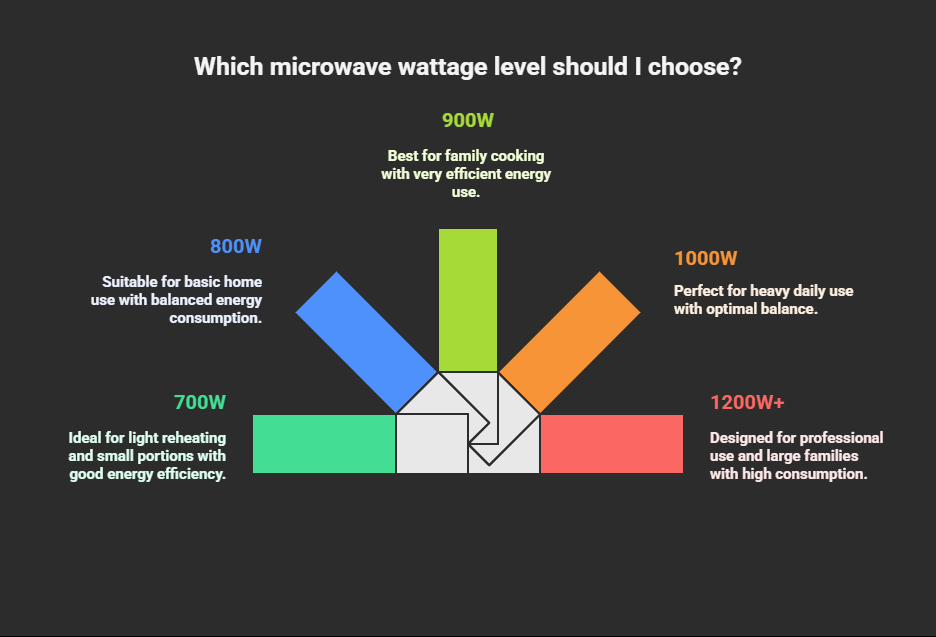
    Here’s how different wattage levels perform in real-world testing:

    Wattage Performance Comparison

    microwave oven wattage performance comparison infographics

    Wattage LevelCooking SpeedBest ForEnergy Efficiency
    700WSlowLight reheatingGood for small portions
    800WModerateBasic home useBalanced consumption
    900WFastFamily cookingVery efficient
    1000WVery FastHeavy daily useOptimal balance
    1200W+ProfessionalLarge familiesHigh consumption

    According to Consumer Reports, “Microwave ovens with wattages around 1000 watts are popular among consumers because they offer a good balance between cooking speed and energy efficiency.”

    WHY 1000 WATTS MAKES A REAL DIFFERENCE IN YOUR KITCHEN

    Faster Cooking Times Save You Time and Money:

    Countertop Sharp 1000 watts Microwave oven

    A 1000-watt microwave cooks food approximately 20-25% faster than 800-watt models. Here’s what this means for common foods:

    Real Cooking Time Comparisons:

    • Reheating coffee: 45 seconds vs. 1 minute 15 seconds (800W)
    • Cooking jacket potato: 5-6 minutes vs. 8-9 minutes (700W)
    • Defrosting chicken breast: 3 minutes vs. 5 minutes (800W)
    • Heating frozen vegetables: 2-3 minutes vs. 4-5 minutes (700W)

    Better Heat Distribution Means Better Results

    Higher wattage creates more even molecular excitation in food. This translates to:

    • Fewer cold spots in reheated meals
    • More consistent texture in cooked foods
    • Better nutrient retention in vegetables
    • Reduced risk of overcooking edges while centers stay cold.

    HOW MUCH ELECTRICITY DOES A 1000 WATT MICROWAVE ACTUALLY USE?

    A 1000-watt microwave typically draws close to 1000 watts from your electrical system when operating at full power.

    The wattage rating of a microwave indicates its peak power consumption during operation.

    While it pulses on and off at lower settings, the actual power draw averages around its rated wattage during use.

    Microwaves generally use between 600 and 1000 watts, depending on the model. For example, a 1000-watt microwave running for 15 minutes a day uses about 91.3 kilowatt-hours (kWh) annually.

    Monthly Electricity Cost Breakdown

    Based on average U.S. electricity rates of $0.15 per kWh:

    • Light use (15 minutes daily): $1.13 per month
    • Moderate use (30 minutes daily): $2.25 per month
    • Heavy use (60 minutes daily): $4.50 per month

    Energy-Saving Tip: Because 1000-watt microwaves cook faster, they often use less total energy per cooking session compared to lower-wattage models that run longer.

    IS 1000 WATTS TOO MUCH POWER FOR HOME USE?

    No, 1000 watts is not excessive. It’s actually the industry standard that most food manufacturers use when creating heating instructions.

    Why 1000 Watts Is the Sweet Spot?

    1. Package Instructions Match: Most frozen foods and microwave meals list cooking times for 1000-watt microwaves.
    2. Versatile Power Control: You can reduce power to 50% or 70% for delicate foods
    3. Future-Proof Investment: Handles everything from reheating to actual cooking
    4. Resale Value: Standard wattage maintains appliance value.

    COMPARING 900W VS 1000W: WHICH SHOULD YOU CHOOSE?

    The 1000-watt model wins for most households. Here’s why:

    Performance Differences

    • Speed: 1000W cooks 10% faster than 900W
    • Consistency: Better heat distribution reduces hot/cold spots
    • Convenience: No need to adjust package cooking times
    • Versatility: More power settings available

    Cost Considerations

    The price difference between 900W and 1000W models is typically $20-40(depnds on brand and features), but the 1000W model:

    • Saves time daily
    • Provides better cooking results
    • Offers more precise control options.

    ELECTRICAL REQUIREMENTS: DO YOU NEED A DEDICATED CIRCUIT?

    Yes, install a dedicated 20-amp circuit for your 1000-watt microwave. Here’s what you need to know:

    Safety Requirements

    • Dedicated circuit prevents overloading
    • Reduces the risk of tripped breakers
    • Ensures consistent performance
    • Meets most local electrical codes

    Installation Costs

    Professional electrician installation may typically cost $150-300, depending on:

    • Distance from the electrical panel
    • Wall access requirements
    • Local permit fees

    PROFESSIONAL TIPS FOR MAXIMIZING YOUR 1000 WATT MICROWAVE

    Power Level Guidelines for Different Foods:

    100% Power (1000W):

    • Boiling water
    • Reheating liquids
    • Cooking popcorn
    • Heating pre-cooked foods

    70% Power (700W):

    • Defrosting meat
    • Cooking eggs
    • Reheating delicate sauces
    • Melting chocolate

    50% Power (500W):

    • Softening butter
    • Proofing bread dough
    • Gentle reheating of dairy products

    Container Selection for Best Results

    Microwave-Safe Materials:

    • Glass (Pyrex, Anchor Hocking)
    • Ceramic without metallic trim
    • Microwave-safe plastic (look for symbol)
    • Silicone containers

    Never Use:

    • Containers with metallic accents
    • Metal containers or utensils
    • Aluminum foil (unless manufacturer-approved)
    • Plastic containers are not marked microwave-safe.

    MAINTENANCE TIPS TO KEEP YOUR 1000 WATT MICROWAVE RUNNING EFFICIENTLY

    Daily Maintenance

    • Wipe interior after each use
    • Clean spills immediately
    • Leave the door open briefly after use to air-dry

    Weekly Deep Cleaning

    1. Remove the turntable and wash it in the sink
    2. Clean interior with mild soap solution
    3. Wipe door seals carefully
    4. Clean exterior with appropriate cleaner

    Monthly Performance Checks

    • Test heating with water bowl (1 cup should boil in 2-3 minutes)
    • Check door alignment and seals
    • Inspect the power cord for damage
    • Clean air vents.

    COMMON QUESTIONS ABOUT 1000 WATT MICROWAVES

    How Do I Adjust Recipes for Different Wattages?

    For 700W Microwave Recipes: Reduce time by 30%.

    For 1200W Microwave Recipes: Add 20% more time.

    Example: Recipe calls for 2 minutes at 700W
    Your 1000W microwave: Cook for 1 minute 24 seconds.

    What Size Microwave Do I Need?

    Compact (0.7-1.0 cubic feet): 1-2 people, basic reheating.

    Mid-size (1.1-1.4 cubic feet): 2-4 people, regular cooking.

    Large (1.5+ cubic feet): 4+ people, frequent use.

    Size doesn’t affect wattage – focus on cooking power for performance.

    Can I Use a 1000 Watt Microwave for Baking?

    Yes, with proper techniques:
    Use microwave-safe baking containers.
    Reduce power to 50-70% for most baked goods.
    Cover with a vented microwave-safe lid.
    Expect different textures than oven baking.

    BEST 1000 WATT MICROWAVE FEATURES TO LOOK FOR

    Essential Features

    best 1000 watt microwave oven features

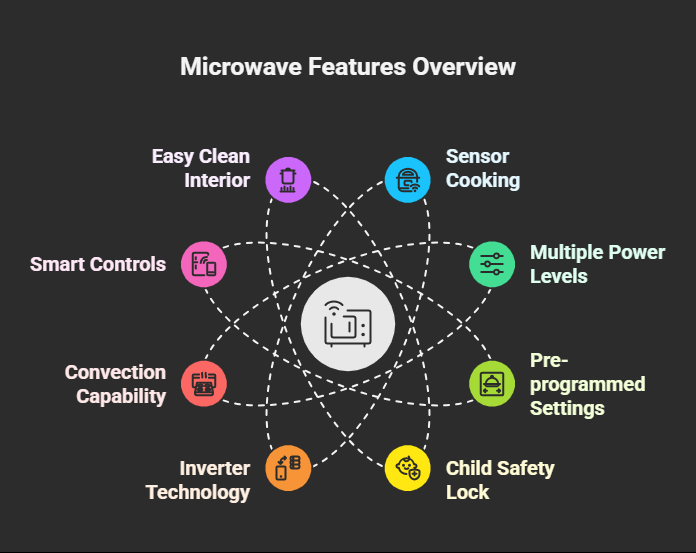
    • Sensor Cooking: Automatically adjusts time and power
    • Multiple Power Levels: At least 10 power settings
    • Pre-programmed Settings: Popcorn, reheat, defrost options
    • Child Safety Lock: Important for families

    Advanced Features Worth Considering

    • Inverter Technology: Provides consistent power levels
    • Convection Capability: Combines microwave and oven cooking
    • Smart Controls: WiFi connectivity and app control
    • Easy Clean Interior: Non-stick or ceramic interior

    ENERGY EFFICIENCY TIPS FOR 1000 WATT MICROWAVE USERS

    Maximize Efficiency

    1. Use appropriate container sizes – smaller containers heat faster
    2. Cover food when possible – retains moisture and speeds heating
    3. Arrange food evenly – promotes uniform heating
    4. Use correct power levels – full power isn’t always best

    Cost-Saving Strategies

    • Batch heating: Heat multiple items together when possible
    • Proper placement: Center items for even heating
    • Regular maintenance: Clean microwaves run more efficiently
    • Smart usage: Use the microwave instead of the oven for small portions.

    MAKING THE RIGHT CHOICE: IS 1000 WATTS RIGHT FOR YOU?

    Choose 1000 Watts If You:

    • Cook or reheat food daily
    • Have a family of 3+ people
    • Want fast, consistent results
    • Don’t want to adjust package cooking times
    • Value convenience and efficiency

    Consider Lower Wattage If You:

    • Only reheat beverages occasionally
    • Live alone or in a couple
    • Have limited electrical capacity
    • Prioritize lower electricity bills over speed

    FINAL RECOMMENDATIONS

    A 1000-watt microwave provides the optimal balance of cooking power, energy efficiency, and convenience for most households.

    The faster cooking times often offset the slightly higher electricity consumption, and the ability to follow standard package instructions without adjustments makes daily use much more convenient.

    Top Recommendation: Look for a 1000-watt microwave with sensor cooking, multiple power levels, and a size appropriate for your household. The investment in proper wattage will pay dividends in time saved and better cooking results.

    Budget Tip: If choosing between a feature-rich 900W model and a basic 1000W model at the same price, choose the 1000W. The extra power provides more value than additional features you might rarely use.

    Remember, your microwave is likely one of your most-used kitchen appliances.

    Investing in the right wattage level ensures years of reliable, efficient performance that matches your cooking needs and lifestyle.

  • Can you use an Extension cord with a microwave oven

    Have you ever wondered if plugging your microwave into an extension cord is safe?

    With our modern reliance on microwaves for quick meal prep, it’s an important question.

    Many people assume extension cords are handy when outlets are limited or inconveniently located.

    But this isn’t always the case because electrical appliance differs and have various power ratings and safety rules.

    This article dives into the potential hazards of powering a high-wattage appliance like a microwave through an extension cord.

    You’ll learn why standard extension cords aren’t designed to handle that electrical load safely.

    We’ll also explore proper microwave placement and installation to optimize both safety and convenience in your kitchen.

    By understanding the risks and precautions, you can avoid putting your home at risk of electrical fires or damage.

    DO I NEED A SPECIAL EXTENSION CORD FOR A MICROWAVE?

    Can you use an extension cord with a microwave oven

    No, you should not use any kind of extension cord with a microwave oven, even a heavy-duty one labeled for appliances. Here’s why:

    Microwaves require a dedicated circuit to operate safely. They draw a lot of power (typically over 1000 watts) which can easily overload an extension cord and cause it to overheat, start an electrical fire, or trip your home’s circuit breaker.

    Extension cords are designed for temporary, low-power usage only. They cannot handle the high, continuous electrical load of a microwave over an extended period.

    Using an extension cord also introduces additional connection points which increases resistance in the circuit. This can lead to electrical arcing and heat buildup at the cord/outlet connections.

    Microwave manufacturers explicitly warn against using extension cords in the manuals because of the fire and safety hazards involved.

    They are meant to be plugged directly into a properly grounded wall outlet.

    So in summary, despite the convenience an extension cord may temporarily provide, it poses too high of a risk when used with a major appliance like a microwave.

    It’s essential to plug it directly into a dedicated wall outlet for safe operation.

    RELATED: CAN I STACK AN AIR FYER ON A MICROWAVE?

    RELATED: CAN YOU PUT A TOASTER OVEN ON TOP OF A MICROWAVE?

    THE DANGERS OF USING EXTENSION CORDS WITH MICROWAVES

    Here are the dangers of using extension cords with microwaves:

    Fire Hazard: Extension cords are not designed to handle the high, continuous power draw of a microwave. They can easily overheat and start an electrical fire.

    In 2020, over 6,500 residential fires were caused by overtaxed extension cords.

    Circuit Overload: A standard microwave uses 1000-1600 watts. Most household extension cords max out at 1800 watts.

    Plugging in a microwave can overload the cord’s circuit, tripping breakers or causing sparks and shorts.

    Cord Damage: The intense heat generated by powering a microwave can melt or burn through an extension cord’s insulation over time, exposing live wires – a major shock/fire risk.

    Power Insufficiency: Even heavy-duty extension cords can’t provide the consistent voltage a microwave requires. Brownouts or under-powering can damage the microwave’s electrical components.

    The bottom line is that extension cords simply cannot handle a microwave’s extreme electrical load safely.

    Microwaves must be plugged directly into a dedicated outlet to prevent fires, shocks, and appliance damage.

    WHY MICROWAVE MANUALS PROHIBIT EXTENSION CORD USAGE

    Microwave manufacturers explicitly warn against using extension cords in the instruction manuals for one main reason: safety.

    Using an extension cord creates a high risk of overheating, electrical fires, and damage to the microwave itself. The cord simply cannot supply sufficient, consistent power safely.

    Rather than risk potential hazards, the manuals state microwaves must be plugged directly into a properly grounded wall outlet on their dedicated circuit. No exceptions.

    Manufacturers want to eliminate any possibility of hazards like fires from overloaded extension cords catching fire or tripping circuits.

    Their warnings protect both the user’s safety and prevent damage to the microwave.

    EXTENSION CORD WATTAGE LIMITATIONS VS MICROWAVE POWER NEEDS

    Are you aware that extension cords do have limitations? Yeah, they do just like many other kitchen and home appliances.

    Microwaves need a lot of power. Extension cords cannot handle that much power.

    A typical microwave uses 1000 to 1600 watts when running. But most extension cords can only carry up to 1800 watts maximum.

    Plugging a microwave into an extension cord overloads the cord. The cord cannot supply enough watts for the microwave.

    Too few watts means the microwave won’t work right. It may not heat food properly or could get damaged.

    Too many watts overwhelm the cord. It gets super-hot and can start an electrical fire.

    That’s why you must plug microwaves straight into the wall outlet. Wall outlets provide enough watts safely.

    POTENTIAL FIRE HAZARDS OF UNDERPOWERED MICROWAVES

    We all agree that Microwaves need a lot of electricity to work properly. If they don’t get enough power, it can be very dangerous.

    When a microwave doesn’t get full power, we call it “underpowered.” This happens if you plug it into an extension cord instead of the wall.

    If a microwave is underpowered, a few bad things can happen that could cause a fire:

    1. It takes much longer to cook food. The microwave has to run for a very long time. This makes the microwave extremely hot inside.
    2. The microwave components, like the magnetron, can overheat from working too hard with little power.
    3. Electrical arcing can occur inside due to inconsistent voltage, causing sparks.

    These things make the microwave’s internal parts get super-hot over time. The heat buildup can melt wires or catch fire to nearby combustibles.

    So an underpowered microwave essentially overworks itself trying to function.

    This excessive heat buildup raises the risk of an electrical fire starting inside the appliance.

    DEDICATED CIRCUITS: THE SAFE WAY TO POWER YOUR MICROWAVE

    Microwaves require a lot of electricity to operate properly. They cannot share a circuit with other appliances.

    Microwaves must be plugged directly into the wall outlet on a dedicated circuit. This means the outlet is not used for anything else.

    If a microwave shares a circuit with other devices, it will overload the circuit when running. This can trip the breaker or even cause an electrical fire.

    A dedicated circuit provides the consistent, high power a microwave needs without any interruptions or voltage drops from other appliances turning on.

    Microwave instruction manuals clearly state you must use a dedicated outlet and circuit to prevent electrical hazards and damage to the microwave itself.

    Using an extension cord or multi-outlet strip defeats the purpose of a dedicated circuit by allowing circuit overloads.

    For safety, proper performance, and prevention of fires, it is essential to plug your microwave directly into its dedicated wall outlet on an isolated circuit.

  • Can I Stack an Air Fryer on a Microwave? The Complete Kitchen Safety Guide

    Kitchen space optimization often leads homeowners to consider stacking appliances, with the air fryer and microwave combination representing one of the most frequently questioned appliance arrangements.

    While the practice might seem logical for maximizing counter space, the safety implications, ventilation requirements, and potential performance impacts require careful consideration before implementing this space-saving solution.

    Understanding the engineering principles, safety standards, and manufacturer guidelines that govern small kitchen appliance placement helps ensure both optimal performance and household safety.

    The decision to stack these appliances involves multiple factors, including heat generation, electromagnetic interference, structural support, and proper ventilation requirements that affect both appliance longevity and user safety.

    Understanding Appliance Heat Generation and Ventilation

    Both air fryers and microwaves generate significant heat during operation, though through different mechanisms that create unique ventilation and cooling requirements.

    Air fryers operate using rapid air circulation heating elements that can reach temperatures between 350°F and 400°F, while microwaves use electromagnetic radiation that heats food directly while generating moderate external heat through magnetron operation and transformer inefficiencies.

    Air Fryer Heat Output and Ventilation Needs

    Air fryers generate substantial external heat through their heating elements, circulation fans, and exhaust systems that expel hot air to maintain proper internal temperatures.

    The convection heating process requires continuous air intake and exhaust, creating heat plumes that can reach several inches above and around the appliance during operation.

    Most air fryer manufacturers specify minimum clearance requirements of 4-6 inches on all sides and 6-12 inches above the unit to ensure proper heat dissipation and prevent overheating.

    These clearances prevent heat buildup that could damage surrounding surfaces, create fire hazards, or cause the air fryer’s thermal protection systems to activate and shut down the unit.

    The exhaust air from air fryers can reach temperatures of 200°F or higher, creating thermal conditions that could damage sensitive electronics, warp plastic components, or create condensation problems when directed toward other appliances or surfaces.

    RELATED: MICROWAVE OVEN WEIGHT GUIDE

    Microwave Heat Generation Patterns

    Microwaves generate heat primarily through their magnetron systems, transformers, and circulation fans that cool internal components during operation.

    While the cooking chamber remains relatively cool, the exterior surfaces and ventilation areas can become warm to hot during extended use periods.

    The top surface of most microwaves includes ventilation grilles that expel warm air from the magnetron cooling system and internal electronics. Blocking these ventilation areas can cause overheating, reduced performance, and potential component failure that could void manufacturer warranties.

    Microwave electromagnetic shielding requirements create specific construction standards that could be compromised by external heat sources or pressure from stacked appliances, potentially affecting both safety and performance characteristics.

    RELATED: IS IT RIGHT TO USE EXTENSION CORD WITH A MICROWAVE OVEN?

    Structural and Weight Considerations

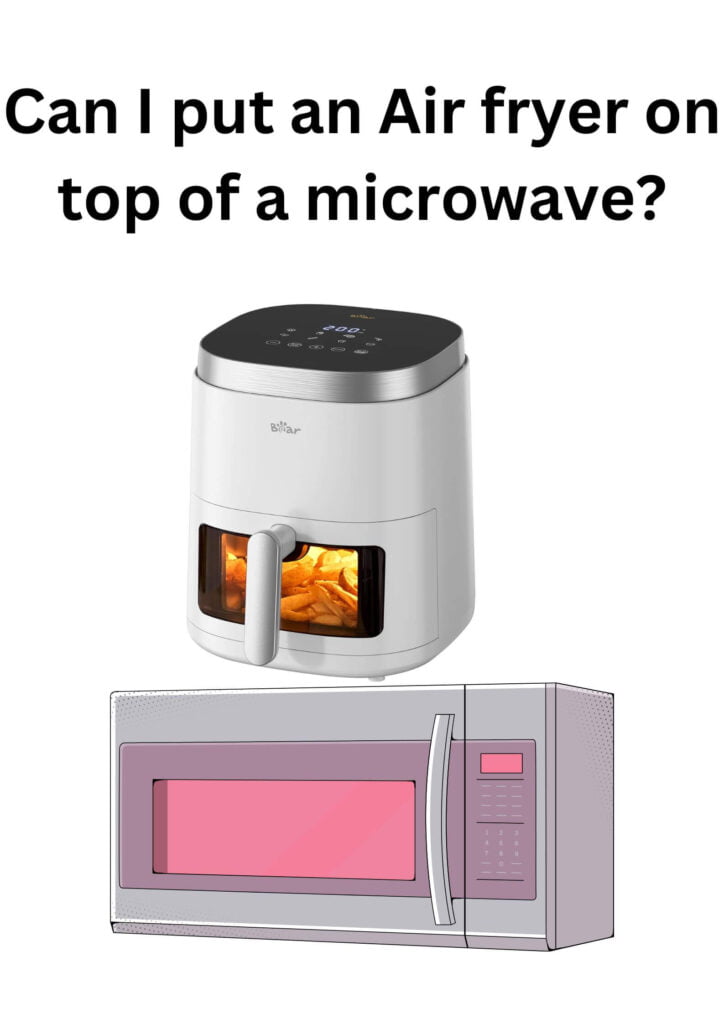
    Can I stack an air fryer on top of a microwave

    The structural integrity of stacking arrangements depends on the weight-bearing capacity of the lower appliance, the stability of the combined configuration, and the proper distribution of loads that prevent tipping, sliding, or structural damage to either appliance.

    Microwave Top Surface Load Ratings

    why stacking Air fryers on microwaves can be dangerous

    Most countertop microwaves are not designed to support significant additional weight on their top surfaces, with manufacturer specifications typically limiting loads to 10-20 pounds for items like decorative objects or lightweight storage containers.

    Air fryers typically weigh 15-25 pounds or more, potentially exceeding these load ratings even before considering the dynamic forces created during operation.

    The construction of microwave cases prioritizes electromagnetic shielding, compact design, and cost effectiveness rather than structural load-bearing capacity.

    Excessive weight could cause case deformation, ventilation obstruction, or internal component damage that affects performance and safety.

    Some commercial-grade or over-the-range microwave models may feature more robust construction suitable for supporting additional weight, though manufacturer specifications should always be verified before attempting stacking arrangements.

    RELATED: CAN YOU MOUNT A TOASTER OVEN ON A MICROWAVE OVEN?

    Air Fryer Base Stability and Heat Transfer

    Air fryers typically feature plastic or composite bases with ventilation openings, control components, and heating element housings that could be damaged by direct contact with warm surfaces or inadequate ventilation.

    The base design prioritizes heat insulation and electrical component protection rather than heat dissipation to external surfaces.

    Placing air fryers on warm or hot surfaces could cause base warping, control panel malfunction, or thermal damage to internal components.

    The combination of external heat from below and internal heat generation during operation could create temperatures that exceed component specifications and safety margins.

    The vibration and movement generated by air fryer circulation fans could affect the stability of stacking arrangements, particularly when combined with the weight and thermal stresses involved in the configuration.

    Electromagnetic Interference and Performance Impact

    The proximity of air fryer electrical components to microwave electromagnetic fields creates potential interference issues that could affect the performance, safety, or lifespan of either appliance.

    Understanding these electromagnetic interactions helps evaluate the risks and potential consequences of stacking arrangements.

    Microwave Electromagnetic Field Characteristics

    Microwaves operate using 2.45 GHz electromagnetic radiation contained within shielded cooking chambers, though some electromagnetic energy inevitably escapes through ventilation areas, door seals, and case structures.

    This electromagnetic environment could interfere with sensitive electronic components in nearby appliances.

    Air fryer control systems, temperature sensors, and digital displays use electronic components that could be susceptible to electromagnetic interference, potentially causing erratic operation, control panel malfunctions, or sensor accuracy problems.

    The electromagnetic shielding effectiveness of microwaves could be compromised by external pressure, heat, or physical stress from stacked appliances, potentially increasing radiation leakage beyond safe exposure limits established by Federal Communications Commission regulations.

    Air Fryer Electrical System Vulnerabilities

    Modern air fryers incorporate digital controls, temperature sensors, and timing systems that rely on precise electronic operation for safety and performance.

    Electromagnetic interference could disrupt these systems, causing temperature control problems, timing malfunctions, or safety system failures.

    The heating elements and circulation fans in air fryers generate electrical noise that could interfere with microwave operation, though this interference is typically less significant than the potential impact of microwave electromagnetic fields on air fryer electronics.

    Power supply fluctuations caused by the simultaneous operation of both appliances could affect performance and potentially damage sensitive electronic components in either unit, particularly if they share the same electrical circuit.

    Manufacturer Guidelines and Warranty Implications

    Appliance manufacturers provide specific installation and usage guidelines that address stacking, clearances, and environmental conditions necessary for safe operation and warranty coverage.

    Violating these guidelines could void warranties and create liability issues in case of accidents or damage.

    Air Fryer Manufacturer Specifications

    Major air fryer manufacturers, including Ninja, Cosori, Instant Pot, and Philips, typically specify minimum clearance requirements that prohibit stacking on other heat-generating appliances.

    These specifications reflect engineering testing and safety analysis that identify potential hazards and performance issues.

    Warranty coverage for air fryers generally includes clauses that void protection for damages resulting from improper installation, inadequate ventilation, or use in environments that exceed specified temperature and humidity ranges.

    Operating manuals consistently warn against placing air fryers on or near heat sources, including other appliances, stovetops, or surfaces that could become warm during operation. These warnings reflect safety testing and risk analysis conducted during product development.

    Microwave Support and Loading Guidelines

    Microwave manufacturers typically specify that their products should not be used as platforms for other appliances, particularly heat-generating devices that could damage the microwave case or interfere with ventilation systems.

    The user manuals for major brands like GE, Samsung, LG, and Panasonic include specific warnings about placing objects on microwave tops that could block ventilation, create fire hazards, or damage the appliance through excessive weight or heat exposure.

    Warranty terms generally exclude coverage for damage caused by misuse, including using the appliance as a platform for other devices or operating in conditions that exceed environmental specifications.

    Safe Alternatives and Space Optimization Solutions

    air fryer microwave shelf

    Rather than risking the potential hazards of stacking air fryers on microwaves, several safe alternatives provide effective space optimization while maintaining proper appliance operation and safety margins.

    Dedicated Appliance Stands and Shelving

    Microwave and heavy duty kitchen shelf storage

    Kitchen appliance stands specifically designed for small appliances provide stable platforms with appropriate weight ratings, ventilation considerations, and clearance specifications that accommodate both air fryers and microwaves safely.

    Multi-tier kitchen carts and rolling appliance stations offer flexible storage solutions that can be positioned optimally for ventilation while providing easy access to both appliances.

    These solutions often include electrical outlet access and storage for accessories and supplies.

    Wall-mounted shelving systems designed for kitchen appliances can provide elevated storage for lighter appliances while maintaining proper clearances and ventilation requirements. Professional installation ensures adequate structural support for appliance weights.

    Counter Space Reorganization Strategies

    microwave cart for small spaces

    Efficient counter space utilization often eliminates the perceived need for stacking through better organization, appliance selection, and workflow optimization. Consider relocating less frequently used appliances to storage areas or alternate locations.

    Corner spaces, peninsula areas, and kitchen islands can provide dedicated appliance zones that accommodate multiple units with proper spacing and ventilation. This approach often improves both safety and convenience while maintaining easy access.

    can you put an air fryer on a microwave cart

    Appliance garages or cabinet storage systems with proper ventilation and electrical connections allow for secure storage of infrequently used appliances while keeping counter space available for daily use items.

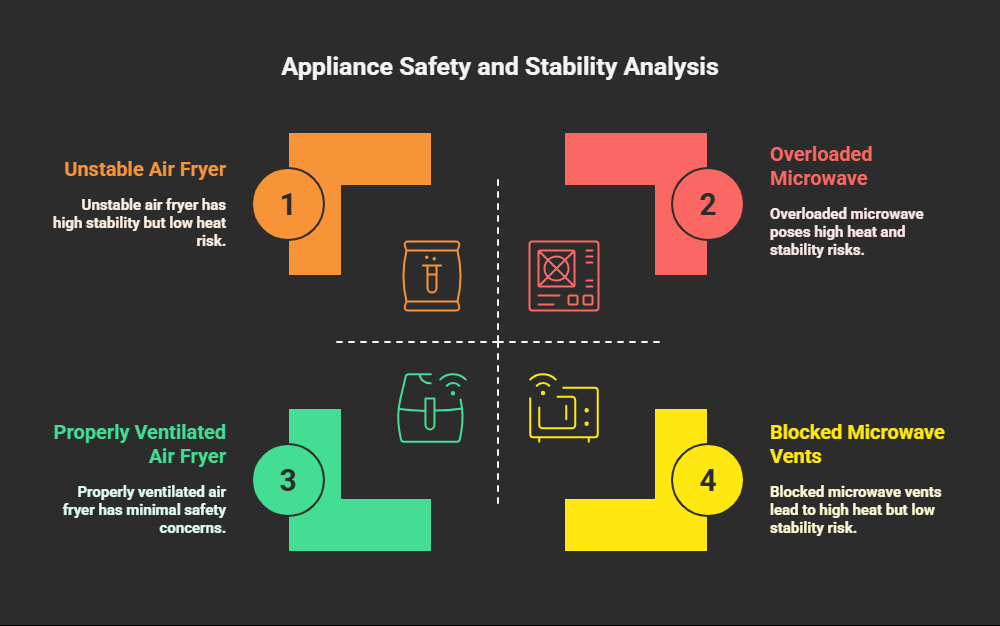
    Quick Safety Assessment Table: Stacking Air Fryers on Microwaves

    Safety FactorRisk LevelExplanation
    Heat DamageHighStacking blocks for critical ventilation for both appliances
    Weight OverloadMedium-HighAir fryers may exceed microwave weight capacity
    Ventilation BlockageHighStacking blocks critical ventilation for both appliances
    Electromagnetic InterferenceMediumMicrowave fields may disrupt air fryer electronics
    Structural StabilityMediumCombined weight and vibration create instability risks
    Fire HazardMedium-HighHeat buildup and blocked ventilation increase fire risk
    Warranty VoidHighViolates manufacturer guidelines for both appliances
    Performance ImpactHighReduced efficiency and potential malfunction
    AccessibilityMediumDifficult access to controls and loading
    Code ComplianceMediumMay violate local electrical/fire codes
    ApplianceTop ClearanceSide ClearanceBack ClearanceNotes
    Air Fryer6-12 inches4-6 inches4-6 inchesHeat exhaust requires maximum clearance
    Microwave6-8 inches3-4 inches4-6 inchesTop ventilation critical for cooling
    Combined Safe Distance12+ inches6+ inches6+ inchesWhen positioned near each other.

    Professional Installation and Code Considerations

    Local building codes, electrical regulations, and fire safety standards may include specific requirements for kitchen appliance installation that affect stacking arrangements and clearance requirements.

    Electrical Code Requirements

    The National Electrical Code and local amendments may specify minimum clearances, circuit requirements, and installation standards for kitchen appliances that impact stacking arrangements. High-power appliances like air fryers and microwaves may require dedicated circuits to prevent overloading.

    Ground Fault Circuit Interrupter (GFCI) protection requirements for kitchen outlets may affect appliance placement and accessibility, particularly when multiple appliances share circuits or extension cords are used to reach appropriate outlets.

    Professional electrical inspection may be required for permanent appliance installations or when modifying kitchen electrical systems to accommodate appliance requirements safely and legally.

    Fire Safety and Insurance Considerations

    Homeowner insurance policies may include specific requirements or exclusions related to appliance installation and safety practices that could affect coverage in case of fire or damage claims related to improper appliance placement.

    Fire safety codes typically address heat-generating appliance clearances, ventilation requirements, and installation practices that reduce fire risk and ensure safe evacuation paths in emergencies.

    Professional consultation with certified kitchen designers, electricians, or fire safety inspectors can provide authoritative guidance on safe appliance placement that meets all applicable codes and standards.

    Is it Better to reheat in an Air Fryer or a Microwave?

    The best reheating method depends on your food type and desired results:

    Use the Air Fryer for Reheating:

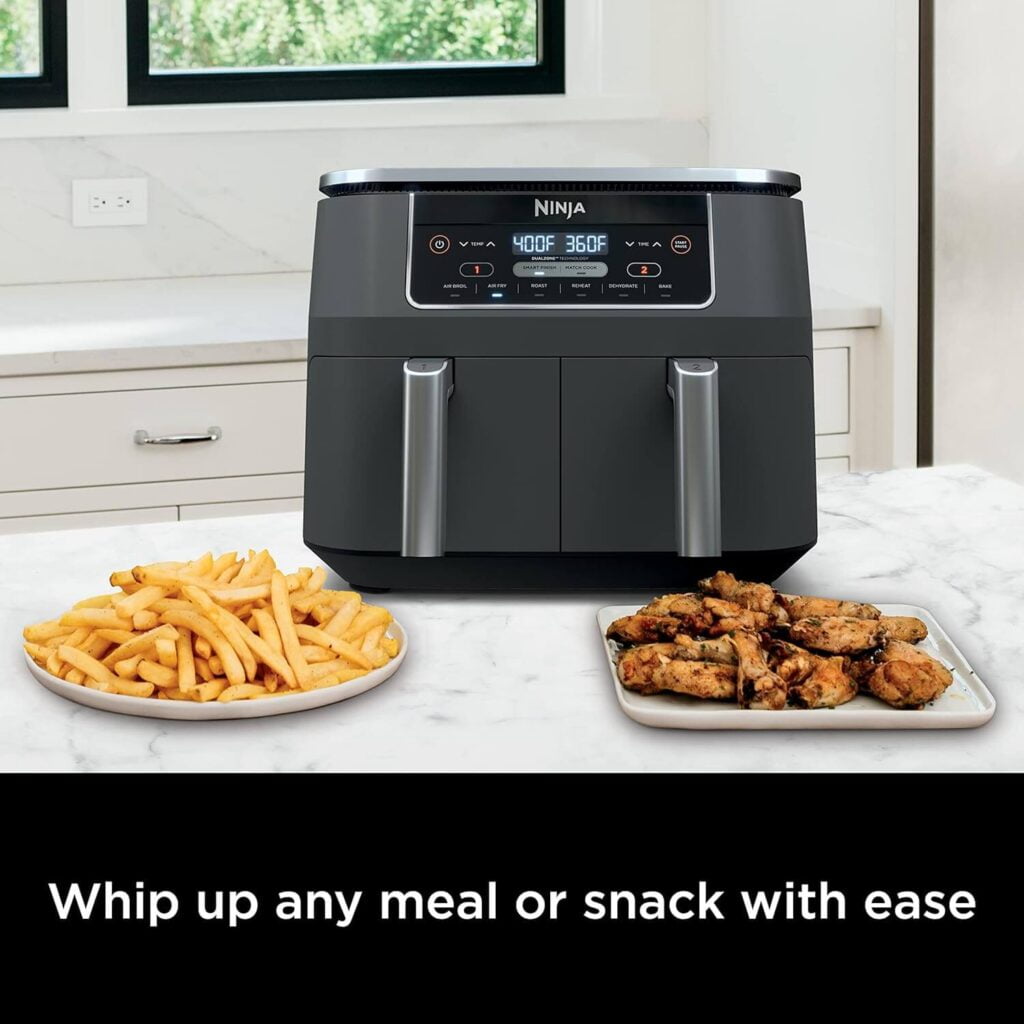
    Ninja Foodi Air Fryer dual zone
    • Fried foods: Restores crispiness (French fries, chicken wings, pizza)
    • Baked goods: Maintains texture (pastries, bread, cookies)
    • Roasted items: Keeps exterior crispy (roasted vegetables, meats)
    • Time needed: 3-5 minutes at 350°F

    Use the Microwave for Reheating:

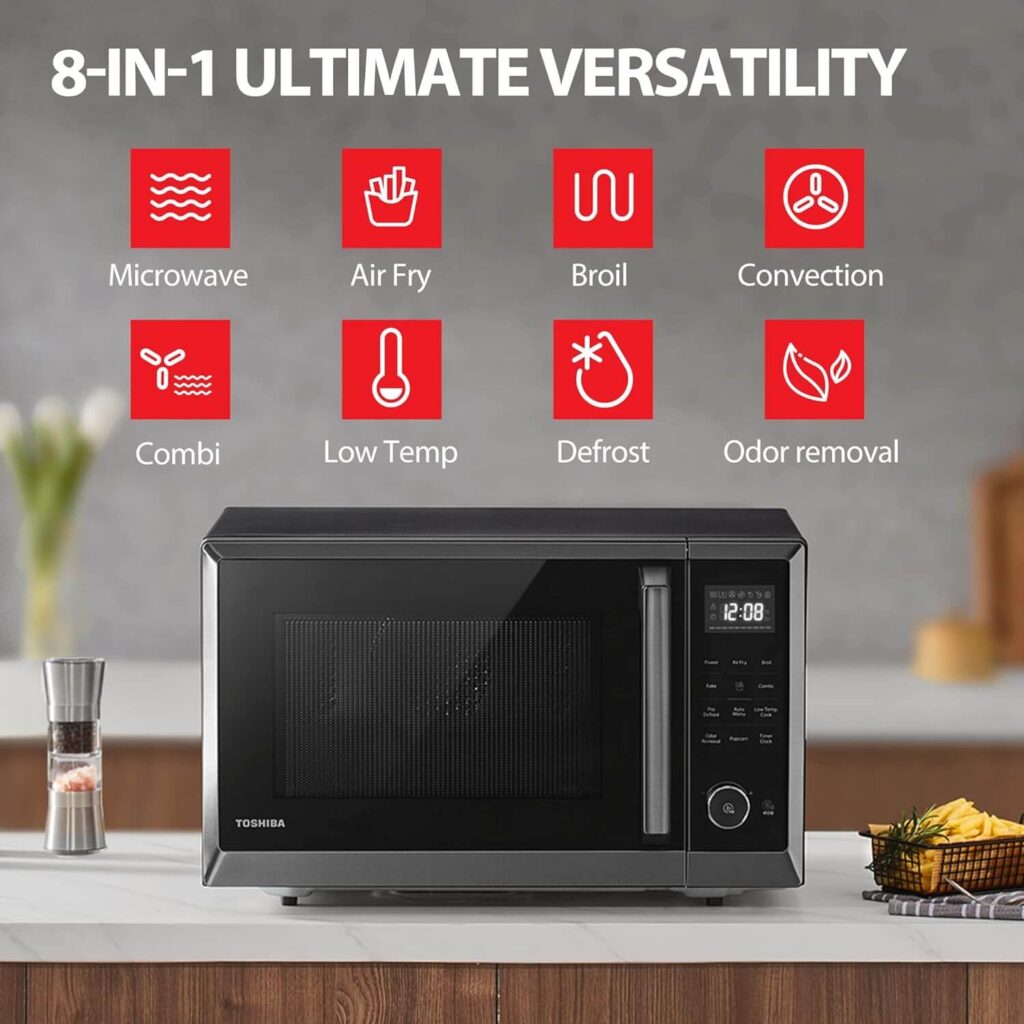
    best microwave air fryer combo
    • Liquid-based foods: Soups, stews, casseroles
    • Soft foods: Rice, pasta, mashed potatoes
    • Quick reheating: When speed is priority
    • Time needed: 1-2 minutes on medium power

    Pro tip: For best results with crispy foods, use the air fryer. For quick reheating of soft foods, use the microwave.

    Can you put a Fruit Bowl on top of a Microwave?

    Yes, you can safely place a fruit bowl on top of a microwave, but consider these factors:

    Safe Fruit Bowl Placement:

    • Weight: Keep under 5-10 pounds
    • Material: Use heat-resistant bowls (ceramic, glass, or thick plastic)
    • Size: Ensure bowl doesn’t overhang microwave edges
    • Ventilation: Don’t block microwave vents (usually on sides or back)

    What to Avoid:

    • Metal bowls (can interfere with microwave operation)
    • Overly heavy fruit loads
    • Placing the bowl directly over the vents
    • Delicate or heat-sensitive fruits should be used during heavy microwave use.

    Alternative Space-Saving Solutions

    Compact Appliance Selection

    Consider replacing larger appliances with compact alternatives that provide similar functionality while requiring less counter space. Compact air fryers, small microwaves, and combination appliances offer space-saving benefits without compromising safety.

    Multi-function appliances like microwave-convection combinations or pressure cooker-air fryer units can provide the functionality of multiple appliances in a single unit, eliminating the need for stacking arrangements while improving counter space utilization.

    Kitchen Layout Optimization

    A professional kitchen design consultation can identify opportunities for better space utilization through cabinet modifications, workflow improvements, or appliance placement strategies that maximize functionality while maintaining safety.

    Consider relocating appliances to areas with better ventilation, structural support, or electrical access that accommodate safe operation without requiring stacking arrangements or clearance compromises.

    Conclusion: Prioritizing Safety Over Convenience

    While stacking an air fryer on a microwave might seem like an attractive space-saving solution, the combination of heat generation, weight limitations, ventilation requirements, electromagnetic interference, and manufacturer guidelines creates significant safety risks that outweigh the potential convenience benefits.

    The potential consequences of improper stacking include fire hazards, appliance damage, warranty voiding, electromagnetic interference, and structural instability that could result in injury or property damage.

    These risks are particularly concerning given the high temperatures and electrical demands of both appliances during operation.

    Safe alternatives, including dedicated appliance stands, kitchen carts, wall-mounted shelving, and counter space reorganization, provide effective space optimization without compromising safety or appliance performance.

    These solutions often improve kitchen functionality while ensuring compliance with manufacturer guidelines and safety standards.

    The definitive answer is no – you should not stack an air fryer on a microwave. Instead, invest in proper appliance storage solutions that provide the space optimization you need while maintaining the safety, performance, and warranty protection that both appliances deserve.

    Your kitchen’s functionality and your family’s safety are worth the extra effort and investment required to implement proper appliance placement solutions that serve your needs without creating unnecessary risks.

  • Can you put a Toaster oven on top of a Microwave?

    You’re standing in your cramped kitchen, looking at your limited counter space, and wondering if you can just stack your toaster oven on top of your microwave.

    After all, both appliances are right there, and that flat microwave top looks like the perfect spot to free up some precious workspace.

    But before you make that move, there’s something you need to know: this seemingly simple space-saving solution could actually be a recipe for disaster.

    The question isn’t just about whether it’s physically possible, but whether it’s safe for your appliances, your home, and most importantly, you.

    In this article, we’ll dive deep into the safety concerns, weight considerations, heat issues, and practical alternatives that will help you make the smartest decision for your kitchen setup.

    Can You Put a Toaster Oven on Top of a Microwave?

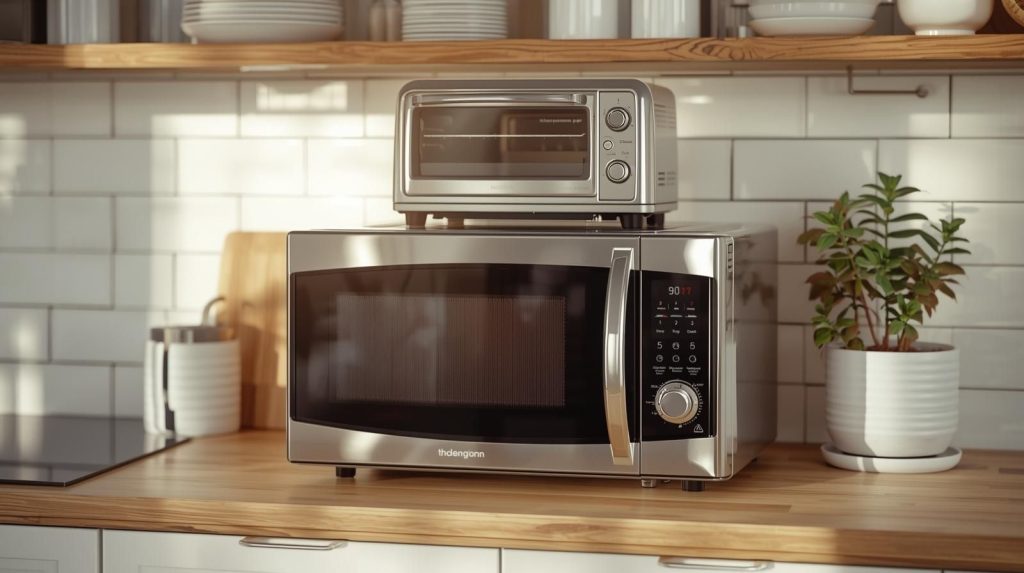
    can you put a toaster oven on top of a microwave

    The short answer is no, you should not put a toaster oven on top of a microwave.

    While it might seem like a convenient way to maximize your counter space, this combination creates several serious safety hazards that outweigh any space-saving benefits.

    Let me explain why this matters so much.

    First, toaster ovens generate intense external heat during operation. Unlike microwaves that primarily heat food from the inside using electromagnetic waves, toaster ovens work like miniature conventional ovens, radiating heat in all directions.

    The top, sides, and especially the bottom of a toaster oven can reach temperatures between 150°F to 500°F, depending on the cooking setting.

    When you place this heat source directly on top of your microwave, you’re essentially baking your microwave’s exterior and internal components.

    Microwaves aren’t designed to withstand this kind of sustained external heat.

    The plastic components, control panels, and sensitive electronic circuitry inside can warp, malfunction, or even fail when exposed to the high temperatures a toaster oven produces.

    I’ve seen microwaves with melted control panels and fried circuits because someone thought stacking was a good idea.

    Beyond the heat issue, there’s the ventilation problem. Both appliances need proper airflow to function safely and efficiently.

    Microwaves have ventilation slots (usually on the sides, back, or top) that release heat generated by the magnetron and other components.

    When you block these vents with a toaster oven, you trap heat inside the microwave, causing it to overheat and potentially shortening its lifespan or creating a fire hazard.

    The Electrical Load Problem

    Here’s another critical issue most people don’t consider: both appliances draw significant power. A typical microwave uses 600-1200 watts, while a toaster oven uses 1200-1800 watts.

    If you’re running both simultaneously and they’re plugged into the same circuit, you could easily overload your electrical system, trip breakers, or worse, create an electrical fire hazard.

    This becomes even more dangerous if you’re using an extension cord with a microwave oven, which is another practice safety experts strongly advise against.

    Practical Application: If you’re currently using this setup, unstack them immediately. Place each appliance on a heat-resistant surface with at least 4-6 inches of clearance on all sides.

    Your appliances will last longer, work more efficiently, and most importantly, your kitchen will be safer.

    How Much Weight Can You Put on Top of a Microwave?

    Understanding the weight of a microwave and its load-bearing capacity is crucial for anyone considering placing items on top of it.

    Most standard countertop microwaves can safely support between 20 to 50 pounds on their top surface, but this comes with significant caveats that you need to understand.

    The weight capacity isn’t just about whether the microwave can physically hold something without collapsing.

    It’s about maintaining proper function and preventing damage to internal components.

    Microwaves have cooling vents, and excessive weight can block these vents or put pressure on the microwave’s casing, potentially warping it and affecting the door seal.

    A compromised door seal can allow microwave radiation to leak, which is a serious safety concern.

    The weight of a microwave itself typically ranges from 25 to 50 pounds for standard models, with larger or more powerful units weighing up to 70 pounds.

    The structural integrity of the appliance is designed to support its own weight and internal components, not necessarily to serve as a shelf for other items.

    Why Weight Distribution Matters

    Even if an item falls within the weight limit, poor weight distribution can cause problems.

    Heavy items placed unevenly can cause the microwave to tilt, strain one side of the casing, or interfere with the internal turntable mechanism.

    Additionally, any item that vibrates during use (like certain small appliances) can cause the microwave to move or shift, potentially damaging both appliances or causing them to fall.

    Most toaster ovens weigh between 10 to 25 pounds, which technically falls within the weight capacity of many microwaves.

    However, weight alone isn’t the determining factor for safety; the heat generation and ventilation issues we discussed earlier are far more critical concerns.

    Just because something is light enough doesn’t mean it’s safe enough.

    Practical Application

    Before placing anything on top of your microwave, check your owner’s manual for the manufacturer’s recommendations.

    If you must place lightweight, heat-free items on top (like a decorative bowl or cookbook), ensure they don’t block any vents and don’t interfere with the microwave’s door opening and closing properly.

    Weigh the item if you’re uncertain; a simple kitchen scale can help you stay within safe limits.

    Can I Put a Microwave on Top of an Oven?

    This is another common question that deserves a clear answer: placing a microwave on top of a conventional oven is generally not recommended unless you have a specifically designed over-the-range microwave or a microwave shelf unit meant for this purpose.

    The primary concern here mirrors what we discussed with the toaster oven situation, but in reverse—heat rising from the oven below can damage the microwave above.

    Conventional ovens reach temperatures of 350°F to 500°F during normal cooking, and even higher during self-cleaning cycles.

    This intense heat radiates upward, and even if your oven is well-insulated, the exterior surfaces can become extremely hot.

    Microwaves have temperature limitations. Most manufacturers specify that microwaves should not be operated in environments exceeding 104°F to 113°F ambient temperature.

    When you place a microwave directly on top of or very close to an active oven, you’re exposing it to temperatures well beyond these safe operating conditions.

    This can cause the microwave’s plastic components to warp, electronic controls to malfunction, and in extreme cases, the unit could overheat and pose a fire risk.

    The Exception: Built-In and Over-the-Range Solutions

    There are safe ways to have a microwave positioned above an oven, but they require proper installation.

    Over-the-range microwaves are specifically engineered with enhanced heat resistance, proper ventilation systems, and mounting hardware that maintains safe clearance from the cooking surface below.

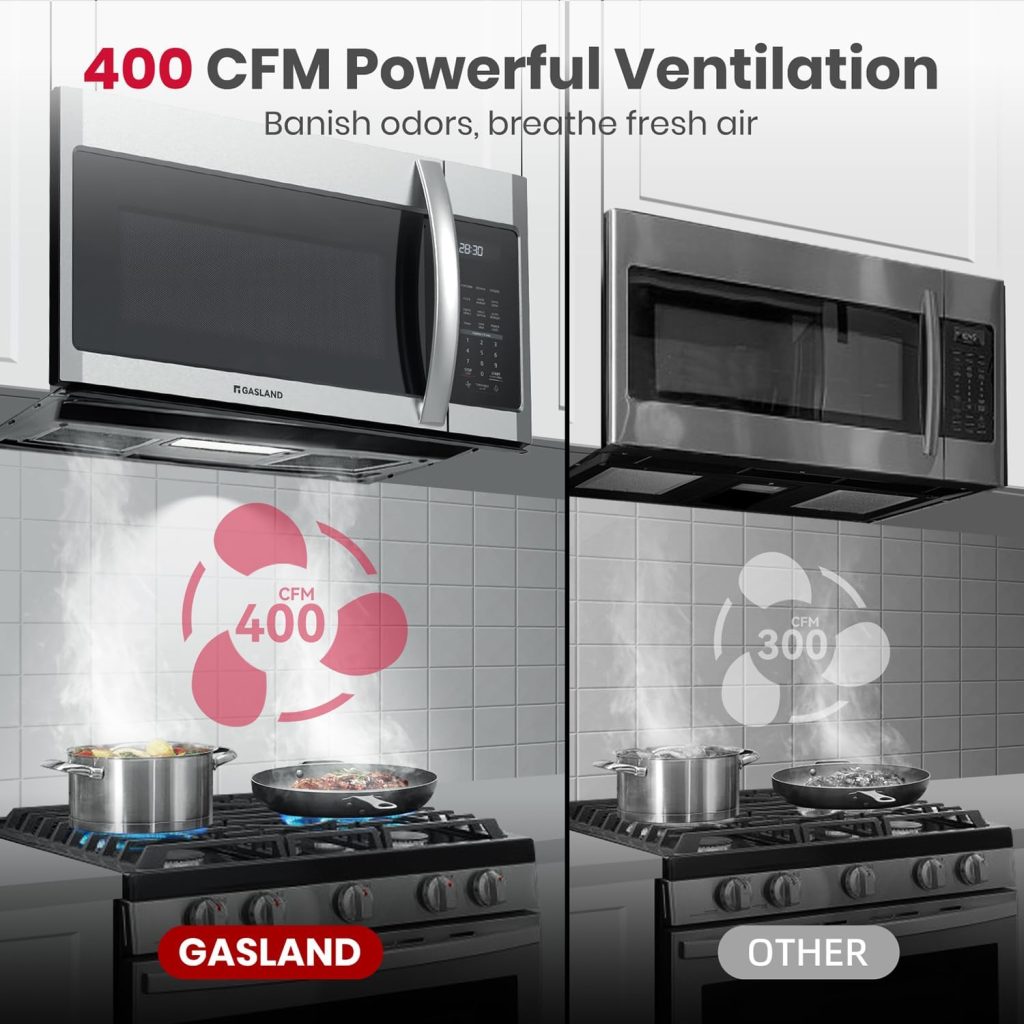
    Built in over the range microwave oven

    These units include built-in exhaust fans and are designed to handle the heat and steam rising from stovetop cooking.

    Similarly, some kitchen designs incorporate a microwave into a wall unit or cabinet that’s positioned above a wall oven, but these installations include adequate spacing (usually 12-18 inches minimum) and proper ventilation to protect the microwave from heat exposure.

    shelf for microwave and toaster oven

    If you’re working with limited space and considering a stacked arrangement, invest in a proper microwave shelf or stand that creates adequate clearance between appliances.

    These stands typically provide 12-24 inches of space and allow for proper heat dissipation and airflow.

    Practical Application

    If your kitchen layout requires vertical stacking, consult with a professional installer or kitchen designer who can assess your specific appliances and recommend safe installation methods.

    Never improvise by simply placing a microwave on top of your oven. The few inches of counter space you save aren’t worth the risk of appliance damage or fire.

    Can You Put a Fruit Bowl on Top of a Microwave?

    Yes, you can safely put a fruit bowl on top of a microwave, and this is actually one of the better uses for that space.

    However, there are some considerations to keep in mind to ensure you’re doing it properly and not inadvertently creating problems.

    A fruit bowl is an ideal candidate for microwave-top placement because it’s lightweight, doesn’t generate heat, and doesn’t require electrical power.

    Most fruit bowls weigh just a few pounds, even when full, well within the safe weight capacity of any microwave.

    Additionally, fruit bowls don’t vibrate or move during use, so they won’t cause any shifting or instability.

    Best Practices for Placing Items on Your Microwave

    When placing a fruit bowl or any decorative item on your microwave, make sure it doesn’t block the ventilation slots.

    Check the sides, back, and top of your microwave to identify where the air vents are located.

    Your fruit bowl should sit in the center of the microwave’s top surface, leaving adequate clearance (at least 2-3 inches) around all vents.

    Avoid placing items that could attract pests or create moisture problems.

    Fresh fruit is generally fine, but if fruit becomes overripe or starts to decay, it can attract fruit flies and other pests that might find their way into your appliance through ventilation openings.

    Keep your fruit bowl clean and rotate your fruit regularly.

    Consider the material of your fruit bowl as well. Heavy ceramic or glass bowls are fine from a weight perspective, but avoid anything with a rough or unfinished bottom that could scratch your microwave’s surface.

    A felt or rubber pad underneath can protect both surfaces and prevent the bowl from sliding when you open the microwave door.

    One thing to note: if you use your microwave frequently throughout the day, the vibration from the turntable and the heat that naturally rises from the appliance during use might not be ideal for certain fruits.

    Bananas, for example, might ripen more quickly in the warmer environment on top of a frequently-used microwave.

    Practical Application: Choose a lightweight, stable fruit bowl with a smooth bottom. Place it centrally on the microwave top, ensuring vents remain clear.

    Check weekly for overripe fruit and clean the bowl regularly. If you notice your fruit ripening faster than usual, consider relocating the bowl to a cooler spot in your kitchen.

    Can You Put Things on Top of a Microwave?

    The general answer is yes, but with important qualifications. Not everything belongs on top of your microwave, and understanding what’s safe versus what’s risky will help you make smart decisions about using this space effectively.

    Safe items to place on top of a microwave include lightweight kitchen accessories that don’t generate heat, vibrate, or block ventilation.

    This includes cookbooks, decorative items, small baskets, spice racks (if they’re not too heavy), bread boxes, and similar stationary objects.

    The key criteria are: relatively light weight (under 20 pounds), stable and won’t tip over, doesn’t block vents, and doesn’t generate heat or require electricity.

    What You Should Never Put on Your Microwave

    Absolutely avoid placing any heat-generating appliances on your microwave.

    This includes toaster ovens (as we’ve discussed), coffee makers, electric kettles, slow cookers, rice cookers, or any other cooking appliance.

    These devices can overheat your microwave, block critical ventilation, and create serious fire hazards.

    Don’t place other electronic devices like tablets, laptops, or digital assistants on your microwave either.

    The electromagnetic field generated by your microwave during operation can potentially interfere with other electronics, and the heat generated by the microwave can damage sensitive electronic components.

    Avoid storing cleaning products, especially anything flammable, on top of your microwave. The heat from the microwave could potentially cause aerosol cans to burst or chemicals to become unstable.

    Similarly, don’t store plastic containers or plastic bags on top, as the heat can cause them to warp or even melt if the microwave is used for extended periods.

    Heavy items like large mixers, multiple stacked cookware items, or heavy appliances should also be avoided.

    Even if your microwave can technically support the weight, these items can strain the microwave’s casing over time and potentially interfere with its operation.

    The Ventilation Rule

    Here’s a simple rule to remember: if it blocks vents, don’t put it there. Microwave vents are essential for cooling the magnetron and other internal components.

    Blocked vents can cause your microwave to overheat, leading to reduced performance, shortened lifespan, or even complete failure.

    Before placing anything on top of your microwave, take a moment to locate all ventilation openings and ensure your item won’t obstruct them.

    Audit what’s currently on top of your microwave. Remove any heat-generating appliances, heavy items, or anything blocking vents.

    If you need the storage space, consider lightweight, decorative storage solutions like woven baskets or fabric-covered boxes that allow for airflow. Always maintain at least 3 inches of clearance around all vents.

    What Surface Can You Put a Toaster Oven On?

    Finding the right surface for your toaster oven is crucial for both safety and performance.

    Toaster ovens need a stable, heat-resistant surface that can withstand high temperatures while providing proper ventilation and clearance on all sides.

    The ideal surface for a toaster oven is a heat-resistant countertop made of materials like granite, quartz, solid surface, or stainless steel.

    These materials can easily handle the heat that radiates from the bottom and sides of a toaster oven without warping, discoloring, or becoming damaged.

    If you have laminate countertops, you’ll need to take extra precautions because laminate can be damaged by prolonged heat exposure.

    Creating a Safe Toaster Oven Station

    Place your toaster oven directly on the counter with at least 4-6 inches of clearance on all sides and a minimum of 8-12 inches of clearance above.

    This spacing is critical—it’s not just a suggestion from manufacturers. Toaster ovens need this clearance to dissipate heat effectively and prevent fires.

    Check your specific model’s manual, as some larger or more powerful units may require even more clearance.

    Never place your toaster oven under cabinets or in enclosed spaces. The heat rising from the top can damage wood cabinets, cause paint to peel, or, in worst-case scenarios, ignite combustible materials.

    I’ve heard too many stories of scorched cabinets and near-miss fires from people who thought they could squeeze a toaster oven into a tight spot.

    If your countertop surface isn’t heat-resistant, use a proper toaster oven mat or heat-resistant cutting board underneath.

    These accessories are made from materials like silicone or heat-resistant fiberglass and provide a protective barrier between the hot appliance and your counter.

    Don’t use regular cutting boards, placemats, or towels—these can actually become fire hazards.

    Location Considerations

    Position your toaster oven away from curtains, paper towels, plastic containers, and anything else that could catch fire or melt.

    Keep it away from the edge of the counter, where it could be accidentally knocked off or where children could reach the hot surfaces.

    Also, ensure it’s near a grounded electrical outlet so you don’t need to use an extension cord (which isn’t recommended for high-wattage appliances).

    Consider the workflow of your kitchen. Placing your toaster oven near your food prep area makes sense, but not so close that you risk knocking into it while it’s hot.

    A corner location often works well, providing natural clearance on two sides while keeping the appliance out of the main traffic flow.

    Practical Application

    Measure the space where you plan to put your toaster oven. Mark out the clearance requirements with painter’s tape to visualize the needed space.

    If you’re using a heat-resistant mat, clean both the mat and counter regularly; crumbs and grease buildup can become fire hazards.

    Test the surface temperature of your counter after using the toaster oven; if it’s uncomfortably hot to touch, you need additional heat protection.

    What Are the Benefits of a Toaster Oven Over a Microwave?

    Understanding the strengths of each appliance helps you use them appropriately and appreciate why they serve different purposes in your kitchen.

    While microwaves and toaster ovens might seem interchangeable for reheating food, they each have distinct advantages that make them better suited for specific tasks.

    Toaster ovens excel at creating crispy, browned textures that microwaves simply cannot achieve.

    When you reheat pizza in a toaster oven, you get a crispy crust and evenly melted cheese. T

    ry that in a microwave, and you’ll end up with a soggy, rubbery mess. This browning capability comes from the dry heat that toaster ovens produce, which removes moisture from food surfaces while heating.

    It’s the same principle as a conventional oven, just in a more compact, efficient package.

    The versatility of toaster ovens extends far beyond reheating. You can bake cookies, roast vegetables, broil fish, toast bread, and even prepare small casseroles.

    Many modern toaster ovens include convection settings that circulate hot air for even faster, more uniform cooking.

    This makes them mini versions of your full-size oven, capable of handling many of the same tasks with less energy consumption and faster preheating times.

    Energy Efficiency and Cooking Quality

    For small portions, toaster ovens are significantly more energy-efficient than heating your full-size oven.

    Why heat an entire oven cavity to cook four chicken thighs when a toaster oven can do the job using 60-70% less energy?

    During hot summer months, this also means less heat added to your kitchen, keeping your space more comfortable.

    Toaster ovens provide better temperature control for actual cooking compared to microwaves.

    While microwaves heat food through electromagnetic radiation that agitates water molecules, they don’t offer precise temperature settings for baking or roasting.

    A toaster oven lets you set specific temperatures (usually from 200°F to 450°F), giving you control over the cooking process similar to a conventional oven.

    Where Microwaves Still Shine

    That said, microwaves have their own irreplaceable advantages. They’re unbeatable for speed; reheating a cup of coffee takes 30 seconds in a microwave versus several minutes in a toaster oven.

    Microwaves are also superior for steaming vegetables, heating soups and beverages, defrosting frozen foods, and cooking foods that benefit from moisture retention, like rice dishes or steamed fish.

    Microwaves are also safer in some respects because their exteriors stay relatively cool, making them less likely to cause burns.

    They’re often the better choice for households with young children or for quick tasks where you just need something hot and fast without any concern for texture.

    The real answer is that most kitchens benefit from having both appliances because they serve complementary rather than competing functions.

    Use your microwave for quick reheating, beverages, steaming, and defrosting. Use your toaster oven for anything that benefits from browning, crisping, baking, or roasting.

    And for those wondering, you might also be curious about whether it’s safe to place an air fryer on top of a microwave, which raises similar concerns about heat and ventilation.

    Practical Application

    Assess your cooking habits to determine which appliance serves your needs better for specific tasks. Create a mental or written guide: “leftovers that need to stay moist—microwave; leftover pizza or French fries—toaster oven; morning coffee reheat—microwave; morning toast—toaster oven.”

    This clarity will help you choose the right tool for each job, improving both your food quality and your kitchen efficiency.

    Conclusion

    The question of whether you can put a toaster oven on top of a microwave might seem simple, but as we’ve explored, the answer involves critical safety considerations that go far beyond just counter space management.

    The bottom line is clear: don’t stack these appliances. The heat generated by toaster ovens can damage your microwave’s components, blocked ventilation creates fire hazards, and the combined electrical load poses additional risks.

    Instead, give each appliance the space it deserves, a heat-resistant surface with adequate clearance on all sides.

    Your microwave’s top can safely hold lightweight, non-heat-generating items like fruit bowls or cookbooks, as long as you don’t block the vents.

    Your toaster oven needs its own dedicated spot with proper clearance and ventilation.

    Yes, this might mean getting creative with your kitchen layout or even removing some items from your counters, but the trade-off is a safer kitchen where your appliances function properly and last longer.

    Remember, these appliances are tools that serve different purposes in your kitchen.

    Use your microwave for speed and convenience, your toaster oven for texture and browning, and give both the respect and space they need to do their jobs safely.

    Your kitchen might be small, but smart organization, not risky stacking, is the real solution to limited counter space.

  • How Hot Does It Get in a Microwave?

    Have you ever wondered about the invisible inferno in your kitchen’s most convenient appliance?

    Each day, millions of us press those familiar buttons, wait for the beep, and enjoy perfectly heated meals without giving a second thought to the remarkable science at work.

    Your microwave oven silently transforms ordinary leftovers into steaming dishes through an almost magical process.

    But exactly how hot does that trusty box get when you’re warming up last night’s takeaway or defrosting tomorrow’s dinner?

    The answer might surprise you – and it’s not as straightforward as you might think.

    Join us as we uncover the sizzling secrets behind those closed microwave doors and discover why understanding your microwave’s heating capabilities can transform your cooking experience.

    UNDERSTANDING HOW MICROWAVES HEAT FOOD

    Before diving into specific temperatures, it’s important to understand that microwaves heat food differently than conventional ovens.

    How does microwave heat food

    Rather than heating the air around food (like conventional ovens), microwaves use electromagnetic radiation to excite water molecules within the food itself.

    THE SCIENCE BEHIND MICROWAVE HEATING

    Microwaves emit electromagnetic waves at a frequency of about 2.45 GHz, which causes water molecules in food to vibrate rapidly.

    This molecular friction generates heat from within the food rather than from an external heat source.

    The interesting thing about microwaves is that they don’t produce heat directly. Instead:

    1. The magnetron (a special tube inside your microwave) generates microwave radiation
    2. These microwaves pass through your food, causing water molecules to vibrate
    3. The vibration creates friction between molecules
    4. This friction produces the heat that cooks your food

    This is why microwaves can heat food so quickly compared to conventional cooking methods – they’re heating the food directly rather than heating the air around it!

    WHAT TEMPERATURE DO MICROWAVES REACH?

    Surprisingly, the air inside a microwave doesn’t get particularly hot.

    While the food might reach temperatures of 100°C (212°F) or higher, the actual air inside the microwave cavity typically doesn’t exceed 40-50°C (104-122°F).

    Microwave thermometer probe to know temperature

    This is quite different from a conventional oven, where the air inside might reach 200°C (392°F) or more.

    For example, when it comes to how hot a 1100-watt microwave can get, it is the wattage that affects how quickly the food heats, not the maximum temperature of the air inside.

    TEMPERATURE PROGRESSION OVER TIME

    Let’s explore how temperatures develop inside a microwave over different time intervals.

    How hot does it get in a Microwave?

    How hot does it get in a Microwave

    Microwaves typically heat food to temperatures up to 100°C (212°F), which is the boiling point of water.

    However, the air inside the microwave cavity itself usually only reaches 40-50°C (104-122°F). Foods with high fat or sugar content can reach higher temperatures, sometimes exceeding 110°C (230°F).

    The actual temperature depends on the food’s composition, cooking time, and the microwave’s wattage, not the appliance’s heating capacity.

    How Hot Does a Microwave Get in 1 Minute?

    How hot does a microwave get in 1, 2 and 3 minutes

    After just 1 minute of microwave heating:

    • A cup of water may reach about 60-70°C (140-158°F)
    • The food’s surface temperature will vary based on its water content
    • The air inside the microwave remains relatively cool, usually below 35°C (95°F)

    How Hot Does a Microwave Get in 2 Minutes?

    After 2 minutes of heating:

    • Water can approach near-boiling temperatures of 85-95°C (185-203°F)
    • Most moist foods will have surface temperatures of 70-80°C (158-176°F)
    • The microwave cavity may warm slightly to about 38-40°C (100-104°F)

    How Hot Does a Microwave Get in 5 Minutes?

    After 5 minutes of continuous operation:

    • Water will reach its boiling point of 100°C (212°F)
    • Dense foods will have significantly higher temperatures, though the temperature varies by food type
    • The internal cavity of the microwave might reach around 45-50°C (113-122°F)
    • Steam released from food may increase the humidity inside the microwave.

    MICROWAVE TEMPERATURE IN CELSIUS AND FAHRENHEIT

    Understanding microwave temperatures in both Celsius and Fahrenheit helps cater to different measurement preferences.

    How Hot Does It Get in a Microwave Celsius?

    In Celsius measurements:

    • Food with high moisture content can reach 100°C (the boiling point of water)
    • Dense foods with less moisture might heat unevenly, with some parts exceeding 100°C
    • The actual air temperature inside the microwave typically ranges from 40-50°C
    • The outer casing of the microwave usually stays under 35°C for safety reasons.

    Microwave Temperature Celsius Chart

    Food Type1 Minute2 Minutes & 5 Minutes
    Water (250ml)60-70°C85-95°C / 100°C
    Soup50-60°C75-85°C / 95-100°C
    Rice40-50°C65-75°C / 90-95°C
    Meat30-40°C50-70°C / 75-90°C
    Frozen Vegetables10-20°C30-50°C / 70-85°C

    Note: These temperatures are approximate and vary based on starting temperature, quantity, and microwave wattage.

    How Hot Does it get in a Microwave, Fahrenheit?

    For those using Fahrenheit:

    • The maximum food temperature typically reaches around 212°F (water’s boiling point)
    • The air inside the microwave usually stays between 104-122°F
    • Foods with high sugar or fat content can reach higher temperatures, sometimes exceeding 240°F in certain spots
    • The external surfaces of the microwave should remain below 95°F during normal operation.

    Microwave Oven Temperature Chart in Fahrenheit

    Food Type1 Minute2 Minutes & 5 Minutes
    Water (8oz)140-158°F185-203°F / 212°F
    Soup122-140°F167-185°F / 203-212°F
    Rice104-122°F149-167°F / 194-203°F
    Meat86-104°F122-158°F / 167-194°F
    Frozen Vegetables50-68°F86-122°F / 158-185°F.

    HOW WATTAGE AFFECTS MICROWAVE TEMPERATURES

    The wattage of your microwave significantly impacts how quickly it heats food, though not necessarily the maximum temperature it can reach.

    How Hot is a 600 Watt Microwave?

    A 600-watt microwave represents the lower end of the power spectrum for home microwaves. With this wattage:

    How hot does a 1000 watt microwave get
    • It takes approximately 3.5 minutes to boil a cup of water (compared to 1.5-2 minutes in a 1000-watt model)
    • Food heats more slowly and often more evenly
    • Maximum temperatures reached are the same (100°C/212°F for water-based foods), just achieved more slowly
    • The air temperature inside typically stays around 35-45°C (95-113°F).

    A 600-watt microwave is often found in smaller kitchens, dormitories, or as a secondary microwave.

    While they take longer to heat food, they can be gentler and less likely to overheat or create “hot spots” in food.

    FACTORS AFFECTING MAXIMUM TEMPERATURE IN MICROWAVES

    Several factors influence how hot your food gets in a microwave:

    1. Food Composition

    • Water content: Foods with high water content (soups, vegetables) rarely exceed 100°C/212°F
    • Fat content: Fats can reach much higher temperatures than water, sometimes exceeding 110°C/230°F
    • Sugar content: Sugar solutions can superheat above 100°C/212°F
    • Salt content: Affects how microwaves interact with water molecules

    2. Container Type

    Different containers affect how hot your food gets:

    • Glass and ceramic: Heat relatively slowly and retain heat well
    • Plastic: Heats minimally but can warp if food gets too hot
    • Metal: Should never be used as it reflects microwaves and can cause arcing
    • Bone China Tableware: It typically heats less than the food itself, but can become warm from contact with hot food rather than from the microwave directly.

    3. Physical Factors

    • Size and shape of food: Irregular shapes create “hot spots.”
    • Quantity of food: Larger amounts take longer to heat through
    • Starting temperature: Frozen foods take much longer to reach high temperatures
    • The weight of the microwave doesn’t affect temperature, but heavier models often have better insulation and more consistent heating performance.

    SAFETY CONSIDERATIONS WITH MICROWAVE TEMPERATURES

    Understanding microwave temperatures helps ensure safe cooking:

    Avoiding Burns and Injuries

    • Be cautious of superheated liquids that may erupt when disturbed
    • Allow standing time after cooking for temperature equalization
    • Use proper microwave-safe containers to prevent melting or warping
    • Remember that containers may be cooler than the food they contain

    Food Safety Temperatures

    For food safety, ensure high-risk foods reach these internal temperatures:

    • Leftovers and casseroles: 74°C (165°F)
    • Beef, pork, lamb: 71°C (160°F)
    • Poultry: 74°C (165°F)
    • Fish: 63°C (145°F)

    Always use a food thermometer to verify temperatures of potentially hazardous foods when using a microwave for reheating or cooking.

    COMMON MYTHS ABOUT MICROWAVE TEMPERATURES

    Let’s dispel some common misconceptions:

    Myth 1: Microwaves Cook Food from the Inside Out

    Reality: Microwaves actually penetrate about 1-1.5 inches into food. The center of large food items cooks by conduction (heat transferring from the outer layers inward), just like in conventional cooking.

    Myth 2: Microwaves Destroy All Nutrients

    Reality: Because microwaves cook quickly and with little water, they often preserve more nutrients than boiling or long cooking methods.

    Myth 3: Higher Wattage Always Means Better Cooking

    Reality: While higher wattage cooks faster, it doesn’t necessarily cook better. Sometimes, slower, more even heating produces better results, especially for delicate foods.

    Myth 4: If the Container Isn’t Hot, the Food Isn’t Hot

    Reality: Microwave-safe containers absorb very little microwave energy, so they often remain cool even when the food inside is dangerously hot.

    TIPS FOR OPTIMAL MICROWAVE COOKING TEMPERATURES

    Use these strategies to get the best results from your microwave:

    Even Heating Techniques

    • Arrange food in a ring shape when possible (with less food in the center)
    • Cover foods to trap steam and promote even cooking
    • Stir or rotate food halfway through cooking
    • Allow standing time after cooking for the heat to distribute evenly

    Temperature Control Methods

    instant read thermometer for reading temperature
    • Use lower power settings for longer times to achieve more even heating
    • For thick foods, use a lower power setting to allow heat to penetrate without overheating edges
    • When reheating multiple items, place larger or denser items on the outside of the turntable.

    CONCLUSION

    The humble microwave sitting on your kitchen counter is capable of heating your food to piping hot temperatures in mere minutes, typically reaching the boiling point of water at 100°C (212°F) for most moist foods.

    While the food inside might be steaming, the air within the microwave cavity itself usually hovers between 40-50°C (104-122°F).

    Understanding these temperature dynamics can transform your microwave from a simple reheating device to a versatile cooking tool.

    By paying attention to wattage, food composition, and cooking time, you can achieve optimal results every time.

    Next time you press those familiar buttons, you’ll have a newfound appreciation for the carefully controlled heat working to prepare your perfect meal in record time.