Tag: heat resistant cookware

  • Non-Stick vs Enamel Cookware

    Choosing between non-stick vs enamel cookware isn’t just about convenience; it’s about your family’s health, your cooking style, and how long you want your investment to last.

    Every morning, millions of homes reach for a pan without considering what’s happening beneath the surface.

    Is that slick coating releasing invisible fumes? Could that colorful enamel contain hidden toxins?

    These aren’t just hypothetical concerns. The cookware you use daily directly impacts the safety of your meals, the flavors you create, and even the environment.

    Both non-stick and enamel cookware promise easier cooking and cleanup, but they deliver these benefits in fundamentally different ways.

    One relies on synthetic polymer technology that has sparked decades of health debates.

    The other uses centuries-old glass-fusion techniques that stand the test of time.

    Understanding which is safer, enamel or non-stick, requires looking beyond marketing claims to examine the science, the materials, and the real-world performance of each option.

    This comprehensive guide will help you make an informed decision based on facts, not fear.

    What Is Non-Stick Cookware?

    Non-stick cookware revolutionized home cooking by preventing food from sticking to the pan surfaces.

    At its core, this cookware type features a base metal—typically aluminum—coated with a synthetic polymer layer that creates a slippery cooking surface.

    The technology allows you to cook with minimal oil while making cleanup remarkably easy.

    PTFE (Teflon) Coating Explained

    Polytetrafluoroethylene, commonly known as Teflon, is the most recognized non-stick coating material.

    This fluoropolymer creates an extremely low-friction surface by forming molecular bonds that repel water, oil, and food particles.
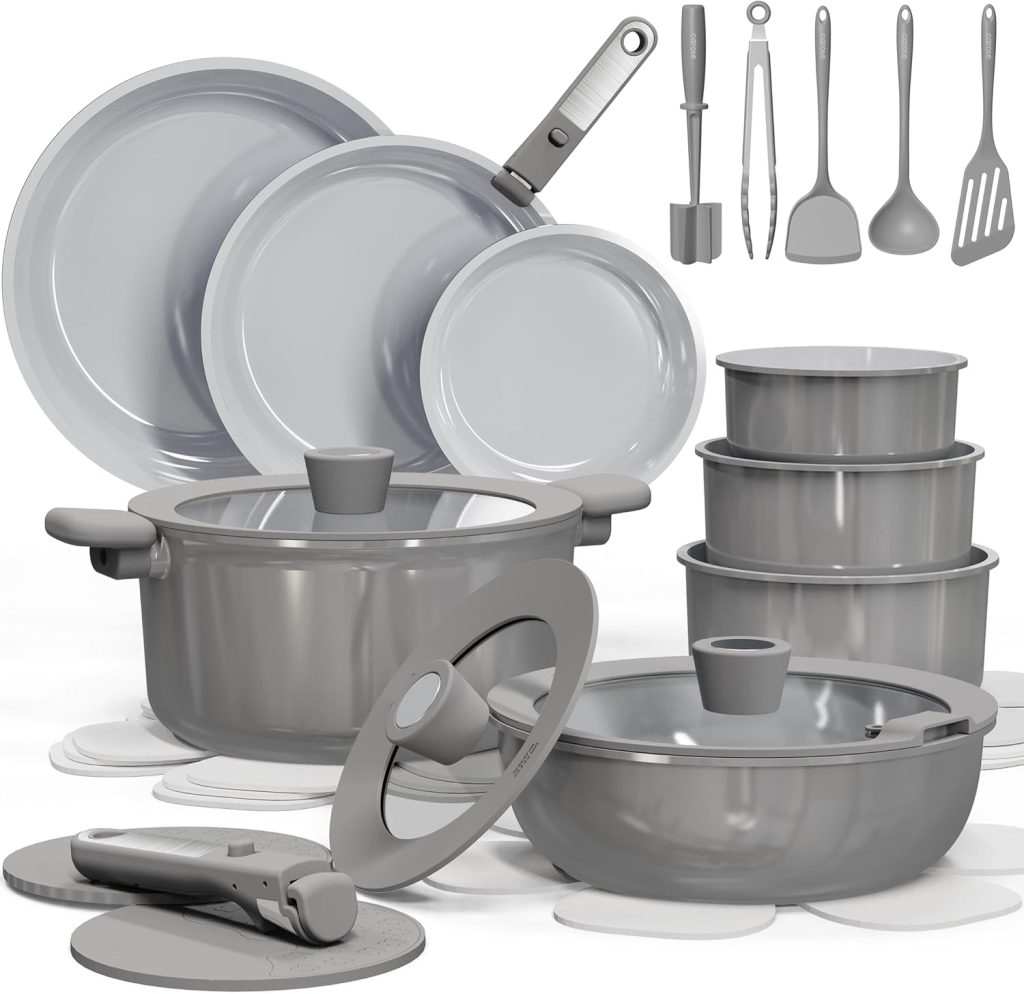
    Non-stick Pots and Pans with detachable handles

    The coating is applied in multiple layers to aluminum or stainless steel bases through a process involving primer coats and topcoats that are baked at high temperatures.

    Presence of PFAS, PFOA (Older Pans), GenX

    PTFE belongs to a chemical family called per- and polyfluoroalkyl substances (PFAS), often called “forever chemicals” because they don’t break down naturally.

    While PTFE itself is considered stable at normal cooking temperatures, the manufacturing process historically used PFOA (perfluorooctanoic acid), which has been linked to health concerns.

    Since 2013, major manufacturers have phased out PFOA, but replacement chemicals like GenX have raised similar questions.

    Modern non-stick pans are marketed as PFOA-free, yet they still contain PFAS compounds.

    Aluminum Base + Layered Polymer Coating

    The typical construction includes an aluminum core for excellent heat conduction, covered by multiple polymer layers.

    The aluminum provides lightweight handling and responsive heating, while the coating layers—primer, midcoat, and topcoat—create the non-stick properties.

    Some premium versions incorporate titanium or diamond particles for enhanced durability, but the fundamental chemistry remains PTFE-based.

    Pros and Cons for Everyday Cooking

    Pros:

    • Requires minimal cooking oil or butter
    • Easy cleanup with simple wiping
    • Lightweight and easy to handle
    • Affordable entry-level options available

    Cons:

    • Coating degrades over time (1-3 years typical lifespan)
    • Cannot withstand high heat without potential fume release
    • Scratches easily with metal utensils
    • Raises concerns about PFAS exposure

    Learn the full safety profile of non-stick pans to understand the complete picture of what you’re cooking with daily.

    What Is Enamel Cookware?

    Enamel cookware represents one of the oldest and most reliable cooking technologies, dating back centuries.

    Unlike synthetic coatings, enamel is created by fusing powdered glass to metal surfaces at extremely high temperatures, creating a smooth, non-porous, and chemically inert cooking surface.

    Glass Enamel Fused to Cast Iron or Steel

    The enameling process involves applying multiple layers of ground glass mixed with metallic oxides to cast iron or carbon steel bases.
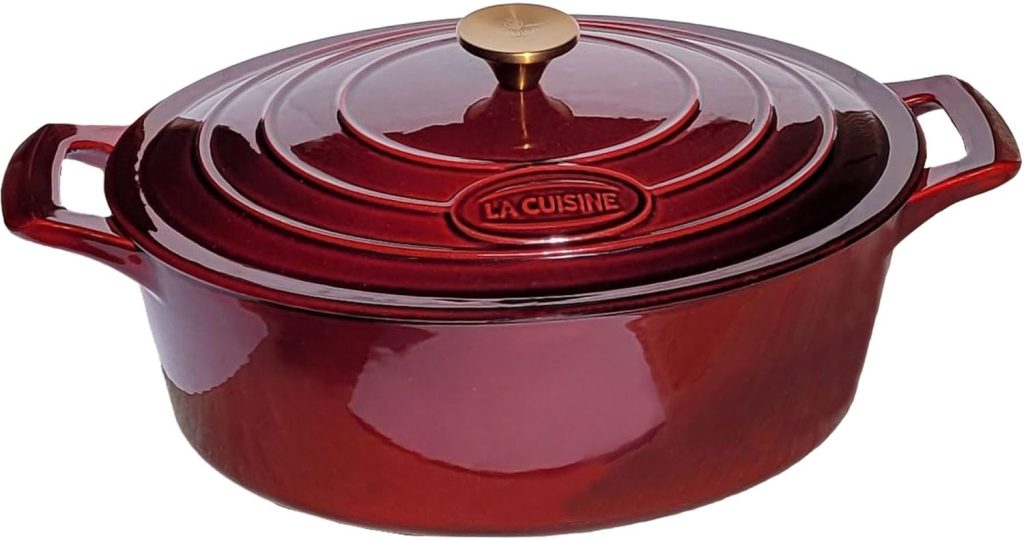
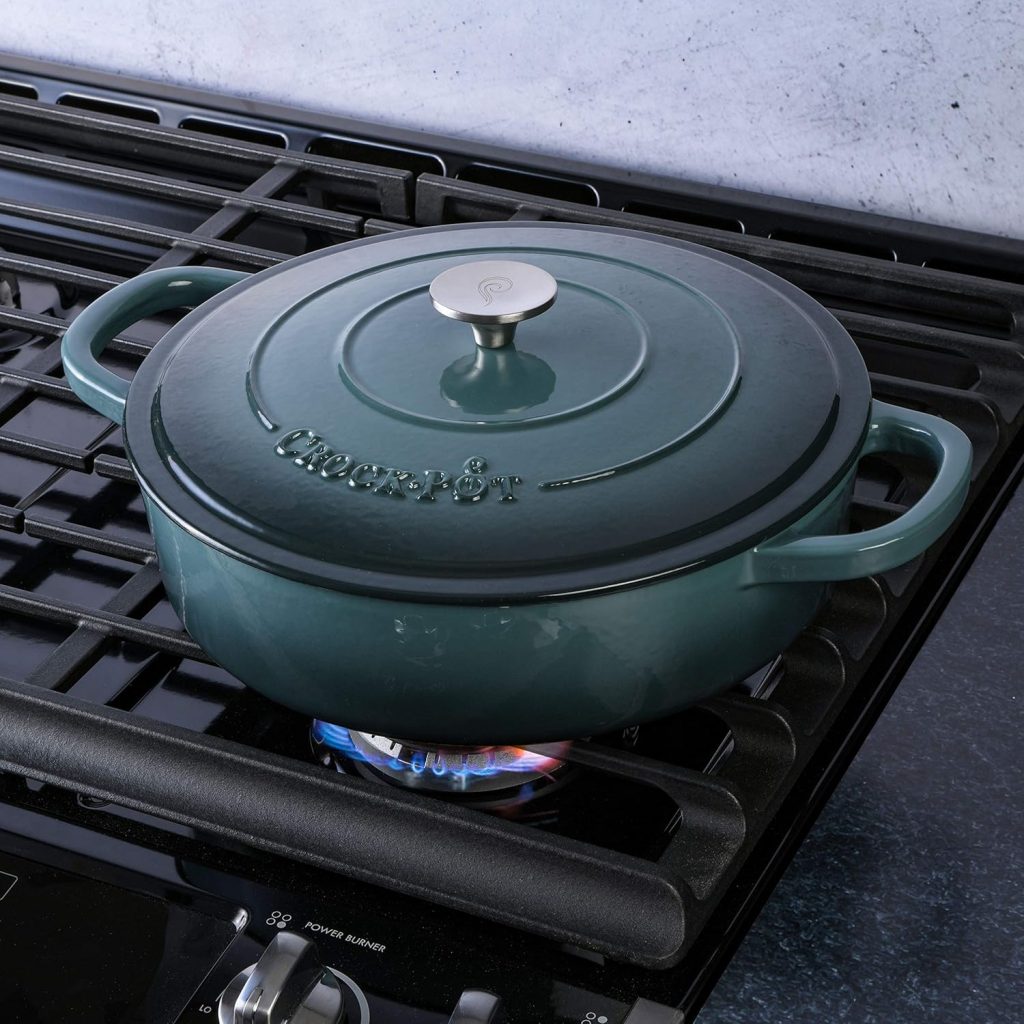
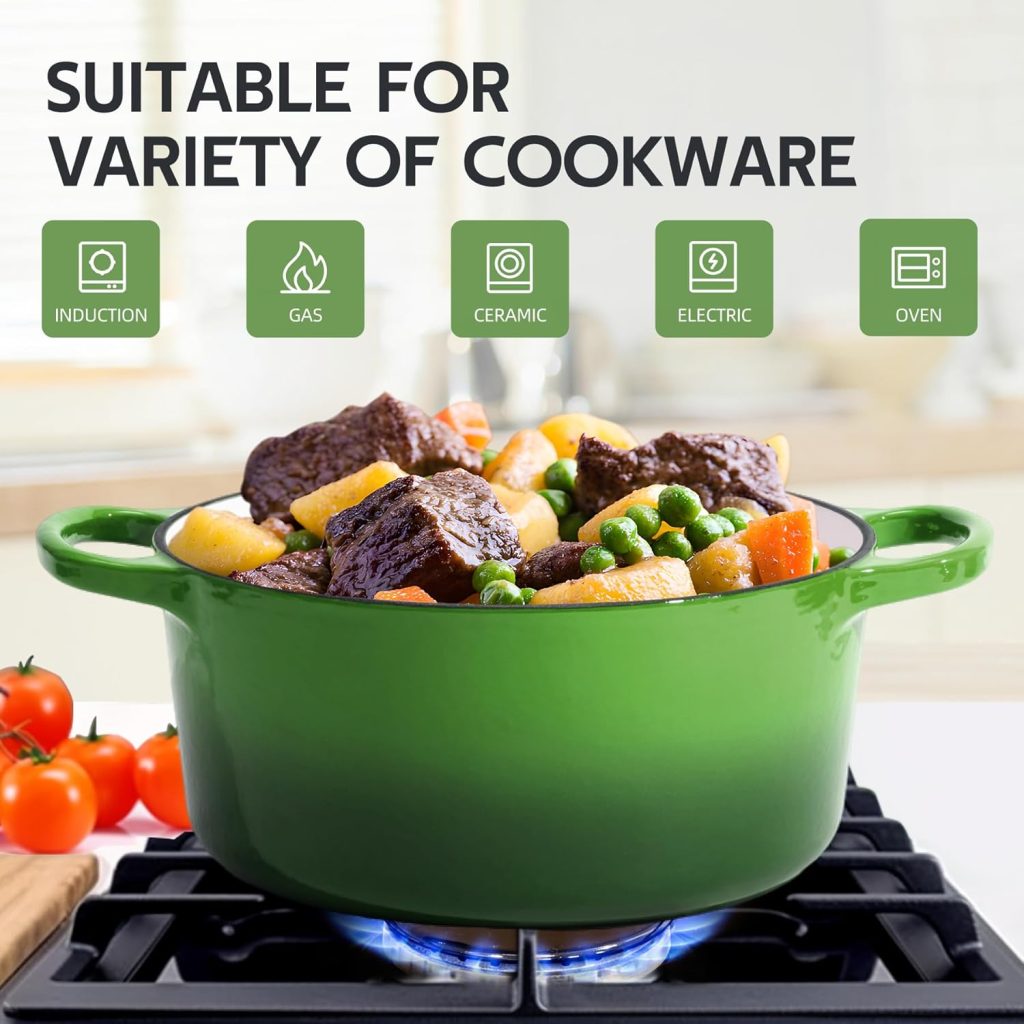
    La Cuisine enameled casserole Dutch oven

    These pieces are fired in kilns at temperatures exceeding 1,400°F, causing the glass to melt and bond permanently with the metal substrate.

    This fusion creates a coating that becomes an integral part of the cookware rather than a temporary surface layer.

    Inert, PFAS-Free, and Chemically Stable

    Enamel cookware contains no synthetic polymers, making it completely PFAS-free.

    The glass surface is chemically inert, meaning it won’t react with acidic foods like tomatoes or wine.

    This stability prevents any leaching of chemicals into your food, regardless of cooking temperature or duration.

    The coating won’t break down from heat, making it fundamentally different from polymer-based alternatives when considering enamel cookware vs non-stick safety.

    Vintage vs Modern Enamel Pigment Safety

    Older enamel cookware, particularly pieces manufactured before 1980, may contain lead or cadmium in decorative colored glazes.

    These heavy metals were used to create vibrant colors but pose health risks if they leach into food.

    Modern enamel cookware from reputable manufacturers complies with strict safety standards and uses lead-free, cadmium-free pigments.

    However, vintage pieces and products from unregulated manufacturers still warrant caution.

    You can test enamel cookware for heavy metals if you’re uncertain about older pieces.

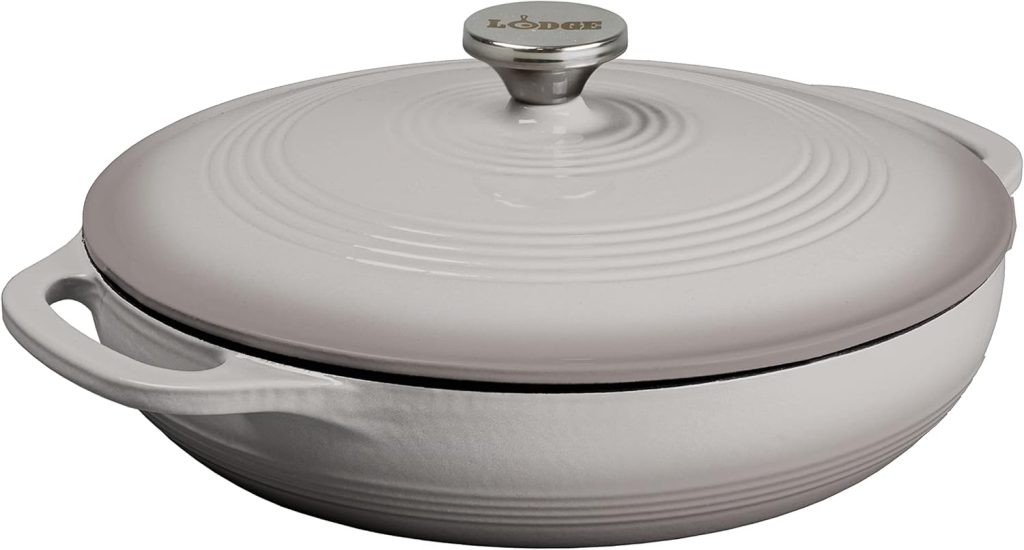
    Leading enamel cookware manufacturers include Le Creuset, Staub, Lodge, and Cuisinart.
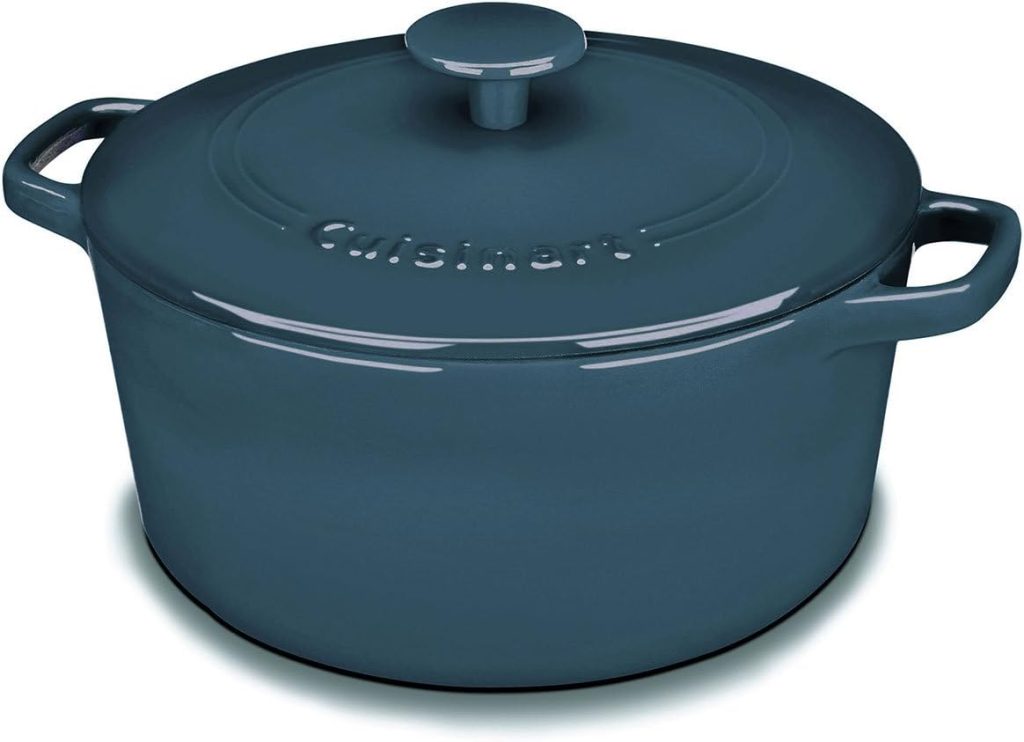
    Cuisinart enamel cast iron round casserole

    These brands have established reputations for quality control and safety compliance.

    Le Creuset and Staub represent premium options with lifetime warranties, while Lodge offers more budget-friendly alternatives.
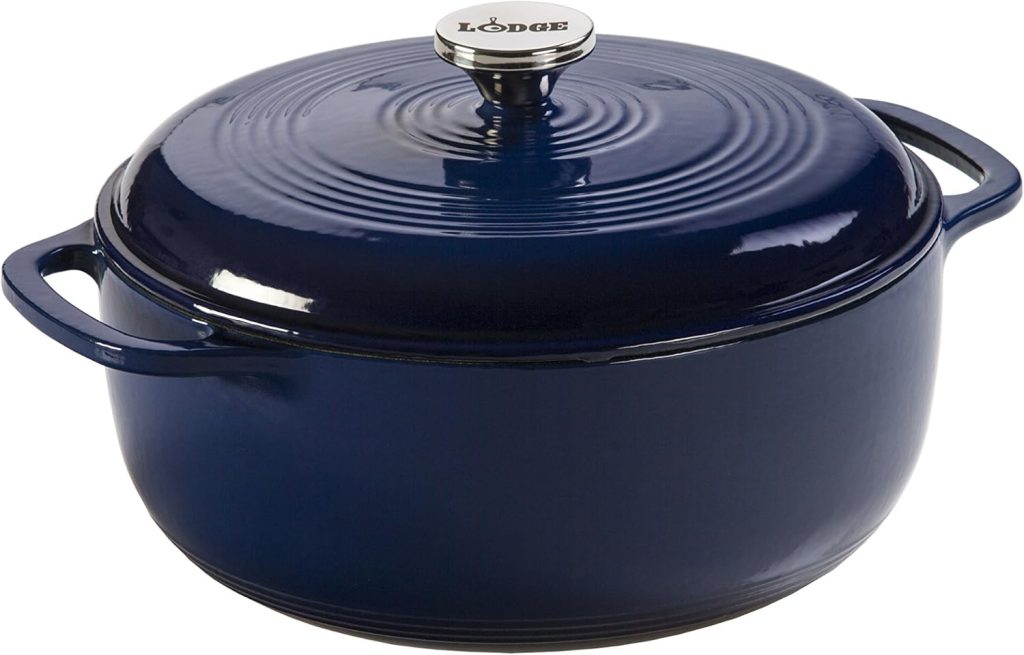
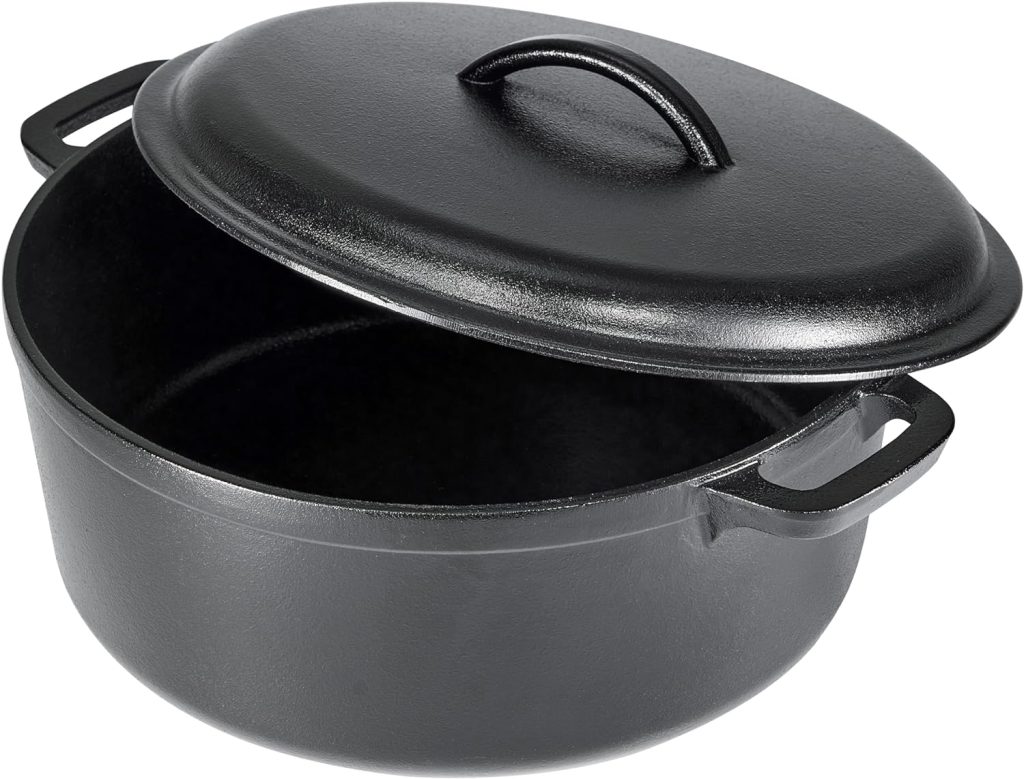
    Lodge 6 Quart Enamel Dutch oven

    Each brand undergoes rigorous testing to ensure its enamel coatings meet FDA and California Prop 65 standards.

    To fully understand the safety protocols, see enamel safety testing & modern standards that protect consumers.

    Key Differences Between Non-Stick and Enamel Coatings
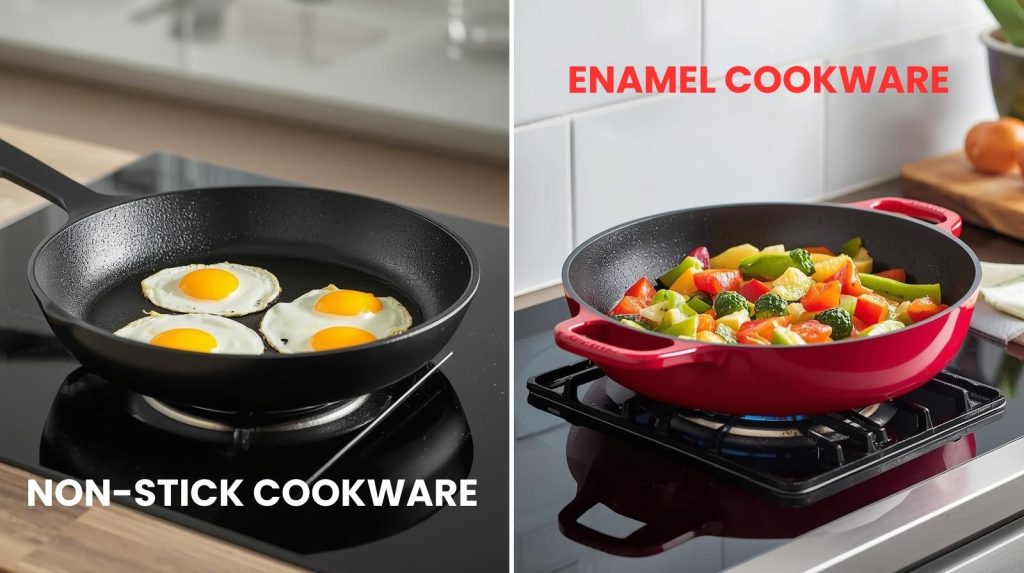
    Non-stick vs Enamel Cookware

    Understanding the fundamental differences between these two coating technologies helps clarify why they perform so differently in real-world cooking scenarios.

    Synthetic Polymer vs Glass-Based Coating

    Non-stick coatings are manufactured chemical compounds applied to metal surfaces, while enamel is melted glass permanently fused to metal.

    This distinction matters because synthetic polymers are organic compounds that can degrade, while glass is an inorganic material that remains stable indefinitely.

    The molecular structure of PTFE consists of carbon-fluorine bonds that can break under certain conditions, whereas enamel’s silicon-oxygen bonds are among the strongest in chemistry.

    Non-Stick Functionality

    Despite its name, enamel cookware isn’t as inherently non-stick as PTFE-coated pans.

    Non-stick cookware releases eggs and delicate proteins with minimal effort, even when using little to no oil.

    Enamel cookware requires proper preheating and adequate fat for optimal food release.

    However, enamel develops better over time as a cooking patina forms, and it allows for deglazing and fond development that actually enhances flavor, something non-stick surfaces prevent.

    Weight Differences

    Non-stick pans are notably lighter, typically weighing 1.5-3 pounds for a standard skillet, thanks to their aluminum construction.

    Enamel cookware, especially enameled cast iron, weighs significantly more—often 5-8 pounds for comparable sizes.

    This weight difference affects handling ease, especially for elderly users or those with limited strength.

    The enameled cast iron vs stainless steel comparison reveals additional weight and performance factors.

    Base Metal Differences (Aluminum vs Cast Iron/Steel)

    Aluminum heats quickly but doesn’t retain heat well, making it responsive but less suitable for sustained cooking.

    Cast iron and steel bases in enamel cookware heat more slowly but maintain temperature exceptionally well, perfect for braising and slow-cooking applications.

    This fundamental material difference means each cookware type excels in different cooking techniques.

    Safety Comparison — PFAS, Lead & Chemical Exposure

    Safety concerns drive much of the comparison in nonstick vs enamel durability and overall cookware selection. Let’s examine the specific risks associated with each type.

    PFAS & Off-Gassing at High Temps (Non-Stick)

    Does non-stick release fumes? Yes, when overheated above 500°F, PTFE coatings begin breaking down and releasing toxic fumes.

    These fumes can cause polymer fume fever in humans, with flu-like symptoms including headaches, chills, and respiratory irritation.

    The fumes are particularly dangerous to pet birds, which have sensitive respiratory systems.

    Even at lower temperatures, gradual PFAS release may occur as coatings degrade through normal use.

    Teflon Flaking or Scratching Risks

    When non-stick coatings scratch or chip, microscopic particles can end up in food.

    While manufacturers claim these particles pass harmlessly through the digestive system, the long-term effects of ingesting PFAS-containing fragments remain uncertain.

    Scratched pans also lose their non-stick properties and heat less evenly, creating hot spots that further accelerate coating breakdown.

    Enamel & Heavy Metal Concerns (Rare, Mainly Vintage)

    Is enamel cookware non-toxic? Modern enamel cookware from reputable brands is extremely safe and contains no lead or cadmium.

    However, vintage pieces, especially those with bright exterior colors or decorative patterns, may contain these heavy metals in the glaze formulations.

    The risk primarily exists with older cookware or pieces from manufacturers who don’t follow current safety standards.

    Modern Enamel Safety Standards (Prop 65, FDA Compliant)

    Contemporary enamel cookware manufacturers must comply with FDA regulations and California Proposition 65, which sets strict limits on lead and cadmium content.

    Reputable brands conduct regular third-party testing and publish certificates of compliance.

    These standards make modern enamel cookware one of the safest options available.

    For those seeking a PFAS-free alternative to Teflon, certified enamel cookware offers peace of mind without sacrificing cooking performance.

    Heat Performance & Cooking Experience

    How each cookware type handles heat dramatically affects what you can cook and how well dishes turn out.

    Non-Stick – Great for Eggs, Delicate Foods

    Non-stick cookware excels at low-to-medium heat cooking applications.

    Scrambled eggs slide effortlessly from the pan, fish fillets release cleanly, and pancakes flip without tearing.

    The slick surface requires minimal fat, making it ideal for health-conscious cooking.

    However, this advantage disappears when you need high-heat searing or want to develop fond for pan sauces.

    Enamel – Great for Stews, Braising, Slow Cooking

    Enamel cookware shines in applications requiring sustained, even heat.

    Dutch ovens braise short ribs to perfection, maintaining steady temperatures for hours.

    The non-reactive surface won’t alter the flavor of acidic ingredients, making it perfect for tomato-based sauces and wine reductions.

    The heavy construction provides superior heat retention, keeping soups and stews at consistent temperatures.

    Heat Tolerance Comparison (500°F vs >1000°F for Enamel)

    Non-stick pans should never exceed 500°F—a temperature easily reached on stovetops at medium-high settings.

    Above this threshold, coating degradation accelerates, and toxic fumes may be released.

    Enamel cookware, by contrast, can withstand temperatures exceeding 1,000°F without damage, making it oven-safe at any home cooking temperature.

    This makes enamel vs non-stick for high-heat cooking an easy decision for serious home cooks.

    Which Performs Better for High-Heat Cooking? → Enamel

    For searing steaks, roasting at high temperatures, or any technique requiring sustained high heat, enamel cookware is the clear winner.

    The glass coating remains stable and intact regardless of temperature, while the cast iron or steel base delivers exceptional heat retention.

    Non-stick simply cannot compete in high-heat scenarios without risking coating damage and potential health concerns.

    Durability & Lifespan Comparison

    The longevity of cookware directly impacts both your budget and environmental footprint over time.

    Scratch Resistance (Enamel Wins)

    Enamel’s glass surface is significantly harder than PTFE coatings, offering superior scratch resistance.

    While you should still avoid metal utensils and abrasive scrubbers, enamel tolerates moderate wear far better than non-stick.

    PTFE coatings scratch easily from metal spatulas, rough sponges, or even stacking pans without protection.

    These scratches compromise the non-stick properties and accelerate coating failure.

    Chipping (Enamel Risk) vs Peeling (Non-Stick Risk)

    Enamel cookware’s primary vulnerability is chipping from impact—dropping a pot or banging it against hard surfaces can crack the glass coating.

    Once chipped, the exposed metal underneath may rust if not properly maintained.

    Non-stick coatings face peeling issues as the polymer layers separate from the base metal through thermal cycling and general use.

    Both problems render the cookware less effective, but enamel damage is typically localized while non-stick degradation spreads across the entire surface.

    Expected Lifespan (Non-Stick: 1–3 Years, Enamel: Decades)

    Even with careful use, non-stick cookware typically lasts only 1-3 years before the coating degrades noticeably.

    Professional chefs may replace non-stick pans annually.

    Quality enamel cookware, however, can last decades or even become family heirlooms.

    Many homes use the same Le Creuset Dutch oven for 20-30 years with proper care. This longevity consideration is central to understanding nonstick vs enamel durability.

    Long-Term Cost-Effectiveness

    While enamel cookware requires a larger upfront investment ($50-$400 per piece), its decades-long lifespan makes it more economical over time.

    Replacing non-stick pans every 2-3 years at $30-$80 each adds up significantly.

    A $200 enameled Dutch oven that lasts 25 years costs $8 per year, while a $40 non-stick pan replaced every 2 years costs $20 annually, plus the hassle of repeated shopping.

    Maintenance & Care Differences

    Proper care extends cookware life and maintains optimal performance, but the requirements differ substantially between these two types.

    Cleaning Non-Stick (Hand Wash Only, Avoid Abrasives)

    Non-stick cookware demands gentle hand washing with soft sponges and mild dish soap.

    Never use abrasive scrubbers, steel wool, or harsh cleaners that will scratch the coating.

    Most food residue wipes away easily, but stuck-on food should be soaked rather than scrubbed aggressively.

    Dishwashers, despite some manufacturers’ claims, typically shorten non-stick coating lifespan through harsh detergent exposure and high heat.

    Cleaning Enamel (Soaking, Non-Abrasive Scrubs)

    Enamel cookware tolerates more vigorous cleaning than non-stick, but still benefits from gentle treatment.

    Soaking stubborn residue makes cleaning easier and prevents the need for excessive scrubbing.

    Non-abrasive scrubbers work well for stuck-on food, and many enameled pieces are dishwasher-safe, though hand washing preserves exterior finishes better.

    Baking soda paste effectively removes stains without damaging the glass surface.

    The ceramic vs stainless steel cookware comparison provides additional context on maintenance requirements for different materials.

    Utensil Compatibility

    Non-stick cookware requires silicone, wooden, or plastic utensils exclusively.

    Metal spatulas, whisks, and spoons will scratch the coating, compromising both non-stick properties and safety.

    Enamel cookware accepts wooden and silicone utensils safely and tolerates occasional metal utensil use, though wood and silicone remain preferable to prevent potential chipping.

    This flexibility makes enamel more practical for diverse cooking techniques.

    Dishwasher Safety for Each

    Most non-stick manufacturers recommend hand washing only, as dishwasher detergents and high heat accelerate coating breakdown.

    Some newer “dishwasher-safe” non-stick pans exist, but longevity still suffers compared to hand washing.

    Enamel cookware typically handles dishwashers well, though the exterior finish may dull over time.

    Interior enamel surfaces remain unaffected by dishwasher use, making cleanup more convenient.

    Environmental Impact

    Cookware choices affect not just your kitchen but the broader environment through manufacturing processes and disposal.

    PFAS Persistence & Non-Biodegradable Waste (Non-Stick)

    PFAS chemicals earned the nickname “forever chemicals” because they don’t break down naturally in the environment.

    When non-stick pans end up in landfills, these persistent compounds can leach into soil and water systems, remaining there indefinitely.

    Manufacturing PFAS also creates environmental contamination around production facilities.

    The short lifespan of non-stick cookware means more frequent disposal, multiplying the environmental burden.

    Enamel’s Recyclability and Long Lifespan

    While enamel cookware isn’t directly recyclable due to the glass-metal fusion, its decades-long lifespan dramatically reduces waste generation.

    The cast iron or steel bases theoretically can be recycled if the enamel coating is removed, though this isn’t commonly done.

    More importantly, enamel cookware rarely needs disposal; it’s often passed down through generations, making it one of the most sustainable cookware options through longevity alone.

    Manufacturing Impacts

    PTFE production involves complex chemical processes with significant environmental footprints, including greenhouse gas emissions and chemical waste.

    Enamel manufacturing also requires high-temperature kilns consuming substantial energy, but the process avoids persistent chemical production.

    Cast iron production is energy-intensive but uses abundant natural materials.

    Overall environmental impact depends on usage duration; enamel’s longevity tips the balance in its favor.

    Which Produces Less Waste Over Time? (Enamel)

    Enamel cookware unquestionably generates less waste over a lifetime.

    One enameled Dutch oven serving 25 years replaces a dozen non-stick pans in the same period.

    This waste reduction includes not just the pans themselves but also packaging, shipping impacts, and disposal costs.

    For environmentally conscious consumers, the choice between enamel vs non-stick becomes clear when considering long-term environmental responsibility.

    Which Should You Choose?

    The right choice depends on your cooking style, health priorities, and practical considerations rather than a universal “best” option.

    Choose Enamel If You Want Durability & Safety

    Enamel cookware suits cooks prioritizing long-term value, health safety, and versatile cooking techniques.

    If you regularly braise, make soups and stews, or prepare acidic dishes, enamel’s non-reactive surface and heat retention make it ideal.

    Home cooks willing to invest upfront for decades of use will find enamel’s durability and PFAS-free composition compelling.

    The weight requires consideration, but for most cooking tasks, enamel delivers superior performance.

    Choose Non-Stick for Convenience & Low-Oil Frying

    Non-stick remains the practical choice for quick breakfast cooking, delicate proteins, and low-fat meal preparation.

    If you primarily cook eggs, pancakes, or fish at low to medium temperatures, non-stick’s ease of use and cleanup may outweigh long-term concerns.

    Budget-conscious cooks willing to replace pans every few years can benefit from non-stick’s affordability and lightweight handling.

    Best Cookware for a Toxin-Free Kitchen → Enamel

    For those committed to eliminating potential toxins from their cooking environment, enamel cookware is the superior choice.

    Its PFAS-free, chemically inert surface eliminates concerns about fume release or chemical leaching.

    Modern enamel from reputable brands contains no lead or cadmium, providing peace of mind that your cookware contributes nothing unwanted to your meals.

    When comparing ceramic and non-stick coatings, enamel often emerges as the safest long-term option.

    Best for Elderly or Disabled Users → Lightweight Non-Stick

    Users with limited strength, arthritis, or mobility challenges may find non-stick cookware’s lightweight construction essential.

    A 2-pound non-stick skillet is far easier to maneuver than a 7-pound enameled cast-iron pan.

    For these users, the convenience and manageable weight of non-stick cookware may outweigh other considerations, making it a practical accessibility choice.

    FAQs About Non-Stick vs Enamel Cookware

    Which is more non-stick?

    PTFE-coated non-stick cookware offers superior food release, especially when new.

    Enamel cookware requires proper preheating and adequate cooking fat, but develops improved release properties with use.

    For true minimal-oil cooking of eggs and delicate proteins, non-stick wins this category.

    Does enamel ever contain lead?

    Modern enamel cookware from reputable manufacturers contains no lead or cadmium and complies with FDA and Prop 65 standards.

    However, vintage pieces (pre-1980s) and cookware from unregulated sources may contain lead in colored glazes.

    Always verify compliance certifications or test vintage pieces before use.

    Is non-stick safe if used on low heat?

    Using non-stick cookware exclusively on low to medium heat (below 400°F) significantly reduces risks.

    However, coating degradation still occurs gradually over time through normal use, and PFAS remain present in the material even when not actively releasing fumes.

    Proper ventilation and replacing pans when coatings show wear minimizes potential exposure.

    Which cookware lasts longer?

    Enamel cookware dramatically outlasts non-stick, often by decades.

    Quality enameled cast iron can serve 20-30 years or more with proper care, while even premium non-stick pans typically need replacement within 3-5 years.

    This lifespan difference makes enamel far more cost-effective and sustainable long-term.

    Final Verdict — Enamel Is Safer, Non-Stick Is More Convenient

    The choice between non-stick and enamel cookware ultimately balances safety, durability, and cooking convenience against immediate ease of use and upfront costs.

    Non-stick cookware delivers unmatched convenience for quick, low-fat cooking of delicate foods, but its PTFE-based coating raises legitimate health concerns, particularly regarding PFAS exposure and high-heat degradation.

    The limited 1-3 year lifespan also creates ongoing replacement costs and environmental waste.

    Enamel cookware represents the superior long-term investment for most homes.

    Its PFAS-free, chemically inert glass coating provides genuine safety for all cooking temperatures while lasting decades with proper care.

    Though heavier and requiring more cooking fat, enamel excels at techniques like braising, slow cooking, and high-heat searing that non-stick simply cannot handle safely.

    For health-conscious cooks building a toxin-free kitchen, high-quality enamel cookware from certified manufacturers offers unmatched peace of mind and lifetime value.

    Finally, we invite you to explore the best PFAS-free and enamel cookware brands that combine safety, performance, and lasting durability.
  • Enameled Cast Iron vs Stainless Steel Cookware

    Standing in your kitchen, staring at a pot that’s chipped, stained, or simply doesn’t cook the way you hoped, you know it’s time for an upgrade.

    But the cookware aisle feels like a maze of conflicting advice.

    Should you invest in the colorful, heavy-duty charm of enameled cast iron, or opt for the sleek, responsive performance of stainless steel?

    The enameled cast iron vs stainless steel comparison isn’t just about aesthetics or brand names—it’s about safety, cooking results, and finding what truly works for your lifestyle.

    This guide cuts through the marketing hype to help you make an informed decision based on science, real-world performance, and your unique cooking needs.

    What Is Enameled Cast Iron?

    Enameled cast iron cookware combines the traditional heat retention of cast iron with a protective glass coating, eliminating the need for seasoning.

    Enameled cast iron versatile cookware for all stovetops

    This fusion creates a cooking surface that’s naturally non-stick when properly preheated and exceptionally durable under the right conditions.

    Glass enamel coating on cast-iron base

    The enamel coating is created by fusing powdered glass to cast iron at temperatures exceeding 1,500°F.

    This process creates a smooth, non-reactive surface that won’t rust or require oil-based maintenance.

    The interior enamel is typically lighter in color (cream or white), while exterior coatings come in various vibrant hues.

    This glass layer prevents acidic foods from reacting with the iron underneath, making it ideal for tomato-based sauces, wine reductions, and citrus marinades.

    Heat retention and weight characteristics

    Cast iron’s molecular density allows it to absorb and hold heat far longer than most metals.

    Once an enameled Dutch oven reaches temperature, it maintains consistent heat throughout the cooking process—perfect for braising, bread baking, and slow-cooked stews.

    However, this advantage comes with significant weight; a 5-quart enameled pot typically weighs 13-15 pounds empty, which can challenge users with limited strength or mobility.

    Enamel pigment risk (lead/cadmium in vintage items)

    Modern enameled cookware from reputable manufacturers adheres to strict safety standards.

    However, vintage pieces manufactured before the 1980s may contain lead or cadmium in their colorful exterior glazes.

    These heavy metals were historically used to achieve vibrant reds, oranges, and yellows.

    If you’re considering antique or secondhand enameled cookware, you should check if your enamel is lead-safe before use, especially for pieces with bright exterior colors or unknown manufacturing dates.

    Common brands (Staub, Le Creuset)

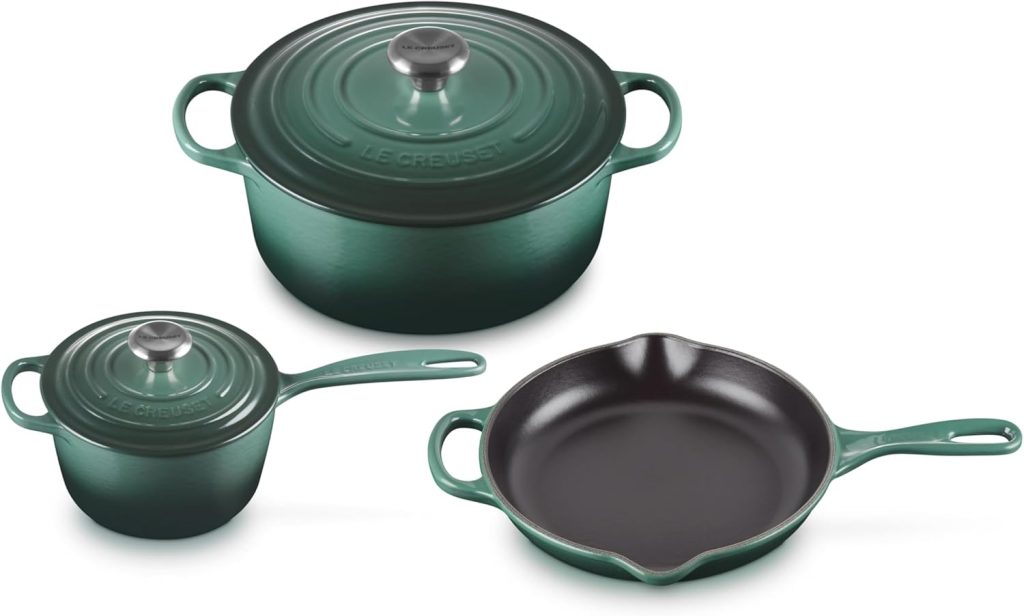
    Le Creuset Enameled cast iron signature cookware set

    Le Creuset and Staub dominate the premium enameled cast iron market, both offering lifetime warranties and rigorous testing protocols.

    Le Creuset features a lighter interior enamel that makes it easier to monitor browning, while Staub uses a black matte interior designed to enhance browning.

    4 qt Staub round Dutch Cast Iron Oven

    Both brands source their iron responsibly and comply with California’s Proposition 65 and FDA standards for food-contact surfaces.

    What Is Stainless Steel Cookware?

    Stainless steel cookware represents the workhorse of professional and home kitchens worldwide.

    Stainless Steel Pots and Pans

    Its durability, versatility, and non-reactive nature make it a foundation piece for cooks who value precision and responsiveness.

    Steel alloy (chromium + nickel)

    Stainless steel vs enamel cookware starts with understanding composition.

    True stainless steel contains at least 10.5% chromium, which creates a passive oxide layer that resists corrosion and staining.

    Most cookware uses 18/10 stainless steel (18% chromium, 10% nickel) or 18/8 grades.

    The nickel content enhances corrosion resistance and provides the signature polished finish, though nickel-sensitive individuals may prefer 18/0 grades that substitute other stabilizing elements.

    3-ply and 5-ply construction

    Premium stainless steel cookware bonds multiple metal layers together.

    A typical 3-ply construction sandwiches an aluminum or copper core between stainless steel layers—the inner core conducts heat rapidly while the steel provides cooking surface stability.

    Five-ply construction adds additional layers for enhanced heat distribution and reduced hot spots.

    This engineered approach solves stainless steel’s natural poor heat conductivity while maintaining its chemical stability.

    Reactivity and stability of stainless steel

    Unlike bare cast iron or aluminum, stainless steel won’t react with acidic ingredients.

    You can simmer tomato sauce for hours, deglaze with wine, or cook lemon-based dishes without metallic flavors or discoloration.

    This inertness makes stainless steel the gold standard for versatile cooking across all cuisines and ingredient types.

    Premium brands (All-Clad, Made In)

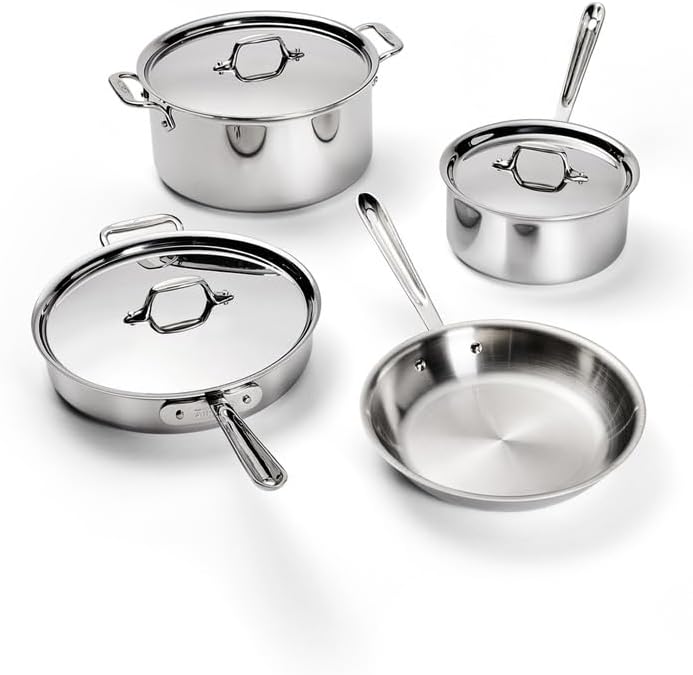
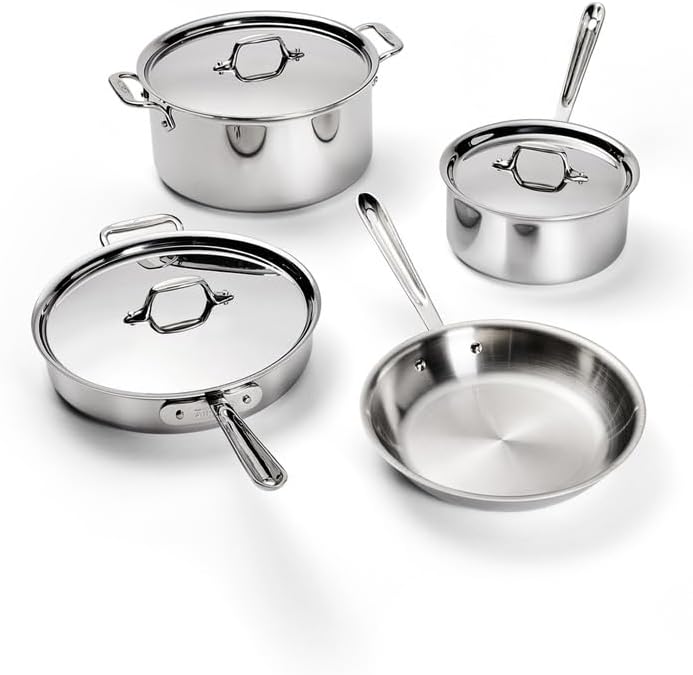
    All Clad 3 Ply Stainless steel cookware

    All-Clad pioneered bonded cookware construction in the 1970s and remains the professional standard.

    Made In offers similar multi-ply construction at more accessible price points while maintaining rigorous quality control.

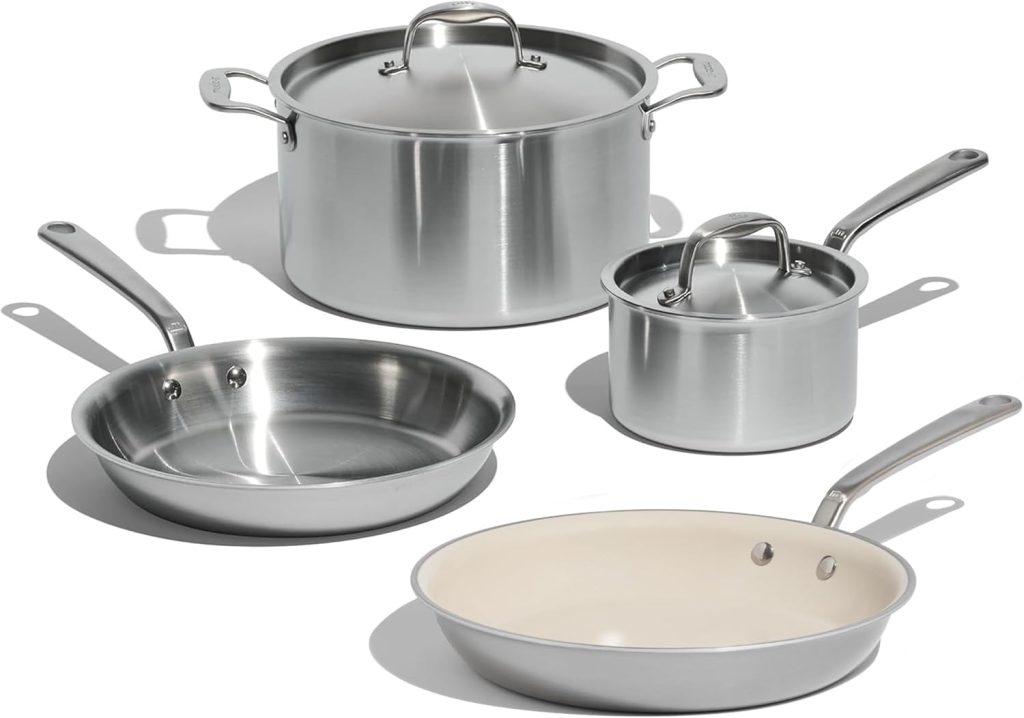
    5 Ply Made In Stainless steel cookware set

    Both brands manufacture in facilities that comply with NSF International standards and provide detailed material certifications upon request.

    Key Differences Between Enameled Cast Iron and Stainless Steel

    Enameled cast iron vs Stainless Steel

    Understanding which is better between enamel and stainless steel requires examining how these materials perform across different cooking scenarios and user needs.

    Weight: heavy vs lightweight

    Enameled cast iron’s substantial weight provides cooking advantages but physical challenges.

    A full pot of stew can exceed 20 pounds, making transfers from stovetop to oven difficult for some users.

    Stainless steel pans of equivalent volume typically weigh 40-60% less, offering easier handling and maneuverability during cooking.

    Heat retention vs heat responsiveness

    Heat retention enamel cast iron vs stainless steel reveals opposing strengths.

    Enameled Cast iron excels at maintaining steady temperatures ideal for simmering, braising, and baking, where consistent heat matters most.

    Stainless steel responds quickly to temperature adjustments, allowing precise control when searing proteins or reducing sauces.

    Cast iron takes longer to heat but stays hot; stainless heats and cools rapidly.

    Cooking versatility

    Both materials handle oven and stovetop use, but with different comfort zones.

    Enameled cast iron performs beautifully from 450-500°F but shouldn’t be preheated empty or exposed to thermal shock.

    Stainless steel tolerates higher temperatures (often 600°F+) and transitions seamlessly between heat sources without special precautions.

    Oven safety, stovetop compatibility

    Enameled cast iron works on all heat sources, including induction, though its weight makes frequent stovetop movement impractical.

    Stainless steel with magnetic bottoms also works on induction and typically features stay-cool handles for safer oven-to-table service.

    Both avoid the non-stick coating degradation concerns present in PTFE-based cookware.

    Safety Comparison — Lead, Nickel & Chemical Exposure

    When evaluating enameled cookware safety vs stainless steel, understanding potential contaminant sources helps you make informed choices for your household.

    Do enameled pots contain lead? (vintage vs modern laws)

    Post-1980 enameled cookware from established manufacturers contains negligible lead levels in cooking surfaces.

    The Consumer Product Safety Improvement Act of 2008 set strict limits on lead in consumer products, initially limiting total lead content to 600 parts per million (ppm), which was further reduced over time to as low as 100 ppm depending on the product category.

    The Act requires manufacturers to comply with these limits and mandates third-party testing of products, often by reputable brands testing each production batch to ensure compliance and consumer safety.

    These regulatory limits and testing requirements are integral to the Act’s framework to prevent lead exposure from consumer products, especially those intended for children.

    Vintage or imported pieces from unregulated manufacturers pose higher risks. When in doubt, you can learn about enamel safety concerns through third-party testing services that verify heavy metal content.

    Stainless steel nickel leaching risks (304 vs 316 steel)

    Stainless steel nickel-free cookware comparison matters for individuals with documented nickel allergies.

    Grade 304 stainless (18/8 or 18/10) can release trace amounts of nickel, particularly when cooking acidic foods for extended periods.

    Studies show leaching remains well below EU regulatory limits, but sensitive individuals might prefer 316-grade steel or nickel-free alternatives.

    For most users, nickel exposure from stainless cookware poses no health concern.

    No PFAS / PTFE concerns in either

    Both enameled cast iron and stainless steel offer inherently non-stick surfaces without synthetic coatings.

    You won’t encounter the perfluorinated chemicals (PFAS) or polytetrafluoroethylene (PTFE) degradation issues associated with traditional non-stick pans.

    This chemical-free approach makes both options suitable for high-heat cooking without toxic fume concerns.

    Which is safest for children, the elderly & sensitive individuals?

    For households prioritizing minimal chemical exposure, both materials rank as top choices.

    Enameled cast iron from certified manufacturers provides the most inert cooking surface when intact.

    Stainless steel offers comparable safety with easier handling for individuals with limited strength.

    Those comparing enamel vs ceramic options should note that both provide non-reactive surfaces, though ceramic coatings may degrade faster than traditional enamel.

    Cooking Performance Comparison

    Real-world cooking performance separates marketing claims from kitchen reality when evaluating cast iron enamel vs steel cookware.

    Best for searing

    Stainless steel wins for high-heat searing of steaks, chops, and fish.

    Its responsive heat control and lighter weight make it easier to achieve the perfect crust while managing internal doneness.

    The fond (browned bits) that develop on stainless surfaces create exceptional pan sauces.

    Enameled cast iron can sear effectively but requires longer preheating and careful temperature management to avoid enamel damage.

    Best for slow simmering

    Enameled cast iron excels at low-and-slow cooking.

    Its superior heat retention maintains gentle, consistent temperatures ideal for braising tough cuts, developing complex stews, and coaxing maximum flavor from ingredients over hours.

    The heavy lid creates a self-basting environment that keeps moisture circulating.

    Best for high-heat cooking

    Stainless steel tolerates extreme temperatures without concern for coating damage.

    You can preheat aggressively, broil, and move between burner intensities without the thermal shock sensitivities that affect enamel.

    This makes stainless steel the practical choice for techniques requiring rapid temperature changes.

    Best for daily use

    For everyday cooking versatility, stainless steel’s lighter weight and faster heat response make it more practical for most households.

    Enameled cast iron serves better as a specialized tool for weekend projects, batch cooking, and dishes that benefit from extended, even heating.

    Durability & Lifespan

    Durability comparison of enameled vs stainless steel reveals how these materials age and which represents better long-term value.

    Enameled cast iron — potential chipping, but lasts decades

    Quality enameled cookware can serve multiple generations when treated properly.

    The cast iron base is virtually indestructible, but the glass coating can chip if subjected to impact, thermal shock, or metal utensil abuse.

    Most damage occurs at rim edges or from dropping. Minor interior chips don’t necessarily compromise safety, though exposed iron will rust if not maintained.

    Exterior chips remain purely cosmetic.

    Stainless steel — nearly indestructible if high quality

    Premium multi-ply stainless steel shows remarkable longevity. The material won’t chip, crack, or degrade under normal use.

    Surfaces may develop discoloration from heat or hard water deposits, but these don’t affect performance.

    Restaurant-grade pieces routinely serve 20+ years of daily professional use. Lower-quality thin stainless steel may warp, but properly constructed cookware maintains its shape indefinitely.

    Which ages better over 10–20 years?

    Stainless steel maintains consistent performance throughout its lifespan.

    Enameled cast iron develops character—darkening interiors, subtle patina—but continues functioning well if the enamel remains intact.

    Both justify their initial investment through decades of reliable service, though stainless requires less careful handling to maintain its condition.

    Maintenance & Care Differences

    Proper maintenance extends cookware life and ensures optimal performance for both materials.

    Cleaning enamel safely

    Modern enameled cast iron tolerates dishwashers, though hand washing preserves exterior luster longer.

    For stuck food, soak with warm water and dish soap, then use non-abrasive scrubbers.

    Avoid steel wool or harsh scouring powders that can scratch enamel.

    Baking soda paste removes stubborn stains without damage. Never plunge hot enameled cookware into cold water.

    Gradual temperature changes prevent thermal shock cracks.

    Cleaning stainless steel (deglazing, Bar Keeper’s Friend)

    Stainless steel rewards proper technique. Deglaze hot pans with wine or stock to lift fond naturally.

    For rainbow heat discoloration or water spots, Bar Keeper’s Friend or white vinegar restores shine effectively.

    You can use metal utensils and abrasive scrubbers without concern.

    Stainless steel tolerates dishwashers fully, though hand washing maintains optimal appearance longer.

    Scratch resistance comparison

    Enamel resists scratching from normal use but can be marked by metal utensils or abrasive cleaners.

    These scratches typically don’t affect performance.

    Stainless steel scratches more readily from metal utensils and scrubbing, but these marks don’t compromise the material’s integrity or cooking properties.

    Many cooks embrace stainless steel’s evolving patina as evidence of a well-used kitchen tool.

    Weight, Ease of Use & Everyday Practicality

    Physical handling considerations affect daily cooking enjoyment and safety more than many buyers anticipate.

    Enameled cast iron is heavy: it may not suit all users

    A loaded 7-quart enameled Dutch oven can weigh 25+ pounds.

    This poses genuine challenges for individuals with arthritis, back problems, or limited upper-body strength.

    Lifting from lower oven racks, pouring, and moving between storage and use require significant physical capability.

    Some users keep their enameled pieces permanently on the stovetop to avoid repeated lifting.

    Stainless steel offers speed & ease

    Lighter stainless pans heat quickly and move easily during cooking.

    You can toss vegetables, pour sauces, and transfer pans with minimal effort.

    This responsiveness and maneuverability make stainless steel more suitable for active cooking styles and time-constrained weeknight meals.

    For elderly or disabled individuals, which is easier?

    Stainless steel’s reduced weight and faster responsiveness make it more accessible for users with physical limitations.

    Smaller enameled pieces (2-3 quarts) might work for specific uses, but full-size Dutch ovens often prove impractical for individuals with reduced strength or mobility concerns.

    Environmental Impact & Sustainability

    Long-term environmental costs extend beyond the purchase price when comparing these materials.

    Cast iron’s long-term reusability

    Enameled cast iron’s multi-generational lifespan represents exceptional resource efficiency.

    The energy-intensive manufacturing process gets amortized over decades of use.

    Cast iron requires no toxic coating replacement and never needs disposal due to coating degradation—only physical damage ends its service life.

    Stainless steel’s recyclability

    Stainless steel ranks among the most recycled materials globally.

    When a pan finally reaches end-of-life, it can be completely recycled into new stainless products without quality degradation.

    The multi-ply construction doesn’t hinder recycling since aluminum and steel separate easily in processing facilities.

    Manufacturing footprint differences

    Both materials require energy-intensive production.

    Cast iron smelting and enamel fusion consume substantial energy, while stainless steel production involves mining, refining, and bonding processes.

    Quality pieces from either category justify their footprint through longevity, but neither represents a “low-impact” manufacturing choice compared to simple ceramics or wood tools.

    Which One Should You Choose?

    Selecting between these materials depends on matching their strengths to your specific cooking patterns and priorities.

    Best for high-heat, long simmering: Enameled Cast Iron

    Braised short ribs, no-knead bread, coq au vin, and bean soups all benefit from enameled cast iron’s steady heat retention.

    If your cooking style emphasizes patience, flavor development through time, and one-pot meals, enameled cookware delivers exceptional results.

    Its oven-to-table presentation adds aesthetic value for serving directly from the pot.

    Best for quick everyday cooking: Stainless Steel

    Weeknight stir-fries, pan-seared chicken, sautéed vegetables, and pasta sauces work better in responsive stainless steel.

    When you need dinner ready in 30 minutes and value precise temperature control, stainless steel’s quick heating and cooling cycles provide the control you need.

    Best for durability: Stainless Steel

    For sheer physical resilience and tolerance of imperfect handling, quality stainless steel outlasts and outperforms.

    It forgives mistakes, tolerates aggressive cleaning, and maintains performance despite cosmetic wear. If you want truly worry-free cookware, stainless steel delivers.

    Best for non-toxic slow cooking: Enameled Cast Iron

    When does enamel cookware leaching become your primary concern?

    Certified enameled cast iron from reputable manufacturers offers the most chemically inert option for extended cooking times.

    The glass surface creates a complete barrier between food and iron, with zero synthetic coating degradation concerns.

    Frequently Asked Questions

    Is enameled cast iron healthier than stainless steel?

    Both materials rank as top non-toxic choices when sourced from quality manufacturers.

    Enameled cast iron provides slightly more inert surface chemistry, while stainless steel may release trace nickel amounts.

    For most users, health differences prove negligible choose based on cooking style rather than health concerns.

    Does stainless steel leach nickel?

    Grade 304 stainless steel can release small amounts of nickel, particularly during acidic cooking.

    Studies consistently show leaching remains well below safety thresholds established by regulatory agencies.

    Documented nickel-allergic individuals should consider 316-grade or nickel-free alternatives, but the general populations face no health risk from properly manufactured stainless cookware.

    Is enamel coating safe if chipped?

    Minor interior chips don’t pose immediate health hazards. Exposed cast iron will rust, but it isn’t toxic—just unsightly.

    However, chipped areas can harbor bacteria and affect food release.

    If you want to compare ceramic coatings to enamel and steel, note that ceramic chip damage typically proves more problematic than enamel chips.

    Large chips or coating degradation warrant replacement, but small edge chips rarely justify discarding otherwise functional cookware.

    Which cookware performs best without oil?

    Neither material offers truly oil-free cooking. Enameled cast iron requires less oil than stainless steel once properly preheated, but both benefit from light fat application.

    Stainless steel demands proper preheating and temperature management for optimal food release.

    Both surpass traditional non-stick coatings for high-heat performance despite requiring more cooking fat.

    Final Verdict — Both Are Safe, but Choose Based on Cooking Style

    The enameled cast iron vs stainless steel comparison doesn’t have a universal winner, only the right tool for your specific needs.

    Enameled cast iron excels at patient, low-heat cooking where superior heat retention creates tender, flavorful results.

    Its weight and thermal properties make it ideal for weekend cooking projects and dishes that benefit from extended, gentle heat.

    Stainless steel dominates everyday cooking through responsive heat control, lighter weight, and worry-free durability.

    It handles the quick weeknight meals, high-heat searing, and active cooking techniques that define most household cooking patterns.

    For safety, both materials earn top marks when purchased from reputable manufacturers.

    Modern enameled cookware contains no harmful metals in cooking surfaces, while stainless steel’s minimal nickel leaching poses no concern for most users.

    The ideal kitchen includes both enameled cast iron for specialized slow-cooking tasks and stainless steel for daily versatility.

    If choosing only one, assess your cooking frequency, physical capabilities, and dominant cooking style to guide your investment toward the material that matches your real-world kitchen habits.

  • Enamel vs Ceramic Cookware — Which Is Safer?

    Choosing cookware shouldn’t feel like navigating a chemistry lab, yet here we are, reading labels, checking certifications, and wondering if our favourite pan might be secretly toxic.

    If you’re weighing enamel vs ceramic cookware, you’re already ahead of the curve.

    Both materials promise non-toxic cooking without the PFAS chemicals found in traditional non-stick pans, but they work in fundamentally different ways.

    Enamel brings the durability of glass-fused coatings over heavy cast iron or steel, while ceramic offers lightweight, mineral-based surfaces that feel modern and eco-friendly.

    The question isn’t just which one is safer; it’s which one fits your cooking style, heat preferences, and long-term kitchen goals.

    This guide breaks down the science, safety data, and real-world performance so you can make an informed choice with confidence.

    What Is Enamel Cookware? (Glass-Fused Coating)

    Enamel cookware has been a kitchen staple for over a century, valued for its smooth, non-reactive surface and striking aesthetic appeal.

    But what exactly makes enamel different from other coatings?

    How enamel coating is made (glass powder fused onto a metal base)

    Enamel is created by fusing powdered glass onto a metal surface at extremely high temperatures, typically between 1,200°F and 1,500°F.

    This process bonds the glass permanently to the metal base, creating a durable, non-porous coating.

    Certified FDA Enamel cast iron cookware

    The glass powder contains silica, metal oxides, and mineral compounds that melt and harden into a glossy finish.

    Multiple layers are often applied to achieve a smooth, even surface that resists staining and corrosion.

    Common substrates (cast iron, steel)

    The most common base materials for enamel cookware are cast iron and carbon steel.

    Cast iron enamel pots and Dutch ovens are prized for their excellent heat retention and even cooking, while enameled steel is lighter and more affordable.

    The heavy metal core provides structural integrity and superior heat distribution, while the enamel coating prevents rust and eliminates the need for seasoning.

    Enamel color pigments and potential risks (legacy cadmium, lead)

    Vibrant enamel colors come from metal oxide pigments.

    Historically, some manufacturers used cadmium (for bright reds and oranges) and lead compounds to achieve certain hues and improve glaze quality.

    Modern reputable brands have eliminated these toxic metals, but vintage or imported enamel cookware may still pose risks.

    If you’re concerned about older pieces, learn about enamel safety concerns and consider testing before use.

    Today’s certified enamel cookware from established brands meets strict FDA and European safety standards.

    What Is Ceramic Cookware? (Sol-Gel Mineral Coating)

    Ceramic cookware has surged in popularity as consumers seek PFAS-free alternatives to traditional non-stick pans.

    Ceramic coated healthy Cookware

    Understanding what “ceramic” actually means helps clarify the difference between enamel and ceramic coating.

    Pure ceramic vs ceramic-coated metal pans

    True ceramic cookware is made entirely from clay, fired at high temperatures, similar to traditional pottery or stoneware baking dishes.

    However, most modern “ceramic cookware” refers to metal pans (usually aluminium) coated with a ceramic-like finish.

    This coating isn’t actually ceramic in the traditional sense but rather a silica-based layer that mimics ceramic’s non-stick properties.

    How silica-based sol-gel coatings are applied

    The ceramic coating on metal pans is created through a sol-gel process.

    Liquid silica (silicon dioxide) is applied to the metal surface, then cured at relatively lower temperatures than enamel, around 400°F to 800°F.

    This creates a hard, smooth, mineral-based surface. The term “sol-gel” refers to the transition from a liquid solution to a solid gel network.

    Multiple thin layers may be applied to build up thickness and improve durability.

    Why is ceramic marketed as “non-toxic & PFAS-free”

    Ceramic coatings gained traction as safe alternatives to Teflon because they contain no PTFE (polytetrafluoroethylene) or PFOA (perfluorooctanoic acid), the chemicals linked to health concerns in traditional non-stick cookware.

    The silica-based coating is derived from sand and minerals, making it naturally free from synthetic fluoropolymers.

    Marketing emphasises this “green” chemistry, though consumers should still fully understand ceramic coating safety, as quality varies significantly between brands.

    Key Differences Between Enamel and Ceramic Coatings

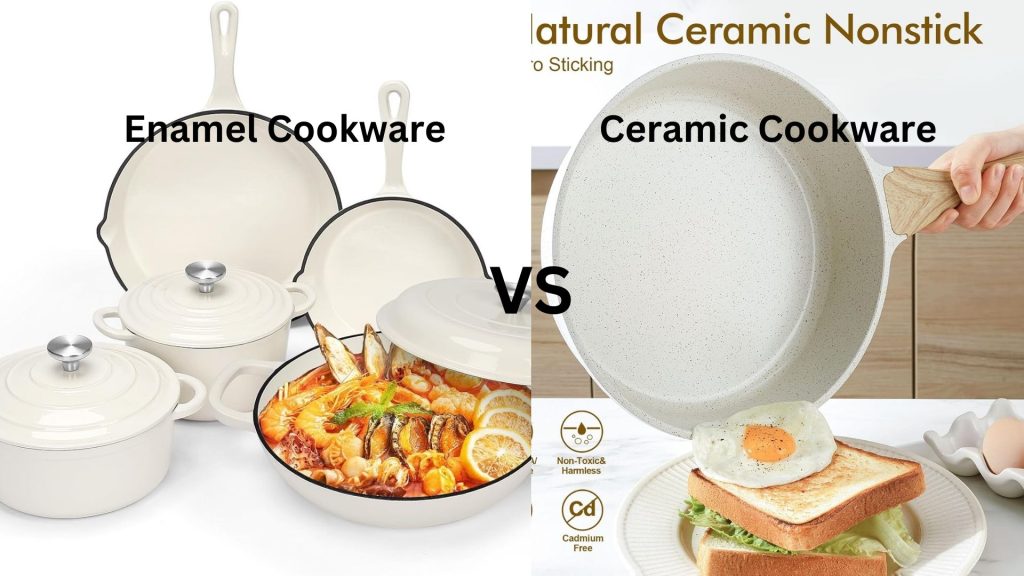
    Enamel vs ceramic cookware

    While both enamel and ceramic offer non-toxic cooking surfaces, they differ substantially in composition, construction, and performance characteristics.

    Material composition (glass enamel vs mineral coating)

    Enamel is essentially glass silica fused with metal oxides and minerals permanently bonded to metal through extreme heat.

    Ceramic coatings are silica-based but created through chemical processes at lower temperatures, resulting in a different molecular structure.

    This fundamental difference affects everything from durability to heat tolerance.

    Base metal differences (cast iron vs aluminum)

    Enamel typically covers cast iron or steel, creating heavyweight cookware with excellent heat retention.

    Ceramic coatings usually cover aluminum or stainless steel, producing lighter pans that heat quickly but don’t hold heat as long.

    This weight difference dramatically impacts the cooking experience and technique.

    Heat tolerance & oven safety

    Enamel cast iron vs ceramic cookware shows clear distinctions in heat capability.

    Quality enamel cookware can withstand oven temperatures up to 500°F or higher, and the coating itself won’t degrade at high heat.

    Ceramic coatings are more temperature-sensitive—most manufacturers recommend staying below 400°F to 450°F to prevent coating breakdown.

    For high-heat searing or extended oven braising, enamel holds a clear advantage.

    Weight, feel, and cooking experience differences

    Enamel-coated cast iron is heavy and requires two hands for larger pieces, but offers restaurant-quality heat retention for braising, roasting, and slow cooking.

    Ceramic-coated aluminum pans are light and manoeuvrable, ideal for quick sautéing and everyday cooking.

    The weight difference makes ceramic more accessible for users with limited hand strength, while enamel appeals to serious home cooks seeking professional results.

    Safety Comparison — Lead, Cadmium & Chemical Exposure

    Safety is often the primary concern driving the enamel vs ceramic cookware comparison. Let’s examine what scientific testing reveals about potential health risks.

    Does enamel cookware contain lead?

    Modern enamel cookware from reputable manufacturers is lead-free and cadmium-free.

    However, vintage pieces (especially those made before the 1980s) and some imported products may contain these heavy metals in the glaze or pigments.

    Colorful enamels, particularly reds, oranges, and yellows on older cookware, carry a higher risk.

    Always check for Prop 65 warnings and purchase from established brands that provide safety certifications.

    Does ceramic cookware contain heavy metals?

    High-quality ceramic coatings are generally free from lead, cadmium, PFAS, and PTFE.

    The silica-based formula doesn’t require heavy metals for performance.

    However, inferior products or those manufactured without strict quality control may contain trace contaminants.

    Some testing by independent labs has occasionally detected lead in low-quality ceramic cookware, particularly in decorative elements or poorly manufactured coatings.

    Checking for Prop 65 warnings & FDA compliance

    California’s Proposition 65 requires warnings for products containing chemicals known to cause cancer or reproductive harm.

    Check product listings and packaging for these warnings. FDA-compliant cookware meets federal standards for materials that contact food.

    Reputable brands voluntarily submit to third-party testing and display certifications prominently.

    What testing shows (SGS / Intertek)

    Independent testing organisations have tested numerous cookware brands.

    Results consistently show that certified modern enamel and ceramic cookware from quality manufacturers test negative for lead and cadmium.

    Budget imports and vintage pieces show more variability. If you have concerns about specific pieces, verify if your cookware is lead-free through home testing kits or professional laboratory analysis.

    Durability & Lifespan Comparison

    Understanding ceramic vs enamel durability helps predict long-term value and replacement costs.

    Enamel chipping risk vs ceramic surface scratching

    Enamel’s primary vulnerability is chipping; a sharp impact can crack the glass coating, exposing the metal underneath.

    Once chipped, the cookware may rust at the exposed spot, though it’s still usable with care.

    Ceramic coatings typically don’t chip but instead wear down gradually through abrasion and repeated heating cycles.

    Scratches accumulate from metal utensils and rough scrubbing, eventually compromising the non-stick properties.

    Heat shock and thermal cracking

    Enamel can crack from thermal shock, rapidly moving a hot pot to a cold surface or adding cold liquid to a scorching pan.

    This vulnerability requires mindful handling. Ceramic coatings are less prone to thermal shock cracking but can degrade from repeated high-heat exposure, causing the coating to break down at a molecular level.

    Which lasts longer in real kitchens

    Quality enamel cookware routinely lasts 10 to 20 years or more with proper care.

    Le Creuset and Staub pieces often become heirlooms passed through generations.

    Ceramic coatings typically maintain optimal non-stick performance for 1 to 3 years before showing wear, with total lifespan reaching 3 to 5 years for better brands.

    The ceramic vs enamel durability winner is clearly enamel for longevity.

    Effects of coating wear on safety

    When enamel chips, the exposed cast iron underneath is safe but may rust and affect food flavor.

    The glass coating itself doesn’t degrade chemically. Ceramic coating wear is more concerning as the surface breaks down; the underlying aluminum may become exposed.

    While modern anodized aluminum is considered safe, scratched ceramic exposes this metal to acidic foods, potentially increasing aluminum migration into food.

    Cooking Performance — Non-Stick Ability & Heat Control

    Performance characteristics significantly impact daily cooking satisfaction and determine whether enamel vs ceramic non-stick matters for your recipes.

    Which has better early non-stick performance?

    Brand-new ceramic cookware offers exceptional non-stick performance, often rivaling traditional Teflon for ease of food release with minimal oil.

    Enamel provides a smooth surface but isn’t truly non-stick—it’s non-reactive and easy to clean, but food can stick, especially when cooking lean proteins or eggs without adequate fat.

    For pure non-stick convenience out of the box, ceramic wins initially.

    Heat retention (cast iron enamel wins)

    Enamel-coated cast iron excels at heat retention, maintaining steady temperatures throughout cooking.

    This makes it ideal for braising, slow-cooking stews, and achieving even browning.

    Ceramic-coated aluminum heats quickly but loses heat rapidly when food is added or when removed from the burner.

    For recipes requiring stable, consistent heat, enamel’s thermal mass provides superior results.

    Low-oil cooking performance

    Ceramic coatings, when new, allow very low-oil cooking, appealing to health-conscious cooks.

    However, this performance degrades over time. Enamel requires more fat for proper food release but maintains this requirement consistently throughout its lifespan.

    If you compare ceramic with Teflon alternatives, you’ll find that ceramic offers a middle ground better than enamel initially, but not as permanently non-stick as PTFE.

    High-heat searing differences

    Enamel cookware handles high-heat searing exceptionally well, developing beautiful crusts on meats without coating damage.

    Ceramic coatings can degrade when repeatedly exposed to temperatures above 450°F, gradually losing their non-stick properties and developing discoloration.

    For techniques like blackening fish or searing steaks, enamel’s heat tolerance makes it the safer long-term choice.

    Maintenance & Care — Which Is Easier to Use Safely?

    Daily maintenance impacts both convenience and safety, influencing which cookware fits your lifestyle.

    Can you use metal utensils on enamel and ceramic?

    Enamel tolerates metal utensils better than ceramic.

    While manufacturers recommend wooden or silicone tools to prevent scratching, enamel’s hardness resists minor utensil marks.

    Light scratches don’t compromise safety or performance significantly.

    Ceramic coatings are more delicate than metal utensils can scratch the surface, accelerating wear and reducing non-stick capability.

    Stick to soft utensils with ceramic to maximize lifespan.

    Cleaning difficulty

    Enamel’s smooth, non-porous surface resists food particles and cleans easily, though stuck-on food may require soaking. The surface doesn’t absorb oils or odors.

    Ceramic, when new, wipes clean effortlessly, but as the coating ages, cleaning becomes more challenging.

    Food begins sticking in worn areas, and the surface may develop stubborn brown residue that’s difficult to remove without abrasive scrubbing, which further damages the coating.

    Stain resistance

    Quality enamel resists staining well, though light-colored interiors may show darkening over time from high-heat cooking and oil polymerization.

    These stains are cosmetic and don’t affect safety. Ceramic coatings are prone to staining, especially from oils and high-heat cooking.

    Once stained, ceramic rarely returns to its original bright white appearance, even with aggressive cleaning.

    Dishwasher + oven safety

    Most enamel cookware is dishwasher-safe, though hand washing extends the coating’s life.

    Enamel handles oven temperatures up to 500°F or higher, depending on the brand.

    Ceramic-coated pans vary—some are dishwasher-safe while others aren’t, and oven-safe temperatures typically max out around 400°F to 450°F.

    Always verify manufacturer specifications, as exceeding recommended temperatures can permanently damage ceramic coatings.

    Environmental & Sustainability Comparison

    Environmental consciousness increasingly influences cookware choices, prompting questions about each material’s ecological footprint.

    PFAS-free nature of both materials

    Both enamel and ceramic cookware are completely PFAS-free, containing no synthetic fluoropolymers or “forever chemicals.”

    This shared characteristic makes both materials environmentally preferable to traditional non-stick coatings that release persistent pollutants during manufacturing and disposal.

    From a chemical safety standpoint, both represent significant environmental improvements.

    Ceramic’s eco-marketing vs actual footprint

    Ceramic cookware benefits from “green” marketing emphasizing natural minerals and non-toxic manufacturing.

    However, the reality is more complex. Ceramic-coated pans typically have shorter lifespans (3-5 years), leading to more frequent replacement and greater cumulative waste.

    The aluminum base, while recyclable, requires energy-intensive extraction and processing. Marketing often oversimplifies these environmental tradeoffs.

    Enamel’s recyclability and energy-intensive firing

    Enamel production requires extreme heat, consuming considerable energy.

    However, the resulting product’s decades-long lifespan offsets this initial environmental cost.

    Enamel cookware is technically recyclable; the iron core can be reclaimed, though the fused glass coating complicates processing.

    Many users keep quality enamel pieces for life, reducing overall environmental impact through longevity rather than recyclability.

    What each coating means for long-term sustainability

    The safest cookware material comparison from an environmental perspective favors durability over disposability.

    Enamel’s 20+ year lifespan means fewer pieces manufactured, shipped, and discarded over time.

    Ceramics’ shorter functional life creates more waste despite “eco-friendly” materials.

    True sustainability in cookware comes from buying once and using for decades, a principle where enamel excels.

    Which Is Best for You? (Use-Case Based Verdict)

    The answer to which is safer, enamel or ceramic cookware, depends on your specific cooking needs and priorities.

    Best for high-heat searing → Enamel

    If you regularly cook steaks, roasts, or dishes requiring sustained high temperatures, enamel-coated cast iron delivers superior performance.

    It won’t degrade at searing temperatures, develops excellent browning, and transitions seamlessly from stovetop to oven.

    The durability justifies the higher initial investment for serious cooks who value heat tolerance and longevity.

    Best for lightweight everyday use → Ceramic

    For quick weeknight dinners, vegetable sautés, and cooking situations where weight matters, ceramic-coated pans offer convenience.

    They heat rapidly, provide good initial non-stick performance, and are easier to maneuver than heavy cast iron.

    Budget-conscious cooks comfortable replacing pans every few years will appreciate ceramic’s lower entry cost.

    Best for toxin-safe, coating-free option → Pure ceramic or cast iron

    If you want to eliminate any concerns about coating wear or degradation, consider pure ceramic bakeware or uncoated cast iron.

    These materials have no coatings to chip or wear away, offering complete peace of mind regarding ceramic vs enamel toxicity.

    They require different techniques but provide the most minimal-processing approach to non-toxic cooking.

    Best for long-term durability → Enamel cast iron

    When value is measured in decades rather than years, enamel-coated cast iron stands unmatched.

    Quality pieces from Le Creuset, Staub, or Lodge can last multiple generations with proper care.

    The higher upfront cost translates to lower per-year ownership expense and less environmental waste. For cooks investing in lifetime kitchen tools, enamel represents superior long-term value.

    FAQs About Ceramic vs Enamel Cookware

    Which one chips faster?

    Enamel can chip from impact but resists gradual wear, while ceramic doesn’t chip but wears down through repeated use and washing.

    Enamel maintains its integrity if not physically damaged, whereas ceramic inevitably loses non-stick properties over time.

    Which is safest for kids and the elderly?

    Both modern certified cookware types are safe when properly manufactured.

    Ceramic’s lighter weight may be easier for those with limited strength to handle.

    Neither poses chemical risks when used as directed, though damaged enamel exposing iron requires caution with acidic foods.

    Can either leach metals?

    Modern certified enamel and ceramic cookware from reputable brands doesn’t leach harmful metals during normal use.

    Damaged enamel may expose iron (generally safe), while scratched ceramic could potentially expose aluminum underneath.

    Quality matters significantly cheap imports may contain contaminants not present in certified products.

    Is ceramic better for non-stick cooking?

    Ceramic provides better non-stick performance when new, but this advantage is temporary.

    Within 1-2 years, ceramic loses much of its non-stick capability, while enamel maintains its consistent (though moderate) food-release properties indefinitely.

    For long-term non-stick reliability, neither compares to properly seasoned cast iron or quality stainless steel with proper technique.

    Final Verdict — Both Are Safe, but Choose Based on Use

    The enamel vs ceramic cookware comparison reveals no clear universal winner; instead, the best choice depends on your cooking style, budget, and priorities.

    Enamel cookware is more durable, chip-resistant with proper care, and excellent for high-heat cooking.

    Its decades-long lifespan makes it the economical choice over time, ideal for slow braises, oven-roasting, and recipes requiring steady, even heat.

    The weight and higher price create barriers for some users, but serious home cooks appreciate the professional-quality results.

    Ceramic cookware is lighter, completely PFAS-free, and performs wonderfully for low-to-medium heat everyday cooking.

    The impressive initial non-stick surface and affordable pricing make it accessible, though realistic expectations about the 2-4 year functional lifespan are important.

    It’s perfect for quick meals and cooks who prefer lighter cookware.

    Vintage enamel carries a potential lead risk test before use.

    Colorful pieces manufactured before modern safety standards may contain heavy metals in decorative glazes.

    Modern certified cookware eliminates this concern.

    For the highest safety: choose certified modern brands and handle both materials gently.

    Avoid extreme temperature shocks with enamel, don’t overheat ceramic coatings, and replace any cookware showing significant damage.

    Whether you choose the enduring strength of enamel cast iron vs ceramic cookware’s lightweight convenience, both materials offer safe, non-toxic cooking when sourced from reputable manufacturers and used properly.

  • Ceramic vs Teflon Cookware — Which Is Safer?


    Standing in your kitchen, staring at a pan that’s starting to peel, you wonder: Is this safe?

    The debate over ceramic vs Teflon cookware isn’t just about cooking performance; it’s about your family’s health.

    Every meal you prepare, every surface that touches your food, matters.

    With rising concerns about forever chemicals, toxic coatings, and environmental damage, choosing the right cookware has never been more critical.

    Should you trust the convenience of Teflon’s slick surface, or switch to ceramic’s natural promise?

    The answer affects not just tonight’s dinner, but years of wellness ahead.

    This comprehensive guide will break down the science, safety, and sustainability of both options, helping you make an informed decision that protects what matters most: your health and your loved ones.

    What’s the Difference Between Ceramic and Teflon Cookware?

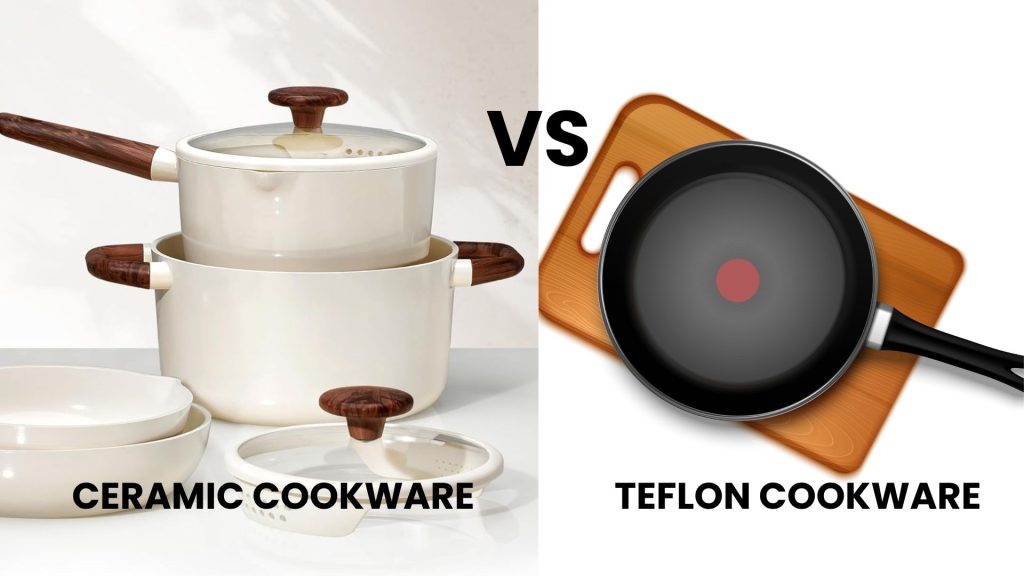
    Ceramic vs Teflon cookware

    Understanding the difference between ceramic and Teflon cookware starts with knowing what each coating is actually made from.

    These two popular non-stick surfaces may look similar in your kitchen, but their origins, composition, and manufacturing processes couldn’t be more different.

    Teflon relies on synthetic chemistry, while ceramics draw from natural mineral compounds.

    This fundamental distinction shapes everything from their safety profiles to how they perform over time.

    How Teflon (PTFE) Coatings Are Made

    Teflon is the brand name for polytetrafluoroethylene (PTFE), a synthetic fluoropolymer created through chemical manufacturing.

    The process involves polymerising tetrafluoroethylene gas under high pressure and temperature, resulting in a slippery, water-repellent plastic coating.

    This ceramic vs PTFE cookware distinction is crucial: PTFE is entirely man-made, engineered in laboratories using fluorinated compounds.

    Manufacturers spray or roll multiple layers of this polymer onto metal cookware bases, then cure it at extremely high temperatures.

    While modern Teflon production has eliminated PFOA (a harmful processing aid), the base material remains a synthetic plastic with potential concerns when overheated.

    RELATED: ENAMEL VS CERAMIC COOKWARE COMPARISON

    How Ceramic Coatings Are Created Using Silica-Based Sol-Gel Process

    Ceramic cookware uses a completely different approach rooted in natural materials.

    The coating begins with a sol-gel process, where silica (derived from sand) is suspended in a liquid solution along with oxygen and carbon.

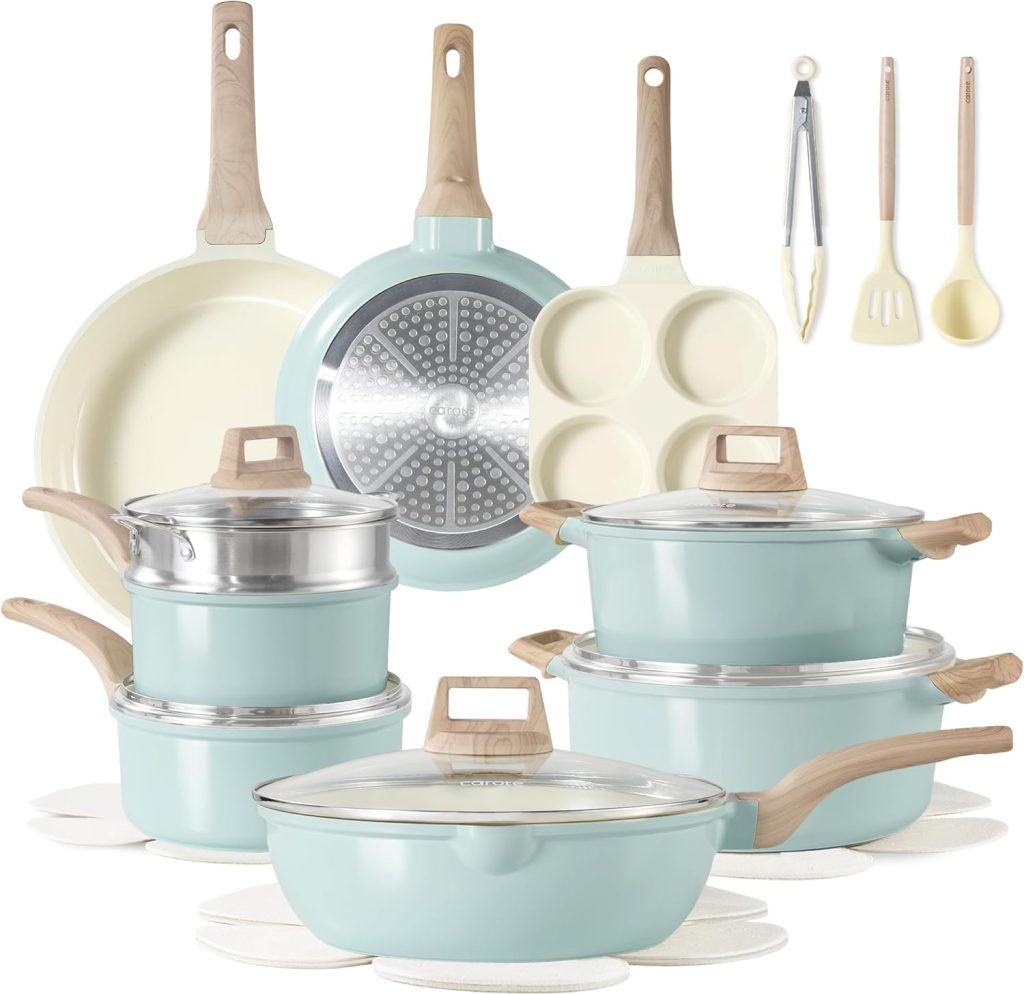
    Carote non stick ceramic pots and pans

    This mixture is applied to the cookware surface and then cured at high temperatures, creating a hard, glass-like ceramic layer.

    Unlike Teflon’s plastic polymer, ceramic coatings are inorganic and mineral-based.

    The result is a naturally non-stick surface free from synthetic chemicals.

    This manufacturing method produces what many consider the safest non-stick cookware has to offer, though quality varies significantly between brands.

    Key Composition Differences — Synthetic Polymer vs Mineral-Based Coating

    The core distinction between ceramic vs non-stick cookware (Teflon-based) lies in their molecular structure.

    Teflon consists entirely of carbon and fluorine atoms bonded in long polymer chains. It’s essentially a type of plastic.

    GreenLife non-toxic ceramic coating pots and pans

    Ceramic coatings, conversely, are made from silicon, oxygen, and sometimes additional minerals, forming an inorganic crystalline structure.

    This difference impacts everything: Teflon remains stable up to certain temperatures but can release toxic fumes when overheated, while ceramic withstands higher heat but may be more prone to physical wear.

    For health-conscious cooks wondering whether ceramic is safer than Teflon, this compositional difference is the starting point for understanding safety profiles.

    How Each Cookware Type Works

    Both ceramic and Teflon achieve non-stick properties, but through entirely different mechanisms.

    Understanding how these surfaces prevent food from sticking and how they hold up under real cooking conditions helps explain why one might suit your needs better than the other.

    Sensarte healthy ceramic non-toxic cookware

    Performance isn’t just about the first use; it’s about how these coatings behave month after month.

    How Non-Stick Surfaces Prevent Food Adhesion

    Non-stick technology works by creating an ultra-smooth, low-energy surface that food molecules can’t easily bond to.

    Teflon’s fluoropolymer chains are so tightly packed and chemically inert that almost nothing sticks to them. Water beads up and rolls off, proteins slide away effortlessly.

    Ceramic coatings achieve similar results through their glass-like smoothness and hydrophobic properties, though the mechanism is slightly different.

    The silica-based surface has minimal microscopic pores, reducing contact points where food could grab hold.

    Both technologies mean you can cook eggs, fish, and delicate foods with minimal oil, making cleanup significantly easier than traditional cookware.

    Heat Resistance and Coating Durability of Both Materials

    When comparing ceramic cookware vs Teflon heat limit, ceramic has a clear advantage in temperature tolerance.

    Quality ceramic coatings can safely withstand temperatures up to 450-500°F (230-260°C), and some even higher.

    Teflon, however, begins to break down and release toxic fumes at temperatures above 400-500°F (204-260°C), with degradation accelerating rapidly at higher temperatures.

    This makes ceramic better suited for high-heat searing or oven use. However, Teflon generally offers superior scratch resistance and maintains its non-stick properties longer with proper care.

    The durability question isn’t just about heat; it’s about how each coating responds to metal utensils, abrasive cleaners, and daily wear.

    Teflon’s flexible polymer structure resists minor scratches better, while ceramic’s rigid surface can chip or lose effectiveness more quickly.

    Non-Stick Performance Comparison (Initial vs Long-Term Use)

    Fresh out of the box, both ceramic and Teflon pans perform impressively, with eggs sliding effortlessly and minimal oil needed.

    However, their long-term trajectories differ significantly. Teflon maintains consistent non-stick performance for 3-5 years with proper care, though it eventually begins to degrade and peel.

    Ceramic cookware often starts exceptionally slick but may lose some non-stick effectiveness within 1-2 years, even with gentle use.

    This doesn’t mean ceramic becomes unusable; it simply requires slightly more oil over time.

    For those researching PFAS-free cookware vs Teflon options, this trade-off between longevity and chemical safety becomes a key consideration in the decision-making process.

    Chemical Safety — PFAS, Lead & Other Toxins

    The safety conversation around cookware centres on what potentially harmful substances might leach into your food or vaporise into your kitchen air.

    This section examines the chemical realities behind both coating types, separating marketing claims from scientific evidence.

    Understanding these risks is essential to verify that your cookware is truly toxin-free.

    Teflon (PTFE) and PFAS Concerns — “Forever Chemicals” Explained

    PFAS (per- and polyfluoroalkyl substances) are a family of thousands of synthetic chemicals nicknamed “forever chemicals” because they don’t break down in the environment or human body.

    Traditional Teflon manufacturing used PFOA, a PFAS compound, though this was phased out in the US by 2013.

    Modern Teflon is technically PFOA-free, but the PTFE coating itself is still a fluoropolymer with potential concerns.

    When which is safer, ceramic or Teflon, comes up, the PFAS connection is central: while modern Teflon doesn’t contain PFOA, other PFAS may be used in manufacturing, and overheating can release toxic particulates.

    Additionally, once Teflon cookware reaches landfills, its non-biodegradable nature contributes to environmental PFAS contamination.

    To understand the full safety profile of Teflon coating, consumers must recognise that “PFOA-free” doesn’t mean entirely chemical-free.

    Ceramic Cookware — Lead or Cadmium Risk from Pigments

    Ceramic cookware’s safety record is generally strong, but it’s not without potential concerns.

    The primary risk involves heavy metals, specifically lead and cadmium, which can be present in the pigments used to color ceramic coatings.

    This problem is most common in cheap imports, vintage pieces, or decorative cookware not specifically manufactured for food contact.

    High-quality ceramic cookware from reputable brands undergoes rigorous testing and uses food-safe pigments, making lead contamination rare in modern products.

    However, consumers should be cautious about brightly colored ceramic pans from unknown manufacturers, as these pose a higher risk.

    The good news: unlike Teflon’s chemical structure, ceramic coatings themselves are inert and non-toxic.

    To learn more about ceramic coating safety, look for products with third-party testing certifications.

    Modern Safety Updates — PFOA-Free, PFAS-Free, and Lead-Free Certifications

    The cookware industry has responded to health concerns with improved formulations and transparency.

    Most reputable Teflon manufacturers now advertise “PFOA-free” coatings, though this doesn’t address all PFAS concerns.

    A growing number of brands offer genuinely PFAS-free ceramic non-stick comparison options, with certifications verifying zero fluorinated compounds.

    For ceramic cookware, look for explicit “lead-free” and “cadmium-free” certifications, preferably with third-party testing documentation.

    California’s Proposition 65 warnings, FDA compliance statements, and testing by organisations like SGS or Intertek provide additional assurance.

    The emergence of safest non-stick cookware options reflects manufacturers’ recognition that consumers demand proof, not just promises, of chemical safety.

    Independent Test Findings

    Independent testing provides crucial verification beyond manufacturer claims.

    The FDA monitors cookware safety but doesn’t pre-approve products; instead investigates reported problems and recalls.

    These independent test findings have tested thousands of cookware items using XRF (X-ray fluorescence) technology, uncovering lead and cadmium in numerous brands, particularly in ceramic coatings.

    Findings reveal that even some “premium” ceramic brands contained detectable heavy metals, while others tested completely clean.

    For Teflon products, concerns centre less on lead and more on coating degradation and PFAS persistence.

    These independent investigations underscore why consumers researching ceramic vs Teflon non-stick pans should demand transparency and third-party verification rather than accepting marketing claims at face value.

    Cooking Performance & Durability Comparison

    Beyond safety, cookware must actually work well in your kitchen.

    How each coating performs under real cooking conditions, from heat distribution to everyday wear, determines whether it becomes a trusted tool or a regretful purchase.

    This section examines the practical realities of cooking with both materials.

    Heat Distribution, Retention, and Temperature Tolerance

    The base material of your cookware (aluminum, stainless steel, or cast iron) primarily determines heat distribution, but coatings influence heat retention and maximum safe temperatures.

    Ceramic-coated pans generally conduct heat efficiently and can safely reach higher temperatures than Teflon without coating degradation.

    This makes ceramic better for achieving a good sear on proteins or transitioning from stovetop to oven.

    Teflon-coated pans excel at low-to-medium heat cooking, distributing warmth evenly for delicate tasks like eggs or fish.

    However, Teflon’s temperature limitations (around 400-500°F) mean you can’t use high heat without risking toxic fume release and coating breakdown.

    For those comparing ceramic vs Teflon cookware for versatility, ceramic’s higher heat tolerance provides more cooking technique options.

    Scratch Resistance and Lifespan of Coatings

    Teflon’s polymer structure gives it a slight edge in scratch resistance; it can handle occasional metal utensil contact better than ceramic, though wooden or silicone tools are still recommended.

    Ceramic coatings, being glass-like and rigid, are more susceptible to chipping from impacts or abrasive scrubbing.

    However, scratched Teflon poses health concerns as the damaged coating can flake into food, while scratched ceramic remains chemically inert.

    Lifespan varies significantly: quality Teflon pans typically last 3-5 years with proper care, while ceramic pans often decline after 1-2 years, though the pan remains usable with slightly more oil.

    This durability difference factors heavily into the Is ceramic safer than Teflon debate—ceramic may need replacing more frequently, but worn ceramic doesn’t pose the same health risks as degraded Teflon.

    Ease of Cleaning and Maintenance Differences

    Both coatings shine when it comes to cleanup—at least initially. New ceramic and Teflon pans both release food easily with just a gentle wipe or rinse.

    However, maintenance requirements differ. Teflon demands lower heat settings and gentler handling to preserve its coating, while ceramic benefits from occasional oil seasoning to maintain optimal non-stick properties as it ages.

    Ceramic cookware tolerates dishwasher use better than Teflon, though hand washing extends the life of both.

    Neither coating responds well to abrasive scrubbers or metal scouring pads. Over time, ceramic may develop a slight patina or lose some slickness, while Teflon either maintains performance or suddenly begins to peel and degrade.

    Which Performs Better for High-Heat Cooking

    For high-temperature cooking techniques like searing, browning, or oven-roasting, ceramic cookware clearly outperforms Teflon.

    Ceramic’s ability to safely withstand 450-500°F+ makes it suitable for techniques that require intense heat.

    Teflon cookware should never be used for high-heat applications due to toxic fume release and rapid coating degradation.

    If you frequently cook at high temperatures or want the flexibility to move pans from stovetop to oven, ceramic is the better choice.

    However, for low-and-slow cooking, scrambled eggs, or delicate fish, Teflon’s superior long-term non-stick consistency might give it an edge—provided you never exceed safe temperature limits.

    Environmental Impact of Ceramic vs Teflon

    Your cookware choice ripples beyond your kitchen, affecting ecosystems and future generations.

    The environmental footprint of manufacturing, using, and disposing of these products reveals important sustainability differences that conscious consumers should consider.

    PFAS Pollution and Non-Biodegradability of Teflon

    Teflon’s environmental impact centres on its “forever chemical” status.

    PTFE doesn’t break down in nature, persisting in landfills indefinitely.

    Manufacturing facilities have historically released PFAS compounds into water supplies, soil, and air, with documented contamination near production plants worldwide.

    While PFOA has been phased out, replacement chemicals often share similar persistence and bioaccumulation properties.

    When Teflon cookware is discarded, it contributes to the growing burden of non-biodegradable plastic waste.

    Even during normal use, microscopic Teflon particles can enter wastewater systems.

    The long-term environmental consequences of widespread PFAS contamination include bioaccumulation in wildlife, drinking water contamination, and ecosystem disruption—impacts that will persist for generations.

    Ceramic Coatings as Eco-Friendlier Alternatives

    Ceramic cookware offers a more environmentally responsible alternative.

    The silica-based coating derives from abundant natural materials (sand/quartz) rather than synthetic chemicals requiring energy-intensive fluorination processes.

    Ceramic coatings are inorganic and don’t leach persistent chemicals into ecosystems.

    When disposed of, they break down more readily than fluoropolymers, though the metal base still requires proper recycling.

    The sol-gel manufacturing process generally has a lower environmental footprint than PTFE production, with fewer toxic byproducts.

    For consumers seeking PFAS-free cookware vs Teflon options with better sustainability profiles, ceramic represents a significant improvement, though it’s not perfect—production still requires energy and resources.

    Manufacturing Emissions and Recyclability Comparison

    Teflon production involves fluorination processes that historically generated significant greenhouse gas emissions and toxic waste.

    Modern facilities have improved, but fluoropolymer manufacturing remains resource-intensive with concerning environmental outputs.

    Ceramic coating production uses high-temperature curing but avoids hazardous chemical synthesis.

    Recyclability poses challenges for both: the coatings themselves can’t be separated from metal bases easily, making recycling complex.

    However, ceramics’ inorganic nature makes it less problematic in recycling streams than Teflon’s persistent polymers.

    Neither cookware type qualifies as easily recyclable, but ceramic’s end-of-life environmental burden is considerably lighter.

    For those comparing ceramic vs Teflon cookware through an environmental lens, ceramic’s lower toxicity, reduced persistent pollution, and more benign disposal profile make it the greener choice.

    Safety Over Time — What Happens as Cookware Ages

    New cookware performs well, but what happens after months or years of daily use reveals the true safety profile of these coatings.

    Understanding degradation patterns helps you know when it’s time to retire a pan—and why that timing differs dramatically between ceramic and Teflon.

    Degradation of Teflon Coatings (Peeling, Fumes)

    Teflon’s degradation presents genuine health concerns. As the coating ages, it may begin to bubble, flake, or peel, especially if subjected to high heat or metal utensils.

    These flaking pieces can end up in your food, and while small amounts passing through the digestive system are considered relatively inert, it’s not something anyone wants to consume.

    More concerning is what happens at elevated temperatures: degrading or overheated Teflon releases toxic fumes containing perfluoroisobutylene and other compounds that cause polymer fume fever in humans and can be lethal to pet birds.

    Even at normal cooking temperatures, aged Teflon may release more particles and chemicals than new coatings.

    Once a Teflon pan shows any signs of peeling, scratching through to the base, or discoloration, it should be replaced immediately.

    Continuing to use compromised Teflon cookware poses unnecessary health risks.

    Ceramic Wear (Loss of Non-Stick Properties, Minor Chipping)

    Ceramic cookware ages differently, with concerns centred on performance rather than toxicity.

    Over time, ceramic coatings gradually lose their non-stick effectiveness, requiring more oil for cooking and making cleanup slightly more difficult.

    Minor surface chips or scratches may develop, particularly along pan edges or from metal utensils.

    The good news: unlike Teflon, degraded ceramic doesn’t release toxic fumes or concerning particles.

    The silica-based coating remains chemically inert even when worn. While chipped ceramic cookware may not perform optimally, it doesn’t pose the same health hazards as damaged Teflon.

    Some users continue using ceramic pans long after they’ve lost their initial slickness, simply adapting their cooking technique, whereas compromised Teflon should be discarded promptly for safety reasons.

    When to Replace Each Cookware Type Safely

    Replacement timing differs significantly between these materials. For Teflon cookware, replace it immediately if you notice peeling, flaking, excessive scratching, or discoloration.

    These indicate coating failure and potential health risks. Even without visible damage, consider replacing Teflon pans every 3-5 years as a precaution, or sooner with heavy use.

    For ceramic cookware, replacement is less urgent and more about performance preference.

    If your ceramic pan has lost significant non-stick properties, developed major chips, or no longer cooks evenly, it’s time for an upgrade.

    However, there’s no health emergency with aged ceramic—you can safely continue using it if you don’t mind using more cooking fat.

    This difference in replacement urgency reflects the core safety distinction when comparing which is safer, ceramic or Teflon, over the long term.

    Which Is Safer Overall — Ceramic or Teflon?

    After examining composition, performance, chemical safety, and environmental impact, we can now synthesise these factors into a clear safety verdict.

    The answer depends partly on your priorities, but the evidence points toward a clear winner for health-conscious consumers.

    Quick Comparison Table: Ceramic vs Teflon Cookware at a Glance

    FeatureCeramic CookwareTeflon Cookware
    Coating MaterialSilica-based (mineral)PTFE (synthetic polymer)
    PFAS ContentPFAS-free, no forever chemicalsContains fluoropolymers (PTFE)
    Heat Tolerance450-500°F+ safelyMax 400-500°F (releases fumes above)
    Toxic Fume RiskNone, even when overheatedYes, when overheated
    Non-Stick Lifespan1-2 years optimal performance3-5 years consistent performance
    Scratch ResistanceLower (glass-like, chips easier)Higher (flexible polymer)
    Environmental ImpactEco-friendlier, biodegrades betterPersistent pollutant, non-biodegradable
    When DamagedRemains inert and safeCan release particles and fumes
    Lead/Cadmium RiskPossible in cheap/vintage piecesPossible in cheap/vintage pieces, decorative pigments. Possible in external coatings, colored surfaces, and cheap imports.
    Best ForHealth-conscious, high-heat cookingLow-heat cooking, convenience
    Replacement UrgencyPerformance-based (optional)Safety-based (mandatory when damaged)

    Summary of Health, Durability, and Eco-Friendliness

    From a health perspective, ceramic cookware emerges as the safer choice due to its PFAS-free, inorganic composition and lack of toxic fume release.

    While concerns about lead exist, reputable modern ceramic brands with proper certifications eliminate this risk.

    Teflon, despite improvements, still carries concerns about forever chemicals, overheating risks, and degradation particles.

    Regarding durability, Teflon offers longer-lasting non-stick performance, but this advantage is offset by the health risks when coatings eventually fail.

    Environmentally, ceramics’ mineral basis and absence of persistent pollutants give it a significant advantage over Teflon’s non-biodegradable, PFAS-contaminated footprint.

    The ceramic vs Teflon non-stick pans comparison consistently favours ceramic when safety and sustainability are priorities.

    Ceramic = Safer and PFAS-Free but Less Durable

    Ceramic cookware’s primary strength lies in what it doesn’t contain: no PFAS, no PFOA, no synthetic fluoropolymers.

    This absence of concerning chemicals means you can cook without worrying about toxic fume release or forever chemical exposure.

    The mineral-based coating won’t leach harmful substances into your food, even when scratched or worn.

    However, ceramic’s Achilles heel is longevity—most ceramic pans lose significant non-stick effectiveness within 1-2 years, requiring more frequent replacement than Teflon.

    For consumers who prioritise immediate safety over long-term convenience, this trade-off makes sense.

    The need for more frequent replacement also means slightly higher lifetime costs and resource consumption, though the environmental impact per pan remains lower than Teflon.

    Teflon = Convenient and Long-Lasting but Chemically Controversial

    Teflon cookware offers undeniable convenience: exceptional non-stick performance that lasts 3-5 years, easy cleaning, and consistent results for low-heat cooking.

    Many cooks love the effortless food release and minimal oil requirements.

    Modern Teflon is technically PFOA-free, which manufacturers heavily advertise as a safety improvement.

    However, the fundamental material remains a fluoropolymer with inherent concerns: it releases toxic fumes when overheated, contributes to environmental PFAS pollution, and breaks down into potentially harmful particles over time.

    For casual cooks who maintain strict low-heat discipline and replace pans promptly when they show wear, properly used Teflon poses manageable risks.

    But “manageable” isn’t the same as “minimal,” especially when safer alternatives exist.

    Verdict → Choose PFAS-Free Ceramic or Stainless Steel for Health and Sustainability

    The evidence strongly supports ceramic cookware as the safer choice for health-conscious consumers concerned about PFAS-free cookware vs Teflon comparisons.

    High-quality, certified ceramic pans from reputable manufacturers offer non-stick convenience without forever chemicals, toxic fumes, or persistent environmental pollutants.

    Yes, they require more frequent replacement and gentler expectations for long-term non-stick performance, but these trade-offs pale compared to the peace of mind from avoiding PFAS exposure.

    For those seeking even greater safety and durability, stainless steel or cast iron cookware (properly seasoned) provides excellent alternatives that last for decades.

    The ideal kitchen might combine ceramic for everyday non-stick tasks with stainless steel for high-heat cooking and longevity, eliminating Teflon from your cooking arsenal.

    Is ceramic cookware safer than Teflon?

    Yes, ceramic cookware is generally safer than Teflon for most users. Ceramic coatings are PFAS-free, made from inorganic minerals, and don’t release toxic fumes even when overheated.

    Unlike Teflon, which can emit dangerous gases above 400-500°F and contains persistent fluoropolymers, ceramic remains chemically inert throughout its lifespan.

    The main safety consideration with ceramics is ensuring you choose certified lead-free and cadmium-free products from reputable brands.

    When damaged or worn, ceramic cookware doesn’t pose health risks the way peeling or overheated Teflon does.

    For families prioritising non-toxic cooking and environmental sustainability, ceramic is the safer, more responsible choice.

    FAQs About Ceramic vs Teflon Cookware

    Is Teflon still dangerous in 2025?


    Modern Teflon is PFOA-free, addressing one historical concern, but it’s not risk-free.

    The PTFE coating still releases toxic fumes when overheated above 400-500°F, poses environmental concerns as a persistent pollutant, and can flake into food when damaged.

    While safe under ideal conditions (low heat, intact coating), many experts consider it less desirable than truly PFAS-free alternatives like ceramic or stainless steel.

    The “danger” is manageable with proper use but not eliminated.

    Does ceramic cookware contain PFAS?


    Authentic ceramic cookware should contain zero PFAS—no PTFE, PFOA, or related fluorinated compounds.

    The coating is made from silica-based minerals through a sol-gel process, creating an inorganic, non-toxic surface.

    However, verify with manufacturers, as some brands misleadingly market “ceramic-reinforced” Teflon pans that actually contain PTFE.

    Look for explicit “PFAS-free” certifications and avoid products that aren’t transparent about their coating composition. True ceramic cookware offers a genuine PFAS-free alternative.

    Which coating lasts longer — ceramic or Teflon?


    Teflon typically maintains superior non-stick performance for 3-5 years with proper care, while ceramic cookware often begins losing slickness within 1-2 years.

    However, this durability advantage comes with safety trade-offs: when Teflon fails, it poses health risks through flaking and fume release, whereas worn ceramic remains safe to use (just less slick).

    If longevity is your primary concern and you’re willing to manage Teflon’s limitations and replacement timing, Teflon lasts longer functionally.

    Are ceramic pans completely non-toxic?


    High-quality ceramic cookware from reputable brands is indeed non-toxic, with inorganic coatings that don’t leach chemicals into food.

    However, cheap imports or vintage pieces may contain lead or cadmium in decorative pigments, so certification matters.

    Additionally, some ceramic-coated pans have aluminum bases that could theoretically leach if the coating is severely compromised.

    Choose certified lead-free, cadmium-free ceramic cookware from established manufacturers, and your pans should be completely safe for food contact.

    Final Verdict — Ceramic Cookware Wins for Safety

    When you weigh all the evidence, chemical composition, health risks, environmental impact, and long-term safety profiles, ceramic cookware emerges as the clear winner for conscious consumers.

    Its PFAS-free, mineral-based coating eliminates concerns about forever chemicals while providing effective non-stick performance without toxic fume release.

    Yes, ceramic requires more frequent replacement and careful handling, but these minor inconveniences are insignificant compared to the peace of mind that comes with cooking with truly non-toxic materials.

    Teflon cookware remains safe only under controlled conditions: low heat, intact coatings, and timely replacement.

    One mistake, accidentally overheating or continuing to use a damaged pan, introduces health risks that ceramic doesn’t pose.

    For families prioritising wellness, particularly households with children or pets, the choice is clear.

    For a sustainable, toxin-free kitchen, invest in high-quality ceramic or stainless steel cookware.

    Your health, your family’s safety, and the environment all benefit from choosing materials that don’t compromise, contaminate, or persist as pollutants.

    The future of cooking is PFAS-free—make the switch today.

    Compare the safest PFAS-free cookware brands and discover which ceramic options best fit your cooking style and budget.

  • Is Non-Stick Cookware Safe? Health Risks, Materials, and Safe Cooking Tips

    You grab your pan every morning without a second thought, breakfast slides out perfectly, cleanup takes seconds, and life moves on.

    Non-stick cookware has quietly become the most-used tool in millions of kitchens worldwide.

    But here’s the thing: while you’ve been cooking, researchers, regulators, and health advocates have been asking a question most home cooks never do: is non-stick cookware safe?

    The coating that makes your eggs glide so effortlessly? It has a complicated story behind it.

    One involving banned chemicals, bird deaths from fumes, and decades of debate.

    Whether you’re cooking for yourself, your family, or a baby, what you don’t know might genuinely matter.

    What Is Non-Stick Cookware?

    How Non-Stick Cookware Works

    Non-stick cookware is designed with a specially engineered coating on the cooking surface that creates a low-friction barrier between the food and the pan.

    This means food: eggs, fish, pancakes don’t bond to the metal, so it lifts off cleanly without needing loads of butter or oil.

    The reduced need for cooking fat is one reason it’s so popular with health-conscious cooks. The coating does the heavy lifting, making both cooking and washing up significantly easier.

    Common Materials Used in Non-Stick Cookware

    Most non-stick pans are built on an aluminum base because it’s lightweight and conducts heat quickly and evenly.

    Some higher-end options use stainless steel bases for added durability.

    The cooking surface itself is usually one of two things: a PTFE-based coating (the classic non-stick material most people know as Teflon) or a ceramic-based coating, which has grown in popularity as a marketed alternative.

    Each comes with its own performance characteristics and safety profile.

    Chemicals Used in Non-Stick Cookware

    Understanding PTFE (Polytetrafluoroethylene)

    PTFE — polytetrafluoroethylene — is the slippery synthetic polymer behind most traditional non-stick coatings.

    It was discovered accidentally by DuPont scientists in 1938 and commercialized under the brand name Teflon.

    PTFE is remarkably heat-resistant under normal cooking conditions, remaining stable up to around 260°C (500°F).

    Below that threshold, the coating performs well and doesn’t release harmful compounds. The problems start when things get hotter than they should, more on that shortly.

    What Is PFOA and Why Does It Matter

    PFOA (perfluorooctanoic acid) is a processing chemical that was used for decades in the manufacturing of PTFE coatings.

    Unlike PTFE itself, PFOA was found to persist in the environment and accumulate in the human body.

    Studies linked prolonged exposure to a range of health concerns, which eventually prompted serious regulatory action.

    It’s worth knowing that PFOA wasn’t in the pan itself; it was a manufacturing aid, but its production left a significant environmental footprint and raised legitimate questions about long-term safety.

    Modern Non-Stick Coating Standards

    The good news is that PFOA has been phased out. The U.S. Environmental Protection Agency pushed manufacturers to eliminate it, and by 2013, most major brands had stopped using it entirely.

    The EU followed with similar bans. Today, reputable non-stick cookware sold in most markets is PFOA-free.

    That doesn’t mean every concern has evaporated; some critics argue that replacement chemicals in newer coatings haven’t been studied long enough, but the regulatory landscape has meaningfully improved since the early 2000s.

    Is Non-Stick Cookware Safe to Use?

    Is non stick cookware safe

    Safety Under Normal Cooking Conditions

    Under everyday cooking conditions, modern non-stick cookware is generally considered safe.

    Most home cooking, such as sautéing, frying, and scrambling eggs, happens well below the temperatures at which PTFE begins to break down. Keeping your heat at medium or medium-low covers the vast majority of recipes.

    If you’re using a gas or electric stove and not leaving an empty pan on a screaming burner, you’re likely operating in the safe zone without even trying.

    Risks of Overheating Non-Stick Cookware

    Here’s where it gets more serious. When non-stick pans are heated above 260°C (500°F) — which can happen faster than you’d expect on high heat, especially with an empty pan — the PTFE coating starts to degrade.

    At very high temperatures, it can release fumes that, while not immediately dangerous to most adults in a ventilated kitchen, can be fatal to pet birds and may cause temporary flu-like symptoms in people.

    The key risk factor is consistently cooking on extremely high heat or accidentally leaving a pan unattended on a hot burner.

    Scratches and Worn Coatings

    A scratched non-stick surface is something most people have dealt with, but few think much about.

    Here’s the practical reality: small flakes of PTFE coating that end up in your food are generally considered inert; they pass through the body without being absorbed.

    That said, a heavily scratched pan performs poorly, heats unevenly, and is more likely to release particles you’d rather not be eating.

    A scratched coating is less a toxicity crisis and more a strong signal that it’s time for a replacement.

    Does Non-Stick Cookware Cause Cancer?

    This is probably the most-searched question on the topic, and the honest answer is a little complex.

    PTFE-coated cookware itself is not classified as a carcinogen. The cancer concern historically centered on PFOA, the manufacturing chemical discussed earlier, which has since been banned.

    Studies that linked PFOA to certain cancers were largely tied to occupational exposure at manufacturing plants, not to cooking at home.

    With PFOA now phased out of modern cookware production, the direct cancer risk from using a standard non-stick pan is considered very low by current scientific and regulatory consensus.

    If you’re using PFOA-free cookware correctly and replacing it when worn, cancer risk from the pan isn’t something most experts say you need to worry about.

    Are Non-Stick Pans Safe When Scratched?

    Scratched non-stick pans worry a lot of people, and understandably so. If the coating is flaking into your food, should you be concerned?

    According to food safety authorities, ingested PTFE particles are biologically inert, meaning they don’t chemically react with or absorb into the body.

    So a few flakes finding their way into your stir-fry isn’t a known health emergency.

    However, a scratched coating means the pan no longer performs its primary function well, and the underlying aluminum base may become exposed.

    Cooking on damaged cookware isn’t ideal, and at that point, replacing it is the smarter, safer move.

    Non-Stick Coating Coming Off — Is It Dangerous?

    When you notice the coating peeling, bubbling, or flaking off in chunks, the concern understandably escalates.

    The short scientific answer is that PTFE particles are chemically stable and not known to cause harm when ingested in small amounts.

    However, a coating that is coming off in visible pieces suggests the pan has significantly degraded, and at that point, you’re also likely seeing uneven heat distribution, possible hot spots, and loss of the non-stick function entirely.

    While it may not be an acute poisoning risk, cooking on a pan in that condition is simply not good practice, and it’s a clear sign the pan has reached the end of its useful life.

    Non-Stick Pans Toxic Symptoms

    There’s an actual medical term for it: polymer fume fever. It’s a temporary flu-like condition that can occur when non-stick coatings are overheated to very high temperatures and the resulting fumes are inhaled in an enclosed, unventilated space.

    Symptoms typically include chills, mild fever, headache, and general malaise.

    They usually resolve within 12 to 48 hours without treatment.

    Serious poisoning from non-stick cookware in a home setting is extremely rare and almost always linked to extreme overheating (empty pan on high heat for a prolonged period) rather than normal cooking.

    Good ventilation in your kitchen and avoiding high-heat empty-pan scenarios will virtually eliminate this risk.

    Is Non-Stick Cookware Safe for Babies?

    Parents naturally apply a higher standard to anything that touches food prepared for infants and young children, and that caution is well-placed.

    When using modern, PFOA-free non-stick cookware in good condition — no scratches, no peeling, used at appropriate temperatures- there is no specific evidence that it poses a unique risk to babies beyond any adult.

    That said, if you’re already cautious and want complete peace of mind, many parents of young children choose to use stainless steel, cast iron, or ceramic alternatives for baby food prep.

    It’s less about proven danger and more about the preference for eliminating any variables when cooking for the most vulnerable members of your household.

    When to Throw Away Non-Stick Pans

    Most non-stick pans have a useful life of about three to five years under regular home use, though this varies by brand quality and how well they’re treated.

    You should replace your non-stick pan when the coating is visibly scratched, chipped, or peeling; food is sticking consistently even on properly oiled surfaces; the pan is warped and no longer sits flat on the burner; or discoloration suggests the coating has been repeatedly overheated.

    Don’t wait for the pan to completely fall apart; a degraded pan costs you more in wasted food and cooking frustration than the cost of a replacement.

    Are Non-Stick Pans Banned in Europe?

    Non-stick pans themselves are not banned in Europe, but several of the chemicals historically used to manufacture them are.

    The EU has been at the forefront of restricting PFAS chemicals (per- and polyfluoroalkyl substances), of which PFOA is a member.

    PFOA has been banned in European manufacturing and imports for years. More recently, there have been broader regulatory discussions about restricting the wider class of PFAS compounds used in some newer coatings.

    So while you can still buy and use non-stick cookware throughout Europe, the region has some of the strictest standards in the world regarding which chemicals can go into making those coatings.

    Are Ceramic Non-Stick Pans Safe?

    Ceramic non-stick pans have been heavily marketed as the safer, more natural alternative to PTFE-coated cookware.

    The coating is silica-based (derived from sand) rather than a fluoropolymer, and importantly, it is completely free of PTFE and PFAS chemicals.

    healthy non stick ceramic pots and pans

    From a chemical standpoint, ceramic coatings are considered very safe.

    The honest trade-off, however, is performance: ceramic coatings tend to lose their non-stick properties faster than PTFE — often within one to two years of regular use.

    They’re also more susceptible to thermal shock (rapid temperature changes). Safe? Yes. Better? It depends on what you prioritize: chemical minimalism vs cooking performance.

    For a more extensive use of ceramic non-stick cookwares, read our guides on the following: ceramic vs Teflon cookware, and is ceramic cookware healthy for cooking?

    Health Concerns Associated with Non-Stick Cookware

    Chemical Exposure Concerns

    While modern PFOA-free cookware has addressed the most well-documented concern, some health advocates and researchers continue to flag the broader PFAS family of chemicals used in some manufacturing processes.

    The science on many newer PFAS compounds is still developing, and while regulators have cleared current products for consumer use, it’s a space worth watching.

    The practical response for most consumers is to buy from reputable brands, look for PFOA-free labeling, if possible, test the cookware for lead, and prioritize proper use over assuming any cookware is completely without limitation.

    Fumes from Overheated Non-Stick Surfaces

    Overheating is the most consistently documented risk from non-stick cookware.

    Pet birds are particularly vulnerable; their respiratory systems are extremely sensitive, and fumes from an overheated pan can be fatal to them even in a well-ventilated kitchen.

    For humans, the risk is much lower, but repeatedly inhaling fumes from severely overheated coatings isn’t wise.

    Keep a window open, use an extractor fan when cooking at higher temperatures, and never leave an empty non-stick pan on a hot burner unattended.

    Environmental Considerations

    The environmental story of non-stick cookware is one of its less-discussed downsides.

    PFAS chemicals are persistent: they don’t break down in the environment and have been found in water sources, soil, and wildlife globally.

    While the phase-out of PFOA was a significant step, manufacturing and disposal of non-stick cookware still contribute to the PFAS problem at an industrial scale.

    Opting for longer-lasting cookware, using it until the end of its true life rather than replacing it prematurely, and disposing of old pans through appropriate channels where available all help reduce that footprint.

    Tips for Using Non-Stick Cookware Safely

    Avoid High Cooking Temperatures

    Stick to low to medium heat for the vast majority of non-stick cooking. Most foods cook beautifully in this range, and you preserve the coating significantly longer.

    Reserve high heat for stainless steel or cast iron, which are built for it. If you need to sear meat, do it in a different pan; your non-stick is a precision tool, not a blast furnace.

    Use Non-Metal Utensils

    Metal spatulas, whisks, and spoons will scratch non-stick coatings; it’s that simple.

    Switch to silicone, wood, or nylon utensils in your non-stick pans, and the coating will last considerably longer.

    It’s one of the easiest habits to build and one of the most impactful for extending the life of your cookware.

    Replace Damaged Cookware

    Think of your non-stick pan the way you’d think of a kitchen knife that no longer holds an edge — useful and functional until a certain point, then genuinely counterproductive.

    A pan with visible peeling, deep scratches, or warping should be replaced.

    Don’t cook on damaged non-stick surfaces out of habit or frugality.

    A decent replacement is a better investment than the stress of wondering what’s ending up in your food.

    Non-Stick Cookware vs Other Cookware Types

    Non-Stick vs Stainless Steel

    Stainless steel is durable, oven-safe, dishwasher-friendly, and has no coating to wear out.

    All Clad D3 Stainless steel cookware

    The trade-off is that food sticks more easily, especially proteins and eggs, requiring more fat and technique to cook well.

    Non-stick wins on ease and convenience; stainless wins on longevity and versatility. Many cooks keep both.

    Non-Stick vs Cast Iron

    Cast iron is almost the opposite of non-stick: heavy, high-maintenance, and slow to heat, but once seasoned properly, it develops a natural non-stick surface that can last generations.

    Amazon Basics non-toxic cast iron Dutch oven

    If you want to understand the full spectrum of your options, it’s worth reading about enameled cast iron vs stainless steel cookware to see how traditional materials compare.

    Non-stick pans are more practical for daily quick meals; cast iron earns its place for high-heat cooking and long braises.

    Non-Stick vs Ceramic Cookware

    As discussed earlier, ceramic non-stick offers a PTFE-free cooking experience with a similar ease-of-use appeal.

    high quality safe enameled cast iron casserole

    The gap in durability is real, though ceramic tends to degrade faster. If chemical minimalism is your priority, ceramic is the better choice.

    If you want long-lasting non-stick performance, traditional PTFE-based cookware (from a reputable PFOA-free brand) still leads on that specific metric.

    For a detailed comparison, see our guide on the difference between non-stick cookware and ceramic cookware.

    How to Choose Safe Non-Stick Cookware

    Look for PFOA-Free Labels

    This is your baseline. Any non-stick cookware you buy today should be explicitly labeled PFOA-free.

    Most reputable brands already are, but verify it especially with budget options or unfamiliar brands from online marketplaces, where manufacturing standards may not be as tightly regulated.

    Check Heat Resistance Ratings

    Good non-stick cookware should clearly state its maximum safe cooking temperature and whether it’s oven-safe.

    Look for pans rated to at least 260°C (500°F) for cooking surface stability.

    If oven use matters to you, confirm the handle and lid are rated accordingly; some handles are only safe to around 180°C (350°F).

    Choose Reputable Cookware Brands

    Brand reputation matters in non-stick cookware more than in many other kitchen categories, because manufacturing quality and coating adherence directly affect safety and longevity.

    Our Place Toxin Free non-stick ceramic cookware

    Established brands like Scanpan, All-Clad, Zwilling, Le Creuset, Staub, Lodge, Greenpan, Caraway, Xtrema, Our Place, Circulon, and OXO (among others) invest in coating quality and are more likely to meet current safety standards.

    Be especially careful with very cheap pans from unknown manufacturers. A low price often means a low-quality coating that degrades faster.

    Conclusion

    Modern non-stick cookware, when made by a reputable brand and used correctly, is generally safe for everyday cooking.

    The big villain of the story — PFOA — has been regulated out of production, and current PTFE-based and ceramic-based coatings represent a meaningfully safer product than what existed two decades ago.

    The rules are simple: cook on medium heat, use the right utensils, ventilate your kitchen, and replace pans when they show real wear.

    Do those things, and your non-stick cookware will serve you well without the health drama. When in doubt, choose quality, replace promptly, and cook smart.

  • Is Ceramic Cookware Safe? (Material Safety & Performance Guide)

    You’re browsing the cookware aisle, drawn to those beautifully colored ceramic pans promising a healthier cooking experience.

    The packaging screams “non-toxic” and “eco-friendly,” but a nagging question lingers in your mind: Is ceramic cookware safe for my family?

    With growing concerns about chemicals leaching into food and conflicting information online, choosing the right cookware feels overwhelming.

    The truth is, ceramic cookware safety depends on several critical factors: the manufacturing quality, coating composition, and how you use these pans daily.

    While many modern ceramic options offer genuine non-toxic benefits, not all ceramic cookware is created equal, and understanding the difference could protect your health for years to come.

    What Is Ceramic Cookware?

    The term “ceramic cookware” actually encompasses two distinct categories, and understanding this difference is crucial for evaluating safety.

    Many consumers assume all ceramic pans are made entirely from natural materials, but the reality is more complex.

    Pure Ceramic vs Ceramic-Coated Cookware

    Pure ceramic cookware is manufactured entirely from inorganic clay materials that are kiln-fired at extremely high temperatures, creating a naturally non-stick, glass-like surface.

    Brands like Xtrema specialize in this 100% ceramic construction. In contrast, ceramic-coated cookware features a metal base—typically aluminum or steel—covered with a thin ceramic non-stick layer.

    This coating gives the appearance and some benefits of ceramic while maintaining the lightweight properties of metal.

    Common Base Materials (Aluminum or Steel Core with Ceramic Coating)

    Most ceramic cookware sold today uses an aluminum or stainless steel core beneath the ceramic coating.

    Aluminum provides excellent heat conductivity and keeps pans lightweight, while steel offers greater durability and compatibility with induction cooktops.

    The ceramic layer is applied through a sol-gel process, creating that signature smooth, non-stick finish consumers love.

    How the Non-Stick Ceramic Surface Is Created (Silica-Based Sol-Gel Process)

    The ceramic coating itself is created through a sophisticated sol-gel technique using silica (silicon dioxide) as the primary component.

    Manufacturers mix silica with water and other compounds to form a gel, which is then applied to the metal base and cured at high temperatures.

    This process transforms the gel into a hard, glass-like ceramic surface that’s naturally slippery without requiring synthetic polymers like PTFE.

    Why Ceramic Cookware Is Marketed as “Non-Toxic”

    The rise of non-toxic ceramic cookware stems from growing consumer awareness about potentially harmful chemicals in traditional non-stick coatings.

    Ceramic brands have capitalized on health concerns by positioning their products as the safer alternative.

    PTFE- and PFOA-Free Labeling (vs Traditional Teflon)

    The primary selling point for ceramic cookware is its absence of polytetrafluoroethylene (PTFE), commonly known as Teflon, and perfluorooctanoic acid (PFOA), a chemical formerly used in PTFE production.

    When traditional non-stick pans are overheated beyond 500°F, they can release toxic fumes.

    Ceramic coatings avoid this risk entirely because they contain no PFAS-free cookware compounds—the family of “forever chemicals” linked to various health concerns.

    BPA- and Lead-Free Claims in Newer Brands

    Modern ceramic cookware manufacturers also emphasize that their products are free from bisphenol A (BPA), a plasticizer, and lead, a heavy metal.

    While BPA isn’t typically used in cookware manufacturing, the claim resonates with health-conscious consumers familiar with BPA concerns in plastic containers.

    Lead-free certification has become particularly important after testing revealed some older ceramic products contained dangerous lead levels.

    Companies like GreenLife, GreenPan, and Caraway have built entire brand identities around eco-friendly ceramic non-stick pans safety.

    Caraway non-stick ceramic cookware set

    These brands emphasize sustainable manufacturing processes, recycled materials, and transparent ingredient lists.

    Their marketing appeals to environmentally conscious consumers seeking healthier cooking options without sacrificing the convenience of non-stick surfaces.

    However, it’s essential to look beyond marketing claims and examine actual safety certifications.

    Does Ceramic Cookware Contain Lead or Cadmium?

    Is Ceramic cookware safe

    This question addresses one of the most serious concerns about ceramic cookware safety.

    The answer isn’t straightforward and depends heavily on the product’s origin and manufacturing standards.

    Vintage or Imported Ceramic Coatings May Contain Lead/Cadmium Pigments

    Older ceramic cookware and some imported products, particularly decorative ceramic dishes not intended for cooking, have tested positive for lead and cadmium.

    These heavy metals were historically used as pigments to create vibrant colors in ceramic glazes.

    When these surfaces contact acidic foods or become scratched, lead can leach into meals at dangerous levels.

    This is especially concerning with vintage pieces or inexpensive imports from countries with less stringent regulations.

    Modern Brands Are Regulated Under FDA + California Prop 65 Limits

    Reputable manufacturers of lead-free ceramic cookware now comply with strict U.S. Food and Drug Administration standards and California Proposition 65 requirements, which set maximum allowable limits for lead and cadmium in food-contact surfaces.

    These regulations have dramatically improved ceramic cookware safety in recent years.

    Major brands selling in the U.S. market must demonstrate compliance or face legal consequences and recalls.

    How to Verify “Lead-Free” Certification from Credible Manufacturers

    Look for explicit “lead-free” and “cadmium-free” statements on product packaging or manufacturer websites.

    Reputable brands like GreenPan, Caraway, and Xtrema provide detailed safety information and third-party testing documentation.

    If testing your cookware for lead concerns you, independent testing services and home test kits are available, though professional laboratory analysis provides the most accurate results.

    Pure Ceramic vs Ceramic-Coated Cookware

    Understanding the distinction between these two types is essential for making informed safety decisions about your cookware investment.

    Pure Ceramic = Made Entirely from Clay, Fired at High Temperatures

    Pure ceramic cookware, exemplified by brands like Xtrema, consists entirely of inorganic clay materials fired at temperatures exceeding 2000°F.

    This process creates an extremely stable, non-reactive cooking surface that won’t degrade over time.

    Are ceramic pans safe for health when made this way?

    Pure ceramic represents the safest option because there’s no coating to wear off or a metal core to potentially leach through damaged surfaces.

    Ceramic-Coated = Metal Base with a Silica or Titanium Ceramic Topcoat

    Ceramic-coated cookware vs pure ceramic presents important trade-offs.

    Coated versions use a thin ceramic layer (typically 50-100 microns thick) applied to aluminum or steel.

    Some manufacturers enhance this coating with titanium dioxide for added durability.

    While these pans are generally safe when new and properly maintained, the coating can wear down with use, exposing the metal underneath.

    Safety Comparison — Coating Wear, Potential Leaching, and Durability

    The safety of ceramic-coated pans depends largely on coating integrity.

    An intact ceramic surface prevents any interaction between food and the metal base.

    However, once scratched or degraded, the protective barrier is compromised.

    Pure ceramic eliminates this concern but comes with its own challenges: greater weight, higher cost, and increased fragility.

    When comparing whether enamel cookware is safe to cook with versus ceramic options, both offer non-reactive surfaces when undamaged.

    Performance Trade-Offs (Weight, Heat Retention, Fragility)

    Pure ceramic cookware is significantly heavier and more brittle than ceramic-coated alternatives, making it prone to chipping or cracking if dropped.

    However, it excels at even heat distribution and retention.

    Ceramic-coated pans are lighter and more convenient for daily use, but typically lose their non-stick properties within 1-3 years of regular use, requiring replacement sooner than pure ceramic or other cookware types.

    Is Ceramic Cookware Safe for Everyday Cooking?

    The safety of ceramic cookware for daily use depends on several controllable factors related to how you purchase, use, and maintain these products.

    When Ceramic Is Safest — Intact Coating, Medium Heat, Non-Abrasive Use

    Ceramic cookware performs best and safest when used with medium or low heat settings.

    Unlike stainless steel or cast iron, ceramic coatings aren’t designed for high-heat searing.

    Keeping temperatures below 500°F preserves coating integrity and prevents any potential degradation.

    Using wooden, silicone, or nylon utensils rather than metal spatulas prevents scratching the delicate surface.

    How Scratched or Degraded Coatings Increase Leaching Risk

    Once the ceramic coating becomes scratched, worn, or visibly degraded, the safety equation changes.

    Damaged coatings may expose the aluminum or steel base underneath, and if those metals aren’t of food-grade quality, they could potentially leach into acidic foods.

    Additionally, microscopic particles from deteriorating coatings might end up in food, though research on the health effects of ingesting ceramic coating particles remains limited.

    Proper Care Practices to Maintain Coating Integrity

    To maximize ceramic cookware safety and longevity, always hand-wash pans with soft sponges rather than abrasive scrubbers, even if labeled dishwasher-safe.

    Avoid thermal shock by letting pans cool before washing. Store pans with protective padding between them to prevent scratching.

    Never use cooking sprays, which create sticky residue that degrades non-stick performance.

    Following these practices can extend coating life from months to years.

    Common Concerns with Ceramic Cookware

    Despite marketing promises, ceramic cookware comes with legitimate drawbacks that consumers should understand before purchasing.

    Coating Wear and Loss of Non-Stick Function Over Time

    The most common complaint about ceramic cookware is that the non-stick surface degrades relatively quickly.

    Many users report that, within 6-18 months of regular use, food begins to stick despite proper care.

    This happens because the ceramic coating gradually wears away due to repeated heating and cooling and contact with utensils.

    While traditional Teflon cookware maintains its non-stick performance for years, ceramic coatings degrade much faster.

    This durability difference often leads consumers to wonder if non-stick cookware is really safe for cooking in the long term.

    Possible Nanoparticle Release from Low-Quality Coatings

    Some researchers have raised concerns about nanoparticle release from ceramic coatings, particularly lower-quality products.

    During manufacturing, some ceramic coatings incorporate nanoparticles of titanium dioxide or other materials to enhance properties.

    When these coatings degrade, microscopic particles could potentially transfer to food.

    However, comprehensive long-term studies on health effects remain limited, and reputable manufacturers use more stable formulations.

    Misleading “100% Ceramic” Marketing (Many Are Coated Metal)

    Marketing language often misleads consumers into believing they’re purchasing pure ceramic when they’re actually getting ceramic-coated metal cookware.

    Phrases like “ceramic non-stick” or “ceramic-inspired” typically indicate a coating rather than solid ceramic construction.

    This distinction matters significantly for safety, durability, and performance expectations.

    Greenwashing in the Eco-Cookware Market

    The explosion of “green” and “eco-friendly” ceramic cookware has attracted some brands more interested in capitalizing on health trends than delivering genuinely safer products.

    Some companies make vague non-toxic claims without providing specific certification or testing documentation.

    Others emphasize minor environmental features while ignoring more significant safety concerns.

    Critical evaluation of specific safety credentials matters more than general eco-marketing language.

    How to Identify Safe Ceramic Cookware

    Navigating the ceramic cookware market requires knowing which specific features and certifications indicate genuinely safer products.

    Look for Certified “Lead-Free,” “PFAS-Free,” and “Prop 65 Compliant” Cookware

    The safest ceramic cookware brands clearly state their products are certified lead-free, cadmium-free, and PFAS-free.

    California Proposition 65 compliance is particularly meaningful because California maintains some of the strictest chemical exposure standards in the United States.

    Products bearing this certification have been tested to ensure they don’t contain chemicals known to cause cancer or reproductive harm at dangerous levels.

    Prefer Transparent Brands (GreenPan, Caraway, Xtrema, Our Place)

    How to identify non-toxic ceramic cookware starts with choosing manufacturers that provide detailed information about their materials, manufacturing processes, and safety testing.

    Brands like GreenPan openly discuss their Thermolon coating composition, Caraway provides extensive safety documentation, Xtrema emphasizes its pure ceramic construction, and Our Place offers transparency about their coating technology.

    This openness suggests companies are confident in their product safety.

    Check Labeling, Product Pages, and Testing Documentation

    Don’t rely solely on front-of-package marketing.

    Review detailed product descriptions, specification sheets, and safety documentation on manufacturer websites.

    Look for mentions of third-party testing by recognized laboratories.

    Some brands provide batch testing results or certificates of analysis upon request. If safety information isn’t readily available, that’s a red flag.

    Avoid Cheap Imports Without Safety Claims

    Budget-priced ceramic cookware from unknown manufacturers, particularly imports without clear country-of-origin labeling or safety certifications, presents the highest risk.

    These products may use inferior materials, lack quality control, or contain heavy metals in glazes.

    While price doesn’t always correlate with safety, extremely cheap ceramic cookware should raise concerns, especially when specific safety claims are absent.

    Testing and Certification Standards

    Understanding the regulatory framework helps consumers interpret safety claims and certifications on ceramic cookware products.

    FDA Limits for Lead and Cadmium in Food-Contact Surfaces

    The U.S. Food and Drug Administration establishes maximum allowable levels for lead and cadmium that can leach from food-contact surfaces, including cookware.

    For ceramic articles, the FDA specifies that lead release cannot exceed 3.0 micrograms per milliliter and cadmium cannot exceed 0.5 micrograms per milliliter when tested using acidic food simulants.

    Does ceramic cookware contain lead legally? Not above these thresholds, though some products have violated these limits.

    California Proposition 65 and European LFGB Standards

    California Proposition 65 requires warnings for products containing chemicals that cause cancer or reproductive harm above certain thresholds, creating strong incentives for manufacturers to reformulate products.

    European LFGB (Lebensmittel- und Futtermittelgesetzbuch) standards are even more stringent, particularly regarding heavy metals and chemical migration.

    Products meeting both U.S. and European standards offer the highest confidence in safety.

    What Third-Party Testing Labs (Like SGS) Verify

    Independent testing laboratories such as SGS, Intertek, and TÜV conduct comprehensive safety evaluations that go beyond basic regulatory compliance.

    These labs test for heavy metal content, chemical migration under various conditions, coating durability, and material composition.

    Third-party certification provides independent verification of manufacturer claims and catches quality control issues.

    What “Food-Safe” Really Means Under These Regulations

    “Food-safe” certification means the product has been tested and meets specific standards for substances that could migrate from the cookware into food.

    This includes limits on heavy metals, restricted chemicals, and harmful compounds.

    However, food-safe doesn’t necessarily mean optimal or non-toxic; it simply means the product meets minimum legal requirements.

    The most cautious consumers should look for products that exceed basic food-safe standards.

    Safer Alternatives to Ceramic-Coated Cookware

    For those seeking maximum safety or wanting to compare options, several alternatives to ceramic-coated cookware deserve consideration.

    100% Ceramic Cookware (Xtrema)

    Pure ceramic cookware like Xtrema represents the gold standard for chemical-free cooking.

    Made entirely from inorganic materials with no metal core or synthetic coatings, these products eliminate concerns about coating degradation or metal leaching.

    They’re oven-safe to extremely high temperatures, non-reactive with any food type, and last for decades with proper care.

    The drawbacks are significant weight, brittleness, and higher cost.

    Stainless Steel and Cast Iron (No Coatings)

    When comparing ceramic vs stainless steel cookware, stainless steel offers unparalleled durability and safety for non-reactive cooking, though it requires more fat for non-stick performance and has a steeper learning curve.

    GreenPan non toxic safe stainless steel cookware

    Cast iron provides excellent heat retention and natural non-stick properties when properly seasoned, though it requires more maintenance.

    Carbon steel vs ceramic cookware comparison shows carbon steel as lighter than cast iron with similar benefits.

    Glass or Enamel-Coated Cast Iron (Lead-Free Brands)

    Glass cookware is completely inert and transparent, making it ideal for baking and certain stovetop applications, though it’s fragile and doesn’t work on all cooktops.

    Enamel-coated cast iron from reputable brands like Le Creuset or Staub combines cast iron’s heat properties with a non-reactive, easy-to-clean surface.

    When evaluating an enamel vs ceramic cookware comparison, both offer similar non-reactive benefits, though enamel typically lasts longer.

    Non-Toxic Brands to Consider (Caraway, GreenPan, 360 Cookware)

    For consumers committed to non-stick convenience, several brands prioritize safety while delivering performance.

    Caraway uses a mineral-based ceramic coating with transparent safety documentation.

    GreenPan PFAS Free ceramic non-stick cookware

    GreenPan pioneered PFAS-free ceramic coatings and maintains third-party certifications.

    360 Cookware offers surgical-grade stainless steel with excellent warranties.

    When exploring ceramic vs Teflon cookware brands, these represent the safer end of the non-stick spectrum.

    FAQs About Ceramic Cookware Safety

    Is Ceramic Cookware Better Than Teflon?


    Ceramic cookware is generally considered safer than traditional Teflon because it contains no PTFE or PFOA, eliminating the risk of toxic fume release when overheated.

    However, ceramic coatings typically wear out faster than modern Teflon alternatives, requiring more frequent replacement.

    From a pure safety standpoint, undamaged ceramic is preferable, but from a longevity perspective, newer PFOA-free Teflon formulations may actually last longer.

    Does Ceramic Cookware Leach Chemicals?


    High-quality, undamaged ceramic cookware from reputable manufacturers doesn’t leach harmful chemicals into food when used properly.

    However, cheap or damaged ceramic coatings may release particles or, if they contain heavy metals, could potentially leach lead or cadmium.

    The ceramic material itself (silica-based) is chemically stable and non-reactive, but coating quality and integrity determine actual safety.

    Can Ceramic Pans Go in the Oven or Dishwasher?


    Most ceramic-coated cookware is oven-safe up to temperatures between 350°F and 500°F, depending on the handle material. Check manufacturer specifications.

    However, despite many brands claiming dishwasher safety, hand-washing significantly extends coating life.

    Harsh dishwasher detergents and high heat accelerate coating degradation, diminishing non-stick performance and potentially compromising safety.

    Is Xtrema or Caraway Cookware Truly Safe?


    Both brands represent safer options within their categories.

    Xtrema’s 100% ceramic construction eliminates coating concerns, making it one of the safest choices available, though heavy and fragile.

    Caraway uses a ceramic coating that’s PTFE-free, PFOA-free, and PFAS-free, with third-party testing confirmation.

    Both are significantly safer than conventional non-stick cookware, though pure ceramic (Xtrema) has a slight edge in absolute safety.

    Conclusion — Ceramic Cookware Is Safe When Verified and Properly Used

    Modern ceramic cookware safety has improved dramatically with stricter regulations and consumer awareness.

    When you choose certified lead-free, PFAS-free products from transparent manufacturers, ceramic cookware offers a genuinely safer alternative to traditional non-stick options.

    The key lies in selecting quality products with documented safety testing, using them correctly with medium heat and gentle utensils, and replacing them when coatings show signs of wear.

    While no cookware is perfect, verified ceramic options provide an excellent balance between convenience and health-consciousness.

    For maximum safety, consider pure ceramic construction, but for most home cooks, quality ceramic-coated cookware from reputable brands offers sufficient protection when properly maintained.

    Your healthiest kitchen starts with informed choices about the surfaces touching your food every day.