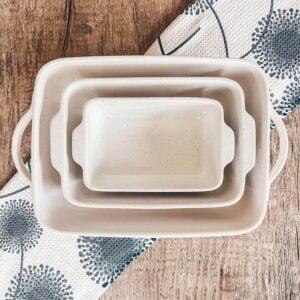
Tag: heat resistant cookware

  • CAN DURALEX BOWLS GO IN THE OVEN

    Can Duralex bowls go in the oven? This seemingly straightforward question leads us into a fascinating exploration of kitchenware versatility and the science behind everyday cooking tools.

    Duralex bowls, renowned for their durability and glass-like clarity, are a staple in many kitchens.

    However, when it comes to exposing them to the oven’s intense heat, uncertainty often arises.

    As we delve into this topic, we’ll uncover the essential factors that determine whether Duralex bowls can handle the heat.

    We’ll demystify the intricacies of their composition and the temperatures they can withstand.

    Along the way, we’ll also share some tips and guidelines to help you make informed decisions about using these bowls for baking or roasting.

    If you’ve ever wondered whether Duralex bowls are compatible with your culinary adventures, join us on this fascinating journey.

    HOW DO I KNOW IF MY GLASS BOWL IS OVEN SAFE?

    One of the easiest and most popular ways to know if your glass bowl is oven-safe is to carefully look for markings or labels on the bottom of the glass bowl or its packaging.

    The moment you see these words: “oven-safe” or a “temperature rating in degrees Fahrenheit or Celsius”, it’s safe to use in the oven at or below that temperature.

    Finally, if the glass bowl doesn’t have such markings or temperature ratings, it is recommended to avoid using it in the oven to prevent it from shattering due to heat.

    CAN DURALEX BOWLS GO IN THE OVEN?
    Can Duralex Bowls go in the Oven

    The standard or popular Duralex mixing bowls can’t be used in the oven rather it is the Duralex OvenChef is designed for oven use because they are made with reinforced tempered glass that can resist thermal shock of 200°C/392°F range in the Oven.

    DURALEX OVENCHEF

    Duralex Ovenchef is one of the product collections of the Duralex glassware brand that offers ease to all your baking and other kitchen needs

    With Duralex Ovenchef, there is no fear of the bowl shattering because they are made with durable reinforced tempered glass.

    The 3 popular Duralex Ovenchef that are suitable for table use are explained below:

    OVENCHEF OVAL ROASTER

    The Duralex Ovenchef Oval Roaster is perfect for baking your favorite family recipes to ignite old memories and spread love once again.
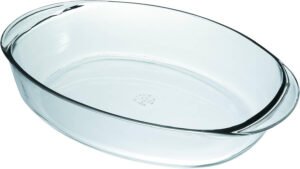
    Duralex Ovenchef Oval Roaster

    It doesn’t have a shallow design; instead, the Ovenchef Oval Roaster is 3.1 Liters in depth, and the size dimension is 14.125 X 9.875 inches or 36 X 25cm.

    Based on the design of the Ovenchef Oval Roaster, when baking gratins and cheesy casseroles, there is no bubbling over, especially because of the depth.

    The Ovenchef Oval Roaster Duralex brand has a thermal shock of 200°C / 392°F temperature differentiation and withstands temperatures between -20°C/ -4°F and 300°C/572°F.

    Made with mechanical shock tempered glass, aside from being safe for oven use, it is also dishwasher, microwave, and freezer safe.

    This is the easiest and best baking dish that leaves no residue, easy to clean after use, but one drawback is that it is not designed with oven-proof lids.

    We highly recommend this Duralex non-porous cadmium-free, safe, non-cutting glass that is hygienic.

    DURALEX OVENCHEF RAMEKIN

    Duralex Ovenchef Ramekins

    The Ovenchef Ramekin is ideal for preparing and serving crème brûlée, soufflé, cheese or egg dishes, poi, desserts, garnishes, and condiments.

    The Ovenchef Ramekin can also withstand a crème brulee torch when coming out of the fridge.

    This beautiful, heavy glass Ramekin is also perfect for cakes and mini bread in a dual Blaze Cosori 6.8-quart air fryer.

    The French Duralex tempered glassware material can withstand sudden thermal shock from -4°F to 212°F. Extremely durable, impact and chip-resistant. Dishwasher and microwave safe.

    OVENCHEF SQUARE BAKING DISH

    Ovenchef square baking dish duralex

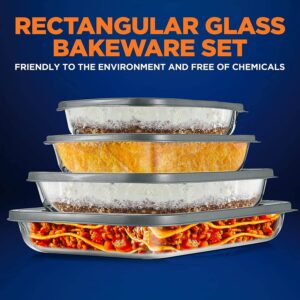
    Aside from the Ovenchef Square roaster, the Duralex glassware brand also has the Ovenchef Rectangular roaster.

    One important feature of both is the depth, perfect for your casserole and other baking needs.

    You can bake lasagna to perfection, made with reinforced tempered glass resistant to a thermal shock of 392°F temperature differentiation and withstand temperatures between -4°F and 572°F.
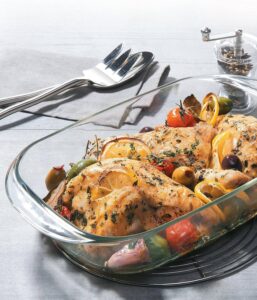
    Duralex Ovenchef Rectangular Roaster

    In case you have a Kitchen Aid toaster oven or a Cuisinart air fryer, this Ovenchef casserole dish can fit in with ease.

    You will love this elegant, large Ovenchef baking dish as it can go from refrigerator to oven and back again

    Heats evenly, has smooth glass, and won’t stick to your food. Washing by hand is easy and also dishwasher safe.

    ARE DURALEX GLASS BOWLS HEATPROOF?

    Duralex glass bowls are known for their durability and resistance to thermal shock, which means they can withstand a wide range of temperatures, but it is the Duralex Ovenchef collection that is heatproof because it can be used in the oven, microwave, and freezer.

    The standard Duralex glass mixing and stackable bowls can only be used in the microwave oven and freezer.

    However, it’s essential to follow the manufacturer’s guidelines and avoid exposing all Duralex glassware products to sudden changes in temperature of more than 130°C/266°F.

    Secondly, do not use a cracked or damaged Duralex glassware brand to prevent injury, and never scratch the surface of your Duralex glass bowls.

    CAN PYREX GO IN THE OVEN?
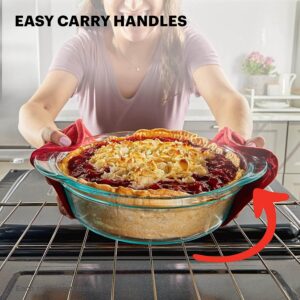
    can Pyrex go in the Oven

    Yes, Pyrex glass bakeware is generally safe to use in the oven because they are made with tempered soda-lime glass or Borosilicate glass as which can withstand sudden temperature changes.

    However, you should follow the manufacturer’s instructions and avoid sudden temperature changes, such as placing a hot dish on a cold surface, as this can cause the glass to break.
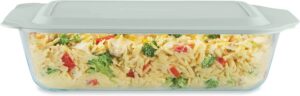
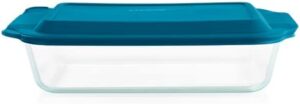
    Pyrex deep glass baking dish for oven, microwave and freezer use

    Additionally, avoid using Pyrex on direct heat sources like stovetops or broilers, as this can also lead to breakage.

    Always check the recommended temperature limits for your specific Pyrex product.

    ARE ALL GLASS BOWLS OVEN-SAFE?

    It is not all glass bowls that are oven safe; some glass bowls are good only for mixing, while some are for storage, and others for eating.

    A critical point to note about glass bowls that are suitable for oven use is to check the material composition and manufacturing procedure of the glass bowl.

    Another point to note is to pay attention to Premium brands that manufacture oven-safe bowls to save yourself from any potential hazards.

    Examples of glass materials that are suitable and safe for oven-safe use are tempered glass, Borosilicate glass, Porcelain, Ceramic, Duralex, and Pyrex glass.

    In addition, see below recommended bowls made of various materials that are suitable for oven use:

    Vumdua French Ceramic Oven Safe Bowl for Onion Soup, Chili, Beef Stew, Cereal, Pot Pies Bowls with Handles.

    Simax Casserole Dish with Lid, Oven Table Serving Dish, Microwave, Dishwasher, and Oven Safe Cookware.

    LE TAUCI Oven Safe Ceramic Bowls and Ramekins for Baking, Pudding, Serving Dip, Custard, Ice Cream with Lids.

    Mora Ceramic Porcelain Oven Safe Flat Bowls For Soup, Salad, Rice, and Cereal.

    Oven Safe Glass Cookware Clear Round Glass Casserole Dish with Glass Lid.

    Heartland Home Porcelain Mini Casserole Oven Oval Dish

    Anchor Hocking tempered glass Round Food Storage Containers for oven, microwave, fridge, and freezer with Blue Snug Fit Lids.

    Borosilicate Glass Moss & Stone Oven Safe, & Microwave Safe, Clear Glass Baking Dish.

    CAN WE USE ANY GLASS BOWL IN THE MICROWAVE OVEN?

    Just like I said above, the same principle used in asserting if a glass bowl is suitable for oven use, it’s the same rule you apply to know if a glass bowl is suitable for microwave oven use.

    So, it is not every glass bowl that is safe for microwave oven use. Make sure you only go for microwave oven-safe labeled glass bowls because they are designed to withstand microwave oven heat, as they won’t shatter or explode.

    Examples of glass bowls that can be suitable for microwave oven use are:

    Anchor Hocking 6-inch microwave and dishwasher-safe clear Glass Bowl.

    Duralex Microwave Safe Soup Bowl with Handles.

    Pyrex Smart Essentials 3-Piece Prepware Dishwasher, Microwave, and Freezer Safe Mixing Bowl Set.

    NUTRIUPS microwave and oven-safe Glass Bowls Set

    Simax Clear microwave and dishwasher-safe Glass Casserole Dish for Cooking, Baking, and Serving.

    Libbey Baker’s Basics Glass Casserole Dish with Cover.

    Luminarc Stackable microwave and dishwasher-safe Glass Bowl 10-Piece Set.

    Reference: Duralex Glassware French Brand
  • CORELLE VS PYREX

    It is quite difficult in the 21st century not to find Corelle and Pyrex kitchenware in most homes because of their versatility and durability.

    It is because of their use that people think they are the same. In our last post, I carefully unmasked the mystery between Corelle Vitrelle and Livingware.

    Today, we will be looking at Corelle vs Pyrex.

    These two popular household dinnerware products are essential to food enthusiasts and Professional chefs because they make their serving, cooking, or baking work easy and fun.

    Understanding their makeup and the features they both possess will help you decide when to use or how to use each appropriately to avoid injury or time loss.

    Fasten your seat belt as we solve this riddle once and for all.

    PYREX VS PYREX

    Pyrex vs Pyrex

    Have you ever seen a glass casserole or baking dish explode in the oven or microwave? It’s a scary sight you wouldn’t want to behold again.

    Pyrex has always been and will remain a go-to cookware and kitchen household item for most American households that love durable and temperature-resistant cookware, food containers, or baking dishes.

    Pyrex Borosilicate glass baking dish

    Has the Popular Pyrex lived up to what they say? First, to adequately differentiate Pyrex and PYREX, we have to state here that Pyrex has 2 materials it is made up of; we have Borosilicate glass and the one made with soda lime tempered glass.

    Based on this reality, below is the difference between pyrex and PYREX; which also means soda lime glass versus borosilicate glass;

    Pyrex soda lime tempered glass baking and casserole dish
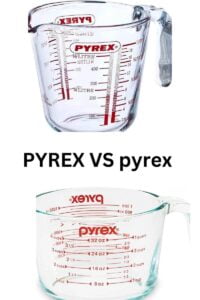
    • First, when you see pyrex (small case letters) logo on cookware or any product, it means that it is made with soda lime tempered glass, while PYREX (upper case letters) means that the said product is made with Borosilicate glass.
    • Soda lime pyrex is not recommended for oven or microwave use, while PYREX Borosilicate glass can handle microwave and oven use effortlessly.
    • PYREX Borosilicate glass contains a higher percentage of boron trioxide, which gives it a lower coefficient of thermal expansion, while pyrex soda-lime tempered glass, on the other hand, contains silica, soda, and lime, making it more susceptible to thermal expansion.
    • PYREX borosilicate glass is harder, stronger, more durable, and more resilient to thermal shock, mechanical stress, and chemical corrosion than pyrex soda-lime glass.
    • PYREX Borosilicate glass has a CTE (coefficient of thermal expansion) of 3 or 4 parts per million per 1 Kelvin change (ppm/K), while pyrex soda-lime glass has a CTE of 9 to 9.5 ppm/K.
    • PYREX borosilicate glass can handle sudden and rapid changes in temperature more than pyrex soda lime tempered glass.
    • Soda lime pyrex glass is cheap, while PYREX Borosilicate glass is expensive.
    • When PYREX Borosilicate glass breaks, it breaks into much larger pieces compared to pyrex soda lime glass, which breaks into many small pieces, like exploding as complained by consumers.
    • PYREX Borosilicate glass has better optical clarity and is more transparent than pyrex soda-lime tempered glass, which can have a slight greenish tint.
    • PYREX Borosilicate glass is commonly used in laboratory glassware, cookware, and high-quality glass products, while Soda-lime tempered glass, branded as pyrex, is often used in kitchenware and bakeware, such as baking dishes and casserole dishes.

    CORELLE VS PYREX

    Corelle vs Pyrex

    Below are the major differences between Corelle dishes and Pyrex glass;

    CORELLE DISHESPYREX GLASS
    Corelle is made of glass, specifically a special type of tempered glass that is lightweight, durable, and chip-resistant.Pyrex glass is either made with Borosilicate or soda lime tempered glass.
    Corelle is primarily used for dinnerware, including plates, bowls, and mugs. It is designed to be stylish, stackable, and suitable for everyday use.Pyrex is primarily used for bakeware and cookware, such as casserole dishes, baking pans, and measuring cups, as it can withstand high temperatures.
    Corelle dishes cannot handle/withstand extreme temperature changes.Pyrex is specifically known for its exceptional ability to withstand extreme temperature changes without breaking, making it ideal for baking and cooking in ovens.
    Corelle offers a wide variety of designs and patterns, making it popular for its aesthetics and versatility in table settings.Pyrex bakeware, on the other hand, is usually clear or has simple designs, focusing more on functionality than aesthetics.
    Corelle dinnerware is lighter compared to Pyrex bakeware, making it easier to handle and suitable for everyday use.Pyrex glass is heavier than Corelle dishes.
    Corelle plates and bowls hardly have plastic lids!Pyrex products are designed with secure plastic lids and perfect for use on the go!

    PYREX CORNINGWARE VINTAGE

    Pyrex and Corningware are both popular brands of glass and ceramic cookware. “Pyrex” is known for its heat-resistant glass kitchenware, while “Corningware” refers to a line of ceramic cookware made by Corning Inc.

    Pyrex Corningware Vintage

    Kitchen lovers always seek out the vintage products of Pyrex and Corningware because of their versatility and endurance to heat and rapid temperature changes.

    These Pyrex Corningware vintage products were made in the 1970s, and to date, they stand the test of time.

    Secondly, we also note that vintage items often have unique designs and quality, and hold sentimental value for some people.

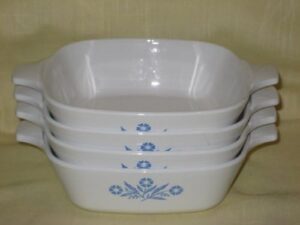
    Vintage Corningware Cornflower Casserole dish

    What makes Vintage Pyrex and Corningware special? It is because they are made of a special glass material known as Borosilicate glass, which is known for its durability, heat resistance, and ability to withstand temperature changes!

    Vintage Corningware Pyrex is perfect for use in the oven, range top, microwave, Refrigerator, and freezer.

    One distinct quality of Vintage Corningware Pyrex is that it doesn’t react with acid-based foods, unlike some cookware materials.

    They also don’t absorb food odors or flavors because they are a non-porous glass material.

    They are not dishwasher safe; hand washing is highly recommended!

    Examples of vintage Pyrex Corningware cookware are;

    Vintage Corningware Pyrex Visionware

    Vintage Corning Ware SPICE O’ LIFE 3 Quart Covered Casserole w/Lid

    Vintage Corning Ware Cornflower Blue Individual Casseroles

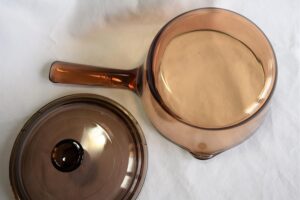
    Vintage Corning Visions Round Lidded Casserole, Cranberry

    Vintage Corning Ware Amana Radarange White w/ Blue Colonial House Browning Skillet Casserole Baking Dish

    Vintage Corning Pyrex Cornflower Blue CorningWare Baking Dish

    Vintage 1970s Corning Ware Pyrex Microwave fast food Dish

    Finally, vintage Pyrex and Corningware cookware are made in the USA.

    WHO OWNS CORELLE BRANDS

    Corelle Brands is presently owned by Instant Brands, the owner of Instant Pot.

    IS CORELLE SAFE?

    Yes, Corelle dishes are safe for everyday use and our health, as they do not leach harmful chemicals into our meals and can withstand the rigors of everyday household and kitchen use.

    CORELLE PYREX PATTERNS

    Corelle and Pyrex are two distinct brands, known for the unique patterns on their products:

    Corelle: Corelle is a brand of dishware known for its durable, lightweight, and chip-resistant dinnerware. Corelle patterns come in various designs and styles, ranging from simple and classic to modern and artistic.

    Corelle winter frost white Pattern

    Some popular Corelle patterns include “Winter Frost White,” “Country Cottage,” and “Old Town Blue.”

    Pyrex: Pyrex is a brand of glassware that is heat-resistant and suitable for baking and cooking.

    While Pyrex is not specifically known for patterns like Corelle, it has produced various colorful designs and patterns on its glass dishes and bakeware over the years.

    Some past Pyrex patterns include “Butter print,” “Primary Colors,” and “Gooseberry.”

    Both brands have a rich history of producing quality kitchenware with unique designs that have attracted collectors and users alike.

    CORELLE BRANDS WORLD KITCHEN

    Corelle Brands, formerly known as World Kitchen, is a company that designs and manufactures kitchenware and household products.

    They are known for their Corelle dinnerware made from tempered glass that is resistant to chips and breaks.

    The company also owns other well-known brands like Pyrex, CorningWare, and Snapware, offering a diverse range of kitchen products and storage solutions.

    CORELLE BRAND PHONE NUMBER

    To see the various Corelle brand phone numbers for Instant Brands EMEA, Australia, Asia Pacific, and India, kindly visit the Corelle Customer Care Center.

    IS CORELLE THE SAME AS PYREX?

    No, Corelle isn’t the same as Pyrex, though they are from the same Parent Company, Instant Brands; they have different features as explained above.

    DOES CORELLE OWN PYREX?

    Both Corelle and Pyrex are under the same Company. Corelle is a standalone brand, just like Pyrex, a cookware brand under Instant Brands.

    Looking for dinnerware alternatives? Our Arcopal vs Corelle guide covers another excellent option for everyday dining.

  • IS CORELLE FREEZER SAFE

    When it comes to kitchenware, functionality and versatility are paramount. We rely on our dinnerware to withstand the demands of our busy lives, from meal preparation to storage.

    One popular brand that has become a household name, especially in America and other parts of the World, is the Corelle Brand.

    Known for their durability, thin and lightweight, sleek design, Corelle dishes have become a go-to dish for everyday use.

    But a burning question remains: Is Corelle freezer safe? Can we confidently place these elegant plates and bowls in the icy depths of our freezers without fear of cracks or damage?

    In this article, we will delve into the properties of Corelle dinnerware, scrutinize its construction, and uncover the truth behind its freezer compatibility.

    So, let’s embark on a journey to unravel the mystery and determine whether Corelle truly thrives in the chilling conditions of our freezers!

    CAN CORELLE GO FROM THE FREEZER TO THE OVEN?

    Yes, Corelle can comfortably go from freezer to oven because it is versatile dinnerware that can withstand rapid temperature changes without compromising its structural integrity.

    However, we recommend you avoid frequent sudden temperature changes, like placing a hot item on a wet Corelle surface; sudden, frequent temperature changes may cause Corelle to break or shatter.

    IS CORELLE FREEZER SAFE?

    Is Corelle Freezer safe

    Yes, Corelle is freezer safe because the triple-layer glass laminate material it is made up of provides excellent thermal shock resistance that enables Corelle to handle low temperatures in the freezer without cracking or shattering.

    CAN PYREX GO FROM FREEZER TO MICROWAVE?

    can pyrex go from freezer to microwave

    Yes, Pyrex can go from the Freezer to the Microwave because Pyrex has a low thermal expansion coefficient.

    Pyrex is also durable, thermally resistant, and can withstand high temperatures and rapid temperature changes.

    The Low thermal expansion coefficient simply means that Pyrex is less likely to shatter or break when subjected to rapid temperature variation.

    When you transfer Pyrex from the freezer to the microwave, the glassware gradually warms up as it absorbs heat from the microwave radiation.

    Since Pyrex has good heat-conducting properties, it distributes the heat evenly throughout its structure, preventing localized hotspots that could cause cracking or breakage.

    Pyrex can lie flat in the freezer for up to 8 hours.

    However, there are a few safety precautions to keep in mind:

    • When you are transitioning your Pyrex dish from the Freezer to the Microwave, it is best to allow the dish to come to room temperature for a few minutes or simply allow for gradual temperature changes, as this action helps to prevent sudden temperature shocks and minimize the risk of breakage.
    • Do not expose your Pyrex dish to direct heat elements when it is out of the Freezer; this can lead to thermal stress and potentially lead to breakage.
    • Before moving your Pyrex from the Freezer to the microwave, always inspect it for any cracks, chips, or other signs of damage. Damaged Pyrex should not be used, as it can be more prone to breakage and may pose a safety risk.
    • Before placing your Pyrex into the Microwave oven, kindly ensure it is preheated, especially when it is from the Freezer.

      Finally, by following these guidelines and using Pyrex as intended, you can safely use it in the freezer and microwave without any major concerns.

    IS PYREX MICROWAVE SAFE?

    Is Pyrex Microwave Safe

    Yes, Pyrex glass is safe for use in the Microwave oven; however, you MUST ensure that your microwave oven is fully preheated.

    Also, note that you MUST allow cold or hot Pyrex dishes to completely thaw before using them in a pre-heated microwave oven to avoid chipping or breakage due to sudden temperature changes.

    CAN PYREX GLASS BREAK?

    Can Pyrex glass break

    While Pyrex glass is durable and long-lasting because of the heat-strengthening and thermal tempering process, Pyrex can break when it is intentionally smashed against a hard surface or dropped from a reasonable height.

    Kindly stop using chipped, cracked, or scratched Pyrex glassware in the freezer, microwave, and pre-heated oven because it could break or shatter as its strength has been compromised.

    CAN OLD PYREX GO IN THE FREEZER?

    can old Pyrex go in the freezer

    Absolutely yes, Old Pyrex glassware can go in the freezer because it is made up of Borosilicate glass that can handle a sudden drop in temperature; it can confidently handle the stress caused by the temperature difference between the freezer and room temperature, thereby preventing breakage.

    However, it is important to note that not all Pyrex glass is made of Borosilicate glass because, in recent times, the composition of Pyrex is now tempered soda-lime glass, which is more prone to thermal shock, leading to breakage than Borosilicate glass.

    We recommend you always check in with the manufacturer to know the composition of the Pyrex glassware you intend to buy or use, and check for the freezer and oven-safe markings on products.

    Finally, avoid placing hot glassware directly into the freezers.

    This action, which is a sudden temperature change, may lead to breakage.

    CAN PYREX LIDS GO IN THE FREEZER?

    can Pyrex lids go in the freezer

    Absolutely, yes, Pyrex Lids can go in the Freezer.

    Pyrex glassware lids are plastic; they are BPA-FREE, non-porous, and they will not absorb food flavors, odors, or stains.

    The Pyrex Lid is safe to use in the dishwasher top rack and the microwave, and is perfect for food storage.

    While Pyrex glassware lids are safe for freezer and refrigerator use, below are some precautions;

    • Do not place Pyrex Lids in conventional ovens because they will melt.
    • Keep Pyrex Lids away from the direct heat element in the dishwasher, even if they are dishwasher safe.
    • Always check for the manufacturer’s stamp if it’s intended for freezing or oven use. For example, the Pyrex Ultimate storage silicone and glass lid is designed for oven use.

    CAN YOU FREEZE PYREX GLASS SNAPWARE?

    can you freeze Pyrex glass snapware

    Yes, the Pyrex glass Snapware is Freezer and refrigerator-safe because they are made from tempered glass material, making them highly resistant to temperature changes.

    Aside from being safe for freezer use, Pyrex glass Snapware is also safe for microwave and oven use.

    The lids are airtight, keeping your food fresher.

    In addition, we recommend you allow enough space at the top of your Pyrex glass Snapware for possible expansion when you place it inside the freezer.

    This expansion allows the food to expand without the glass cracking or breaking.

    Finally, to keep your Pyrex glass Snapware from potential breakage, we recommend avoiding placing your Pyrex glass Snapware directly from the freezer into a hot oven or stovetop, allowing it to thaw( gradual temperature change) to prevent excessive thermal shock.

    CAN I FREEZE LASAGNA IN A PYREX DISH?

    Yes, you can comfortably and confidently freeze Lasagna in a Pyrex dish because the composition of a Pyrex glass dish allows for thermal expansion and withstanding temperature changes.

    Freezing Lasagna in a Pyrex Dish

    Either the Pyrex glassware dish is made with Soda-lime tempered glass or Borosilicate glass, it can handle your Lasagna.

    In addition, tempered Pyrex glass used in freezing Lasagna can go directly from room temperature into a preheated oven.

    Aside from being freezer-safe for Lasagna, Pyrex glass is also oven-safe, dishwasher-safe, and microwave-safe.

    We recommend you follow other precautions and guidelines stated above when transferring your Lasagna into Pyrex glassware or a microwave oven.

    Finally, Pyrex glass used for storing and serving Lasagna is resistant to stains and does not absorb food, odors, or flavors.

    For example, you must allow your Lasagna to cool before transferring it to the Pyrex glass dish, as this action helps in preventing condensation from inside the dish.

    IS CORNINGWARE FREEZER SAFE?

    Glass-ceramic Corningware Freezer safe

    Yes, Corningware is Freezer safe because it is made with glass-ceramic or ceramic material that is highly resistant to thermal shock and can withstand extreme temperatures.

    We have to note here that Corningwares is made of two material compositions, the first is glass ceramic, while the other is ceramic.

    The glass ceramic Corningware can comfortably be put on the stove (open flame/heat), dishwasher safe, refrigerator safe, microwave safe, oven safe, and can go from oven to fridge, saving you time and effort.

    The glass ceramic Corningware is non-porous and won’t absorb food odors or flavors or react to acid-based foods.

    The glass ceramic Corningware is perfect for cooking, serving, preparing, and storing all kinds of dishes.

    IS CERAMIC CORNINGWARE FREEZER SAFE?

    Ceramic Corningware safe for Freezer use

    Yes, the ceramic Corningware is Freezer safe, dishwasher safe, microwave safe, and pre-heated oven safe.

    The ceramic Corningware has an amazing ability to go from oven to table to refrigerator, but can’t handle open flame like the glass-ceramic Corningware.

    Just like the glass ceramic Corningwares, the ceramic Corningwares are also non-toxic, non-porous, BPA-free, and can resist chips and cracks!

    The ceramic Corningware is oven-to-table ready!

    You must have noticed that all products here are from the Instant brand, the makers of Corelle dinnerware sets, and almost all products they manufacture are oven-safe, like Corelle dishes.

    Corelle remains one of the most versatile dishes, which is why it plays a role in Kosher, and Corelle hardly gets hot when used in the microwave.

    CAN YOU FREEZE GLASS CASSEROLE DISHES?

    Glass Casserole dish Freezer safe

    Yes, you can freeze glass casserole dishes; the success of the freezing will depend on the makeup or material composition of the glass casserole dish.

    Some glass casserole dishes are not suited for extreme temperatures; sudden temperature changes or extreme heat, such as an open flame, will damage them.

    Additionally, not every glass casserole dish will survive the trip from refrigerator to preheated oven or microwave; if they do, they may break, chip, or shatter.

    In conclusion, we suggest you use only glass casserole dishes with the markings “freezer safe”, “microwave safe”, and “oven safe” on them and check the “safe oven temperature”, “freezer temperature”, and “microwave temperature” to avoid injury or breakage.

    CAN YOU FREEZE GLASS DISHES?

    Freezer safe Glass Dishes

    Yes, of course, you can freeze glass dishes, but note that not every glass can withstand a wide range of temperature changes.

    We always recommend for safety and durability to use glass dishes made with Borosilicate glass or tempered glass, as they can withstand high temperatures, have thermal stability, and can go from freezer to microwave.

    In addition, we recommend you avoid placing a frozen glass dish directly in a hot oven or transferring a hot glass dish directly into the freezer, as extreme temperature changes can cause thermal shock and potentially lead to the glass breaking.

    Finally, one reason home cooks and chefs prefer glass is that it is non-reactive, does not interact with or leach chemicals into your food, and when you freeze acidic food, glass doesn’t absorb or transfer odors or flavors.

    CAN YOU FREEZE CERAMIC DISHES?

    Freezer safe Ceramic dish for Casserole, baking, roasting and Lasagna

    Yes, ceramic dishes can be used for freezing food items, but be sure to check the manufacturer’s specifications on how to care for specific ceramic dishes, as they come in various forms like Stoneware, Porcelain, and Earthenware.

    Generally, we recommend you avoid exposing these ceramic dishes to extreme temperature changes and reduce their exposure to thermal shock.

    Finally, it is a good practice to avoid transferring a ceramic dish directly from the freezer to a hot oven or stovetop. Instead, allow the dish to thaw gradually at room temperature or in the refrigerator before exposing it to heat.