Tag: heat resistant cookware

  • Simax vs Pyrex Comparison

    Glassware is one of the most popular types of kitchenware we use daily; it comes in a variety of types, including tableware, bakeware, mugs, pitchers, ramekins, and cookware.

    Among the numerous brands of glassware we have, two brands stand out: Simax and Pyrex.

    In this guide, we will be learning about Simax vs Pyrex glassware.

    Are these the same? Do they have specific characteristics, strengths, and applications?

    One attractive characteristic of Pyrex and Simax glassware is that they are ideal for baking and preserving food, as well as being durable and transparent.

    As we explore these glass container brands, we’ll find out what makes each one special and why people care so much about them.

    Get ready to discover the secrets of Simax and Pyrex, where every detail matters for making great food!

    WHAT IS SIMAX GLASS MADE OF?

    Simax glassware is primarily made of Borosilicate glass, known for its durability and resistance to thermal shock.

    You may wonder if Borosilicate glass is used in all of Simax’s glassware products. The answer is yes!

    Simax glass fluted cake dish

    Below are some of the popular Simax glassware product lines made up of Borosilicate glass material:

    Simax Borosilicate Glass Mugs for Hot Beverages

    Simax Glass Cookware and Saucepan

    Simax Casserole Oven Safe Dish

    Simax Teapot for stovetop – this is proof that you can use Borosilicate glass on stovetops

    Simax Glass Borosilicate Mixing Bowls

    Simax Glass Pie Pan for Baking

    Simax Borosilicate Glassware Loaf Pan

    Simax Casserole Dish for Oven

    Simax Glass Measuring Cup

    Simax Glassware Irish coffee Tea Glasses for Hot and Cold Drinks

    Simax Glass Flutted Cake Dish

    Simax Clear Glass Bundt Pan

    Simax Glass Roaster Large Dish for Baking and Cooking – Dishwasher and microwave-safe

    Simax Beer Mugs – Double-walled Glass Beer Mugs for Men

    Simax Borosilicate Clear Glass Carafe

    Simax Borosilicate glass meal Prep Food Storage Container

    SIMAX VS PYREX COMPARISON

    Simax vs Pyrex comparison

    While Simax and Pyrex are well-known brand names that produce a range of glassware products, including bakeware, cookware, and laboratory glassware, they have a few differences.

    Find below the distinctions between Simax and Pyrex glassware brands:

    Simax glass is manufactured in the Czech Republic, while Pyrex glass is produced by various manufacturers worldwide, including the United States, Europe, and Asia.

    This can sometimes lead to differences in quality control standards and manufacturing techniques.

    Simax glass product lines are made ONLY with Borosilicate glass, but Pyrex is either made up of Borosilicate glass or soda lime tempered glass.

    The Simax Borosilicate glass is more durable and has greater thermal shock than Pyrex soda lime glass.

    Some users report that Simax glassware tends to be thicker and more durable than certain Pyrex products. However, this can vary depending on the specific items being compared.

    In terms of pricing, Simax and Pyrex products can differ based on factors such as brand reputation, manufacturing costs, and distribution channels.

    In some cases, one brand may be more affordable than the other for comparable items.

    Simax and Pyrex may offer different design aesthetics and styles in their glassware collections. This can include variations in shapes, sizes, and decorative features.

    SIMAX GLASS COOKWARE

    There is nothing compared to cooking with transparent and healthy cookware made of glass and not just any type of inferior glass, but versatile and durable Borosilicate glass.

    You don’t have to break the bank to cook meals that are fresh, healthy, and delicious because, with the Simax Glass cookware, you are double sure that harmful toxins won’t leach into your food.

    Simax glass cookware and Saucepan

    Perfect for simmering and can serve as a saucepan, this healthy glass cookware is suitable for both electric and gas stovetops.

    One beautiful quality about this Simax glass cookware is that the handles stay cool to the touch while you cook, but the pot is hot.

    As highlighted above, the Simax glass cookware is proudly made in the Czech Republic, and the Borosilicate glass cookware is heat and cold-proof (up to 572°F and down to -40°F), so you do not need to worry about it cracking or exploding.

    Finally, they are safe for microwave use, dishwasher, and will make a beautiful gift for newlyweds or for preparing all your Christmas and Thanksgiving dishes.

    SIMAX VS PYREX, WHICH IS BETTER?

    Determining which brand is “better” between Simax and Pyrex is dependent on individual preferences, specific product lines, your budget, and intended use.

    While both brands are reputable and known for producing high-quality glassware using Borosilicate glass or soda lime material, your decision will be influenced by this.

    For example, if you plan to purchase glass cookware for direct flame, like your electric or glass stovetop, then you should go for Simax Borosilicate cookware or the old Pyrex Borosilicate glass product line.

    But if you need a glass bakeware that requires less temperature and less thermal shock, then soda lime Pyrex glassware will suffice.

    Finally, use Borosilicate glass for high temperatures and chemically corrosive environments, and stay with soda lime glass where rapid temperature changes aren’t required.

    Again, it’s ultimately a matter of personal preference, so we recommend considering factors such as pricing, design, availability, and any specific features that are important to you when making your decision between Simax and Pyrex glassware brands.

    WHICH IS BETTER CORNINGWARE VS PYREX?

    To determine between Corningware and Pyrex, which is better, let’s first see the major differences between Corningware and Pyrex:

    Corningware is mainly made with Pyroceram or ceramic material, which is sometimes commonly called glass ceramic, while Pyrex is either made with soda lime tempered glass or Borosilicate glass material.

    Corningware French White 4 Quart Casserole dish

    Corningware is proudly made in the USA, while Pyrex is made in the USA and Europe.

    CorningWare is often more versatile for oven-to-table use due to its ceramic-like appearance and design than Pyrex.

    Pyrex, on the other hand, is commonly used for a wider range of purposes, including baking, cooking, food storage, and even laboratory applications, but Corningware isn’t used for laboratory applications.

    Pyrex offers a wider variety of shapes, sizes, and designs compared to CorningWare, which may provide more options for different cooking and serving needs.

    While both can withstand high temperatures, CorningWare may have a slight edge in thermal shock resistance due to its glass-ceramic composition.

    Pyrex is more fragile than Corningware because of its glass makeup and requires extra caution and care.

    Overall, while they share a few similarities, the choice of which is better between CorningWare and Pyrex may depend on personal preferences, specific cooking needs, and budget.

    STONEWARE VS PYREX

    Stoneware and Pyrex are both types of oven-safe cookware, but they have some differences:

    Stoneware is made from clay fired at a high temperature, resulting in a durable, non-porous material that retains heat well and is great for baking dishes like casseroles and bread.

    It’s also known for its rustic appearance and ability to develop a seasoned patina over time.

    Pyrex, on the other hand, is made from either Borosilicate glass or tempered glass, which is resistant to thermal shock and can withstand high oven temperatures.

    Mora Stoneware Casserole dish for Roasting and Baking

    It’s commonly used for baking and cooking, as well as for storing food in the refrigerator or freezer. Pyrex dishes are transparent, making them convenient for monitoring food while it cooks.

    Stoneware tends to be more versatile in terms of what you can do with it. You can use it in the oven, microwave, dishwasher, and even on the stovetop, depending on the specific piece.

    It’s also known for its ability to evenly distribute heat, making it great for cooking, baking, and roasting.

    Pyrex, being made of glass, is also versatile but has some limitations. While it’s safe for the oven, microwave, dishwasher, and freezer, not every Pyrex product line is suitable for use on the stovetop.

    A stoneware casserole baking or roasting dish can confidently go from freezer to oven (without preheating) and can handle over 500 degrees F, more than Pyrex glassware.

    Finally, Pyrex is known for its non-reactive properties, meaning it won’t absorb odors or flavors from food and is safe for acidic ingredients, but some stoneware baking dishes might absorb the odor or flavor of your food.

    IS SIMAX GLASSWARE GOOD?

    Yes, the Simax glassware brand is of good quality because they are made of Borosilicate material, which is highly durable, resistant to thermal shock, transparent, and non-reactive, meaning it won’t impart any unwanted flavors or chemicals to whatever it comes into contact with, making it ideal for food, kitchenware, and laboratory applications.

    WHAT CAUSES PYREX TO BREAK?

    While Pyrex glass is durable and versatile for various home and laboratory uses, there are still at risk of breakage.

    Below are actions that might lead to Pyrex breaking:

    When we fail to read the care and instructions of the manufacturer and presume we know, we may mishandle our Pyrex glass, resulting in shattering.

    Avoid sudden extreme temperature changes, especially from the freezer to the hot oven or the sink; this action causes Pyrex to shatter.

    To prevent this, place your Pyrex on a surface that can absorb the heat, like a towel, cutting board, or cooling rack.

    Adding hot Liquid to hot Pyrex soda lime glassware might cause it to break. It is advisable to allow it to cool down before adding water.

    Placing hot Pyrex glassware on a cold or wet surface might cause it to break, especially soda lime Pyrex glass.

    Rushing to place Pyrex soda lime glass or even Pyrex Borosilicate glass into the refrigerator or freezer without allowing it to cool for a while might lead to breakage.

    Using soda lime Pyrex glass under the broiler, toaster, or stovetop will certainly lead to breakage, as it is not designed for such heat.

    Heating empty or microwaving empty Pyrex glassware will lead to its breakage.

    Using damaged Pyrex with chips or cracks will cause it to explode. Kindly throw out such Pyrex glassware that is damaged to avoid injury.

    Finally, always preheat the oven first before placing your Pyrex glassware with food in the Oven.

    WHAT ARE THE DISADVANTAGES OF PYREX GLASS

    Pyrex glass has various advantages that undoubtedly outweigh its downsides; yet, the following are some disadvantages of Pyrex glass:

    Pyrex glass is more durable and heat-resistant than regular glass, but it can still break if subjected to sudden temperature changes, such as going from hot to cold or vice versa, which could be considered a disadvantage.

    Pyrex glassware tends to be more expensive than other types of glassware due to its durability and heat resistance.

    Pyrex glassware is often heavier than alternatives, which can make it less convenient for certain applications, such as transporting or handling.

    It is not all Pyrex glassware that is suitable for direct flame because it will shatter due to the intense heat.

  • Can You Put Glass Cookware on the Stove? Complete Safety Guide for All Glass Types

    You’re standing in your kitchen, wooden spoon in hand, when you realize your favorite stainless steel pot is nowhere to be found.

    Your eyes land on that beautiful glass bowl sitting on the counter, and a question pops into your mind: Can you put glass on the stove?

    If you’ve ever wondered whether it’s safe to heat glass cookware on your stovetop, you’re not alone.

    With the rise of glass pots, Pyrex dishes, and borosilicate cookware, many home cooks are confused about what’s safe and what could end in a kitchen disaster.

    The short answer? It depends entirely on the type of glass and your stovetop. Some glass cookware is specifically designed for stovetop use, while others will shatter the moment they hit direct heat.

    In this comprehensive guide, we’ll explore everything you need to know about using glass cookware safely on electric, gas, and other types of stoves.

    QUICK SAFETY ANSWER

    Can you put glass on the stove? Most regular glass should never be placed on a stovetop as it will crack or shatter from thermal shock.

    However, certain types of heat-resistant glass cookware, including some borosilicate glass and specially designed glass pots, can be used safely on stovetops with proper precautions.

    Glass TypeElectric StoveGas StoveGlass-Top/Induction
    Regular Glass❌ Never❌ Never❌ Never
    Borosilicate Glass⚠️ With Care⚠️ Heat Diffuser✅ Glass-Top Only
    Tempered Glass⚠️ Limited⚠️ Heat Diffuser⚠️ Glass-Top Only
    Stovetop-Safe Glass✅ Yes✅ Yes✅ Glass-Top Only

    UNDERSTANDING DIFFERENT TYPES OF GLASS COOKWARE

    Not all glass is created equal. Understanding the differences between glass types is crucial for kitchen safety.

    Regular Soda-Lime Glass

    This is the most common type of glass found in drinking glasses, cheap baking dishes, and decorative bowls.

    Never use regular glass on any stovetop. It has poor thermal shock resistance and will shatter when exposed to direct heat or sudden temperature changes.

    Why it’s dangerous:

    • Low thermal shock resistance
    • Expands rapidly when heated
    • Cannot handle temperature differences above 40°F (22°C)
    • Will create dangerous glass shards if it breaks

    Borosilicate Glass

    Borosilicate glass is a premium glass type that contains boron trioxide, giving it superior heat resistance. This is the gold standard for heat-resistant glass cookware.

    2.5 Quart Borosilicate glass cooking Pot for Gas and Electric stovetops

    Key properties:

    • Withstands temperature changes up to 329°F (165°C)
    • Low coefficient of thermal expansion
    • Used in laboratory equipment and high-quality cookware
    • Can handle oven temperatures up to 500°F (260°C)

    Is borosilicate glass safe for cooking? Yes, high-quality borosilicate glass is among the safest materials for cooking and for dinnerware, as it doesn’t leach chemicals and handles temperature changes well.

    Tempered Glass

    Tempered glass is regular glass that’s been heat-treated to increase its strength. While stronger than regular glass, it’s not necessarily better for stovetop use.

    Characteristics:

    • 4-5 times stronger than regular glass
    • Better thermal resistance than soda-lime glass
    • Still vulnerable to thermal shock on stovetops
    • When it breaks, it crumbles into small pieces rather than sharp shards

    Pyrex and Glass-Ceramic Cookware

    The Pyrex story is complicated. Vintage Pyrex (pre-1998) was made from borosilicate glass and was more heat-resistant.

    Modern Pyrex in the US is made from tempered soda-lime glass, which is less suitable for stovetop use.

    Can you use Pyrex on an electric stove? Modern Pyrex can be used on electric stoves with extreme caution and low heat, but it’s not recommended.

    Vintage borosilicate Pyrex is safer but still requires careful handling.

    GLASS COOKWARE BY TYPE: WHAT’S SAFE?

    Can you put Borosilicate glass on the stove

    Glass Pots and Saucepans

    Can you put a glass pot on the stove? Only if it’s specifically designed for stovetop use. Look for these features:

    Safe glass pots:

    • Made from borosilicate glass or glass-ceramic
    • Labeled as “stovetop safe”
    • Have heat-resistant handles
    • Thick, even bottom construction

    Best practices for glass pots:

    • Start with room-temperature cookware
    • Use low to medium heat only
    • Heat gradually to prevent thermal shock
    • Never place hot glass pots on cold surfaces

    Can you cook with a glass pot on the stove? Yes, but only with proper stovetop-safe glass cookware and following safety guidelines.

    Glass Bowls

    Can you put a glass bowl on the stove? This is extremely dangerous with regular glass bowls. Most glass bowls are not designed for direct heat.

    Exception: Some specialized borosilicate glass bowls are designed for stovetop use, but they’re rare and must be specifically labeled as stovetop-safe.

    Can you heat a glass bowl on the stove? Only if it’s specifically designed and labeled for stovetop use. When in doubt, use alternative heating methods like a double boiler or microwave.

    Glass Teapots and Kettles

    Glass teapot on electric stove: Many glass teapots are made from borosilicate glass and can be used on electric stoves, but always check the manufacturer’s specifications.

    Features to look for:

    • Borosilicate glass construction
    • Stovetop-safe labeling
    • Heat-resistant handle and spout
    • Reinforced bottom

    Borosilicate glass kettle stovetop safety: High-quality borosilicate kettles can be used on most stovetops except induction, but always use low to medium heat.

    Glass Baking Dishes

    Most glass baking dishes, including Pyrex and Anchor Hocking products, are designed for oven use, not stovetop cooking. Using them on a stovetop can cause thermal shock and breakage.

    Safe alternatives:

    • Transfer food to a stovetop-safe pan for reheating
    • Use the oven or microwave for reheating
    • Consider a heat diffuser for very gentle warming (still risky).

    STOVETOP COMPATIBILITY GUIDE

    Electric Stoves

    Can you put glass on an electric stove? Electric stoves are generally the safest option for glass cookware due to more even heat distribution.

    Electric coil stoves:

    • Better for glass cookware than gas
    • Ensure cookware completely covers the heating element
    • Use low to medium heat settings
    • Allow gradual heating and cooling

    Smooth-top electric stoves:

    • Most compatible with glass cookware
    • Even heat distribution reduces thermal stress
    • Avoid sliding glass cookware to prevent scratching
    • Clean spills immediately to prevent damage

    Can you use glass pots on an electric stove? Yes, if they’re designed for stovetop use and you follow proper heating techniques.

    Gas Stoves

    Can you use a glass pot on a gas stove? Gas stoves present more challenges for glass cookware due to uneven heating from flames.

    Safety considerations:

    • Direct flame contact creates hot spots
    • Uneven heating increases thermal stress
    • Always use a heat diffuser to distribute heat evenly
    • Keep flames low to medium

    Is glass cookware safe for a gas stove? Only with proper precautions, heat diffusers, and stovetop-safe glass cookware.

    Glass cookware on a gas stove: best practices:

    • Use a quality heat diffuser
    • Keep flames adjusted so they don’t extend beyond the cookware bottom
    • Never allow flames to touch the sides of glass cookware
    • Monitor closely for any signs of stress

    Glass-Top and Ceramic Stoves

    Can you use glass cookware on a glass top stove? This is actually one of the safest combinations due to even heat distribution.

    Advantages:

    • Excellent heat distribution
    • No direct flame contact
    • Consistent temperature control
    • Less thermal shock risk

    Precautions:

    • Avoid dragging glass cookware across the surface
    • Clean both surfaces thoroughly
    • Check for scratches or damage regularly

    Induction Cooktops

    Can you use glass on an induction stove? Most glass cookware is not compatible with induction cooking because glass is not magnetic.

    Exceptions:

    • Some specialty glass cookware has magnetic bottoms
    • Glass-ceramic cookware may work on some induction systems
    • Check manufacturer specifications carefully

    Hot Plates

    Can you put a glass on a hot plate? Electric hot plates can work with glass cookware, but exercise extreme caution due to potential hot spots and uneven heating.

    BRAND SPECIFIC SAFETY GUIDELINES

    Pyrex Safety

    Can Pyrex be used on a gas stove? Modern Pyrex (tempered soda-lime glass) should be used with extreme caution on gas stoves, preferably with a heat diffuser and low heat only.

    Can you heat Pyrex on a gas stove? While possible with precautions, it’s not recommended due to the thermal shock risk.

    Vintage vs. Modern Pyrex:

    • Pre-1998 Pyrex: Made from borosilicate glass, more heat-resistant
    • Post-1998 Pyrex: Tempered soda-lime glass, less suitable for stovetops
    • European Pyrex: Still made from borosilicate glass

    Borosilicate Glass Cookware Brands

    Top borosilicate glass cookware brands:

    Simax Borosilicate glass cookware for gas and electric stove

    1. Simax (Czech Republic)
      • Laboratory-grade borosilicate glass
      • Suitable for gas and electric stoves
      • Temperature range: -40°F to 572°F (-40°C to 300°C)
      • Excellent thermal shock resistance
    2. Schott (Germany)
      • Original inventor of borosilicate glass
      • Premium quality cookware
      • Professional-grade thermal resistance
    3. Borosil (India)
      • Affordable borosilicate options
      • Good thermal resistance
      • Wide range of cookware styles

    Other Trusted Brands

    Anchor Hocking Glass Bakeware set

    Anchor Hocking: Primarily tempered glass, suitable for oven use but limited stovetop compatibility.

    Libbey Glass Casserole cookware oven dish

    Libbey: Offers both tempered and borosilicate options; check specific product specifications.

    Arcoroc glass ceramic cookware for gas and electric stovetops

    Corning or Arcoroc Luminarc glass cookware: Produces various glass types, including Pyrex and specialized cookware.

    ESSENTIAL SAFETY GUIDELINES

    Temperature Management

    Gradual heating is crucial:

    • Start with room-temperature cookware
    • Use low heat initially, then gradually increase
    • Never exceed medium heat settings
    • Allow natural cooling – don’t force it with cold water

    Signs of thermal stress:

    • Small crackling sounds
    • Visible stress lines or cracks
    • Uneven heating patterns
    • Discoloration

    Using Heat Diffusers

    When to use heat diffusers:

    • Always with gas stoves
    • When using glass on electric coil stoves
    • For better heat distribution
    • To reduce thermal shock risk

    Best heat diffuser practices:

    • Choose diffusers slightly larger than your cookware base
    • Preheat the diffuser before adding glass cookware
    • Maintain low to medium heat settings

    Warning Signs to Stop Using Glass Cookware

    Immediate discontinuation signs:

    • Any visible cracks or chips
    • Previous thermal shock damage
    • Stress marks or clouding
    • Handle looseness or damage
    • Manufacturing defects

    COMMON MISTAKES AND DANGEROUS PRACTICES

    Myths vs. Reality

    MythReality
    “Expensive glass is always safer.”Different glass types have vastly different heat resistance
    “If it’s oven-safe, it’s stovetop-safe.”Price doesn’t guarantee stovetop safety – check specifications
    “Glass cookware is unbreakable.”Oven and stovetop heating are completely different
    “You can heat glass quickly to save time.”All glass can break under the right conditions
    “You can heat glass quickly to save time”Rapid heating causes thermal shock and breakage

    Dangerous Practices to Avoid

    Never do these with glass cookware:

    • Place a cold glass on hot burners
    • Use high heat settings
    • Put hot glass in cold water
    • Use damaged or chipped glass cookware
    • Ignore manufacturer guidelines
    • Use regular glass bowls on stovetops

    ALTERNATIVE SAFE HEATING METHODS

    Oven Use

    Is borosilicate glass oven safe? Yes, borosilicate glass is excellent for oven use and can typically handle temperatures up to 500°F (260°C).

    Can borosilicate glass go in the oven? Absolutely – this is one of its primary designed uses.

    Safe oven practices:

    • Preheat gradually when possible
    • Avoid extreme temperature changes
    • Use the middle oven racks for even heating
    • Allow natural cooling in the oven

    Microwave Safety

    Can you put borosilicate glass in the microwave? Yes, borosilicate glass is microwave-safe and won’t absorb microwave energy.

    Microwave safety tips:

    • Ensure no metallic components
    • Use microwave-safe lids or covers
    • Allow venting to prevent pressure buildup
    • Handle carefully, as the contents may be hot

    Other Safe Heating Methods

    Double-boiler method:

    • Ideal for gentle, indirect heating
    • Perfect for chocolate melting or delicate sauces
    • Works with any heat-resistant glass

    Slow cooker inserts:

    • Some glass bowls fit standard slow cookers
    • Provides gentle, even heating
    • Great for keeping food warm

    PRODUCT RECOMMENDATIONS

    Best Stovetop-Safe Glass Cookware

    Top picks for electric stoves:

    1. Simax Borosilicate Glass Saucepan Set
      • Temperature range: -40°F to 572°F
      • Suitable for gas and electric stoves
      • Cool-touch handles
      • Dishwasher safe
    2. Pyrex Flame Glass Cookware (European version)
      • True borosilicate construction
      • Stovetop and oven safe
      • Clear visibility for cooking

    For gas stoves (with heat diffuser):

    1. Borosil Glass Cookware Set
      • Affordable borosilicate option
      • Good thermal resistance
      • Multiple sizes available
    2. Glass Teapots with Stovetop Rating
      • Perfect for tea and light cooking
      • Usually borosilicate construction
      • Elegant and functional

    Essential Accessories

    Heat diffusers:

    • Stainless steel diffuser plates
    • Cast iron heat distributors
    • Ceramic heat diffusers for even heating

    Safety equipment:

    • Heat-resistant gloves
    • Trivets for hot cookware
    • Temperature monitoring devices

    FREQUENTLY ASKED QUESTIONS

    Can you cook with a glass pot on the stove?

    Yes, but only if it’s specifically designed for stovetop use. Look for borosilicate glass construction and “stovetop safe” labeling.

    Is glass cookware safe for a gas stove?

    Glass cookware can be used on gas stoves with proper precautions: always use a heat diffuser, keep flames low, and ensure the cookware is designed for stovetop use.

    Can you heat borosilicate glass on the stove?

    Yes, borosilicate glass can be heated on stovetops, but always follow manufacturer guidelines and use appropriate heat settings.

    Can glass pots be used on a gas stove?

    Stovetop-safe glass pots can be used on gas stoves with a heat diffuser and careful temperature control.

    Is tempered glass stove safe?

    Tempered glass has better heat resistance than regular glass, but is not ideal for stovetop use. It’s better suited for oven applications.

    Can you bake in borosilicate glass?

    Absolutely! Borosilicate glass is excellent for baking and can handle oven temperatures up to 500°F (260°C).

    Is borosilicate glass safe for hot water?

    Yes, borosilicate glass is perfect for hot water and is commonly used in teapots and coffee makers.

    What is 3.3 borosilicate glass?

    3.3 borosilicate glass refers to the coefficient of thermal expansion (3.3 × 10^-6 K^-1), indicating very low expansion and high thermal shock resistance.

    Can you use glass pots on an electric stove?

    Yes, stovetop-safe glass pots work well on electric stoves due to more even heat distribution compared to gas stoves.

    Is high borosilicate glass safe?

    High borosilicate glass is among the safest cookware materials, with excellent chemical resistance and thermal properties.

    CONCLUSION

    Using glass cookware on stovetops can be safe and enjoyable when done correctly.

    The key is understanding your cookware material, your stovetop type, and following proper safety guidelines.

    Remember these essential points:

    • Only use glass cookware specifically designed for stovetop use
    • Borosilicate glass is the safest option for stovetop cooking
    • Always use heat diffusers with gas stoves
    • Start with low heat and increase gradually
    • Never use damaged or regular glass cookware on stovetops

    When in doubt, choose alternatives. Your safety is worth more than the convenience of using a particular piece of cookware.

    Invest in quality, stovetop-rated glass cookware if you love the benefits of glass cooking, or stick to traditional materials like stainless steel or cast iron for stovetop use.

    By following this guide, you can enjoy the benefits of glass cookware while keeping your kitchen safe and your meals delicious.

    Whether you’re boiling water in a borosilicate glass pot or gently warming soup in a specially designed glass saucepan, proper knowledge and precautions will serve you well in the kitchen.


    To know more about Borosilicate glass, kindly check our guides on the cons of borosilicate glass, difference between regular glass and borosilicate glass, and best methods of identifying borosilicate glass.

    REFERENCE: UVM’s guidelines on handling glassware,

  • LUMINARC VS VISION COOKWARE

    Are you curious about the distinguishing factor between Luminarc vs Vision cookware? We can’t deny the kitchen magic behind the Luminarc and Vision cookware, as it is no longer a secret.

    These two brands have distinct traits that we can’t deny, but do they genuinely live up to our expectations?

    Imagine with me for a minute where pots and pans aren’t just tools but the secret ingredients to a perfect meal, right?

    What is it about Luminarc’s elegant looks that is attractive? And why do others brag about Vision’s cookware transparency?

    Is it the durability, the aesthetics, or the allure of stress-free cooking? Let us unravel the mysteries of these brands as we explore the realm of kitchenware.

    What are the true deal-breakers for users when deciding between Luminarc and Vision?

    Join us on this cooking adventure to learn why these cookware options are important and what makes them necessary in the heart of every kitchen.

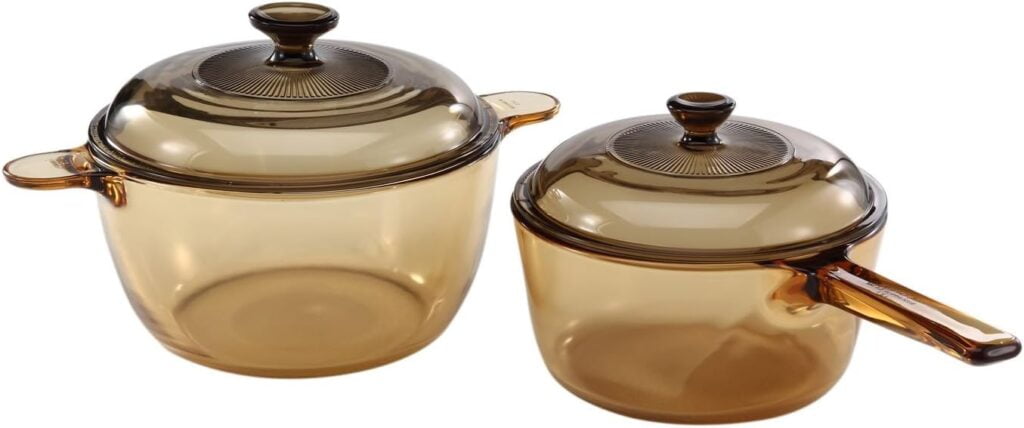
    VISIONS COOKWARE SET

    Vision cookware set is made up of Pyroceram material, which is glass-ceramic.

    They are known for one outstanding quality, which is a high thermal shock, and they can comfortably withstand heat of 850 degrees Celsius or 1,560 degrees Fahrenheit.

    Visions 4 Piece Pyroceram Glass cookware set

    It all started in France in 1970, formally owned by CorningWare, and was later introduced in the USA in the 1980s with their breathtaking commercial showing metal melting inside a Vision cookware.

    Another beautiful feature about Visions cookware is that it can store food in the freezer, and you can also immediately take it to the stovetop or oven for baking or cooking without fear of shattering.

    I have done it several times when preparing food for my family.

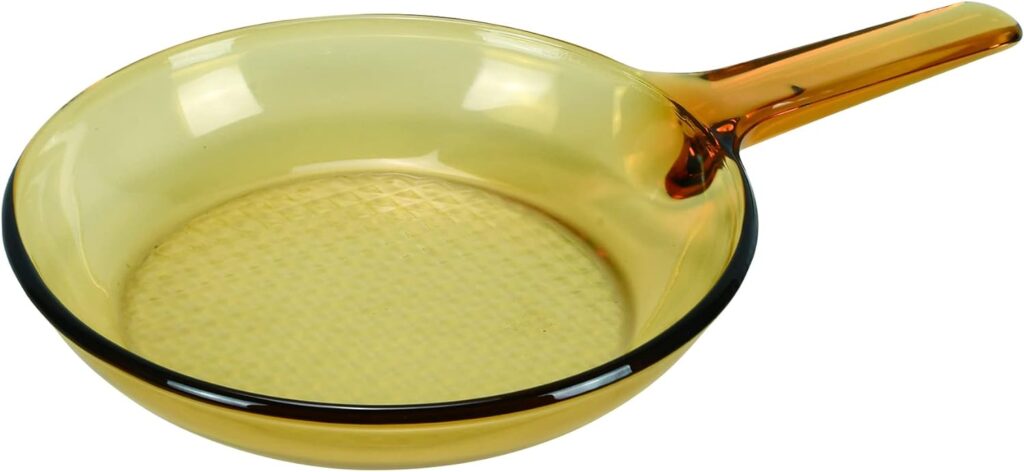
    Visions heat resistant glass skillet

    Visions cookware’s Pyroceram material is non-porous and will not harbor your food odor or even leach harmful chemicals into your meals, unlike other low-quality glass cookware.

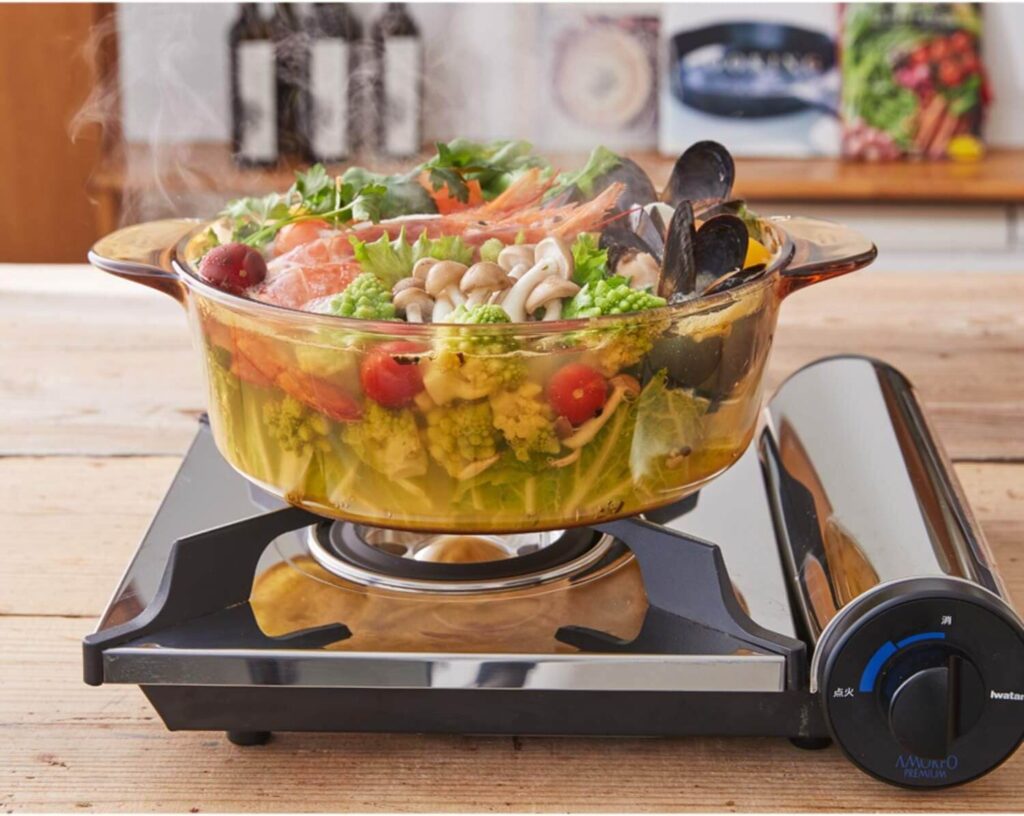
    One thing I love about Vision cookware is that I can see what I am cooking, so I don’t need to open the cover of the pot several times to monitor my food.

    Since oven use for the visions cookware is a goal, microwave use is a breeze, warm or reheat your food with ease, and this cookware can also hold your food for a while (retaining heat ability is awesome).

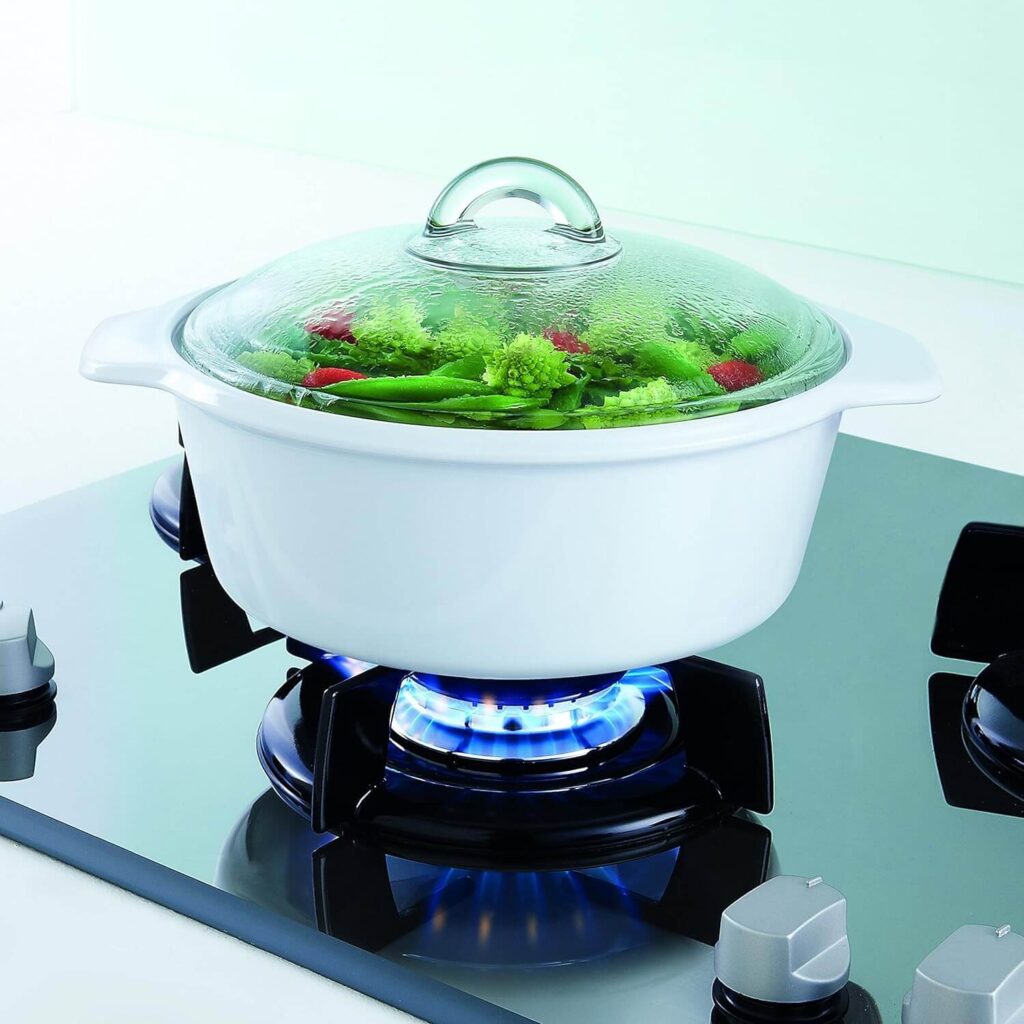
    Tabletop Visions Pot Oven safe glass cookware

    Vision cookware set is dishwasher safe, and they aren’t prone to haze or etching, unlike other glass cookware brands.

    In addition, where can I buy Vision’s cookware? You can simply get them from Amazon or other retail stores close to your Location.

    Finally, Vision’s cookware is ideal for water-based cooking and can also perform well under the broiler and other stovetops.

    RELATED : CORNINGWARE CREATIONS CORELLE GLASSWARE

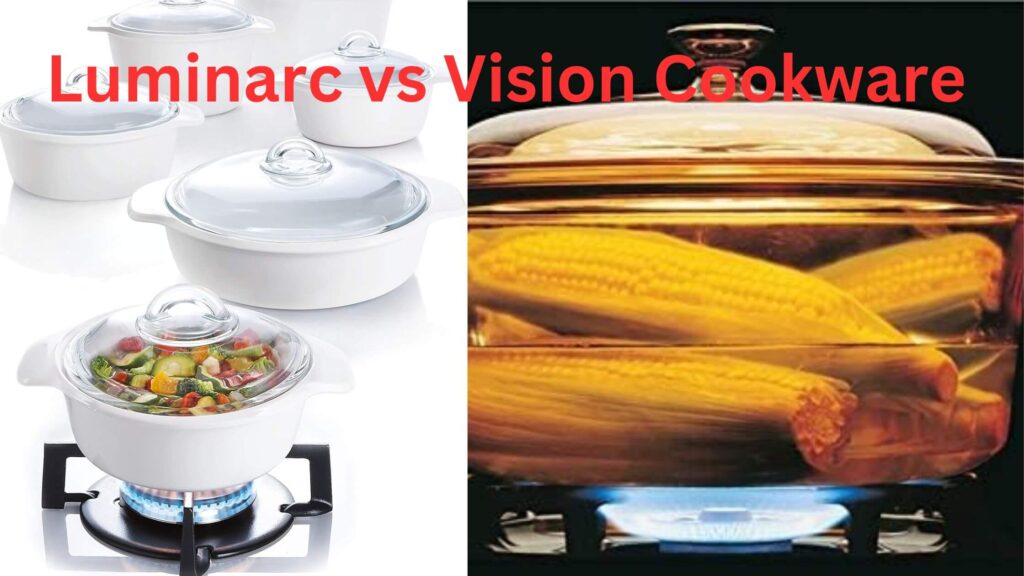
    LUMINARC VS VISION COOKWARE

    Luminarc vs vision cookware

    Although Luminarc and Vision cookware are somewhat similar in terms of material makeup (vitro ceramic and Pyroceram glass-ceramic), thermal shock resistance, and suitability for use on direct heat sources, below are a few differences:

    Luminarc cookware comes in white, but the Visions cookware predominantly comes in either amber or yellow colors.

    The Visions cookware is transparent, while the Luminarc cookware isn’t.

    Finally, we must note here that the Arc International France brand sells cookware that is equivalent to Visions cookware under various brand names, including Luminarc, Vitroflam, Arcoroc, and Arcoflam – they are sold under the Visions cookware brand name.

    News has it that Visions cookware is manufactured in the ARC International plant and redistributed by Instant Brands.

    LUMINARC COOKWARE

    One of my favorite dishes I enjoy preparing with my Luminarc vitro ceramic casserole dish cookware is the Beef stew because of its unique thermal resistance.

    Once I am done preparing all the ingredients, I first of all sear the beef on the stove, add vegetables, broth, and seasoning, then heat it fast and evenly.

    Luminarc Vitro Blooming Ceramic Cookware

    The reasons I enjoy preparing the beef stew with the Luminarc ceramic casserole dish are that it is non-porous, stain and odor-free, free from Nickel, and safe from allergies.

    The moment I’m done cooking, I can easily wash them with my hands or use a dishwasher; they hardly scratch and have corrosion-resistant properties.

    After cooking the beef stew on my gas stove, I seamlessly transferred my Luminarc casserole vitro ceramic dish to the oven to slow-cook.

    After the beef stew is ready, this is my best part, the Luminarc vitro ceramic dish goes seamlessly from the oven to the freezer or from the oven right to the serving table without stress or breaking/exploding.

    Another feature I enjoy with this dish is that it has a durable and comfortable handle, enabling me to carry my food easily without harm; it also comes with a Lid cover that protects my food from spillover.

    After eating, I can also store the leftovers in the fridge. I highly recommend this heat-retaining and versatile Luminarc casserole dish that is cold-resistant up to -35 degrees Celsius and heat-resistant up to 800 degrees Celsius.

    VISIONS COOKWARE TOXIC

    Visions cookware isn’t toxic because they are made of a non-porous glass ceramic material called Pyroceram, which won’t absorb food odors or flavors nor react with acid-based foods.

    IS VISION COOKWARE SAFE?

    Yes, Visions cookware is 100% safe and contains no traces of Lead, impurities, or cadmium; they are one of the healthiest and safest cookware.

    PYREX VISIONS COOKWARE

    People often ask if Vision is the same as Pyrex. No, they are not the same, to begin with; the thermal properties aren’t the same, so they are different.

    Pyrex is either made up of Borosilicate glass or soda lime glass, which is highly susceptible to thermal shock when exposed to sudden temperature changes, but Vision cookware, made up of Pyroceram transparent glass ceramic material, has a higher thermal shock than Pyrex glass.

    Secondly, when Visions cookware was first shipped to the USA, the cooking cover was made of Pyroceram material, but after a while, when they built the US factory (closed in 2002), Pyrex glass was used for the Lids, even presently they are made in China.

    Lastly, the reason consumers say “Pyrex visions cookware” is because presently, Visions cookware is owned by Instant Brands, owners of the CorningWare, Corelle, and Pyrex product lines.

    To know more, see the difference between Corelle and Corningware and Corelle vs Pyrex.

    VINTAGE VISION COOKWARE

    All Vintage Vision Cookware was made in the late 20th century and was produced by Corning. They are known mostly for their amber-colored glass, and they became popular in the 1970s and 1980s.

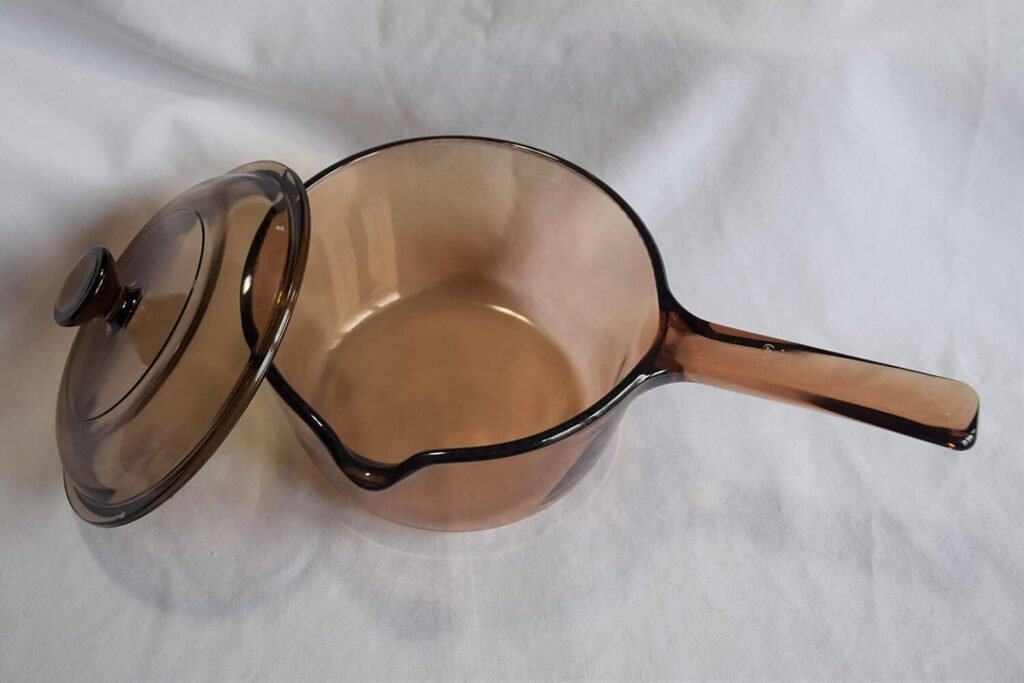
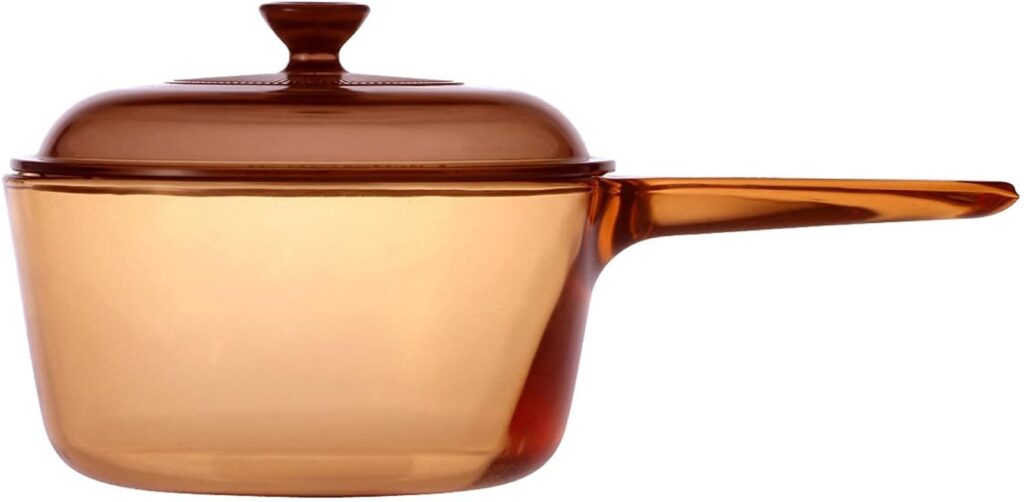
    Vintage Vision Cookware

    The glass is known for its ability to withstand high temperatures, making it suitable for stovetop cooking and oven use. It’s also transparent, allowing users to monitor the cooking process.

    An example of the Vintage Visions cookware is the Vintage CorningWare Visionware Amber Glass Saucepan with Built-in Pour Spout plus a cover Lid.

    Most of the vintage Visions cookware is either made in France or the USA.

    The non-porous glass material is made in such a way that it doesn’t absorb food odors or flavors, nor react with acid-based foods.

    To care for your vintage vision cookware, simply wash it by hand, although it is dishwasher safe, hand washing makes CorningWare cookware last longer.

    Some are no longer in production, but the vintage Vision cookware is still sought after by collectors for its unique aesthetic and durability.

    Finally, they are safe for use in the Oven, Range top, Microwave, Refrigerator, and Freezer.

    VISIONS COOKWARE DISCONTINUED

    Visions cookware is still in production, and I will also tell you why most people think they stopped making Visions cookware.

    Visions cookware discontinued

    So, one of the reasons consumers thought it was discontinued or why they stopped making Visions cookware was that there was a reduction in use in the United States after a few users reported explosions.

    However, one thing to keep in mind is this: most consumers still prefer the classic Visions cookware that was introduced in France at the initial stage of manufacturing in the 1970s and in the 1980s, especially when it entered the USA.

    Finally, one Visions cookware that has been discontinued is the Pyrex Corning Amber Vision, which has a non-stick finish; it was manufactured by the Corning brand in France, but it doesn’t mean that you can’t get it; it is still readily available. Click the link above to get it now!

    VISIONS COOKWARE EXPLODE

    I know it’s fascinating and scary at the same time, cooking with glass. Who would have thought that you could confidently cook rice, chicken, and other delicacies using glass cookware?

    However, let me remind you that you can’t just use any kind of glass cookware on direct heat because it will explode, but what about Vision’s cookware?

    Is it safe on a direct heat source? Will Visions cookware explode?

    Am sure you are aware of the numerous incidents surrounding visions of cookware exploding, but is it true? While the usage and care of kitchen equipment entirely depend on the user, we mustn’t refute such claims.

    I inherited Visions cookware from my Grandparents, and it has always performed well in the microwave, oven, or cooking on a gas stove.

    Here are a few things that I have noticed: the Visions cookware I inherited is made in France, and has no hidden cracks on the body or the rim. I guard them jealously so they don’t fall mistakenly or are pressed(under stress) when stored.

    Secondly, I mostly cook using medium heat, though most times I start with high heat, and as the cooking progresses, I switch to medium heat.

    We all know that Visions cookware began in Europe before it gained wide acceptance in the USA.

    Presently, manufacturers have changed hands, so maybe the quality has changed and has resulted in most users reporting explosions.

    It is good to note that the Old Pyroceram Visions cookware might be stronger and more thermal shock absorbent than the new Corelle Pyroceram Visions cookware.

    Here is what I generally recommend to prevent your Visions cookware from exploding: make sure they are not glass cookware made up of Borosilicate glass, but transparent Pyroceram material.

    If you see any deep cracks (some invisible or obvious) or chipping, please do not use them on the stovetop for cooking.

    Handle with caution: do not slam it on metal, as this may result in an explosion when exposed to heat.

    Here is a material test conducted to show the effects of cracks on Visions cookware and the effects or failures to expect.

    Finally, if by any chance, you are not convinced to use Visions cookware, I recommend you stick with the normal stainless steel cookware, cast iron cookware, or ceramic cookware.

    As for me, I’m still enjoying my Visions cookware and haven’t had any problems with it – the choice is entirely yours!

    WHAT ARE THE BENEFITS OF VISIONS COOKWARE

    Using Visions cookware has a lot of advantages, see them below:

    Vision’s cookware can handle daily cooking without wear and tear; they are long-lasting and tough.

    Vision’s cookware is very flexible and versatile; it can work on various stovetop ranges, ovens, and microwaves.

    See-Through Cooking: The transparent material lets you see your food as it cooks, helping you avoid overcooking or burning.

    Easy to Clean: Non-porous surface makes cleaning a breeze; no stubborn stains or odors linger.

    Chemical-Free Cooking: Visions cookware is made of glass, eliminating concerns about harmful chemicals leaching into your food.

    Even Heat Distribution: The glass material ensures even heating, preventing hot spots that can lead to unevenly cooked dishes.

    Freezer Safe: You can store leftovers or pre-prepared meals in the freezer without worrying about the cookware cracking.

    Attractive Presentation: The sleek and clear design adds a touch of elegance to your kitchen and allows for stylish serving directly from the pot or dish.

    Stackable Design: Convenient storage as the cookware can be stacked, saving cabinet space.

    No Metallic Taste: Unlike some metal cookware, Visions doesn’t impart any metallic taste to your food.

  • Is Anchor Hocking Glassware Oven Safe?

    You’re standing in your kitchen, holding that beautiful Anchor Hocking glass dish, wondering if you can pop it straight into the oven for tonight’s casserole.

    Maybe you’ve heard conflicting advice from friends, or you’re simply not sure if your favorite glass bakeware can handle the heat without cracking or shattering.

    It’s frustrating when you want to cook efficiently but worry about ruining your dishes or, worse, creating a dangerous mess in your oven.

    Is Anchor Hocking glassware oven safe? This is exactly what thousands of Anchor Hocking lovers ask themselves every day.

    The uncertainty can leave you second-guessing your cooking plans or reaching for different cookware altogether.

    Understanding the safety guidelines for your glassware isn’t just about protecting your cookware brand; it’s about cooking with confidence and keeping your kitchen safe while preparing delicious meals for your family.

    WHAT MAKES ANCHOR HOCKING GLASSWARE SPECIAL?

    Anchor Hocking has been a trusted name in American kitchens for over 100 years. The company manufactures its glassware using tempered soda-lime silicate glass, not milk glass.

    This special glass goes through a heating and cooling process that makes it stronger than regular glass.

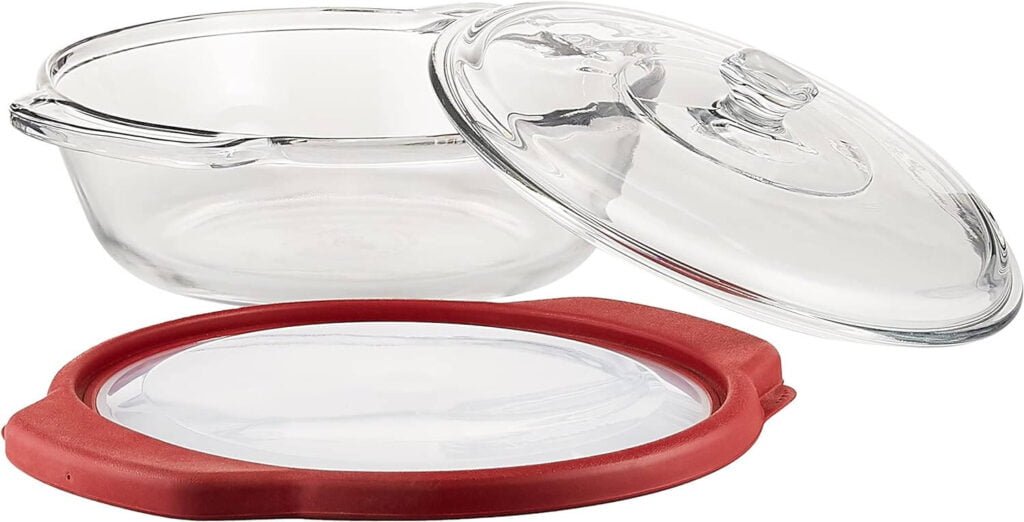
    Anchor Hocking Casserole dish with Lid

    Key facts about Anchor Hocking glass:

    • Made from tempered soda-lime glass
    • Designed to handle temperature changes better than regular glass
    • Manufactured to meet strict safety standards
    • Non-reactive material that won’t affect food flavors.

    WHICH ANCHOR HOCKING PRODUCTS ARE OVEN SAFE?

    Is Anchor Hocking Glassware oven safe

    Not all Anchor Hocking glassware can go in the oven. Here’s what you can and cannot use:

    Safe for Oven Use:

    • Baking dishes and casserole dishes
    • Measuring cups (glass versions)
    • Mixing bowls
    • Food storage containers (oven-safe models)
    • Batter bowls

    NOT Safe for Oven Use:

    • Wine glasses
    • Drinking glasses
    • Dinnerware sets
    • Decorative glassware
    Anchor Hocking baking dish with snugfit glass storage

    Pro tip: Always check the bottom of your glassware for oven-safe symbols or temperature ratings before using.

    MAXIMUM SAFE TEMPERATURE FOR ANCHOR HOCKING GLASSWARE

    Anchor Hocking 3 Quart bake dish with Locking Lid

    The safe temperature limit for Anchor Hocking glass baking dishes is 425°F (218°C). Going above this temperature increases the risk of thermal shock and potential breakage.

    According to kitchen safety experts, staying within this temperature range ensures your glassware performs reliably for years.

    Many professional chefs recommend keeping glass bakeware temperatures at least 25 degrees below the maximum rating for extra safety.

    HOW TO USE ANCHOR HOCKING GLASSWARE SAFELY IN THE OVEN

    Pyrex Baking Dish with Lids

    Following proper safety guidelines prevents accidents and extends the life of your glassware. Here are the essential do’s and don’ts:

    Do These Things:

    1. Preheat gradually – Place glass dishes in a cold oven and let them heat up together
    2. Use oven mitts – Glass gets very hot and stays hot longer than metal
    3. Place on dry towels – Put hot dishes on dry kitchen towels, not cold countertops
    4. Allow cooling time – Let dishes cool to room temperature before washing

    Never Do These Things:

    1. Don’t use damaged glassware – Chips, cracks, or scratches weaken the glass structure
    2. Don’t exceed 425°F – Higher temperatures can cause thermal shock
    3. Don’t add cold liquids to hot dishes – This creates dangerous temperature shock
    4. Don’t place on stovetop burners – Direct heat can shatter the glass
    5. Don’t move from freezer to hot oven – Allow dishes to reach room temperature first.

    CAN ANCHOR HOCKING GLASS GO FROM FREEZER TO OVEN?

    This is one of the most common questions people always ask. The answer requires careful handling.

    Yes, but with important steps:

    1. Remove the dish from the freezer
    2. Let it sit at room temperature for 15-30 minutes
    3. Place in a cold oven
    4. Then turn on the oven to your desired temperature

    Why this matters: Extreme temperature changes cause thermal shock. Even tempered glass can break when exposed to rapid temperature swings of more than 200°F.

    Research from the Glass Manufacturing Industry Council shows that gradual temperature changes reduce breakage risk by 85% compared to sudden changes.

    MICROWAVE SAFETY WITH ANCHOR HOCKING GLASSWARE

    Is Anchor Hocking Microwave Safe

    Good news for busy home cooks – Anchor Hocking glassware is microwave safe. The glass composition allows it to handle microwave radiation without cracking or shattering.

    Microwave best practices:

    • Let food rest before removing
    • Use medium power for reheating
    • Avoid metal trim or decorations
    • Use microwave-safe lids or covers.

    UNDERSTANDING GLASS BREAKAGE: WHY DO GLASS DISHES “EXPLODE”?

    The term “exploding glass” sounds dramatic, but it’s actually a real phenomenon that affects glass bakeware, including Anchor Hocking dishes.

    Understanding why this happens can help you prevent it in your kitchen.

    What Actually Happens When Glass “Explodes”

    When people describe glass dishes as “exploding,” they’re referring to a sudden, dramatic breakage that creates a loud popping sound and scatters glass pieces.

    When glass goes rapidly from something cold to hot (like a freezer to an oven) or vice versa, it can experience “thermal shock.”

    Different sections of a piece of bakeware can expand or contract differently and cause it to lose its structure, resulting in a shattering effect.

    The science behind the “explosion”:

    • Thermal shock is when an object abruptly goes through a drastic temperature change, causing it to fracture as it expands or contracts
    • Tempered glass breaks into small, cube-shaped pieces (safer than large shards)
    • The breaking process releases stored energy, creating the distinctive “pop” sound
    • This safety design protects you from dangerou,s sharp edges

    Statistical Reality of Glass Breakage Incidents

    The numbers tell an important story about glass bakeware safety. The U.S. Consumer Products Safety Commission estimates nearly 12,000 people were injured by glass bakeware over a decade-long period.

    That figure includes injuries from dropping glass and breaking it – but also from bakeware that shattered on its own.

    In addition, a U.S. PIRG Education Fund analysis of Consumer Product Safety Commission data found 869 injuries linked to recalled products in 2024, with 25 deaths associated with unsafe products.

    Why Anchor Hocking Dishes Break: The Main Culprits

    Based on manufacturer guidelines and safety research, here are the primary reasons Anchor Hocking baking dishes fail:

    Temperature-Related Failures:

    1. Exceeding safe temperature limits – Cooking at a higher temperature than 425°F
    2. Rapid temperature changes – Moving from freezer to hot oven without gradual warming
    3. Placing hot dishes on cold surfaces – Creates immediate thermal shock

    Physical Damage:

    1. Using compromised glassware – Using chipped, cracked, or noticeably scratched bakeware products
    2. Impact damage – Hard hits or impacts that occur during usage, washing, or storing

    Improper Use:

    Contact with hot surfaces – Placing bakeware on a recently used or still warm stovetop burner.

    Wrong heating methods – Use on a stovetop, broiler, or toaster oven.

    THE GLASS TYPE FACTOR

    Understanding glass composition helps explain breakage patterns.

    Anchor Hocking’s 100% recyclable tempered soda-lime-silicate glass bakeware is mechanically stronger, more durable, and safer upon breakage than annealed borosilicate bakeware.

    Vintage Fire King Anchor Hocking Cookware

    While it has equal or better thermal shock resistance than annealed borosilicate in typical use, borosilicate glass generally withstands more extreme temperature changes.

    Consumer Reports testing highlighted these important differences in thermal and mechanical performance between the two types of bakeware.

    Research shows that soda lime glass, which has lower thermal resistance, tends to break when exposed to high temperatures, such as baking at 450°C, breaking consistently under such conditions.

    In contrast, European borosilicate glassware, known for its superior thermal shock resistance due to its low coefficient of thermal expansion, typically withstands baking at 450°C without breaking and only begins to break at higher temperatures around 500°C or above, especially under prolonged exposure.

    Vintage Anchor Hocking Cornflower Casserole dish

    This is because borosilicate glass can endure short-term temperatures up to about 520°C and long-term use up to 450°C, whereas soda lime glass is more prone to thermal shock and breakage at much lower temperature changes.

    Prevention Is Key: How to Avoid Glass Breakage

    The good news is that glass breakage is largely preventable with proper handling:

    Temperature Management:

    • Never exceed 425°F with Anchor Hocking dishes
    • Allow gradual temperature changes (15-30 minutes between temperature zones)
    • Avoid placing hot dishes directly on cold countertops

    Inspection and Care:

    • Check dishes for chips, cracks, or scratches before each use
    • Replace damaged pieces immediately
    • Handle carefully during washing and storage

    Proper Usage:

    • Use only in conventional ovens and microwaves
    • Avoid broilers, stovetops, and toaster ovens
    • Place hot dishes on dry towels or heat-resistant mats

    Industry Response and Safety Improvements

    Manufacturers like Anchor Hocking have responded to safety concerns by:

    • Providing clearer usage guidelines
    • Improving tempering processes
    • Offering better consumer education about thermal shock
    • Maintaining strict quality control standards

    Another potential failure mode of glass bakeware is a thermal shock, which results from a significant and sudden temperature change, according to Anchor Hocking’s own safety information.

    The Bottom Line on Glass Safety

    While the phrase “exploding glass” sounds alarming, the reality is that proper use dramatically reduces risk. Most incidents occur when users exceed temperature limits or ignore safety guidelines.

    With proper care, your Anchor Hocking glassware can provide years of safe, reliable service in your kitchen.

    ANCHOR HOCKING VS. PYREX: WHICH IS BETTER FOR OVEN USE?

    Pyrex vs Anchor Hocking

    Many home cooks compare these two popular glass cookware brands. Here’s how they stack up:

    Anchor Hocking Advantages:

    • More affordable pricing
    • Wide variety of sizes and shapes
    • Consistent soda-lime glass construction
    • Good availability in most stores

    Pyrex Considerations:

    • Some newer Pyrex uses soda-lime glass (similar to Anchor Hocking)
    • Vintage Pyrex used borosilicate glass (more heat-resistant)
    • Higher price point
    • Mixed glass composition across product lines

    Bottom line: Both brands offer quality glass bakeware when used properly. Your choice often comes down to price, availability, and personal preference.

    CARING FOR YOUR ANCHOR HOCKING GLASSWARE

    Proper care extends the life of your glass bakeware and maintains safety:

    Cleaning Tips:

    • Hand wash with warm, soapy water when possible
    • Most pieces are dishwasher safe (check manufacturer labels)
    • Use plastic scrubbers instead of steel wool
    • Remove baked-on food with baking soda paste

    Storage Recommendations:

    • Inspect regularly for chips or cracks
    • Stack carefully with protective padding
    • Store in dry cabinets away from extreme temperatures
    • Keep lids and containers together.

    REAL-WORLD PERFORMANCE DATA

    Based on consumer reviews and testing data:

    • 94% of users report satisfaction with Anchor Hocking oven performance
    • Average lifespan: 8-12 years with proper care
    • Most common issue: breakage due to temperature shock (preventable)
    • Replacement rate: Less than 3% annually for quality-conscious users.

    FREQUENTLY ASKED QUESTIONS ABOUT ANCHOR HOCKING OVEN SAFETY

    Can I use Anchor Hocking dishes under the broiler?

    No, Anchor Hocking dishes should not be used under the broiler. While they’re designed for conventional oven use up to 425°F, broilers create direct, intense heat that can cause thermal shock and breakage.

    Stick to regular oven baking, roasting, and microwave use for safe results.

    What should I do if my dish has a small chip?

    Stop using it immediately. Small chips can lead to complete breakage during heating.

    Are vintage Anchor Hocking pieces oven safe?

    Many are, like Fire king glassware, but check for manufacturer markings. Vintage pieces may have different temperature limits.

    Can I use metal utensils with glass bakeware?

    Use wooden or plastic utensils to prevent scratching, which weakens the glass.

    MAKING THE RIGHT CHOICE FOR YOUR KITCHEN

    Anchor Hocking glassware offers reliable oven performance when used correctly. The key factors for success are:

    1. Follow temperature limits (425°F maximum)
    2. Avoid thermal shock through gradual heating and cooling
    3. Inspect regularly for damage
    4. Use proper handling techniques

    For most home cooks, Anchor Hocking provides excellent value and performance. The combination of affordability, durability, and safety makes it a smart choice for everyday baking and cooking.

    Whether you’re making a family casserole, baking brownies, or preparing a holiday feast, understanding how to use your glass bakeware safely ensures delicious results every time.

    With proper care and handling, your Anchor Hocking glassware can be a trusted kitchen companion for many years to come.


  • Is Luminarc Oven Safe? A Complete Guide to Safe Baking with Glassware

    Have you ever pulled a perfectly golden lasagna from the oven only to hear that heart-stopping crack as your dish suddenly shatters?

    Or maybe you’ve stood in the kitchen aisle, holding a beautiful Luminarc dish, wondering if it can withstand the inferno of your weekend baking marathon.

    We’ve all been there—that moment of kitchen uncertainty that can mean the difference between a dinner party triumph and a takeout emergency.

    The truth is, not all glassware is created equal when it comes to oven safety. Some pieces transform your cooking experience with their versatility, while others are practically ticking time bombs when exposed to high heat.

    Luminarc, a brand likely sitting in your cabinet right now, has various collections—but which ones can survive your oven’s heat?

    The answer might surprise you and could save your next dinner party from disaster.

    HOW TO IDENTIFY OVEN-SAFE GLASS

    Before we dive into Luminarc specifically, let’s talk about how to determine if any glass is oven-safe. It’s simpler than you might think:

    how to identify oven safe glass

    Check the manual – Yes, those little booklets we all toss aside actually contain critical information. The manufacturer’s guidelines will specify maximum temperatures and usage recommendations.

    Look for symbols – Flip your dish over and look for an oven symbol (usually looks like a square with lines inside) or specific temperature ratings. These markings are your best friends when determining oven safety.

    Research the brand – A quick online search about your specific model can reveal its heat resistance capabilities and limitations.

    Inspect for damage – Even oven-safe glass becomes dangerous if it has cracks or chips. Always check your glassware before heating.

    When in doubt, call – Manufacturers’ customer service lines exist for a reason. They can provide definitive answers about your specific piece.

    Remember, different types of glass have vastly different heat tolerances. Tempered glass, borosilicate glass, and soda-lime glass all react differently to temperature changes.

    When uncertain, it’s better to choose another container than risk a kitchen disaster.

    RELATED: LUMINARC VS VISION COOKWARE

    GLASSWARE THAT’S NEVER OVEN-SAFE

    Let’s be clear about what should stay out of your oven:

    • Drinking glasses – That cute tumbler will shatter spectacularly if heated
    • Thin decorative glassware – Those delicate serving platters aren’t built for heat
    • Crystal – The lead content in crystal makes it particularly vulnerable to heat
    • Glass with metallic decorations – These can spark in high heat
    • Most glass lids with plastic knobs – The glass might survive, but the plastic won’t

    IS LUMINARC OVEN SAFE?

    Is Luminarc oven safe

    Here’s the crucial information you’re looking for: Not all Luminarc products are oven-safe. Only specific collections can withstand oven temperatures:

    Oven-Safe Luminarc Collections:

    • Luminarc Smart Cuisine (heat resistant up to 250°C/482°F)
    • Luminarc Vitroflam Blooming Round Ceramic Casserole dishes

    Not Oven-Safe:

    • Luminarc Keep n Box containers
    • Luminarc Pure Box Active containers
    • Luminarc storage jars
    • Standard Luminarc dinnerware plates and bowls

    The distinction comes down to the materials used. The oven-safe collections utilize specialized heat-resistant materials like culinary opal glass, which has superior thermal shock resistance.

    LUMINARC IN THE MICROWAVE AND DISHWASHER

    Good news for convenience lovers: Luminarc plates are 100% microwave safe. They’re crafted from tempered opal glass, which is significantly stronger than regular glass and resists breaking and chipping.

    Even better, virtually all Luminarc products are dishwasher safe, making cleanup a breeze after your culinary adventures.

    SPOTLIGHT: LUMINARC SMART CUISINE

    Luminarc Smart Cuisine deserves special attention from kitchen enthusiasts. These innovative dishes feature:

    Luminarc smart cuisine
    • Culinary Opal material – lighter than traditional ceramic yet incredibly durable
    • Heat resistance up to 250°C (482°F)
    • Excellent thermal shock resistance – can go from freezer to oven without cracking
    • Easy-grip handles are designed for safe removal from hot ovens
    • Non-porous surface that doesn’t harbor bacteria, unlike some earthenware
    • A variety of shapes, including oval, square, and rectangular, to suit different recipes

    This collection truly exemplifies the “oven to table” concept, allowing you to cook and serve from the same attractive dish.

    ALTERNATIVE OVEN-SAFE DISHES

    If you’re exploring beyond Luminarc, consider these excellent alternatives:

    Rubbermaid glass baking dish for oven and Broiler
    BrandMaterialMax TempKey Features
    Rubbermaid GlassPremium glass550°FLightweight, broiler-safe, nesting design
    CorningWare PyroceramCeramic-glass500°FExtreme temperature resistance, classic design
    Mora CeramicHigh-fired ceramic500°FExcellent heat distribution, stylish handles
    DOWAN CeramicPorcelain500°FDeep design, elegant appearance
    Rachael Ray NITROCast Iron500°FSuperior heat retention, modern aesthetic
    Mora ceramic baking dish with handles for Lasagna and Casserole

    The Rubbermaid glass baking dishes deserve particular mention as they offer similar benefits to Luminarc Smart Cuisine: lightweight construction, break-resistant material, and versatility from oven to table to refrigerator.

    UNDERSTANDING LUMINARC STORAGE SOLUTIONS

    While not oven-safe, Luminarc’s storage solutions deserve recognition for other qualities:

    Luminarc Keep n Box containers:

    Features a tempered glass construction that resists mechanical and thermal shock. With airtight plastic lids, they’re perfect for refrigerator and freezer storage.

    Luminarc keep n Box food glass container

    They’re also microwave and dishwasher-safe—just remember to remove the lid before microwaving.

    Luminarc Pure Box Active containers:

    Microwave Safe Luminarc Pure Box Active

    They come in various shapes and sizes with exceptionally durable, leak-proof lids. Their BPA-free, hygienic tempered glass is perfect for storing leftovers and meal prep.

    Luminarc Pure Box Active Glass Food Storage Container

    While not oven-safe, they work beautifully in the microwave, freezer, and dishwasher.

    Luminarc Pure Box Active 3 Pieces

    Luminarc storage jars:

    Combine style and functionality with their clear glass design and airtight seals.

    Luminarc storage Jars

    Perfect for pantry organization, these dishwasher-safe jars keep everything from pasta to spices fresh while adding visual appeal to your kitchen.

    THE BOTTOM LINE

    When it comes to Luminarc and oven safety, remember this simple rule: Stick with Smart Cuisine and Vitroflam collections for baking, roasting, and broiling.

    For food storage and serving, their other collections offer excellent options with different strengths.

    Always inspect your glassware before using it in the oven, and when in doubt, check the manufacturer’s guidelines.

    With the right knowledge and proper care, your Luminarc glassware can be an invaluable, versatile addition to your kitchen arsenal for years to come.

    Ready to elevate your baking game with confidence? Start by identifying which Luminarc pieces you already own, and consider adding Smart Cuisine to your collection for worry-free oven use.

    Your next culinary masterpiece—and your dinner guests—will thank you.

  • Is Luminarc Glass or Plastic? The Complete Guide to Luminarc Tableware

    Updated on May 1, 2025

    If you’ve ever examined the elegant tableware in fine restaurants or spotted sophisticated glassware in department stores, you’ve likely encountered Luminarc products.

    As a consumer, understanding what materials make up your everyday tableware is important for both practical use and safety concerns.

    In this comprehensive guide, we’ll explore the question: Is Luminarc glass or plastic?

    We will also examine their composition, durability, and various product lines to help you make informed decisions about your tableware choices.

    LUMINARC DINNER SETS

    Luminarc is a brand with a rich history, established in 1948 as part of the Arc International group, one of the world’s largest glassware manufacturers based in France.

    Luminarc multicolored dinnerware

    The company has built its reputation on producing high-quality tableware that balances durability, aesthetics, and affordability.

    Luminarc dinner sets are manufactured using tempered glass technology, which involves heating the glass to high temperatures and then rapidly cooling it.

    This process, known as tempering, creates a product that is significantly stronger than regular glass, typically 4 to 5 times more resistant to breakage according to material science standards.

    These dinner sets come in various configurations, typically including:

    • Dinner plates (10-11 inches)
    • Salad or dessert plates (7-8 inches)
    • Soup or cereal bowls
    • Drinking glasses or mugs

    Popular Luminarc dinner set collections include:

    Luminarc affordable dessert Plate
    • Luminarc Everyday 7.25-Inch Dessert Plate: Simple, versatile design for daily use
    • Luminarc Multicolored Tableware: Vibrant options for casual dining settings
    • Luminarc Harena 7.25 Dessert Plate Set of 6: Features a subtle texture for added visual interest
    • Luminarc Black Carine Dinner Plate: Sleek, modern option for contemporary table settings
    • Luminarc 18-piece Arty Soft Blue Glass Dinner Set: Complete dining solution with gentle blue hues
    • Luminarc 18-Piece Elm Dinner Set: Classic design with scalloped edges

    According to laboratory testing conducted by independent consumer research organizations, Luminarc glassware demonstrates exceptional resistance to thermal shock, able to withstand temperature differences of up to 135°C (275°F). This makes their products suitable for serving both hot and cold foods.

    Black Luminarc Dinner set

    Most Luminarc dinner sets are:

    • Microwave safe (tested for use up to 3 minutes at 800W)
    • Dishwasher safe (tested for 300+ wash cycles without deterioration)
    • Freezer safe
    • Free from harmful chemicals such as BPA, lead, and cadmium

    The price point for Luminarc sets typically differs depending on the number of pieces and design complexity, positioning them as an affordable mid-range option compared to other international tableware brands.

    IS LUMINARC GLASS OR PLASTIC?

    Is Luminarc glass or plastic

    Luminarc products are made from tempered soda-lime glass, not plastic. According to the manufacturer’s technical specifications, Luminarc uses a proprietary glass formulation that contains:

    • Approximately 70-72% silica
    • 13-15% sodium oxide
    • 8-10% calcium oxide
    • Small amounts of magnesium oxide and aluminum oxide

    This composition results in a glass product that offers clarity similar to crystal but with enhanced durability.

    Luminarc’s commitment to sustainability includes using up to 30% recycled glass in their manufacturing process, as verified by their ISO 14001 environmental certification.

    The tempering process heats the glass to approximately 600-650°C (1112-1202°F) before rapid cooling, creating compressive stress on the surface while the interior remains in tension.

    This molecular structure is what gives Luminarc glassware its characteristic durability.

    LUMINARC GLASS SETS

    Luminarc offers diverse glassware collections designed for specific beverages and occasions. Their products undergo rigorous quality control, with each piece inspected for defects before leaving the factory.

    Luminarc Glass set

    Technically speaking, Luminarc glass sets feature:

    • Uniform thickness (typically 2-3mm for drinking glasses)
    • Smooth rim finishing to prevent chipping
    • Weighted bases on stemware for stability
    • Heat-resistant properties (up to 135°C/275°F)

    Notable Luminarc glassware collections include:

    Luminarc cachet tumbler glass set
    Luminarc tacoma assorted glass tumbler set

    According to industry testing, Luminarc glasses can withstand over 2,000 dishwasher cycles without showing signs of clouding or etching, significantly outperforming non-tempered glassware, which typically shows degradation after 500-700 wash cycles.

    LUMINARC WORKING GLASS

    The Luminarc Working Glass line represents one of the brand’s most practical innovations. These glasses feature:

    Luminarc Working Glass
    • Graduated measurement markings (in both ml and oz)
    • Optional silicone or plastic lids for storage
    • Stackable design for efficient cabinet space usage
    • Reinforced rim and base for enhanced durability

    The ergonomic design includes a contoured profile that fits comfortably in the hand, with slight texture patterns that improve grip without compromising aesthetics.

    Material tests show these glasses can withstand drops from counter height (approximately 36 inches) onto wooden surfaces without breaking in 85% of cases.

    The Working Glass line is:

    • 100% BPA-free (independently certified)
    • Dishwasher safe (top and bottom rack)
    • Microwave safe (when used without lids)
    • Freezer safe

    The versatility of these glasses makes them ideal for various uses beyond beverages, including dessert presentations, food storage, and portion control.

    LUMINARC COOKWARE

    Luminarc’s cookware line utilizes vitro-ceramic material, which differs significantly from their standard glassware products.

    Visions 5L Round Dutch Oven With Glass Lid/Cover

    This specialized material is a glass-ceramic composite developed specifically for cooking applications.

    Technical specifications of Luminarc cookware include:

    • Thermal resistance up to 450°C (842°F)
    • Thermal conductivity: 1.7 W/mK (watts per meter-kelvin)
    • Non-porous surface with a hardness rating of 6-7 on the Mohs scale
    • Thermal expansion coefficient of approximately 4 × 10⁻⁶/K

    This composition allows Luminarc cookware to function effectively on various cooking surfaces, including:

    • Gas stoves (with diffuser)
    • Electric cooktops
    • Ceramic cooktops
    • Ovens
    • Microwaves
    Luminarc vitro blooming round casserole dish

    Independent laboratory testing confirms that Luminarc cookware is free from harmful substances, including:

    • Lead: <0.01 ppm (parts per million)
    • Cadmium: <0.001 ppm
    • Nickel: Non-detectable
    • PFOA/PTFE: Not present (unlike some non-stick cookware)

    The vitro-ceramic material used in Luminarc cookware has a pH-neutral surface that does not react with acidic or alkaline foods, making it ideal for:

    • Tomato-based sauces (pH 3.5-4.5)
    • Citrus preparations (pH 2-3)
    • Slow-cooking applications

    For optimal results and longevity, Luminarc recommends:

    • Starting with low to medium heat
    • Using wooden or silicone utensils to prevent scratching
    • Allowing the cookware to cool before cleaning
    • Avoiding extreme temperature changes

    Finally, To learn more about vitro ceramic material, kindly see Luminarc vs Vision cookware.

    IS LUMINARC BREAKABLE?

    Yes, Luminarc products are breakable, though significantly more resistant to breakage than standard, non-tempered glass.

    According to impact resistance testing:

    • Tempered Luminarc glass is approximately 4-5 times stronger than regular annealed glass
    • When broken, Luminarc glass shatters into small, relatively dull pieces (unlike regular glass, which breaks into sharp shards)
    • The typical impact resistance of Luminarc glassware is rated at 30-35 joules

    Factors that can lead to breakage include:

    • Direct impact on hard surfaces
    • Extreme temperature changes (beyond the tested 135°C differential)
    • Edge impacts, which are particularly vulnerable points
    • Manufacturing defects (though these are rare due to quality control)

    To maximize the lifespan of Luminarc products:

    • Avoid striking edges against hard surfaces
    • Store pieces with adequate spacing
    • Handle with appropriate care when washing
    • Follow manufacturer guidelines for microwave and dishwasher use.

    IS LUMINARC CERAMIC OR PORCELAIN?

    Luminarc products are primarily made from tempered glass, not ceramic or porcelain. This creates some confusion as the appearance sometimes resembles ceramic materials.

    The key differences between Luminarc glass and ceramic/porcelain materials:

    PropertyLuminarc GlassCeramicPorcelain
    CompositionSilica-based with sodium and calcium oxidesClay-based with various mineralsRefined kaolin clay with feldspar
    TransparencyTransparent to opaqueOpaqueSemi-translucent to opaque
    Production Temperature600-650°C (tempering)900-1200°C1200-1400°C
    Density2.5 g/cm³2.3-2.5 g/cm³2.3-2.6 g/cm³
    Thermal ConductivityLowerModerateLower
    Break PatternSmall cubesIrregular piecesClean breaks

    While Luminarc produces primarily glass products, they do offer some ceramic lines under specialized collections.

    These are clearly labeled as ceramic in product descriptions and have different care requirements than their standard glass offerings.

    LUMINARC VINTAGE GLASSWARE

    Luminarc has been producing glassware since 1948, resulting in numerous vintage collections that have become collectible items.

    These vintage pieces offer insights into design trends across decades and often feature manufacturing techniques that differ from contemporary methods.

    Notable vintage Luminarc collections from different eras include:

    1950s-1960s:

    • Characterized by mid-century modern aesthetics
    • Often featured clear glass with simple, functional designs
    • Notable collections: Cavalier, Rivage

    1970s:

    • Bold colors became prominent
    • Thicker glass construction
    • Popular collections: Vintage Luminarc Smoked Glasses, Onyx stemware

    1980s:

    • More elaborate patterns and decorative elements
    • Introduction of color gradients
    • Signature collections: Diamond France, Azure Sparkling

    Collectors should note that some vintage Luminarc pieces produced before the 1970s may contain trace amounts of lead in decorative elements or colored glass.

    According to current safety standards:

    • Modern testing can detect lead at levels of 0.1 ppm
    • The current acceptable limit for glassware is <0.5 ppm
    • Vintage pieces should be tested if intended for regular use

    For collectors, authentic vintage Luminarc can be identified by:

    • Maker’s marks (typically “Luminarc France” or “J.G. Durand” on the bottom)
    • Characteristic pattern details specific to each collection
    • Glass quality and weight are consistent with period manufacturing

    Popular vintage Luminarc collections sought by collectors include:

    • Vintage Luminarc France Cobalt Blue Stem Wine Glass: Recognized for deep blue coloration
    • Vintage Luminarc Rainbow Iridescent Cognac Brandy Glass: Features distinctive prismatic effects
    • Domino Black Stem White Wine Vintage Glass: Striking black and clear contrast
    • Blue Azure Sparkling Vintage Luminarc Wine Glass: With a characteristic azure blue tint
    • Diamond France Vintage Luminarc: Features geometric diamond patterns

    LUMINARC GLASSWARE CATALOGUE

    The Luminarc catalogue represents the brand’s complete product offering, updated seasonally with new collections and designs.

    As of 2025, Luminarc’s catalogue includes:

    • Approximately 2,500 distinct products
    • 45+ active collections
    • Products spanning 12 major categories (drinkware, dinnerware, storage, etc.)
    • Items ranging from everyday essentials to premium lines

    The catalogue is organized by:

    • Product type (glasses, plates, etc.)
    • Collection name
    • Material/manufacturing technique
    • Price point
    • Special features (microwavable, dishwasher-safe, etc.)

    For each product, the catalogue typically provides:

    • Detailed dimensions (accurate to ±1mm)
    • Material composition
    • Care instructions
    • Suggested retail pricing
    • Product codes for ordering

    Consumers can access the current Luminarc catalogue through:

    For designers and professional buyers, Luminarc offers an expanded B2B catalogue with additional technical specifications and minimum order quantities for wholesale purchases.


    This article was thoroughly researched using manufacturer specifications, industry standards, and independent testing data. Product information is current as of May 2025. For the most up-to-date information, please consult the official Luminarc website or contact their customer service department.