Tag: heat resistant cookware

  • Cast Iron vs Ceramic Cookware: The Ultimate Guide to Choosing the Right Cookware for Your Kitchen

    Standing in the cookware aisle, you’re faced with a decision that could define your cooking experience for years to come: cast iron or ceramic?

    Both materials have passionate advocates, but which one truly deserves a place in your kitchen?

    This comprehensive comparison will cut through the marketing noise and help you make an informed decision based on performance, health considerations, maintenance requirements, and long-term value.

    Whether you’re a weekend warrior in the kitchen or someone who simply wants reliable cookware that won’t compromise your family’s health, understanding these two popular materials is crucial for making the right investment.

    Quick Comparison: Cast Iron vs Ceramic Cookware

    Cast Iron vs Ceramic Cookware

    FeatureCast IronCeramic
    Heat RetentionExcellentGood
    Heat DistributionUneven initially, even once hotVery even
    DurabilityLifetime with care3-10 years
    WeightHeavy (3-8 lbs)Light (1-3 lbs)
    Non-stickDevelops with seasoningNatural non-stick
    MaintenanceRequires seasoningEasy cleaning
    Price Rangelow-highlow-high
    Best ForHigh heat, searing, bakingDelicate cooking, easy cleanup

    Choose Cast Iron if you prioritize: Superior heat retention, lifetime durability, excellent value, and don’t mind the learning curve.

    Choose Ceramic if you prioritize: Easy maintenance, lightweight handling, a completely non-toxic surface, and beginner-friendly cooking.

    Middle Ground Option: Enameled cast iron combines cast iron’s heat retention with ceramic-like ease of care, though at a higher price point.

    Cast Iron Cookware: The Time-Tested Kitchen Workhorse

    Types and Performance Characteristics

    Cast iron cookware comes in two main varieties: “traditional raw cast iron” and “enameled cast iron“.

    Traditional pieces like those from Lodge require seasoning but offer the classic cast iron experience, while enameled options from Le Creuset or Staub provide a non-reactive surface that’s ready to use out of the box.

    Heat Retention Superiority:

    Cast iron’s dense structure excels at absorbing and holding heat.

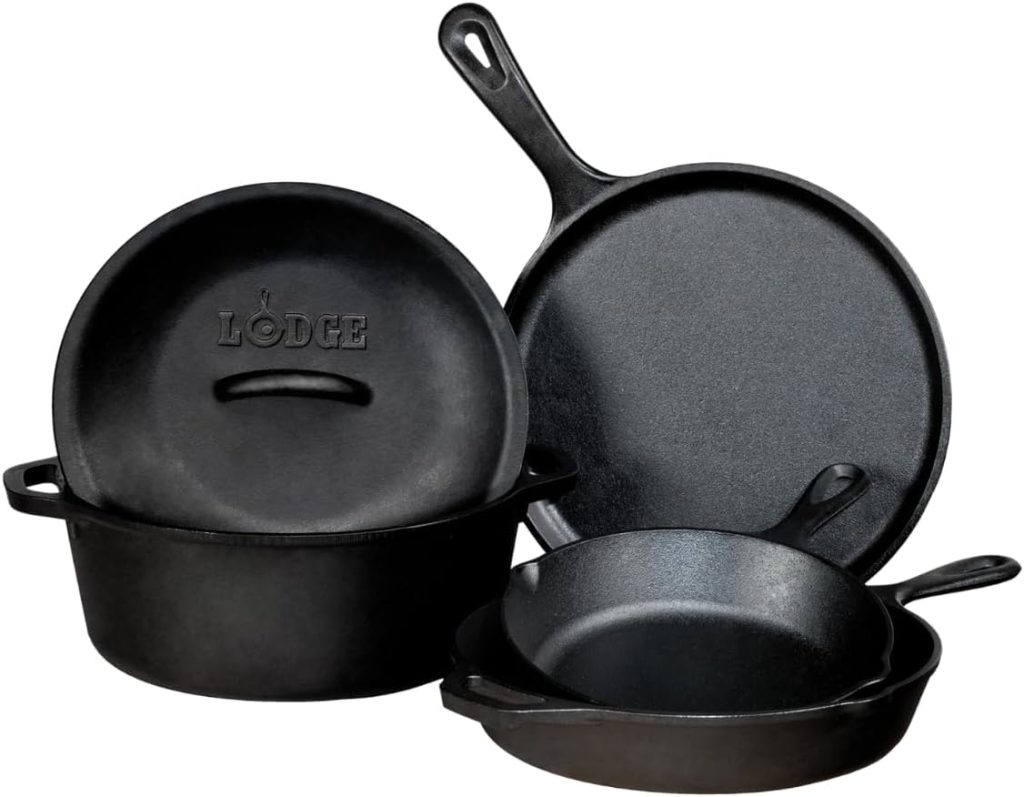
    Lodge pre-seasoned cast iron pot and frying pan

    Once properly heated, it maintains temperature better than any other cookware material, making it ideal for searing steaks, maintaining consistent oil temperature for frying, or keeping food warm at the table.

    Heat Distribution Reality:

    While cast iron eventually distributes heat evenly, it initially creates hot spots directly above heat sources.

    This characteristic requires patience during preheating but rewards you with superior browning and caramelization once the pan reaches equilibrium.

    Unmatched Versatility:

    Le Creuset enameled cast iron cookware

    Cast iron seamlessly transitions from stovetop to oven, handles temperatures up to 500°F+ without issue, and works on all cooking surfaces, including induction, gas, electric, and even open flames or campfires.

    Seasoning and Maintenance Requirements

    Understanding Seasoning: Seasoning isn’t just oil residue – it’s polymerized fat that creates a natural non-stick surface and protective barrier against rust.

    This molecular layer improves with use, making well-maintained cast iron increasingly better over time.

    Basic Maintenance Routine:

    • Clean while still warm, using hot water anda stiff brush
    • Dry completely on the stovetop over low heat
    • Apply a thin layer of oil while warm
    • Store in a dry location.

    Common Mistakes to Avoid:

    • Using soap (actually fine for modern cast iron, but unnecessary)
    • Soaking in water (leads to rust)
    • Storing wet items in humid conditions
    • Cooking acidic foods in unseasoned pans.

    Cast Iron Pros and Cons

    Advantages:

    • Lifetime Investment: Properly cared for, cast iron lasts generations, making it an exceptional value
    • Heat Performance: Superior heat retention and eventual even distribution
    • Versatility: Oven-safe, works on any heat source, doubles as a serving dish
    • Improves with Age: Seasoning develops into a better non-stick surface over time
    • Iron Supplementation: Cooking in cast iron can increase dietary iron intake.

    Disadvantages:

    • Weight Factor: Significantly heavier than other materials (can be challenging for some users)
    • Learning Curve: Requires understanding of proper seasoning and maintenance
    • Initial Sticking: New or poorly maintained pieces can stick until properly seasoned
    • Reactive Surface: Can impart a metallic taste to acidic foods like tomatoes or wine sauces.

    Ceramic Cookware: Modern Convenience Meets Health Consciousness

    Types and Performance Characteristics

    Ceramic cookware encompasses pure ceramic pieces (like those from Xtrema) and ceramic-coated aluminum or steel cookware (such as GreenPan or Caraway collections).

    Pure ceramic offers complete non-toxicity but with more fragility, while ceramic-coated options provide durability with excellent heat distribution from metal cores.

    Caraway deluxe nonstick ceramic cookware set

    Even Heat Distribution:

    Ceramic excels at distributing heat uniformly across cooking surfaces, eliminating hot spots that can cause food to burn in patches.

    non-stick non - toxic ceramic cookware

    This makes it particularly excellent for delicate sauces, eggs, and foods that benefit from gentle, even heating.

    Natural Non-Stick Properties:

    Unlike traditional non-stick coatings, ceramic surfaces provide natural release properties without potentially harmful chemicals like PTFE or PFOA. This non-stick quality works best at low to medium temperatures.

    Temperature Considerations:

    Most ceramic cookware performs optimally up to 400-450°F, with some pure ceramic pieces handling higher temperatures. However, rapid temperature changes can cause thermal shock and cracking.

    Care Requirements and Longevity

    Simple Cleaning Process: Ceramic cookware typically requires only warm, soapy water and gentle scrubbing. Most pieces are dishwasher-safe, though hand washing extends their lifespan.

    Preventing Thermal Shock: Avoid extreme temperature changes, such as placing hot ceramic pans directly into cold water or transferring from the refrigerator straight to the hot stovetop.

    Gradual temperature transitions preserve the material integrity.

    Storage Best Practices: Stack carefully with protective padding between pieces, store in dry locations, and avoid impacts that could cause chips or cracks.

    Realistic Lifespan: Quality ceramic cookware typically lasts 3-10 years, depending on usage frequency and care level, with ceramic coatings potentially wearing off over time with heavy use.

    Ceramic Pros and Cons

    Advantages:

    • Completely Non-Toxic: No chemical leaching concerns, safe for all family members
    • Easy Maintenance: Simple cleaning, dishwasher-safe options, no seasoning required
    • Lightweight Design: Significantly easier to handle than cast iron alternatives
    • Attractive Appearance: Often doubles as an attractive serving piece
    • Beginner-Friendly: Forgiving cooking surface, minimal learning curve.

    Disadvantages:

    • Fragility Concerns: Can chip, crack, or break with impacts or thermal shock
    • Limited Lifespan: Requires eventual replacement, unlike lifetime cast iron
    • Higher Cost: Quality piecesare often expensive relative to their lifespan
    • Heat Limitations: Not suitable for very high-temperature cooking techniques.

    Head-to-Head Performance Comparison

    Cooking Performance Analysis

    Heat Retention Championship: Cast iron wins decisively in heat retention, maintaining cooking temperatures longer and more consistently.

    This advantage shines when searing proteins, maintaining oil temperature for frying, or keeping food warm during service.

    Even Heating Battle: Ceramic takes the crown for immediate, uniform heat distribution.

    While cast iron eventually heats evenly, ceramic provides consistent temperature across the cooking surface from the start, making it superior for delicate cooking tasks.

    Non-Stick Capabilities: Both materials offer non-stick properties through different mechanisms.

    Well-seasoned cast iron develops excellent release properties, while ceramic provides immediate non-stick performance.

    Ceramic wins for beginners, but experienced cooks often prefer seasoned cast iron’s performance.

    High-Heat Performance: Cast iron excels at high-temperature cooking, perfect for achieving restaurant-quality sears on steaks or proper wok hei in stir-fries.

    Ceramics ‘ temperature limitations make it unsuitable for these techniques.

    Health and Safety Considerations

    Chemical Safety Profile: Ceramic cookware provides complete peace of mind regarding chemical leaching.

    Pure ceramic and properly manufactured ceramic coatings contain no harmful substances that could migrate into food. For those seeking the safest possible cooking surface, ceramic wins this category decisively.

    Cast Iron Health Benefits: Well-seasoned cast iron can actually supplement dietary iron intake, particularly beneficial for individuals with iron deficiency.

    However, those with iron overload conditions should avoid cast-iron cookware.

    Food Reactivity Issues: Cast iron reacts with acidic foods, potentially causing metallic tastes and increased iron leaching.

    Ceramic remains completely inert regardless of food acidity, making it preferable for cooking tomato sauces, wine reductions, or citrus-based dishes.

    When comparing ceramic to other materials, understanding borosilicate glass vs ceramic cookware differences can help you make even more informed decisions about non-toxic cooking surfaces.

    Durability and Long-Term Value

    Lifespan Reality Check: Cast iron offers generational durability when properly maintained. Many families pass down cast-iron pieces that improve with decades of use.

    Ceramic cookware, while durable for its weight class, typically requires replacement every 3-10 years.

    Cost-Per-Use Analysis:

    A quality cast-iron skillet costing $50 and lasting 50+ years provides exceptional value at roughly $1 per year.

    Ceramic cookware costing $80 and lasting 5 years costs $16 annually. Cast iron clearly wins the long-term value equation.

    Repairability Factor:

    Cast iron can be restored from severe rust or damage through re-seasoning processes. Chipped or cracked ceramic pieces generally require replacement, adding to long-term costs.

    Investment Perspective:

    Cast iron represents a one-time investment that appreciates in performance over time. Ceramic cookware requires periodic replacement but offers consistent performance throughout its lifespan.

    Practical Usability

    Learning Curve Considerations: Ceramic cookware offers immediate gratification with minimal learning required.

    Cast iron demands patience and technique development, but rewards users with superior performance once mastered.

    Daily Handling Reality: Ceramic’s lightweight design makes it preferable for users with limited strength or mobility issues.

    Cast iron’s weight can be challenging for frequent use, particularly for larger pieces.

    Storage Requirements: Both materials require careful storage, though for different reasons.

    Cast iron needs dry conditions to prevent rust, while ceramic requires protection from impacts to prevent chipping.

    Maintenance Time Investment: Ceramic cookware typically requires 2-3 minutes for cleaning and storage.

    Cast iron demands 5-10 minutes for proper cleaning, drying, and oiling – a small investment for lifetime performance.

    Best Use Cases and Targeted Recommendations

    Cast Iron Excels For:

    High-Heat Cooking Mastery: Cast iron dominates when searing steaks, blackening fish, or achieving perfect caramelization.

    Its heat retention ensures consistent results even when adding cold ingredients to hot pans.

    Baking Excellence: From cornbread to deep-dish pizza, cast iron creates superior crusts through even heat distribution and retention.

    The thermal mass prevents temperature drops when opening oven doors.

    Outdoor and Camping Adventures: Cast iron’s durability and versatility make it ideal for campfire cooking, grilling applications, or any situation where cookware might face rough handling.

    Large Batch Cooking: When preparing meals for crowds, cast iron’s heat retention keeps food at serving temperature longer than other materials.

    Budget-Conscious Cooking: For maximum long-term value, cast iron provides professional-quality performance at accessible price points.

    Ceramic Excels For:

    Health-Focused Cooking: When avoiding any possibility of chemical leaching is paramount, ceramic provides complete peace of mind for health-conscious families.

    Delicate Culinary Techniques: Eggs, fish, and delicate sauces benefit from ceramic’s gentle, even heating and natural non-stick properties.

    Easy Weeknight Cooking: When convenience and quick cleanup are priorities, ceramic’s low-maintenance requirements shine.

    Aesthetic Presentation: Many ceramic pieces transition beautifully from stovetop to table, eliminating transfer dishes and reducing cleanup.

    Beginner-Friendly Cooking: New cooks appreciate ceramic’s forgiving nature and minimal learning curve compared to cast iron’s technique requirements.

    When considering ceramic options, it’s worth noting that manufacturing quality matters regardless of material.

    Many consumers have concerns about sourcing standards, which is why understanding China made cast iron cookware can help inform your decisions about any cookware purchase, whether cast iron or ceramic.

    Brand Recommendations and Buying Guide

    Top Cast Iron Brands

    Budget Excellence: Lodge offers exceptional value with pre-seasoned American-made cast iron. Their pieces provide authentic cast iron performance without premium pricing.

    Premium Options: Le Creuset and Staub dominate the enameled cast iron market with superior craftsmanship, lifetime warranties, and stunning color options.

    Heritage Choices: Vintage Griswold or Wagner pieces offer superior craftsmanship when properly restored, often available through estate sales or specialty dealers.

    Top Ceramic Brands

    Pure Ceramic Leaders: Xtrema and Emile Henry provide 100% ceramic construction with excellent durability and performance, though at premium price points.

    Ceramic-Coated Options: GreenPan, Caraway, and Great Jones offer ceramic-coated cookware combining ceramic benefits with improved durability and heat distribution from metal cores.

    Budget-Friendly Choices: T-fal and SENSARTE ceramic lines provide entry-level pricing while maintaining reasonable quality and performance standards.

    Smart Buying Strategies

    Quality Indicators to Seek:

    • Thick, even construction without visible defects
    • Smooth, well-finished cooking surfaces
    • Comfortable, securely attached handles
    • Clear manufacturer warranties and care instructions

    Red Flags to Avoid:

    • Unusually low prices suggest quality compromises
    • Unknown manufacturers without established reputations
    • Missing safety certifications or unclear material compositions
    • Poor customer reviews focusing on durability issues

    For those seeking alternatives to Chinese manufacturing, consider exploring cookware not made in China options that prioritize domestic or European production standards.

    Maintenance and Care Guide

    Cast Iron Care Schedule

    After Each Use:

    • Clean while warm, using hot water and a stiff brush
    • Dry completely on the stovetop over low heat
    • Apply a thin oil layer while warm
    • Cool before storing.

    Weekly Maintenance:

    • Inspect for rust spots or seasoning wear
    • Re-season lightly if needed
    • Check storage conditions for moisture.

    Troubleshooting Common Issues:

    • Rust Development: Sand lightly, re-season completely
    • Food Sticking: Strip and re-season, or build up seasoning layers
    • Metallic Taste: Avoid acidic foods until better seasoned.

    Ceramic Care Best Practices

    Daily Cleaning:

    • Clean promptly after use with warm soapy water
    • Use soft sponges or cloths to prevent surface scratching
    • Dry thoroughly before storage.

    Preventing Damage:

    • Allow gradual temperature changes to prevent thermal shock
    • Use wooden or silicone utensils to preserve coating
    • Stack carefully with protective padding.

    Replacement Indicators:

    • Visible chips or cracks in cooking surface
    • Significant coating wear exposing underlying metal
    • Persistent staining or discoloration despite proper cleaning.

    Environmental and Sustainability Considerations

    Manufacturing Impact: Cast iron production requires significant energy but creates products lasting generations, ultimately reducing environmental impact per use.

    Ceramic production varies widely depending on manufacturing processes and materials sourcing.

    Longevity and Waste Reduction: Cast iron’s lifetime durability eliminates repeated purchases and disposal.

    Ceramic’s shorter lifespan creates more frequent replacement needs, though many pieces are recyclable.

    End-of-Life Disposal: Cast iron can be recycled indefinitely as scrap metal.

    Ceramic pieces, while not biodegradable, can sometimes be repurposed for non-food uses or recycled through specialized programs.

    Sustainable Manufacturing: Look for brands prioritizing sustainable practices, such as the Lodge brand is known for producing durable, long-lasting cookware that reduces the need for frequent replacement, which can be considered an element of sustainability in product use or European ceramic producers with environmental certifications.

    Frequently Asked Questions

    Can you use metal utensils on ceramic cookware?

    Most ceramic coatings benefit from wooden or silicone utensils to prevent scratching, though some high-quality ceramic surfaces can handle metal utensils occasionally.

    Check manufacturer recommendations for your specific pieces.

    Is cast iron safe for acidic foods?

    Well-seasoned cast iron can handle brief contact with acidic ingredients, but prolonged exposure (like slow-simmering tomato sauce) can break down seasoning and create metallic tastes.
    Save acidic dishes for other cookware.

    Which material works better for induction cooking?

    Cast iron works excellently on induction cooktops due to its magnetic properties.
    Ceramic cookware requires magnetic bases (usually stainless steel or cast iron cores) to function on induction surfaces.

    How do I know when to replace ceramic cookware?

    Replace ceramic pieces when you notice chips or cracks in the cooking surface, significant coating wear, or persistent staining that affects food release.
    These issues can compromise both performance and food safety.

    Can ceramic cookware go in the dishwasher?

    Many ceramic pieces are dishwasher-safe, but hand washing typically extends their lifespan by reducing exposure to harsh detergents and high-heat drying cycles.
    Check manufacturer guidelines for specific recommendations.

    Final Verdict: Making Your Decision

    Choose Cast Iron if you prioritize:

    • Maximum long-term value and lifetime durability
    • Superior heat retention and high-temperature cooking capabilities
    • Traditional cooking methods and don’t mind learning proper maintenance
    • Building a cookware collection that improves with age

    Choose Ceramic if you prioritize:

    • Complete non-toxicity and chemical-free cooking surfaces
    • Easy maintenance and beginner-friendly operation
    • Lightweight handling and attractive serving presentation
    • Immediate non-stick performance without seasoning requirements

    Consider Enameled Cast Iron if you want:

    • Cast iron’s heat retention with ceramic’s convenience
    • Premium performance with minimal maintenance
    • Investment pieces for special occasion cooking
    • The best of both worlds (at a higher price point)

    Building a Balanced Cookware Collection

    Rather than choosing exclusively one material, we recommend you build collections incorporating both cast iron and ceramic pieces for different purposes.

    Start with one high-quality cast iron skillet for searing and high-heat cooking, then add ceramic pieces for delicate cooking tasks and easy weeknight meals.

    Recommended Starting Collection:

    1. 10-12″ cast iron skillet for versatile cooking
    2. Medium ceramic saucepan for sauces and delicate dishes
    3. Large ceramic or enameled cast iron Dutch oven for braising
    4. Small cast iron pan for individual portions or specialized tasks

    Final Recommendation

    For serious home cooks willing to invest time in learning proper techniques, cast iron provides unmatched value and performance.

    Its lifetime durability and improving performance make it the clear choice for long-term kitchen investments.

    For casual cooks prioritizing convenience and health considerations, ceramic cookware offers immediate gratification with minimal learning curve.

    While requiring periodic replacement, it provides consistent performance and complete peace of mind regarding chemical safety.

    Ultimately, both materials have earned their places in our homes no doubt.

    Your choice should reflect your cooking style, priorities, and willingness to invest time in maintenance.

    Whichever direction you choose, buying quality pieces from reputable manufacturers ensures the best possible experience with your investment.

    Remember, great cooking comes from understanding your tools and using them properly.

    Whether you choose the time-tested reliability of cast iron or the modern convenience of ceramic, focus on mastering your chosen cookware to create memorable meals for years to come.
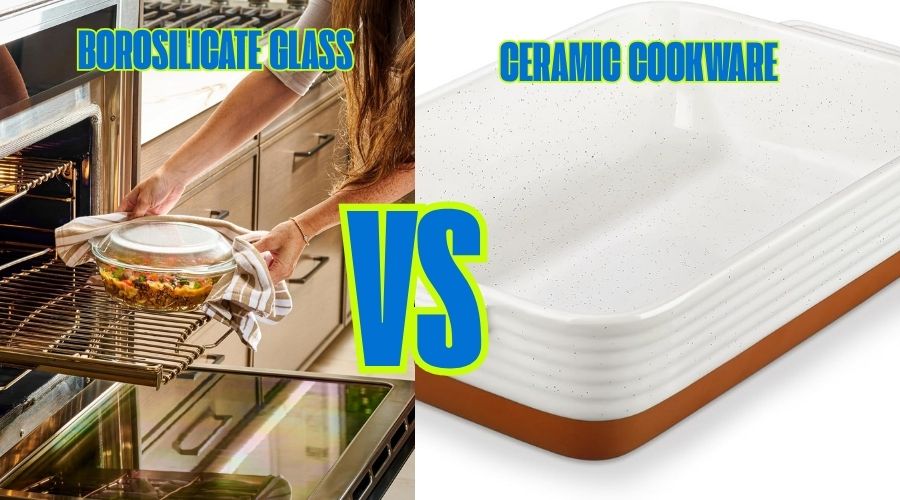
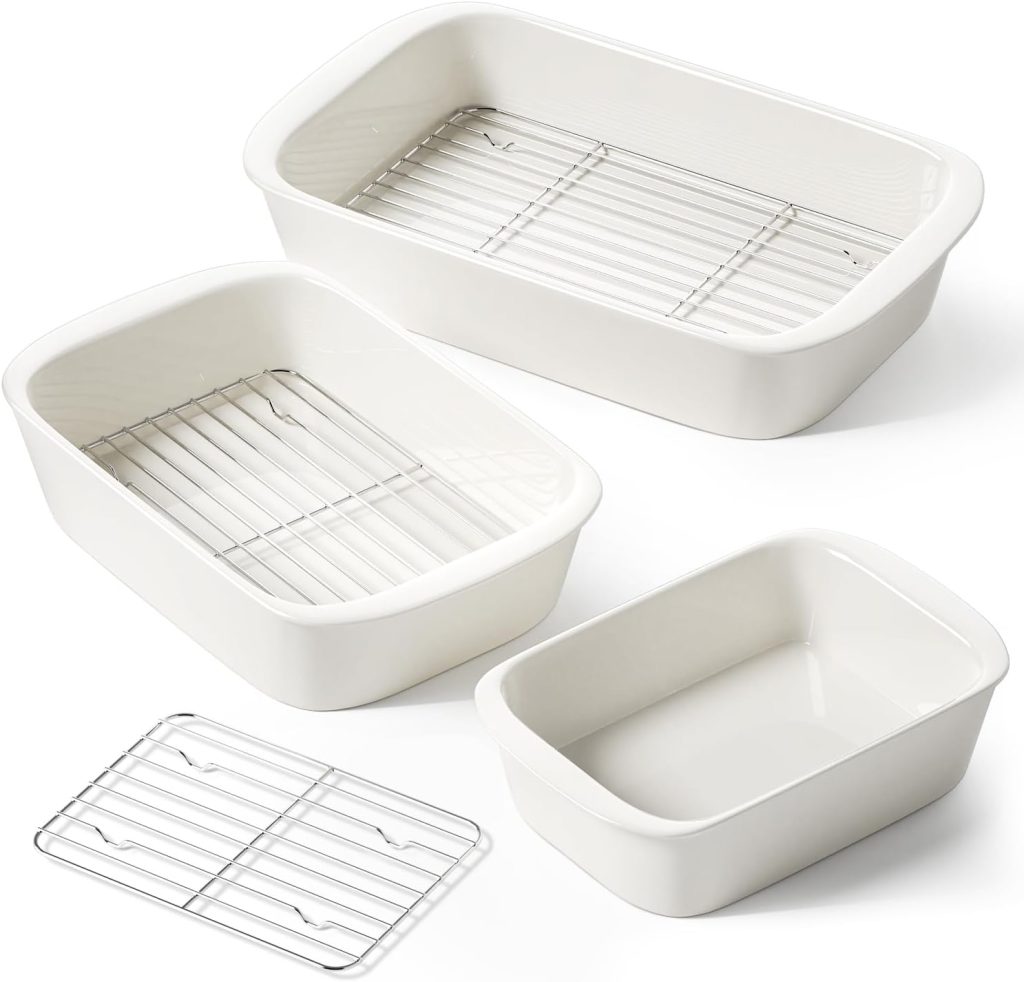
  • Borosilicate Glass vs Ceramic Cookware: The Complete Safety Guide

    Choosing between borosilicate glass vs ceramic cookware has become increasingly important for health-conscious home cooks seeking non-toxic cooking solutions.

    Both materials offer excellent alternatives to traditional cookware that may contain harmful chemicals, but each excels in different cooking scenarios.

    After testing dozens of cookware pieces over the past decade and consulting with culinary professionals, I’ve discovered that understanding the fundamental differences between these materials is crucial for making the right choice for your kitchen safety and cooking needs.

    Quick Comparison Overview of Borosilicate Glass vs Ceramic Cookware

    borosilicate glass vs ceramic cookware

    FeatureBorosilicate GlassCeramic Cookware
    Temperature ResistanceUp to 500°F (260°C)Up to 450°F (232°C)
    Thermal Shock ResistanceExcellentGood
    Chemical ReactivityNoneNone
    TransparencyClearOpaque
    WeightLightweightHeavy
    Price RangeMediumLow to High
    Best ForBaking, ReheatingSlow Cooking, Braising

    What is Ceramic Cookware?

    Ceramic cookware encompasses several types of clay-based cooking vessels that have been fired at high temperatures to create durable, non-reactive surfaces.

    Unlike ceramic-coated cookware (which uses ceramic as a coating over metal), pure ceramic cookware is made entirely from clay materials.

    Types of Ceramic Cookware

    Pure Ceramic: Made entirely from natural clay materials without any metal base.

    ceramic oven safe casserole baking cookware

    These pieces offer superior heat retention and completely inert cooking surfaces that won’t react with acidic foods.

    Stoneware Casserole Bakeware

    Stoneware: A dense, durable form of ceramic fired at high temperatures. Stoneware cookware provides excellent heat distribution and is naturally non-stick when properly seasoned.

    Porcelain: The finest form of ceramic cookware, created from refined clay and fired at extremely high temperatures.

    Porcelain oven to table baking dish cookware

    Porcelain offers superior strength and a smooth, non-porous surface.

    For a detailed comparison of ceramic materials, see our guide on which is better ceramic or porcelain dinnerware.

    • Dutch ovens and casseroles for slow cooking
    • Baking dishes for oven-based cooking
    • Tagines for specialized cooking methods
    • Serving pieces that transition from oven to table

    Leading manufacturers like Le Creuset, Emile Henry, and Lodge have established ceramic cookware as a premium choice for serious home cooks who prioritize both performance and safety.

    Safety Comparison: Borosilicate Glass vs Ceramic Cookware

    Chemical Safety Analysis

    Both materials excel in kitchen safety, but their safety profiles differ in important ways that affect your cooking choices.

    Borosilicate Glass Safety: This material contains no heavy metals, lead, or cadmium. The boron oxide content creates an inert surface that will never leach chemicals into food, regardless of cooking temperature or food acidity.

    Official regulatory documents support borosilicate glass as meeting safety criteria for negligible or no significant chemical migration in food contact, reflecting its inertness.

    This aligns with industry and regulatory assessments, deeming it safe for cookware and related uses.

    Ceramic Cookware Safety: Modern ceramic cookware manufactured in the United States and Europe adheres to strict safety standards.

    However, some imported ceramic pieces may contain trace amounts of lead or cadmium in glazes.

    Always verify that ceramic cookware meets FDA standards and displays appropriate safety certifications.

    Understanding cookware safety recalls is crucial – our Corelle dinnerware recall information provides insight into how safety standards are enforced in the cookware industry.

    Temperature Safety Performance

    Thermal Shock Resistance: Borosilicate glass demonstrates superior resistance to rapid temperature changes, allowing safe transitions from freezer to oven.

    Ceramic cookware requires more gradual temperature changes to prevent cracking.

    Maximum Temperature Capabilities:

    • Borosilicate glass: Safe up to 500°F continuously
    • Ceramic cookware: Most pieces handle up to 450°F, with some premium pieces rated higher

    For specific oven safety guidelines, consult our guide on the oven safety of Corelle Dinnerware, which covers similar temperature considerations.

    Performance Analysis: Glass vs Ceramic Baking

    Heat Distribution and Retention

    Ceramic Cookware Performance: Ceramic’s dense structure provides exceptional heat retention, making it ideal for dishes requiring consistent, gentle cooking.

    The material’s thermal mass keeps food warm long after removing from the heat, perfect for serving directly at the table.

    Borosilicate Glass Performance: While lighter than ceramic, borosilicate glass offers excellent heat distribution with the added benefit of visual monitoring.

    You can observe browning and cooking progress without lifting lids or removing foil.

    Cooking Versatility Comparison

    Stovetop Compatibility: Most ceramic cookware works on gas and electric stovetops but requires careful heat management to prevent thermal shock.

    For comprehensive stovetop performance comparisons, see our cast iron vs ceramic cookware analysis.

    Oven Performance: Both materials excel in oven cooking, with ceramic slightly edging ahead for slow braises and roasts due to superior heat retention.

    Microwave Safety: Both materials are microwave-safe, though ceramic’s opacity requires more careful monitoring of food temperature.

    Specialized Cooking Applications

    Ceramic Advantages:

    • Superior for slow cooking and braising
    • Excellent heat retention for serving
    • Better for dishes requiring consistent, gentle heat
    • Ideal for traditional cooking methods

    Borosilicate Glass Advantages:

    • Perfect for baking, where visual monitoring helps
    • Excellent for reheating and food storage
    • Superior thermal shock resistance
    • Better for portion control and meal prep.

    Durability & Longevity Assessment

    Expected Lifespan Under Normal Use

    Through extensive testing, ceramic cookware typically lasts 10-15 years with proper care, while quality borosilicate glass pieces can last indefinitely when handled carefully.

    Both materials resist staining and maintain their non-reactive properties throughout their lifetime.

    Resistance to Damage

    Ceramic Durability: Resistant to scratches and thermal cycling but vulnerable to impact damage. Chips in ceramic cookware can create bacterial harbors and should be addressed immediately.

    Borosilicate Glass Durability: Highly resistant to thermal stress but more susceptible to impact damage than ceramic.

    When borosilicate glass fails, it typically creates large, manageable pieces rather than dangerous shards.

    Environmental Stress Factors:

    Both materials handle normal kitchen environments well, though ceramic shows superior resistance to physical impacts while borosilicate glass excels in thermal stress resistance.

    Cost Analysis: Investment vs Value

    Initial Investment Considerations

    Price Ranges:

    • Borosilicate Glass: Medium pricing with excellent value proposition
    • Ceramic Cookware: Low to High-range, depending on brand and manufacturing origin

    Long-term Value Assessment:

    Ceramic Cookware Value: Higher-end ceramic pieces represent excellent long-term investments due to exceptional durability and timeless functionality.

    The superior heat retention can reduce cooking energy costs over time.

    Borosilicate Glass Value: Moderate initial cost with excellent longevity makes borosilicate glass highly cost-effective for most home cooks.

    The versatility in cooking and storage applications adds value.

    Budget Recommendations:

    For budget-conscious cooks, starting with essential borosilicate glass pieces provides maximum versatility.

    Premium ceramic pieces work well as specialized additions once cooking needs are established.

    Best Use Cases: When to Choose Each Material

    Choose Ceramic Cookware When:

    • Slow cooking and braising are priorities
    • You need superior heat retention for serving
    • Cooking for large groups regularly
    • Aesthetic presentation matters for table service
    • You prefer traditional cooking methods

    Choose Borosilicate Glass When:

    • Visual cooking monitoring is important
    • You need versatile baking dishes
    • Easy cleaning and maintenance are priorities
    • Budget considerations are primary
    • Storage and reheating versatility matter

    Complementary Kitchen Strategies

    Many experienced cooks use both materials strategically, leveraging ceramic for slow-cooked main dishes and borosilicate glass for baking, storage, and reheating.

    This approach maximizes the benefits of each material.

    For comprehensive cookware guidance, explore our complete best non-stick cookware made outside of China.

    Maintenance & Care Guidelines

    Ceramic Cookware Care

    Daily Cleaning: Allow gradual cooling before washing to prevent thermal shock. Use gentle dish soap and avoid abrasive cleaners that can damage glazes.

    Deep Cleaning: For stubborn stains, create a paste using baking soda and water. Let it sit overnight before gentle scrubbing.

    Storage: Store with protective padding between stacked pieces to prevent chips and scratches.

    Borosilicate Glass Care

    Routine Maintenance: Dishwasher-safe for easy cleaning. Avoid rapid temperature changes during washing.

    Stain Removal: White vinegar and baking soda effectively remove mineral deposits and food stains without scratching.

    Handling: While thermal shock resistant, avoid extreme temperature differentials exceeding 200°F.

    For additional maintenance insights, consult our IKEA plates oven safe guide, which covers similar care principles.

    Expert Verdict: Making the Right Choice

    Based on extensive testing and professional consultation, both borosilicate glass and ceramic cookware offer excellent, safe cookware materials for health-conscious cooking.

    Choose Ceramic Cookware If:

    You prioritize heat retention, enjoy slow cooking methods, and appreciate traditional cooking aesthetics. Ceramic excels for dishes requiring consistent, gentle heat over extended periods.

    Choose Borosilicate Glass If:

    You value versatility, visual cooking monitoring, and easy maintenance. Borosilicate glass provides excellent performance across the widest range of cooking applications.

    The Professional Recommendation

    For most home kitchens, starting with quality borosilicate glass pieces provides maximum versatility and value.

    Add ceramic specialty pieces as specific cooking needs develop. This approach ensures you have appropriate tools for any cooking situation while maintaining budget efficiency.

    Both materials support non-toxic cooking goals and provide safe alternatives to potentially harmful cookware materials.

    The choice ultimately depends on your specific cooking style, budget, and kitchen priorities.

    Frequently Asked Questions

    Can ceramic cookware go from refrigerator to oven?

    Yes, but allow 15-20 minutes for gradual temperature adjustment to prevent thermal shock.

    Which material is better for meal prep storage?

    Borosilicate glass excels for meal prep due to transparency, stackability, and seamless refrigerator-to-microwave transitions.

    How do I verify ceramic cookware safety?

    Look for FDA compliance markings and verify the manufacturer’s safety testing documentation.

    Is one material more environmentally friendly?

    Both materials are environmentally sustainable when properly maintained, with extremely long useful lives, reducing replacement needs.

    Can I repair damaged pieces?

    Minor ceramic chips can sometimes be professionally repaired, while damaged borosilicate glass should be replaced for safety.


    Expand your cookware knowledge with these comprehensive guides:

    Understanding borosilicate glass vs ceramic cookware differences empowers you to make informed decisions that prioritize both cooking performance and family health.

    Choose the material that best aligns with your cooking style, safety priorities, and kitchen needs.

  • Heat Resistant Glassware — Types, Safety, and Best Uses

    Heat resistant glassware has become essential in modern kitchens, but not all glass can handle thermal stress equally.

    Understanding what makes certain glass safe for ovens and microwaves helps prevent dangerous shattering incidents.

    Different materials like borosilicate and tempered glass respond differently to heat, making some suitable for baking while others crack under temperature changes.

    This guide explains the science behind heat-resistant glass, compares material types, identifies trusted brands, and outlines proper usage to keep your kitchen safe.

    Whether you’re baking casseroles or reheating leftovers, knowing which glassware to use matters.

    The right knowledge prevents accidents and extends the life of your cookware.

    What Makes Glass Heat-Resistant?

    Heat resistant glassware

    Glass becomes heat-resistant through specific material compositions and manufacturing processes that control how it responds to temperature changes.

    The ability to withstand heat depends on thermal expansion rates and chemical structure.

    How heat changes the glass structure

    When glass heats up, its molecular structure expands. Standard soda-lime glass expands significantly, creating internal tension.

    Heat-resistant glass contains additives that stabilize the molecular network, preventing excessive expansion.

    The low expansion coefficient in specialized glass means the material stays dimensionally stable even at high temperatures.

    Boron oxide in borosilicate glass creates stronger bonds between silicon and oxygen atoms, making the structure more rigid and less prone to expansion-related stress.

    Thermal expansion and stress

    Thermal expansion occurs when different parts of glass heat unevenly, causing some areas to expand faster than others.

    This creates internal stress that can exceed the glass’s breaking point. The coefficient of thermal expansion measures how much a material expands per degree of temperature increase.

    Standard glass has a high coefficient, while heat-resistant glass has a low one, reducing stress during heating and cooling cycles.

    Why do some glass handles heat better

    Material composition determines heat tolerance. Borosilicate glass withstands thermal shock because it can withstand direct flame contact and contains 15% boron trioxide, drastically reducing expansion.

    Tempered glass gains strength through controlled heating and rapid cooling, which creates surface compression.

    However, this process doesn’t change expansion rates like chemical composition does, making tempered glass strong but still vulnerable to thermal shock compared to borosilicate alternatives.

    Types of Heat-Resistant Glassware

    Different glass materials offer varying levels of heat resistance based on their chemical composition and manufacturing methods.

    Understanding these distinctions helps you choose appropriate cookware.

    1. Borosilicate Glass

    Borosilicate glass represents the gold standard in heat-proof glassware due to its exceptional thermal shock resistance.

    Simax thermal shock resistant Borosilicate glass

    This material contains silica and boron trioxide, creating a structure that expands minimally when heated.

    Originally used in laboratory settings, furnaces and kilns, it later became popular in cookware.

    Older Pyrex manufactured in Europe still uses borosilicate, as do premium brands like Simax and OXO.

    This glass tolerates temperature differentials of 330°F or more without cracking.

    2. Tempered Glass

    Tempered glass undergoes heat treatment that strengthens it mechanically but doesn’t improve thermal shock resistance significantly.

    Most modern U.S. kitchen glassware, including brands like Corelle, Anchor Hocking, and current Pyrex products, uses tempered soda-lime glass.

    While durable against impacts, this material shatters explosively when subjected to rapid temperature changes.

    The tempering process creates internal tension that holds the glass together until a breaking point triggers complete disintegration into small, relatively harmless pieces.

    3. Glass-Ceramic (Visionware type)

    Glass ceramic material represents the most heat-stable option, capable of direct stovetop use.

    Corning’s Visionware line exemplifies this rare category, featuring a crystalline microstructure that resists thermal shock exceptionally well.

    Glass ceramic Pyroceram temperature resistant cookware

    Manufacturing involves controlled crystallization of glass, creating a hybrid material stronger than either component alone.

    Though discontinued in many markets, vintage Visionware remains highly sought after.

    This material withstands extreme temperature fluctuations and direct flame contact that would destroy conventional glassware.

    4. Soda-Lime Glass (Non-Heat-Resistant)

    Soda-lime glass makes up 90% of manufactured glass worldwide, used in drinking glasses, windows, and storage containers.

    Composed primarily of silica, sodium carbonate, and lime, this economical material lacks heat resistance.

    Understanding the mason jars’ heat-resistant status is crucial since these containers use soda-lime glass, unsuitable for oven use.

    Sudden temperature changes cause immediate shattering. Never use decorative glassware, drinking glasses, or standard storage jars for heating applications.

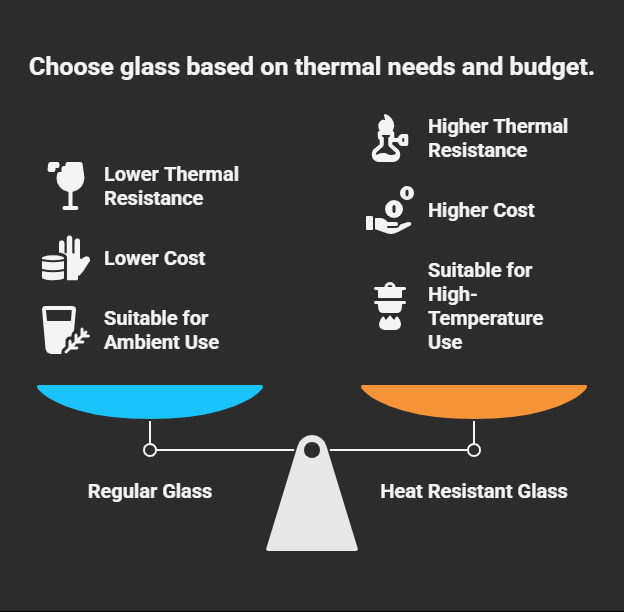
    Heat-Resistant Glassware vs Regular Glass

    heat resistant glass vs regular glass

    The distinction between heat-resistant and regular glass lies in material science and thermal performance characteristics. These differences dramatically affect safety and usability.

    How borosilicate behaves under heat

    Borosilicate glass maintains structural integrity across extreme temperature ranges.

    When heated, it expands approximately one-third as much as regular glass, preventing the internal stress that causes cracking.

    You can transfer borosilicate directly from the freezer to the oven without risk.

    Borosilicate glass brands like Simax and European Pyrex demonstrate this reliability consistently.

    The material’s chemical stability also prevents leaching at high temperatures, maintaining food safety.

    Why tempered glass shatters explosively

    Tempered glass contains enormous internal stress from its manufacturing process.

    Surface compression holds the glass together, but any breach releases this stored energy instantly.

    When thermal shock creates a crack, the entire piece explodes into thousands of tiny cubes. This sudden failure mode differs from regular glass, which typically cracks progressively.

    The explosive nature makes tempered glass unpredictable under thermal stress.

    Common household items that are NOT oven-safe

    Many everyday glass items lack heat resistance despite appearances. Drinking glasses, vases, picture frames, and decorative bowls use standard soda-lime glass.

    Most glass food storage containers aren’t oven-safe unless explicitly labeled.

    Wine glasses, stemware, and serving dishes typically shatter in ovens. Always verify manufacturer specifications before exposing any glass to heat.

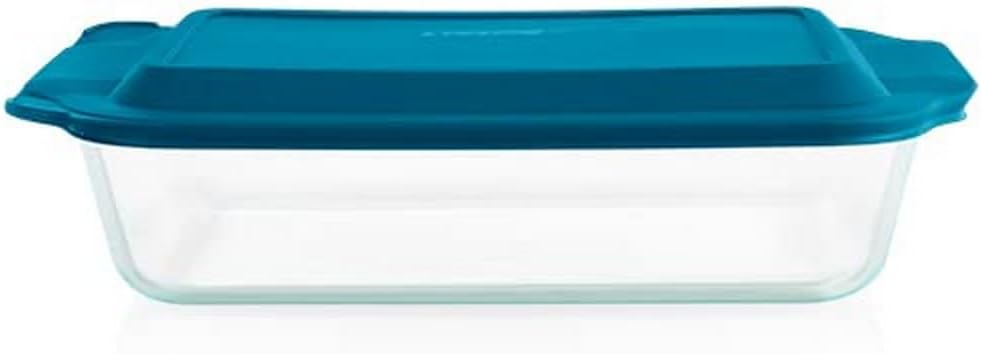
    Pyrex deep tempered ovensafe casserole dish

    Can Heat-Resistant Glassware Go in the Oven?

    Oven safety depends on glass type, temperature limits, and proper usage techniques. Even heat-resistant glass has boundaries that shouldn’t be exceeded.

    Oven-safe labels vs real safety

    Manufacturer labeling indicates tested safety limits, but understanding what those labels mean matters.

    “Oven-safe” typically means the glass withstands 350°F–450°F without preheating precautions.

    However, labels don’t guarantee safety if you violate usage guidelines. Some FDA-approved food contact surface certified products still shatter when misused.

    Always read specific temperature ratings and restrictions. European borosilicate pieces often tolerate higher temperatures than American tempered glass products.

    Temperature limits

    Borosilicate glass typically handles temperatures up to 450°F–500°F safely, while tempered soda-lime glass usually limits to 350°F–425°F.

    Exceeding these thresholds risks structural failure. Oven safe fire king glass demonstrates reliable performance within the rated ranges.

    Consider that oven hot spots may exceed the set temperature by 25°F–50°F. Glass-ceramic materials withstand even higher temperatures, sometimes exceeding 650°F.

    Always leave a safety margin below maximum ratings for longevity.

    Why preheating and direct contact matter

    Placing cold glass in a preheated oven creates immediate thermal shock as the bottom heats rapidly while the top remains cool.

    This temperature gradient generates internal stress. Always start with room-temperature glassware and heat gradually.

    Never place glass directly on oven floors or heating elements where concentrated heat creates localized stress. Use oven racks for even air circulation.

    Similarly, avoid placing hot glass on cold or wet surfaces, which reverses the shock effect.

    Can You Use Heat-Resistant Glassware on the Stovetop?

    Stovetop use presents different challenges than oven use, with most heat-resistant glass unsuitable for direct flame or burner contact despite oven safety.

    Most heat-resistant glass is NOT stovetop-safe

    Even borosilicate glass that handles ovens excellently typically fails on stovetops.

    The concentrated, uneven heat from burners creates localized hot spots that expand faster than surrounding glass, causing immediate shattering.

    Libbey glassware confirmed products are oven-safe, but explicitly warn against stovetop use.

    Electric coil burners, gas flames, and induction cooktops all generate heat patterns too intense for standard heat-resistant glass.

    Manufacturers specifically prohibit this application for liability reasons.

    Exceptions (glass-ceramic)

    Glass-ceramic cookware represents the only glassware truly safe for stovetops.

    Products like vintage Visionware contain crystalline structures that distribute heat rapidly enough to prevent dangerous thermal gradients.

    These specialized pieces work on gas, electric, and some induction cooktops.

    The Duralex glassware brand produces some tempered pieces, but even these aren’t stovetop-rated.

    True glass-ceramic feels slightly textured compared to smooth borosilicate and often appears amber or opaque rather than clear.

    Risks of direct flame exposure

    Direct flame creates the most severe thermal stress possible. Gas burners concentrate 1,000°F+ temperatures on small contact points while surrounding areas remain much cooler.

    This extreme differential shatters even quality borosilicate glass within seconds.

    The American glassware brand Pyrex explicitly prohibits flame contact on all products.

    Flames also heat glass faster than its internal structure can equilibrate, creating mechanical failure from expansion mismatches.

    Only purpose-designed laboratory borosilicate or glass-ceramic withstands direct flame safely.

    Why Heat-Resistant Glass Can Still Shatter

    Even properly rated heat-resistant glass fails under certain conditions. Understanding failure mechanisms prevents dangerous situations and extends the cookware life.

    Hidden chips and stress points

    Microscopic damage invisible to the naked eye creates failure initiation points.

    Chips along rims, scratches on surfaces, or internal fractures from previous thermal stress concentrate force during heating.

    These defects propagate rapidly when temperature changes occur. Even minor dishwasher contact between items creates micro-fractures that accumulate over time.

    Always inspect glassware carefully before heating, running fingers along edges to detect damage.

    Cold-to-hot transitions

    Taking refrigerated or frozen glass directly to heat sources causes the most common failures.

    The sudden temperature jump creates maximum internal stress as surface molecules expand while the core remains contracted.

    This differential tears the material apart. Similarly, the Luminarc oven-safe brand recommends 15–30 minutes of room temperature equilibration before heating refrigerated glass.

    Even heat-resistant glass needs gradual temperature transitions.

    Uneven heating

    Placing glass partially over burners, using high broiler settings, or creating air pockets under bakeware generates uneven heating that stresses glass unpredictably.

    Filling the glass unevenly, so some areas heat faster than others, also creates problems.

    Always ensure full, even support, and consistent food or liquid distribution.

    Thick foods that insulate certain areas while others heat directly create differential expansion.

    Sudden temperature changes (thermal shock)

    Best Uses for Heat-Resistant Glassware

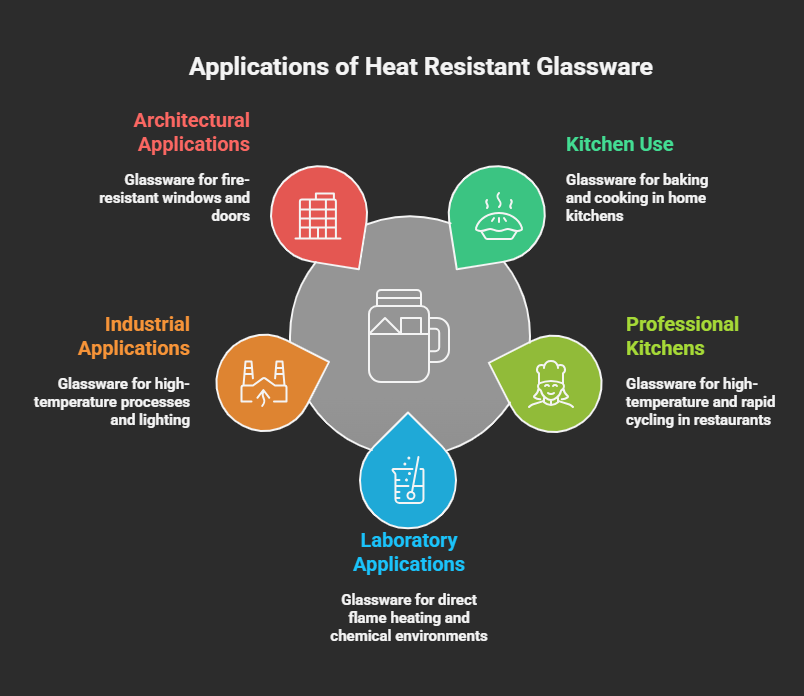
    Applications and use cases of heat resistant glassware

    Proper applications maximize safety and performance while leveraging the unique advantages of heat-resistant glass in cooking and food preparation.

    Oven baking

    Heat-resistant glass excels at oven baking between 300°F and 425°F. The transparency lets you monitor browning and doneness visually.

    Glass conducts heat efficiently, creating evenly browned edges on casseroles and baked dishes. It retains heat longer than metal, keeping food warm at the table.

    Reduce recipe temperatures by 25°F when converting from metal pans, since glass cooks slightly hotter. Avoid broiling functions that create extreme, uneven heat.

    Microwaving

    Glass provides the safest microwave option, creating no hot spots or chemical interactions.

    Unlike plastic that may leach chemicals when heated, glass remains inert. The transparency reveals food during cooking without opening doors.

    Use only microwave-safe, labeled glassware since some decorative glass contains metallic elements.

    Never microwave an empty glass, as concentrated microwave energy without food to absorb it may stress the material.

    Heating liquids safely

    Glass allows visible monitoring of boiling liquids, preventing overflows and burns. The smooth, non-reactive surface doesn’t impart flavors or harbor bacteria like some plastics.

    Heat-resistant measuring cups with handles facilitate safe pouring of hot liquids. Always leave expansion space at the tops of containers since liquids expand when heated.

    Avoid superheating water in microwaves, which can erupt violently when disturbed.

    Casseroles and roasting

    Large baking dishes showcase glass’s advantages for one-dish meals. Even heat distribution prevents burnt edges while centers remain undercooked.

    The material transitions from oven to table attractively for serving. Glass doesn’t react with acidic ingredients like tomatoes or citrus that might affect metal pans.

    However, avoid overcrowding ovens since restricted airflow creates uneven heating that stresses glass.

    Top Brands of Heat-Resistant Glassware

    Brand selection affects safety, durability, and performance. Manufacturing standards and material choices vary significantly between producers.

    Pyrex (USA vs International differences)

    Pyrex represents the most recognized heat-resistant glass brand, but its composition varies by region.

    European Pyrex still uses borosilicate glass, offering superior thermal shock resistance.

    American Pyrex switched to tempered soda-lime glass in 1998, reducing manufacturing costs but increasing shatter risk.

    European versions tolerate more extreme temperature changes and higher absolute temperatures.

    Check the manufacturing location when purchasing, as “Pyrex” doesn’t guarantee the material type.

    Anchor Hocking

    Anchor hocking ovenproof tempered glass

    This American manufacturer produces affordable tempered glass bakeware sold widely in U.S. stores.

    While not borosilicate, their products meet safety standards for typical oven use when properly handled.

    The brand’s Fire-King line includes some vintage borosilicate pieces, though modern production uses tempered glass.

    Anchor Hocking clearly labels temperature limits and usage restrictions. Their products perform reliably within stated parameters but require careful thermal shock avoidance.

    OXO borosilicate

    Libbey oven resistant heat casserole baking dish

    OXO entered the heat-resistant glassware market with borosilicate measuring cups and storage containers.

    These products offer European Pyrex-equivalent thermal shock resistance at competitive prices.

    The clear labeling helps consumers identify true borosilicate versus tempered glass. Ergonomic handles and measurement markings add functionality.

    OXO’s commitment to borosilicate gives American consumers access to superior thermal performance without importing European products.

    Simax & Duralex

    Duralex oven chef heat proof resistant glass for baking

    Simax manufactures Czech borosilicate glassware with exceptional heat resistance, widely available online.

    Their laboratory-grade composition handles extreme temperatures reliably.

    Duralex produces French tempered glass known for mechanical strength rather than thermal shock resistance.

    Both brands ship internationally, though breakage during shipping remains a concern.

    Simax represents the best choice for consumers prioritizing thermal performance, while Duralex excels in impact resistance for everyday tableware.

    Safety Precautions When Using Heat-Resistant Glass

    how to choose heat resistant glassware

    Following proper protocols prevents most glass failure incidents. These practices apply regardless of glass type or brand.

    Avoid cold-to-hot shocks

    Always bring refrigerated or frozen glass to room temperature before heating. Wait at least 15 minutes for equilibration.

    Never place frozen glass in ovens or microwaves directly. Similarly, don’t add frozen ingredients to hot glass dishes during cooking.

    The thermal gradient from sudden temperature changes exceeds even borosilicate’s tolerance. Plan to allow proper temperature transitions.

    Do not place hot glass on cold surfaces

    Setting hot glassware on granite counters, metal trivets, or wet surfaces causes reverse thermal shock as heat rapidly exits the glass.

    Use dry wooden cutting boards, silicone mats, or folded kitchen towels as landing pads. Avoid running cold water over hot glass when washing.

    Let the pieces cool gradually at room temperature first. This precaution matters as much as avoiding cold-to-hot transitions.

    Inspect for chips or cracks

    Run your fingers along all edges and examine surfaces in bright light before each use. Any damage, no matter how minor, can propagate catastrophically during heating.

    Chips concentrate stress, initiating cracks that spread instantly.

    Discard compromised pieces immediately, regardless of sentimental value. The risk of explosive failure and potential injury outweighs any economic consideration.

    Follow the manufacturer’s heat limits

    Never exceed stated temperature maximums even if the glass appears fine at higher temperatures.

    Repeated exposure beyond ratings causes cumulative damage that eventually triggers failure. Read the instructions and save them for reference.

    Different pieces from the same brand may have different ratings. When in doubt, limit temperatures to 350°F and avoid thermal shocks completely.

    Heat-Resistant Glass vs Ceramic Cookware

    Comparing glass and ceramic helps determine which material suits specific cooking needs better. Each offers distinct advantages and limitations.

    Heat tolerance differences

    Ceramic cookware generally tolerates higher absolute temperatures than glass, often rated to 500°F–550°F.

    Stoneware and porcelain handle broilers better than glass. However, quality borosilicate glass resists thermal shock more effectively than many ceramics, which can crack from rapid temperature changes despite high ratings.

    Ceramic absorbs and releases heat more slowly, affecting cooking times. Glass heats faster but also cools faster.

    Which is more durable?

    Ceramic withstands physical impacts better than glass, rarely shattering from drops.

    Chips in ceramic typically don’t propagate like glass fractures. However, glazes can craze or crack over time, creating sanitation concerns.

    Glass maintains its surface integrity longer, but shatters completely when broken.

    For longevity under normal use, quality ceramic often outlasts glass, especially in households with handling accidents.

    Which is better for non-toxic cooking?

    Both glass and ceramic offer non-toxic cooking when properly manufactured.

    Glass provides inherent chemical inertness, never leaching substances into food. Ceramics’ safety depends on glaze composition, with some containing lead or cadmium.

    Modern ceramics from reputable manufacturers meet safety standards, but vintage or imported pieces require caution. Glass provides more consistent safety assurance across all products.

    Safer Alternatives to Heat-Resistant Glass

    When glass doesn’t suit your needs, several alternatives provide excellent heat resistance with different performance characteristics.

    Stoneware

    Unglazed or naturally glazed stoneware offers excellent heat retention and distribution. The porous ceramic material withstands temperatures up to 450°F–500°F reliably.

    Stoneware develops non-stick properties over time through seasoning, reducing chemical coating needs.

    The material transitions beautifully from oven to table. However, it’s heavier than glass and can crack from severe thermal shock, requiring similar precautions.

    Stainless steel

    Stainless steel provides virtually indestructible heat resistance for stovetop and oven use. The material tolerates any residential cooking temperature without degradation.

    Unlike glass, metal handles thermal shock effortlessly and never shatters. Stainless steel won’t break if dropped and cleans easily.

    However, opacity prevents visual monitoring during cooking, and reactive foods may pick up metallic tastes from lower-quality steel.

    Porcelain bakeware

    High-fire porcelain creates an elegant, heat-resistant option for baking between 400°F and 500°F.

    The fine-grained ceramic resists staining and odor absorption better than earthenware.

    Porcelain’s white surface beautifully presents food at the table. The material conducts heat more evenly than glass, preventing hot spots.

    However, porcelain remains fragile and can chip or crack from impacts or extreme thermal shock.

    Pure ceramic cookware

    Modern ceramic cookware often refers to metal pans with ceramic non-stick coatings rather than solid ceramic.

    These hybrid designs combine metal’s durability with ceramic’s non-stick properties.

    True ceramic cookware made entirely from fired clay offers chemical-free cooking without coatings that degrade over time.

    Both versions handle high heat well, though coating durability varies by manufacturer quality.

    FAQ — Heat-Resistant Glassware

    Can heat-resistant glass break?

    Yes, even heat-resistant glass breaks under certain conditions.

    Thermal shock from rapid temperature changes, hidden chips or cracks, uneven heating, and exceeding temperature limits all cause failure.

    Borosilicate resists breaking better than tempered glass, but neither is indestructible.

    Proper handling and gradual temperature transitions prevent most breakage incidents when using quality heat-resistant glassware.

    Can you microwave all glass?

    No, only microwave-safe glass should be heated in microwaves. Standard drinking glasses, decorative glass, and some storage containers lack heat resistance.

    Some glass contains metallic elements that spark dangerously. Always check for microwave-safe labels before use.

    Heat-resistant glass, like borosilicate, handles microwaving excellently, but ensure your specific piece has proper certification before heating.

    Is Pyrex still borosilicate?

    American Pyrex switched from borosilicate to tempered soda-lime glass in 1998. European Pyrex, manufactured by Arc International, still uses borosilicate composition, offering superior thermal shock resistance.

    Check the manufacturing origin when purchasing, as the brand name alone doesn’t indicate material.

    Vintage American Pyrex from before 1998 contains borosilicate and performs better than modern U.S. versions.

    What is the safest type of glass for the oven?

    Borosilicate glass provides the safest oven option due to exceptional thermal shock resistance and high temperature tolerance.

    This material handles temperature differentials and gradual heating better than alternatives.

    Glass-ceramic offers even better performance but remains rare in consumer markets.

    When borosilicate isn’t available, properly labeled tempered glass works safely if you follow temperature limits and avoid thermal shocks.

    Final Summary — Heat-Resistant Glassware Is Safe When Used Correctly

    Heat-resistant glassware serves kitchens reliably when matched to appropriate applications and handled properly.

    Understanding material differences between borosilicate, tempered glass, and glass-ceramic helps you choose the right tool for each task.

    European borosilicate offers superior thermal shock resistance compared to American tempered glass, though both work safely within their limitations.

    Always verify manufacturer specifications, inspect for damage before use, and avoid extreme temperature transitions.

    Never use stovetops unless specifically designed for it, and respect temperature maximums regardless of glass type.

    While heat-resistant glass can shatter under certain conditions, following proper protocols prevents most failures.

    The transparency, chemical inertness, and even heating make glass an excellent choice for baking, microwaving, and food storage when you understand its boundaries.

  • Borosilicate Glass Cookware Brands: Best Brands for Durable and Heat-Resistant Cookware

    You are standing in a kitchen aisle or scrolling through product listings, trying to figure out which cookware is actually worth the investment.

    You want something safe, durable, and free from the coatings and chemicals that come with non-stick pans.

    That search almost always leads to glass and not just any glass.

    Borosilicate glass cookware brands have built a loyal following for good reason, but the market is crowded, and the differences between brands are not always obvious.

    Some products labelled as glass cookware are not even true borosilicate.

    So which brands genuinely deliver on heat resistance, durability, and safety, and how do you tell them apart?

    That is exactly what this guide will walk you through.

    What Is Borosilicate Glass Cookware?

    Not all glass cookware is created equal. The type of glass used determines how a product performs under heat, how long it lasts, and how safe it is for cooking.

    Borosilicate glass is a specific formulation engineered for exactly the demands that kitchen use places on materials.

    Composition of Borosilicate Glass

    Borosilicate glass is made from silica (silicon dioxide) combined with boron oxide, typically at around 12–15% of the composition.

    This combination fundamentally changes how the glass responds to heat.

    The boron oxide integrates into the silica network and dramatically reduces the material’s thermal expansion coefficient, meaning it expands and contracts far less than standard glass when temperatures change rapidly.

    That is the property behind its renowned thermal shock resistance.

    For a thorough technical breakdown, the complete explanation of heat-resistant glassware covers the science in full detail.

    Key Benefits of Borosilicate Glass Cookware

    The practical advantages flow directly from that composition.

    Borosilicate glass handles temperature transitions that would crack or shatter ordinary glass, moving from a cold fridge to a hot oven, for instance, or from the freezer to the microwave.

    It is chemically stable, meaning it does not react with acidic foods like tomato sauce or citrus, and it does not leach compounds into food the way some metals or coated surfaces can.

    The cooking surface is entirely non-reactive, which also means flavours and odours do not transfer between uses.

    Why Choose Borosilicate Glass Cookware?

    Is It Healthy to Cook in Borosilicate Glass?

    Yes, borosilicate glass is one of the safest materials available for cooking and food storage.

    It contains no BPA, no PFOA, no PTFE, and no heavy metal coatings. Unlike non-stick pans, it does not release fumes when heated.

    Unlike some ceramics, it does not contain lead or cadmium glazes. The surface is non-porous, so bacteria cannot embed into the material over time.

    For anyone cooking for children, managing health conditions, or simply wanting full transparency about what their food contacts during preparation, borosilicate glass cookware is a genuinely reassuring choice.

    Durability and Thermal Shock Resistance

    The ability to withstand sudden temperature changes is not just a convenience feature; it is what makes borosilicate glass practical for daily kitchen use.

    A standard glass dish exposed to the same conditions would crack or shatter.

    Borosilicate glass handles these transitions reliably, provided you stay within its rated temperature range and avoid direct flame contact on most products.

    Its scratch resistance also means the surface stays cleaner and clearer over the years of use, unlike softer materials that develop surface marks where bacteria can accumulate.

    Transparency and Ease of Monitoring Food

    This is one of those advantages that sounds minor until you actually use glass cookware regularly.

    Being able to see exactly what is happening to your food, how a casserole is browning on the sides, whether a sauce is beginning to bubble, and how much liquid remains in a baking dish changes how you cook.

    You spend less time lifting lids and checking, which also helps maintain consistent oven temperatures. It is a practical benefit that becomes a genuine preference over time.

    Top Borosilicate Glass Cookware Brands

    The brands below represent the most established and widely available options in the borosilicate glass cookware market.

    Each has a different profile in terms of product range, price point, and regional availability.

    Pyrex

    Pyrex baking dish borosilicate glass cookware

    Pyrex is the name most people associate with glass cookware, and for good reason; it has been in kitchens since 1915.

    The original Pyrex formula was genuine borosilicate glass, and the brand built its reputation on that material’s performance.

    However, it is important to know that Pyrex USA products switched to tempered soda-lime glass in the 1990s, while Pyrex products sold in Europe (under the Arc International licence) continue to use borosilicate glass.

    If borosilicate specifically is your priority, check the origin of the Pyrex product you are purchasing.

    European Pyrex remains a trusted, high-quality option with an extensive range of baking dishes, measuring jugs, and storage containers.

    SIMAX

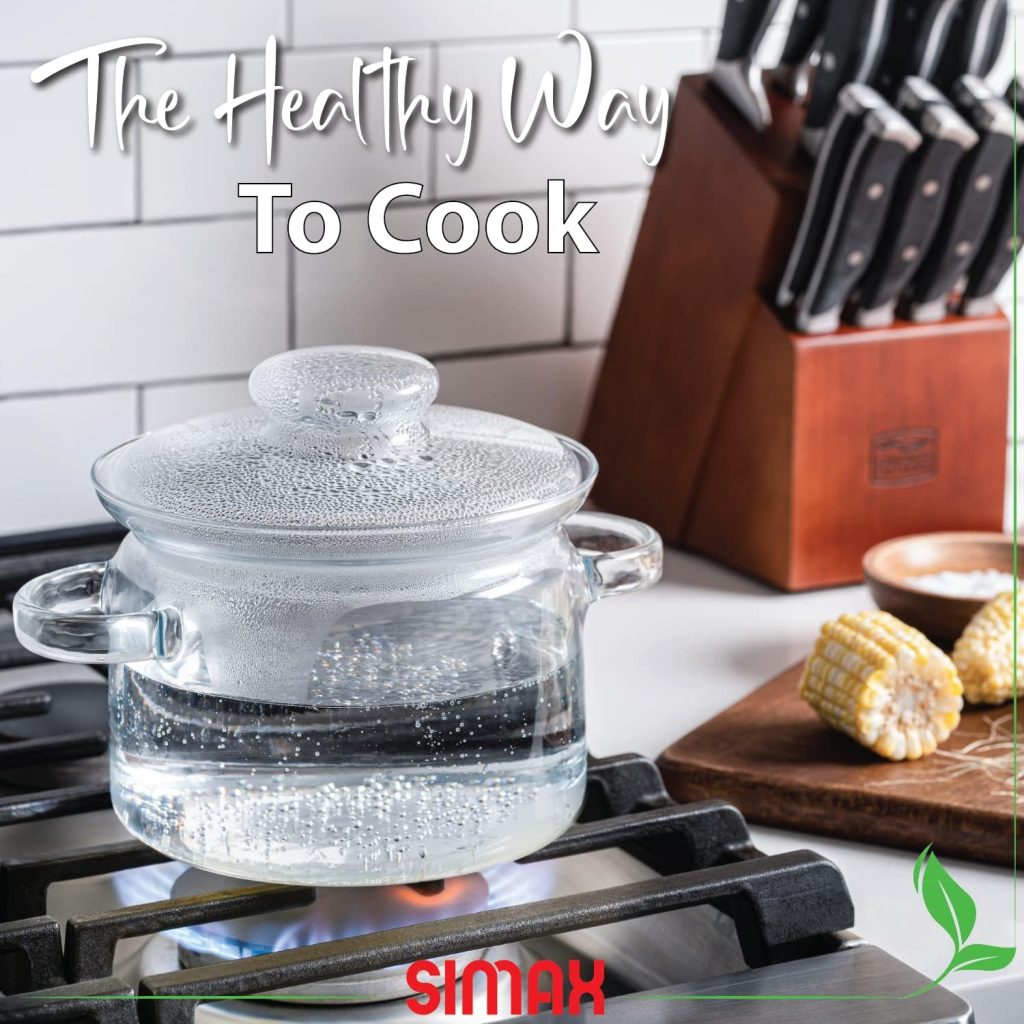
    Simax Borosilicate glass cookware for gas stovetop

    SIMAX is a Czech glassworks with a long heritage in precision borosilicate glass manufacturing.

    Their cookware and laboratory glassware are made from genuine Type 3.3 borosilicate glass, the same specification used in scientific and pharmaceutical applications.

    SIMAX products are well regarded in the European market for their clarity, build quality, and honest material labelling.

    Their range covers casserole dishes, saucepans, teapots, and storage containers.

    For buyers who want verified borosilicate glass without ambiguity about the formula, SIMAX is one of the most reliable choices available.

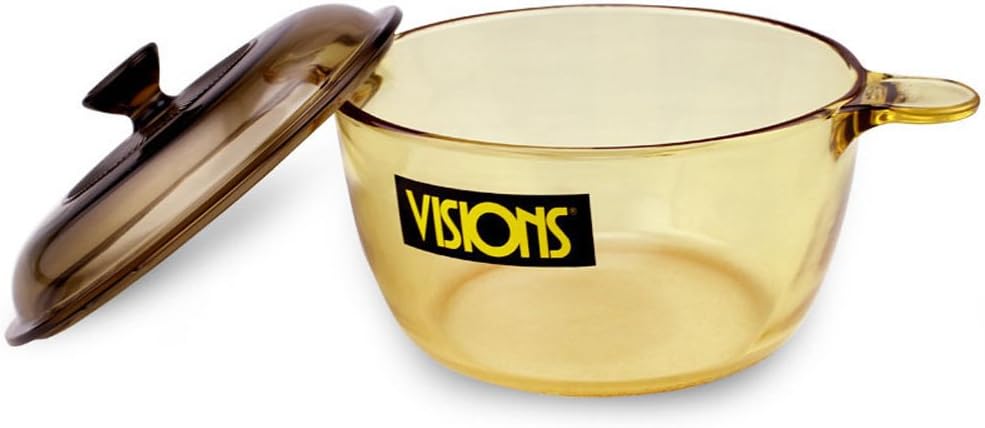
    Visions Glass Cookware

    Visions is a distinctive brand in the glass cookware space, producing amber and clear glass cooking pots and pans designed for direct stovetop use.

    Visions cookware is made from Calexium glass — a glass-ceramic material related to but distinct from standard borosilicate glass, offering similar thermal shock resistance with the added ability to be used on gas and electric stovetops.

    The brand has a dedicated following among cooks who want the visibility and non-reactivity of glass combined with stovetop versatility.

    Vision’s pots and pans are particularly popular for slow-cooking soups, stews, and sauces where monitoring the cooking process matters.

    Anchor Hocking (TrueFit Series)

    Anchor Hocking is an American glass manufacturer with roots going back to 1905.

    Like US Pyrex, their standard baking and storage range uses tempered soda-lime glass rather than borosilicate, but their products are well-made and widely trusted for everyday oven and microwave use.

    Anchor Hocking baking dishes, mixing bowls, and food storage containers are reliable, affordable staples in American kitchens.

    For stovetop or freezer-to-oven applications requiring genuine borosilicate performance, European alternatives serve better, but for conventional baking and food storage, Anchor Hocking remains a dependable option.

    OXO

    OXO approaches glass cookware from a design-first perspective, producing borosilicate glass baking dishes, food storage containers, and prep tools built around ergonomics and usability.

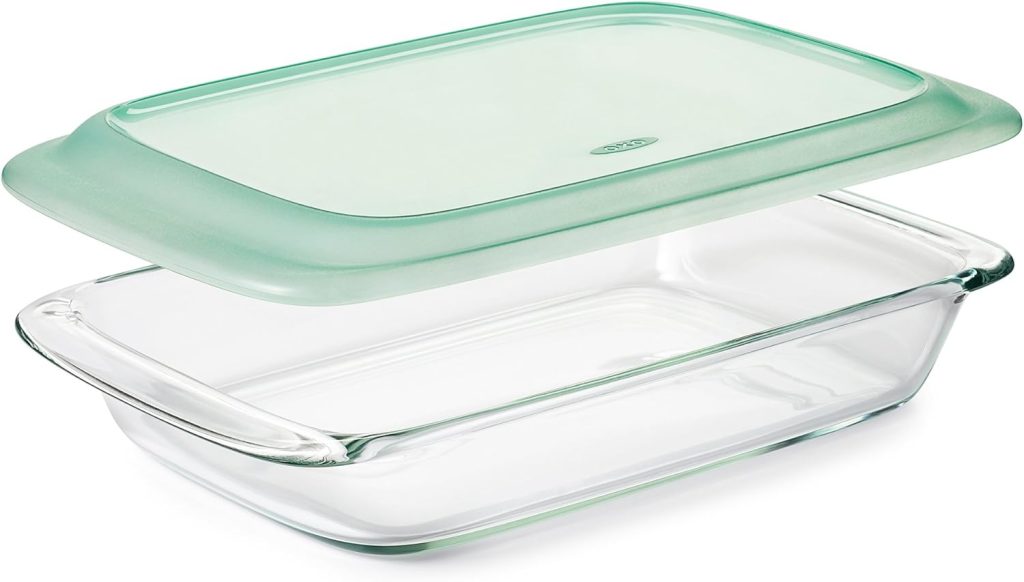
    Oxo good grips borosilicate glass baking dish

    Their glass products feature silicone-wrapped rims, lid handles designed for one-handed operation, and stackable formats that suit modern kitchen storage.

    OXO uses genuine borosilicate glass in their baking range and clearly communicates material specifications.

    For buyers who want the safety of borosilicate combined with thoughtful everyday design details, OXO is worth serious consideration.

    Finally, other borosilicate glass cookware brands include: Bovado USA, Moss & Stone, Volarium, Nutrichef, CAFE Brew Collection, Nutriups, UMS, La Opala, JoyJolt and Kuhn Rikon (Switzerland).

    How to Choose the Best Borosilicate Glass Cookware Brand

    How Can I Tell if Glass Is Borosilicate?

    This is one of the most practically important questions in this space, because not all glass cookware is labelled clearly.

    Genuine borosilicate glass will typically state the material explicitly in the product description or packaging.

    Look for references to “borosilicate glass,” “Type 3.3 borosilicate,” or the boron oxide content in the specifications.

    If a product simply says “tempered glass,” “heat-resistant glass,” or “oven-safe glass” without specifying borosilicate, it is most likely soda-lime glass.

    Weight is another indicator: borosilicate glass tends to be lighter than soda-lime glass of the same size. When in doubt, contact the manufacturer directly and ask for the glass specification.

    Evaluate Durability and Heat Resistance

    Check the temperature ratings on any glass cookware before purchasing.

    Genuine borosilicate products typically handle continuous oven temperatures up to 300–350°C and can manage thermal shocks of 150°C or more.

    Soda-lime tempered glass usually has lower ratings and more restrictions around thermal transitions.

    Also, check whether the product is rated for freezer-to-oven use, dishwasher safety, and microwave use.

    These are standard expectations for quality borosilicate cookware and should be confirmed before you buy.

    Consider Product Range

    Think about what you actually cook. If baking and roasting are your primary use cases, a brand with a strong baking dish and casserole range — like SIMAX or European Pyrex — serves you well.

    If food storage is the priority, OXO and SIMAX both offer well-designed glass storage container ranges. For stovetop cooking in glass, Visions is the specialist.

    Matching the brand’s strengths to your actual kitchen habits gives you far better value than choosing based on brand recognition alone.

    Borosilicate Glass Cookware vs Regular Glass Cookware

    Borosilicate Glass Cookware Stovetop

    Standard borosilicate glass cookware is not designed for direct stovetop use on gas or electric hobs — the concentrated heat from a burner can exceed the thermal shock tolerance even of borosilicate glass and cause cracking.

    Visions glass-ceramic cookware is the main exception to this, engineered specifically for stovetop use.

    If stovetop glass cooking is your goal, Visions is the appropriate choice. For all other borosilicate glass cookware, use is limited to oven, microwave, and conventional baking applications.

    Always check the manufacturer’s specific guidance rather than assuming stovetop compatibility.

    Durability and Longevity

    Borosilicate glass consistently outperforms soda-lime tempered glass over the long term.

    Its resistance to thermal shock means fewer cracks and failures over the years of use.

    Its hardness reduces surface scratching, and because it does not absorb flavours or odours, it stays genuinely clean without the surface degradation that affects softer materials.

    A well-made borosilicate dish can realistically serve a household for fifteen to twenty years with normal care, a lifespan that few other cookware materials match.

    Cooking Performance

    Glass distributes heat differently from metal, more slowly and more evenly across the surface, which makes it particularly well suited to casseroles, baked pasta dishes, roasted vegetables, and anything that benefits from gentle, uniform heat.

    It retains heat well after leaving the oven, which keeps food warm at the table.

    For a detailed comparison with another popular non-toxic option, borosilicate glass vs ceramic cookware breaks down the performance differences across common cooking applications.

    Popular Types of Borosilicate Glass Cookware

    Borosilicate Glass Teapot

    Borosilicate glass teapots have become one of the most popular glass kitchen products, and the reasons are straightforward.

    The material handles boiling water without risk, the transparency lets you watch the tea steep and monitor colour, and the non-reactive surface means no flavour transfer between different teas.

    Many borosilicate glass teapots include a glass or stainless steel infuser basket for loose-leaf tea.

    SIMAX, Hario, and several speciality tea brands produce well-regarded borosilicate teapots across a range of sizes and designs.

    For daily tea drinkers, a borosilicate glass teapot is one of the most satisfying upgrades a kitchen can have.

    Glass Food Storage Containers

    Borosilicate glass food storage containers have largely replaced plastic in many households, and the shift is well justified.

    They do not stain with tomato sauce or turmeric, do not absorb odours, and can go from the freezer directly to the oven or microwave without changing containers.

    Most quality borosilicate storage sets include leak-proof lids in silicone or BPA-free plastic.

    OXO, SIMAX, and several other brands offer well-designed sets in multiple sizes. The upfront cost is higher than plastic, but the lifespan makes the investment straightforward to justify.

    Glass Cooking Pots and Casseroles

    Glass casserole dishes and cooking pots are where borosilicate glass cookware delivers its most consistent value.

    A deep borosilicate casserole dish handles braises, lasagnes, roasted chicken, and grain bakes with equal ease, and the ability to go from oven to table without switching vessels simplifies both cooking and presentation.

    SIMAX produces excellent deep casserole options. European Pyrex remains a reliable standard.

    For buyers considering how glass casseroles compare to other non-toxic options across different price points, Ocuisine vs Pyrex glassware offers a useful direct comparison.

    Care and Maintenance of Borosilicate Glass Cookware

    Cleaning and Dishwasher Safety

    Most borosilicate glass cookware is dishwasher safe, and the material holds up well to repeated machine washing without clouding or degrading.

    For stubborn baked-on residue, soaking in warm soapy water for twenty minutes before washing is usually sufficient.

    Avoid abrasive scrubbing pads that can scratch the surface over time. If mineral deposits from hard water develop, a soak in diluted white vinegar removes them cleanly without damaging the glass.

    Preventing Thermal Shock

    Even borosilicate glass has thermal shock limits. Avoid placing a very cold dish directly onto a hot burner or into a preheated oven above 200°C without allowing a brief acclimatisation period.

    Do not place a hot dish directly onto a cold or wet surface; set it on a trivet or dry cloth instead.

    These simple habits extend the life of your cookware significantly and prevent the most common causes of glass cookware failure.

    Proper Storage to Avoid Damage

    Glass cookware is durable but not indestructible, and most breakage happens during storage rather than cooking.

    Stack dishes carefully with a folded cloth or silicone mat between pieces to prevent surface contact and chipping.

    Store lids separately or inverted. Keep heavier items on lower shelves to reduce the risk of pieces falling. A little thoughtfulness about how glass cookware is stored adds years to its lifespan.

    Conclusion

    Borosilicate glass cookware earns its reputation honestly through genuine material performance, long-term durability, and a non-toxic cooking surface that gives you real confidence in what you are feeding your family.

    The key is buying from brands that use true borosilicate glass and not settling for tempered soda-lime alternatives marketed with vague heat-resistance claims.

    SIMAX and European Pyrex are the most reliable choices for verified borosilicate quality.

    OXO brings thoughtful design to the category. Visions opens up stovetop possibilities.

    Take the time to match the brand’s strengths to your actual cooking habits, and the cookware you choose will serve you well for years to come.
  • Does CorningWare Contain Lead?

    You’re standing in your kitchen, looking at that familiar white Corningware dish you’ve used countless times for family dinners.

    Maybe you’re pregnant, have young children, or simply care about what’s in your cookware.

    Recently, you’ve heard scary stories about lead in dishes and cookware, and now you’re wondering if your trusted Corningware is safe.

    The concern is real and completely understandable. Lead poisoning is serious, especially for children and pregnant women.

    You want to protect your family, but you also don’t want to throw away perfectly good cookware without knowing the facts. So the big question on your mind is: Does Corningware contain lead?

    Let’s clear up the confusion and give you the straight answer you need to make an informed decision about your cookware safety.

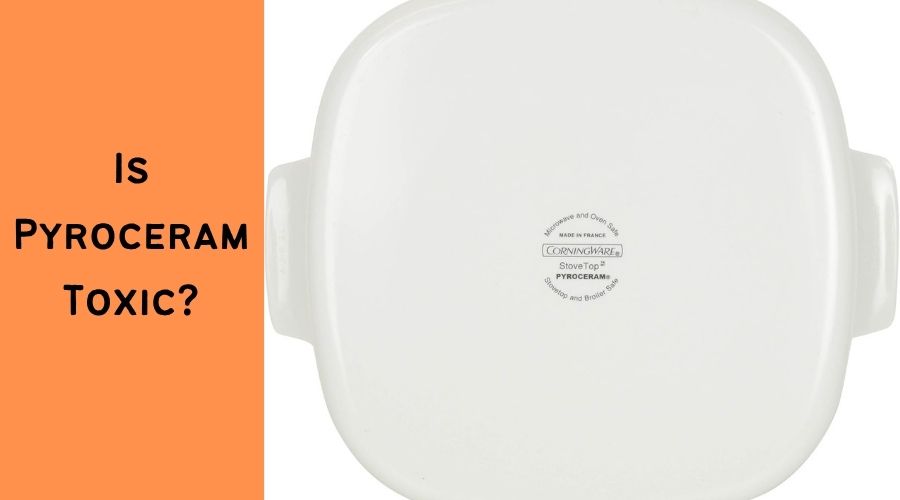
    BOTTOM LINE: DOES CORNINGWARE CONTAIN LEAD?

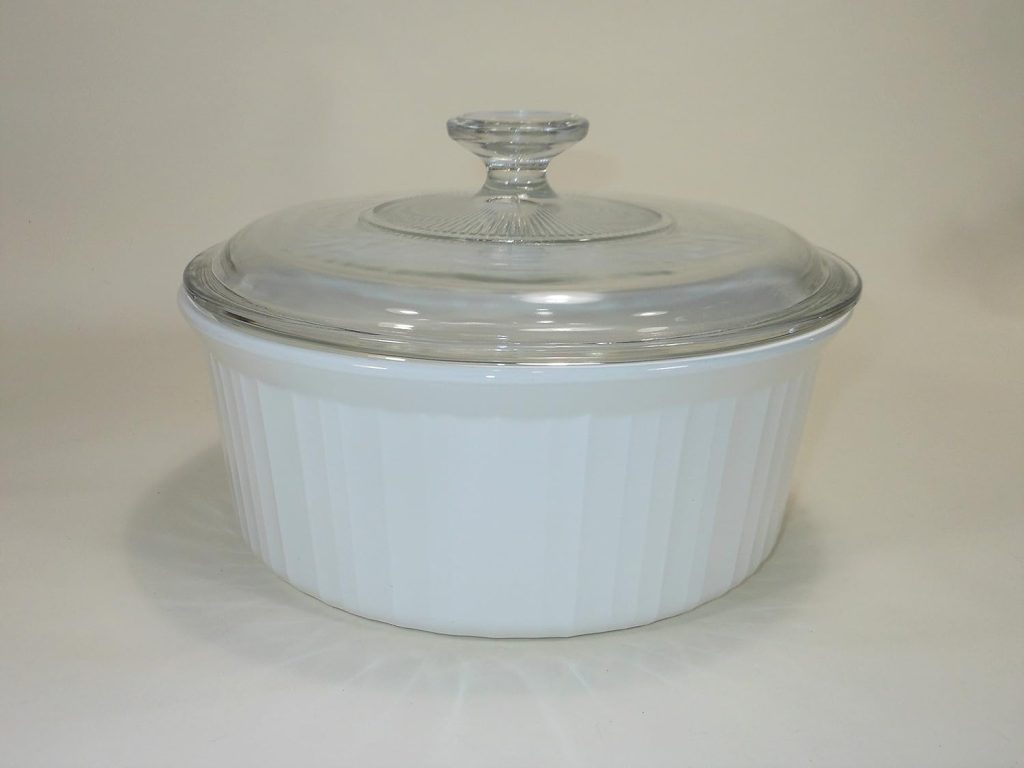
    does corningware contain lead

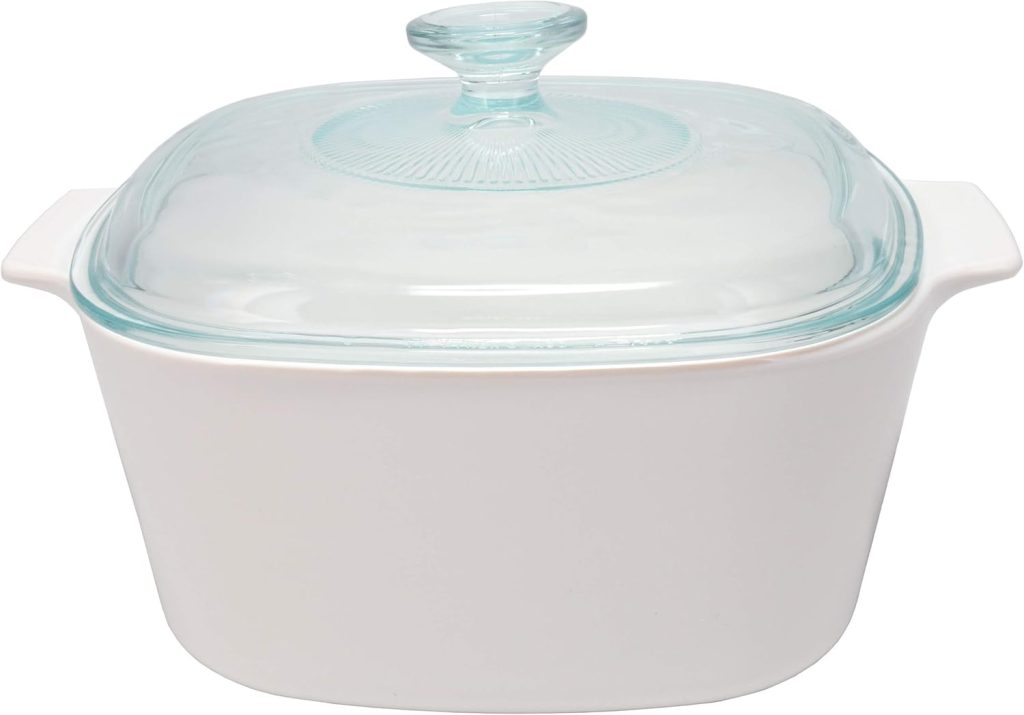
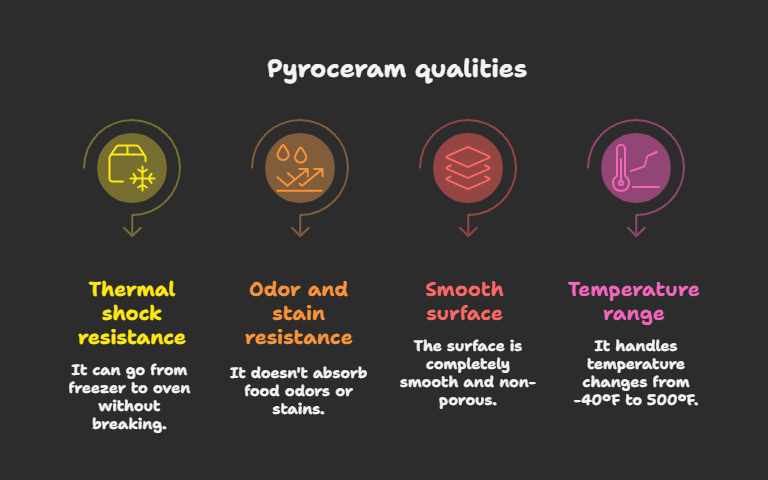
    Most CorningWare cookware is lead-free, but some vintage pieces made before 2005 may contain lead in their decorative patterns. The white Pyroceram base material is always lead-free, but painted designs on older pieces can contain 15,000-100,000 PPM lead, which exceeds safe levels.

    UNDERSTANDING LEAD IN CORNING WARE: THE COMPLETE PICTURE

    Lead was commonly used in ceramic paints and glazes before modern safety regulations. This affects how we need to think about vintage CorningWare safety.

    The Pyroceram Base Material

    The white Pyroceram material that forms the base of all CorningWare is completely lead-free. This glass-ceramic material has never contained lead in its composition.

    vintage French Corningware white pattern baking casserole dish

    Corning designed Pyroceram to be chemically inert and safe for food contact.

    Where Lead Problems Occur

    Lead concerns arise from the decorative patterns painted on the outside of some vintage pieces. These paints were applied over the Pyroceram base and could contain lead compounds that made the colors more vibrant and durable.

    Regulatory Changes Over Time

    Before the 1970s, there were fewer restrictions on lead use in consumer products. Testing for lead on vintage Corningware products will likely detect around 15,000 – 100,000 PPM lead, but it’s mostly on the outer surface that’s been painted on.

    Modern safety standards require much lower lead levels in items that contact food.

    Recent Safety Warnings

    Corelle has issued an urgent safety warning regarding high lead levels in their vintage dinnerware, advising consumers to cease using pre-2005 dishes for food service. This warning affects related Corning products and highlights the importance of testing vintage pieces.

    Independent Testing Results

    Consumer advocacy groups have conducted extensive testing on vintage CorningWare pieces.

    With some very rare exceptions, the paint on the outside of both vintage Pyrex and vintage Corningware bowls and baking dishes will usually test positive for lead between 15,000 and 100,000 PPM lead.

    The Consumer Product Safety Commission sets the safety limit for lead in items intended for children at 90PPM in coatings.

    DOES BLUE CORNFLOWER CORNING WARE CONTAIN LEAD?

    Blue Cornflower is one of the most popular and recognizable CorningWare patterns. The safety of this pattern has been extensively studied.

    Testing Results for Blue Cornflower

    Many of the vintage Corningware casserole dishes like this (specifically the ones with this blue cornflower pattern) that I have tested have been negative for Lead in the exterior painted decorative (blue) markings, but NOT all of them.

    This means most Blue Cornflower pieces are safe, but testing individual pieces is still recommended.

    Year-to-Year Variations

    Not all Blue Cornflower pieces are identical in terms of lead content. Manufacturing processes and paint formulations changed over the decades of production.

    Even within the same pattern, different production years might have different safety profiles.

    Safe Use Recommendations

    Most Blue Cornflower pieces can be used safely for food preparation and storage. However, if you have pieces from the 1960s or 1970s, consider having them tested or using them for display only.

    1970s Blue Cornflower CorningWare Lead Test Results

    Independent testing shows that most Blue Cornflower pieces from the 1970s test negative for lead. This makes them safer than many other vintage patterns from the same era.

    Is 1970s CorningWare Safe to Use? 1970s CorningWare in the Blue Cornflower pattern is generally safe to use, but individual testing is the only way to be completely certain about your specific pieces.

    IS WHITE CORNINGWARE LEAD FREE?

    White Corning Ware has the simplest safety profile because it lacks decorative paints that could contain lead.

    Pure Pyroceram Composition

    White CorningWare is made entirely from Pyroceram glass-ceramic material. This material contains no lead and never has throughout its production history.

    The white color comes from the natural appearance of the Pyroceram material, not from paint or glaze.

    No Decorative Elements

    Since white CorningWare has no painted patterns, there are no decorative elements that could contain lead. This makes it the safest vintage Corning Ware option for food use.

    All Production Years Safe

    Unlike patterned pieces, white Corning Ware from any production year is safe to use. The composition has remained consistent since the 1950s.

    Testing Confirmation

    Independent testing consistently shows zero lead content in white CorningWare pieces. The smooth, undecorated surface eliminates the primary source of lead contamination found in other vintage cookware.

    White CorningWare Lead Test Results: All white CorningWare pieces tested by independent labs have shown non-detect results for lead, making them completely safe for food contact.

    French White CorningWare Lead Status

    French White CorningWare, a popular white pattern with subtle ribbed designs, is also lead-free. The texture comes from molding, not applied decorations.

    DOES VINTAGE CORNINGWARE CONTAIN LEAD?

    The age of your Corning Ware pieces significantly affects their lead content risk.

    Pre-1980 Pieces Have Higher Risk:

    Corning Ware made before 1980 has a higher likelihood of containing lead in decorative patterns. This was before stricter lead regulations were implemented for consumer products.

    Pattern-Specific Risks:

    Some patterns are more likely to contain lead than others. Bright colors like orange, red, and yellow were more likely to use lead-based pigments. Earth tones and certain floral patterns also show higher lead levels.

    Spice of Life Pattern Concerns:

    So far, I have tested designs dating to 1998 – all positive for Lead. The Spice of Life pattern, with its colorful vegetable designs, consistently tests positive for high lead levels across multiple decades of production.

    Manufacturing Period Variations:

    Even the same pattern can have different lead levels depending on when it was made. Changes in suppliers, regulations, and manufacturing processes all affected lead content over time.

    High-Risk Vintage Patterns:

    Patterns with bright reds, oranges, and yellows typically contain the highest lead levels. The tomato designs in vegetable patterns are particularly concerning, with the tomato in the vegetable pattern on the outside of the dish. Tamara found the lead levels to be nearly 300 times the acceptable amount.

    Safe Vintage Options:

    Some vintage patterns, particularly those with simple designs or muted colors, may be lead-free. However, testing is the only way to know for certain.

    HOW TO TEST CORNINGWARE FOR LEAD

    how to test Corningware for Lead

    Testing your Corning Ware for lead is the most reliable way to ensure your family’s safety.

    Professional XRF Testing XRF (X-ray fluorescence) analyzers provide the most accurate lead testing results. These devices can detect lead levels precisely and give immediate results. Professional testing services use XRF analyzers for definitive results.

    Home Lead Test Kits Several home test kits can detect lead in cookware:

    • 3M LeadCheck Swabs: Easy to use and widely available. Swab the painted areas and look for color changes that indicate lead presence.
    • Lead Inspector Test Kits: More sensitive than basic swabs and can detect lower lead levels.
    • Digital Lead Testing Devices: Consumer-grade XRF devices are becoming more affordable and accurate.

    Testing Procedure Steps

    1. Clean the item thoroughly before testing
    2. Focus testing on painted or decorated areas
    3. Test multiple spots if the piece has various colors
    4. Follow the test kit instructions exactly for accurate results
    5. Document your results for future reference

    What to Test: Focus on exterior decorative elements, not the white Pyroceram base. Test each color separately, as different pigments may have different lead levels.

    Interpreting Results: Any detectable lead level above 90 PPM is considered unsafe for items that contact food. Many vintage pieces test much higher, making them unsuitable for food use.

    Cost Considerations: Home test kits cost $10-30*(depending on the brand and retailer), while professional testing may cost $50-200* or even higher per item.

    For valuable collections, professional testing may be worth the investment.

    IS SCRATCHED CORNINGWARE SAFE TO USE?

    Scratches and damage to CorningWare can create additional safety concerns beyond lead content.

    Surface Damage Risks:

    Scratches in the Pyroceram surface are generally not dangerous from a lead perspective since the base material is lead-free. However, deep scratches can harbor bacteria and make cleaning difficult.

    Decorated Surface Scratches:

    Scratches that go through decorative paint are more concerning. If the paint contains lead, damaged areas could allow lead to leach into food more easily.

    Scratched surfaces also release paint particles that could be consumed.

    When Scratches Are Dangerous:

    Deep scratches that expose underlying paint layers or go through multiple coating layers pose the highest risk. Any scratch that catches food particles or is difficult to clean thoroughly should be avoided.

    Safety Guidelines for Scratched Pieces

    • Don’t use pieces with scratches in painted areas for food storage
    • Avoid using scratched pieces with acidic foods, which could increase leaching
    • Consider scratched vintage piece,s decorative only
    • Replace any piece with extensive scratching

    Micro-Scratches vs. Deep Damage: Light surface scratches that don’t catch your fingernail are usually safe. Deep scratches that you can feel or that collect debris are more problematic.

    Scratched Vintage Cookware Lead Exposure:

    Scratched vintage cookware increases lead exposure risk because damaged paint can release particles directly into food.

    Even small amounts of lead-containing paint particles can be harmful, especially for children.

    SAFE ALTERNATIVES TO RISKY VINTAGE PIECES

    If your testing reveals lead in your vintage CorningWare, several safe alternatives are available.

    Modern CorningWare: Current production CorningWare meets all modern safety standards. New pieces are regularly tested for lead and other contaminants and are safe for food use.

    Other Lead-Free Glass Cookware: High-quality borosilicate glass cookware like Pyrex offers similar benefits to Corning Ware without vintage lead concerns. These products are specifically manufactured to be lead-free.

    Ceramic and Stoneware Options: Modern ceramic cookware from reputable manufacturers is lead-free and safe. Look for products specifically labeled as lead-free and made for food use.

    Stainless Steel Alternatives: Stainless steel cookware eliminates lead concerns. While it doesn’t offer the same temperature flexibility as glass-ceramic, it’s extremely durable and safe.

    Safe Vintage Options: If you prefer vintage style, look for newer vintage pieces (post-1990) or stick with plain white CorningWare that lacks potentially problematic decorative elements.

    WHAT TO DO WITH LEAD-POSITIVE PIECES

    If your testing reveals lead in your Corning Ware, you have several options for handling these pieces safely.

    Stop Food Use Immediately: Any piece that tests positive for lead should not be used for food preparation, cooking, or storage. This includes serving food, even if the food doesn’t directly touch decorated areas.

    Display-Only Use: Many collectors choose to display lead-positive pieces rather than discard them. This preserves their value and memories while protecting family health.

    Safe Disposal Methods: If you choose to dispose of lead-positive pieces, contact your local hazardous waste facility. Don’t put them in regular trash where they could harm sanitation workers or contaminate landfills.

    Documentation for Insurance: If you’re disposing of valuable vintage pieces due to lead content, document their condition and testing results for potential insurance claims.

    Replacement Strategies: Consider replacing risky pieces with safe alternatives that offer similar functionality and appearance.

    EXPERT RECOMMENDATIONS AND CURRENT GUIDELINES

    Food safety experts and regulatory agencies have clear positions on lead in cookware.

    Industry sources and FDA-related enforcement letters indicate 90 ppm lead is commonly recognized as the limit for items intended for children and 100 ppm for general food contact items. Most problematic vintage CorningWare exceeds these limits by hundreds of times.

    The FDA sets limits on lead in food contact materials but does not authorize lead as a food additive or color additive, including in foodware or cookware.

    They require that lead levels be low enough to avoid food adulteration or health concerns. For ceramicware, the FDA has compliance guides that set limits on leachable lead, with stricter rules for items like cups, mugs, and pitchers due to longer contact times with food.

    In ornamental and decorative ceramicware, high-lead-leaching items must bear a label warning against food use.

    Pediatric Health Recommendations: “Individuals who are currently using traditional ceramic ware to prepare, cook, serve, or store food should speak with their doctor and request a blood lead test.” This is especially important for families with young children.

    Independent Advocate Positions: Leading consumer safety advocates recommend testing all vintage cookware and avoiding any pieces that test positive for lead, regardless of sentimental value.

    International Standards: European and Canadian safety standards are often stricter than U.S. requirements, providing additional safety margins for consumers.

    HOW MUCH LEAD IS TOO MUCH?

    Understanding lead level measurements helps you make informed decisions about your cookware.

    PPM Measurements Explained: PPM stands for “parts per million.” Current safety limits are 90 PPM for children’s items and 100 PPM for general food contact surfaces.

    Vintage Piece Typical Levels: Most problematic vintage CorningWare pieces test between 15,000-100,000 PPM lead. This is 150-1000 times higher than safe limits.

    Health Impact Considerations: There is no safe level of lead exposure, especially for children and pregnant women. Even low levels can cause developmental problems and health issues over time.

    Cumulative Exposure Risks: Using multiple lead-containing items increases total exposure. Even if each item contributes small amounts, the combined effect can be significant.

    CONCLUSION AND KEY TAKEAWAYS

    The question “Does Corning Ware contain lead?” has a complex answer that depends on the age and pattern of your pieces.

    Key Safety Points:

    • White Corning Ware is always lead-free and safe to use
    • Blue Cornflower pattern is generally safe, but should be tested
    • Most vintage patterns from before 2005 contain concerning lead levels
    • Scratched pieces with decorative elements pose additional risks
    • Testing is the only way to know for certain about individual pieces

    Action Steps:

    1. Test any vintage Corning Ware with decorative patterns
    2. Stop using any pieces that test positive for lead
    3. Focus on white pieces or modern production for food use
    4. Consider display-only use for valuable vintage pieces with lead

    Safe Options: White Corning Ware, modern production pieces, and properly tested vintage pieces without lead provide safe alternatives for cooking and food storage.

    The most important message is that testing gives you definitive answers about your specific pieces.

    When in doubt, prioritize your family’s health over convenience or sentimental attachment to potentially harmful cookware.

  • Is Pyroceram Toxic? Complete Safety Guide for CorningWare Users

    Many homeowners worry about the safety of their kitchen cookware, especially vintage pieces. Is Pyroceram toxic?

    This question comes up frequently among people who own Corning Ware dishes or are considering buying them.

    Pyroceram is the special glass-ceramic material that Corning uses to make their famous white cookware with colorful patterns.

    The good news is that Pyroceram is safe for cooking and food storage.

    However, understanding why it’s safe and how to use it properly can help you make informed decisions about your cookware.

    This guide will cover everything you need to know about Pyroceram safety, from its chemical makeup to proper care instructions.

    QUICK ANSWER: IS PYROCERAM TOXIC?

    Is Pyroceram toxic

    Pyroceram is not toxic and is considered safe for food contact. This glass-ceramic material used in CorningWare contains no harmful chemicals and does not leach toxins into food when used properly. Scientific testing confirms Pyroceram’s safety for cooking and food storage.

    WHAT IS PYROCERAM? UNDERSTANDING THE MATERIAL

    Pyroceram is a special type of glass-ceramic material developed by Corning Inc. in the 1950s. Unlike regular glass or ceramic, this material combines the best features of both.

    The main ingredient in Pyroceram is lithium aluminosilicate. This scientific name might sound scary, but it’s actually a very stable and safe compound.

    Corningware Pyroceram casserole dish

    Think of it like a super-strong type of glass that won’t break easily from heat changes.

    Corning created Pyroceram through a careful manufacturing process. First, they make special glass.

    Then, they heat it in a controlled way to create tiny crystals inside. These crystals make the material much stronger than regular glass.

    Here’s what makes Pyroceram special:

    qualities of Pyroceram

    • It can go from freezer to oven without breaking
    • It doesn’t absorb food odors or stains
    • The surface is completely smooth and non-porous
    • It handles temperature changes from -40°F to 500°F

    Since 1958, Corning has used Pyroceram to make millions of cookware pieces. You might know them as CorningWare dishes with patterns like Blue Cornflower or Spice of Life.

    The same material also gets used in laboratory equipment and even telescope mirrors because it’s so stable and reliable.

    The key point is that Pyroceram isn’t just any ceramic or glass. It’s a specially engineered material designed to be safe around food and to last for decades.

    RELATED : CORNINGWARE CORELLE KITCHEN GLASSWARE PRODUCTS

    PYROCERAM SAFETY PROFILE: SCIENTIFIC EVIDENCE

    According to the FFDCA on food contact material regulations USA, Pyroceram-based products are consistent with food contact safety requirements established since the mid-20th century.

    Here’s what the science tells us about Pyroceram safety:

    Chemical Inertness

    Pyroceram is chemically inert, which means it doesn’t react with food or drinks. Even acidic foods like tomatoes or citrus won’t cause the material to break down or release chemicals.

    Vintage Corningware Pyroceram cornflower casserole dish

    This is different from some metals that can react with acidic foods.

    No Heavy Metals

    Extensive laboratory testing using X-ray fluorescence (XRF) analysis has shown that Pyroceram and its related glass-ceramic cookware (such as Corning Visionware and Visions products) consistently test as “Non-Detect” for lead (Pb), cadmium (Cd), and mercury (Hg).

    “Non-Detect” means that the concentration of these heavy metals is below the detectable limits of the instrument used for testing, which are designed to catch even trace levels considered potentially harmful in cookware.

    Heavy MetalLaboratory XRF TestUsed in ManufacturingNotes
    Lead (Pb)Non-DetectNoNot used in the process or product
    Cadmium (Cd)Non-DetectNoNot used in the process or product
    Mercury (Hg)Non-DetectNoNot used in process or product

    Temperature Stability

    According to Thermtest instruments, Pyroceram can withstand extremely high temperatures, far exceeding those used in standard kitchen applications, with operational ranges cited up to 1,256°F (680°C). 

    This means it will not degrade, release harmful vapors, warp, or chemically break down under normal stovetop, oven, or broiler use.

    This makes it safer than some non-stick coatings that can release fumes at high heat.

    FeaturePyroceramNon-Stick Coatings (PTFE/Ceramic)
    Max Safe TemperatureUp to 1,256°F (680°C)~500°F (260°C) for PTFE
    Fume/Chemical EmissionNone at cooking tempsPTFE releases fumes if overheated
    Chemical StabilityInert, does not break downPTFE degrades at high temp
    Maintenance of PropertiesRetains structure at high heatNon-stick can lose effectiveness

    Non-Porous Surface

    Unlike some ceramics that have tiny holes, Pyroceram has a completely smooth surface. Bacteria and food particles can’t get trapped inside. This makes it more hygienic than porous materials.

    Long-Term Safety

    Studies of Pyroceram pieces from the 1960s show that the material doesn’t degrade over time. Properly cared for pieces remain just as safe as new ones.

    Independent testing laboratories have also studied Pyroceram. These tests confirm that the material meets all current food safety standards.

    Even after decades of use, well-maintained Pyroceram pieces pose no health risks.

    COMMON HEALTH CONCERNS ADDRESSED

    Many people have specific worries about Pyroceram safety. Let’s address the most common concerns with facts.

    Lead Content Worries

    The biggest concern people have is about lead. Some ceramic dishes from other countries do contain lead, which can be dangerous.

    However, Pyroceram is completely different. The manufacturing process doesn’t use lead at any stage. Independent testing confirms zero lead content in Pyroceram products.

    If you’re still worried about lead content specifically, you might want to learn more about corningware lead testing methods and regulations.

    Microwave Safety Questions

    Pyroceram is microwave-safe when used correctly. The material doesn’t contain metals that could spark or cause problems.

    However, always check that your specific piece is labeled as microwave-safe, especially with vintage items.

    Chemical Leaching Fears

    Some people worry that heat might cause Pyroceram to release chemicals into food. Scientific testing shows this doesn’t happen at normal cooking temperatures.

    The material remains stable up to 500°F, which is higher than most home cooking needs.

    Breakage Safety

    While Pyroceram is very strong, it can still break if dropped or subjected to extreme temperature shock. Broken pieces won’t release harmful chemicals, but sharp edges can cause cuts.

    Always inspect your cookware for chips or cracks.

    Comparison to Problematic Materials

    Pyroceram is much safer than some vintage ceramics that might contain lead or other harmful substances. It’s also safer than non-stick coatings that can release fumes when overheated.

    PYROCERAM VS. OTHER COOKWARE MATERIALS

    Understanding how Pyroceram compares to other cookware helps put its safety in perspective.

    Stainless Steel

    Ninja clad stainless steel cookware

    Both Pyroceram and quality stainless steel are very safe choices. Stainless steel is more durable against drops, unlike Pyroceram. Both are non-reactive with food.

    Traditional Ceramics

    non-stick non toxic ceramic cookware

    Regular ceramic cookware can be safe, but quality varies widely. Some ceramic pieces contain lead or have porous surfaces that harbor bacteria. Pyroceram offers more consistent safety and quality.

    Non-Stick Coatings

    Non-stick pans can release harmful fumes when overheated. Pyroceram doesn’t have this problem. It also lasts much longer than non-stick surfaces, which wear out over time.

    Regular Glass

    While glass cookware like Pyrex is generally safe, it’s not as strong as Pyroceram. Regular glass is more likely to break from temperature changes or impacts.

    Cast Iron

    Lodge seasoned cast iron Dutch cookware

    Cast iron is safe when properly seasoned, but it requires more maintenance. Pyroceram is much easier to care for and clean.

    For safety ranking, Pyroceram falls into the top category along with stainless steel and quality glass. It’s much safer than aluminum, non-stick coatings, or questionable ceramic imports.

    PROPER USE AND MAINTENANCE FOR SAFETY

    Following proper use and care guidelines keeps your Pyroceram cookware safe and functional for decades.

    Temperature Guidelines

    Never subject Pyroceram to extreme temperature changes. Don’t put a hot dish directly into cold water or take a frozen dish straight to a hot oven. Let items come to room temperature first, or use gradual temperature changes.

    The safe temperature range is -40°F to 500°F. This covers all normal cooking needs, but don’t use Pyroceram under broilers or on stovetops unless specifically designed for it.

    Cleaning Best Practices

    Wash Pyroceram with warm, soapy water. Avoid abrasive cleaners that could scratch the surface. For stubborn stains, use baking soda paste or specialized cookware cleaners.

    Never use steel wool or harsh scrubbers on Pyroceram. The smooth surface cleans easily with gentle methods.

    Regular Inspection

    Check your Pyroceram pieces regularly for damage. Look for chips, cracks, or deep scratches. Small surface scratches are usually just cosmetic, but serious damage could affect safety and performance.

    Hold pieces up to the light to spot hairline cracks that might not be visible otherwise.

    Storage Tips

    Store Pyroceram pieces carefully to prevent chips and cracks. Use padding between stacked pieces. Avoid storing heavy items on top of Pyroceram dishes.

    Keep lids and dishes together when possible to prevent mixing up pieces from different sets.

    VINTAGE VS. MODERN CORNINGWARE SAFETY

    Both vintage and modern Pyroceram pieces are safe, but there are some differences to know about.

    Manufacturing Consistency

    Modern quality control is more stringent than in earlier decades. However, vintage Pyroceram pieces made by Corning still meet safety standards. The basic material and process haven’t changed significantly.

    Pattern Considerations

    The decorative patterns on CorningWare are applied over the Pyroceram base. Some very old patterns might use different materials, but the Pyroceram underneath is still safe.

    Popular patterns like Blue Cornflower and Spice of Life have been tested and confirmed safe.

    Well-maintained vintage Pyroceram doesn’t become unsafe with age. The material is very stable over time. However, older pieces might have accumulated damage from years of use.

    Collector Guideline

    If you collect vintage CorningWare, focus on pieces without chips, cracks, or deep scratches. Clean pieces gently and store them carefully.

    Most vintage pieces are perfectly safe for actual cooking use, not just display.

    Value vs. Safety

    Some rare vintage pieces might be too valuable to use for cooking. This is a personal choice, but from a safety standpoint, there’s usually no problem using well-maintained vintage Pyroceram.

    RED FLAGS: WHEN PYROCERAM MAY BE UNSAFE

    While Pyroceram is generally very safe, certain conditions can make it risky to use.

    Visible Damage Signs: Cracks, chips, or deep scratches can be safety hazards. Damaged Pyroceram is more likely to break completely during use. Sharp edges from chips can cause cuts.

    Don’t use pieces with cracks that go all the way through. These can break apart suddenly, potentially causing burns or cuts.

    Extreme Temperature Damage: If a piece has been subjected to extreme heat (like a house fire) or dramatic temperature shock, it might have invisible damage. When in doubt, don’t use it.

    Counterfeit Products: Some fake Corning Ware pieces are made with inferior materials. These might not be as safe as genuine Pyroceram. Buy from reputable sources and look for authentic Corning markings.

    Age-Related Degradation: While Pyroceram doesn’t degrade chemically, very old pieces might have accumulated enough small damage to become unreliable.

    Use your judgment about pieces that seem fragile or worn.

    EXPERT OPINIONS AND REGULATORY STANCE

    Food safety experts and regulatory agencies consistently rate Pyroceram as safe for food contact.

    Consumer Product Safety Commission (CPSC) testing and records confirm that properly made Pyroceram cookware meets all safety requirements for food contact materials and is not subject to current recalls or warnings. The recalls associated with Pyroceram concern specific early production defects in CorningWare percolators, not the safety of Pyroceram as a food contact material or cookware category as a whole.

    Food Safety Expert Recommendations: Nutrition and food safety professionals often recommend Pyroceram as one of the safer cookware options available. It ranks alongside stainless steel and quality glass in expert recommendations.

    International Standards: Pyroceram meets safety standards in Europe, Canada, and other countries with strict food safety regulations. This international acceptance confirms its safety profile.

    Scientific Community Consensus: Material science researchers who study cookware safety consistently classify Pyroceram as a low-risk material for food contact use.

    ALTERNATIVES TO PYROCERAM COOKWARE

    If you prefer alternatives to Pyroceram, several other safe options are available.

    Borosilicate Glass: High-quality borosilicate glass (like Pyrex) offers similar benefits to Pyroceram. It’s thermal shock resistant and chemically inert. However, it’s not quite as durable as Pyroceram.

    High-Quality Ceramic: Well-made ceramic cookware from reputable manufacturers can be very safe. Look for pieces that are lead-free and have non-porous glazes. Quality varies more widely than with Pyroceram.

    Stainless Steel: Stainless steel is an excellent choice for cookware safety. It’s durable, non-reactive, and easy to clean. The main downside is that it’s not suitable for microwave use.

    Cast Iron and Carbon Steel: These traditional materials are safe when properly seasoned and maintained. They require more care than Pyroceram but can last for generations.

    The key is choosing cookware from reputable manufacturers who follow safety standards. Avoid very cheap imports that might not meet safety requirements.

    CONCLUSION AND KEY TAKEAWAYS

    Pyroceram is not toxic and remains one of the safest cookware materials available.

    Scientific evidence, regulatory approval, and decades of safe use confirm that Pyroceram poses no health risks when used properly.

    The main safety points to remember are:

    • Pyroceram contains no lead, cadmium, or other harmful metals
    • It doesn’t leach chemicals into food at normal cooking temperatures
    • The material is FDA-approved and meets international safety standards
    • Both vintage and modern pieces are safe when undamaged
    • Proper use and maintenance ensure continued safety

    If you own Corning Ware or are considering buying some, you can feel confident about using it for cooking and food storage. Just follow basic care guidelines and inspect pieces regularly for damage.

    For those with specific concerns about lead content, additional testing information is available. The key is understanding that quality cookware from reputable manufacturers like Corning prioritizes consumer safety.

    Pyroceram has earned its reputation as safe, durable cookware through rigorous testing and decades of reliable performance.

    Whether you’re using a vintage piece from the 1960s or a modern Corning Ware dish, you can cook with confidence knowing that the Pyroceram material meets the highest safety standards.