Tag: heat resistant cookware

  • Is Enamel Cookware Safe? (Health & Material Review)

    When you’re standing in your kitchen, preparing a meal for your family, the last thing you want to worry about is whether your cookware is silently releasing toxins into your food.

    Is enamel cookware safe? This question has gained urgency as more non-toxic home cooks discover that vintage and even some modern cookware can contain harmful heavy metals like lead and cadmium.

    Enamel cookware, beautiful, colorful pots, and Dutch ovens have been a kitchen staple for many years, prized for their heat retention and non-reactive surface.

    But beneath that glossy coating lies a complex story of manufacturing practices, pigment choices, and regulatory standards that directly impact your family’s health.

    In this comprehensive review, we’ll examine what enamel cookware is made of, which products pose risks, and how to confidently identify safe options for your kitchen and home.

    What Is Enamel Cookware?

    Enamel cookware represents a fusion of traditional metalworking and glass-making techniques.

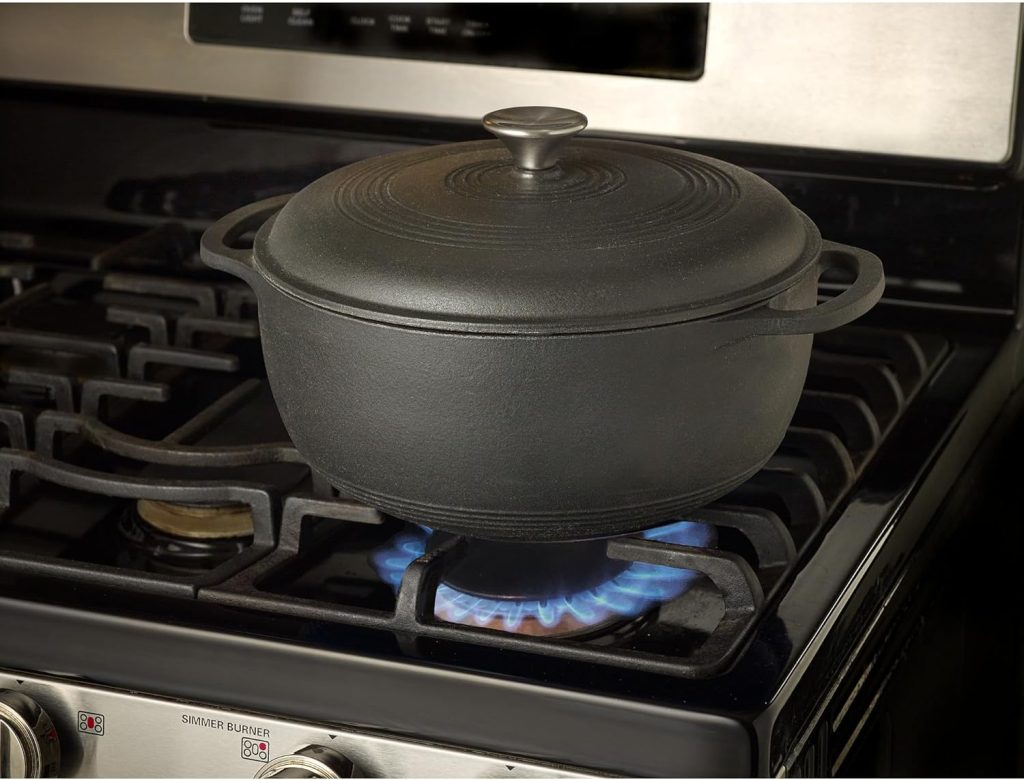
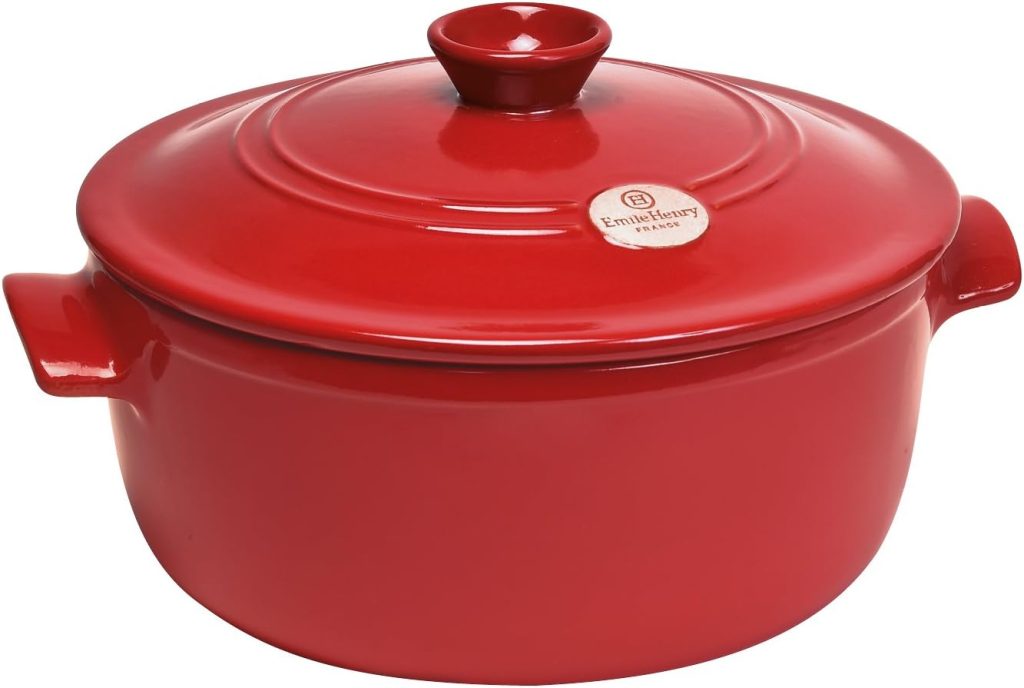
    Cast iron Enameled Dutch oven Pot

    At its core, it consists of a metal base, typically cast iron, steel, or aluminum, coated with a layer of powdered glass that’s been fired at extremely high temperatures.

    This process creates a smooth, non-porous surface that bonds permanently to the metal underneath.

    Definition: Enamel as a Glass Coating Fused to Metal

    The term “enamel” refers specifically to powdered glass that melts and fuses to metal through heat.

    When manufacturers apply this coating to cookware, they’re essentially creating a vitreous (glass-like) surface that shares properties with both glass and ceramic materials.

    This coating typically ranges from 0.1 to 2 millimeters thick and forms a chemical bond with the base metal during the firing process, which occurs at temperatures between 1,200°F and 1,500°F.

    How Enamel Cookware Is Made

    The manufacturing process begins with preparing the metal substrate through sandblasting or chemical treatment to ensure proper adhesion.

    Ground glass powder, known as frit, is then applied to the metal surface through spraying, dipping, or electrostatic methods.

    The piece enters a kiln where intense heat causes the glass particles to melt, flow together, and bond with the metal.

    Most quality enamel cookware receives multiple coats base coat for adhesion and one or more top coats for durability and appearance.

    Each layer requires separate firing, making the process labor-intensive and contributing to the higher cost of premium enamel cookware.

    Difference Between Porcelain Enamel and Ceramic Cookware

    Many people confuse porcelain enamel with ceramic cookware, but they’re fundamentally different products.

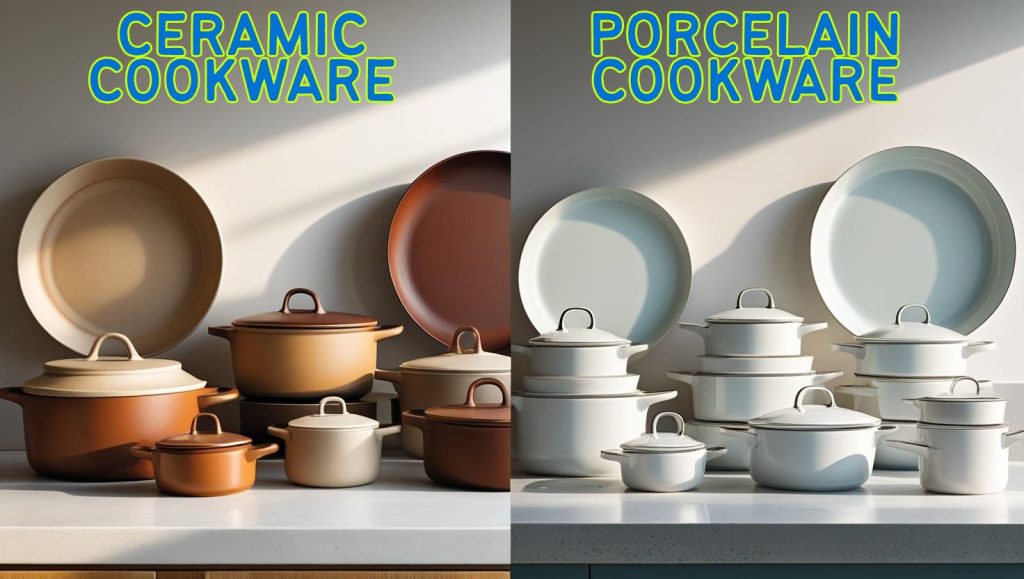
    Porcelain enamel is glass fused onto metal, while pure ceramic cookware (similar to what you’ll find when considering if ceramic cookware is safe to cook with) is made entirely from clay-based materials that are glazed and fired.

    Enamel-coated pieces have a metal core that provides superior heat retention and distribution, whereas ceramic cookware is often lighter but more prone to thermal shock.

    The terms “porcelain enamel” and “vitreous enamel” are interchangeable and describe the same glass-on-metal technology.

    Enamel cookware has maintained its popularity for over a century, transitioning from utilitarian farmhouse staple to coveted kitchen essential.

    Its enduring appeal stems from a combination of functional benefits and aesthetic charm that few other cookware types can match.

    Non-Reactive Surface and Easy Cleaning Benefits

    The glass surface of enamel cookware is completely non-reactive, meaning it won’t interact chemically with acidic or alkaline foods.

    You can safely simmer tomato sauce, wine-based braises, or citrus marinades without worrying about metallic flavors or discoloration.

    This inert surface also prevents food from absorbing metal ions, unlike bare cast iron or reactive metals like aluminum.

    Additionally, the smooth, glossy finish resists staining and doesn’t harbor bacteria in pores or scratches.

    Cleanup typically requires only warm soapy water, and the surface won’t develop the seasoning requirements of traditional cast iron.

    Stylish Aesthetic and Heat Retention

    Beyond functionality, enamel cookware has become a design statement.

    The vibrant colors from classic flame orange to sophisticated blues and greens add visual warmth to kitchens and make attractive serving pieces that transition directly from stove to table.

    The underlying cast iron or steel core provides exceptional heat retention, allowing these pieces to maintain steady cooking temperatures and keep food warm long after removing from the heat.

    This thermal mass makes enamel-coated Dutch ovens particularly excellent for slow-cooking, braising, and baking bread.

    The enamel cookware market features several distinguished manufacturers.
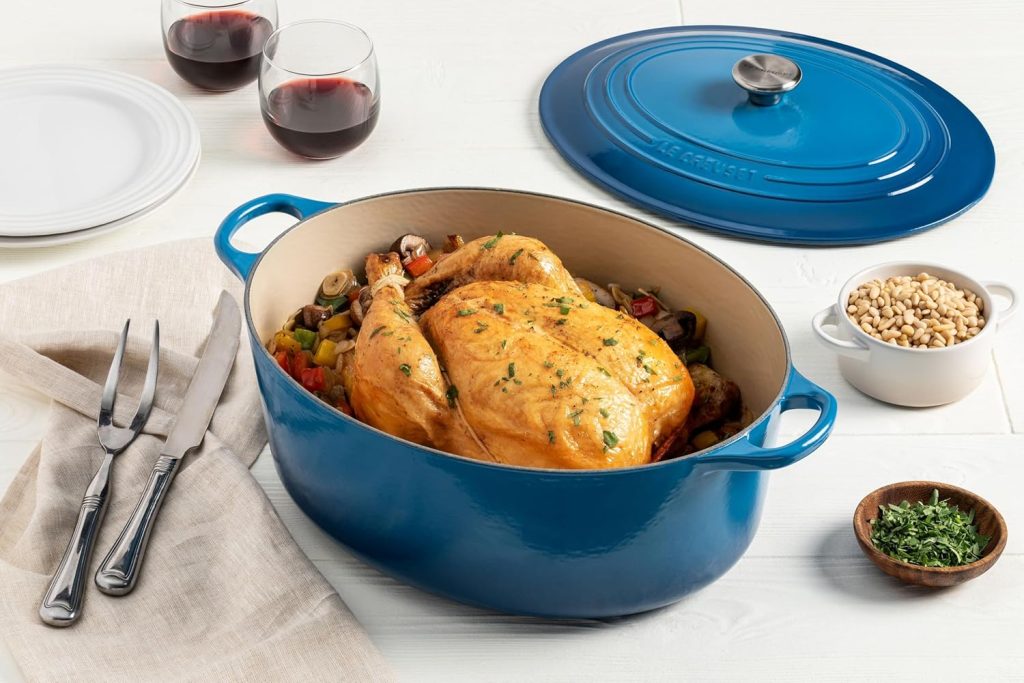
    Le Creuset Enameled Cast Iron Oval Dutch Oven

    Le Creuset, the French company founded in 1925, set a good standard for enameled cast iron and remains synonymous with premium quality.

    When people ask if Le Creuset is non-toxic, they’re specifically concerned about the brand’s lead-free formulations, which the company has maintained since the 1990s.

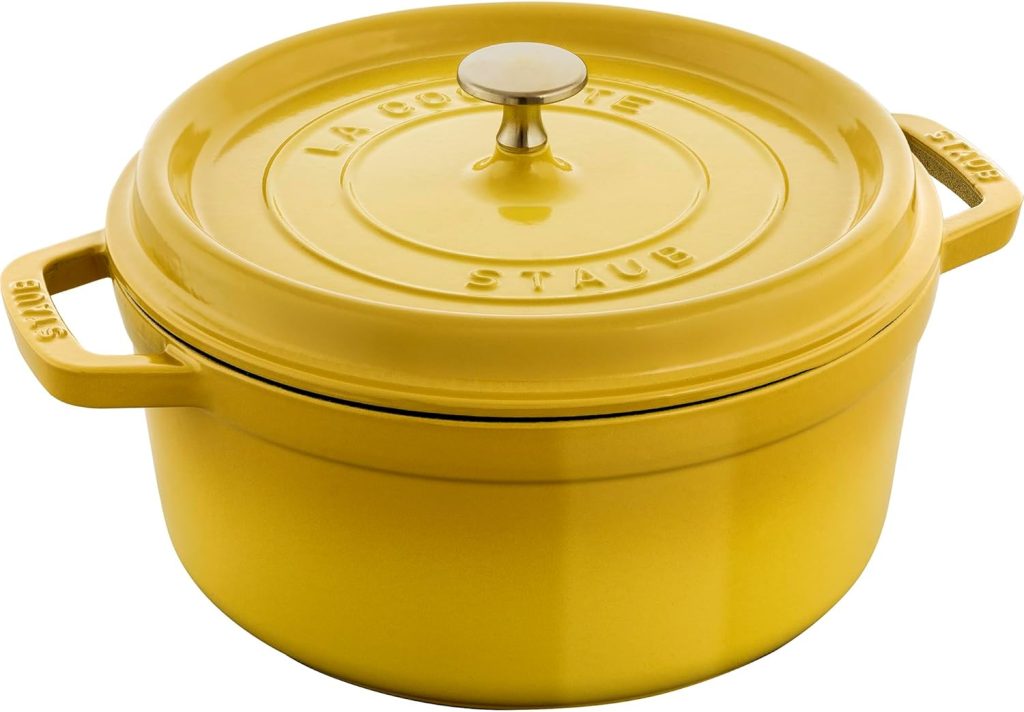
    Staub enamel cast iron round cookware

    Staub, another French brand, offers similar quality with distinctive black interiors.

    American manufacturer Lodge provides more affordable enameled cast iron options, while Chantal specializes in enameled steel cookware that’s lighter weight than cast iron alternatives.

    What Chemicals Can Be Found in Enamel Coatings

    Understanding the chemical composition of enamel coatings is essential for evaluating their safety.

    While enamel is primarily glass, the specific compounds used in its formulation can vary significantly between manufacturers and affect the final product’s safety profile.

    Core Components: Silica, Feldspar, Boron, and Metal Oxides

    The base glass formula for enamel typically contains silica (silicon dioxide), which forms the structural backbone of the glass matrix.

    Feldspar acts as a flux, lowering the melting temperature and improving flow characteristics.

    Boron compounds enhance chemical durability and thermal shock resistance.

    Various metal oxides serve multiple purposes; some improve adhesion to the base metal, others modify the glass’s optical properties, or increase hardness.

    These core ingredients are generally considered safe and stable once fired into the glass matrix.

    Pigments: Cobalt, Cadmium, and Chromium Used for Colors

    The vibrant colors that make enamel cookware so appealing come from metal oxide pigments added to the glass formula.

    Cobalt oxide produces blues, cadmium creates bright reds, oranges, and yellows, while chromium generates greens.

    Lead oxide was historically used to enhance color brilliance and lower firing temperatures, making it prevalent in vintage enamelware.

    Modern regulations have largely eliminated lead from food-contact surfaces, but cadmium and other heavy metals may still appear in exterior decorative coatings that don’t contact food.

    When and How These May Pose Risks

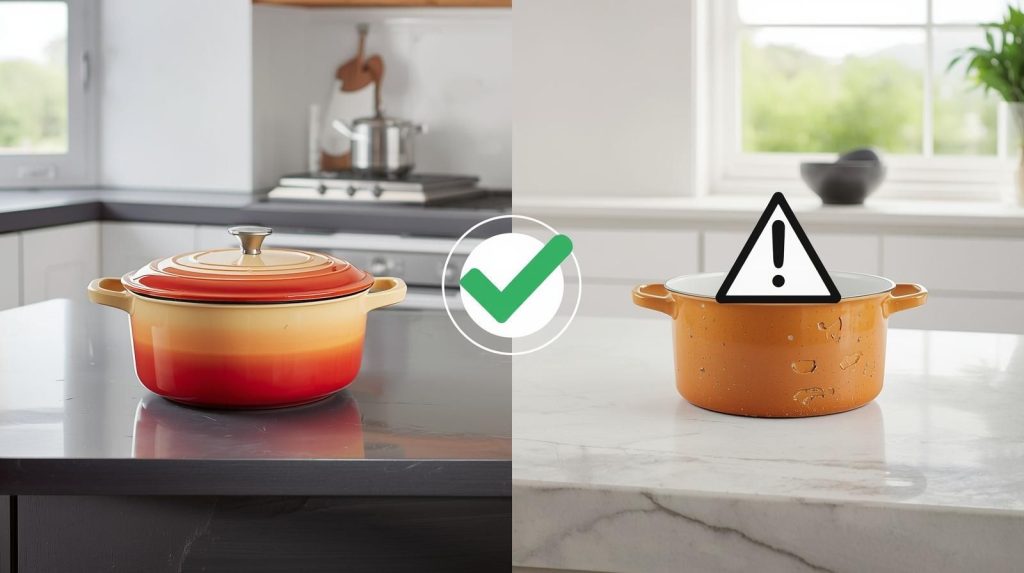
    The health risks from enamel coatings primarily arise when the glass surface degrades, chips, or contains improperly stabilized pigments.

    If the enamel coating chips away, it can expose both the pigmented layers and the bare metal underneath.

    With acidic foods, damaged enamel may leach heavy metals into your meals.

    Additionally, vintage pieces manufactured before stricter regulations may have lead incorporated throughout the enamel matrix, not just on the surface.

    High temperatures and repeated thermal cycling can also cause microscopic cracks that accelerate degradation.

    For those concerned about heavy metal exposure, testing your cookware for lead at home provides a practical first step in assessing your kitchen’s safety.

    Does Enamel Cookware Contain Lead or Cadmium?
    Is Enamel cookware safe

    The presence of lead and cadmium in enamel cookware depends heavily on when and where the piece was manufactured.

    Modern regulatory frameworks have significantly reduced these risks, but legacy products remain a concern.

    Vintage Enamelware: Pre-1980s Lead Risks

    Enamel cookware manufactured before the 1980s frequently contains significant lead concentrations, particularly in brightly colored pieces.

    Lead oxide served as an essential ingredient in traditional enamel formulas because it created brilliant colors, improved glass flow, and reduced firing temperatures, making production more economical.

    Vintage enamelware test shows lead levels exceeding 10,000 parts per million (ppm) in vintage, far above the FDA’s 90 ppm limit for food-contact surfaces.

    Red, orange, and yellow pieces pose the highest risk due to cadmium-based pigments.

    Collectors often display these vintage pieces, but using them for cooking or food storage creates direct exposure pathways.

    Modern Enamel Cookware: FDA and Prop 65 Compliance

    Contemporary enamel cookware from reputable manufacturers typically meets strict safety standards.

    The FDA regulates materials that contact food, limiting lead content to 90 ppm for flat surfaces and 0.5 ppm for food itself.

    California’s Proposition 65 requires manufacturers to disclose products containing lead above 0.5 micrograms per day.

    Most premium brands now use lead-free formulations and test their products regularly to ensure compliance.

    However, not all imported or budget enamelware undergoes rigorous testing, and some manufacturers may use lead-containing pigments on exterior surfaces that could chip into food.

    Lab Testing Examples and FDA Recalls

    Independent testing and studies provide crucial insights into real-world enamel cookware safety.

    Published XRF (X-ray fluorescence) test results for dozens of enamel cookware brands, revealing that while most modern pieces test negative for lead, some imported and budget brands still show concerning levels.

    The FDA has issued recalls for enamelware products over the years when testing revealed lead migration into food simulants. In 2019, certain imported enamel mugs were recalled after testing showed lead leaching at levels 15 times the federal limit.

    These cases underscore the importance of choosing transparent brands with documented safety testing.

    How to Identify Lead-Free Enamel Cookware

    Look for explicit “lead-free” or “Prop 65 compliant” labels on packaging or manufacturer websites.

    Established brands like Le Creuset, Staub, Lodge, and Chantal publicly confirm their products meet all safety standards and don’t contain lead or cadmium in food-contact surfaces.

    Check for certification marks from testing organizations or regulatory compliance statements.

    Be cautious with unmarked imported enamelware, antique pieces, and products from unknown manufacturers.

    When in doubt, contact the manufacturer directly for a material safety data sheet (MSDS) or third-party test results confirming lead-free status.

    How to Identify Safe Enamel Cookware

    Making informed purchasing decisions about enamel cookware requires understanding which characteristics indicate safety and quality.

    Several key factors can help you distinguish truly safe options from potentially problematic products.

    Check Brand Transparency: Le Creuset and Staub Certified Lead-Free

    Trustworthy manufacturers openly share their safety testing protocols and results.

    Le Creuset explicitly states that all its cookware is lead-free and meets California Prop 65 requirements, with testing conducted on every production batch.

    Staub similarly guarantees their enamel contains no lead or cadmium in food-contact surfaces.

    These brands maintain detailed documentation about their manufacturing processes and material sourcing.

    When evaluating any enamel cookware brand, visit their website or contact customer service to request specific information about:

    • Lead and cadmium content in both interior and exterior coatings
    • Compliance with FDA and Prop 65 standards
    • Third-party testing certifications
    • Country of manufacture and quality control processes

    Avoid Chipped or Cracked Enamel Cookware

    Physical damage to enamel coatings creates direct safety hazards.

    When enamel chips, it exposes the underlying metal and potentially compromised glass layers containing concentrated pigments.

    Even small chips can expand with continued use as thermal stress causes the damaged area to propagate.

    Acidic cooking liquids can then interact with exposed materials, potentially leaching metals into food.

    Before purchasing used or vintage enamelware, inspect every surface carefully under good lighting.

    Run your fingers along interior surfaces to detect rough patches or beginning cracks.

    For cookware you already own, immediately retire any pieces showing chips, cracks, or areas where the enamel has worn through to bare metal.

    Prefer Neutral or Light Colors Over Bright Reds and Yellows

    While modern premium brands use safe pigments regardless of color, the physics of enamel coloration means bright reds, oranges, and yellows historically required more problematic compounds.

    Cadmium produces the most vibrant warm colors, while lead enhances color depth and brilliance across the spectrum.

    If purchasing from unknown manufacturers or considering vintage pieces, white, cream, or pale blue enamelware typically poses a lower risk because these colors use simpler, safer pigments.

    However, this guideline doesn’t apply to certified modern brands that use contemporary, non-toxic colorants even in their boldest hues.

    Look for “California Prop 65 Compliant” and “Lead-Free” Labels

    Specific safety labels provide immediate assurance about a product’s composition.

    Proposition 65 compliance indicates the manufacturer has verified their product doesn’t expose consumers to lead above 0.5 micrograms daily.

    “Lead-free” declarations, while not always defined by precise thresholds, signal manufacturer awareness and commitment to safety standards.

    Some manufacturers display testing lab certifications or FDA compliance statements on their packaging.

    These labels matter most for products manufactured outside established Western regulatory frameworks, where enforcement may be less consistent.

    Common Safety Concerns and Misconceptions

    Separating fact from fiction will help you make rational decisions about enamel cookware use.

    Several common beliefs about enamel cookware safety deserve clarification based on material science and practical experience.

    Is Scratched Enamel Cookware Safe?

    Surface scratches in enamel cookware, those fine lines that don’t penetrate through to the metal, generally don’t pose immediate health risks.

    The glass matrix remains intact even when slightly abraded, and shallow surface marks don’t expose underlying pigments or the metal substrate.

    However, deep scratches that reveal darker material underneath indicate coating penetration and should be evaluated more seriously.

    The distinction between scratched and chipped enamel is critical: scratches are surface-level abrasions, while chips involve actual coating loss.

    If you can feel a rough edge or see exposed metal, the piece needs replacement. For minor surface scratching with intact coating, the cookware remains safe for continued use.

    Enamel Cookware Disadvantages

    Despite its many benefits, enamel cookware has limitations worth considering.

    The glass coating is relatively brittle and can chip or crack if dropped or subjected to sudden temperature changes.

    These pieces are heavy; a large enameled cast-iron Dutch oven can weigh 15 pounds or more, making them challenging for some users to maneuver.

    Enamel doesn’t tolerate extremely high heat like bare cast iron; heating empty enamel cookware above 500°F can damage the coating.

    The glass surface, while durable under normal use, requires careful handling with wooden or silicone utensils to prevent damage.

    Finally, quality enamel cookware represents a significant investment, with premium pieces costing several hundred dollars.

    Is Enamel Cookware Safer Than Non-Stick?

    Compared to traditional non-stick cookware with fluoropolymer coatings like PTFE, enamel offers distinct safety advantages.

    Enamel doesn’t release toxic fumes when overheated, unlike PTFE coatings, which can emit hazardous gases at temperatures above 500°F.

    The glass surface is completely inert and doesn’t break down with use, while non-stick coatings gradually degrade over time.

    However, this comparison assumes intact, lead-free enamel—damaged or contaminated enamel cookware may pose greater risks than modern PFOA-free non-stick alternatives.

    The answer ultimately depends on specific products: certified lead-free enamel from reputable manufacturers is indeed safer than most non-stick options, but questionable enamel poses unique heavy metal risks that non-stick cookware doesn’t present.

    Is Enamel Cookware Non-Stick?

    Enamel cookware is not technically non-stick in the same way as PTFE-coated pans.

    The smooth glass surface does release food more easily than bare cast iron or stainless steel, but it still requires cooking fat to prevent sticking with certain foods like eggs or delicate fish.

    Properly preheating enamel cookware and using adequate oil or butter prevents most sticking issues.

    Some manufacturers, particularly Staub, texture their interior enamel surfaces to improve browning and reduce sticking.

    The practical benefit is that enamel provides easier food release than many alternatives without relying on synthetic coatings that eventually wear away.

    Is Enamel-Coated Cast Iron Cookware Safe?

    Enameled cast iron represents the most popular category of enamel cookware, combining cast iron’s heat retention with enamel’s non-reactive surface.

    When manufactured to modern standards by reputable companies, these pieces offer excellent safety profiles.

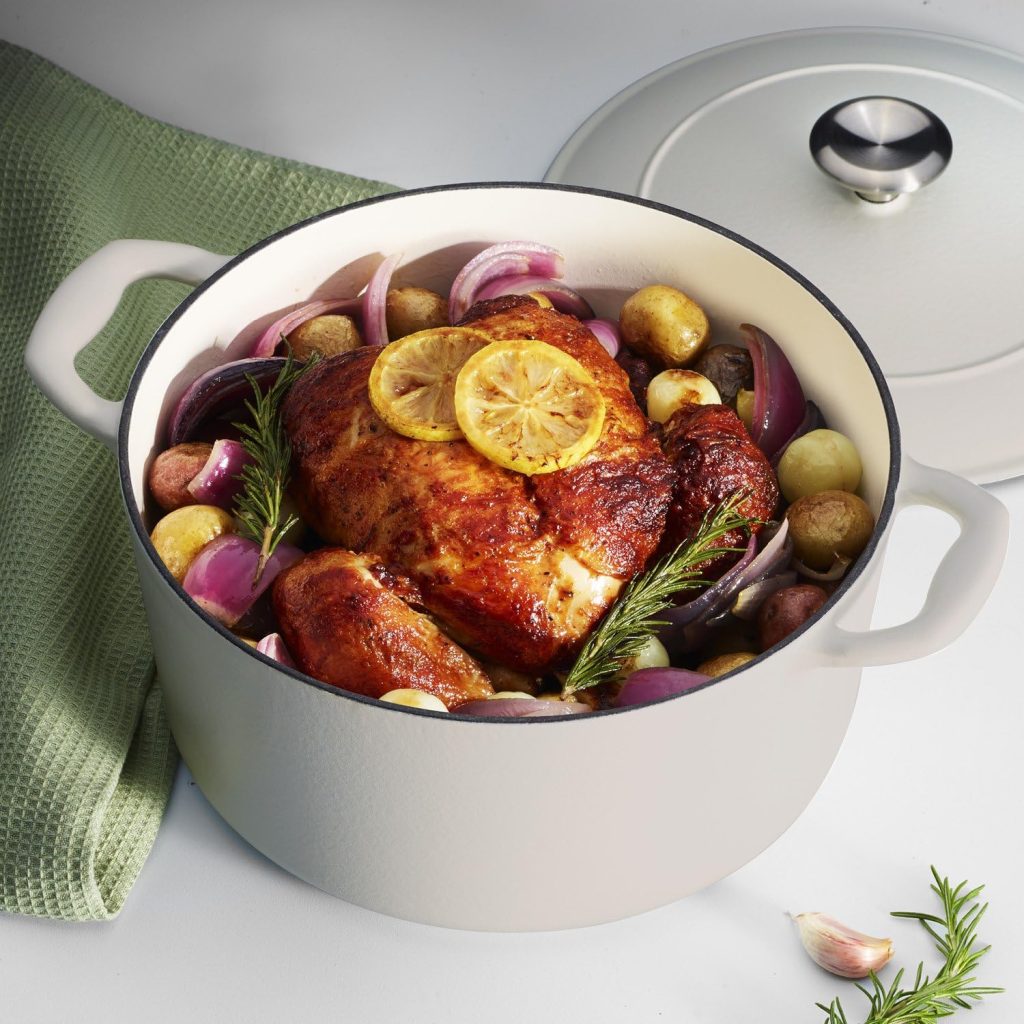
    Is Tramontina Enamel Cast Iron Safe?

    Tramontina, a Brazilian manufacturer with global distribution, produces enameled cast iron cookware that meets FDA standards for food-contact materials.
    Is Tramontina Enamel cast iron safe

    The company states its enamel coatings are lead-free and cadmium-free, though they’re less transparent about third-party testing than premium European brands.

    Consumer reports and independent reviews generally rate Tramontina enamel cookware as safe for everyday cooking, with no documented cases of heavy metal contamination.

    The brand represents a middle tier—more affordable than Le Creuset but manufactured with adequate quality controls.

    For consumers seeking budget-friendly enameled cast iron, Tramontina appears to be a reasonable choice when the enamel coating remains intact.

    Is Enameled Cast Iron Safe If Chipped?

    Chipped enameled cast iron presents multiple concerns that should prompt immediate retirement of the piece.

    First, exposed cast iron will rust when wet, and rust particles can contaminate food.

    Second, the chip edges typically reveal the pigmented enamel layers where colorants concentrate, potentially including heavy metals even in modern formulations.

    Third, acidic foods that contact exposed iron can leach iron into meals at levels that may be problematic for individuals with iron overload disorders.

    Finally, chips tend to propagate—once the coating’s integrity is compromised, additional material typically flakes away with continued use.

    While a tiny chip on an exterior surface might be tolerable, any interior chipping means the cookware should be replaced or repurposed for non-food use.

    Is Porcelain Enamel Cookware Safe?

    Porcelain enamel is simply another term for vitreous enamel—the glass-on-metal technology we’ve been discussing.

    The “porcelain” designation doesn’t indicate different safety characteristics but rather emphasizes the smooth, porcelain-like finish of the glass coating.

    All previous safety considerations apply equally to products labeled as porcelain enamel.

    The key factors remain: manufacturer reputation, regulatory compliance, coating integrity, and whether the piece is vintage or modern.

    High-quality porcelain enamel from certified manufacturers offers the same safety benefits as any lead-free vitreous enamel product.

    The terminology difference is marketing language rather than a meaningful material distinction.

    When evaluating porcelain enamel cookware, apply the same scrutiny regarding lead content, manufacturing standards, and physical condition that you would for any enamel-coated product.

    How to Test Enamel Cookware for Lead

    If you own vintage enamelware, inherited cookware of unknown origin, or want to verify manufacturer claims, testing provides definitive answers about lead content.

    Several methods offer varying levels of accuracy and accessibility.

    Using Home Swab Tests (LeadCheck) for Surface Lead

    LeadCheck swabs, available at hardware stores at an affordable price, offer a convenient home testing option.

    These swabs contain chemicals that turn pink or red when they contact lead.

    To test enamel cookware, activate the swab according to package directions and rub it firmly on the cooking surface for 30 seconds.

    While these tests effectively detect surface lead, they have limitations for enamel testing—the glass coating may prevent the chemicals from accessing lead deeper in the enamel matrix.

    False negatives are possible if lead is stabilized within the glass structure. Additionally, these tests can’t quantify lead levels, only indicate presence or absence.

    Despite limitations, they provide useful screening, especially for vintage pieces with obvious deterioration.

    Professional XRF Analysis for Embedded Metals

    X-ray fluorescence (XRF) testing offers a reliable way to check for heavy metal detection in cookware.

    XRF analyzers beam X-rays at a surface and measure the characteristic fluorescence emitted by different elements, accurately identifying and quantifying metals, including lead, cadmium, mercury, and others.

    This non-destructive testing detects metals throughout the coating depth, not just surface layers.

    Some consumers can access XRF testing through:

    • Public health departments are offering free community testing
    • Environmental consulting firms (typically $50-150 per item)
    • Universities with material science programs
    • Consumer advocacy organizations hosting testing events

    How to Interpret Results and Next Steps

    XRF results are reported in parts per million (ppm) or as “non-detect” (ND) when below detection limits.

    The FDA limit for lead in food-contact surfaces is 90 ppm, though many health advocates recommend much lower thresholds—ideally below 20 ppm for items used with acidic foods.

    If your testing reveals:

    • Non-detect or below 20 ppm: Safe for continued use
    • 20-90 ppm: Technically legal but consider replacement, especially for daily cooking
    • Above 90 ppm: Unsafe for food contact; repurpose for decoration or discard

    Remember that exterior lead (on handles or outer surfaces) poses less risk than interior coating lead, though chipping could still create exposure.

    Safer Alternatives to Enamel Cookware

    For consumers who remain concerned about enamel cookware or need replacements for damaged pieces, several alternative materials offer excellent safety profiles and cooking performance.

    Stainless Steel Cookware: Nickel-Safe and Durable

    High-quality stainless steel cookware provides a completely non-reactive cooking surface without coatings that can chip or degrade.

    Surgical-grade 18/10 stainless steel (18% chromium, 10% nickel) offers excellent corrosion resistance and durability.

    For individuals with nickel sensitivities, nickel-free stainless steel options exist.

    Stainless steel conducts heat less effectively than cast iron, so quality pieces typically feature aluminum or copper cores for even heating.

    These pots and pans last for decades with proper care, don’t harbor bacteria, and can withstand high heat and metal utensils.

    The main limitations are the higher cost for quality pieces and the learning curve for preventing food from sticking.

    Cast Iron: No Coatings Required

    Traditional bare cast iron eliminates coating concerns.

    Properly seasoned cast iron develops a natural non-stick patina from polymerized oils without synthetic materials.

    These pieces offer superior heat retention and can tolerate any temperature your stove or oven produces.

    Cast iron does require more maintenance than enamel regular seasoning, immediate drying to prevent rust, and avoiding prolonged contact with acidic foods.

    However, for consumers prioritizing simplicity and longevity, uncoated cast iron represents time-tested technology that can last for generations.

    Glass Cookware: 100% Non-Reactive

    Borosilicate glass bakeware and cookware offer complete chemical inertness with zero leaching concerns.

    Glass won’t react with any food, doesn’t require seasoning, and allows visual monitoring during cooking.

    Brands like Pyrex and Anchor Hocking make reliable glass baking dishes, though glass cookware for stovetop use remains less common in North America.

    Glass’s main limitations include fragility, susceptibility to thermal shock if temperature changes are too rapid, and poor heat retention compared to metal cookware.

    For baking and oven use, glass provides unmatched safety and functionality.

    100% Ceramic Cookware: Xtrema and Zero Heavy Metal Glazes

    Pure ceramic cookware made entirely from clay without metal bases offers another coating-free option.

    Xtrema, a leading brand, manufactures cookware from 100% ceramic with no glazes, dyes, or metal components.

    These pieces are naturally non-stick when properly used, dishwasher safe, and completely non-toxic.

    Ceramic cookware works on any heat source, including induction (with certain models), and transitions safely from freezer to oven.

    The trade-offs include higher cost, weight, and care requirements—ceramic is more fragile than metal cookware and requires gentle handling to prevent breakage.

    FAQs About Enamel Cookware Safety

    Is Enameled Cast Iron Safe for Everyday Use?


    Yes, modern enameled cast iron from reputable manufacturers is completely safe for daily cooking.

    The glass coating creates a non-reactive barrier that doesn’t leach chemicals or metals into food when intact.

    Quality enamel cookware will serve you reliably for decades with proper care, and the coating actually becomes more valuable over time as you learn its heating characteristics and maintenance needs.

    Can Enamel Cookware Go in the Dishwasher or Oven?


    Most enamel cookware is both dishwasher-safe and oven-safe, though manufacturers’ specific recommendations vary.

    The glass coating resists detergents and high water temperatures without degradation.

    For oven use, enameled cast iron typically tolerates temperatures up to 500°F, though you should verify your specific product’s limit.

    Enameled steel cookware may have lower temperature thresholds.

    Avoid extreme temperature shocks—don’t transfer hot enamel cookware directly into cold water, as rapid temperature changes can crack the glass coating.

    Does Enamel Cookware Leach Metals?


    Intact, lead-free enamel cookware does not leach metals into food.

    The glass matrix stabilizes all components, preventing migration even with acidic foods.

    However, damaged enamel with chips or cracks can allow food contact with underlying materials, potentially enabling metal leaching.

    Additionally, vintage or improperly manufactured enamel may contain unstabilized lead that can leach, particularly when exposed to acidic foods and heat.

    This is why choosing certified lead-free products and maintaining coating integrity is essential.

    Is Vintage Enamelware Safe to Cook With?


    Vintage enamelware manufactured before the 1980s frequently contains lead and should be considered decorative only unless professionally tested.

    The risk is particularly high for brightly colored pieces—reds, oranges, yellows—which commonly use lead and cadmium pigments.

    If you’re drawn to vintage enamel’s aesthetic charm, display these pieces on shelves rather than using them for cooking or food storage.

    If you must use inherited enamelware, invest in professional XRF testing first.

    The sentimental value of family heirlooms doesn’t justify lead exposure risks, especially for children and pregnant women who are most vulnerable to lead’s neurological effects.

    Conclusion: Modern Enamel Cookware Is Safe When Lead-Free

    The evidence clearly demonstrates that contemporary enamel cookware from transparent, reputable manufacturers offers a safe, durable cooking solution.

    Companies like Le Creuset, Staub, Lodge, and Chantal have eliminated lead and cadmium from their formulations, meeting stringent FDA and Proposition 65 standards.

    The real risks concentrate in vintage enamelware and products from unknown manufacturers that lack proper testing and certification.

    By choosing certified lead-free brands, inspecting regularly for chips or damage, and retiring compromised pieces promptly, you can confidently enjoy enamel cookware’s benefits—beautiful aesthetics, superior heat retention, and non-reactive cooking surfaces.

    When in doubt, testing provides definitive answers. Your family’s health deserves cookware you can trust completely, and modern enamel technology delivers exactly that when selected wisely.
  • How to Test Cookware for Lead and Heavy Metals: A Complete Safety Guide

    Your kitchen feels safe. The pots are clean, the ingredients are fresh, and every meal is made with care.

    But what if the danger isn’t in what you’re cooking, it’s in what you’re cooking with?

    Lead and other heavy metals have been found lurking in cookware glazes, ceramic finishes, and imported pots that look perfectly fine on the surface.

    Knowing how to test cookware for lead and heavy metals could be one of the most important food-safety steps you take this year.

    Some results are reassuring. Others are genuinely alarming. And the type of cookware sitting in your cupboard right now might be one you’d never expect.

    Keep reading because what comes next might surprise you.

    Why Testing Cookware for Lead and Heavy Metals Is Important

    Health Risks of Lead Exposure

    Lead is a neurotoxin, meaning it directly damages the nervous system.

    Even low-level exposure over time can impair brain development in children, cause cognitive decline in adults, and disrupt kidney function.

    There is no known safe level of lead exposure, which is why regulators and health bodies are so strict about it.

    For pregnant individuals, lead exposure carries additional risks because it can cross the placenta and affect fetal neurological development.

    The frustrating part is that lead poisoning often happens slowly and silently, with symptoms that can be easy to misattribute to other causes until the damage has accumulated.

    Other Heavy Metals Found in Cookware

    Lead gets most of the attention, but it isn’t the only heavy metal of concern in cookware.

    Cadmium, often found in bright-colored ceramic glazes and pigments, is a known carcinogen that the body absorbs readily and stores in the kidneys.

    Arsenic, while less commonly associated with cookware specifically, can appear in some clay-based ceramics depending on where the raw materials were sourced.

    Mercury is rarely a cookware concern, but occasionally surfaces in very old or specialty pieces.

    Each of these metals poses distinct health risks, and unfortunately, they don’t always show up on the surface where you can see them.

    How Heavy Metals Can Enter Food

    The mechanism by which heavy metals move from cookware into food is called leaching.

    It happens when the cooking surface, particularly a glaze or coating, breaks down and releases metal particles or ions into whatever is being cooked.

    Two factors significantly accelerate this process: heat and acidity.

    Cooking acidic foods like tomato sauce, citrus-based dishes, or vinegar-heavy recipes in compromised cookware dramatically increases leaching.

    High heat does the same. This is why a pan that seems fine for boiling water might still be releasing metals into your pasta sauce and why testing matters even when the cookware looks undamaged.

    Types of Cookware That May Contain Heavy Metals

    Ceramic and Glazed Cookware

    Not all ceramic cookware is created equal. The ceramic body itself is generally inert, but the glazes and decorative finishes applied to the surface are where heavy metals can hide.

    Pigments used to create vibrant colors, particularly reds, oranges, and yellows, have historically relied on cadmium and lead compounds.

    Even modern cookware can carry risk if manufactured in regions with less rigorous chemical regulations.

    Decorative exterior patterns are sometimes the worst offenders because they may use artistic-grade pigments rather than food-safe ones, and the exterior glaze can eventually contact food when pans are stacked or scratched.

    Imported or Handmade Cookware

    Cookware manufactured outside of strictly regulated markets, particularly pieces imported informally or purchased as artisan or handmade goods, carries a higher risk of containing unsafe levels of heavy metals.

    Not because every foreign manufacturer is negligent, but because regulatory standards for cookware safety vary enormously between countries.

    FDA and EU standards are among the most stringent in the world. Beautifully crafted handmade pottery from a market abroad may have been glazed with materials that would never pass food-safety testing in your home country.

    Aesthetic appeal and artisanal origin are not substitutes for verified safety.

    Old or Vintage Cookware

    Vintage cookware carries a charm that’s hard to resist and a risk profile that’s equally hard to ignore.

    Older manufacturing methods didn’t have the same restrictions on heavy metal use that exist today.

    Lead-based glazes were standard in ceramic production for much of the 20th century.

    Vintage enamelware, decorative cast pieces, and antique pottery are particularly likely candidates for elevated lead or cadmium content.

    If you’ve inherited old cookware or picked up vintage pieces at an estate sale, treat them with caution until you’ve tested them, especially if you plan to use them for acidic or high-heat cooking.

    Methods for Testing Cookware for Lead and Heavy Metals

    Using Lead Test Kits at Home

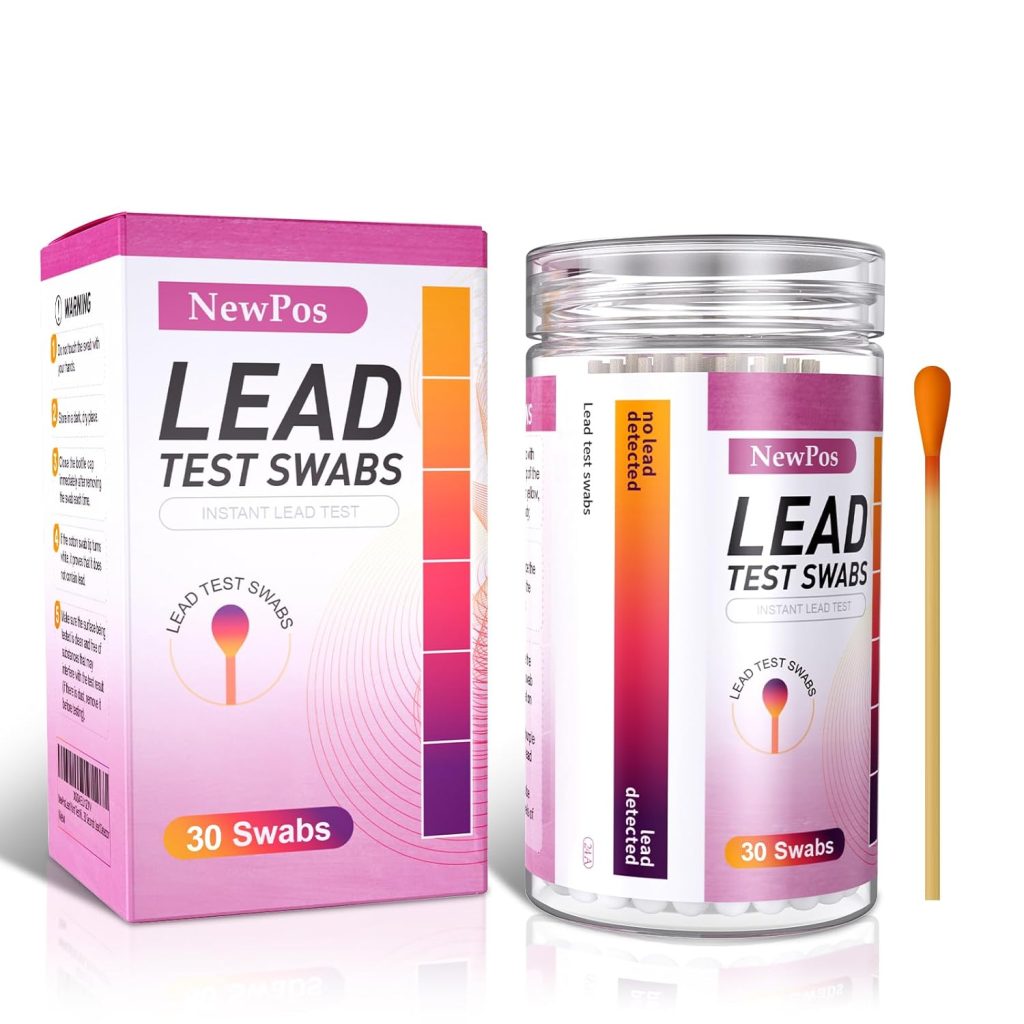
    Home lead test kits,, typically swab-based, are the most accessible starting point for anyone concerned about their cookware.

    They work by applying a chemically treated swab to the surface of the cookware.

    Lead test swabs for cookware

    If lead is present at detectable levels, the swab changes color, usually to pink or red, depending on the brand.

    The process is straightforward, takes only a few minutes, and requires no technical expertise.

    Kits are widely available online and at hardware stores for a modest cost. They’re not infallible, but for a first-pass screening of your kitchen, they offer a practical, low-barrier option.

    Laboratory Testing

    For definitive results, laboratory testing is the gold standard.

    Certified labs can analyze cookware samples using methods like ICP-MS (inductively coupled plasma mass spectrometry), which detects heavy metals at parts-per-billion concentrations — far beyond what any home test can achieve.

    More importantly, labs can test for leaching specifically, meaning they simulate cooking conditions and measure how much metal actually migrates into food or a food-simulating liquid.

    This tells you not just whether metals are present in the material, but whether your cookware is actively contaminating what you eat.

    Lab testing costs more and takes longer, but for vintage, high-use, or suspect pieces, the investment is worthwhile.

    XRF Testing (X-Ray Fluorescence)

    XRF (X-ray fluorescence) testing is a professional-grade method that uses X-rays to identify the elemental composition of a material without destroying or even touching it in a damaging way.

    It’s the same technology used by regulators, museums, and industrial safety teams to analyze materials quickly and accurately.

    Some consumer advocacy organizations and specialized testing services offer XRF analysis for cookware.

    It can detect lead, cadmium, arsenic, and dozens of other elements in seconds. While not something you’d do in your kitchen, XRF testing is increasingly accessible through mail-in services and is considerably more reliable than swab-based home kits.

    Step-by-Step Guide to Testing Cookware at Home

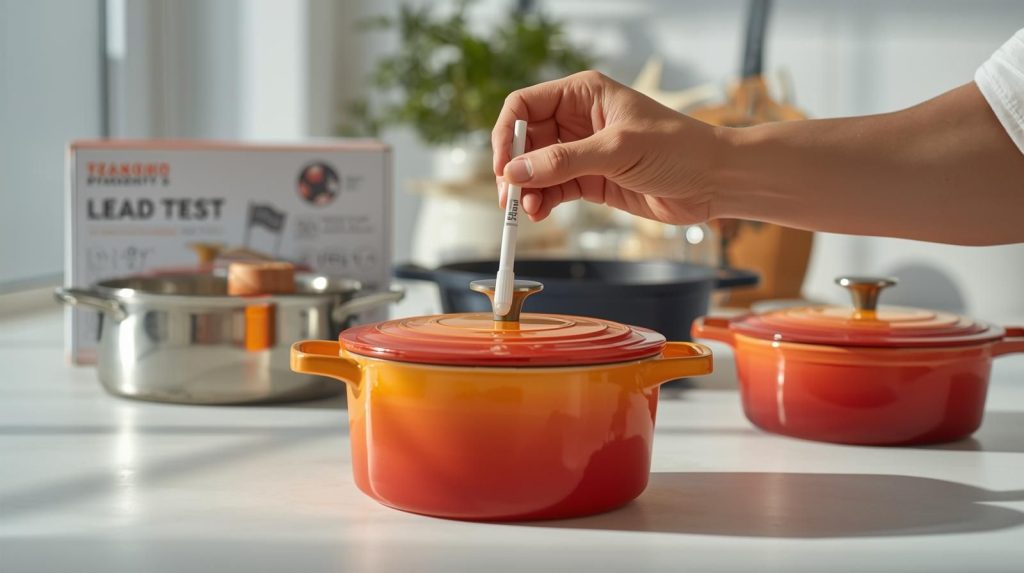
    how to test cookware for lead and heavy metals

    Preparing the Cookware for Testing

    Before testing, wash the cookware thoroughly with dish soap and warm water, then rinse well and allow it to dry completely.

    Any grease, residue, or cleaning product left on the surface can interfere with the chemical reaction in the test swab and produce a false negative.

    Choose your test areas deliberately: the interior cooking surface is your primary concern since it contacts food directly, but also test the rim and any areas where chipping, crazing, or discoloration is visible.

    If the piece has decorative exterior glazing, test that too; it can transfer to food when stacking or during handling.

    Performing a Lead Swab Test

    Open your lead test kit and follow the manufacturer’s instructions precisely, as activation steps vary by brand.

    Most require you to snap or squeeze the swab to release the testing solution, then rub it firmly against the cookware surface for a specified number of seconds, usually 30 seconds to a minute.

    Apply consistent pressure and cover the chosen test area thoroughly.

    The chemical in the swab reacts with lead compounds on the surface.

    Use a fresh swab for each area you test; cross-contamination between areas will compromise your results and make interpretation unreliable.

    Interpreting the Results

    A color change, typically to pink, red, or a darkened hue, depending on the brand, indicates a positive result, meaning lead was detected.

    No color change generally means lead was not found at the kit’s detection threshold.

    Here’s the important caveat: home test kits typically detect lead above 600 parts per million — the federal hazard threshold for lead paint.

    But the FDA’s limit for lead leaching from cookware into food is far lower, measured in micrograms per milliliter.

    A negative swab test does not guarantee your cookware is leaching-safe. It rules out gross contamination but not low-level exposure over time.

    Limitations of DIY Cookware Testing

    Surface Testing vs Leaching Testing

    This is the most significant gap in home testing, and it’s one that most people don’t realize exists.

    Swab tests tell you what’s on the surface of your cookware. They do not tell you what’s coming off the surface into your food during cooking.

    A pan might test negative on a surface swab because the metals are bound within the glaze matrix, but under heat and acidic conditions, those same metals can leach into food at rates that exceed safety thresholds.

    Only leaching-specific laboratory analysis, conducted under simulated cooking conditions, can answer the question that actually matters most: is this pan putting metals into my food?

    Accuracy of Home Test Kits

    Home lead test kits are designed to be sensitive enough to detect lead at levels associated with lead paint hazards, at a relatively high threshold.

    They can produce false negatives (missing lead that is present at lower concentrations) and occasionally false positives (reacting to other substances that mimic lead compounds).

    The quality also varies between brands, with some kits performing significantly better than others in independent testing.

    If you use a home kit, choose a brand that has been independently validated and follow the instructions meticulously.

    And treat a negative result as a starting point for reassurance, not a guarantee of safety.

    When Professional Testing Is Recommended

    There are situations where home testing simply isn’t enough.

    If your cookware is vintage, antique, or of unknown origin, get it lab tested before using it for regular cooking, especially for acidic foods.

    The same applies to handmade or artisan pieces brought back from countries with less stringent manufacturing regulations.

    If a home swab test returns a positive result, stop using the piece immediately and pursue professional testing to understand the extent of contamination.

    Families with young children or pregnant individuals should apply a more conservative standard: when in doubt, don’t use it until you have verified results from a certified laboratory.

    Heavy Metal Test Kit for Food

    While most home lead test kits are designed for surfaces, walls, ceramics, and cookware, there is a growing category of heavy metal test kits specifically formulated for food and water.

    These kits can detect lead, cadmium, arsenic, mercury, and other metals in liquid samples, making them useful for testing cooking water, broths, and food prepared in suspect cookware.

    They work similarly to surface swab kits but are calibrated for liquid mediums.

    Some use colorimetric strips, others use chemical reagent drops. They’re a useful complement to surface testing, particularly if you want to check whether a specific pan or cooking vessel is actively affecting the food you’ve already prepared in it.

    How to Test for Heavy Metals in Food at Home

    Testing the food itself rather than the cookware gives you the most direct answer about actual exposure.

    Here’s a practical approach: cook a simple, acidic food like tomato sauce or a diluted vinegar solution in the cookware you want to test, then collect a sample of the cooked liquid.

    Use a food-safe heavy metal test kit to analyze the sample according to the kit instructions.

    Compare the result against the kit’s reference chart. For more rigorous testing, you can send a food or liquid sample to a certified laboratory for ICP-MS analysis, which will give you precise measurements of every metal present and at what concentration.

    This method testing the output rather than the surface, is the most meaningful way to assess real-world risk from your specific cookware under your actual cooking conditions.

    How to Reduce Exposure to Heavy Metals in Cookware

    Choosing Safer Cookware Materials

    The safest long-term strategy is selecting cookware materials with well-established safety profiles.

    Stainless steel — particularly 18/10 grade — is highly resistant to leaching and widely regarded as one of the safest cooking surface options available.

    Lead free stainless steel cookware

    Cast iron, when well-seasoned and maintained, is durable and adds negligible amounts of iron to food (which is actually beneficial for most people).

    High-quality ceramic cookware from reputable brands with verified PFOA-free and heavy-metal-free certifications is another sound choice.

    If you’re considering enamel-coated options, it’s worth understanding the full picture of enamel cookware safety before making a decision, as quality varies significantly between manufacturers.

    Avoiding Damaged or Cracked Cookware

    Crazing (fine cracks in a glaze), chips, and deep scratches are more than cosmetic problems; they’re pathways for heavy metals to migrate into food.

    A compromised glaze surface has far higher leaching potential than an intact one because the protective barrier has broken down.

    If your ceramic or enamel cookware shows any signs of cracking, crazing, or significant surface damage, retire it from food use.

    This applies even to high-quality pieces — a Le Creuset with a chipped interior is not the same safe product it was when intact. The damage changes the leaching equation entirely.

    Buying Cookware from Trusted Brands

    Brand reputation and transparency are your best proxies for safety when you can’t test every piece yourself.

    Established brands selling into regulated markets are legally required to meet safety standards for heavy metal content and leaching.

    Look for brands that publish their safety certifications, are explicit about being lead-free and cadmium-free, and have a track record of third-party testing.

    If you’re considering a premium enamel brand specifically, you might want to investigate the Lead and Cadmium safety profile of Le Creuset brand, as it’s one of the most commonly researched questions in this space, and the answer provides a useful benchmark for what responsible manufacturing transparency looks like.

    Signs Your Cookware May Need Testing

    Vintage or Antique Pieces

    Any cookware made before the 1990s should be considered a testing priority.

    Regulatory restrictions on lead and cadmium in cookware glazes tightened significantly through the 1980s and 90s, meaning older pieces were manufactured under entirely different standards.

    This is true regardless of brand; even prestigious manufacturers of the past used materials that would be illegal in production today.

    Treat age as an automatic flag, not a guarantee of danger, but a clear reason to verify before regular use.

    Unknown Manufacturing Origin

    If you don’t know where a piece of cookware was made, picked up at a thrift store, received as a gift, or brought back as a souvenir, treat it as unverified until tested.

    This is especially important for ceramic, earthenware, and glazed pieces.

    The same principle applies to dinnerware: if you’re already thinking about cookware safety, it’s worth also understanding how to test for lead in dinnerware at home, since plates and bowls carry the same risks and are often overlooked in favor of focusing exclusively on pots and pans.

    Decorative or Hand-Painted Glazes

    Cookware with decorative hand-painted designs, elaborate color patterns, or artisan glazing should be approached with particular caution.

    These finishes often use pigments chosen for their visual properties rather than food safety, and they may not have been applied or fired in ways that permanently bind the metals in the glaze.

    Bright reds, oranges, and yellows are historically the highest-risk colors due to the cadmium and lead compounds traditionally used to achieve them.

    If you love the aesthetic, use these pieces as display items — not as functional cookware for daily meal preparation.

    How to Test Silverware for Lead

    Silverware and flatware testing follows the same principles as cookware evaluation.

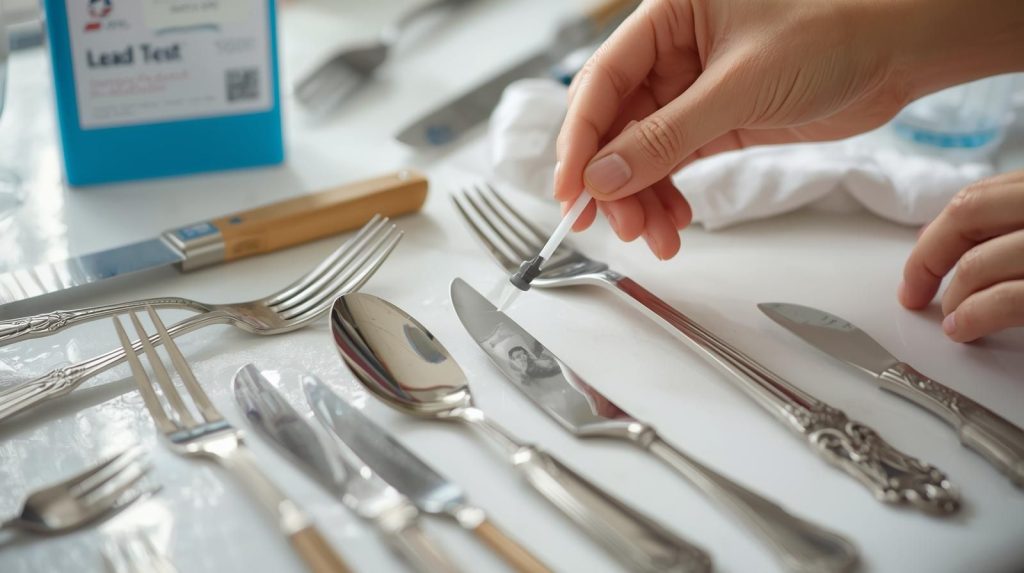
    Use lead test swabs on utensil surfaces, paying particular attention to decorative elements, painted or enameled handles, and any areas showing wear or discoloration.

    Vintage silverware with ornate designs sometimes contains lead in decorative solders or painted details.

    how to test silverware for lead

    Sterling silver and quality stainless steel flatware typically don’t contain lead, but silver-plated pieces may have lead-based solder in joints, and inexpensive imported flatware occasionally tests positive for lead in metallic coatings.

    If your silverware shows a positive lead result, discontinue food use immediately and consider professional testing to determine if the contamination is surface-only or throughout the material.

    Like cookware, even decorative silverware can pose risks if accidentally used for food service, making testing worthwhile for all utensils in your kitchen.

    Conclusion

    Testing cookware for lead and heavy metals isn’t something most people think about until they have a reason to and by then, the exposure has often already happened.

    The good news is that testing is more accessible than ever. Home swab kits provide a useful first screen, particularly for surface-level lead detection, though they can’t replace laboratory leaching tests for true peace of mind.

    If your cookware is old, unfamiliar, or showing signs of glaze damage, prioritize professional testing before continued use.

    Choose verified, reputable brands where possible, avoid damaged pieces, and stay curious about what’s in your kitchen. Your cookware should nourish your meals, not compromise them.

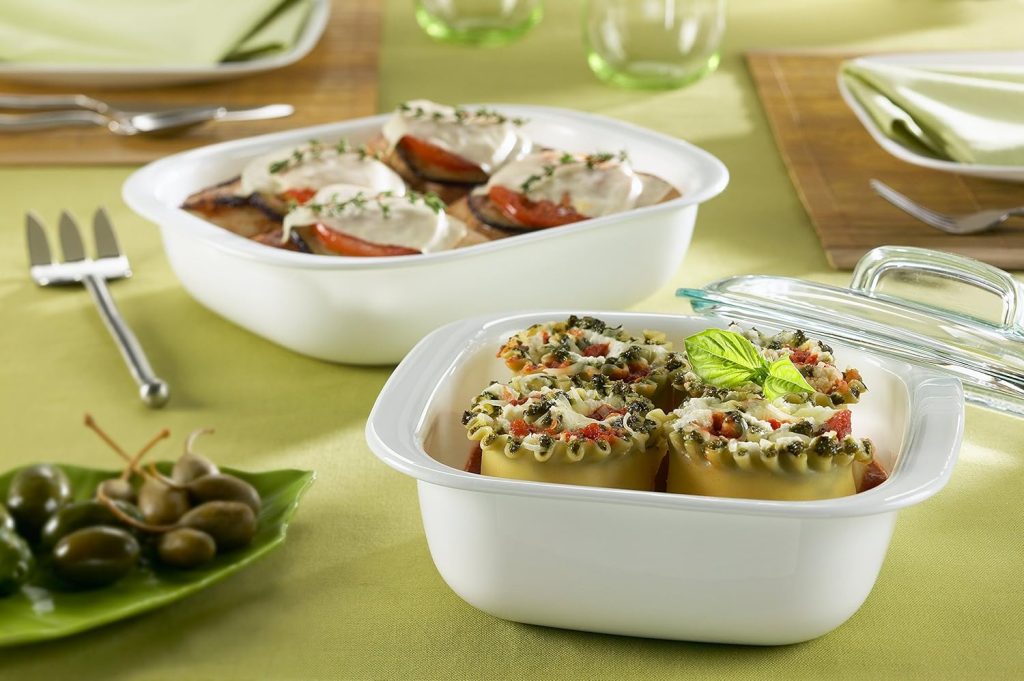
  • CorningWare Creations in Corelle Kitchen Glassware

    The story of CorningWare begins not in a kitchen, but in a laboratory.

    What started as cutting-edge glass ceramic technology developed by Corning Inc. in 1958 has evolved into one of America’s most beloved cookware collections, now thriving under the Corelle Brands umbrella alongside iconic names like Corelle dinnerware, Pyrex glassware, and Snapware storage solutions.

    When we talk about CorningWare creations within the broader Corelle kitchen glassware ecosystem, we’re exploring a remarkable intersection of material science, practical design, and culinary tradition that has shaped American cooking for over six decades.

    The Science Behind CorningWare’s Revolutionary Design

    At its core, CorningWare represents a breakthrough in glass ceramic technology that solved a fundamental kitchen problem: cookware that could seamlessly transition from freezer to stovetop to oven to table.

    The secret lies in Pyroceram, a glass ceramic material originally developed for missile nose cones that exhibits virtually zero thermal expansion.

    CorningWare Creations in Corelle Kitchen Glassware

    This unique material composition allows CorningWare to withstand temperature changes that would shatter ordinary glass or ceramic cookware.

    Unlike traditional ceramics that can crack under thermal stress, or metal cookware that conducts heat unevenly, CorningWare’s glass ceramic construction provides uniform heat distribution while maintaining structural integrity across extreme temperature variations.

    The manufacturing process involves controlled crystallization of glass, creating a material that combines the best properties of both glass and ceramic.

    This innovation positioned CorningWare as a pioneer in what we now recognize as multi-functional cookware design, influencing an entire generation of kitchen product development.

    CorningWare Collections: From Classic to Contemporary

    French White Collection: The Timeless Foundation

    The French White collection remains CorningWare’s flagship line, featuring the clean, elegant aesthetic that made the brand famous.

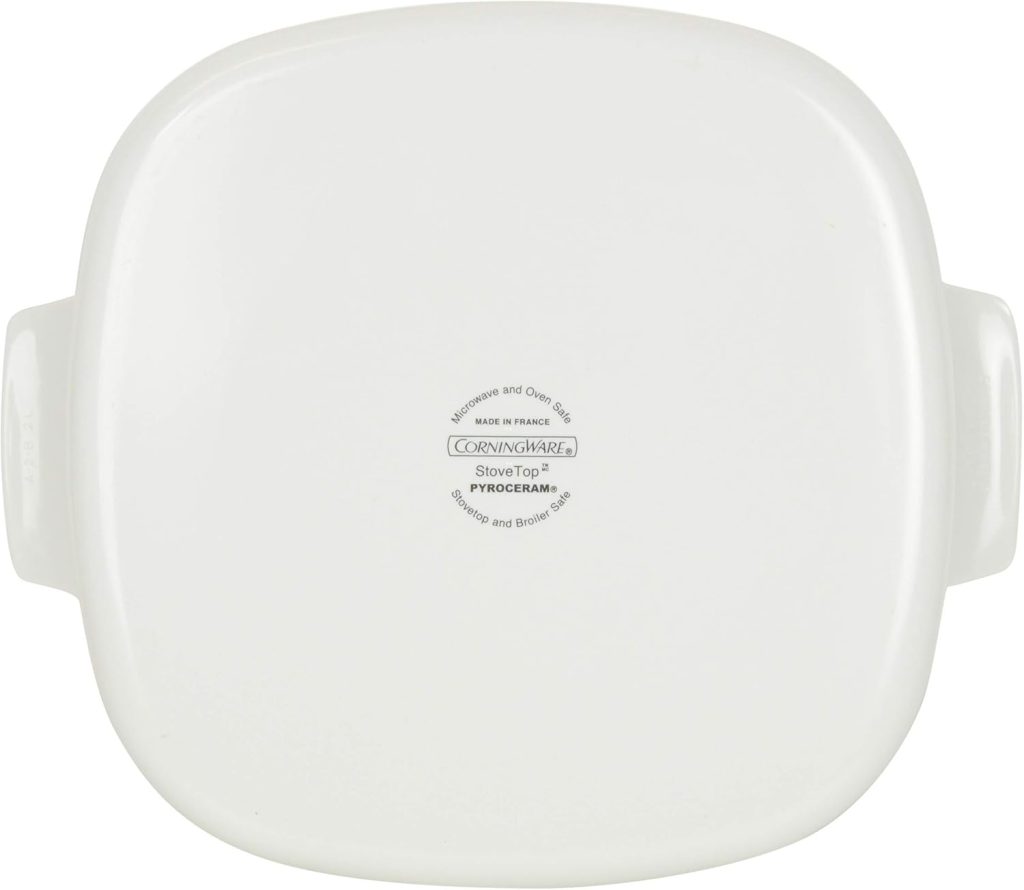
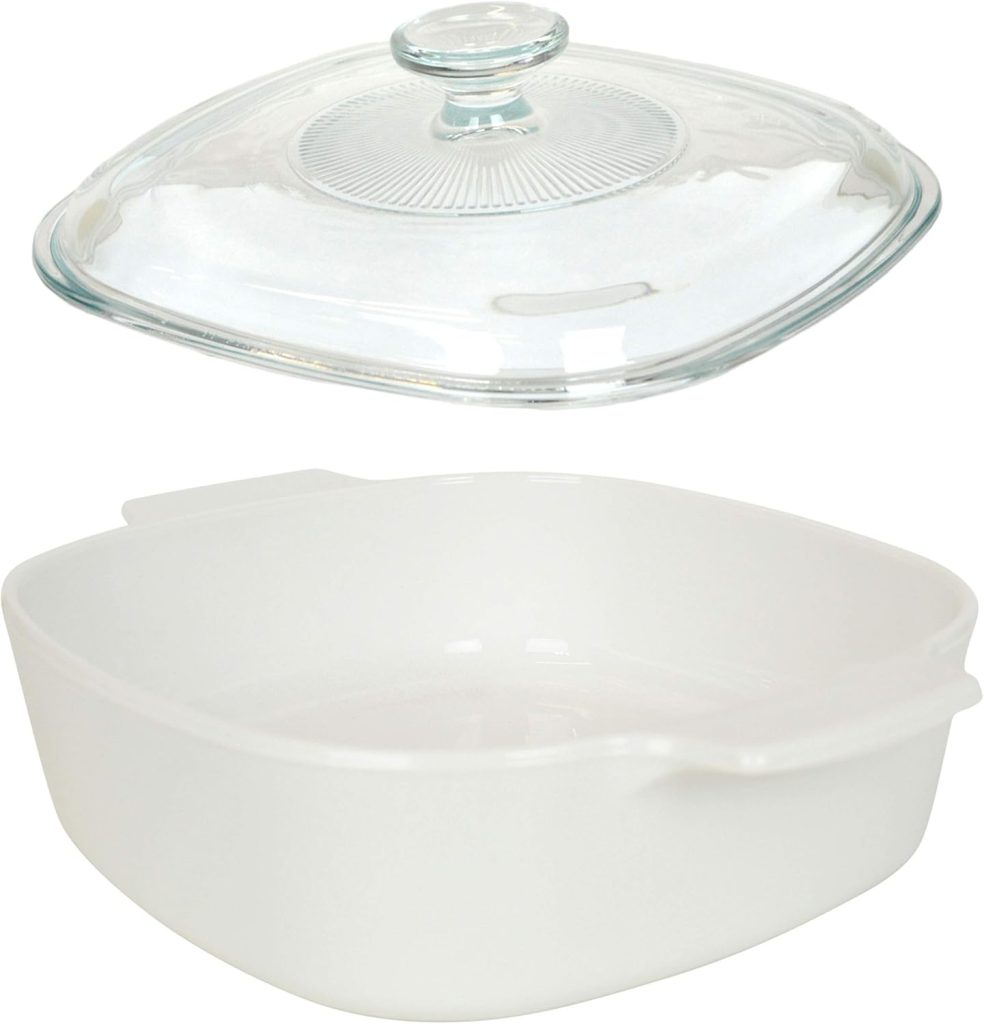
    Classic CorningWare White casserole dish

    These pieces showcase the versatility that defines CorningWare’s appeal, with casserole dishes, baking dishes, and roasting pans that transition effortlessly from kitchen to dining room.

    The French White 10-piece set typically includes essential sizes ranging from individual ramekins perfect for crème brûlée or single-serving casseroles, to large family-sized dishes ideal for holiday roasts or weeknight pasta bakes.

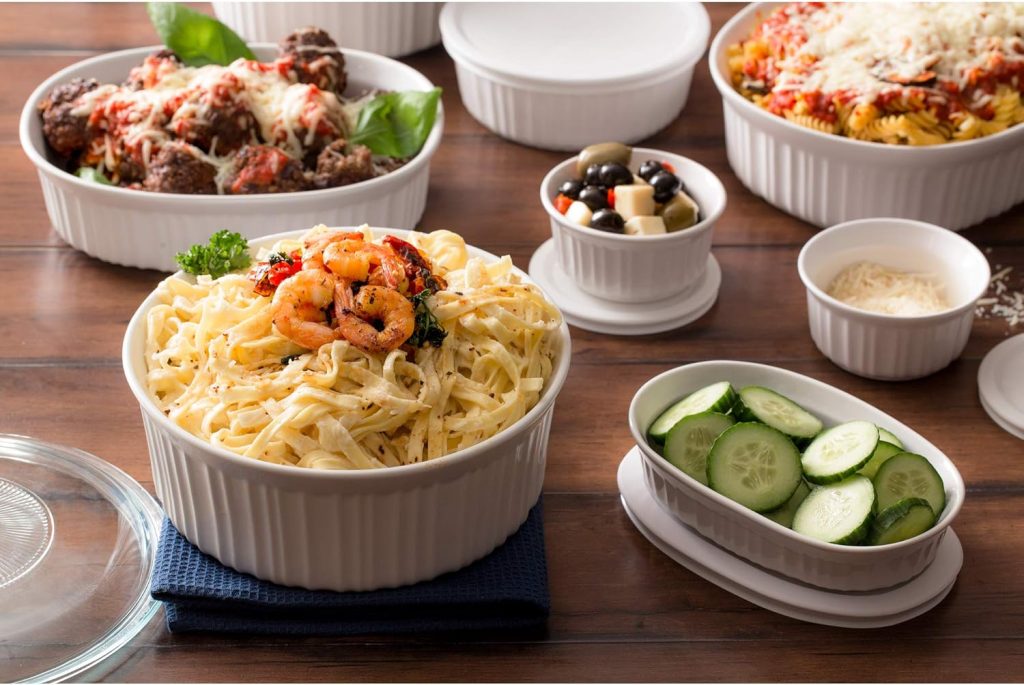
    Contemporary CorningWare French White ceramic Bakeware

    Each piece features the signature ribbed design that not only adds visual appeal but also increases surface area for improved heat distribution.

    SimplyLite Collection: Modern Performance Design

    Recognizing evolving consumer preferences for lighter cookware without compromising durability, the SimplyLite collection represents CorningWare’s adaptation to contemporary kitchen needs.

    These pieces retain the thermal shock resistance that defines the brand while offering easier handling for everyday cooking tasks.

    CorningWare SimplyLite Corelle Casserole dish

    The SimplyLite bakeware excels in applications requiring precise temperature control, from delicate custards to robust casseroles.

    The lighter weight makes these pieces particularly appealing for bakers who frequently move dishes in and out of ovens, while maintaining the even heating properties essential for consistent results.

    Vintage and Limited Edition Collections

    CorningWare’s vintage patterns, including the beloved Blue Cornflower, Spice of Life, and Wildflower designs, represent more than nostalgic appeal.

    These collections demonstrate the brand’s evolution while maintaining core performance characteristics that made CorningWare a household staple.

    Collectors and cooking enthusiasts often seek these vintage pieces not only for their aesthetic charm but also for their proven durability.

    Many families pass down CorningWare pieces through generations, testament to both the material’s longevity and the brand’s consistent quality standards.

    Mastering CorningWare Cooking Techniques

    Temperature Versatility and Safety Guidelines

    One of CorningWare’s most compelling advantages lies in its temperature range capabilities. These pieces can safely move from a -40°F freezer directly into a 500°F oven, opening up cooking techniques impossible with traditional cookware materials.

    For optimal results, understand that while CorningWare can handle extreme temperature changes, gradual transitions often yield better cooking outcomes.

    When preparing frozen-to-oven casseroles, the even heat distribution ensures consistent cooking throughout, eliminating hot spots that can overcook edges while leaving centers underdone.

    The thermal properties make CorningWare exceptional for slow-cooking applications.

    Braising meats, developing complex stews, or creating layered casseroles benefit from the steady, even heat that glass ceramic provides.

    Unlike metal pans that can create hot spots, CorningWare maintains consistent temperatures across the entire cooking surface.

    Stovetop and Oven Optimization

    While many CorningWare pieces excel in oven applications, certain collections also perform well on stovetops, particularly electric ranges.

    The key lies in understanding heat distribution and matching cookware to cooking methods.

    For stovetop use, start with lower temperatures and gradually increase heat as needed.

    This approach maximizes CorningWare’s heat retention properties while preventing thermal shock that could occur with rapid temperature changes.

    The material’s ability to maintain steady temperatures makes it ideal for simmering sauces, developing flavor bases, or keeping prepared foods warm.

    Care and Maintenance: Preserving your Cookware

    Cleaning Best Practices

    Maintaining CorningWare’s performance and appearance requires understanding both the material’s strengths and sensitivities. The non-porous surface resists staining and odor absorption, making cleanup generally straightforward with proper techniques.

    For everyday cleaning, warm soapy water and gentle scrubbing typically remove most food residues.

    Avoid abrasive cleaners or steel wool that could scratch the surface, potentially compromising both appearance and performance.

    When dealing with stubborn, baked-on residues, soaking in warm water with baking soda often proves more effective than harsh scrubbing.

    The dishwasher-safe nature of most CorningWare pieces adds convenience, but hand washing often preserves appearance longer, particularly for vintage or decorated pieces where patterns might fade over repeated dishwasher cycles.

    Storage and Organization Strategies

    Proper storage extends CorningWare’s lifespan while maintaining its charming appeal. Stack pieces carefully with protective padding between surfaces to prevent scratching.

    We have found out that storing lids separately prevents chips that can occur when lids shift during storage.

    Consider the nesting capabilities of different pieces when building your collection. Strategic selection of compatible sizes maximizes storage efficiency while ensuring you have appropriate vessels for various cooking tasks.

    Comparing CorningWare Within the Corelle Ecosystem

    Material Science Distinctions

    Understanding the relationship between CorningWare and other Corelle Brands products helps optimize their combined use in kitchen applications.

    While CorningWare uses Pyroceram glass ceramic, Corelle dinnerware employs Vitrelle glass technology, and Pyrex utilizes borosilicate glass construction.

    Each material serves specific functions optimally. CorningWare excels in cooking applications requiring temperature extremes and even heat distribution. To learn more check our guide on CorningWare and Corelle comparison.

    Corelle dinnerware provides chip-resistant serving solutions with space-efficient storage. Pyrex offers transparent cooking vessels ideal for monitoring food preparation progress.

    Complementary Kitchen Applications

    The true power of the Corelle Brands ecosystem emerges when these products work together. Prepare a casserole in CorningWare, transfer portions to Pyrex storage containers for refrigeration, then serve on Corelle dinnerware for a completely coordinated kitchen-to-table experience.

    This integration extends beyond mere brand coordination. The compatible design philosophies mean pieces often nest together efficiently, share similar care requirements, and maintain consistent aesthetic themes across your kitchen collection.

    Building Your CorningWare Collection Strategically

    Essential Starter Pieces

    For newcomers to CorningWare, building a functional collection begins with understanding your cooking patterns and family size.

    A strategic starter collection typically includes a medium casserole dish, a rectangular baking dish, and a set of individual ramekins.

    The 2.5-quart casserole dish serves as a workhorse for family-sized portions, handling everything from weeknight dinners to holiday side dishes.

    A 9×13 rectangular baking dish expands capabilities to sheet-style cooking, from lasagnas to roasted vegetables. Individual ramekins add versatility for portion control, dessert preparation, or elegant individual presentations.

    Advanced Collection Building

    As familiarity with CorningWare grows, expanding your collection should reflect your evolving cooking interests. Consider specialized pieces like Dutch ovens for braising, roasting pans for large gatherings, or sauce pans for stovetop applications.

    The investment approach should prioritize pieces that expand cooking capabilities rather than simply adding sizes. A large roasting pan opens up whole-bird preparation and batch cooking possibilities.

    Specialty baking dishes designed for specific foods like bread or pie can elevate your culinary results.

    Seasonal Cooking and Entertainment Applications

    Holiday and Special Occasion Versatility

    CorningWare’s elegant appearance and reliable performance make it exceptional for holiday cooking and entertainment. The ability to prepare dishes in advance, refrigerate or freeze them, then move directly to oven heating simplifies complex meal preparation.

    During holiday seasons, CorningWare’s capacity for make-ahead cooking becomes invaluable. Casseroles, gratins, and baked desserts can be assembled days in advance, then heated when needed without compromising quality or presentation.

    The attractive appearance means dishes can move directly from oven to buffet table without transfer to serving vessels.

    Everyday Meal Planning Integration

    Beyond special occasions, CorningWare excels in routine meal planning strategies. Batch cooking becomes more efficient when you can prepare large quantities, portion into CorningWare dishes of various sizes, and store them for future meals.

    The freezer-to-oven capability supports busy lifestyles by enabling advance meal preparation. Prepare casseroles, stews, or baked dishes during weekend cooking sessions, then reheat throughout the week for convenient, home-cooked meals without daily preparation time.

    Innovation and Future Developments

    Contemporary Design Evolution

    While maintaining core performance characteristics that define the brand, CorningWare continues evolving to meet changing consumer preferences.

    Recent collections reflect contemporary aesthetic trends while preserving the functional advantages that established the brand’s reputation.

    Modern collections often feature updated color palettes, streamlined designs, and enhanced ergonomic features that improve usability without compromising the thermal performance that defines CorningWare’s appeal.

    These developments ensure the brand remains relevant to new generations of cooks while satisfying longtime users.

    Sustainability and Environmental Considerations

    The durability that characterizes CorningWare aligns with growing consumer interest in sustainable kitchen products. Pieces that last decades reduce replacement frequency, supporting environmental goals while providing economic value.

    The ability to use CorningWare across multiple cooking methods also supports energy efficiency. The excellent heat retention means lower temperatures often achieve desired cooking results, while the versatility reduces the need for multiple specialized cookware pieces.

    Troubleshooting Common Challenges

    Addressing Performance Issues

    While CorningWare is remarkably durable, understanding potential issues helps maximize performance and longevity. Thermal shock, while rare, can occur if pieces experience extreme temperature changes too rapidly.

    If chipping occurs, typically around handles or rims, it rarely affects cooking performance but may impact appearance. Small chips can often be smoothed with fine sandpaper, while larger damage might require replacement for safety reasons.

    Maximizing Cooking Results

    Achieving optimal results with CorningWare often involves adapting traditional cooking techniques to leverage the material’s unique properties. Lower temperatures and longer cooking times frequently produce better results than high-heat methods suitable for metal cookware.

    Understanding heat retention helps predict cooking completion. CorningWare continues cooking foods even after removal from heat sources, so slightly under cooking initially often yields perfect final results after residual heat completes the process.

    The Legacy and Future of CorningWare in Modern Kitchens

    As we look toward the future of kitchen technology and cooking trends, CorningWare’s fundamental strengths—durability, versatility, and reliable performance—remain as relevant today as when the first pieces emerged from Corning laboratories over sixty years ago.

    The integration within the Corelle Brands family ensures continued innovation while preserving the core characteristics that made CorningWare a trusted kitchen companion across generations.

    Whether preparing everyday family meals or creating memorable dishes for special occasions, CorningWare creations continue to bridge the gap between functional cookware and elegant serving pieces.

    In an era of rapid technological change, sometimes the most revolutionary approach involves perfecting timeless principles. CorningWare represents exactly that philosophy: advanced materials science applied to fundamental cooking needs, creating tools that enhance rather than complicate the cooking experience.

    For today’s home cooks seeking reliable, versatile, and attractive cookware that performs consistently across diverse cooking applications, CorningWare within the Corelle kitchen glassware ecosystem offers a proven solution backed by decades of innovation and millions of satisfied users worldwide.

  • Granite Cookware vs Stainless Steel: The Ultimate Cookware Comparison Guide

    Choosing the right cookware can make or break your cooking experience. Whether you’re a seasoned chef or a kitchen novice, the comparison between granite cookware and stainless steel has likely crossed your path.

    With both materials promising superior cooking performance, the decision isn’t always straightforward.

    The confusion often stems from conflicting information about durability, safety, and cooking performance.

    Some swear by the non-stick convenience of granite cookware, while others champion the professional-grade reliability of stainless steel.

    The truth is, both have their place in our homes, but understanding their distinct characteristics is crucial for making an informed decision.

    This comprehensive comparison will dissect every aspect of granite versus stainless steel cookware.

    We’ll explore their construction, analyse cooking performance, examine health implications, and evaluate long-term value.

    By the end of this guide, you’ll have a clear understanding of which cookware aligns with your cooking style, budget, and kitchen goals.

    The Truth About “Granite” Cookware (It’s Not What You Think)

    Before diving deep, it’s important to clarify what granite cookware is. Despite its name, granite cookware isn’t made from solid granite rock.

    Instead, it features an aluminium or carbon steel base coated with a granite-inspired non-stick surface that mimics the appearance and some properties of natural stone.

    This distinction is crucial for understanding its performance characteristics compared to traditional stainless steel.

    Quick Comparison: Granite Cookware vs Stainless Steel

    Granite cookware vs Stainless steel

    FeatureGranite CookwareStainless Steel
    ConstructionAluminium base + granite coatingSteel alloy with chromium
    Heat DistributionGood (aluminium core)Varies (excellent with multi-ply)
    Non-stick PropertiesExcellent initiallyMinimal (requires technique)
    DurabilityModerate (coating dependent)Excellent (decades with care)
    MaintenanceEasy cleaningModerate (requires specific techniques)
    Health SafetyGenerally safe (coating dependent)Excellent (inert material)
    Price RangeLow to midMid to premium
    Professional UseLimitedExtensive
    Scratch ResistanceLow to moderateHigh
    Oven Safe TemperatureLimited (varies by coating)Very high (500°F+)

    Understanding the Materials

    What is Granite Cookware?

    Granite cookware represents a modern approach to non-stick cooking surfaces.

    The construction typically involves an aluminium or carbon steel base topped with multiple layers of coating designed to mimic granite’s appearance and properties.

    This coating typically consists of ceramic particles, minerals, and occasionally actual granite particles suspended in a polymer matrix.

    The manufacturing process involves applying several layers of the granite-inspired coating through spraying or dipping, followed by high-temperature curing.

    This creates a relatively non-stick surface with a speckled appearance resembling natural granite.

    The aluminium base provides excellent heat conductivity, while the coating aims to deliver easy food release and simplified clean up.

    However, not all granite cookware is created equal. Some manufacturers use higher-quality coatings with better durability, while others prioritise cost-effectiveness.

    The thickness and composition of both the base metal and coating significantly impact performance and longevity.

    Quality granite cookware should feel substantial and feature even coating distribution without visible defects.

    What is Stainless Steel Cookware?

    Stainless steel cookware is constructed from steel alloys containing chromium, which provides corrosion resistance and the characteristic lustrous finish.

    The most common grades used in cookware are 304 (18/10) and 316, with the numbers indicating the chromium and nickel content, respectively.

    The 18/10 designation means 18% chromium and 10% nickel, creating an ideal balance of durability and cooking performance.

    Construction varies significantly across stainless steel cookware. Single-ply (or single-layer) consists entirely of stainless steel, offering durability but sometimes uneven heating.

    Multi-ply construction sandwiches aluminium or copper cores between stainless steel layers, combining stainless steel’s durability with the superior heat conductivity of other metals.

    The manufacturing process involves forming the steel into cookware shapes, welding handles and components, and finishing surfaces to achieve the desired appearance and functionality.

    Quality stainless steel cookware features even thickness, well-constructed handles, and smooth interior surfaces that facilitate cooking and cleaning.

    Head-to-Head Performance Comparison

    Heat Performance Analysis

    Heat distribution represents one of the most critical performance factors in cookware selection.

    Granite cookware typically excels in this area due to its aluminium base, which conducts heat approximately four times better than stainless steel.

    This superior conductivity translates to more even heating across the cooking surface and faster response to temperature adjustments.

    The aluminium core in granite cookware heats quickly and distributes that heat uniformly, reducing hot spots that can cause uneven cooking or burning.

    This makes it particularly suitable for delicate cooking techniques requiring precise temperature control, such as making sauces or cooking eggs.

    Stainless steel’s heat performance varies dramatically based on construction. Single-ply stainless steel performs poorly in heat distribution, often creating hot spots directly over burner flames or heating elements.

    However, multi-ply construction with aluminium or copper cores can match or exceed granite cookware’s heat distribution while maintaining stainless steel’s other advantages.

    Heat retention differs between the materials as well. Stainless steel, particularly thicker constructions, retains heat longer than granite cookware.

    This characteristic proves beneficial for searing meats or maintaining cooking temperatures when transferring from the stovetop to the table.

    Granite cookware cools more quickly, offering better control for temperature-sensitive preparations.

    Cooking Performance Evaluation

    The non-stick properties of granite cookware provide its most significant cooking advantage.

    Food releases easily with minimal oil or butter, making it ideal for cooking delicate items like fish, eggs, or pancakes.

    This characteristic also facilitates healthier cooking by reducing the required fats and oils.

    However, granite cookware’s non-stick surface limits browning capabilities compared to stainless steel.

    The Maillard reaction, responsible for developing complex flavours and appealing colours in browned foods, occurs less effectively on non-stick surfaces.

    This makes granite cookware less suitable for techniques requiring deep browning or fond development.

    Stainless steel excels in browning and searing applications. Its reactive surface readily browns proteins and develops fond (the browned bits that enhance sauce flavours).

    Professional chefs often prefer stainless steel for its ability to achieve proper browning and its compatibility with all cooking techniques, from delicate sauce-making to high-heat searing.

    Versatility favours stainless steel, which handles acidic ingredients without concern for surface damage.

    Granite cookware may be sensitive to highly acidic foods, depending on coating composition.

    Additionally, stainless steel’s higher temperature tolerance makes it suitable for oven finishing and broiling applications that might damage granite coatings.

    Health and Safety Considerations

    Safety concerns often drive cookware selection, particularly regarding potential chemical exposure during cooking.

    Modern granite cookware is generally considered safe when manufactured by reputable companies following safety standards.

    However, the coating’s composition varies between manufacturers, and some may contain materials of concern.

    The primary safety advantage of granite cookware lies in its PFOA and PTFE-free formulation (in most quality brands).

    These chemicals, found in traditional non-stick coatings, have raised health concerns. Quality granite coatings typically use ceramic-based formulations that remain stable at normal cooking temperatures.

    Stainless steel offers excellent safety credentials as an essentially inert material. It doesn’t react with foods, release chemicals, or degrade under normal cooking conditions.

    The only potential concern involves nickel sensitivity in individuals with severe nickel allergies, though the nickel in quality stainless steel remains bound within the alloy under normal use.

    Both materials are generally safe when used properly. However, stainless steel’s proven long-term safety record and extensive use in commercial food service provide additional confidence for health-conscious consumers.

    To learn more about safety considerations, see our detailed guide on granite cookware materials and manufacturing processes.

    Durability and Longevity Assessment

    Durability represents a crucial factor in cookware value, and here stainless steel demonstrates clear advantages.

    Quality stainless steel cookware can last decades with proper care, often becoming family heirlooms passed between generations.

    Its scratch resistance, chemical stability, and structural integrity remain largely unchanged throughout its lifespan.

    Granite cookware’s durability depends heavily on coating quality and care.

    The non-stick coating will eventually wear away with use, particularly if subjected to high heat, abrasive cleaning, or metal utensils.

    Quality granite cookware may provide 3-5 years of optimal performance before coating degradation becomes noticeable.

    Scratch resistance favours stainless steel significantly. While it can show scratches with heavy use, these typically don’t affect performance and may even improve non-stick properties over time as the surface develops a patina.

    Granite coatings are more susceptible to scratching, which can compromise both appearance and non-stick performance.

    The warping resistance of both materials depends on construction quality and base thickness.

    Stainless steel’s structural integrity generally provides better long-term shape retention, while thinner granite cookware may warp under thermal stress or impacts.

    Top Product Recommendations

    Outstanding Granite Cookware Choice

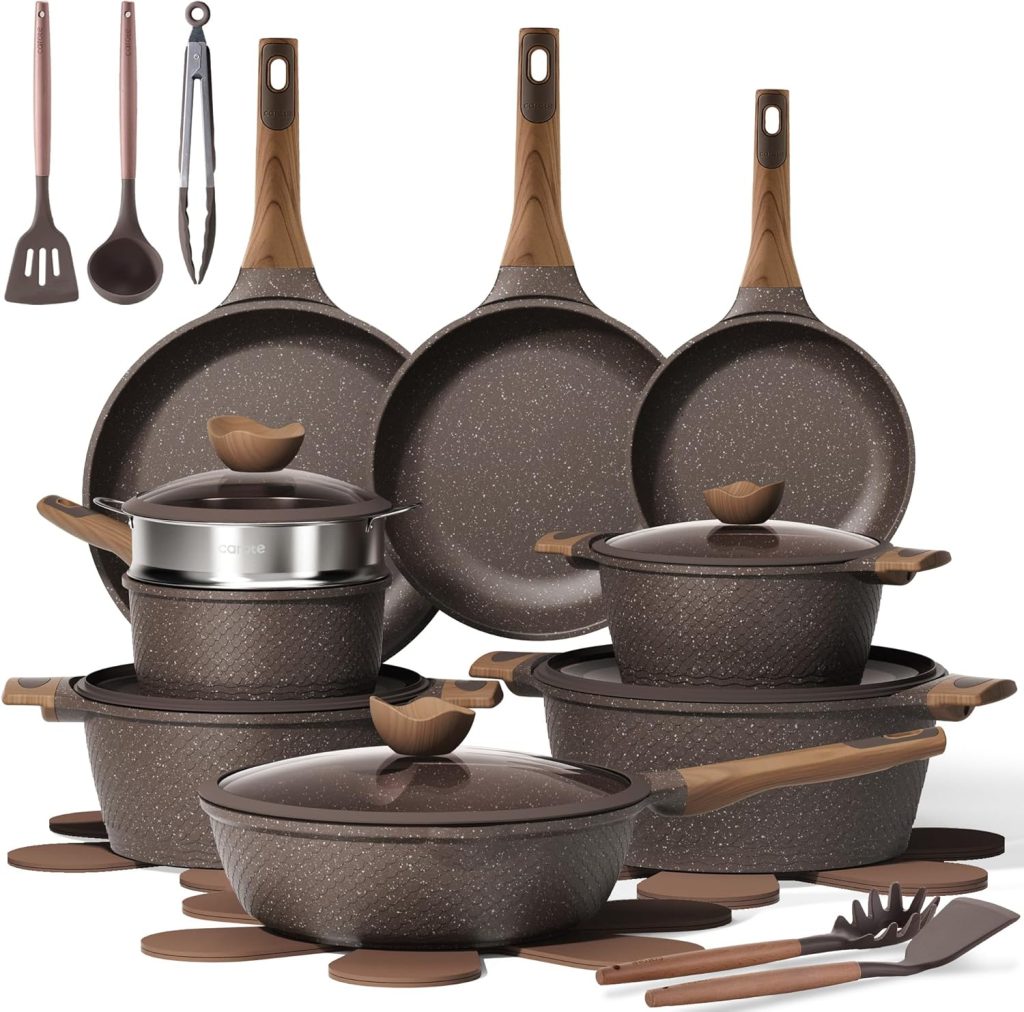
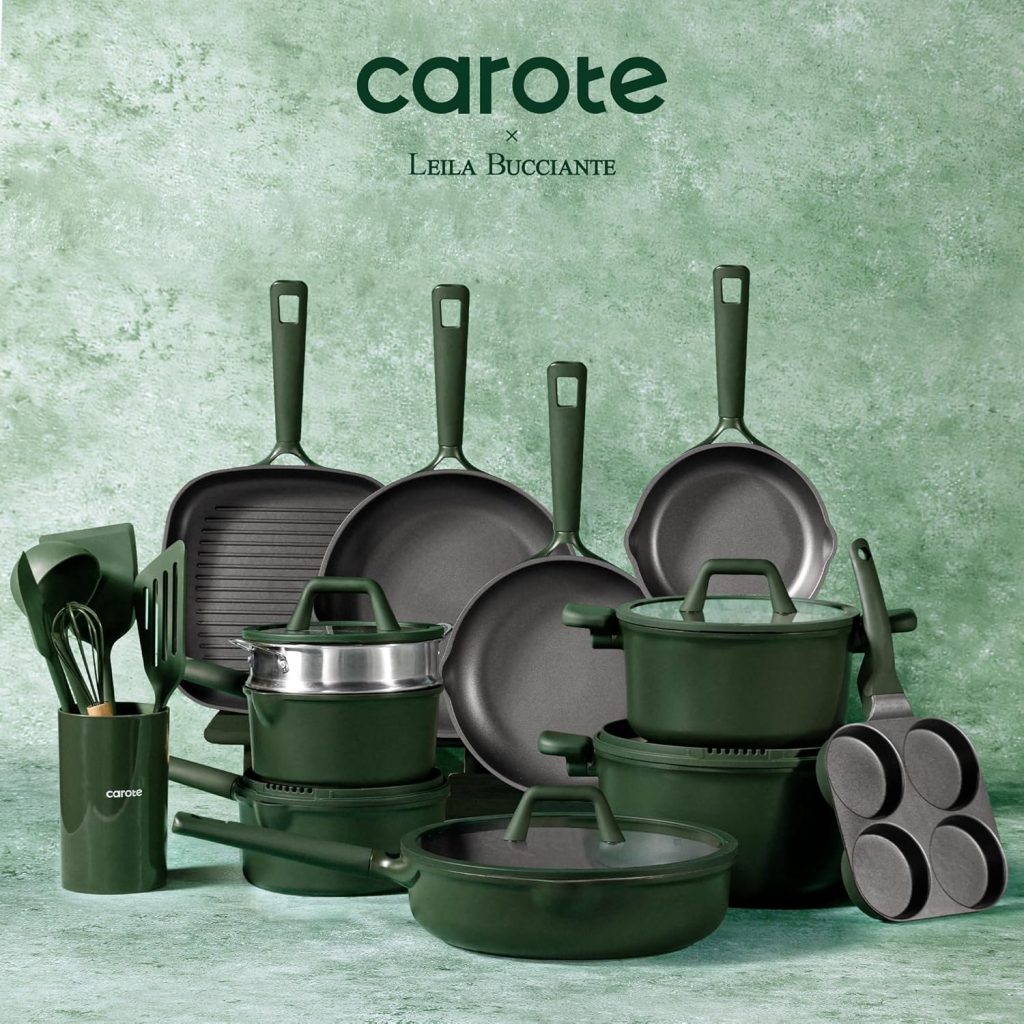
    The CAROTE 26PCS Pots and Pans Set represents excellent value in granite cookware.

    This collection features a reinforced die-cast aluminium construction that ensures long-term durability and reliability.

    outstanding Carote non stick healthy Granite Pots and Pans

    Heats up quickly and evenly with an extended bottom design on all cooktops, including induction.

    It is designed with a top-level, harder non-stick granite material with 10x Ultra Non-stick performance, which ensures your daily cooking is always safer and healthier.

    This set includes essential pieces sized for most cooking needs, from individual servings to family meals.

    The attractive colour options complement various kitchen aesthetics while providing reliable performance for daily cooking tasks.

    Premier Stainless Steel Selection

    The All-Clad D3 Tri-Ply Stainless Steel set stands as a professional-grade choice for serious home cooks.

    This construction features an aluminium core bonded between stainless steel layers, combining superior heat conductivity with stainless steel’s durability and versatility.

    All Clad D3 - 3ply Stainless Steel cookware set

    The even heating and precise temperature control rival commercial cookware’s performance.

    Each piece in this collection demonstrates exceptional construction quality, from perfectly balanced handles to seamless interior surfaces.

    The tri-ply construction extends through the sides and bottom, ensuring even heating across the entire cooking surface. This set represents a lifetime investment for cooks prioritising performance and longevity.

    Budget-Friendly Option

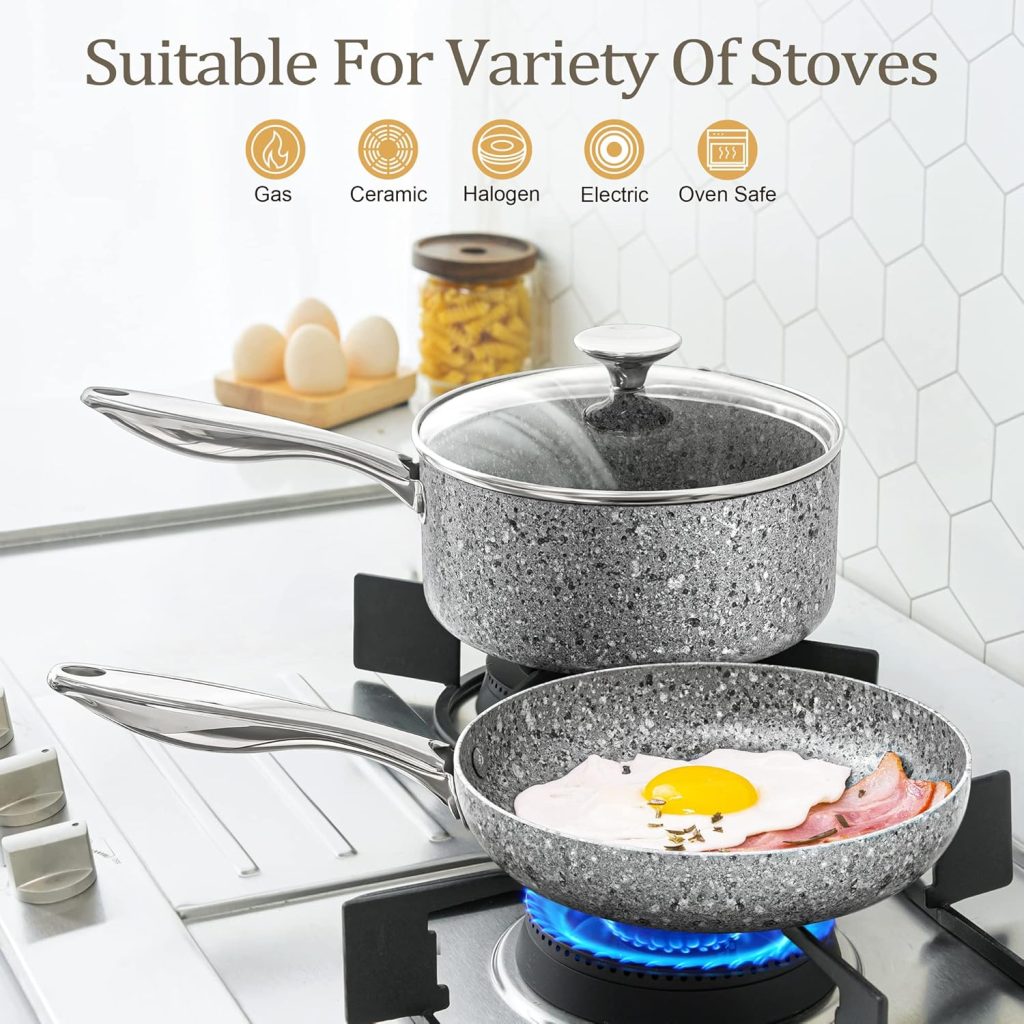
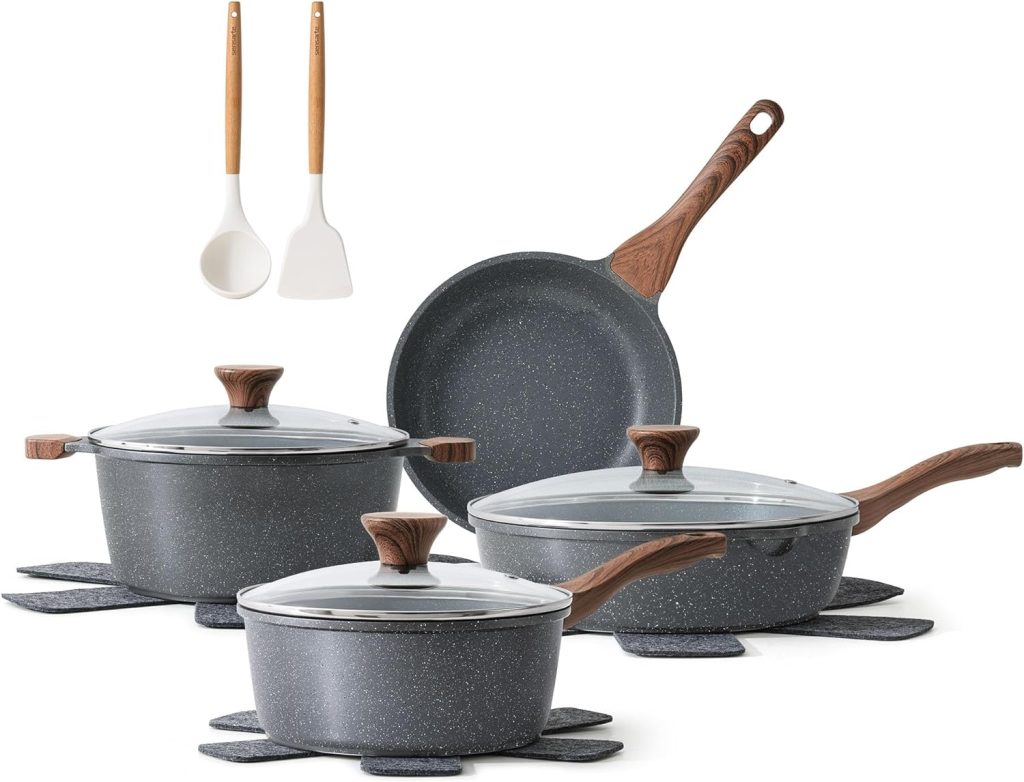
    The SENSARTE Non-stick granite cookware set offers excellent entry-level performance for budget-conscious cooks.

    The non-stick coating is free of intentionally added PFOA, PFOS, APEO, lead, and cadmium.

    Budget friendly Sensarte non stick granite cookware

    Sturdy & Induction Compatible – Cast Aluminium Cookware, sturdy and not easy to warp. Highly magnetic, conductive stainless-steel base allows the frying pans to work on all cooktops, including induction.

    The cast aluminium construction makes the pans heat up quickly and evenly. Temp. up to 450 °F.

    These budget-friendly granite frying pans are easy to clean. All you need to do is add a drizzle of oil, and the food slides smoothly. Wipe with a towel or rinse with water, and the skillets get clean.

    For beginning cooks or those seeking quality non-stick performance without premium pricing, this set delivers solid value.

    Premium Choice

    The Hestan NanoBond Stainless Steel collection represents the pinnacle of stainless steel cookware engineering.

    This Italian-made cookware features molecular titanium bonding technology that creates an incredibly durable, non-reactive cooking surface.

    Hestan Nanobond Stainless steel Dutch oven cookware

    The tri-ply construction with aluminium core provides professional-grade heat distribution and retention.

    Each piece showcases meticulous attention to detail, from the proprietary ProCore aluminium base to the ergonomically designed handles.

    The NanoBond technology creates a cooking surface that’s easier to clean than traditional stainless steel while maintaining all the browning and versatility advantages.

    This represents the ultimate investment for discerning cooks seeking the absolute best in stainless steel performance.

    Maintenance and Care Requirements

    Granite Cookware Maintenance

    Granite cookware maintenance is remarkably straightforward, which contributes to its popularity among busy home cooks.

    Daily Cleaning:

    • Use warm, soapy water and a soft sponge or cloth
    • Non-stick surface releases food easily
    • No soaking or aggressive scrubbing needed.

    Deep Cleaning:

    • Make a paste of baking soda and water for stubborn residues
    • This method won’t damage the surface.

    What to Avoid:

    • Abrasive cleaners
    • Steel wool
    • Harsh chemicals
    • Temperature extremes (don’t transfer hot cookware to cold surfaces or vice versa).

    Maintenance:

    • Some manufacturers recommend periodic seasoning with small amounts of cooking oil
    • This maintains optimal non-stick properties.

    Dishwashing:

    • Most granite cookware is dishwasher safe
    • Hand washing extends coating life.

    Storage:

    • Store pieces carefully to prevent scratching
    • Use pan protectors or nest carefully to avoid surface contact.

    General Care Practices:

    • Use wooden, silicone, or plastic utensils to prevent scratching
    • Maintain moderate cooking temperatures to preserve coating integrity
    • The coating’s longevity depends largely on care practices
    • Proper care significantly extends the useful life of granite cookware’s non-stick properties.

    Stainless Steel Maintenance

    Daily Cleaning:

    • Use hot, soapy water
    • Dry thoroughly to prevent water spots
    • For stuck-on foods: soak first, then gently scrub with non-abrasive cleaners.

    Common Issues:

    • Discolouration and staining are common, but don’t affect performance
    • Heat stains appear as rainbow-colored patches
    • Protein stains create white, chalky residues.

    Stain Removal:

    • Use specialised stainless steel cleaners
    • Home remedies: vinegar and baking soda work well
    • For stubborn stains: Barkeeper’s Friend or similar oxalic acid-based cleaners
    • These cleaners effectively restore the original finish
    • Safe for stainless steel when used as directed.

    Alternative Perspective:

    • Some home cooks prefer the patina that develops over time
    • View it as character rather than damage.

    Dishwashing:

    • Dishwasher safety varies by manufacturer
    • Most quality stainless steel cookware handles dishwasher cleaning without issue
    • Hand washing provides better control over cleaning
    • Hand washing helps maintain the surface finish.

    Drying:

    • Proper drying prevents water spots
    • Water spots can dull the surface’s appearance.

    General Notes:

    • Requires more technique than other materials
    • Offers greater flexibility in cleaning methods.

    Cost Analysis and Value Proposition

    Understanding the financial investment required for each cookware type involves examining both initial costs and long-term value.

    Granite cookware typically falls into the low to mid price range, making it accessible for budget-conscious consumers seeking non-stick convenience.

    Entry-level sets are available in the low price category, while premium granite cookware with advanced coatings reaches mid-range pricing.

    Stainless steel cookware spans a broader price spectrum, from mid-range to premium categories.

    Quality entry-level stainless steel costs more than basic granite cookware but offers superior longevity.

    Premium stainless steel, particularly tri-ply and multi-ply constructions, commands premium prices but provides professional-grade performance and decades of service.

    Long-term value calculations favour stainless steel significantly. While the initial investment may be higher, the cost per year of use often proves lower due to extended lifespan.

    Granite cookware requires eventual replacement as coatings wear, making it a recurring expense for committed home cooks.

    Energy efficiency considerations also impact long-term costs. Granite cookware’s superior heat conductivity can reduce cooking times and energy consumption, providing modest savings over time.

    However, these savings rarely offset the replacement costs associated with coating deterioration.

    For budget-conscious consumers, the calculation depends on cooking frequency and technique preferences.

    Heavy users benefit from stainless steel’s durability, while occasional cooks may prefer granite cookware’s convenience and lower initial investment. The key is matching cookware choice to actual usage patterns rather than aspirational cooking goals.

    Best Use Cases and Recommendations

    When to Choose Granite Cookware

    Granite cookware excels in specific cooking scenarios and kitchen environments.

    Its non-stick properties make it ideal for cooking delicate foods that typically stick to traditional surfaces.

    Eggs, pancakes, crepes, and delicate fish preparations benefit significantly from granite cookware’s easy-release properties.

    Do you prioritise convenience and easy clean up? If yes, you will find granite cookware appealing.

    The minimal oil requirement supports healthier cooking goals, while simplified cleaning reduces kitchen time investment.

    This makes it especially suitable for busy families or individuals with limited time for elaborate food preparation and clean up.

    If you are a beginning cook, you will benefit from granite cookware’s forgiving nature. The non-stick surface reduces the likelihood of burning foods and makes temperature control less critical.

    This allows you, as a novice cook, to build confidence without dealing with the technique requirements of traditional surfaces.

    For cooking styles emphasising quick, straightforward preparations over complex browning techniques, granite cookware provides excellent value.

    Stir-frying, sautéing vegetables, and preparing simple proteins work well with granite surfaces. However, those seeking to develop advanced cooking techniques may find its limitations restrictive.

    When to Choose Stainless Steel

    Stainless steel cookware suits cooks prioritising versatility, durability, and professional-grade performance.

    Its ability to achieve proper browning makes it essential for techniques requiring Maillard reactions, such as searing meats, developing fond for pan sauces, or creating complex flavour layers.

    Professional cooking applications heavily favour stainless steel due to its reliability, temperature tolerance, and easy maintenance in commercial environments.

    Home cooks serious about culinary technique often prefer stainless steel for its ability to handle any cooking method or ingredient without limitation.

    Long-term investment considerations make stainless steel attractive for cooks planning to use their cookware extensively over many years.

    The higher initial cost becomes justified through extended service life and consistent performance. For families establishing kitchen foundations, stainless steel provides a lifetime solution.

    Cooks frequently preparing acidic foods benefit from stainless steel’s non-reactive properties. Tomato-based sauces, wine reductions, and citrus preparations pose no concerns for stainless steel, while they might affect granite coatings over time.

    This versatility proves particularly valuable for diverse cooking styles.

    For those interested in comparing granite cookware options before making a decision, researching various models helps identify the best granite cookware for specific needs and budgets.

    Additionally, to gain deeper insights into granite cookware characteristics and potential limitations, examining comparisons with other materials provides a valuable perspective.

    To learn about the pros and cons of granite cookware, read our guide on cast iron vs granite cookware, which offers a detailed analysis of performance trade-offs.

    Hybrid Kitchen Approach

    Many experienced home cooks adopt a hybrid approach, incorporating both granite and stainless steel cookware to maximise cooking versatility while managing costs.

    This strategy leverages each material’s strengths while minimising weaknesses through strategic selection.

    A typical hybrid setup might include granite cookware for daily egg cooking, delicate proteins, and quick sautéing, while reserving stainless steel for browning, sauce-making, and oven applications.

    This approach provides convenience for routine cooking while maintaining the capability for advanced techniques.

    Budget-conscious hybrid approaches prioritise essential pieces in each material. A quality granite skillet for eggs and delicate items, combined with a stainless steel sauté pan for browning and sauce work, covers most cooking needs without requiring complete sets in both materials.

    The hybrid approach also allows gradual cookware development.

    You can start with the basics in one material and add pieces in the other as cooking skills and needs evolve. This prevents over-investment in unused pieces while maintaining flexibility for culinary growth.

    Frequently Asked Questions

    Which lasts longer – granite or stainless steel?

    Stainless steel cookware typically lasts decades with proper care, while granite cookware generally provides 3-5 years of optimal performance before the coating shows significant wear.

    The longevity difference makes stainless steel a better long-term investment for frequent cooks.

    Is stainless steel cookware completely non-reactive?

    Yes, quality stainless steel is essentially non-reactive and won’t interact with acidic or alkaline foods.

    This makes it safe for all types of cooking, including tomato-based sauces, wine reductions, and citrus preparations that might affect other materials.

    Which is easier to clean and maintain?

    Granite cookware is generally easier for daily cleaning due to its non-stick properties.

    However, stainless steel offers more flexibility in cleaning methods and can handle more aggressive cleaning when necessary.

    Both require specific care techniques for optimal longevity.

    Making Your Decision

    The choice between granite cookware and stainless steel ultimately depends on your cooking style, experience level, and long-term kitchen goals.

    Granite cookware excels in convenience, ease of use, and non-stick performance, making it an ideal choice for busy households and novice cooks.

    Its lower initial cost and simplified cleaning appeal to many home cooks seeking efficient kitchen solutions.

    Stainless steel cookware offers superior durability, versatility, and professional-grade performance.

    While requiring more technique and a higher initial investment, it provides decades of reliable service and handles any cooking method or ingredient.

    For serious cooks and those viewing cookware as a long-term investment, stainless steel delivers exceptional value.

    Consider your cooking frequency, technique interests, and budget when making this decision.

    Heavy users benefit from stainless steel’s longevity, while occasional cooks may prefer granite cookware’s convenience.

    Many successful kitchens incorporate both materials, leveraging each one’s strengths for specific cooking tasks.

    Whatever you choose, investing in quality cookware from reputable manufacturers ensures better performance and longer service life.

    Your cookware decision should support your culinary journey, whether that involves mastering professional techniques or simply preparing nutritious, delicious meals efficiently for your family.

  • Cast Iron vs Granite Pan: The Ultimate Cookware Comparison Guide

    Choosing the right cookware can make or break your culinary experience.

    Whether you’re a weekend warrior in the kitchen or a serious home chef, the debate between cast iron and granite pans represents one of the most significant decisions you’ll face when upgrading your cooking arsenal.

    Cast iron brings centuries of proven performance and time-tested durability, while granite cookware offers modern convenience with promises of healthier, non-stick cooking.

    But which one deserves a place in your home and kitchen?

    This comprehensive comparison will examine every aspect, from cooking performance and maintenance requirements to long-term value and health considerations, helping you make an informed decision that aligns with your cooking style, budget, and lifestyle.

    Quick Comparison Overview – Cast Iron vs Granite Pan

    cast iron vs granite pan

    FeatureCast IronGranite Pan
    WeightHeavy (3- 8lbs)Light (1-3 lbs)
    Heat RetentionExcellentGood
    MaintenanceHigh (seasoning required)Low
    DishwasherDevelops over time, while some are designed with non-stickYes
    DurabilityLifetime with care2-5 years typical
    Best forSearing, baking, high-heatDaily cooking, delicate foods
    Non-stickDevelops over time, while some are designed with non-stickAluminum, Stainless steel, Carbon, or other cookware material bases suitable for various stovetops
    Oven safeUp to 500°F+Up to 400°F typically
    PriceLow-MidLow-Mid
    Learning CurveSteepGentle
    DesignCast iron baseAluminum, Stainless steel, Carbon, or other cookware material bases suitable for various stovetops.

    Cast Iron Deep Dive

    What is Cast Iron Cookware?

    Cast iron cookware is manufactured by pouring molten iron into sand molds, creating dense, heavy pans that have been kitchen staples for over 2,000 years.

    The manufacturing process results in a naturally porous surface that, when properly seasoned with oil and heat, develops a natural non-stick coating through polymerization.

    There are three main types of cast iron cookware: raw (unseasoned) cast iron that requires initial seasoning, pre-seasoned varieties that come ready to use, and enameled cast iron that features a glass coating for easier maintenance.

    Key Advantages of Cast Iron Cookware

    Superior Heat Retention and Distribution: Cast iron’s density allows it to absorb, retain, and distribute heat more effectively than almost any other cookware material.

    Once heated, it maintains consistent temperatures, making it ideal for techniques requiring steady heat.

    Unmatched Versatility: From stovetop to oven, grill to campfire, cast iron adapts to virtually any cooking method.

    You can sear a steak on the stovetop, then transfer the same pan to a 500°F oven without concern.

    Generational Durability: Properly maintained cast iron can last decades or even centuries.

    Enameled cast iron Dutch oven

    Many families pass down cast iron pieces through generations, with some antique skillets still outperforming modern cookware.

    Natural Non-stick Development: Unlike synthetic coatings, cast iron’s seasoning improves with use.

    Each cooking session adds to the polymerized oil layer, creating an increasingly effective non-stick surface.

    Nutritional Benefits: Cooking in cast iron can add small amounts of dietary iron to your food, which can be beneficial for those with iron deficiencies.

    Exceptional Searing Power: The ability to reach and maintain high temperatures makes cast iron unrivaled for achieving perfect sears on meats and developing complex flavours through the Maillard reaction.

    Drawbacks & Considerations

    Weight Challenges: Cast iron’s heft can be problematic for those with arthritis, wrist issues, or limited upper body strength. A 12-inch skillet can weigh 5-8 pounds before adding food.

    Maintenance Intensity: Proper cast iron care requires understanding seasoning techniques, avoiding soap (traditionally), and preventing rust through proper drying and storage.

    Reactivity Issues: Unseasoned or poorly seasoned cast iron can react with acidic foods like tomatoes or wine, imparting metallic flavors and potentially damaging the seasoning layer.

    Learning Curve: Achieving optimal results requires understanding preheating times, temperature control, and seasoning maintenance – skills that develop over time.

    Initial Investment: Quality cast iron pieces, particularly from premium manufacturers, can represent a significant upfront cost, though the per-year value often proves economical.

    Granite Pan Deep Dive

    What is Granite Pans/Cookware?

    Granite cookware features an aluminum or carbon steel base coated with a layer that incorporates granite stone particles.

    This coating technology creates a textured, naturally non-stick surface that mimics the appearance of granite stone.

    Granite non stick cookware pots and pans

    The aluminum core provides excellent heat conduction, while the granite coating offers durability and non-toxic cooking properties.

    Modern granite cookware manufacturing uses advanced coating processes that bind stone particles with ceramic or other non-toxic materials, creating surfaces that are free from PTFE, PFOA, and other potentially harmful chemicals found in traditional non-stick coatings.

    Key Advantages of Granite Cookware

    Lightweight Design: Granite pans typically weigh 50-70% less than equivalent cast iron pieces, making them accessible for cooks with physical limitations or those who prefer easier handling.

    Immediate Non-stick Performance: Unlike cast iron’s gradual seasoning development, granite pans provide excellent non-stick properties from the first use, requiring minimal oil for most cooking tasks.

    Low Maintenance Requirements: Most granite cookware is dishwasher safe and requires no special seasoning or conditioning. Simple washing with soap and water maintains the surface.

    Chemical-Free Cooking: Quality granite coatings contain no PTFE, PFOA, cadmium, or lead, addressing health concerns associated with traditional non-stick cookware.

    Rapid Heat Distribution: The aluminum base conducts heat quickly and evenly, reducing hot spots and providing responsive temperature control for precise cooking.

    Versatile Compatibility: Most granite pans work on gas, electric, and induction cooktops, with many being oven-safe up to 400°F.

    Cons/Drawbacks & Considerations of Granite Cookware

    Coating Longevity Concerns: Even high-quality granite coatings typically last 2-5 years with regular use, requiring eventual replacement as the non-stick properties diminish.

    Limited High-Heat Capability: While suitable for most cooking methods, granite pans generally can’t withstand the extreme temperatures that cast iron handles effortlessly.

    Quality Variation: The granite cookware market includes many low-quality options with poor coating adhesion and short lifespans, making brand selection crucial.

    Susceptibility to Damage: Sharp utensils, abrasive cleaning, and extreme temperature changes can chip or damage the granite coating, compromising performance.

    Heat Retention Limitations: While granite pans heat quickly, they don’t retain heat as effectively as cast iron, requiring continuous energy input for extended cooking sessions.

    Head-to-Head Comparison

    Cooking Performance

    Heat Distribution and Retention: Cast iron excels in heat retention, maintaining consistent temperatures even when food is added.

    This thermal mass makes it superior for techniques requiring steady heat, such as braising or baking.

    Granite pans distribute heat more quickly and evenly initially, but require continuous heat input to maintain temperature.

    Searing Capabilities: Cast iron’s ability to reach and sustain high temperatures makes it unmatched for achieving restaurant-quality sears.

    The thermal mass prevents temperature drops when proteins are added. Granite cookware can sear adequately but may struggle with multiple pieces or thicker cuts that release moisture.

    Non-stick Performance: Well-seasoned cast iron develops exceptional non-stick properties that improve over time, particularly for proteins and baked goods.

    Granite pans provide consistent non-stick performance from day one, but may gradually decline with use and wear.

    Temperature Range and Versatility: Cast iron handles extreme temperatures from stovetop to oven to grill without limitations.

    Granite pans/cookware typically have temperature restrictions (usually 400°F maximum) and may not be suitable for broiling or outdoor cooking.

    Durability & Longevity

    Expected Lifespan: Quality cast iron can last indefinitely with proper care, often becoming family heirlooms.

    Granite cookware typically provides 2-5 years of optimal performance, depending on usage frequency and care quality.

    Resistance to Wear: Cast iron improves with use, developing better non-stick properties over time.

    Granite coatings gradually wear away, particularly in high-use areas, eventually requiring pan replacement.

    Repairability: Damaged cast iron can often be restored through re-seasoning or professional reconditioning.

    Granite pan/cookware coatings, once compromised, cannot be effectively repaired and require replacement.

    Maintenance Requirements

    Daily Cleaning: Cast iron traditionally requires avoiding soap and thorough drying to prevent rust, though modern seasoning techniques allow for gentle soap use.

    Granite pans clean easily with standard dish soap and are often dishwasher safe.

    Long-term Care: Cast iron benefits from periodic re-seasoning and careful storage to prevent rust.

    Granite pans/cookware require avoiding abrasive cleaners and metal utensils to preserve the coating.

    Storage Considerations: Cast iron should be stored in dry conditions, sometimes with a light oil coating to prevent rust.

    Granite pans can be stacked with protective padding and stored normally.

    Health & Safety Considerations

    Chemical Leaching: Properly seasoned cast iron is completely non-toxic and may provide beneficial dietary iron.

    Quality granite coatings are free from harmful chemicals, though cheaper versions may contain questionable materials.

    Food Reactivity: Cast iron can react with highly acidic foods if not well-seasoned. Granite surfaces are generally non-reactive across all food types.

    Safety Certifications: Reputable granite cookware manufacturers provide safety certifications confirming the absence of harmful chemicals.

    Cast iron’s safety is well-established through centuries of use.

    Cost Analysis

    Initial Investment: Cast iron pieces range from $25-$150*, with premium brands commanding higher prices. Granite pans typically cost $30-$120*, with quality varying significantly across price points.

    Long-term Value: Cast iron’s indefinite lifespan makes it exceptionally cost-effective over time, often costing under $5 per year of use. Granite pans, requiring replacement every few years, may cost $15-$30 annually.

    Replacement Frequency: Quality cast iron may never need replacement with proper care. Granite pans typically require replacement every 2-5 years, depending on usage and care quality.

    Granite Coated Cookware Pros and Cons

    Pros and cons of granite coated cookware

    Pros of Granite Coated Cookware

    Health-Conscious Design: Modern granite coatings eliminate concerns about PTFE, PFOA, and other chemicals found in traditional non-stick surfaces, providing peace of mind for health-conscious cooks.

    User-Friendly Operation: The combination of lightweight construction and immediate non-stick properties makes granite cookware accessible for beginners and experienced cooks alike.

    Aesthetic Appeal: Granite cookware often features attractive speckled patterns that complement modern kitchen designs while hiding minor scratches and wear.

    Rapid Heat Response: The aluminum base provides quick heat-up times and responsive temperature control, making it ideal for precise cooking techniques.

    Versatile Cooking Surface: The textured granite surface works well for various cooking methods, from delicate egg dishes to more robust sautéing and light searing.

    Cons of Granite Coated Cookware

    Limited Lifespan: Even premium granite coatings eventually wear away with regular use, necessitating replacement every few years regardless of the underlying pan quality.

    Temperature Restrictions: Most granite cookware has maximum temperature limits that prevent high-heat techniques and may restrict oven use for certain recipes.

    Coating Fragility: Despite durability improvements, granite coatings remain susceptible to damage from metal utensils, extreme temperature changes, and abrasive cleaning methods.

    Quality Inconsistency: The granite cookware market includes many inferior products with poor coating adhesion and short lifespans, making careful brand selection essential.

    Heat Retention Limitations: While excellent for quick cooking, granite pans don’t maintain heat as effectively as cast iron for slow cooking or serving hot dishes.

    Best Use Cases for Each

    Cast Iron is Best For:

    High-Heat Searing: Nothing matches cast iron’s ability to achieve and maintain the extreme temperatures needed for perfect steaks, chops, and other proteins requiring excellent browning.

    Baking Applications: Cast iron skillets excel at cornbread, pizza, fruit cobblers, and other baked goods that benefit from even heat distribution and crispy bottoms.

    One-Pot Meals and Braising: The superior heat retention makes cast iron ideal for dishes requiring long, steady cooking like stews, braises, and slow-cooked meals.

    Outdoor Cooking: Cast iron’s durability and heat retention make it perfect for camping, grilling, and other outdoor cooking situations where consistent performance matters.

    Traditional Cooking Enthusiasts: Cooks who appreciate traditional methods and don’t mind the maintenance requirements will find cast iron deeply satisfying to use and maintain.

    Granite Pans Excel At:

    Daily Meal Preparation: The combination of easy cleanup and reliable non-stick performance makes granite ideal for everyday cooking tasks and busy weeknight meals.

    Delicate Food Preparation: Eggs, fish, and other foods that typically stick benefit from granite’s consistent non-stick surface without requiring perfect technique.

    Health-Conscious Cooking: The ability to cook with minimal oil while avoiding chemical concerns makes granite appealing for those prioritizing healthy cooking methods.

    Quick Cleanup Requirements: When time is limited, granite’s dishwasher-safe convenience and easy cleaning make it the practical choice.

    Lightweight Handling Needs: Cooks with physical limitations or those who prefer lighter cookware will appreciate granite’s manageable weight.

    Much like choosing between ceramic vs porcelain for your kitchen surfaces, selecting cookware involves understanding the trade-offs between durability, maintenance, and performance to match your specific needs.

    Top Brand Recommendations

    Cast Iron Leaders

    Lodge: America’s oldest cast iron manufacturer offers excellent value with reliable pre-seasoning and lifetime durability. Their skillets range from affordable prices and provide outstanding performance for the price.

    Staub Cast Iron Dutch Oven

    Staub: French-made enameled cast iron combines cast iron’s heat retention with easy-care enamel coating. Premium pricing reflects exceptional quality and elegant design.

    Le Creuset: The gold standard for enameled cast iron, offering unmatched quality and warranty support. Prices range from high-premium, but the investment often proves worthwhile for serious cooks.

    Finex: Modern cast iron with innovative design features like octagonal shapes and speed-cooling handles. Premium pricing appeals to design-conscious cooks seeking performance upgrades.

    Granite Pan Standouts

    Ozeri: Known for consistent coating quality and attractive designs. Their Stone Earth line offers good durability and performance across multiple sizes.

    Michelangelo granite non stick frying skillet pan

    Michelangelo: Italian-designed granite cookware with excellent non-stick properties and oven-safe construction up to 450°F. Mid-range pricing provides good value.

    Carote: Budget-friendly option with surprisingly good coating durability and attractive color choices. Prices range from mid to high levels, making it accessible for cost-conscious buyers.

    Sensarte granite non stick cookware

    Sensarte: Professional-grade granite coating with superior durability claims and comprehensive warranty coverage. High – Premium pricing targets serious home cooks.

    Care & Maintenance Guide

    Cast Iron Care Essentials

    Proper Seasoning Techniques: Heat the clean pan to 200°F, apply a thin layer of high-smoke-point oil (flaxseed, grapeseed, or canola), then heat the oil to’s smoke point.

    Repeat 3-4 times for new pans, once monthly for maintenance.

    Cleaning Best Practices: While traditional advice avoided soap, modern dish soaps won’t harm well-seasoned cast iron. Use hot water, gentle scrubbing, and thorough drying. For stubborn food, use coarse salt as an abrasive with oil.

    Storage and Rust Prevention: Store cast iron in dry locations with good air circulation. For long-term storage or humid environments, apply a light coating of oil to prevent rust formation.

    Re-seasoning When Needed: If food begins sticking or rust appears, strip the pan with steel wool or chemical strippers, then re-season completely following the initial seasoning process.

    Granite Pan Care Guidelines

    Safe Cleaning Methods: Use warm soapy water with soft sponges or cloths. Avoid abrasive cleaners, steel wool, or scouring pads that can damage the coating. Most granite pans are dishwasher safe for added convenience.

    Coating Protection Strategies: Use wooden, plastic, or silicone utensils to prevent scratching. Avoid extreme temperature changes and never place hot pans in cold water, which can cause coating stress and cracking.

    Proper Storage Techniques: Stack granite pans with protective padding between surfaces. Hanging storage prevents scratching and maintains coating integrity better than stacking without protection.

    For those considering other cookware options, comparing granite cookware vs stainless steel can provide additional insights into material choices and their respective maintenance requirements.

    Making Your Decision

    Your choice between cast iron and granite cookware should align with your cooking style, maintenance preferences, and long-term kitchen goals.

    Consider cast iron if you enjoy traditional cooking methods, don’t mind regular maintenance, and want cookware that improves with age.

    The initial learning curve and weight considerations are balanced by unmatched durability and superior high-heat performance.

    Choose granite cookware if you prioritize convenience, prefer lightweight handling, and want immediate non-stick performance without maintenance requirements.

    The shorter lifespan and temperature limitations are offset by user-friendly operation and health-conscious design.

    Budget considerations also play a role: cast iron offers superior long-term value despite higher initial costs for premium pieces, while granite provides good short-term value but requires periodic replacement.

    Your physical capabilities, available storage space, and cooking frequency should all influence your decision.

    Consider starting with one piece from each category to experience both materials firsthand.

    A cast-iron skillet for searing and a granite pan for everyday cooking can provide the best of both worlds while helping you determine which material better suits your cooking style.

    FAQ Section

    Can I use metal utensils with granite cookware?

    It’s best to avoid metal utensils with granite pans as they can scratch and damage the coating. Stick to wood, plastic, or silicone utensils to preserve the non-stick surface.

    How do I know when my cast iron is properly seasoned?

    Well-seasoned cast iron should have a smooth, dark, almost glossy surface that feels dry to the touch. Water should bead up on the surface, and food should release easily when cooking.

    Are granite pans safe for induction cooktops?

    Many granite pans work on induction cooktops, but check the manufacturer’s specifications. The aluminum base needs to be induction-compatible or have a steel disc attached.

    How long does granite cookware coating typically last?

    With proper care, quality granite coatings typically last 2-5 years of regular use. Heavy use or poor maintenance can shorten this lifespan significantly.

    Can cast iron go in the dishwasher?

    While technically possible, dishwashers can strip seasoning and promote rust. Hand washing and immediate drying are recommended to maintain cast iron’s seasoning and prevent damage.

    What’s the maximum temperature for granite cookware?

    Most granite cookware is oven-safe up to 400-450°F, though specific limits vary by manufacturer. Always check your pan’s specifications before high-temperature use.

    Is it normal for new cast iron to be rough?

    Yes, new cast iron often has a rough texture that smooths over time with use and proper seasoning. The surface gradually becomes smoother and more non-stick with regular cooking.

    Conclusion

    The cast iron vs granite pan comparison doesn’t have a universal winner – each material excels in different areas and serves different cooking styles.

    Cast iron offers unmatched durability, heat retention, and versatility for those willing to invest in proper care and maintenance.

    Granite cookware provides modern convenience, health-conscious design, and user-friendly operation for busy home cooks prioritizing ease of use.

    Your ideal choice depends on balancing performance needs against maintenance willingness, considering both your current cooking habits and future culinary aspirations.

    Whether you choose the time-tested reliability of cast iron or the modern convenience of granite coating, understanding each material’s strengths and limitations ensures you’ll make a decision that enhances your cooking experience for years to come.

    The most important factor isn’t which material wins in comparison charts, but which one will inspire you to cook more often and with greater confidence in your kitchen.

  • Ceramic vs Porcelain Cookware: Which Should You Choose for Your Kitchen?

    The debate between ceramic and porcelain cookware has intensified as more home cooks prioritize health-conscious, non-toxic cooking solutions.

    Both materials offer compelling alternatives to traditional non-stick coatings, but choosing between them requires understanding their distinct characteristics, performance differences, and long-term value propositions.

    Whether you’re upgrading from potentially harmful PFOA-coated pans or simply seeking cookware that delivers superior heat distribution.

    This comprehensive comparison will guide you through the decision between ceramic and porcelain cookware with clarity and confidence.

    Quick Comparison Table: Ceramic vs Porcelain Cookware

    Ceramic vs Porcelain Cookware

    FeatureCeramic CookwarePorcelain Cookware
    Firing Temperature1,800-2,100°F2,200-2,600°F
    PorositySlightly porousNon-porous
    Heat RetentionExcellentGood
    DurabilityMore chip-resistantHigher (more resistant to chipping)
    Max Oven TempLower (Up to 400-450°F)Higher (Up to 500-550°F)
    AppearanceRustic to refinedElegant, refined
    Best UseHeavy-duty cookingDelicate applications
    Material CompositionClay fired at lower temperaturesClay + feldspar + quartz fired at higher temperatures
    Dishwasher safeYesYes
    Thermal ShockLowVariable – Moderate
    WeightHeavyHeavy
    Non-reactive surfaceYesYes
    PriceMid-highHigh – Premium

    Important Considerations:

    Thermal Shock Sensitivity: Both ceramic and porcelain cookware are sensitive to sudden temperature changes. Avoid:

    • Moving directly from the refrigerator to the hot stovetop
    • Adding cold liquid to a hot pan
    • Placing hot cookware on cold surfaces.

    Stovetop Compatibility:

    • Most work well on gas and electric ranges
    • Limited induction compatibility (unless specially designed)
    • Always check manufacturer specifications.

    Understanding Ceramic and Porcelain Cookware: Key Distinctions

    Coated vs. Pure/Solid Construction: What You’re Buying?

    The Marketing Confusion:

    When shopping for “ceramic cookware” or “porcelain cookware,” you’ll encounter two completely different types of products that are often marketed under the same names.

    Understanding this distinction is crucial for making an informed purchase decision.

    Ceramic/Porcelain-Coated Cookware

    What it is:

    • Base material: Aluminium, stainless steel, or carbon steel
    • Coating: A Thin layer of ceramic or porcelain-based non-stick coating/Porcelain enamel, around the body of the cookware.
    • The ceramic/porcelain is only the surface layer, not the entire construction.

    Common brands:

    caraway non stick ceramic cookware set

    Characteristics:

    • Lighter weight than solid ceramic
    • More affordable ($100-500 per piece)
    • Heats up quickly due to the metal base
    • Non-stick properties of the coating
    • Coating can chip or wear over time.

    Pure/Solid Ceramic/Porcelain Cookware

    What it is:

    • Made entirely from ceramic or porcelain materials
    • No metal base – pure ceramic/porcelain construction throughout
    • Often handcrafted or manufactured using traditional pottery techniques.
    Pure Xtrema Ceramic cookware

    Common brands:

    Emile Henry ceramic dutch oven cookware

    Characteristics:

    • Much heavier than coated versions
    • More expensive ($100-300+ per piece)
    • Excellent heat retention and even heating
    • Can withstand high oven temperatures
    • More durable long-term, but susceptible to thermal shock.

    Cookware vs. Bakeware: Understanding the Categories

    Cookware (Stovetop Cooking)

    A Cookware is Kitchen equipment designed for cooking on stovetops, ranges, or direct heat sources.

    Examples:

    • Skillets and frying pans
    • Saucepans and stockpots
    • Woks and stir-fry pans
    • Sauté pans
    • Dutch ovens (stovetop use).

    Key requirements:

    • Must handle direct heat and rapid temperature changes
    • Need good heat conduction for even cooking
    • Should be compatible with different cooktop types (gas, electric, induction).

    Bakeware (Oven Cooking)

    Bakeware is Kitchen equipment designed specifically for baking and roasting in ovens.

    Porcelain Bakeware

    Examples:

    • Baking dishes and casserole pans
    • Cake pans and muffin tins
    • Loaf pans and pie dishes
    • Roasting pans
    • Cookie sheets.

    Key requirements:

    • Must withstand consistent oven temperatures
    • Even heat distribution for uniform baking
    • Often designed for specific baking tasks.

    Why Ceramic/Porcelain is More Common in Bakeware

    1. Thermal stability: Ovens provide consistent, gentle heat vs. stovetops’ direct, variable heat
    2. No thermal shock: Less risk of sudden temperature changes
    3. Heat retention: Ceramic’s ability to hold heat is ideal for baking
    4. Traditional use: Ceramics have been used for baking for centuries.

    Understanding Ceramic and Porcelain Cookware Fundamentals

    What is Ceramic Cookware?

    Ceramic cookware refers to pure clay-based cooking vessels fired at temperatures between 1,800°F and 2,100°F.

    This category includes both 100% ceramic pieces and ceramic-coated cookware, though true ceramic enthusiasts prefer the former for its complete non-toxic profile.

    The manufacturing process creates a naturally non-stick surface without chemical coatings, making ceramic cookware particularly appealing to health-conscious cooks concerned about PFOA and PTFE exposure.

    Pure ceramic cookware maintains the clay’s natural properties while providing adequate heat retention for most cooking applications.

    What is Porcelain Cookware?

    Porcelain cookware combines clay with feldspar and quartz, fired at higher temperatures (2,200-2,400°F) to create a denser, more durable material.

    This composition results in the distinctive white, translucent appearance that characterizes quality porcelain products.

    The higher firing temperature and additional mineral content give porcelain superior strength compared to standard ceramic, making it more suitable for everyday cooking demands while maintaining the health benefits of a completely inert cooking surface.

    Ceramic Cookware: Complete Analysis

    Ceramic Cookware Advantages

    Health and Safety Benefits:

    Ceramic cookware delivers uncompromising safety for health-conscious households. The completely inert surface contains no PFOA, PTFE, lead, or cadmium, eliminating concerns about toxic fumes or chemical leaching into food.

    FDA-approved ceramic formulations ensure consistent safety standards across quality manufacturers.

    Superior Heat Retention:

    Once heated, ceramic cookware maintains temperature exceptionally well, making it ideal for slow-cooking methods, braising, and keeping food warm during extended meal preparation.

    This thermal mass property helps achieve consistent cooking results with less energy consumption over time.

    Even Heat Distribution:

    Quality ceramic cookware eliminates hot spots that plague thin metal pans, distributing heat evenly across the cooking surface.

    This characteristic proves particularly valuable for delicate sauces, custards, and other temperature-sensitive preparations that benefit from gentle, uniform heating.

    Oven-to-Table Versatility:

    Most ceramic cookware transitions seamlessly from stovetop to oven to dining table, withstanding temperatures up to 450°F while maintaining its attractive appearance.

    This versatility reduces dishwashing and creates elegant presentation opportunities for family meals and entertaining.

    Food retention: Very high; excellent and even heat retention.

    Durability and Longevity:

    • It can last decades with proper care
    • Won’t scratch like non-stick surfaces
    • Maintains performance over time without degradation.

    Easy Maintenance:

    • Simple to clean with basic soap and water
    • Stains can be removed with a baking soda paste
    • No special cleaning products required.

    Ceramic Cookware Disadvantages

    Durability Limitations:

    Ceramic cookware’s greatest weakness lies in its susceptibility to thermal shock (Moderate to low) and impact damage.

    Rapid temperature changes can cause cracking, while drops or hard impacts often result in chips or complete breakage.

    These vulnerabilities require careful handling and storage considerations.

    Limited High-Heat Performance:

    Pure ceramic cookware struggles with high-temperature cooking techniques like searing or stir-frying.

    The material can crack under extreme heat stress, and its relatively low thermal conductivity means slower initial heating compared to metal alternatives.

    Weight and Storage Challenges:

    Ceramic pieces typically weigh significantly more than equivalent metal cookware, creating ergonomic challenges during use and storage difficulties in crowded kitchens.

    The added weight becomes particularly noticeable with larger pieces like Dutch ovens or roasting pans.

    Stovetop Compatibility Issues:

    Many ceramic cookware pieces cannot accommodate induction cooktops without special adapters, and glass stovetops require extra caution to prevent scratching.

    Gas and electric coil stovetops provide the most compatible heating sources for ceramic cookware.

    Porcelain Cookware: Complete Analysis

    Porcelain Cookware Advantages

    Enhanced Durability:

    Porcelain’s denser composition and higher firing temperature create cookware that resists chipping and cracking better than standard ceramic alternatives.

    While still requiring careful handling, quality porcelain cookware withstands normal kitchen use more reliably than pure ceramic options.

    Superior Heat Distribution:

    The mineral composition of porcelain provides more efficient heat transfer than ceramic, reducing cooking times and improving temperature control.

    This enhanced thermal performance makes porcelain suitable for a broader range of cooking techniques while maintaining even heat distribution.

    Higher Temperature Tolerance:

    Quality porcelain cookware safely handles oven temperatures up to 550°F, expanding cooking possibilities to include high-heat roasting and broiling applications that exceed ceramic cookware limitations.

    This temperature range accommodates most home cooking requirements comfortably.

    Professional-Grade Performance:

    Many commercial kitchens choose porcelain cookware for its balance of durability and heat performance, indicating its suitability for demanding cooking environments.

    The material’s consistent thermal properties help achieve reproducible results across multiple cooking sessions.

    Thermal Shock Sensitivity: Variable; ordinary porcelain is sensitive, but high-alumina porcelain is highly resistant (up to ~180-200 °C thermal shock tolerance).

    Easy Cleanup:

    • Smooth surface releases food easily
    • Dishwasher safe in most cases
    • Resistant to stubborn food residue

    Hygienic Properties:

    • Non-porous surface doesn’t harbor bacteria
    • Easy to sanitize completely
    • Ideal for food safety-conscious kitchens

    Porcelain Cookware Disadvantages

    Premium Investment Costs:

    High-quality porcelain cookware commands premium prices, often doubling the cost of equivalent ceramic pieces.

    While the enhanced durability may justify the investment long-term, initial purchase costs can strain kitchen budgets, particularly when building complete cookware sets.

    Continued Fragility Concerns:

    Despite improved durability over ceramic, porcelain cookware remains vulnerable to drops and severe impacts.

    The investment value makes breakage particularly costly, requiring ongoing careful handling and storage practices to protect the cookware investment.

    Limited Induction Compatibility:

    Traditional porcelain cookware lacks the magnetic properties required for induction cooking, though some manufacturers now offer porcelain pieces with embedded metal bases.

    These hybrid designs may compromise the pure non-toxic benefits that initially attract porcelain cookware buyers.

    Repair Difficulty:

    • Chips and cracks are nearly impossible to repair
    • Damage often renders the piece unusable
    • No practical restoration options are available.

    Limited Size Options:

    • Fewer large-format options are available
    • Most pieces are designed for smaller portions
    • It may not suit large family cooking needs.

    Poor Heat Retention:

    • Doesn’t hold heat as long as ceramic
    • Food cools more quickly after cooking
    • Less effective for keeping dishes warm.

    Performance Comparison: Ceramic vs Porcelain

    Heat Distribution and Retention

    Porcelain cookware generally outperforms ceramic in heat distribution efficiency due to its denser mineral composition.

    While both materials excel at heat retention once heated, porcelain transfers heat more quickly from the stovetop to food, reducing cooking times and improving energy efficiency.

    For applications requiring precise temperature control, such as sauce preparation or chocolate melting, porcelain’s more responsive heat transfer provides better control over cooking outcomes.

    However, ceramics’ slower heating can benefit preparations requiring gentle temperature increases.

    Unlike the ceramic cookware vs borosilicate glass comparison, which shows superior thermal shock resistance for glass, both ceramic and porcelain require more careful temperature management to prevent cracking.

    Durability and Longevity

    Research and Independent testing reveal porcelain cookware typically lasts 40-60% longer than ceramic under normal household use conditions.

    The higher firing temperature creates a more resilient structure that withstands thermal cycling and minor impacts better than standard ceramic formulations.

    However, both materials require similar care practices to maximize lifespan: gradual temperature changes, careful storage with protective padding, and gentle cleaning methods.

    Neither material tolerates extreme temperature shocks or harsh cleaning abrasives.

    Cooking Versatility

    Porcelain cookware accommodates a broader range of cooking techniques due to its higher temperature tolerance and improved thermal conductivity.

    Searing, browning, and high-heat roasting perform better with porcelain, while ceramic excels at gentle braising, slow cooking, and baking applications.

    For households employing diverse cooking methods, porcelain offers greater flexibility.

    Families focusing on healthy, low-temperature cooking may find ceramic perfectly adequate while enjoying cost savings.

    Which Cookware Should You Choose?

    Choose Ceramic Cookware If:

    Your cooking style emphasizes gentle, health-conscious methods like braising, slow roasting, and baking.

    Ceramic cookware excels when you prioritize absolute non-toxicity over maximum performance, particularly for households with chemical sensitivities or strict dietary requirements.

    Budget considerations also favour ceramic cookware when building initial cookware collections.

    The lower entry cost allows experimentation with non-toxic cooking while determining long-term preferences before investing in premium alternatives.

    Choose Porcelain Cookware If:

    Your cooking demands versatility and durability justify the premium investment.

    Porcelain suits households requiring cookware that handles diverse techniques from gentle simmering to high-heat searing while maintaining superior longevity under regular use.

    Professional-level home cooks and frequent entertainers benefit from porcelain’s enhanced performance characteristics and elegant presentation capabilities that transition seamlessly from cooking to serving applications.

    Consider Your Kitchen Setup

    Induction cooktop users must verify compatibility before purchasing either option, as most ceramic and traditional porcelain pieces require adapter discs.

    Gas and electric coil cooktops provide optimal compatibility for both materials.

    Storage space limitations may favour ceramic cookware’s typically lower profile, though both materials require careful organization to prevent damage during storage and retrieval.

    Material Safety and Health Considerations

    Both ceramic and porcelain cookware provide completely inert cooking surfaces when manufactured according to proper standards.

    Quality pieces contain no PFOA, PTFE, lead, or other concerning chemicals commonly found in non-stick coatings.

    However, buyers must verify lead-free certification, particularly with imported ceramic and porcelain pieces that may not meet stringent U.S. safety standards.

    Reputable manufacturers provide clear documentation of their products’ safety testing and compliance with FDA regulations.

    For households prioritizing health-conscious cooking, both materials offer significant advantages over traditional non-stick and some metal cookware options.

    Unlike cast iron and ceramic cookware comparison which show that cast iron requires seasoning and can react with acidic foods, ceramic and porcelain provide completely inert surfaces.

    The choice between ceramic and porcelain should focus on performance and durability preferences rather than safety differences, as properly manufactured versions of both materials maintain excellent safety profiles.

    Maintenance and Care Requirements

    Cleaning and Storage:

    Both ceramic and porcelain cookware require gentle cleaning practices to maintain their appearance and functionality.

    Hand washing with mild detergent preserves the surface integrity better than aggressive dishwasher cycles, though both materials typically rate as dishwasher-safe.

    Avoid thermal shock by allowing cookware to cool gradually before washing or refrigerating. Store pieces with protective padding between stacked items to prevent chipping during storage and retrieval.

    Longevity Strategies:

    Proper preheating techniques extend cookware’s lifespan significantly.

    Heat ceramic and porcelain pieces gradually over medium-low settings rather than subjecting them to immediate high temperatures that can cause stress fractures.

    Use wooden or silicone utensils to prevent surface scratching, and avoid cutting directly on cookware surfaces.

    While both materials resist staining, immediate cleaning of acidic foods prevents potential discoloration over extended periods.

    Investment Value and Cost Analysis

    Initial Investment Comparison:

    Quality complete ceramic cookware might typically range from $100-300* per piece, while comparable porcelain pieces command $250-600*(prices differ depending on brand and retailer).

    This higher price is due to porcelain’s more laborious manufacturing process, higher quality raw materials, and the higher firing temperatures required, which make it denser, harder, and more durable.

    Ceramic cookware, on the other hand, is typically more affordable due to its less intensive production process and lower firing temperatures.

    Long-term Value Assessment

    Porcelain cookware’s enhanced durability often justifies its higher initial cost through extended service life.

    Ceramic cookware may require more frequent replacement due to chipping or cracking, potentially equalizing total ownership costs over extended periods.

    Consider replacement part availability when making investment decisions.

    Some manufacturers offer individual piece replacements, while others require complete set purchases, affecting long-term cost calculations significantly.

    Both ceramic and porcelain cookware may complement other cookware materials effectively rather than completely replacing existing collections.

    For specialized cooking techniques, consider these materials alongside traditional options like cast iron for high-heat applications or borosilicate glass for oven-to-table convenience.

    When comparing different cookware materials, understanding granite cookware vs cast iron can also inform your overall cookware strategy and help determine which materials work best for your specific cooking needs.

    Final Recommendations

    The ceramic vs porcelain cookware decision ultimately depends on balancing performance requirements, durability expectations, and budget constraints.

    For most households, porcelain cookware provides a better long-term investment through enhanced durability and cooking versatility, despite higher initial costs.

    Health-conscious cooks seeking non-toxic alternatives will find both options excellent, with the choice depending more on cooking style and frequency of use than safety considerations.

    Consider starting with one high-quality piece in your preferred material to evaluate its suitability before committing to a complete cookware replacement.

    Remember that cookware selection should complement your overall kitchen ecosystem.

    While ceramic and porcelain excel in specific applications, maintaining diverse cookware materials ensures optimal results across all cooking techniques while protecting your investment through appropriate tool selection for each cooking task.