

Your kitchen feels safe. The pots are clean, the ingredients are fresh, and every meal is made with care. But what if the danger isn’t in what you’re cooking, it’s in what you’re cooking with?
Lead and other heavy metals have been found lurking in cookware glazes, ceramic finishes, and imported pots that look perfectly fine on the surface.
Knowing how to test cookware for lead and heavy metals could be one of the most important food-safety steps you take this year. Some results are reassuring. Others are genuinely alarming.
And the type of cookware sitting in your cupboard right now might be one you’d never expect. Keep reading because what comes next might surprise you.
Written by Sarah Emirone | Reviewed by James Daniels, B.Sc, Inorganic Chemist & Materials Researcher | Updated September 2026 | See How We Test | Filed under: Material Safety & Lead Testing
Why Testing Cookware for Lead and Heavy Metals Is Important
Health Risks of Lead Exposure
Lead is a neurotoxin, meaning it directly damages the nervous system. Even low-level exposure over time can impair brain development in children, cause cognitive decline in adults, and disrupt kidney function.
There is no known safe level of lead exposure, which is why regulators and health bodies are so strict about it. For pregnant individuals, lead exposure carries additional risks because it can cross the placenta and affect fetal neurological development.
The frustrating part is that lead poisoning often happens slowly and silently, with symptoms that can be easily misattributed to other causes until the damage has accumulated.
Other Heavy Metals Found in Cookware
Lead gets most of the attention, but it isn’t the only heavy metal of concern in cookware. Cadmium, often found in bright-colored ceramic glazes and pigments, is a known carcinogen that the body absorbs readily and stores in the kidneys.
Arsenic, while less commonly associated with cookware specifically, can appear in some clay-based ceramics depending on where the raw materials were sourced. Mercury is rarely a cookware concern, but occasionally surfaces in very old or specialty pieces.
Each of these metals poses distinct health risks, and unfortunately, they don’t always show up on the surface where you can see them.
How Heavy Metals Can Enter Food
The mechanism by which heavy metals move from cookware into food is called leaching. It happens when the cooking surface, particularly a glaze or coating, breaks down and releases metal particles or ions into whatever is being cooked.
Two factors significantly accelerate this process: heat and acidity. Cooking acidic foods like tomato sauce, citrus-based dishes, or vinegar-heavy recipes in compromised cookware dramatically increases leaching. High heat does the same.
This is why a pan that seems fine for boiling water might still be releasing metals into your pasta sauce and why testing matters even when the cookware looks undamaged.
Types of Cookware That May Contain Heavy Metals
Ceramic and Glazed Cookware
Not all ceramic cookware is created equal. The ceramic body itself is generally inert, but the glazes and decorative finishes applied to the surface are where heavy metals can hide.
Pigments used to create vibrant colors, particularly reds, oranges, and yellows, have historically relied on cadmium and lead compounds. Even modern cookware can carry risk if manufactured in regions with less rigorous chemical regulations.
Decorative exterior patterns are sometimes the worst offenders because they may use artistic-grade pigments rather than food-safe ones, and the exterior glaze can eventually contact food when pans are stacked or scratched.
Imported or Handmade Cookware
Cookware manufactured outside of strictly regulated markets, particularly pieces imported informally or purchased as artisan or handmade goods, carries a higher risk of containing unsafe levels of heavy metals.
Not because every foreign manufacturer is negligent, but because regulatory standards for cookware safety vary enormously between countries.
FDA and EU standards are among the most stringent in the world. Beautifully crafted handmade pottery from a market abroad may have been glazed with materials that would never pass food-safety testing in your home country. Aesthetic appeal and artisanal origin are not substitutes for verified safety.
Old or Vintage Cookware
Vintage cookware carries a charm that’s hard to resist and a risk profile that’s equally hard to ignore. Older manufacturing methods didn’t have the same restrictions on heavy metal use that exist today.
Lead-based glazes were standard in ceramic production for much of the 20th century. Vintage enamelware, decorative cast pieces, and antique pottery are particularly likely candidates for elevated lead or cadmium content.
If you’ve inherited old cookware or picked up vintage pieces at an estate sale, treat them with caution until you’ve tested them, especially if you plan to use them for acidic or high-heat cooking.
Methods for Testing Cookware for Lead and Heavy Metals
Using Lead Test Kits at Home
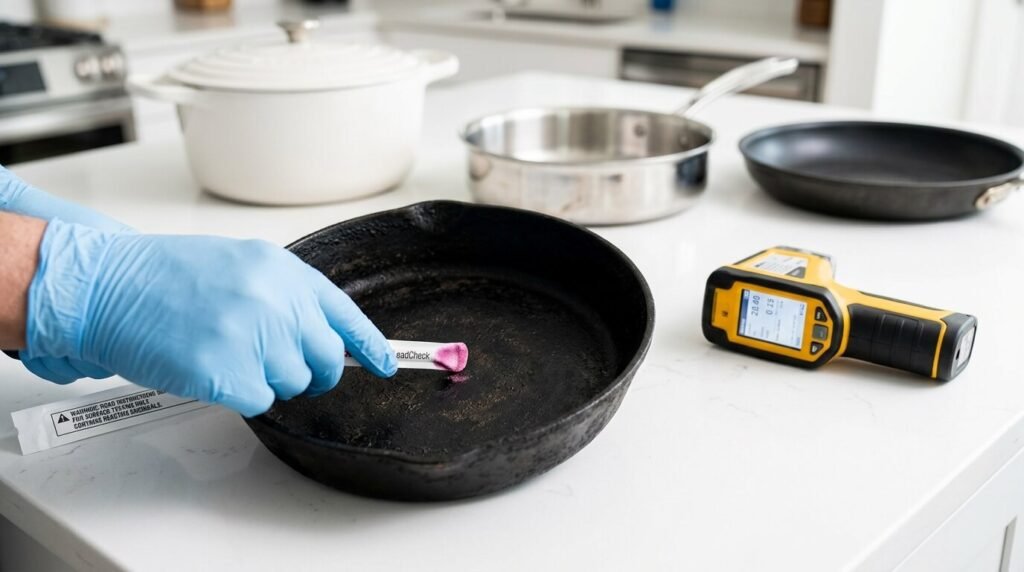
Home lead test kits, typically swab-based, are the most accessible starting point for anyone concerned about their cookware. They work by applying a chemically treated swab to the surface of the cookware.
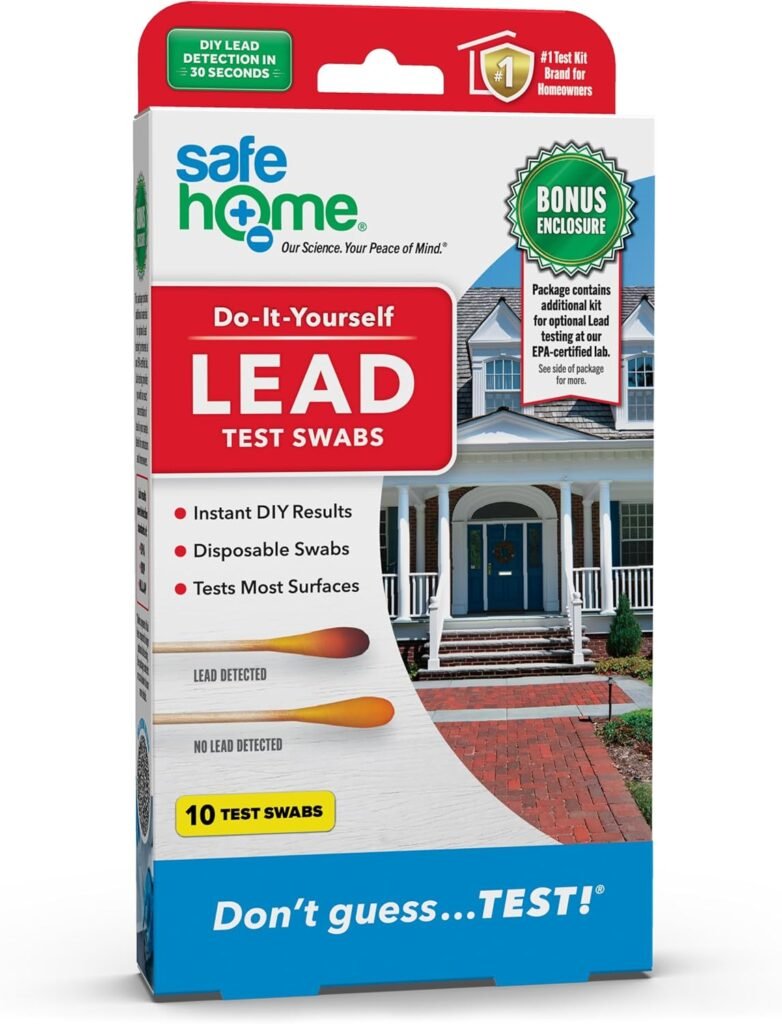
If lead is present at detectable levels, the swab changes color, usually to pink or red, depending on the brand. The process is straightforward, takes only a few minutes, and requires no technical expertise. Kits are widely available online and at hardware stores for a modest cost.
They’re not infallible, but for a first-pass screening of your kitchen, they offer a practical, low-barrier option.
Laboratory Testing
For definitive results, laboratory testing is the gold standard. Certified labs can analyze cookware samples using methods like ICP-MS (inductively coupled plasma mass spectrometry), which detects heavy metals at parts-per-billion concentrations far beyond what any home test can achieve.
More importantly, labs can test for leaching specifically, meaning they simulate cooking conditions and measure how much metal actually migrates into food or a food-simulating liquid.
This tells you not just whether metals are present in the material, but whether your cookware is actively contaminating what you eat. Lab testing costs more and takes longer, but for vintage, high-use, or suspect pieces, the investment is worthwhile.
XRF Testing (X-Ray Fluorescence)
XRF (X-ray fluorescence) testing is a professional-grade method that uses X-rays to identify the elemental composition of a material without destroying or even touching it in a damaging way.
It’s the same technology used by regulators, museums, and industrial safety teams to analyze materials quickly and accurately. Some consumer advocacy organizations and specialized testing services offer XRF analysis for cookware.
It can detect lead, cadmium, arsenic, and dozens of other elements in seconds. While not something you’d do in your kitchen, XRF testing is increasingly accessible through mail-in services and is considerably more reliable than swab-based home kits.
Step-by-Step Guide to Testing Cookware at Home
Preparing the Cookware for Testing
Before testing, wash the cookware thoroughly with dish soap and warm water, then rinse well and allow it to dry completely.
Any grease, residue, or cleaning product left on the surface can interfere with the chemical reaction in the test swab and produce a false negative.
Choose your test areas deliberately: the interior cooking surface is your primary concern since it contacts food directly, but also test the rim and any areas where chipping, crazing, or discoloration is visible.
If the piece has decorative exterior glazing, test that too; it can transfer to food when stacking or during handling.
Performing a Lead Swab Test
Open your lead test kit and follow the manufacturer’s instructions precisely, as activation steps vary by brand.
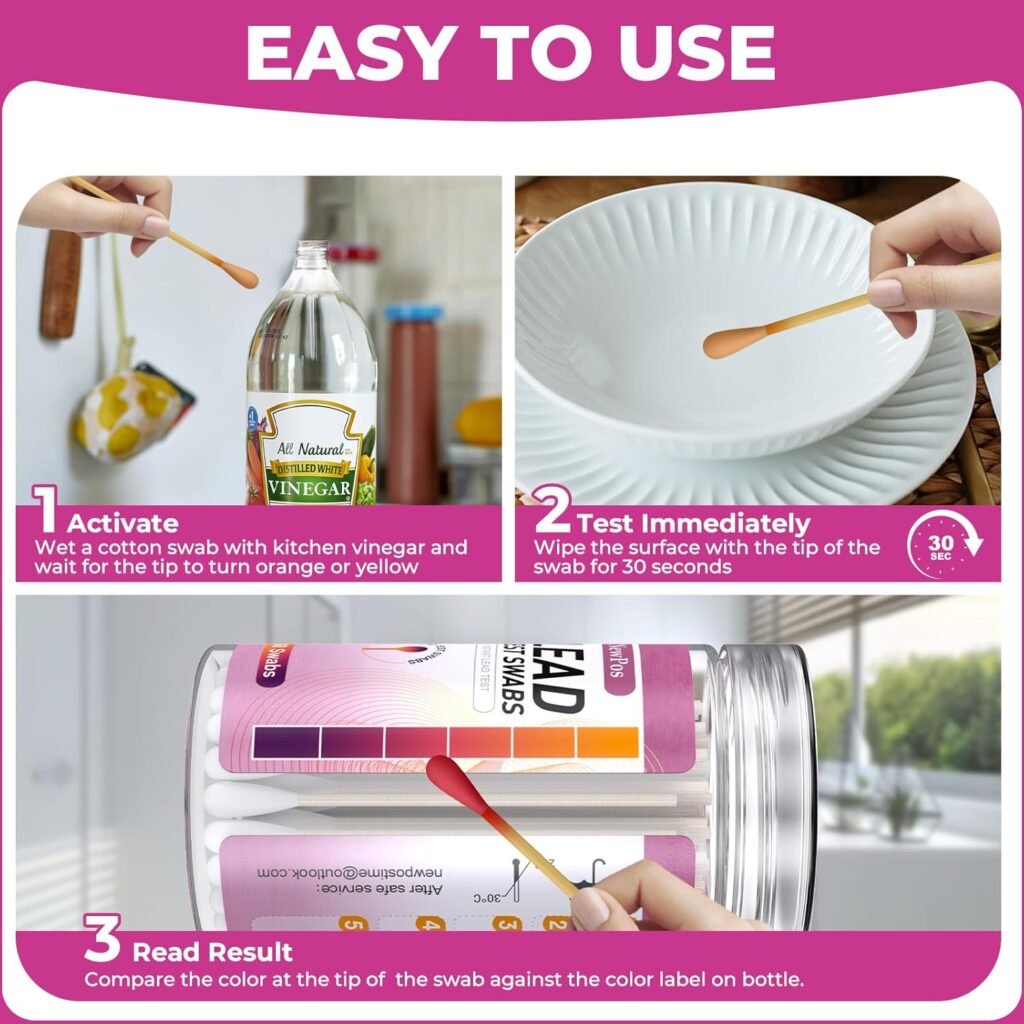
Most require you to snap or squeeze the swab to release the testing solution, then rub it firmly against the cookware surface for a specified number of seconds, usually 30 seconds to a minute.
Apply consistent pressure and cover the chosen test area thoroughly. The chemical in the swab reacts with lead compounds on the surface.
Use a fresh swab for each area you test; cross-contamination between areas will compromise your results and make interpretation unreliable.
Interpreting the Results
A color change, typically to pink, red, or a darkened hue, depending on the brand, indicates a positive result, meaning lead was detected. No color change generally means lead was not found at the kit’s detection threshold.
Here’s the important caveat: home test kits typically detect lead above 600 parts per million, the federal hazard threshold for lead paint. But the FDA’s limit for lead leaching from cookware into food is far lower, measured in micrograms per milliliter.
A negative swab test does not guarantee your cookware is leaching-safe. It rules out gross contamination but not low-level exposure over time.
Limitations of DIY Cookware Testing
Surface Testing vs Leaching Testing
This is the most significant gap in home testing, and it’s one that most people don’t realize exists. Swab tests tell you what’s on the surface of your cookware. They do not tell you what’s coming off the surface into your food during cooking.
A pan might test negative on a surface swab because the metals are bound within the glaze matrix, but under heat and acidic conditions, those same metals can leach into food at rates that exceed safety thresholds.
Only leaching-specific laboratory analysis, conducted under simulated cooking conditions, can answer the question that actually matters most: is this pan putting metals into my food?
Accuracy of Home Test Kits
Home lead test kits are designed to be sensitive enough to detect lead at levels associated with lead paint hazards, at a relatively high threshold.
They can produce false negatives (missing lead that is present at lower concentrations) and occasionally false positives (reacting to other substances that mimic lead compounds).
The quality also varies between brands, with some kits performing significantly better than others in independent testing. If you use a home kit, choose a brand that has been independently validated and follow the instructions meticulously.
And treat a negative result as a starting point for reassurance, not a guarantee of safety.
When Professional Testing Is Recommended
There are situations where home testing simply isn’t enough. If your cookware is vintage, antique, or of unknown origin, get it lab tested before using it for regular cooking, especially for acidic foods.
The same applies to handmade or artisan pieces brought back from countries with less stringent manufacturing regulations. If a home swab test returns a positive result, stop using the piece immediately and pursue professional testing to understand the extent of contamination.
Families with young children or pregnant individuals should apply a more conservative standard: when in doubt, don’t use it until you have verified results from a certified laboratory.
Heavy Metal Test Kit for Food
While most home lead test kits are designed for surfaces, walls, ceramics, and cookware, there is a growing category of heavy metal test kits specifically formulated for food and water.
These kits can detect lead, cadmium, arsenic, mercury, and other metals in liquid samples, making them useful for testing cooking water, broths, and food prepared in suspect cookware.
They work similarly to surface swab kits but are calibrated for liquid media. Some use colorimetric strips, others use chemical reagent drops.
They’re a useful complement to surface testing, particularly if you want to check whether a specific pan or cooking vessel is actively affecting the food you’ve already prepared in it.
How to Test for Heavy Metals in Food at Home
Testing the food itself rather than the cookware gives you the most direct answer about actual exposure.
Here’s a practical approach: cook a simple, acidic food like tomato sauce or a diluted vinegar solution in the cookware you want to test, then collect a sample of the cooked liquid.
Use a food-safe heavy metal test kit to analyze the sample according to the kit instructions.
Compare the result against the kit’s reference chart. For more rigorous testing, you can send a food or liquid sample to a certified laboratory for ICP-MS analysis, which will give you precise measurements of every metal present and at what concentration.
This method, testing the output rather than the surface, is the most meaningful way to assess real-world risk from your specific cookware under your actual cooking conditions.
How to Reduce Exposure to Heavy Metals in Cookware
Choosing Safer Cookware Materials
The safest long-term strategy is selecting cookware materials with well-established safety profiles. Stainless steel, particularly 18/10 grade, is highly resistant to leaching and widely regarded as one of the safest cooking surface options available.
Cast iron, when well-seasoned and maintained, is durable and adds negligible amounts of iron to food (which is actually beneficial for most people).
High-quality ceramic cookware from reputable brands with verified PFOA-free and heavy-metal-free certifications is another sound choice.
If you’re considering enamel-coated options, it’s worth understanding the full picture: Is enamel cookware safe? Before making a decision, as quality varies significantly between manufacturers.
Avoiding Damaged or Cracked Cookware
Crazing (fine cracks in a glaze), chips, and deep scratches are more than cosmetic problems; they’re pathways for heavy metals to migrate into food.
A compromised glaze surface has far higher leaching potential than an intact one because the protective barrier has broken down.
If your ceramic or enamel cookware shows any signs of cracking, crazing, or significant surface damage, retire it from food use. This applies even to high-quality pieces; a Le Creuset with a chipped interior is not the same safe product it was when intact.
The damage changes the leaching equation entirely.
Buying Cookware from Trusted Brands
Brand reputation and transparency are your best proxies for safety when you can’t test every piece yourself. Established brands selling into regulated markets are legally required to meet safety standards for heavy metal content and leaching.
Look for brands that publish their safety certifications, are explicit about being lead-free and cadmium-free, and have a track record of third-party testing.
If you’re considering a premium enamel brand specifically, you might want to investigate whether Le Creuset is lead and cadmium-free, as it’s one of the most commonly researched questions in this space, and the answer provides a useful benchmark for what responsible manufacturing transparency looks like.
Signs Your Cookware May Need Testing
Vintage or Antique Pieces
Any cookware made before the 1990s should be considered a testing priority. Regulatory restrictions on lead and cadmium in cookware glazes tightened significantly through the 1980s and 90s, meaning older pieces were manufactured under entirely different standards.
This is true regardless of brand; even prestigious manufacturers of the past used materials that would be illegal in production today. Treat age as an automatic flag, not a guarantee of danger, but a clear reason to verify before regular use.
Unknown Manufacturing Origin
If you don’t know where a piece of cookware was made, picked up at a thrift store, received as a gift, or brought back as a souvenir, treat it as unverified until tested. This is especially important for ceramic, earthenware, and glazed pieces.
The same principle applies to dinnerware: if you’re already thinking about cookware safety, it’s worth also understanding how to test for lead in dinnerware at home, since plates and bowls carry the same risks and are often overlooked in favor of focusing exclusively on pots and pans.
Decorative or Hand-Painted Glazes
Cookware with decorative hand-painted designs, elaborate color patterns, or artisan glazing should be approached with particular caution.
These finishes often use pigments chosen for their visual properties rather than food safety, and they may not have been applied or fired in ways that permanently bind the metals in the glaze.
Bright reds, oranges, and yellows are historically the highest-risk colors due to the cadmium and lead compounds traditionally used to achieve them. If you love the aesthetic, use these pieces as display items, not as functional cookware for daily meal preparation.
Conclusion
Testing cookware for lead and heavy metals isn’t something most people think about until they have a reason to, and by then, the exposure has often already happened.
The good news is that testing is more accessible than ever. Home swab kits provide a useful first screen, particularly for surface-level lead detection, though they can’t replace laboratory leaching tests for true peace of mind.
If your cookware is old, unfamiliar, or showing signs of glaze damage, prioritize professional testing before continued use. Choose verified, reputable brands where possible, avoid damaged pieces, and stay curious about what’s in your kitchen.
Your cookware should nourish your meals, not compromise them.
About the Author & Reviewer
Sarah Emirone, Author
Sarah researches and writes SafeKitchn’s dinnerware and kitchenware guides, with a focus on material safety, lead content, and manufacturer specifications. She cross-references product data sheets, safety certifications, and regulatory filings (including FDA and Prop 65 records) before publishing, and updates articles when new information becomes available.
James Daniels, Reviewer
James reviews SafeKitchn’s material safety content for scientific accuracy. He holds a B.Sc in inorganic chemistry and works as a materials researcher, with particular focus on the composition and safety behavior of glass, ceramic, and metal used in kitchenware.