You grab your pan every morning without a second thought, breakfast slides out perfectly, cleanup takes seconds, and life moves on.
Non-stick cookware has quietly become the most-used tool in millions of kitchens worldwide.
But here’s the thing: while you’ve been cooking, researchers, regulators, and health advocates have been asking a question most home cooks never do: is non-stick cookware safe?
The coating that makes your eggs glide so effortlessly? It has a complicated story behind it.
One involving banned chemicals, bird deaths from fumes, and decades of debate.
Whether you’re cooking for yourself, your family, or a baby, what you don’t know might genuinely matter.
What Is Non-Stick Cookware?
How Non-Stick Cookware Works
Non-stick cookware is designed with a specially engineered coating on the cooking surface that creates a low-friction barrier between the food and the pan.
This means food: eggs, fish, pancakes don’t bond to the metal, so it lifts off cleanly without needing loads of butter or oil.
The reduced need for cooking fat is one reason it’s so popular with health-conscious cooks. The coating does the heavy lifting, making both cooking and washing up significantly easier.
Common Materials Used in Non-Stick Cookware
Most non-stick pans are built on an aluminum base because it’s lightweight and conducts heat quickly and evenly.
Some higher-end options use stainless steel bases for added durability.
The cooking surface itself is usually one of two things: a PTFE-based coating (the classic non-stick material most people know as Teflon) or a ceramic-based coating, which has grown in popularity as a marketed alternative.
Each comes with its own performance characteristics and safety profile.
Chemicals Used in Non-Stick Cookware
Understanding PTFE (Polytetrafluoroethylene)
PTFE — polytetrafluoroethylene — is the slippery synthetic polymer behind most traditional non-stick coatings.
It was discovered accidentally by DuPont scientists in 1938 and commercialized under the brand name Teflon.
PTFE is remarkably heat-resistant under normal cooking conditions, remaining stable up to around 260°C (500°F).
Below that threshold, the coating performs well and doesn’t release harmful compounds. The problems start when things get hotter than they should, more on that shortly.
What Is PFOA and Why Does It Matter
PFOA (perfluorooctanoic acid) is a processing chemical that was used for decades in the manufacturing of PTFE coatings.
Unlike PTFE itself, PFOA was found to persist in the environment and accumulate in the human body.
Studies linked prolonged exposure to a range of health concerns, which eventually prompted serious regulatory action.
It’s worth knowing that PFOA wasn’t in the pan itself; it was a manufacturing aid, but its production left a significant environmental footprint and raised legitimate questions about long-term safety.
Modern Non-Stick Coating Standards
The good news is that PFOA has been phased out. The U.S. Environmental Protection Agency pushed manufacturers to eliminate it, and by 2013, most major brands had stopped using it entirely.
The EU followed with similar bans. Today, reputable non-stick cookware sold in most markets is PFOA-free.
That doesn’t mean every concern has evaporated; some critics argue that replacement chemicals in newer coatings haven’t been studied long enough, but the regulatory landscape has meaningfully improved since the early 2000s.
Is Non-Stick Cookware Safe to Use?
Safety Under Normal Cooking Conditions
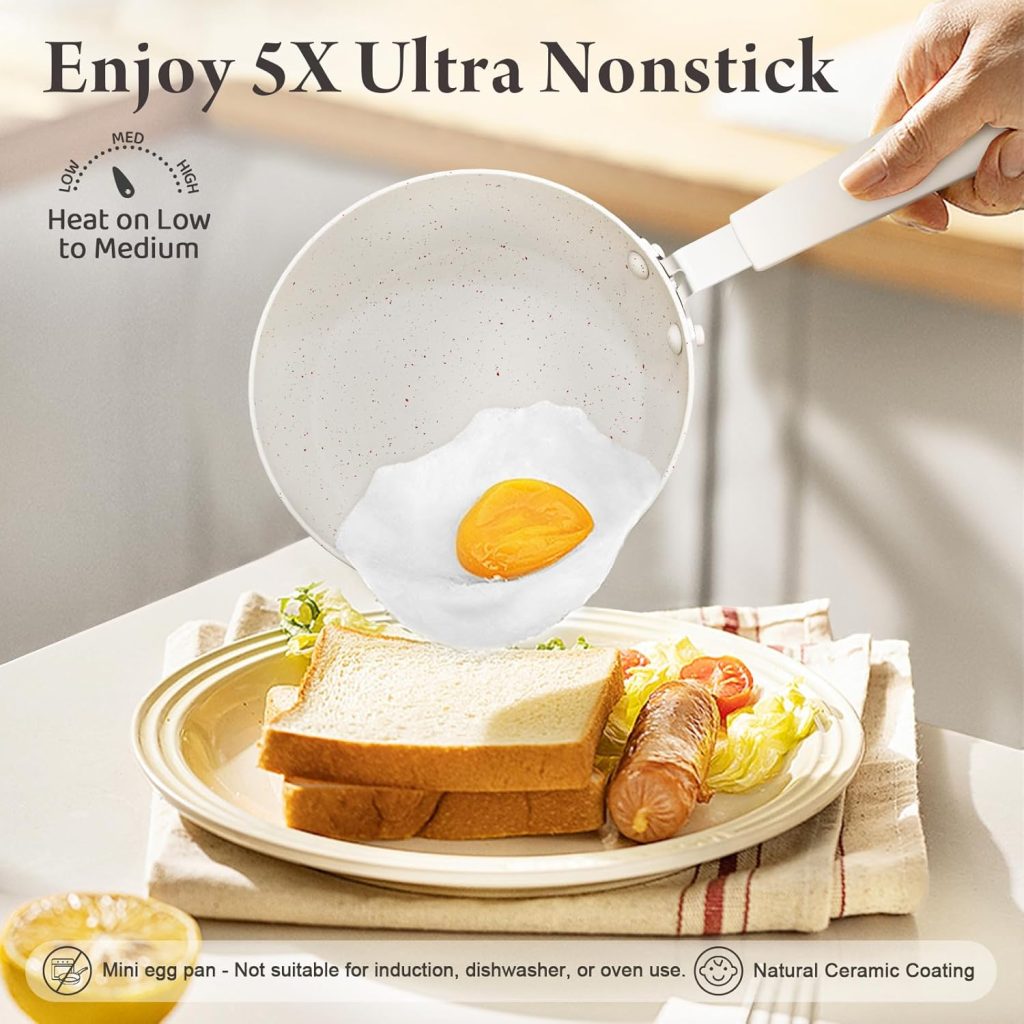
Under everyday cooking conditions, modern non-stick cookware is generally considered safe.
Most home cooking, such as sautéing, frying, and scrambling eggs, happens well below the temperatures at which PTFE begins to break down. Keeping your heat at medium or medium-low covers the vast majority of recipes.
If you’re using a gas or electric stove and not leaving an empty pan on a screaming burner, you’re likely operating in the safe zone without even trying.
Risks of Overheating Non-Stick Cookware
Here’s where it gets more serious. When non-stick pans are heated above 260°C (500°F) — which can happen faster than you’d expect on high heat, especially with an empty pan — the PTFE coating starts to degrade.
At very high temperatures, it can release fumes that, while not immediately dangerous to most adults in a ventilated kitchen, can be fatal to pet birds and may cause temporary flu-like symptoms in people.
The key risk factor is consistently cooking on extremely high heat or accidentally leaving a pan unattended on a hot burner.
Scratches and Worn Coatings
A scratched non-stick surface is something most people have dealt with, but few think much about.
Here’s the practical reality: small flakes of PTFE coating that end up in your food are generally considered inert; they pass through the body without being absorbed.
That said, a heavily scratched pan performs poorly, heats unevenly, and is more likely to release particles you’d rather not be eating.
A scratched coating is less a toxicity crisis and more a strong signal that it’s time for a replacement.
Does Non-Stick Cookware Cause Cancer?
This is probably the most-searched question on the topic, and the honest answer is a little complex.
PTFE-coated cookware itself is not classified as a carcinogen. The cancer concern historically centered on PFOA, the manufacturing chemical discussed earlier, which has since been banned.
Studies that linked PFOA to certain cancers were largely tied to occupational exposure at manufacturing plants, not to cooking at home.
With PFOA now phased out of modern cookware production, the direct cancer risk from using a standard non-stick pan is considered very low by current scientific and regulatory consensus.
If you’re using PFOA-free cookware correctly and replacing it when worn, cancer risk from the pan isn’t something most experts say you need to worry about.
Are Non-Stick Pans Safe When Scratched?
Scratched non-stick pans worry a lot of people, and understandably so. If the coating is flaking into your food, should you be concerned?
According to food safety authorities, ingested PTFE particles are biologically inert, meaning they don’t chemically react with or absorb into the body.
So a few flakes finding their way into your stir-fry isn’t a known health emergency.
However, a scratched coating means the pan no longer performs its primary function well, and the underlying aluminum base may become exposed.
Cooking on damaged cookware isn’t ideal, and at that point, replacing it is the smarter, safer move.
Non-Stick Coating Coming Off — Is It Dangerous?
When you notice the coating peeling, bubbling, or flaking off in chunks, the concern understandably escalates.
The short scientific answer is that PTFE particles are chemically stable and not known to cause harm when ingested in small amounts.
However, a coating that is coming off in visible pieces suggests the pan has significantly degraded, and at that point, you’re also likely seeing uneven heat distribution, possible hot spots, and loss of the non-stick function entirely.
While it may not be an acute poisoning risk, cooking on a pan in that condition is simply not good practice, and it’s a clear sign the pan has reached the end of its useful life.
Non-Stick Pans Toxic Symptoms
There’s an actual medical term for it: polymer fume fever. It’s a temporary flu-like condition that can occur when non-stick coatings are overheated to very high temperatures and the resulting fumes are inhaled in an enclosed, unventilated space.
Symptoms typically include chills, mild fever, headache, and general malaise.
They usually resolve within 12 to 48 hours without treatment.
Serious poisoning from non-stick cookware in a home setting is extremely rare and almost always linked to extreme overheating (empty pan on high heat for a prolonged period) rather than normal cooking.
Good ventilation in your kitchen and avoiding high-heat empty-pan scenarios will virtually eliminate this risk.
Is Non-Stick Cookware Safe for Babies?
Parents naturally apply a higher standard to anything that touches food prepared for infants and young children, and that caution is well-placed.
When using modern, PFOA-free non-stick cookware in good condition — no scratches, no peeling, used at appropriate temperatures- there is no specific evidence that it poses a unique risk to babies beyond any adult.
That said, if you’re already cautious and want complete peace of mind, many parents of young children choose to use stainless steel, cast iron, or ceramic alternatives for baby food prep.
It’s less about proven danger and more about the preference for eliminating any variables when cooking for the most vulnerable members of your household.
When to Throw Away Non-Stick Pans
Most non-stick pans have a useful life of about three to five years under regular home use, though this varies by brand quality and how well they’re treated.
You should replace your non-stick pan when the coating is visibly scratched, chipped, or peeling; food is sticking consistently even on properly oiled surfaces; the pan is warped and no longer sits flat on the burner; or discoloration suggests the coating has been repeatedly overheated.
Don’t wait for the pan to completely fall apart; a degraded pan costs you more in wasted food and cooking frustration than the cost of a replacement.
Are Non-Stick Pans Banned in Europe?
Non-stick pans themselves are not banned in Europe, but several of the chemicals historically used to manufacture them are.
The EU has been at the forefront of restricting PFAS chemicals (per- and polyfluoroalkyl substances), of which PFOA is a member.
PFOA has been banned in European manufacturing and imports for years. More recently, there have been broader regulatory discussions about restricting the wider class of PFAS compounds used in some newer coatings.
So while you can still buy and use non-stick cookware throughout Europe, the region has some of the strictest standards in the world regarding which chemicals can go into making those coatings.
Are Ceramic Non-Stick Pans Safe?
Ceramic non-stick pans have been heavily marketed as the safer, more natural alternative to PTFE-coated cookware.
The coating is silica-based (derived from sand) rather than a fluoropolymer, and importantly, it is completely free of PTFE and PFAS chemicals.
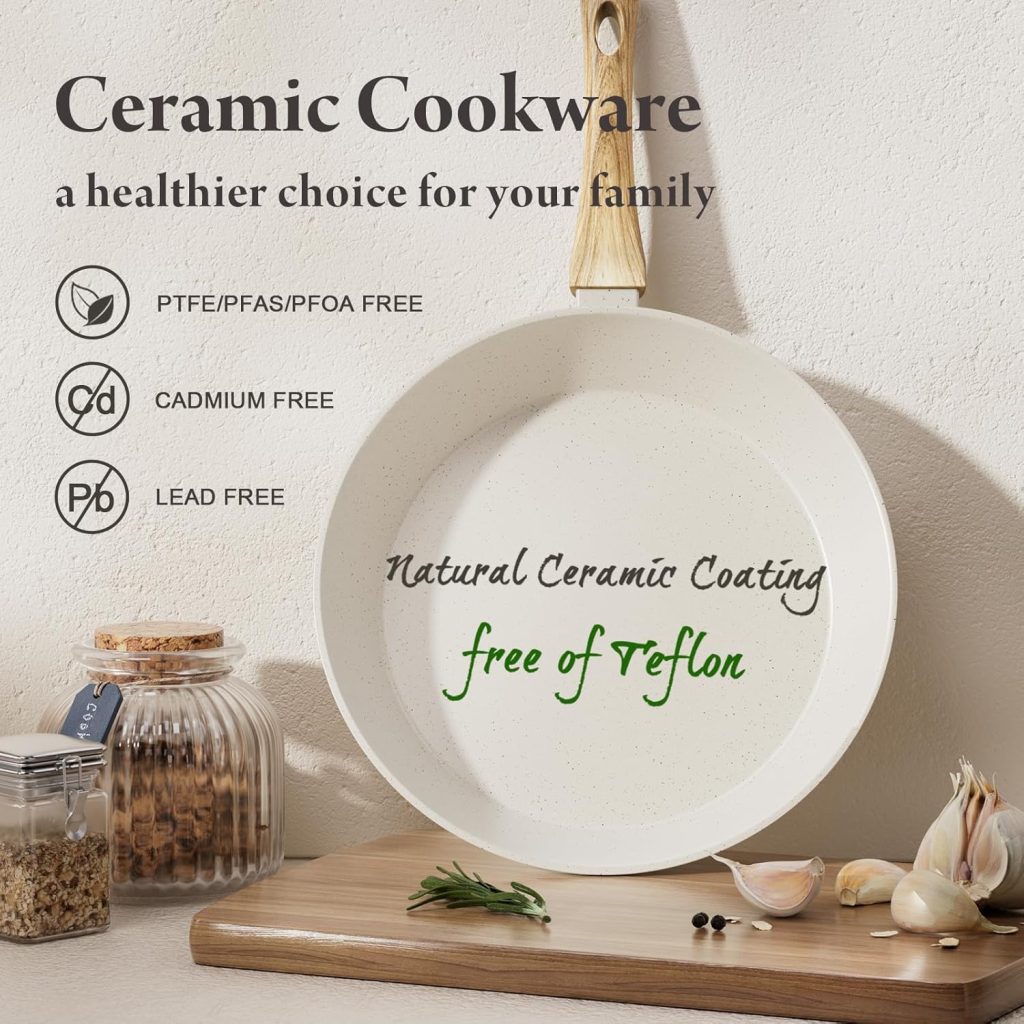
From a chemical standpoint, ceramic coatings are considered very safe.
The honest trade-off, however, is performance: ceramic coatings tend to lose their non-stick properties faster than PTFE — often within one to two years of regular use.
They’re also more susceptible to thermal shock (rapid temperature changes). Safe? Yes. Better? It depends on what you prioritize: chemical minimalism vs cooking performance.
For a more extensive use of ceramic non-stick cookwares, read our guides on the following: ceramic vs Teflon cookware, and is ceramic cookware healthy for cooking?
Health Concerns Associated with Non-Stick Cookware
Chemical Exposure Concerns
While modern PFOA-free cookware has addressed the most well-documented concern, some health advocates and researchers continue to flag the broader PFAS family of chemicals used in some manufacturing processes.
The science on many newer PFAS compounds is still developing, and while regulators have cleared current products for consumer use, it’s a space worth watching.
The practical response for most consumers is to buy from reputable brands, look for PFOA-free labeling, if possible, test the cookware for lead, and prioritize proper use over assuming any cookware is completely without limitation.
Fumes from Overheated Non-Stick Surfaces
Overheating is the most consistently documented risk from non-stick cookware.
Pet birds are particularly vulnerable; their respiratory systems are extremely sensitive, and fumes from an overheated pan can be fatal to them even in a well-ventilated kitchen.
For humans, the risk is much lower, but repeatedly inhaling fumes from severely overheated coatings isn’t wise.
Keep a window open, use an extractor fan when cooking at higher temperatures, and never leave an empty non-stick pan on a hot burner unattended.
Environmental Considerations
The environmental story of non-stick cookware is one of its less-discussed downsides.
PFAS chemicals are persistent: they don’t break down in the environment and have been found in water sources, soil, and wildlife globally.
While the phase-out of PFOA was a significant step, manufacturing and disposal of non-stick cookware still contribute to the PFAS problem at an industrial scale.
Opting for longer-lasting cookware, using it until the end of its true life rather than replacing it prematurely, and disposing of old pans through appropriate channels where available all help reduce that footprint.
Tips for Using Non-Stick Cookware Safely
Avoid High Cooking Temperatures
Stick to low to medium heat for the vast majority of non-stick cooking. Most foods cook beautifully in this range, and you preserve the coating significantly longer.
Reserve high heat for stainless steel or cast iron, which are built for it. If you need to sear meat, do it in a different pan; your non-stick is a precision tool, not a blast furnace.
Use Non-Metal Utensils
Metal spatulas, whisks, and spoons will scratch non-stick coatings; it’s that simple.
Switch to silicone, wood, or nylon utensils in your non-stick pans, and the coating will last considerably longer.
It’s one of the easiest habits to build and one of the most impactful for extending the life of your cookware.
Replace Damaged Cookware
Think of your non-stick pan the way you’d think of a kitchen knife that no longer holds an edge — useful and functional until a certain point, then genuinely counterproductive.
A pan with visible peeling, deep scratches, or warping should be replaced.
Don’t cook on damaged non-stick surfaces out of habit or frugality.
A decent replacement is a better investment than the stress of wondering what’s ending up in your food.
Non-Stick Cookware vs Other Cookware Types
Non-Stick vs Stainless Steel
Stainless steel is durable, oven-safe, dishwasher-friendly, and has no coating to wear out.
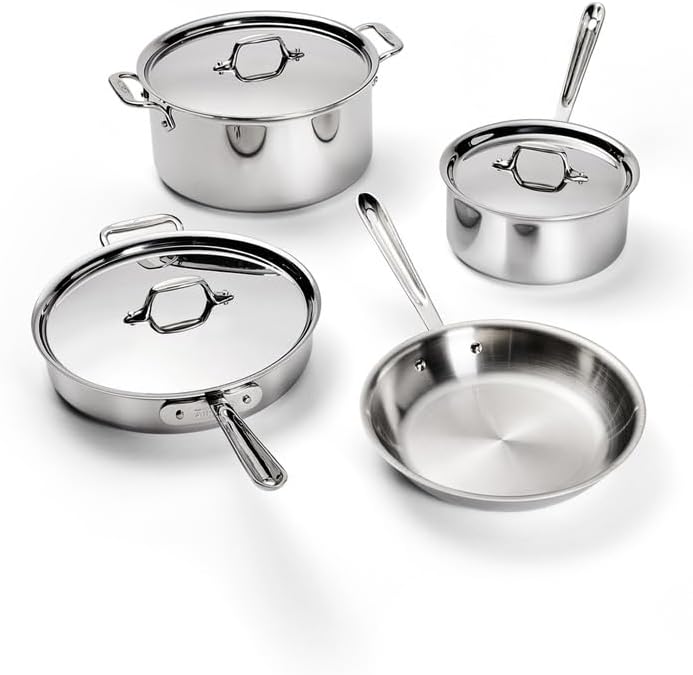
The trade-off is that food sticks more easily, especially proteins and eggs, requiring more fat and technique to cook well.
Non-stick wins on ease and convenience; stainless wins on longevity and versatility. Many cooks keep both.
Non-Stick vs Cast Iron
Cast iron is almost the opposite of non-stick: heavy, high-maintenance, and slow to heat, but once seasoned properly, it develops a natural non-stick surface that can last generations.
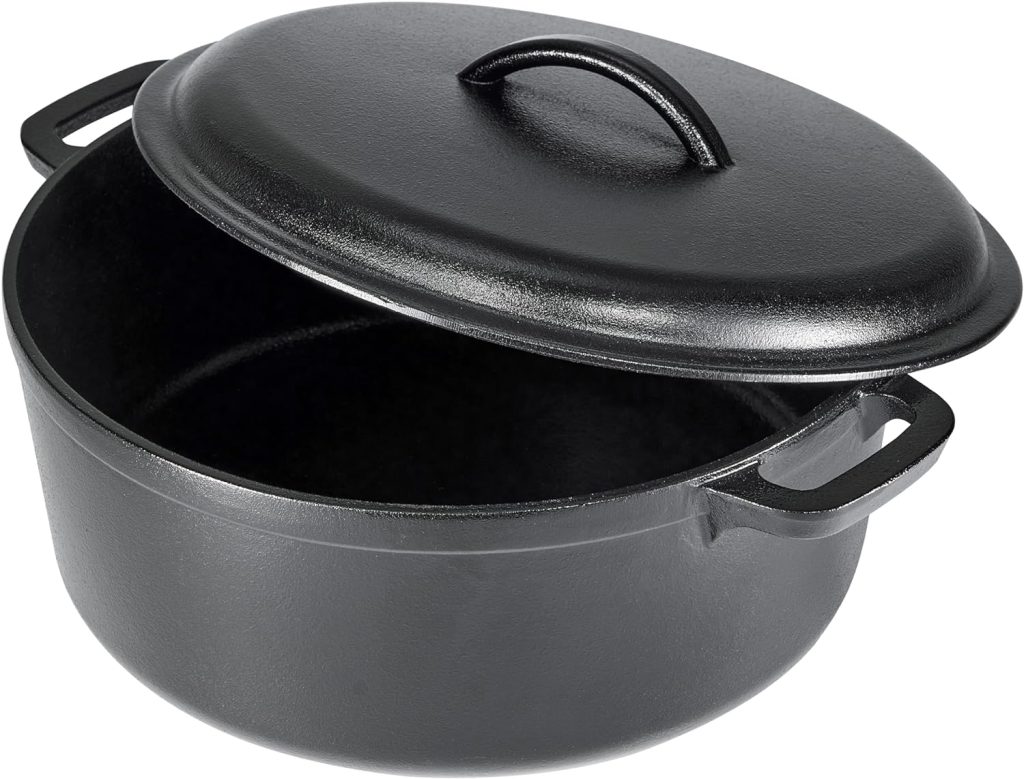
If you want to understand the full spectrum of your options, it’s worth reading about enameled cast iron vs stainless steel cookware to see how traditional materials compare.
Non-stick pans are more practical for daily quick meals; cast iron earns its place for high-heat cooking and long braises.
Non-Stick vs Ceramic Cookware
As discussed earlier, ceramic non-stick offers a PTFE-free cooking experience with a similar ease-of-use appeal.
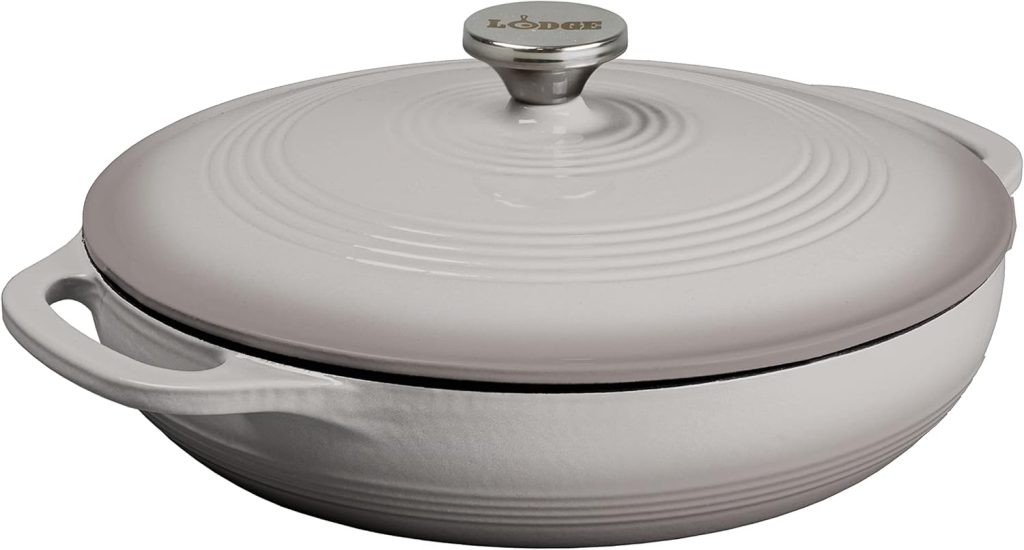
The gap in durability is real, though ceramic tends to degrade faster. If chemical minimalism is your priority, ceramic is the better choice.
If you want long-lasting non-stick performance, traditional PTFE-based cookware (from a reputable PFOA-free brand) still leads on that specific metric.
For a detailed comparison, see our guide on the difference between non-stick cookware and ceramic cookware.
How to Choose Safe Non-Stick Cookware
Look for PFOA-Free Labels
This is your baseline. Any non-stick cookware you buy today should be explicitly labeled PFOA-free.
Most reputable brands already are, but verify it especially with budget options or unfamiliar brands from online marketplaces, where manufacturing standards may not be as tightly regulated.
Check Heat Resistance Ratings
Good non-stick cookware should clearly state its maximum safe cooking temperature and whether it’s oven-safe.
Look for pans rated to at least 260°C (500°F) for cooking surface stability.
If oven use matters to you, confirm the handle and lid are rated accordingly; some handles are only safe to around 180°C (350°F).
Choose Reputable Cookware Brands
Brand reputation matters in non-stick cookware more than in many other kitchen categories, because manufacturing quality and coating adherence directly affect safety and longevity.
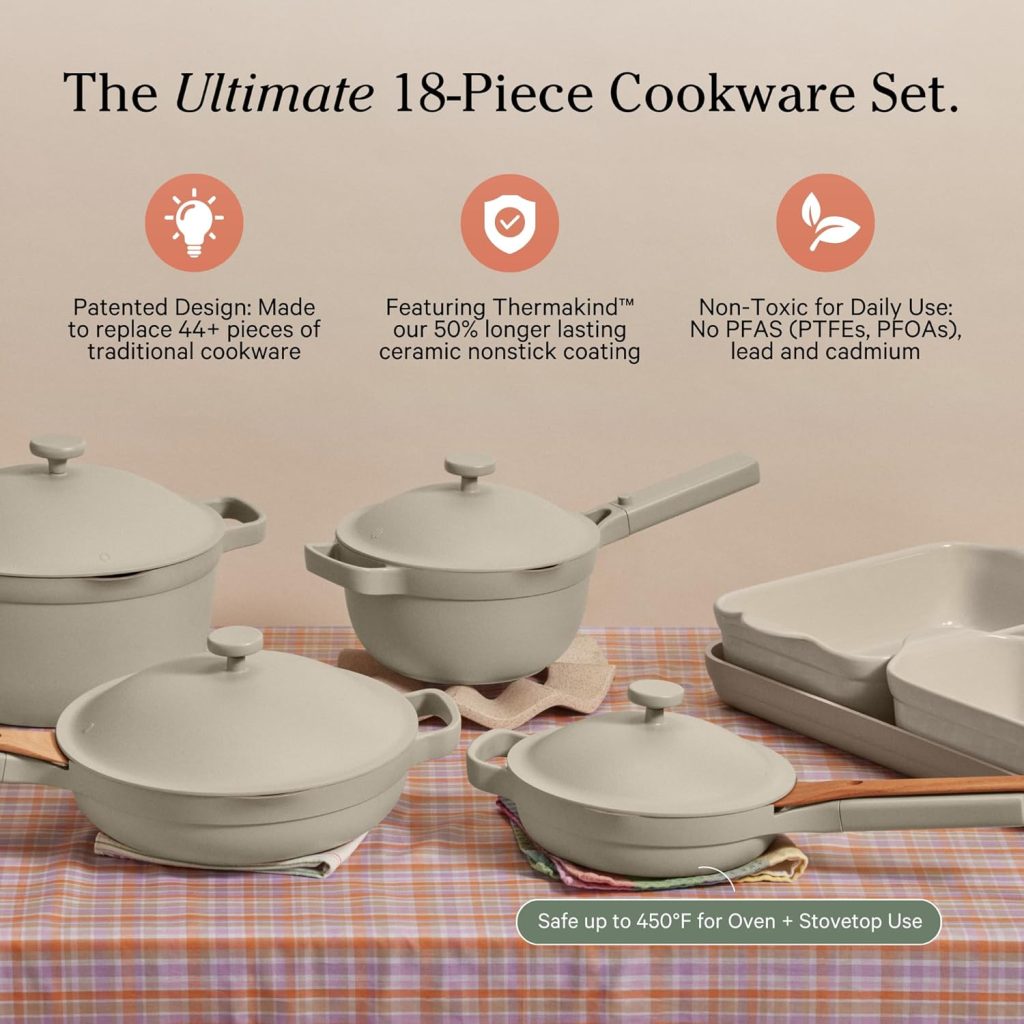
Established brands like Scanpan, All-Clad, Zwilling, Le Creuset, Staub, Lodge, Greenpan, Caraway, Xtrema, Our Place, Circulon, and OXO (among others) invest in coating quality and are more likely to meet current safety standards.
Be especially careful with very cheap pans from unknown manufacturers. A low price often means a low-quality coating that degrades faster.
Conclusion
Modern non-stick cookware, when made by a reputable brand and used correctly, is generally safe for everyday cooking.
The big villain of the story — PFOA — has been regulated out of production, and current PTFE-based and ceramic-based coatings represent a meaningfully safer product than what existed two decades ago.
The rules are simple: cook on medium heat, use the right utensils, ventilate your kitchen, and replace pans when they show real wear.
Do those things, and your non-stick cookware will serve you well without the health drama. When in doubt, choose quality, replace promptly, and cook smart.
Leave a Reply