Baccarat crystal represents centuries of French craftsmanship and luxury, making authentic pieces highly sought after by collectors and enthusiasts.
However, distinguishing genuine Baccarat from imitations requires knowledge of specific markings, physical characteristics, and manufacturing details.
Whether you’ve inherited a crystal piece, found one at an estate sale, or are considering a purchase, knowing how to identify authentic Baccarat crystal protects you from counterfeits and ensures you understand the true value of what you own.
This guide walks you through the essential markers of authenticity, from signature stamps to craftsmanship details that separate genuine Baccarat from ordinary glass.
What Is Baccarat Crystal?
Baccarat crystal is luxury glassware produced by the Baccarat company in France, renowned for exceptional clarity, weight, and artistry.
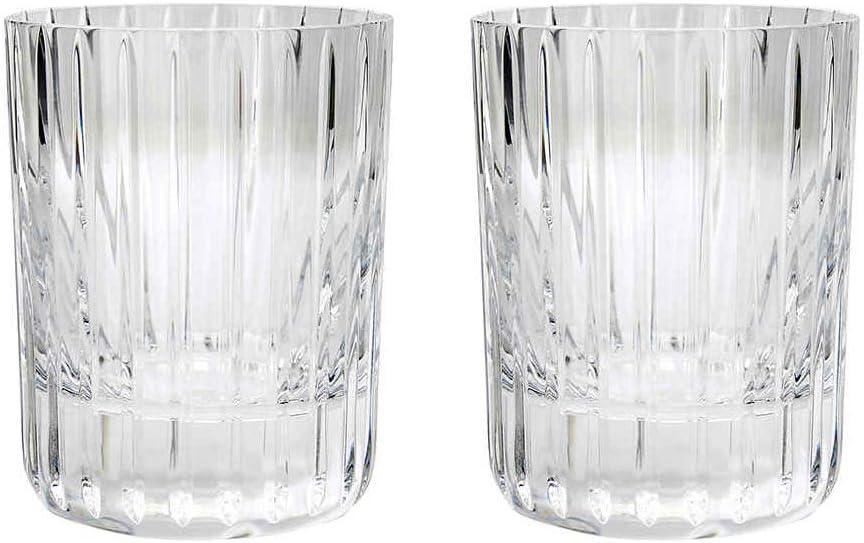
The brand has maintained its reputation through centuries of meticulous craftsmanship and innovative designs.
History of Baccarat (France)
Founded in 1764 in the Lorraine region of France, Baccarat began as a glass workshop commissioned by King Louis XV.
The company gained international recognition in the 19th century, winning gold medals at major exhibitions and becoming the official supplier of crystal to royalty worldwide.
Luxury Crystal Manufacturing
Baccarat employs traditional methods, including hand-blowing, hand-cutting, and polishing by master craftsmen.
Each piece undergoes rigorous quality control, with only flawless items receiving the Baccarat mark.
The manufacturing process combines molten crystal with precise lead oxide formulations for superior brilliance.
Why Baccarat Is Highly Collectible
Rarity, historical significance, and unmatched quality drive Baccarat’s collectibility.
Limited edition pieces, discontinued patterns, and items commissioned for royalty command premium prices.
The brand’s consistent excellence over 260 years ensures lasting value and desirability among serious collectors.
Why Identifying Authentic Baccarat Crystal Matters
Knowing how to properly identify Baccarat crystal protects your investment and ensures you understand what you own.
The difference between authentic and fake pieces carries significant financial and historical implications.
Market Value Differences
Authentic Baccarat pieces can be worth hundreds to thousands of dollars, while imitations sell for minimal amounts.
A genuine Harcourt glass retails for over $400, whereas similar-looking replicas cost under $50. Proper identification directly impacts resale potential and insurance valuation.
Inheritance & Resale Concerns
Family heirlooms require authentication before sale or appraisal. Many people discover they own valuable Baccarat collections without realizing it, particularly with older, unmarked pieces.
Confirming authenticity helps you make informed decisions about keeping, selling, or insuring inherited crystal.
Avoiding Counterfeit Crystal
The luxury crystal market attracts counterfeiters who replicate Baccarat markings and designs.
Fake stamps, poor etching, and cheap materials deceive uninformed buyers.
Understanding authentication markers helps you avoid purchasing fraudulent pieces marketed as genuine Baccarat.
Baccarat Crystal Marks and Stamps
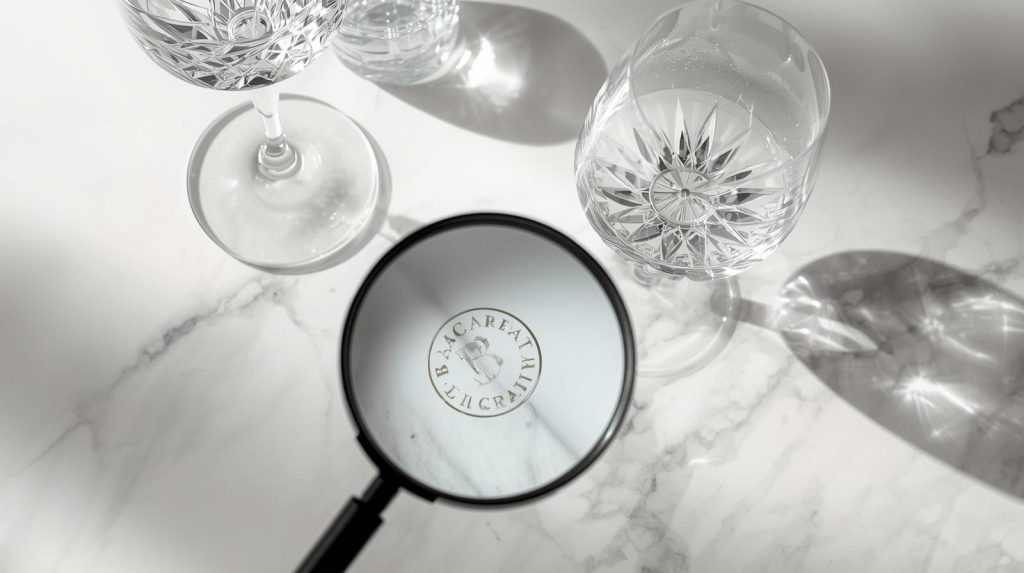
Official markings provide the most straightforward method to confirm brand authenticity, though not all genuine pieces bear stamps.
Acid-Etched Baccarat Logo
Modern Baccarat pieces feature an acid-etched circular logo on the base. The mark includes “Baccarat” text with a small wine glass and decanter icon underneath.
This stamp appears crisp and precise, never fuzzy or uneven, and is typically located centered on the bottom.
Circular Stamp
The circular design measures roughly 10-15mm in diameter with clean borders.
Authentic stamps show consistent depth and clarity throughout the etching.
Counterfeits often display irregularities in the circle’s shape or thickness.
“Baccarat” Text and Glass Icon
The word “Baccarat” curves along the top of the circle in capital letters. Below sits the distinctive glass decanter and goblet symbol.
Both elements maintain sharp definition without blur or incomplete etching.
Placement on Base
Look for the mark centered on the flat bottom of stemware, vases, or decorative items. It should be easily visible without turning the piece.
Some larger items may have the stamp on the underside edge rather than the flat center.
Older Baccarat Pieces (Pre-1936)
Baccarat did not consistently mark pieces before 1936, meaning many genuine antique items lack any stamp.
These pieces require identification through craftsmanship quality, weight, design patterns, and provenance documentation.
Consult the full crystal patterning guide when evaluating an unmarked crystal.
No Marks
The absence of a mark doesn’t indicate a fake if the piece dates to the early 20th century or earlier.
Paper labels were occasionally used but rarely survived. Authentication relies on material properties and expert evaluation.
Identification Through Craftsmanship
Examine cut precision, weight, clarity, and design complexity.
Genuine unmarked Baccarat exhibits superior craftsmanship, matching known patterns from the era. Cross-reference with
Baccarat catalogs or museum collections to identify specific designs and production periods.
Physical Characteristics of Baccarat Crystal
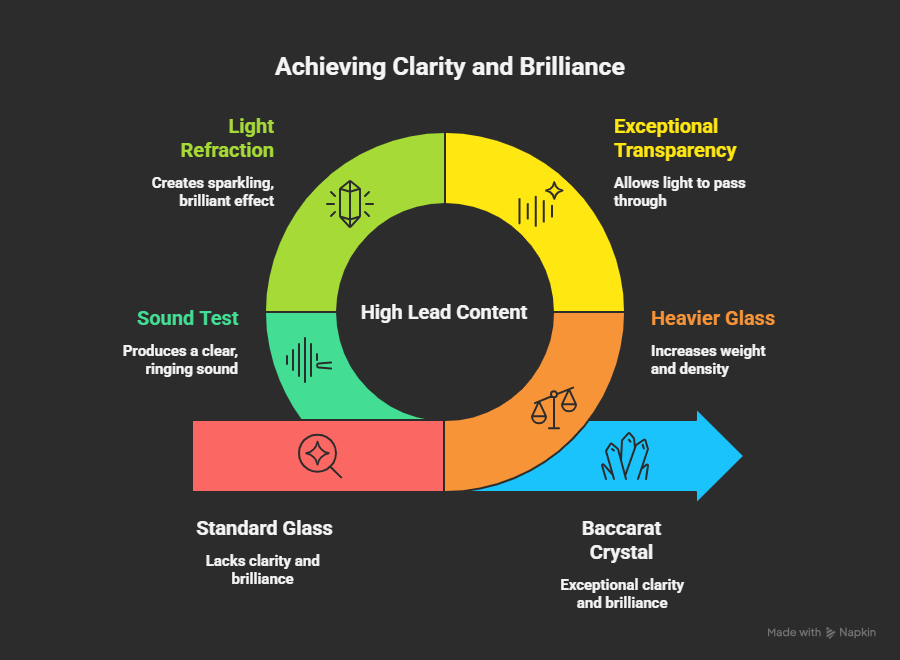
Material properties distinguish authentic Baccarat from ordinary glass and inferior crystal. These tangible qualities remain consistent across all genuine pieces.
Weight and Density
Baccarat crystal feels substantially heavier than a standard glass of equivalent size due to high lead oxide content (typically 24-30%).
A small wine glass weighs noticeably more than expected, while larger pieces require firm handling. This density contributes to durability and light refraction quality.
Heavier Than Standard Glass
Compare similar-sized items if possible. Authentic Baccarat feels solid in hand, never lightweight or hollow. Even thin-walled pieces carry surprising weight.
High Lead Content
The lead oxide formula creates the crystal’s characteristic heft, brilliance, and clarity.
This traditional composition distinguishes true crystal from modern lead-free alternatives, which feel lighter despite a similar appearance.
Clarity and Brilliance
Genuine Baccarat exhibits flawless transparency without bubbles, cloudiness, or color tints. The crystal appears water-clear with exceptional light transmission.
Hold pieces up to natural light to assess clarity—authentic Baccarat shows no internal imperfections.
Exceptional Transparency
The glass should be completely clear without streaks, waves, or distortions. Any cloudiness indicates lower-quality material.
Baccarat’s manufacturing standards eliminate impurities that create haziness.
Light Refraction
When light passes through Baccarat crystal, it refracts dramatically, creating a rainbow-like sparkle and brilliant reflections.
This optical quality surpasses regular glass and most other crystal brands, particularly visible in cut patterns.
Sound Test
Gently tap the rim or side with your fingernail or a pencil. Authentic Baccarat produces a clear, sustained bell-like ring that resonates for several seconds.
Regular glass creates a dull thud or brief clink without resonance.
Craftsmanship Details That Signal Authenticity
Manufacturing quality reveals authenticity through details only master craftsmen achieve consistently.
Hand-Cut Precision
Baccarat’s hand-cutting creates perfectly aligned patterns with uniform depth. Each facet meets others at exact angles without deviation.
Machine-cut imitations show slight misalignments or varying depths. Examine patterns under bright light for consistency.
Sharp, Clean Edges
All cuts and edges feel crisp and smooth without roughness or chips.
Run your finger along the edges. Authentic Baccarat pieces are meticulously polished after cutting.
Rough spots indicate poor quality control or inferior materials.
Symmetry and Polish Quality
Patterns mirror perfectly across centerlines with mathematical precision.
The polishing creates glass-like smoothness on all surfaces without dull spots or uneven texture.
This attention to detail extends to bases, rims, and decorative elements.
How to Tell Baccarat Crystal From Regular Glass
Several key differences separate crystal from standard glass, helping you distinguish premium pieces from ordinary glassware.
Thickness vs Weight
Baccarat crystal walls can be surprisingly thin while maintaining substantial weight. Regular heavy glass achieves weight through thickness.
If a piece feels thick-walled and heavy, it’s likely glass rather than crystal.
Mold Lines Absence
Authentic Baccarat shows no visible seam lines from molds. The hand-finishing process removes all traces of manufacturing joins.
Run your fingers around the piece; any raised seam indicates machine production and suggests a non-Baccarat origin.
Optical Distortion Check
Look through the crystal at straight lines or text. Baccarat’s optical quality transmits images clearly without warping.
Regular glass often distorts or slightly bends images viewed through it due to impurities and a lower refractive index.
Baccarat Crystal vs Other Luxury Crystal Brands
Understanding distinctions between premium crystal manufacturers helps identify specific makers and appreciate different styles.
Baccarat vs Waterford
Irish Waterford crystal features intricate, deeply cut patterns with a distinctive crosshatch diamond design.
Waterford pieces typically feel slightly lighter than Baccarat and emphasize elaborate cutting over sleek minimalism. Both produce hand-cut crystal, but design philosophies differ significantly.
Cut Style Differences
Waterford favors complex, ornate patterns covering entire surfaces. Baccarat often employs cleaner lines with strategic cutting that emphasizes crystal clarity.
Baccarat’s Harcourt pattern uses flat panel cuts, while Waterford prefers deep crosshatching.
Weight and Sparkle
Baccarat generally weighs more due to higher lead content and thicker bases. Waterford’s sparkle comes from dense cutting patterns, while Baccarat achieves brilliance through crystal quality and selective cutting placement.
Baccarat vs Lalique
Lalique, another French luxury brand, specializes in frosted, sculptural crystal with artistic designs. Baccarat focuses on clear, brilliant crystal.
Lalique pieces often feature molded relief patterns and satin finishes, making them easily distinguishable from Baccarat’s transparent aesthetic.
Frosted vs Clear Crystal
Lalique’s signature is matte frosted surfaces with polished highlights. Baccarat maintains crystal clarity and brilliance throughout most pieces.
Lalique emphasizes texture and form; Baccarat prioritizes transparency and light play.
Design Philosophy
Lalique follows Art Nouveau and Art Deco traditions with nature motifs and sculptural elements.
Baccarat emphasizes classical elegance, geometric precision, and timeless patterns that showcase the crystal itself rather than decorative overlays.
Is Baccarat Crystal Lead Crystal?
Understanding Baccarat’s material composition addresses safety concerns and explains the crystal’s exceptional properties.
Lead Oxide Content
Baccarat crystal contains 24-30% lead oxide, classifying it as full lead crystal.
This high percentage creates the weight, clarity, and refractive qualities that define luxury crystal.
The lead content has remained consistent throughout Baccarat’s history.
Traditional Crystal Formulation
The formula combines silica, potash, and lead oxide, heated to extreme temperatures.
This composition has been perfected over centuries to achieve optimal brilliance and workability.
Lead crystal remains the gold standard for luxury glassware despite modern lead-free alternatives.
Food and Drink Use Considerations
Lead crystal is safe for occasional use with food and beverages.
However, avoid storing acidic liquids (wine, juice) in lead crystal decanters for extended periods, as acid can leach trace amounts of lead. Regular drinking and serving poses no health risk.
Common Signs of Fake or Imitation Baccarat Crystal
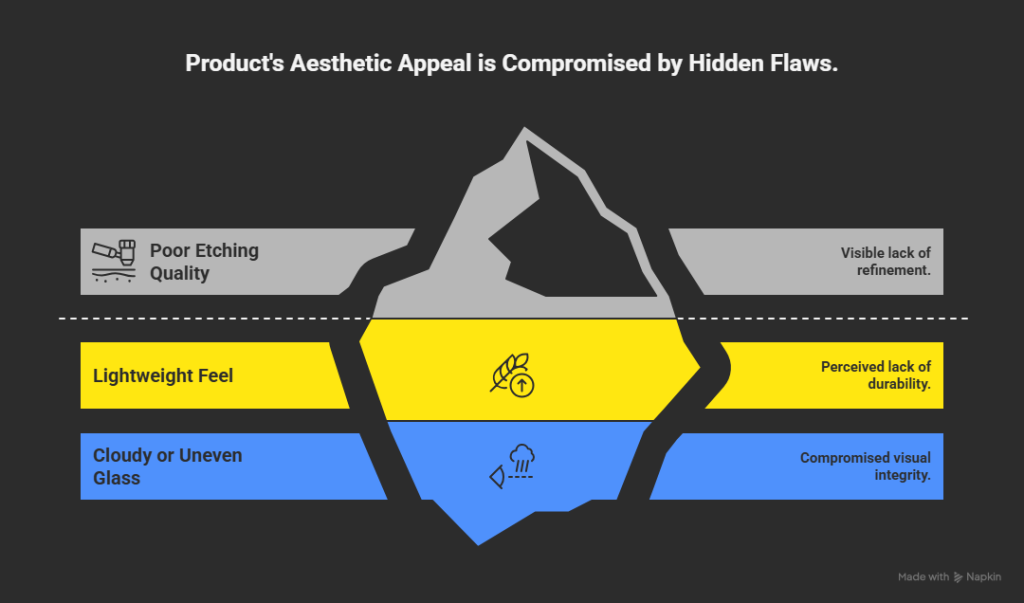
Counterfeiters attempt to replicate Baccarat markings and designs, but several telltale signs reveal fraudulent pieces.
Poor Etching Quality
Fake stamps appear blurry, uneven, or incorrectly proportioned. The text may be poorly centered, and the glass icon lacks detail.
Authentic acid etching shows crisp, clean lines with consistent depth throughout the mark.
Lightweight Feel
Imitations using regular glass or low-lead crystal feel noticeably lighter than genuine Baccarat. If a piece seems too light for its size, it’s likely not authentic crystal.
Weight remains the easiest physical characteristic to assess.
Cloudy or Uneven Glass
Genuine Baccarat never appears cloudy, streaked, or tinted. Any haziness, bubbles, or color variation indicates inferior materials.
Counterfeits often use cheaper glass that can’t match Baccarat’s flawless clarity and transparency.
How to Verify Baccarat Crystal Professionally
When self-assessment leaves doubt, professional authentication provides definitive answers and documentation.
Appraisers and Antique Dealers
Certified appraisers specializing in decorative arts can authenticate Baccarat pieces.
They evaluate markings, craftsmanship, and design against known examples.
Appraisals cost $100-300 but provide written documentation valuable for insurance and resale purposes.
Baccarat Archives
The Baccarat Museum in Paris maintains historical records and can authenticate pieces through design matching.
Contact them with detailed photographs for preliminary assessment. They occasionally assist with dating and pattern identification, particularly for rare or unusual items.
Auction House Authentication
Major auction houses like Sotheby’s and Christie’s employ crystal experts who authenticate items for consignment.
Even if not selling, their specialists provide expert opinions.
Regional auction houses with decorative arts departments offer more accessible authentication services.
Caring for Authentic Baccarat Crystal
Proper maintenance preserves brilliance and prevents damage that diminishes value and beauty.
Hand Washing Only
Never put Baccarat crystal in dishwashers. Hand wash with mild soap and warm water, using a soft cloth or sponge.
Rinse thoroughly and dry immediately with a lint-free towel to prevent water spots. Support bases and stems carefully during washing.
Avoiding Thermal Shock
Never expose the crystal to extreme temperature changes. Allow refrigerated items to reach room temperature before washing.
Avoid pouring hot liquids into cold crystal or vice versa, as thermal shock can cause cracking or shattering.
Storage Tips for Longevity
Store pieces separately to prevent scratching and chipping. Use a soft cloth between stacked items or keep them in their original boxes.
Avoid cabinets with wire racks that can scratch bases. Display the crystal away from direct sunlight, which can highlight imperfections over time.
FAQ — Identifying Baccarat Crystal
Do all Baccarat crystal have a mark?
No. Pieces made before 1936 typically have no mark, and paper labels on some vintage items have disappeared.
Unmarked pieces require authentication through weight, clarity, craftsmanship, and design pattern matching.
Can Baccarat crystal lose its stamp?
The acid-etched mark is permanent and cannot wear off under normal use. If a stamp appears faded or removable, it’s likely a fake paper label or poorly executed counterfeit marking rather than genuine acid etching.
Is Baccarat crystal always leaded?
Yes. All Baccarat crystal contains 24-30% lead oxide, which creates its characteristic weight, brilliance, and clarity.
This traditional formulation has remained consistent throughout the company’s history and defines luxury crystal.
How old does Crystal need to be to be valuable?
Age alone doesn’t determine value—rarity, condition, and pattern matter more.
Some modern limited editions are worth more than common vintage pieces.
Generally, pre-1950 Baccarat items in excellent condition command premium prices among collectors.
Final Verdict — How to Confidently Identify Baccarat Crystal
Authenticating Baccarat crystal requires a systematic approach combining multiple verification methods.
Start by checking for the acid-etched circular stamp with “Baccarat” text and glass icon—this immediately confirms pieces made after 1936.
For unmarked items, assess physical characteristics: substantial weight, perfect clarity, and a bell-like ring when tapped indicate genuine crystal.
Examine craftsmanship through hand-cut precision, sharp, polished edges, and flawless symmetry.
Compare against known counterfeits by evaluating etching quality, weight, and glass clarity.
When uncertainty persists, seek professional authentication through certified appraisers or experts from auction houses.
Remember that older pieces legitimately lack markings, requiring pattern identification and material assessment.
By methodically checking marks, weight, sound, clarity, and craftsmanship details, you’ll develop confidence in distinguishing authentic Baccarat from imitations, protecting your investment, and appreciating the true artistry behind each piece.