Lenox crystal marks serve as primary identification tools for authenticating glassware and determining production origins.
These marks, ranging from acid-etched logos to paper labels, confirm manufacturer attribution and help distinguish genuine Lenox from similar crystal brands.
Understanding where to locate marks, how they’ve evolved through decades of production, and what distinguishes authentic from counterfeit markings empowers collectors and owners to verify their pieces confidently.
Whether you’ve inherited crystal stemware, purchased pieces from estate sales, or are building a collection, recognizing Lenox marks prevents costly authentication mistakes.
This comprehensive guide examines every mark type Lenox employed, explains location patterns, details temporal changes in marking practices, and provides expert authentication techniques ensuring you can identify genuine Lenox crystal reliably.
What Are Lenox Crystal Marks?
Lenox crystal marks are manufacturer identifiers applied to glassware, confirming production authenticity and brand attribution.
These marks appear as acid-etched engravings, paper labels, or foil stickers displaying the Lenox name, logo, or production information.
Marks distinguish Lenox from competitors and provide dating clues through evolving styles across production periods.
Purpose of Crystal Markings
Crystal markings serve multiple purposes, including brand identification, authenticity confirmation, and consumer confidence building.
Manufacturers mark pieces to prevent counterfeiting and establish provenance for quality control.
Marks help consumers verify purchases match represented brands, particularly important for premium glassware commanding higher prices.
For collectors and inheritors, marks provide definitive attribution when visual characteristics alone prove insufficient.
Marking practices also reflect manufacturing pride, with permanent etched marks demonstrating commitment to quality and brand reputation.
Difference Between Marks and Decorative Designs
Marks are manufacturer identifiers, typically text reading “LENOX” or company logos, while decorative designs constitute pattern elements like cuts, etchings, or ornamental motifs.
Marks serve authentication purposes and appear in discrete locations, usually bases or stems.
Decorative designs create aesthetic appeal and define specific patterns.
Confusion arises when elaborate pattern etchings obscure marks or when consumers mistake decorative elements for manufacturer signatures.
Understanding this distinction prevents misidentifying pattern features as marks during authentication attempts.
Why Marks Are Important for Identification
Marks provide definitive manufacturer attribution when present and legible, eliminating the guesswork inherent in visual analysis alone.
They confirm pieces originate from Lenox rather than similar manufacturers producing comparable styles.
Marks also aid dating through evolving marking practices across production eras. For replacement searches and set completion, confirmed Lenox attribution ensures purchasing compatible pieces.
Insurance documentation and estate valuations require definitive authentication, making marks crucial for establishing provenance and supporting value claims in formal contexts.
Overview of Lenox Crystal Branding
Lenox’s crystal division maintained distinct branding from its famous china line, though both shared company identity.
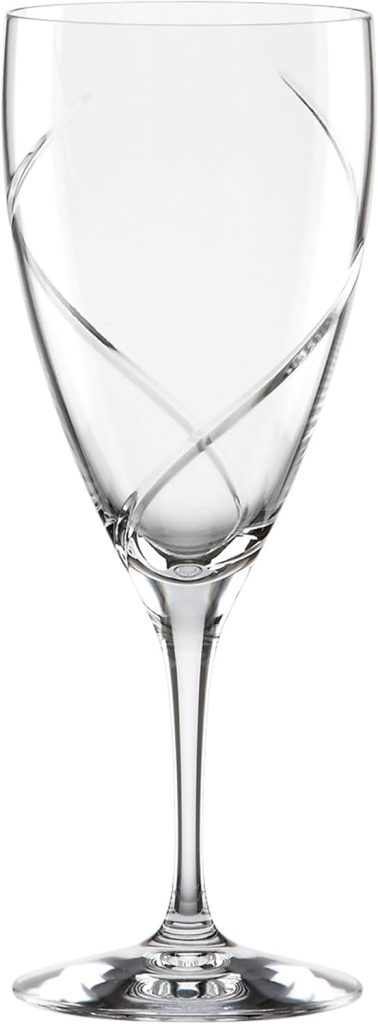
Understanding branding evolution through production location changes and market positioning helps contextualize marking practices.
Registry-era marketing particularly influenced how Lenox marked and presented crystal to consumers during the peak popularity decades.
Lenox Crystal vs Lenox China Marks
Lenox crystal and Lenox china feature completely different marking systems despite shared brand ownership.
China marks typically include elaborate backstamps with pattern names, dates, and decorative elements applied during production.
Crystal marks remain simpler—usually just “LENOX” text etched into glass bases without additional information.
China backstamps use ceramic-specific marking techniques, while crystal employs glass etching or labels.
The categorical difference means China-marking references don’t apply to crystal identification, requiring separate knowledge bases for proper authentication.
Domestic vs Imported Lenox Crystal
Lenox crystal production shifted between domestic United States facilities and international manufacturing over its history.
Early pieces often featured “Made in USA” designations alongside Lenox marks, indicating domestic production.
Later production moved to European and Asian facilities, with marks sometimes including “Made in Germany,” “Made in the Czech Republic,” or similar origin statements.
Import origins don’t necessarily indicate quality differences but reflect manufacturing economics. Origin information in marks helps date pieces and understand production history.
Types of Lenox Crystal Marks
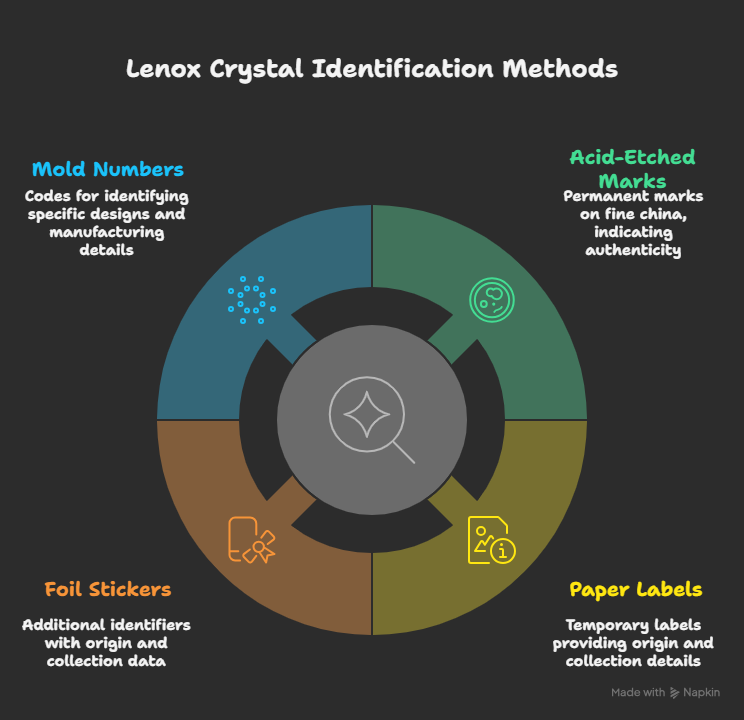
Lenox employed several marking methods throughout its crystal production history.
Understanding each mark type’s characteristics, durability, and typical application periods aids identification and authentication.
Different mark types offer varying reliability levels, with permanent etched marks providing the greatest confidence, while removable labels prove more problematic.
Acid-Etched or Engraved Lenox Marks
Acid-etched or hand-engraved marks represent the most permanent and reliable Lenox identifiers.
These marks appear as frosted white text or logos etched directly into glass, typically reading “LENOX” in block or script lettering.
Etching creates a slight surface depression distinguishable by touch and visible under angled lighting.
Placement concentrates on bases where marks remain unobtrusive during use. Etched marks survive washing and handling indefinitely, making them ideal authentication tools.
Quality and clarity indicate authentic factory marking versus crude counterfeit attempts.
Paper Labels and Foil Stickers
Paper labels and metallic foil stickers provided supplemental identification, particularly on newer production and registry pieces.
These adhesive marks feature Lenox logos, sometimes with pattern names, care instructions, or origin information.
Labels offered economical marking for pieces where etching proved difficult or cost-prohibitive.
However, paper labels detach easily during washing or normal handling, making their absence common on authentic pieces.
Surviving labels provide convenient authentication but shouldn’t be relied upon exclusively.
Counterfeiters reproduce labels more easily than etching, requiring verification through additional characteristics.
Mold Numbers or Pattern Codes
Some Lenox crystal pieces include numeric codes etched alongside or instead of text marks.
These numbers represent mold identifiers or internal production codes rather than pattern designations consumers recognize.
Mold numbers rarely help identification without access to factory records linking codes to specific patterns or production dates.
Casual collectors find these codes minimally useful, though specialists may decode meanings through research.
Their presence confirms factory production but requires additional verification methods for complete authentication and pattern identification.
Where to Find Lenox Crystal Marks
Marks follow predictable placement patterns based on piece type and marking method.
Knowing where to search increases discovery success, particularly when marks appear faint or partially obscured.
Systematic examination of standard locations prevents overlooking subtle marks that confirm Lenox attribution.
Bottom of the Base or Foot
The most common mark location is the base or foot center—the flat circular platform supporting stemware or the bottom surface of bowls and vases.
Marks typically appear dead center, etched into the polished base.
Angling pieces under direct lighting reveals frosted etching against clear glass. Some pieces feature marks offset from the center or near the edges.
Bases accumulate scratches from use, obscuring marks, requiring careful examination under good lighting.
This placement keeps marks discrete during use while remaining accessible for authentication.
Under Bowls or Stems
Some stemware features marks etched on bowl undersides near stem connections or along stem shafts.
This placement proves less common than base marking but appears occasionally, particularly on pieces where base decoration precluded marking.
Stem marks require rotating pieces under lighting to detect. Bowl underside marks may be quite small and easily overlooked without systematic searching.
These alternative placements demonstrate Lenox’s commitment to marking even when standard locations proved impractical.
Why Marks May Be Faint or Worn
Acid-etched marks, while permanent, sometimes appear faint due to shallow etching depth or glass polishing during manufacturing.
Normal use creates microscopic scratches around marks, reducing contrast and visibility.
Hard water deposits or residue accumulation can fill etched depressions, obscuring marks until cleaned.
Some cleaning methods or abrasives unintentionally polish bases, diminishing mark clarity over decades.
Age and handling contribute to fading appearance, though marks remain present under proper lighting and examination.
Understanding these factors prevents dismissing authentic pieces as unmarked.
How Lenox Crystal Marks Have Changed Over Time
Lenox’s marking practices evolved significantly across production decades, reflecting manufacturing technology changes, marketing strategies, and quality control standards.
Understanding temporal marking patterns helps date pieces and explains why certain production periods feature more consistent marking than others.
Early Lenox Crystal (Mid-20th Century)
Early Lenox crystal production through the 1960s-1970s featured inconsistent marking practices with greater reliance on removable labels than permanent etching.
Many early pieces left factories unmarked or with only paper labels that frequently detached.
When present, early etched marks often appear quite subtle with script lettering rather than later block text.
Factory emphasis focused on design and craftsmanship over permanent branding.
This period produces many authentic, unmarked pieces requiring identification through design characteristics and quality assessment.
Registry-Era Lenox Crystal (1980s–2000s)
The registry boom increased, marking a shift toward standardization as consumers expected clear brand identification on premium purchases.
Lenox adopted more consistent acid-etching practices, with most pieces receiving permanent “LENOX” marks in bold block lettering.
Marketing emphasized American quality and brand heritage, reflected in prominent marking.
This period features the most reliably marked production, making authentication relatively straightforward.
Registry packaging included pattern information and certificates supplementing physical marks.
Standardization during these decades significantly aids identification and dating.
Modern Lenox Crystal
Contemporary Lenox crystal features clear, consistently applied etched marks using refined manufacturing techniques.
Modern etching produces crisp, easily readable marks with uniform depth and placement.
Production often combines permanent etching with informational labels providing pattern names and care instructions.
Quality control ensures nearly all pieces receive proper marking before leaving the factories.
Modern pieces prove easiest to authenticate due to marking consistency and clarity.
However, production scale reductions as the crystal market contracted mean fewer contemporary Lenox crystal exists compared to registry-era volumes.
How to Identify Lenox Crystal Without a Mark
Many authentic Lenox pieces lack visible marks due to label loss, faint etching, or unmarked production periods.
Unmarked pieces require authentication through design analysis, craftsmanship evaluation, and comparative research.
Multiple verification methods increase confidence when definitive marks are absent.
Pattern Identification
Identifying specific Lenox patterns through visual analysis provides strong attribution evidence even without marks.
Researching pattern names through catalogs, replacement services, and collector resources confirms that pieces match documented Lenox designs.
Distinctive pattern elements—specific cut arrangements, etching styles, stem shapes—serve as fingerprints linking unmarked pieces to verified examples.
Successfully matching patterns to official Lenox catalog images strongly suggests authenticity.
You can match by design using systematic comparison against reference materials to establish probable Lenox attribution for unmarked pieces.
Cut Quality and Symmetry
Lenox crystal exhibits superior cutting precision, symmetry, and finishing quality, distinguishing it from mass-market alternatives.
Examining cut edges reveals crisp, uniform execution without chips or irregularities. Geometric patterns display mathematical precision with evenly spaced elements.
Polishing produces brilliant clarity without cloudiness or distortion. Hand-finishing removes mold seams and production marks completely.
This quality consistency reflects manufacturing standards and skilled craftsmanship. While quality alone doesn’t prove Lenox attribution, substandard execution effectively rules it out.
Stem and Base Characteristics
Lenox stems feature refined proportions, smooth finishing, and structural integrity, indicating quality construction.
Base designs incorporate specific foot profiles, diameter proportions, and polishing standards.
Examining these structural elements against documented Lenox patterns helps confirm attribution.
Weight, balance, and tactile quality feel substantial and well-engineered.
Comparing questionable pieces directly against verified Lenox examples reveals characteristic similarities or disqualifying differences.
Structural analysis combined with pattern recognition provides reasonable authentication confidence when marks are absent.
How to Tell Real Lenox Crystal Marks From Fake or Misleading Marks
Counterfeit marks occasionally appear on non-Lenox pieces, requiring authentication beyond simple mark presence.
Understanding authentic mark characteristics helps distinguish genuine factory marking from fraudulent additions.
Careful examination reveals telltale differences between legitimate and fake marks.
Etching Depth and Clarity
Authentic Lenox etching displays consistent depth, crisp edges, and professional execution.
Factory etching produces a uniform frosted appearance without irregular depths or rough edges.
Fake marks often show crude etching with uneven depths, ragged letter edges, or obviously amateur execution.
Examining etching under magnification reveals quality differences. Authentic marks display professional precision while fakes appear amateurish.
Etching too deep or too shallow compared to verified examples suggests a counterfeit.
Authentic marks integrate naturally with the glass surface rather than appearing obviously added.
Font and Logo Consistency
Lenox used specific fonts and logo designs during different production periods. Authentic marks match documented Lenox typography rather than generic fonts.
Letter spacing, sizing, and proportions remain consistent with factory standards. Counterfeit marks often use incorrect fonts, odd spacing, or logo variations never employed by Lenox.
Comparing questionable marks against verified examples from similar periods reveals inconsistencies indicating fakes.
Font analysis requires reference materials showing authentic mark variations across production decades.
Incorrect Placement
Authentic Lenox marks appear in standard locations, typically base centers following predictable placement patterns.
Marks in unusual positions like rim edges, exterior bowl surfaces, or random stem locations suggest counterfeit additions.
While occasional authentic variations exist, placement departing significantly from norms warrants skepticism.
Counterfeiters sometimes add marks to conspicuous locations rather than discrete bases, creating authentication red flags.
Understanding typical placement patterns helps identify suspiciously positioned marks requiring additional verification.
Using Lenox Crystal Marks to Determine Value
Mark presence influences value through authentication confidence and collector preferences.
Understanding how marks affect pricing helps establish realistic value expectations and guides purchasing decisions.
While marks matter, they represent only one valuation factor among many considerations.
Marked vs Unmarked Pieces
Marked pieces generally command modest premiums over unmarked equivalents due to definitive authentication, eliminating attribution uncertainty.
Buyers pay slightly more for verification confidence, particularly when purchasing remotely without hands-on examination.
However, premium differences remain relatively small—perhaps 10-20%—unless pieces are exceptional.
Unmarked pieces from well-documented patterns with distinctive characteristics sell successfully at near-comparable prices when properly described.
Authentication through pattern recognition and quality assessment mitigates mark absence for informed buyers.
Discontinued Patterns
Marks proving discontinued pattern attribution can significantly impact value when replacement demand exceeds supply.
Confirmed identification enables premium pricing justified by scarcity and completion difficulty.
Marks, including pattern names or production codes, aid dating and pattern confirmation, supporting value claims.
However, pattern desirability matters more than mark presence—popular discontinued patterns command premiums regardless of marking, while unpopular patterns remain modestly priced despite clear marks.
Complete Sets vs Single Stems
Marks on complete sets provide authentication confidence, justifying premium pricing for multiple coordinated pieces.
Buyers purchasing sets want assurance that all pieces share authentic Lenox provenance rather than mixed origins.
Sets with consistent marking across all pieces prove most desirable and valuable. Individual marked pieces serve replacement purposes, maintaining steady demand but modest values.
Set completeness and condition impact value more significantly than marking alone, though marks contribute to the overall authentication package.
Professional Ways to Verify Lenox Crystal Marks
Professional verification provides definitive authentication when personal analysis proves insufficient.
Various experts offer identification services with differing specializations and fee structures.
Understanding which professionals possess relevant expertise ensures reliable results.
Replacement Specialists
Crystal replacement services like Replacements, Ltd. maintain extensive databases and authentication expertise from handling thousands of pieces.
These specialists identify patterns and confirm manufacturer attribution, often providing free preliminary identification, hoping to facilitate purchases.
Their commercial focus means extensive Lenox knowledge from inventory management and customer service experience.
Replacement specialists excel at pattern identification and can often confirm Lenox attribution through design analysis even when marks prove absent or questionable.
Antique Dealers and Appraisers
Specialized antique dealers and certified appraisers offer formal authentication and valuation services for insurance and estate purposes.
These professionals examine marks for authenticity indicators, comparing them against reference materials and experience with verified examples.
Appraisal services include documentation suitable for official purposes beyond casual identification.
Selecting dealers and appraisers requires researching specializations, as not all antique experts possess specific Lenox crystal knowledge.
Professional organizations maintain directories of qualified appraisers.
Lenox Archives and Catalogs
Historical Lenox catalogs provide definitive documentation of authentic marks, patterns, and production dates.
Archives whether the company maintained or the collector assembled—preserve marking samples enabling direct comparison.
Some collectors and researchers maintain comprehensive Lenox crystal references accessible through online communities.
Consulting archived materials offers unimpeachable evidence of authentic mark styles and evolution.
Libraries and historical societies sometimes maintain manufacturer catalogs as local history resources, particularly in regions where Lenox operated facilities.
FAQ — Lenox Crystal Marks
No, many authentic Lenox pieces lack permanent marks, particularly early production and pieces that lost paper labels.
Unmarked pieces require identification through pattern recognition and quality assessment.
Mark absence doesn’t indicate fake pieces—many genuine items left factories unmarked or marked only with removable labels.
Acid-etched marks are permanent and won’t wear off, though they may appear faint from scratches, residue, or shallow original etching.
Paper labels and stickers detach easily during washing or handling. Marks might seem invisible until examined under proper lighting from correct angles, revealing frosted etching.
Labels provide convenient identification, but shouldn’t be the sole authentication proof.
Counterfeiters reproduce labels more easily than replicating quality craftsmanship and accurate designs.
Verify labeled pieces through cut quality, pattern accuracy, and consistency with documented Lenox characteristics before confirming authenticity based on labels alone.
Yes, marking styles evolved across production periods.
Early pieces featured script marks or labels, registry-era pieces show standardized block lettering, and modern production uses crisp contemporary etching.
Origin statements like “Made in USA” versus imported designations also indicate production periods, helping establish approximate manufacturing dates.
Final Verdict — How Reliable Are Lenox Crystal Marks?
Lenox crystal marks provide valuable authentication evidence when present and genuine, offering definitive manufacturer attribution.
However, mark reliability requires understanding their limitations—many authentic pieces lack marks while counterfeiters occasionally add fake markings.
Effective authentication combines mark examination with pattern identification, craftsmanship evaluation, and comparative research against documented examples.
When marks exist, verify etching quality, font accuracy, and placement consistency against authenticated pieces.
For unmarked items, analyze design characteristics, cut precision, and structural elements, confirming the quality standards Lenox maintained.
Professional verification through replacement specialists, appraisers, or archival research provides definitive answers when personal analysis proves insufficient.
Remember that marks represent one authentication element within a comprehensive evaluation considering patterns, quality, and provenance together for confident Lenox crystal identification.