If you’ve ever flipped over a vintage glass dish or colorful drinking glass and spotted an anchor symbol, you’re holding a piece of American glassware history.
Anchor Hocking has been producing affordable, durable glass products for nearly a century, and their marks tell the story of when and where each piece was made.
Whether you’ve inherited grandmother’s bakeware, found treasure at a thrift store, or are building a collection, learning to identify Anchor Hocking marks helps you authenticate pieces, date them accurately, and understand their value.
Not every piece carries a visible mark, though, so knowing what else to look for, pattern details, glass characteristics, and manufacturing clues ensures you can confidently identify Anchor Hocking glass even when the signature isn’t obvious.
What Are Anchor Hocking Glass Marks?
Anchor Hocking glass marks are identifiers molded, stamped, or printed onto glassware to show the manufacturer’s name and authenticate the product.
These marks typically include the company’s anchor logo, the “Anchor Hocking” name, or both.
They serve as the manufacturer’s signature and help distinguish genuine Anchor Hocking products from similar glassware.
Purpose of Manufacturer Marks
Manufacturer marks exist primarily to identify the maker and build brand recognition.
For consumers, these marks provide confidence that they’re buying a trusted product.
For collectors, marks become essential tools for authentication, dating, and valuation.
They also help differentiate between various glass companies that produced similar styles during overlapping periods.
Mold Marks vs Brand Marks
Mold marks are numbers, letters, or symbols that indicate which production mold created the piece; they’re manufacturing identifiers rather than branding.
Brand marks, like the Anchor Hocking logo, specifically identify the company.
You might find both on a single piece: mold marks help track production details, while brand marks confirm who made it.
Why Some Anchor Hocking Pieces Are Unmarked
Not all Anchor Hocking glass carries visible marks. Early production pieces sometimes lacked consistent marking, and certain product lines were never marked at all.
Additionally, marks on heavily used pieces can wear down or become illegible over time.
Some unmarked pieces are genuine Anchor Hocking; they just require identification through other characteristics like pattern and construction.
Overview of Anchor Hocking Glass
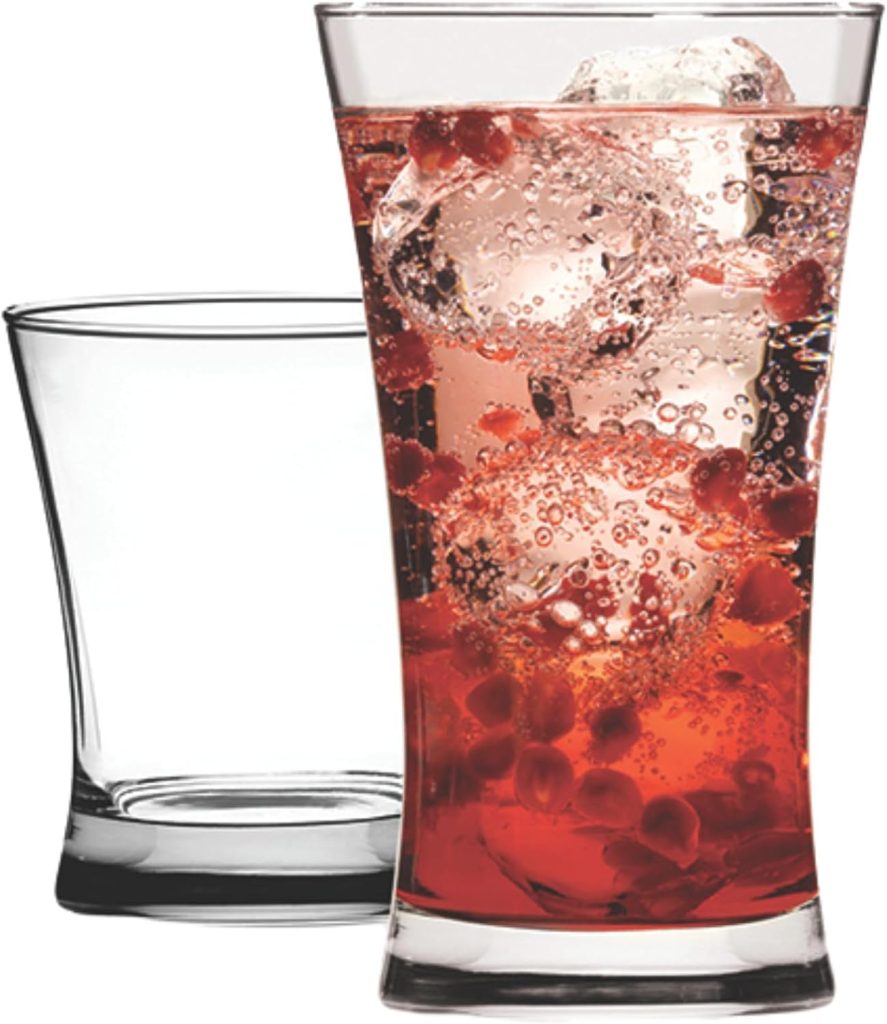
Anchor Hocking is one of America’s most recognizable glass manufacturers, known for producing practical, everyday glassware that has stood the test of time.
Understanding the company’s background and product range helps contextualize the marks you’ll encounter and explains why certain pieces have become collectible.
History of Anchor Hocking (USA)
Founded in Lancaster, Ohio, Anchor Hocking emerged from a 1937 merger between the Anchor Cap Corporation and Hocking Glass Company.
The combined company quickly became a major American glass producer, specializing in affordable tableware, kitchenware, and storage products.
Production continues today, though the company has changed ownership multiple times and shifted some manufacturing overseas.
Pressed Glass, Tempered Glass, and Ovenware
Anchor Hocking specialized in pressed glass, a manufacturing method that creates patterns by pressing molten glass into molds.
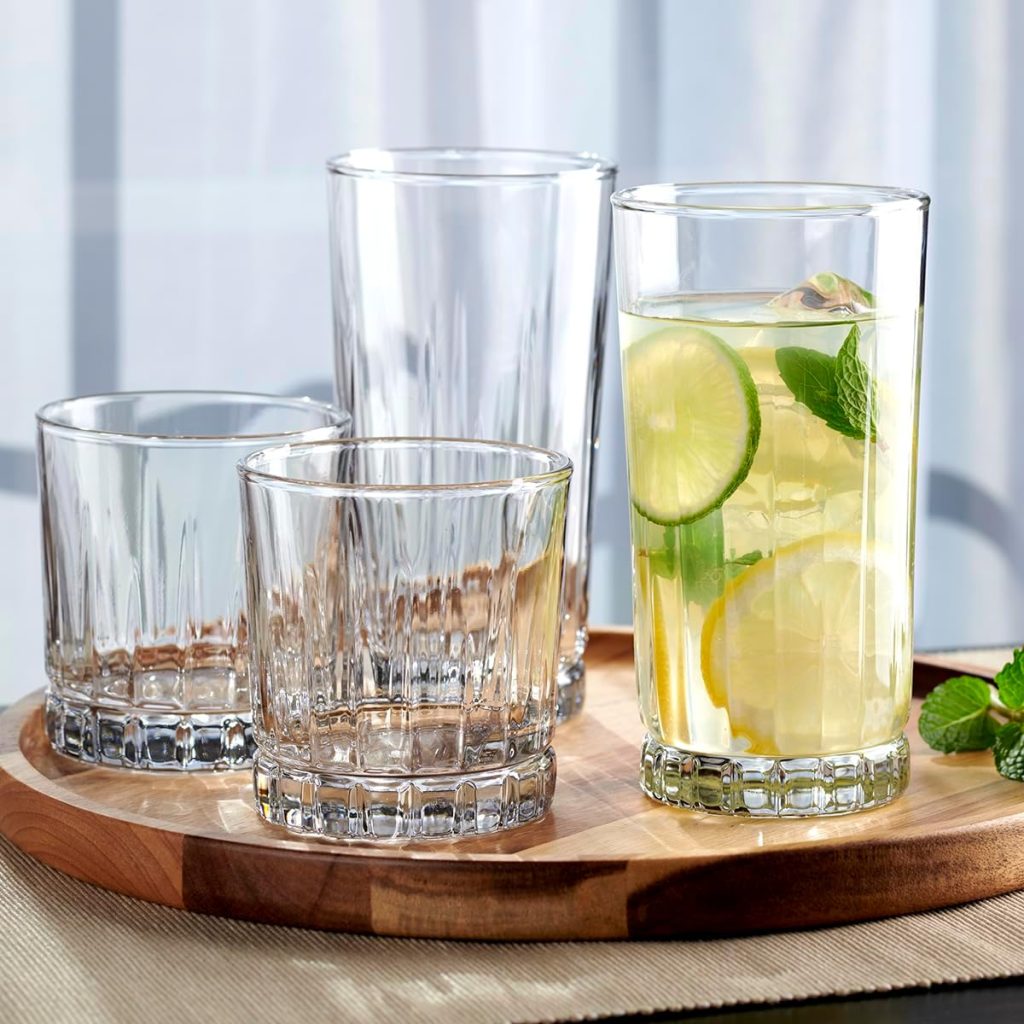
They also pioneered tempered glass for consumer use, producing heat-resistant ovenware and bakeware that could go from freezer to oven.
This combination of decorative pressed glass and functional tempered products defined their product range.
Anchor Hocking vs Fire-King Branding
Fire-King is actually Anchor Hocking’s trademarked name for their heat-resistant ovenware line, introduced in the 1940s.
Fire-King pieces are Anchor Hocking products, but not all Anchor Hocking glass is Fire-King.
The Fire-King brand developed its own devoted collector following, making those specific marks particularly sought-after.
Similar to identifying Edinburgh crystal glassware, recognizing brand sub-lines matters for accurate authentication.
Common Anchor Hocking Glass Marks
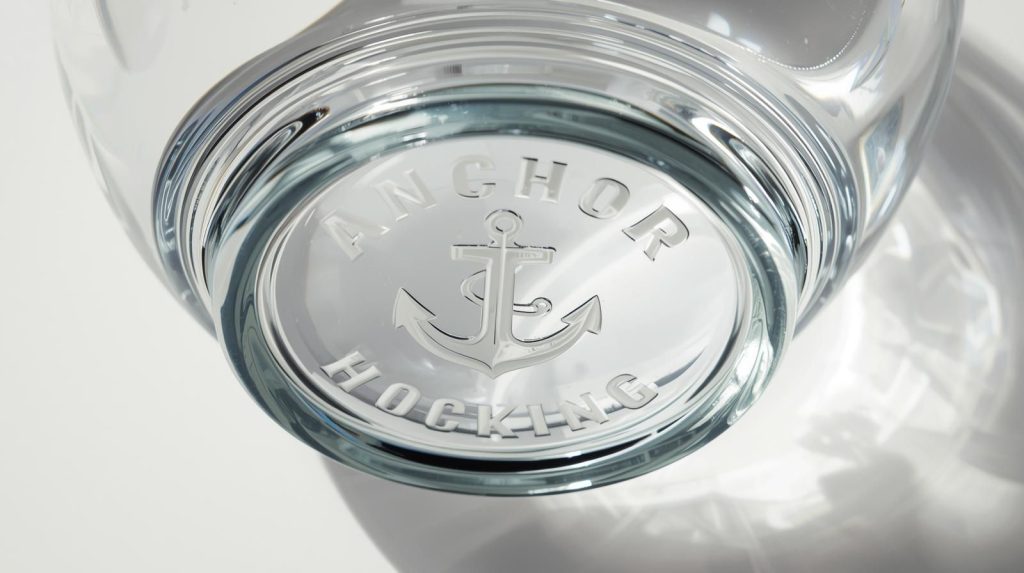
Anchor Hocking used several distinct mark styles throughout their production history.
Recognizing these common marks helps you quickly identify genuine pieces and narrow down their production era.
Most marks appear molded into the glass itself, though some later pieces feature printed or etched marks.
Anchor Logo with “Hocking” Text
The classic Anchor Hocking mark features a stylized anchor symbol accompanied by “Hocking” text, either above, below, or beside the anchor.
This mark typically appears molded into the base of pieces and stands as the company’s most recognizable identifier.
The anchor design varies slightly across eras, with some versions more detailed than others.
“Anchor Hocking” Word Mark
Some pieces display “Anchor Hocking” spelled out in block or script lettering without the anchor symbol.
This word mark appears on mid-century pieces and typically indicates mass-market production lines.
The text might be quite small and require good lighting to read clearly, especially on transparent glass.
Oven-Safe & Product-Specific Marks
Ovenware and bakeware often carry additional marks beyond the standard logo, including “Oven Proof,” “Fire-King,” temperature guidelines, or capacity measurements.
These product-specific marks confirm the piece’s intended use and provide functional information.
Storage containers might include size indicators or “Made in USA” stamps alongside the Anchor Hocking mark.
How Anchor Hocking Marks Changed Over Time
Anchor Hocking’s marking practices evolved significantly from the company’s founding through modern production.
These changes reflect shifts in manufacturing processes, branding strategies, and consumer expectations. Understanding temporal variations helps you date pieces more accurately.
Early Anchor Hocking (1930s–1940s)
Early production featured simple molded marks, often just a basic anchor symbol or abbreviated lettering.
Marking wasn’t always consistent during this period, and many early pieces went unmarked.
This era overlaps with Fire-King’s introduction, so you’ll sometimes find both Anchor Hocking and Fire-King marks on the same piece from the 1940s.
Mid-Century Anchor Hocking (1950s–1970s)
The post-war decades brought clearer, more standardized anchor logos.
Mass-market production meant most pieces from this era carry visible marks, making mid-century Anchor Hocking relatively easy to authenticate.
The marks became a deliberate part of the brand identity rather than just a production necessity.
Modern Anchor Hocking Marks
Contemporary Anchor Hocking uses simplified branding that often includes country-of-origin information like “Made in China” or “Made in USA,” reflecting manufacturing changes.
Modern marks tend to be less detailed than vintage ones and sometimes appear as printed labels rather than molded marks.
The anchor logo remains recognizable but streamlined.
Where to Find Anchor Hocking Marks
Knowing where to look saves time and prevents you from missing subtle marks.
Anchor Hocking placed marks in predictable locations based on the product type, though exact placement could vary between items and production runs.
Bottom of Bowls and Glasses
For mixing bowls, serving bowls, drinking glasses, and tumblers, check the center of the base.
The mark usually sits in the middle but might be slightly off-center on asymmetrical pieces.
Tilt the item under strong lighting to catch molded marks, which can be surprisingly subtle on clear glass.
Bakeware Bases
Casserole dishes, pie plates, and loaf pans carry marks on their undersides, typically centered on the bottom.
These marks might include multiple elements, such as the anchor logo, product line name, size specifications, and usage instructions.
Clean the base if needed, as baked-on residue can obscure markings.
Why Marks May Be Faint or Incomplete
Decades of use, washing, and handling can wear down molded marks, making them harder to see. Dishwashers and abrasive scrubbing accelerate fading.
Additionally, mold wear during production sometimes created weak impressions that were faint from the start.
Don’t assume a piece isn’t Anchor Hocking just because the mark is barely visible.
How to Date Anchor Hocking Glass Using Marks
Dating Anchor Hocking requires matching the mark style to specific production periods and cross-referencing with pattern and color details.
While marks alone won’t give you an exact production year, they narrow the timeframe considerably when combined with other identifying characteristics.
Identify Logo Style
Start by determining which mark type you’re looking at: early simple anchor, mid-century detailed logo, or modern simplified branding.
Note whether it includes just the anchor symbol, “Hocking” text, or the full “Anchor Hocking” name. The mark’s clarity and style point to broad production eras.
Match Mark to Era
Once you’ve identified the logo style, match it to the corresponding time period.
Simple anchors suggest 1930s-1940s, clear, detailed logos indicate 1950s-1970s, and simplified modern marks with country origins point to 1980s onward.
Fire-King marks specifically date to 1942-1976 for the original line’s peak production.
Confirm With Pattern and Color
Don’t rely solely on marks for dating; always confirm with the pattern and color.
Certain patterns and colors were only produced during specific decades. Jade-ite, for example, peaked in the 1940s-1950s.
Combining mark analysis with pattern and color identification gives you the most accurate dating possible.
Identifying Anchor Hocking Glass Without a Mark
When marks are absent, worn off, or never existed, you can still identify Anchor Hocking glass through manufacturing characteristics and design elements.
These secondary identification methods require more expertise but remain reliable when you know what to look for.
Pattern Recognition
Anchor Hocking produced distinctive patterns that remained consistent across product lines.
Familiarize yourself with popular patterns like Royal Ruby, Bubble, Manhattan, and Waterford.
Pattern databases and collector guides provide visual references for comparison.
Even without a mark, a confirmed pattern strongly suggests an Anchor Hocking origin.
Glass Color and Thickness
Anchor Hocking’s signature colors—particularly jade-ite green, pink, amber, and Royal Ruby red—help identify unmarked pieces.
The glass typically has substantial thickness and weight, especially in pressed glass patterns.
Clear glass pieces often have a slight greenish tint when viewed from the edge, characteristic of soda-lime glass formulas.
Mold Seams and Pressed Glass Clues
Examine where mold seams run. Anchor Hocking’s pressed glass shows specific seam patterns based on mold design.
The quality of pattern detail also matters: Anchor Hocking maintained good mold condition, producing crisp, well-defined patterns.
Compare the manufacturing quality and seam placement against verified examples.
Anchor Hocking Marks vs Similar American Glass Brands
Several American glass manufacturers produced similar products during overlapping periods, so distinguishing Anchor Hocking from its competitors matters for accurate identification.
Each company had characteristic marks and production details that separated them once you know what to look for.
Anchor Hocking vs Fire-King
This can be confusing since Fire-King is Anchor Hocking’s brand name for ovenware. Pieces marked “Fire-King” are Anchor Hocking products.
However, some pieces carry both marks, some only say “Fire-King,” and others just show the anchor logo. They’re the same manufacturer—Fire-King is simply their heat-resistant product line.
Anchor Hocking vs Pyrex
Pyrex, made by Corning, used borosilicate glass, while Anchor Hocking used tempered soda-lime glass.
Pyrex marks include the brand name in distinctive lettering, often with pattern codes. The glass itself differs: Pyrex is typically thinner and has different thermal properties.
While both made ovenware, their marks and glass composition clearly distinguish them.
Do Anchor Hocking Marks Indicate Lead Content?
Marks alone don’t tell you whether Anchor Hocking glass contains lead, but they help narrow down which pieces require testing.
Understanding when and where lead appears in vintage glassware helps you make informed safety decisions about using older pieces.
Lead in Vintage Glass
Vintage Anchor Hocking clear and colored glass generally doesn’t contain lead in the glass itself—they used soda-lime formulas.
However, lead can appear in decorative elements like painted designs, decals, and gold or silver trim.
The glass body is typically lead-free, but surface decorations sometimes aren’t.
Painted vs Clear Glass Safety
Plain, undecorated Anchor Hocking glass, whether clear, jade-ite, amber, or other solid colors, is generally safe for food contact.
Pieces with painted designs, especially vintage ones with bright colors or metallic accents, carry a higher lead risk. The paint or trim is the concern, not the underlying glass.
When Testing Is Recommended
If you plan to use vintage Anchor Hocking for food, especially pieces with decorative painting or trim, testing is smart.
Pieces that show paint wear, have bright orange or red decorations, or feature metallic elements warrant particular caution.
For detailed guidance on checking your glassware, consult our safety testing guide before using vintage pieces with food or drinks.
Using Anchor Hocking Marks to Determine Value
Marks influence value by confirming authenticity and helping date pieces, but they’re just one factor among many.
Pattern rarity, color, condition, and completeness all affect what collectors will pay. Understanding how marks relate to value helps you price items appropriately.
Common vs Rare Marks
Standard Anchor Hocking marks on common patterns don’t add significant value—these pieces remain affordable.
However, marks combined with rare patterns, unusual colors, or limited-production items increase desirability.
Fire-King marks on certain jade-ite patterns command premiums because that specific combination attracts dedicated collectors.
Collectible Patterns
Certain Anchor Hocking patterns are more collectible than others, and marks confirm those pieces are genuine.
Royal Ruby pieces, early jade-ite, and specific Depression-era patterns drive the collectible market.
The mark matters most when it authenticates a desirable pattern; collectors pay for the pattern more than the mark itself.
Condition and Completeness
Marked pieces in excellent condition with no chips, cracks, or cloudiness command top prices.
Complete sets—matching dinnerware, nested bowls, or bakeware sets—bring significantly more than individual pieces.
The mark confirms the set’s authenticity, which matters when buyers are investing in multiple pieces simultaneously.
FAQ — Anchor Hocking Glass Marks
No, not all Anchor Hocking glass carries visible marks. Early pieces often went unmarked, and some product lines never received consistent marking.
Additionally, marks can wear off heavily used items over time.
Yes, unmarked pieces can absolutely be authentic
Anchor Hocking. Identify them through pattern, color, construction details, and manufacturing characteristics.
Many genuine pieces simply never had marks or lost them through decades of use.
Plain, undecorated vintage Anchor Hocking is generally safe for food contact.
However, test painted or decorated pieces for lead before using them with food or beverages, especially if showing paint wear.
Molded marks can become faint from years of washing and handling, but rarely disappear completely.
Printed or painted marks are more vulnerable to fading or washing away entirely over time.
Final Verdict — How to Confidently Identify Anchor Hocking Glass
Anchor Hocking marks provide your strongest authentication tool when present and legible, but they’re not the whole story.
A clear anchor logo or “Anchor Hocking” text immediately confirms the manufacturer and helps narrow the production date, making identification straightforward.
However, plenty of genuine pieces lack visible marks, so don’t dismiss unmarked glass automatically.
Instead, combine mark identification with pattern recognition, color analysis, and manufacturing details like glass thickness and mold seams.
The most reliable identification comes from evaluating multiple factors together rather than relying solely on marks.
Whether you’re collecting, selling, or simply curious about your grandmother’s mixing bowls, understanding Anchor Hocking’s marking evolution and production characteristics gives you the confidence to separate genuine pieces from lookalikes.