Watch any child eat a meal, and you’ll witness a performance that’s part choreography, part chaos.
There’s the three-year-old who insists on carrying their own bowl to the table (you’re holding your breath with every wobbling step).
The seven-year-old who’s just mastered the art of pouring their own juice without flooding the table.
The pre-teen who can suddenly demolish an entire plate of pasta in four minutes fla,t whilst simultaneously scrolling through their tablet.
Children eat differently from adults; that much is obvious to anyone who’s ever shared a table with them.
They grip plates differently. They tip bowls at alarming angles. They use cups in ways that defy the original design intentions.
And through all these eating adventures, dinnerware plays the supporting role, taking whatever your kids throw at it (sometimes literally).
Wheat straw dinnerware has been turning up in family kitchens recently, and parents are wondering: Does it actually work for kids’ meals?
Not the marketing version of that question, the real one. Can children actually eat from it comfortably? Does it fit into their daily eating routines? Let’s find out…
How Children Use Dinnerware During Meals
Eating Meals at the Table
Children’s relationship with the dining table evolves dramatically from toddlerhood through the teenage years.
Your eighteen-month-old views their plate as both a food delivery system and a potential Frisbee.
The meal begins optimistically—food arranged on the plate, child secured in high chair, everyone hopeful this’ll go smoothly. Then reality sets in.
Breakfast with kids means cereal bowls being pulled closer, pushed away, and occasionally used as boats for floating raisins.
Your five-year-old reaches across the table for the toast rack, their sleeve dragging through the butter dish along the way.
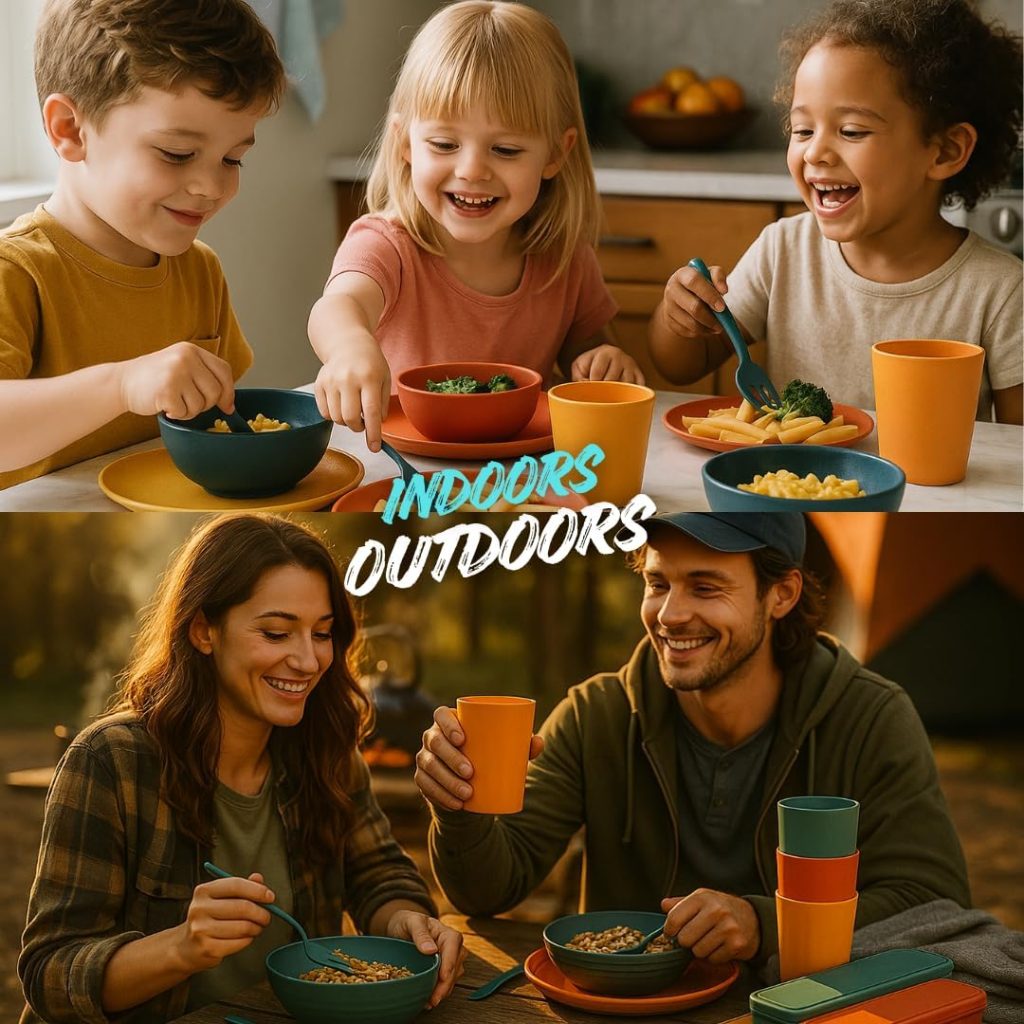
Lunch involves plates being repositioned seventeen times because “it’s too close to my water” or “I don’t like it there.”
Dinner brings the full performance, sitting, reaching for serving dishes, attempting to load their plate whilst simultaneously negotiating what counts as “enough vegetables.”
The actual eating mechanics involve more plate interaction than you’d expect. Younger children hold their plates with one hand whilst attempting to spear peas with the other.
Older kids anchor their bowl with a forearm while shoveling in pasta at impressive speeds.
Somewhere around age eight, most children figure out that keeping the plate stationary makes eating significantly easier, but getting there involves years of dragging, sliding, and occasionally knocking dinnerware about the table.
Snacks and Short Eating Moments
Here’s what nobody tells you about parenting: the snacks. Oh, the endless snacks.
Your kids consume an impressive array of short eating moments throughout the day, each requiring its own dinnerware deployment.
After-school snacks hit around 3:30 PM—apple slices on a small plate, biscuits in a bowl, cheese cubes arrayed on whatever’s clean and within reach.
These brief eating events lack the ceremony of proper meals but happen with remarkable frequency.
Mid-morning fruit break. Post-swimming pool nibbles. Pre-dinner hunger emergencies (despite dinner being “literally right there, ready in ten minutes”).
Each one involves a child grabbing a plate or bowl, loading it with food, eating while distracted, and abandoning the dish somewhere you’ll discover it hours later.
The dinnerware for these moments gets treated more casually than meal plates. Kids carry snack bowls to the sofa, balance plates on their laps whilst reading, and transport cups of juice to places dinnerware probably shouldn’t venture.
A single plate might see action four or five times between breakfast and bedtime, serving crackers, then grapes, then cheese, then whatever counts as “a proper snack” in the ongoing negotiations of childhood hunger.
How Wheat Straw Dinnerware Fits Kids’ Eating Habits
Handling Plates, Bowls, and Cups
Children interact with dinnerware through touch far more than adults do. They don’t just eat from plates—they grip them, move them, lift them, turn them, and occasionally use them as shields during imaginary battles (you asked them to stop, they nodded, the battles continue).
Watch a six-year-old at dinner: they’ll pick up their plate to examine what’s underneath, move their bowl closer for better spooning access, and handle their cup approximately forty-seven times during a single meal.
Younger children use two hands for everything. Carrying a bowl from the kitchen to the table becomes a focused mission requiring full concentration and both hands wrapped around the sides.
They pull plates towards themselves using a dragging motion across the table. Cups get gripped with determination, fingers wrapped entirely around the circumference because fine motor control is still a work in progress.
As kids age, their dinnerware handling becomes more sophisticated. By seven or eight, they’re picking up plates with one hand whilst carrying a cup in the other.
Pre-teens master the art of loading their plate at the serving table, balancing multiple items, and transporting everything back to their seat without incident (mostly).
But even teenagers still interact with their dinnerware throughout the meal—pushing bowls around, repositioning plates, fidgeting with cups between bites.
Using Dinnerware Independently
There’s a particular satisfaction in watching your child successfully feed themselves without requiring your intervention every thirty seconds.
This independence develops gradually, with dinnerware playing a central role in the learning process.
Toddlers start by attempting to use spoons in bowls, creating what can generously be described as “food distribution patterns” across the table surface.
Around age three or four, children begin managing their own plates during meals.
They serve themselves from shared dishes (with varying accuracy), decide how much food goes on their plate (usually either far too much or insultingly little), and navigate the complex mechanics of getting food from plate to mouth without losing half of it en route.
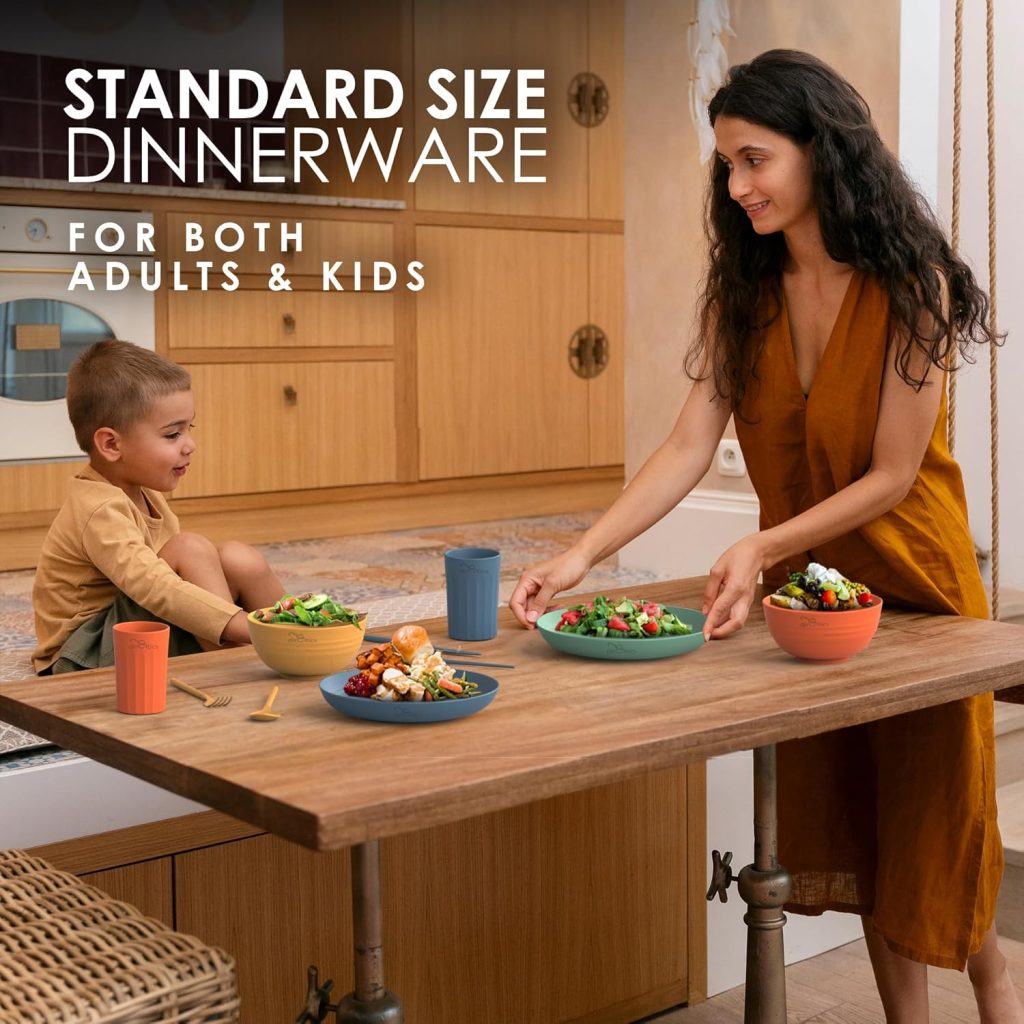
Your dinnerware bears witness to this entire educational journey.
Table habits emerge through repeated practice. Using a plate properly means keeping food on the plate rather than around it.
Managing a bowl involves understanding that tipping it too far results in spillage. Drinking from a cup without flooding yourself requires hand-eye coordination that takes years to fully develop.
Children learn these skills through thousands of meals, and the dinnerware itself becomes the teaching tool, providing immediate feedback when things go wrong, silent approval when techniques improve.
Kids’ Mealtime Routines at Home
Family Meals with Children
When everyone eats together, children learn dining behaviors by observing and participating. Your eight-year-old watches you serve vegetables and attempts to replicate the motion, usually resulting in three peas making it to their plate whilst the rest scatter across the table.
Family meals involve passing dishes, requesting items from across the table, and the general choreography of shared eating.
Kids participate in this process using their dinnerware. “Pass your plate” means your child holding their plate up or sliding it across the table towards whoever’s serving.
They learn to wait whilst food gets distributed, though this waiting is punctuated by fidgeting, plate-tapping, and inquiries about whether they’re allowed to start yet.
Once eating begins, children mirror adult behaviors—using their plates as intended, attempting proper table manners, and (on good days) not treating dinner like a food fight waiting to happen.
Clearing away afterwards involves children carrying their own plates to the kitchen. The journey from table to sink showcases their current coordination level—younger ones making the trip with exaggerated care, older kids managing it casually whilst maintaining conversation.
This routine repeats daily, and the dinnerware becomes familiar through constant use.
Meals with Siblings or Playmates
The dynamics shift considerably when multiple children share a meal without adults at the table.
School holiday lunches with siblings become freestyle events where table manners take a holiday alongside everything else.
Playdate snacks involve your child and their friend negotiating who gets which plate (even though they’re identical) and whether sharing a bowl of crisps counts as “being fair.”
Children’s social eating includes behaviors you’d never see at formal family dinners. Plates get pushed together so kids can compare portion sizes.
Bowls are positioned for optimal reaching access by multiple hands. Cups occasionally get mixed up, leading to negotiations about whose drink is whose.
Through all this, the dinnerware facilitates the social aspects of eating, sharing space, accessing food, and navigating the complex politics of childhood mealtimes.
Brothers and sisters develop their own plate-based interactions. Younger siblings try to copy what older ones do, including dinnerware handling techniques.
Older children demonstrate (sometimes with exaggerated patience) how to properly use a bowl or carry a plate.
These moments of peer-to-peer learning happen naturally during everyday meals, with dinnerware serving as the props in this ongoing education.
Types of Kids’ Meals Where Wheat Straw Dinnerware Is Used
Breakfast and School-Day Meals
Weekday mornings operate on a tight schedule, and breakfast becomes a race against the clock.
Your children’s breakfast plates appear at the table already loaded or get filled quickly from cereal boxes and toast racks.
There’s limited time for elaborate presentations—it’s functional eating designed to fuel the day ahead.
School-day meals favor speed and simplicity. Toast on a plate. Cereal in a bowl. Orange juice in a cup.
Your kids eat whilst simultaneously finishing homework, locating lost shoes, and explaining why they absolutely need to bring seventeen stuffed animals to school today.
The dinnerware needs to work quickly and without fuss because nobody has time for complicated arrangements on a Tuesday morning.
After-school meals occupy a strange middle ground—not quite dinner but more substantial than snacks.
Children arrive home ravenous (despite having eaten lunch three hours ago) and require immediate feeding.
Plates emerge loaded with whatever’s quick and filling. This daily eating event happens in the kitchen, often with kids still wearing backpacks, standing at the counter rather than sitting properly.
The dinnerware adapts to these hurried eating moments.
Weekend and Relaxed Meals
Saturday and Sunday mornings gift families with time—that precious commodity you forgot existed during the weekday scramble.
Weekend breakfast becomes an actual event rather than a pit stop. Children’s plates receive pancakes, fruit arrangements, and foods that require sitting down to properly enjoy.
Nobody’s rushing, and the eating experience expands to fill the available time.
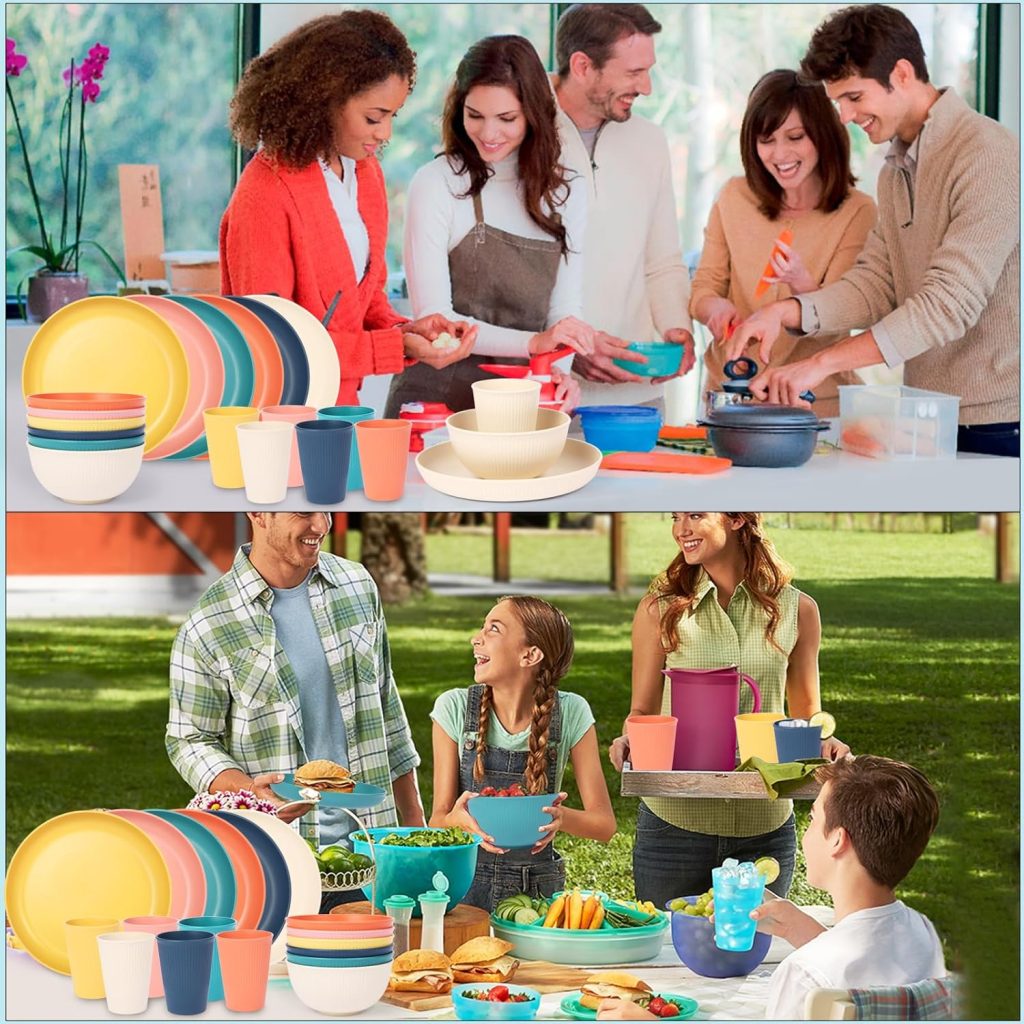
These relaxed meals let children engage more fully with their dinnerware. They actually notice what’s on their plate rather than inhaling it whilst thinking about school.
They might even eat slowly (shocking, we know). Weekend lunches and dinners follow similar patterns—less urgency, more conversation, and dinnerware that stays at the table longer because nobody’s dashing off to the next scheduled activity.
Casual weekend eating also includes impromptu moments. Mid-afternoon snacks become small events.
Late breakfast turns into early lunch without anyone particularly noticing or caring. Kids’ dinnerware sees more varied use on weekends simply because there’s time for more eating occasions throughout the day.
Using Wheat Straw Dinnerware in Different Eating Settings for Kids
Indoor Family Dining
The kitchen table serves as command central for children’s eating.
This is where breakfast happens before school, where homework gets done alongside after-school snacks, and where dinner brings everyone together.
Your kids’ dinnerware makes countless trips from cupboard to table and back again, traveling the well-worn paths of daily domestic life.
Different areas of your home host different eating events. The dining room appears for weekend family dinners and special occasions, children dressed slightly better than usual, dinnerware formally arranged, everyone pretending they eat this way every day.
The kitchen island catches quick breakfasts and lunches where kids perch on stools, plates balanced whilst they eat standing or half-sitting.
Children’s bedrooms occasionally become unauthorized eating zones despite your best efforts. Snack plates migrate upstairs during weekend movie marathons.
Cups of juice end up on bedside tables.
You’ve established rules about food staying in designated eating areas, and your children have established creative interpretations of what “designated” means.
The dinnerware facilitates these adventures regardless of whether they align with your household policies.
Outdoor Eating with Kids
When the weather permits, meals migrate to the garden, and children’s eating behaviors shift accordingly.
Garden table dinners feel like events even when you’re serving the same food you’d normally eat inside.
Something about fresh air and sunshine transforms ordinary meals into occasions worth getting excited about.
Kids handle outdoor eating differently from indoor meals. There’s more freedom, less formality, and a general sense that spillage matters less when you’re already outside.
Children carry their plates to the garden table with varying degrees of success. Bowls of fruit or crisps get passed around the patio.
Cups of squash travel from the kitchen to the garden and back multiple times as kids request refills between running around.
Picnic-style eating represents the most casual outdoor dining situation. Blanket on the lawn, plates balanced on laps, cups positioned precariously on uneven ground.
Your children think this is brilliant—all the food of a normal meal with none of the “sit still and use proper manners” requirements.
The dinnerware adapts to these informal settings, functioning perfectly well whether placed on a stable table or a lumpy bit of grass.
Why Parents Consider Wheat Straw Dinnerware for Kids’ Meals
Let’s address the elephant in the room—or rather, the plates on the table. Why do parents specifically think about wheat straw dinnerware for their children’s meals?
Daily usability
Ranks high on the priority list. You’re using these plates, bowls, and cups multiple times every single day.
Breakfast, lunch, dinner, and approximately eight thousand snacks mean your kids’ dinnerware sees constant action.
Being able to grab any plate from the cupboard without worrying about whether it’s suitable for today’s meal simplifies your already complicated routine.
Familiarity across meals
Matters more than it might seem. When all your dinnerware looks and functions the same way, children know what to expect.
They’re not relearning how to handle different plates depending on what meal it is. This consistency extends to all eating events—formal dinners and casual snacks both use the same plates.
Kids develop confidence through this familiarity, building skills that transfer across every mealtime.
Fit into children’s eating routines
This is perhaps the most practical consideration. Does it work for how your kids actually eat? Can your five-year-old carry it without struggle?
Will your teenager use it without complaint? Does it accommodate the various ways children interact with dinnerware throughout their developmental stages?
These behavioral questions matter more than technical specifications when you’re trying to get dinner on the table while managing homework, bath time, and someone’s forgotten permission slip that’s due tomorrow.
The decision isn’t about finding “perfect” dinnerware—it’s about finding what works for your family’s daily reality.
Something that functions across all the eating moments you navigate every day. Something your children can use independently as they develop table skills.
Something that shows up reliably for breakfast, lunch, dinner, and every snack in between.
Conclusion
So here’s the truth about wheat straw dinnerware and kids’ meals: children eat constantly, and whatever dinnerware you choose will get a proper workout.
From morning toast through evening dinner and all the snacks in between, your kids interact with their plates, bowls, and cups hundreds of times weekly.
We’ve explored how children actually use wheatstraw dinnerware, the gripping, moving, carrying, and occasional dropping that characterizes childhood eating.
How wheat straw plates and bowls fit into family meals, sibling dinners, and solo snacking sessions.
How kids’ eating routines vary from rushed school mornings to relaxed weekend brunches, and how wheat dinnerware adapts across all these moments.
Your kids’ dinnerware needs to be a working tool, not a worry. Now you know how wheat straw dinnerware functions in the real world of children’s meals.