Tag: Wheatware

  • DO WHEAT STRAW PLATES STAIN

    Wheat straw plates are famous among tableware because of one of their distinctive traits, which is their eco-friendliness; as a result, they stand out and are in great demand; yet, they are not flawless, just like any other dinnerware.

    One of its flaws that is frequently discussed is “Do wheat straw plates stain?” Because this is a sensitive subject among dinnerware enthusiasts, we will examine all potential aspects of wheat straw plates before deciding whether they stain or not.

    With all of this in mind, wheat straw plates will always be a useful tableware selection to have in the house.

    DO WHEAT STRAW PLATES STAIN WHITE?

    Do wheat straw plates stain white

    Wheat straw plates are generally more prone to staining than traditional plastic or glass plates due to their natural composition.

    While they are often advertised as being Eco-friendly and biodegradable, they can be more porous and absorbent, which can lead to discoloration or staining, especially if they come into contact with strongly colored or oily foods.

    It’s important to note that the extent of staining can vary depending on the specific quality and manufacturing process of the wheat straw plates.

    Some manufacturers might treat their plates to be more resistant to staining, but in general, you might observe that darker or strongly colored foods (like tomato sauce or curries) could potentially leave marks on white wheat straw plates.

    To minimize the risk of staining, you can try the following:

    Pre-Rinse:  Rinse the plates immediately after use to remove any residual food particles.

    Avoid Strongly Colored Foods: Be cautious when using foods or sauces that are known to stain surfaces.

    Use a Mild Detergent:  If needed, use a mild dishwashing detergent to clean the plates. Avoid using abrasive scouring pads, as they could damage the surface and make it more prone to staining.

    Avoid High-Temperature Dishwashers: High temperatures and strong detergents in dishwashers might worsen the staining, so consider hand-washing the plates or using a dishwasher with a gentler cycle.

    Sunlight: Exposing the stained areas to sunlight can sometimes help to lighten the stains.

    It’s important to set realistic expectations with wheat straw plates, understanding that their eco-friendly benefits might come with some trade-offs in terms of durability and resistance to staining.

    If maintaining a pristine appearance is a top priority, you might want to consider using traditional materials like glass or ceramic for your plates.

    DO WHEAT STRAW PLATES STAIN?

    Do Wheat Straw Plates Stain

    If dishes like tomato sauce or certain spices, which are highly colored or deeply pigmented, are placed on wheat straw plates, they may stain.

    Although they are typically more stain-resistant than conventional plastic plates, it is still vital to rinse or wash them right away to avoid any potential stains.

    Wheat straw plates can be kept looking nice by using mild cleaning techniques and avoiding prolonged contact with stains.

    DOES WHEAT STRAW STAIN EASILY?

    Yes, wheat straw has a propensity to discolor fairly easily. It can absorb colors and oils from food due to its naturally porous nature, which causes discoloration.

    Foods that are dark or colorful, such as curries or sauces made with tomatoes, are more prone to leaving stains on wheat straw products, such as plates and bowls.

    Although made of wheat straw, goods need a little more care to prevent and remove stains.

    Over time, prompt rinsing, avoiding meals with intense colors, and using mild cleaning techniques might help keep them looking good.

    HOW DO YOU GET STAINS OUT OF WHEAT STRAW PLATES?

    Follow these steps to remove stains from wheat straw plates:

    Take Action Right Away: Treat stains as soon as you can to stop them from setting in.

    Rinse: To get rid of any stray food particles, start by rinsing the soiled area with cold water.

    Soap and water: Warm water and light dishwashing soap should be blended. Apply a gentle sponge or cloth to the stained area, and then scrub it gently. Avoid applying anything abrasive that can harm the surface.

    Baking Soda Paste: To remove tough stains, combine baking soda and water to create a paste. Paste should be applied to the stain, allowed to soak for a bit, then scrubbed gently and rinsed.

    Solution with Vinegar: Vinegar can aid in the removal of stains. White vinegar and water should be mixed in a 1:1 ratio. After soaking the soiled area for a few minutes, scrub and rinse.

    Lemon Juice: Lemon juice also works well to remove stains. Lemon juice should be applied to the stain, and it should remain in the sun for a time before being rinsed.

    Sunlight: For a few hours, leave the plates out in the sun. Stains and odors can be naturally bleached by sunlight.

    Hydrogen Peroxide: You can use hydrogen peroxide to remove difficult stains by combining it with water (1:1) in a 1:1 ratio. After letting it sit for a while, scrub and rinse it.

    Avoid harsh chemicals: Although wheat straw plates are typically more environmentally friendly, avoid using harsh chemicals or bleach, as they could harm the substance.

    Repeat as required: Depending on how severe the stain is, you might need to repeat these procedures several times to get the stain entirely out.

    Keep in mind that the type of stain and the caliber of the wheat straw plates can affect how effective these techniques are.

    Before using any cleaning solution on the stain, try it on a small, discrete portion of the plate to make sure it won’t damage the plate.

    IS WHEAT STRAW DINNERWARE GLUTEN-FREE?

    Wheat straw tableware is often deemed gluten-free because it is created from the stalks of wheat plants rather than the gluten-containing grains themselves.

    This is why wheat straw plates are considered safe. Gluten is found largely in wheat seeds (or grains), such as wheat flour, wheat bread, and wheat pasta.

    Wheat straw is created from the non-edible parts of the wheat plant, which are hollow stems or stalks.

    These stalks are frequently considered a waste product after the grains have been collected. They can be recycled to make a variety of items, including dinnerware.

    However, depending on how the wheat straw tableware is created and handled, there may be discrepancies in production procedures or potential cross-contamination dangers, as with any product.

    If you have severe gluten allergies or sensitivities, always verify with the manufacturer to ensure that their wheat straw dinnerware is made in a gluten-free environment and is suitable for your use.

    GROW FORWARD WHEAT STRAW PLATES

    Grow forward wheat straw plates are crafted with care; the colorful wheat straw plates are a harmony of safety, quality, and style.

    Designed for the environmentally conscious, they prioritize well-being. The collection boasts exquisite bowls and plates that elevate any table setting.

    With Grow Forward wheat straw plates, your family’s health and happiness are of the utmost concern. Be at rest knowing the products are free from BPA and harmful toxins often encountered in typical dinnerware.

    Below is a carefully selected Grow Forward wheat straw plate:

    GROW FORWARD PREMIUM WHEAT STRAW PLATES AND BOWL SETS

    Introducing the remarkable Grow Forward premium Wheat Straw Plates and Bowl Sets, a versatile solution designed to enhance your dining experience while caring for the environment.

    Grow Forward Premium Wheat straw Plates and Bowls

    Unbreakable and microwave-safe, these dishes offer convenience without compromise. Crafted from reusable wheat straw, they’re the ideal alternative to traditional plastic plates and bowls, perfect for camping, RV trips, and space-saving at home.

    Engineered for your convenience, these sets are both microwave and dishwasher-safe, ensuring ease of daily use. The BPA-free material preserves your food’s taste and aroma, while the freezer-safe feature adds extra versatility.

    The unique 28 oz. Wheat straw bowls redefine practicality, catering to your needs from soup to ice cream.

    The plates feature an innovative upward-curving lip, minimizing spills and enhancing dorm living. Presenting a thoughtful gift for eco-conscious individuals and families.

    Grow Forward Wheat Straw Plates and Bowl Sets embody a blend of functionality and sustainability. Make a positive impact on your meals and the planet with this exceptional dining solution.

    DOES WHEAT STRAW DINNERWARE STAIN GREEN?

    Wheat straw dinnerware can potentially stain, and this might include stains that are green in color, particularly when exposed to certain strongly colored foods or liquids.

    Does Wheat straw dinnerware stain Green

    The natural and porous composition of wheat straw products can make them susceptible to absorbing colors and oils from different foods, which could lead to discoloration over time.

    The likelihood of green staining would depend on the specific foods or beverages that come into contact with the wheat straw dinnerware.

    Foods with vibrant green coloring, like spinach-based dishes or certain sauces, could potentially leave green stains on the dinnerware.

    To minimize the risk of staining, it’s advisable to follow proper care and cleaning instructions, including rinsing the dinnerware promptly after use and avoiding strongly colored foods that could cause staining.

    If maintaining the appearance of your wheat straw dinnerware is a top concern, you might also consider using separate plates for foods that are more likely to cause staining.

    DOES WHEAT STRAW DINNERWARE STAIN BLACK?

    Does wheat straw dinnerware stain black

    Wheat straw dinnerware can potentially stain, and this might include stains that appear black or dark in color.

    The natural composition of wheat straw products, which is porous, can make them susceptible to absorbing colors and oils from different foods, leading to discoloration over time.

    Stains that appear black could be a result of foods with strong pigments, like dark sauces or certain beverages, coming into contact with the wheat straw dinnerware. These pigments can transfer onto the porous surface of the dinnerware, causing visible discoloration.

    To minimize the risk of staining, it’s important to promptly rinse the dinnerware after use and avoid using foods or liquids that are more likely to cause staining.

    Regular and gentle cleaning methods can also help maintain the appearance of your wheat straw dinnerware over time.

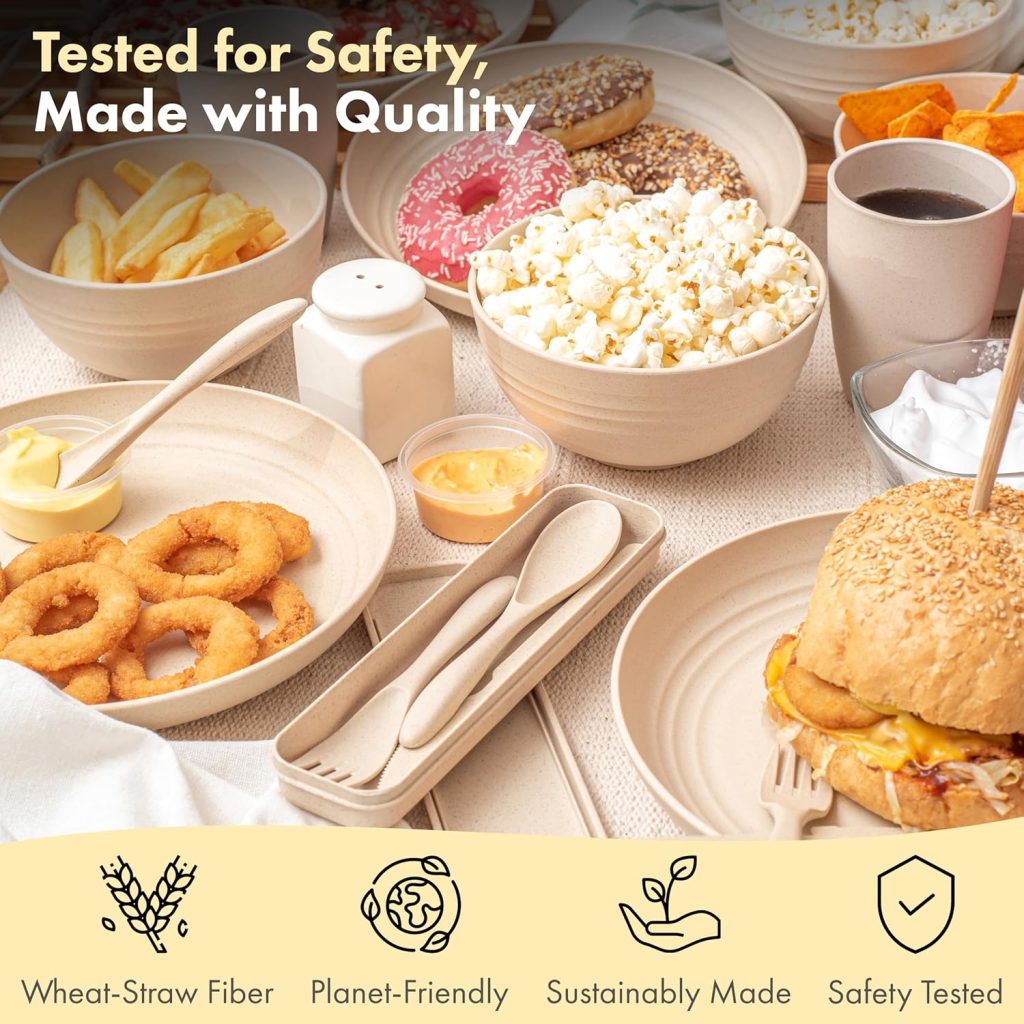
  • Is Wheat Straw Dinnerware Safe? The Complete Truth About This Eco-Friendly Alternative

    The Direct Answer: The safety of Wheat straw dinnerware depends entirely on how it’s manufactured. Pure wheat straw fiber products are generally safe, but many commercial wheat straw dinnerware items contain plastic binders that can release harmful chemicals when heated.

    Recent regulatory warnings have raised significant concerns about certain types of plant-based tableware, making product selection critical for your family’s health.

    Understanding Wheat Straw Dinnerware: What You’re Buying

    Wheat straw dinnerware isn’t just compressed wheat stalks. Most commercial products combine wheat straw fibers with binding agents to create durable tableware.

    This agricultural byproduct, typically discarded after wheat harvesting, gets processed into what manufacturers market as “eco-friendly” alternatives to traditional plastic dinnerware.

    The key distinction lies in manufacturing methods. Pure wheat straw fiber products use natural lignin and cellulose as binders, while many commercial versions incorporate plastic resins, particularly melamine-formaldehyde, to achieve durability and water resistance.

    The Current Safety Landscape: Recent Regulatory Warnings

    Is wheat straw dinnerware safe

    The safety picture for wheat straw dinnerware has become more complex in recent years.

    The UK’s Food Standards Agency (FSA) has issued warnings about tableware made from plant-based materials, including wheat straw, citing concerns about chemical leakage, particularly with hot foods, which could potentially cause gastrointestinal problems and kidney damage over time.

    The FSA specifically advised against plastic utensils containing bamboo and similar unauthorized plant-based materials such as wheat straw, due to potential formaldehyde and melamine migration.

    This doesn’t mean all wheat straw products are dangerous, but it highlights the importance of understanding what you’re purchasing.

    Material Composition: The Science Behind Safety

    Wheat straw dinnerware typically contains:

    Natural Components:

    • Wheat straw fibers (cellulose and lignin)
    • Natural plant-based polymers
    • Compressed agricultural waste

    Potential Additives:

    • Melamine-formaldehyde resins (in lower-quality products)
    • PP (polypropylene) plastic binders
    • Food-grade adhesives
    • Colorants and stabilizers

    The safety concerns primarily arise from plastic additives, not the wheat straw itself. Research has shown that melamine-based tableware containing plant materials can be a significant source of human exposure to melamine and its derivatives.

    Health and Safety Considerations: What Parents Need to Know

    For Children’s Use: Wheatstraw dinnerware marketed for children requires extra scrutiny. Young children are more susceptible to chemical migration, and they often use tableware with hot foods like heated milk, soups, and microwaved meals.

    Temperature Sensitivity: The biggest safety concern involves heat exposure. When wheat straw dinnerware containing plastic binders gets heated (microwave use, hot foods, dishwasher cycles), it can release chemicals into food.

    Regulatory agencies noted that these products could lead to chemical migration at high temperatures, potentially posing health risks.

    Celiac Disease Considerations: For individuals with celiac disease or gluten sensitivity, wheat straw dinnerware generally poses no gluten-related risks. The manufacturing process removes gluten proteins, but those with severe sensitivities should verify with manufacturers about cross-contamination during processing.

    Comparing Safety Across Dinnerware Materials

    Wheat Straw vs. Traditional Plastic: Studies show pure wheat straw plates release significantly fewer harmful substances than plastic or melamine-based alternatives. However, this applies only to high-quality, plastic-free wheat straw products.

    Wheat Straw vs. Melamine: Traditional melamine dinnerware has well-documented safety concerns with heat exposure. Quality wheat straw products offer similar durability with potentially reduced chemical migration, but only when manufactured without melamine binders.

    To know more about melamine safety in comparison to Wheat straw, read our detailed guide on the difference between wheat straw and melamine dinnerware.

    Wheat Straw vs. Ceramic/Glass: Ceramic and glass remain the safest options for hot foods. They don’t contain binding agents that can migrate into food, making them ideal for families prioritizing safety over convenience.

    Manufacturing Quality: How to Identify Safe Products

    FDA safety certified wheat straw dinnerware set

    Red Flags to Avoid:

    • Products significantly cheaper than alternatives (often indicate low-quality binders)
    • Lack of specific safety certifications
    • Strong chemical odors when new
    • Manufacturers unable to provide detailed composition information
    • Products that feel unusually lightweight or fragile

    Quality Indicators:

    • FDA approval and BPA-free certification
    • Specific testing for formaldehyde and melamine migration
    • Clear labeling of all materials used
    • SGS, LFGB, or ROHS certifications
    • Detailed care instructions that acknowledge temperature limitations.

    Practical Usage Guidelines: Maximizing Safety

    Safe Usage Practices:

    • Avoid microwaving wheat straw dinnerware, especially with fatty or acidic foods
    • Use only lukewarm or cold foods when possible
    • Hand wash with mild detergent instead of high-temperature dishwasher cycles
    • Replace products that show signs of wear, cracking, or discoloration
    • Don’t use for prolonged storage of acidic foods (tomato-based sauces, citrus).

    When to Choose Alternatives:

    • Serving very hot foods (soups, heated beverages)
    • Microwave heating requirements
    • Long-term food storage needs
    • For individuals with compromised immune systems
    • In commercial food service environments

    Environmental vs. Health Trade-offs

    The environmental appeal of wheat straw dinnerware must be balanced against potential health considerations. While these products reduce agricultural waste and offer biodegradable alternatives to traditional plastics, safety should remain the primary concern, especially for families with young children.

    The Sustainable Safety Approach:

    Consider it as part of a mixed approach rather than a complete dinnerware replacement

    Choose certified, high-quality wheat straw products for cold and room-temperature foods

    Use glass or ceramic for hot foods and microwave heating

    Reserve wheat straw dinnerware for outdoor activities, picnics, and casual dining.

    Brand Selection: What to Look For

    Reputable Characteristics:

    • Transparent ingredient disclosure
    • Multiple international safety certifications
    • Clear temperature usage guidelines
    • Responsive customer service for safety questions
    • Independent third-party testing results

    Questions to Ask Manufacturers:

    • What specific binding agents are used?
    • Has the product been tested for chemical migration at various temperatures?
    • What are the maximum safe temperature limits?
    • Are there specific foods or liquids to avoid?

    Is Wheat Straw Dinnerware Microwave safe?

    Generally, yes, wheat straw plates are microwave safe and designed to handle moderate heat levels without warping or releasing harmful substances.

    However, there are important limitations:

    • Avoid prolonged exposure to high heat
    • Don’t microwave greasy or fatty foods in them
    • Maximum recommended temperature is typically 248℉ (120°C) for 5 minutes
    • Always check manufacturer specifications, as quality varies significantly between brands

    Important caveat: Pure wheat straw products are safer than those containing plastic binders. Many commercial wheat straw products contain melamine or other binding agents that can migrate when heated.

    Does Wheat Straw Dinnerware get hot in the Microwave?

    Wheat straw plates can effectively handle both hot and cold foods, but may not withstand high temperatures for extended periods.

    They do absorb some heat but generally remain cooler to the touch than ceramic or glass. However:

    • The plates themselves may become warm, but typically less so than traditional materials
    • Heat distribution can be uneven due to the fiber composition
    • Overheating can cause warping or damage to the material
    • They’re more heat-resistant than pure plastic but less than ceramic.

    Is Wheat Straw Dinnerware Dishwasher safe?

    Yes, most wheat straw plates are dishwasher safe and designed to withstand high temperatures, making them a convenient, eco-friendly option for easy cleaning.

    Key points:

    • Much easier to maintain than bamboo alternatives and more resistant to moisture
    • Can typically handle standard dishwasher temperatures
    • Always check the manufacturer’s instructions for specific temperature limits
    • Hand washing extends their lifespan
    • Avoid harsh detergents that can degrade the material over time

    Does Wheat Straw contain Melamine?

    Pure wheat straw fiber doesn’t naturally contain melamine, but many commercial wheat straw dinnerware products do contain melamine as a binding agent.

    We recommend you ONLY purchase from quality manufacturers, as cheaper products often contain more melamine-formaldehyde binders.

     Always check product specifications and certifications, and look for “melamine-free” or “100% wheat straw” labelling.

    The Bottom Line: Making Informed Decisions

    Wheat straw dinnerware can be safe when manufactured properly and used appropriately, but recent regulatory concerns highlight the importance of careful product selection. Choose items made purely from plant-based fibers without plastic additives for the safest option.

    For families prioritizing both sustainability and safety, a hybrid approach works best: use certified wheat straw products for cold foods and outdoor dining, while relying on glass or ceramic for hot foods and everyday kitchen use.

    The key lies in understanding that not all wheat straw dinnerware is created equal. Research products thoroughly, prioritize safety certifications over price, and when in doubt, choose traditional materials for hot food applications.

    Your family’s health should never be compromised for environmental benefits, but with careful selection, you can achieve both safety and sustainability.

    Final Recommendation: If you’re currently using wheat straw dinnerware, check your products for plastic content and avoid heating them. For new purchases, invest in certified, plastic-free options or consider wheat straw products only for specific use cases where temperature isn’t a factor.

    Related: Is Wheat Straw Dinnerware safe for Kid’s Meal?

  • What is Wheat Straw Dinnerware? The Complete Guide

    You’re hosting a dinner party and your guests are impressed not just by your culinary skills but also by your stylish, eco-friendly dinnerware. “What are these made of?” they ask, admiring the lightweight yet sturdy plates.

    The answer? Wheat straw. Every year, millions of tonnes of wheat straw—the dry stalks left after harvesting wheat would typically be burned or discarded.

    But now, this agricultural by-product is being transformed into beautiful, functional dinnerware that’s taking the eco-conscious world by storm.

    As we become increasingly aware of our environmental footprint, more people are seeking alternatives to traditional plastic and paper products.

    But what exactly is wheat straw dinnerware, and does it live up to the eco-friendly hype? Let’s find out.

    WHAT IS WHEAT STRAW DINNERWARE?

    What is wheat straw dinnerware made of

    Wheat straw dinnerware is tableware made from the stalks left over after wheat grain is harvested. These products represent a sustainable alternative to conventional plastic or paper dinnerware.

    In simple terms, wheat straw dinnerware is:

    • Made from agricultural waste that would otherwise be burned or discarded
    • Combined with food-grade resins to create durable products
    • Biodegradable and compostable (typically within 1-2 years in proper conditions)
    • Available in various forms, including plates, bowls, cups, and cutlery
    • Usually lightweight yet sturdy enough for daily use
    • Often microwave-safe and dishwasher-safe (though this varies by manufacturer)
    What is wheat straw dinnerware

    Wheat straw dinnerware typically has a natural, slightly textured appearance with flecks of the plant fibre visible within the material.

    The products are available in natural beige tones or dyed in various colours to suit different aesthetic preferences.

    WHAT IS WHEAT STRAW DINNERWARE MADE OF?

    Wheat straw dinnerware is primarily made from two components:

    Wheat straw dinnerware set
    1. Wheat Straw Fibre: This makes up about 40-60% of the material and comes from the dried stalks of wheat plants after the grain has been harvested. The straw is cleaned, processed, and ground into small particles.
    2. Binding Material: The remainder consists of food-grade binding agents, which may include:
      • Plant-based resins
      • Polypropylene (PP)
      • Polylactic acid (PLA, a bioplastic made from plant starches)

    The manufacturing process involves:

    1. Harvesting and collecting wheat straw after grain harvest
    2. Cleaning and processing the straw to remove impurities
    3. Grinding the straw into small particles
    4. Mixing with binding agents
    5. Heating and moulding the mixture under pressure
    6. Cooling and finishing the products

    It’s worth noting that not all wheat straw products are created equal. The percentage of wheat straw versus binding materials can vary significantly between manufacturers.

    Products with a higher wheat straw content (50-60%) tend to be more eco-friendly but may be slightly less durable than those with more binding material.

    Some premium wheat straw plates may be susceptible to stains if they contain fewer synthetic binders, though manufacturers often add natural coatings to help prevent this issue.

    WHAT ARE WHEAT STRAW BOWLS MADE OF?

    Wheat straw bowls are eco-friendly dinnerware made from a combination of wheat straw fiber (agricultural waste) and food-grade materials like polypropylene (PP) or other bioplastics.

    Material Composition:

    Main Ingredients:

    Wheat straw fiber (50-70%)

    1. The stalks left over after the wheat grain is harvested
    2. Agricultural byproduct that would otherwise be burned or wasted
    3. Provides natural fiber structure

    Food-grade binding agents (30-50%)

    1. Usually PP (Polypropylene) – BPA-free plastic
    2. Sometimes PLA (Polylactic Acid) – plant-based bioplastic
    3. Binds the wheat fibers together
    4. Makes the material durable and food-safe

    Natural additives

    1. Rice husk or bamboo fiber (in some products)
    2. Natural colorants.

    Manufacturing Process:

    1. Wheat straw is collected after harvest
    2. Cleaned and processed into fiber
    3. Mixed with binding polymers
    4. Molded under heat and pressure into bowls/plates
    5. Finished and polished.

    Characteristics:

    FeatureDetails
    AppearanceSpeckled, natural look with visible fibers
    ColorUsually beige, tan, or pastel shades
    WeightLightweight; lighter than ceramic
    TextureSmooth but may have slight grain texture
    DurabilityModerate; less durable than ceramic or glass
    BiodegradabilityPartially biodegradable (depends on plastic content)

    Wheat straw bowls are a sustainable alternative to plastic dinnerware, utilizing agricultural waste and reducing plastic content.

    While they’re not fully biodegradable due to plastic binding agents, they’re BPA-free, lightweight, and practical for everyday use—especially for families with children.

    They’re best suited for casual dining and reheating, but not ideal for high-heat cooking or long-term durability compared to ceramic or stoneware options.

    WHAT IS WHEAT STRAW DINNERWARE USED FOR?

    Wheat straw dinnerware serves multiple purposes across various settings:

    Eco friendly Wheat Straw Dinnerware sets

    Everyday Home Use

    • Regular meals
    • Children’s dinnerware (durable and less breakable than ceramic)
    • Outdoor dining on patios or in gardens

    Special Occasions

    • Picnics and barbecues
    • Camping trips
    • Beach outings
    • Garden parties

    Commercial Applications

    • Eco-friendly restaurants and cafés
    • Office canteens
    • Schools and universities
    • Catering services
    • Food delivery businesses

    Travel

    • Road trips
    • Flights (some airlines are switching to more sustainable options)
    • Boat trips

    The versatility of wheat straw products makes them suitable for virtually any situation where traditional dinnerware would be used, with the added benefit of environmental sustainability.

    WHEAT STRAW DINNERWARE: PROS AND CONS

    how long do wheat straw plates last

    Like any product, wheat straw dinnerware comes with advantages and disadvantages.

    Understanding these can help you make an informed decision about whether it’s right for your needs.

    Pros

    AdvantageExplanation
    Eco-friendlyMade from agricultural waste that would otherwise be burned or discarded
    BiodegradableBreaks down naturally over time, unlike conventional plastics
    Renewable resourceWheat is grown annually, making it a sustainable material source
    LightweightEasier to carry and transport than ceramic or glass alternatives
    DurableMore resistant to breakage than glass or ceramic
    Microwave-safe (usually)Many wheat straw products can safely be used in microwaves
    Dishwasher-safe (usually)Most products can withstand dishwasher cleaning
    Non-toxicFree from BPA and other harmful chemicals found in some plastics
    Stylish appearanceNatural look appeals to eco-conscious consumers
    AffordableGenerally priced comparably to mid-range plastic alternatives

    Cons

    DisadvantageExplanation
    Not 100% naturalContains binding materials which may include some synthetic components
    Variable qualitySignificant differences between manufacturers and products
    Limited heat resistanceMay not withstand high temperatures (over 120°C/248°F)
    Potential stainingSome products may stain from strongly coloured foods (curries, tomato sauce)
    Shorter lifespanTypically lasts 1-3 years with regular use (vs. decades for ceramic)
    Not suitable for oven useCannot withstand the high heat of conventional ovens
    Limited stylesFewer design options compared to traditional dinnerware
    Not always locally producedContains binding materials, which may include some synthetic components

    IS WHEAT STRAW DINNERWARE SAFE?

    One of the most common questions consumers ask is: is wheat straw dinnerware safe? The short answer is yes, but with some important considerations.

    Safety Factors

    • Food-grade materials: Reputable manufacturers use food-grade binding agents that are safe for contact with food and beverages
    • BPA-free: Wheat straw products do not contain Bisphenol A (BPA), a harmful chemical found in some plastics
    • Low risk of chemicals leaching: Unlike some plastics that can release chemicals when heated, quality wheat straw products have minimal leaching risk
    • Regulatory compliance: Good quality wheat straw dinnerware meets FDA standards in the US and similar regulations in other countries

    Important Safety Considerations

    Check certifications: Look for products with safety certifications from recognised organisations

    Quality matters: Choose products from reputable manufacturers who test their items for safety

    Follow usage instructions: Some items may be microwave-safe while others are not

    Replace when damaged: Discard items that show signs of significant wear, as this could affect their safety.

    ARE WHEAT STRAW PLATES TOXIC?

    Concerns about toxicity are understandable when introducing new materials into your kitchen. Here’s what research tells us:

    • Low toxicity risk: High-quality wheat straw dinnerware contains minimal toxic substances
    • No harmful plasticisers: Unlike some conventional plastics, wheat straw products don’t require phthalates or other concerning plasticisers
    • Minimal chemical treatment: The wheat straw component undergoes minimal chemical processing
    • Food-safe coatings: Any coatings or glazes used should be food-safe and non-toxic

    It’s worth noting that the safety profile depends partly on the binding materials used.

    Products using plant-based binders like PLA (polylactic acid) tend to have better safety profiles than those using conventional polypropylene (PP).

    For those with specific allergies, manufacturers typically note that wheat straw dinnerware does not contain gluten proteins that cause wheat allergies, as these are found in the grain, not the stalk.

    IS WHEAT STRAW BETTER THAN PLASTIC?

    When comparing wheat straw dinnerware to conventional plastic, several factors come into play:

    Environmental Impact

    FactorWheat StrawConventional Plastic
    Raw material sourceRenewable agricultural wasteNon-renewable petroleum
    BiodegradabilityBiodegrades in 1-2 years in proper conditionsCan take 500+ years to break down
    Carbon footprintLower (uses waste material)Higher (requires petroleum extraction)
    End-of-life optionsCan be composted (industrial facilities)It can take 500+ years to break down
    Microplastic generationMinimalSignificant as it breaks down

    Practical Considerations

    FactorWheat StrawConventional Plastic
    DurabilityModerately durableHighly durable
    Heat resistanceModerate (up to 120°C typically)Variable (some plastics melt at low temperatures)
    Chemical resistanceGoodExcellent
    AppearanceNatural, eco-friendly aestheticWide range of appearances
    PriceSlightly higher initiallyLower initially but environmental costs not included

    Overall, wheat straw offers significant environmental advantages over conventional plastic, though it may not match plastic’s durability in all applications.

    The environmental benefits typically outweigh the slightly higher cost for environmentally conscious consumers.

    COMPARISON: WHEAT STRAW VS STAINLESS STEEL PLATES

    FeatureWheat Straw PlatesStainless Steel Plates
    MaterialMade from an alloy of iron, chromium, nickel, and other metalsA variable may absorb moisture and support microbial growth
    Environmental ImpactMade from agricultural byproducts (wheat stalks left after harvesting)Non-biodegradable, requires mining and significant energy for production
    DurabilitySingle-use to limited reuse (depending on quality)Highly durable, can last decades with proper care
    WeightLightweightRelatively heavy
    Heat ResistanceLimited heat resistance, typically up to 100°C (212°F)Excellent heat resistance, can withstand 500-925°C (932-1697°F)
    MaintenanceDisposable or minimal cleaning neededRequires regular cleaning, may need polishing to maintain appearance
    CostGenerally inexpensive, often used for disposable tablewareMore expensive initially, but cost-effective long-term due to durability
    AestheticsNatural, rustic appearanceModern, sleek appearance with various finishes available
    Microbial ResistanceBiodegradable, compostable, made from renewable resourcesNaturally antimicrobial, non-porous surface inhibits bacterial growth
    Chemical ResistanceLimited resistance to acids, oils, and other substancesExcellent resistance to most chemicals, acids, and stains
    Typical UsesPermanent tableware, professional kitchens, and formal diningVariable may absorb moisture and support microbial growth

    WHICH IS BETTER: BAMBOO OR WHEAT STRAW PLATES?

    Bamboo and wheat straw represent two popular eco-friendly alternatives to conventional dinnerware. Here’s how they compare:

    Material Source

    • Bamboo: A fast-growing plant specifically grown for production
    • Wheat Straw: Agricultural waste product from food production

    Environmental Impact

    FactorBambooWheat Straw
    Resource efficiencyRequires dedicated land for growingUses existing agricultural waste
    Growth rateVery fast (some species grow 91 cm/day)Annual harvest by-product
    Water requirementsRelatively lowAlready accounted for in wheat production
    Processing requirementsMore intensive processing neededSimpler processing
    Carbon sequestrationHigher (bamboo plants sequester carbon)Lower (wheat already harvested for grain)

    Product Characteristics

    CharacteristicBambooWheat Straw
    AppearanceDistinctive wood-like grainMore uniform with small fibrous flecks
    DurabilityVery durableModerately durable
    WeightSlightly heavierLighter
    Heat resistanceModerateModerate
    PriceTypically higherTypically lower
    Dishwasher safetyVariable (some not recommended)Usually dishwasher-safe

    The better choice depends on your specific priorities. Bamboo products tend to be more durable and have a distinctive aesthetic, while wheat straw products often have a price advantage and represent a true waste-to-resource conversion.

    Both are significantly more eco-friendly than conventional plastic.

    ARE WHEATSTRAW PLATES MICROWAVE SAFE?

    Is wheat straw dinnerware microwave safe

    The microwave safety of wheat straw plates depends on the specific product and manufacturer, but as a general guideline:

    • Most wheat straw dinnerware is microwave-safe for short periods (1-2 minutes)
    • Temperature limitations: Typically safe up to 100-120°C (212-248°F)
    • Avoid extended heating: Long microwave cycles may cause warping
    • Check manufacturer guidelines: Always follow the specific instructions provided by the manufacturer

    Some important considerations:

    1. Binding materials matter: Products with higher wheat straw content and plant-based binders tend to have better heat resistance
    2. Moisture content: Very dry wheat straw products might be more susceptible to damage when heated
    3. Shape factors: Flat plates generally handle microwave heating better than deep bowls or containers with thin sections
    4. Food type: Heating very fatty or sugary foods (which can reach higher temperatures) may affect the dinnerware

    Always check the product packaging or manufacturer’s website for specific guidance on microwave usage. When in doubt, transfer food to a glass or ceramic container that you know is microwave-safe.

    HOW LONG DO WHEAT STRAW PLATES LAST?

    The lifespan of wheat straw dinnerware varies based on several factors, including quality, usage patterns, and care. Here’s what you can generally expect:

    Average Lifespan

    • Casual use (occasional use for picnics, special occasions): 2-3 years
    • Regular use (daily household use): 1-2 years
    • Heavy use (commercial settings, frequent dishwasher cycles): 6 months to 1 year

    Factors That Affect Durability

    1. Quality of manufacture: Higher-quality products with better binding and construction last longer
    2. Exposure to heat: Frequent microwaving or exposure to hot water can reduce lifespan
    3. UV exposure: Leaving products in direct sunlight can cause deterioration
    4. Cleaning methods: Harsh detergents or abrasive scrubbing can damage the surface
    5. Usage patterns: Cutting directly on plates or serving highly acidic foods can shorten the lifespan.

    Signs It’s Time to Replace

    • Visible cracks or splits
    • Flaking or peeling of the surface
    • Persistent odours that don’t wash away
    • Staining that doesn’t respond to cleaning
    • Warping that affects functionality

    While wheat straw dinnerware doesn’t last as long as ceramic or glass options, its biodegradability means that replacement has a lower environmental impact.

    Many users find the trade-off worthwhile for the eco-benefits.

    ARE WHEAT STRAW PLATES BANNED IN EUROPE?

    There’s some confusion around the regulations of plant-based dinnerware in Europe, so let’s clarify:

    • Wheat straw dinnerware is NOT banned in Europe
    • The confusion stems from regulations around “bamboo melamine” products, which are different
    • In 2021, the European Food Safety Authority (EFSA) raised concerns about bamboo fibre mixed with melamine resin, leading to restrictions on those specific products
    • Pure wheat straw products combined with food-safe binders remain legal and available throughout Europe

    It’s worth noting that European regulations for food contact materials are generally strict. Products must:

    1. Do not release harmful substances into food
    2. Do not change food composition, taste, or odour
    3. Be manufactured according to good practices
    4. Be traceable throughout the supply chain

    Consumers in Europe should look for wheat straw products that comply with EU Regulation 10/2011 on plastic materials and articles intended to come into contact with food.

    Many USA-made wheat straw dinnerware products also meet these standards and are exported to European markets.

    CARING FOR YOUR WHEAT STRAW DINNERWARE

    To maximise the lifespan of your wheat straw dinnerware and keep it looking its best, follow these care guidelines:

    Cleaning

    • Rinse soon after use to prevent food from drying and sticking
    • Wash with mild detergent and warm (not hot) water
    • Most products are dishwasher-safe, but the top rack is recommended
    • Avoid abrasive scrubbers that might damage the surface
    • For stains, try a paste of baking soda and water rather than harsh chemicals

    Storage

    • Ensure products are completely dry before stacking and storing
    • Store in a cool, dry place away from direct sunlight
    • Avoid storing near heat sources like ovens or radiators
    • Stack carefully to prevent warping or damage

    Usage Tips

    • Use wooden or silicone utensils rather than metal to prevent scratching
    • Avoid cutting directly on the surface
    • While microwave use is generally safe, limit exposure time
    • Never use in conventional ovens or on stovetops
    • Consider using it for room temperature or warm (not extremely hot) foods

    Disposal

    When your wheat straw dinnerware reaches the end of its useful life:

    • Check with your local waste management facility about composting options
    • Products with high wheat straw content (50 %+) will break down faster in industrial composting facilities
    • If industrial composting isn’t available, regular waste disposal is still better environmentally than conventional plastic.

    CONCLUSION

    Wheat straw dinnerware represents a clever solution to two problems: reducing agricultural waste and decreasing our reliance on petroleum-based plastics.

    As we’ve explored, these eco-friendly alternatives offer many benefits, from biodegradability to an appealing natural aesthetic.

    While they’re not perfect with limited heat resistance and shorter lifespans than traditional options, they strike a compelling balance between sustainability and practicality.

    As you consider making the switch, remember that not all wheat straw products are created equal. Look for items with high wheat straw content, proper safety certifications, and transparent manufacturing information.

    By choosing thoughtfully, you can enjoy meals that satisfy both your conscience and your style sense. Ready to make the change? Your dinner table and the planet will thank you.


    This article is for informational purposes only. Always follow manufacturer guidelines for the specific wheat straw products you purchase.