If you’ve ever used a Pyrex measuring cup, conducted a science experiment, or sipped from a heat-resistant glass teapot, you’ve likely encountered borosilicate glass.
This remarkable material has quietly revolutionized both scientific research and everyday life, yet many people don’t realize just how prevalent—and valuable—it is.
From laboratory beakers to baking dishes, telescope lenses to baby bottles, borosilicate glass serves countless purposes that depend on its unique ability to withstand extreme temperatures and chemical exposure.
Understanding what borosilicate glass is and its applications can help you make informed decisions about the products you bring into your home, laboratory, or workplace.
Whether you’re a homeowner seeking durable cookware, a student stocking a lab, or simply curious about the materials around you, this comprehensive guide explores the diverse uses of borosilicate glass and why it remains the gold standard in so many industries.
Quick Answer: Top Uses of Borosilicate Glass
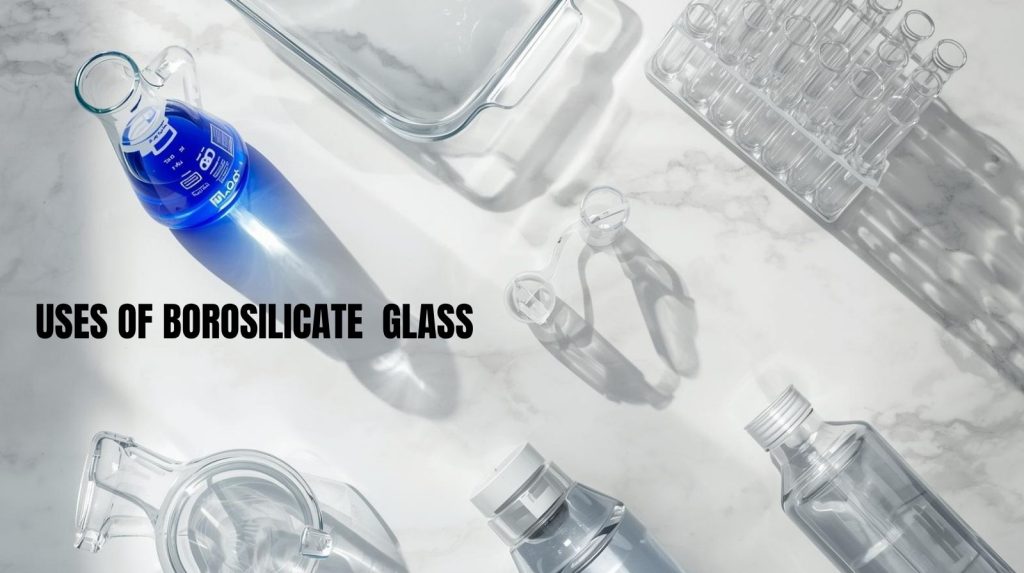
Borosilicate glass is used across multiple industries and applications:
- Laboratory glassware (beakers, test tubes, flasks)
- Kitchen bakeware and measuring cups
- Teapots, coffee makers, and beverage containers
- High-performance lighting equipment
- Telescope mirrors and optical lenses
- Pharmaceutical packaging and equipment
- Industrial piping and chemical processing equipment
- Water bottles and food storage containers
- Microscope slides and coverslips
- Solar panel components
- Electronics and semiconductor manufacturing
- Art glass and decorative pieces
- Aquarium equipment
- Medical devices and instruments
- Stage and studio lighting
What Makes Borosilicate Glass Special?
Before diving into its applications, it’s essential to understand borosilicate glass properties that make it so versatile.
Discovered by German glassmaker Otto Schott in 1893, borosilicate glass contains approximately 70-80% silica, 7-13% boron trioxide, and smaller amounts of sodium oxide, aluminum oxide, and other compounds.
The addition of boron trioxide fundamentally changes the glass’s behavior. It creates a material with an exceptionally low coefficient of thermal expansion—roughly one-third that of ordinary glass.
This means borosilicate glass expands and contracts minimally when exposed to temperature changes, making it highly resistant to thermal shock.
You can take a borosilicate dish straight from the freezer to a hot oven without shattering it, something that would destroy regular glass.
Beyond thermal properties, borosilicate glass exhibits superior chemical durability. It resists corrosion from water, acids, salt solutions, and organic compounds far better than conventional soda-lime glass.
Its optical clarity remains excellent even in varying thicknesses, and it maintains structural integrity at temperatures up to 500°C (932°F), with some formulations performing well beyond that range.
These characteristics—thermal shock resistance, chemical inertness, durability, and optical quality—explain why borosilicate glass has become indispensable across so many fields.
Laboratory and Scientific Uses
The laboratory represents borosilicate glass’s most critical application. Walk into any chemistry, biology, or physics lab, and nearly every piece of glassware you see is made from borosilicate glass.
Scientists rely on borosilicate beakers, test tubes, flasks, graduated cylinders, petri dishes, and burettes because these items must withstand rapid temperature changes.
When a chemist heats a solution in a beaker over a Bunsen burner or when a biologist autoclaves equipment at high pressure and temperature, the glassware must not crack or shatter.
Borosilicate glass handles these demands effortlessly.
The chemical resistance of borosilicate glass proves equally vital in laboratory settings. Researchers work with strong acids like hydrochloric and sulfuric acid, aggressive bases, organic solvents, and reactive compounds.
Borosilicate glass remains inert to these substances, preventing contamination of samples and ensuring experimental accuracy. If glassware leached chemicals or reacted with solutions, experimental results would be unreliable.
Pharmaceutical laboratories and manufacturing facilities use borosilicate glass extensively for medication development, quality control testing, and packaging.
Many injectable medications come in borosilicate glass vials specifically because the material won’t interact with the medicine, preserving its effectiveness and safety.
Research institutions also employ borosilicate glass in specialized equipment like vacuum systems, distillation apparatus, and chromatography columns.
Its ability to form tight seals while maintaining transparency allows scientists to observe reactions and processes in real-time while maintaining controlled conditions.
Kitchen and Cookware Applications
The kitchen is where most consumers directly experience the benefits of borosilicate glass cookware.
For decades, home cooks have trusted borosilicate baking dishes, measuring cups, and storage containers for their reliability and safety.
Borosilicate baking dishes excel because they can transition from refrigerator to oven without preheating.
You can store a casserole in the fridge, then pop it directly into a hot oven—the glass won’t crack from the temperature shock. This convenience saves time and reduces the risk of accidents.

The even heat distribution of borosilicate glass also promotes uniform cooking, preventing hot spots that can burn food.
Measuring cups made from borosilicate glass offer precision and durability. Unlike plastic measuring cups that can warp or stain, borosilicate versions maintain their accuracy and appearance through years of use.
They’re microwave-safe, allowing you to melt butter or heat liquids directly in the measuring cup.

Glass teapots and kettles made from borosilicate glass have gained popularity among tea enthusiasts. The material doesn’t absorb flavors or odors, ensuring each brew tastes pure.
The transparency allows users to watch tea leaves unfurl and monitor steeping, while the heat resistance handles boiling water without issue.
Coffee lovers appreciate borosilicate glass French presses, pour-over brewers, and cold brew makers.
The glass doesn’t impart any taste to the coffee, and it withstands the thermal stress of hot brewing methods.
Many premium coffee equipment manufacturers specifically choose borosilicate glass for these reasons.

Food storage containers made from borosilicate glass offer a safer, more durable alternative to plastic. They won’t stain from tomato sauce, won’t absorb garlic odors, and can go from freezer to microwave to dishwasher.
For health-conscious consumers concerned about chemicals leaching from plastic, borosilicate glass provides peace of mind. To learn more about safety considerations, see our article on Is borosilicate glass safe?.
Stovetop cookware, including some saucepans and double boilers, uses borosilicate glass to allow cooks to monitor food as it cooks.
While not as common as metal cookware, glass stovetop pieces offer unique advantages for certain cooking techniques.
Lighting and Electrical Uses
The lighting industry relies heavily on borosilicate glass for high-performance applications.
Standard glass cannot withstand the intense heat generated by high-wattage bulbs, but borosilicate glass handles these conditions with ease.
High-performance halogen lamps use borosilicate glass envelopes because these bulbs operate at extremely high temperatures.
Automotive headlights, professional photography lights, and high-intensity work lights all depend on borosilicate glass to contain and direct light safely.
The glass must not only resist heat but also maintain optical clarity to ensure maximum light transmission.
Stage and studio lighting represents another critical application. Theater spotlights, television studio lights, and concert lighting rigs generate tremendous heat during extended use.
Borosilicate glass lenses and housings prevent equipment failure and ensure consistent performance throughout long productions.
Flashlight lenses made from borosilicate glass prove more durable and heat-resistant than plastic alternatives, particularly in high-lumen tactical flashlights where LED heat generation can be significant.
In electrical applications, borosilicate glass serves as an insulator in high-voltage equipment.
Its combination of electrical resistance and thermal stability makes it suitable for transformer bushings, electrical feed-throughs, and other components where electricity and heat coexist.
Industrial and Technical Applications
Beyond consumer products, borosilicate glass plays a crucial role in advanced industrial and technical applications.
Astronomy depends on borosilicate glass for telescope mirrors. The material’s low thermal expansion prevents distortion as temperatures change throughout the night.
Major observatories, including those housing some of the world’s largest telescopes, use borosilicate glass mirrors that have been precisely ground and coated.
The stability of the glass ensures sharp, accurate images of distant celestial objects.
Optical instruments like microscopes, binoculars, and cameras incorporate borosilicate glass components.
Microscope slides and coverslips are typically made from borosilicate glass because of its optical clarity and chemical resistance.
Scientists can apply various stains and reagents without damaging the glass, and the consistent quality ensures reproducible results.
The renewable energy sector utilizes borosilicate glass in solar panel manufacturing.
Some solar collectors use borosilicate glass tubes because the material withstands the thermal cycling of heating and cooling as the sun rises and sets.
Its transparency allows maximum light transmission while protecting internal components from environmental exposure.
Aerospace applications include borosilicate glass in spacecraft windows, instrument panels, and optical sensors.
The material’s stability across extreme temperature ranges—from the cold of space to the heat of atmospheric reentry—makes it invaluable for space exploration.
Industrial chemical processing plants use borosilicate glass piping, valves, and sight glasses in systems handling corrosive chemicals.
While metal pipes might corrode or react with certain substances, borosilicate glass remains inert.
Sight glasses made from borosilicate glass allow operators to visually monitor flow, level, and color of liquids in processing systems without opening tanks or pipes.
Semiconductor manufacturing employs ultra-pure borosilicate glass in various processes.
The production of computer chips requires materials that won’t introduce contaminants, and specially formulated borosilicate glass meets these stringent requirements.
Specialty and Consumer Products
The versatility of borosilicate glass extends to numerous specialty products that enhance daily life.
Water bottles and drinkware made from borosilicate glass have become increasingly popular among environmentally conscious consumers.
These products eliminate concerns about BPA and other chemicals found in plastic bottles, while the glass itself adds no taste or odor to beverages.

Many feature protective silicone sleeves to prevent breakage if dropped.
Baby bottles made from borosilicate glass offer parents a safe feeding option. The glass can be sterilized repeatedly in boiling water without degrading, and it doesn’t harbor bacteria in scratches like plastic can.
Parents appreciate knowing that the bottle material won’t leach anything into their baby’s milk or formula.
The smoking accessories industry extensively uses borosilicate glass for pipes, water pipes, and related items.
The material withstands the heat of combustion, doesn’t add any taste, and can be easily cleaned.
Artisans create intricate, colorful pieces using borosilicate glass because it can be worked at high temperatures and shaped into complex forms.
Art glass and decorative items showcase borosilicate glass’s aesthetic potential. Glass artists appreciate its workability and the ability to create pieces with vibrant colors and intricate details.
Unlike some glass types, borosilicate can incorporate certain metals and compounds that produce stunning visual effects.
Aquarium equipment, including heaters, thermometers, and reactor chambers, uses borosilicate glass for its chemical stability and safety around fish and other aquatic life.
The glass won’t leach harmful substances into the water, and it withstands constant water exposure without degrading.
Electronics manufacturers use borosilicate glass in various components.
Some smartphone screens incorporate borosilicate glass layers, and certain watch crystals are made from the material.
The glass provides scratch resistance and durability while maintaining optical clarity.
Advantages of Borosilicate Glass
Understanding the specific advantages helps explain why borosilicate glass dominates so many applications.
Thermal Shock Resistance
The most celebrated property is its ability to withstand rapid temperature changes.
Most borosilicate glass can handle temperature differentials of approximately 165°C (330°F) without breaking.
This means you can pour boiling water into a cold borosilicate container or remove a baking dish from a hot oven and place it on a cool counter without risk of thermal shock fracture.
Durability and Longevity
When properly cared for, borosilicate glass products can last for decades.
Unlike plastic that degrades, discolors, or absorbs odors over time, borosilicate glass maintains its appearance and performance indefinitely.
This longevity makes it cost-effective despite higher initial prices.
Non-Porous and Hygienic
The smooth, non-porous surface of borosilicate glass doesn’t trap bacteria, odors, or stains. Food storage containers won’t smell like last week’s curry, and laboratory glassware can be thoroughly sterilized.
This hygiene factor proves especially important in medical, pharmaceutical, and food-related applications.
Eco-Friendly and Recyclable
Borosilicate glass can be recycled, though the process differs from regular glass recycling due to its different composition.
More importantly, the durability of borosilicate glass products means fewer items end up in landfills.
A single borosilicate container can replace hundreds of disposable plastic containers over its lifetime.
Chemical Inertness
The resistance to chemical corrosion ensures that borosilicate glass won’t react with contents, whether that’s acidic tomato sauce in the kitchen or aggressive solvents in the laboratory.
This inertness protects both the glass and whatever it contains.
Safety Benefits
Borosilicate glass doesn’t contain harmful chemicals like BPA, phthalates, or other additives found in many plastics.
It won’t leach substances into food or beverages, making it one of the safest material choices for anything that contacts what we eat or drink.
Optical Clarity
The crystal-clear transparency of borosilicate glass allows easy monitoring of contents, whether you’re checking the level in a measuring cup or observing a chemical reaction.
This clarity doesn’t diminish over time as it might with plastic that becomes cloudy or scratched.
Despite its many advantages, borosilicate glass isn’t perfect for every situation. Kindly read our guide on the drawbacks of borosilicate glassware.
How to Identify Borosilicate Glass
Many consumers want to verify that they’re actually getting borosilicate glass, especially since some manufacturers have switched to tempered glass for certain products.
Markings and Labels
Reputable manufacturers clearly label borosilicate products. Look for explicit statements like “Made from borosilicate glass” or “Type 3.3 borosilicate glass” on packaging or the product itself.
Brand names like Pyrex (in European markets), Borosil, SIMAX, Bomex, and Duran are known for borosilicate glass products.
Country of Origin
Unfortunately, the Pyrex brand name applies to different glass types depending on the region.
Pyrex products made in Europe, Africa, and the Middle East use borosilicate glass, while most Pyrex products made in the United States since the 1990s use soda-lime tempered glass.
Checking the country of manufacture can provide clues.
Visual Differences
Borosilicate glass often has a slightly different tint compared to regular glass—sometimes appearing very faintly blue or greenish when viewed edge-on.
However, this difference can be subtle and isn’t a reliable identification method for casual observers.
Product Specifications
If purchasing online, carefully read product specifications and descriptions. Reputable sellers will clearly state the glass composition.
Customer reviews can also indicate whether a product is truly borosilicate.
Brand Research
Before purchasing, research the manufacturer’s specifications. Many companies have detailed product information on their websites explaining the materials used in their products.
The Edge Test
Examining the edge of the glass can sometimes reveal differences. Borosilicate glass edges often appear slightly different in color and reflection compared to soda-lime glass, though this requires experience to discern.
Care and Maintenance
Proper care ensures your borosilicate glass products last for years.
Cleaning Guidelines
Borosilicate glass is dishwasher-safe and can withstand harsh detergents. For laboratory glassware, special cleaning solutions remove stubborn residues.
Avoid using abrasive scrubbers that might scratch the surface, though borosilicate glass is relatively scratch-resistant.
Temperature Transition Tips
While borosilicate glass handles thermal shock well, some basic precautions extend its life.
Avoid extreme scenarios like placing a hot dish directly on a wet surface, which can create localized stress.
When possible, allow some gradual cooling rather than the most extreme transitions.
Storage Recommendations
Store borosilicate glass products where they won’t get knocked or bumped.
Stack baking dishes with care, perhaps placing cloth or paper towels between them to prevent chips. Ensure items are completely dry before storage to prevent water spots.
What to Avoid
Don’t use damaged borosilicate glass. If a piece has chips, cracks, or stress marks, retire it from service.
Damage compromises structural integrity and increases the risk of breakage.
Avoid thermal shock combined with physical stress—for example, don’t bang a hot glass pot with a metal spoon.
Inspection
Periodically inspect borosilicate glass items for signs of wear. Hold them up to light to check for cracks or stress marks that might not be immediately obvious.
Frequently Asked Questions
Can Borosilicate glass go in the oven?
Yes, borosilicate glass is oven-safe and can typically withstand temperatures up to 500°C (932°F), far exceeding normal cooking temperatures.
You can use borosilicate bakeware in conventional ovens, convection ovens, and microwaves. Always check manufacturer guidelines for specific products, and avoid direct contact with heating elements.
Is all Pyrex Borosilicate glass?
No, this is a common point of confusion. Pyrex products manufactured in Europe, Africa, and the Middle East are made from borosilicate glass.
However, Pyrex products made in the United States since approximately 1998 are made from soda-lime tempered glass.
Check the country of origin and product specifications to be certain.
Is Borosilicate glass worth the extra cost?
For applications involving temperature changes, chemical exposure, or long-term use, borosilicate glass typically justifies its higher price.
A quality borosilicate baking dish can last a lifetime and handle uses that would destroy cheaper alternatives.
For items stored at room temperature with no thermal stress, the additional cost might not provide significant benefits.
Can Borosilicate glass break?
Yes, borosilicate glass can break from physical impact, just like any glass.
While it resists thermal shock exceptionally well, it doesn’t offer special protection against dropping or striking.
Handle with care to avoid chips, cracks, or shattering.
Is Borosilicate glass microwave safe?
Yes, borosilicate glass is microwave-safe. It doesn’t absorb microwave energy, so it won’t get hot from the microwaves themselves (though it will warm from the heat of food inside it).
Its thermal shock resistance allows it to withstand the rapid heating that occurs in microwave ovens.
How hot can Borosilicate glass get?
Most borosilicate glass can withstand continuous use at temperatures up to 450-500°C (840-932°F), with short-term exposure tolerance even higher.
Specialized formulations can handle temperatures exceeding 800°C (1,472°F).
Specific limits depend on the exact composition and manufacturing process.
Can you put borosilicate glass in the freezer?
Yes, borosilicate glass is freezer-safe. You can store foods in borosilicate containers in the freezer and then transfer them directly to a hot oven for reheating, taking advantage of the material’s thermal shock resistance.
Conclusion
Borosilicate glass has earned its reputation as one of the most versatile and reliable materials in both scientific and consumer applications.
From enabling groundbreaking research in laboratories to simplifying meal preparation in home kitchens, this remarkable glass serves countless purposes that depend on its unique combination of thermal shock resistance, chemical inertness, and durability.
Whether you’re considering borosilicate glass cookware for your kitchen, evaluating laboratory equipment, or simply curious about the materials in products you use daily, understanding its properties and applications helps you make informed decisions.
The material’s safety, longevity, and environmental benefits make it an investment worth considering despite higher initial costs.
As you encounter borosilicate glass in your daily life—whether in a measuring cup, telescope lens, or water bottle—you can appreciate the century of materials science that makes these applications possible.
This glass that resists both flame and frost, acids and bases, continues to prove indispensable across countless fields, quietly serving humanity’s needs for reliable, safe, and durable materials.