Wheat straw dinnerware has flooded the market with promises of eco-friendly eating and shatter-resistant convenience.
You’ve probably seen the pastel-coloured plates marketed as safe alternatives to plastic, perfect for every meal from morning toast to evening dinner.
But here’s the question nobody’s answering clearly: Can you actually use wheat straw dinnerware for all your daily meals without concerns?
The marketing says yes, but the reality involves temperature limits, material composition questions, and genuine safety considerations that deserve honest examination.
This guide cuts through the promotional noise to reveal exactly when wheat straw dinnerware works brilliantly, when it becomes problematic, and whether it truly belongs on your breakfast, lunch, and dinner table every single day.
Let’s separate fact from marketing fiction.
What Is Wheat Straw Dinnerware?
Wheat straw fibre
Wheat straw refers to the dry stalks left after wheat grain harvest. These agricultural leftovers get processed into fibrous material that manufacturers incorporate into dinnerware products.
The straw provides plant-based bulk to the final product.
However, it cannot form solid dinnerware on its own without additional materials binding it together into usable plates and bowls.
Plant waste vs finished product
Raw wheat straw is dried plant material with no structural integrity for dinnerware use.
Converting agricultural waste into functional plates requires extensive processing, grinding the straw into fine particles, then combining it with binding agents.
The finished product contains wheat straw content mixed with other materials that actually hold everything together.
The percentage of actual wheat straw varies significantly between manufacturers.
Binders and resins used
Wheat straw dinnerware requires plastic-based resins or binding agents to create solid, usable products.
Common binders include polypropylene (PP), melamine resin, or other food-grade plastics that mold the wheat fibres into plate form.
These binding materials constitute a substantial portion of the final product, meaning wheat straw dinnerware is not purely plant-based despite marketing suggestions otherwise.
Why is wheat straw often mistaken for plastic?
The smooth, uniform appearance of wheat straw dinnerware looks identical to standard plastic because it is plastic with wheat fibre filler.
The binding resins create the glossy, manufactured finish consumers associate with plastic products.
Many people purchase wheat straw dinnerware believing it’s completely plastic-free, not realizing the wheat straw simply reduces the total plastic content rather than eliminating it.
Why People Choose Wheat Straw Dinnerware
Lightweight & unbreakable
Wheat straw dinnerware weighs significantly less than ceramic or glass options, making it easier to handle and transport.
The lightweight construction appeals to families tired of heavy dishes, particularly for children’s use.
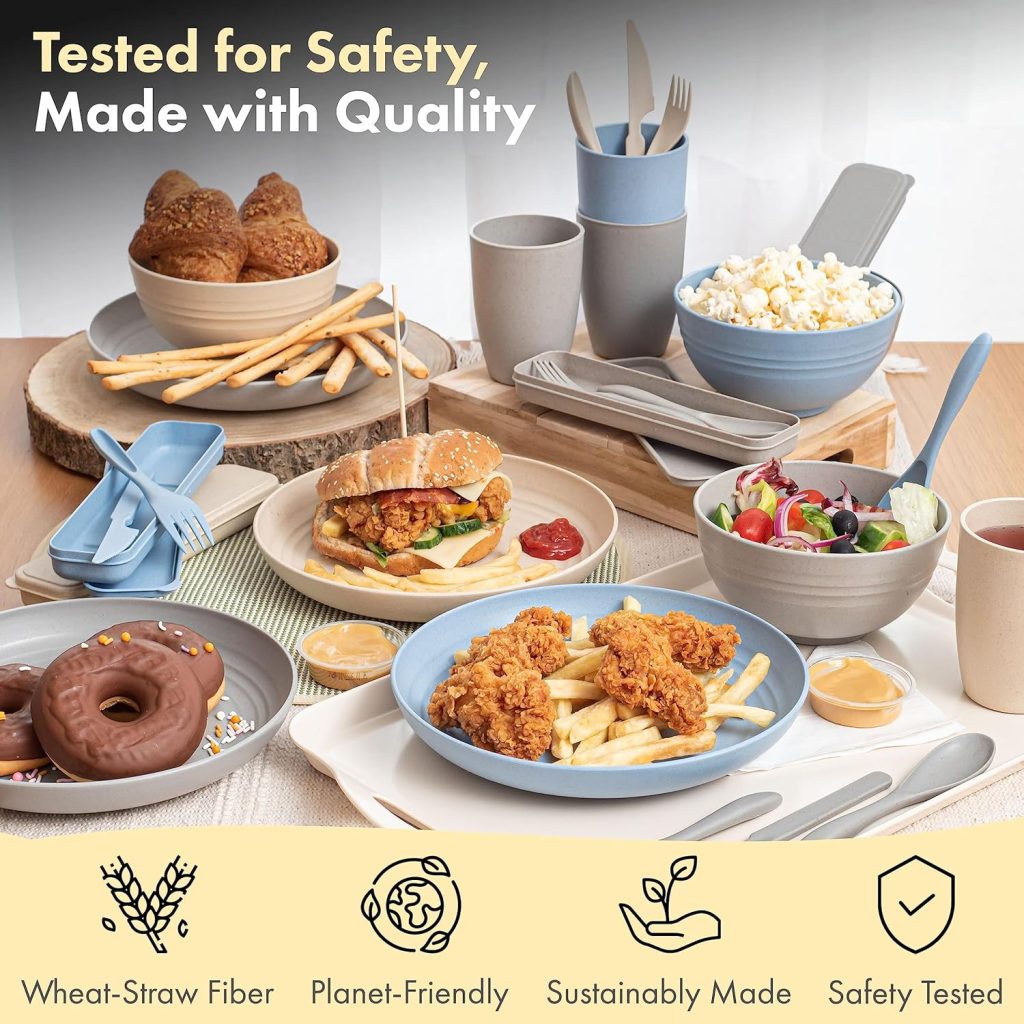
Unlike traditional dinnerware, wheat straw plates resist shattering when dropped, eliminating the sharp-edge dangers of broken ceramic or glass.
This durability makes it attractive for outdoor dining and households with young children.
Kid-friendly appeal
Parents appreciate dinnerware that survives the inevitable drops, throws, and general chaos of feeding children.
Wheat straw products market themselves specifically for kids’ meals, featuring bright colours and unbreakable construction.
The lightweight plates are easier for small hands to manage compared to heavier ceramic options.
Many parents choose wheat straw dinnerware, believing it offers safer, more practical solutions for daily kid meals.
Eco-friendly marketing claims
Manufacturers heavily promote wheat straw dinnerware as environmentally responsible, emphasizing agricultural waste utilization and reduced plastic consumption.
Marketing suggests choosing wheat straw helps the planet by repurposing farm waste and using renewable resources.
These eco-friendly claims strongly influence purchasing decisions among environmentally conscious consumers seeking alternatives to conventional plastic or resource-intensive ceramic production.
However, the presence of plastic binders complicates these environmental narratives.
Affordable alternatives to ceramic
Wheat straw dinnerware typically costs less than quality ceramic or glass options, making it accessible for budget-conscious families.
The lower price point appeals to those furnishing first homes, student accommodations, or temporary living situations.
Compared to investing in expensive ceramic sets, wheat straw offers affordable entry-level dinnerware.
However, this affordability comes with trade-offs in longevity, heat tolerance, and material composition concerns.
Serving Breakfast With Wheat Straw Dinnerware
Suitable Breakfast Foods
Wheat straw plates handle typical breakfast foods reasonably well when temperatures remain moderate.
Toast, fresh fruit, cereals with milk, and pastries sit comfortably on wheat straw without immediate concerns.
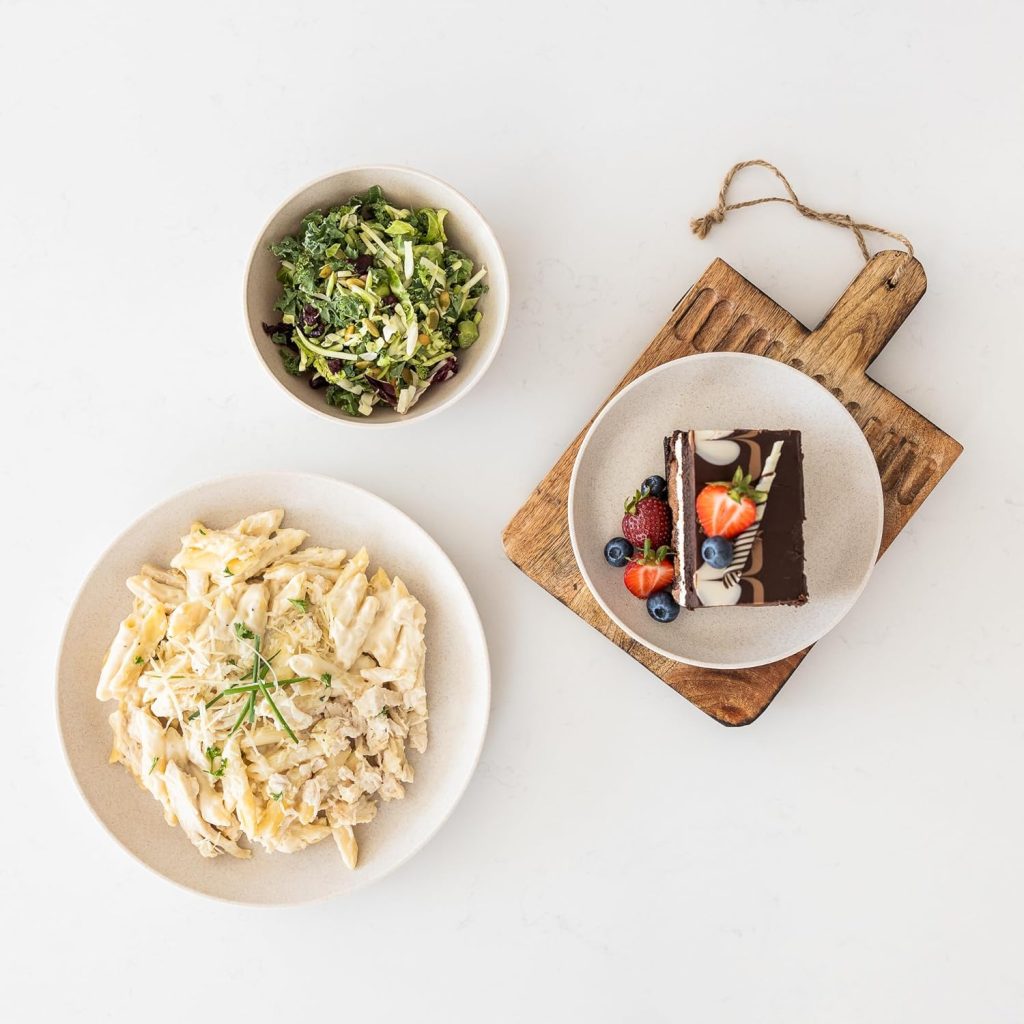
These foods are either cold or mildly warm, staying within the material’s safe temperature range.
Dry breakfast items like toast or pancakes work particularly well, creating minimal stress on the dinnerware.
Breakfast Limitations
Hot beverages expose wheat straw’s primary weakness, poor heat tolerance.
Pouring freshly brewed tea or coffee into wheat straw cups risks warping, degradation, or potential chemical leaching from the binding resins.
Very hot foods like freshly cooked porridge or eggs straight from the pan exceed safe temperature thresholds.
Acidic breakfast items like citrus fruits or tomatoes may interact with the plastic components over time.
Serving Lunch With Wheat Straw Dinnerware
When It Works Well
Lunchtime meals at room temperature or slightly warm suit wheat straw dinnerware capabilities.
Sandwiches, cold salads, room-temperature rice dishes, and pasta salads pose no immediate concerns.
These moderate-temperature foods stay within the material’s comfort zone, allowing safe use without triggering heat-related degradation.
Quick lunches eaten promptly after plating work better than food sitting on plates for extended periods.
Potential Issues
Hot soups, curries, and freshly cooked meals challenge wheat straw’s heat limitations.
Oily foods can absorb into the porous wheat fibre structure despite the plastic coating, creating permanent staining and potential hygiene concerns.
Strongly coloured sauces like tomato-based dishes, turmeric curries, or beetroot preparations leave lasting stains that washing cannot fully remove.
Microwaving leftover lunch directly on wheat straw plates risks material degradation.
Serving Dinner With Wheat Straw Dinnerware
Safer Dinner Foods
Cold dinner options like salads, sushi, cold cuts, and room-temperature grain bowls minimize heat exposure risks.
Warm (not hot) meals served briefly work acceptably if consumed quickly. Foods that cool to moderate temperatures before plating reduce the thermal stress on wheat straw materials.
Simple dinners without heavy sauces or extreme temperatures are most compatible with wheat straw capabilities.
Dinner Foods That Are Not Ideal
Traditional hot dinners straight from the oven or stove exceed wheat straw’s safe temperature limits.
Roast dinners, hot casseroles, freshly grilled meats, and steaming vegetables risk warping plates and potentially releasing chemicals from the plastic binders.
Heavy gravies, rich sauces, and oily preparations penetrate the material structure over repeated use.
Reheating dinner plates in the microwave before serving contradicts safe wheat straw usage.
Heat and Microwave Safety of Wheat Straw Dinnerware
Maximum temperature tolerance
Most wheat straw dinnerware manufacturers claim heat resistance between 100-120°C (212-248°F), though exact specifications vary by brand.
However, foods served at these maximum temperatures push the material to its limits. The plastic binding resins begin softening at lower temperatures than manufacturers suggest is safe.
Repeated exposure to high heat accelerates material degradation even if immediate warping isn’t visible.
Microwave claims vs reality
Many wheat straw products carry “microwave-safe” labels, but this designation requires careful interpretation.
Brief microwaving at low power might not cause immediate visible damage, but it doesn’t guarantee chemical safety.
The plastic components heat unevenly in microwaves, creating hot spots that exceed safe thresholds.
Even microwave-safe labeled wheat straw dinnerware shouldn’t be used for prolonged heating or high-power settings.
Warping and degradation risk
High temperatures cause visible warping, with plates developing curves, bowls losing shape, and cups deforming.
This physical degradation signals that the binding materials are breaking down under heat stress.
Once warping begins, the structural integrity is compromised, and the dinnerware becomes unsuitable for continued food contact.
Degradation accelerates with repeated thermal cycling from dishwashers or hot foods.
Why heat matters for chemical safety
Elevated temperatures increase the likelihood of chemicals migrating from plastic binders into your food.
The hotter the food and the longer the contact time, the greater the potential for chemical leaching.
While room-temperature use minimizes this concern, hot meals create conditions where plastic components may release substances into your dinner.
This temperature-dependent chemical migration makes heat management crucial for wheat straw dinnerware safety.
Is Wheat Straw Dinnerware Healthy for Daily Use?
BPA-free vs plastic-free
Most wheat straw dinnerware advertises BPA-free status, but this doesn’t mean plastic-free. The products still contain polypropylene or other plastic binders holding the wheat fibres together.
BPA-free simply indicates one specific chemical’s absence, not the elimination of all plastic components.
Consumers often misunderstand this distinction, believing BPA-free equals completely safe or entirely natural when significant plastic content remains.
Potential microplastic concerns
The plastic binders in wheat straw dinnerware can potentially shed microplastics during use, washing, and material breakdown.
Scratching, heat exposure, and acidic foods may accelerate this degradation. While research specifically on wheat straw dinnerware microplastic shedding remains limited, the plastic components behave similarly to other plastic-based products.
Daily use increases cumulative exposure to whatever materials the dinnerware releases over time.
Food contact over long-term use
Repeated food contact allows gradual material migration into meals, particularly with hot, acidic, or oily foods.
Unlike inert materials such as glass or stainless steel, wheat straw dinnerware’s plastic components can interact with food under certain conditions.
Long-term daily use accumulates these small exposures. The porous wheat fibre structure also risks trapping food particles and bacteria despite regular washing, creating hygiene concerns.
Why daily exposure matters
Occasional use minimizes potential risks, but daily breakfast, lunch, and dinner on wheat straw dinnerware creates consistent exposure to whatever the material releases.
Your body accumulates chemicals through repeated contact rather than single exposures. This frequency concern applies to any food-contact material containing plastics or questionable components.
Daily exposure to even low-level chemical migration builds up over months and years of regular use.
Wheat Straw Dinnerware for Kids and the Elderly
Benefits
The lightweight construction helps children manage their own plates without struggling with the heavy ceramic weight.
Elderly users with reduced grip strength or mobility limitations appreciate the easy handling.
The shatter-resistant quality eliminates dangerous broken glass or ceramic hazards when drops inevitably occur.
For these vulnerable populations, the practical handling advantages matter significantly in daily meal situations.
Risks
Heat sensitivity becomes particularly concerning for vulnerable users.
Children’s meals often involve warming foods, and elderly individuals frequently require hot meals for comfort and digestion.
The poor temperature insulation means wheat straw plates don’t keep food warm, potentially problematic for slow eaters.
Chemical exposure concerns intensify for children’s developing systems and elderly individuals with potentially compromised immune function, making material safety more critical.
Wheat Straw Dinnerware vs Ceramic, Glass, and Stainless Steel
Safety comparison
Glass and stainless steel offer completely inert, non-reactive surfaces with zero chemical leaching concerns.
Quality ceramic, properly fired and glazed, provides excellent food safety when lead-free.
Wheat straw dinnerware’s plastic components introduce potential chemical migration risks absent from these traditional materials.
For pure food safety prioritization, glass, steel, and verified ceramic substantially outperform wheat straw options.
Heat tolerance
Ceramic, glass, and stainless steel handle extreme temperatures from freezer to oven without degradation.
These materials maintain structural integrity with boiling liquids, straight-from-oven foods, and dishwasher heat cycles.
Wheat straw dinnerware’s heat limitations prevent these high-temperature applications.
Traditional materials offer far superior thermal performance for hot meal service and versatile kitchen use across all temperature ranges.
Durability
While wheat straw resists shattering from drops, it degrades faster than traditional materials through normal use.
Staining, warping, scratches, and gradual breakdown occur within months to a few years. Quality ceramic, glass, and stainless steel last for decades with proper care.
The initial breakability concern of traditional materials is offset by their superior longevity and maintained food safety throughout their lifespan.
Environmental trade-offs
Wheat straw utilizes agricultural waste, but requires plastic binders and has limited recyclability.
Ceramic production is energy-intensive but creates ultra-durable products lasting generations.
Glass and stainless steel are endlessly recyclable and never degrade into microplastics.
The true environmental impact requires weighing resource extraction, production energy, lifespan, and end-of-life disposal.
Wheat straw’s eco-friendliness is less clear-cut than marketing suggests.
How to Use Wheat Straw Dinnerware Safely
Avoid high heat
Serve only warm or room-temperature foods on wheat straw plates, never foods straight from cooking.
Allow soups and hot meals to cool before plating. Never pour boiling liquids into wheat straw cups.
Skip the dishwasher’s heated dry cycle or avoid dishwashers entirely. This heat avoidance minimizes degradation and reduces potential chemical migration from the plastic binders.
Hand washing preferred
Gentle hand washing with mild soap preserves wheat straw dinnerware longer than dishwasher exposure.
Harsh dishwasher detergents, high water temperatures, and heated drying cycles accelerate material breakdown.
Hand washing also allows inspection for developing cracks, warping, or staining that signal replacement time.
The extra effort extends usable lifespan and maintains safer food contact conditions.
Discard scratched or warped items
Visible damage indicates compromised material integrity requiring immediate replacement.
Scratches create crevices harbouring bacteria and increase surface area for chemical leaching.
Warped plates or bowls have experienced heat damage that weakened the plastic binders.
Cracked, discoloured, or deformed wheat straw dinnerware should be discarded rather than continued for food service, regardless of remaining structural function.
Use as secondary dinnerware
Designate wheat straw dinnerware for specific, limited purposes rather than primary daily use.
Reserve it for cold foods, picnics, children’s snacks, or outdoor dining where breakage risk justifies the trade-offs.
Maintain ceramic, glass, or stainless steel as your primary breakfast, lunch, and dinner dinnerware.
This secondary role minimizes exposure risks while utilizing wheat straw’s practical benefits in appropriate contexts.
When Wheat Straw Dinnerware Makes Sense
Picnics & outdoor meals
Outdoor dining environments where breakage poses genuine concerns justify wheat straw’s lightweight, shatter-resistant properties.
The reduced weight also simplifies transport for picnics, beach outings, and park lunches.
Outdoor meals typically involve cold or room-temperature foods that suit wheat straw’s capabilities.
The casual nature of outdoor eating makes the material trade-offs acceptable for these specific occasions.
Kids’ snacks
Between-meal snacks rarely involve hot foods, making wheat straw appropriate for fruit, crackers, cheese, and similar items.
The drop-resistant quality suits children’s handling capabilities. Using wheat straw for snacks reserves better materials for actual hot meals, where temperature safety matters more.
This limited snack-only deployment balances practical convenience with safety concerns about regular hot food exposure.
Travel & camping
Temporary travel situations where dinnerware breakage creates inconvenience justify wheat straw usage.
Camping, caravanning, and holiday accommodation benefit from lightweight, packable options.
The limited duration of travel use reduces long-term exposure concerns.
However, recognize these as temporary circumstances rather than daily lifestyle choices, and return to safer materials for regular home dining.
Temporary or occasional use
Short-term situations like moving house, temporary accommodation, or one-time events suit wheat straw dinnerware.
Student housing, first apartments, or interim living spaces might use wheat straw until permanent dinnerware can be acquired.
These occasional, limited-duration applications minimize cumulative exposure whilst utilizing the practical benefits. The emphasis remains on temporary, not permanent, daily adoption.
FAQ — Wheat Straw Dinnerware for Daily Meals
Can wheat straw dinnerware be used for all meals?
No. Wheat straw dinnerware works best for room-temperature and warm foods, but struggles with hot meals.
The heat limitations, staining from sauces, and plastic component concerns make it unsuitable as your sole dinnerware for breakfast, lunch, and dinner every day.
Is wheat straw better than plastic?
Wheat straw contains less plastic than pure plastic dinnerware, but still requires plastic binders. It reduces total plastic content rather than eliminating it.
For true plastic-free options, choose glass, ceramic, or stainless steel instead of either wheat straw or plastic alternatives.
Is wheat straw dinnerware truly eco-friendly?
Partially. It utilizes agricultural waste and reduces plastic content compared to pure plastic products.
However, the plastic binders, limited recyclability, and shorter lifespan complicate environmental claims.
True eco-friendly options like durable ceramic or stainless steel may have better lifecycle impacts.
Final Verdict — Should You Serve All Meals With Wheat Straw Dinnerware?
Wheat straw dinnerware occupies a specific niche rather than serving as universal dinnerware for all daily meals.
Its lightweight, shatter-resistant qualities make it genuinely useful for particular situations—outdoor dining, children’s snacks, travel, and cold meal service.
However, significant limitations prevent it from being suitable as primary dinnerware for serving hot breakfast, lunch, and dinner every day.
The heat sensitivity creates genuine safety and performance concerns.
Hot meals exceed safe temperature thresholds, risking material degradation and potential chemical leaching from the plastic binders.
Daily use accumulates exposure to whatever substances migrate from the plastic components over time.
The shorter lifespan and degradation from normal use mean that wheat straw dinnerware requires frequent replacement compared to traditional materials.
The balanced recommendation
Use wheat straw dinnerware as secondary or situational dinnerware, not your primary daily option.
Reserve it for specific contexts where its benefits outweigh the compromises—outdoor meals, kids’ cold snacks, travel situations, and occasions where breakage risk justifies the trade-offs.
For regular hot meals at home, invest in glass, quality lead-free ceramic, or stainless steel dinnerware that handles all temperatures safely, lasts decades, and eliminates plastic-related concerns.
Wheat straw dinnerware serves a purpose, but that purpose isn’t replacing traditional materials for all your daily eating needs.
Understanding its appropriate applications allows you to utilize its benefits whilst avoiding its limitations.
Conclusion
Wheat straw dinnerware presents genuine practical advantages alongside real limitations that marketing often glosses over.
Understanding when it works brilliantly versus when it becomes problematic allows informed decision-making rather than blind faith in eco-friendly claims.
The material handles cold and warm foods acceptably, but fails at hot meal service, where traditional dinnerware excels.
Its lightweight, shatter-resistant construction suits specific situations like outdoor dining and children’s snacks, but the heat sensitivity, plastic binder components, and shorter lifespan make it unsuitable as primary dinnerware for daily hot meals.
Smart usage means designating wheat straw for appropriate secondary purposes whilst relying on glass, ceramic, or stainless steel for regular breakfast, lunch, and dinner service.
This balanced approach utilizes wheat straw’s genuine benefits without exposing your family to its documented limitations.