Crazing appears as delicate spiderweb patterns across ceramic dishes, creating a vintage aesthetic that many find charming.
However, these fine cracks represent serious safety concerns that go beyond cosmetic damage.
When glaze integrity fails, the protective barrier between food and the porous ceramic breaks down, creating pathways for bacterial contamination and toxic metal leaching.
Many people unknowingly use crazed dishes daily, unaware that heat, acids, and moisture amplify health risks significantly.
Vintage dishes pose particular dangers due to outdated manufacturing standards and lead-containing glazes.
This comprehensive guide examines the science behind crazing, explains why compromised glaze integrity threatens food safety, and provides clear guidance on when dishes should be retired from kitchen use for your family’s protection.
What Is Crazing on Dishes?
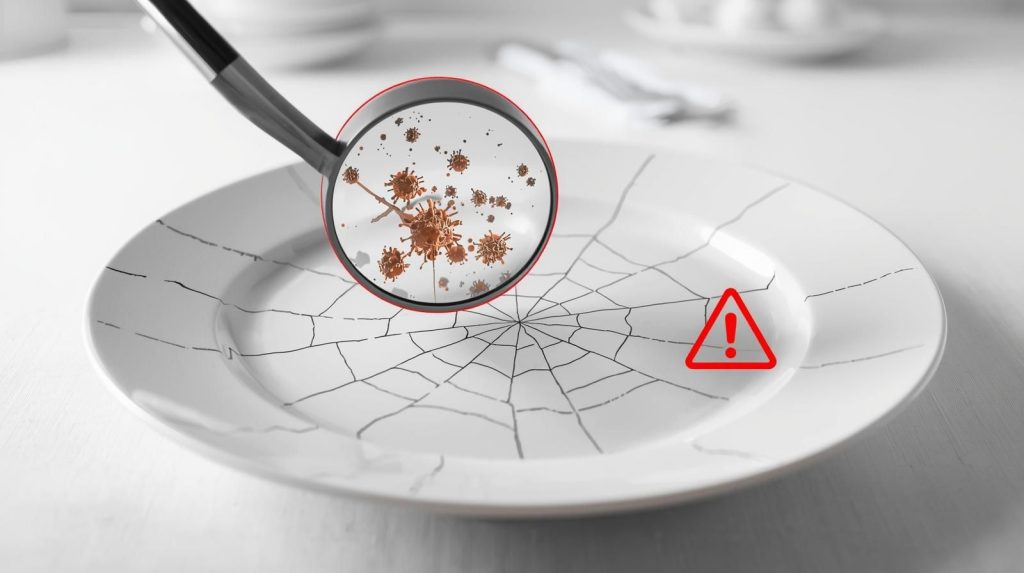
Crazing represents visible glaze failure that compromises the protective surface of ceramic dishware.
Definition: Tiny cracks in glaze
Crazing consists of microscopic to visible cracks forming networks across a dish’s glazed surface.
These cracks penetrate through the glaze layer, exposing the porous ceramic body underneath.
The fractures create pathways for liquids, bacteria, and food particles to infiltrate the dish structure.
While individual cracks may measure only micrometers wide, their cumulative effect destroys the glaze’s protective function.
Caused by tension between the clay body & glaze
The ceramic body and glaze have different expansion and contraction rates during firing and cooling.
When these rates don’t match properly, internal stress develops within the glaze layer. Over time or with temperature changes, this stress exceeds the glaze’s tensile strength, causing fractures.
Manufacturers call this “glaze fit” issues, when expansion coefficients are incompatible, crazing becomes inevitable.
Looks like spiderweb cracks or fine lines
Crazing appears as interconnected hairline fractures resembling spider webs, crackled patterns, or random fine lines.
The cracks may be barely visible initially, but they become more apparent as food stains, oils, and moisture accumulate within them.
Patterns range from tight, uniform networks to irregular branching cracks. The appearance often worsens with continued use and washing.
Happens in both vintage and modern dishes
While more common in older dishes, crazing affects contemporary ceramics too.
Poor manufacturing quality control, inadequate testing, or cost-cutting measures cause modern dishes to craze prematurely.
Even premium brands can develop crazing if subjected to thermal shock or extended use. The phenomenon is not exclusive to any era, though vintage pieces show crazing more frequently due to age and manufacturing standards.
Why Does Crazing Happen?
Multiple factors contribute to glaze failure, often working together to cause crazing.
Age and natural wear
Years of use gradually weaken glaze integrity through repeated thermal cycling and mechanical stress.
Microscopic damage accumulates invisibly until reaching a threshold where visible cracks appear.
Even properly manufactured dishes eventually develop crazing after decades of service.
The aging process is accelerated by frequent temperature changes and harsh cleaning methods.
Poor glaze fit during manufacturing
Manufacturing defects occur when the glaze and clay body have incompatible thermal expansion properties.
If the glaze shrinks more than the clay during cooling, it remains under constant tension. This pre-stressed condition makes the glaze vulnerable to cracking from minimal additional stress.
Some manufacturers use incompatible glaze formulations to reduce costs or achieve specific aesthetic effects.
Rapid temperature changes (thermal shock)
Moving dishes from the refrigerator to the microwave, pouring hot liquids into cold dishes, or placing hot dishes in cold water creates sudden temperature differentials.
The glaze and clay body expand or contract at different rates during these transitions. This differential movement generates stress that can initiate or propagate cracks.
Similar to scratched plates, damaged surfaces become increasingly vulnerable to further deterioration.
Dishwasher damage over time
Modern dishwashers subject dishes to repeated cycles of high heat, harsh detergents, and rapid temperature changes.
The aggressive cleaning environment gradually degrades glaze quality. Water jets create mechanical stress, while alkaline detergents may chemically attack certain glaze compositions.
Over hundreds of wash cycles, these factors combine to induce crazing in susceptible dishes.
Are Crazed Dishes Safe to Use?
Short Answer: Often No.
Crazing compromises dish safety through multiple pathways that increase health risks significantly.
Crazing allows liquids, acids, and oils to penetrate the glaze
The protective glaze layer acts as a barrier, preventing food contact with porous ceramic.
Once cracks form, liquids seep through to the absorbent clay body underneath.
Acidic foods like tomato sauce, vinegar, or citrus juice penetrate particularly deeply.
Oils saturate the ceramic, creating permanent stains and rancidity over time. This infiltration cannot be reversed or cleaned effectively.
It can cause bacterial growth in cracks
Moisture and food particles trapped in crazing cracks create ideal environments for bacterial colonization.
The narrow crevices protect bacteria from normal washing and sanitizing. Pathogens like Salmonella, E. coli, and Staphylococcus can establish colonies within the ceramic matrix.
Each use potentially recontaminates fresh food placed on the dish, creating ongoing health hazards.
Crazing increases lead and cadmium leaching, especially in vintage dishes
Intact glaze traps heavy metals within its matrix, preventing food contact.
Crazed glaze exposes metal-containing layers to acids and heat, dramatically increasing leaching rates.
Vintage dishes manufactured before lead regulations pose extreme risks when crazed.
Even dishes that tested safe when new may become dangerous after crazing develops, especially with repeated exposure to acidic or hot foods.
Heat (microwave, hot food) accelerates leaching
High temperatures increase the rate of chemical reactions, causing metals to leach more rapidly from compromised glaze.
Microwaving crazed dishes intensifies this effect through both heat and moisture. Hot foods sitting on crazed surfaces extract metals more efficiently than cold foods.
The combination of heat, acidity, and time maximizes toxic metal transfer into food.
Lead & Cadmium Risks in Crazed Dishes
Heavy metal contamination presents the most serious health threat from using crazed dishware.
Lead-containing glazes can release more toxins when cracked
Lead provides desirable properties in ceramic glazes, including vibrant colors, smooth finish, and low firing temperatures.
When glaze integrity fails, food acids can reach lead-containing layers directly. Research shows crazed dishes leach lead at rates hundreds of times higher than intact glaze.
Even low-level chronic exposure accumulates in the body, affecting neurological development and organ function.
Torch, pour tests & why crazing makes results unreliable
Home lead testing methods, like the swab test, provide screening information for intact glazes.
However, crazing creates inconsistent results because cracks may not reach the lead-containing glaze layers uniformly.
A negative test on one area doesn’t guarantee safety across the entire dish. The only reliable approach for crazed dishes involves laboratory testing or complete avoidance.
Testing crazed dishes for toxic metals requires professional analysis to accurately assess contamination risks.
Risk is higher in: Vintage dishes (1970s and earlier), Imported ceramics, Handmade pottery
Pre-1970s dishes were manufactured before lead regulations, making them particularly dangerous when crazed.
Many imported ceramics come from countries with lax safety standards. Artisan pottery may use traditional glazes containing lead for aesthetic purposes.
These categories deserve extreme caution—crazing transforms them from potentially safe to definitively hazardous for food contact.
Bacterial Risks in Crazed Dishes
Microbial contamination creates immediate and ongoing infection risks separate from heavy metal concerns.
Moisture trapped in cracks
The network of cracks in crazed glaze acts as a sponge, absorbing and retaining moisture long after washing.
This trapped water provides the essential environment that bacteria need to survive and multiply.
Even after apparent drying, moisture remains deep in the ceramic matrix. Humidity and repeated use maintain this moisture, sustaining bacterial populations indefinitely.
Food residues that cannot be fully cleaned
Normal washing removes surface contamination but cannot penetrate narrow, crazing cracks.
Proteins, sugars, and fats lodge deep in crevices where detergents and mechanical action cannot reach.
These nutrients feed bacterial colonies continuously. Even aggressive scrubbing fails to extract embedded food particles, making truly sanitary cleaning impossible for crazed dishes.
Bacteria survive dishwashers because cracks protect them
While dishwasher temperatures kill surface bacteria, organisms sheltered within crazing cracks remain protected.
The ceramic material insulates bacteria from lethal temperatures. Water and detergent cannot penetrate sufficiently to sanitize deep crevices.
Each wash cycle may kill surface contamination while leaving protected colonies intact, ready to recontaminate the next meal served.
Are Crazed Dishes Safe If They Are Labeled “Food-Safe”?
Original safety certifications become invalid once glaze integrity fails through crazing.
“Food-safe” label applies only when the glaze is intact
Manufacturers test dishes with undamaged glaze to obtain food-safe certifications. These tests measure leaching from intact surfaces under standard conditions.
The certification makes no claims about safety after glaze failure. Testing protocols don’t account for compromised barriers created by crazing.
Any food-safe label becomes meaningless once visible glaze damage appears.
Crazing voids the protective barrier
The entire premise of ceramic dish safety depends on maintaining an impermeable glaze layer.
This barrier prevents contact between food and the porous ceramic body containing potentially harmful materials.
Crazing breaches this barrier fundamentally, eliminating the protective function that enables safe food contact. No amount of careful use can restore the compromised protection.
Regulatory standards assume no glaze failure
Food safety regulations for ceramic dishware presume proper manufacturing and intact glaze throughout the product’s lifetime.
Standards don’t address safety after physical damage because damaged dishes are expected to be discarded.
Continuing to use crazed dishes places users outside the safety framework that regulations provide, entering uncharted risk territory.
Are Modern Crazed Dishes Safer Than Vintage Ones?
Contemporary manufacturing standards reduce but don’t eliminate risks from crazed dishware.
Modern glazes have stricter lead limits
Current regulations severely restrict lead and cadmium in ceramic glazes for food contact.
Dishes manufactured after the 1990s generally contain much lower heavy metal concentrations than vintage pieces.
These restrictions significantly reduce—but don’t eliminate—toxic metal leaching risks from crazed modern dishes.
The reduced initial contamination means lower absolute exposure even with crazing.
But crazing still exposes porous ceramic beneath
Regardless of the glaze’s lead content, crazing exposes the underlying ceramic body to food contact.
This porous material absorbs liquids, harbors bacteria, and may contain other problematic substances.
The ceramic body itself wasn’t formulated for direct food contact because the glaze was meant to provide protection. Modern manufacturing doesn’t change this fundamental vulnerability.
Safety risk is still present, especially with acidic foods
Acidic foods aggressively attack exposed ceramic, leaching various compounds regardless of heavy metal content.
Tomatoes, citrus, vinegar, and wine create particularly aggressive environments.
Even lead-free modern ceramics contain aluminum, silica, and other compounds that may leach in concerning quantities.
The health implications of these exposures remain uncertain but justify caution.
When You Should Stop Using Crazed Dishes
Specific conditions indicate crazed dishes pose unacceptable safety risks requiring immediate retirement.
If used for hot food
Heat dramatically increases leaching rates and bacterial growth in compromised glaze.
Hot soups, microwaved meals, or freshly cooked foods create the worst-case scenario for contamination.
The combination of heat, moisture, and potential acidity maximizes both toxic metal extraction and bacterial proliferation.
Reserve crazed dishes strictly for cold, dry applications or remove them from food service entirely.
If they are vintage
Pre-1970s dishes carry a high probability of lead-containing glazes that become extremely dangerous when crazed.
The risk-benefit calculation never favors using vintage crazed dishes for food. Sentimental value doesn’t justify potential lead poisoning, particularly for children.
Display vintage crazed pieces decoratively rather than risking family health through continued food contact.
If liquid seeps into cracks
Visible moisture absorption proves that the glaze barrier has failed completely. Watch for water beading in crack patterns or color changes when wet, indicating liquid penetration.
Once liquids visibly infiltrate, bacterial contamination and leaching become certainties rather than possibilities.
This observation provides definitive evidence requiring immediate retirement from food service.
If discoloration appears
Staining within crazing cracks indicates that food compounds, oils, or bacteria have colonized the ceramic matrix.
Brown, gray, or colored lines following crack patterns prove contamination. This discoloration cannot be cleaned because it exists deep within the ceramic structure.
Stained crazing demonstrates ongoing contamination that will transfer to future food contact.
What to Do With Dishes That Are Crazed
Crazed dishes retain value for non-food purposes despite being unsafe for meals.
Repurpose for décor plants
Crazed dishes make attractive planters for small succulents or decorative arrangements.
The moisture retention that creates bacterial problems for food actually benefits plants.
Vintage pieces add character to displays. This repurposing preserves sentimental value while eliminating health risks, creating a safe way to continue enjoying beloved pieces.
Use only for dry, non-food storage
Store office supplies, jewelry, keys, or craft materials in crazed dishes without health concerns. The items never contact mouths and don’t support bacterial growth.
Bathroom use for cotton balls or cosmetics poses minimal risk. Ensure everyone in the household understands these dishes are permanently retired from food service to prevent accidental use.
DO NOT donate (passes risk to others)
Donating crazed dishes to thrift stores or charities transfers health risks to unsuspecting recipients who may lack knowledge about crazing dangers.
This practice is particularly irresponsible because vulnerable populations often rely on donated goods.
The ethical approach requires destroying obviously damaged dishes or clearly marking them “decorative use only—not food safe” if donating.
How to Prevent Crazing in Future Dishes
Proper care significantly extends dish life and prevents premature glaze failure.
Avoid rapid temp changes
Allow dishes to reach room temperature before exposing them to extreme heat or cold.
Never transfer dishes directly from the refrigerator to the oven or microwave.
Don’t pour boiling water into cold dishes or place hot dishes in cold water for washing.
These gradual temperature transitions reduce thermal stress that initiates crazing.
Hand-wash instead of dishwasher
Manual washing with moderate water temperatures and gentle detergents minimizes stress on glaze.
Avoid abrasive scrubbers that create microscopic damage. While less convenient, hand washing significantly extends dish life by eliminating harsh dishwasher conditions.
Reserve dishwasher use for explicitly dishwasher-safe rated dishes and use gentle cycles when possible.
Choose high-quality glaze-fit brands
Research manufacturers known for proper glaze formulation and quality control. Premium brands invest in testing to ensure glaze and clay body compatibility.
While more expensive initially, these dishes resist crazing and provide safer, longer service.
Read reviews specifically mentioning crazing resistance before purchasing new dinnerware sets.
Avoid cheap ceramic imports
Budget-priced imported ceramics often cut costs through poor quality control and incompatible materials. Manufacturing shortcuts increase crazing likelihood significantly.
These dishes may fail within months rather than years. The apparent savings disappear when dishes require premature replacement—invest in quality pieces that resist degradation.
Safer Alternatives to Crazed Ceramic Dishes
Multiple options provide safe alternatives when replacing compromised ceramic dishware.
High-quality porcelain
Premium porcelain features superior glaze fit and higher firing temperatures that create more durable surfaces.
True porcelain resists crazing far better than earthenware or stoneware. While more expensive, porcelain dishes justify the investment through longevity and maintained safety.
Choose reputable manufacturers with transparent quality standards.
Tempered glass (Corelle)
Tempered glass dishes eliminate glaze, removing the primary failure mechanism. Brands like Corelle offer lightweight, stackable dishes that resist breaking and never craze.
The non-porous glass surface remains hygienic indefinitely without absorption issues.
These dishes provide exceptional value through decades of safe service without degradation.
Pure ceramic (Xtrema)
Specialty brands produce ceramic dishes without glaze using pure ceramic formulations throughout.
These solid-composition dishes can’t develop crazing because there’s no separate glaze layer to crack.
While premium-priced, they offer maximum safety for those preferring ceramic aesthetics without glazing risks.
The material is naturally non-toxic and highly durable.
Stoneware with well-fitted glaze
Quality stoneware from reputable manufacturers features carefully formulated glazes matched to the clay body.
The higher firing temperatures create stronger bonds less prone to crazing.
Select brands with established reputations for durability and safety rather than choosing based on appearance alone.
Properly manufactured stoneware serves safely for many years.
Stainless steel for kids
Unbreakable stainless steel eliminates all concerns about glaze failure, toxic metals leaching, or bacterial harboring.
Perfect for children’s dishes where drops and rough handling occur frequently.
The material sanitizes easily, withstands dishwashers, and lasts indefinitely.
While lacking ceramic aesthetics, stainless steel provides unmatched safety and durability for daily family use.
FAQ — Crazed Dishes Safety
Is crazing harmful?
Yes, crazing creates pathways for bacterial contamination and increases toxic metal leaching from glazes.
The cracks trap food particles that can’t be cleaned, supporting bacterial growth. Heat and acidic foods accelerate contamination.
While severity varies by dish age and condition, crazing generally makes dishes unsafe for food contact.
Can I microwave crazed dishes?
No, microwaving crazed dishes is particularly dangerous. Heat dramatically increases lead and cadmium leaching rates from compromised glazes.
The combination of heat and moisture creates ideal conditions for maximum contamination.
Microwaving also risks thermal shock, causing complete dish failure. Always avoid heating food on or in crazed dishes.
Are crazed dishes safe if I only serve dry food?
Dry foods pose less immediate risk than wet or acidic foods, but bacteria can still transfer from contaminated dishes.
Moisture from humidity or handling can activate trapped contamination. Complete avoidance is safest—repurpose crazed dishes for non-food uses instead.
No food contact eliminates all potential health risks.
Why do old dishes craze more easily?
Vintage dishes used different manufacturing standards with poorer glaze-fit testing.
Many contain lead-based glazes more prone to degradation.
Decades of use, thermal cycling, and washing accumulate damage that manifests as crazing.
Additionally, older dishes had already experienced years of stress before regulations improved manufacturing quality and durability standards.
Final Answer — Crazing Compromises the Safety of Most Dishes
Crazed dishes fail the fundamental requirement for safe food contact, maintaining an intact barrier between food and potentially hazardous materials.
The spiderweb cracks that create vintage charm actually represent serious health risks through bacterial contamination and toxic metal leaching.
While modern dishes pose somewhat lower risks than vintage pieces, crazing makes any dish questionable for food service.
Heat, acidity, and moisture amplify dangers significantly, making crazed dishes particularly unsuitable for typical meal service.
The safest approach treats all visible crazing as disqualifying for food contact, regardless of the dish’s age, brand, or original quality.
Repurpose sentimental, crazed pieces decoratively and invest in crack-resistant alternatives like tempered glass or quality porcelain to protect your family’s health while maintaining functional, beautiful tableware for daily use.