Choosing between borosilicate glass vs ceramic cookware has become increasingly important for health-conscious home cooks seeking non-toxic cooking solutions.
Both materials offer excellent alternatives to traditional cookware that may contain harmful chemicals, but each excels in different cooking scenarios.
After testing dozens of cookware pieces over the past decade and consulting with culinary professionals, I’ve discovered that understanding the fundamental differences between these materials is crucial for making the right choice for your kitchen safety and cooking needs.
Quick Comparison Overview of Borosilicate Glass vs Ceramic Cookware
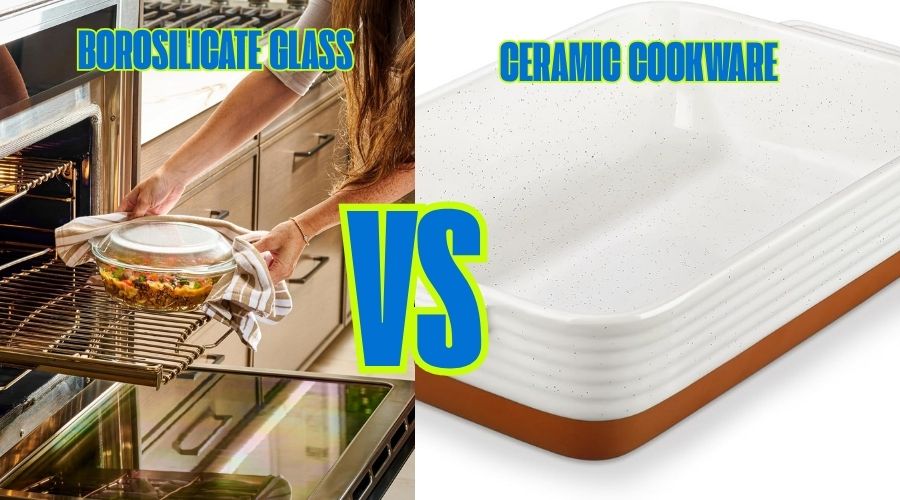
| Feature | Borosilicate Glass | Ceramic Cookware |
| Temperature Resistance | Up to 500°F (260°C) | Up to 450°F (232°C) |
| Thermal Shock Resistance | Excellent | Good |
| Chemical Reactivity | None | None |
| Transparency | Clear | Opaque |
| Weight | Lightweight | Heavy |
| Price Range | Medium | Low to High |
| Best For | Baking, Reheating | Slow Cooking, Braising |
What is Ceramic Cookware?
Ceramic cookware encompasses several types of clay-based cooking vessels that have been fired at high temperatures to create durable, non-reactive surfaces.
Unlike ceramic-coated cookware (which uses ceramic as a coating over metal), pure ceramic cookware is made entirely from clay materials.
Types of Ceramic Cookware
Pure Ceramic: Made entirely from natural clay materials without any metal base.
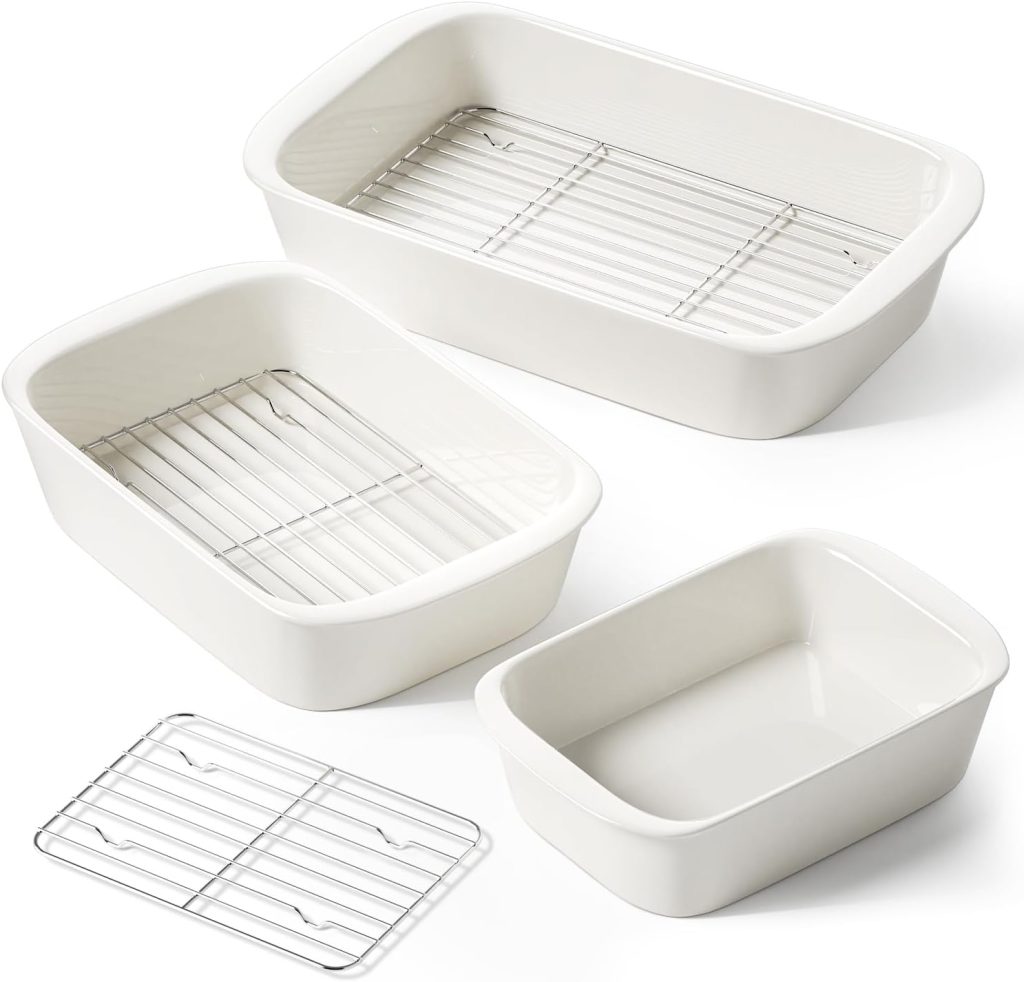
These pieces offer superior heat retention and completely inert cooking surfaces that won’t react with acidic foods.
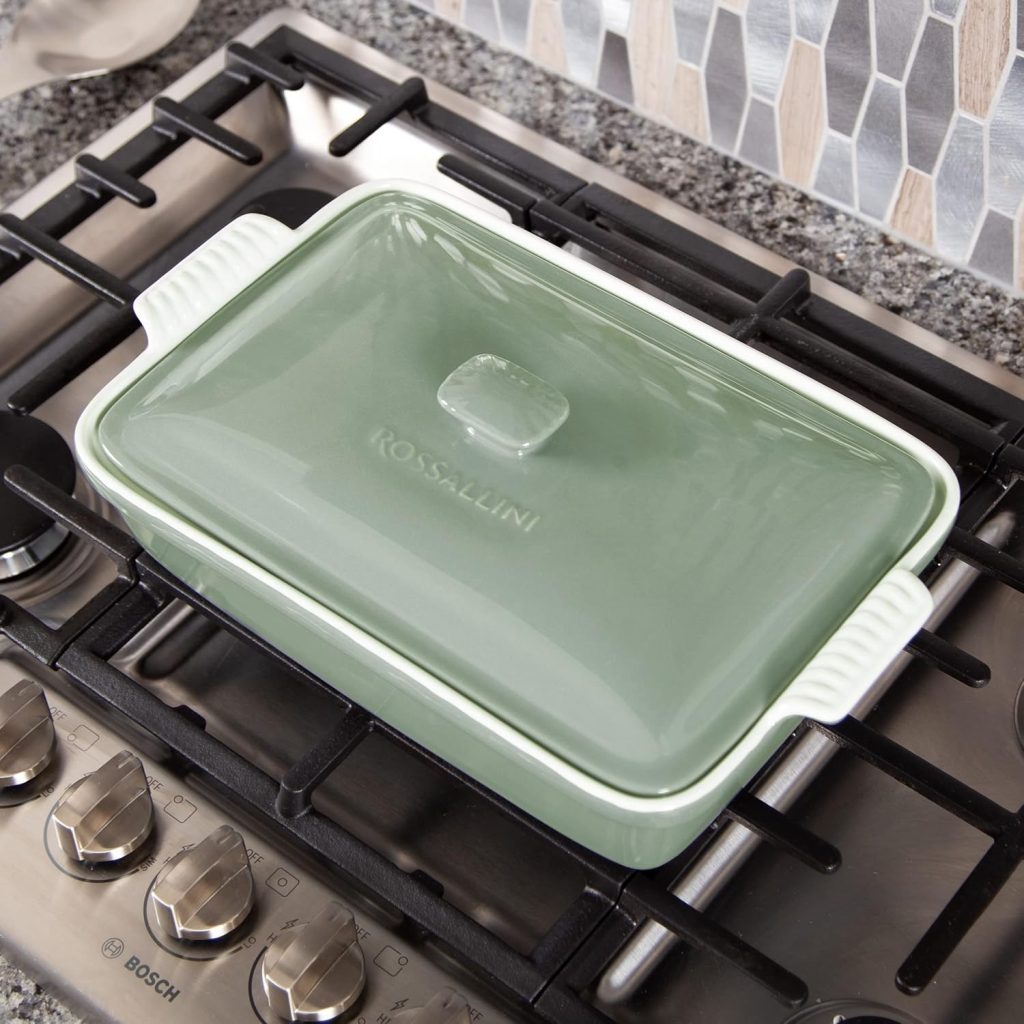
Stoneware: A dense, durable form of ceramic fired at high temperatures. Stoneware cookware provides excellent heat distribution and is naturally non-stick when properly seasoned.
Porcelain: The finest form of ceramic cookware, created from refined clay and fired at extremely high temperatures.
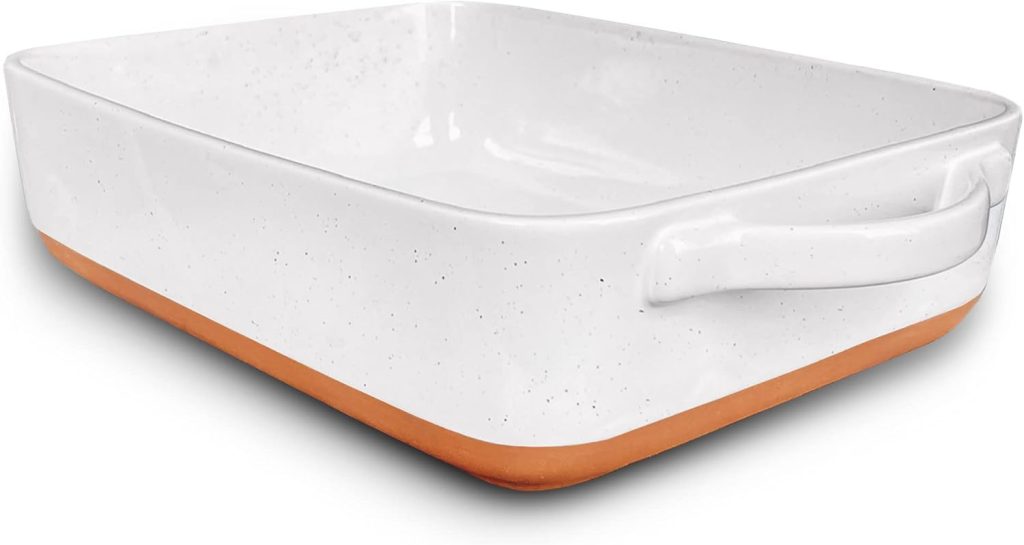
Porcelain offers superior strength and a smooth, non-porous surface.
For a detailed comparison of ceramic materials, see our guide on which is better ceramic or porcelain dinnerware.
Popular Ceramic Cookware Items
- Dutch ovens and casseroles for slow cooking
- Baking dishes for oven-based cooking
- Tagines for specialized cooking methods
- Serving pieces that transition from oven to table
Leading manufacturers like Le Creuset, Emile Henry, and Lodge have established ceramic cookware as a premium choice for serious home cooks who prioritize both performance and safety.
Safety Comparison: Borosilicate Glass vs Ceramic Cookware
Chemical Safety Analysis
Both materials excel in kitchen safety, but their safety profiles differ in important ways that affect your cooking choices.
Borosilicate Glass Safety: This material contains no heavy metals, lead, or cadmium. The boron oxide content creates an inert surface that will never leach chemicals into food, regardless of cooking temperature or food acidity.
Official regulatory documents support borosilicate glass as meeting safety criteria for negligible or no significant chemical migration in food contact, reflecting its inertness.
This aligns with industry and regulatory assessments, deeming it safe for cookware and related uses.
Ceramic Cookware Safety: Modern ceramic cookware manufactured in the United States and Europe adheres to strict safety standards.
However, some imported ceramic pieces may contain trace amounts of lead or cadmium in glazes.
Always verify that ceramic cookware meets FDA standards and displays appropriate safety certifications.
Understanding cookware safety recalls is crucial – our Corelle dinnerware recall information provides insight into how safety standards are enforced in the cookware industry.
Temperature Safety Performance
Thermal Shock Resistance: Borosilicate glass demonstrates superior resistance to rapid temperature changes, allowing safe transitions from freezer to oven.
Ceramic cookware requires more gradual temperature changes to prevent cracking.
Maximum Temperature Capabilities:
- Borosilicate glass: Safe up to 500°F continuously
- Ceramic cookware: Most pieces handle up to 450°F, with some premium pieces rated higher
For specific oven safety guidelines, consult our guide on the oven safety of Corelle Dinnerware, which covers similar temperature considerations.
Performance Analysis: Glass vs Ceramic Baking
Heat Distribution and Retention
Ceramic Cookware Performance: Ceramic’s dense structure provides exceptional heat retention, making it ideal for dishes requiring consistent, gentle cooking.
The material’s thermal mass keeps food warm long after removing from the heat, perfect for serving directly at the table.
Borosilicate Glass Performance: While lighter than ceramic, borosilicate glass offers excellent heat distribution with the added benefit of visual monitoring.
You can observe browning and cooking progress without lifting lids or removing foil.
Cooking Versatility Comparison
Stovetop Compatibility: Most ceramic cookware works on gas and electric stovetops but requires careful heat management to prevent thermal shock.
For comprehensive stovetop performance comparisons, see our cast iron vs ceramic cookware analysis.
Oven Performance: Both materials excel in oven cooking, with ceramic slightly edging ahead for slow braises and roasts due to superior heat retention.
Microwave Safety: Both materials are microwave-safe, though ceramic’s opacity requires more careful monitoring of food temperature.
Specialized Cooking Applications
Ceramic Advantages:
- Superior for slow cooking and braising
- Excellent heat retention for serving
- Better for dishes requiring consistent, gentle heat
- Ideal for traditional cooking methods
Borosilicate Glass Advantages:
- Perfect for baking, where visual monitoring helps
- Excellent for reheating and food storage
- Superior thermal shock resistance
- Better for portion control and meal prep.
Durability & Longevity Assessment
Expected Lifespan Under Normal Use
Through extensive testing, ceramic cookware typically lasts 10-15 years with proper care, while quality borosilicate glass pieces can last indefinitely when handled carefully.
Both materials resist staining and maintain their non-reactive properties throughout their lifetime.
Resistance to Damage
Ceramic Durability: Resistant to scratches and thermal cycling but vulnerable to impact damage. Chips in ceramic cookware can create bacterial harbors and should be addressed immediately.
Borosilicate Glass Durability: Highly resistant to thermal stress but more susceptible to impact damage than ceramic.
When borosilicate glass fails, it typically creates large, manageable pieces rather than dangerous shards.
Environmental Stress Factors:
Both materials handle normal kitchen environments well, though ceramic shows superior resistance to physical impacts while borosilicate glass excels in thermal stress resistance.
Cost Analysis: Investment vs Value
Initial Investment Considerations
Price Ranges:
- Borosilicate Glass: Medium pricing with excellent value proposition
- Ceramic Cookware: Low to High-range, depending on brand and manufacturing origin
Long-term Value Assessment:
Ceramic Cookware Value: Higher-end ceramic pieces represent excellent long-term investments due to exceptional durability and timeless functionality.
The superior heat retention can reduce cooking energy costs over time.
Borosilicate Glass Value: Moderate initial cost with excellent longevity makes borosilicate glass highly cost-effective for most home cooks.
The versatility in cooking and storage applications adds value.
Budget Recommendations:
For budget-conscious cooks, starting with essential borosilicate glass pieces provides maximum versatility.
Premium ceramic pieces work well as specialized additions once cooking needs are established.
Best Use Cases: When to Choose Each Material
Choose Ceramic Cookware When:
- Slow cooking and braising are priorities
- You need superior heat retention for serving
- Cooking for large groups regularly
- Aesthetic presentation matters for table service
- You prefer traditional cooking methods
Choose Borosilicate Glass When:
- Visual cooking monitoring is important
- You need versatile baking dishes
- Easy cleaning and maintenance are priorities
- Budget considerations are primary
- Storage and reheating versatility matter
Complementary Kitchen Strategies
Many experienced cooks use both materials strategically, leveraging ceramic for slow-cooked main dishes and borosilicate glass for baking, storage, and reheating.
This approach maximizes the benefits of each material.
For comprehensive cookware guidance, explore our complete best non-stick cookware made outside of China.
Maintenance & Care Guidelines
Ceramic Cookware Care
Daily Cleaning: Allow gradual cooling before washing to prevent thermal shock. Use gentle dish soap and avoid abrasive cleaners that can damage glazes.
Deep Cleaning: For stubborn stains, create a paste using baking soda and water. Let it sit overnight before gentle scrubbing.
Storage: Store with protective padding between stacked pieces to prevent chips and scratches.
Borosilicate Glass Care
Routine Maintenance: Dishwasher-safe for easy cleaning. Avoid rapid temperature changes during washing.
Stain Removal: White vinegar and baking soda effectively remove mineral deposits and food stains without scratching.
Handling: While thermal shock resistant, avoid extreme temperature differentials exceeding 200°F.
For additional maintenance insights, consult our IKEA plates oven safe guide, which covers similar care principles.
Expert Verdict: Making the Right Choice
Based on extensive testing and professional consultation, both borosilicate glass and ceramic cookware offer excellent, safe cookware materials for health-conscious cooking.
Choose Ceramic Cookware If:
You prioritize heat retention, enjoy slow cooking methods, and appreciate traditional cooking aesthetics. Ceramic excels for dishes requiring consistent, gentle heat over extended periods.
Choose Borosilicate Glass If:
You value versatility, visual cooking monitoring, and easy maintenance. Borosilicate glass provides excellent performance across the widest range of cooking applications.
The Professional Recommendation
For most home kitchens, starting with quality borosilicate glass pieces provides maximum versatility and value.
Add ceramic specialty pieces as specific cooking needs develop. This approach ensures you have appropriate tools for any cooking situation while maintaining budget efficiency.
Both materials support non-toxic cooking goals and provide safe alternatives to potentially harmful cookware materials.
The choice ultimately depends on your specific cooking style, budget, and kitchen priorities.
Frequently Asked Questions
Yes, but allow 15-20 minutes for gradual temperature adjustment to prevent thermal shock.
Borosilicate glass excels for meal prep due to transparency, stackability, and seamless refrigerator-to-microwave transitions.
Look for FDA compliance markings and verify the manufacturer’s safety testing documentation.
Both materials are environmentally sustainable when properly maintained, with extremely long useful lives, reducing replacement needs.
Minor ceramic chips can sometimes be professionally repaired, while damaged borosilicate glass should be replaced for safety.
Related Cookware Guides
Expand your cookware knowledge with these comprehensive guides:
- Borosilicate Glass Cookware Brands: Top Recommendations
- Non-Toxic Cooking Materials: Expert Analysis
Understanding borosilicate glass vs ceramic cookware differences empowers you to make informed decisions that prioritize both cooking performance and family health.
Choose the material that best aligns with your cooking style, safety priorities, and kitchen needs.