Air fryers have revolutionized home cooking by offering the promise of crispy, delicious food with minimal oil.
As more households embrace this convenient appliance, questions arise about what cookware is safe to use inside them.
CorningWare, a trusted name in kitchenware for decades, seems like a natural candidate for air fryer cooking.
However, the answer isn’t straightforward. While CorningWare dishes are oven-safe, air fryers operate differently from conventional ovens, creating unique challenges for glass-ceramic and stoneware materials.
This guide examines whether CorningWare is suitable for use in your air fryer, the associated risks, and what alternatives provide safer cooking experiences without compromising your meals or equipment.
Is CorningWare Air Fryer Safe?
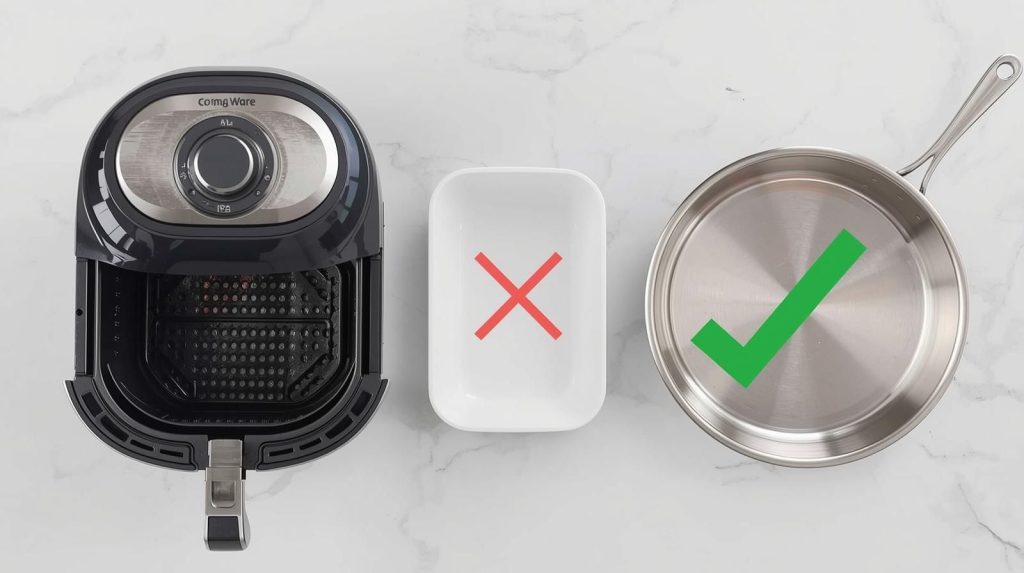
CorningWare is not recommended for use in an air fryer, despite being marketed as oven-safe cookware.
Air fryers create a distinct heating environment compared to traditional ovens, characterised by rapid temperature changes and concentrated airflow that can stress glass-ceramic and stoneware materials.
The risk of cracking, shattering, or thermal shock makes using CorningWare in air fryers a safety concern that outweighs the convenience.
Depends on the type of CorningWare
Not all CorningWare is created equal. Vintage CorningWare made from Pyroceram glass-ceramic is more heat-resistant than modern stoneware versions.
However, even the more durable vintage pieces weren’t designed with air fryer technology in mind.
Modern CorningWare, typically made from stoneware or ceramic, is more prone to cracking under intense, rapid heat exposure, making it particularly unsuitable for air fryers.
Air fryer heat ≠ oven heat
Understanding the difference between oven safe vs air fryer safe is crucial.
Ovens provide gradual, ambient heat from all sides, while air fryers use high-velocity hot air directed at food in a compact space.
This concentrated convection heating creates hotspots and rapid temperature fluctuations that oven-safe dishes aren’t necessarily designed to handle.
The “oven-safe” label on your CorningWare doesn’t translate to air fryer compatibility.
What Is CorningWare Made Of?
Original CorningWare (glass-ceramic / Pyroceram)
Vintage CorningWare produced from the 1950s through the late 1990s was made from Pyroceram, a revolutionary glass-ceramic material developed by Corning.
This material could withstand extreme temperature changes, direct stovetop heat, and oven temperatures up to 500°F.
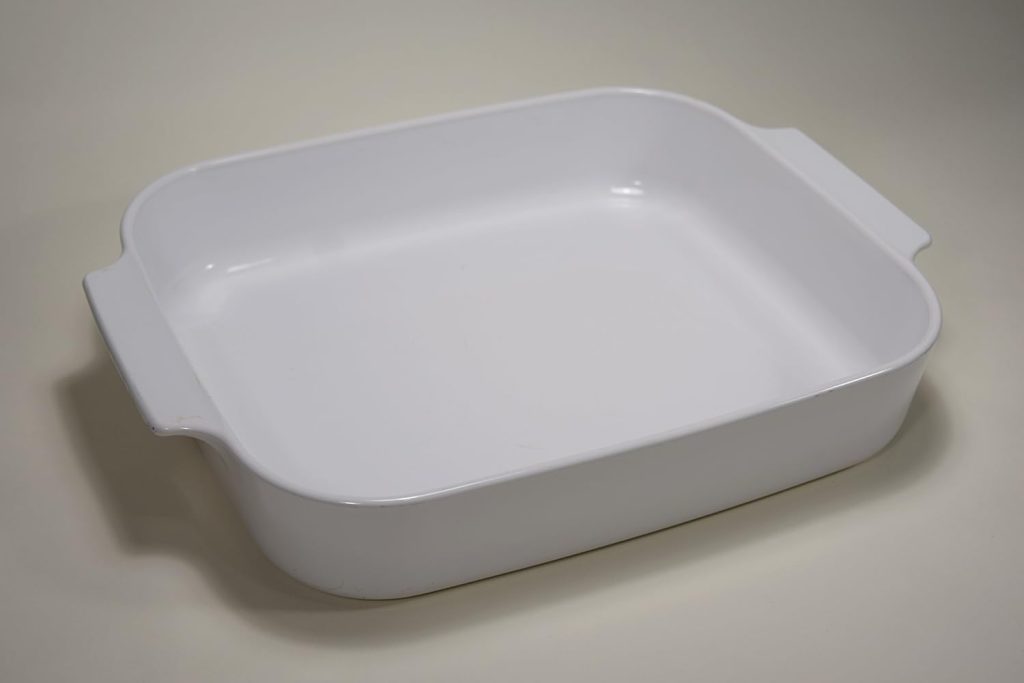
Pyroceram’s molecular structure made it exceptionally resistant to thermal shock, which is why these dishes became kitchen staples for generations.
The iconic blue cornflower pattern typically marks these vintage pieces.
Modern CorningWare (stoneware/ceramic)
Since 2000, CorningWare has been manufactured primarily from stoneware or ceramic materials rather than the original Pyroceram.
While still oven-safe to specific temperatures, modern CorningWare is less heat-resistant than its vintage counterpart.
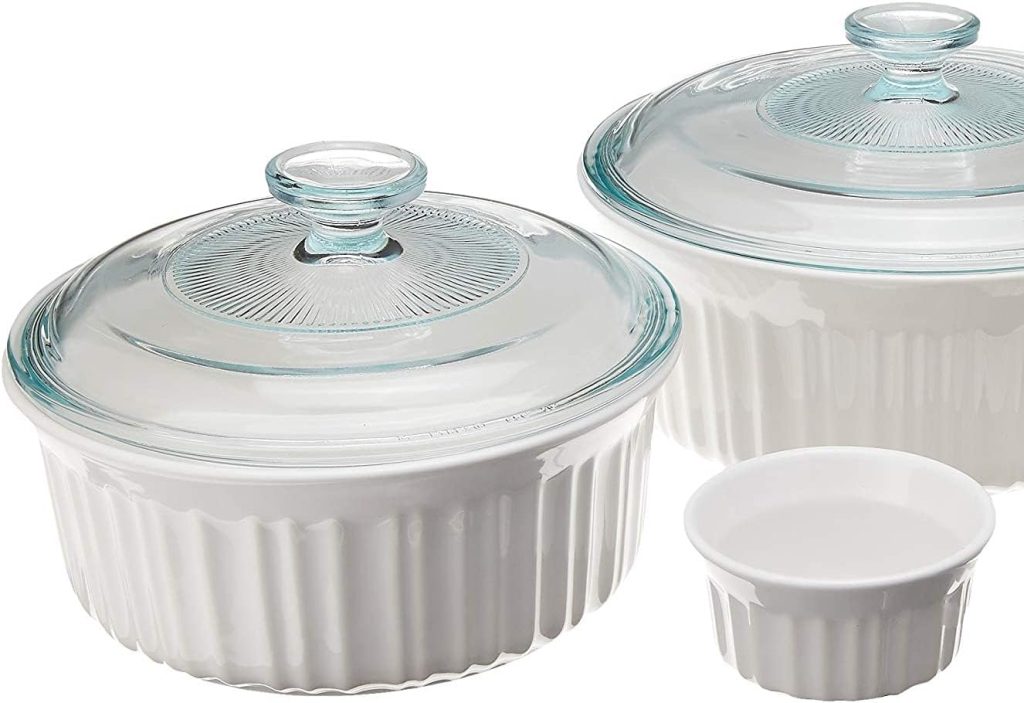
This stoneware construction makes it more affordable but also more susceptible to cracking under rapid temperature changes.
Read our guide on the difference between Corelle and Corningware, and understand material variations across the brand’s product lines.
You’ll see how manufacturing changes have affected heat tolerance.
Why material type matters for air fryers
The material composition directly impacts how a dish responds to air fryer conditions.
Glass-ceramic handles thermal stress better than stoneware, but neither was engineered for the intense, focused heat circulation of air fryers.
Stoneware’s porous nature and lower heat tolerance make it particularly vulnerable to cracking.
Even Pyroceram, despite its superior durability, faces risks from the unique heating pattern of air fryers that differ significantly from conventional ovens.
How Air Fryers Heat Food (And Why That Matters)
Rapid hot air circulation
Air fryers work by circulating superheated air at high speeds around food, typically reaching temperatures between 350°F and 400°F.
This rapid circulation creates a convection effect that cooks food quickly and produces crispy exteriors.
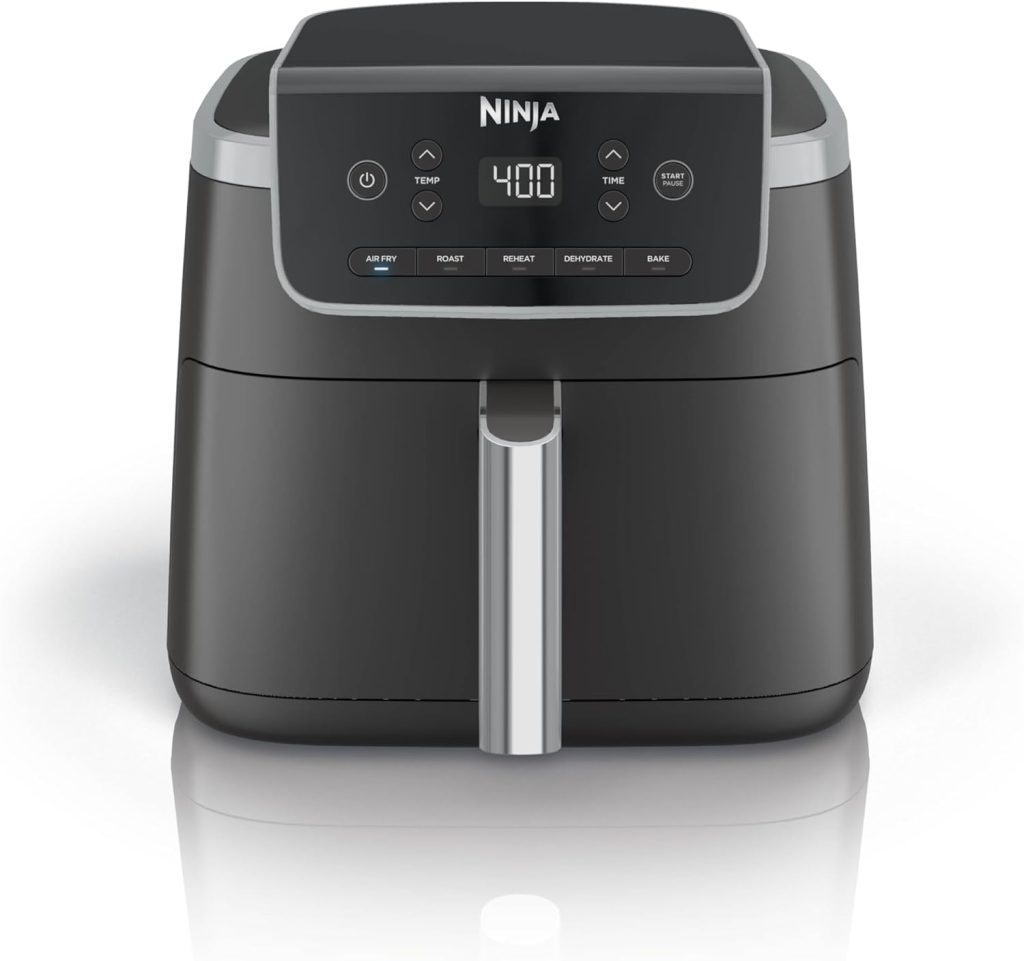
Unlike ovens, where heat surrounds food gradually, air fryers blast hot air continuously, creating a more aggressive heating environment that can stress cookware not designed for such intense airflow.
Concentrated heating elements
The heating element in an air fryer sits directly above or around the cooking chamber, positioned much closer to your food than oven elements.
This proximity creates intense, focused heat in a small space. When you place a dish inside an air fryer, it’s exposed to this concentrated heat source at close range, leading to faster temperature increases than what occurs in a spacious oven cavity.
Smaller chamber = intense heat exposure
Air fryer chambers are significantly smaller than conventional ovens, measuring just a few cubic feet compared to several cubic feet in standard ovens.
This compact space means heat has nowhere to dissipate, creating a more intense thermal environment.
Dishes placed inside experience more direct, sustained heat exposure with less air buffer than in a traditional oven, increasing the likelihood of thermal stress on materials.
Uneven heating and hotspots
Despite rapid air circulation, air fryers often create hotspots where heat concentrates more intensely in certain areas.
The bottom and sides of dishes may experience different temperatures simultaneously, while the top receives direct blasts of hot air.
This uneven heating pattern stresses cookware materials differently across their surface, potentially causing weak points that can crack or shatter, especially in glass-ceramic or stoneware construction.
Why CorningWare Can Crack or Break in an Air Fryer
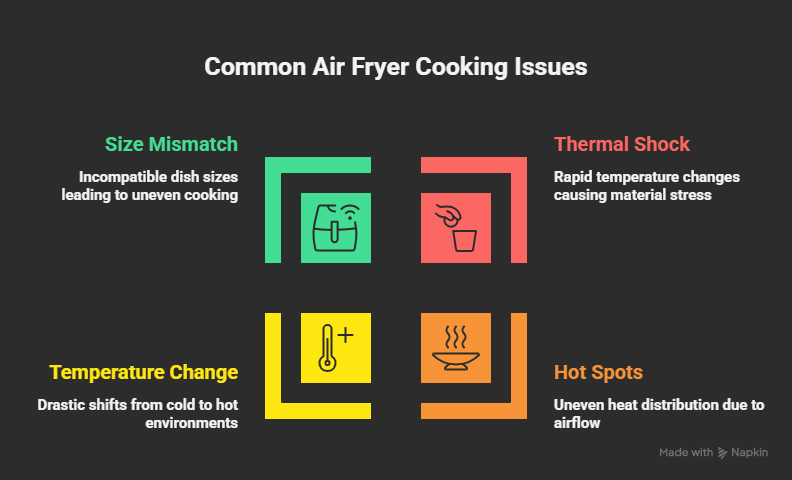
Thermal shock from rapid preheating
Thermal shock occurs when materials experience sudden, extreme temperature changes.
When you place a room-temperature or cold CorningWare dish into a preheated air fryer, the rapid temperature spike can exceed the material’s ability to expand uniformly.
This creates internal stress that can cause immediate cracking or weaken the structure for future failures.
Understanding thermal shock risks helps explain why gradual heating is essential for glass-ceramic and stoneware cookware.
Airflow hitting exposed edges
Air fryers direct hot air forcefully around food, and this airflow often hits dish edges and exposed surfaces with significant force.
CorningWare edges are particularly vulnerable points where the material is thinnest and most exposed to direct heat.
When concentrated hot air repeatedly strikes these edges, it creates localised heating that can cause expansion cracks, especially in modern stoneware versions that lack the resilience of vintage Pyroceram.
Cold dish → hot air fryer scenario
Placing a cold dish directly from the refrigerator into a hot air fryer is the most dangerous scenario for CorningWare.
The extreme temperature differential—potentially 350°F or more—forces the material to expand rapidly and unevenly.
The outer surface heats and expands while the inner layers remain cold and contracted, creating internal stress that often results in catastrophic cracking or shattering mid-cook.
Size mismatch is causing uneven heat
When a CorningWare dish doesn’t fit properly in your air fryer basket, it can block airflow and create uneven heating patterns.
A dish that’s too large may touch the heating element or basket sides, creating contact points that superheat while other areas remain cooler.
Conversely, a very small dish in a large air fryer chamber may experience more direct heat exposure than intended, both scenarios increasing crack risk.
Vintage vs Modern CorningWare — Important Differences
Vintage CorningWare (Pyroceram)
Vintage Pyroceram CorningWare was engineered to withstand extreme conditions, including direct stovetop heat and oven temperatures up to 500°F.
The glass-ceramic material’s crystalline structure allowed it to handle thermal shock better than modern alternatives.
These dishes, recognisable by their classic designs like blue cornflower or spice of life patterns, represent the peak of CorningWare’s heat resistance.
However, even these superior pieces weren’t designed for air fryer convection patterns and lack manufacturer approval for such use.
Modern CorningWare (Stoneware)
Contemporary CorningWare made from stoneware is oven-safe but more brittle under stress.
These pieces typically have temperature limits around 350-450°F and are more susceptible to thermal shock than Pyroceram.
The stoneware construction, while perfectly adequate for conventional oven use, doesn’t have the same molecular structure that made vintage pieces so resilient.
This makes modern CorningWare particularly risky in air fryers, where rapid heating and intense airflow dominate.
Manufacturer Guidance — What CorningWare Recommends
Designed for ovens, not air fryers
CorningWare was engineered and tested for conventional oven use, where heat distribution and temperature changes are predictable and gradual.
The manufacturer’s specifications don’t include air fryer use in their testing protocols.
This means the dishes haven’t undergone safety evaluations under air fryer conditions, leaving users without official guidance on how the materials will perform under rapid convection heating.
No official air fryer safety claim
CorningWare’s packaging and official documentation make no claims about air fryer compatibility, listing only dishwasher, freezer, microwave, and preheated-oven safety for stoneware dishes like the French White line.
The absence of this specific safety rating is significant; if the manufacturer believed their products were safe for air fryers, they would advertise this feature, given the appliance’s popularity.
The lack of endorsement suggests the company either hasn’t tested air fryer use or has chosen not to recommend it.
Why “oven-safe” ≠ “air fryer safe”
An “oven-safe” rating indicates a dish can withstand conventional oven temperatures and heating patterns, but this doesn’t automatically extend to air fryers.
The heating mechanisms are fundamentally different: ovens use radiant heat in a large space, while air fryers use concentrated convection in a compact chamber.
A dish that performs perfectly in an oven may fail under air fryer conditions due to rapid heating, intense airflow, and smaller clearances.
When It Might Be Safer to Use CorningWare in an Air Fryer
Low temperatures only (≤300°F)
If you absolutely must use CorningWare in an air fryer, keep temperatures at or below 300°F.
This lower temperature reduces thermal stress and gives the material more time to heat gradually.
However, many air fryer recipes require higher temperatures for proper cooking, making this limitation impractical.
Even at lower temperatures, risks remain; this is damage reduction, not elimination.
No preheating with an empty dish
Never preheat your air fryer with an empty CorningWare dish inside. Always add food to the dish first, then place it in the air fryer and turn it on.
The food acts as a buffer, absorbing some heat and slowing the dish’s temperature rise.
Preheating an empty dish subjects it to maximum thermal stress with nothing to moderate the rapid temperature increase.
The dish fits comfortably with the airflow space
Ensure at least one inch of clearance around your CorningWare dish to allow proper airflow. The dish shouldn’t touch the air fryer basket sides, top, or heating element.
Adequate spacing prevents hotspot formation and ensures more even heating.
If your dish doesn’t fit with proper clearance, choose a smaller container or use alternative cookware designed for air fryers.
Food is already at room temperature
Always bring refrigerated food and CorningWare to room temperature before air frying. Let cold items sit out for 20-30 minutes before cooking.
This simple step significantly reduces thermal shock risk by minimising the temperature differential the dish experiences.
However, even with room temperature starting points, risks remain due to air fryer heating intensity.
⚠️ Important Safety Note: Even following these precautions doesn’t guarantee safety. CorningWare can still crack or shatter in air fryers under seemingly safe conditions. The safest approach is to avoid using CorningWare in air fryers entirely and choose cookware specifically rated for air fryer use.
What Happens If CorningWare Breaks in an Air Fryer
Glass or ceramic shards in food
When CorningWare shatters mid-cook, tiny glass-ceramic or ceramic fragments contaminate your food.
These shards may be difficult to see, especially in similar-colored foods, but they’re extremely dangerous if consumed.
Even small fragments can cause internal injuries to the mouth, throat, or digestive tract.
Once contamination occurs, the entire batch of food must be discarded; no amount of picking through can guarantee safety.
Risk of burns or cuts
Broken CorningWare creates sharp edges that can cut hands when you attempt to remove the dish or clean the air fryer.
The fragments are often superhot, adding burn risk to the equation.
Cleaning up shattered cookware from a hot air fryer is particularly hazardous, requiring careful handling with protective gloves and time for cooling before safe cleanup is possible.
Air fryer damage
Glass-ceramic or ceramic shards can damage your air fryer’s non-stick coating, heating element, or fan mechanism.
Small fragments may lodge in crevices or the fan assembly, potentially causing mechanical problems or creating ongoing safety hazards for future cooking sessions.
Replacing a damaged air fryer can be more expensive than the CorningWare dish that broke, making this a costly mistake.
Food contamination
Beyond visible shards, broken CorningWare can release fine ceramic dust that settles on food surfaces.
This contamination is invisible but equally dangerous. The entire interior of the air fryer may need thorough cleaning to remove all traces of ceramic particles.
Food that was cooking during the break must be thrown away, wasting ingredients, time, and potentially leaving you without the meal you planned.
Safer Alternatives to CorningWare for Air Fryers
Stainless steel air fryer pans
Stainless steel is the gold standard for air fryer cookware. It withstands high temperatures without warping, handles thermal shock effortlessly, and doesn’t react with acidic foods.
Stainless steel pans designed for air fryers often feature perforated bottoms that allow hot air to circulate food, ensuring even cooking and maximum crispiness.
These pans are durable, dishwasher-safe, and will last for years of regular use.
Silicone air fryer baskets
Food-grade silicone baskets offer non-stick convenience and are safe up to 450°F or higher.
They’re flexible, making food removal easy, and won’t scratch your air fryer’s basket. Silicone is naturally non-reactive and easy to clean.
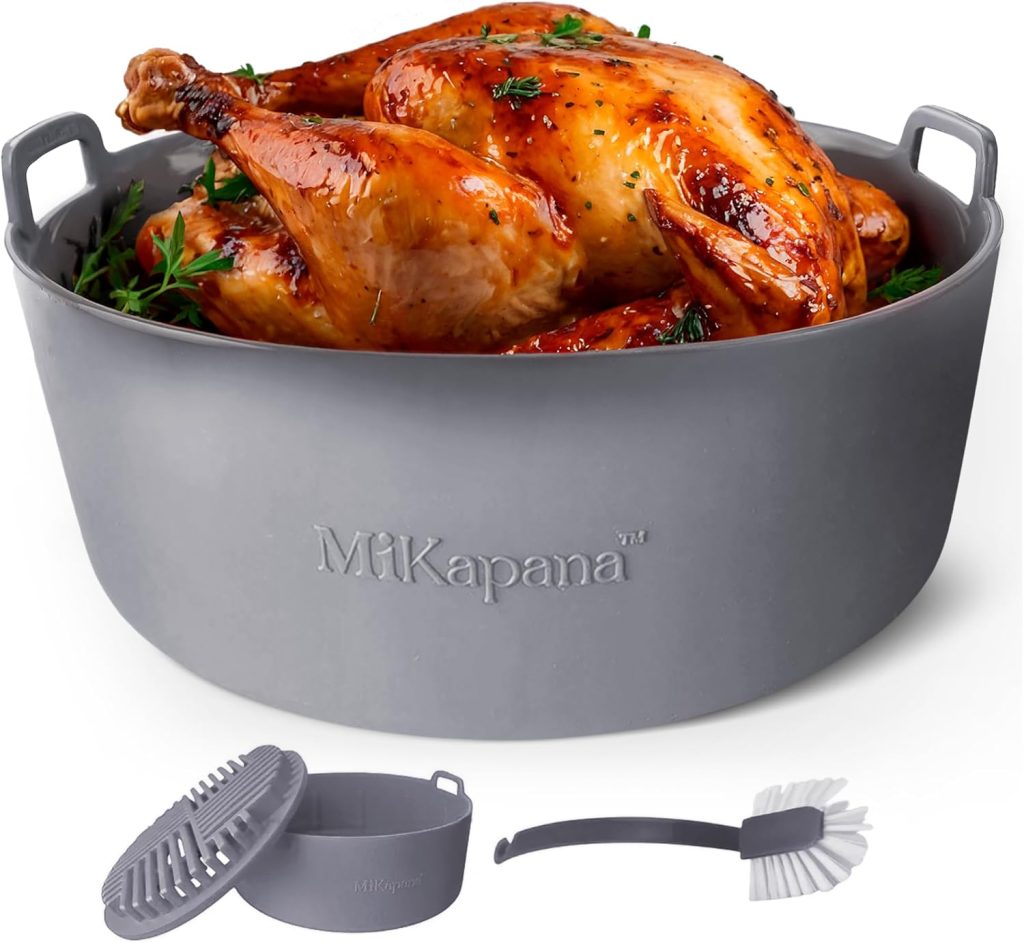
Some designs include perforations for airflow while containing smaller food items that might fall through standard baskets.
For more information, read our guide on safe use of Corelle plates for steaming, which discusses similar temperature considerations.
Air fryer–approved ceramic inserts
Unlike standard ceramic cookware, air fryer-specific ceramic inserts are tested and rated for convection cooking environments.
These products carry explicit air fryer compatibility labels and are designed to handle the rapid heating and intense airflow.
They offer the non-stick benefits of ceramic with the peace of mind that comes from manufacturer-approved air fryer use.
Enamel-coated steel
Enamel-coated steel combines metal’s heat tolerance with ceramic’s non-stick properties.
These pans handle high temperatures well and resist thermal shock better than pure ceramic or glass-ceramic.
The steel core provides structural strength while the enamel coating prevents food from sticking and makes cleanup easy.
Look for enamel cookware specifically marketed as air fryer-safe for best results.
What Cookware Is Air Fryer Safe?
Metal (stainless steel, aluminum)
Metal cookware is generally the safest choice for air fryers.
Stainless steel and aluminum pans handle high temperatures without issue and won’t crack or shatter.
Ensure metal containers fit properly with adequate clearance and avoid using metals with plastic or wooden handles that could melt or burn.
Uncoated metals are ideal, though some non-stick metal pans work well if rated for high temperatures.
Silicone
Silicone bakeware rated for at least 400°F works excellently in air fryers. It’s flexible, non-stick, and won’t react chemically with foods.
Silicone muffin cups, cake pans, and basket liners designed specifically for air fryers are widely available.
Always verify the temperature rating on silicone products before use, as not all silicone cookware handles air fryer heat levels.
Air fryer–rated ceramic
Ceramic cookware explicitly labelled as air fryer-safe has been tested under convection conditions and meets safety standards for this specific use.
These products differ from standard ceramic bakeware in their construction and material composition, designed to handle rapid heating and intense airflow.
Don’t assume all ceramic is air fryer-safe—only use products with clear air fryer compatibility statements.
Parchment & liners
Parchment paper and perforated air fryer liners made from parchment are safe and convenient options.
These disposable liners prevent sticking and simplify cleanup while allowing airflow through perforations.
Never use regular parchment paper without food weighing it down, as air circulation can blow it into the heating element.
Silicone mats designed for air fryers provide reusable alternatives that perform similarly to parchment.
FAQ — CorningWare & Air Fryers
Vintage Pyroceram CorningWare is more heat-resistant than modern versions, but it still isn’t designed for air fryers.
While it may withstand conditions better than stoneware, the manufacturer provides no air fryer safety rating.
The risk of thermal shock and cracking remains due to rapid heating and intense airflow patterns.
CorningWare cracks in air fryers due to thermal shock from rapid temperature changes and concentrated heat exposure.
The intense, unevenly distributed convection heat causes different parts of the dish to expand at different rates, creating internal stress that results in cracks or complete shattering.
CorningWare lids, whether glass or ceramic, should not be used in air fryers.
Lids trap moisture and prevent proper air circulation, defeating the air fryer’s purpose.
They also face the same thermal shock risks as the dishes themselves and may crack or shatter under air fryer conditions.
Stainless steel pans specifically designed for air fryers are the safest option.
They handle high temperatures without issue, don’t crack or shatter, and allow proper airflow.
Look for perforated designs that maximise air circulation while containing food, ensuring both safety and optimal cooking results.
Final Verdict — Avoid Using CorningWare in an Air Fryer
The evidence is clear: CorningWare doesn’t belong in air fryers despite being excellent for conventional oven use.
The fundamental differences between oven heating and air fryer convection create conditions that stress glass-ceramic and stoneware beyond their design specifications.
Whether you own vintage Pyroceram or modern stoneware CorningWare, the risks of cracking, shattering, and food contamination far outweigh any potential convenience.
Manufacturers don’t endorse air fryer use for good reason—these dishes weren’t tested or designed for such intense, rapid heating environments.
Instead, invest in cookware specifically rated for air fryers, such as stainless steel pans, silicone baskets, or air fryer-approved ceramic.
These alternatives provide safe, reliable performance without compromising your meals, your air fryer, or your safety.