The debate between ceramic and porcelain cookware has intensified as more home cooks prioritize health-conscious, non-toxic cooking solutions.
Both materials offer compelling alternatives to traditional non-stick coatings, but choosing between them requires understanding their distinct characteristics, performance differences, and long-term value propositions.
Whether you’re upgrading from potentially harmful PFOA-coated pans or simply seeking cookware that delivers superior heat distribution.
This comprehensive comparison will guide you through the decision between ceramic and porcelain cookware with clarity and confidence.
Quick Comparison Table: Ceramic vs Porcelain Cookware
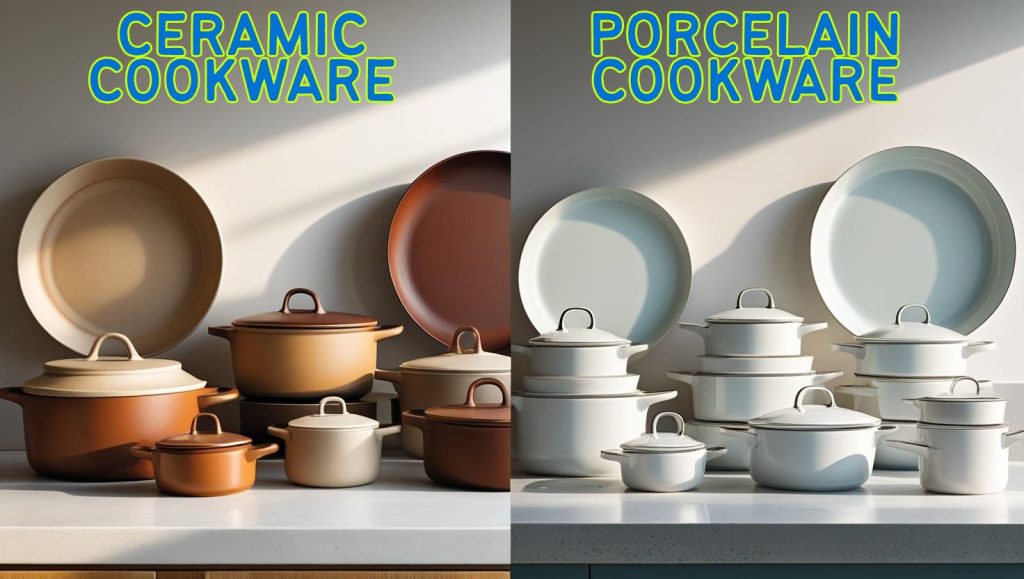
| Feature | Ceramic Cookware | Porcelain Cookware |
| Firing Temperature | 1,800-2,100°F | 2,200-2,600°F |
| Porosity | Slightly porous | Non-porous |
| Heat Retention | Excellent | Good |
| Durability | More chip-resistant | Higher (more resistant to chipping) |
| Max Oven Temp | Lower (Up to 400-450°F) | Higher (Up to 500-550°F) |
| Appearance | Rustic to refined | Elegant, refined |
| Best Use | Heavy-duty cooking | Delicate applications |
| Material Composition | Clay fired at lower temperatures | Clay + feldspar + quartz fired at higher temperatures |
| Dishwasher safe | Yes | Yes |
| Thermal Shock | Low | Variable – Moderate |
| Weight | Heavy | Heavy |
| Non-reactive surface | Yes | Yes |
| Price | Mid-high | High – Premium |
Important Considerations:
Thermal Shock Sensitivity: Both ceramic and porcelain cookware are sensitive to sudden temperature changes. Avoid:
- Moving directly from the refrigerator to the hot stovetop
- Adding cold liquid to a hot pan
- Placing hot cookware on cold surfaces.
Stovetop Compatibility:
- Most work well on gas and electric ranges
- Limited induction compatibility (unless specially designed)
- Always check manufacturer specifications.
Understanding Ceramic and Porcelain Cookware: Key Distinctions
Coated vs. Pure/Solid Construction: What You’re Buying?
The Marketing Confusion:
When shopping for “ceramic cookware” or “porcelain cookware,” you’ll encounter two completely different types of products that are often marketed under the same names.
Understanding this distinction is crucial for making an informed purchase decision.
Ceramic/Porcelain-Coated Cookware
What it is:
- Base material: Aluminium, stainless steel, or carbon steel
- Coating: A Thin layer of ceramic or porcelain-based non-stick coating/Porcelain enamel, around the body of the cookware.
- The ceramic/porcelain is only the surface layer, not the entire construction.
Common brands:
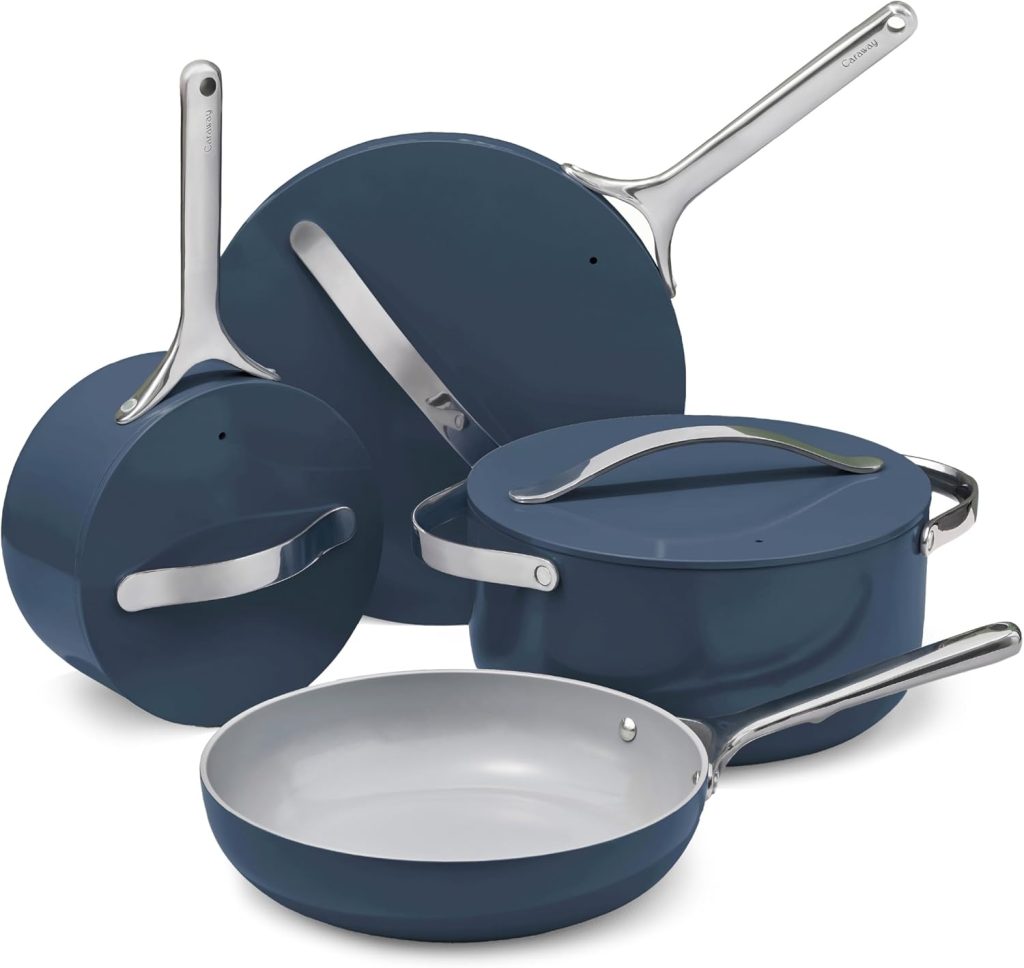
- GreenPan, Caraway, Blue Diamond, Gotham Steel.
Characteristics:
- Lighter weight than solid ceramic
- More affordable ($100-500 per piece)
- Heats up quickly due to the metal base
- Non-stick properties of the coating
- Coating can chip or wear over time.
Pure/Solid Ceramic/Porcelain Cookware
What it is:
- Made entirely from ceramic or porcelain materials
- No metal base – pure ceramic/porcelain construction throughout
- Often handcrafted or manufactured using traditional pottery techniques.
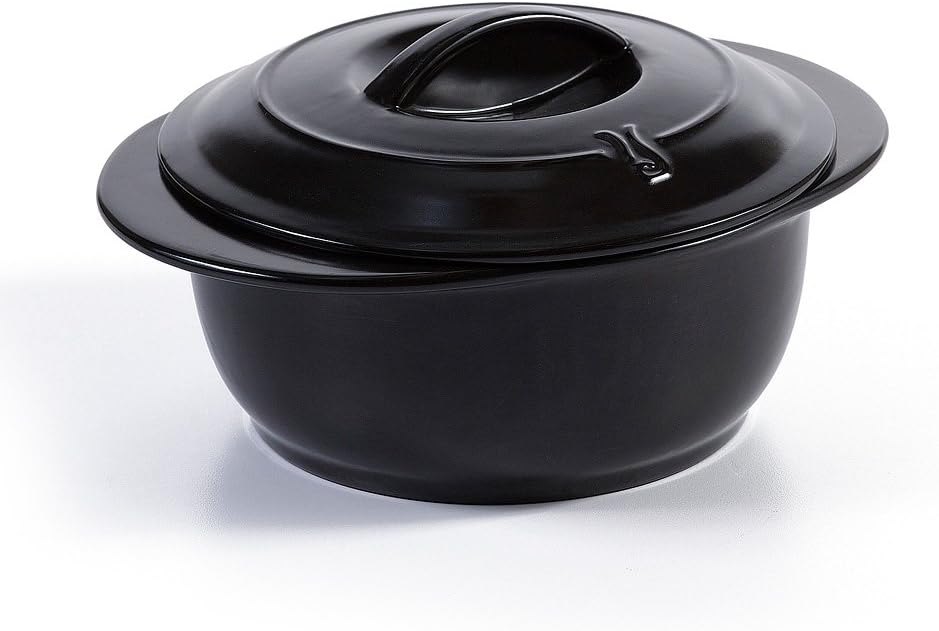
Common brands:
- Xtrema (100% ceramic), Emile Henry, traditional tagines, and Mexican clay pots.
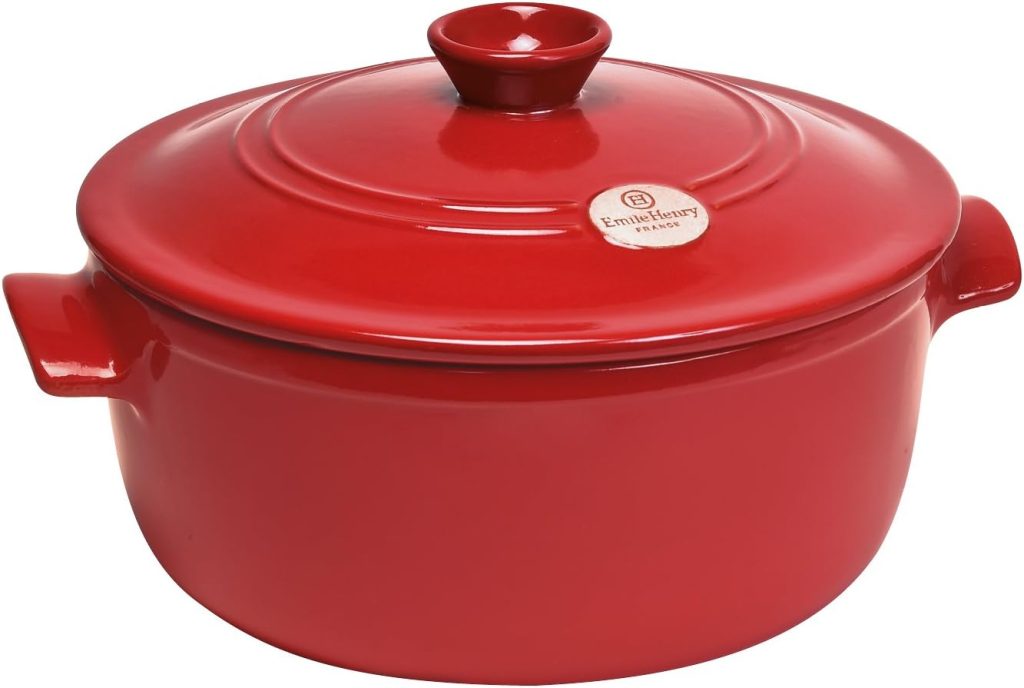
Characteristics:
- Much heavier than coated versions
- More expensive ($100-300+ per piece)
- Excellent heat retention and even heating
- Can withstand high oven temperatures
- More durable long-term, but susceptible to thermal shock.
Cookware vs. Bakeware: Understanding the Categories
Cookware (Stovetop Cooking)
A Cookware is Kitchen equipment designed for cooking on stovetops, ranges, or direct heat sources.
Examples:
- Skillets and frying pans
- Saucepans and stockpots
- Woks and stir-fry pans
- Sauté pans
- Dutch ovens (stovetop use).
Key requirements:
- Must handle direct heat and rapid temperature changes
- Need good heat conduction for even cooking
- Should be compatible with different cooktop types (gas, electric, induction).
Bakeware (Oven Cooking)
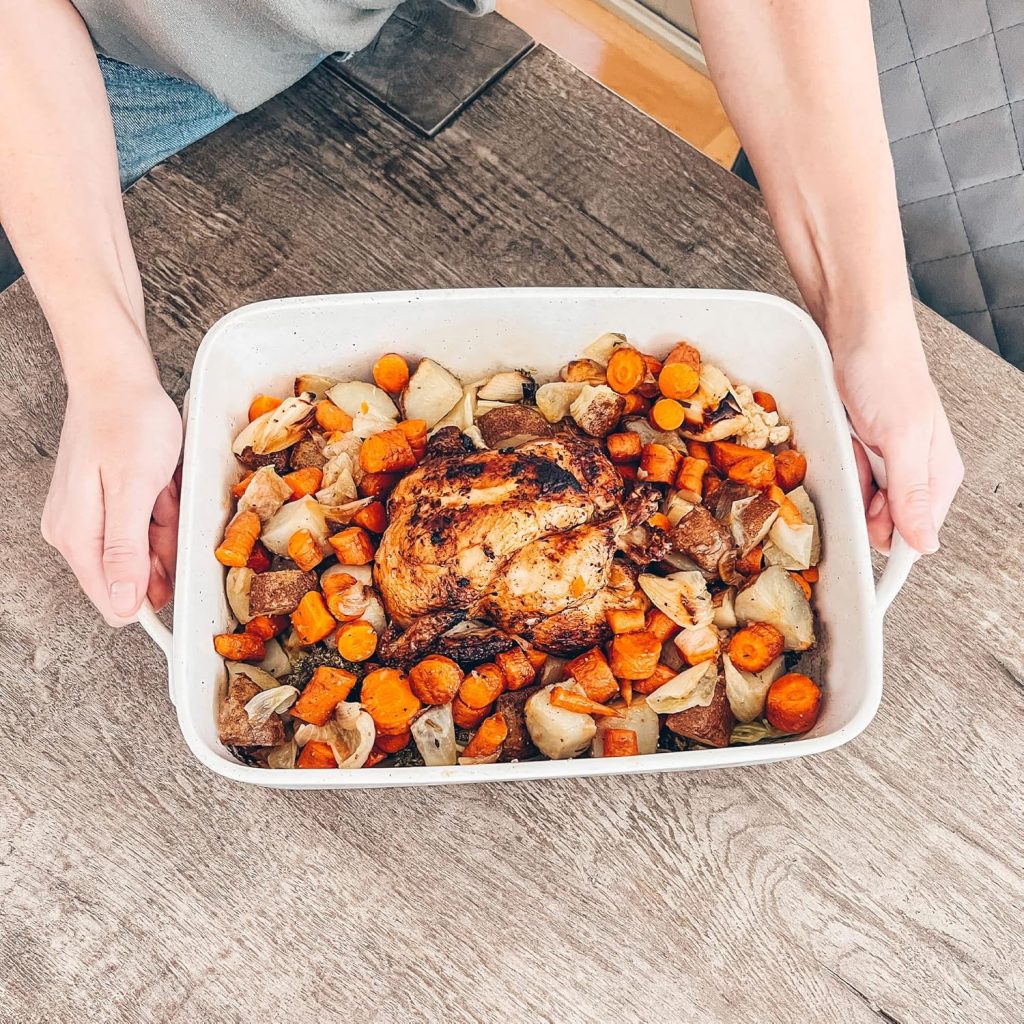
Bakeware is Kitchen equipment designed specifically for baking and roasting in ovens.
Examples:
- Baking dishes and casserole pans
- Cake pans and muffin tins
- Loaf pans and pie dishes
- Roasting pans
- Cookie sheets.
Key requirements:
- Must withstand consistent oven temperatures
- Even heat distribution for uniform baking
- Often designed for specific baking tasks.
Why Ceramic/Porcelain is More Common in Bakeware
- Thermal stability: Ovens provide consistent, gentle heat vs. stovetops’ direct, variable heat
- No thermal shock: Less risk of sudden temperature changes
- Heat retention: Ceramic’s ability to hold heat is ideal for baking
- Traditional use: Ceramics have been used for baking for centuries.
Understanding Ceramic and Porcelain Cookware Fundamentals
What is Ceramic Cookware?
Ceramic cookware refers to pure clay-based cooking vessels fired at temperatures between 1,800°F and 2,100°F.
This category includes both 100% ceramic pieces and ceramic-coated cookware, though true ceramic enthusiasts prefer the former for its complete non-toxic profile.
The manufacturing process creates a naturally non-stick surface without chemical coatings, making ceramic cookware particularly appealing to health-conscious cooks concerned about PFOA and PTFE exposure.
Pure ceramic cookware maintains the clay’s natural properties while providing adequate heat retention for most cooking applications.
What is Porcelain Cookware?
Porcelain cookware combines clay with feldspar and quartz, fired at higher temperatures (2,200-2,400°F) to create a denser, more durable material.
This composition results in the distinctive white, translucent appearance that characterizes quality porcelain products.
The higher firing temperature and additional mineral content give porcelain superior strength compared to standard ceramic, making it more suitable for everyday cooking demands while maintaining the health benefits of a completely inert cooking surface.
Ceramic Cookware: Complete Analysis
Ceramic Cookware Advantages
Health and Safety Benefits:
Ceramic cookware delivers uncompromising safety for health-conscious households. The completely inert surface contains no PFOA, PTFE, lead, or cadmium, eliminating concerns about toxic fumes or chemical leaching into food.
FDA-approved ceramic formulations ensure consistent safety standards across quality manufacturers.
Superior Heat Retention:
Once heated, ceramic cookware maintains temperature exceptionally well, making it ideal for slow-cooking methods, braising, and keeping food warm during extended meal preparation.
This thermal mass property helps achieve consistent cooking results with less energy consumption over time.
Even Heat Distribution:
Quality ceramic cookware eliminates hot spots that plague thin metal pans, distributing heat evenly across the cooking surface.
This characteristic proves particularly valuable for delicate sauces, custards, and other temperature-sensitive preparations that benefit from gentle, uniform heating.
Oven-to-Table Versatility:
Most ceramic cookware transitions seamlessly from stovetop to oven to dining table, withstanding temperatures up to 450°F while maintaining its attractive appearance.
This versatility reduces dishwashing and creates elegant presentation opportunities for family meals and entertaining.
Food retention: Very high; excellent and even heat retention.
Durability and Longevity:
- It can last decades with proper care
- Won’t scratch like non-stick surfaces
- Maintains performance over time without degradation.
Easy Maintenance:
- Simple to clean with basic soap and water
- Stains can be removed with a baking soda paste
- No special cleaning products required.
Ceramic Cookware Disadvantages
Durability Limitations:
Ceramic cookware’s greatest weakness lies in its susceptibility to thermal shock (Moderate to low) and impact damage.
Rapid temperature changes can cause cracking, while drops or hard impacts often result in chips or complete breakage.
These vulnerabilities require careful handling and storage considerations.
Limited High-Heat Performance:
Pure ceramic cookware struggles with high-temperature cooking techniques like searing or stir-frying.
The material can crack under extreme heat stress, and its relatively low thermal conductivity means slower initial heating compared to metal alternatives.
Weight and Storage Challenges:
Ceramic pieces typically weigh significantly more than equivalent metal cookware, creating ergonomic challenges during use and storage difficulties in crowded kitchens.
The added weight becomes particularly noticeable with larger pieces like Dutch ovens or roasting pans.
Stovetop Compatibility Issues:
Many ceramic cookware pieces cannot accommodate induction cooktops without special adapters, and glass stovetops require extra caution to prevent scratching.
Gas and electric coil stovetops provide the most compatible heating sources for ceramic cookware.
Porcelain Cookware: Complete Analysis
Porcelain Cookware Advantages
Enhanced Durability:
Porcelain’s denser composition and higher firing temperature create cookware that resists chipping and cracking better than standard ceramic alternatives.
While still requiring careful handling, quality porcelain cookware withstands normal kitchen use more reliably than pure ceramic options.
Superior Heat Distribution:
The mineral composition of porcelain provides more efficient heat transfer than ceramic, reducing cooking times and improving temperature control.
This enhanced thermal performance makes porcelain suitable for a broader range of cooking techniques while maintaining even heat distribution.
Higher Temperature Tolerance:
Quality porcelain cookware safely handles oven temperatures up to 550°F, expanding cooking possibilities to include high-heat roasting and broiling applications that exceed ceramic cookware limitations.
This temperature range accommodates most home cooking requirements comfortably.
Professional-Grade Performance:
Many commercial kitchens choose porcelain cookware for its balance of durability and heat performance, indicating its suitability for demanding cooking environments.
The material’s consistent thermal properties help achieve reproducible results across multiple cooking sessions.
Thermal Shock Sensitivity: Variable; ordinary porcelain is sensitive, but high-alumina porcelain is highly resistant (up to ~180-200 °C thermal shock tolerance).
Easy Cleanup:
- Smooth surface releases food easily
- Dishwasher safe in most cases
- Resistant to stubborn food residue
Hygienic Properties:
- Non-porous surface doesn’t harbor bacteria
- Easy to sanitize completely
- Ideal for food safety-conscious kitchens
Porcelain Cookware Disadvantages
Premium Investment Costs:
High-quality porcelain cookware commands premium prices, often doubling the cost of equivalent ceramic pieces.
While the enhanced durability may justify the investment long-term, initial purchase costs can strain kitchen budgets, particularly when building complete cookware sets.
Continued Fragility Concerns:
Despite improved durability over ceramic, porcelain cookware remains vulnerable to drops and severe impacts.
The investment value makes breakage particularly costly, requiring ongoing careful handling and storage practices to protect the cookware investment.
Limited Induction Compatibility:
Traditional porcelain cookware lacks the magnetic properties required for induction cooking, though some manufacturers now offer porcelain pieces with embedded metal bases.
These hybrid designs may compromise the pure non-toxic benefits that initially attract porcelain cookware buyers.
Repair Difficulty:
- Chips and cracks are nearly impossible to repair
- Damage often renders the piece unusable
- No practical restoration options are available.
Limited Size Options:
- Fewer large-format options are available
- Most pieces are designed for smaller portions
- It may not suit large family cooking needs.
Poor Heat Retention:
- Doesn’t hold heat as long as ceramic
- Food cools more quickly after cooking
- Less effective for keeping dishes warm.
Performance Comparison: Ceramic vs Porcelain
Heat Distribution and Retention
Porcelain cookware generally outperforms ceramic in heat distribution efficiency due to its denser mineral composition.
While both materials excel at heat retention once heated, porcelain transfers heat more quickly from the stovetop to food, reducing cooking times and improving energy efficiency.
For applications requiring precise temperature control, such as sauce preparation or chocolate melting, porcelain’s more responsive heat transfer provides better control over cooking outcomes.
However, ceramics’ slower heating can benefit preparations requiring gentle temperature increases.
Unlike the ceramic cookware vs borosilicate glass comparison, which shows superior thermal shock resistance for glass, both ceramic and porcelain require more careful temperature management to prevent cracking.
Durability and Longevity
Research and Independent testing reveal porcelain cookware typically lasts 40-60% longer than ceramic under normal household use conditions.
The higher firing temperature creates a more resilient structure that withstands thermal cycling and minor impacts better than standard ceramic formulations.
However, both materials require similar care practices to maximize lifespan: gradual temperature changes, careful storage with protective padding, and gentle cleaning methods.
Neither material tolerates extreme temperature shocks or harsh cleaning abrasives.
Cooking Versatility
Porcelain cookware accommodates a broader range of cooking techniques due to its higher temperature tolerance and improved thermal conductivity.
Searing, browning, and high-heat roasting perform better with porcelain, while ceramic excels at gentle braising, slow cooking, and baking applications.
For households employing diverse cooking methods, porcelain offers greater flexibility.
Families focusing on healthy, low-temperature cooking may find ceramic perfectly adequate while enjoying cost savings.
Which Cookware Should You Choose?
Choose Ceramic Cookware If:
Your cooking style emphasizes gentle, health-conscious methods like braising, slow roasting, and baking.
Ceramic cookware excels when you prioritize absolute non-toxicity over maximum performance, particularly for households with chemical sensitivities or strict dietary requirements.
Budget considerations also favour ceramic cookware when building initial cookware collections.
The lower entry cost allows experimentation with non-toxic cooking while determining long-term preferences before investing in premium alternatives.
Choose Porcelain Cookware If:
Your cooking demands versatility and durability justify the premium investment.
Porcelain suits households requiring cookware that handles diverse techniques from gentle simmering to high-heat searing while maintaining superior longevity under regular use.
Professional-level home cooks and frequent entertainers benefit from porcelain’s enhanced performance characteristics and elegant presentation capabilities that transition seamlessly from cooking to serving applications.
Consider Your Kitchen Setup
Induction cooktop users must verify compatibility before purchasing either option, as most ceramic and traditional porcelain pieces require adapter discs.
Gas and electric coil cooktops provide optimal compatibility for both materials.
Storage space limitations may favour ceramic cookware’s typically lower profile, though both materials require careful organization to prevent damage during storage and retrieval.
Material Safety and Health Considerations
Both ceramic and porcelain cookware provide completely inert cooking surfaces when manufactured according to proper standards.
Quality pieces contain no PFOA, PTFE, lead, or other concerning chemicals commonly found in non-stick coatings.
However, buyers must verify lead-free certification, particularly with imported ceramic and porcelain pieces that may not meet stringent U.S. safety standards.
Reputable manufacturers provide clear documentation of their products’ safety testing and compliance with FDA regulations.
For households prioritizing health-conscious cooking, both materials offer significant advantages over traditional non-stick and some metal cookware options.
Unlike cast iron and ceramic cookware comparison which show that cast iron requires seasoning and can react with acidic foods, ceramic and porcelain provide completely inert surfaces.
The choice between ceramic and porcelain should focus on performance and durability preferences rather than safety differences, as properly manufactured versions of both materials maintain excellent safety profiles.
Maintenance and Care Requirements
Cleaning and Storage:
Both ceramic and porcelain cookware require gentle cleaning practices to maintain their appearance and functionality.
Hand washing with mild detergent preserves the surface integrity better than aggressive dishwasher cycles, though both materials typically rate as dishwasher-safe.
Avoid thermal shock by allowing cookware to cool gradually before washing or refrigerating. Store pieces with protective padding between stacked items to prevent chipping during storage and retrieval.
Longevity Strategies:
Proper preheating techniques extend cookware’s lifespan significantly.
Heat ceramic and porcelain pieces gradually over medium-low settings rather than subjecting them to immediate high temperatures that can cause stress fractures.
Use wooden or silicone utensils to prevent surface scratching, and avoid cutting directly on cookware surfaces.
While both materials resist staining, immediate cleaning of acidic foods prevents potential discoloration over extended periods.
Investment Value and Cost Analysis
Initial Investment Comparison:
Quality complete ceramic cookware might typically range from $100-300* per piece, while comparable porcelain pieces command $250-600*(prices differ depending on brand and retailer).
This higher price is due to porcelain’s more laborious manufacturing process, higher quality raw materials, and the higher firing temperatures required, which make it denser, harder, and more durable.
Ceramic cookware, on the other hand, is typically more affordable due to its less intensive production process and lower firing temperatures.
Long-term Value Assessment
Porcelain cookware’s enhanced durability often justifies its higher initial cost through extended service life.
Ceramic cookware may require more frequent replacement due to chipping or cracking, potentially equalizing total ownership costs over extended periods.
Consider replacement part availability when making investment decisions.
Some manufacturers offer individual piece replacements, while others require complete set purchases, affecting long-term cost calculations significantly.
Both ceramic and porcelain cookware may complement other cookware materials effectively rather than completely replacing existing collections.
For specialized cooking techniques, consider these materials alongside traditional options like cast iron for high-heat applications or borosilicate glass for oven-to-table convenience.
When comparing different cookware materials, understanding granite cookware vs cast iron can also inform your overall cookware strategy and help determine which materials work best for your specific cooking needs.
Final Recommendations
The ceramic vs porcelain cookware decision ultimately depends on balancing performance requirements, durability expectations, and budget constraints.
For most households, porcelain cookware provides a better long-term investment through enhanced durability and cooking versatility, despite higher initial costs.
Health-conscious cooks seeking non-toxic alternatives will find both options excellent, with the choice depending more on cooking style and frequency of use than safety considerations.
Consider starting with one high-quality piece in your preferred material to evaluate its suitability before committing to a complete cookware replacement.
Remember that cookware selection should complement your overall kitchen ecosystem.
While ceramic and porcelain excel in specific applications, maintaining diverse cookware materials ensures optimal results across all cooking techniques while protecting your investment through appropriate tool selection for each cooking task.