Choosing cookware shouldn’t feel like navigating a chemistry lab, yet here we are, reading labels, checking certifications, and wondering if our favourite pan might be secretly toxic.
If you’re weighing enamel vs ceramic cookware, you’re already ahead of the curve.
Both materials promise non-toxic cooking without the PFAS chemicals found in traditional non-stick pans, but they work in fundamentally different ways.
Enamel brings the durability of glass-fused coatings over heavy cast iron or steel, while ceramic offers lightweight, mineral-based surfaces that feel modern and eco-friendly.
The question isn’t just which one is safer; it’s which one fits your cooking style, heat preferences, and long-term kitchen goals.
This guide breaks down the science, safety data, and real-world performance so you can make an informed choice with confidence.
- What Is Enamel Cookware? (Glass-Fused Coating)
- What Is Ceramic Cookware? (Sol-Gel Mineral Coating)
- Key Differences Between Enamel and Ceramic Coatings
- Safety Comparison — Lead, Cadmium & Chemical Exposure
- Durability & Lifespan Comparison
- Cooking Performance — Non-Stick Ability & Heat Control
- Maintenance & Care — Which Is Easier to Use Safely?
- Environmental & Sustainability Comparison
- Which Is Best for You? (Use-Case Based Verdict)
- FAQs About Ceramic vs Enamel Cookware
- Final Verdict — Both Are Safe, but Choose Based on Use
What Is Enamel Cookware? (Glass-Fused Coating)
Enamel cookware has been a kitchen staple for over a century, valued for its smooth, non-reactive surface and striking aesthetic appeal.
But what exactly makes enamel different from other coatings?
How enamel coating is made (glass powder fused onto a metal base)
Enamel is created by fusing powdered glass onto a metal surface at extremely high temperatures, typically between 1,200°F and 1,500°F.
This process bonds the glass permanently to the metal base, creating a durable, non-porous coating.
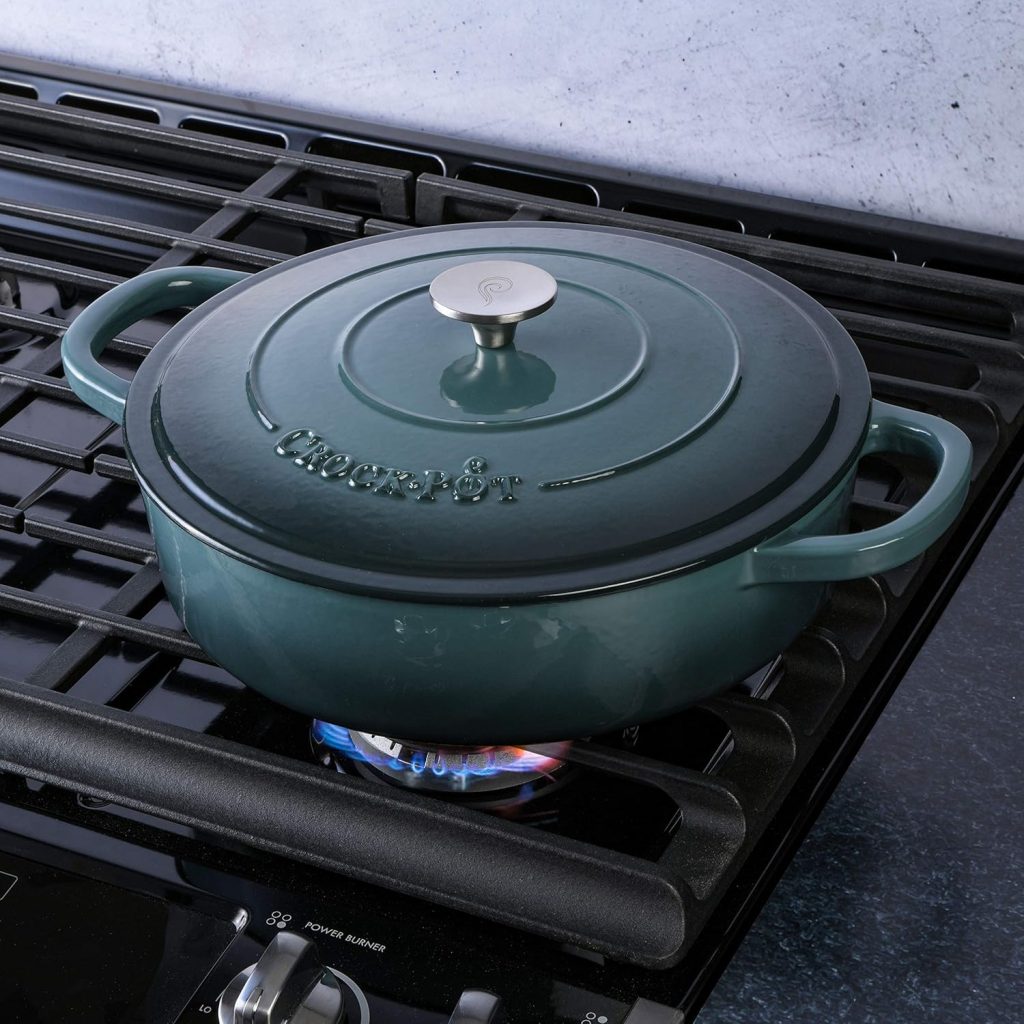
The glass powder contains silica, metal oxides, and mineral compounds that melt and harden into a glossy finish.
Multiple layers are often applied to achieve a smooth, even surface that resists staining and corrosion.
Common substrates (cast iron, steel)
The most common base materials for enamel cookware are cast iron and carbon steel.
Cast iron enamel pots and Dutch ovens are prized for their excellent heat retention and even cooking, while enameled steel is lighter and more affordable.
The heavy metal core provides structural integrity and superior heat distribution, while the enamel coating prevents rust and eliminates the need for seasoning.
Enamel color pigments and potential risks (legacy cadmium, lead)
Vibrant enamel colors come from metal oxide pigments.
Historically, some manufacturers used cadmium (for bright reds and oranges) and lead compounds to achieve certain hues and improve glaze quality.
Modern reputable brands have eliminated these toxic metals, but vintage or imported enamel cookware may still pose risks.
If you’re concerned about older pieces, learn about enamel safety concerns and consider testing before use.
Today’s certified enamel cookware from established brands meets strict FDA and European safety standards.
What Is Ceramic Cookware? (Sol-Gel Mineral Coating)
Ceramic cookware has surged in popularity as consumers seek PFAS-free alternatives to traditional non-stick pans.
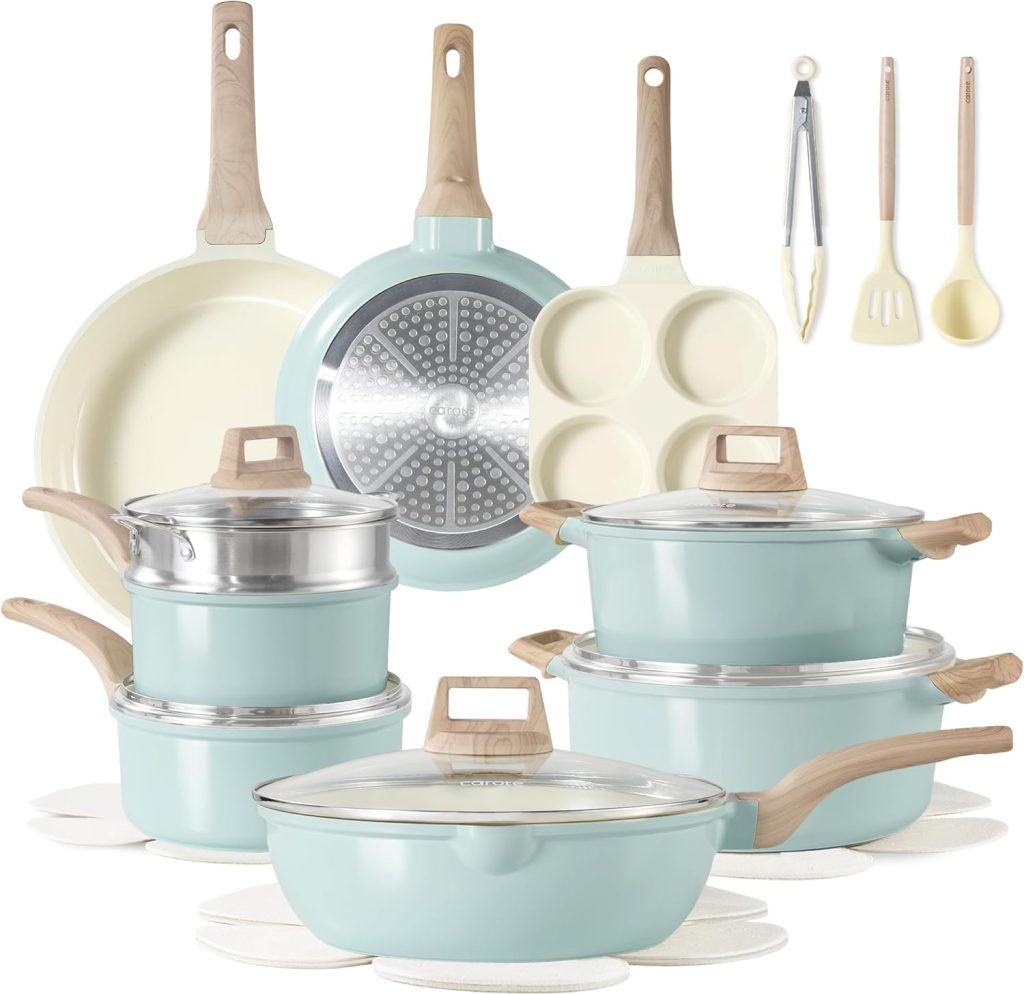
Understanding what “ceramic” actually means helps clarify the difference between enamel and ceramic coating.
Pure ceramic vs ceramic-coated metal pans
True ceramic cookware is made entirely from clay, fired at high temperatures, similar to traditional pottery or stoneware baking dishes.
However, most modern “ceramic cookware” refers to metal pans (usually aluminium) coated with a ceramic-like finish.
This coating isn’t actually ceramic in the traditional sense but rather a silica-based layer that mimics ceramic’s non-stick properties.
How silica-based sol-gel coatings are applied
The ceramic coating on metal pans is created through a sol-gel process.
Liquid silica (silicon dioxide) is applied to the metal surface, then cured at relatively lower temperatures than enamel, around 400°F to 800°F.
This creates a hard, smooth, mineral-based surface. The term “sol-gel” refers to the transition from a liquid solution to a solid gel network.
Multiple thin layers may be applied to build up thickness and improve durability.
Why is ceramic marketed as “non-toxic & PFAS-free”
Ceramic coatings gained traction as safe alternatives to Teflon because they contain no PTFE (polytetrafluoroethylene) or PFOA (perfluorooctanoic acid), the chemicals linked to health concerns in traditional non-stick cookware.
The silica-based coating is derived from sand and minerals, making it naturally free from synthetic fluoropolymers.
Marketing emphasises this “green” chemistry, though consumers should still fully understand ceramic coating safety, as quality varies significantly between brands.
Key Differences Between Enamel and Ceramic Coatings
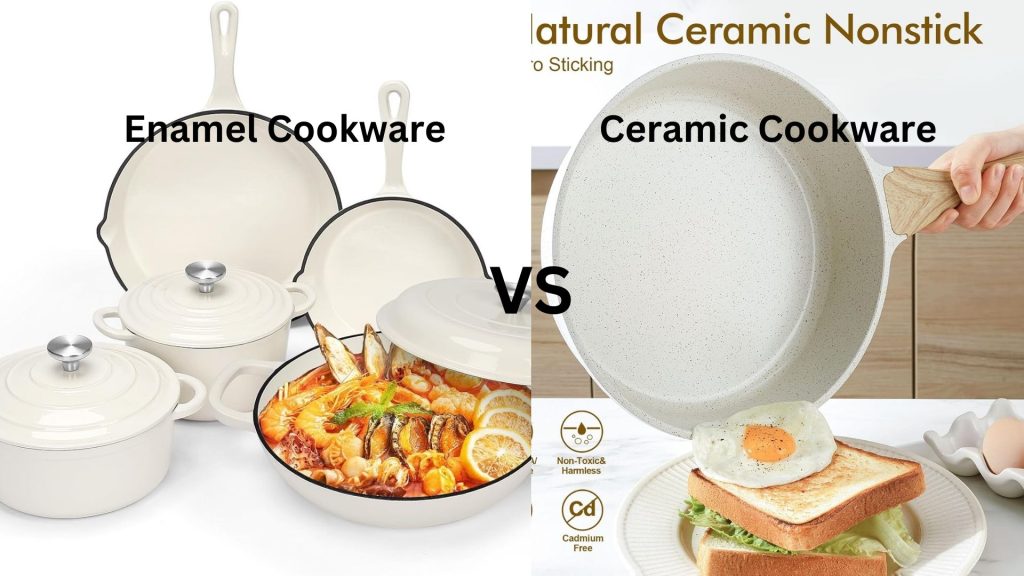
While both enamel and ceramic offer non-toxic cooking surfaces, they differ substantially in composition, construction, and performance characteristics.
Material composition (glass enamel vs mineral coating)
Enamel is essentially glass silica fused with metal oxides and minerals permanently bonded to metal through extreme heat.
Ceramic coatings are silica-based but created through chemical processes at lower temperatures, resulting in a different molecular structure.
This fundamental difference affects everything from durability to heat tolerance.
Base metal differences (cast iron vs aluminum)
Enamel typically covers cast iron or steel, creating heavyweight cookware with excellent heat retention.
Ceramic coatings usually cover aluminum or stainless steel, producing lighter pans that heat quickly but don’t hold heat as long.
This weight difference dramatically impacts the cooking experience and technique.
Heat tolerance & oven safety
Enamel cast iron vs ceramic cookware shows clear distinctions in heat capability.
Quality enamel cookware can withstand oven temperatures up to 500°F or higher, and the coating itself won’t degrade at high heat.
Ceramic coatings are more temperature-sensitive—most manufacturers recommend staying below 400°F to 450°F to prevent coating breakdown.
For high-heat searing or extended oven braising, enamel holds a clear advantage.
Weight, feel, and cooking experience differences
Enamel-coated cast iron is heavy and requires two hands for larger pieces, but offers restaurant-quality heat retention for braising, roasting, and slow cooking.
Ceramic-coated aluminum pans are light and manoeuvrable, ideal for quick sautéing and everyday cooking.
The weight difference makes ceramic more accessible for users with limited hand strength, while enamel appeals to serious home cooks seeking professional results.
Safety Comparison — Lead, Cadmium & Chemical Exposure
Safety is often the primary concern driving the enamel vs ceramic cookware comparison. Let’s examine what scientific testing reveals about potential health risks.
Does enamel cookware contain lead?
Modern enamel cookware from reputable manufacturers is lead-free and cadmium-free.
However, vintage pieces (especially those made before the 1980s) and some imported products may contain these heavy metals in the glaze or pigments.
Colorful enamels, particularly reds, oranges, and yellows on older cookware, carry a higher risk.
Always check for Prop 65 warnings and purchase from established brands that provide safety certifications.
Does ceramic cookware contain heavy metals?
High-quality ceramic coatings are generally free from lead, cadmium, PFAS, and PTFE.
The silica-based formula doesn’t require heavy metals for performance.
However, inferior products or those manufactured without strict quality control may contain trace contaminants.
Some testing by independent labs has occasionally detected lead in low-quality ceramic cookware, particularly in decorative elements or poorly manufactured coatings.
Checking for Prop 65 warnings & FDA compliance
California’s Proposition 65 requires warnings for products containing chemicals known to cause cancer or reproductive harm.
Check product listings and packaging for these warnings. FDA-compliant cookware meets federal standards for materials that contact food.
Reputable brands voluntarily submit to third-party testing and display certifications prominently.
What testing shows (SGS / Intertek)
Independent testing organisations have tested numerous cookware brands.
Results consistently show that certified modern enamel and ceramic cookware from quality manufacturers test negative for lead and cadmium.
Budget imports and vintage pieces show more variability. If you have concerns about specific pieces, verify if your cookware is lead-free through home testing kits or professional laboratory analysis.
Durability & Lifespan Comparison
Understanding ceramic vs enamel durability helps predict long-term value and replacement costs.
Enamel chipping risk vs ceramic surface scratching
Enamel’s primary vulnerability is chipping; a sharp impact can crack the glass coating, exposing the metal underneath.
Once chipped, the cookware may rust at the exposed spot, though it’s still usable with care.
Ceramic coatings typically don’t chip but instead wear down gradually through abrasion and repeated heating cycles.
Scratches accumulate from metal utensils and rough scrubbing, eventually compromising the non-stick properties.
Heat shock and thermal cracking
Enamel can crack from thermal shock, rapidly moving a hot pot to a cold surface or adding cold liquid to a scorching pan.
This vulnerability requires mindful handling. Ceramic coatings are less prone to thermal shock cracking but can degrade from repeated high-heat exposure, causing the coating to break down at a molecular level.
Which lasts longer in real kitchens
Quality enamel cookware routinely lasts 10 to 20 years or more with proper care.
Le Creuset and Staub pieces often become heirlooms passed through generations.
Ceramic coatings typically maintain optimal non-stick performance for 1 to 3 years before showing wear, with total lifespan reaching 3 to 5 years for better brands.
The ceramic vs enamel durability winner is clearly enamel for longevity.
Effects of coating wear on safety
When enamel chips, the exposed cast iron underneath is safe but may rust and affect food flavor.
The glass coating itself doesn’t degrade chemically. Ceramic coating wear is more concerning as the surface breaks down; the underlying aluminum may become exposed.
While modern anodized aluminum is considered safe, scratched ceramic exposes this metal to acidic foods, potentially increasing aluminum migration into food.
Cooking Performance — Non-Stick Ability & Heat Control
Performance characteristics significantly impact daily cooking satisfaction and determine whether enamel vs ceramic non-stick matters for your recipes.
Which has better early non-stick performance?
Brand-new ceramic cookware offers exceptional non-stick performance, often rivaling traditional Teflon for ease of food release with minimal oil.
Enamel provides a smooth surface but isn’t truly non-stick—it’s non-reactive and easy to clean, but food can stick, especially when cooking lean proteins or eggs without adequate fat.
For pure non-stick convenience out of the box, ceramic wins initially.
Heat retention (cast iron enamel wins)
Enamel-coated cast iron excels at heat retention, maintaining steady temperatures throughout cooking.
This makes it ideal for braising, slow-cooking stews, and achieving even browning.
Ceramic-coated aluminum heats quickly but loses heat rapidly when food is added or when removed from the burner.
For recipes requiring stable, consistent heat, enamel’s thermal mass provides superior results.
Low-oil cooking performance
Ceramic coatings, when new, allow very low-oil cooking, appealing to health-conscious cooks.
However, this performance degrades over time. Enamel requires more fat for proper food release but maintains this requirement consistently throughout its lifespan.
If you compare ceramic with Teflon alternatives, you’ll find that ceramic offers a middle ground better than enamel initially, but not as permanently non-stick as PTFE.
High-heat searing differences
Enamel cookware handles high-heat searing exceptionally well, developing beautiful crusts on meats without coating damage.
Ceramic coatings can degrade when repeatedly exposed to temperatures above 450°F, gradually losing their non-stick properties and developing discoloration.
For techniques like blackening fish or searing steaks, enamel’s heat tolerance makes it the safer long-term choice.
Maintenance & Care — Which Is Easier to Use Safely?
Daily maintenance impacts both convenience and safety, influencing which cookware fits your lifestyle.
Can you use metal utensils on enamel and ceramic?
Enamel tolerates metal utensils better than ceramic.
While manufacturers recommend wooden or silicone tools to prevent scratching, enamel’s hardness resists minor utensil marks.
Light scratches don’t compromise safety or performance significantly.
Ceramic coatings are more delicate than metal utensils can scratch the surface, accelerating wear and reducing non-stick capability.
Stick to soft utensils with ceramic to maximize lifespan.
Cleaning difficulty
Enamel’s smooth, non-porous surface resists food particles and cleans easily, though stuck-on food may require soaking. The surface doesn’t absorb oils or odors.
Ceramic, when new, wipes clean effortlessly, but as the coating ages, cleaning becomes more challenging.
Food begins sticking in worn areas, and the surface may develop stubborn brown residue that’s difficult to remove without abrasive scrubbing, which further damages the coating.
Stain resistance
Quality enamel resists staining well, though light-colored interiors may show darkening over time from high-heat cooking and oil polymerization.
These stains are cosmetic and don’t affect safety. Ceramic coatings are prone to staining, especially from oils and high-heat cooking.
Once stained, ceramic rarely returns to its original bright white appearance, even with aggressive cleaning.
Dishwasher + oven safety
Most enamel cookware is dishwasher-safe, though hand washing extends the coating’s life.
Enamel handles oven temperatures up to 500°F or higher, depending on the brand.
Ceramic-coated pans vary—some are dishwasher-safe while others aren’t, and oven-safe temperatures typically max out around 400°F to 450°F.
Always verify manufacturer specifications, as exceeding recommended temperatures can permanently damage ceramic coatings.
Environmental & Sustainability Comparison
Environmental consciousness increasingly influences cookware choices, prompting questions about each material’s ecological footprint.
PFAS-free nature of both materials
Both enamel and ceramic cookware are completely PFAS-free, containing no synthetic fluoropolymers or “forever chemicals.”
This shared characteristic makes both materials environmentally preferable to traditional non-stick coatings that release persistent pollutants during manufacturing and disposal.
From a chemical safety standpoint, both represent significant environmental improvements.
Ceramic’s eco-marketing vs actual footprint
Ceramic cookware benefits from “green” marketing emphasizing natural minerals and non-toxic manufacturing.
However, the reality is more complex. Ceramic-coated pans typically have shorter lifespans (3-5 years), leading to more frequent replacement and greater cumulative waste.
The aluminum base, while recyclable, requires energy-intensive extraction and processing. Marketing often oversimplifies these environmental tradeoffs.
Enamel’s recyclability and energy-intensive firing
Enamel production requires extreme heat, consuming considerable energy.
However, the resulting product’s decades-long lifespan offsets this initial environmental cost.
Enamel cookware is technically recyclable; the iron core can be reclaimed, though the fused glass coating complicates processing.
Many users keep quality enamel pieces for life, reducing overall environmental impact through longevity rather than recyclability.
What each coating means for long-term sustainability
The safest cookware material comparison from an environmental perspective favors durability over disposability.
Enamel’s 20+ year lifespan means fewer pieces manufactured, shipped, and discarded over time.
Ceramics’ shorter functional life creates more waste despite “eco-friendly” materials.
True sustainability in cookware comes from buying once and using for decades, a principle where enamel excels.
Which Is Best for You? (Use-Case Based Verdict)
The answer to which is safer, enamel or ceramic cookware, depends on your specific cooking needs and priorities.
Best for high-heat searing → Enamel
If you regularly cook steaks, roasts, or dishes requiring sustained high temperatures, enamel-coated cast iron delivers superior performance.
It won’t degrade at searing temperatures, develops excellent browning, and transitions seamlessly from stovetop to oven.
The durability justifies the higher initial investment for serious cooks who value heat tolerance and longevity.
Best for lightweight everyday use → Ceramic
For quick weeknight dinners, vegetable sautés, and cooking situations where weight matters, ceramic-coated pans offer convenience.
They heat rapidly, provide good initial non-stick performance, and are easier to maneuver than heavy cast iron.
Budget-conscious cooks comfortable replacing pans every few years will appreciate ceramic’s lower entry cost.
Best for toxin-safe, coating-free option → Pure ceramic or cast iron
If you want to eliminate any concerns about coating wear or degradation, consider pure ceramic bakeware or uncoated cast iron.
These materials have no coatings to chip or wear away, offering complete peace of mind regarding ceramic vs enamel toxicity.
They require different techniques but provide the most minimal-processing approach to non-toxic cooking.
Best for long-term durability → Enamel cast iron
When value is measured in decades rather than years, enamel-coated cast iron stands unmatched.
Quality pieces from Le Creuset, Staub, or Lodge can last multiple generations with proper care.
The higher upfront cost translates to lower per-year ownership expense and less environmental waste. For cooks investing in lifetime kitchen tools, enamel represents superior long-term value.
FAQs About Ceramic vs Enamel Cookware
Which one chips faster?
Enamel can chip from impact but resists gradual wear, while ceramic doesn’t chip but wears down through repeated use and washing.
Enamel maintains its integrity if not physically damaged, whereas ceramic inevitably loses non-stick properties over time.
Which is safest for kids and the elderly?
Both modern certified cookware types are safe when properly manufactured.
Ceramic’s lighter weight may be easier for those with limited strength to handle.
Neither poses chemical risks when used as directed, though damaged enamel exposing iron requires caution with acidic foods.
Can either leach metals?
Modern certified enamel and ceramic cookware from reputable brands doesn’t leach harmful metals during normal use.
Damaged enamel may expose iron (generally safe), while scratched ceramic could potentially expose aluminum underneath.
Quality matters significantly cheap imports may contain contaminants not present in certified products.
Is ceramic better for non-stick cooking?
Ceramic provides better non-stick performance when new, but this advantage is temporary.
Within 1-2 years, ceramic loses much of its non-stick capability, while enamel maintains its consistent (though moderate) food-release properties indefinitely.
For long-term non-stick reliability, neither compares to properly seasoned cast iron or quality stainless steel with proper technique.
Final Verdict — Both Are Safe, but Choose Based on Use
The enamel vs ceramic cookware comparison reveals no clear universal winner; instead, the best choice depends on your cooking style, budget, and priorities.
Enamel cookware is more durable, chip-resistant with proper care, and excellent for high-heat cooking.
Its decades-long lifespan makes it the economical choice over time, ideal for slow braises, oven-roasting, and recipes requiring steady, even heat.
The weight and higher price create barriers for some users, but serious home cooks appreciate the professional-quality results.
Ceramic cookware is lighter, completely PFAS-free, and performs wonderfully for low-to-medium heat everyday cooking.
The impressive initial non-stick surface and affordable pricing make it accessible, though realistic expectations about the 2-4 year functional lifespan are important.
It’s perfect for quick meals and cooks who prefer lighter cookware.
Vintage enamel carries a potential lead risk test before use.
Colorful pieces manufactured before modern safety standards may contain heavy metals in decorative glazes.
Modern certified cookware eliminates this concern.
For the highest safety: choose certified modern brands and handle both materials gently.
Avoid extreme temperature shocks with enamel, don’t overheat ceramic coatings, and replace any cookware showing significant damage.
Whether you choose the enduring strength of enamel cast iron vs ceramic cookware’s lightweight convenience, both materials offer safe, non-toxic cooking when sourced from reputable manufacturers and used properly.