Standing in your kitchen, staring at a pot that’s chipped, stained, or simply doesn’t cook the way you hoped, you know it’s time for an upgrade.
But the cookware aisle feels like a maze of conflicting advice.
Should you invest in the colorful, heavy-duty charm of enameled cast iron, or opt for the sleek, responsive performance of stainless steel?
The enameled cast iron vs stainless steel comparison isn’t just about aesthetics or brand names—it’s about safety, cooking results, and finding what truly works for your lifestyle.
This guide cuts through the marketing hype to help you make an informed decision based on science, real-world performance, and your unique cooking needs.
What Is Enameled Cast Iron?
Enameled cast iron cookware combines the traditional heat retention of cast iron with a protective glass coating, eliminating the need for seasoning.
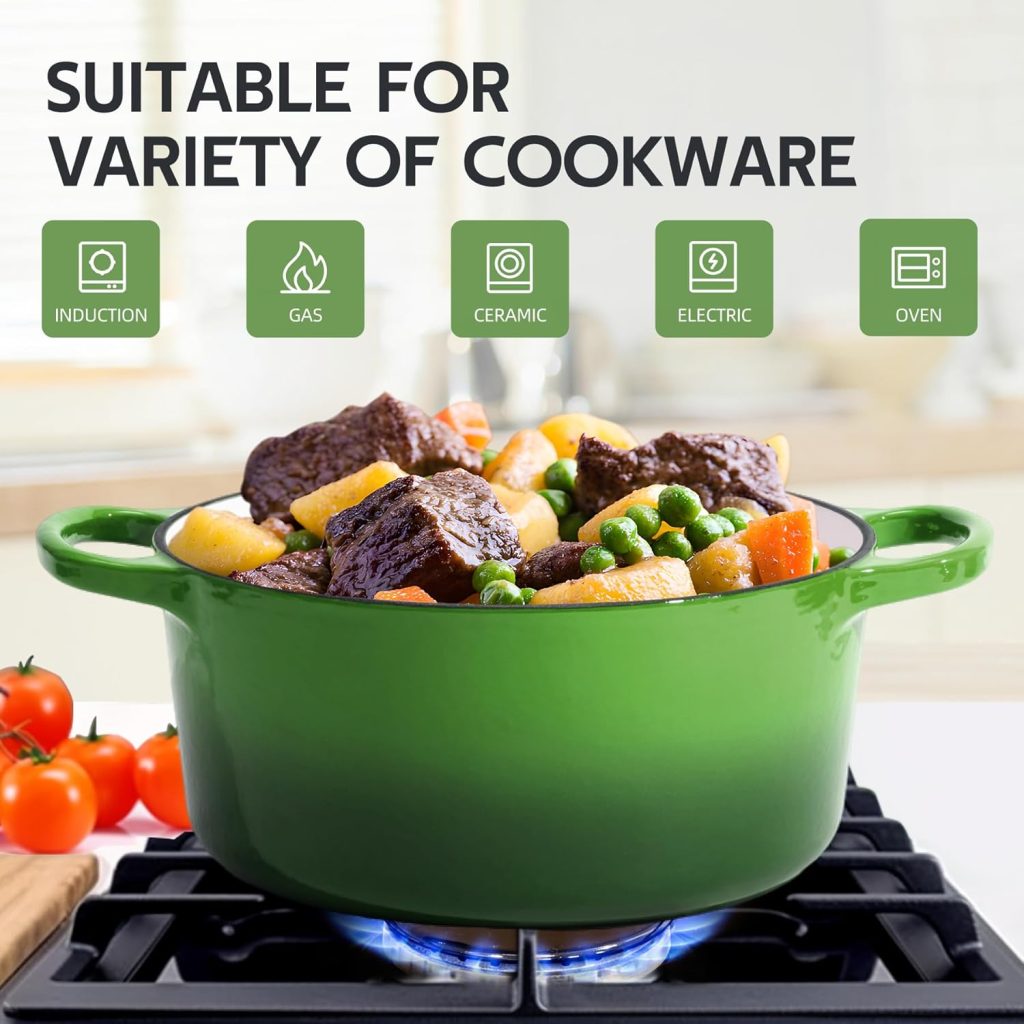
This fusion creates a cooking surface that’s naturally non-stick when properly preheated and exceptionally durable under the right conditions.
Glass enamel coating on cast-iron base
The enamel coating is created by fusing powdered glass to cast iron at temperatures exceeding 1,500°F.
This process creates a smooth, non-reactive surface that won’t rust or require oil-based maintenance.
The interior enamel is typically lighter in color (cream or white), while exterior coatings come in various vibrant hues.
This glass layer prevents acidic foods from reacting with the iron underneath, making it ideal for tomato-based sauces, wine reductions, and citrus marinades.
Heat retention and weight characteristics
Cast iron’s molecular density allows it to absorb and hold heat far longer than most metals.
Once an enameled Dutch oven reaches temperature, it maintains consistent heat throughout the cooking process—perfect for braising, bread baking, and slow-cooked stews.
However, this advantage comes with significant weight; a 5-quart enameled pot typically weighs 13-15 pounds empty, which can challenge users with limited strength or mobility.
Enamel pigment risk (lead/cadmium in vintage items)
Modern enameled cookware from reputable manufacturers adheres to strict safety standards.
However, vintage pieces manufactured before the 1980s may contain lead or cadmium in their colorful exterior glazes.
These heavy metals were historically used to achieve vibrant reds, oranges, and yellows.
If you’re considering antique or secondhand enameled cookware, you should check if your enamel is lead-safe before use, especially for pieces with bright exterior colors or unknown manufacturing dates.
Common brands (Staub, Le Creuset)
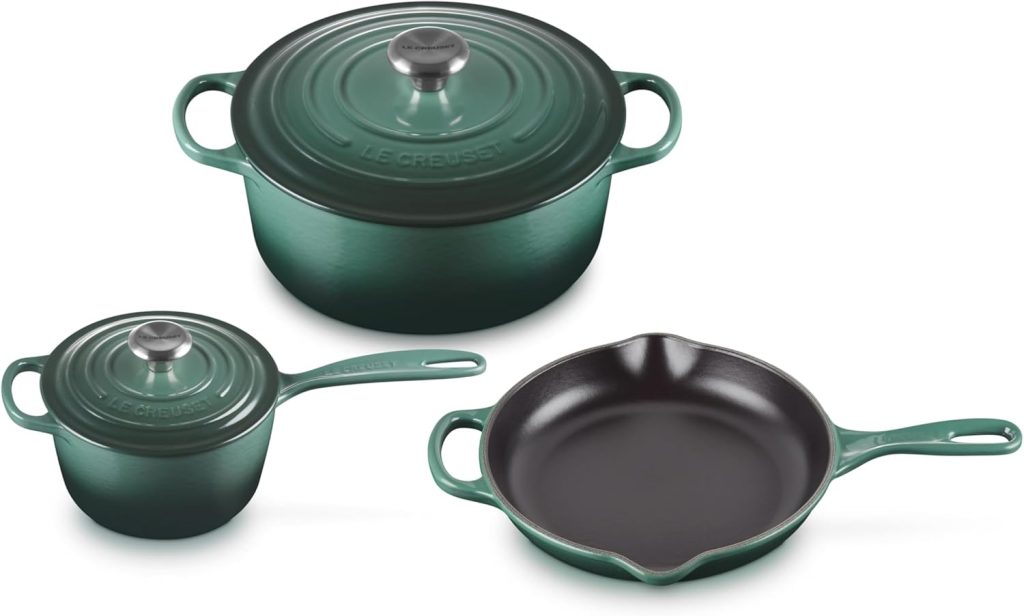
Le Creuset and Staub dominate the premium enameled cast iron market, both offering lifetime warranties and rigorous testing protocols.
Le Creuset features a lighter interior enamel that makes it easier to monitor browning, while Staub uses a black matte interior designed to enhance browning.

Both brands source their iron responsibly and comply with California’s Proposition 65 and FDA standards for food-contact surfaces.
What Is Stainless Steel Cookware?
Stainless steel cookware represents the workhorse of professional and home kitchens worldwide.
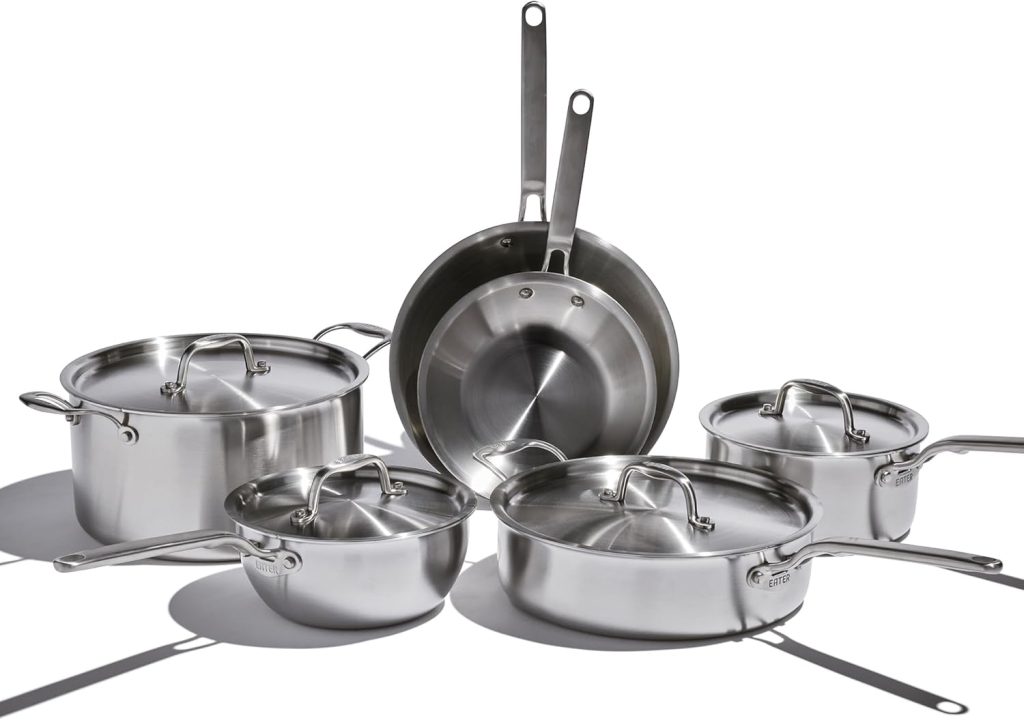
Its durability, versatility, and non-reactive nature make it a foundation piece for cooks who value precision and responsiveness.
Steel alloy (chromium + nickel)
Stainless steel vs enamel cookware starts with understanding composition.
True stainless steel contains at least 10.5% chromium, which creates a passive oxide layer that resists corrosion and staining.
Most cookware uses 18/10 stainless steel (18% chromium, 10% nickel) or 18/8 grades.
The nickel content enhances corrosion resistance and provides the signature polished finish, though nickel-sensitive individuals may prefer 18/0 grades that substitute other stabilizing elements.
3-ply and 5-ply construction
Premium stainless steel cookware bonds multiple metal layers together.
A typical 3-ply construction sandwiches an aluminum or copper core between stainless steel layers—the inner core conducts heat rapidly while the steel provides cooking surface stability.
Five-ply construction adds additional layers for enhanced heat distribution and reduced hot spots.
This engineered approach solves stainless steel’s natural poor heat conductivity while maintaining its chemical stability.
Reactivity and stability of stainless steel
Unlike bare cast iron or aluminum, stainless steel won’t react with acidic ingredients.
You can simmer tomato sauce for hours, deglaze with wine, or cook lemon-based dishes without metallic flavors or discoloration.
This inertness makes stainless steel the gold standard for versatile cooking across all cuisines and ingredient types.
Premium brands (All-Clad, Made In)
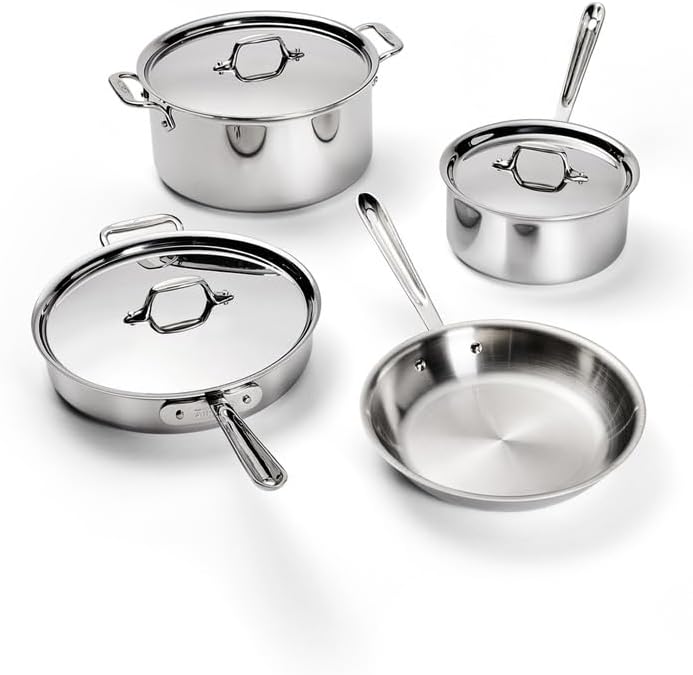
All-Clad pioneered bonded cookware construction in the 1970s and remains the professional standard.
Made In offers similar multi-ply construction at more accessible price points while maintaining rigorous quality control.
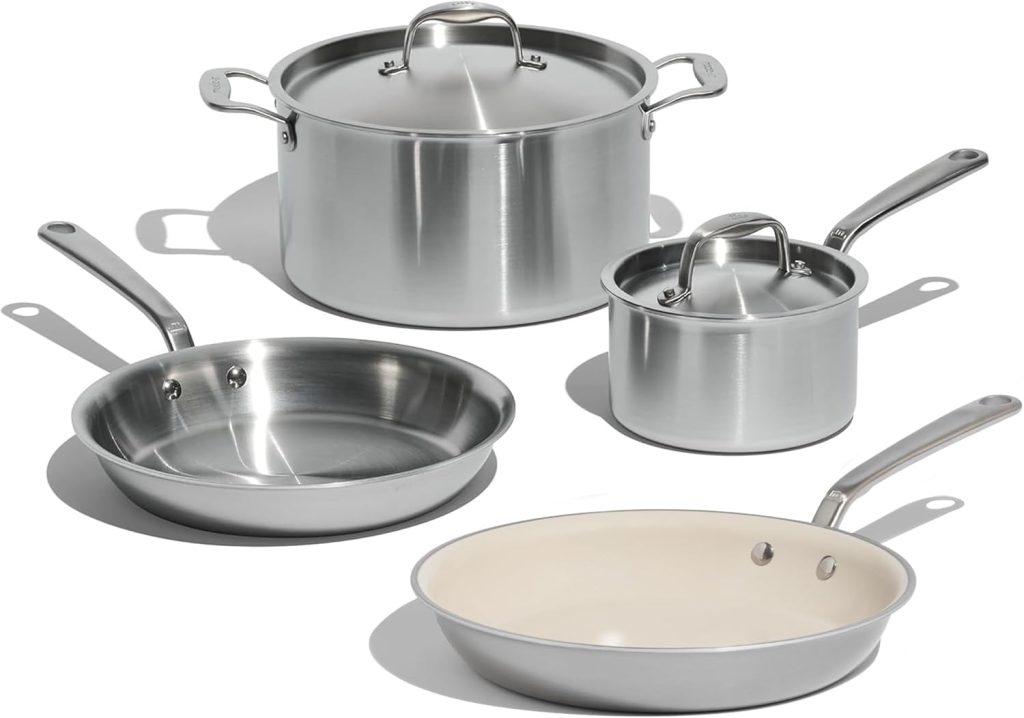
Both brands manufacture in facilities that comply with NSF International standards and provide detailed material certifications upon request.
Key Differences Between Enameled Cast Iron and Stainless Steel
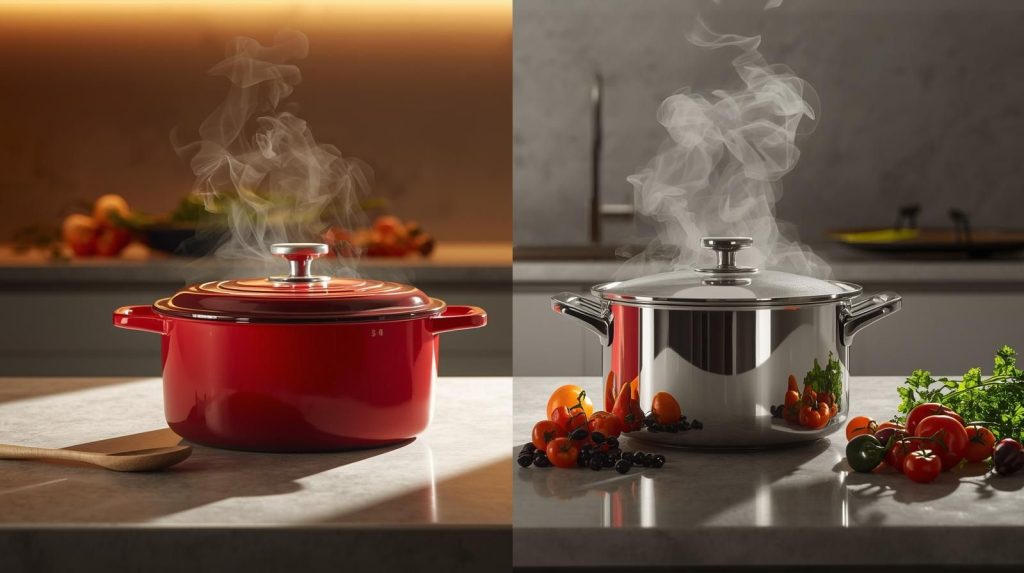
Understanding which is better between enamel and stainless steel requires examining how these materials perform across different cooking scenarios and user needs.
Weight: heavy vs lightweight
Enameled cast iron’s substantial weight provides cooking advantages but physical challenges.
A full pot of stew can exceed 20 pounds, making transfers from stovetop to oven difficult for some users.
Stainless steel pans of equivalent volume typically weigh 40-60% less, offering easier handling and maneuverability during cooking.
Heat retention vs heat responsiveness
Heat retention enamel cast iron vs stainless steel reveals opposing strengths.
Enameled Cast iron excels at maintaining steady temperatures ideal for simmering, braising, and baking, where consistent heat matters most.
Stainless steel responds quickly to temperature adjustments, allowing precise control when searing proteins or reducing sauces.
Cast iron takes longer to heat but stays hot; stainless heats and cools rapidly.
Cooking versatility
Both materials handle oven and stovetop use, but with different comfort zones.
Enameled cast iron performs beautifully from 450-500°F but shouldn’t be preheated empty or exposed to thermal shock.
Stainless steel tolerates higher temperatures (often 600°F+) and transitions seamlessly between heat sources without special precautions.
Oven safety, stovetop compatibility
Enameled cast iron works on all heat sources, including induction, though its weight makes frequent stovetop movement impractical.
Stainless steel with magnetic bottoms also works on induction and typically features stay-cool handles for safer oven-to-table service.
Both avoid the non-stick coating degradation concerns present in PTFE-based cookware.
Safety Comparison — Lead, Nickel & Chemical Exposure
When evaluating enameled cookware safety vs stainless steel, understanding potential contaminant sources helps you make informed choices for your household.
Do enameled pots contain lead? (vintage vs modern laws)
Post-1980 enameled cookware from established manufacturers contains negligible lead levels in cooking surfaces.
The Consumer Product Safety Improvement Act of 2008 set strict limits on lead in consumer products, initially limiting total lead content to 600 parts per million (ppm), which was further reduced over time to as low as 100 ppm depending on the product category.
The Act requires manufacturers to comply with these limits and mandates third-party testing of products, often by reputable brands testing each production batch to ensure compliance and consumer safety.
These regulatory limits and testing requirements are integral to the Act’s framework to prevent lead exposure from consumer products, especially those intended for children.
Vintage or imported pieces from unregulated manufacturers pose higher risks. When in doubt, you can learn about enamel safety concerns through third-party testing services that verify heavy metal content.
Stainless steel nickel leaching risks (304 vs 316 steel)
Stainless steel nickel-free cookware comparison matters for individuals with documented nickel allergies.
Grade 304 stainless (18/8 or 18/10) can release trace amounts of nickel, particularly when cooking acidic foods for extended periods.
Studies show leaching remains well below EU regulatory limits, but sensitive individuals might prefer 316-grade steel or nickel-free alternatives.
For most users, nickel exposure from stainless cookware poses no health concern.
No PFAS / PTFE concerns in either
Both enameled cast iron and stainless steel offer inherently non-stick surfaces without synthetic coatings.
You won’t encounter the perfluorinated chemicals (PFAS) or polytetrafluoroethylene (PTFE) degradation issues associated with traditional non-stick pans.
This chemical-free approach makes both options suitable for high-heat cooking without toxic fume concerns.
Which is safest for children, the elderly & sensitive individuals?
For households prioritizing minimal chemical exposure, both materials rank as top choices.
Enameled cast iron from certified manufacturers provides the most inert cooking surface when intact.
Stainless steel offers comparable safety with easier handling for individuals with limited strength.
Those comparing enamel vs ceramic options should note that both provide non-reactive surfaces, though ceramic coatings may degrade faster than traditional enamel.
Cooking Performance Comparison
Real-world cooking performance separates marketing claims from kitchen reality when evaluating cast iron enamel vs steel cookware.
Best for searing
Stainless steel wins for high-heat searing of steaks, chops, and fish.
Its responsive heat control and lighter weight make it easier to achieve the perfect crust while managing internal doneness.
The fond (browned bits) that develop on stainless surfaces create exceptional pan sauces.
Enameled cast iron can sear effectively but requires longer preheating and careful temperature management to avoid enamel damage.
Best for slow simmering
Enameled cast iron excels at low-and-slow cooking.
Its superior heat retention maintains gentle, consistent temperatures ideal for braising tough cuts, developing complex stews, and coaxing maximum flavor from ingredients over hours.
The heavy lid creates a self-basting environment that keeps moisture circulating.
Best for high-heat cooking
Stainless steel tolerates extreme temperatures without concern for coating damage.
You can preheat aggressively, broil, and move between burner intensities without the thermal shock sensitivities that affect enamel.
This makes stainless steel the practical choice for techniques requiring rapid temperature changes.
Best for daily use
For everyday cooking versatility, stainless steel’s lighter weight and faster heat response make it more practical for most households.
Enameled cast iron serves better as a specialized tool for weekend projects, batch cooking, and dishes that benefit from extended, even heating.
Durability & Lifespan
Durability comparison of enameled vs stainless steel reveals how these materials age and which represents better long-term value.
Enameled cast iron — potential chipping, but lasts decades
Quality enameled cookware can serve multiple generations when treated properly.
The cast iron base is virtually indestructible, but the glass coating can chip if subjected to impact, thermal shock, or metal utensil abuse.
Most damage occurs at rim edges or from dropping. Minor interior chips don’t necessarily compromise safety, though exposed iron will rust if not maintained.
Exterior chips remain purely cosmetic.
Stainless steel — nearly indestructible if high quality
Premium multi-ply stainless steel shows remarkable longevity. The material won’t chip, crack, or degrade under normal use.
Surfaces may develop discoloration from heat or hard water deposits, but these don’t affect performance.
Restaurant-grade pieces routinely serve 20+ years of daily professional use. Lower-quality thin stainless steel may warp, but properly constructed cookware maintains its shape indefinitely.
Which ages better over 10–20 years?
Stainless steel maintains consistent performance throughout its lifespan.
Enameled cast iron develops character—darkening interiors, subtle patina—but continues functioning well if the enamel remains intact.
Both justify their initial investment through decades of reliable service, though stainless requires less careful handling to maintain its condition.
Maintenance & Care Differences
Proper maintenance extends cookware life and ensures optimal performance for both materials.
Cleaning enamel safely
Modern enameled cast iron tolerates dishwashers, though hand washing preserves exterior luster longer.
For stuck food, soak with warm water and dish soap, then use non-abrasive scrubbers.
Avoid steel wool or harsh scouring powders that can scratch enamel.
Baking soda paste removes stubborn stains without damage. Never plunge hot enameled cookware into cold water.
Gradual temperature changes prevent thermal shock cracks.
Cleaning stainless steel (deglazing, Bar Keeper’s Friend)
Stainless steel rewards proper technique. Deglaze hot pans with wine or stock to lift fond naturally.
For rainbow heat discoloration or water spots, Bar Keeper’s Friend or white vinegar restores shine effectively.
You can use metal utensils and abrasive scrubbers without concern.
Stainless steel tolerates dishwashers fully, though hand washing maintains optimal appearance longer.
Scratch resistance comparison
Enamel resists scratching from normal use but can be marked by metal utensils or abrasive cleaners.
These scratches typically don’t affect performance.
Stainless steel scratches more readily from metal utensils and scrubbing, but these marks don’t compromise the material’s integrity or cooking properties.
Many cooks embrace stainless steel’s evolving patina as evidence of a well-used kitchen tool.
Weight, Ease of Use & Everyday Practicality
Physical handling considerations affect daily cooking enjoyment and safety more than many buyers anticipate.
Enameled cast iron is heavy: it may not suit all users
A loaded 7-quart enameled Dutch oven can weigh 25+ pounds.
This poses genuine challenges for individuals with arthritis, back problems, or limited upper-body strength.
Lifting from lower oven racks, pouring, and moving between storage and use require significant physical capability.
Some users keep their enameled pieces permanently on the stovetop to avoid repeated lifting.
Stainless steel offers speed & ease
Lighter stainless pans heat quickly and move easily during cooking.
You can toss vegetables, pour sauces, and transfer pans with minimal effort.
This responsiveness and maneuverability make stainless steel more suitable for active cooking styles and time-constrained weeknight meals.
For elderly or disabled individuals, which is easier?
Stainless steel’s reduced weight and faster responsiveness make it more accessible for users with physical limitations.
Smaller enameled pieces (2-3 quarts) might work for specific uses, but full-size Dutch ovens often prove impractical for individuals with reduced strength or mobility concerns.
Environmental Impact & Sustainability
Long-term environmental costs extend beyond the purchase price when comparing these materials.
Cast iron’s long-term reusability
Enameled cast iron’s multi-generational lifespan represents exceptional resource efficiency.
The energy-intensive manufacturing process gets amortized over decades of use.
Cast iron requires no toxic coating replacement and never needs disposal due to coating degradation—only physical damage ends its service life.
Stainless steel’s recyclability
Stainless steel ranks among the most recycled materials globally.
When a pan finally reaches end-of-life, it can be completely recycled into new stainless products without quality degradation.
The multi-ply construction doesn’t hinder recycling since aluminum and steel separate easily in processing facilities.
Manufacturing footprint differences
Both materials require energy-intensive production.
Cast iron smelting and enamel fusion consume substantial energy, while stainless steel production involves mining, refining, and bonding processes.
Quality pieces from either category justify their footprint through longevity, but neither represents a “low-impact” manufacturing choice compared to simple ceramics or wood tools.
Which One Should You Choose?
Selecting between these materials depends on matching their strengths to your specific cooking patterns and priorities.
Best for high-heat, long simmering: Enameled Cast Iron
Braised short ribs, no-knead bread, coq au vin, and bean soups all benefit from enameled cast iron’s steady heat retention.
If your cooking style emphasizes patience, flavor development through time, and one-pot meals, enameled cookware delivers exceptional results.
Its oven-to-table presentation adds aesthetic value for serving directly from the pot.
Best for quick everyday cooking: Stainless Steel
Weeknight stir-fries, pan-seared chicken, sautéed vegetables, and pasta sauces work better in responsive stainless steel.
When you need dinner ready in 30 minutes and value precise temperature control, stainless steel’s quick heating and cooling cycles provide the control you need.
Best for durability: Stainless Steel
For sheer physical resilience and tolerance of imperfect handling, quality stainless steel outlasts and outperforms.
It forgives mistakes, tolerates aggressive cleaning, and maintains performance despite cosmetic wear. If you want truly worry-free cookware, stainless steel delivers.
Best for non-toxic slow cooking: Enameled Cast Iron
When does enamel cookware leaching become your primary concern?
Certified enameled cast iron from reputable manufacturers offers the most chemically inert option for extended cooking times.
The glass surface creates a complete barrier between food and iron, with zero synthetic coating degradation concerns.
Frequently Asked Questions
Is enameled cast iron healthier than stainless steel?
Both materials rank as top non-toxic choices when sourced from quality manufacturers.
Enameled cast iron provides slightly more inert surface chemistry, while stainless steel may release trace nickel amounts.
For most users, health differences prove negligible choose based on cooking style rather than health concerns.
Does stainless steel leach nickel?
Grade 304 stainless steel can release small amounts of nickel, particularly during acidic cooking.
Studies consistently show leaching remains well below safety thresholds established by regulatory agencies.
Documented nickel-allergic individuals should consider 316-grade or nickel-free alternatives, but the general populations face no health risk from properly manufactured stainless cookware.
Is enamel coating safe if chipped?
Minor interior chips don’t pose immediate health hazards. Exposed cast iron will rust, but it isn’t toxic—just unsightly.
However, chipped areas can harbor bacteria and affect food release.
If you want to compare ceramic coatings to enamel and steel, note that ceramic chip damage typically proves more problematic than enamel chips.
Large chips or coating degradation warrant replacement, but small edge chips rarely justify discarding otherwise functional cookware.
Which cookware performs best without oil?
Neither material offers truly oil-free cooking. Enameled cast iron requires less oil than stainless steel once properly preheated, but both benefit from light fat application.
Stainless steel demands proper preheating and temperature management for optimal food release.
Both surpass traditional non-stick coatings for high-heat performance despite requiring more cooking fat.
Final Verdict — Both Are Safe, but Choose Based on Cooking Style
The enameled cast iron vs stainless steel comparison doesn’t have a universal winner, only the right tool for your specific needs.
Enameled cast iron excels at patient, low-heat cooking where superior heat retention creates tender, flavorful results.
Its weight and thermal properties make it ideal for weekend cooking projects and dishes that benefit from extended, gentle heat.
Stainless steel dominates everyday cooking through responsive heat control, lighter weight, and worry-free durability.
It handles the quick weeknight meals, high-heat searing, and active cooking techniques that define most household cooking patterns.
For safety, both materials earn top marks when purchased from reputable manufacturers.
Modern enameled cookware contains no harmful metals in cooking surfaces, while stainless steel’s minimal nickel leaching poses no concern for most users.
The ideal kitchen includes both enameled cast iron for specialized slow-cooking tasks and stainless steel for daily versatility.
If choosing only one, assess your cooking frequency, physical capabilities, and dominant cooking style to guide your investment toward the material that matches your real-world kitchen habits.