If you’ve inherited a set of sturdy stoneware dishes or picked up charming dinnerware at an estate sale, there’s a good chance you’re holding Pfaltzgraff.
For generations, this American brand defined everyday dining with patterns like Yorktowne, Tea Rose, and Village that became kitchen staples.
The backstamps on these pieces tell you when and where they were made, helping you authenticate what you own and understand its history.
Pfaltzgraff marks evolved significantly over the decades, reflecting the company’s transition from domestic craftsmanship to international production.
Learning to identify these marks means you can date your dishes, distinguish USA-made pieces from imports, spot rare patterns, and make informed decisions about value and safety all from a glance at the bottom of a plate.
What Are Pfaltzgraff Marks?
Pfaltzgraff marks are backstamps found on the underside of dinnerware that identify the manufacturer and often indicate where the piece was produced.
These marks typically include the Pfaltzgraff name and may also show country of origin, pattern information, or production codes. They’re the manufacturer’s signature on each piece.
Purpose of Backstamps on Dinnerware
Backstamps serve multiple purposes: they authenticate the manufacturer, establish brand identity, and provide production information.
For consumers, marks confirm you’re buying genuine Pfaltzgraff rather than a copycat.
For collectors, backstamps become essential tools for dating pieces, tracing manufacturing changes, and verifying authenticity when building or valuing collections.
Marks vs Decorative Patterns
The backstamp is different from the decorative pattern on the front of the dish. The pattern, like Yorktowne’s iconic folk art design, is the visual element you see when using the piece.
The mark is purely functional identification on the bottom. Both matter for identification, but the backstamp specifically confirms the manufacturer.
Why Pfaltzgraff Marks Changed Over Time
Pfaltzgraff’s marks evolved to reflect manufacturing changes, particularly the shift from American production to overseas facilities.
Early marks emphasized USA origins, while later ones indicated China, Mexico, or Indonesia.
Changes in printing technology, corporate ownership transitions, and legal requirements for country-of-origin labeling all influenced how marks appeared across different eras.
Overview of Pfaltzgraff Dinnerware
Pfaltzgraff built its reputation on durable, attractive stoneware that served American families for decades.
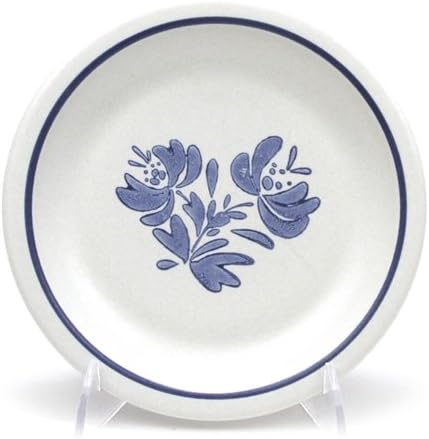
Understanding the company’s background and product evolution helps you contextualize the marks you’ll find and explains why certain backstamps indicate more desirable pieces to collectors.
History of Pfaltzgraff (USA)
Founded in 1811 in York, Pennsylvania, Pfaltzgraff started as a small pottery making simple redware and stoneware crocks.
The company evolved into a major dinnerware manufacturer during the 20th century, creating beloved patterns that defined casual American dining.
While production shifted overseas in later years, the Pfaltzgraff name remains synonymous with quality everyday dishes.
Stoneware vs Earthenware Lines
Pfaltzgraff primarily produced stoneware—heavy, durable ceramic fired at high temperatures.
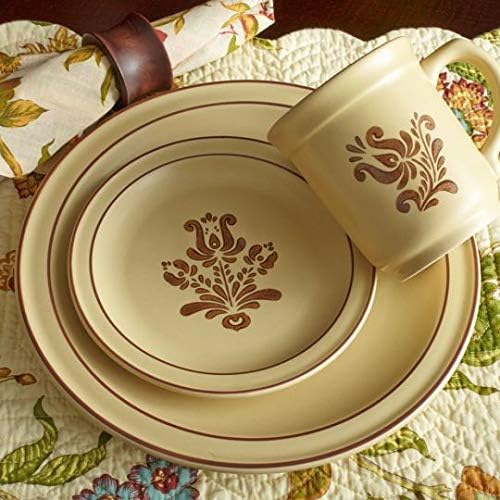
Their stoneware is thicker and more chip-resistant than standard earthenware, which explains why so many pieces survive in good condition decades later.
Some later lines used earthenware, which is lighter but less durable than their traditional stoneware.
Transition From USA-Made to Imported Production
Through the 1980s, most Pfaltzgraff was manufactured domestically in Pennsylvania.
Economic pressures led the company to move production overseas starting in the 1990s, with facilities in China, Mexico, and Indonesia producing pieces for the American market.
This transition is clearly documented in the backstamps, making marks crucial for determining where pieces originated.
Common Types of Pfaltzgraff Marks
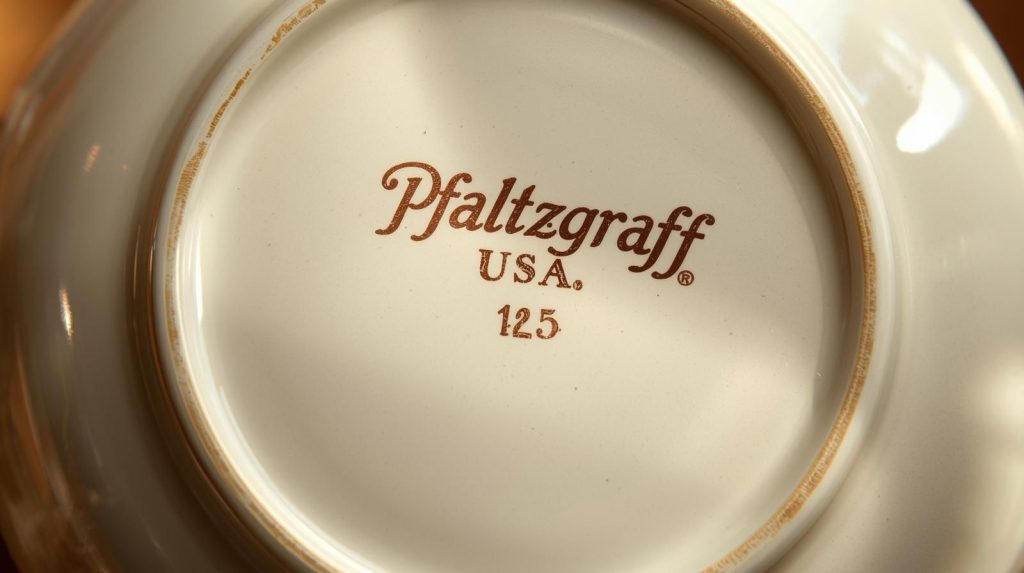
Pfaltzgraff used several distinct backstamp styles throughout its production history.
Recognizing these common marks helps you quickly identify genuine pieces and narrow down their production period.
The mark style often reveals more about a piece than just the manufacturer’s name.
“Pfaltzgraff USA” Backstamp
The “Pfaltzgraff USA” mark is the most desirable to collectors because it confirms American manufacturing.
This backstamp typically appears in various fonts—sometimes stamped in ink, sometimes molded into the clay.
USA marks generally indicate pieces made before the 1990s and represent the company’s domestic production era, when quality control was entirely in-house.
“Pfaltzgraff” Name-Only Marks
Some pieces carry just “Pfaltzgraff” without country designation, often appearing during transitional periods when manufacturing locations were changing.
These marks require additional investigation—you’ll need to examine the pattern, glaze quality, and weight to determine origin.
Name-only marks sometimes appear on pieces made for specific retailers or promotional lines.
Country-of-Origin Marks
Later, Pfaltzgraff carries explicit country names like “China,” “Mexico,” or “Indonesia” alongside the brand name.
These marks reflect manufacturing after the overseas transition and typically appear as printed backstamps rather than impressed marks.
While imported pieces maintain the Pfaltzgraff patterns and designs, collectors often distinguish them from USA-made examples.
How Pfaltzgraff Marks Changed Over Time
Understanding the temporal evolution of Pfaltzgraff marks helps you date pieces accurately and recognize which production era they represent.
These changes mirror the company’s manufacturing history and broader shifts in American ceramic production.
Early Pfaltzgraff (1930s–1960s)
Early Pfaltzgraff marks were often hand-stamped or impressed directly into the clay before glazing, creating marks that are sometimes less clear than later printed versions.
These pieces feature heavy stoneware construction with simple marks that might only say “Pfaltzgraff” or include basic model numbers.
The marks can be quite faint or partially obscured by glaze.
Mid-Century to 1980s
This era represents Pfaltzgraff’s golden age, with clear “Pfaltzgraff USA” backstamps becoming standard.
Pattern names often appeared alongside the mark, and printing quality improved significantly.
This period saw the massive expansion of popular patterns like Yorktowne, making these marked pieces abundant in the secondary market but still desirable for their domestic origin.
1990s–Present
The shift to imported production brought country-specific marks that clearly state where pieces were manufactured.
Modern marks are typically printed or inked rather than impressed, appearing crisper and more uniform.
Contemporary pieces sometimes include additional codes, barcodes, or symbols that earlier domestic production never carried.
Where to Find Pfaltzgraff Marks
Knowing where to look for backstamps saves time and prevents you from missing subtle marks.
Pfaltzgraff consistently placed marks in predictable locations, though glaze coverage and wear patterns can affect visibility.
Bottom of Plates and Bowls
Flip any Pfaltzgraff piece over and check the center of the base—this is where you’ll find the backstamp on plates, bowls, mugs, and serving pieces.
The mark sits in the unglazed or lightly glazed area called the foot ring. Clean the bottom if needed, as food residue or staining can obscure marks.
Why Marks May Be Partially Covered by Glaze
Sometimes glaze runs or pools over the backstamp during firing, partially obscuring the mark.
This wasn’t intentional, but happens in ceramic production when glaze migrates.
You might see only part of the text or notice the mark appears fainter in some areas. Tilting the piece under bright light helps you read partially covered marks.
Faded or Worn Backstamps
Decades of washing, stacking, and general use can wear down printed or stamped marks, especially on frequently used pieces.
Dishwashers and abrasive scrubbing accelerate fading. If a mark seems barely visible, try examining it under strong directional lighting or slightly dampening the area to increase contrast temporarily.
How to Date Pfaltzgraff Using Marks
Dating Pfaltzgraff requires matching backstamp characteristics to specific production periods and confirming with pattern details.
While marks won’t give you an exact production year, they reliably narrow the timeframe when combined with other identifying features.
Identify Wording and Font Style
Start by reading exactly what the mark says and noting the font style. Early impressed marks have distinct handcrafted qualities, mid-century printed marks show consistent professional typography, and modern marks often include additional symbols or codes.
The specific wording—especially “USA” versus country names—immediately places pieces in broad time categories.
Look for “USA” vs Country Names
This is your most important dating clue. “Pfaltzgraff USA” indicates pre-1990s domestic production, while “Made in China,” “Made in Mexico,” or other country designations point to 1990s or later.
The absence of any country designation often suggests earlier production or transitional pieces.
Cross-Check With Known Pattern Timelines
Don’t rely solely on marks for dating—confirm with the pattern itself. Certain Pfaltzgraff patterns were only produced during specific decades, and pattern variations evolved.
Yorktowne, for example, has subtle differences between early and late production runs. Match your mark to the pattern’s known production timeline for accurate dating.
Identifying Pfaltzgraff Without a Clear Mark
When backstamps are missing, worn beyond recognition, or partially obscured by glaze, you can still identify Pfaltzgraff through physical characteristics and design elements.
These secondary identification methods require closer examination, but remain reliable once you know what to look for.
Pattern Recognition
Pfaltzgraff’s most popular patterns—Yorktowne, Village, Tea Rose, Naturewood—are distinctive and well-documented.
Even without a clear mark, a recognizable pattern strongly suggests Pfaltzgraff origin. Pattern databases, collector guides, and online resources provide visual references for comparison.
The pattern artwork remains consistent across pieces, making it a reliable identifier.
Glaze Color and Texture
Pfaltzgraff developed characteristic glaze finishes for different patterns.
Yorktowne’s cream background with brown folk art motifs, Village’s warm ivory tone, and Tea Rose’s pink florals each have specific glaze qualities.
The texture—smooth or slightly textured—and the glaze’s sheen level help confirm Pfaltzgraff when marks aren’t readable.
Weight and Stoneware Thickness
Genuine Pfaltzgraff stoneware has substantial heft and thickness that distinguishes it from lighter ceramics.
Pick up a piece and feel its weight—Pfaltzgraff plates and bowls are noticeably heavier than comparable items from many competitors.
The thickness remains consistent throughout the piece, with solid, substantial foot rings on plates and bowls.
Pfaltzgraff Marks vs Other American Dinnerware Brands
Several American dinnerware manufacturers produced during Pfaltzgraff’s heyday, and distinguishing between them requires attention to backstamp details and material differences.
Understanding these distinctions prevents misidentification and helps you accurately attribute unmarked or partially marked pieces.
Pfaltzgraff vs Corelle
Corelle, made by Corning, uses a completely different material, laminated tempered glass rather than ceramic stoneware.
Corelle pieces are exceptionally thin and light compared to Pfaltzgraff’s heavy stoneware.
Corelle backstamps typically say “Corelle” with pattern names, and the glass composition makes them unmistakable once you handle both types.
Pfaltzgraff vs Homer Laughlin
Homer Laughlin, maker of Fiesta and other popular dinnerware, used much more elaborate backstamps that often included specific date codes, plant locations, and detailed company information.
Their marks tend to be more complex than Pfaltzgraff’s straightforward backstamps.
Homer Laughlin also produced not too thin stoneware, lighter dinnerware compared to Pfaltzgraff’s chunky stoneware.
Do Pfaltzgraff Marks Indicate Lead or Safety?
Backstamps don’t directly tell you whether Pfaltzgraff contains lead, but they help identify which pieces warrant testing.
Understanding when and where lead appears in vintage dinnerware helps you make safe decisions about using older pieces for food.
Vintage Glaze Concerns
Vintage Pfaltzgraff, particularly pieces with brightly colored glazes or decorative elements, may contain lead.
Ceramic glazes manufactured before strict regulations often included lead compounds to achieve certain colors and finishes.
The stoneware body itself is typically safe; concerns focus on the glaze surface that contacts food.
Decorated vs Plain Surfaces
Plain, undecorated glaze areas on Pfaltzgraff are generally lower risk than heavily decorated sections.
Pieces with painted or applied decorations, especially in reds, oranges, and yellows, historically carried higher lead content.
If you’re concerned about specific pieces, focus testing on the decorated surfaces rather than plain backgrounds.
When Lead Testing Is Recommended
If you plan to use vintage Pfaltzgraff for food—especially pieces made before 1990—testing is wise.
USA-made pieces from the 1970s-1980s warrant particular attention, as this period preceded current lead-free standards.
For comprehensive guidance on checking your dishes, consult our safety testing guide before using vintage pieces regularly.
If testing reveals lead, consider using those pieces decoratively or researching safer alternatives for everyday dining.
Using Pfaltzgraff Marks to Determine Value
Backstamps significantly influence Pfaltzgraff’s collectible value by confirming origin and production era.
While marks alone don’t determine worth, they’re a critical factor alongside pattern, condition, and completeness when assessing what pieces might sell for.
USA-Made vs Imported Pieces
“Pfaltzgraff USA” marked pieces generally command higher prices than imports because collectors value domestic manufacturing and associate it with superior quality.
The difference might be modest for common patterns but becomes significant for rare or discontinued designs.
Imported pieces still have value but typically sell at 30-50% less than equivalent USA-made examples.
Discontinued Patterns
Marks that confirm discontinued patterns increase value, especially for sought-after designs that aren’t in current production.
Village, Yorktowne, and Tea Rose remain popular, but rarer patterns that were produced briefly or in limited quantities become more valuable when authentic marks verify them.
Discontinued USA-made patterns represent the top tier.
Complete Sets vs Replacements
Marked complete sets—eight place settings with serving pieces bring significantly more than individual replacement pieces.
The marks confirm every piece is genuine Pfaltzgraff, which matters when buyers are investing in an entire set.
Even incomplete sets with clear USA marks typically sell better than mixed or unmarked groupings.
FAQ — Pfaltzgraff Marks
Does All Pfaltzgraff Dinnerware Have a Mark?
Most Pfaltzgraff carries backstamps, but some pieces, particularly from early production or specific promotional lines, may lack clear marks.
Additionally, marks can wear off heavily used pieces over decades of washing and handling.
Are Pfaltzgraff USA Pieces More Valuable?
Yes, “Pfaltzgraff USA” marked pieces typically command higher prices than imported equivalents because collectors prefer domestic production.
The value difference is most pronounced for discontinued patterns and complete sets in excellent condition.
Can Pfaltzgraff Marks Fade Over Time?
Printed or stamped marks can fade from repeated washing, dishwasher use, and abrasive cleaning.
Impressed marks molded into the clay are more permanent but can fill with residue. Most marks remain partially readable even when worn.
Do Marks Help Identify the Pattern?
Sometimes marks include pattern names, which immediately identify the design.
Even without pattern names, marks help narrow production periods, and patterns were often era-specific, making the mark an indirect identifier of possible patterns.
Final Verdict — How to Confidently Identify Pfaltzgraff Marks
Pfaltzgraff backstamps are reliable identifiers when present and legible, providing clear evidence of the manufacturer and often revealing production location and era.
A visible “Pfaltzgraff USA” mark immediately confirms American manufacturing and helps date pieces to pre-1990s production, while country-specific marks indicate later imported pieces.
However, marks aren’t the complete story; they work best when combined with pattern recognition, glaze characteristics, and physical qualities like weight and stoneware thickness.
Don’t dismiss pieces with worn or partially obscured marks; instead, use multiple identification factors together.
Whether you’re collecting Yorktowne, building a Village set, or simply curious about inherited dishes, understanding Pfaltzgraff’s marking evolution and cross-referencing marks with patterns gives you confidence in authentication.
The most reliable identification comes from evaluating marks alongside the craftsmanship, design, and materials that made Pfaltzgraff an American dinnerware staple.