Imagine a world where every meal you enjoy doesn’t harm the planet. Sounds good, right? That’s the promise of sustainable tableware.
Today, we’re talking about sustainable alternatives to stoneware and melamine. These new options are changing how we eat and drink at home.
More people are choosing eco-friendly plates, bowls, and cups instead of traditional ones. Why? Because they care about the environment.
Sustainable kitchenware is important because it helps reduce waste and pollution. It’s part of a bigger move towards living in a way that’s kinder to our planet.
We’re seeing a shift from old materials like plastic and ceramics to new, earth-friendly choices.
These changes are happening because people want to make better choices for the environment, starting right in their kitchens.
UNDERSTANDING STONEWARE AND MELAMINE PROS AND CONS
Stoneware and melamine are common materials used in kitchenware, each with its own set of advantages and drawbacks.
Stoneware, made from clay fired at high temperatures, is known for its durability and heat resistance.
It’s popular for its natural look and ability to retain heat, making it great for serving hot meals. However, stoneware can be heavy and may chip or break if dropped.
Melamine, on the other hand, is a type of plastic that’s lightweight and virtually unbreakable.
It’s often used in outdoor dining sets and children’s tableware due to its durability.
Melamine is also easy to clean and comes in a variety of colourful designs. But it’s not suitable for use in microwaves or with very hot foods, as high temperatures can cause it to release harmful chemicals.
When it comes to environmental impact, both materials have concerns.
Stoneware production requires significant energy for firing kilns, contributing to carbon emissions.
However, it’s long-lasting and can be recycled in some places. Melamine is more problematic environmentally. It’s not biodegradable and can’t be recycled easily.
When melamine products wear out, they often end up in landfills where they persist for many years.
There are also concerns about the chemicals used in melamine production and their potential to leach into food or the environment.
As awareness of these issues grows, many consumers are looking for more sustainable alternatives that offer the benefits of both materials without the environmental drawbacks.
THE NEED FOR SUSTAINABLE ALTERNATIVES

Have you noticed how more people are talking about saving the planet these days? It’s not just talk – it’s changing how we live, even down to the plates we eat from.
The need for sustainable alternatives to traditional tableware is growing fast.
Why? Well, our planet is struggling with too much waste and pollution.
According to the United Nations Environment Programme, we produce about 430 million tons of plastic waste every year.
That’s a lot! People are realizing that small changes, like switching to eco-friendly dishes, can make a big difference.
Consumers are demanding greener options, and companies are listening.
A study by Nielsen found that 73% of global consumers would change their habits to reduce their environmental impact. This shift is pushing the kitchenware industry to innovate.
Governments are also stepping in. Many countries are banning single-use plastics, which include some types of tableware.
For example, the European Union has implemented strict regulations on single-use plastics.
These trends are reshaping the industry. Companies are now racing to create sustainable alternatives that are both eco-friendly and practical for everyday use.
It’s an exciting time of change in the world of kitchenware!
BAMBOO: A VERSATILE AND RENEWABLE OPTION
Bamboo tableware is becoming a popular choice for eco-conscious consumers, and it’s easy to see why.
This versatile material offers a range of benefits that make it a great alternative to traditional options.
First off, bamboo is incredibly strong and lightweight. It’s naturally resistant to water and stains, which means your bamboo plates and bowls won’t easily absorb odors or colors from your food.
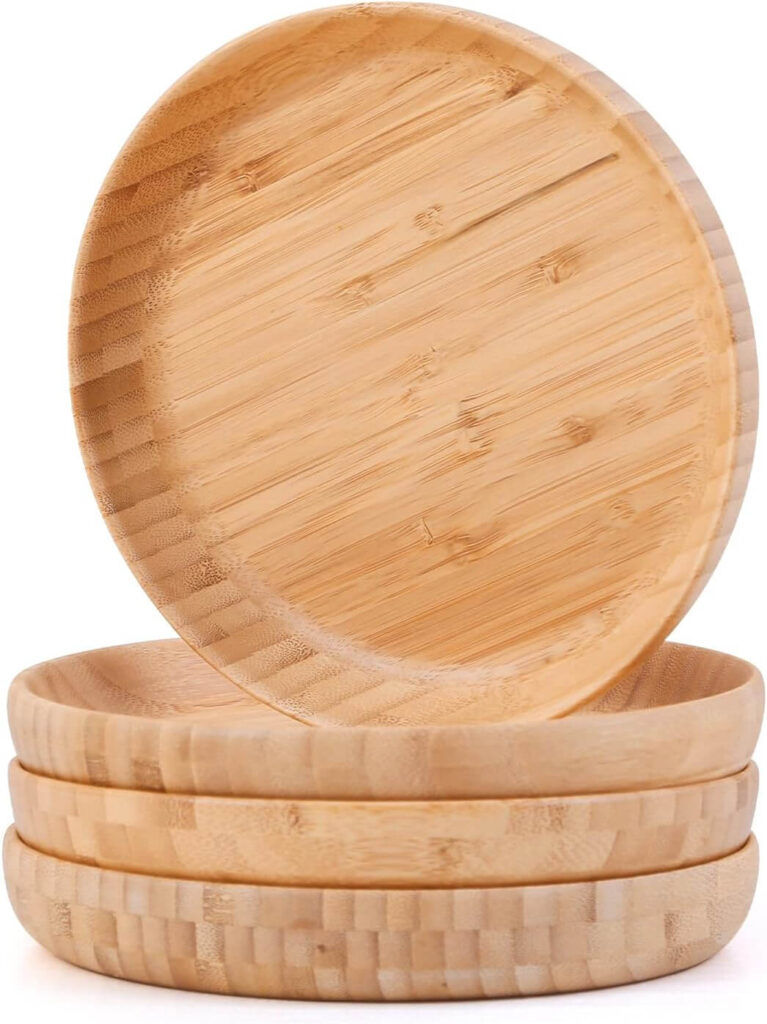
Plus, it has a sleek, natural look that adds a touch of style to any table setting.
The production of bamboo tableware is pretty eco-friendly, too. Bamboo grows super fast – some species can grow up to 3 feet in a single day!
This rapid growth means it can be harvested much more frequently than trees, making it a highly renewable resource.
It also doesn’t need pesticides or fertilizers to thrive, which is a big plus for the environment.
When it comes to durability, bamboo holds up well. It’s tough enough to withstand regular use but won’t chip or crack like ceramic might.
To keep your bamboo tableware in top shape, just hand-wash it with mild soap and warm water, then let it air dry.
Avoid soaking it for long periods or putting it in the dishwasher, as this can affect its quality over time.
With proper care, bamboo tableware can last for years, making it a sustainable choice that’s kind to both your wallet and the planet.
BIODEGRADABLE PLASTICS: INNOVATION IN ECO-FRIENDLY MATERIALS
Biodegradable plastics are shaking up the world of kitchenware, offering a greener alternative to traditional plastics. But what exactly are they? Let’s break it down.
There are a few main types of biodegradable plastics. PLA (Polylactic Acid) is made from plant starches like corn or sugarcane.
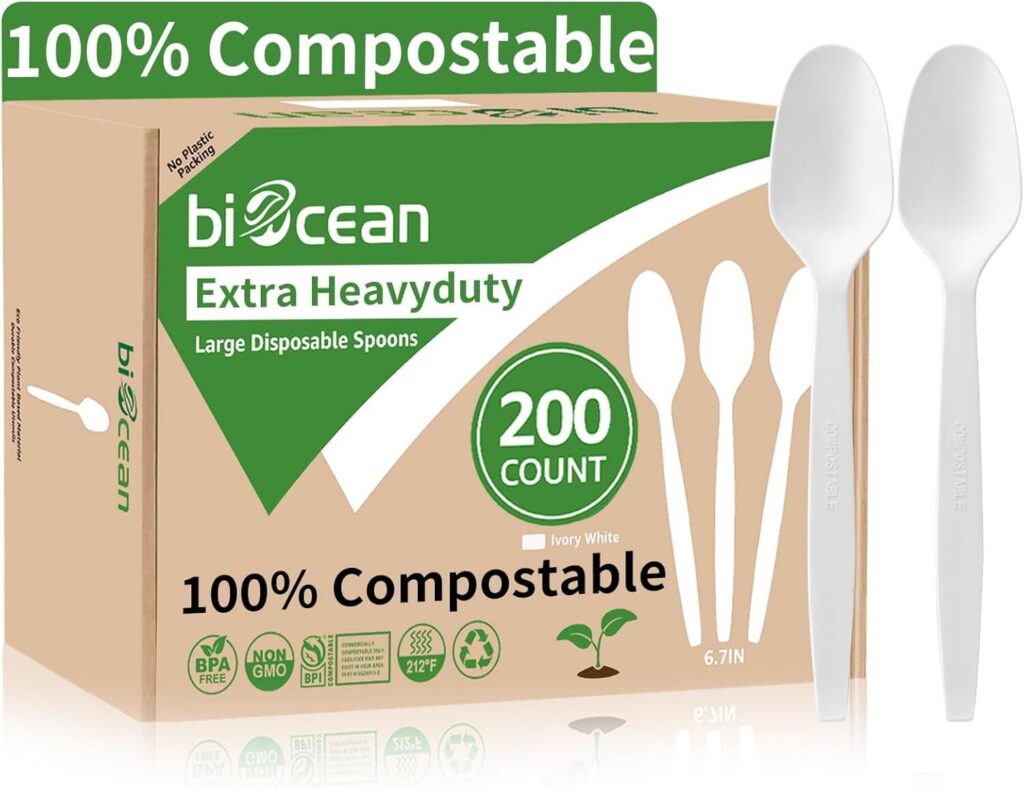
PHA (Polyhydroxyalkanoates) is produced by microorganisms. Both can be used to make cups, plates, and utensils that look and feel like regular plastic.
So how do they compare to traditional plastics? Well, biodegradable plastics are designed to break down much faster.
While a regular plastic fork might stick around for hundreds of years, a PLA fork can decompose in a matter of months under the right conditions.
But here’s the catch – “biodegradable” doesn’t mean you can toss these items anywhere. They need specific conditions to break down properly.
Most biodegradable plastics require industrial composting facilities with high heat and special microbes to decompose fully.
If they end up in landfills or the ocean, they might not break down any faster than regular plastic.
To make the most of biodegradable plastics, it’s important to dispose of them correctly.
Check if your local waste management accepts them for composting. If not, they might need to go in the regular trash.
Remember, the key to making these eco-friendly options work is using them responsibly!
RECYCLED MATERIALS: GIVING NEW LIFE TO WASTE
Ever thought about eating off a plate that used to be a plastic bottle? That’s the magic of recycled tableware! It’s a cool way to turn trash into something useful and stylish.
Recycled materials are making a splash in the kitchenware world. Old plastic bottles become colourful plates and cups.
Broken glass gets melted down and reshaped into sleek bowls. Even scrap metal finds new life as sturdy utensils.
This upcycling trend is a big win for the environment. It keeps waste out of landfills and oceans, and it saves energy too.
Making products from recycled materials often uses less energy than starting from scratch. Plus, it reduces the need for new raw materials, which helps preserve natural resources.
But don’t think recycled means boring or flimsy. These products can be surprisingly beautiful and tough.
Recycled glass tableware often has a unique, slightly imperfect charm that many people love. Items made from recycled plastics can be just as durable as their non-recycled counterparts.
By choosing recycled tableware, you’re not just setting your table – you’re helping set a new trend for a cleaner, greener world.
NATURAL FIBERS: FROM PALM LEAVES TO WHEAT STRAW
Nature has given us some amazing materials for making tableware, and we’re just starting to tap into this potential.
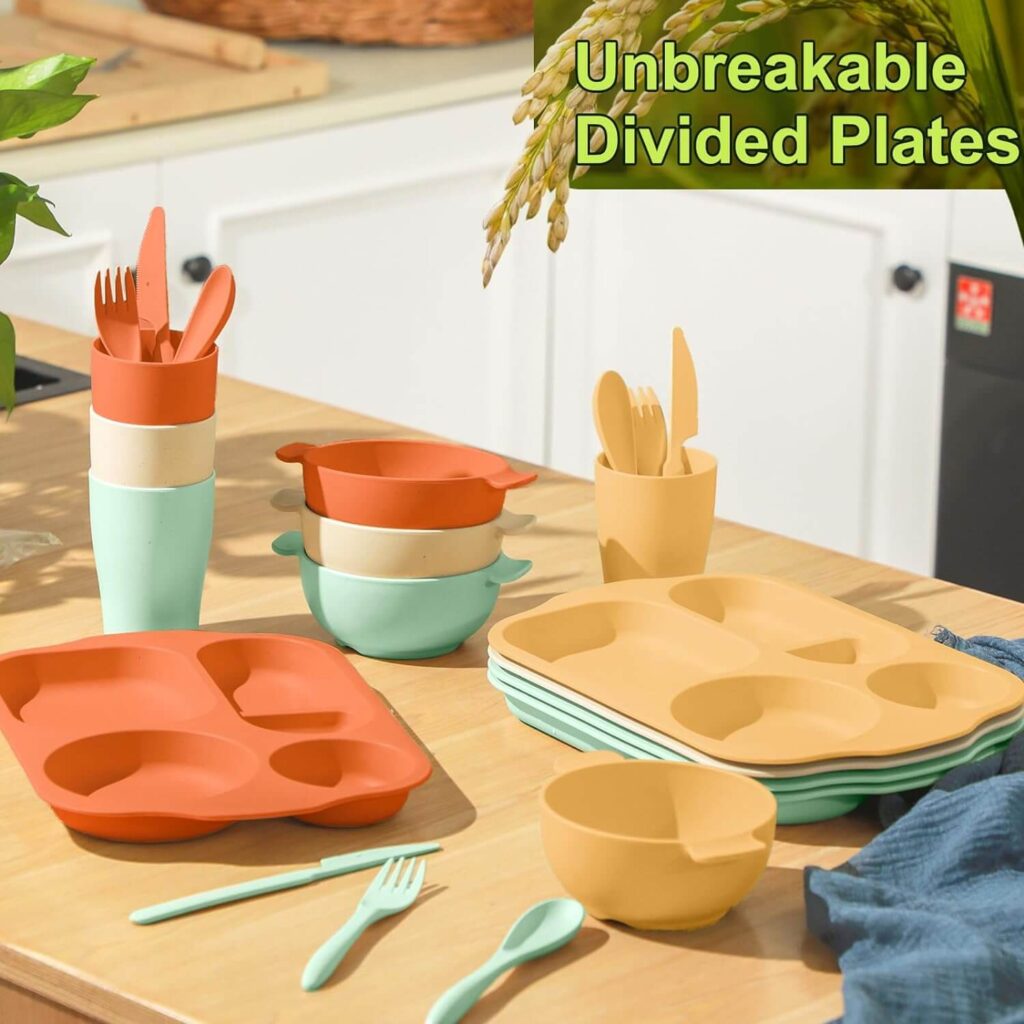
From palm leaves to wheat straw, natural fibers are becoming a popular choice for eco-friendly dishes and utensils.
Let’s look at some options. Palm leaves can be shaped into plates and bowls without any additives – just heat and pressure.
Wheat straw, a leftover from wheat harvests, can be mixed with a bit of natural resin to create durable cups and plates.
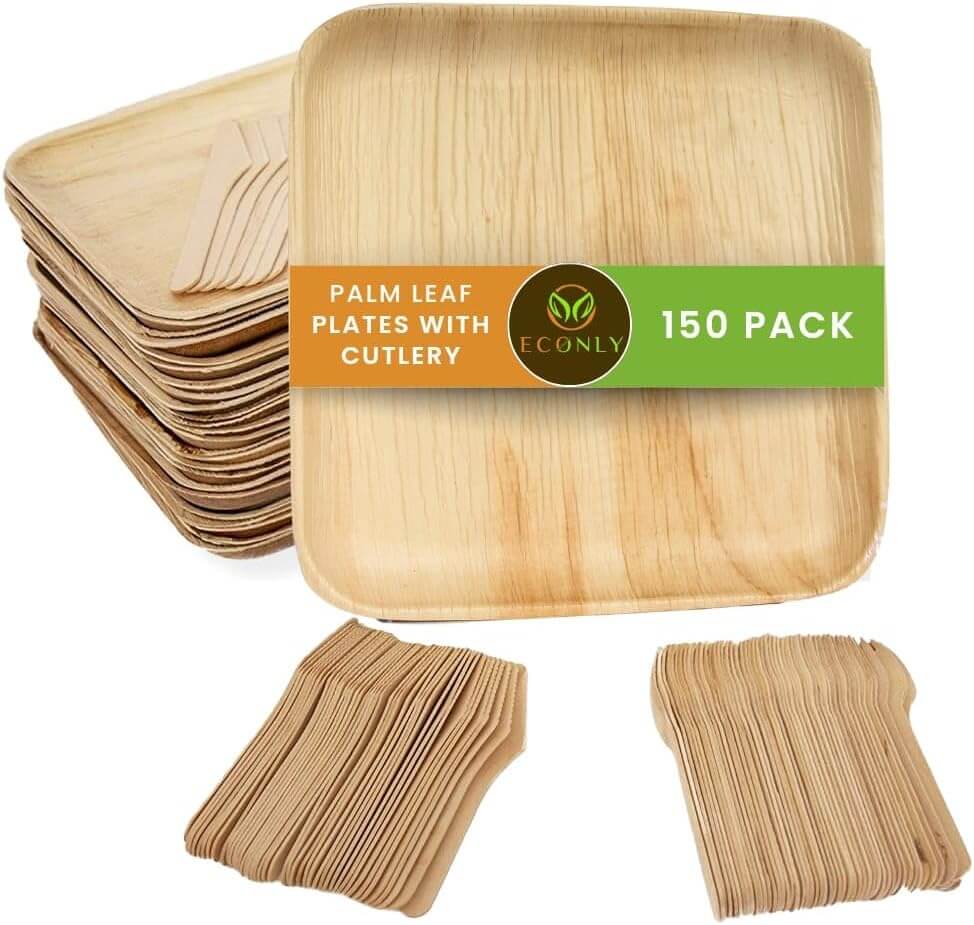
There’s also bagasse, which comes from sugarcane waste, and bamboo fibers. Each of these materials brings something special to the table.
The production process for these items is usually pretty simple and low-impact. Take palm leaf plates: they’re made from fallen leaves, so no trees are cut down.
The leaves are cleaned, shaped, and heat-pressed – that’s it! This simplicity means less energy use and fewer chemicals compared to traditional tableware production.
These natural fiber products have some cool features too. Palm leaf plates have a unique, natural pattern that looks great.
Wheat straw items are often microwave-safe and very durable. Bagasse products can handle hot foods well.
One thing to remember: while these items are biodegradable, they’re best for short-term use.
They’re perfect for picnics, parties, or daily use if you don’t mind replacing them more often than traditional tableware.
It’s all about finding the right balance between eco-friendliness and practicality for your lifestyle.
MAKING THE SWITCH: PRACTICAL TIPS FOR CONSUMERS
Ready to make the switch to sustainable tableware? Here are some tips to help you get started:
First, think about your lifestyle. Do you often host parties? Do you have kids? Your needs will shape your choices.
For instance, if you’re always on the go, lightweight bamboo might be perfect for you.
Don’t feel pressured to change everything at once. Start small – maybe replace your plastic cups with glass ones.
As your old plates wear out, swap them for sustainable options. This gradual approach makes the transition easier on your wallet and habits.
When you do get sustainable tableware, take good care of it to make it last. Most eco-friendly options need gentle handling.
Hand-wash bamboo and natural fiber items with mild soap. For recycled plastic, avoid very hot water or harsh scrubbing.
Remember, the most sustainable choice is the one you’ll use for a long time. Choose items you love and that fits your life.
With a bit of care, your new sustainable tableware can serve you well for years to come!
CONCLUSION: EMBRACING A SUSTAINABLE FUTURE IN KITCHENWARE
As we’ve seen, there are many exciting alternatives to traditional stoneware and melamine.
From bamboo and biodegradable plastics to recycled materials and natural fibers, sustainable options are plentiful.
By choosing these eco-friendly alternatives, we’re not just setting our tables – we’re setting a new standard for a healthier planet.
These choices reduce waste, conserve resources, and often bring unique styles to our homes.
The long-term benefits are clear: a cleaner environment and a clear conscience.
So next time you’re shopping for kitchenware, take a moment to consider the sustainable options.
Your choice can make a real difference. Let’s embrace this sustainable future in our kitchens and beyond!