

You’re standing in your kitchen, spatula in hand, watching your breakfast eggs stubbornly glue themselves to your pan. Again. You’ve heard the promises non-stick this, chemical-free that, but which cookware actually delivers on safety AND performance?
If you’re weighing carbon steel vs ceramic pans, you’re asking the right questions. These two popular options dominate the non-toxic cookware conversation, but they couldn’t be more different.
One is a time-tested metal workhorse that gets better with age; the other is a modern mineral-coated convenience tool.
Both claim to be PFAS-free, but only one can truly stand the test of decades. Whether you’re a health-conscious parent, a culinary enthusiast, or simply tired of replacing pans every year, understanding the real differences between ceramic and carbon steel cookware will transform how you cook and how safe your kitchen really is.
Written by Sarah Emirone | Reviewed by James Daniels, B.Sc, Inorganic Chemist & Materials Researcher | Updated September 2026 | See How We Test | Filed under: Cookware Materials
What Is a Carbon Steel Pan?
Carbon steel pans are crafted from a simple yet powerful alloy: approximately 99% iron and 1% carbon. This straightforward composition creates a durable cooking surface that professional chefs have trusted for centuries, particularly in French and Asian cuisines.
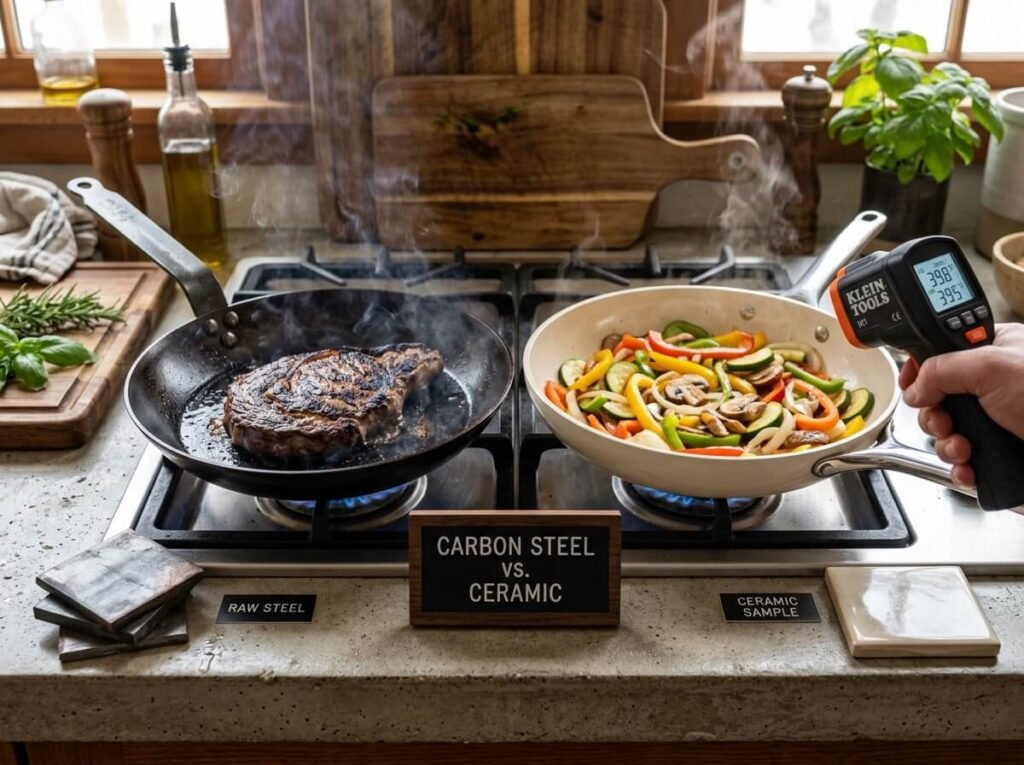
Iron + Carbon Alloy (99% Iron, 1% Carbon)
The magic of carbon steel lies in its minimalist formula. Unlike complex alloy pans or those with synthetic coatings, carbon steel contains just two elements.
The high iron content provides strength and excellent heat conductivity, while the small percentage of carbon adds hardness and allows the pan to withstand extreme temperatures without warping.
Naturally Non-Stick via Seasoning (Polymerization)
Carbon steel develops its non-stick properties through seasoning, a process where oils polymerize onto the metal surface under high heat. This creates multiple layers of carbonized oil that form a natural, slick patina.
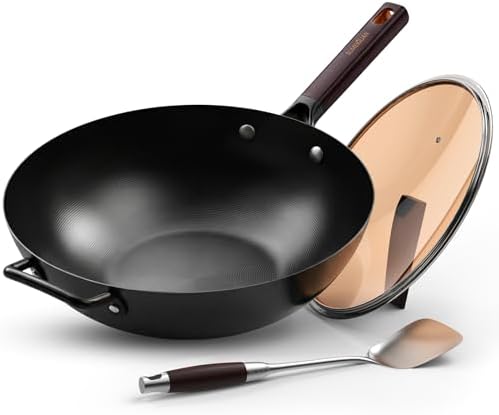


The more you cook with fats and oils, the better the non-stick surface becomes. Unlike chemical coatings that degrade, this natural barrier actually improves with proper use.
No Coating, No Chemicals → PFAS-Free
Because carbon steel is bare metal with only natural seasoning, it contains absolutely no synthetic coatings. This means zero PFAS (per- and polyfluoroalkyl substances), no PTFE, and no questionable chemical additives. When you compare ceramic vs PTFE coatings, carbon steel stands apart entirely; it requires neither.
Similarities to Cast Iron but Lighter
Carbon steel shares cast iron’s durability and heat retention, but with a significant advantage: weight. A 12-inch carbon steel pan typically weighs 4-5 pounds compared to 8-9 pounds for cast iron.
This makes it easier to maneuver, flip foods, and handle during extended cooking sessions while maintaining similar performance characteristics.
What Is a Ceramic Pan?
Ceramic pans have surged in popularity as consumers seek alternatives to traditional non-stick cookware. However, “ceramic” in cookware terminology doesn’t mean pure pottery; it refers to a specific type of coating technology.
Sol-Gel (Silica-Based) Non-Stick Coating
Ceramic cookware features a sol-gel coating derived from silica (sand). This mineral-based layer is applied in liquid form and then cured at high temperatures to create a hard, smooth, glass-like surface.
The coating aims to provide non-stick properties without synthetic polymers like Teflon.
Often applied over an aluminum base
Most ceramic pans use aluminum as the base metal because it’s lightweight and conducts heat well. The ceramic coating is sprayed onto this aluminum core.
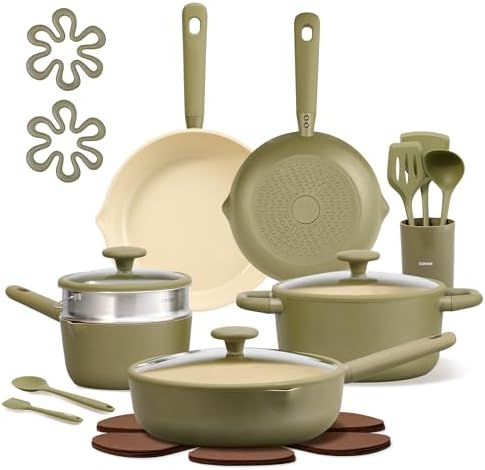

Some higher-end versions use stainless steel bases, but aluminum remains the industry standard due to cost and heat distribution benefits. If you want to learn about ceramic coating safety, understanding this layered construction is essential.
PFAS-Free but May Contain Pigments or Adhesives
While ceramic coatings themselves don’t contain PFAS, the complete picture is more nuanced. Some manufacturers add pigments for color or use adhesive primers to help the coating bond to the metal base.
Quality varies significantly between brands, and lower-quality options may contain trace contaminants. It’s crucial to ensure your pan is free from heavy metals by choosing reputable brands with third-party testing.
Coating Lifespan Concerns (1–3 Years Typical)
The primary drawback of ceramic cookware is coating degradation. Even with careful use, most ceramic pans lose their non-stick properties within one to three years.
High heat, metal utensils, and abrasive cleaning accelerate this wear. Once the coating breaks down, food begins sticking, and the pan’s performance declines significantly.
Key Differences Between Carbon Steel & Ceramic Pans
A safer understanding of carbon steel or ceramic requires examining their fundamental differences across multiple dimensions.
Material Structure (Metal vs Mineral Coating)
Carbon steel is solid metal throughout; what you see is what you get. Ceramic pans are composite products with a metal core covered by a mineral coating.
This structural difference affects everything from durability to repair potential. Carbon steel can be re-seasoned indefinitely; ceramic coatings cannot be reapplied at home once damaged.
Weight Differences
Carbon steel pans feel substantial but manageable, typically weighing 4-5 pounds for a standard skillet. Ceramic pans vary based on their core material, with aluminum-core versions being quite light (2-3 pounds) and stainless steel-core options being heavier.
For daily cooking tasks, carbon steel offers an ideal balance between heft and maneuverability.
Heat Tolerance
This is where the carbon steel vs ceramic non-stick differences become dramatic. Carbon steel handles temperatures exceeding 1200°F, making it suitable for broilers, grills, and even campfires.
Ceramic coatings typically max out around 400-500°F before degrading. Exceeding these limits causes the ceramic coating to break down, releasing its non-stick properties prematurely.
Cooking Versatility
Carbon steel seamlessly transitions from stovetop to oven to grill. It excels at high-heat searing, deglazing, and building fond (those flavorful browned bits).
Ceramic pans work well for low-to-medium heat cooking eggs, pancakes, and delicate fish, but struggle with high-heat applications and aren’t ideal for developing deep caramelization or crust.
Safety Comparison — PFAS, Metals & Coating Risks
When evaluating non-toxic carbon steel vs ceramic pans, safety encompasses multiple factors beyond just PFAS content.
Carbon Steel → Iron Leaching (Safe Unless Iron-Sensitive)
The question “Does carbon steel leach iron?” has a straightforward answer: yes, in small amounts. Cooking acidic foods like tomato sauce can transfer trace amounts of iron into your food, typically 1- 2 mg per serving.
For most people, this is harmless and may even help meet dietary iron needs. However, individuals with hemochromatosis (iron overload disorder) should consult healthcare providers before using carbon steel regularly.
Ceramic → PFAS-Free but May Wear, Chip, or Contain Trace Heavy Metals if Low Quality
Ceramic coatings avoid PFAS chemicals, earning them a place in health-conscious kitchens. However, coating wear presents concerns. As ceramic deteriorates, you may ingest coating particles with your food.
Additionally, some low-quality ceramic pans have tested positive for lead or cadmium in the coating or underlying glaze. When you compare ceramic to non-stick PFAS pans, both avoid PFAS, but ceramic introduces different potential risks.
Chemical Off-Gassing Comparison → Carbon Steel Wins
Carbon steel produces no chemical off-gassing at any temperature; it’s simply metal. Ceramic coatings, while marketed as safe, can release fumes if overheated beyond their rated temperature threshold.
These emissions aren’t as toxic as overheated PTFE (Teflon), but they’re still concerning for indoor air quality and pet safety, particularly birds.
Which Is Safest for Kids & Pregnancy? → Carbon Steel or High-Quality Ceramic
For families with young children or pregnant women, carbon steel offers the most predictable safety profile of pure metal with no coatings to degrade. High-quality ceramic from reputable manufacturers (like xtrema vs caraway cookware comparisons often highlight) can also be safe, but requires more research into brand-specific testing and certifications. Carbon steel eliminates the variable of coating quality.
Non-Stick Performance Comparison
The non-stick capabilities of ceramic vs carbon steel frying pans differ significantly in both mechanism and longevity.
Ceramic: Strong Initial Non-Stick but Degrades Over Time
Fresh ceramic pans perform impressively; eggs slide off effortlessly, and cleanup takes seconds. This initial performance often exceeds even that of well-seasoned carbon steel.
However, this advantage is temporary. After months of use, even gentle cooking gradually wears the coating, creating microscopic scratches that trap food particles and diminish the slick surface.
Carbon Steel: Improves with Seasoning
Carbon steel follows the opposite trajectory. New pans require initial seasoning and a break-in period where food may stick occasionally. But with continued use and proper care, the seasoning layers multiply and strengthen.
A five-year-old carbon steel pan significantly outperforms a new one; its patina becomes nearly indestructible and rivals any non-stick surface.
Best for Eggs, Pancakes, Sautéing
For carbon steel vs ceramic for eggs, both can excel. Ceramic wins immediately out of the box with zero-effort egg cooking. Carbon steel requires proper preheating and adequate seasoning, but eventually matches this performance.
For pancakes and delicate sautés, well-seasoned carbon steel provides reliable release while tolerating higher temperatures for achieving golden-brown crusts.
Best for High-Heat Searing
Carbon steel dominates high-heat applications. Searing steaks, blackening fish, or achieving wok hei (breath of wok) requires temperatures that would destroy ceramic coatings.
Carbon steel thrives in these conditions, developing fond and Maillard reactions that create complex flavors impossible with ceramics’ heat limitations.
Heat Performance & Control
Temperature management separates everyday cooking from exceptional results, making this comparison crucial.
Carbon Steel: Excellent for High Heat & Searing
Carbon steel’s ability to withstand and distribute extreme heat makes it the professional choice for searing proteins. The pan heats relatively quickly, reaches very high temperatures safely, and maintains heat during cooking.
This prevents temperature drops when cold ingredients hit the surface, a common problem with lighter materials.
Ceramic: Limited to Medium Heat
Ceramic coatings begin degrading above 400-500°F, restricting these pans to low and medium heat applications. While adequate for most everyday cooking, this limitation prevents developing deep caramelization, achieving a restaurant-quality crust on meats, or using high-heat cooking techniques that define many cuisines.
Oven Use Comparison
Carbon steel transitions to oven use without restrictions; use it at any temperature your oven reaches. Most ceramic pans claim oven safety up to 350-450°F, but repeated oven exposure at these upper limits accelerates coating breakdown.
Additionally, if your ceramic pan has plastic or silicone handles, oven use may be impossible or limited regardless of the coating’s tolerance.
Heat Retention vs Responsiveness
Carbon steel strikes a balance between heat retention and temperature responsiveness. It holds heat better than aluminum (providing consistent cooking temperatures) but responds to heat adjustments faster than cast iron.
Ceramic pans, usually aluminum-based, respond quickly to temperature changes but don’t retain heat as effectively; foods may stew rather than sear when the pan is crowded.
Durability & Lifespan
Long-term value depends not just on purchase price but on how many years of quality cooking each pan provides.
Carbon Steel → Decades; Gets Better with Age
Carbon steel pans routinely last 20-30 years with proper care, and many chefs use pans passed down through generations. The metal itself doesn’t wear out; only the seasoning layer needs occasional maintenance.
Each cooking session adds to the pan’s seasoning, creating an ever-improving cooking surface. This represents the ultimate in ceramic pan vs carbon steel durability.
Ceramic → Coating Wears Off
Even premium ceramic cookware typically requires replacement within 1-3 years of regular use. The coating simply cannot withstand repeated heating cycles, cooking oils, and cleaning without degrading.
Some users report satisfactory performance up to five years with extremely careful use, but this is exceptional rather than typical.
Scratch Resistance → Carbon Steel Wins
Metal utensils won’t damage properly seasoned carbon steel; in fact, metal spatulas work better than plastic for certain techniques. Ceramic coatings require wooden or silicone utensils to prevent scratching.
Even careful use can’t prevent all scratches, and each one becomes a point where food sticks and coating deterioration accelerates.
Long-Term Value Comparison
A quality carbon steel pan costs $40-100 and lasts decades, potentially $2-3 per year of use. Ceramic pans range from $30-150 but need replacement every 1-3 years, $10-50 per year of use.
Over a decade, carbon steel costs significantly less while providing superior performance in its later years compared to repeatedly replacing ceramic pans.
Maintenance & Care
The care requirements differ substantially, affecting daily convenience and long-term performance.
Seasoning Carbon Steel (Simple but Required)
Carbon steel requires initial seasoning before first use and periodic re-seasoning to maintain the non-stick patina. The process involves:
- Washing and drying the pan thoroughly
- Applying a thin layer of high-smoke-point oil
- Heating the pan until the oil polymerizes (stovetop or oven method)
- Repeat 3-5 times for initial seasoning
Once established, normal cooking with fats maintains the seasoning, and full re-seasoning becomes rare.
Cleaning Ceramic (Gentle, No Abrasives)
Ceramic pans demand gentle handling during cleaning. Use soft sponges and mild dish soap, never abrasive scrubbers or harsh chemicals. Even baking soda, often recommended for natural cleaning, can micro-scratch ceramic coatings over time.
Food buildup requires soaking rather than aggressive scrubbing.
Dishwasher Safety
Carbon steel should never go in the dishwasher—the harsh detergents and extended moisture exposure strip seasoning and promote rust. Hand washing takes 30 seconds: hot water, quick scrub, immediate drying.
Many ceramic pans claim dishwasher-safe status, but hand washing extends their lifespan by protecting the coating from the dishwasher’s harsh environment.
Proper Storage to Prevent Scratching or Rust
Carbon steel pans need dry storage with a light oil coating to prevent rust in humid environments. Stack them with pan protectors or hang them to avoid scratching other cookware.
Ceramic pans also benefit from pan protectors when stacked, as contact with other cookware’s edges can chip or scratch the coating.
Environmental Impact
Sustainability-minded cooks increasingly consider cookware’s environmental footprint alongside performance and safety.
Carbon Steel → Fully Recyclable, Lasts Decades
Carbon steel represents minimal environmental impact over its lifetime. The pans last 20-30+ years, dramatically reducing consumption and waste.
When a carbon steel pan finally reaches end-of-life (extremely rare), it’s 100% recyclable metal with no coating separation required; simply melt it down for reuse.
Ceramic → Coating Degradation = Shorter Lifespan
The 1-3 year replacement cycle of ceramic cookware creates ongoing waste. The composite nature (metal base plus coating) complicates recycling; coatings must be removed before metal recycling, and ceramic coatings themselves aren’t recyclable.
Most ceramic pans end up in landfills rather than recycling facilities.
Manufacturing Energy Differences
Carbon steel production requires significant energy to smelt and form the metal, but this one-time environmental cost is amortized over decades of use.
Ceramic pan manufacturing involves aluminum production (energy-intensive) plus the additional energy for coating application and curing.
When multiplied by frequent replacements, the cumulative environmental cost exceeds carbon steel’s initial impact.
Waste Comparison
A household might purchase one carbon steel pan that lasts 30 years, one item eventually recycled. That same household might purchase 10-15 ceramic pans over the same period, with most ending up in landfills.
The waste differential is substantial, making carbon steel the clear choice for environmentally conscious consumers.
Which Should You Choose? (Use-Case Recommendations)
The carbon steel vs ceramic pan debate ultimately depends on your priorities, cooking style, and willingness to maintain your cookware.
Choose Carbon Steel If You Want Longevity & High Heat
Carbon steel suits cooks who value:
- Long-term investment over immediate convenience
- High-heat cooking techniques (searing, stir-frying, blackening)
- Natural materials without synthetic coatings
- Cookware that improves with age
- Versatility across stovetop, oven, grill, and campfire
Choose Ceramic If You Want Non-Stick Convenience
Ceramic pans appeal to cooks who prioritize:
- Immediate non-stick performance without seasoning
- Low-maintenance cleaning
- Lightweight cookware
- Cooking at low-to-medium temperatures
- Budget-friendly initial investment (accepting future replacement costs)
Best for Toxin-Free Kitchens → Carbon Steel or Pure Ceramic
For eliminating chemical concerns, carbon steel provides the most straightforward solution, bare metal with no coatings or additives.
High-quality ceramic from verified brands also achieves toxin-free status, but requires research into specific manufacturers’ testing and ingredient transparency.
Best for Beginners → Ceramic
New cooks often find ceramic pans more forgiving. The instant non-stick surface reduces initial frustration, and the lower learning curve builds confidence. However, beginners should understand they’re trading long-term performance for short-term ease.
Carbon steel’s learning period pays dividends for decades, while ceramic’s easy start leads to performance decline and replacement.
FAQs — Carbon Steel vs Ceramic
Is carbon steel safer than ceramic?
Both carbon steel and quality ceramic pans can be safe choices. Carbon steel offers simplicity; it’s pure metal with no coatings to degrade or leach questionable substances.
Ceramic eliminates PFAS but depends heavily on the manufacturer’s quality. For the safest option with the fewest variables, carbon steel edges ahead.
Which is better for beginners?
Ceramic pans are initially more beginner-friendly due to immediate non-stick performance and simpler care requirements.
However, carbon steel teaches fundamental cooking techniques that improve all future cooking, making it arguably the better choice for those willing to invest in learning proper heat management and seasoning.
Which is more non-stick?
Brand-new ceramic pans are more non-stick than new carbon steel. However, well-seasoned carbon steel (after several months of use) matches or exceeds ceramic’s performance.
Over the pan’s lifespan, carbon steel maintains consistent non-stick properties while ceramic degrades significantly.
Which is oven-safe?
Carbon steel is oven-safe at any temperature without restrictions. Ceramic pans typically handle 350-450°F but suffer accelerated coating breakdown from repeated high-oven use.
For serious oven cooking, braising, or finishing dishes under the broiler, carbon steel is the clear choice.
Final Verdict — Ceramic for Convenience, Carbon Steel for Longevity & Safety
After comparing every dimension of performance, safety, and value, clear patterns emerge in the ceramic vs carbon steel cookware debate.
Ceramic delivers PFAS-free convenience with excellent initial non-stick performance. For cooks who prioritize ease of use, don’t use high heat, and accept replacing cookware every few years, ceramic pans serve well. They offer accessibility to non-toxic cooking without the learning curve of seasoned cookware.
Carbon steel provides ultra-durable, naturally non-stick performance that improves over decades. The simple iron-and-carbon composition eliminates coating concerns while offering unmatched heat tolerance and cooking versatility. The investment of learning proper seasoning and care pays returns for 20-30+ years.
For the best long-term option, carbon steel wins decisively. It costs less over its lifetime, performs better as it ages, handles any cooking technique, and creates zero waste through decades of use.
For low-effort convenience, ceramic remains appealing, but understand you’re trading future performance and value for present ease.
Ready to build a truly non-toxic kitchen that lasts? Explore the safest PFAS-free cookware options and discover why professional chefs have trusted carbon steel for generations.
About the Author & Reviewer
Sarah Emirone, Author
Sarah researches and writes SafeKitchn’s dinnerware and kitchenware guides, with a focus on material safety, lead content, and manufacturer specifications. She cross-references product data sheets, safety certifications, and regulatory filings (including FDA and Prop 65 records) before publishing, and updates articles when new information becomes available.
James Daniels, Reviewer
James reviews SafeKitchn’s material safety content for scientific accuracy. He holds a B.Sc in inorganic chemistry and works as a materials researcher, with particular focus on the composition and safety behavior of glass, ceramic, and metal used in kitchenware.