You’re standing in your kitchen, holding two beautiful pieces of French porcelain – one from Pillivuyt, another from Apilco.
Both promise exceptional quality and timeless elegance, but which one will actually keep your family safer while delivering the performance you need for everything from weeknight dinners to holiday feasts?
As a safety-conscious home cook, you shouldn’t have to spend hours researching complex manufacturing processes, material compositions, and safety certifications just to choose between two premium kitchenware brands.
The stakes feel high because you’re not just buying dishes – you’re investing in tools that will touch your family’s food every single day.
This comprehensive comparison will cut through the marketing claims and give you the clear, practical information you need to make the safest choice between Pillivuyt and Apilco.
We’ll examine everything from material safety and durability to real-world kitchen performance, helping you understand which brand truly delivers on its promises of quality and safety.
Whether you’re replacing worn-out bakeware, building your first complete kitchen setup, or simply curious about upgrading to French porcelain, you’ll walk away with confidence in your decision and peace of mind about your family’s kitchen safety.
Understanding French Porcelain: The Foundation of Kitchen Safety
French porcelain has earned its reputation as the gold standard in kitchenware for compelling safety and performance reasons that go far beyond mere aesthetics.
Both Pillivuyt and Apilco represent centuries of French ceramic expertise, but understanding what makes French porcelain inherently safer helps explain why these brands command premium prices.
The safety advantages begin with the firing process. French porcelain undergoes extremely high-temperature firing – typically between 2300°F and 2400°F – which creates a completely non-porous surface.
This matters enormously for food safety because bacteria, odors, and stains cannot penetrate the surface.
Unlike cheaper ceramics or even some stoneware, properly fired French porcelain won’t harbor harmful microorganisms in microscopic cracks or pores.
Lead content represents another critical safety consideration. Both Pillivuyt and Apilco produce lead-free porcelain that meets or exceeds FDA safety standards for food contact.
However, the quality control processes and testing protocols differ between manufacturers, which can impact long-term safety assurance.
French porcelain’s thermal shock resistance provides practical safety benefits in everyday cooking.
When you move a dish from the refrigerator to the oven or from the stovetop to the cold counter, inferior materials can suddenly crack, potentially causing burns or creating sharp fragments.
The molecular structure of high-quality French porcelain handles these temperature changes more gracefully.
The glazing process also impacts safety. Both brands use lead-free glazes, but the application techniques and curing processes affect durability.
A properly applied glaze creates a smooth, impermeable surface that won’t chip easily during normal use.
When glazes do chip, they can expose porous ceramic underneath, creating food safety concerns.
For families prioritizing kitchen safety, these technical differences translate into real-world peace of mind.
You’re not just buying attractive dinnerware – you’re investing in materials engineered to maintain their safety properties through years of daily use, dishwasher cycles, and temperature extremes.
Pillivuyt: The Technical Excellence Approach to Kitchen Safety
Pillivuyt’s approach to kitchen safety centers on technical precision and manufacturing consistency that stems from their specialized focus on culinary porcelain since 1818.
Unlike companies that produce various ceramic products, Pillivuyt concentrates exclusively on kitchenware, allowing them to optimize every aspect of their process for food safety and cooking performance.
Their “Culinary Porcelain” designation isn’t marketing fluff – it represents specific technical standards that directly impact safety.

Pillivuyt porcelain contains higher feldspar content than standard porcelain, creating superior thermal shock resistance.
This means less risk of sudden cracking when you’re rushing to get dinner on the table and subjecting your bakeware to rapid temperature changes.
The uniform wall thickness in Pillivuyt pieces represents another safety advantage often overlooked by home cooks.
Inconsistent thickness creates weak points where stress concentrates, leading to unexpected breakage.
Pillivuyt’s manufacturing process maintains consistent thickness throughout each piece, reducing the risk of catastrophic failure that could send hot food or sharp fragments flying.
From a chemical safety perspective, Pillivuyt’s firing process reaches temperatures that completely vitrify the clay body, eliminating porosity that could harbor bacteria or absorb flavors.
Independent testing consistently shows their finished products contain no detectable lead, cadmium, or other heavy metals that could leach into food.
The brand’s commitment to kitchen safety extends to its design philosophy. Notice how Pillivuyt bakeware features rounded corners and smooth transitions rather than sharp angles.
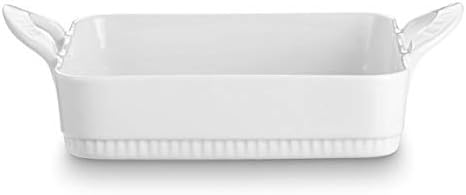
These design choices reduce stress concentration points and make the pieces easier to clean thoroughly, preventing bacterial growth in hard-to-reach crevices.
Professional kitchens worldwide trust Pillivuyt because consistency matters when you’re cooking for hundreds of people daily.
That same reliability translates to home kitchens where you need confidence that your bakeware will perform safely, whether you’re making a simple weeknight casserole or an elaborate holiday dessert.
For families who prioritize predictable, safe performance over decorative variety, Pillivuyt’s technical excellence approach offers compelling advantages.
You’re investing in engineering precision that prioritizes function and safety over aesthetic variety.
Apilco: Balancing Safety with Versatile Design
Apilco takes a different approach to kitchen safety, emphasizing a versatile design that maintains safety standards across a broader range of cooking applications and aesthetic preferences.
Since their founding in 1826, they’ve developed expertise in creating porcelain that performs safely in diverse kitchen environments while offering more design variety than typically associated with technical-focused brands.
The safety foundation remains solid – Apilco uses lead-free formulations and high-temperature firing processes that create non-porous surfaces resistant to bacteria and staining.
However, their approach prioritizes adaptability, recognizing that modern families need kitchenware that safely handles everything from microwave reheating to elegant dinner presentations.
Where Apilco particularly excels in safety considerations is their attention to ergonomic design.
Apilco pasta bowls and Apilco cereal bowls feature carefully designed rim profiles that reduce the likelihood of burns when handling hot foods.
The slightly flared edges provide better grip security, reducing the risk of dropping hot dishes.
Their glazing process deserves particular attention from safety-conscious families.
Apilco applies multiple glaze layers that create exceptional durability while maintaining the smooth, non-porous surface essential for food safety.
This multi-layer approach provides additional protection against chips and scratches that could compromise the safety of the underlying ceramic.
Temperature tolerance represents another area where Apilco’s design philosophy serves safety goals.
Their pieces safely transition from freezer to oven to table, with thermal shock resistance suitable for real-world kitchen multitasking.
This flexibility reduces the need for multiple specialized pieces, simplifying your kitchen setup while maintaining safety standards.
The brand’s commitment to kitchen safety shows in its testing protocols.
Each production run undergoes thermal cycling tests that simulate years of kitchen use, ensuring that safety properties remain consistent throughout the product’s lifespan.
This attention to long-term performance particularly benefits families who view their kitchenware as long-term investments.
Apilco bakeware demonstrates this balanced approach perfectly – technically sound enough for serious baking while attractive enough for direct-to-table service.
You don’t sacrifice safety for versatility or vice versa.
For families who want proven safety combined with design flexibility that adapts to various cooking styles and presentation needs, Apilco’s approach offers compelling advantages.
You’re investing in kitchenware that safely supports your family’s diverse culinary adventures.
Durability and Longevity: Safety Through Lasting Performance
The connection between durability and kitchen safety often gets overlooked, but it’s crucial when comparing Pillivuyt vs Apilco.
Kitchenware that maintains its structural integrity and surface properties over years of use continues protecting your family’s health, while deteriorating pieces can become safety hazards.
Both brands engineer their porcelain for exceptional longevity, but their approaches reflect different priorities.
Pillivuyt’s technical focus produces pieces that maintain consistent performance characteristics throughout their lifespan.
The high feldspar content and precise firing process create porcelain that resists thermal fatigue – the gradual weakening that occurs when materials repeatedly heat and cool.
This thermal stability translates directly to safety benefits. Pillivuyt pieces that have endured thousands of heating cycles maintain their strength and thermal shock resistance.
You won’t experience sudden failures that could cause burns or create dangerous, sharp fragments.
The consistent wall thickness means stress distribution remains predictable even after years of use.
Apilco’s durability approach emphasizes surface protection, recognizing that most kitchen safety issues arise from surface degradation rather than catastrophic structural failure.
Their multi-layer glazing system creates exceptional resistance to everyday wear while maintaining the smooth, non-porous surface essential for food safety.
Chip resistance particularly matters for food safety. When porcelain chips, it exposes the underlying ceramic body, which can harbor bacteria and absorb flavors or odors.
Both brands resist chipping, but their mechanisms differ. Pillivuyt relies on overall structural strength, while Apilco focuses on surface toughness.
Real-world testing reveals important differences. Pillivuyt pieces maintain their original thermal properties more consistently over time, making them more predictable for serious bakers who need reliable heat distribution.
Apilco pieces retain their aesthetic appeal longer, with surfaces that resist scratching and staining even under heavy family use.
From a safety investment perspective, both approaches serve families well, but your cooking style influences which offers better long-term value.
Intensive bakers benefit from Pillivuyt’s consistent thermal performance, while families prioritizing everyday versatility find Apilco’s surface durability more relevant.
The key insight for safety-conscious families: either brand will serve you safely for decades when properly cared for.
The question isn’t whether they’ll last, but which type of durability better matches your family’s cooking patterns and safety priorities.
Performance in Real Kitchen Conditions
Understanding how Pillivuyt and Apilco perform in actual cooking situations reveals critical safety and practical differences that specifications alone can’t capture.
Real kitchen conditions involve temperature extremes, rapid transitions, everyday accidents, and the multitasking chaos of family meal preparation.
Temperature performance directly impacts safety in ways that matter daily.
When you’re juggling multiple dishes for a holiday meal, you need confidence that moving a dish from a 450°F oven to a granite countertop won’t result in catastrophic cracking.
Both brands handle these transitions well, but their behaviour differs subtly.
Pillivuyt’s superior thermal mass means pieces heat more evenly and retain temperature longer.
This benefits safety by reducing hot spots that could burn food or create dangerous steam when liquids hit overheated surfaces.
However, this same thermal mass means Pillivuyt pieces stay dangerously hot longer, requiring more careful handling.
Apilco’s lighter thermal mass creates more responsive temperature behaviour. Pieces cool more quickly, reducing burn risk during handling, but they’re also more susceptible to temperature variations that could affect cooking results.
For families with young children who might accidentally touch hot dishes, Apilco’s faster cooling provides a safety advantage.
Microwave performance reveals another safety consideration. Both brands are microwave-safe, but their different compositions affect how they behave.
Pillivuyt’s denser structure heats more evenly in microwaves, reducing the risk of superheated spots that could cause burns.
Apilco pieces may develop hot spots more readily, requiring careful stirring and testing.
Cleaning and maintenance directly impact long-term food safety.
Pillivuyt’s completely smooth surfaces resist staining and bacterial growth but can feel slippery when wet, increasing drop risk.
Apilco’s slightly more textured surfaces provide better grip when wet but may require more attention to ensure complete cleaning in textured areas.
Dishwasher performance affects both convenience and safety. Both brands handle standard dishwasher cycles safely, but Pillivuyt’s thermal stability makes it more forgiving of dishwasher temperature variations.
Apilco pieces maintain their appearance better through repeated dishwasher cycles, which encourages proper cleaning habits that support food safety.
For busy families, these real-world performance differences often matter more than technical specifications.
The safest kitchenware is what you’ll actually use properly and maintain correctly throughout its lifespan.
Cost Analysis and Value for Safe Kitchen Investment
When investing in premium French porcelain, understanding the true cost extends beyond the initial purchase price to include safety assurance, longevity, and performance consistency over time.
Both Pillivuyt and Apilco command premium prices, but they deliver value differently depending on your family’s priorities and cooking patterns.
Pillivuyt typically carries a 15-20% price premium over comparable Apilco pieces, reflecting their specialized manufacturing focus and technical precision.
This premium represents investment in engineering consistency and thermal performance that professional kitchens demand.
For serious home bakers who depend on predictable results, this premium often proves worthwhile through improved cooking outcomes and reduced replacement needs.
The safety value proposition involves more than durability. Pillivuyt’s consistent performance characteristics mean you develop reliable instincts about timing, temperature, and handling. This familiarity reduces kitchen accidents and cooking mistakes that could compromise food safety.
When you know exactly how your bakeware will behave, you make safer decisions about temperature, timing, and food handling.
Apilco offers compelling value for families seeking premium safety without maximum technical specification.
The broader design range means you can create a complete kitchen setup from one manufacturer, potentially reducing overall costs while ensuring compatibility and consistent care requirements.
Apilco porcelain France pieces work together seamlessly, from prep to presentation.
Long-term cost considerations favour both brands over cheaper alternatives.
Premium French porcelain maintains its safety properties and performance characteristics for decades with proper care.
Cheaper ceramic alternatives may require replacement every few years as surfaces degrade, glazes chip, or thermal shock resistance diminishes.
The hidden costs of inferior kitchenware include food safety risks, cooking failures, and replacement expenses.
Both Pillivuyt and Apilco eliminate these concerns through superior engineering and materials, making their initial premium an investment in long-term kitchen safety and performance.
For families evaluating the investment, consider your cooking frequency and style.
Daily bakers benefit most from Pillivuyt’s technical precision, while families seeking versatile, safe kitchenware for varied cooking find Apilco’s approach more cost-effective.
Insurance considerations also favour premium porcelain. Many homeowner’s policies cover high-quality kitchenware as valuable personal property, protecting against accidental damage that wouldn’t apply to standard dinnerware.
The key insight: both brands represent sound investments for families prioritizing kitchen safety and long-term value over short-term cost savings.
Making Your Decision: Which Brand Best Serves Your Family’s Safety Needs
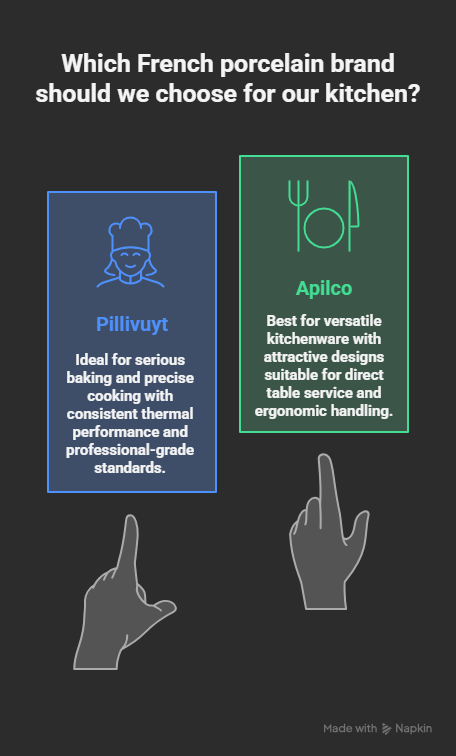
Choosing between Pillivuyt and Apilco ultimately depends on matching each brand’s strengths to your family’s specific cooking patterns, safety priorities, and kitchen usage.
Both offer excellent safety characteristics, but they excel in different areas that matter more to different families.
Choose Pillivuyt if your family priorities include:
- Serious baking requiring consistent thermal performance
- Maximum thermal shock resistance for intensive cooking
- Technical precision and predictable results
- Professional-grade performance standards
- Long-term investment in specialized cooking performance
The technical excellence approach serves families who view cooking as both art and science, where predictable results matter enormously.
If you frequently bake bread, create delicate pastries, or prepare dishes requiring precise temperature control, Pillivuyt’s engineering focus provides safety through superior performance consistency.
Choose Apilco if your family priorities include:
- Versatile kitchenware serving multiple functions
- Attractive pieces suitable for direct table service
- Easier handling and ergonomic design
- Complete kitchen coordination from one brand
- Balance of performance and aesthetic appeal
Apilco’s balanced approach serves families who need safe, reliable kitchenware that adapts to varied cooking styles and presentation needs.
If you value flexibility and want pieces that safely transition from cooking to serving, Apilco’s design philosophy offers compelling advantages.
Both brands excel at fundamental safety requirements: lead-free composition, thermal shock resistance, non-porous surfaces, and durability.
Your decision should focus on which approach to achieving these safety goals better matches your family’s cooking reality.
Consider your kitchen habits honestly. Do you primarily follow recipes precisely, or do you adapt and improvise frequently?
Do you entertain often and need pieces attractive enough for presentation? Are you building a complete kitchen setup or replacing specific pieces?
For families uncertain about their priorities, starting with a few key pieces from either brand allows you to evaluate performance in your specific kitchen environment.
Pillivuyt porcelain from France offers excellent starter sets for serious bakers, while Apilco provides versatile introductory pieces suitable for diverse cooking styles.
Remember that both brands represent significant upgrades over standard kitchenware in terms of safety, performance, and longevity.
Your choice between them matters less than choosing quality porcelain that will serve your family safely for decades.
Frequently Asked Questions About Pillivuyt vs Apilco Safety
Yes, both Pillivuyt and Apilco meet or exceed FDA safety standards for food contact surfaces.
They use lead-free formulations and high-temperature firing processes that create non-porous, bacteria-resistant surfaces.
Independent testing confirms both brands contain no detectable levels of heavy metals that could leach into food.
Both brands are safe for family use, including children, but Apilco’s ergonomic designs may offer slight advantages for younger users.
Apilco pieces often feature better grip surfaces and a slightly lighter weight, which reduces dropping risk.
However, both brands create equally safe food contact surfaces.
No special care is required beyond normal kitchen hygiene. Both brands are dishwasher safe and maintain their non-porous surfaces through normal cleaning.
Avoid sudden extreme temperature changes and handle with reasonable care to prevent chipping, which could expose the underlying ceramic.
Inspect pieces regularly for chips, cracks, or crazing (fine surface cracks). Any damage that exposes the underlying ceramic could potentially harbor bacteria.
Both brands’ high-quality glazing resists minor surface scratches without compromising safety.
Absolutely. Both brands use similar materials and firing processes, so they’re completely compatible for cooking and serving.
Mixing brands won’t create any safety issues, though you may notice slight differences in thermal behavior.
Both brands use inert materials that don’t react with foods or release chemicals during normal use.
People with severe chemical sensitivities should verify specific formulations with manufacturers, but neither brand typically triggers sensitivity reactions.
Conclusion: Your Path to Safer Kitchen Confidence
The choice between Pillivuyt and Apilco isn’t about finding a clear winner – both brands deliver exceptional safety and performance that will serve your family well for decades.
Instead, your decision should reflect which approach to achieving kitchen safety excellence better matches your family’s cooking style and priorities.
Pillivuyt’s technical precision offers unmatched consistency and thermal performance for serious cooks who demand predictable results.
If your kitchen sees intensive baking, precise temperature work, or professional-level cooking demands, Pillivuyt’s engineering focus provides safety through superior technical performance.
Apilco’s balanced approach delivers proven safety combined with a versatile design that adapts to modern family cooking.
If you need reliable, attractive kitchenware that safely handles everything from everyday meals to elegant entertaining, Apilco’s philosophy offers compelling practical advantages.
Both brands eliminate the safety concerns associated with inferior kitchenware: lead content, bacterial harboring, thermal shock failures, and surface degradation.
Your investment in either represents a commitment to long-term kitchen safety that will benefit your family for generations.
Ready to make your choice? Start by honestly evaluating your cooking patterns and safety priorities. Consider beginning with a few key pieces to experience the difference premium French porcelain makes in your kitchen’s safety and performance.
Related Reading:
- Complete guide to Porcelain Dinnerware material safety
- Difference between Corelle and Gibson Dinnerware