Silicone food storage containers have emerged as an innovative alternative to traditional glass and plastic options, offering unique benefits that appeal to health-conscious consumers and those seeking versatile storage solutions.
But are they worth the investment, and how do they stack up against more established materials?
As concerns about plastic safety continue to grow and glass containers prove impractical for certain situations, silicone has carved out its own niche in the food storage market.
From collapsible lunch containers to freezer-safe storage bags, silicone offers flexibility—both literal and figurative—that other materials simply can’t match.
This comprehensive guide explores everything you need to know about silicone food storage containers, from their safety profile and environmental impact to their practical advantages and limitations.
We’ll help you understand when silicone containers make sense for your needs and which options provide the best value and performance.
Whether you’re considering silicone as a complete replacement for your current storage system or as a strategic addition to complement your existing glass and plastic containers, this guide will give you the information needed to make an informed decision.
What Are Silicone Food Storage Containers?
Understanding Food-Grade Silicone
Food-grade silicone is a synthetic polymer made from silicon, oxygen, carbon, and hydrogen.
Unlike plastic polymers, silicone maintains its flexibility and stability across extreme temperature ranges, making it uniquely suited for food storage applications that other materials can’t handle effectively.
The “food-grade” designation is crucial, as not all silicone products meet the safety standards required for food contact.

Food-grade silicone undergoes specific manufacturing processes and testing to ensure it doesn’t leach harmful chemicals into food, even under stress conditions like high temperatures or acidic food contact.
Quality food-grade silicone is typically platinum-cured rather than peroxide-cured, resulting in a more stable material with better safety characteristics.
This manufacturing distinction affects both performance and safety, making it important to verify the curing process when selecting silicone containers.
How Silicone Differs from Other Storage Materials
Unlike rigid materials like glass or hard plastic, silicone’s flexibility allows containers to expand and contract with food contents and temperature changes.
This flexibility prevents cracking from freezer expansion and makes containers easier to empty.
Silicone also offers temperature versatility that surpasses most other materials.
Quality silicone containers can safely transition from freezer temperatures (as low as -40°F) to oven temperatures (up to 450°F in many cases), providing usage flexibility that neither glass nor plastic can match.
The non-porous surface of silicone resists staining and odour absorption better than plastic while being more forgiving than glass when dropped or subjected to impact.
This combination of properties creates a unique middle ground between the extremes of other materials.
Types of Silicone Food Storage Products
Rigid Silicone Containers: These maintain a consistent shape like traditional containers but offer the flexibility benefits of silicone material.
They’re ideal for users who want silicone’s benefits while maintaining familiar container functionality.
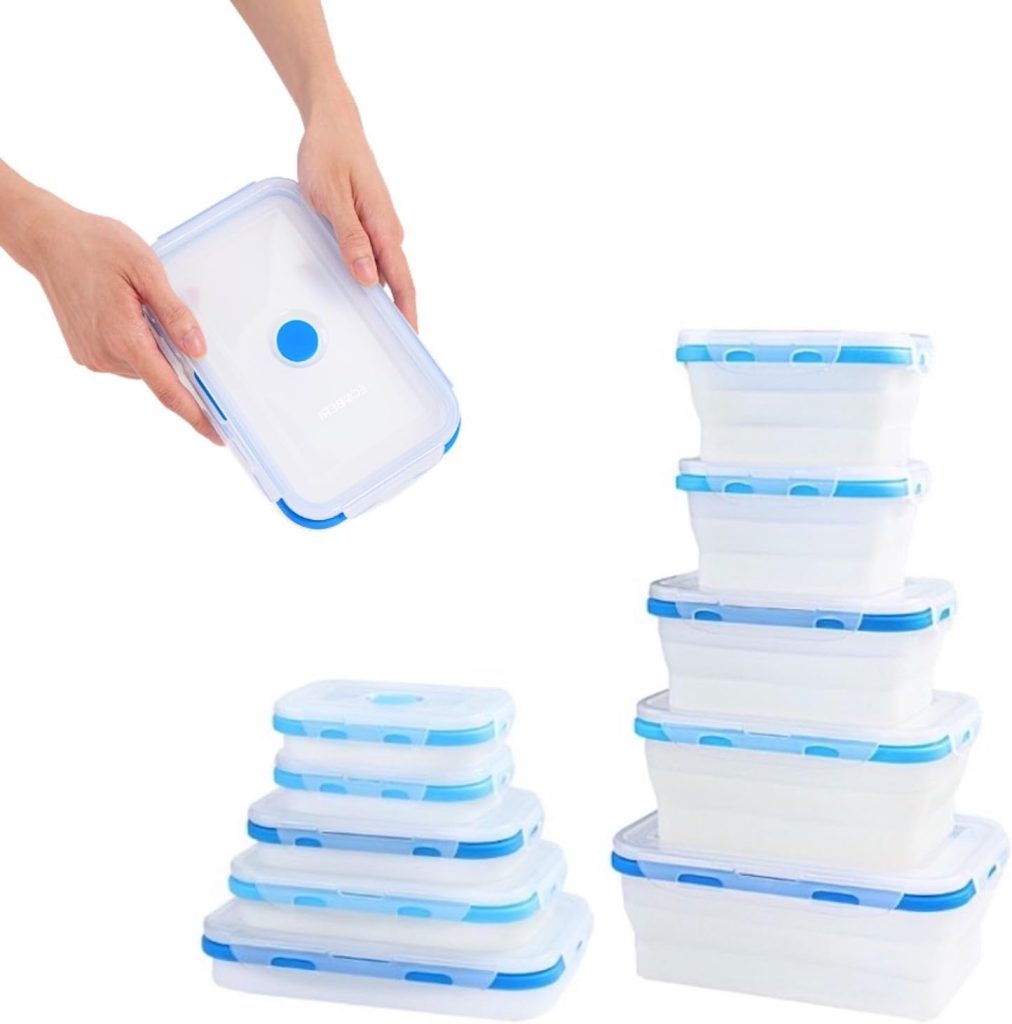
Collapsible Containers: One of silicone’s most innovative applications, these containers can be compressed when empty, saving significant storage space.
They expand to full size when needed, making them perfect for travel or small kitchens.
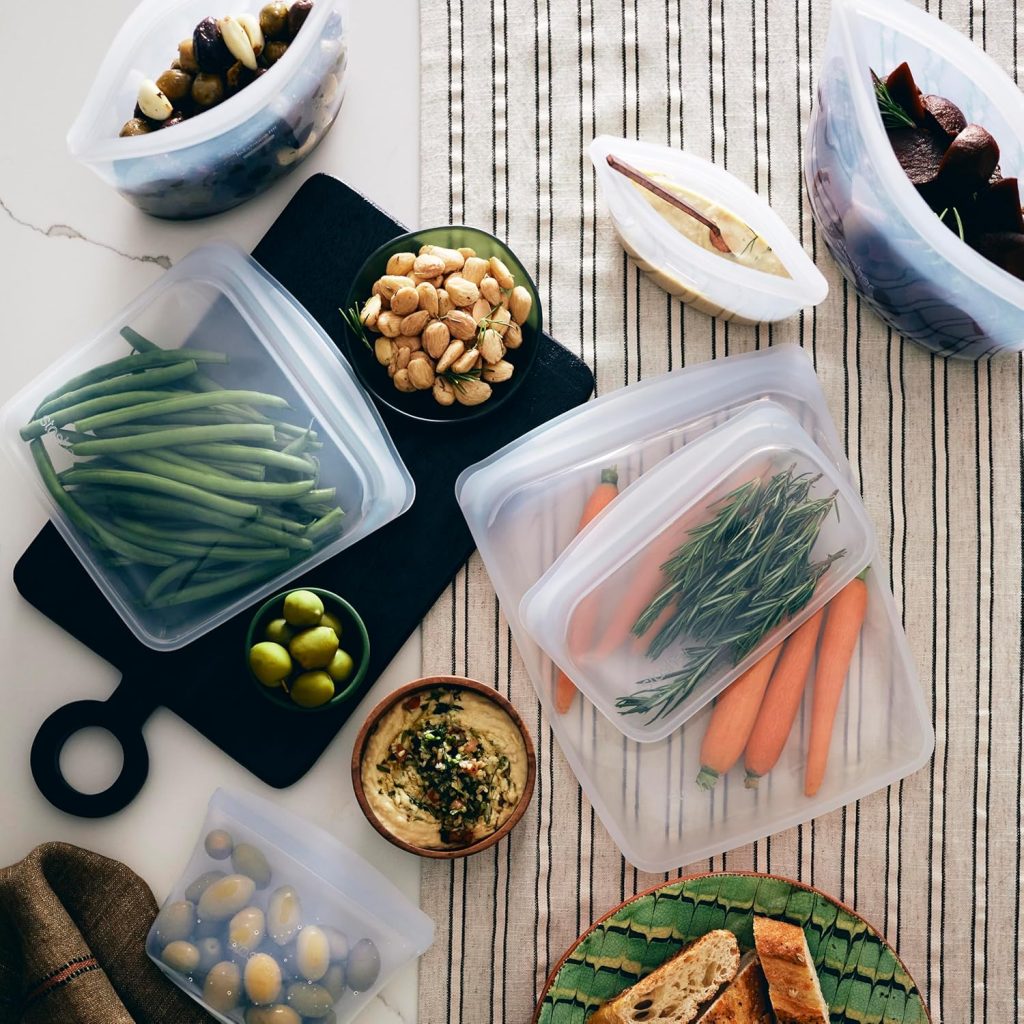
Silicone Storage Bags: Reusable alternatives to plastic storage bags, these products offer environmental benefits while providing excellent sealing and versatility for various food types.
Specialized Silicone Products: Including ice cube trays, muffin cups used for storage, and custom-shaped containers designed for specific foods or applications.
The Pros of Silicone Food Storage Containers
Temperature Versatility and Safety
Extreme Temperature Range: Silicone containers excel in temperature versatility, safely handling everything from freezer storage to oven reheating without material degradation.
This range eliminates the need to transfer food between containers for different temperature applications.
No Thermal Shock: Unlike glass containers that can crack from sudden temperature changes, silicone’s flexibility allows it to handle rapid temperature transitions safely.
You can move containers directly from the freezer to the microwave without concern for material failure.
Oven-Safe Applications: Many silicone containers can go directly into conventional ovens, making them suitable for cooking and reheating applications that would damage plastic containers or require transferring food from glass containers due to lid limitations.
Microwave Excellence: Silicone heats evenly in microwaves without creating hot spots or warping, providing reliable reheating performance.
The material doesn’t absorb microwave energy, so containers remain cool to the touch even when contents are hot.
Flexibility and Convenience Benefits
Easy Food Removal: Silicone’s flexibility makes it easy to remove every bit of food from containers.
You can gently push from the bottom or flex the sides to release stubborn items like frozen soups or sticky foods completely.
Impact Resistance: Dropped silicone containers bounce rather than break, making them ideal for households with children or outdoor activities where traditional containers might be damaged.
This durability reduces replacement costs and safety hazards.
Comfortable Handling: Silicone’s non-slip surface and flexibility provide a secure, comfortable grip even when containers are wet or greasy.
The material doesn’t become slippery like glass or some plastics when moisture is present.
Space-Saving Design: Collapsible silicone containers can reduce storage space by up to 75% when empty, making them invaluable for small kitchens, RVs, or travelers who need efficient packing solutions.
Health and Safety Advantages
Chemical Inertness: High-quality silicone doesn’t leach chemicals into food, even under extreme conditions.
Unlike some plastics that can release compounds when heated or stressed, food-grade silicone maintains its chemical stability across all normal use conditions.
Non-Porous Surface: Silicone’s non-porous surface resists bacterial growth and doesn’t absorb flavors, odors, or stains like plastic containers often do.
This characteristic helps maintain food quality and container hygiene over extended use.
BPA and Phthalate Free: Silicone contains none of the chemical additives found in plastics that raise health concerns.
This makes silicone an attractive option for families seeking to minimize exposure to potentially harmful compounds.
Easy Sanitization: The non-porous surface and temperature resistance allow for thorough sanitization using hot water, steam, or even boiling, providing confidence in container cleanliness for sensitive applications.
Environmental Considerations
Durability and Longevity: Quality silicone containers can last for many years with proper care, reducing the need for frequent replacements that contribute to waste.
The material’s resistance to degradation means a longer useful life compared to plastic alternatives.
Recyclability Potential: While silicone recycling isn’t as widespread as glass or plastic recycling, the material can be recycled through specialized programs, and its durability means less frequent disposal needs.
Reusability: Silicone storage bags and containers can replace hundreds of single-use plastic bags over their lifetime, providing significant environmental benefits for households committed to waste reduction.
The Cons of Silicone Food Storage Containers
Cost Considerations and Value Analysis
Higher Initial Investment: Silicone containers typically cost 2-4 times more than comparable plastic options and often exceed glass container prices.
This premium pricing can make building a complete storage system expensive, particularly for budget-conscious households.
Limited Size Options: The silicone container market offers fewer size and shape options compared to plastic alternatives.
This limitation might require compromises in storage efficiency or necessitate mixing container types to meet all storage needs.
Replacement Part Availability: Unlike established plastic container systems, where replacement lids and components are widely available, silicone container replacement parts can be harder to find and more expensive when available.
Cost Per Use Analysis: While silicone containers last longer than plastic, the significantly higher initial cost means longer payback periods.
For occasional-use applications, the cost premium might never justify itself through extended durability.
Practical Limitations and Performance Issues
Structural Flexibility Challenges: The same flexibility that provides benefits can also create problems.
Silicone containers can be difficult to stack stably, especially when full, and may not maintain a perfect shape under weight or pressure.
Limited Rigidity for Some Applications: Some food storage tasks benefit from rigid container walls.
Silicone’s flexibility can make it challenging to pack containers efficiently in refrigerators or transport them without shape distortion.
Sealing Mechanism Limitations: Most silicone containers rely on flexible lids that may not provide the same airtight sealing performance as rigid plastic or glass containers with engineered sealing systems.
This can affect food freshness.
Size and Weight When Filled: While collapsible when empty, silicone containers can become bulky and heavy when filled, particularly in larger sizes.
The flexible walls may bulge outward, taking up more space than rigid alternatives.
Cleaning and Maintenance Challenges
Grease and Oil Attraction: Silicone’s surface properties can attract and hold onto greasy substances, making thorough cleaning more challenging than with glass or hard plastic surfaces.
Some users report difficulty removing oily residues completely.
Lint and Dust Magnetism: Silicone surfaces tend to attract lint, dust, and small particles, requiring more frequent cleaning to maintain appearance.
This characteristic can be particularly problematic in busy kitchens or when containers are stored openly.
Deep Cleaning Requirements: While silicone resists staining, thorough cleaning sometimes requires more effort than other materials.
The flexible surface can trap particles in microscopic irregularities that require aggressive cleaning techniques.
Drying Time Considerations: Silicone’s flexibility can create crevices and folds that trap water, extending drying time and potentially creating conditions for bacterial growth if not thoroughly dried.
Performance Limitations in Specific Applications
Stacking Efficiency: Flexible container walls don’t stack as efficiently as rigid alternatives, potentially wasting refrigerator and pantry space.
This limitation becomes more pronounced with larger containers or when storage space is at a premium.
Pouring and Dispensing: Silicone containers can be awkward for pouring liquids or dispensing small items like nuts or cereals.
The flexible walls may collapse or distort during pouring, creating spills or making controlled dispensing difficult.
Transportation Challenges: For lunch containers or travel applications, silicone’s flexibility can be a disadvantage.
Containers may not maintain their shape in bags, and the soft sides provide less protection for delicate foods.
Limited Clear Visibility: Many silicone containers lack the crystal-clear visibility of glass or high-quality plastic containers, making it difficult to identify contents at a glance or assess food quality without opening the containers.
Safety Profile of Silicone Food Storage
Understanding Food-Grade Silicone Safety
FDA Approval and Regulations: Food-grade silicone has received FDA approval for food contact applications, indicating that it meets safety standards for direct food contact across typical use conditions.
However, not all silicone products carry this designation, making verification important.
Chemical Stability: Unlike plastics that can break down and release chemicals over time, high-quality silicone maintains its chemical structure across a wide range of temperature extremes and prolonged use.
This stability means consistent safety performance throughout the product’s lifetime.
Testing Standards: Reputable silicone container manufacturers conduct migration testing to verify that no harmful substances leach into food under various conditions, including high temperatures, acidic foods, and extended contact time.
Comparative Safety: When compared to plastic containers, especially older ones that may contain BPA or other concerning chemicals, food-grade silicone offers superior safety assurance.
For detailed plastic safety information, see our BPA-Free Plastic Containers: What You Need to Know guide.
Quality Indicators and Safety Verification
Platinum vs Peroxide Curing: Platinum-cured silicone offers superior safety and performance compared to peroxide-cured alternatives.
Look for products that specifically mention platinum curing, as this process results in more stable, safer silicone.
Certification and Testing: Quality manufacturers provide information about third-party testing and certifications.
Look for containers that meet or exceed FDA standards and have undergone independent safety testing.
Origin and Manufacturing: Silicone containers manufactured in facilities with strict quality control and safety standards provide better assurance than products from unknown or questionable sources.
Research the manufacturer’s reputation and manufacturing standards.
Warning Signs: Avoid silicone containers with strong chemical odors, unusual flexibility that seems excessive, or products that lack clear safety information.
These characteristics might indicate lower-quality silicone that could pose safety risks.
Proper Use Guidelines for Maximum Safety
Temperature Limits: Even though silicone handles extreme temperatures well, respect the manufacturer’s temperature limits.
Exceeding recommended temperatures might cause degradation that could affect safety or performance.
Food Compatibility: While silicone is generally compatible with all foods, some manufacturers provide specific guidance about extended contact with certain food types.
Follow these guidelines to ensure continued safety.
Cleaning and Sanitization: Proper cleaning maintains safety by preventing bacterial growth and removing food residues that might interact with container materials over time.
The non-porous surface makes effective sanitization achievable with standard cleaning methods.
For a broader context on food-safe materials and how silicone compares to other options, our Food Safe Container Materials guide provides comprehensive safety information across all container types.
Best Silicone Food Storage Options
Top-Rated Rigid Silicone Containers
Premium Performance Options: The highest-quality rigid silicone containers combine durability with functionality, offering reliable sealing, temperature versatility, and long-term performance.
These options typically feature reinforced construction, quality lids, and comprehensive temperature ratings.
Mid-Range Value Choices: Containers that balance quality with affordability provide good silicone benefits without premium pricing.
These options might have simpler designs or slightly lower temperature ratings, but still offer core silicone advantages.
Specialized Applications: Some rigid silicone containers excel in specific applications like freezer storage, microwave reheating, or oven use.
Choosing containers optimized for your primary use cases often provides better performance than general-purpose options.
Collapsible Container Recommendations
Travel and Space-Saving Leaders: The best collapsible containers maintain structural integrity when expanded, while compressing efficiently when empty.
Look for options with reinforced rims and reliable locking mechanisms that ensure proper sealing.
Lunch and Portable Options: Collapsible containers designed for portable use often feature enhanced sealing, comfortable carrying handles, and sizes optimized for typical meal portions.
These specialized features justify higher costs for users who prioritize portability.
Large Capacity Storage: Collapsible containers for bulk storage or batch cooking need reinforced construction to handle larger food quantities without losing shape or seal integrity.
The best large-capacity options balance flexibility with necessary structural support.
Silicone Storage Bag Alternatives
Reusable Bag Systems: High-quality silicone storage bags can replace disposable plastic bags while offering superior durability and safety.
The best options feature reliable sealing mechanisms, multiple sizes, and dishwasher-safe construction.
Freezer-Specific Options: Silicone bags designed specifically for freezer use often feature enhanced sealing and materials optimized for low-temperature performance.
These specialized bags provide better long-term storage performance than general-purpose alternatives.
Multi-Purpose Solutions: Versatile silicone bags that handle multiple applications—from sous vide cooking to microwave reheating to freezer storage—offer excellent value for households that want maximum functionality from minimal products.
Brand and Quality Considerations
Established Brand Benefits: Well-known brands typically offer better quality control, customer service, and replacement part availability.
While they may cost more initially, established brands often provide better long-term value through superior performance and support.
Innovation Leaders: Some manufacturers focus specifically on silicone innovation, developing new features and improvements that enhance functionality.
These specialized companies often offer the most advanced silicone container technologies.
Value Brand Evaluation: Budget-friendly silicone options can provide good basic functionality, but verify safety certifications and material quality before choosing lower-cost alternatives.
Poor-quality silicone might not provide the safety and performance benefits that make the material attractive.
When comparing silicone options to traditional materials, consider reading our Glass vs Plastic Food Storage Containers comparison to understand how silicone fits into the broader container landscape and when it might be the optimal choice for your specific needs.
Choosing the Right Silicone Containers for Your Needs
Use Case Analysis and Selection Criteria
Primary Application Assessment: Identify your main storage needs—daily lunch containers, bulk meal prep, freezer storage, or specialized applications like sous vide cooking.
Different silicone containers excel in different applications, so matching container features to your primary uses ensures satisfaction with your investment.
Temperature Requirements: Consider your typical temperature range needs.
If you frequently move food between the freezer and the oven, prioritize containers with the widest safe temperature ranges.
For primarily room temperature or refrigerated storage, standard temperature ratings may suffice.
Space Constraints: Evaluate your storage space limitations both for empty containers and when filled.
Collapsible options excel in small spaces, while rigid containers provide better stacking efficiency when space isn’t constrained.
Budget and Value Priorities: Determine whether initial cost savings or long-term value take priority.
Silicone containers require a higher upfront investment but can provide years of reliable service, making them cost-effective for frequent users.
Integration with Existing Storage Systems
Complementary Approach: Rather than replacing all containers with silicone, consider using silicone strategically where its unique benefits provide maximum value.
This might mean silicone for temperature-extreme applications while maintaining [glass containers] for general storage.
Size Coordination: If mixing container types, consider how different sizes coordinate in your storage spaces.
Silicone containers might not stack perfectly with glass or plastic alternatives, potentially affecting organizational efficiency.
Lid and Accessory Compatibility: Some storage systems benefit from interchangeable lids or accessories.
Pure silicone systems typically don’t offer this compatibility with other materials, which might influence your selection strategy.
Quality Assessment and Purchase Guidelines
Safety Verification: Always verify that containers are made from food-grade silicone and carry appropriate certifications.
Avoid products that lack clear safety information or seem priced suspiciously low, as these might indicate inferior materials.
Construction Quality: Examine sealing mechanisms, wall thickness, and overall construction quality.
Well-made silicone containers should feel substantial and maintain their shape well when empty, while still offering flexibility benefits.
Manufacturer Support: Consider warranty coverage, replacement part availability, and customer service quality when selecting containers.
These factors become important for products you’ll use regularly over many years.
Testing and Reviews: Research user experiences with specific products, particularly focusing on long-term performance and any issues that develop over extended use.
Real-world testing often reveals performance characteristics that aren’t apparent from product specifications alone.
Maintenance and Care Tips
Cleaning Best Practices for Silicone Containers
Daily Cleaning Routine: Wash silicone containers promptly after use with warm, soapy water to prevent food residues from bonding to the surface.
The flexible material allows for easy cleaning of corners and crevices that might be difficult to reach in rigid containers.
Deep Cleaning Techniques: For thorough cleaning, silicone containers can be safely cleaned with baking soda paste, which helps remove stubborn residues and odors without damaging the material.
The paste can be worked into the flexible surface and rinsed away completely.
Grease and Oil Removal: Silicone’s tendency to attract oils requires specific attention.
Use degreasing dish soap or a mixture of warm water and white vinegar to cut through oily residues effectively. Multiple rinses may be necessary for complete removal.
Sanitization Methods: The temperature resistance of silicone allows for effective sanitization using boiling water, steam cleaning, or even oven sanitization at moderate temperatures.
This capability provides excellent hygiene assurance for sensitive applications.
Preventing Common Problems
Lint and Dust Prevention: Store clean, dry silicone containers in enclosed spaces or covers to minimize lint and dust attraction.
The electrostatic properties that attract particles are reduced when containers are completely clean and dry.
Odor Prevention: While silicone resists odor absorption better than plastic, strong-smelling foods can still leave traces.
Clean containers immediately after use with strong-scented foods, and consider using baking soda treatments preventively for problematic foods.
Shape Maintenance: Store collapsible containers properly expanded or collapsed to maintain their intended shape.
Avoid storing them in partially collapsed positions, which can create creases or weak points that affect performance.
Seal Preservation: Keep sealing surfaces clean and free from food particles that might prevent proper closure. Inspect seals regularly for wear or damage that could affect container performance.
Long-Term Care and Replacement Indicators
Monitoring Material Integrity: Regularly inspect silicone containers for signs of wear, including persistent stains that won’t clean, loss of flexibility, or development of tears or weak spots.
These indicators suggest replacement needs.
Performance Assessment: Monitor sealing effectiveness, shape retention, and cleaning ease over time. Degradation in these performance areas indicates that containers are reaching the end of their useful life.
Safety Considerations: Replace containers that develop strong odors that resist cleaning, show signs of material degradation, or no longer meet the safety standards you require for food contact applications.
For comprehensive maintenance guidance across all container types, including comparative care requirements, see our main Food Storage Containers guide, which covers maintenance strategies for different materials and applications.
Silicone vs Other Materials: When to Choose What
Silicone vs Glass: The Safety and Convenience Trade-off
Temperature Versatility Comparison: While both materials handle temperature extremes well, silicone offers greater flexibility in rapid temperature changes and doesn’t carry breakage risks that glass presents.
However, glass provides a completely inert food contact that some users prefer for ultimate safety assurance.
Durability Considerations: Glass lasts longer overall but requires careful handling to prevent breakage. Silicone offers impact resistance and flexibility, but may need replacement sooner due to wear from regular flexing and cleaning.
Cost Analysis: Initial costs favor glass for basic functionality, but silicone’s specialized benefits might justify premium pricing for specific applications. Consider your usage patterns when evaluating long-term value.
Silicone vs Plastic: Safety and Performance Comparison
Chemical Safety: High-quality silicone provides superior chemical safety compared to plastic containers, especially for temperature-extreme applications.
Even BPA-free plastic options can’t match silicone’s chemical inertness across all use conditions.
Convenience and Variety: Plastic containers offer greater variety, lower costs, and more familiar functionality. Silicone provides unique benefits but requires adaptation to different handling and storage characteristics.
Longevity and Value: While plastic containers cost less initially, quality silicone containers often provide better long-term value through extended usable life and maintained performance characteristics.
Strategic Material Mixing
Complementary Strengths: Many households benefit from using different materials strategically—glass for general storage and reheating, silicone for temperature extremes and flexibility needs, and quality plastic for portable applications and basic storage.
Application-Specific Selection: Choose materials based on primary use cases rather than trying to find one material that handles all needs adequately.
This approach optimizes performance while managing costs effectively.
Transition Strategies: Consider gradually introducing silicone containers for specific applications rather than completely replacing existing systems.
This approach allows you to evaluate silicone benefits before making larger investments.
Conclusion: Making the Silicone Decision
Silicone food storage containers offer unique benefits that make them valuable additions to modern kitchens, particularly for users who prioritize temperature versatility, impact resistance, and chemical safety.
However, they’re not universal solutions and work best when chosen for specific applications where their advantages provide clear value.
When Silicone Makes Sense: Choose silicone containers when you need temperature extremes capability, want impact-resistant portability, require space-saving collapsible storage, or prioritize chemical safety above all other considerations.
These applications justify silicone’s higher costs through performance benefits that other materials can’t match.
When Other Materials Are Better: For general storage where cost efficiency matters most, basic refrigerated storage without temperature extremes, or applications requiring rigid stacking and organization, traditional glass or quality plastic containers might provide better value.
Strategic Integration: The best approach for many households involves using silicone strategically alongside other materials.
Use silicone where its unique benefits provide maximum value, while employing glass or plastic for applications where those materials excel.