Tag: fine china tableware

  • Why White Dinnerware Shows Food Best

    Bottom Line: White dinnerware shows food best because it acts like a blank canvas, making food colors appear more vibrant through visual contrast. The neutral background eliminates distractions and allows the food to take center stage. This is why professional chefs, restaurants, and food photographers prefer white plates for optimal food presentation.

    INTRODUCTION

    Walk into any high-end restaurant, and you’ll notice something interesting. Almost every dish arrives on white plates.

    This isn’t a coincidence or a simple design choice. There’s real science behind why white dinnerware shows food best.

    Professional chefs and food stylists have known this secret for decades. White plates make food look more appetizing, portions appear larger, and colors seem more vibrant.

    But why does this happen? Moreover, how can you use this knowledge to improve your own dining experience?

    In this article, we’ll explore the fascinating world of color psychology in food presentation. You’ll discover why white plates are the gold standard in professional kitchens.

    Plus, you’ll learn practical tips for creating restaurant-quality presentations at home.

    THE SCIENCE OF VISUAL PERCEPTION

    How Our Eyes Process Food Colors:

    Your brain processes food colors differently depending on the background. When food sits on a white plate, your eyes can focus entirely on the meal itself. This creates what experts call the “blank canvas effect.”

    White plates provide maximum visual contrast for most foods. Think about it: red tomatoes, green herbs, golden pasta, and orange carrots all pop against a white background.

    why white dinnerware shows food best

    This contrast makes colors appear more saturated and appealing.

    Furthermore, white reflects light evenly. This means your food gets proper lighting from all angles. Dark plates absorb light, making food appear dull and less appetizing.

    The Blank Canvas Effect of White Plates

    Professional food stylists compare white plates to an artist’s blank canvas. Just as painters need a neutral background to showcase their work, chefs need white plates to display their culinary creations.

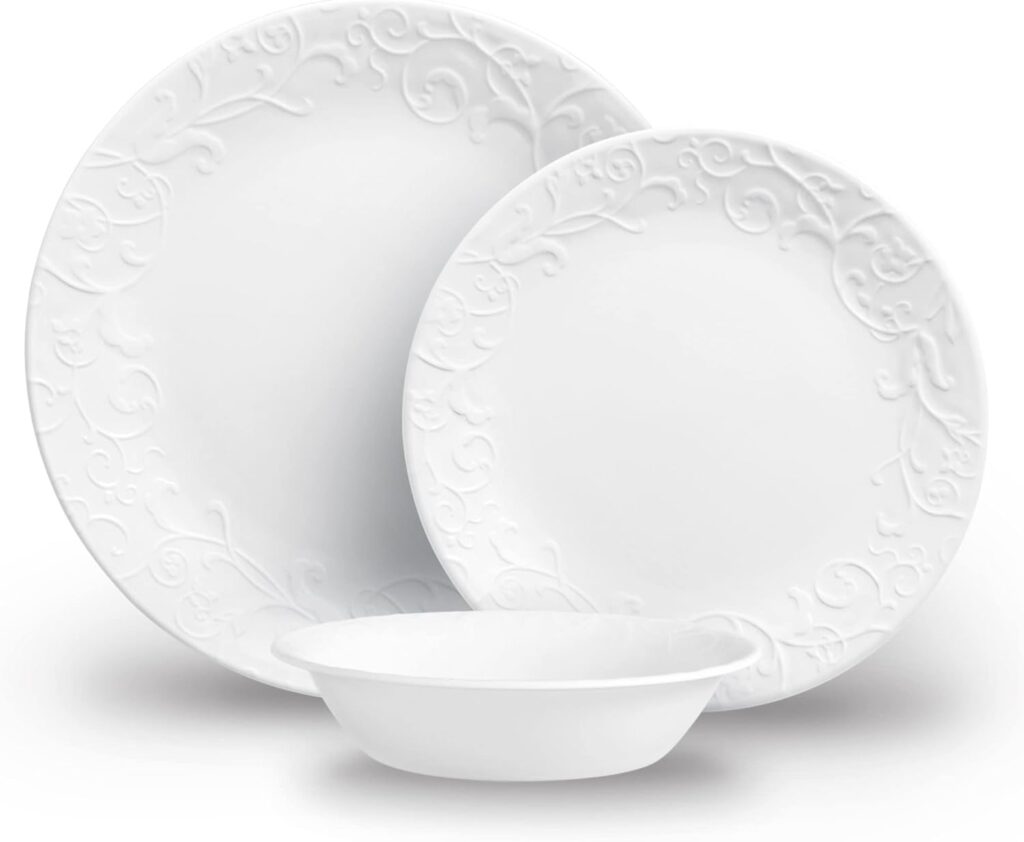
    Gibson Home Porcelain white dinnerware sets

    This blank canvas effect serves several purposes:

    • It eliminates visual distractions
    • It focuses attention on the food
    • It creates a clean, professional appearance
    • It allows food colors to shine.

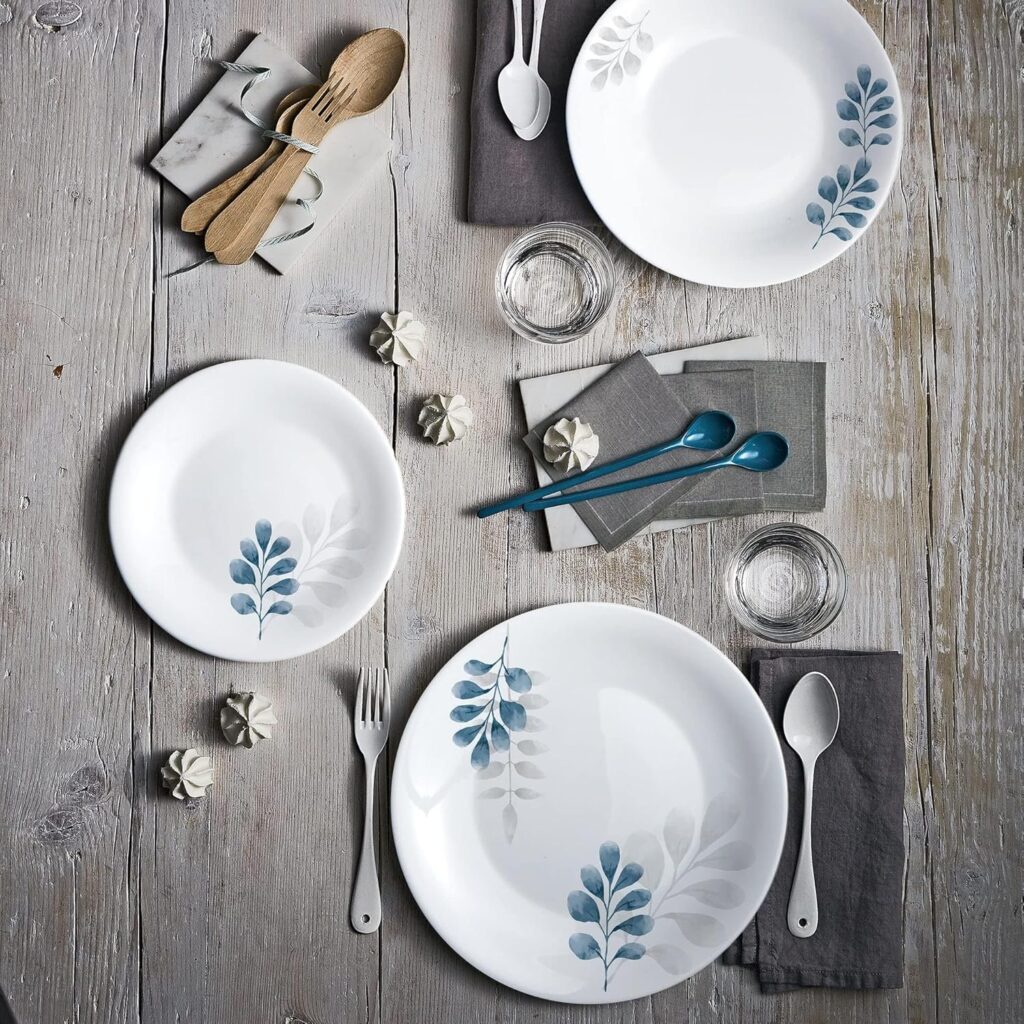
    Additionally, white plates don’t compete with your food for attention. Colored or patterned plates can clash with certain dishes. White plates work with everything.

    COLOR CONTRAST PRINCIPLES IN FOOD PRESENTATION

    Color theory plays a huge role in food presentation. The best food presentations use complementary colors that enhance each other. White serves as the perfect neutral backdrop for these color combinations.

    For example, a bright red strawberry looks stunning on white. The contrast makes the red appear more intense and appealing.

    Famiware matte white scratch resistant stoneware dinnerware

    Similarly, green vegetables seem fresher and more vibrant against white dinnerware.

    However, there’s one exception to this rule. Pale foods like cauliflower or white fish can get lost on white plates. In these cases, slightly off-white or cream-colored plates work better.

    PSYCHOLOGICAL FACTORS BEHIND WHITE PLATE PREFERENCE

    Cleanliness and Purity Associations:

    White represents cleanliness and purity in most cultures. When people see white plates, they automatically associate them with hygiene and quality.

    This psychological connection makes food appear safer and more appealing.

    Food safe and Lead Free Malacasa white ceramic stoneware dinnerware sets

    Restaurants understand this psychology well. Clean, white plates signal professionalism and attention to detail. Customers feel more confident about the food they’re eating.

    Moreover, white plates are easier to clean thoroughly. Diners can see that the plates are spotless, which adds to their peace of mind.

    Portion Size Perception

    Here’s a surprising fact: white plates can make portions appear larger. This happens because of a visual illusion called the Delboeuf effect. When food contrasts strongly with the plate, portions look more substantial.

    This effect benefits both restaurants and diners. Restaurants can serve appropriate portions while still impressing customers. Diners feel satisfied with what they’re getting.

    Additionally, the contrast helps with portion control at home. You can better judge serving sizes when food stands out clearly against the plate.

    Appetite Stimulation Through Color Psychology

    Color psychology affects appetite in fascinating ways. White plates don’t interfere with your brain’s natural food recognition processes. This allows your appetite to respond naturally to the food itself.

    Research shows that neutral colors like white don’t suppress appetite. In contrast, some colors can actually reduce hunger. Blue plates, for instance, tend to decrease appetite because blue foods are rare in nature.

    White plates let your brain focus on the food’s actual colors, textures, and appearance. This natural focus enhances appetite and enjoyment.

    PROFESSIONAL PERSPECTIVES: WHY CHEFS CHOOSE WHITE

    Chef Preferences and Reasoning:

    Professional chefs overwhelmingly prefer white plates for several reasons. First, white plates make food photography easier. Social media has made food photos more important than ever for restaurants.

    Second, white plates work in any lighting condition. Restaurant lighting varies throughout the day, but white plates always look good. This consistency is crucial for maintaining standards.

    Third, white plates are timeless. Food trends change, but white plates never go out of style. This makes them a smart investment for any restaurant.

    Culinary Pro explains: “White plates are a traditional color favored by chefs because they make the vibrant colors of the food more visually appealing to the guests.”

    Restaurant Industry Standards

    The restaurant industry has embraced white dinnerware as the standard for fine dining. This choice reflects both practical and aesthetic considerations.

    From a practical standpoint, white plates are:

    • Easy to match and replace
    • Suitable for any cuisine style
    • Professional-looking in photos
    • Simple to clean and maintain

    Aesthetically, white plates create a unified look across the dining room. They complement any decor style and never clash with food presentations.

    Food Photography Best Practices

    Food photographers almost always use white plates for several reasons. White provides the best color accuracy in photos. It doesn’t cast unwanted color reflections onto the food.

    Additionally, white plates photograph well under different lighting conditions. They reflect light evenly, reducing harsh shadows and bright spots.

    Professional food stylists keep various white plates in their toolkit. Different textures and shapes serve different purposes, but the color remains consistently white.

    THE COLOR THEORY BEHIND WHITE PLATES

    Complementary Color Enhancement:

    White plates work because they don’t compete with food colors. Instead, they enhance them through contrast. This is basic color theory in action.

    When you place colorful food on a white plate, each color appears more vivid. Red peppers look redder, green spinach looks greener, and yellow corn looks more golden.

    This enhancement happens because white contains all colors of light. It reflects the food’s true colors to your eyes without adding any color cast.

    Neutral Background Benefits

    A neutral background serves multiple purposes in food presentation. It creates visual hierarchy, making the food the clear focal point. It also provides flexibility for different types of dishes.

    Furthermore, neutral backgrounds age well. While trendy colored plates might look dated after a few years, white plates remain classic and elegant.

    The neutral background also helps with portion control. You can clearly see how much food you’re serving or eating.

    When White Doesn’t Work

    While white plates work for most foods, there are exceptions. Very pale foods can disappear against white backgrounds. Examples include:

    • Cauliflower
    • White fish
    • Pale pasta sauces
    • Vanilla ice cream
    • White chocolate desserts

    For these foods, slightly off-white plates work better. Cream, ivory, or light gray plates provide enough contrast without being too bold.

    Alternative Neutral Options

    If pure white doesn’t work for your dish, consider these neutral alternatives:

    • Cream or ivory for pale foods
    • Light gray for a modern look
    • Warm white for comfort foods
    • Bone white for elegant presentations

    These alternatives maintain the benefits of white while providing subtle variation.

    FOOD PHOTOGRAPHY AND SOCIAL MEDIA IMPACT

    Instagram-Worthy Presentations:

    Social media has made food photography more important than ever. White plates photograph beautifully and get more engagement on platforms like Instagram.

    Food Photography on White Dinnerware

    The clean, minimalist look of white plates appeals to modern aesthetics. They create a professional appearance that makes home cooking look restaurant-quality.

    Additionally, white plates work well with various food photography styles. Whether you prefer bright and airy or dark and moody photos, white plates adapt to different lighting setups.

    Lighting Considerations

    Good lighting is crucial for food photography, and white plates help with this. They reflect light evenly, reducing harsh shadows and bright spots on your food.

    Natural light works particularly well with white plates. The combination creates soft, appealing shadows that enhance the food’s texture and appearance.

    For artificial lighting, white plates are forgiving. They don’t require special color correction or complex lighting setups.

    Professional Food Styling Tips

    Professional food stylists offer these tips for using white plates:

    1. Choose the right size plate for your dish
    2. Keep plates spotlessly clean
    3. Warm plates for hot foods
    4. Use textured white plates for added interest
    5. Consider the plate’s rim width

    These details make a significant difference in the final presentation.

    PRACTICAL APPLICATIONS FOR HOME DINING

    Choosing the Right White Dinnerware:

    When selecting white dinnerware for your home, consider these factors:

    Material: Porcelain and bone china photograph best and feel most luxurious. Stoneware is more casual but still effective. Popular options like Corelle Winter Frost white dinnerware offer durability and classic appeal.

    Finish: Matte finishes hide fingerprints better. Glossy finishes reflect more light and create more contrast. Quality white tableware hardly shows scratches when properly maintained.

    Shape: Round plates are classic and versatile. Square plates look more modern. Rimmed plates frame food better.

    Size: Have multiple sizes available. Dinner plates, salad plates, and dessert plates all serve different purposes.

    Special Occasion Presentations

    White plates elevate any special occasion. They make holiday meals look more elegant and birthday dinners more special.

    For formal dinners, use charger plates under your white dinner plates. This creates layers and adds sophistication to your table setting.

    Consider mixing different textures of white plates for visual interest. Combine smooth and textured surfaces for a dynamic look.

    Maintenance and Care Tips

    White plates require proper care to maintain their appearance. High-quality pieces like Corelle Winter Frost white dinnerware are designed to resist chipping and maintain their pristine look with minimal effort:

    1. Wash immediately after use to prevent stains
    2. Use gentle detergents to avoid dulling the finish
    3. Avoid abrasive cleaners that can scratch the surface
    4. Store carefully to prevent chips and cracks
    5. Polish occasionally to maintain shine

    Quality white tableware hardly shows scratches when you follow these care guidelines. This durability makes white dinnerware an excellent long-term investment for your kitchen.

    KEY TAKEAWAYS: WHY WHITE DINNERWARE SHOWS FOOD BEST

    Here are the main reasons why white dinnerware shows food best:

    Visual Benefits

    • Maximum contrast makes food colors appear more vibrant
    • Blank canvas effect eliminates distractions
    • Even light reflection enhances food appearance
    • Universal compatibility works with any cuisine

    Psychological Benefits

    • Cleanliness associations increase appetite
    • Portion size perception makes servings look larger
    • Professional appearance enhances dining experience
    • Neutral psychology doesn’t interfere with natural appetite

    Practical Benefits

    • Photography is friendly for social media sharing
    • Timeless style never goes out of fashion
    • Easy to clean and maintain
    • Versatile use for any occasion

    Professional Standards

    • The chef preferred food presentation
    • Restaurant industry standard for fine dining
    • Food styling essential for photography
    • Color theory has been proven through scientific research.

    CONCLUSION

    White dinnerware shows food best because it combines science, psychology, and practicality. The visual contrast enhances food colors, making meals more appetizing.

    The neutral background creates a professional, clean appearance that appeals to diners.

    Professional chefs and food photographers choose white plates for good reason. They understand that presentation affects taste perception and overall dining satisfaction.

    By using white dinnerware, you can bring restaurant-quality presentation to your own table.

    The next time you’re shopping for dinnerware, remember these insights. Choose white plates that complement your style and enhance your food presentation.

    Your meals will look more appealing, your photos will get more likes, and your dining experience will improve.
  • Are Scratched Plates Dangerous? Complete Safety Guide

    KEY TAKEAWAY: Yes, truly scratched plates can be dangerous. While most marks on plates are harmless metal traces from cutlery, real scratches in poor-quality ceramic glazes can harbor bacteria and release toxic chemicals like lead into your food. However, not all plate damage poses the same risk.

    You’ve probably noticed marks on your favorite dinner plates. Maybe you’ve wondered if it’s safe to keep using them.

    This concern is more common than you think. Many people worry about the safety of their scratched dinnerware.

    The truth is, some plate damage is harmless. But other types can put your health at risk. In this guide, you’ll learn how to tell the difference.

    You’ll also discover when it’s time to replace your plates and which brands offer the safest options.

    THE TRUTH ABOUT “SCRATCHED” PLATES

    First, let’s clear up a common mistake. Most marks on plates aren’t actually scratches. They’re metal marks from your cutlery.

    These gray or black lines look scary, but they’re just metal traces sitting on top of your plate’s surface.

    You can usually remove these marks easily. Try using a paste made from baking soda and water. Gently scrub the marks with a soft cloth. If they come off, they weren’t real scratches.

    Learning how to remove silvermarks properly can save you from throwing away perfectly good dishes.

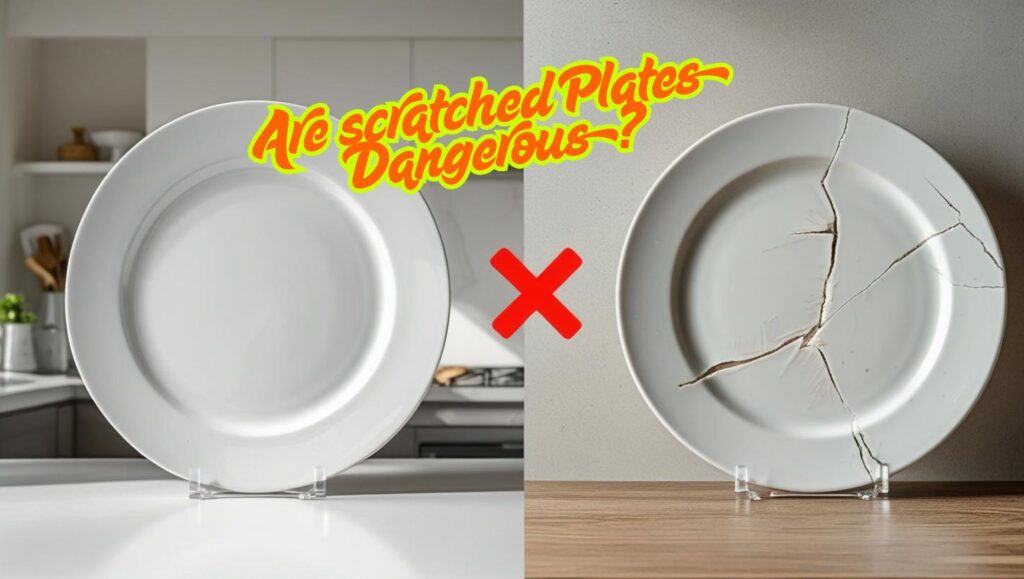
    are scratched plates dangerous

    Real scratches are different. They go into the plate’s surface. These create tiny grooves that you can feel with your fingernail. Unlike metal marks, true scratches can’t be cleaned away.

    So how do you know if your plate is truly scratched? Run your finger across the mark. If you feel a groove or indent, it’s a real scratch. If the surface feels smooth, it’s probably just a metal mark.

    True scratches usually happen after years of use. They occur when the protective glaze on your plate wears away. This is when safety concerns begin.

    HEALTH RISKS OF DAMAGED DINNERWARE

    Once your plates develop real scratches or chips, several health risks emerge. These damaged areas create perfect hiding spots for harmful bacteria.

    Even thorough washing can’t always remove germs from these tiny cracks.

    Bacterial Growth Concerns

    Bacteria love to hide in scratched surfaces. Food particles get trapped in these small spaces. Over time, dangerous germs can multiply. When you eat off these plates, you risk getting sick from food poisoning.

    Common symptoms include stomach pain, nausea, and diarrhea. In severe cases, bacterial infections can be life-threatening.

    This risk is especially high for children, elderly people, and those with weak immune systems.

    Chemical Leaching Dangers

    Perhaps more concerning is the release of toxic chemicals. Many ceramic glazes contain lead and cadmium.

    When plates are intact, these chemicals stay locked in the glaze. But scratches and chips can let them escape into your food.

    Lead poisoning is particularly dangerous. It can cause brain damage, especially in children. Cadmium exposure can harm your kidneys and bones.

    Hot and acidic foods make this problem worse. They pull more toxins from damaged plates.

    Special Risk Factors

    Certain foods increase the danger. Tomato-based sauces, citrus fruits, and hot soups are especially risky. These acidic foods can pull lead and cadmium from scratched glazes more easily.

    Pregnant women and young children face the highest risk. Their bodies absorb more lead than adults. Even small amounts can cause serious health problems.

    MATERIAL-SPECIFIC SAFETY GUIDE

    Different plate materials pose different risks when damaged. Understanding these differences helps you make safer choices.

    Ceramic and Porcelain Risks

    Traditional ceramic and porcelain plates are the most concerning when scratched. Many contain lead and cadmium in their glazes. Vintage plates and imported dishes from certain countries are especially risky.

    Bright-colored glazes often contain more toxic metals. Red, orange, and yellow glazes frequently have high lead levels. When these plates get scratched, the risk increases significantly.

    Stoneware Safety Profile

    Stoneware is generally safer than regular ceramic. It’s fired at higher temperatures, making it denser and less porous.

    This reduces the risk of bacterial growth. However, scratched stoneware can still harbor germs if the damage is severe.

    Quality stoneware from reputable brands is usually lead-free. But you should still replace pieces with visible damage.

    Glass Dinnerware Advantages

    Tempered glass plates are among the safest options. They don’t contain toxic metals like lead or cadmium. Glass is also non-porous, so bacteria can’t easily hide in scratches.

    However, glass plates can still chip or crack. Sharp edges from broken glass create injury risks. Replace any glass plates with chips or cracks immediately.

    Materials to Avoid

    Be extra careful with these types of plates:

    • Vintage dishes made before 1978
    • Imported ceramics from countries with loose regulations
    • Handmade pottery with an unknown glaze composition
    • Plates with bright, colorful glazes
    • Dishes that feel rough or chalky.

    WHEN TO REPLACE YOUR DINNERWARE

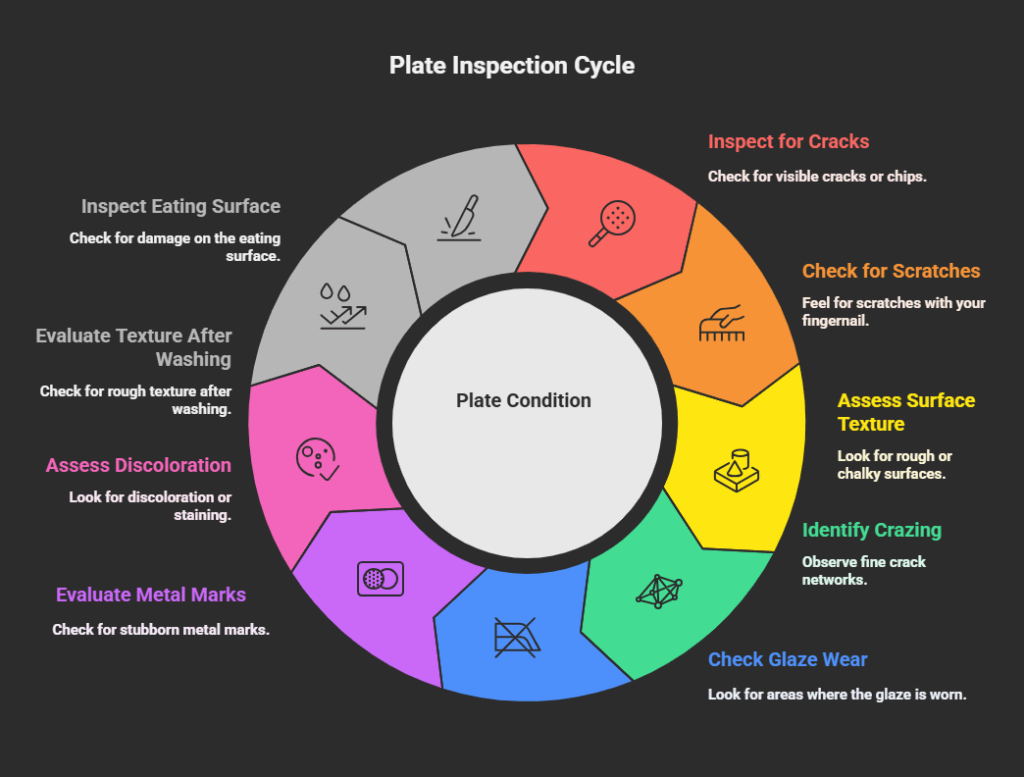
    Knowing when to replace your plates is crucial for safety. Here’s a simple inspection checklist:

    when to replace your Dinnerware

    Replace plates immediately if they have:

    • Visible cracks or chips
    • Scratches you can feel with your fingernail
    • Rough or chalky surfaces
    • Crazing (fine crack networks)
    • Areas where the glaze has worn away

    Consider replacement if plates have:

    • Multiple metal marks that won’t come off
    • Discoloration or staining
    • A rough texture after washing
    • Any damage to the eating surface

    Professional testing is available if you’re unsure. Hardware stores sell lead test kits for affordable prices.

    These can detect lead in your dinnerware. However, they only work on surfaces, not buried lead in glazes.

    SAFEST DINNERWARE BRANDS & MATERIALS

    Choosing the right dinnerware brands can prevent safety issues. Here are the safest options:

    Comparison Table: Dinnerware Safety

    MaterialLead RiskBacteria RiskDurability / Cost
    StonewareLowLowHigh / Medium
    Porcelain (quality)LowLowHigh / High
    Tempered GlassNoneVery LowMedium / Low
    MelamineLowMediumHigh / Low
    Vintage CeramicHighHighMedium / Variable

    HF Coors – Known for commercial-grade stoneware. Their plates resist scratches and are lead-free. Many restaurants use these dishes resistant to cutlery marks.

    Corelle Bella Faenza safe bacteria brand from scratches

    Corelle Winter Frost White Collection – Made from tempered glass. Lightweight but durable. No lead or cadmium concerns.

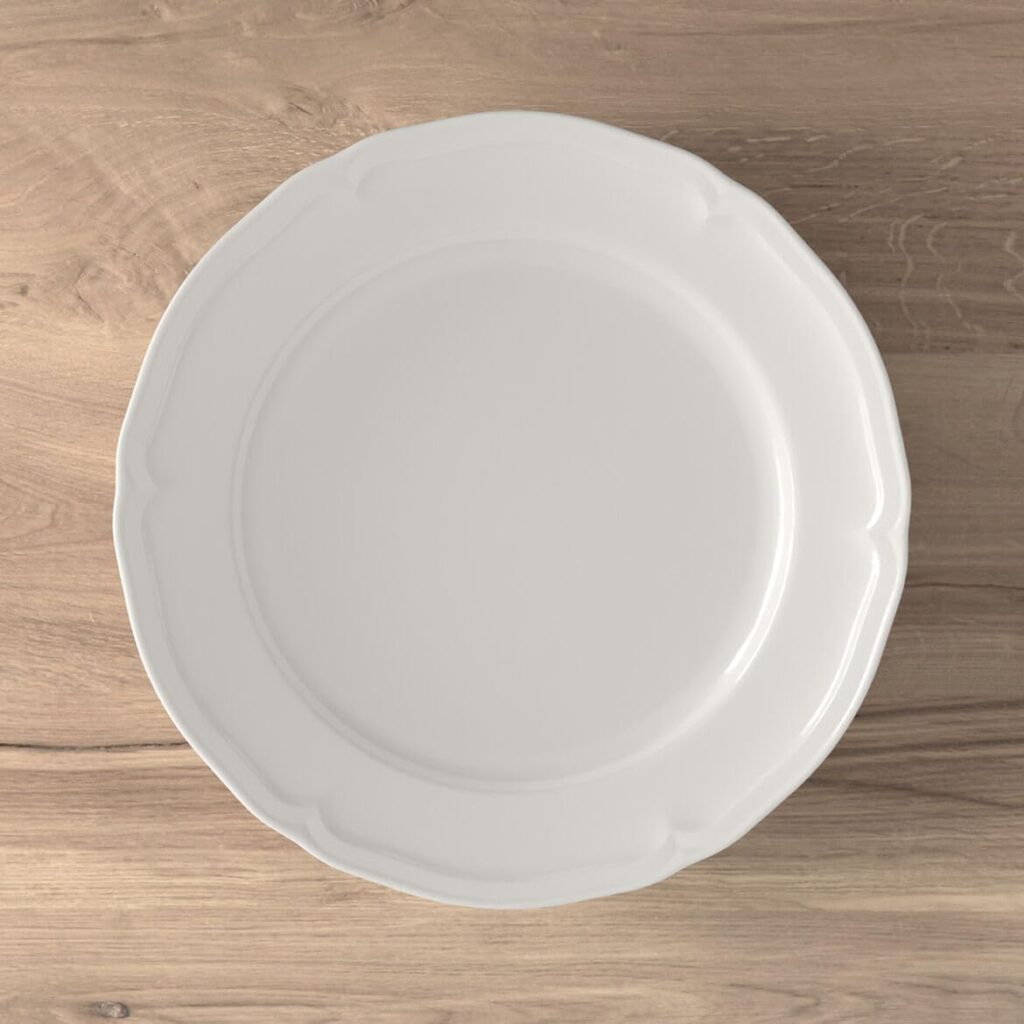
    Villeroy and Boch Porcelain non toxic brand

    Villeroy & Boch – German porcelain brand with strict safety standards. Their glazes are lead-free and highly durable.

    Bormioli Rocco tempered opal glass lead free scratched dinnerware

    Bormioli Rocco Tempered Opal glass – Modern brand focused on non-toxic materials, free from lead and cadmium. Made in Spain.

    What Certifications to Look For

    When shopping, look for these safety marks:

    • FDA approved for food use
    • Lead-free certification
    • Proposition 65 compliant
    • NSF International certified

    Budget-Friendly Safe Options

    You don’t need to spend a fortune on safe dinnerware. Many affordable brands offer lead-free options.

    Check discount stores for white high-quality stoneware, porcelain, Bone china, or ceramic sets. These are often the safest and most affordable choices.

    MAINTENANCE TIPS FOR SAFE DINNERWARE

    Proper care extends the life of your dinnerware and keeps it safe:

    Cleaning Guidelines:

    • Use mild dish soap and warm water
    • Avoid abrasive cleaners or scrubbers
    • Hand-wash vintage or delicate pieces
    • Dry thoroughly to prevent bacterial growth

    Storage Recommendations:

    • Stack plates with protective layers
    • Store in dry, clean cabinets
    • Avoid extreme temperature changes
    • Keep away from direct sunlight

    Preventing Damage:

    • Use plastic or wooden utensils when possible
    • Don’t cut food directly on plates
    • Microwave only microwave-safe dishes
    • Handle with care when moving

    Regular inspection is key. Check your plates monthly for new damage. Address problems early to prevent health risks.

    FREQUENTLY ASKED QUESTIONS

    Can I still use plates with minor scratches?

    Light surface scratches that you can’t feel are usually safe. However, any scratch that catches your fingernail should be cause for concern.

    Are all white plates safe?

    Not necessarily. White glazes can still contain lead, especially in older dishes. Check the manufacturer’s specifications.

    CONCLUSION

    Scratched plates can indeed be dangerous, but not all damage is the same. Metal marks from cutlery are harmless and removable.

    However, true scratches in ceramic glazes can harbor bacteria and release toxic chemicals into your food.

    The key is learning to identify real damage. When in doubt, replace questionable pieces. Your health is worth more than keeping old dinnerware.

    Choose quality brands that prioritize safety. With proper care and regular inspection, you can enjoy safe meals for years to come.

    Remember: when it comes to dinnerware safety, it’s better to be cautious. Replace damaged plates promptly and invest in quality, lead-free options. Your family’s health depends on it.

  • How to Get Silverware Marks Off Plates

    You’re hosting your first dinner party in months. The menu is sorted, the wine is chilled, and you’ve spent ages perfecting every detail.

    Then you pull out your favourite white dinner plates, only to discover those dreaded grey streaks marring their pristine surface.

    Those unsightly silverware marks glaring back at you like accusatory fingerprints on fresh paint.

    We’ve all been there. One moment you’re admiring your beautifully set table, the next you’re wondering if your guests will notice those stubborn cutlery marks on dishes.

    Here’s the thing, though: those marks aren’t actually scratches at all. They’re something far more manageable than you might think.

    What if I told you that removing these marks is easier than you’ve been led to believe?

    That with the right technique, your plates could look showroom-fresh again in mere minutes?

    Stick around, because we’re about to reveal the secrets that will transform your dinnerware game forever.

    WHAT ARE SILVERWARE MARKS REALLY?

    Before we dive into solutions, let’s clear up a common misconception. Those grey scratches on white plates aren’t actually scratches at all.

    They’re thin deposits of metal left behind by your cutlery. Think of it like a pencil mark on paper; the graphite transfers onto the surface, but the paper itself remains undamaged.

    When you cut food or scrape your fork across a plate, tiny metal particles transfer from your flatware onto the ceramic surface.

    This is particularly noticeable on lighter-coloured dishes where the contrast is most dramatic.

    The good news? Since these are deposits rather than damage, they can be completely removed with the right approach.

    WHY SOME PLATES SHOW MORE MARKS THAN OTHERS

    Not all dinnerware is created equal. The surface texture and material composition play crucial roles in how susceptible your plates are to metal marks on ceramic dishes.

    Glossy, smooth surfaces tend to show marks more readily than textured ones. Similarly, cheaper ceramic may be more porous, making it easier for metal particles to embed in the surface.

    Silverware marks resistant dishes typically feature harder glazes or darker colours that mask any potential marking.

    However, even the most premium dinnerware isn’t completely immune to this issue.

    THE SCIENCE BEHIND EFFECTIVE REMOVAL

    Understanding why certain cleaning methods work helps you choose the right approach.

    The key lies in using mildly abrasive substances that can lift the metal deposits without damaging the plate’s surface.

    It’s a delicate balance – too gentle, and you won’t budge the marks; too harsh, and you might create actual scratches.

    The most effective cleaners work on a simple principle: they provide just enough abrasion to dislodge the metal particles whilst being gentle enough to preserve your plate’s finish.

    This is why everyday items like baking soda and specialized products like Bar Keeper’s Friend are so effective.

    PROVEN METHODS ON HOW TO GET SILVERWARE MARKS OFF PLATES

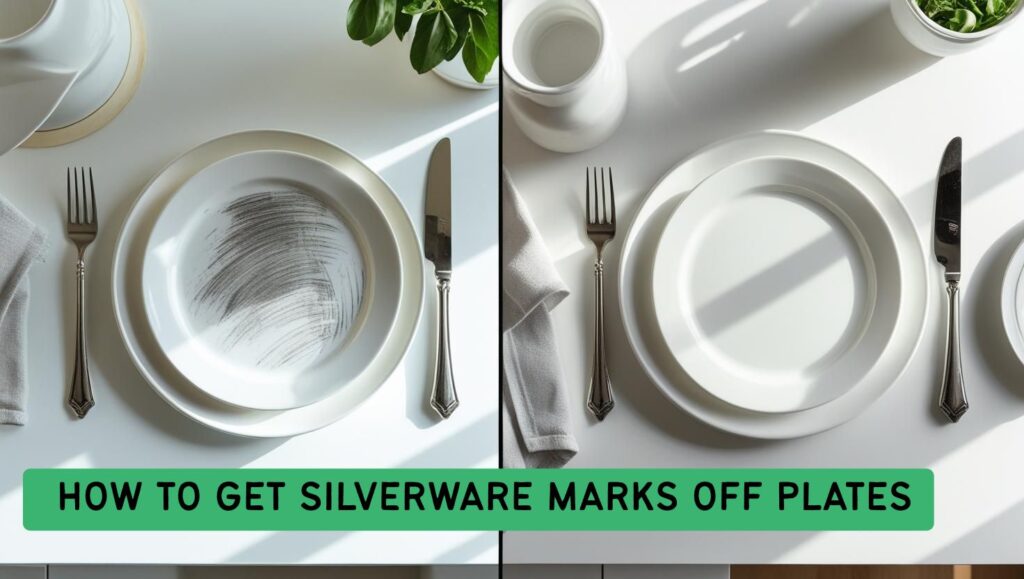
    how to get silverware marks off plates

    Method 1: Bar Keeper’s Friend (The Professional’s Choice)

    Bar Keeper’s Friend isn’t just a marketing gimmick. It’s genuinely the gold standard for flatware marks removal.

    This oxalic acid-based cleaner is gentle enough for regular use yet powerful enough to tackle the most stubborn marks.

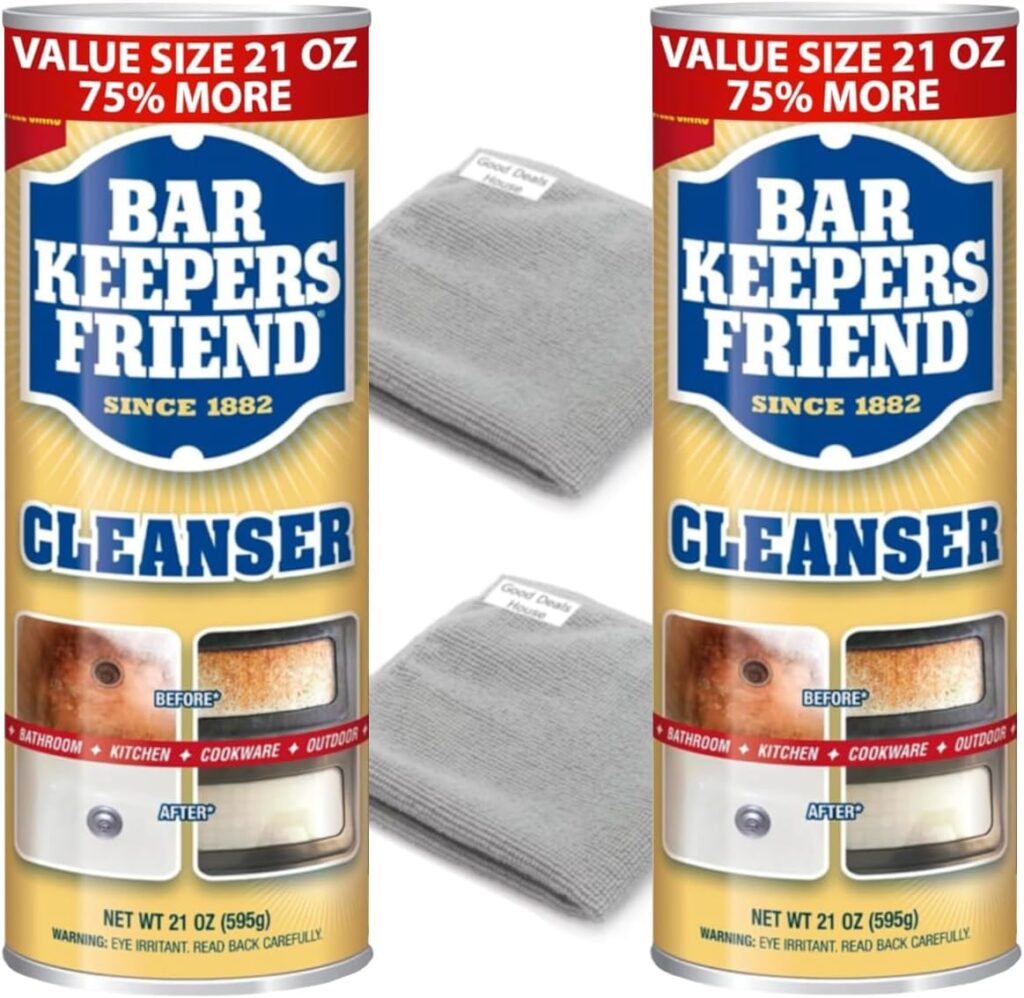
    Bar Keeper friend powder for removing silverware marks from plates

    What you’ll need:

    • Bar Keeper’s Friend powder
    • Soft, damp sponge
    • Clean water

    Step-by-step process:

    1. Wet the marked surface lightly
    2. Sprinkle a small amount of Bar Keeper’s Friend over the marks
    3. Let it sit for 10-15 seconds (no longer!)
    4. Gently scrub with a damp sponge in circular motions
    5. Rinse thoroughly within one minute

    The beauty of this method lies in its efficiency. Most marks disappear with minimal effort, and you’ll notice an immediate difference.

    Plus, it works brilliantly on scratched plates that have accumulated multiple layers of metal deposits over time.

    Method 2: The Baking Soda Paste (The Natural Alternative)

    For those who prefer natural cleaning solutions, baking soda is your best mate. It’s gentle, readily available, and surprisingly effective for dish cleaning hacks.

    Baking soda paste for dish cleaning

    Creating the perfect paste:

    • Mix 3 parts baking soda with 1 part water
    • Aim for a consistency similar to thick toothpaste
    • The paste should be wet enough to spread easily but thick enough to stay put

    Application technique:

    1. Apply the paste generously over the marked areas
    2. Let it sit for 2-3 minutes
    3. Scrub gently with a soft cloth in circular motions
    4. Rinse with warm water and dry immediately

    This method requires a bit more elbow grease than commercial cleaners, but it’s completely food-safe and won’t leave any chemical residues behind.

    Method 3: Whitening Toothpaste (The Surprising Winner)

    Here’s a trick that might surprise you: whitening toothpaste is remarkably effective at removing silverware marks. The mild abrasives used to remove stains from teeth work similarly on metal deposits.

    Why it works so well:

    • Contains gentle polishing agents
    • Often includes mild bleaching components
    • Readily available in most households
    • Safe for food surfaces

    Simply apply a small amount to the marked area, scrub gently with a soft cloth, and rinse thoroughly. You’ll be amazed at how effective this household staple can be.

    ADVANCED TECHNIQUES FOR STUBBORN MARKS

    The Cream of Tartar Method

    For particularly persistent marks, cream of tartar offers a slightly more aggressive approach whilst remaining gentle on your dinnerware.

    cleaning dinnerware with the cream of tartar

    The process:

    1. Create a paste using cream of tartar and a few drops of lemon juice
    2. Apply to the marked areas and let sit for 5 minutes
    3. Scrub gently with a soft-bristled toothbrush
    4. Rinse thoroughly and dry

    The Magic Eraser Technique

    Magic erasers (melamine foam) can be effective, but use them sparingly. They’re more abrasive than they appear and can potentially damage certain plate finishes if used too aggressively.

    Safety tips:

    • Test on an inconspicuous area first
    • Use minimal pressure
    • Work in small sections
    • Rinse immediately after use.

    CLEANING METHOD EFFECTIVENESS COMPARISON

    MethodEffectivenessEffort RequiredCost / Safety Rating
    Bar Keeper’s FriendExcellentLowMedium / High
    Baking Soda PasteGoodMediumVery Low / Excellent
    Whitening ToothpasteGoodLowLow / High
    Cream of TartarFairMediumMedium / High
    Magic EraserGoodLowMedium / Medium

    PREVENTION: THE BEST DEFENCE

    Whilst knowing how to remove marks is essential, prevention is always preferable. Here are some strategies to minimize silverware marks on your precious dinnerware:

    Choose Your Battles Wisely

    Consider investing in silverware marks-resistant dishes for everyday use. Darker colours, textured surfaces, and higher-quality glazes all help mask potential marking.

    Gentle Handling Techniques

    • Avoid dragging cutlery across plate surfaces
    • Use serving spoons for portioning rather than cutting on the plate
    • Consider plastic or wooden utensils for delicate dinnerware
    • Train family members (especially children) in proper table etiquette

    Regular Maintenance

    Don’t let marks accumulate. Address them promptly after each use, and they’ll never have the chance to become stubborn stains.

    A quick wipe with a damp cloth during washing often prevents marks from setting in the first place.

    DIFFERENT PLATE MATERIALS: TAILORED APPROACHES

    Bone China

    Bone china is generally more resistant to marking due to its dense composition, but when marks do appear, they can be more challenging to remove.

    Stick to gentler methods like baking soda paste or whitening toothpaste.

    Stoneware

    The slightly rougher surface of stoneware can trap metal particles more readily. Bar Keeper’s Friend is particularly effective on this material, as the slight abrasiveness complements the stoneware’s durability.

    Porcelain

    High-quality porcelain responds well to most cleaning methods. However, be cautious with vintage or hand-painted pieces, as the decorative elements may be more delicate than the base material.

    Melamine and Plastic

    These materials rarely show traditional silverware marks, but they can develop scratches more easily. Focus on prevention rather than treatment with these surfaces.

    COMMON MISTAKES TO AVOID

    Using Harsh Abrasives:

    Steel wool, scouring pads, or abrasive cleaners can cause permanent damage. Always start with the gentlest method and work your way up if needed.

    Letting Cleaners Sit Too Long:

    Even gentle cleaners can cause damage if left on too long. Follow recommended contact times religiously.

    Ignoring the Problem:

    The longer you leave silverware marks, the more embedded they become. Address them promptly for the easiest removal.

    Using the Wrong Tools:

    Hard brushes or rough cloths can create actual scratches whilst you’re trying to remove metal deposits. Stick to soft materials for the actual cleaning process.

    FREQUENTLY ASKED QUESTIONS

    Can silverware marks permanently damage my plates?

    No, silverware marks are surface deposits, not actual damage to the plate.
    With proper cleaning techniques, they can always be removed without harming the underlying dinnerware.

    How often should I deep clean my plates to prevent mark buildup?

    For everyday dinnerware, a thorough cleaning once a week should suffice. Special occasion pieces might only need attention when marks become visible.

    Are expensive plates less likely to show silverware marks?

    Not necessarily. Price doesn’t always correlate with mark resistance. Factors like glaze quality, surface texture, and colour are more important indicators.

    Can I prevent silverware marks entirely?

    Whilst complete prevention is unlikely with regular use, you can dramatically reduce their occurrence through gentle handling and proper techniques.

    Will removing silverware marks affect my plate’s warranty?

    Proper cleaning with appropriate methods shouldn’t void any warranty. However, always check manufacturer guidelines for specific care instructions.

    PROFESSIONAL TIPS FROM DINNERWARE EXPERTS

    Industry professionals swear by a few additional tricks that can make the difference between good and exceptional results:

    The Temperature Factor

    Slightly warm water (not hot) helps cleaning agents work more effectively whilst preventing thermal shock to delicate ceramics.

    The Drying Technique

    Always dry plates immediately after cleaning to prevent water spots, which can make remaining marks more visible.

    The Rotation Strategy

    Rotate your dinnerware regularly so that the same pieces aren’t always taking the brunt of daily use.

    When to Seek Professional Help

    Sometimes, despite your best efforts, marks persist, or you’re dealing with particularly valuable pieces. Consider professional restoration services for:

    • Antique or vintage dinnerware
    • High-value collectibles
    • Pieces with sentimental significance
    • Marks that resist all home cleaning attempts

    Professional ceramic restoration can work miracles, but it comes at a cost. Weigh the value of the piece against the restoration expense before proceeding.

    THE ENVIRONMENTAL ANGLE

    Many effective cleaning methods are environmentally friendly. Baking soda, cream of tartar, and even toothpaste break down naturally without harming waterways.

    If environmental impact concerns you, prioritize these natural methods over chemical alternatives.

    BUILDING YOUR CLEANING ARSENAL

    Every flatware enthusiast should have these essentials in their cleaning kit:

    Must-haves:

    • Bar Keeper’s Friend
    • Baking soda
    • Soft microfibre cloths
    • Non-abrasive sponges
    • Whitening toothpaste (as backup)

    Nice-to-haves:

    • Cream of tartar
    • Soft-bristled toothbrushes for detail work
    • Magic erasers (for emergencies)
    • Specialized ceramic cleaners

    CONCLUSION

    Silverware marks on plates need not be the bane of your dining experience. With the right knowledge and techniques, you can keep your dinnerware looking pristine regardless of how frequently you use it.

    Remember, these marks are simply metal deposits, not permanent damage, and that makes all the difference.

    The key lies in understanding your options and choosing the right method for your specific situation.

    Whether you opt for the professional-grade effectiveness of Bar Keeper’s Friend, the natural approach of baking soda, or the surprising power of whitening toothpaste, success is within reach.

    Prevention remains your best strategy, but when marks do appear, swift action with the proper technique will restore your plates to their former glory.

  • Dishes That Don’t Get Hot in the Microwave

    You’ve just heated your favourite shepherd’s pie in what you thought was a perfectly safe ceramic dish.

    However, as you reach for it, the plate practically brands your fingertips with searing heat.

    You’re not alone in this kitchen catastrophe.

    We’ve all been there, standing in the kitchen, nursing burnt fingers whilst our dinner sits mockingly on a dish that’s somehow hotter than the food itself.

    It’s a modern mystery that leaves many of us wondering why some dishes turn into molten lava whilst others remain pleasantly cool or mild(not too hot) to the touch.

    The truth is, not all microwave-safe dishes are created equal. Some materials have a secret talent for staying cool, transforming your microwave experience from a dangerous dance with scorching ceramics to a smooth, burn-free operation.

    But which dishes possess this magical quality? Let’s find out!

    THE SCIENCE BEHIND THE SIZZLE: WHY SOME DISHES GET HOT

    Before we dive into the cool solutions, let’s understand what’s happening inside your microwave.

    Think of it as a tiny electromagnetic disco where water molecules dance frantically, creating heat through friction.

    The Physics Made Simple

    Your microwave works through dielectric heating – a fancy term for making water molecules jiggle about rapidly. However, here’s where it gets interesting: some dish materials join this molecular party uninvited.

    When dishes contain certain materials, they absorb microwave energy themselves. Metal molecules in glazes act like tiny antennas, picking up those electromagnetic waves and converting them into heat.

    Meanwhile, poorly formulated glazes often contain heavy metals that are particularly good at absorbing microwaves.

    The result? Your dish becomes a secondary heating element, sometimes getting hotter than your food. Not exactly what you ordered, is it?

    THE TROUBLEMAKERS: MATERIALS THAT HEAT UP

    Several factors contribute to dishes getting uncomfortably hot:

    • Water absorption: Porous materials soak up moisture, which then heats up
    • Glaze composition: Metal-containing glazes turn your dish into a heating element
    • Plate thickness: Thicker dishes retain more heat
    • Material quality: Lower-grade ceramics often contain heat-absorbing minerals

    Earthenware and dark-glazed ceramics are particularly notorious offenders. These materials interact with microwaves in ways that would make you wonder, and your fingers burn.

    THE COOL CLUB: MATERIALS THAT STAY COMFORTABLE

    dishes that don't get hot in the microwave

    Now for the good news. Certain materials have mastered the art of staying cool while your food heats up perfectly.

    These materials are like the well-dressed gentleman at a party; they look the part without breaking a sweat.

    Glass: The Clear Winner

    Borosilicate glass leads the pack. Think Pyrex: that reliable kitchen companion that’s been keeping fingers safe since 1915. This glass type was specifically designed to handle temperature changes without throwing a tantrum.

    Pyrex glass microwave safe baking dish

    Tempered glass follows closely behind. It’s been through a controlled heating and cooling process that makes it four times stronger than regular glass.

    More importantly, it stays refreshingly cool during microwave use.

    Corelle 6 Pcs Portofino soup cereal cool touch bowls

    Laminated glass (like Corelle’s Vitrelle) offers another excellent option. This incredibly durable material combines multiple glass layers, creating dishes that are both lightweight and cool-touch.

    Premium Ceramics: The Sophisticated Choice

    Not all ceramics are created equal. The premium options have been engineered for modern living, combining style with practical coolness.

    High-grade porcelain without metallic glazes performs brilliantly. These dishes undergo rigorous manufacturing processes that eliminate heat-absorbing impurities. The result is dinnerware that looks elegant whilst staying comfortably cool.

    Fully vitrified ceramics represent another excellent choice. These products have low water absorption rates, meaning they won’t soak up moisture that could later turn into unwanted heat.

    BRAND SPOTLIGHT: THE COOL TOUCH CHAMPIONS

    Let’s talk about the specific brands that have mastered the art of cool-touch microwave dishes.

    These aren’t just products, they’re solutions to a problem that’s plagued kitchens for decades.

    Glass Legends

    BrandMaterialKey FeatureTemperature Rating
    PyrexBorosilicate GlassOriginal cool-touch technologyUp to 425°F
    CorelleLaminated Glass (Vitrelle)Ultra-lightweight yet durableStandard microwave safe
    Anchor HockingTempered GlassFour times stronger than regular glassHigh heat resistant

    Pyrex remains the gold standard. Their borosilicate glass formula has been refined over decades, creating dishes that heat food evenly whilst the container stays cool.

    It’s like having a professional chef’s secret weapon in your kitchen.

    Corelle brings innovation with its Vitrelle material. These dishes are so light you’ll question whether they’re actually there, yet they’re tough enough to survive the clumsiest kitchen disasters whilst staying cool to the touch.

    Ceramic Royalty

    The ceramic world has produced some remarkable cool-touch champions:

    Mora Ceramic Dinner Plates

    Stand out with their enhanced Paladin Clay Technology.

    Mora ceramic dinner plates that don't get hot in the microwave

    These plates are 20% stronger than standard ceramic dishes, offering lead-free construction that’s microwave-safe, freezer-safe, and dishwasher-safe.

    They’re also scratch-resistant – because nobody wants battle scars on their dinnerware.

    Selamica Ceramic Rectangular Plates

    Selamica ceramic plate that don't get hot in the microwave

    Brings a modern twist with its 8-inch rectangular design. Made from premium materials, they offer sturdiness with medium weight.

    They won’t absorb odours or bacteria, and they’re completely lead-free and non-toxic.

    Annovero Cereal Bowls

    Annovero Grade A Porcelain cool to touch microwave safe serving Bowls

    Represents the pinnacle of porcelain craftsmanship. Made with Grade A Porcelain – the highest grade available – these bowls are toxin-free and adhere to California Proposition 65 standards.

    They’re microwave-safe, freezer-safe, and oven-safe up to 482°F.

    Bosmarlin Soup Bowl Set

    Ceramic Bowl that don't get hot in the microwave

    Combines strong ceramic with high-quality stoneware. These lead-free, non-toxic bowls are chip-resistant and microwave-safe with no arcing.

    Their deep design prevents spillage whether you’re enjoying soup, cereal, or noodles.

    Specialty Solutions

    NordicWare deserves special mention for its innovative microwave products.

    Their high-heat, BPA-free materials perform exceptionally well long-term, withstanding higher temperatures than most microwave-safe alternatives.

    THE TECHNOLOGY BEHIND COOL-TOUCH INNOVATION

    Modern manufacturers have developed fascinating solutions to the hot dish problem. Some employ double-wall designs where an inner ceramic bowl heats food evenly, whilst an insulated outer layer remains cool to the touch.

    Others focus on specialized handles and ergonomic designs that allow one-handed use without risk of burns.

    These innovations represent the evolution of microwave cookware from basic functionality to user-centric design.

    What to Avoid: The Heat Traps

    Understanding what doesn’t work is equally important. Several materials and designs should raise red flags:

    The Usual Suspects

    Older ceramics with decorative glazes often contain metals or minerals that react poorly with microwaves. That beautiful vintage bowl might look charming, but it could be harbouring heat-absorbing secrets.

    Metallic trim or decoration automatically disqualifies any dish from cool-touch status. Even small amounts of metal can create hot spots and potential arcing.

    Low-quality ceramics with high water absorption rates will inevitably heat up. These porous materials soak up moisture like sponges, then heat that moisture in the microwave.

    Earthenware and heavily glazed pottery represent particular challenges. Their composition often includes minerals that interact unpredictably with microwave energy.

    TESTING YOUR CURRENT DISHES: THE HOME LABORATORY

    Curious about your existing dinnerware? Here’s a simple test to determine which dishes stay cool:

    The Water Test Method

    1. Place an empty dish in the microwave alongside a microwave-safe cup of water
    2. Heat on high for one minute
    3. Carefully touch the dish – it should be room temperature or only slightly warm
    4. If the dish is hot whilst the water cup remains manageable, remove that dish from microwave duty

    This test works because microwave energy should primarily heat the water, not the dish. If your dish heats up significantly, it’s absorbing microwave energy itself.

    SHOPPING GUIDE: WHAT TO LOOK FOR

    When shopping for cool-touch microwave dishes, certain features indicate quality:

    Material Markers

    • Lead-free certification
    • Food-grade materials
    • Low water absorption rates
    • Vitrified or high-fired construction
    • California Proposition 65 compliance

    Design Features

    • Uniform thickness
    • Smooth, non-porous surfaces
    • Absence of metallic elements
    • Ergonomic handles or grips
    • Multi-temperature ratings

    Brand Reputation

    Established manufacturers invest in research and development. They understand the science behind cool-touch performance and engineer their products accordingly.

    MYTH-BUSTING: COMMON MISCONCEPTIONS

    Let’s address some persistent myths about microwave-safe dishes:

    All Microwave-Safe Dishes Stay Cool

    False. The microwave-safe label simply means the dish won’t break, crack, or release harmful chemicals. It doesn’t guarantee cool-touch performance. Many microwave-safe dishes still get uncomfortably hot.

    Ceramic is Always Better Than Glass

    Not necessarily. Quality matters more than material type. Premium glass often outperforms low-grade ceramic in terms of staying cool.

    Thicker Dishes Are Always Better

    Actually, the opposite is often true. Thicker dishes retain more heat, making them hotter to handle. Optimal thickness balances durability with heat management.

    Price Doesn’t Matter

    Wrong again. Higher-quality materials and manufacturing processes typically cost more but deliver superior performance. Investing in good dishes pays dividends in safety and convenience.

    THE MULTI-PURPOSE ADVANTAGE

    The best cool-touch microwave dishes offer versatility beyond microwave use. Many premium options work beautifully in:

    • Conventional ovens (up to specified temperatures)
    • Freezers (for food storage and serving)
    • Dishwashers (for easy cleanup)
    • Direct serving (from microwave to table)

    This versatility makes them excellent value propositions. Why own separate dishes for different purposes when one set handles everything?

    CARE AND MAINTENANCE: KEEPING THINGS COOL

    Proper care extends the life and performance of your cool-touch dishes:

    Daily Habits

    • Avoid temperature shocks (don’t transfer directly from freezer to microwave)
    • Clean promptly to prevent residue buildup
    • Handle with care despite their durability
    • Store properly to prevent chips and cracks.

    Long-term Maintenance

    • Inspect regularly for signs of wear
    • Replace damaged items promptly
    • Follow manufacturer guidelines for temperature limits
    • Avoid abrasive cleaners that might compromise surfaces.

    THE ENVIRONMENTAL ANGLE: SUSTAINABLE CHOICES

    Quality cool-touch dishes represent sustainable choices. Their durability means fewer replacements, reducing waste.

    Many premium manufacturers also employ environmentally responsible production methods.

    Glass dishes, in particular, can be recycled indefinitely without quality loss. This makes them excellent long-term investments for environmentally conscious consumers.

    FUTURE INNOVATIONS: WHAT’S COMING NEXT

    The microwave dish industry continues evolving. Emerging trends include:

    • Smart materials that change colour when hot
    • Enhanced ergonomics for better handling
    • Improved thermal barriers for even cooler performance
    • Sustainable manufacturing processes
    • Customizable designs for specific needs

    MAKING THE INVESTMENT: COST VS. VALUE

    Quality cool-touch microwave dishes require an initial investment, but they deliver exceptional value:

    Short-term Benefits

    • Immediate safety improvement
    • Better cooking results
    • Reduced kitchen stress
    • Enhanced convenience

    Long-term Advantages

    • Durability that outlasts cheaper alternatives
    • Versatility across multiple cooking methods
    • Consistent performance over years of use
    • Reduced replacement costs

    Consider it an investment in kitchen safety and efficiency. The cost of quality dishes pales compared to potential medical bills from burns or the frustration of constantly replacing inferior products.

    CONCLUSION: YOUR PATH TO COOL COMFORT

    The days of juggling scorching hot dishes are over. With the right knowledge and products, you can transform your microwave experience from a hazardous operation into a smooth, efficient process.

    Remember the key points: choose premium materials like borosilicate glass or high-grade ceramics, avoid dishes with metallic elements or high water absorption, and invest in reputable brands that prioritize cool-touch performance.

    Whether you opt for the reliability of Pyrex, the innovation of Corelle, or the premium quality of Mora Ceramic, you’re making a choice that prioritizes safety, convenience, and style.

    Your fingers will thank you, your kitchen confidence will soar, and your microwave cooking will never be the same.

    After all, the best kitchen tools are the ones that work brilliantly whilst keeping you safe.

  • How to Choose Restaurant Crockery and Cutlery: Complete Selection Guide for Restaurant Owners

    This FREE PDF Guide is for: Restaurant owners, kitchen managers, hospitality procurement professionals, and anyone opening a new food service establishment.

    Problem Solved: Eliminate costly tableware selection mistakes, reduce replacement costs by up to 40%, and create operational efficiency through strategic crockery and cutlery choices.

    Running a successful restaurant requires attention to countless details, but one aspect that dramatically impacts both your operational efficiency and customer satisfaction often gets overlooked: your tableware selection.

    Whether you’re opening your first establishment or upgrading your current setup, our detailed restaurant crockery and cutlery PDF List comes in handy, and a lack of knowledge in business affects your bottom line, staff productivity, and guest experience.

    WHAT RESTAURANT CROCKERY AND CUTLERY SHOULD I BUY?

    Selecting the right restaurant tableware directly impacts your operational costs, staff efficiency, and customer satisfaction.

    Based on industry data, restaurants that make informed tableware choices reduce annual replacement costs by 15-25% and improve operational efficiency by up to 30%.

    Quick Answer: Essential Restaurant Tableware Checklist

    classic restaurant porcelain crockery dinner sets

    Core Crockery Items types:

    • Dinner plates (10-12 inches) – your most-used item
    • Salad/appetizer plates (7-8 inches) – versatile for multiple courses
    • Soup bowls – wide, shallow design for easy handling
    • Bread plates (6-7 inches) – optional for casual dining

    Essential Cutlery:

    restaurant dinner forks, knives and spoons
    • Dinner forks – 4-tine standard design
    • Dinner knives – serrated or straight edge
    • Soup spoons – round bowls, appropriate handle length
    • Teaspoons – multi-purpose for beverages and desserts

    Specialty Items by Restaurant Type:

    • Fine dining: Bone china, sterling silver, complete place settings
    • Casual dining: Durable stoneware, 18/8 stainless steel
    • Quick service: Melamine dishes, 18/0 stainless steel cutlery

    restaurant crockery and cutlery PDF list

    HOW MUCH SHOULD I BUDGET FOR RESTAURANT TABLEWARE?

    Investment Guidelines by Restaurant Type:

    Fine Dining Establishments:

    • Budget: $15-30 per place setting
    • Materials: Porcelain, bone china, 18/10 stainless steel
    • Expected replacement rate: 15-25% annually

    Casual Dining Restaurants:

    • Budget: $8-15 per place setting
    • Materials: Stoneware, porcelain, 18/8 stainless steel
    • Expected replacement rate: 10-20% annually

    Quick Service Operations:

    • Budget: $3-8 per place setting
    • Materials: Melamine, basic stainless steel
    • Expected replacement rate: 5-15% annually

    Total Investment Calculation Formula:

    (Restaurant Seats × 1.5 × Cost per Setting) + Serving Pieces + Specialty Items = Total Investment

    Add 25-50% buffer for breakage, washing cycles, and growth.

    WHAT ARE THE BEST MATERIALS FOR RESTAURANT DISHES?

    Top Crockery Materials Compared:

    porcelain restaurant dinner plates for salad, pasta, snacks and appetizers

    1. Porcelain

    • Best for: Fine dining, upscale casual
    • Pros: Elegant appearance, chip-resistant, dishwasher safe
    • Cons: Higher cost, heavier weight
    • Durability rating: Excellent with proper care

    2. Stoneware

    • Best for: Casual dining, farm-to-table concepts
    • Pros: Outstanding durability, heat retention, rustic appeal
    • Cons: Heavy, limited design options
    • Durability rating: Exceptional for high-volume use

    3. Melamine

    • Best for: Outdoor dining, high-turnover establishments
    • Pros: Virtually unbreakable, lightweight, cost-effective
    • Cons: Not microwave safe, shows scratches over time
    • Durability rating: Superior breakage resistance

    4. Bone China

    • Best for: Premium fine dining
    • Pros: Elegant appearance, surprisingly strong for its weight
    • Cons: Most expensive option, requires careful handling
    • Durability rating: Good with staff training

    Understanding the different types of crockery and their applications helps match materials to your specific operational needs and customer expectations.

    BEST STAINLESS-STEEL GRADES FOR RESTAURANT CUTLERY

    Stainless Steel Quality Rankings:

    18/10 Stainless Steel (Highest Quality)

    • Composition: 18% chromium, 10% nickel
    • Benefits: Superior corrosion resistance, premium feel
    • Best for: Fine dining, long-term investment
    • Cost: Highest upfront, lowest lifetime cost

    18/8 Stainless Steel (Good Quality)

    • Composition: 18% chromium, 8% nickel
    • Benefits: Good corrosion resistance, balanced cost
    • Best for: Most restaurant applications
    • Cost: Mid-range with solid performance

    18/0 Stainless Steel (Budget Option)

    • Composition: 18% chromium, 0% nickel
    • Benefits: Magnetic properties, budget-friendly
    • Best for: High-volume, cost-conscious operations
    • Cost: Lowest upfront, higher replacement frequency.

    HOW MANY PLATES AND UTENSILS DOES MY RESTAURANT NEED?

    Quantity Calculation Method:

    Step 1: Calculate Base Needs

    • Peak dining capacity × 1.5 = minimum quantity per item

    Step 2: Add Operational Buffer

    • Base quantity + 25-50% = recommended inventory level

    Step 3: Account for Variables

    • Multiple daily seatings
    • Private events and catering
    • Dishwashing cycle times
    • Anticipated growth

    Example Calculation (100-seat restaurant):

    • Base need: 100 seats × 1.5 = 150 pieces minimum
    • With buffer: 150 + 40% = 210 pieces recommended
    • Total investment consideration: 210 pieces across all essential items.

    COMMON RESTAURANT TABLEWARE SELECTION MISTAKES

    Costly Errors to Avoid:

    1. Focusing Only on Initial Cost

    • Problem: Cheap items require frequent replacement
    • Solution: Calculate the total cost of ownership over 2-3 years

    2. Ignoring Staff Input

    • Problem: Impractical choices slow service
    • Solution: Test samples with the kitchen and serving staff

    3. Insufficient Quantity Planning

    • Problem: Shortages during peak periods
    • Solution: Use proven calculation formulas with buffers

    4. Mismatched Restaurant Concept

    • Problem: Tableware doesn’t support brand identity
    • Solution: Align material quality with customer expectations

    5. Inadequate Storage Planning

    • Problem: Damage from poor storage increases costs
    • Solution: Plan storage solutions before purchasing.

    HOW TO REDUCE RESTAURANT TABLEWARE REPLACEMENT COSTS

    Proven Cost-Reduction Strategies:

    Proper Staff Training:

    • Implement handling procedures to reduce breakage
    • Train dishwashing staff on material-specific care
    • Establish inspection protocols for damage prevention

    Strategic Purchasing:

    • Volume discounts through larger orders
    • Seasonal timing for better pricing
    • Long-term supplier relationships

    Maintenance Programs:

    • Weekly inspection schedules
    • Proper storage systems with separation
    • Professional cleaning for valuable pieces

    Quality Investment:

    • Higher-grade materials last longer
    • Professional-grade construction withstands commercial use
    • Warranty coverage reduces unexpected costs.

    RESTAURANT TABLEWARE VENDOR SELECTION CRITERIA

    Key Evaluation Factors:

    Product Quality Indicators:

    • Material certifications and testing
    • Manufacturer reputation and history
    • Sample quality and consistency
    • Warranty terms and coverage

    Service Capabilities:

    • Minimum order quantities
    • Delivery reliability and timing
    • Customer service responsiveness
    • Replacement guarantees

    Pricing Structure:

    • Volume discount tiers
    • Payment terms flexibility
    • Price protection policies
    • Hidden fee transparency

    COMPLETE RESTAURANT CROCKERY AND CUTLERY PLANNING RESOURCE

    This strategic approach to tableware selection has helped over 500 restaurant operators reduce replacement costs while improving operational efficiency.

    The complete methodology includes detailed specifications, supplier evaluation frameworks, maintenance protocols, and inventory management systems.

    Key Outcomes from Proper Implementation:

    • 15-25% reduction in annual replacement costs
    • 30% improvement in operational efficiency
    • Enhanced customer satisfaction scores
    • Predictable long-term tableware costs

    What’s Included in the Complete Guide:

    • Detailed material specifications and comparisons
    • Exact quantity calculation worksheets
    • Supplier evaluation checklists
    • Staff training protocols
    • Inventory management systems
    • Cost optimization strategies

    Restaurant owners who follow this systematic approach report significant improvements in both operational efficiency and cost management, with many achieving ROI within the first year through reduced replacement costs and improved staff productivity.

    Access the complete 15-chapter guide covering everything from initial selection through long-term inventory management, developed specifically for hospitality professionals who demand operational excellence.

  • The Ultimate Types of Crockery Guide

    Standing in the dinnerware aisle, overwhelmed by countless plates, bowls, and serving pieces?

    You’re not alone.

    Choosing the right crockery can feel like navigating a maze, especially when you’re unsure about the differences between earthenware and stoneware, or whether you really need those specialty serving pieces gathering dust in stores.

    That’s exactly why I created “The Complete Guide to the Various Types of Crockery PDF.

    A comprehensive 20-page EASY-TO-READ PDF that transforms confusion into confidence, helping you make informed decisions that will enhance your dining experiences for years to come.

    WHY UNDERSTANDING CROCKERY TYPES MATTERS MORE THAN YOU THINK

    Your crockery collection isn’t just about having plates to eat from.

    It’s the foundation of every meal experience, from quick weekday breakfasts to elaborate holiday gatherings.

    The right pieces can elevate simple dishes into restaurant-quality presentations, while poor choices can leave you frustrated with chipped plates and inadequate serving options.

    Many homes make this costly mistake when building their crockery collection, buying pieces that don’t suit their lifestyle, choosing materials that can’t handle their daily routine, or investing in expensive sets without understanding what they actually need.

    This guide eliminates those expensive trial-and-error purchases by giving you the knowledge to choose wisely from the start.

    WHAT MAKES THIS GUIDE DIFFERENT?

    Unlike generic kitchen advice that barely scratches the surface, this comprehensive PDF dives deep into the world of crockery with practical insights you won’t find elsewhere.

    Written by Sarah Emirone, Editor of Safekitchn.com, this guide combines years of kitchen equipment evaluation experience (earned while working with an international FMCG Industry) with real-world testing to deliver actionable information.

    types of crockery PDF

    The guide doesn’t just list different types of dinnerware; it explains the ‘why’ behind each piece, helping you understand when and how to use everything from demitasse cups to au gratin dishes.

    Whether you’re setting up your first kitchen or upgrading your current collection, you’ll discover exactly what you need and why you need it.

    KEY AREAS YOU’LL MASTER

    Understanding Dinnerware Essentials

    The guide breaks down every plate and bowl type with precision, explaining the subtle but important differences between dinner plates and soup plates, or why bread and butter plates serve purposes far beyond their name suggests.

    You’ll learn about sizing standards, functional differences, and how each piece contributes to both everyday meals and special occasions.

    Navigating Material Choices

    One of the most confusing aspects of crockery shopping is understanding materials.

    The guide demystifies earthenware, stoneware, porcelain, and bone China, explaining durability differences, care requirements, and price points.

    You’ll discover which materials work best for different lifestyles and how to balance beauty with practicality.

    Mastering Serveware Selection

    Beyond basic dinnerware, the guide explores the world of serving pieces that transform ordinary meals into memorable experiences.

    charger dinner plates crockery

    From understanding when you need charger plates to selecting the right size serving platters, you’ll learn how to create impressive presentations without unnecessary purchases.

    Decoding Specialty Pieces

    Ever wondered about those mysterious pieces in upscale kitchen stores?

    ceramic ramekins crockery

    The guide explains specialty items like ramekins, tagines, and sake cups, helping you understand which ones truly enhance your cooking and entertaining versus those that might end up as expensive cabinet decorations.

    REAL-WORLD APPLICATIONS YOU’LL DISCOVER

    This isn’t theoretical knowledge – it’s practical wisdom you can apply immediately. The guide teaches you how to:

    • Build a collection strategically rather than buying random pieces that don’t work together
    • Choose the right pieces for your lifestyle, whether you’re feeding a large family or entertaining frequently
    • Understand quality indicators that help you invest in pieces that will last
    • Care for different materials properly to extend their lifespan
    • Create impressive table settings without breaking your budget

    For those in the food service industry or considering it, the guide provides insights that complement understanding restaurant crockery and cutlery list requirements, helping bridge the gap between home and professional kitchen needs.

    THE HIDDEN COSTS OF GETTING IT WRONG

    Making poor crockery choices costs more than just money. Inadequate pieces can:

    • Limit your cooking and presentation options
    • Create storage problems in your kitchen
    • Lead to frequent replacements due to poor durability
    • Causes frustration during meal preparation and serving
    • Result in embarrassing moments when entertaining guests

    The guide’s strategic approach prevents these costly mistakes by teaching you to evaluate pieces based on your actual needs rather than marketing promises or impulse purchases.

    WHAT INDUSTRY PROFESSIONALS ARE SAYING

    The techniques and knowledge in this guide reflect professional standards used in commercial kitchens.

    Many principles that govern restaurant operations, from material selection to functionality prioritization, apply equally to home kitchens.

    Understanding these professional perspectives gives you an edge in creating efficient, beautiful table settings.

    PERFECT TIMING FOR YOUR KITCHEN JOURNEY

    Whether you’re:

    • Setting up your first kitchen and feeling overwhelmed by choices
    • Upgrading from college dishes to adult-worthy pieces
    • Planning a kitchen renovation and want cohesive dinnerware
    • Preparing for frequent entertaining and needing serving pieces
    • Looking to replace chipped or outdated pieces strategically

    This guide provides the foundation knowledge you need to make confident decisions.

    It’s designed for real people with real budgets, real storage limitations, and real-world entertaining needs.

    BEYOND BASIC INFORMATION

    While many resources simply list different types of crockery, this guide goes deeper.

    You’ll understand the historical context behind certain pieces, the cultural significance of different styles, and how modern manufacturing affects quality and pricing.

    This comprehensive approach helps you appreciate your collection while making practical decisions.

    The guide also addresses modern lifestyle considerations often overlooked in traditional dinnerware advice, like dishwasher compatibility, microwave safety, and space-efficient storage solutions that matter in today’s homes.

    YOUR NEXT STEP

    Don’t let another dinner party pass with mismatched plates or another morning start with frustration over inadequate bowls.

    “The Complete PDF Guide to Types of Crockery” is your roadmap to creating a thoughtfully curated collection that serves your needs beautifully.

    This comprehensive 20-page PDF transforms overwhelming choices into clear decisions, expensive mistakes into strategic investments, and ordinary meals into elevated experiences.

    You’ll save money, time, and frustration while building a crockery collection you’ll treasure for years.

    Download your free copy now and start building the kitchen collection you’ve always wanted, one informed decision at a time.