Tag: heat resistant glassware

  • Simax vs Pyrex Comparison

    Glassware is one of the most popular types of kitchenware we use daily; it comes in a variety of types, including tableware, bakeware, mugs, pitchers, ramekins, and cookware.

    Among the numerous brands of glassware we have, two brands stand out: Simax and Pyrex.

    In this guide, we will be learning about Simax vs Pyrex glassware.

    Are these the same? Do they have specific characteristics, strengths, and applications?

    One attractive characteristic of Pyrex and Simax glassware is that they are ideal for baking and preserving food, as well as being durable and transparent.

    As we explore these glass container brands, we’ll find out what makes each one special and why people care so much about them.

    Get ready to discover the secrets of Simax and Pyrex, where every detail matters for making great food!

    WHAT IS SIMAX GLASS MADE OF?

    Simax glassware is primarily made of Borosilicate glass, known for its durability and resistance to thermal shock.

    You may wonder if Borosilicate glass is used in all of Simax’s glassware products. The answer is yes!

    Simax glass fluted cake dish

    Below are some of the popular Simax glassware product lines made up of Borosilicate glass material:

    Simax Borosilicate Glass Mugs for Hot Beverages

    Simax Glass Cookware and Saucepan

    Simax Casserole Oven Safe Dish

    Simax Teapot for stovetop – this is proof that you can use Borosilicate glass on stovetops

    Simax Glass Borosilicate Mixing Bowls

    Simax Glass Pie Pan for Baking

    Simax Borosilicate Glassware Loaf Pan

    Simax Casserole Dish for Oven

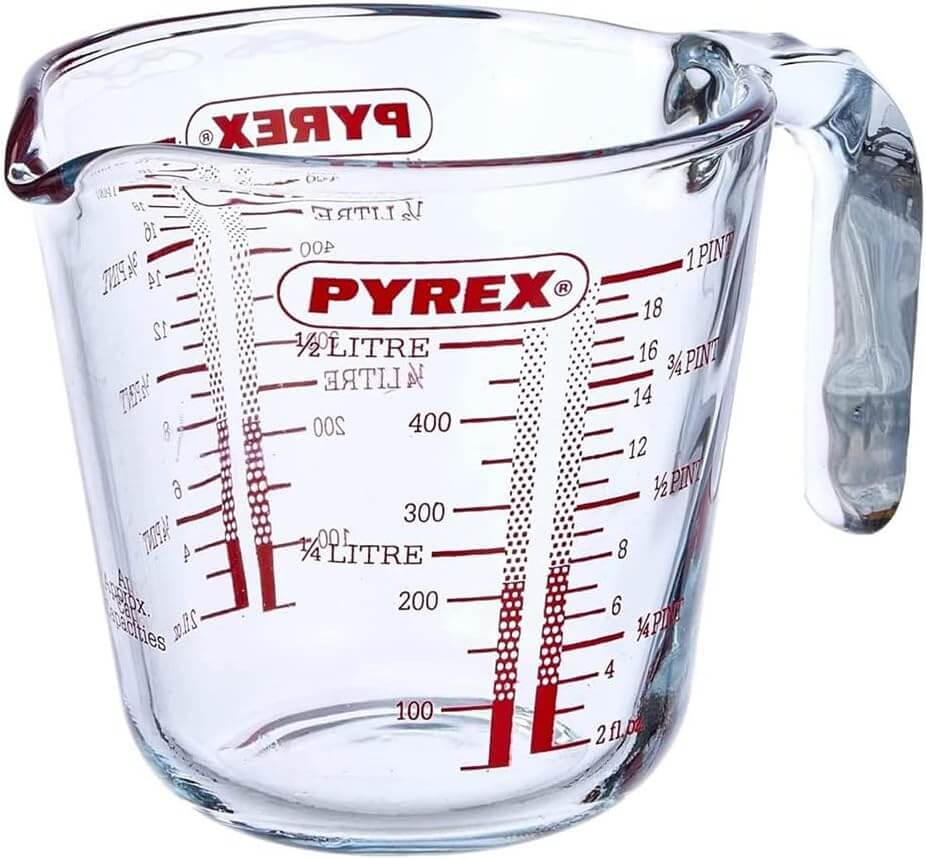
    Simax Glass Measuring Cup

    Simax Glassware Irish coffee Tea Glasses for Hot and Cold Drinks

    Simax Glass Flutted Cake Dish

    Simax Clear Glass Bundt Pan

    Simax Glass Roaster Large Dish for Baking and Cooking – Dishwasher and microwave-safe

    Simax Beer Mugs – Double-walled Glass Beer Mugs for Men

    Simax Borosilicate Clear Glass Carafe

    Simax Borosilicate glass meal Prep Food Storage Container

    SIMAX VS PYREX COMPARISON

    Simax vs Pyrex comparison

    While Simax and Pyrex are well-known brand names that produce a range of glassware products, including bakeware, cookware, and laboratory glassware, they have a few differences.

    Find below the distinctions between Simax and Pyrex glassware brands:

    Simax glass is manufactured in the Czech Republic, while Pyrex glass is produced by various manufacturers worldwide, including the United States, Europe, and Asia.

    This can sometimes lead to differences in quality control standards and manufacturing techniques.

    Simax glass product lines are made ONLY with Borosilicate glass, but Pyrex is either made up of Borosilicate glass or soda lime tempered glass.

    The Simax Borosilicate glass is more durable and has greater thermal shock than Pyrex soda lime glass.

    Some users report that Simax glassware tends to be thicker and more durable than certain Pyrex products. However, this can vary depending on the specific items being compared.

    In terms of pricing, Simax and Pyrex products can differ based on factors such as brand reputation, manufacturing costs, and distribution channels.

    In some cases, one brand may be more affordable than the other for comparable items.

    Simax and Pyrex may offer different design aesthetics and styles in their glassware collections. This can include variations in shapes, sizes, and decorative features.

    SIMAX GLASS COOKWARE

    There is nothing compared to cooking with transparent and healthy cookware made of glass and not just any type of inferior glass, but versatile and durable Borosilicate glass.

    You don’t have to break the bank to cook meals that are fresh, healthy, and delicious because, with the Simax Glass cookware, you are double sure that harmful toxins won’t leach into your food.

    Simax glass cookware and Saucepan

    Perfect for simmering and can serve as a saucepan, this healthy glass cookware is suitable for both electric and gas stovetops.

    One beautiful quality about this Simax glass cookware is that the handles stay cool to the touch while you cook, but the pot is hot.

    As highlighted above, the Simax glass cookware is proudly made in the Czech Republic, and the Borosilicate glass cookware is heat and cold-proof (up to 572°F and down to -40°F), so you do not need to worry about it cracking or exploding.

    Finally, they are safe for microwave use, dishwasher, and will make a beautiful gift for newlyweds or for preparing all your Christmas and Thanksgiving dishes.

    SIMAX VS PYREX, WHICH IS BETTER?

    Determining which brand is “better” between Simax and Pyrex is dependent on individual preferences, specific product lines, your budget, and intended use.

    While both brands are reputable and known for producing high-quality glassware using Borosilicate glass or soda lime material, your decision will be influenced by this.

    For example, if you plan to purchase glass cookware for direct flame, like your electric or glass stovetop, then you should go for Simax Borosilicate cookware or the old Pyrex Borosilicate glass product line.

    But if you need a glass bakeware that requires less temperature and less thermal shock, then soda lime Pyrex glassware will suffice.

    Finally, use Borosilicate glass for high temperatures and chemically corrosive environments, and stay with soda lime glass where rapid temperature changes aren’t required.

    Again, it’s ultimately a matter of personal preference, so we recommend considering factors such as pricing, design, availability, and any specific features that are important to you when making your decision between Simax and Pyrex glassware brands.

    WHICH IS BETTER CORNINGWARE VS PYREX?

    To determine between Corningware and Pyrex, which is better, let’s first see the major differences between Corningware and Pyrex:

    Corningware is mainly made with Pyroceram or ceramic material, which is sometimes commonly called glass ceramic, while Pyrex is either made with soda lime tempered glass or Borosilicate glass material.

    Corningware French White 4 Quart Casserole dish

    Corningware is proudly made in the USA, while Pyrex is made in the USA and Europe.

    CorningWare is often more versatile for oven-to-table use due to its ceramic-like appearance and design than Pyrex.

    Pyrex, on the other hand, is commonly used for a wider range of purposes, including baking, cooking, food storage, and even laboratory applications, but Corningware isn’t used for laboratory applications.

    Pyrex offers a wider variety of shapes, sizes, and designs compared to CorningWare, which may provide more options for different cooking and serving needs.

    While both can withstand high temperatures, CorningWare may have a slight edge in thermal shock resistance due to its glass-ceramic composition.

    Pyrex is more fragile than Corningware because of its glass makeup and requires extra caution and care.

    Overall, while they share a few similarities, the choice of which is better between CorningWare and Pyrex may depend on personal preferences, specific cooking needs, and budget.

    STONEWARE VS PYREX

    Stoneware and Pyrex are both types of oven-safe cookware, but they have some differences:

    Stoneware is made from clay fired at a high temperature, resulting in a durable, non-porous material that retains heat well and is great for baking dishes like casseroles and bread.

    It’s also known for its rustic appearance and ability to develop a seasoned patina over time.

    Pyrex, on the other hand, is made from either Borosilicate glass or tempered glass, which is resistant to thermal shock and can withstand high oven temperatures.

    Mora Stoneware Casserole dish for Roasting and Baking

    It’s commonly used for baking and cooking, as well as for storing food in the refrigerator or freezer. Pyrex dishes are transparent, making them convenient for monitoring food while it cooks.

    Stoneware tends to be more versatile in terms of what you can do with it. You can use it in the oven, microwave, dishwasher, and even on the stovetop, depending on the specific piece.

    It’s also known for its ability to evenly distribute heat, making it great for cooking, baking, and roasting.

    Pyrex, being made of glass, is also versatile but has some limitations. While it’s safe for the oven, microwave, dishwasher, and freezer, not every Pyrex product line is suitable for use on the stovetop.

    A stoneware casserole baking or roasting dish can confidently go from freezer to oven (without preheating) and can handle over 500 degrees F, more than Pyrex glassware.

    Finally, Pyrex is known for its non-reactive properties, meaning it won’t absorb odors or flavors from food and is safe for acidic ingredients, but some stoneware baking dishes might absorb the odor or flavor of your food.

    IS SIMAX GLASSWARE GOOD?

    Yes, the Simax glassware brand is of good quality because they are made of Borosilicate material, which is highly durable, resistant to thermal shock, transparent, and non-reactive, meaning it won’t impart any unwanted flavors or chemicals to whatever it comes into contact with, making it ideal for food, kitchenware, and laboratory applications.

    WHAT CAUSES PYREX TO BREAK?

    While Pyrex glass is durable and versatile for various home and laboratory uses, there are still at risk of breakage.

    Below are actions that might lead to Pyrex breaking:

    When we fail to read the care and instructions of the manufacturer and presume we know, we may mishandle our Pyrex glass, resulting in shattering.

    Avoid sudden extreme temperature changes, especially from the freezer to the hot oven or the sink; this action causes Pyrex to shatter.

    To prevent this, place your Pyrex on a surface that can absorb the heat, like a towel, cutting board, or cooling rack.

    Adding hot Liquid to hot Pyrex soda lime glassware might cause it to break. It is advisable to allow it to cool down before adding water.

    Placing hot Pyrex glassware on a cold or wet surface might cause it to break, especially soda lime Pyrex glass.

    Rushing to place Pyrex soda lime glass or even Pyrex Borosilicate glass into the refrigerator or freezer without allowing it to cool for a while might lead to breakage.

    Using soda lime Pyrex glass under the broiler, toaster, or stovetop will certainly lead to breakage, as it is not designed for such heat.

    Heating empty or microwaving empty Pyrex glassware will lead to its breakage.

    Using damaged Pyrex with chips or cracks will cause it to explode. Kindly throw out such Pyrex glassware that is damaged to avoid injury.

    Finally, always preheat the oven first before placing your Pyrex glassware with food in the Oven.

    WHAT ARE THE DISADVANTAGES OF PYREX GLASS

    Pyrex glass has various advantages that undoubtedly outweigh its downsides; yet, the following are some disadvantages of Pyrex glass:

    Pyrex glass is more durable and heat-resistant than regular glass, but it can still break if subjected to sudden temperature changes, such as going from hot to cold or vice versa, which could be considered a disadvantage.

    Pyrex glassware tends to be more expensive than other types of glassware due to its durability and heat resistance.

    Pyrex glassware is often heavier than alternatives, which can make it less convenient for certain applications, such as transporting or handling.

    It is not all Pyrex glassware that is suitable for direct flame because it will shatter due to the intense heat.
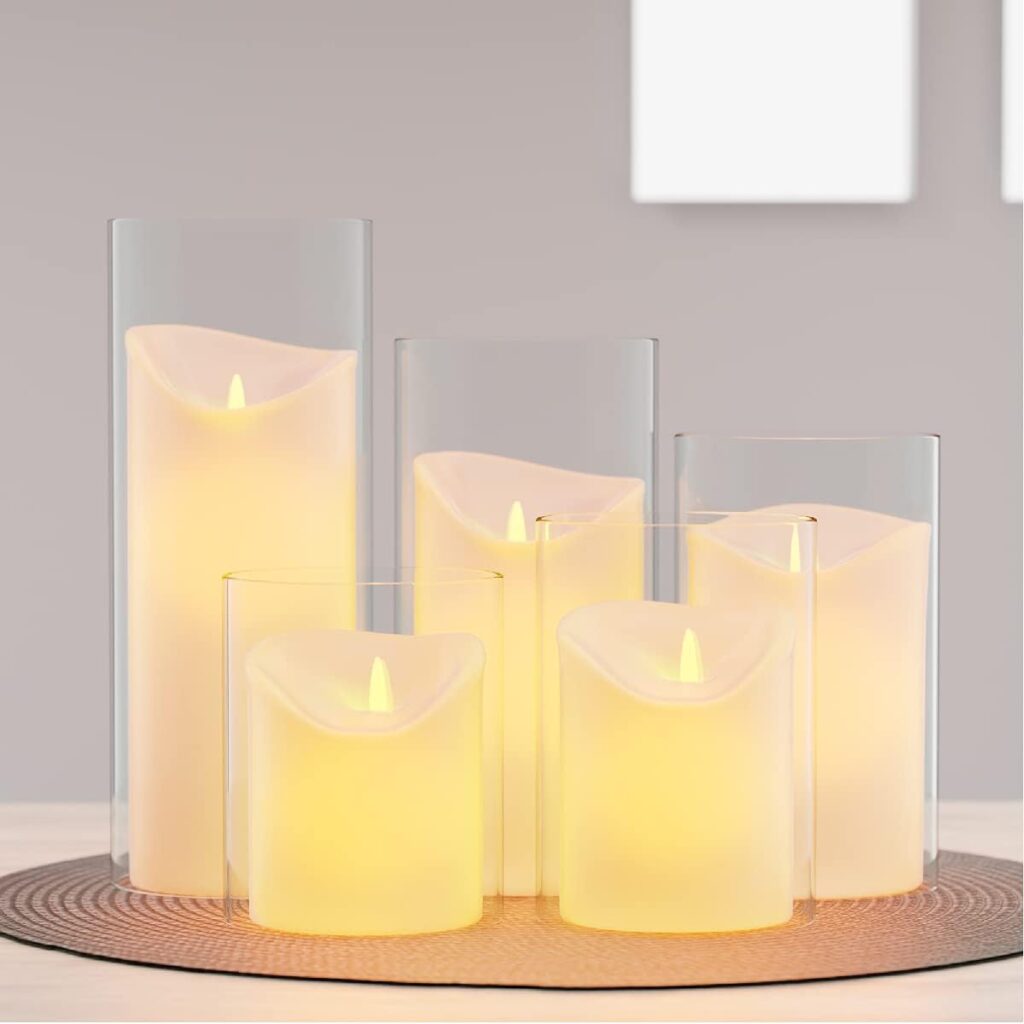
  • Can Borosilicate Glass Be Used For Candles

    You’re setting up for a cosy evening at home. The lights are dimmed, your favourite playlist is on, and you’re about to light some candles to complete the ambiance.

    But wait, what container should you use for those candles?

    If you’ve been exploring different glassware options, you might have encountered borosilicate glass.

    Borosilicate glass has become increasingly popular in kitchenware and laboratory equipment because of its impressive heat resistance.

    But can borosilicate glass be used for candles? Is it safe? Will it crack under the heat?

    These questions might be swirling in your mind as you consider the perfect vessel for your candle-making or displaying adventures.

    Let’s shed some light on this burning question.

    KEY PROPERTIES OF BOROSILICATE GLASS

    See below the various properties of Borosilicate glass:

    • Superior thermal resistance: Can withstand temperatures up to 400°C (752°F)
    • Low coefficient of thermal expansion: Expands very little when heated
    • Chemical resistance: Doesn’t react with most substances
    • Clarity: Provides excellent transparency
    • Durability: More resistant to scratches and breakage than regular glass

    These properties make borosilicate glass an excellent material for various applications ( making it different from ordinary glass) where heat resistance is crucial, from laboratory equipment to kitchen cookware.

    But does that make it suitable for candles? Let’s find out.

    CAN BOROSILICATE GLASS BE USED FOR CANDLES?

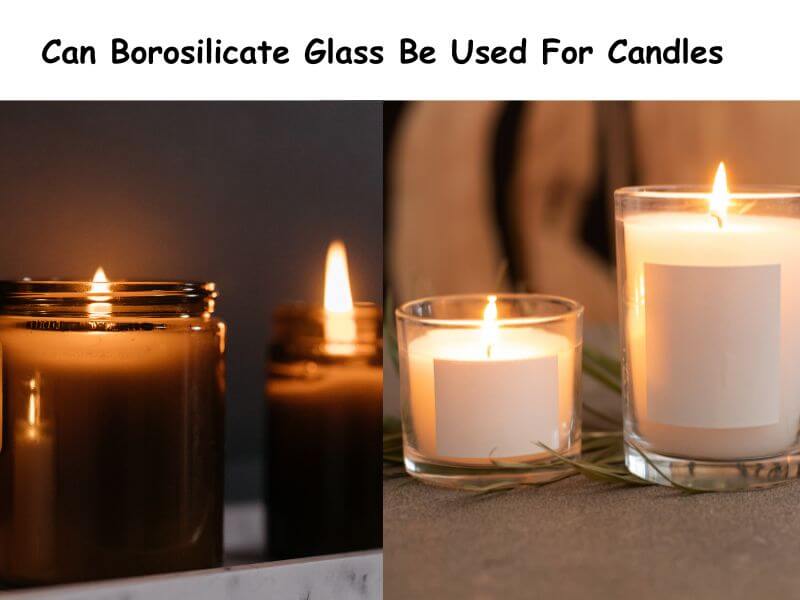
    Can Borosilicate glass be used for candles

    Yes, borosilicate glass can be used for candles, and it’s one of the safest options available. Its high heat resistance and low thermal expansion coefficient make it ideal for withstanding the heat generated by burning candles without cracking or breaking.

    When a candle burns, it can generate temperatures between 800-1400°C (1472-2552°F) at the flame itself.

    Borosilicate glass for candles

    However, the temperature of the container holding the wax typically reaches only about 80-120°C (176-248°F). Borosilicate glass can comfortably handle these temperatures without any risk of shattering.

    Why Borosilicate Glass is Perfect for Candles:

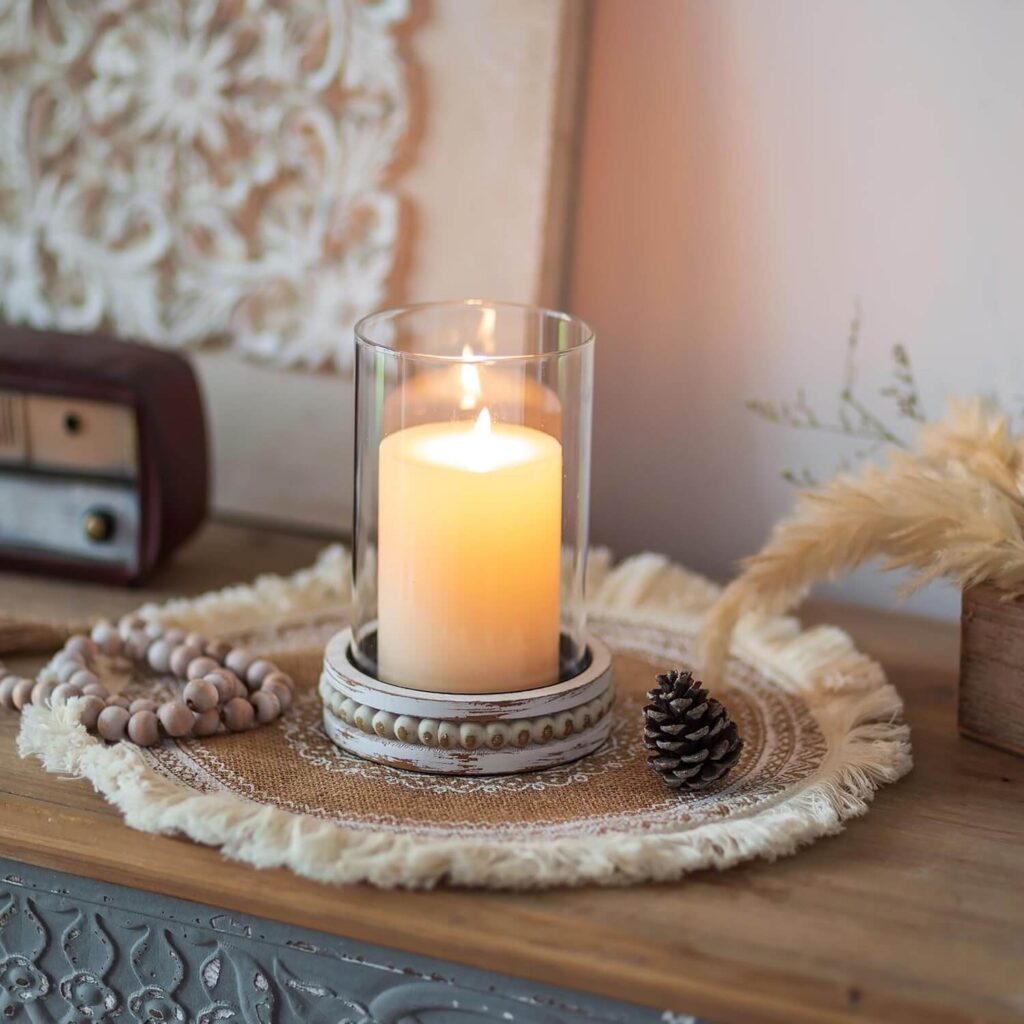
    Glasseam hurricane glass candle holders
    1. Safety: Its heat resistance means it won’t shatter unexpectedly due to thermal shock.
    2. Longevity: It’s more durable than regular glass, so your candle containers will last longer.
    3. Aesthetics: The crystal-clear appearance allows you to showcase colourful candles beautifully.
    4. Versatility: Can be used for both container candles and tealight holders.
    5. Reusability: Once your candle is finished, the container can be easily cleaned and reused.
    heat resistant glass for candles

    Let’s look at some specific candle applications for borosilicate glass:

    Candle TypeSuitability of Borosilicate GlassWhy It Works
    Container CandlesExcellentProvides a safe base that won’t crack with heat
    TealightsVery GoodOffers clear visibility of the flame, handles heat well
    Pillar Candle HoldersGoodProvides safe base that won’t crack with heat
    Floating CandlesExcellentClear visibility and water resistance
    Aromatherapy CandlesExcellentDoesn’t interact with essential oils in the wax

    HOW TO USE BOROSILICATE GLASS FOR CANDLE MAKING

    If you’re interested in making your candles using borosilicate glass containers, here are some tips to ensure success:

    Selecting the Right Container

    Tempered glass for candles
    1. Choose appropriate shapes: Vessels with straight sides are ideal for even burning.
    2. Check for thickness: Thicker borosilicate glass (at least 2-3mm) is preferable for candle making.
    3. Consider the size: Ensure the container is large enough to maintain a safe distance between the flame and the glass walls.
    4. Look for quality: Inspect for any flaws or imperfections in the glass before using.

    Candle Making Process with Borosilicate Glass

    1. Preparation: Clean the borosilicate container thoroughly and ensure it’s completely dry.
    2. Pre-heating (optional): Some candle makers prefer to slightly warm the glass before pouring hot wax to prevent air bubbles from forming against the sides.
    3. Wick placement: Secure the wick to the bottom of the container using a wick sticker or a drop of melted wax.
    4. Wax pouring: Pour the melted wax into the container at the recommended temperature (typically around 70-80°C for soy wax).
    5. Cooling: Allow the candle to cool slowly at room temperature to prevent cracking or sinking of the wax.

    While some might wonder if borosilicate glass and crystal are the same, they are not. Crystal typically contains lead or other minerals that make it sparkle, while borosilicate glass is lead-free and valued primarily for its heat resistance rather than decorative properties.

    Safety Considerations

    Even though borosilicate glass is highly heat-resistant, it’s still important to follow proper candle safety guidelines:

    1. Never leave burning candles unattended.
    2. Keep candles away from drafts, flammable materials, and children or pets.
    3. Always place candles on a heat-resistant surface.
    4. Trim wicks to 6mm (1/4 inch) before lighting to prevent excessive flames.
    5. Stop using the candle when only about 1cm (1/2 inch) of wax remains at the bottom.
    6. Allow the borosilicate container to cool completely before handling or cleaning..

    ENVIRONMENTAL IMPACT

    For environmentally conscious consumers, it’s worth noting that the borosilicate glass’s biodegradable status is similar to other types of glass.

    While glass is not biodegradable in the traditional sense (it doesn’t break down into simpler substances through natural processes), it is 100% recyclable indefinitely without loss of quality.

    Borosilicate glass containers for candles represent a more sustainable choice compared to plastic alternatives because:

    • They can be reused multiple times
    • They’re recyclable (though you should check local recycling guidelines, as some facilities may process borosilicate glass differently)
    • They don’t release harmful chemicals when exposed to heat
    • They have a longer lifespan, reducing the need for frequent replacements.

    DIY IDEAS: CREATIVE WAYS TO USE BOROSILICATE GLASS FOR CANDLES

    DIY Ideas creative ways to use borosilicate glass for candles

    Looking for inspiration? Here are some creative ways to use borosilicate glass vessels for your candle projects:

    Multi-wick creations: Larger borosilicate vessels can accommodate multiple wicks for more light and faster scent distribution.

    Terrarium candles: Create a miniature landscape with layers of coloured wax in a borosilicate container.

    Suspended elements: Add dried flowers, herbs, or small decorative items to the sides of the container before pouring wax.

    Gradient candles: Layer different coloured waxes to create an ombre effect that shines beautifully through clear borosilicate glass.

    Etched designs: Use glass etching cream to create patterns on the outside of borosilicate containers before making candles.

    WHERE TO FIND BOROSILICATE GLASS FOR CANDLE MAKING

    Borosilicate glass containers suitable for candles can be found from various sources:

    • Laboratory supply companies: Offer beakers and other vessels that can be repurposed
    • Kitchen supply stores: Look for borosilicate measuring cups, food storage containers, or teapots
    • Online marketplaces: Platforms like Etsy, Amazon, or eBay offer a wide variety of options
    • Recycled laboratory equipment: Some companies repurpose lab-grade borosilicate glass into household items

    When purchasing, always verify that what you’re buying is genuine borosilicate glass, as some sellers may mislabel regular glass products.

    TROUBLESHOOTING COMMON ISSUES

    Even with borosilicate glass, you might encounter some challenges when making or using candles:

    Tunneling

    If your candle burns straight down the middle instead of across the entire surface, try these solutions:

    • Ensure the first burn is long enough to melt the entire top surface (typically 1 hour per inch of container diameter)
    • Use the appropriate wick size for your container diameter
    • Consider adding a wax with a lower melting point to your blend

    Wet Spots

    If you notice areas where the wax pulls away from the glass:

    • Try preheating your borosilicate container slightly before pouring
    • Pour the wax at a slightly higher temperature
    • Consider adding a small amount of Vybar or stearic acid to your wax blend

    Cracking Sounds

    If you hear slight cracking noises:

    • This is normal with any glass as it expands slightly with heat
    • As long as you’re using genuine borosilicate glass, this should not lead to breakage
    • To minimize this, avoid placing the candle in drafty areas or on cold surfaces.

    CONCLUSION

    Borosilicate glass is indeed an excellent choice for candles, offering superior heat resistance, beautiful clarity, and durability that make it perfect for both homemade and commercial candle vessels.

    Its ability to withstand temperature fluctuations without cracking makes it one of the safest options available, giving you peace of mind while enjoying the warm glow of your favourite candles.

    Whether you’re a professional candle maker or a hobbyist looking to create something special, borosilicate glass provides a versatile, reusable, and environmentally friendly option that enhances both the appearance and safety of your candles.

    So go ahead, light up those borosilicate-encased candles and enjoy the ambiance without worry!

  • Is Borosilicate Glass Crystal

    Borosilicate glass is a well-known household name due to its many advantages; it is also useful in a variety of applications, especially in the medical and laboratory sectors.

    Even though borosilicate glass has many applications, glass enthusiasts remain plagued by two questions: first, is borosilicate glass truly biodegradable, and second, is borosilicate glass crystal?

    Knowing the difference between crystal and borosilicate glass enables consumers to choose the right glassware for their needs, preventing home accidents and getting the best results.

    Beyond functional concerns, this understanding deepens our appreciation of the craftsmanship and creativity that go into each piece, enhancing our celebrations and daily routines.

    Together, we will explore the properties of borosilicate glass and determine if it can be classified as a crystal.

    WHAT TYPE OF GLASS IS BOROSILICATE GLASS?

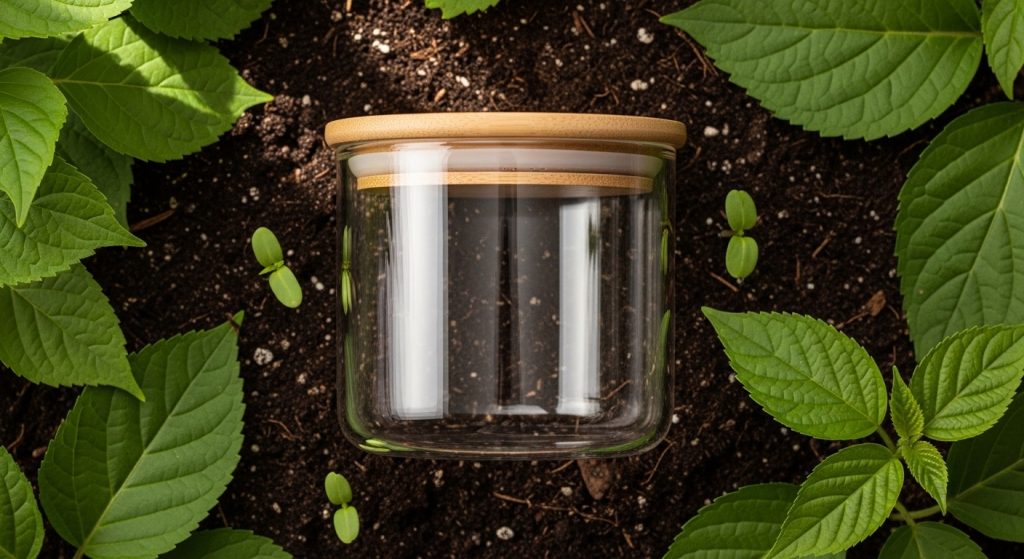
    Look Up Borosilicate Drinking glass with Bamboo Lids

    Borosilicate glass is a type of glass that contains boron trioxide, which gives it a very low coefficient of thermal expansion.

    This makes it highly resistant to thermal shock, making it suitable for laboratory glassware, kitchenware, and some high-end consumer products like high-quality cookware and glass pipes.

    RELATED: CAN BOROSILICATE GLASS BE USED FOR CANDLES?

    WHAT TYPE OF GLASS IS CRYSTAL?

    Luigi Bormioli Crystal Glass for Beverage

    Crystal glass is a specific type of glass that contains lead oxide. It’s known for its clarity, brilliance, and ability to refract light, making it popular for high-end glassware, such as wine glasses and decanters.

    WaterFord Highball Crystal glass

    IS BOROSILICATE GLASS CRYSTAL?

    Is Borosilicate Glass Crystal

    Borosilicate glass is not crystal. They don’t have the same constituents, Crystal glass contains lead oxide, which gives it its brilliance and clarity.

    Borosilicate glass, on the other hand, is made primarily from silica and boron trioxide, making it more resistant to thermal shock and better suited for applications like laboratory glassware and kitchenware.

    BOROSILICATE GLASS VS CRYSTAL

    Find below the differences between Borosilicate glass and Crystal glass:

    Borosilicate glass is more resistant to thermal shock, making it suitable for high-temperature applications than Crystal glass.

    Durable Nachtmann Crystal glass

    Borosilicate glass is commonly used for laboratory glassware, kitchenware, and lighting fixtures, while Crystal is prized for its beauty and is often used in fine glassware, chandeliers, jewelry, and decorative items.

    Borosilicate glass is highly resistant to chemical corrosion and breakage, but Crystal glass is not.

    Whiskey Crystal Tumbler Glass set for Cocktail

    Borosilicate glass lacks the lead content essential for the crystal’s hallmark sparkle and weightiness.

    Crystal glass is more delicate and prone to chipping or cracking, especially when exposed to sudden temperature changes, making Borosilicate glass more durable than Crystal glass.

    Crystal glass has a higher refractive index due to the lead content, giving it greater brilliance and clarity than Borosilicate glass.

    Unlike lead crystal, borosilicate glass has different safety characteristics. Learn about borosilicate glass lead content for complete safety information.

    Finally, in terms of constituents, Borosilicate glass is typically produced using a process that involves melting together silica sand and boron trioxide at high temperature, while Crystal is made by adding lead oxide to the silica mixture, which lowers the melting point and improves the glass’s optical properties.

    IS PYREX CRYSTAL?

    Pyrex is not a crystal; they both have different characteristics and chemical makeup. It’s a type of glass known for its durability and resistance to thermal shock.

    Pyrex is a name used by glassware brands for manufacturing measuring cups, bakeware dishes, mixing bowls, and other household items.

    Pyrex brands are either made up of Borosilicate glass or tempered soda lime glass.

    IS CRYSTAL AND GLASS THE SAME THING?

    No, Crystals are not the same as regular glass; they don’t contain the same constituents and therefore don’t have the same qualities.

    For example, crystal glass is typically thinner, more durable, and has a higher refractive index, resulting in greater brilliance and sparkle than regular glass.

    In addition, Crystal glass is often used for fine dining and decorative items due to its elegance and premium feel.

    HOW CAN YOU TELL IF GLASS IS CRYSTAL

    There are several methods for determining if your glass is crystal or not. See below for the various methods:

    The quickest and easiest way to know if your glass is crystal or not is to search for the manufacturer’s markings or labels that indicate it as crystal.

    Clarity and sparkle are further indicators of crystal glass. Crystal often has a higher refractive index, thus it reflects light more brilliantly than plain glass.

    Crystal’s density also causes it to emit a melodic tone when lightly tapped. For further information, please see this article: Is Mikasa made of glass or crystal?

    IS BOROSILICATE GLASS CERAMIC?

    No, borosilicate glass is not ceramic. It’s still classified as a type of glass, albeit one with specific properties due to its composition, notably its low thermal expansion coefficient.

    Ceramic materials are typically non-metallic, inorganic solids made through the process of heating and cooling, but they have different properties and applications compared to borosilicate glass.

    IS BOROSILICATE GLASS CONDUCTIVE?

    No, Borosilicate glass is not conductive. It is an insulator, meaning it does not conduct electricity.

  • Is Borosilicate Glass Biodegradable? Environmental Impact Explained

    More people than ever are scrutinising the materials in their homes, checking labels, questioning packaging, and trying to make choices that actually hold up environmentally.

    Borosilicate glass keeps coming up in those conversations. It shows up in cookware, water bottles, food containers, and laboratory equipment, and its reputation for durability makes it sound like a sustainable choice.

    But when you stop and ask is borosilicate glass biodegradable, the answer is not as straightforward as most people expect.

    There is a lot more going on beneath the surface of this material than its clean, clear appearance suggests, and understanding it properly might change how you think about every borosilicate product in your home.

    What Is Borosilicate Glass?

    Before getting into the environmental question, it helps to understand what borosilicate glass actually is and why it behaves so differently from the glass in an ordinary drinking cup.

    For a thorough breakdown of its chemistry and history, the complete explanation of borosilicate glass covers everything in depth.

    In short, it is a specialised type of glass engineered for performance under conditions that would destroy standard glass.

    Composition of Borosilicate Glass

    Borosilicate glass is made primarily from silica (silicon dioxide) — the same base material as regular glass — but with a significant addition of boron oxide, typically making up around 12–15% of the composition.

    This is what sets it apart. Boron oxide integrates into the silica network at a molecular level and fundamentally alters how the glass responds to temperature changes, chemical exposure, and physical stress.

    Small amounts of other stabilising compounds, such as alumina and sodium oxide, are also included to fine-tune the final properties.

    Key Properties of Borosilicate Glass

    The defining characteristic of borosilicate glass is its exceptionally low coefficient of thermal expansion — it expands and contracts far less than standard glass when heated or cooled.

    This is why it can go from a cold refrigerator directly into a hot oven without cracking.

    It is also highly resistant to chemical corrosion, which is why it is the material of choice in laboratories and pharmaceutical manufacturing.

    Its strength and scratch resistance mean it holds up to daily use far longer than most alternative materials, which has direct implications for its environmental footprint.

    Is Borosilicate Glass Biodegradable?

    This is the core question, and it deserves a clear answer before anything else.

    Definition of Biodegradable Materials

    Biodegradable materials are those that can be broken down naturally by microorganisms — bacteria, fungi, and other biological agents into water, carbon dioxide, and organic matter.

    This process can take anywhere from days to years, depending on the material, but the defining feature is that living organisms drive the decomposition.

    Wood, food scraps, cotton, and paper are all genuinely biodegradable. Their molecular structures can be metabolised by microorganisms and returned to the natural environment in a biologically useful form.

    Why Borosilicate Glass Is Not Biodegradable

    Is Borosilicate Glass Biodegradable

    Borosilicate glass is entirely inorganic. Its tightly bonded silica and boron oxide network has no carbon-based molecular structure for microorganisms to metabolise.

    There is simply nothing in it that biological agents can break down. No bacteria, fungus, or soil organism can digest glass.

    It does not rot, decompose, or release nutrients back into the soil. In that specific sense, it is no different from a rock; it is a stable, inert solid that persists in the environment indefinitely without any biological transformation.

    How Long Does Glass Take to Break Down?

    Glass does change over extremely long timescales, but through physical and chemical weathering rather than biological decomposition.

    Exposure to water, wind, abrasion, and acidic conditions can slowly erode the surface of glass over thousands to millions of years.

    In landfill conditions, glass is estimated to persist for up to one million years before breaking down completely through these slow geological processes.

    This is a fundamentally different process from biodegradation and offers no environmental benefit in any human-relevant timeframe.

    Is Borosilicate Glass Environmentally Friendly?

    Not being biodegradable does not automatically make a material environmentally harmful.

    The full environmental picture involves manufacturing impact, durability, reusability, and end-of-life options — and on several of those measures, borosilicate glass performs reasonably well.

    Recyclability of Borosilicate Glass

    This is where things get complicated. Borosilicate glass cannot be recycled in standard kerbside glass recycling streams.

    The reason is straightforward: borosilicate glass has a different melting point and thermal expansion rate than the soda-lime glass used in bottles and jars.

    When borosilicate glass is mixed into a standard glass recycling batch, even in small quantities, it acts as a contaminant that weakens the final recycled product.

    Specialist recycling facilities that can process borosilicate glass separately do exist, but they are not widely accessible in most regions, and many borosilicate products end up in general waste as a result.

    Durability and Long Lifespan

    This is arguably where borosilicate glass makes its strongest environmental case.

    A borosilicate glass water bottle or storage container can realistically last decades with normal use.

    Compare that to a plastic bottle, which degrades, stains, and absorbs odours over months, or to cheaper glass products that chip and crack far sooner.

    The longer a product lasts, the less frequently it needs to be replaced, and that reduction in replacement frequency has real environmental value.

    Each item that does not need to be manufactured, shipped, and disposed of represents resources saved.

    Energy Requirements in Manufacturing

    Producing borosilicate glass is energy-intensive.

    The raw materials must be melted at temperatures exceeding 1,500°C, and the precision required for borosilicate formulations means the manufacturing process is more demanding than standard glass production.

    This upfront energy cost is a genuine environmental consideration.

    However, for products designed to be used daily for many years, the manufacturing footprint amortises across the lifespan of the product in a way that compares favourably to lower-quality alternatives that require frequent replacement.

    Borosilicate Glass vs Other Materials

    Borosilicate Glass vs Regular Glass

    Regular soda-lime glass, the kind used in wine glasses, mason jars, and windows, is more widely recyclable than borosilicate glass through standard recycling programmes.

    In that specific respect, soda-lime glass has an advantage. However, borosilicate glass is significantly more durable, more heat-resistant, and more chemically stable.

    For applications involving heat (cookware, baking dishes, coffee makers), soda-lime glass simply cannot perform safely, making the comparison somewhat academic.

    For general storage containers without heat exposure, soda-lime glass does offer a more straightforward end-of-life recycling path.

    Borosilicate Glass vs Plastic

    This comparison strongly favours borosilicate glass on almost every environmental metric.

    Plastic leaches chemicals over time, particularly when heated, degrades into microplastics that persist throughout ecosystems, and has highly variable recyclability in practice.

    Borosilicate glass contains no plasticisers or synthetic compounds, does not leach into food or drink, and while not biodegradable, does not fragment into microparticles that enter the food chain.

    For anyone switching away from plastic food containers or bottles, borosilicate glass is a genuinely better long-term choice from both a health and an environmental perspective.

    Borosilicate Glass vs Biodegradable Materials

    Truly biodegradable materials such as bamboo, compostable packaging, and natural fibres have the clear advantage of returning to the natural environment cleanly after use.

    However, they are rarely suitable for the same applications as borosilicate glass. You cannot bake in a bamboo dish or store acidic foods in compostable packaging.

    The comparison is less about which is better overall and more about recognising that different materials suit different purposes.

    For high-heat, long-use kitchen and laboratory applications, no biodegradable alternative currently matches what borosilicate glass offers in terms of safety and performance.

    Common Uses of Borosilicate Glass

    Kitchenware and Food Containers

    Borosilicate glass is the standard material for oven-safe baking dishes, glass food storage containers, measuring jugs, and mixing bowls designed to handle temperature transitions.

    Meal Prep Borosilicate glass food storage containers

    Its ability to move safely from freezer to oven to dishwasher makes it uniquely practical for kitchen use.

    For a curated look at the best-performing products in this category, the best borosilicate glass cookware brands provide a useful reference for informed purchasing decisions.

    Laboratory Equipment

    The laboratory world has relied on borosilicate glass for over a century.

    Beakers, flasks, test tubes, condensers, and virtually all standard scientific glassware are made from borosilicate glass specifically because of its chemical resistance and thermal stability.

    It will not react with the substances being tested, will not crack under rapid heating or cooling, and can be sterilised repeatedly without degrading.

    These properties make it irreplaceable in scientific, medical, and pharmaceutical contexts.

    Consumer Products

    Beyond the kitchen and laboratory, borosilicate glass appears in high-quality water bottles, pour-over coffee makers, tea infusers, and French presses.

    Its clarity, the absence of taste interference, and its ability to handle hot liquids safely make it the preferred material for discerning consumers who want products that perform well and last.

    The durability of these consumer products directly supports their environmental value.

    A borosilicate water bottle used daily for ten years displaces a significant number of disposable plastic bottles from circulation.

    How to Dispose of Borosilicate Glass Responsibly

    Recycling Options

    Standard kerbside glass recycling does not accept borosilicate glass.

    Before discarding any borosilicate product, check whether specialist glass recycling facilities operate in your area.

    Some universities, laboratories, and industrial facilities have access to borosilicate recycling programmes.

    In the absence of a specialist option, borosilicate glass should go into general waste rather than the glass recycling bin, where it would contaminate the batch.

    Placing it in standard recycling with good intentions does more harm than disposing of it correctly in general waste.

    Reusing Borosilicate Glass Products

    The most environmentally responsible thing you can do with a borosilicate glass product is continue using it.

    A chipped borosilicate storage container can be repurposed for organising screws or craft supplies.

    Borosilicate airtight glass food storage containers

    An old baking dish becomes a planter. A water bottle becomes a vase. Borosilicate glass is so durable that products often outlast their original intended use by many years.

    Exploring secondary uses before disposal is always the better option and aligns with the core principle of waste reduction.

    Reducing Waste Through Durable Materials

    The broader environmental argument for borosilicate glass comes back to this point: buying less, but buying better.

    Choosing a high-quality borosilicate product once, rather than replacing a cheaper alternative every couple of years, reduces manufacturing demand, transport emissions, and waste generation over time.

    This is also where understanding the disadvantages of borosilicate glass matters; knowing its limitations (specialist recycling requirements, higher upfront cost, weight) helps you make genuinely informed choices rather than treating it as a universally perfect material.

    Conclusion

    Borosilicate glass is not biodegradable; that is simply a fact of its inorganic chemistry.

    But the environmental story does not end there. Its exceptional durability, freedom from plastic-related contamination, and suitability for long-term daily use give it a legitimate place in a more sustainable household.

    The key is using it well: buy quality products designed to last, resist the urge to discard them prematurely, and dispose of them through the correct channels when their useful life genuinely ends.

    Not every sustainable choice is about decomposition; sometimes it is about choosing materials that last long enough to matter.

    RELATED: IS BOROSILICATE CRYSTAL GLASS?

    RELATED: CAN BOROSILICATE BE USED FOR CANDLES?


  • How to Identify Borosilicate Glass: A Complete Guide

    Have you ever picked up a beautiful glass vessel in a shop and wondered if it’s the real deal?

    Perhaps you’ve heard about borosilicate glass and its amazing heat-resistant properties, but aren’t quite sure how to tell it apart from regular glass.

    Whether you’re a collector, a cooking enthusiast, or simply someone who appreciates quality kitchenware, knowing how to identify genuine borosilicate glass can save you money and disappointment.

    With more manufacturers jumping on the borosilicate bandwagon, telling the authentic from the fake has become increasingly important.

    But fear not, there are several reliable methods to spot the real thing, and I’m about to share them all with you. Ready to become a borosilicate detective?

    HOW TO IDENTIFY BOROSILICATE GLASS: QUICK GUIDE

    how to identify Borosilicate glass

    To identify borosilicate glass, look for these key characteristics: lightweight feel compared to regular glass, higher clarity with a slight blue-green tint in thick sections, distinctive “ping” sound when tapped, manufacturer markings indicating borosilicate composition, and exceptional temperature resistance when tested with hot and cold water. Genuine borosilicate glass won’t crack when exposed to sudden temperature changes.

    Now, let’s explore each identification method in detail.

    VISUAL INSPECTION METHODS

    What Colour is Borosilicate Glass?

    Despite what some might think, borosilicate glass doesn’t have one specific colour. In its pure form, it’s completely clear. However, some visual cues can help you identify it:

    1. Edge Tint: Look at the edge or a thick section of the glass. High-quality borosilicate often has a very slight blue-green tint when viewed from the edge, especially in thicker sections. This is subtle, not an obvious colour throughout.
    2. Clarity: Borosilicate glass typically has exceptional clarity compared to standard glass, with fewer imperfections or bubbles.
    3. Thickness Consistency: Look for uniform thickness throughout the piece. Quality borosilicate glassware usually has consistent wall thickness.

    Physical Characteristics

    Several physical attributes can help you identify borosilicate glass:

    1. Weight: Borosilicate glass is typically lighter than regular soda-lime glass of the same size and shape. If you have a reference piece of regular glass, compare the weights—the borosilicate version should feel noticeably lighter.
    2. Sound Test: Tap the glass gently with a metal utensil or your fingernail. Borosilicate glass often produces a clearer, more resonant “ping” sound compared to the duller “thud” of regular glass.
    3. Surface Feel: Run your finger along the surface. Borosilicate glass often feels exceptionally smooth with a slight “slippery” quality.

    Manufacturer Markings

    One of the most reliable ways to identify borosilicate glass is through manufacturer markings:

    1. Brand Stamps: Look for etched logos or stamps on the bottom of the glassware. Reputable manufacturers often proudly mark their borosilicate products.
    2. Product Codes: Some manufacturers use specific product codes for their borosilicate lines. Research the manufacturer’s coding system to verify authenticity.
    3. Packaging Claims: Original packaging often states if a product is made from borosilicate glass. Look for specific mentions of “borosilicate” rather than vague terms like “heat-resistant glass.”

    How to Identify Borosilicate Glass in Water

    A simple water test can help identify borosilicate glass:

    1. Refraction Test: Place the glass item in a bowl of water. Due to its different refractive index, borosilicate glass may appear slightly different underwater compared to regular glass. The outline might appear sharper, or the glass might seem to “disappear” more completely.
    2. Bubbles Test: When placed in carbonated water, bubbles tend to cling differently to borosilicate glass compared to regular glass. They often form more uniform patterns on borosilicate surfaces.

    However, these water tests aren’t foolproof and work best as supplementary methods alongside other identification techniques.

    When identifying authentic borosilicate glass, safety is paramount. Learn more about borosilicate glass lead content to ensure your family’s safety.

    Temperature Resistance Test (Caution Required)

    This test utilizes borosilicate glass’s remarkable resistance to thermal shock:

    1. Safe Version: Pour hot (not boiling) water into the glass vessel, then immediately place it under cool running water. Genuine borosilicate glass should withstand this temperature change without cracking.
    2. Alternative Method: Place a small ice cube in the glass, then pour warm (not hot) water over it. Again, true borosilicate won’t crack.

    ⚠️ Warning: Perform these tests at your own risk and with extreme caution. Even genuine borosilicate glass has limits, and these tests could damage or destroy fake products or even genuine products with existing microfractures.

    HOW TO IDENTIFY BOROSILICATE GLASS CUPS

    When specifically identifying borosilicate cups:

    Double-Wall Test: Many premium borosilicate cups feature double-wall construction. Look for two distinct layers with a sealed vacuum between them. This design allows hot drinks to be held comfortably without external heat transfer.

    Rim Examination: The rim of borosilicate cups is often smoother and more precisely formed than that of regular glass cups.

    Handle Attachment: In cups with handles, examine the junction where the handle meets the cup. Borosilicate cups typically have cleaner, stronger attachments with fewer visible bubbles or irregularities.

    IS THERE FAKE BOROSILICATE GLASS?

    Yes, fake borosilicate glass does exist in the marketplace. With the growing popularity of borosilicate products, some manufacturers misrepresent regular glass as borosilicate to command higher prices.

    Common Signs of Fake Borosilicate Glass:

    1. Suspiciously Low Price: Genuine borosilicate glass is more expensive to produce than regular glass. If the price seems too good to be true, it probably is.
    2. Poor Temperature Resistance: Fake products will likely crack or shatter when exposed to sudden temperature changes.
    3. Excessive Weight: If the glass feels notably heavy compared to known borosilicate items, it might be regular glass masquerading as borosilicate.
    4. Manufacturing Inconsistencies: Look for bubbles, uneven thickness, or tooling marks that wouldn’t be present in high-quality borosilicate glassware.
    5. Vague Marketing: Be wary of products described only as “heat-resistant glass” without specifically claiming to be borosilicate.

    The many uses of borosilicate glass extend far beyond kitchenware, with applications in laboratories, lighting, art, and even space exploration, making it a truly versatile material worth identifying correctly.

    HOW TO TELL IF PYREX IS BOROSILICATE?

    Before we explain how to know if the Pyrex you own is made from Borosilicate glassware, let’s first understand the manufacturing background.

    How to tell if Pyrex is Borosilicate

    The Manufacturing History Context

    The fundamental thing to understand is that Pyrex glassware underwent a major change in composition.

    In the United States, all Pyrex produced since 1998 has been made from soda-lime glass rather than the original borosilicate formula.

    Real Pyrex Logo

    Interestingly, French-made PYREX still uses borosilicate glass. There’s a widespread belief that uppercase “PYREX” means borosilicate while lowercase “pyrex” means soda-lime, but this is actually misleading since Corning started using soda-lime glass decades before changing their logo style.

    Thus, while the “uppercase means borosilicate, lowercase means soda-lime” is a useful guide, it can be misleading if applied universally without considering manufacturing location and product history.

    Physical Identification Methods

    The Color Edge Test is one of the most practical methods – when you look at the rim or edge of your dish, soda-lime glass will show a distinctive blueish-green tint, whereas borosilicate glass appears completely clear without any color cast.

    This is probably the easiest quick check you can do.

    Visual quality differences are also telling. Borosilicate glass tends to be more transparent overall, has a smoother surface finish, and contains fewer visible air bubbles or imperfections compared to soda-lime glass.

    PYREX Borosilicate glass

    The tap test involves gently striking the glass and listening to the sound it produces. Borosilicate creates a higher-pitched, clearer, more bell-like ring, while soda-lime glass produces a duller, flatter tone.

    Weight comparison can help too – borosilicate glass is actually less dense than soda-lime glass, so it feels noticeably lighter when you hold pieces of similar size.

    pyrex soda lime glass

    Advanced Testing Methods

    The mineral oil immersion test is based on optical physics. Borosilicate glass has a refractive index of 1.474, which is very close to mineral oil’s refractive index.

    When you submerge borosilicate glass in mineral oil, light bends the same way through both materials, making the glass essentially “disappear” or become nearly invisible. Soda-lime glass won’t do this.

    The thermal shock test is more dramatic but demonstrates the key difference between these glass types. If you fill a dish with ice cubes to make it cold, then pour boiling water over the outside, borosilicate glass will handle this extreme temperature change without breaking.

    Soda-lime glass will crack or shatter from the thermal stress. (Though I’d only recommend this test if you’re prepared to potentially destroy the dish!)

    Where to Find Borosilicate Pyrex

    If you’re looking for genuine borosilicate Pyrex, your best bets are vintage pieces from before the 1980s-1990s, any Pyrex manufactured in Europe (which still uses borosilicate), or laboratory-grade Pyrex glassware, which continues to be made from borosilicate because of its superior thermal properties needed in scientific applications.

    Why This Matters

    The key functional difference is thermal shock resistance. Authentic borosilicate Pyrex can safely go directly from your freezer into a hot oven without risk of shattering.

    Modern soda-lime Pyrex requires more careful handling; you need to allow gradual temperature transitions to avoid dangerous breakage.

    BOROSILICATE GLASS SUITABLE FOR USE ON A GLASS STOVE

    A frequently asked question is whether borosilicate glass suitable for use on a glass stove can be identified differently. Indeed, cookware specifically designed for glass stovetops has particular characteristics:

    Borosilicate casserole cooking pan for Oven
    1. Flat Bottom: Borosilicate cookware meant for glass stoves will have a perfectly flat bottom for optimal heat transfer.
    2. Thickness: Generally thicker than decorative borosilicate items to ensure even heat distribution.
    3. Manufacturer Specifications: Will explicitly state compatibility with glass/ceramic stovetops.
    4. Heat Distribution Pattern: When heated, quality borosilicate cookware will heat more evenly than imitations.

    WHERE TO FIND AUTHENTIC BOROSILICATE GLASS

    Having learned how to identify genuine borosilicate glass, you might be wondering where to purchase authentic products:

    Volarium Borosilicate glass baking casserole dish

    Vintage Markets: For authentic borosilicate Pyrex, antique shops and vintage markets are excellent hunting grounds.

    Specialty Kitchenware Stores: Higher-end kitchenware shops typically stock genuine borosilicate products and can verify.

    Laboratory Supply Companies: For the purest form of borosilicate, consider laboratory supply shops that sell beakers, flasks, and other lab equipment.

    Reputable Online Retailers: Look for detailed product descriptions that specifically mention borosilicate composition, not just “heat-resistant.”

    Artisan Glassblowers: Many artisanal glass studios work with borosilicate and can create custom pieces while educating you about the material.

    CARING FOR YOUR BOROSILICATE GLASS

    Once you’ve identified your borosilicate glass, proper care will extend its lifespan:

    1. Avoid Extreme Impact: While more durable than regular glass, borosilicate can still break when dropped or struck forcefully.
    2. Cleaning: Hand washing is recommended. If using a dishwasher, place items securely to prevent knocking against other items.
    3. Storage: Store borosilicate items where they won’t get knocked or stressed. Avoid stacking heavy items on top of them.
    4. Temperature Transitions: Though resistant to thermal shock, gradually transitioning between extreme temperatures will extend the life of your glassware.
    5. Avoid Direct Flame Contact: Unless specifically designed for stovetop use, keep borosilicate glass away from direct flames.

    CONCLUSION

    Identifying borosilicate glass doesn’t need to be a mystery; armed with the knowledge of its visual cues, physical properties, and practical tests, you can confidently distinguish the genuine article from imitations.

    Whether you’re selecting laboratory equipment, choosing kitchenware that will withstand years of use, or hunting for vintage Pyrex treasures, these identification methods will serve you well.

    Remember that true borosilicate glass combines lightness, clarity, and remarkable heat resistance in a way that no other glass can match.

    Next time you’re shopping for glassware, put your new detection skills to work—your kitchen, laboratory, or collection will thank you for it. Happy glass hunting!


    VIDEO EXPERIMENT SHOWING HOW TO IDENTIFY SODA LIME AND BOROSILICATE GLASS

  • HOW TO CLEAN BOROSILICATE GLASS

    I understand the frustration that after using your favorite heat-resistant glass, you are suddenly faced with cleaning issues.

    As a Borosilicate glass enthusiast, one thing I need to do is to always keep it clear of dirt and stains so that I get the most out of it, whether for kitchen or laboratory use.

    That is why we will be explaining the different efficient ways on how to clean Borosilicate glass with simplicity and maintain its pristine state.

    We will begin with how Borosilicate glass is made, then move on to understand why it is dishwasher safe and how to sterilize it.

    Finally, we will provide tried-and-true strategies for keeping your Borosilicate glass immaculate, allowing you to utilize its unique qualities while also increasing the longevity and performance of this versatile glass material.

    HOW IS BOROSILICATE GLASS MADE?

    There are several manufacturers of Borosilicate glass, and while each brand has its own manufacturing process, there are some standard techniques that they all follow.

    Here’s how borosilicate glass is made: Sand is mixed with chemicals such as sodium oxide, boric oxide, and recycled glass before being put into a furnace that burns at approximately 1550 degrees Celsius.

    Borosilicate fashioned drinking glass

    Inside this furnace, there are several burners and separate chambers where this sand and chemical mixture is continually fed and melted by intense heat.

    In one of the chambers, chlorine and gas are pumped through the molten liquid; this action absorbs impurities and carries them to the surface, but the impurities are removed in another chamber.

    This continues until pure liquid glass is created, ready to be shaped into test tubes and coffee pots.

    Borosilicate glass canister set

    For Borosilicate glass to be functional and durable for laboratory and kitchen use, the raw material must be as clean as possible; many of these impurities are removed by chlorine gas to ensure high-quality heat-resistant glass.

    Once this is accomplished, machines are used to shape the glass as it is inserted into molds and blasted with a stream of air above and below. This activity guarantees the glass achieves the proper strength.

    When the glasses cool down, they are carefully scrutinized for rough edges or other anomalies.

    Borosilicate Coffee Mugs for Cappuccinos

    If found wanting, they are put into another machine that runs them over more flames, and this heat will melt away any irregularities to make smooth edges.

    In the case of Borosilicate cake dishes, the molten material is pressed down rather than being blown, while Borosilicate dishes are spun under a flame to seal any tiny holes or flatten any defects that may mar a flawless finish surface.

    Thus, this amazing glass technology provides home and professional kitchens with sturdy cookware that is transparent and does not fracture when heated.

    HOW TO CLEAN BOROSILICATE GLASS

    how to clean borosilicate glass

    Here are four practical ways to clean your borosilicate glass:

    • The quickest and easiest method is to use a mild soap with a soft cloth or sponge, just like you wash your dirty normal dish, you simply scrub the glass using soap, removing all residues and stains, then rinse gently and thoroughly under water.
    • If the above method doesn’t work, then use a vinegar solution, especially for stubborn Borosilicate glass stains. How is this done? You simply dip your sponge or cloth into the solution and gently scrub the stained areas. The acidity of vinegar helps break down mineral deposits. Gently rinse the glass thoroughly to eliminate the vinegar smell.
    • The third method is to employ the use of baking soda paste for stubborn Borosilicate glass stains. You begin by making a paste using baking soda and water. Apply the paste to the affected areas and let it sit for 15-20 minutes. Scrub the glass gently with a non-abrasive sponge or brush. Rinse thoroughly to remove the baking soda residue.

    • The Fourth method is to use Isopropyl Alcohol for Oil or Grease stains: Dampen a cloth with isopropyl alcohol and gently wipe the affected areas. Ensure proper ventilation when using alcohol. This method is effective for removing fingerprints and other oily residues.
    • Lastly, in case all 4 methods above fail, you might also want to consider using a commercial glass cleaner specifically designed for Borosilicate glass. This is done by simply following the manufacturer’s instructions carefully.

    Finally, ensure you handle your Borosilicate glass with care and clean it regularly, as this helps in maintaining its clarity and functionality.

    IS BOROSILICATE GLASS EASY TO CLEAN?

    Yes, Borosilicate glass is generally easy to clean. Its smooth surface makes it less prone to retaining residues, allowing for convenient cleaning.

    Additionally, its durability allows for scrubbing or cleaning with various detergents without the risk of damage.

    IS BOROSILICATE GLASS DISHWASHER SAFE?

    Yes, Borosilicate glass is dishwasher safe because its material is resistant to thermal shock, and can handle the hot water during washing and the subsequent cooling without shattering.

    However, we recommend you check the manufacturer’s recommendation for easy cleaning of your Borosilicate glass because not every Borosilicate glass product might be suitable for a dishwasher; some simply need hand washing.

    HOW TO CLEAN BOROSILICATE GLASS CUPS

    how to clean borosilicate glass cups

    Cleaning Borosilicate glass cups is a straightforward process. Here’s a step-by-step guide:

    • Place your Borosilicate glass cup under running water; this can remove any loose particles or residue.
    • Apply mild soap and use a soft sponge or cloth to wash off stains or residue on the body or inside the Borosilicate glass cup, then rinse with water and allow to dry.
    • Thirdly, for Borosilicate glass cups that are designed with narrow areas, most manufacturers give you a soft brush to help with cleaning the hard-to-reach areas. The brush has a soft bristle that ensures your Borosilicate glass cup is thoroughly cleaned up especially the rim and the base.
    • As explained above, you can also use vinegar solutions for tough stains on your Borosilicate glass cup. You simply have to create a solution of equal parts water and white vinegar. Soak a sponge or cloth in the solution, and then gently scrub the stained areas. Rinse the cup well afterward.
    • Use a dry lint-free towel to dry the Borosilicate glass cup, especially when it’s not used for heavy drinking or liquid.

    We advise you to employ regular maintenance to prevent the buildup of dirt or stains, which ensures your Borosilicate glass cups are always in optimal and pristine condition.

    By following these steps and exercising gentle care, you can maintain the clarity and cleanliness of your Borosilicate glass cups effectively.

    HOW TO CLEAN GLASS UTENSILS

    How to Clean Glass utensils

    You can clean glass utensils using a mixture of vinegar and water, soapy water, or a solution of baking soda and water.

    Gentle scrubbing with a soft brush or sponge helps remove stubborn stains.

    Ensure thorough rinsing to avoid residue.

    HOW DO YOU STERILIZE BOROSILICATE GLASS?

    Sterilizing Borosilicate glass is essential for certain applications, particularly in laboratories and medical settings.

    See below for the 5 effective methods to sterilize Borosilicate glass:

     Autoclaving: This is the most common method; you simply place your glass items in an autoclave, and the work of the steam and high pressure helps to eliminate any viruses, bacteria, and other microorganisms that can’t be seen with the naked eye.

    Boiling: After the Autoclaving method, another popular sterilization method is boiling. This is highly recommended for smaller-shaped Borosilicate glass items that can withstand heat; boiling them in water is a practical option.

    Submerge the glass in boiling water for an adequate amount of time, typically around 10-30 minutes, depending on the size and nature of the items.

    Dry Heat Sterilization:  As the name implies, this involves sterilizing your Borosilicate glass using dry heat, you simply place the glass in an oven and set it to a high temperature (typically around 160-180°C or 320-356°F)  for a specific duration but you have to ensure the glass surface reaches the required temperature for effective sterilization.

    Chemical Sterilization: Chemical sterilization methods involve using sterilizing agents such as hydrogen peroxide gas or ethylene oxide.

    Follow the manufacturer’s guidelines for concentration, exposure time, and aeration to ensure proper sterilization without residue.

    UV-C Light Sterilization: Some Borosilicate glass items may be suitable for sterilization using ultraviolet (UV-C) light.

    Expose the glass to UV-C light for the specified duration, following the guidelines provided by the UV sterilization equipment.

    Always check the manufacturer’s recommendations for your specific Borosilicate glass items, as their resistance to heat and chemical sterilization methods may vary.

    Additionally, ensure that the sterilization method chosen aligns with the intended use of the glass, considering factors like temperature sensitivity and potential damage.

    WILL BOROSILICATE GLASS BREAK IF DROPPED?

    While Borosilicate glass is more resistant to breakage than regular glass due to its thermal properties, it is not completely shatterproof.

    It can still break if dropped from a significant height or if subjected to a strong impact. The degree of resistance depends on the specific manufacturing process and thickness of the glass.

    DOES BOROSILICATE GLASS BREAK WITH HOT WATER?

    Borosilicate glass is designed to be resistant to thermal shock, which means it can withstand sudden temperature changes without breaking.

    It is less prone to break when exposed to hot water than normal glass. For additional reading, see the distinction between Borosilicate glass and ordinary glass.

    However, significant temperature fluctuations or fast shifts can still cause breaking, so treat it with caution.

    Finally, see the video experiment comparing the behavior of Borosilicate and normal glass when hot water is poured into them.

    WHAT CAN SCRATCH BOROSILICATE GLASS?

    While Borosilicate glass is relatively scratch-resistant, it can still be scratched by harder materials.

    Common culprits include abrasive cleaning materials, sand, and certain metals.

    Avoid using rough scouring pads or abrasive cleaners when cleaning Borosilicate glass to minimize the risk of scratches.

    Additionally, storing it with items that may have abrasive surfaces can lead to scratches over time.