Choosing the right cookware can feel overwhelming, especially when your family’s health is on the line.
If you’ve been researching non-toxic options, you’ve likely encountered two popular names: Xtrema and Caraway cookware.
Both brands promise safer cooking experiences, but they take dramatically different approaches.
Xtrema offers 100% pure ceramic construction with zero coatings, while Caraway uses aluminum cores with ceramic coatings. Which is safer, xtrema or caraway?
The answer depends on what matters most to you, absolute purity or beginner-friendly convenience.
This comprehensive comparison will help you understand the real differences in materials, safety testing, durability, and performance, so you can make the best decision for your kitchen and your family’s well-being.
Xtrema vs Caraway Cookware — Quick Comparison Table
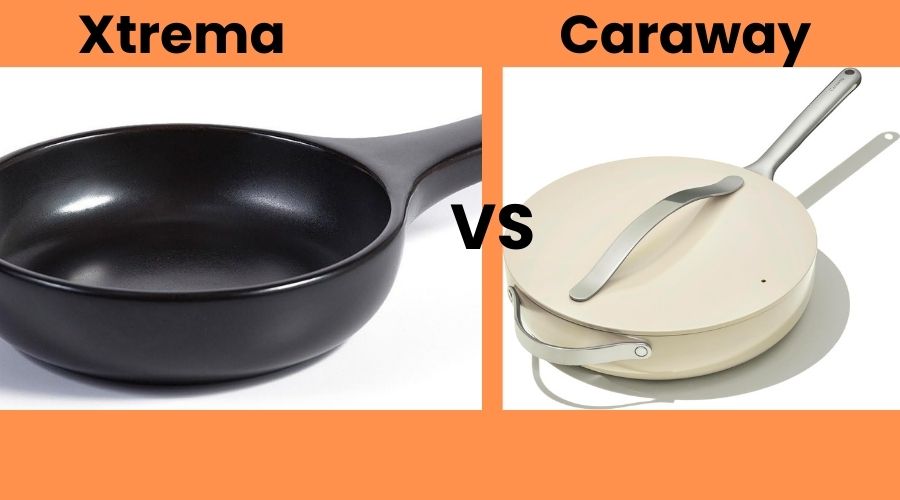
Before diving deep into specifics, here’s a snapshot of how these non-toxic cookware brands compare against each other.
Material
Xtrema is made from 100% pure ceramic with no metal core, no coatings, and no chemical additives.
Caraway features an aluminum core with a sol-gel ceramic coating applied to the cooking surface.
This fundamental difference impacts everything from heat distribution to long-term safety.
Safety Features
Xtrema undergoes third-party testing for heavy metals and contains zero PFAS, PTFE, PFOA, lead, or cadmium.
Caraway is also PFAS-free and PTFE-free, but it does contain aluminum, which some health-conscious consumers prefer to avoid.
Both brands prioritize safer cooking, but Xtrema’s metal-free construction offers an extra layer of reassurance for those concerned about heavy metal safety in ceramics.
Oven & Stove Compatibility
Xtrema can withstand temperatures up to 2,700°F and works on all stovetops, including induction, gas, electric, and even open flames.
Caraway is oven-safe up to 550°F and compatible with gas, electric, and induction stovetops, making it versatile for most home cooking needs.
Longevity
Xtrema cookware can last decades if handled carefully, though it’s susceptible to thermal shock and chipping if dropped.
Caraway’s ceramic coating typically lasts 1-3 years with proper care before the non-stick properties begin to diminish.
Price Comparison
Xtrema pieces range from $60-$200 (*depending on the marketplace) per item, representing a higher upfront investment.
Caraway sets start around $395 (*depending on the marketplace) for a 7-piece collection (single collection cost lower), offering better initial value but requiring replacement sooner due to coating wear.
What Is Xtrema Cookware?
Xtrema represents a unique approach in the cookware industry, focusing on absolute material purity rather than performance convenience.
Understanding its construction helps explain both its benefits and limitations.
100% Ceramic (Not Ceramic-Coated)
Unlike most “ceramic” cookware on the market, Xtrema is made entirely from ceramic materials—specifically, a proprietary blend called Ceramcor.
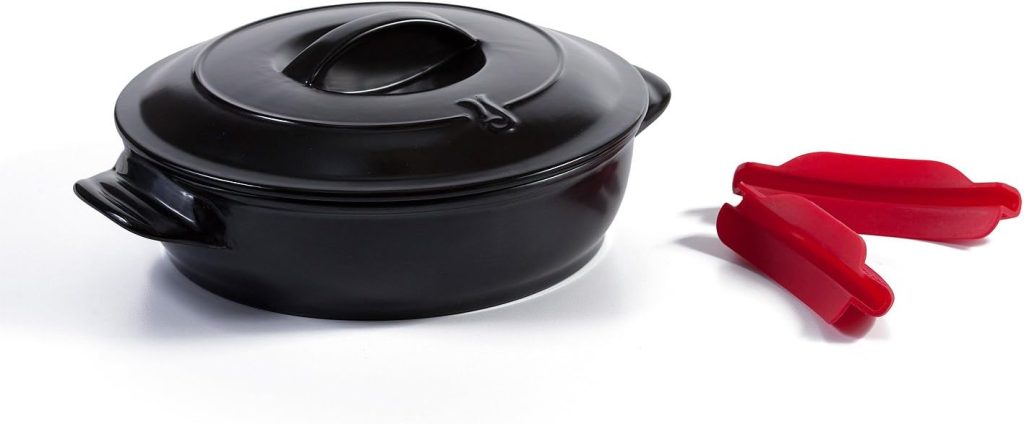
There’s no metal core hidden beneath a coating. The entire pot or pan is molded and fired from ceramic clay, similar to pottery but engineered for cooking.
This means what you see is what you get throughout the entire thickness of the cookware.
No Metals, No PFAS, No Coatings
Is Xtrema cookware really non-toxic?
According to independent lab testing, yes. Xtrema contains zero aluminum, copper, iron, or any other metals.
It’s completely free from PFAS, PTFE (Teflon), PFOA, lead, cadmium, and other harmful chemicals.
Because there’s no coating to apply, there are no binding agents or chemical treatments involved.
To learn about pure ceramic safety, it’s important to understand this distinction from conventional cookware.
Extremely High Heat Tolerance
Xtrema’s pure ceramic construction can withstand temperatures up to 2,700°F without degrading or releasing fumes.
This makes it suitable for high-heat searing, oven roasting at any temperature, and even campfire cooking.
The material won’t warp, and its safety profile remains unchanged regardless of temperature.
Potential Brittleness and Heaviness
The trade-off for chemical purity is physical fragility. Xtrema cookware is heavy—a 10-inch skillet weighs around 4 pounds.
More importantly, it can chip or crack if dropped on hard surfaces or subjected to sudden temperature changes (thermal shock).
Users need to preheat gradually and avoid placing hot pans directly into cold water.
What Is Caraway Cookware?
Caraway has gained popularity through social media marketing and its aesthetic appeal, but understanding what lies beneath its attractive exterior is crucial for informed decision-making.
Aluminum Base + Sol-Gel Ceramic Coating
Caraway cookware features an aluminum core that provides excellent heat conduction and keeps the pans lightweight.
This aluminum base is covered with a ceramic coating applied through a sol-gel process, which creates a slick, non-stick surface.
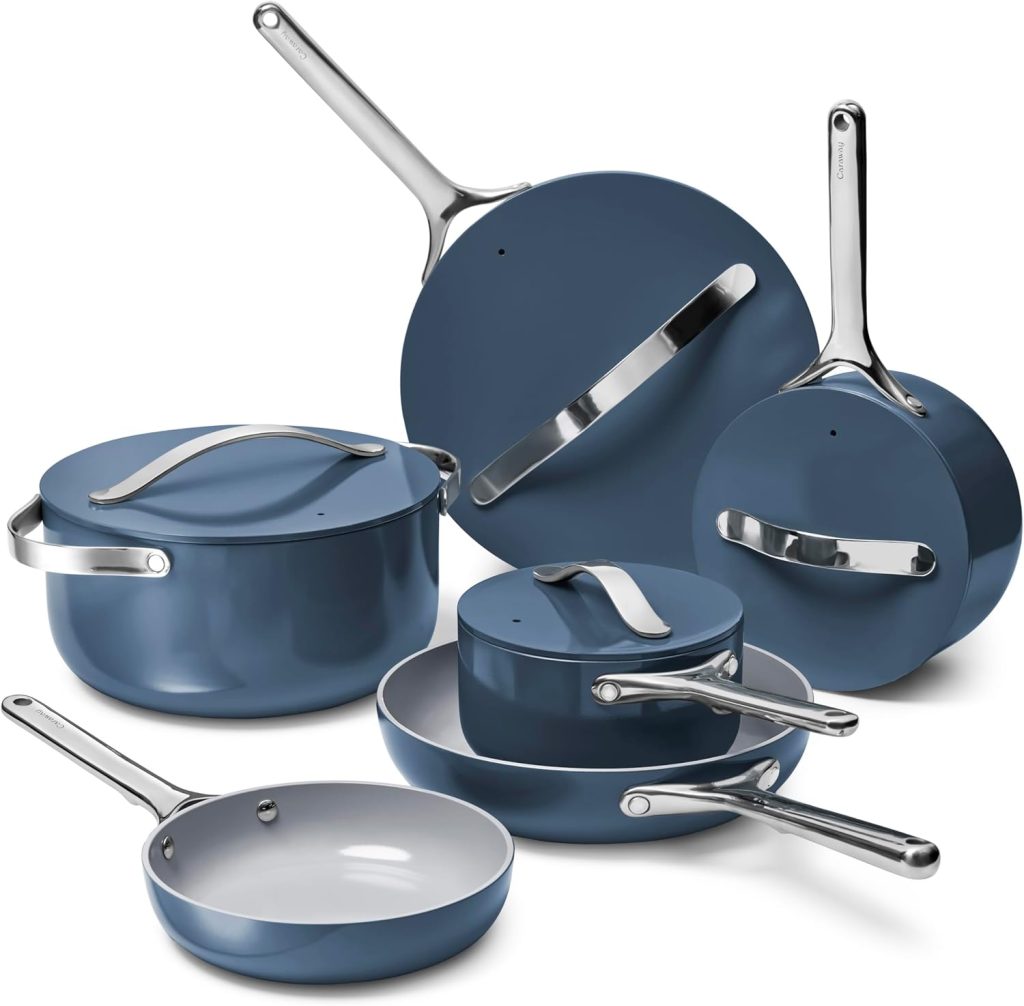
This construction method is standard among modern “ceramic” cookware brands and differs significantly from pure ceramic options.
Understanding why ceramic coatings differ from pure ceramics helps clarify performance expectations.
PFAS-Free, PFOA-Free, PTFE-Free
Caraway’s marketing emphasizes its absence of traditional non-stick chemicals.
The brand doesn’t use PFAS (per- and polyfluoroalkyl substances), PFOA (perfluorooctanoic acid), or PTFE (polytetrafluoroethylene, commonly known as Teflon).
Is caraway safer than Teflon? Absolutely.
The ceramic coating provides a non-stick surface without these controversial chemicals.
To understand PFAS vs PFAS-free coatings, consumers should recognize that Caraway belongs to the PFAS-free category.
Coating Is “Non-Stick” but Not Permanent
While Caraway’s ceramic coating performs impressively when new, it’s important to understand that all ceramic coatings are temporary.
With regular use, the coating gradually wears down, reducing non-stick performance.
Most users report noticeable degradation within 1-3 years, depending on cooking habits and care practices.
Lightweight and Beginner-Friendly
Caraway’s aluminum construction makes it significantly lighter than pure ceramic alternatives.
A 10.5-inch Caraway fry pan weighs about 2.5 pounds—nearly half the weight of a comparable Xtrema pan.
This makes it easier to handle, especially for those with limited grip strength, and more forgiving for cooking beginners.
Material & Construction Differences
The fundamental material differences between these brands create distinct user experiences that extend far beyond initial impressions.
Pure Ceramic vs Coated Aluminum
This is the core distinction in the Xtrema vs Caraway durability comparison.
Xtrema’s pure ceramic is the same material throughout, meaning there’s no coating to wear off.
Caraway’s aluminum core provides superior heat conduction but relies on a coating for its non-stick properties and safety profile.
When comparing pure ceramic vs ceramic-coated cookware, consider whether you prioritize unchanging material integrity or optimized thermal performance.
Coating Lifespan
Xtrema has no coating, so this concern doesn’t apply; the cooking surface remains identical to how it was on day one (assuming no chips or cracks).
Caraway’s coating lifespan depends on usage frequency, heat levels, utensils used, and cleaning methods.
Even with perfect care, ceramic coatings inevitably degrade. When the coating wears significantly, the pan should be replaced rather than risking aluminum exposure.
Heat Retention & Distribution
Aluminum conducts heat more efficiently than ceramic, meaning Caraway pans heat up faster and distribute heat more evenly across the cooking surface.
Xtrema requires longer preheating (5-7 minutes on medium-low) but retains heat exceptionally well once hot.
This makes Xtrema ideal for simmering and braising, while Caraway excels at quick sautés and precise temperature control.
Weight Differences
The weight contrast is substantial. Xtrema’s 10-inch skillet weighs approximately 4 pounds, while Caraway’s 10.5-inch fry pan weighs around 2.5 pounds.
For some cooks, Xtrema’s heft provides stability and feels premium; for others, it’s cumbersome.
Caraway’s lighter weight makes it easier to flip foods, pour liquids, and maneuver around the kitchen.
Safety Comparison — PFAS, Metals & Heavy Metals
When evaluating Xtrema cookware safety and Caraway cookware safety test results, the details matter significantly for health-conscious consumers.
Xtrema – Third-Party Tested, Lead-Free, Metal-Free
Xtrema publishes third-party laboratory test results confirming the absence of lead, cadmium, and other heavy metals.
The Xtrema vs Caraway heavy metals comparison strongly favors Xtrema because it contains zero metals of any kind.
No aluminum core could potentially be exposed through coating wear, no copper lining, and no iron components.
This makes it the preferred choice for those with metal sensitivities or those following strict non-toxic protocols.
Caraway – PFAS-Free but Has a Metal Core
Caraway’s ceramic coating is genuinely PFAS-free, which represents a significant safety improvement over traditional non-stick cookware.
However, the aluminum core remains present beneath the coating.
While aluminum exposure through intact ceramic coatings is minimal to nonexistent, the potential exists if the coating becomes severely damaged.
Most health experts consider this risk negligible with proper use and timely replacement.
Coating Wear Issues (Caraway) vs Thermal Shock Risk (Xtrema)
Each brand has its own safety considerations. Caraway users must monitor coating integrity and replace pans when the coating shows significant wear, scratching, or peeling.
Xtrema users must prevent thermal shock by avoiding sudden temperature changes and handling pieces carefully to prevent chips or cracks.
Both require mindful use, but in different ways.
Prop 65 & FDA Compliance
Both brands comply with FDA food-contact regulations. Neither carries California Proposition 65 warnings for lead or cadmium.
However, those interested in going deeper should check heavy metal safety in ceramics by reviewing independent test results rather than relying solely on manufacturer claims.
Cooking Performance — Which Works Better?
Real-world cooking performance often matters more than theoretical safety advantages, especially for those cooking daily meals.
Non-Stick Performance (Caraway Wins Early)
When brand new, Caraway offers superior non-stick performance.
Eggs slide effortlessly, pancakes release cleanly, and delicate fish fillets lift off without tearing.
Xtrema requires proper seasoning (coating with oil and heating) and adequate preheating to achieve similar results.
Even then, it never becomes as slippery as Caraway’s coated surface. For the first year or two, Caraway clearly wins this category.
High-Heat Performance (Xtrema Wins)
Xtrema excels at high-heat cooking methods. You can preheat it thoroughly and sear steaks at temperatures that would damage Caraway’s coating.
Xtrema’s heat tolerance means you can move it from the stovetop to a 500°F oven without concern.
Caraway’s 550°F limit is adequate for most home cooking, but Xtrema offers more versatility for advanced techniques.
Searing, Sautéing, Simmering
For searing meat or vegetables, Xtrema’s heat retention creates better browning once properly preheated.
Caraway’s aluminum core provides more responsive temperature control for sautéing, making it easier to prevent burning.
Both work well for simmering sauces and soups, though Xtrema’s superior heat retention means you can use lower heat settings once the pan is hot.
Cooking Without Oil
Neither option truly allows oil-free cooking despite marketing claims.
Caraway requires less oil than traditional stainless steel but still needs some fat for optimal non-stick performance.
Xtrema requires adequate oil or butter, especially before it’s properly seasoned.
Anyone seeking genuinely oil-free cooking should consider that both brands perform better with at least minimal fat.
Durability & Lifespan
Long-term value depends not just on initial cost but on how long each option maintains its performance and safety characteristics.
Xtrema Lasts Decades If Not Dropped
With careful handling, Xtrema cookware can serve you for 20+ years.
The cooking surface doesn’t degrade because there’s no coating to wear away.
Users report pieces maintaining their performance characteristics indefinitely.
The primary failure mode is physical damage to chips from impact or cracks from thermal shock.
If you can avoid these issues, Xtrema represents a buy-it-for-life investment.
Caraway Coating Lasts 1–3 Years
Most Caraway users report a noticeable decline in non-stick performance within 1-3 years of regular use.
Some pieces last longer with exceptionally gentle care, while others degrade faster with high-heat cooking or metal utensil use.
This isn’t a defect; it’s inherent to ceramic coating technology. Plan to replace Caraway pieces every few years to maintain optimal performance and safety.
Scratch Resistance vs Chip Resistance
Caraway’s coating can scratch if metal utensils are used, which accelerates degradation.
However, it won’t chip or crack from drops like Xtrema. Xtrema’s solid ceramic construction is scratch-resistant (though not scratch-proof) but vulnerable to impact damage.
The question becomes whether you’re more likely to scratch a coating through daily use or drop a heavy pan.
Replacement Frequency
Over 10 years, you might purchase Xtrema once, but you need to replace Caraway pieces 3-4 times.
This significantly impacts the true cost comparison. Xtrema’s higher upfront cost becomes more economical over time, assuming you don’t chip or crack the pieces.
When considering options like Xtrema vs Greenpan cookware brands, a similar replacement frequency applies to all ceramic-coated options.
Maintenance & Care
Proper maintenance extends lifespan and maintains performance, but the required care differs substantially between these brands.
Xtrema: Easy to Clean but Heavy
Xtrema cleanup is straightforward—hot water, dish soap, and a non-abrasive sponge handle most situations.
Stuck-on food can be removed by soaking or gentle scrubbing with baking soda.
The pieces are dishwasher-safe, though hand-washing is gentler.
The main maintenance challenge is physical handling due to the weight, especially when wet and soapy.
Caraway: Hand-Wash Only; Avoid Metal Utensils
Caraway specifically recommends hand-washing only, despite some users reporting dishwasher use without immediate problems.
Dishwasher detergents and high heat can accelerate coating degradation. Always use wood, silicone, or nylon utensils—metal tools will scratch the coating.
Avoid cooking sprays, which leave residue that builds up on ceramic coatings and reduces non-stick performance.
How to Avoid Coating Wear
For Caraway, coating preservation means cooking on low to medium heat (never high), using adequate oil, avoiding abrasive scrubbers, and storing carefully with pan protectors between stacked pieces.
Never use cooking sprays or aerosol oils. For Xtrema, avoiding thermal shock is crucial; always preheat gradually and never place hot cookware under cold water.
Dishwasher Considerations
Xtrema is genuinely dishwasher-safe with no concerns about coating damage.
Caraway technically can survive dishwasher cycles, but doing so regularly will shorten coating lifespan.
If convenience is your priority, Xtrema offers easier long-term maintenance.
Similar care considerations apply when comparing the difference between Xtrema and Le Creuset or All Clad vs Le Creuset stainless steel cookware brand options.
Environmental Impact
For eco-conscious consumers, the environmental implications extend beyond just PFAS-free claims to include manufacturing, lifespan, and end-of-life disposal.
Xtrema – Fully Ceramic, Recyclable, Long Lifespan
Xtrema’s pure ceramic composition means it contains no toxic materials that could leach into the environment.
When a piece finally breaks, the ceramic material is inert and can be recycled or disposed of safely.
The decades-long lifespan means fewer replacements, reducing manufacturing demand and shipping emissions.
The production process requires high-temperature firing, which consumes energy, but this is offset by the extended use period.
Caraway – Less Durable, but Eco-Friendly Branding
Caraway emphasizes sustainability in its marketing, packaging, and company practices.
However, the 1-3 year replacement cycle means more manufacturing, more shipping, and more disposal over time.
The aluminum core is recyclable, but the ceramic coating complicates recycling processes.
Most ceramic-coated cookware ends up in landfills when the coating fails.
PFAS Absence = Sustainability Win
Both brands deserve credit for avoiding PFAS chemicals, which persist in the environment indefinitely and accumulate in living organisms.
PFAS contamination has become a significant environmental concern, affecting water supplies and ecosystems globally.
Choosing either Xtrema or Caraway over traditional non-stick cookware represents an environmental improvement.
Manufacturing Emissions Comparison
Xtrema’s high-temperature ceramic firing process is energy-intensive, but happens once per piece.
Caraway’s manufacturing involves aluminum smelting (extremely energy-intensive) plus coating application.
However, Caraway’s lighter weight reduces shipping emissions.
The environmental calculus is complex, but Xtrema’s longer lifespan likely makes it the more sustainable choice overall.
Which Brand Is Best for You? (Use-Case Breakdown)
The right choice depends on your specific priorities, cooking habits, and lifestyle factors rather than any universal “best” option.
Best for Toxin-Free Cooking – Xtrema
If absolute chemical purity is your top priority, perhaps due to health conditions, chemical sensitivities, or commitment to toxin-free living, Xtrema is the clear winner.
Its metal-free, coating-free construction eliminates even theoretical exposure risks.
This makes it ideal for those following strict clean-living protocols or cooking for young children.
Best for Beginners – Caraway
New cooks will find Caraway more forgiving and easier to use successfully.
The lighter weight, faster heating, and superior initial non-stick performance reduce the learning curve.
Caraway requires less technique mastery than Xtrema, which demands proper preheating and temperature management for optimal results.
Best for Searing & High Heat – Xtrema
Professional-level searing, high-temperature roasting, and techniques requiring extreme heat favor Xtrema.
Its 2,700°F tolerance and exceptional heat retention create restaurant-quality browning and caramelization.
Chefs and serious home cooks who frequently use high-heat methods will appreciate Xtrema’s capabilities.
Best for Low-Oil Cooking – Caraway
Those trying to minimize cooking oil will have better success with Caraway’s slicker coating, at least while it’s new.
Xtrema requires adequate fat for proper release, making it less suitable for strict low-oil diets.
However, both brands require some oil for optimal performance despite “oil-free cooking” marketing claims.
Best for Long-Term Value – Xtrema
Despite higher upfront costs, Xtrema’s decades-long lifespan makes it more economical over time.
If you’re willing to handle the pieces carefully and can afford the initial investment, Xtrema delivers superior cost-per-use value.
Calculate the total cost over 10 years, including replacements, to see the true economic picture.
FAQs About Xtrema vs Caraway Cookware
Is Xtrema better than Caraway for health?
Yes, Xtrema offers a more comprehensive non-toxic option due to its metal-free, coating-free, pure ceramic construction.
While Caraway is PFAS-free and safe when the coating is intact, Xtrema eliminates any theoretical concerns about aluminum exposure or coating degradation affecting safety.
Which is more non-stick?
Caraway provides superior non-stick performance when new, allowing easier food release with less oil.
Xtrema can achieve good non-stick properties with proper seasoning and preheating, but it never matches the slickness of Caraway’s coating.
However, Xtrema’s performance remains consistent over decades, while Caraway’s declines within a few years.
Do either contain PFAS or PTFE?
No, both brands are completely free from PFAS (including PFOA) and PTFE (Teflon).
This represents a significant safety advantage over traditional non-stick cookware.
Both use alternative approaches to create non-stick or low-stick cooking surfaces without these controversial chemicals.
Final Verdict — Xtrema Wins for Safety, Caraway Wins for Convenience
After examining materials, safety testing, performance, durability, and value, the verdict depends entirely on your priorities.
Xtrema represents the most truly non-toxic cookware option available, with pure ceramic construction that contains zero metals, coatings, or chemicals.
It lasts decades and maintains consistent performance throughout its lifespan.
However, it’s heavy, requires careful handling to prevent damage, and demands technique mastery for optimal results.
Caraway offers PFAS-free cooking in a beginner-friendly, lightweight package with excellent initial non-stick performance.
It’s more affordable upfront and easier to use successfully. The trade-off is a shorter lifespan due to inevitable coating degradation and the presence of an aluminum core beneath the coating.
For health-conscious cooks prioritizing absolute chemical purity and long-term value, Xtrema is the superior choice.
For those wanting PFAS-free convenience without the learning curve or higher initial investment, Caraway delivers excellent results.
Both brands significantly outperform traditional non-stick cookware in terms of safety.
Your decision should reflect whether you value unchanging material purity or user-friendly convenience more highly.
Finally, for a list of other non-toxic cookware brands, explore our guide on the best and safest PTFE and Teflon-free pots and pans, the perfect match for all your cooking needs.