You’re hosting Sunday lunch, carefully arranging your favourite Libbey glasses on the dining table, when suddenly a thought strikes you. Are these glasses actually safe for my family?
It’s a question that’s been keeping more parents awake at night than you might imagine.
With lead poisoning concerns reaching epidemic proportions and health-conscious consumers becoming increasingly vigilant about toxic materials in their kitchenware, the safety of our everyday glassware has never been more critical.
You’ve probably heard whispers about lead in glassware, seen alarming headlines about vintage pieces testing positive for dangerous levels of heavy metals, and wondered whether your trusty Libbey collection might be harbouring hidden dangers.
The stakes couldn’t be higher; we’re talking about the vessels that hold our morning coffee, our children’s juice, and our evening wine.
But here’s where it gets interesting: the answer to Libbey’s lead content isn’t quite as straightforward as you might expect.
The Truth About Modern Libbey Glassware: Lead-Free by Design
Let’s cut straight to the chase with some genuinely reassuring news.
According to Libbey's official statements, all contemporary Libbey glassware is completely heavy metal-free, including lead, regardless of the country of origin. Their products are considered leadless, non-toxic, non-radioactive and are safe for food contact.
This isn’t just marketing speak; it represents a fundamental shift in how Libbey manufactures their glassware.
Unlike crystal, which traditionally has been manufactured with at least 24% lead-oxide, Libbey products are made from high-brilliance glass formulations that eliminate the need for lead additives.
What Makes Modern Libbey Different?
The transformation in Libbey’s manufacturing process reflects broader industry changes driven by health concerns and regulatory pressures.

Libbey’s Signature glassware family exemplifies this commitment to safety, being made lead-free and BPA-free in the USA through an innovative ClearFire glassmaking process that ensures unprecedented brightness, clarity, and resilience.
The Vintage Libbey Dilemma: When History Becomes Hazardous
Here’s where things get considerably more complex, and frankly, rather concerning. While modern Libbey glassware gets the green light for safety, vintage and antique Libbey pieces tell a dramatically different story.
The American glassmaker states that all of its contemporary pieces are free of heavy metals, including lead, regardless of their country of origin.
However, some vintage and antique glassware may have lead content.
The Shocking Reality of Vintage Testing
Independent testing by Tamara Rubin, founder of Lead Safe Mama and a leading advocate for consumer safety, has revealed alarming levels of lead in vintage Libbey decorated glassware.
The findings are nothing short of staggering:
- Vintage Libbey glass with red, white and blue floral pattern tested at 103,300 ppm Lead plus 6,306 ppm Cadmium in the painted decorations.
- Vintage pieces with Queen Anne Lace pattern showed 59,000 ppm Lead plus 1,036 ppm Cadmium in painted decorations.
- Most shocking of all, vintage Libbey glass with red poppy floral pattern registered 733,200 ppm Lead plus 28,500 ppm Cadmium in the painted decorations.
To put these numbers in perspective, the FDA considers anything over 100 ppm lead as unsafe for children’s products. These vintage pieces are literally thousands of times above safe limits.
Why the Dramatic Difference?
The contrast between vintage and modern Libbey pieces stems from fundamental changes in manufacturing standards and regulations.
Decades ago, lead-based paints and glazes were standard in the industry, prized for their vibrant colours and durability.
Today’s understanding of lead’s health impacts has revolutionised manufacturing processes entirely.
Understanding Lead in Glassware: The Science Behind the Concern
To truly appreciate why Libbey’s modern commitment to lead-free manufacturing matters, you need to understand how lead functions in glassware and why it poses such significant health risks.
How Lead Traditionally Enhanced Glass
Historically, lead oxide served multiple purposes in glassmaking:
- Enhanced clarity and brilliance
- Improved workability during manufacturing
- Created the distinctive “ring” of quality crystal
- Enabled intricate decorative techniques
The Health Impact Reality
Lead exposure, particularly in children, can cause:
- Developmental delays and learning difficulties
- Behavioural problems and reduced IQ
- Kidney damage and digestive issues
- Neurological problems that can persist into adulthood
The particularly insidious nature of lead poisoning lies in its subtlety—symptoms often don’t appear until significant damage has occurred.
Modern Alternatives That Actually Work
Today’s lead-free formulations achieve the same aesthetic qualities through:
- Advanced soda-lime glass compositions
- Precision temperature control during manufacturing
- Innovative cooling processes that enhance clarity
- Lead-free decorative techniques using safer pigments
The Complete Safety Checklist: How to Identify Safe Libbey Glassware
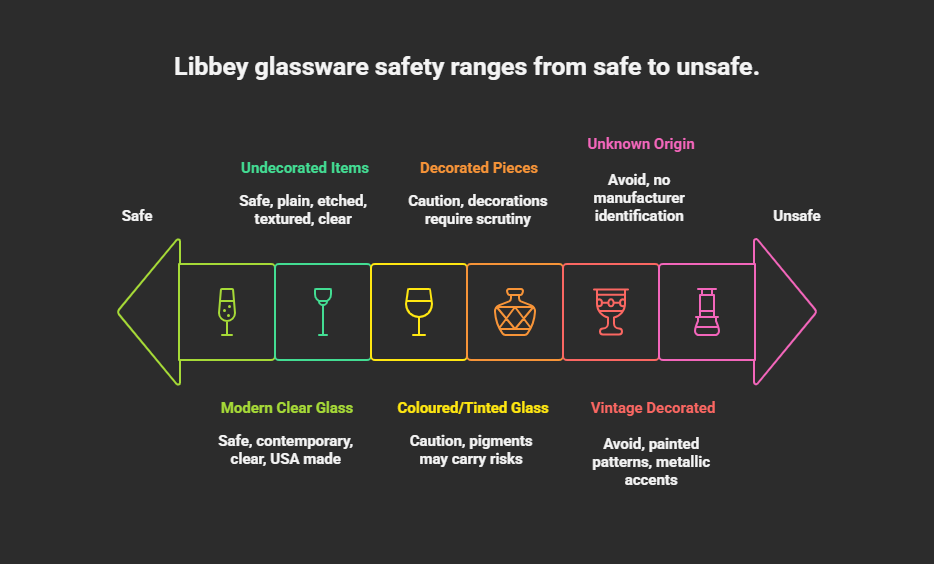
Not all Libbey glassware is created equal, and knowing how to distinguish between safe and potentially problematic pieces could protect your family’s health.
Green Light: Definitely Safe Options
✅ Modern Clear Glass Pieces
- All contemporary Libbey clear glassware
- Items manufactured after 2000
- Pieces with Libbey’s modern branding and packaging
- Signature Collection pieces made in the USA with the ClearFire process
✅ Undecorated Items
- Plain glass without painted designs
- Etched patterns (without paint or colour)
- Textured glass surfaces
- Clear stemware and tumblers
Yellow Light: Exercise Caution
⚠️ Coloured or Tinted Glass
- Some caution may be needed with colored or tinted glass products, as they may carry potential risks depending on the specific pigments used
- Modern pieces are likely safe, but independent testing provides peace of mind
- Consider contacting Libbey directly for specific product safety information
⚠️ Recently Manufactured Decorated Pieces
- Items with painted or applied decorations
- While modern manufacturing standards are higher, decorative elements require extra scrutiny
- Focus on decorations that don’t contact food or beverages
Red Light: Avoid Entirely
❌ Vintage Decorated Libbey (Pre-1980s)
- Any Libbey glassware with painted floral patterns
- Vintage pieces with metallic accents
- Antique Libbey crystal or crystal-like pieces
- Items showing wear on decorative elements
❌ Unknown Origin Pieces
- Libbey-style glassware without clear manufacturer identification
- Second-hand pieces without provenance
- Inherited glassware of uncertain age
Note: If you’re unsure about a piece’s age, dating Libbey glass marks can help you determine when it was made.
Beyond Libbey: Building a Completely Lead-Free Glassware Collection
While modern Libbey glassware represents a solid, safe choice for most families, understanding the broader landscape of lead-free glassware options empowers you to make the best decisions for your household.
Premium Lead-Free Alternatives
Borosilicate Glass Champions: Borosilicate glass, with its unique composition, is lead and cadmium-free glassware.
Leading borosilicate brands include:
- Pyrex (original formulation)
- Anchor Hocking
- Duralex
- Schott Zwiesel
Other Trusted Lead-Free Manufacturers
- Bormioli Rocco (Italian soda-lime glass)
- Luminarc (French tempered glass)
- Pasabahce (Turkish lead-free crystal alternatives)
- IKEA’s DRÖM series (specifically tested lead-free)
The Economics of Safety
Investing in quality lead-free glassware isn’t just about health, but it’s also about value. Safe glassware:
- Lasts longer due to superior manufacturing
- Maintains clarity and brilliance over time
- Provides peace of mind for daily use
- Retains resale value better than questionable alternatives.
Practical Tips: Living Safely with Your Glassware Collection
Knowing which glassware is safe represents only half the battle. How you use, clean, and maintain your collection significantly impacts your exposure to any potential toxins.
Smart Usage Guidelines
For Libbey and All Glassware:
- Avoid using any decorated glassware for hot beverages
- Never use vintage or uncertain pieces for children’s drinks
- Rotate glassware to prevent wear-pattern exposure
- Store glassware properly to prevent surface damage
Cleaning Best Practices
- Use gentle, non-abrasive cleaning methods
- Avoid harsh chemicals that might compromise surface integrity
- Hand-wash vintage or decorated pieces (if you must keep them)
- Replace any glassware showing signs of wear or chipping
When in doubt, test using the simple and affordable home lead testing kits, while not as precise as professional XRF testing, can provide initial screening for concerning pieces.
However, for valuable or frequently used items, professional testing offers definitive answers.
Creating a Family Safety Protocol
Establish clear guidelines for your household:
- Designate specific glassware for children’s use
- Maintain an inventory of known safe pieces
- Educate family members about identifying potentially problematic glassware
- Consider professional testing for inherited or vintage pieces of sentimental value.
The Future of Glassware Safety: What’s Coming Next
The landscape of glassware safety continues to evolve, driven by consumer awareness, regulatory pressure, and manufacturing innovation.
Emerging Safety Standards
Manufacturers like Libbey are increasingly adopting voluntary standards that exceed regulatory requirements:
- Enhanced testing protocols for all products
- Supply chain transparency initiatives
- Consumer education programmes
- Third-party safety certifications.
Technology Driving Change
Advanced manufacturing techniques continue to improve:
- Precision temperature control eliminates the need for lead-based clarifying agents
- Computer-controlled cooling processes enhance natural glass properties
- Innovative surface treatments provide decoration without toxic materials
- Automated quality control systems ensure consistent safety standards.
Consumer Power in Action
The demand for transparency has prompted industry-wide changes:
- More manufacturers are proactively publishing safety data
- Independent testing is becoming a standard practice
- Consumer advocacy groups are gaining influence
- Regulatory agencies are increasing oversight and enforcement.
Frequently Asked Questions: Your Libbey Safety Concerns Answered
Modern Libbey pieces typically feature contemporary branding, clear manufacturer markings, and are sold with current packaging and documentation.
Vintage pieces often lack modern safety certifications and may feature older-style branding or designs popular in previous decades.
While vintage decorated pieces have tested positive for significant lead content, the decision depends on your risk tolerance and how you use them.
If you choose to keep them, never use them for food or beverages, especially for children, and consider them decorative only.
Exercise extra caution with any decorated Libbey pieces, particularly vintage items.
Some caution may be needed with colored or tinted glass products, as they may carry potential risks depending on the specific pigments used.
Tempered glass is usually lead-free because the tempering process works better with soda-lime glass. However, always verify with the manufacturer.
With proper care, lead-free glass can last for decades. It’s durable and maintains its clarity over time, making it a good long-term investment.
Most modern American manufacturers have eliminated lead from their products. However, always check the product information to be sure.
Making the Right Choice for Your Family
Choosing lead-free glassware like Libbey products protects your family’s health. The peace of mind that comes with safe products is invaluable.
Modern manufacturing has made it easy to find beautiful, affordable, and completely safe glassware.
Start by replacing any questionable vintage pieces with new, certified lead-free options. Focus first on items you use daily for food and drinks. Gradually update decorative pieces as your budget allows.
Remember that investing in safe glassware is investing in your family’s long-term health.
The small cost difference between safe and potentially unsafe products is insignificant compared to the health risks involved.
Their wide range of products means you can find exactly what you need while keeping your family safe from lead exposure.
Leave a Reply