Buying new dishes seems like a simple errand until you’re actually doing it. Walk into any home goods store or browse Amazon, and you’ll find hundreds of options across materials, styles, set sizes, and price points, and suddenly the decision feels much bigger than it should.
This dinnerware buying guide cuts through that noise. Whether you’re setting up a kitchen for the first time, replacing a tired set, or adding formal pieces for entertaining, the right choice comes down to a handful of clear factors: the material, the set size, the features that matter for daily use, and what your household actually needs.
This guide covers all of it.
Understanding Dinnerware Basics
What Dinnerware Includes
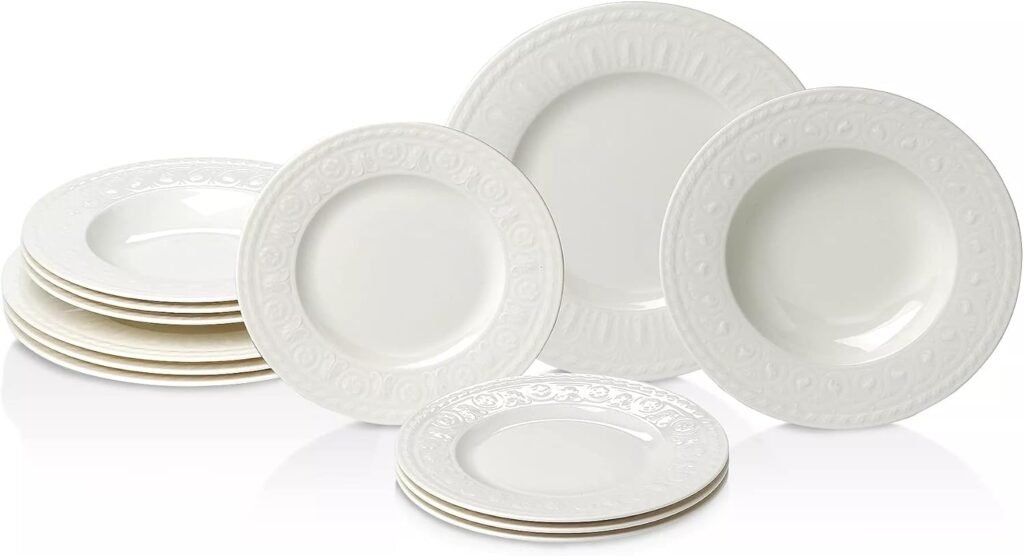
A standard dinnerware set serves meals across the full dining experience. The core pieces are dinner plates for main courses, salad plates for sides and starters, bowls for soups and cereals, and cups or mugs for beverages.
Some sets include a cup-and-saucer configuration suited for tea or coffee service.
Wedgwood builds entire collections around this format. Beyond the individual place setting pieces, expanded sets may include a serving platter for presenting food at the table.
For a more thorough breakdown of how all these pieces work together, the complete guide to understanding Dinnerware sets covers the full picture in detail.
Standard Dinnerware Place Settings
A place setting is the complete arrangement of dishes for one person at the table. The Emily Post Institute, the longstanding authority on dining etiquette, defines a standard place setting as the grouping that organizes a single diner’s full set of dishes, plate, bowl, and cup in their proper positions.
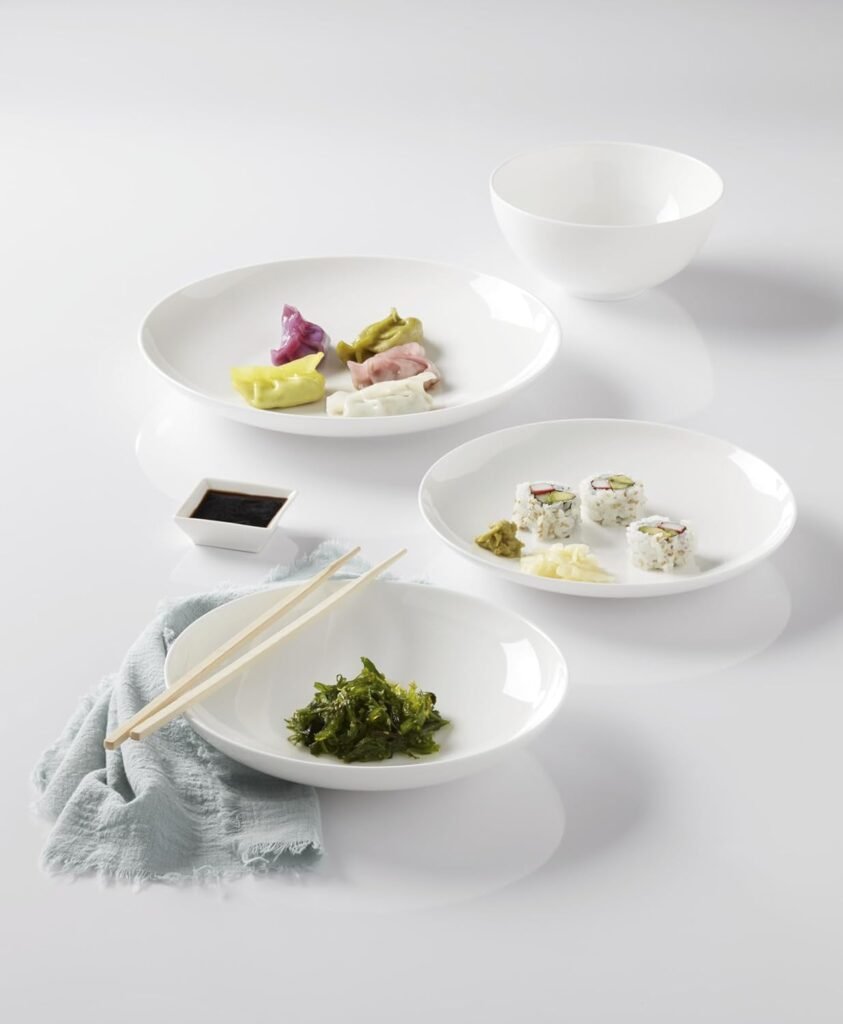
Most dinnerware sets are built around a 4-piece place setting: one dinner plate, one salad plate, one bowl, and one mug or cup.
This configuration is the industry standard, which is why you’ll typically see sets described by the number of place settings rather than a total piece count.
Typical Dinnerware Set Sizes
Set sizes reflect the number of place settings included and are calibrated to different household sizes. A 16-piece set covers four complete place settings, the most popular configuration for households of two to four people.
A 24-piece set extends that to six place settings, suitable for larger households or those who entertain frequently.
Beyond that, expanded family sets of 32 pieces or more include additional place settings alongside serving pieces. Lenox and Corelle both structure their product lines around these standard configurations, making it straightforward to find the right size.
Knowing your household size before you browse saves a significant amount of time.
Types of Dinnerware Materials
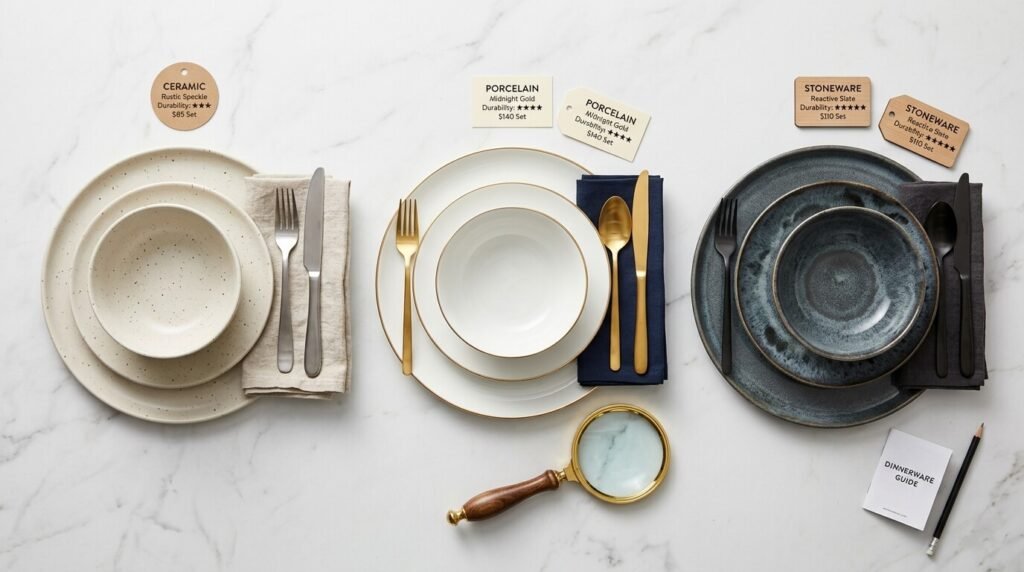
Porcelain Dinnerware
Porcelain is fired at high temperatures, which produces a dense, non-porous surface that resists heat and staining better than lower-fired ceramics.
Villeroy & Boch produces some of the most well-regarded porcelain lines in the market, pieces that perform equally well for casual weeknight dinners and more formal table settings.
Porcelain is typically lighter than stoneware, dishwasher safe, and microwave safe, making it one of the most practical everyday materials available.
Its smooth glaze surface doesn’t hold onto food odors or residue, which keeps cleaning straightforward. The lead-free glaze used in quality porcelain is FDA-certified food-safe, which matters when choosing dishes for regular food contact.
Stoneware Dinnerware
Stoneware’s thick, dense construction withstands use reliably over years of daily handling. Denby has built its reputation almost entirely on stoneware.
The brand’s pieces are known for scratch resistance, solid heat retention, and a tactile surface quality that suits rustic and farmhouse kitchen aesthetics well.
Stoneware is heavier than porcelain, which some people prefer for its grounded, quality feel. It’s dishwasher and microwave-safe in most cases, and its natural texture means minor surface marks are far less noticeable than they would be on bright white porcelain.
For everyday dining in a household that values durability over elegance, stoneware consistently delivers.
Bone China
Bone china strengthens ceramic by incorporating bone ash into the porcelain formula. The result is a material that’s thinner and lighter than standard porcelain but measurably stronger at the edges.
Wedgwood has produced bone china for over 250 years and remains the most recognized name in the category.
The translucent, almost luminous quality of bone china gives it a visual elegance that no other material quite replicates. It’s the standard choice for formal dinnerware collections and special occasion settings.
Quality bone china is dishwasher safe, though hand washing is recommended for pieces with metallic trim or delicate decorative patterns to preserve their appearance over time.
Earthenware
Earthenware is a low-fired ceramic that absorbs glaze during production, giving it rich, saturated color and a characteristically artisan quality.
Fiesta Dinnerware has made earthenware famous with its bold palette and thick, casual styling, a collection that’s been in continuous production since 1936.
Because it’s fired at lower temperatures, earthenware is more porous than porcelain or stoneware and therefore more prone to chipping under heavy daily use.
It’s best suited for households that handle dishes carefully or for sets that see occasional rather than daily use. The visual appeal of earthenware is undeniable; no other material brings the same handmade warmth to a table.
Melamine and Glass Dinnerware
Melamine resists breakage entirely. It’s a synthetic material that won’t chip or shatter, making it the go-to for outdoor dining, households with young children, and anyone who needs dishes that survive rough handling.
Zak Designs produces melamine sets in a wide range of styles suited to casual and outdoor dining contexts.
Tempered glass dinnerware, like the kind Corning Incorporated developed for Corelle, improves durability over standard glass while keeping dishes lightweight and stackable.
Both materials are dishwasher safe, though melamine is not microwave safe. For anyone prioritizing low-maintenance, break-resistant everyday dishes, these two materials cover the practical end of the market effectively.
Choosing the Right Dinnerware Style
Casual Dinnerware
Casual dinnerware is designed for the rhythm of everyday home dining meals that happen quickly, dishes that go straight into the dishwasher, and a table that doesn’t need to look ceremonial.
Corelle supports daily meals with its glass-ceramic construction that combines lightweight handling with genuine durability and efficient stackability.
IKEA’s everyday tableware lines follow a similar philosophy, emphasizing simplicity with clean shapes and neutral colors that work in any kitchen.
For most households, the casual category is where most of their daily dishes fall, which makes durability and appliance compatibility the most important features to evaluate in this segment.
Formal Dinnerware
Formal dinnerware is for the occasions that call for something more considered, such as holiday gatherings, dinner parties, and celebratory meals.
Lenox enhances presentation with formal porcelain and bone china collections that signal care and occasion at the table.
The distinction between formal and casual isn’t just aesthetic; formal sets often include additional pieces like charger plates, cup and saucer pairs, and matching serving platters that expand the table arrangement for multi-course meals.
Many households maintain a separate formal set that lives in a cabinet most of the year and comes out specifically for guests. If you entertain regularly, investing in a quality formal set that coordinates with your everyday pieces makes the transition between casual and formal dining seamless.
Modern and Decorative Styles
Beyond the casual-versus-formal divide, dinnerware design covers a wide range of aesthetic territory. Fiesta Dinnerware’s bold color scheme defines a style that’s been influential for decades. Its saturated, mix-and-match palette is instantly recognizable.
At the other end of the spectrum, IKEA’s minimalist design lines emphasize clean geometry and neutral tones.
Wedgwood produces decorative patterns that blend historical motifs with contemporary sensibility. The right choice depends on whether you want your dishes to express personality or to serve as a neutral backdrop for the food.
Either direction is valid, just make sure the decorative appeal you’re drawn to in a store still appeals to you after a year of seeing it at every meal.
Important Features to Consider When Buying Dinnerware
Durability and Chip Resistance
Corelle withstands impact better than most comparably priced ceramic sets. Its vitrelle glass construction is specifically engineered for chip resistance at the edges, which is where damage most commonly occurs in daily use.
Denby stoneware protects its glaze through dense construction that resists abrasion over years of dishwasher cycles. When evaluating durability, look at both the material’s inherent strength and whether the brand backs its product with a warranty.
Corelle offers a break and chip warranty on its collections, which reflects confidence in the product’s long-term performance. Buying durable dinnerware costs more upfront but significantly less over five years than replacing cheaper sets annually.
Microwave and Dishwasher Safety
These two features affect how convenient a set is to live with more than almost any other specification. A set that isn’t microwave safe means transferring food to another dish before reheating, an irritating extra step that compounds over daily use.
Corelle allows heating in the microwave without issue, as do most porcelain and stoneware sets.
IKEA’s everyday lines are consistently dishwasher safe, which keeps maintenance practical for households that run the dishwasher daily.
Always verify both compatibility points before purchasing some decorative glazes and metallic trim patterns, as they restrict appliance use even when the base material would otherwise qualify.
The FDA regulates food-safety standards for these materials, so certified dishwasher-safe products meet independently verified safety criteria.
Stackability and Storage
Stackability shapes how well a set integrates into real kitchen life. Corelle saves space with a slim profile that stacks efficiently.
The same cabinet volume holds noticeably more Corelle pieces than thicker stoneware or earthenware. IKEA designs its tableware with storage space efficiency in mind, producing sets with consistent sizing that allow clean, stable stacking.
Before buying, check the stated dimensions of the plates against your actual cabinet depth. Oversized dinner plates that fit the dining table but not the cabinet create daily storage frustrations.
If your kitchen has limited storage, prioritize sets with a shallow profile and consistent sizing across all pieces in the collection.
Selecting the Right Dinnerware Set Size
Sets for Small Households
Singles and couples can manage comfortably with 8-piece sets covering two complete place settings, though buying a 12-piece set gives buffer room for breakage and the occasional guest without overcrowding cabinet space.
IKEA offers a range of budget dinnerware options in smaller configurations that are well-suited to first apartments and smaller households.
The practical consideration is not just the current household size but also how frequently you host; if guests are rare, a smaller set with a few individual backup pieces is sufficient.
Lenox and other mid-range brands also offer open stock pieces that can supplement a base set without requiring a full new purchase.
Sets for Families
A household of four needs a minimum of 16 pieces as a baseline, one complete 4-piece place setting per person.
In reality, most family households benefit from 20 or more pieces to account for breakage, simultaneous dishwasher and cabinet use, and the reality that not all pieces stay in service indefinitely.
Corelle supports family meals with durable sets that handle the active daily use that comes with children at the table.
The brand’s chip resistance and relatively low individual piece replacement cost make it a sensible long-term investment for families.
When buying for family use, prioritize durability and dishwasher safety over aesthetics; those two features determine how the set actually performs across years of daily family dining.
Dinnerware for Entertaining
If entertaining is a regular part of your lifestyle, the baseline 16-piece set needs supplementing.
At minimum, a hosting household benefits from eight full place settings, 32 pieces, plus serving pieces: a serving platter, serving bowls, and potentially a charger plate set for formal occasions.
Lenox presents food beautifully with serving platters designed to coordinate with their tableware collections.
Some hosts maintain separate casual and formal sets and select from both depending on the occasion.
When building an entertaining-oriented collection, focus on pieces that coordinate across patterns and materials so the table looks cohesive even when mixing pieces from different sets or purchase periods.
Budget Considerations for Dinnerware
Affordable Dinnerware Options
The budget end of the market is more capable than it used to be. IKEA’s everyday porcelain and stoneware sets offer a significantly lower cost without sacrificing dishwasher safety or basic durability.
A full 18-piece set can be purchased for a fraction of what mid-range brands charge. Amazon carries a wide range of budget dinnerware options across materials, making it easy to compare value across brands without visiting multiple stores.
The trade-off at lower price points is that longevity budget sets may show wear faster and chip more readily than mid-range options.
For a first apartment or a transitional household, budget dinnerware is entirely practical. For a long-term household setup, the value calculation over five years usually favors spending more upfront.
Mid-Range Dinnerware Sets
The mid-range, roughly $50 to $150 for a 16-piece set, is where the strongest value typically lives. Corelle sits in this range with glass-ceramic construction that genuinely outperforms many more expensive options in durability.
Denby stoneware at the upper end of this bracket offers exceptional scratch resistance and a handcrafted quality that improves aesthetically with age.
Brand reputation matters in this segment: Lenox influences purchase decisions through decades of consistent quality, and that reputation is generally reflected in the product’s real-world performance.
Mid-range buyers should prioritize sets with warranty coverage and available open-stock replacement pieces, both of which indicate the brand’s confidence in long-term product support.
Premium Dinnerware Collections
Premium dinnerware, Wedgwood bone china, Villeroy & Boch porcelain, Versace Home collections, is an investment in craftsmanship and design heritage as much as functionality.
These sets signal luxury at the table and are designed to retain their aesthetic quality over decades of careful use. At this price point, the expectation is longevity: a quality bone china set purchased now should still be in service twenty years from now.
The practical considerations at the premium level are the same as elsewhere: verify dishwasher safety, confirm replacement pieces are available, and match the set to how you actually intend to use it.
Premium formal dinnerware used only for special occasions is a sound investment; premium everyday dinnerware requires genuinely careful handling to justify the cost.
Common Mistakes When Buying Dinnerware
Choosing Style Over Functionality
It’s easy to choose a beautiful set in the store and overlook how it performs in daily use. Earthenware with intricate hand-painted patterns looks stunning on a table but requires careful handling and may not be dishwasher safe, a serious limitation for most households.
Fiesta Dinnerware’s bold color scheme is genuinely appealing, but earthenware chips more readily than stoneware or porcelain, which matters over the years of daily use.
Before committing to a set based on how it looks, ask yourself how it handles dishwashers, microwaves, stacking, and regular contact. Style that comes at the cost of practical functionality tends to become a frustration within the first year.
Buying Too Few Pieces
A 16-piece set for a family of four is the minimum, not the comfortable working number. Dishes get broken, chipped, and retired over time, and if every piece is in constant rotation, there’s no margin for normal attrition.
Buy slightly more than you think you need, particularly in the plate and bowl categories, where daily use is highest.
Many brands offer open stock pricing on individual pieces, which makes it worth checking whether the set you’re considering supports that option before purchasing.
Running short on plates every time the dishwasher is full is a daily inconvenience that’s entirely avoidable with a modest upfront investment in a slightly larger set.
Ignoring Material Maintenance
Different materials carry different maintenance requirements, and the gap between what you’re willing to do and what the material needs will determine how well the set ages.
Bone china with metallic trim is not dishwasher safe; machine washing gradually degrades the metallic edges. Some unglazed stoneware and earthenware pieces absorb moisture and should be dried thoroughly after washing to prevent odor development.
A lead-free glaze certified by the FDA ensures safety at the surface level, but even food-safe glazes can degrade under repeated exposure to abrasive dishwasher detergents over time.
Read care instructions before buying, and be realistic about whether your household will actually follow them.
The best material is the one whose maintenance requirements align with how you actually run your kitchen.
Final Thoughts
Good dinnerware doesn’t have to be complicated to choose; it just has to fit your household.
The right set balances the material’s durability with your kitchen’s daily demands, the style you want with the maintenance you’ll realistically commit to, and the set size with how many people actually sit at your table.
Whether you’re shopping on a tight budget or investing in pieces you’ll use for decades, the factors are the same: material quality, appliance compatibility, storage practicality, and lifestyle fit.
Evaluate those four things clearly, and the right dinnerware set for your home becomes a straightforward decision rather than an overwhelming one.