Most people don’t think too hard about their dishes until they’re chipping, stacking badly, or simply not surviving the dishwasher.
Finding the best dinnerware sets for everyday use means more than picking something that looks good on a shelf.
It means choosing dishes that hold up to daily meals, handle microwave reheating and regular washing without complaint, and fit comfortably in whatever storage space you have.
Material, set size, and design all play a role. This guide covers everything you need to know, from the best materials for daily use to the most common buying mistakes, so you can choose a set that actually works for your household.
What Makes a Dinnerware Set Good for Everyday Use
Durability and Chip Resistance
The single most important quality for everyday dinnerware is how well it withstands the constant handling of daily life.
Corelle is one of the most recognized names here; its vitrelle glass construction withstands impact and prevents damage at the edges better than most ceramic alternatives at the same price point.
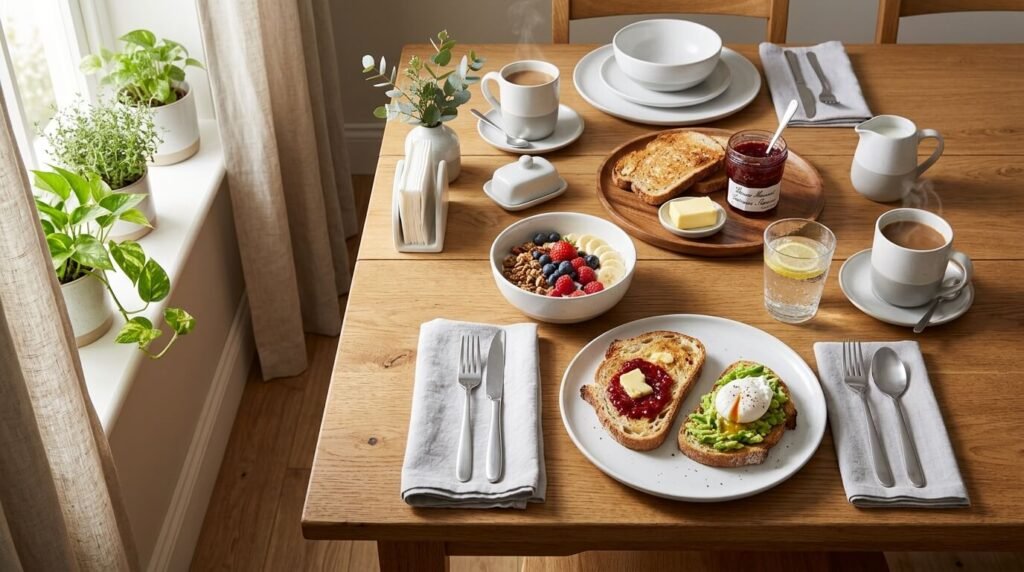
Stoneware from brands like Denby offers similar toughness with a denser, heavier build that resists abrasion on the surface.
If you’re washing dishes multiple times a day and stacking them in a cabinet, chip resistance isn’t a bonus feature; it’s a baseline requirement for any set worth buying.
Microwave and Dishwasher Safety
Everyday dinnerware needs to survive modern kitchen routines, and that means appliance compatibility matters enormously. A set that isn’t microwave safe forces you to transfer food to another dish before heating, a frustrating extra step in daily meal routines.
Corelle allows heating in the microwave without issue, and most porcelain and stoneware sets are both microwave and dishwasher-safe.
IKEA’s everyday porcelain and stoneware lines are consistently dishwasher safe, which keeps maintenance simple.
Always confirm both compatibility points before buying some decorative glazes or metallic trim patterns that restrict appliance use, even when the base material is otherwise fine.
Practical Design
Practicality in everyday dinnerware comes down to two things: comfortable sizes and stackability. Dinner plates that are too large don’t fit standard dishwasher racks well, and oversized bowls waste cabinet space fast.
Corelle’s slim profile stacks efficiently, making it popular for apartments and smaller kitchens where storage space is limited. Practically designed sets also use consistent sizing across pieces so the whole set stacks cleanly rather than wobbling.
A well-designed everyday dinnerware set should feel like it belongs in your kitchen routine, easy to grab, easy to stack, and easy to put away without a second thought.
Best Materials for Everyday Dinnerware
Stoneware Dinnerware
Stoneware is one of the most popular choices for everyday dining, and for good reason. Its thick, dense construction withstands daily use reliably, resisting chips, holding heat well at the table, and maintaining its appearance after hundreds of wash cycles.
Denby has built its reputation on high-quality stoneware that handles daily wear with minimal visible aging. The material’s natural texture and earthy tones also mean minor surface marks are far less noticeable than they would be on bright white porcelain.
For households that want durability and a warm, casual aesthetic without sacrificing practicality, stoneware remains one of the most dependable everyday dinnerware materials available.
Porcelain Dinnerware
Porcelain is fired at high temperatures, which produces a non-porous, dense surface that resists heat and staining better than lower-fired ceramics.
Villeroy & Boch produces porcelain dinnerware that performs equally well for casual weeknight meals and more formal settings.
The versatility is a genuine strength. Porcelain is typically lighter than stoneware, which makes it easier to handle and more comfortable for everyday use.
It’s generally microwave and dishwasher safe, and its smooth, clean surface doesn’t hold onto food odors or residue. For households that want an elegant look with practical daily performance, porcelain strikes a strong balance between the two.
Melamine Dinnerware
Melamine is a durable synthetic material that resists breakage completely. It simply doesn’t chip or shatter the way ceramic does.
Zak Designs produces melamine sets in a wide range of styles and colors, making them a popular choice for families with young children and households that eat outdoors regularly.
The material is lightweight, dishwasher safe, and holds up to rough handling without showing much wear. Its main limitation is that it’s not microwave safe, so food needs to be heated separately.
For everyday family dining, especially in active households, melamine’s practical durability makes it one of the most sensible everyday dinnerware choices on the market.
Glass Dinnerware
Glass dinnerware, particularly the tempered glass used by Corelle, developed by Corning Incorporated, offers a clean, minimalist look with strong everyday performance.
Tempered glass improves durability significantly over standard glass, giving the dishes impact resistance while keeping them lightweight and stackable.
The smooth surface resists chips along the edges, cleans easily in the dishwasher, and doesn’t absorb food odors or stains over time.
Glass dinnerware suits contemporary kitchen aesthetics well and pairs naturally with a minimalist design approach. For households that prioritize low-maintenance dishes with a modern, unfussy look, glass dinnerware is a strong everyday option worth serious consideration.
Types of Dinnerware Sets for Everyday Use
Basic 4-Piece Place Settings
A 4-piece place setting includes the core pieces for one person: a dinner plate for the main course, a salad plate for sides or starters, a bowl for soups or cereals, and a mug for beverages.
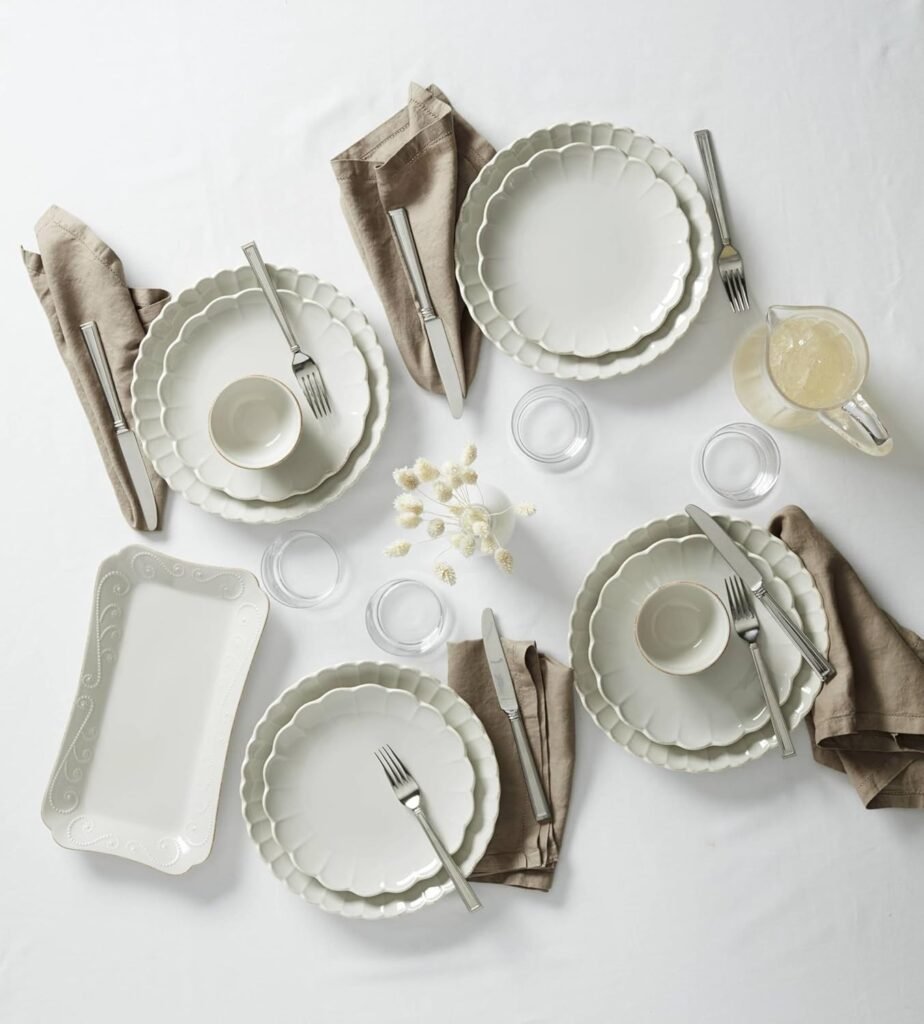
This configuration is the building block of every dinnerware set and a useful starting point for anyone outfitting a kitchen for the first time or filling gaps in an existing collection.
Buying individual 4-piece sets also makes it easy to mix materials or styles, deliberately pairing a simple IKEA bowl set with a more refined porcelain plate, for example, without committing to a single coordinated collection.
16-Piece Dinnerware Sets
A 16-piece dinnerware set covers four complete place settings: four dinner plates, four salad plates, four bowls, and four mugs or cups.
This is the most popular everyday set size for households of two to four people, and most major brands build their core collections around this configuration.
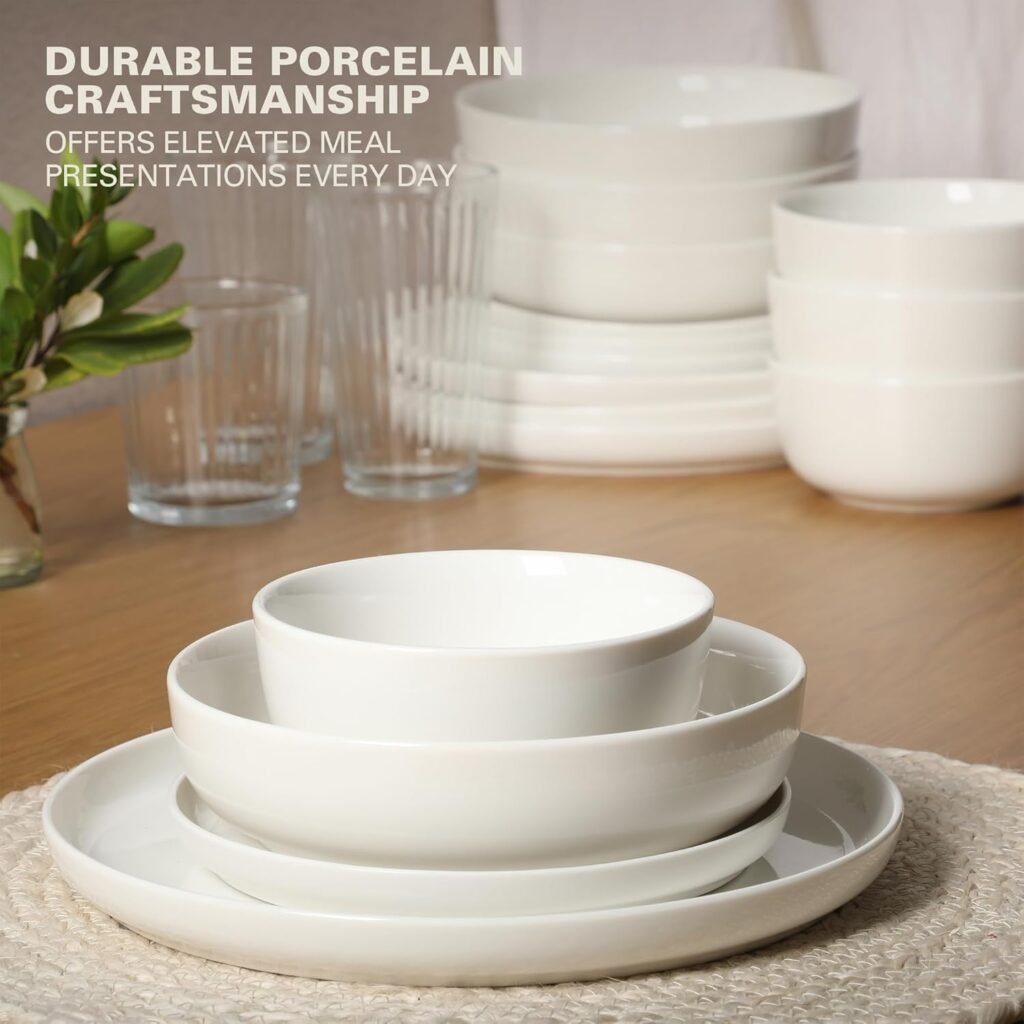
It’s the sweet spot between having enough pieces for a full family meal and not ending up with more dishes than your cabinets can reasonably store.
Lenox, Corelle, and most IKEA everyday lines all offer well-priced 16-piece sets that serve as practical all-in-one solutions for daily household dining.
Larger Family Dinnerware Sets
For bigger households, families of five or more, or homes that entertain regularly, larger sets of 20 to 32 pieces make more sense.
These expanded collections typically add extra place settings and may include serving platters and serving bowls alongside the individual pieces.
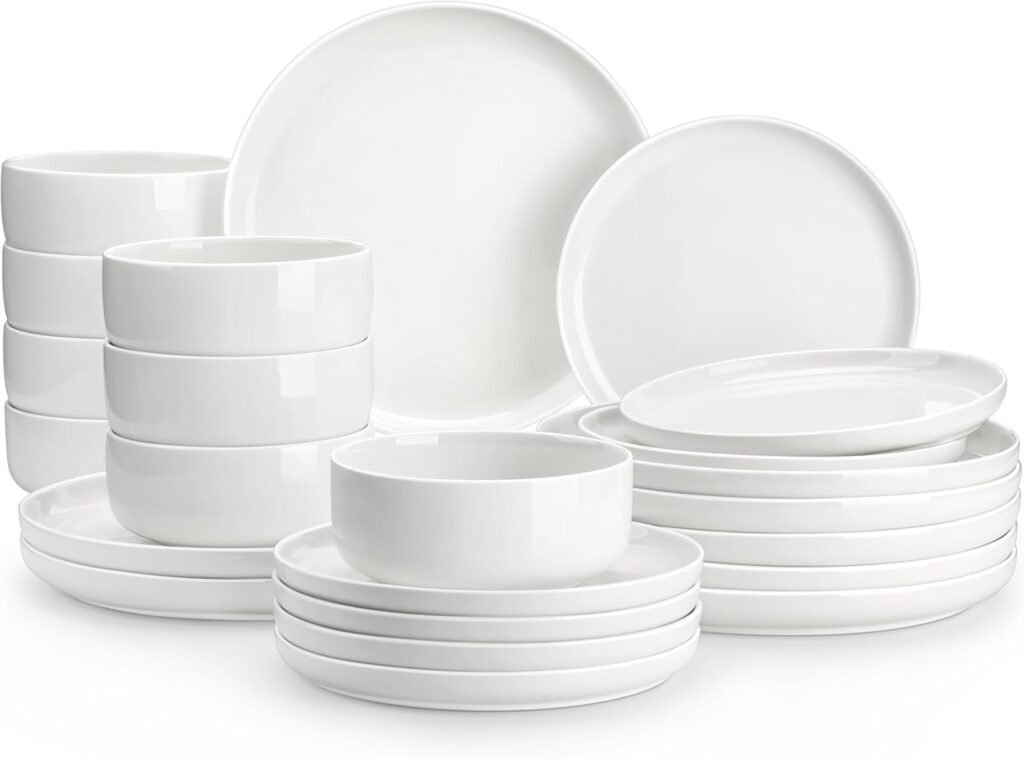
Having extra plates on hand also reduces the stress of breakage: when one dinner plate chips or cracks, a larger set means you aren’t immediately down to an uneven number.
Orelle’s family-sized sets are particularly popular for this reason; the brand’s chip resistance and warranty coverage make investing in a larger collection a practical long-term decision.
Key Features to Look for in Everyday Dinnerware
Easy Maintenance
The less effort your dishes require to keep clean and presentable, the better they’ll actually serve you long-term. Dishwasher-safe construction is non-negotiable for most households.
Hand-washing a full dinner service every day isn’t realistic. Beyond that, stain resistance matters: porcelain and glass surfaces don’t absorb food pigments the way more porous earthenware can.
A lead-free glaze, which the FDA certifies as food-safe, also ensures the surface coating won’t degrade in ways that affect food safety over time.
Low-maintenance everyday dinnerware should be the kind you can run through the dishwasher every night without worrying about it.
Space-Saving Storage
Stackability is one of the most underrated features in everyday dinnerware, and one you notice immediately once you’re living with the set. Dishes that stack cleanly and compactly save meaningful cabinet space, particularly in apartments and smaller kitchens.
Corelle’s slim profile is one of its most consistently praised practical qualities: the same number of pieces takes up noticeably less shelf space compared to thicker ceramic sets.
When evaluating a set, pay attention to whether the bowls nest properly and whether the plates sit level when stacked.
Poorly designed stacks wobble, take up more room, and create a risk of chips every time you pull a plate from the pile.
Neutral and Versatile Design
A neutral color scheme and simple design pattern go a long way in everyday dinnerware.
Classic white, soft grey, or warm off-white dishes work with virtually any kitchen aesthetic, from modern minimalist to farmhouse rustic, without clashing or dating quickly.
IKEA has made this approach central to its everyday tableware lines, emphasizing simplicity that enhances kitchen décor without competing with it.
A neutral everyday set also pairs well with colorful serving pieces or seasonal table decorations without the whole table looking mismatched.
Bold or highly decorative patterns can look great initially, but tend to feel limiting after a few years of daily use.
Popular Styles of Everyday Dinnerware
Minimalist Modern Sets
Minimalist modern dinnerware is defined by clean lines, simple silhouettes, and a restrained color palette, usually white, cream, or light grey.
IKEA’s everyday collections have set a widely followed template for this style: unfussy shapes, consistent sizing, and a look that emphasizes simplicity over decoration. The appeal is both aesthetic and practical.
A minimalist set doesn’t go out of style, photographs well for those who care about that, and coordinates effortlessly with other kitchen items.
For anyone who wants their dishes to be a background detail rather than a statement piece, minimalist modern everyday dinnerware is a reliable, long-lasting choice.
Rustic or Farmhouse Style
Rustic and farmhouse-style everyday dinnerware leans into textured surfaces, organic shapes, and earthy color palettes, browns, greens, blues, and warm neutrals.
Stoneware suits this aesthetic naturally, given its thick construction and slightly irregular surface texture.
Denby’s stoneware collections often fall into this category, with matte or semi-matte finishes that give the dishes a handcrafted quality.
This style has been consistently popular in home dining settings because it creates a warm, lived-in table atmosphere that feels inviting rather than formal.
It pairs well with wooden serving boards, linen napkins, and simple table arrangements that prioritize comfort over precision.
Classic White Dinnerware
Classic white dinnerware is the most universally practical everyday option on the market. It suits every food presentation, colors pop against white, sauces look intentional, and portion sizes are easy to judge visually.
White porcelain sets are a staple across household dining, professional catering, and restaurant tableware because of their versatility.
Lenox and Villeroy & Boch both produce white everyday porcelain that holds up to daily use while maintaining a clean, polished appearance.
White also hides minor surface wear less obviously than darker glazes and blends into any kitchen color scheme. For most households, a quality white dinnerware set is the most practical long-term everyday investment.
How to Choose the Right Dinnerware Set for Your Home
Household Size
The right number of place settings depends directly on how many people regularly eat in your home. A single person or couple can manage comfortably with an 8-piece set — two complete four-piece place settings with a few spares.
A family of four needs at least a 16-piece set as a baseline. Larger families or households that host guests regularly should look at 20-piece sets or collections that can be expanded with matching add-on pieces.
Underestimating the number of pieces you need is one of the most common buying mistakes you end up short-handed more often than expected, particularly when dishes are in the wash.
Lifestyle and Usage
Your daily meal routine shapes what kind of everyday dinnerware works best for you.
Families with young children benefit most from melamine or Corelle glass-ceramic materials that resist breakage and support the kind of active daily use that comes with kids at the table.
Singles or couples who cook at home regularly and entertain occasionally might prefer porcelain or stoneware for its versatility across casual and slightly more formal settings.
Frequent outdoor diners, those who eat on patios, take dishes to picnics, or travel in RVs, should look at melamine specifically. Lifestyle needs shape the right material choice as much as budget or aesthetics do.
Budget Considerations
Everyday dinnerware spans a wide price range, and spending more doesn’t always mean getting better practical performance for daily use.
IKEA’s budget dinnerware lines offer dishwasher-safe porcelain and stoneware at very accessible price points, genuinely practical for households that want reliability without overspending.
Mid-range options from Corelle and Denby offer better durability and longer lifespans that often justify the higher cost when calculated per year of use.
Luxury dinnerware from brands like Versace Home or premium Lenox collections is better suited to special occasions than daily use. For everyday purposes, the best value usually sits in the mid-range, where durability and price align most sensibly.
Common Mistakes When Buying Everyday Dinnerware
Choosing Fragile Materials
Earthenware is a classic example of a material that looks beautiful on a table but struggles under daily use pressure. Its lower-temperature firing makes it more porous and prone to chipping than stoneware or porcelain, and the glaze can crack over time with repeated dishwasher cycles.
Fiesta Dinnerware produces bold, colorful earthenware sets that many people fall for, and while they’re excellent for display or occasional use, they’re not the most practical everyday dinnerware choice for a busy household.
Before committing to any set based on how it looks, consider how well the material actually holds up under the daily routine you’ll put it through.
Buying Too Few Pieces
A 4-piece set for a household of four sounds logical until one bowl breaks, and you’re suddenly one short for every meal. Every day, dinnerware gets chipped, cracked, or broken over time; that’s simply the reality of daily use.
Buying slightly more than you think you need gives you buffer room for breakage and means you’re not immediately running a dishwasher the moment every piece is used.
It also gives you flexibility when unexpected guests arrive. Many brands like Corelle sell individual replacement pieces from their core collections, which helps extend set life, but having a few extra pieces from the start is more convenient than hunting down exact matches later.
Ignoring Storage Space
Oversized plates and deep bowls look impressive in product photography but create real storage problems in standard kitchen cabinets. Before buying, measure your cabinet shelves and compare them against the stated dimensions of the dinnerware you’re considering.
Wide pasta bowls that don’t stack properly with the rest of the set end up living separately, taking up extra space and disrupting the organization of the whole kitchen.
IKEA designs its everyday tableware with storage efficiency in mind, keeping proportions practical for standard cabinet depths.
Thinking about storage space before purchasing saves a lot of post-delivery frustration when you discover the new set doesn’t quite fit where you planned.
Final Thoughts
The best dinnerware sets for everyday use come down to three things: durability, practicality, and a design that fits how you actually live.
Materials like stoneware, porcelain, and tempered glass handle daily meals, dishwashers, and microwaves reliably, and they hold up over years of regular use when chosen well.
Chip resistance and stackable design are worth prioritizing alongside aesthetics. Think about your household size, your daily meal routine, and your cabinet space before committing.
The right set isn’t the most beautiful one in the store; it’s the one that makes every meal easier, holds up to your household’s real daily life, and still looks good doing it.