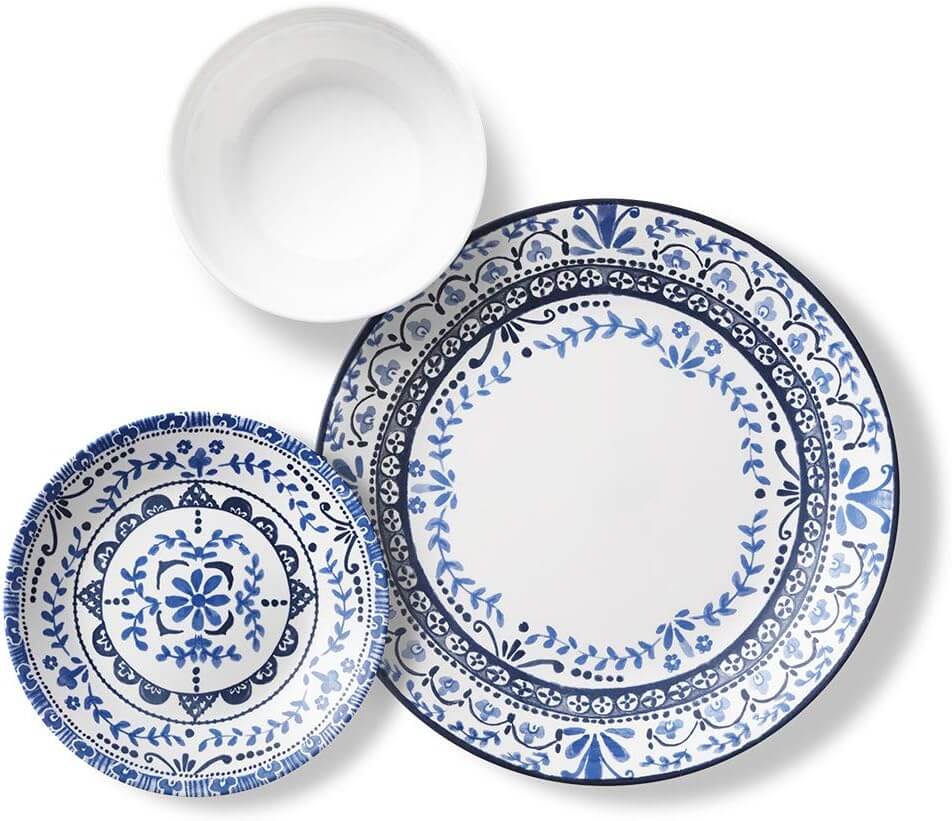
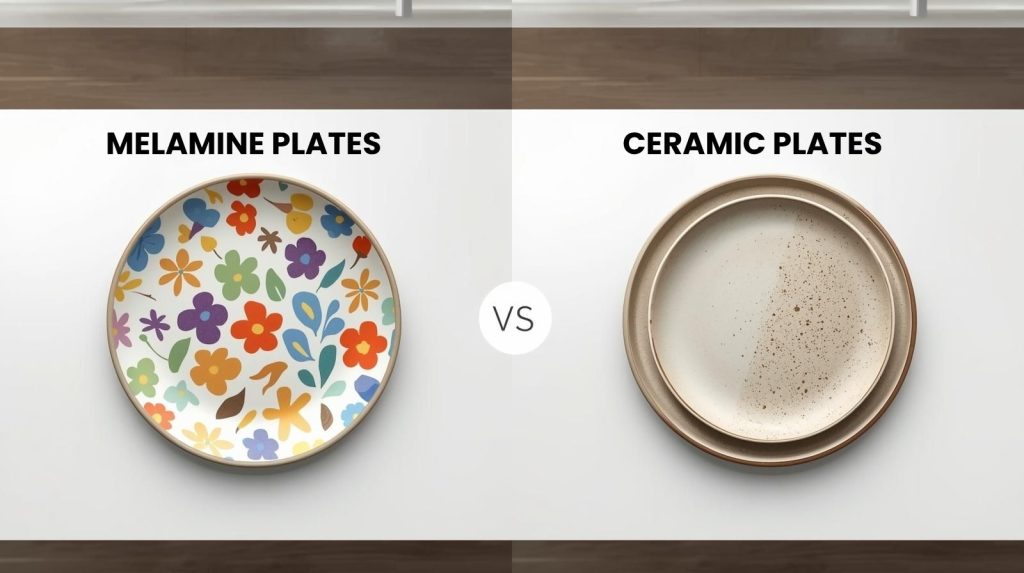
Tag: pottery tableware

  • CORELLE VS LENOX

    Two notable companies that produce tableware, including plates and drinkware, are Corelle and Lenox. Both have their distinctive qualities.

    As we compare Corelle vs Lenox in this post, it will be simple for you to see how they differ from one another in terms of usage, price, durability, material, design, and style.

    At the end of this article, you will be confident with your dinnerware choice. Let us dive in.

    LENOX DINNERWARE SETS

    Lenox, which was established in 1889, has long been a leader in creating elegant tableware sets that seamlessly blend classic beauty with contemporary usability.

    Lenox wicker creek dinnerware sets

    Customers adore Lenox for its distinctive qualities, which include its complex designs, delicate patterns, and premium materials.

    Lenox dinnerware sets are made of quality bone china and have unrivaled durability, making them perfect for both everyday use and special events. Your busy lifestyle will benefit from the feature that makes dishes microwave and dishwasher-safe because cleanup is simplified.

    In the community of tableware, there are many comparisons, such as Mikasa and Corelle, Gibson vs Corelle, and Noritake vs Corelle.

    Overall, every piece of dinnerware is distinctive in its own right. Because of this, when compared to other brands, Lenox stands out from Corelle and Gibson in terms of elegance and sophistication.

    Lenox Opal Innocence Dinnerware set

    Lenox’s style and design offer a level of refinement that is challenging to match, even though Noritake also sells high-quality tableware.

    A Lenox dinnerware set is a wonderful kitchen gift idea for weddings and other special occasions because of its ageless beauty and usefulness, which adds joy and elegance to any dining occasion.

    CORELLE DINNERWARE SETS

    Corelle Vitrelle salad plates

    Corelle dinnerware sets are known for their outstanding durability, which sets them apart from other brands.

    Corelle’s main distinguishing feature is its substance, Vitrelle glass—a special laminated tempered glass composed of three layers crushed into one.

    Corelle dishes have a lightweight feel thanks to this composition, which is also very resistant to chipping, shattering, and staining.

    Corelle sets are valuable because of their durability and adaptability. They are perfect for everyday use and simple maintenance because of their chip-resistant edges and endurance in the microwave, dishwasher, and oven.

    Corelle 18 Piece Winter frost dinnerware sets

    Corelle’s robustness, in contrast to conventional ceramic or porcelain dinnerware, eliminates the need for frequent replacements, resulting in long-term cost savings.

    Their fashionable designs also accommodate a variety of tastes, offering visual appeal without sacrificing endurance.

    Corelle is a solid and affordable option among dinnerware brands for homes looking for stylish, long-lasting, and useful tableware.

    CORELLE VS LENOX

    Corelle and Lenox are two popular brands of dinnerware, and they have some significant differences:

    Corelle vs Lenox

    Corelle dishes are made of a unique glass-like material called Vitrelle, which is a triple-layered tempered glass. On the other hand, Lenox dishes are often made of fine china, bone china, or porcelain, which gives them a more delicate and elegant appearance.

    Corelle dishes are known for their exceptional durability. They are resistant to chipping, cracking, and breaking, making them suitable for everyday use and family gatherings. Lenox dishes, made of fine china or porcelain, are more delicate and require extra care to avoid damage.

    Corelle dishes often feature simple, modern designs and patterns, with a focus on functionality. On the contrary, Lenox dishes often showcase intricate and artistic designs, making them more suitable for formal or special occasions.

    Corelle dishes are lighter in weight compared to Lenox dishes due to their material. This lightweight feature makes them easy to handle and store.

    Corelle dishes are generally more budget-friendly compared to Lenox, which tends to be a more high-end and expensive brand due to its fine china and porcelain materials.

    Ultimately, the choice between Corelle and Lenox dishes depends on your preferences, lifestyle, and intended use.

    If you prioritize durability and affordability, Corelle might be a better fit. However, if you desire a more elegant and refined dinnerware set for special occasions, Lenox could be the way to go.

    BEST HIGH-END DINNERWARE SETS

    Best high-end dinnerware sets can also be called luxury dinnerware sets because they are made of high-quality materials, do not come cheap, and will always add color and elevate your dining experience.

    best high end dinnerware set

    If so, what types of dinnerware sets are considered high-end dishes? First, we have to consider the amount of work and time put into manufacturing the said dinnerware and the type of material used.

    That being said, there are about 5 dinnerware materials that are considered high-end; they are;

    Porcelain: Known for its delicate appearance, porcelain dinnerware sets are durable and lightweight, making them ideal for formal occasions.

    Bone china and Porcelain high end dinnerware sets


    Bone China: A blend of bone ash and porcelain, bone china dinnerware sets have a translucent quality, an elegant appearance, and are more chip-resistant than regular porcelain.

    Fine China: Fine china dinnerware sets are made from high-quality clay and fired at high temperatures. They have a refined look and are suitable for formal and semi-formal gatherings.

    Stoneware: A more casual option, stoneware dinnerware sets are crafted from durable clay fired at high temperatures, resulting in a chip-resistant and rustic appearance.

    Earthenware: Another casual choice, earthenware dinnerware sets have a warm, rustic look but are less durable than porcelain or stoneware.

    Other dinnerware materials can be processed into high-end dinnerware, but these are the most popular ones.

    In addition, these high-end dinnerware sets are also designed most times with gold or platinum accents to give them their opulent and expensive look with a touch of luxurious design and detailing never seen before.

    High-end dinnerware sets are mostly kept for special occasions like weddings, dinner parties, and anniversaries to serve very important guests.

    They are perfect for both casual and formal occasions, offering flexibility in their usage.

    Furthermore, these designers’ luxurious high-end dishes normally have limited editions, making them more exclusive and expensive like gold.

    High-end dinnerware sets often include various pieces, such as dinner plates, salad plates, soup bowls, cups, and saucers.

    A word of caution: high-end dinnerware sets need proper care and handling because you spent a fortune acquiring them.

    Finally, you don’t need to break the bank to acquire high-end dinnerware sets.

    Below are affordable, durable, and exquisite high-end dinnerware sets you will enjoy having.

    LENOX LX COLLECTIVE WHITE 12-PIECE DINNERWARE SET

    Lenox collective high end dinnerware set

    First on the list of best high-end dinnerware sets is the Lenox Lx Collective white 12-piece dinnerware set that comes in a simple yet sophisticated and exquisite design.

    It is made up of high-quality Porcelain material that can withstand the rigors of daily use.

    Aside from daily usage, this Lenox high-end dinnerware set is perfect for that special occasion to thrill your important guests.

    It comes with bowls, dinner plates, and accent plates; they are also dishwasher and microwave-safe!

    When you buy Lenox, you are buying a versatile and timeless piece crafted with our century-long commitment to quality, artistry, and beauty.

    The plates are a soft, creamy white color. They are extremely high quality, and if they chip, Lenox will freely replace the chipped item as long as it’s not a retired pattern.

    This set is beautiful and would make a great gift for yourself or someone else. Highly recommend!

    PFALTZGRAFF SYLVIA DINNERWARE SET, 32 PIECE

    Pfaltzgraff sylvia exquisite dinnerware set

    The Pfaltzgraff Sylvia dinnerware set is part of the Sylvia line and includes raised curls framed by beaded bands, giving traditional styling a modern twist.

    Because porcelain is used to make its composition, it has the necessary durability.

    It is easy to clean, microwave, and dishwasher safe.

    The Pfaltzgraff Sylvia dinnerware is a perfect combination of durability and lightweight, which is why it is a great gift idea.

    STONE LAIN BRASA 16-PIECE DINNERWARE SET

    Stone lain high quality stoneware dinnerware set

    The blue stoneware is intended for four people; there are 16 pieces in all in the Brasa dinnerware set, including 4 salad plates, 4 dinner plates, 4 round bowls, and 4 pasta bowls.

    It flawlessly enhances a modern farmhouse style, provides a rustic-chic tone, and comes in a variety of colors.

    It can be used every day and is safe for the microwave and dishwasher.

    Given that the Stoneware on the Brasa is not scratch-resistant, it must be treated carefully.

    VANCASSO STONEWARE DINNERWARE SET 24 PIECES

    Vancasso stoneware high end dinner set

    This is a high-end dinnerware set that has spiral designs hand-painted on it. It includes a boxed combination set with a dinner plate, dessert plate, soup bowl, and seating for six people.

    The Vancasso dinnerware makeup material is Stoneware, a type of pottery, and a special shade called Bonbon-Beige

    It is ideal for daily usage because it is microwave and dishwasher-safe.

     A terrific gift for a housewarming, wedding, birthday, family reunion, or any other event, in addition to being appropriate for your own family’s use.

    Finally, it is lightweight, strong, simple to clean, and stackable, which helps to conserve kitchen space.

    UNBREAKABLE DISHES LIKE CORELLE

    Other than Corelle, several other dishware varieties are renowned for their durability and resistance to breakage.

    They can sustain daily usage just like Corelle, thanks to their chip resistance, lightweight yet strong design, and high-quality construction.

    While not impervious, they provide dependable and durable performance, making them ideal for those looking for robust and adaptable tableware.

     A few of these Corelle alternative dishes are:

    BAMBOO FIBER

    Unbreakable dishes like Corelle

    Dishes made of bamboo fiber are both robust and environmentally sustainable. They make excellent substitutes for conventional ceramic or plastic choices.

    They are reusable, lightweight, dishwasher safe, and easy to clean. However, it is advised that you avoid boiling water, the oven, and the microwave oven.

    POLYCARBONATE

    Unbreakable lightweight dinner sets

    Dishes made of polycarbonate are incredibly strong and impact-resistant. They are frequently utilized in public places like cafeterias and restaurants.

    Its durability and safety make it an excellent option for outdoor meals, family get-togethers, and high-traffic areas. It is also lightweight and shatterproof.

    PORCELAIN ENAMEL ON STEEL

    Porcelain enamel on steel dinnerware like Corelle used for outdoor camping

    A coating of porcelain enamel is fused onto a steel core to create Porcelain Enamel on Steel tableware.

    This combination results in a solid, long-lasting surface that resists chipping, scratching, and discoloration. It is a practical and appealing option for regular usage in the kitchen or dining room.

    MELAMINE

    Lightweight Melamine dish like Corelle for Casual dining

    Melamine dinnerware is tableware constructed from melamine resin, a form of long-lasting plastic. It is lighter, more durable, and less likely to chip or shatter than typical ceramic plates.

    Melamine tableware is popular for outdoor eating, picnics, and family gatherings because it provides a safe and practical solution in a variety of beautiful styles.

    IS LENOX DINNERWARE A GOOD BRAND?

    Yes, Lenox is considered an excellent dinnerware brand with a long-standing reputation for quality and craftsmanship.

    Founded in 1889, Lenox is a former iconic American brand that has been producing fine china and casual dinnerware for over 130 years.

    The brand was historically the official china of the White House and is known for its elegant designs, durability, and timeless appeal.

    Lenox offers both fine china collections and more affordable casual dinnerware lines, making it accessible to various budgets.

    They are typically dishwasher-safe, microwave-safe, and chip-resistant, combining beauty with practicality.

    While Lenox is positioned as a premium brand, many customers find that the quality justifies the investment, as their dinnerware often lasts for generations.

    The brand offers classic patterns as well as contemporary designs, appealing to both traditional and modern tastes. Overall, Lenox is a trusted choice for those seeking high-quality, elegant dinnerware.

    IS LENOX DINNERWARE DURABLE?

    Lenox dinnerware is resilient but may not be as resilient as some other dinnerware materials like tempered glass or melamine, which are often constructed of bone china or porcelain.

    While Vitrelle glass from Corelle and bone china and porcelain are also noted for their elegance and high quality, they can be more prone to shattering and chipping.

    Lenox dinnerware is durable and can survive daily use with proper care. But since it is so delicate, it is frequently thought to be more appropriate for formal dining or special occasions than for regular use.

    Lenox plates shouldn’t often be used in the microwave because the delicate materials might not handle the sudden temperature changes properly.

    While many Lenox items are dishwasher-safe, hand washing is frequently advised to maintain the delicate design and prolong the life of these items.

    Lenox’s distinctive blend of elegance and durability, as compared to other tableware manufacturers, makes it a great option for formal settings and special occasions.

    WHAT IS THE MOST DURABLE DINNERWARE?

    Due to the predisposition that many have towards their preferred tableware brand, this will be a difficult decision.

    However, given the number of search inquiries, Corelle dinnerware is generally recognized as one of the most durable options.

    Due to the unique Vitrelle glass composition, it is particularly resistant to breaking, chipping, and staining.

    Corelle dishes are extremely stain and chip-resistant despite being lightweight and designed for daily use. Because they are both microwave and dishwasher-safe, they are much more beneficial and practical.

    Corelle stands out among durable dinnerware companies due to its remarkable blend of strength and practicality.

    Melamine tableware is also lightweight and durable but not like Corelle; however, it may not be microwave-safe. Stoneware and porcelain are more durable, although they are heavier and more prone to chipping.

    On the other hand, certain stoneware might be microwave and dishwasher-safe.

    Corelle is a well-liked and dependable option for regular use as well as special occasions thanks to its overall combination of toughness, lightweight construction, microwave- and dishwasher-safe features, and chip/stain resistance.

  • IS PORCELAIN STRONGER THAN GLASS

    Is Porcelain stronger than glass? Are you looking to know which of these dinnerware sets can fit that special occasion you are planning?

    Do you simply want to understand the various properties in Porcelain and Glass dishes that make them unique?

    If yes, you are at the right place! Seat tight as we explore where and how to use each of these dinnerware constituents so you don’t overstep the manufacturer’s boundaries.

    Whether you are having a family reunion, formal dining, or outdoor experience, we will explore the differences between glass and porcelain dishes so you can make informed decisions!

    Briefly, we will also look at other durable alternatives aside from glass and porcelain, which are vitrified, stoneware, and ceramic dishes.

    Let’s go!

    GLASS VS PORCELAIN DINNERWARE

    Porcelain vs Glass dinnerware

    Below are the major differences between glass and porcelain dinnerware;

    Porcelain is a type of ceramic material primarily composed of fine clay, known as kaolin, along with other materials like feldspar, ball clay, and quartz, while glass is a solid material that is typically made from a mixture of silica (silicon dioxide), soda ash (sodium carbonate), and limestone (calcium carbonate).

    Glass salad and dessert plate

    Porcelain often has a more refined and elegant appearance with a smooth, glossy finish, while glass dinnerware can have various textures and transparency levels.

    Small Glass Bowls

    Porcelain is generally more durable and less prone to chipping or breaking compared to glass dinnerware, which can be more fragile.

    Porcelain has better heat resistance, making it suitable for use in ovens, microwaves, and dishwashers. Glass dinnerware may have limitations in extreme temperature changes.

    Porcelain has better heat resistance than most types of glass, which allows it to withstand higher temperatures without shattering.

    white Porcelain 24 Piece Dinnerware set

    Glass dinnerware sets are lighter in weight than Porcelain dishes, making them easy to carry.

    Glass dishes, like glass baking dishes, allow you to monitor the cooking progress, making them ideal for casseroles, lasagnas, and other baked dishes, unlike Porcelain dishes.

    Porcelain dishes are more chip-resistant than glass dishes because they have reinforced edges.

    Gourmet Porcelain modern dinnerware set

    Glass is a recyclable material, making glass dishes an eco-friendly choice over Porcelain for those concerned about environmental impact.

    Glass dishes offer a clear and transparent appearance, allowing you to showcase the food and its presentation effectively while Porcelain dishes don’t have a transparent appearance.

    In addition, one distinct similarity between porcelain and glass dishes is that they both have a non-porous surface, making them resistant to stains, odors, and bacteria.

    This characteristic makes glass and porcelain dishes easy to clean and maintain.

    Elegant and beautiful Glass dinnerware set

    Porcelain and glass dinnerware have low moisture absorption, making them less susceptible to weakening over time when exposed to liquids.

    Furthermore, Porcelain and glass dishes are considered food-safe, and their non-reactive nature ensures that they do not leach any harmful substances into the food.

    Finally, with proper care, porcelain dishes and glass dishes can last for a long time, making them a choice for tableware.

    RELATED: IS PORCELAIN STRONGER THAN STONEWARE

    IS PORCELAIN STRONGER THAN GLASS?

    Is Porcelain stronger than glass

    Yes, porcelain is generally stronger than glass because it is fired at a higher temperature throughout the manufacturing process, resulting in a denser and more compact substance than glass.

    Porcelain is also stronger than glass because glass is formed from molten silica and other minerals that form an amorphous solid, resulting in a less dense structure.

    Due to its denser composition, porcelain tends to be more resistant to impact, reducing the likelihood of breakage from accidental drops or bumps.

    GLASS VS CERAMIC BOWLS: A DETAILED COMPARISON

    Below are the differences between glass bowls and ceramic bowls:

    Material Properties:

    Glass bowls are made from silica, soda ash, and limestone, creating a non-porous, transparent surface. Ceramic bowls consist of clay fired at high temperatures, resulting in a porous structure unless glazed.

    Heat Retention:

    Ceramic bowls offer superior heat retention due to their thicker walls and insulating properties. Glass bowls lose heat quickly but show temperature changes visibly, making them ideal for precise cooking.

    Durability:

    Glass bowls are more prone to shattering upon impact but resist scratches better. Ceramic bowls can chip or crack but rarely shatter completely, offering better longevity in daily use.

    Temperature Shock Resistance:

    Glass bowls are sensitive to sudden temperature changes and can crack. Ceramic bowls, especially stoneware and porcelain, handle temperature fluctuations better.

    Usage Benefits

    Glass Bowls:

    – Allow visual monitoring of cooking progress

    – Ideal for microwave use

    – Non-reactive with acidic foods

    – Dishwasher safe

    – Don’t retain odors or stains

    Ceramic Bowls:

    – Better for serving hot foods

    – More decorative options

    – Greater durability for daily use

    – Microwave and oven-safe

    – Often handmade, offering unique designs

    Finally, about cost considerations, quality ceramic bowls typically cost more than glass bowls due to manufacturing processes and artisanal value.

    However, their longer lifespan can offset the initial investment.

    IS PORCELAIN GLASS OR PLASTIC?

    Porcelain is neither glass nor plastic. It is a type of ceramic material made from clay that is heated at high temperatures to achieve its characteristic hardness and smooth finish.

    IS CERAMIC STRONGER THAN GLASS

    In general, ceramic is stronger and more durable than glass because ceramic dishes have a stronger ionic or covalent bond that creates a rigid and stable structure than glass, which has a weak covalent bond.

    In addition, it is this weak bonding in glass that makes it prone to breaking or shattering under stress.

    Finally, while ceramics are generally stronger, it’s important to consider that there are different types of ceramics and glasses, each with varying compositions and strengths.

    Some specialized glasses can be engineered to have higher strength or durability for specific applications.

    IS PORCELAIN BREAKABLE?

    Yes, porcelain is breakable even though it is hard. It is a type of ceramic material that is delicate and can be easily damaged or shattered if not handled with care.

    VITRIFIED GLASS DINNERWARE

    Vitrified glass dinnerware simply means glass dishes that have been tempered. They are durable and shatterproof

    Vitrified glass dinnerware has been fired at an extremely high temperature until it becomes non-porous.

    Corelle Vitrified Vitrelle glass dinnerware set

    Dinnerware sets made from Vitrified glass are dishwasher and microwave-safe, lightweight, chip-resistant, and thin in design.

    It is suitable for use to serve food to children or at outdoor events due to its hardness.

    The most popular brand known for this material is Corelle, which is made up of tempered glass with two types of glass laminated into three layers, which makes Corelle almost unbreakable unless you intentionally hit or smash it against sharp or hard objects.

    Corelle Vitrified glass dinnerware is a high-end quality dinnerware set that comes in various patterns, designs, and shapes, and can fit your budget!

    Finally, read Vitrelle glass safety profile and also know why they are perfect for everyday use, like Bone China, and suitable for elderly use, especially if they have Parkinson’s disease or arthritis, because of its lightweight feature.

    CERAMIC VS GLASS PLATES

    Below are the differences between ceramic dishes and glass plates;

    Ceramic plates are made from clay that is fired at high temperatures, whereas glass plates are made from molten silica and other raw materials.

    ceramic chip resistant dinnerware set

    Ceramic plates often have a more rustic and textured appearance due to the nature of clay, while glass plates have a smooth and transparent surface.

    Ceramic plates are generally more durable and less prone to breakage or chipping compared to glass plates, which can be more fragile.

    Ceramic plates are better at retaining heat, making them suitable for keeping food warm, while glass plates don’t retain heat as effectively.

    Glass plates are transparent, allowing you to see the food and its presentation clearly, whereas ceramic plates are usually opaque.

    Mora ceramic flat dinner plates

    Glass plates are typically easier to clean as they don’t absorb stains or odors like ceramic plates sometimes can.

    Ceramic plates are generally heavier than glass plates due to their solid construction.

    Ceramic plates offer a wider variety of designs, patterns, and colors due to the ability to work with clay, while glass plates can have decorative patterns but may be limited compared to ceramics.

    Ultimately, the choice between ceramic and glass plates depends on personal preferences and intended use.

    STONEWARE VS GLASS DINNERWARE

    The major differences between stoneware and glass dinnerware are:

    Stoneware is made from clay fired at high temperatures, while glass dinnerware is made from molten glass that is shaped and cooled.

    Embossed stoneware round dinnerware set

    Stoneware is generally more durable and less prone to chipping or breaking compared to glass dinnerware, which can be more fragile.

    Stoneware often has a rustic and earthy look, while glass dinnerware offers a sleek and transparent appearance.

    Stoneware tends to retain heat better, keeping food warmer for longer, whereas glass dinnerware cools down more quickly.

    Stoneware Double bowl dinnerware set

    Stoneware is microwave and oven-safe, while not all glass dinnerware can be used in the microwave or oven due to potential heat sensitivity.

    Stoneware may be more susceptible to staining and scratching, while glass dinnerware is generally easier to clean and maintain.

    Stoneware is typically heavier than glass dinnerware, which may influence user preference.

    Ultimately, the choice between stoneware and glass dinnerware depends on individual preferences, intended use, and aesthetic preferences.


  • CORELLE VS GIBSON

    No single dinnerware set can indeed satisfy everybody because everyone has different tastes and things that capture their attention.

     Whatever the case, each type of dinnerware brings something special to the table for our celebrations.

    For this reason, we’ll focus on Corelle vs Gibson in this piece and discuss their similarities and differences.

    By the time you’re done, you’ll know which one you prefer and perhaps why.

    GIBSON DINNERWARE

    Gibson Dinnerware sets refer to a range of dinnerware collections produced by Gibson Overseas Inc., a renowned manufacturer of dinnerware and kitchenware.

    Gibson is known for its stylish and functional dinnerware designs, catering to various tastes and preferences.

    Their dinnerware sets are designed to enhance the dining experience and add a touch of elegance to any table setting.

    Gibson Elite Reactive Glaze dinnerware sets

    Although the Origin and Location of Gibson manufacturing are outside the US, Gibson Homewares is a market-leading manufacturer of kitchen and dining items. Family-owned for more than 40 years, Gibson thrives on its unwavering dedication to style, innovation, and value for its customers throughout the globe.

    Key features of Gibson Dinnerware sets:

    Variety of Styles: Gibson offers a wide range of dinnerware sets, including traditional, contemporary, rustic, and modern designs. Each set is thoughtfully curated to suit different aesthetics and themes.

    Gibson Elite double bowl dinnerware sets

    Complete Sets: Gibson Dinnerware sets typically include a complete collection of dishes needed for a meal, such as dinner plates, salad plates, bowls, and mugs. Some sets may also include additional pieces like serving platters, bowls, and glasses.

    Quality Materials: The dinnerware sets are often made from high-quality materials, such as stoneware, porcelain, or bone china, ensuring durability and resistance to chipping or breakage.

    Dishwasher and Microwave Safe: Most Gibson Dinnerware sets are dishwasher and microwave-safe, making them convenient for everyday use and easy to clean.

    Gibson Stoneware Dinnerware sets

    Patterns and Colors: Gibson offers a wide array of patterns and colors, allowing customers to choose a set that matches their home decor or personal preferences.

    Affordable Options: Gibson aims to provide quality dinnerware sets at reasonable prices, making them accessible to a broad customer base.

    Special Collections: In addition to standard dinnerware sets, Gibson also releases special collections tied to specific themes or collaborations with designers, adding unique and limited-edition options to their product lineup.

    CORELLE DISHES

    38 Piece Corelle Vitrelle Dinnerware set

    Corelle dinnerware is excellent! They are extremely strong and resistant to breakage and chips because they are made of unique tempered glass.

    They appear fashionable and are ideal for daily use. There are many exquisite designs available from Corelle that are appropriate for any occasion.

    What’s best? They make life so much simpler because they are safe to use in the dishwasher and microwave. Corelle tableware is the way to go if you want dependable, durable, and useful cutlery!

    CORELLE VS GIBSON

    Corelle vs Gibson

    Below are the major differences between Corelle and Gibson’s dishes;

    Corelle dishes are lighter than Gibson dishes.

    Gibson dinnerware sets are heavier and thicker than Corelle dishes.

    Corelle dishes are predominantly made up of vitrelle glass material, while Gibson dishes are made up of various materials like Opal glass, stoneware, and Porcelain.

    Corelle dishes are more resilient, less prone to breakage, and chip-resistant than Gibson dishes.

    Corelle dishes are predominantly white and have few floral designs, while Gibson dishes come in various colors and patterns.

    Corelle dishes are thinner in design than Gibson dishes.

    Corelle dishes are suitable to be carried by the elderly and kids because of their lightweight design, but Gibson dishes are strictly for adults.

    Gibson dishes need more attention in terms of care than Corelle dishes.

    BRANDS LIKE CORELLE

    In the world of dinnerware, Corelle is a name that commands respect. However, some alternative brands can boast of being just as relevant.

    With that in mind, we will examine the distinctive qualities that set brands like Corelle apart and delve into some noteworthy dinnerware brands that share these remarkable qualities.

    GIBSON AND PYREX

    Pyrex is made of toughened glass, while Gibson dishes come in Opal glass, stoneware, and other materials, which offer exceptional resistance to cracks and chips, especially Pyrex glassware.

    Due to their resilience, the dinnerware keeps its perfect appearance even after heavy usage, making it a dependable choice for everyday family meals or hosting visitors.

    Its Corelle similarity is that it’s durable and chip-resistant.

    IKEA’S 365+ SERIES AND VILLEROY & BOCH’S

    The new IKEA 365 wave series offers dinnerware in lightweight, easy-to-handle pieces that stack nicely to maximize cabinet storage.

    It is obvious that Corelle’s similarity is being lightweight and easily stackable

    LENOX AND MIKASA

    They provide adaptable designs that can be used for both informal and formal dining settings.

    Similar to how Corelle offers a variety of design alternatives to suit various preferences, these manufacturers offer something to match any style, whether you want intricate concepts or simple patterns.

    To learn more about Lenox dinnerware, kindly see Corelle vs Lenox dishes.

    PFALTZGRAFF AND CHURCHILL

    This brand also produces dinnerware that is suitable for the microwave and dishwasher, making it simple to reheat leftovers or clean up after a meal. This is a distinguishing quality of Corelle.

    AMAZONBASICS

    This company offers affordable dinnerware sets without sacrificing design or quality, making them a desirable option for consumers on a tight budget. This is crucial to Corelle’s success.

    BEST QUALITY DINNERWARE SETS

    It is challenging to discuss the best dinnerware set without stomping on certain dinnerware aficionados’ toes.

    Because most people are already familiar with the Corelle brand, which is now owned by the Instant brand, I will omit it from the discussion and instead concentrate on other well-known and tried-and-true dinnerware manufacturers.

    Examples of the best quality dinnerware sets are;

    Noritake: Noritake is a Japanese brand known for its elegant and high-quality dinnerware sets. They offer a wide range of designs, including both traditional and contemporary styles.

    Lenox: Lenox is a reputable American brand that produces fine bone china dinnerware sets. Their products are known for their craftsmanship and timeless designs.

    Villeroy & Boch: This German brand is well-respected for its premium porcelain and ceramic dinnerware sets. They offer a variety of patterns and styles to suit different tastes.

    Royal Doulton: With a long history dating back to the 19th century, Royal Doulton is a British brand famous for its fine china dinnerware and stylish designs.

    Wedgwood: Another esteemed British brand, Wedgwood, is known for its iconic bone china dinnerware collections. They combine classic elegance with modern aesthetics.

    Gibson Elite Soho Lounge Dinnerware Set: This stoneware set has a modern design and is highly durable. It’s suitable for everyday use and special occasions.

    Fiesta Dinnerware Set: Made of fully vitrified china, Fiesta offers a wide range of vibrant colors and is highly durable and resistant to chips and cracks.

    Mikasa Italian Countryside Dinnerware Set: Mikasa is renowned for its high-quality ceramic dinnerware with an elegant, timeless design that suits formal and casual settings.

    Denby Azure Coast Dinnerware Set: Denby produces durable stoneware dinnerware with beautiful glaze finishes. The Azure Coast collection has a coastal-inspired design.

    Let’s see other best-quality dinnerware sets below;

    WEDGWOOD DINNERWARE SET

    Best quality dinnerware set by Wedgewood Brand

    Wedgwood offers dinnerware for every occasion. It can be utilized daily for the enjoyment of your family.

    It is shiny, melamine-free, and dishwasher-safe.

    It is strong and not too expensive.

    It is made up of fine Bone china material, lightweight, and good value for money!

    Compared to other dinnerware brands, the pattern design of Wedgwood dinnerware sets is particularly distinctive.

    TUDOR ROYAL PORCELAIN DINNERWARE SET COLLECTION

    high quality Porcelain dinnerware set by Tudor Royal

    You can’t possibly talk about the best quality dinnerware set brand without mentioning the beautiful Victoria Blue Premium quality Porcelain Tudor Royal dinnerware set.

    This is one high-quality Porcelain you can’t resist; its elegance depicts royalty, made with the timeless pattern in British style.

    One distinct feature of this high-quality Porcelain dinnerware brand is that it is designed with the ability to withstand discoloration and has been cleared by the USA FDA regulations as BPA-FREE!

    Other features include: thermal shock resistance, stackability, microwave safe, freezer safe, stain resistant, strong-chip resistance, and dishwasher safe.

    I must tell you this- this is perfect workmanship you wouldn’t want to miss. We highly recommend it!

    AMERICAN ATELIER VARDA DINNERWARE SET

    American Atelier quality stoneware dinnerware set

    This is one perfect stoneware dinnerware that appears heavy, but when carried, it’s not too heavy, and it is not too lightweight, easy to clean, and holds up well in the dishwasher.

    The American Atelier Varda dinnerware set is another high-quality dinnerware set that is made with high-quality stoneware material that is lead-free and can withstand years of regular household use with ease.

     Are you organizing a get-together? For family functions, dinners, or cocktail parties, this elegant Porcelain will grace your guests and improve their appetite to eat.

    In addition, it is microwave-safe, an ideal gift for family and friends, the perfect present for holidays, birthdays, and housewarming parties, and more!

    BEST DINNERWARE SETS FOR EVERYDAY USE

    When it comes to choosing the best dinnerware sets for everyday use, many brands come to mind.

    However, some pivotal features should come with these dinnerware sets, which are: durability, does not absorb liquid, dishwasher safe, microwave safe, lightweight, stain resistant, easy to clean, and pocket-friendly.

    Here are four carefully selected dinnerware sets for everyday use to fit the above-mentioned features;

    CORELLE LIVINGWARE DINNERWARE SET

    Corelle is well-known for its lightweight and durable dinnerware sets. Because they are composed of triple-layer glass, they are chip and break-resistant.

    Corelle offers a wide range of patterns and motifs appropriate for both casual and formal situations.

    BOSMARLIN MARBLING CERAMIC PLATES

    Are you looking for a high-quality and affordable stoneware ceramic dish that can withstand everyday use?

    Then here is your answer, the Bosmarlin ceramic plates are made with high-quality stoneware, and it is non-toxic and lead-free.

    everyday ceramic lead free dinnerware set

    Takes up little space in the kitchen, is chip-resistant, and cleans up easily in the dishwasher or by hand washing with soap and water.

    This is a proper-sized plate for daily use that is sturdy, durable, and microwave-safe.  

    It’s a great choice of gift for friends, family, and colleagues on birthdays, Christmas, Thanksgiving Day, and more.

    This everyday high-quality ceramic dinner set can be used as a salad plate, dessert plate, bread and butter plate, appetizer plate, or dinner plate.

    Anytime, any day, this beautiful marble glaze ceramic dish will make a brilliant choice for family meals and casual entertaining. It’s also a great gift for the Holidays, birthdays, and special occasions.

    MORA CERAMIC FLAT DINNER PLATES

    The Mora ceramic flat dinner plate helps you eat better and make your food taste better. It is made up of ceramic, giving it extra ability for daily use, though it is heavy, so carry with care, not for kids to play with.

    Mora ceramic everyday dinnerware set

    The design of the Mora everyday ceramic plate has a clean aesthetic design that adds color to your kitchen and dining experience.

    One distinct feature of the Mora ceramic plate is that they are handcrafted, having a modern and casual design that fits all occasions.

    Easy to clean, dishwasher and microwave-safe dinnerware sets stack perfectly in small spaces.

    Unlike other ceramic companies, the glazes used for Mora dishes are lead-free, and the glaze is all natural, which means no leaching of toxins into your food.

    Finally, we highly recommend these everyday ceramic dinner plates because the glazes are strong enough to resist scratches under 1000 grams of pressure!

    VANCASSO KARST PIECES DINNERWARE SET

    The Vancasso durable and Premium stoneware dinnerware set comes with dinner plates, dessert plates, soup plates, and bowls; it is everything in one simple package!

    Vancasso high quality dinnerware sets

    This quality stoneware dinner set will save your storage space!

    The Vancasso Karst stoneware dinnerware set is fired at high temperatures; therefore, it can be oven-safe, freezer-safe, dishwasher-safe, and microwave-safe.

    You can confidently use this dinnerware set for dessert, fruit dip, snacks, raw veggies, sushi, cupcakes, and cheese.

    Aside from being suitable for family use, it is also recommended for housewarming, weddings, birthdays, family reunions, and other types of occasions.

    We highly recommend this safe-to-use, versatile, elegant, and everyday stoneware quality dinnerware set.

    BEST DINNERWARE BRANDS

    It is challenging to identify the top dinnerware brands because there are so many of them, each with a distinctive quality that satisfies the needs of the consumer.

    To be in the best dinnerware category, a brand of dinnerware should have the following attributes.

    • Lightweight
    • Stain resistance
    • Dishwasher safe
    • Microwave safe
    • Durable
    • Stackable

    Here are two carefully selected dinnerware sets that fit the attributes above

    CORELLE

    Due to its great quality and usefulness, Corelle has earned a reputation as one of the top tableware manufacturers.

    Corelle Bella Faenza Plates and Bowls

    Corelle dinnerware sets are made of tempered glass, which is incredibly strong, chip-resistant, and lightweight, making them perfect for regular use.

    Their classic styles and adaptable patterns suit a range of preferences and settings, from informal to formal settings.

    Corelle’s dinnerware is designed with functionality in mind, and to further enhance its practicality, it is microwave and dishwasher-safe.

    These qualities have made Corelle a top option for people looking for dependable, stylish, and inexpensive dinnerware sets that can withstand the test of time, along with their long-lasting performance.

    LENOX

    Lenox dinnerware set Brand

    American company Lenox is renowned for its upscale and fine china. To accommodate various preferences and styles, they provide a wide variety of patterns and designs.

    Dinnerware sets from Lenox frequently feature delicate patterns, gold or platinum accents, and premium materials like bone china.

    For the record, there are other dinnerware brands you might want to consider, especially when placed in comparison, like Noritake and Corelle.

    IS CORELLE STILL A GOOD BRAND

    Yes, Corelle is still a good brand today because it has kept the distinctive qualities that initially drew customers to it.

    Customers adore it since its manufacturers have continuously improved these unique features.

    It’s incredibly easy to clean, lightweight, dishwasher and microwave safe, stain resistant, and has daily use durability, which are just a few of its many benefits.

    What more could you possibly ask of a dinnerware company?

    DOES CORELLE HAVE A COMPETITOR?

    Of course, Corelle has many rivals; it’s not the only independent tableware manufacturer with distinctive features. Here are some well-known companies that can compete with Corelle

    Gibson dinnerware, Mikasa dinnerware, Villeroy & Boch dinnerware, Noritake dinnerware, Pfaltzgraff dinnerware, and more.

  • Is Porcelain or Bone China Better for Everyday Use?

    You want dinnerware that looks beautiful on the table, survives the dishwasher, and doesn’t chip the moment a fork grazes it the wrong way. Reasonable expectations.

    But then you’re standing in a store or scrolling endlessly online, faced with the same question thousands of buyers wrestle with every year: is porcelain or bone china better for everyday use?

    Both look polished. Both feel premium. And the price difference between them can be startling.

    But here’s what most buying guides won’t tell you upfront: the better choice isn’t always the more expensive one, and the “delicate” option might actually be tougher than you think.

    The answer depends on something most people overlook entirely.

    What Is Porcelain Dinnerware?

    Composition and Manufacturing

    Porcelain is made primarily from kaolin — a refined white clay — combined with feldspar and silica.

    The raw materials are shaped, then fired in a kiln at extremely high temperatures, typically between 1,200°C and 1,400°C.

    This intense heat vitrifies the clay, meaning it partially melts and fuses into a dense, glass-like structure.

    The result is a non-porous, hard ceramic that’s fundamentally different from earthenware or lower-fired stoneware.

    That high-fire process is what gives porcelain its characteristic density, whiteness, and impermeability qualities that make it one of the most reliable materials in dinnerware history.

    Key Characteristics of Porcelain

    Porcelain is dense, hard, and non-porous, which means it resists staining exceptionally well; tomato sauce, coffee, red wine, and other stubborn foods wipe clean without leaving traces on the surface.

    It’s resistant to scratches from normal cutlery use and holds up to thermal stress reasonably well when properly manufactured.

    The surface has a smooth, bright white finish that photographs beautifully and complements both simple everyday meals and more dressed-up table settings.

    It’s not the most forgiving material if dropped on a hard floor, but under normal use, it’s genuinely built to last.

    Common Uses of Porcelain Dinnerware

    Porcelain’s combination of durability, clean aesthetics, and relatively accessible price point makes it the backbone of everyday dinnerware in millions of households.

    Porcelain dishwasher and Microwave safe Dinnerware sets

    It’s also the dominant material in restaurant and hospitality tableware globally, precisely because it holds up to commercial dishwashers, constant handling, and high-volume use.

    Modern kitchen sets from brands across every price tier, from IKEA to Williams Sonoma, predominantly use porcelain.

    If you want to understand how porcelain compares across the full spectrum of dinnerware options, exploring the broader landscape of types of dinnerware material gives useful context for where porcelain sits relative to stoneware, earthenware, and glass alternatives.

    What Is Bone China?

    Composition and Manufacturing

    Bone china is made from a specific blend of porcelain clay mixed with bone ash — typically around 25 to 45 per cent calcined animal bone, usually sourced from cattle.

    White Bone china Dinnerware sets

    This mixture is fired at high temperatures, though typically slightly lower than standard porcelain.

    The bone ash is what sets bone china apart chemically: it creates a crystalline structure within the ceramic body that is both translucent and remarkably strong relative to its weight.

    The manufacturing process is more complex and the raw materials more costly than standard porcelain, which is directly reflected in the price of finished bone china products.

    Key Characteristics of Bone China

    Bone china is best described as deceptively strong. It’s noticeably lighter than porcelain of comparable size, and it has a warm, slightly translucent quality.

    Bone china Bowls

    Hold a piece up to light, and you’ll often see the shadow of your hand through it.

    The surface has a naturally ivory or creamy white tone rather than the stark white of porcelain, which many people find warmer and more elegant.

    Despite its delicate appearance, well-made bone china is highly chip-resistant due to the calcium phosphate structure created by the bone ash.

    This combination of lightness, strength, and beauty is what gives bone china its premium reputation.

    Common Uses of Bone China

    Bone china has historically been the material of choice for formal dining sets, fine tea services, and luxury tableware collections.

    Brands like Wedgwood, Royal Doulton, and Lenox have built their reputations almost entirely on bone china.

    While it was once considered too precious for daily use, modern bone china, particularly from well-established manufacturers, is entirely suitable for everyday dining.

    It’s also worth noting that the bone ash content raises specific questions for certain consumers.

    The kosher status of bone china is a genuine consideration for some households, as is its vegan status, both of which we address later in this article.

    Porcelain vs Bone China: Key Differences

    Is Porcelain or Bone china better for everyday use

    Material Composition

    The foundational difference between the two is what they’re made of.

    Porcelain is a clay-based ceramic — kaolin, feldspar, and silica, all mineral in origin.

    Bone china adds animal bone ash to that base, typically comprising a significant portion of the final material by weight.

    This single compositional difference drives virtually every other distinction between the two: the weight, the translucency, the firing characteristics, the manufacturing complexity, and ultimately the price.

    Everything else flows from that one ingredient.

    Durability and Strength

    Both materials are genuinely strong, but in slightly different ways. Porcelain is harder; it resists scratching and surface abrasion better.

    Bone china, while softer on the hardness scale, has higher tensile strength and chip resistance due to its calcium phosphate crystal structure, meaning it flexes slightly under impact rather than shattering immediately.

    For everyday practical purposes, both are durable enough to handle regular use well.

    Bone china’s reputation as fragile is largely a hangover from its association with formal dining and precious heirloom sets, not an accurate reflection of its engineering.

    Weight and Feel

    Pick up a bone china plate, then pick up a porcelain plate of a similar size.

    The difference is immediately noticeable. Bone china is significantly lighter, a quality that many diners find more comfortable, particularly for older adults or anyone with reduced grip strength.

    This is one reason bone china is often specifically recommended as lightweight dinner plates for the elderly.

    The reduced weight makes handling multiple plates, clearing the table, and loading the dishwasher genuinely easier.

    Porcelain has a more substantial, grounded feel that many people associate with sturdiness, though it’s more a matter of density than actual durability.

    Appearance and Transparency

    The visual difference between the two is most striking when held up to light.

    Bone china glows with a warm translucency and an almost luminous quality that fine dinnerware manufacturers actively celebrate in their photography.

    Porcelain is opaque and bright white, with a clean crispness that suits contemporary and minimalist aesthetics particularly well.

    Neither look is objectively superior; it’s genuinely a matter of personal preference and the style of your table setting.

    Bone china tends to feel warmer and more traditional; porcelain reads as more modern and graphic.

    Bone China vs Fine China

    These two terms confuse a lot of buyers, and understandably so; they sound nearly interchangeable.

    Fine china is the broader category: it refers to any high-quality, thin ceramic dinnerware made from refined materials and fired at high temperatures.

    Fine Bone China Dinnerware set for everyday use

    Bone china is a specific type of fine china distinguished by its bone ash content. So all bone china is fine china, but not all fine china is bone china.

    Fine china without bone ash is typically just high-grade porcelain — denser, more opaque, and heavier than bone china, but still a premium product.

    When a brand says “fine china” without specifying bone ash content, you’re generally looking at refined porcelain.

    Bone China vs Ceramic

    “Ceramic” is an umbrella term covering any material made from fired clay, which technically includes bone china itself.

    Ceramic dinnerware sets

    But in common usage, when people compare bone china to “ceramic,” they usually mean standard earthenware or lower-fired ceramic pieces. Here are the key differences:

    Firing temperature: Bone china is fired at high temperatures (around 1,200°C), creating a dense, vitrified body. Standard ceramics are often fired at lower temperatures, producing a more porous result.

    Strength: Bone china is significantly stronger and more chip-resistant than standard ceramics despite being thinner and lighter. Lower-fired ceramics chip more easily.

    Porosity: Bone china is non-porous and stain-resistant. Many standard ceramics are porous unless glazed, making them more susceptible to absorbing liquids and odors over time.

    Weight: Bone china is lighter. Standard ceramics tend to be heavier and thicker for equivalent strength.

    Appearance: Bone china has a translucent, refined look. Standard ceramics are opaque and typically have a more rustic, handcrafted aesthetic.

    Price: Bone china sits at the premium end. Standard ceramics range from very affordable to mid-range, depending on the brand and finish quality.

    Bone China vs Stoneware

    Stoneware is a step up from earthenware but a step below bone china in both refinement and price. Here’s how they compare directly:

    Composition: Stoneware uses denser, coarser clay fired at high temperatures. Bone china uses refined clay mixed with bone ash for a lighter, more translucent result.

    Weight: Stoneware is noticeably heavier and chunkier. Bone china is delicate and light, often half the weight of a comparable stoneware piece.

    Durability: Stoneware is highly resistant to chipping and cracking from impact; it’s genuinely tough. Bone china is strong but rewards more careful handling, particularly for vintage or heirloom pieces.

    Aesthetics: Stoneware has an earthy, artisan appeal that suits casual dining and rustic table settings. Bone china has an elegant, refined look suited to formal or aspirational everyday settings.

    Microwave and dishwasher use: Most stoneware handles both appliances well. Bone china varies by manufacturer; some sets are fully dishwasher and microwave safe, others require hand washing.

    Price: Stoneware is generally mid-range. Bone china occupies the premium price tier for most consumer brands.

    Is Lenox Bone China or Porcelain?

    Lenox produces both, and this distinction matters when you’re shopping their collections.

    Their higher-end lines, including Eternal and Opal Innocence, are made from bone china and carry all the translucency, lightness, and elegant finish associated with the material.

    Their more accessible everyday collections are made from porcelain or fine china without bone ash.

    The difference is visible in both the product labeling and the price.

    If you’re buying Lenox specifically for the bone china quality, check the material specification on the individual collection rather than assuming all Lenox products are bone china.

    The brand explicitly identifies bone china pieces in its product descriptions.

    Is Bone China Vegan?

    This is a straightforward question with an uncomfortable answer: traditional bone china is not vegan.

    The bone ash used in its manufacture comes from the calcined bones of cattle, typically a byproduct of the meat industry, but an animal-derived ingredient regardless.

    For strict vegans, this is a genuine concern, and it’s worth knowing before purchasing.

    Some manufacturers have developed bone-free alternatives that mimic the translucency and lightness of bone china using synthetic or mineral-based compounds, sometimes labeled as “fine china” or “new bone china.”

    If vegan compliance matters to you, look specifically for products that confirm no animal-derived bone ash in their composition.

    Is Porcelain or Bone China More Expensive?

    Bone china is almost always more expensive than equivalent porcelain, and the gap can be significant.

    A mid-range porcelain dinner set for four might cost between $40 – $80.

    A comparable bone china set from a reputable brand typically starts around maybe $60 – $80 and can reach several hundred dollars for premium collections.

    The price difference reflects the manufacturing complexity, the bone ash sourcing, the precise blending ratios required, and the higher skill involved in producing thin, translucent pieces without warping or cracking during firing.

    That said, entry-level bone china from manufacturers in China and Southeast Asia has brought the price point down considerably in recent years, making it more accessible than it once was.

    Which Is Better for Everyday Use?

    Durability for Daily Meals

    For pure daily-use durability, porcelain has the edge — not because bone china can’t handle it, but because porcelain forgives neglect more readily.

    It’s harder, more scratch-resistant, and less sensitive to detergent and water chemistry in the dishwasher over time.

    That said, modern bone china from reputable manufacturers is entirely capable of everyday use.

    The key is buying quality: cheap bone china chips easily, while good bone china holds up remarkably well.

    If your household includes young children, pets, or people who aren’t particularly careful with dishes, porcelain is the more forgiving choice.

    Microwave and Dishwasher Compatibility

    Most porcelain dinnerware is microwave and dishwasher-safe — a significant practical advantage for everyday households.

    Bone china varies: many modern sets explicitly confirm dishwasher and microwave safety, but some — particularly older, heavily decorated, or gilded sets — require hand washing.

    Always check the manufacturer’s guidance for bone china before putting it in the dishwasher or microwave.

    If appliance compatibility is a non-negotiable for you and you’re open to alternatives beyond porcelain and bone china, it’s worth considering options like chemical-free vitrelle glass or comparing vitrelle glass vs opal glass, both tempered glass alternatives that are fully microwave and dishwasher safe with excellent durability for everyday use.

    Maintenance and Cleaning

    Both materials clean up easily under normal conditions. The non-porous surfaces of both porcelain and bone china resist staining and don’t harbor bacteria when glazed properly.

    For porcelain, dishwasher use is straightforward for most sets. For bone china, if the set is dishwasher-safe, use a gentle cycle and avoid harsh detergents that can dull the glaze over time.

    Hand washing with warm, soapy water and a soft cloth is the safest approach for both materials if you want to preserve their finish and pattern quality for the long term.

    Avoid abrasive sponges on either.

    Pros and Cons of Porcelain Dinnerware

    Advantages

    Porcelain is the practical workhorse of the dinnerware world. It’s widely available at every price point, from budget supermarket sets to designer collections.

    Its hardness makes it scratch-resistant under normal cutlery use. The non-porous surface handles everything from pasta to citrus without staining.

    Most porcelain is microwave and dishwasher-safe without special conditions.

    It’s versatile enough to look at home at a casual family dinner or a more formal gathering, and its bright white finish suits virtually any table styling.

    Disadvantages

    Porcelain is heavier than bone china, which matters for some users, particularly older adults or those serving large numbers of guests and doing significant plate-carrying.

    It lacks the warm translucency and premium aesthetic that bone china delivers, which may matter if the look of your table setting is a priority.

    At the budget end of the market, lower-quality porcelain can chip at the rim relatively easily, so price point matters when assessing durability.

    Pros and Cons of Bone China Dinnerware

    Advantages

    Bone china combines a genuinely elegant, refined appearance with strength that surprises most people who assume it’s purely decorative.

    It’s lighter than porcelain, a real advantage for everyday handling and for users who find heavier plates uncomfortable.

    The warm ivory tone and translucency give bone china a premium quality that reads as expensive even at mid-range price points.

    For households that want everyday dinnerware that also works beautifully for dinner parties without maintaining two separate sets, bone china is the natural solution.

    Disadvantages

    Bone china is more expensive than comparable porcelain, and cheaper bone china sets deliver significantly inferior quality, making the price-to-quality equation more complex than with porcelain.

    Some sets require more careful handling, particularly around the rim, where thinness can make it susceptible to chipping under impact.

    The bone ash content makes it unsuitable for vegans and raises questions for some religious dietary frameworks.

    And while many modern sets are dishwasher-safe, that compatibility isn’t universal, adding a maintenance consideration that porcelain typically doesn’t impose.

    When to Choose Porcelain vs Bone China

    Best Choice for Everyday Family Use

    For a busy family household, especially one with children, high-volume cooking, and dishwasher dependency, porcelain is the more practical choice.

    It handles rough-and-tumble daily use without demanding special care, replaces affordably if pieces break, and performs consistently across every modern appliance.

    A good quality porcelain set at a mid-range price point will outlast years of daily use without requiring you to think too much about how it’s being handled.

    Best Choice for Formal Dining

    Bone china wins unambiguously for formal dining and special occasions. Its translucency, elegant proportions, and refined finish elevate a table setting in ways that porcelain simply can’t replicate.

    For hosting dinner parties, celebrating with family, or creating a table that feels genuinely special, bone china delivers an aesthetic that’s worth the extra care and cost.

    If budget allows, choosing a bone china set that’s also dishwasher-safe gives you the best of both worlds: elegance without the maintenance penalty.

    Best Choice for Restaurants or Frequent Entertaining

    Restaurants and frequent entertainers have different priorities again.

    Commercial settings almost universally choose porcelain for its hardness, stacking durability, and tolerance for industrial dishwashers.

    For home entertainers who host regularly but also use their dinnerware daily, a high-quality bone china set that’s confirmed dishwasher-safe represents an investment that pays off over time — one set that works equally well for Tuesday’s pasta and Saturday’s dinner party.

    Care Tips for Porcelain and Bone China

    Proper Cleaning Methods

    For both materials, warm water and a mild dish soap applied with a soft cloth or non-abrasive sponge is the gold standard for hand washing.

    Avoid steel wool, abrasive powders, or harsh scrubbing pads — they’ll damage the glaze surface over time on both porcelain and bone china.

    When using a dishwasher, load pieces so they don’t touch during the cycle (contact causes chipping at pressure points), use a gentle detergent, and avoid high-temperature drying cycles where possible.

    For decorated or gilded pieces, hand washing is always the safer choice regardless of material.

    Avoiding Chips and Cracks

    The edges and rims of both porcelain and bone china are the most vulnerable points.

    When stacking, place a soft cloth, felt pad, or paper towel between pieces to prevent rim-to-base contact that causes micro-chips over time.

    Don’t stack too many pieces — the weight of a tall stack concentrates pressure at the rim of each underlying plate.

    Handle with both hands when carrying multiple pieces, and avoid placing hot cookware directly onto a cold ceramic surface, as thermal shock can cause invisible micro-fractures that eventually become visible cracks.

    Safe Storage of Dinnerware

    Store dinnerware in a cabinet or shelf away from direct heat sources.

    Use plate racks for vertical storage where possible; vertical stacking puts less cumulative pressure on each piece than horizontal stacking.

    For bone china sets used infrequently for formal occasions, individual felt storage bags or the original packaging box keep pieces protected between uses.

    Avoid storing heavy items on top of dinnerware stacks, and ensure shelving is stable; a wobbly shelf is one of the most common causes of unexpected dinnerware damage.

    What Is the Best Material for Everyday Dinnerware?

    The honest answer is: it depends on your priorities. For sheer durability and practical convenience, porcelain leads.

    For a premium look and feel with surprisingly good resilience, bone china is hard to beat.

    For casual, relaxed everyday dining with a rustic aesthetic, stoneware is a strong contender.

    If you prioritize complete appliance compatibility and nearly indestructible performance, tempered glass and vitrelle options are worth considering.

    Budget, household size, aesthetic preferences, and how carefully your household handles dishes all factor into the right answer.

    There is no single universally best material — only the best material for your specific daily life.

    Conclusion

    Choosing between porcelain and bone china for everyday use comes down to two things: how you live and what you value.

    Porcelain is the dependable, practical, versatile choice. It handles daily demands without complaint and replaces easily without guilt.

    Bone china is the choice for people who want their everyday table to feel a little more considered, and who are willing to match that with a touch more care.

    Both materials are genuinely durable when bought at a reasonable quality. Both clean up beautifully.

    The difference is mostly in weight, feel, aesthetics, and price. Know your household, know your priorities, and choose accordingly because the best dinnerware is simply the one you’ll actually enjoy using every day.

  • Vitrelle Glass vs Porcelain: The Complete Guide to Choosing Safe Dinnerware for Your Family

    You’re standing in the kitchenware aisle, overwhelmed by endless dinnerware options, wondering which material will keep your family safe while lasting through years of daily use.

    Between the gleaming porcelain sets and the unique Vitrelle glass options, making the right choice feels impossible without a chemistry degree.

    You’re not alone in this struggle.

    Every safety-conscious parent faces this dilemma, wanting beautiful dinnerware that won’t chip into your toddler’s food, break when accidentally dropped, or contain harmful chemicals that could leach into meals.

    The decision between Vitrelle glass and porcelain goes beyond looks; it’s about making smart kitchenware choices that protect your family’s health and safety.

    This comprehensive guide will break down everything you need to know about these two popular dinnerware materials, helping you make an informed decision based on safety, durability, and practical everyday use.

    What is Vitrelle Glass? Understanding This Unique Dinnerware Material

    Vitrelle glass represents a revolutionary approach to dinnerware safety and durability.

    Developed by Corning, this tempered glass material consists of three layers of glass laminated together under extreme heat and pressure.

    The result is dinnerware that’s incredibly strong yet surprisingly lightweight.

    Unlike traditional glass, Vitrelle undergoes a specialized tempering process that makes it up to five times stronger than regular ceramic dinnerware.

    This unique construction means your plates and bowls can withstand significant impact without shattering into dangerous shards – a crucial safety feature for families with children.

    Vitrelle dishes

    The manufacturing process involves heating the glass to extremely high temperatures, then rapidly cooling it to create internal stress patterns that actually strengthen the material.

    This thermal tempering process is what gives Vitrelle its remarkable resistance to thermal shock, meaning you can safely move dishes from the freezer directly to the microwave without fear of cracking.

    Corelle Vitrelle Plate Set

    For safety-conscious families, Vitrelle offers peace of mind through its non-porous surface that won’t harbor bacteria or absorb odors and stains.

    The smooth, non-reactive surface ensures that no chemicals leach into your food, making it one of the safest materials for everyday dining.

    Understanding Porcelain: The Traditional Choice for Fine Dinnerware

    Porcelain has graced dining tables for centuries, earning its reputation as the gold standard for elegant dinnerware.

    Porcelain Plates

    This ceramic material is created by firing a mixture of kaolin clay, feldspar, and quartz at temperatures exceeding 2,300°F, resulting in a white, translucent, and remarkably durable material.

    The high-temperature firing process vitrifies the clay, creating a non-porous surface that’s naturally resistant to bacteria and staining.

    Porcelain Dinnerware sets

    Quality porcelain dinnerware offers exceptional durability when handled properly, often lasting generations with careful use.

    Porcelain Salad Bowls

    Traditional porcelain comes in various grades, from everyday dinnerware to fine bone china.

    The key difference lies in the firing temperature and the addition of bone ash in bone china, which creates an even stronger and more translucent material.

    From a safety perspective, high-quality porcelain is completely food-safe, containing no harmful chemicals that could leach into your meals.

    Porcelain Dinnerware sets

    The dense, vitrified surface means bacteria cannot penetrate the material, making it an excellent choice for families prioritizing kitchen safety.

    However, porcelain’s traditional manufacturing process and material composition create certain limitations that modern families should consider when making smart kitchenware choices.

    VITRELLE GLASS VS PORCELAIN

    Vitrelle glass vs Porcelain

    Below are the various categories that show the major differences between these dinnerware materials:

    Country, Weight, and Appearance Comparison

    The name “Vitrelle glass” is synonymous with the Corelle dinnerware brand; it is their design signature, but Porcelain dinnerware can be manufactured by any dinnerware brand, for example, Mikasa, Gibson, and Mora Ceramics. Etc

    Corelle Vitrelle is predominantly an American product, while Porcelain can come from any country.

    In short, most Porcelain brands are nowadays manufactured in China and then shipped to the USA, Europe, and the rest of the World.

    The material composition of Corelle vitrelle makes it extremely lightweight compared to heavy Porcelain.

    Therefore, in terms of versatility, Corelle Vitrelle can handle caravan and home use, but Porcelain is mainly for special occasions at home and restaurants.

    Vitrelle glass is clear and translucent; porcelain is white and opaque.

    Durability Comparison: Which Material Stands Up to Daily Family Use?

    When it comes to withstanding the rigors of family life, Vitrelle glass takes a commanding lead.

    The three-layer laminated construction makes it incredibly resistant to chips, cracks, and breaks – even when subjected to the inevitable drops and bumps of busy household use.

    Vitrelle’s resistance to thermal shock means you can safely use it in microwaves, dishwashers, and even conventional ovens up to 350°F without risk of cracking.

    This versatility makes it ideal for families who need dinnerware that can handle everything from reheating leftovers to serving hot casseroles straight from the oven.

    Porcelain, while durable when handled carefully, is more susceptible to chipping and cracking from impact.

    A dropped porcelain plate often results in chips around the edges or hairline cracks that can harbor bacteria – a significant safety concern for families with young children.

    The edge durability particularly favors Vitrelle glass. While porcelain edges can develop microscopic chips that create rough surfaces and potential cutting hazards, Vitrelle maintains its smooth edges even after years of use and washing.

    However, it’s important to note that when Vitrelle does reach its breaking point (which requires significant force), it breaks into small, relatively harmless pieces rather than large, dangerous shards, thanks to its tempered glass construction.

    Safety Features: Protecting Your Family During Everyday Use

    Kitchen safety should be every family’s top priority when selecting dinnerware, and this is where the differences between Vitrelle glass and porcelain become most pronounced.

    Chemical Safety and Food Contact

    Both materials are completely food-safe when manufactured to proper standards. Neither Vitrelle nor quality porcelain contains harmful chemicals like BPA, phthalates, or heavy metals that could leach into food.

    The non-porous surfaces of both materials prevent bacterial growth and are easy to sanitize thoroughly.

    Break Safety Patterns

    The most significant safety difference lies in how these materials behave when they do break.

    Vitrelle’s tempered glass construction means it breaks into small, relatively blunt pieces that are less likely to cause serious cuts.

    Porcelain, conversely, can shatter into large, sharp fragments that pose a greater injury risk, particularly to children and pets.

    Thermal Safety

    Vitrelle’s superior thermal shock resistance makes it safer for busy kitchens where dishes frequently move between different temperatures.

    You can safely transfer Vitrelle dishes from the freezer to the microwave (although this should be done with care), something that could cause porcelain to crack and potentially create dangerous sharp edges.

    Edge Safety Over Time

    Perhaps most importantly for families, Vitrelle maintains its smooth, safe edges throughout its lifetime.

    Porcelain edges can develop microscopic chips and rough spots that not only harbor bacteria but can also cause minor cuts during handling and washing.

    Maintenance and Care: Keeping Your Dinnerware Safe and Clean

    Proper maintenance directly impacts the safety and longevity of your dinnerware investment. Both materials require specific care approaches to maintain their safety benefits.

    Cleaning and Sanitization

    Vitrelle glass offers superior ease of cleaning due to its completely smooth, non-porous surface.

    Food particles, grease, and bacteria cannot penetrate the surface, making thorough sanitization simple with regular dish soap and hot water.

    The material is dishwasher-safe at any temperature setting and can even be cleaned in commercial dishwashers.

    Porcelain requires more careful handling during cleaning. While the vitrified surface is non-porous, the edges and any decorative elements may have microscopic imperfections where bacteria can hide.

    Hand washing is often recommended for decorated porcelain to preserve surface designs and prevent thermal shock from extreme dishwasher temperatures.

    Long-term Maintenance

    Over time, Vitrelle maintains its like-new appearance with minimal care.

    The surface resists scratching from utensils and won’t develop the fine crazing lines that can appear in porcelain over years of use and thermal cycling.

    Porcelain may develop fine hairline cracks (crazing) over time, especially with repeated temperature changes.

    These cracks, while often barely visible, can harbor bacteria and compromise the dinnerware’s safety and hygiene.

    Cost Analysis: Making Smart Financial Decisions for Your Kitchen

    When evaluating dinnerware options, smart kitchenware choices consider both upfront costs and long-term value.

    This economic comparison reveals important differences between Vitrelle glass and porcelain that impact family budgets.

    Initial Investment

    Vitrelle Corelle dinnerware typically costs less (although this depends on the Corelle vitrelle pattern and number of sets) upfront than most basic porcelain sets, but less than fine bone china.

    However, the price difference is often offset by Vitrelle’s superior durability and lower replacement needs.

    Basic porcelain dinnerware offers the lowest entry price, making it attractive for budget-conscious families.

    However, the need for more frequent replacements due to chips and breaks can increase long-term costs significantly.

    Replacement and Maintenance Costs

    Vitrelle’s exceptional durability means fewer replacements over time. Families report using the same Vitrelle sets for decades without significant damage, making it an excellent long-term investment for growing families.

    Porcelain’s susceptibility to chipping and cracking often leads to gradual set replacement as individual pieces become damaged or unsafe for use.

    The cumulative cost of replacing porcelain pieces can exceed the initial cost of a complete Vitrelle set.

    Value for Safety-Conscious Families

    For families prioritizing kitchen safety, Vitrelle offers exceptional value by combining safety features, durability, and low maintenance requirements.

    Porcelain Pasta Bowls

    The peace of mind from knowing your dinnerware won’t create safety hazards adds intangible value that’s difficult to quantify but important to consider.

    Making the Right Choice: Which Material Best Serves Your Family’s Needs?

    The decision between Vitrelle glass and porcelain ultimately depends on your family’s specific priorities and lifestyle needs.

    Understanding how each material aligns with your safety requirements and daily use patterns will guide you to the best choice.

    Choose Vitrelle Glass If:

    Your family includes young children who are still learning to handle dishes carefully.

    The break-safe properties and chip-resistant edges make Vitrelle ideal for households where safety is paramount.

    You need versatile dinnerware that can go from freezer to microwave to oven without worry.

    Vitrelle’s thermal shock resistance makes it perfect for busy families who rely on convenient reheating and serving options.

    You want low-maintenance dinnerware that stays looking new with minimal care.

    Vitrelle’s resistance to scratching, staining, and edge damage means it maintains its appearance and safety features throughout years of daily use.

    Choose Porcelain If:

    You prioritize traditional elegance and formal dining aesthetics. Quality porcelain offers unmatched beauty for special occasions and formal entertaining.

    Your household handles dinnerware carefully, and you enjoy the ritual of proper china care. With careful handling, porcelain can last generations and become treasured family heirlooms.

    You prefer the weight and feel of traditional ceramic dinnerware. Some families find porcelain’s heft more satisfying and substantial than Vitrelle’s lighter weight.

    Frequently Asked Questions About Vitrelle Glass vs Porcelain

    Is Vitrelle glass safer than porcelain for children?


    Yes, Vitrelle glass is generally safer for families with children due to its break-safe properties, chip-resistant edges, and superior thermal shock resistance.

    When accidents happen, Vitrelle breaks into smaller, less dangerous pieces compared to porcelain’s potentially sharp fragments.

    Can both materials be used in microwaves safely?

    Both materials are microwave-safe, but Vitrelle offers superior performance.

    Its thermal shock resistance means you can safely microwave frozen foods without risk of cracking, while porcelain may crack if subjected to rapid temperature changes.

    Which material lasts longer with daily use?

    Vitrelle typically outlasts porcelain in daily family use due to its superior chip and crack resistance.

    While both materials can last for years with proper care, Vitrelle maintains its safety and appearance longer under normal household conditions.

    Conclusion: Making Smart Kitchenware Choices for Your Family’s Safety

    Choosing between Vitrelle glass and porcelain isn’t just about picking pretty dishes – it’s about making smart kitchenware choices that prioritize your family’s safety and well-being.

    While both materials offer food-safe options for your dining table, Vitrelle glass emerges as the superior choice for families prioritizing safety, durability, and low maintenance.

    The combination of break-safe properties, chip-resistant edges, thermal shock resistance, and easy maintenance makes Vitrelle an ideal choice for busy families who need dinnerware that can keep up with their lifestyle while keeping everyone safe.

    For families with young children, elderly family members, or anyone who values peace of mind in their kitchen choices, Vitrelle offers unmatched safety benefits.

    Ready to make the switch to safer dinnerware? Start by exploring our comprehensive guides on porcelain and glass, which is stronger, La Opala and Corelle brand, French Luminarc vs American Corelle, and discover how timeless and attractive white design can complement any kitchen aesthetic.

    You might also find our comparison of opalware vs bone China dinnerware, Arcopal vs Corelle analysis, and distinction between opal glass and vitrelle glass material can help you explore all your options for creating a safer kitchen environment for your family.

  • Melamine Plates vs Ceramic: Which Dinnerware Material Is Better?

    You want dinnerware that works for your life, not just something that looks good in a store.

    Maybe you have young children, or you entertain outdoors, or you are tired of replacing plates that chip at the rim after six months.

    Whatever the situation, the decision keeps coming back to the same shortlist.

    Melamine plates vs ceramic is one of the most searched comparisons in the dinnerware space, and the reason is simple: they appear to do the same job, but they are built from entirely different materials with different strengths, limits, and safety profiles.

    Choosing the wrong one for your household is a mistake that costs more than money.

    What makes this comparison genuinely interesting is that neither material wins overall, but one will clearly win for you.

    What Are Melamine Plates?

    Melamine plates are everywhere in garden centres, camping supply stores, children’s tableware sections, and budget kitchenware ranges.

    Their prevalence makes them easy to take for granted, but understanding what they actually are matters before putting food on them.

    Is Melamine Plastic or Ceramic?

    Melamine is a plastic, specifically, it is a thermosetting plastic resin made from melamine formaldehyde, a synthetic polymer compound.

    It is not ceramic in any sense. The confusion arises because quality melamine plates are often designed to look like ceramic; they have a smooth, hard surface, a solid weight, and decorative finishes that mimic glazed pottery.

    But the underlying material is entirely synthetic and plastic-based. This distinction matters significantly when it comes to heat use, food safety, and long-term environmental impact.

    Key Features of Melamine Plates

    Melamine’s standout feature is its resistance to breaking. Drop a melamine plate on tile, and it will almost certainly survive without damage.

    Melamine indoor and outdoor plates and Bowls set

    This shatter-resistance is a direct result of the polymer’s ability to flex slightly under impact rather than fracturing like ceramic.

    Melamine is also considerably lighter than ceramic equivalents, which makes it practical for outdoor settings, children’s use, and travel.

    It is one of the most affordable dinnerware materials available, which makes full sets accessible at a low cost.

    The trade-off is heat sensitivity melamine cannot be used in a microwave or oven without risk of degradation.

    Common Uses of Melamine Plates

    Melamine dominates in situations where breakage is a genuine concern.

    Outdoor dining on patios, at poolsides, and during camping or picnicking are ideal applications.

    Melamine Dinnerware sets

    Children’s dinnerware is another major category. The combination of shatter-resistance, light weight, and low replacement cost makes melamine well-suited to young users.

    IKEA Kalas BPA-free plates for kids are a widely used example of this category, offering colourful, food-safe melamine-style options at very accessible prices.

    High-traffic food service settings also rely on melamine for durability and low cost of replacement.

    What Are Ceramic Plates?

    Ceramic dessert and Appetizer Plates

    Ceramic is one of the oldest manufactured materials in human history, and its continued dominance in dinnerware is not simply tradition; it is the result of genuine performance advantages that no synthetic material has fully replicated.

    Composition and Production

    Ceramic plates are made from clay, a naturally occurring mineral-rich material, shaped into the desired form and then fired in a kiln at high temperatures.

    Ceramic flat dinner plate set

    The firing process permanently hardens the clay through chemical transformation, fusing the mineral particles into a solid, dense structure.

    Most ceramic dinnerware is then glazed — a liquid glass coating applied to the surface and fired again — which seals the clay body, creates the finished surface colour and texture, and makes the plate food-safe, non-porous, and easy to clean.

    Key Features of Ceramic Plates

    Ceramic plates handle heat that would destroy melamine without any concern. They are microwave-safe, oven-safe within standard temperature limits, and dishwasher-safe.

    The surface is non-reactive — it does not interact with acidic foods, absorb odours, or transfer flavours between uses.

    Ceramic retains heat well, which keeps food warmer at the table. The aesthetic range is enormous: from rough-textured artisan stoneware to the thin, translucent smoothness of fine porcelain.

    The limitation is brittleness under impact — ceramic will chip or shatter when dropped.

    Common Uses of Ceramic Plates

    Ceramic plates are the default choice for everyday indoor home dining, restaurant service, and formal table settings.

    Their heat compatibility makes them suitable for oven-to-table serving — a casserole dish going straight from the oven to the table without transferring vessels.

    White ceramic plates, in particular, are favoured in restaurants and home entertaining because the neutral surface showcases food presentation best.

    The guide on why white dinnerware shows food best explains the visual and psychological reasons behind this preference in depth.

    Melamine Plates vs Ceramic: Key Differences

    melamine plates vs ceramic

    Melamine vs Porcelain

    Porcelain is the premium tier of ceramic dinnerware, and the differences between it and melamine are substantial across every meaningful dimension.

    Material: porcelain is a natural mineral-based ceramic fired at high temperature; melamine is a synthetic plastic resin.

    Heat tolerance: porcelain handles microwave, oven, and dishwasher use; melamine tolerates none of the above safely.

    Weight: porcelain is notably heavier despite its fine, thin walls; melamine is lighter for equivalent plate sizes.

    Surface hardness: porcelain’s vitrified glaze is harder and more scratch-resistant than melamine.

    Longevity: porcelain lasts decades; melamine degrades with heavy use over a shorter timeframe.

    Chemical safety: porcelain is non-reactive; melamine can migrate compounds under heat or acidic conditions.

    Aesthetics: porcelain has a refined, translucent quality; melamine mimics this appearance but cannot replicate it.

    For a deeper comparison within the ceramic family itself, the question of whether porcelain is stronger than stoneware addresses the durability hierarchy across ceramic types.

    Melamine Plates vs Plastic

    Melamine is technically a plastic, but it differs meaningfully from standard plastic dinnerware.

    Hardness: Melamine is significantly harder and more rigid than most standard plastics; it does not flex visibly and has a much more ceramic-like feel.

    Surface finish: melamine holds a smooth, hard surface finish that standard plastics do not; it resists surface scratching better than soft plastics.

    Heat resistance: Both melamine and standard plastic have limited heat tolerance, but melamine generally handles slightly higher ambient temperatures before warping.

    Chemical migration: both raise migration concerns at heat, but melamine specifically releases melamine and formaldehyde compounds, which are distinct from the plasticisers found in standard plastic dinnerware.

    Appearance: Melamine holds printed designs and colours far more durably than standard plastic, which fades and discolours with use.

    The issue of surface scratches from utensils affects both materials over time, though melamine’s harder surface degrades more slowly than soft plastic.

    Heat and Microwave Safety

    This is the most operationally significant difference between melamine and ceramic.

    Ceramic plates are microwave-safe and oven-safe up to their rated temperatures.

    You can reheat food directly on a ceramic plate, move a ceramic baking dish from oven to table, and run ceramic through a dishwasher on any cycle.

    Melamine cannot go in a microwave — the resin absorbs microwave energy, heats unevenly, and begins to degrade, potentially releasing compounds into food.

    It is also not oven-safe. For any household that regularly reheats food or cooks and serves from the same vessel, ceramic is the only appropriate choice.

    Weight and Handling

    Ceramic is heavier than melamine for equivalent plate sizes, sometimes significantly so, depending on the ceramic type.

    Stoneware dinner plates can weigh 600–900g each; melamine equivalents typically weigh 200–350g.

    For adults with full grip strength at a set table, the ceramic’s weight is unremarkable.

    For older adults, children setting their own places, or anyone managing limited hand strength, the lighter weight of melamine has genuine practical value.

    For outdoor dining where you are carrying multiple settings across a garden or campsite, the weight difference compounds quickly.

    Safety Considerations

    Food Safety and Material Safety

    Ceramic plates made by reputable manufacturers to modern safety standards are among the safest food contact materials available.

    The glazed surface is non-porous and non-reactive — it does not leach compounds into food under normal conditions.

    The main historical concern with ceramics has been lead and cadmium in older or poorly regulated glaze formulations.

    Modern certified ceramic dinnerware from established manufacturers uses lead-free and cadmium-free glazes.

    For a thorough look at how these concerns apply to specific ceramic categories, the resource on choosing the best dinnerware material covers safety standards across the full range of options.

    Melamine’s safety depends heavily on how it is used. Under normal cold or ambient temperature conditions — serving salads, cold foods, or room-temperature meals, melamine migration into food is minimal and within regulatory limits in most markets.

    The concern intensifies with heat. Studies have shown that melamine compound migration increases significantly when the material is exposed to hot foods, microwaves, and acidic foods.

    Scratched or worn melamine surfaces also show higher migration rates. Replace damaged melamine regularly and never use it for reheating.

    Heat Exposure Risks

    The rule for melamine is straightforward: keep it away from heat sources. No microwave, no oven, no sustained contact with very hot food.

    For ceramics, the rules are far more permissive. Standard ceramic is microwave-safe and oven-safe within its rated temperature range.

    The only ceramic heat caution is avoiding rapid thermal shocks — do not move a ceramic plate directly from a freezer into a hot oven, and do not pour boiling water into a cold ceramic vessel without warming it first.

    Fine porcelain, with its thin walls, is slightly more susceptible to thermal shock than thicker stoneware.

    Pros and Cons of Melamine Plates

    Advantages

    The shatter-resistance of melamine is its most compelling practical advantage.

    For households with young children, this is not a minor convenience; it meaningfully reduces both replacement cost and the safety risk of broken ceramic shards on the floor.

    Its lightweight improves portability and reduces fatigue in extended service settings. The low price point makes full sets accessible and replacement affordable.

    For outdoor entertaining, it is genuinely the most practical option: it survives drops, stacks easily, and is not damaged by normal outdoor conditions.

    Parents looking for budget-friendly, safe starting options might also consider IKEA stainless steel plates for children as an alternative that offers similar durability without the plastic composition concerns.

    Disadvantages

    The microwave restriction is a significant daily inconvenience in most households.

    The plastic-based composition raises concerns around chemical migration at heat, sustainability, and recyclability — melamine is not recyclable in standard streams and does not biodegrade.

    The surface scratches over time, particularly from metal cutlery, and scratched melamine is both less hygienic and more prone to compound migration.

    The concern about dishes that don’t get silverware marks is particularly relevant for melamine, which shows metal transfer marks more readily than hard ceramic surfaces over time.

    Pros and Cons of Ceramic Plates

    Ceramic vs Porcelain Plates Weight

    Weight varies considerably across ceramic types, and it is worth understanding the spectrum before buying.

    Stoneware is the heaviest common ceramic dinnerware thick walls and dense clay body mean a standard dinner plate can weigh 700–900g.

    Earthenware is slightly lighter but still substantial. Porcelain is fired at higher temperatures to a denser, more vitrified state, but its thin walls mean individual pieces often weigh less than stoneware of equivalent diameter — a porcelain dinner plate typically weighs 400–600g.

    Bone china, with its distinctive translucency, is the lightest ceramic option, often 30–40% lighter than equivalent stoneware.

    For households where weight is a daily concern, porcelain or bone china offers ceramic’s benefits at a more manageable weight.

    The full breakdown of how ceramic types compare in terms of durability is covered in the disadvantages of stoneware dinnerware material guide.

    Porcelain vs Ceramic Plates Durability

    Within the ceramic family, durability varies by type. Stoneware is the most impact-resistant common ceramic — its thick walls absorb bumps better than thin porcelain, making it more forgiving in everyday use.

    Porcelain is denser and harder at the surface due to its higher firing temperature, which makes it more scratch-resistant and chip-resistant at the rim than stoneware, despite its thinner profile.

    Earthenware is the most fragile ceramic type — lower firing temperatures produce a more porous, softer body that chips more easily.

    All ceramic types, regardless of subtype, will shatter if dropped on a hard floor. For a head-to-head comparison within the ceramic range, stoneware vs melamine plates addresses the stoneware category specifically.

    Disadvantages

    Breakage is ceramic’s main limitation. Chip a rim, crack a base, or drop a piece on tile, and it is done.

    The weight of stoneware in particular can be a practical challenge for older adults or users with limited hand strength.

    Ceramic is more expensive than melamine at equivalent quality levels. And while ceramic is generally dishwasher-safe, delicate hand-painted or metallic-accented pieces may require hand-washing to preserve the decoration.

    When to Choose Melamine vs Ceramic

    Best Uses for Melamine Plates

    Melamine earns its place in outdoor and high-activity settings.

    Garden dining, poolside entertaining, camping trips, beach outings, and family picnics are all situations where ceramic breakage would be a recurring problem.

    Households with toddlers and young children benefit from melamine’s shatter-resistance and low replacement cost during the years when plates regularly hit the floor.

    Travel, rental properties, and holiday homes where replacement inventory matters financially are also natural fits.

    Just keep melamine away from the microwave and hot food applications, and replace pieces once the surface shows significant wear.

    Best Uses for Ceramic Plates

    Ceramic is the right choice for everyday indoor home dining, restaurant service, and any situation where food is reheated or served hot directly onto the plate.

    Oven-to-table serving is a particular strength — ceramic casserole dishes, baking plates, and serving bowls move from the oven to the table without any material risk.

    Formal dining settings benefit from ceramic’s aesthetic quality and the sense of weight and craft that synthetic materials cannot replicate.

    For anyone prioritising non-toxic materials, long-term value, and versatile heat compatibility, ceramic is the more considered long-term investment.

    Care and Maintenance

    Cleaning Melamine Plates

    Most melamine is dishwasher-safe on the top rack, though repeated high-temperature dishwasher cycles gradually dull the surface over time.

    Hand-washing in warm, soapy water is gentler and extends the lifespan of printed designs.

    Avoid abrasive scrubbing pads — they accelerate surface scratching. Never use melamine in a microwave to heat food before washing.

    Inspect pieces regularly and retire any showing deep scratches, discolouration, or surface crazing, as degraded melamine surfaces are less hygienic and more prone to compound migration.

    Cleaning Ceramic Plates

    The vast majority of modern ceramic dinnerware is dishwasher-safe and handles repeated machine washing without degrading.

    Hand-washing is appropriate for older, hand-painted, or metallic-accented pieces where the decoration might be vulnerable to dishwasher chemicals.

    Stack ceramics carefully; rim chips are the most common form of damage and often occur during stacking and unstacking.

    Use felt or silicone separators between stacked plates to prevent surface contact.

    For stubborn stains on unglazed ceramic, a paste of baking soda and water applied briefly before washing removes most marks without abrasive damage.

    Conclusion

    Melamine and ceramic are both capable dinnerware materials, but they just belong in different situations.

    Melamine wins on shatter-resistance, portability, and affordability, making it the clear choice for outdoor dining, children’s settings, and travel.

    Ceramic wins on heat compatibility, non-toxic material composition, longevity, and aesthetic quality, making it the better fit for everyday indoor home dining and any application involving microwave or oven use.

    The smartest households often use both. Choose your ceramic for the table and your melamine for the garden, the kids’ plates, and the camping bag.

    Match the material to the moment, and both will serve you well.