Tag: pottery tableware

  • IS CORELLE FREEZER SAFE

    When it comes to kitchenware, functionality and versatility are paramount. We rely on our dinnerware to withstand the demands of our busy lives, from meal preparation to storage.

    One popular brand that has become a household name, especially in America and other parts of the World, is the Corelle Brand.

    Known for their durability, thin and lightweight, sleek design, Corelle dishes have become a go-to dish for everyday use.

    But a burning question remains: Is Corelle freezer safe? Can we confidently place these elegant plates and bowls in the icy depths of our freezers without fear of cracks or damage?

    In this article, we will delve into the properties of Corelle dinnerware, scrutinize its construction, and uncover the truth behind its freezer compatibility.

    So, let’s embark on a journey to unravel the mystery and determine whether Corelle truly thrives in the chilling conditions of our freezers!

    CAN CORELLE GO FROM THE FREEZER TO THE OVEN?

    Yes, Corelle can comfortably go from freezer to oven because it is versatile dinnerware that can withstand rapid temperature changes without compromising its structural integrity.

    However, we recommend you avoid frequent sudden temperature changes, like placing a hot item on a wet Corelle surface; sudden, frequent temperature changes may cause Corelle to break or shatter.

    IS CORELLE FREEZER SAFE?

    Is Corelle Freezer safe

    Yes, Corelle is freezer safe because the triple-layer glass laminate material it is made up of provides excellent thermal shock resistance that enables Corelle to handle low temperatures in the freezer without cracking or shattering.

    CAN PYREX GO FROM FREEZER TO MICROWAVE?

    can pyrex go from freezer to microwave

    Yes, Pyrex can go from the Freezer to the Microwave because Pyrex has a low thermal expansion coefficient.

    Pyrex is also durable, thermally resistant, and can withstand high temperatures and rapid temperature changes.

    The Low thermal expansion coefficient simply means that Pyrex is less likely to shatter or break when subjected to rapid temperature variation.

    When you transfer Pyrex from the freezer to the microwave, the glassware gradually warms up as it absorbs heat from the microwave radiation.

    Since Pyrex has good heat-conducting properties, it distributes the heat evenly throughout its structure, preventing localized hotspots that could cause cracking or breakage.

    Pyrex can lie flat in the freezer for up to 8 hours.

    However, there are a few safety precautions to keep in mind:

    • When you are transitioning your Pyrex dish from the Freezer to the Microwave, it is best to allow the dish to come to room temperature for a few minutes or simply allow for gradual temperature changes, as this action helps to prevent sudden temperature shocks and minimize the risk of breakage.
    • Do not expose your Pyrex dish to direct heat elements when it is out of the Freezer; this can lead to thermal stress and potentially lead to breakage.
    • Before moving your Pyrex from the Freezer to the microwave, always inspect it for any cracks, chips, or other signs of damage. Damaged Pyrex should not be used, as it can be more prone to breakage and may pose a safety risk.
    • Before placing your Pyrex into the Microwave oven, kindly ensure it is preheated, especially when it is from the Freezer.

      Finally, by following these guidelines and using Pyrex as intended, you can safely use it in the freezer and microwave without any major concerns.

    IS PYREX MICROWAVE SAFE?

    Is Pyrex Microwave Safe

    Yes, Pyrex glass is safe for use in the Microwave oven; however, you MUST ensure that your microwave oven is fully preheated.

    Also, note that you MUST allow cold or hot Pyrex dishes to completely thaw before using them in a pre-heated microwave oven to avoid chipping or breakage due to sudden temperature changes.

    CAN PYREX GLASS BREAK?

    Can Pyrex glass break

    While Pyrex glass is durable and long-lasting because of the heat-strengthening and thermal tempering process, Pyrex can break when it is intentionally smashed against a hard surface or dropped from a reasonable height.

    Kindly stop using chipped, cracked, or scratched Pyrex glassware in the freezer, microwave, and pre-heated oven because it could break or shatter as its strength has been compromised.

    CAN OLD PYREX GO IN THE FREEZER?
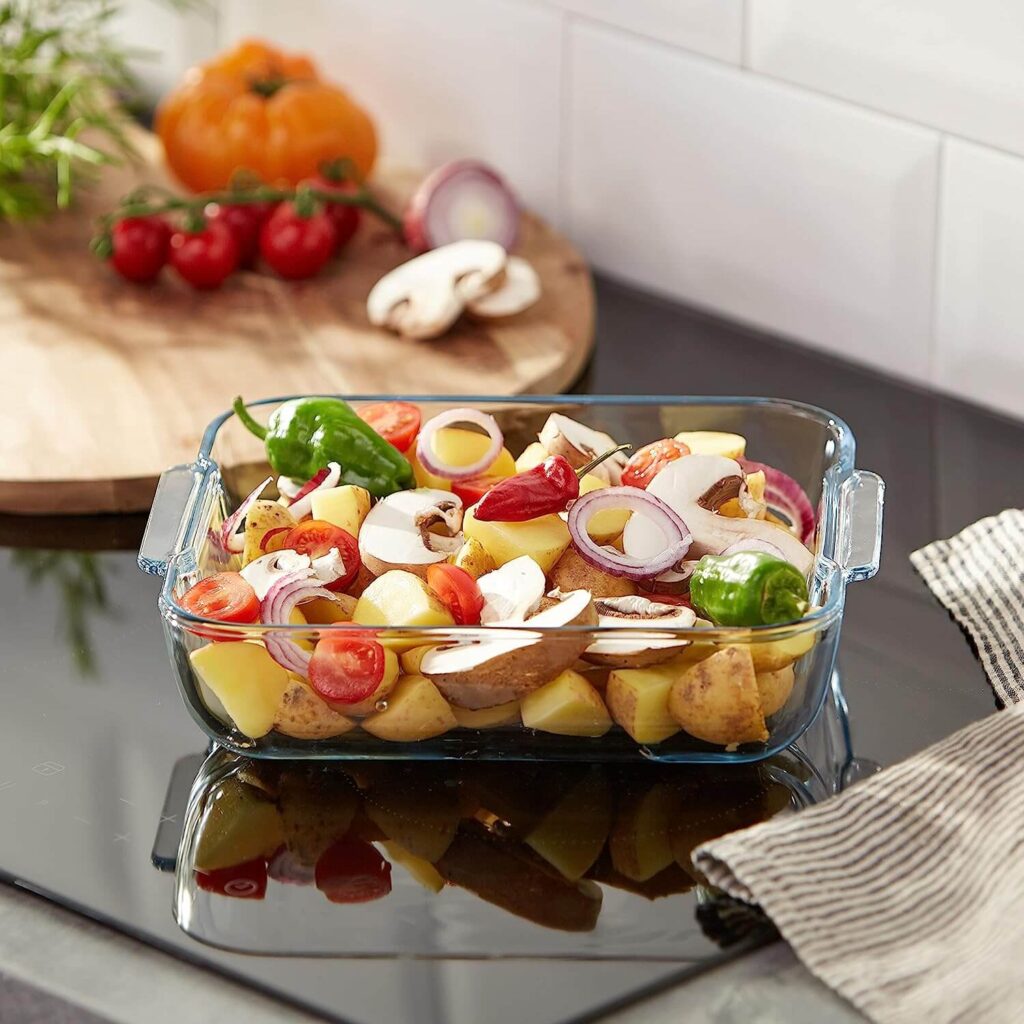
    can old Pyrex go in the freezer

    Absolutely yes, Old Pyrex glassware can go in the freezer because it is made up of Borosilicate glass that can handle a sudden drop in temperature; it can confidently handle the stress caused by the temperature difference between the freezer and room temperature, thereby preventing breakage.

    However, it is important to note that not all Pyrex glass is made of Borosilicate glass because, in recent times, the composition of Pyrex is now tempered soda-lime glass, which is more prone to thermal shock, leading to breakage than Borosilicate glass.

    We recommend you always check in with the manufacturer to know the composition of the Pyrex glassware you intend to buy or use, and check for the freezer and oven-safe markings on products.

    Finally, avoid placing hot glassware directly into the freezers.

    This action, which is a sudden temperature change, may lead to breakage.

    CAN PYREX LIDS GO IN THE FREEZER?
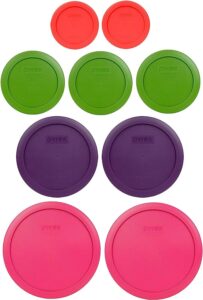
    can Pyrex lids go in the freezer

    Absolutely, yes, Pyrex Lids can go in the Freezer.

    Pyrex glassware lids are plastic; they are BPA-FREE, non-porous, and they will not absorb food flavors, odors, or stains.

    The Pyrex Lid is safe to use in the dishwasher top rack and the microwave, and is perfect for food storage.

    While Pyrex glassware lids are safe for freezer and refrigerator use, below are some precautions;

    • Do not place Pyrex Lids in conventional ovens because they will melt.
    • Keep Pyrex Lids away from the direct heat element in the dishwasher, even if they are dishwasher safe.
    • Always check for the manufacturer’s stamp if it’s intended for freezing or oven use. For example, the Pyrex Ultimate storage silicone and glass lid is designed for oven use.

    CAN YOU FREEZE PYREX GLASS SNAPWARE?
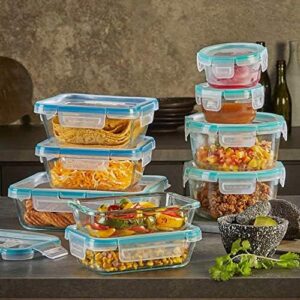
    can you freeze Pyrex glass snapware

    Yes, the Pyrex glass Snapware is Freezer and refrigerator-safe because they are made from tempered glass material, making them highly resistant to temperature changes.

    Aside from being safe for freezer use, Pyrex glass Snapware is also safe for microwave and oven use.

    The lids are airtight, keeping your food fresher.

    In addition, we recommend you allow enough space at the top of your Pyrex glass Snapware for possible expansion when you place it inside the freezer.

    This expansion allows the food to expand without the glass cracking or breaking.

    Finally, to keep your Pyrex glass Snapware from potential breakage, we recommend avoiding placing your Pyrex glass Snapware directly from the freezer into a hot oven or stovetop, allowing it to thaw( gradual temperature change) to prevent excessive thermal shock.

    CAN I FREEZE LASAGNA IN A PYREX DISH?

    Yes, you can comfortably and confidently freeze Lasagna in a Pyrex dish because the composition of a Pyrex glass dish allows for thermal expansion and withstanding temperature changes.

    Freezing Lasagna in a Pyrex Dish

    Either the Pyrex glassware dish is made with Soda-lime tempered glass or Borosilicate glass, it can handle your Lasagna.

    In addition, tempered Pyrex glass used in freezing Lasagna can go directly from room temperature into a preheated oven.

    Aside from being freezer-safe for Lasagna, Pyrex glass is also oven-safe, dishwasher-safe, and microwave-safe.

    We recommend you follow other precautions and guidelines stated above when transferring your Lasagna into Pyrex glassware or a microwave oven.

    Finally, Pyrex glass used for storing and serving Lasagna is resistant to stains and does not absorb food, odors, or flavors.

    For example, you must allow your Lasagna to cool before transferring it to the Pyrex glass dish, as this action helps in preventing condensation from inside the dish.

    IS CORNINGWARE FREEZER SAFE?

    Glass-ceramic Corningware Freezer safe

    Yes, Corningware is Freezer safe because it is made with glass-ceramic or ceramic material that is highly resistant to thermal shock and can withstand extreme temperatures.

    We have to note here that Corningwares is made of two material compositions, the first is glass ceramic, while the other is ceramic.

    The glass ceramic Corningware can comfortably be put on the stove (open flame/heat), dishwasher safe, refrigerator safe, microwave safe, oven safe, and can go from oven to fridge, saving you time and effort.

    The glass ceramic Corningware is non-porous and won’t absorb food odors or flavors or react to acid-based foods.

    The glass ceramic Corningware is perfect for cooking, serving, preparing, and storing all kinds of dishes.

    IS CERAMIC CORNINGWARE FREEZER SAFE?

    Ceramic Corningware safe for Freezer use

    Yes, the ceramic Corningware is Freezer safe, dishwasher safe, microwave safe, and pre-heated oven safe.

    The ceramic Corningware has an amazing ability to go from oven to table to refrigerator, but can’t handle open flame like the glass-ceramic Corningware.

    Just like the glass ceramic Corningwares, the ceramic Corningwares are also non-toxic, non-porous, BPA-free, and can resist chips and cracks!

    The ceramic Corningware is oven-to-table ready!

    You must have noticed that all products here are from the Instant brand, the makers of Corelle dinnerware sets, and almost all products they manufacture are oven-safe, like Corelle dishes.

    Corelle remains one of the most versatile dishes, which is why it plays a role in Kosher, and Corelle hardly gets hot when used in the microwave.

    CAN YOU FREEZE GLASS CASSEROLE DISHES?

    Glass Casserole dish Freezer safe

    Yes, you can freeze glass casserole dishes; the success of the freezing will depend on the makeup or material composition of the glass casserole dish.

    Some glass casserole dishes are not suited for extreme temperatures; sudden temperature changes or extreme heat, such as an open flame, will damage them.

    Additionally, not every glass casserole dish will survive the trip from refrigerator to preheated oven or microwave; if they do, they may break, chip, or shatter.

    In conclusion, we suggest you use only glass casserole dishes with the markings “freezer safe”, “microwave safe”, and “oven safe” on them and check the “safe oven temperature”, “freezer temperature”, and “microwave temperature” to avoid injury or breakage.

    CAN YOU FREEZE GLASS DISHES?
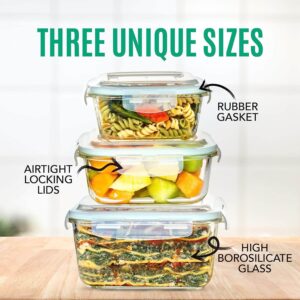
    Freezer safe Glass Dishes

    Yes, of course, you can freeze glass dishes, but note that not every glass can withstand a wide range of temperature changes.

    We always recommend for safety and durability to use glass dishes made with Borosilicate glass or tempered glass, as they can withstand high temperatures, have thermal stability, and can go from freezer to microwave.

    In addition, we recommend you avoid placing a frozen glass dish directly in a hot oven or transferring a hot glass dish directly into the freezer, as extreme temperature changes can cause thermal shock and potentially lead to the glass breaking.

    Finally, one reason home cooks and chefs prefer glass is that it is non-reactive, does not interact with or leach chemicals into your food, and when you freeze acidic food, glass doesn’t absorb or transfer odors or flavors.

    CAN YOU FREEZE CERAMIC DISHES?
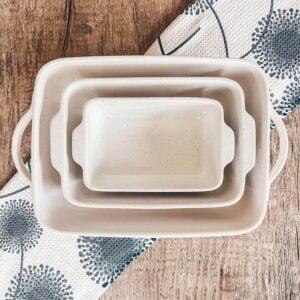
    Freezer safe Ceramic dish for Casserole, baking, roasting and Lasagna

    Yes, ceramic dishes can be used for freezing food items, but be sure to check the manufacturer’s specifications on how to care for specific ceramic dishes, as they come in various forms like Stoneware, Porcelain, and Earthenware.

    Generally, we recommend you avoid exposing these ceramic dishes to extreme temperature changes and reduce their exposure to thermal shock.

    Finally, it is a good practice to avoid transferring a ceramic dish directly from the freezer to a hot oven or stovetop. Instead, allow the dish to thaw gradually at room temperature or in the refrigerator before exposing it to heat.
  • Does Corelle Get Hot in the Microwave? The Truth About Your Favourite Dinnerware

    You’ve just reheated last night’s curry in your Corelle bowl, and as you reach for it with bare hands, you’re met with a shock that could rival touching a hot radiator.

    If you’re like most dinnerware enthusiasts who’ve sworn by Corelle’s reputation for being virtually indestructible, you’ve probably wondered whether your beloved dishes are playing tricks on you in the microwave.

    The question of whether Corelle gets hot in the microwave isn’t just about convenience; it’s about understanding the science behind your dinnerware and keeping your fingertips blissfully burn-free.

    With millions of households relying on Corelle for their daily dining needs, this seemingly simple question touches on material science, kitchen safety, and the very technology that makes your dinnerware tick.

    But here’s what might surprise you about what’s really happening inside your microwave.

    UNDERSTANDING CORELLE: MORE THAN JUST PRETTY PLATES

    Before we dive into the microwave mystery, let’s appreciate what makes Corelle dinnerware special.

    This isn’t your grandmother’s china that chips if you look at it wrong, though ironically, it might actually be passed down from her generation.

    The Vitrelle Glass Revolution

    Corelle’s secret weapon is Vitrelle glass technology, a triple-layered glass construction that’s been quietly revolutionizing kitchens, especially as a US Brand since the 1970s.

    Think of it as the “premium armour” of the dinnerware world. This isn’t ordinary glass; it’s made from up to 80% recycled glass mixed with sand, salt, limestone, and feldspar, all compressed through a unique lamination process.

    The result? Dishes that are:

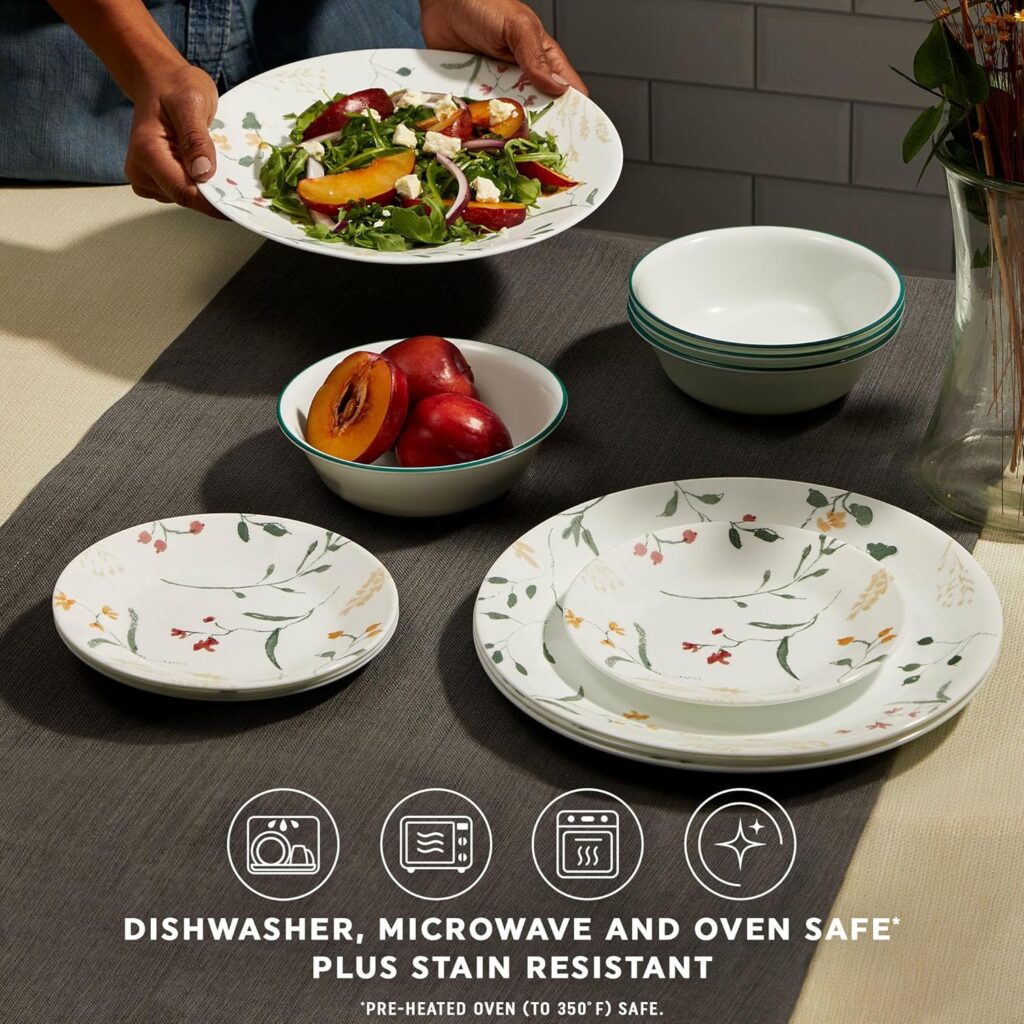
    Triple layer Corelle Wildflower pattern 18 pcs dinnerware set
    • Non-porous (goodbye, stubborn stains!)
    • Lightweight yet incredibly strong
    • Resistant to thermal shock

    THE MICROWAVE TRUTH: DOES CORELLE GET HOT IN THE MICROWAVE?

    does corelle get hot in the microwave

    Here’s the straightforward answer: Yes, Corelle can get hot in the microwave, but not for the reasons you might think.

    The Heat Transfer Reality

    Unlike some materials that absorb microwave energy directly, Corelle’s Vitrelle glass doesn’t significantly heat up from microwave radiation itself.

    Instead, your dishes become hot through good old-fashioned heat transfer; the food gets hot, and that heat moves to the dish.

    Corelle Linen Weave 12 pcs microwave safe dinner plates

    It’s rather like holding a cup of hot tea. The cup isn’t generating heat; it’s simply conducting the warmth from its contents.

    Similarly, when you microwave that leftover lasagne, the dish heats up because the piping hot food is sharing its thermal energy.

    Temperature Limits You Need to Know

    Corelle products are officially microwave-safe up to 350°F (176°C). This temperature threshold isn’t arbitrary—it’s based on the material’s thermal properties and safety margins set by the manufacturers.

    Beyond this point, you’re venturing into territory where even premium or high-quality dinnerware might start to struggle.

    Usage ScenarioSafe TemperatureRecommended Time
    Reheating leftoversUp to 350°F (176°C)2-5 minutes
    Warming beveragesUp to 300°F (149°C)1-3 minutes
    Defrosting foodRoom temperature startVariable

    WHY YOUR CORELLE FEELS LIKE LAVA: THE SCIENCE EXPLAINED

    Material Properties Matter:

    Vitrelle glass has excellent thermal conductivity, which means it efficiently transfers heat from your food to its surface.

    This efficiency is actually a feature, not a bug; it helps distribute heat evenly, preventing hot spots that could damage both your food and the dish.

    However, this same property means that when your food reaches high temperatures, your dish follows suit rather quickly.

    It’s like having a very responsive sports car—excellent performance, but you need to know how to handle it.

    The Microwave Energy Equation

    Microwaves work by agitating water molecules in food, creating friction and heat.

    While Corelle doesn’t absorb significant microwave energy, any tiny amount of moisture or food residue on the dish can heat up, contributing to the overall temperature.

    SAFETY FIRST: HOW TO HANDLE HOT CORELLE LIKE A PRO

    Essential Safety Tips:

    Always use oven mitts or pot holders when removing Corelle from the microwave. This isn’t being overly cautious; it’s being smart. Even microwave-safe doesn’t mean burn-proof.

    Here are the golden rules:

    1. Test before touching: Gently touch the rim of the dish (it’s usually cooler) before committing to lifting it
    2. Use proper protection: Oven mitts aren’t just for ovens
    3. Allow cooling time: Give hot dishes a moment to settle
    4. Check food temperature: Sometimes the dish feels cooler than the food actually is.

    What NOT to Do with Corelle

    While Corelle is remarkably versatile, it does have limits:

    • Never use under a broiler or grill
    • Avoid microwave browning elements
    • Don’t place on stovetops
    • Skip the toaster oven for anything above 350°F.

    COMPARING CORELLE TO OTHER MICROWAVE-SAFE MATERIALS

    MaterialHeat AbsorptionHeat RetentionMicrowave Safety
    Corelle (Vitrelle)LowModerateExcellent
    CeramicModerateHighGood
    Glass (Regular)LowLowGood
    MelamineHighLowPoor and ( Not Recommended)
    StonewareHighVery HighGood

    Corelle strikes an excellent balance; it doesn’t absorb much microwave energy itself, but it does conduct heat efficiently from food.

    This makes it safer than materials like melamine (which can get dangerously hot) while being more practical than regular glass (which can shatter from thermal shock).

    DIFFERENT CORELLE COLLECTIONS: ARE THEY ALL THE SAME?

    Livingware vs. Stoneware vs. Vintage

    Not all Corelle is created equal, though the differences are subtle:

    Corelle Livingware: The classic Vitrelle glass construction we’ve been discussing. Microwave-safe up to 350°F with excellent heat resistance.

    Corelle Stoneware: A different beast entirely. This line uses traditional stoneware materials, which means higher heat absorption and retention. Still microwave-safe, but expect these pieces to get hotter faster.

    Vintage Corelle: If you’ve inherited pieces from the 1970s or 1980s, they’re likely even more robust than modern versions. The manufacturing process has been refined, but those older pieces were built like tanks.

    PRACTICAL TIPS FOR EVERYDAY USE

    Mastering Your Microwave Game:

    Start with shorter heating intervals: Instead of blasting your food for three minutes straight, try heating in 30-second bursts. This gives you better control and prevents both food and the dish from overheating.

    Consider your food type: Liquids transfer heat more efficiently than solids, so that bowl of soup will make your Corelle hotter than reheated pizza.

    Position matters: Place dishes slightly off-centre in your microwave for more even heating—this reduces hot spots that can make handling tricky.

    The Professional Touch

    Restaurant kitchens have been using commercial-grade Corelle for decades, and they’ve developed some tricks:

    Rotate dishes manually if your microwave doesn’t have a turntable.

    Pre-warm dishes for hot foods to reduce thermal shock.

    Use wooden or plastic utensils to avoid scratching and creating heat-absorbing rough spots.

    TROUBLESHOOTING COMMON ISSUES

    When Things Go Wrong:

    My Corelle cracked in the microwave: This usually happens from thermal shock—rapid temperature changes. Always start with room-temperature dishes when possible.

    The dish is too hot to handle: Perfectly normal! Your food was probably quite hot. Use protection and allow cooling time.

    Uneven heating: This is more about microwave technique than dish material. Try repositioning or using lower power settings.

    Signs Your Corelle Needs Retirement

    Even champion dinnerware has limits. Replace pieces that show:

    • Visible cracks or chips
    • Rough or scratched surfaces
    • Discolouration that won’t wash away
    • Age-related wear (yes, even Corelle ages).

    THE ENVIRONMENTAL ANGLE: WHY MATERIAL MATTERS

    Sustainability in Your Kitchen:

    Corelle’s longevity makes it an environmental winner. While cheaper alternatives might seem appealing, the durability of Vitrelle glass means less waste over time.

    A single set of Corelle can last decades with proper care.

    The 80% recycled content(glass) also puts it ahead of many competitors in the sustainability game. When you choose dinnerware that lasts, you’re making an environmental statement.

    EXPERT INSIGHTS AND INDUSTRY PERSPECTIVES

    What the Professionals Say:

    Kitchen equipment specialists consistently rate Corelle and its product lines, like Mugs among the top microwave-safe dinnerware options.

    The combination of safety, durability, and heat resistance makes it a professional favourite.

    Material scientists appreciate the innovative Vitrelle technology, noting that the three-layer construction provides strength while maintaining thermal properties that work well with modern appliances.

    MAKING THE RIGHT CHOICE FOR YOUR KITCHEN

    Investment vs. Value:

    Quality dinnerware is an investment, and Corelle delivers exceptional value over time. While the initial cost might be higher than disposable alternatives, the longevity and performance justify the expense.

    Consider your cooking habits:

    • Frequent microwaving: Corelle’s consistent performance makes it ideal
    • Family dining: The durability stands up to daily use
    • Storage concerns: The stackable design saves space.

    FREQUENTLY ASKED QUESTIONS

    Can I put cold Corelle straight into a hot microwave?

    Vitrelle glass handles thermal shock well, but it’s better to let dishes come to room temperature first.

    The thermal resistance is excellent, but why test the limits unnecessarily?

    How long can I microwave Corelle safely?

    There’s no strict time limit, but the 350°F temperature threshold is your guide. Most reheating tasks stay well within safe parameters.

    Do older Corelle dishes perform differently?

    Vintage pieces often perform even better than modern versions. The manufacturing process has been refined for efficiency, but older pieces were built with generous safety margins.

    Is it normal for Corelle to make noise in the microwave?

    Slight thermal expansion can cause minor sounds, but loud cracking or popping suggests thermal stress. Stop immediately and check for damage.

    THE BOTTOM LINE: EMBRACE THE HEAT (SAFELY)

    Corelle does get hot in the microwave—that’s physics, not a design flaw. Understanding this behaviour helps you use your dinnerware safely and effectively.

    The key is respecting the material’s properties while appreciating its remarkable durability and versatility.

    Your Corelle dinnerware represents decades of material science innovation, packed into dishes that look deceptively simple.

    The fact that they can handle daily microwave use while lasting for years speaks to the thoughtful engineering behind every piece.

    Ready to master your microwave game? Start by treating your Corelle with the respect it deserves, use proper handling techniques, understand its limits, and enjoy the confidence that comes with using genuinely reliable dinnerware.

    Whether you’re reheating last night’s takeaway or warming up a midnight snack, knowing how your dishes behave in the microwave makes you a more confident cook.

    What’s your experience with Corelle in the microwave? Share your tips and tricks in the comments below, and help fellow dinnerware enthusiasts navigate their own kitchen adventures.