Tag: pottery tableware

  • Where is Gibson Dinnerware Made? – Complete Guide

    You’re hosting a dinner party, and as you set the table with your beautiful Gibson plates, a guest casually asks, “Where is Gibson dinnerware made, anyway?”

    You freeze, realizing you have no idea. Gibson dinnerware has graced countless tables with its stylish designs and affordable prices, but the origin of these popular dishes remains a mystery to many enthusiasts.

    Whether you’re a collector, a homemaker with a passion for tableware, or simply curious about the products in your kitchen cabinet, understanding where your dinnerware comes from adds a layer of connection to your daily dining experience.

    Ready to uncover the journey behind those plates and bowls you use every day? Let’s dive into the fascinating world of Gibson dinnerware manufacturing.

    THE ORIGINS OF GIBSON DINNERWARE

    Gibson Overseas, Inc. is an American company with a rich history dating back to 1979. Founded by Nejat Gabbay, the company has evolved from a small operation into one of the largest dinnerware suppliers in the United States.

    While Gibson is headquartered in Los Angeles, California, this doesn’t necessarily mean all their products are manufactured there.

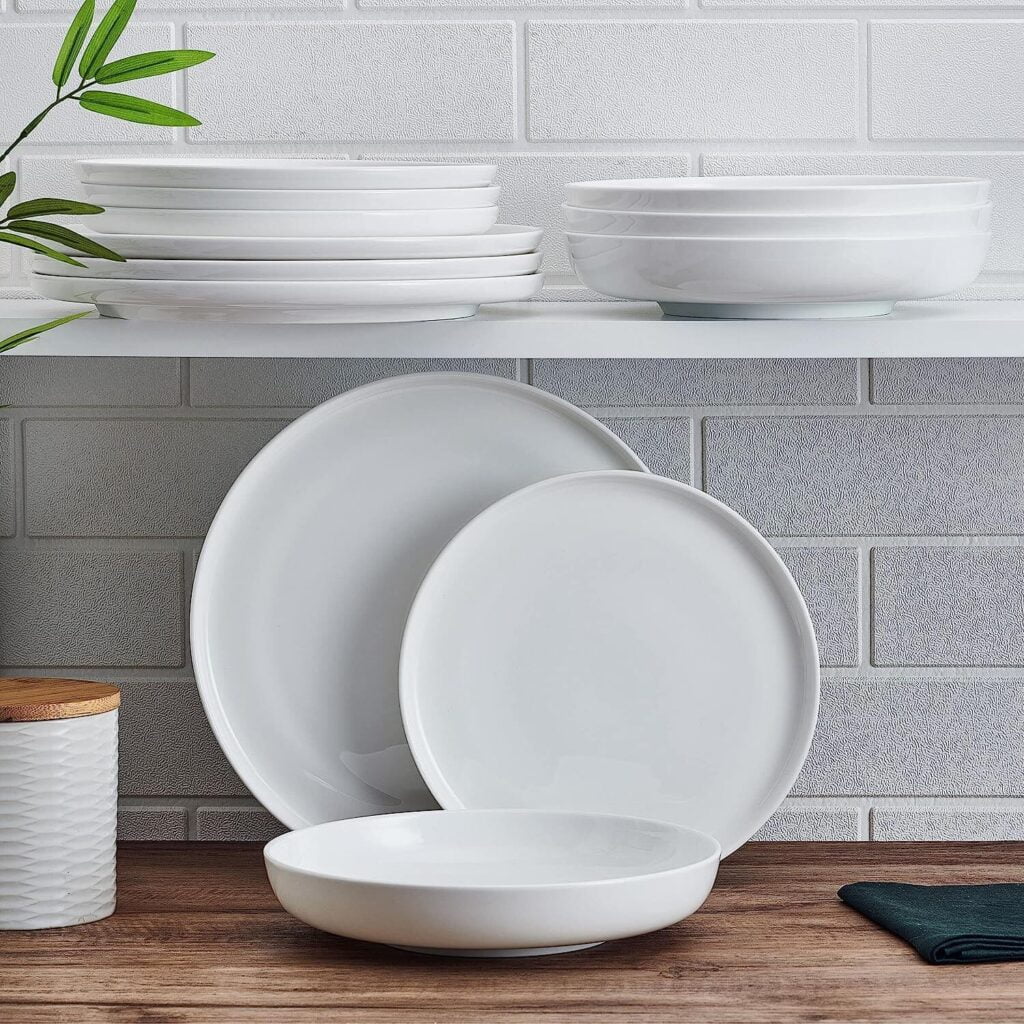
    Gibson Home Porcelain Dinnerware set

    WHERE IS GIBSON DINNERWARE ACTUALLY MADE?

    Where is Gibson Dinnerware made

    Gibson dinnerware is primarily manufactured in China. While Gibson Overseas Inc. is an American company based in Los Angeles, California, the majority of its production occurs in Chinese factories.

    Some specialty lines of Gibson products may also be produced in other Asian countries ( partnering with over 400 factories worldwide), depending on material expertise and manufacturing capabilities, but China remains their primary manufacturing base for cost-efficiency and production capacity.

    By the 1990s and early 2000s, like many consumer goods companies, Gibson began transitioning much of its manufacturing to China to manage production costs while maintaining competitive pricing.

    Gibson Home Ultra break and chip resistant dinnerware set

    Gibson maintains strict quality control standards for their Chinese-manufactured products, ensuring they meet both international safety regulations and the company’s specifications.

    THE GLOBAL JOURNEY OF GIBSON DINNERWARE

    The path your Gibson dinnerware takes before reaching your table is truly international:

    1. Design: Created by designers in Gibson’s Los Angeles headquarters
    2. Manufacturing: Produced in Chinese factories
    3. Quality Control: Inspected to meet international standards
    4. Distribution: Shipped to distribution centers around the world
    5. Retail: Sold through various retailers globally
    6. Your Table: Finally arriving in your home

    This global production model is similar to many consumer goods today, including luxury brands like Pillivuyt and Aplico, which maintain their design heritage while adapting their manufacturing strategies to remain competitive.

    GIBSON HOMEWARES CHINA: THE MANUFACTURING CONNECTION

    The term “Gibson Homewares China” has a dual meaning in the dinnerware world – it refers both to china (porcelain) products made by Gibson and to the fact that many Gibson products are manufactured in China.

    Gibson’s Chinese Manufacturing Facilities:

    Gibson’s production facilities in China allow the company to:

    1. Scale Production: Manufacturing in China provides access to large-scale production capabilities, enabling Gibson to meet global demand.
    2. Utilize Expertise: China has centuries of ceramic production expertise, particularly in regions like Jingdezhen, historically known as the “Porcelain Capital.”
    3. Control Costs: The cost advantages of Chinese manufacturing help Gibson offer attractive pricing to consumers while maintaining quality standards.
    4. Access Materials: Proximity to raw material sources for ceramics provides logistical advantages.

    While some consumers prefer products made domestically, others appreciate how Chinese manufacturing has made stylish dinnerware more accessible, price-wise.

    For those specifically seeking dinnerware brands that are made in the USA, there are alternatives to Gibson, though often at higher price points.

    Gibson’s approach to global manufacturing represents the modern reality of the housewares industry, where design might originate in one country while production occurs in another.

    This international approach has allowed Gibson to grow into one of America’s leading dinnerware brands despite having most of its physical production outside the U.S.

    ARE GIBSON DISHES LEAD-FREE?

    Safety concerns are paramount when selecting dinnerware for your home, and questions about lead content are both common and important.

    The good news is that modern Gibson dinnerware is designed with safety in mind.

    Gibson provides detailed information about the safety of its products on both its packaging and website to ensure consumer confidence.

    Lead Free Gibson Home Dinnerware set

    For cookware and related items, Gibson Homewares complies with federal regulations, including Title 21 of the Code of Federal Regulations, which governs the safe use of materials that come into contact with food.

    Additionally, they adhere to California Assembly Bill 1200, which mandates disclosure of any intentionally added chemicals in cookware on product labels and websites.

    Gibson enforces strict quality control measures, including factory testing, audits, and in-house testing labs, to ensure product safety and durability.

    These measures are complemented by clear regulatory disclosures and compliance protocols. 

    For further inquiries about specific products or safety details, Gibson encourages consumers to contact their Consumer Relations team.

    Here are a few important distinctions:

    • Modern Production: Contemporary Gibson dinnerware (produced within approximately the last 15 years) follows current safety standards and regulations regarding lead and other potentially harmful substances.
    • Decorative Elements: While the food-contact surfaces are lead-free, some decorative elements on certain patterns (particularly those with bright colors or metallic accents) may contain trace amounts of lead, though still within regulatory limits.
    • Vintage Pieces: If you’re using vintage Gibson pieces (especially those manufactured before the 2000s), they may have been produced under different standards and could potentially contain higher levels of lead than current products.

    Finally, if you have concerns about older pieces in your collection, lead testing kits are available for home use.

    IS GIBSON BONE CHINA?

    When exploring the world of Stoneware and Melamine products, you might wonder where Gibson fits in the spectrum of dinnerware materials.

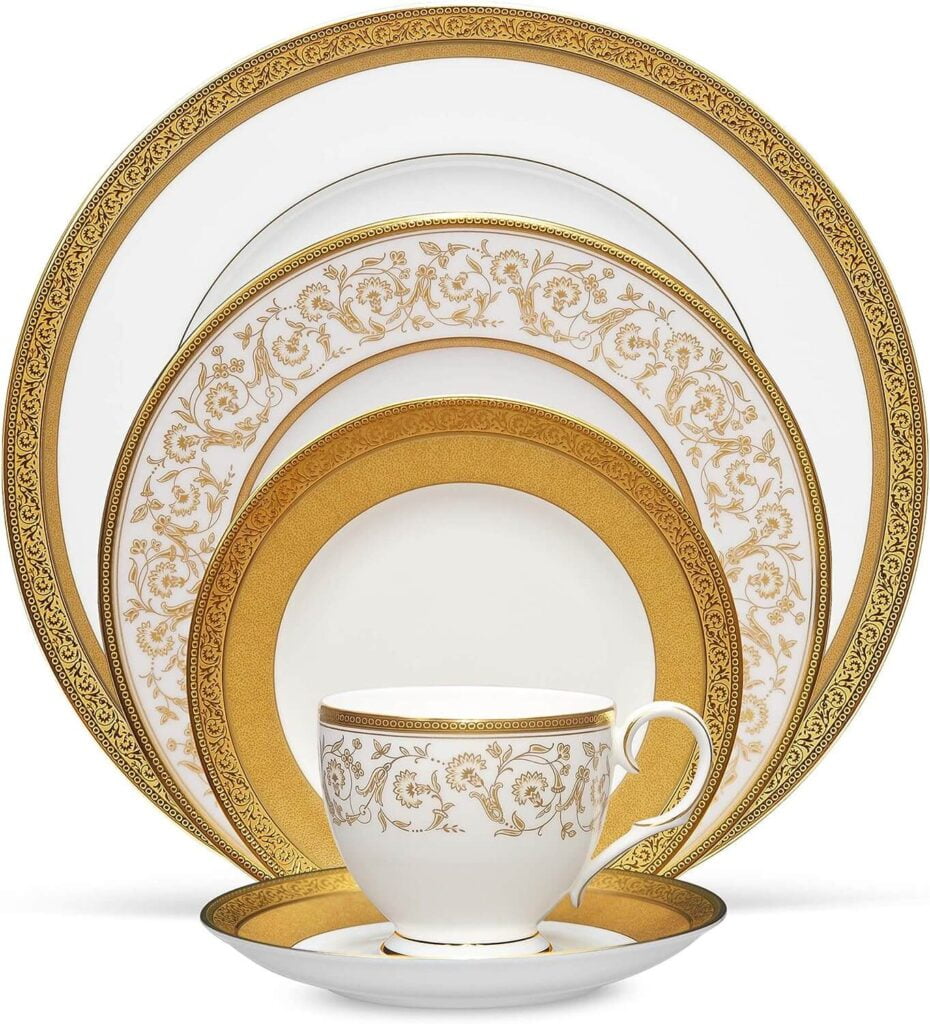
    Gibson Elite Bone China embossed dinnerware set

    Gibson dishes aren’t predominantly made with Bone China; they are also made with other dinnerware materials like Porcelain, Stoneware, Melamine, and Opal glass.

    Here are examples of Gibson dinnerware using several materials:

    1. Stoneware: Many Gibson collections feature stoneware, a durable ceramic material fired at high temperatures. This creates sturdy, everyday dinnerware that’s typically microwave and dishwasher-safe.
    2. Porcelain: Some of Gibson’s more upscale collections use porcelain, which is similar to bone china but doesn’t contain the bone ash component.
    3. Earthenware: Gibson also produces more casual lines of earthenware, which have a more rustic, less refined finish than porcelain or bone china.
    4. Melamine: For outdoor and casual dining, Gibson offers melamine options, which provide durability and break-resistance.
    5. An example of Gibson dishes that are made of Bone China is the White Gibson Elite Embossed Bone China Double Bowl Dinnerware Set, Service for 4 (16pcs).

    Unlike companies such as Wedgwood or Royal Doulton that specialize in traditional bone china, Gibson has positioned itself as a versatile provider of everyday dinnerware in various materials.

    This distinction becomes evident when comparing Corelle and Gibson tableware – while Corelle focuses on its proprietary Vitrelle glass material, Gibson offers a broader range of ceramic options.

    If you’re specifically looking for bone china, you might want to explore brands that specialize in this material, but Gibson’s diverse range of materials offers solutions for virtually every dining need and style preference.

    GIBSON ELITE DINNERWARE REPLACEMENTS

    One of the challenges of maintaining a complete dinnerware set over time is dealing with the inevitable broken plate or chipped bowl.

    Gibson Elite, the company’s premium line, offers several options for replacement pieces.

    How to Find Gibson Elite Replacements:

    1. Official Website: Gibson’s official website sometimes offers individual replacement pieces for current collections. Check their “Replacements” section or contact customer service with your specific pattern.
    2. Retail Partners: Major retailers that carry Gibson Elite, such as Walmart, Target, and Amazon, often sell individual pieces as well as full sets.
    3. Replacement Services: Specialized replacement services like Replacements, Ltd., frequently carry Gibson patterns, including discontinued ones.
    4. Secondary Markets: Online marketplaces like eBay and Etsy can be excellent sources for finding pieces from discontinued patterns.

    When seeking replacements, it’s helpful to know the exact pattern name and, if possible, when it was purchased. Gibson Elite patterns change over time, and colors may vary slightly between production runs.

    For those comparing different dinnerware options, understanding the difference between Corelle and Noritake dishes can be helpful.

    While Corelle offers virtually unbreakable glass dinnerware and Noritake specializes in fine porcelain and bone china, Gibson Elite positions itself in the middle – offering attractive, durable ceramic options at accessible price points.

    This middle-ground approach makes Gibson Elite popular among those who appreciate design but need practical everyday dinnerware that won’t break the bank when replacements are needed.

    IDENTIFYING YOUR GIBSON DINNERWARE’S ORIGIN

    If you’re curious about exactly where your specific Gibson dishes were made, check for these indicators:

    Style and Period: The style and period of your dinnerware can provide clues about its origin, especially for collectors of Vintage Corelle and other classic dinnerware who might compare different eras of production.

    Backstamp/Maker’s Mark: Turn your plate or bowl over and look for the backstamp, which typically includes “Gibson” and may indicate “Made in China” or another country of origin.

    Packaging: Original packaging often states the country of manufacture, more specifically, sometimes even noting the particular region or factory.

    IS GIBSON DINNERWARE WORTH THE INVESTMENT?

    Understanding where Gibson dinnerware is made helps inform your purchasing decisions. Here’s a balanced assessment of whether Gibson represents a good value:

    Pros of Gibson Dinnerware:

    • Affordable Pricing: Generally more budget-friendly than many competitors
    • Design Variety: Wide range of styles, from contemporary to traditional
    • Practical Features: Many collections are dishwasher and microwave-safe
    • Availability: Widely available through many retailers

    Considerations:

    • Durability: While generally good quality, some lines may not be as durable as premium brands
    • Overseas Production: Those prioritizing locally-made products may prefer other brands
    • Mixed Materials: Quality and features vary significantly across different Gibson collections

    For many households, Gibson represents an excellent balance of style, functionality, and value, making it a popular choice for everyday use.

    CONCLUSION

    Gibson dinnerware offers a fascinating glimpse into the global nature of today’s consumer goods.

    While your Gibson plates and bowls likely began their journey in Chinese manufacturing facilities, they represent an American company’s design vision and quality standards.

    Whether you’re setting a casual weeknight dinner table or hosting a special occasion, knowing the origin story of your dinnerware adds an extra dimension to your dining experience.

    The next time you serve a meal on your favorite Gibson set, you’ll appreciate not just its design but the international journey it took to reach your home.

    What other household items might have similar global stories to tell?

  • WHERE IS MIKASA MADE

    Everyone notices your beautiful table setting when you invite friends over for dinner.

    Those elegant white plates with silver edges make your homemade food look fancy and special. “Where did you get these?” a friend asks while admiring a plate. “They’re Mikasa,” you say proudly.

    But as you wash up later, you spot something on the bottom of the plate: “Made in…” and you wonder where these lovely dishes come from.

    For many people who love nice dinnerware, Mikasa means beautiful dishes that work for both special occasions and everyday meals.

    But these days, it’s hard to know exactly where your China comes from. Your grandmother’s old Mikasa set might have been made somewhere completely different from the new set you just bought.

    The big question—is Mikasa made in China?—isn’t just about location. It’s about quality, real value, and how luxury products are made in today’s world.

    THE HISTORY OF MIKASA: AMERICAN ROOTS

    From American Design to Global Production

    When George Aratani founded Mikasa in California in 1948, the company’s vision was distinctly American—bringing European-inspired dinnerware design to post-war American homes at accessible prices.

    For decades, Mikasa built its reputation on innovative designs that balanced elegance with practicality, becoming a staple in American households.

    Originally, Mikasa products were primarily manufactured in Japan, reflecting Aratani’s Japanese-American heritage and Japan’s expertise in fine ceramics and porcelain.

    This origin story is central to understanding Mikasa’s evolution as a brand, beginning as an American company that sourced its products from skilled Japanese craftsmen.

    THE EVOLUTION OF MANUFACTURING LOCATIONS

    Like many heritage brands, Mikasa’s production geography has evolved significantly over its 75+ year history.

    Through the latter half of the 20th century, Mikasa maintained its manufacturing primarily in Japan, with some production in other countries known for ceramic expertise, including Germany and England.

    By the 1990s, however, the global manufacturing landscape was transforming rapidly.

    Rising production costs in traditional manufacturing centres pushed many brands, including those in the tableware industry, to reconsider their manufacturing strategies.

    Mikasa, like countless other companies, began diversifying its production locations.

    The question “Is Mikasa made in China?” isn’t one with a simple yes or no answer—it requires understanding the brand’s complex manufacturing history and current practices.

    MIKASA TODAY: WHERE IS IT MADE?

    Lifetime Brands Acquisition and Manufacturing Changes

    A significant turning point in Mikasa’s manufacturing story came in 2008 when the brand was acquired by Lifetime Brands, a global provider of kitchenware and tableware that owns several other familiar names in the industry.

    This acquisition accelerated changes in Mikasa’s production strategy.

    where is mikasa made

    Today, Mikasa products are manufactured in multiple countries around the world, with significant production occurring in China.

    However, depending on the specific collection and product line, Mikasa items may also be produced in:

    • Indonesia
    • Bangladesh
    • Thailand
    • Vietnam
    • Portugal
    • Turkey

    The manufacturing location often depends on the materials, techniques, and price points of different Mikasa collections.

    Fine bone china collections may be produced in different facilities than everyday stoneware or crystal glassware.

    WHERE IS MIKASA FLATWARE MADE?

    Where is Mikasa Flatware Made

    Mikasa Flatware is made in various countries, including Vietnam, China, and others.

    HOW TO IDENTIFY WHERE YOUR MIKASA WAS MADE

    Curious about where your specific Mikasa pieces were manufactured? Here’s how to find out:

    1. Check the backstamp: Turn over your Mikasa piece and look for the marking on the underside. Modern Mikasa items typically include a “Made in [Country]” marking.
    2. Consider the age: Vintage Mikasa pieces (pre-1990s) are more likely to have been made in Japan.
    3. Collection matters: Different Mikasa collections are manufactured in different locations. The production country may change even within the same pattern, depending on when it was made.
    4. Consult customer service: For pieces without clear markings, Mikasa’s customer service can sometimes provide manufacturing information based on the pattern name and item number.

    IS MANUFACTURING LOCATION IMPORTANT FOR QUALITY?

    Beyond Geography: What Determines Mikasa Quality

    When discussing whether dishes made in China are safe, it’s important to focus on manufacturing standards rather than geography alone.

    Modern manufacturing has evolved to the point where high-quality products can be produced in virtually any country, provided the right quality control measures are in place.

    For Mikasa specifically, quality is determined by several factors:

    • Design specifications and materials
    • Manufacturing processes and quality control standards
    • Finishing techniques and inspection protocols

    Lifetime Brands, Mikasa’s parent company, maintains quality control standards across its global manufacturing network.

    The company’s reputation depends on maintaining consistency regardless of where items are produced.

    IS MIKASA A GOOD BRAND?

    Even before you realize what a good dinnerware brand should be like, the overwhelming finish of some dinnerware brands might entice you into acceptance.

    The attributes of the Mikasa dinnerware brand are listed below to help you decide if it is a good brand.

    Mikasa chip resistant good brand

    LIGHTWEIGHT

    Because it is constructed of non-heavy materials like bone china and porcelain, Mikasa dinnerware is lightweight.

    The plates feel delicate and exquisite, thanks to these materials, which also make them simpler to handle and use at the table.

    DURABILITY

    Due to the solid materials used in its construction, Mikasa dinnerware is long-lasting. Even with frequent usage, the dishes are made to withstand breaking, chipping, and wear.

    Mikasa Porcelain elegant Platinum Dinnerware set

    As a result, they retain their quality over an extended period, making them a dependable option for both regular meals and special events.

    VERSATILITY

    Due to its vast selection of styles and designs that are appropriate for a range of events, Mikasa tableware is adaptable.

    Mikasa provides solutions that go with various table settings and individual preferences, whether you’re holding a formal dinner party or enjoying a relaxed family supper.

    Because of its adaptability, you can use their dinnerware for a variety of occasions, making it a useful and fashionable option for your eating requirements.

    COMPARING MIKASA FROM DIFFERENT MANUFACTURING LOCATIONS

    Is there a noticeable difference between Mikasa pieces made in different countries?

    While some collectors insist they can tell the difference, controlled comparisons suggest that for most consumers, the differences are minimal when comparing pieces from the same collection and era.

    What may be more noticeable are changes in design aesthetics and materials over time, which might coincide with changes in manufacturing location but aren’t necessarily caused by them.

    Manufacturing LocationTypical CharacteristicsCommon Collections
    Japan (Vintage)Thinner rims, lighter weight, hand-painted detailsItalian Countryside (older versions), Antique White (vintage)
    China (Modern)Consistent glaze, durable construction, machine-perfect detailsFrench Countryside, Italian Countryside (newer versions), Parchment
    IndonesiaKnown for skilled handwork, delicate detailingSelect bone China collections
    PortugalDistinctive earthenware, vibrant glazesVarious seasonal collections

    MIKASA COLLECTIONS: ORIGIN AND QUALITY CONSIDERATIONS

    Fine China vs Everyday Collections

    Mikasa offers various product lines with different quality levels and price points:

    Mikasa China
    1. Fine China Collections: These premium collections often feature bone china, which is known for its translucence and delicacy. Bone china requires specific expertise and may be manufactured in locations with this particular skill set.
    2. Everyday Dinnerware: Typically made from porcelain or stoneware, these collections balance durability with aesthetics and are produced in various global locations, including China.
    3. Crystal and Glassware: Mikasa’s crystal collections have different manufacturing requirements from ceramics and may be produced in countries with glassmaking traditions.

    Spotlight on Popular Collections:

    Mikasa Porcelain Regent Dinnerware set

    Let’s examine a few popular Mikasa collections and their typical manufacturing origins:

    Italian Countryside is one of Mikasa’s bestselling patterns. It features a cream-colored base with architectural motifs.

    Newer productions are typically made in China, while vintage pieces were often made in Japan.

    Mikasa Italian Ivory Porcelain Dinnerware set

    French Countryside: This classic white pattern with fluted rims is now primarily manufactured in China, though earlier versions were produced elsewhere.

    Antique White: Depending on when your set was purchased, this simple, elegant white pattern may have been made in Japan, China, or Indonesia.

    ADDRESSING COMMON CONCERNS ABOUT CHINESE-MADE DINNERWARE

    Quality and Safety Standards:

    Many consumers have questions about dinnerware produced in China. It’s important to understand that reputable brands like Mikasa maintain strict quality and safety standards regardless of manufacturing location.

    Mikasa dinnerware, whether manufactured in China or elsewhere, must meet international safety standards for:

    • Lead and cadmium content
    • Durability and chip resistance
    • Food safety compliance

    Lifetime Brands subjects its products to rigorous testing to ensure they meet or exceed safety requirements in all markets where they’re sold.

    AUTHENTICITY CONCERNS

    Another common concern involves authenticity—are Chinese-made Mikasa pieces “real” Mikasa? The answer is an unequivocal yes.

    When purchased from authorized retailers, Mikasa products are authentic regardless of manufacturing location.

    Counterfeit dinnerware does exist in the marketplace, but this is an issue of unauthorized reproduction rather than manufacturing location. To ensure authenticity:

    • Purchase from authorized retailers
    • Check for proper Mikasa markings and packaging
    • Be wary of deals that seem too good to be true
    • Register your product with Mikasa when possible.

    COLLECTOR’S PERSPECTIVE: VINTAGE VS. MODERN MIKASA

    Value Considerations for Collectors

    For serious Mikasa collectors, the manufacturing location can be significant from an investment perspective:

    • Vintage Japanese-made Mikasa pieces often command premium prices in the secondary market, particularly for discontinued patterns.
    • Limited edition collections have value regardless of manufacturing location.
    • Rarity and condition typically impact value more than the country of origin.

    Mixing Old and New in Your Collection

    Many Mikasa enthusiasts maintain collections that span different manufacturing eras. If you’re building a Mikasa collection:

    • Consider focusing on patterns rather than manufacturing locations
    • Learn to identify manufacturing periods through backstamps and markings
    • Understand that slight variations between old and new pieces are normal
    • Appreciate the unique qualities of pieces from different eras.

    MAKING INFORMED PURCHASING DECISIONS

    What to Consider When Buying Mikasa:

    When purchasing Mikasa dinnerware, consider these factors beyond manufacturing location:

    1. Intended use: Is it for Fine dining, everyday use, or display?
    2. Material preferences: Bone china, porcelain, stoneware, or crystal?
    3. Maintenance requirements: Dishwasher and microwave compatibility
    4. Design continuity: Will the pattern remain available for replacements?
    5. Budget considerations: Price point relative to quality

    Where to Find Authenticated Mikasa Products

    To ensure you’re getting authentic Mikasa pieces:

    • Shop at authorized retailers, including department stores and Mikasa’s official website
    • For discontinued patterns, consider reputable secondary marketplaces with buyer protections
    • Review seller ratings and product reviews carefully
    • Request certificates of authenticity when available, particularly for vintage pieces

    CARING FOR YOUR MIKASA, REGARDLESS OF ORIGIN

    Maintenance Tips for Longevity:

    Proper care will help your Mikasa dinnerware last for generations, regardless of where it was manufactured:

    • Follow the specific care instructions for your collection
    • Handle with care, particularly fine china and crystal
    • Store properly with protective dividers between plates
    • Consider hand-washing delicate pieces, even if they are labeled dishwasher-safe
    • Avoid extreme temperature changes that can cause crazing or cracking

    Repair and Replacement Options:

    If pieces from your collection become damaged:

    • Check Mikasa’s replacement program for current patterns
    • Consider specialty repair services for valuable pieces
    • For discontinued patterns, search secondary markets for replacements
    • Document your collection with photographs and pattern information.

    CONCLUSION

    The question “Is Mikasa made in China?” reveals a complex story about global manufacturing evolution and a heritage brand adapting to changing times.

    While many contemporary Mikasa pieces are indeed manufactured in China, the brand maintains its design integrity and quality standards across its global production network.

    Rather than focusing exclusively on manufacturing location, discerning collectors and everyday users alike would do well to consider the specific attributes of each collection—material quality, design aesthetics, durability, and craftsmanship.

    These factors ultimately determine the value and enjoyment you’ll derive from your Mikasa dinnerware.

    Whether you’re inheriting your grandmother’s vintage Japanese-made set or purchasing a new collection manufactured in China, Indonesia, or elsewhere, you’re participating in the continuing story of a brand that has graced dining tables for generations.

    The true value of Mikasa lies not just in where it was made but in the memories created around the tables it adorns.


    For further reading:

    Difference between Mikasa and Corelle Tableware

    Difference between Corelle glass and Porcelain dinnerware

    Bone China or Porcelain: Which is better in terms of Durability?

  • Pillivuyt vs Apilco: Which French Porcelain Brand Keeps Your Family Safer in the Kitchen?

    You’re standing in your kitchen, holding two beautiful pieces of French porcelain – one from Pillivuyt, another from Apilco.

    Both promise exceptional quality and timeless elegance, but which one will actually keep your family safer while delivering the performance you need for everything from weeknight dinners to holiday feasts?

    As a safety-conscious home cook, you shouldn’t have to spend hours researching complex manufacturing processes, material compositions, and safety certifications just to choose between two premium kitchenware brands.

    The stakes feel high because you’re not just buying dishes – you’re investing in tools that will touch your family’s food every single day.

    This comprehensive comparison will cut through the marketing claims and give you the clear, practical information you need to make the safest choice between Pillivuyt and Apilco.

    We’ll examine everything from material safety and durability to real-world kitchen performance, helping you understand which brand truly delivers on its promises of quality and safety.

    Whether you’re replacing worn-out bakeware, building your first complete kitchen setup, or simply curious about upgrading to French porcelain, you’ll walk away with confidence in your decision and peace of mind about your family’s kitchen safety.

    Understanding French Porcelain: The Foundation of Kitchen Safety

    French porcelain has earned its reputation as the gold standard in kitchenware for compelling safety and performance reasons that go far beyond mere aesthetics.

    Both Pillivuyt and Apilco represent centuries of French ceramic expertise, but understanding what makes French porcelain inherently safer helps explain why these brands command premium prices.

    The safety advantages begin with the firing process. French porcelain undergoes extremely high-temperature firing – typically between 2300°F and 2400°F – which creates a completely non-porous surface.

    This matters enormously for food safety because bacteria, odors, and stains cannot penetrate the surface.

    Unlike cheaper ceramics or even some stoneware, properly fired French porcelain won’t harbor harmful microorganisms in microscopic cracks or pores.

    Lead content represents another critical safety consideration. Both Pillivuyt and Apilco produce lead-free porcelain that meets or exceeds FDA safety standards for food contact.

    However, the quality control processes and testing protocols differ between manufacturers, which can impact long-term safety assurance.

    French porcelain’s thermal shock resistance provides practical safety benefits in everyday cooking.

    When you move a dish from the refrigerator to the oven or from the stovetop to the cold counter, inferior materials can suddenly crack, potentially causing burns or creating sharp fragments.

    The molecular structure of high-quality French porcelain handles these temperature changes more gracefully.

    The glazing process also impacts safety. Both brands use lead-free glazes, but the application techniques and curing processes affect durability.

    A properly applied glaze creates a smooth, impermeable surface that won’t chip easily during normal use.

    When glazes do chip, they can expose porous ceramic underneath, creating food safety concerns.

    For families prioritizing kitchen safety, these technical differences translate into real-world peace of mind.

    You’re not just buying attractive dinnerware – you’re investing in materials engineered to maintain their safety properties through years of daily use, dishwasher cycles, and temperature extremes.

    Pillivuyt: The Technical Excellence Approach to Kitchen Safety

    Pillivuyt’s approach to kitchen safety centers on technical precision and manufacturing consistency that stems from their specialized focus on culinary porcelain since 1818.

    Unlike companies that produce various ceramic products, Pillivuyt concentrates exclusively on kitchenware, allowing them to optimize every aspect of their process for food safety and cooking performance.

    Their “Culinary Porcelain” designation isn’t marketing fluff – it represents specific technical standards that directly impact safety.

    Pillivuyt France Porcelain Serving Platter

    Pillivuyt porcelain contains higher feldspar content than standard porcelain, creating superior thermal shock resistance.

    This means less risk of sudden cracking when you’re rushing to get dinner on the table and subjecting your bakeware to rapid temperature changes.

    The uniform wall thickness in Pillivuyt pieces represents another safety advantage often overlooked by home cooks.

    Inconsistent thickness creates weak points where stress concentrates, leading to unexpected breakage.

    Pillivuyt’s manufacturing process maintains consistent thickness throughout each piece, reducing the risk of catastrophic failure that could send hot food or sharp fragments flying.

    From a chemical safety perspective, Pillivuyt’s firing process reaches temperatures that completely vitrify the clay body, eliminating porosity that could harbor bacteria or absorb flavors.

    Independent testing consistently shows their finished products contain no detectable lead, cadmium, or other heavy metals that could leach into food.

    The brand’s commitment to kitchen safety extends to its design philosophy. Notice how Pillivuyt bakeware features rounded corners and smooth transitions rather than sharp angles.

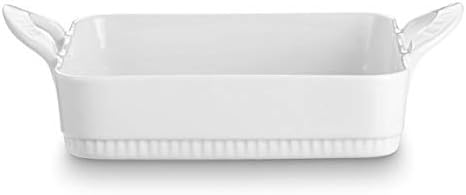
    Pillivuyt France white Porcelain rectangular baker with handles

    These design choices reduce stress concentration points and make the pieces easier to clean thoroughly, preventing bacterial growth in hard-to-reach crevices.

    Professional kitchens worldwide trust Pillivuyt because consistency matters when you’re cooking for hundreds of people daily.

    That same reliability translates to home kitchens where you need confidence that your bakeware will perform safely, whether you’re making a simple weeknight casserole or an elaborate holiday dessert.

    For families who prioritize predictable, safe performance over decorative variety, Pillivuyt’s technical excellence approach offers compelling advantages.

    You’re investing in engineering precision that prioritizes function and safety over aesthetic variety.

    Apilco: Balancing Safety with Versatile Design

    Apilco takes a different approach to kitchen safety, emphasizing a versatile design that maintains safety standards across a broader range of cooking applications and aesthetic preferences.

    Since their founding in 1826, they’ve developed expertise in creating porcelain that performs safely in diverse kitchen environments while offering more design variety than typically associated with technical-focused brands.

    The safety foundation remains solid – Apilco uses lead-free formulations and high-temperature firing processes that create non-porous surfaces resistant to bacteria and staining.

    However, their approach prioritizes adaptability, recognizing that modern families need kitchenware that safely handles everything from microwave reheating to elegant dinner presentations.

    Where Apilco particularly excels in safety considerations is their attention to ergonomic design.

    Apilco pasta bowls and Apilco cereal bowls feature carefully designed rim profiles that reduce the likelihood of burns when handling hot foods.

    The slightly flared edges provide better grip security, reducing the risk of dropping hot dishes.

    Their glazing process deserves particular attention from safety-conscious families.

    Apilco applies multiple glaze layers that create exceptional durability while maintaining the smooth, non-porous surface essential for food safety.

    This multi-layer approach provides additional protection against chips and scratches that could compromise the safety of the underlying ceramic.

    Temperature tolerance represents another area where Apilco’s design philosophy serves safety goals.

    Their pieces safely transition from freezer to oven to table, with thermal shock resistance suitable for real-world kitchen multitasking.

    This flexibility reduces the need for multiple specialized pieces, simplifying your kitchen setup while maintaining safety standards.

    The brand’s commitment to kitchen safety shows in its testing protocols.

    Each production run undergoes thermal cycling tests that simulate years of kitchen use, ensuring that safety properties remain consistent throughout the product’s lifespan.

    This attention to long-term performance particularly benefits families who view their kitchenware as long-term investments.

    Apilco bakeware demonstrates this balanced approach perfectly – technically sound enough for serious baking while attractive enough for direct-to-table service.

    You don’t sacrifice safety for versatility or vice versa.

    For families who want proven safety combined with design flexibility that adapts to various cooking styles and presentation needs, Apilco’s approach offers compelling advantages.

    You’re investing in kitchenware that safely supports your family’s diverse culinary adventures.

    Durability and Longevity: Safety Through Lasting Performance

    The connection between durability and kitchen safety often gets overlooked, but it’s crucial when comparing Pillivuyt vs Apilco.

    Kitchenware that maintains its structural integrity and surface properties over years of use continues protecting your family’s health, while deteriorating pieces can become safety hazards.

    Both brands engineer their porcelain for exceptional longevity, but their approaches reflect different priorities.

    Pillivuyt’s technical focus produces pieces that maintain consistent performance characteristics throughout their lifespan.

    The high feldspar content and precise firing process create porcelain that resists thermal fatigue – the gradual weakening that occurs when materials repeatedly heat and cool.

    This thermal stability translates directly to safety benefits. Pillivuyt pieces that have endured thousands of heating cycles maintain their strength and thermal shock resistance.

    You won’t experience sudden failures that could cause burns or create dangerous, sharp fragments.

    The consistent wall thickness means stress distribution remains predictable even after years of use.

    Apilco’s durability approach emphasizes surface protection, recognizing that most kitchen safety issues arise from surface degradation rather than catastrophic structural failure.

    Their multi-layer glazing system creates exceptional resistance to everyday wear while maintaining the smooth, non-porous surface essential for food safety.

    Chip resistance particularly matters for food safety. When porcelain chips, it exposes the underlying ceramic body, which can harbor bacteria and absorb flavors or odors.

    Both brands resist chipping, but their mechanisms differ. Pillivuyt relies on overall structural strength, while Apilco focuses on surface toughness.

    Real-world testing reveals important differences. Pillivuyt pieces maintain their original thermal properties more consistently over time, making them more predictable for serious bakers who need reliable heat distribution.

    Apilco pieces retain their aesthetic appeal longer, with surfaces that resist scratching and staining even under heavy family use.

    From a safety investment perspective, both approaches serve families well, but your cooking style influences which offers better long-term value.

    Intensive bakers benefit from Pillivuyt’s consistent thermal performance, while families prioritizing everyday versatility find Apilco’s surface durability more relevant.

    The key insight for safety-conscious families: either brand will serve you safely for decades when properly cared for.

    The question isn’t whether they’ll last, but which type of durability better matches your family’s cooking patterns and safety priorities.

    Performance in Real Kitchen Conditions

    Understanding how Pillivuyt and Apilco perform in actual cooking situations reveals critical safety and practical differences that specifications alone can’t capture.

    Real kitchen conditions involve temperature extremes, rapid transitions, everyday accidents, and the multitasking chaos of family meal preparation.

    Temperature performance directly impacts safety in ways that matter daily.

    When you’re juggling multiple dishes for a holiday meal, you need confidence that moving a dish from a 450°F oven to a granite countertop won’t result in catastrophic cracking.

    Both brands handle these transitions well, but their behaviour differs subtly.

    Pillivuyt’s superior thermal mass means pieces heat more evenly and retain temperature longer.

    This benefits safety by reducing hot spots that could burn food or create dangerous steam when liquids hit overheated surfaces.

    However, this same thermal mass means Pillivuyt pieces stay dangerously hot longer, requiring more careful handling.

    Apilco’s lighter thermal mass creates more responsive temperature behaviour. Pieces cool more quickly, reducing burn risk during handling, but they’re also more susceptible to temperature variations that could affect cooking results.

    For families with young children who might accidentally touch hot dishes, Apilco’s faster cooling provides a safety advantage.

    Microwave performance reveals another safety consideration. Both brands are microwave-safe, but their different compositions affect how they behave.

    Pillivuyt’s denser structure heats more evenly in microwaves, reducing the risk of superheated spots that could cause burns.

    Apilco pieces may develop hot spots more readily, requiring careful stirring and testing.

    Cleaning and maintenance directly impact long-term food safety.

    Pillivuyt’s completely smooth surfaces resist staining and bacterial growth but can feel slippery when wet, increasing drop risk.

    Apilco’s slightly more textured surfaces provide better grip when wet but may require more attention to ensure complete cleaning in textured areas.

    Dishwasher performance affects both convenience and safety. Both brands handle standard dishwasher cycles safely, but Pillivuyt’s thermal stability makes it more forgiving of dishwasher temperature variations.

    Apilco pieces maintain their appearance better through repeated dishwasher cycles, which encourages proper cleaning habits that support food safety.

    For busy families, these real-world performance differences often matter more than technical specifications.

    The safest kitchenware is what you’ll actually use properly and maintain correctly throughout its lifespan.

    Cost Analysis and Value for Safe Kitchen Investment

    When investing in premium French porcelain, understanding the true cost extends beyond the initial purchase price to include safety assurance, longevity, and performance consistency over time.

    Both Pillivuyt and Apilco command premium prices, but they deliver value differently depending on your family’s priorities and cooking patterns.

    Pillivuyt typically carries a 15-20% price premium over comparable Apilco pieces, reflecting their specialized manufacturing focus and technical precision.

    This premium represents investment in engineering consistency and thermal performance that professional kitchens demand.

    For serious home bakers who depend on predictable results, this premium often proves worthwhile through improved cooking outcomes and reduced replacement needs.

    The safety value proposition involves more than durability. Pillivuyt’s consistent performance characteristics mean you develop reliable instincts about timing, temperature, and handling. This familiarity reduces kitchen accidents and cooking mistakes that could compromise food safety.

    When you know exactly how your bakeware will behave, you make safer decisions about temperature, timing, and food handling.

    Apilco offers compelling value for families seeking premium safety without maximum technical specification.

    The broader design range means you can create a complete kitchen setup from one manufacturer, potentially reducing overall costs while ensuring compatibility and consistent care requirements.

    Apilco porcelain France pieces work together seamlessly, from prep to presentation.

    Long-term cost considerations favour both brands over cheaper alternatives.

    Premium French porcelain maintains its safety properties and performance characteristics for decades with proper care.

    Cheaper ceramic alternatives may require replacement every few years as surfaces degrade, glazes chip, or thermal shock resistance diminishes.

    The hidden costs of inferior kitchenware include food safety risks, cooking failures, and replacement expenses.

    Both Pillivuyt and Apilco eliminate these concerns through superior engineering and materials, making their initial premium an investment in long-term kitchen safety and performance.

    For families evaluating the investment, consider your cooking frequency and style.

    Daily bakers benefit most from Pillivuyt’s technical precision, while families seeking versatile, safe kitchenware for varied cooking find Apilco’s approach more cost-effective.

    Insurance considerations also favour premium porcelain. Many homeowner’s policies cover high-quality kitchenware as valuable personal property, protecting against accidental damage that wouldn’t apply to standard dinnerware.

    The key insight: both brands represent sound investments for families prioritizing kitchen safety and long-term value over short-term cost savings.

    Making Your Decision: Which Brand Best Serves Your Family’s Safety Needs

    Pillivuyt vs Apilco

    Choosing between Pillivuyt and Apilco ultimately depends on matching each brand’s strengths to your family’s specific cooking patterns, safety priorities, and kitchen usage.

    Both offer excellent safety characteristics, but they excel in different areas that matter more to different families.

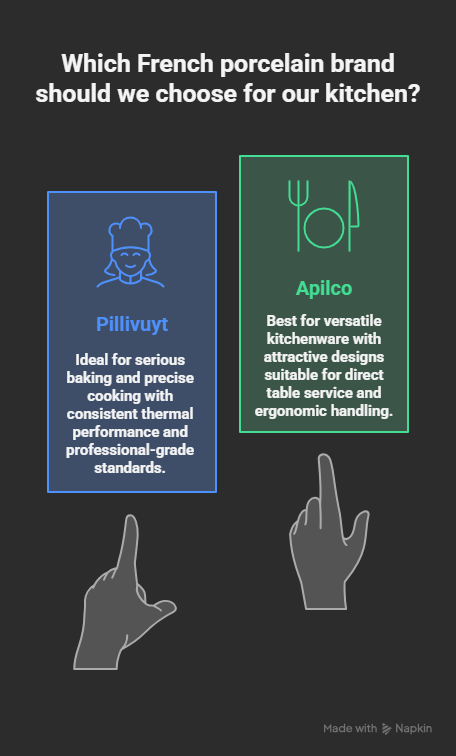
    Choose Pillivuyt if your family priorities include:

    • Serious baking requiring consistent thermal performance
    • Maximum thermal shock resistance for intensive cooking
    • Technical precision and predictable results
    • Professional-grade performance standards
    • Long-term investment in specialized cooking performance

    The technical excellence approach serves families who view cooking as both art and science, where predictable results matter enormously.

    If you frequently bake bread, create delicate pastries, or prepare dishes requiring precise temperature control, Pillivuyt’s engineering focus provides safety through superior performance consistency.

    Choose Apilco if your family priorities include:

    • Versatile kitchenware serving multiple functions
    • Attractive pieces suitable for direct table service
    • Easier handling and ergonomic design
    • Complete kitchen coordination from one brand
    • Balance of performance and aesthetic appeal

    Apilco’s balanced approach serves families who need safe, reliable kitchenware that adapts to varied cooking styles and presentation needs.

    If you value flexibility and want pieces that safely transition from cooking to serving, Apilco’s design philosophy offers compelling advantages.

    Both brands excel at fundamental safety requirements: lead-free composition, thermal shock resistance, non-porous surfaces, and durability.

    Your decision should focus on which approach to achieving these safety goals better matches your family’s cooking reality.

    Consider your kitchen habits honestly. Do you primarily follow recipes precisely, or do you adapt and improvise frequently?

    Do you entertain often and need pieces attractive enough for presentation? Are you building a complete kitchen setup or replacing specific pieces?

    For families uncertain about their priorities, starting with a few key pieces from either brand allows you to evaluate performance in your specific kitchen environment.

    Pillivuyt porcelain from France offers excellent starter sets for serious bakers, while Apilco provides versatile introductory pieces suitable for diverse cooking styles.

    Remember that both brands represent significant upgrades over standard kitchenware in terms of safety, performance, and longevity.

    Your choice between them matters less than choosing quality porcelain that will serve your family safely for decades.

    Frequently Asked Questions About Pillivuyt vs Apilco Safety

    Are both brands completely safe for daily family use?

    Yes, both Pillivuyt and Apilco meet or exceed FDA safety standards for food contact surfaces.

    They use lead-free formulations and high-temperature firing processes that create non-porous, bacteria-resistant surfaces.

    Independent testing confirms both brands contain no detectable levels of heavy metals that could leach into food.

    Which brand is safer for children to use?

    Both brands are safe for family use, including children, but Apilco’s ergonomic designs may offer slight advantages for younger users.

    Apilco pieces often feature better grip surfaces and a slightly lighter weight, which reduces dropping risk.

    However, both brands create equally safe food contact surfaces.

    Do these brands require special care to maintain their safety properties?

    No special care is required beyond normal kitchen hygiene. Both brands are dishwasher safe and maintain their non-porous surfaces through normal cleaning.

    Avoid sudden extreme temperature changes and handle with reasonable care to prevent chipping, which could expose the underlying ceramic.

    How do I know if a piece has been damaged in a way that affects safety?

    Inspect pieces regularly for chips, cracks, or crazing (fine surface cracks). Any damage that exposes the underlying ceramic could potentially harbor bacteria.

    Both brands’ high-quality glazing resists minor surface scratches without compromising safety.

    Can I use both brands together safely?

    Absolutely. Both brands use similar materials and firing processes, so they’re completely compatible for cooking and serving.

    Mixing brands won’t create any safety issues, though you may notice slight differences in thermal behavior.

    Which brand is safer for people with chemical sensitivities?

    Both brands use inert materials that don’t react with foods or release chemicals during normal use.

    People with severe chemical sensitivities should verify specific formulations with manufacturers, but neither brand typically triggers sensitivity reactions.

    Conclusion: Your Path to Safer Kitchen Confidence

    The choice between Pillivuyt and Apilco isn’t about finding a clear winner – both brands deliver exceptional safety and performance that will serve your family well for decades.

    Instead, your decision should reflect which approach to achieving kitchen safety excellence better matches your family’s cooking style and priorities.

    Pillivuyt’s technical precision offers unmatched consistency and thermal performance for serious cooks who demand predictable results.

    If your kitchen sees intensive baking, precise temperature work, or professional-level cooking demands, Pillivuyt’s engineering focus provides safety through superior technical performance.

    Apilco’s balanced approach delivers proven safety combined with a versatile design that adapts to modern family cooking.

    If you need reliable, attractive kitchenware that safely handles everything from everyday meals to elegant entertaining, Apilco’s philosophy offers compelling practical advantages.

    Both brands eliminate the safety concerns associated with inferior kitchenware: lead content, bacterial harboring, thermal shock failures, and surface degradation.

    Your investment in either represents a commitment to long-term kitchen safety that will benefit your family for generations.

    Ready to make your choice? Start by honestly evaluating your cooking patterns and safety priorities. Consider beginning with a few key pieces to experience the difference premium French porcelain makes in your kitchen’s safety and performance.

    Related Reading:


  • IS PORCELAIN LEAD FREE

    As the number of tableware items increases daily, one thing we must keep in mind is the safety of this dinnerware, just as the type of food we eat is crucial.

    The many types of dinnerware materials and production methods all contribute to the level of lead or cadmium.

    One popular and elegant dinnerware we all love to use is Porcelain, but is porcelain lead free? What does Porcelain contain? How do you test for lead in porcelain plates and other ceramic items properly?

    You may wonder why this is significant. We are all accountable for making the world a safer and better place, particularly for yourself, your neighbors, and your family!

    Join me on this adventure as we look at lead and cadmium-free dinnerware brands, the dangers of lead, and the symptoms of lead poisoning.

    IS LEAD IN DISHES DANGEROUS?

    I’m sure you must have heard ugly things about Lead in dishes, but are they true?

    Let’s establish the fact that Lead in dishes is dangerous because it poses a threat to our health when ingested in either small or large quantities over time.

    However, is lead really dangerous? What makes Lead dangerous?

    To understand this, Lead is a soft, dense, and highly malleable metal that is widely known for its toxic properties. These toxic properties are what make it harmful.

    Secondly, as I stated in the introduction, plates, especially ceramics mixed with certain types of glazes, might contain lead; that’s why some dinnerware sets are only recommended for cold food and not hot food, because they can leach dangerous chemicals like Lead into our bodies.

    When lead is ingested into our bodies, it can affect the nervous system, which may lead to developmental issues and even cognitive impairment.

    That’s why, at all costs, it is recommended, especially for children and pregnant women, to avoid lead and cadmium dishes.

    Now that we know that lead in dishes is dangerous, how do we protect ourselves and our families?

    First, look up the FDA recommendations and lead safety levels for dishes.

    Secondly, use safe dinnerware sets that are toxin-free, like stainless steel, glass, and certified lead-free ceramics dishes.

    Finally, pay attention to your damaged dish or signs of chipping or wear, as this might lead to the leaching of Lead into your food. We recommend you do away with chipped ceramic for safety concerns.

    IS PORCELAIN LEAD FREE?

    Is Porcelain lead free

    It is not all Porcelain dishes that are lead free because during manufacturing, certain impurities may be added, ending up as glaze or colors that might contain lead, but Porcelain in its natural state, with no additional toxic material, is lead free.

    SYMPTOMS OF LEAD POISONING FROM DISHES

    Symptoms of lead poisoning from dishes can vary depending on the level of exposure.

    Common symptoms of lead poisoning include abdominal pain, headache, memory loss, fatigue, irritability, and loss of appetite.

    More severe cases may lead to neurological issues, developmental delays in children, and even damage to organs like the kidneys and nervous system.

    If you suspect lead exposure from dishes, it’s crucial to seek medical attention promptly.

    IS BONE CHINA LEAD FREE?

    Yes, bone china is generally considered to be lead-free. However, if the Bone china dish has glaze, it is a potential source of Lead exposure.

    It is a type of ceramic that is composed of bone ash, kaolin, and feldspathic material, and it’s known for its high level of translucency and strength.

    Bone china is considered safe for food use as long as it is manufactured properly and meets regulatory standards.

    Always check for certification labels or information from the manufacturer to ensure its safety.

    LEAD AND CADMIUM FREE DINNERWARE BRANDS

    Above, I have highlighted the dangers of lead and cadmium in dinnerware sets and the importance of using non-toxic dinnerware brands that won’t leach harmful chemicals into your food, so you can freely enjoy your food and live healthily.

    Below are the best non-toxic dinnerware brands that are completely lead and cadmium free:

    CORELLE LEAD-FREE DISHES

    Corelle dinnerware is known for being a USA dinnerware set, non-toxic, lead-free, and cadmium-free, making it a safe and reliable choice for everyday use.

    Its innovative material, Vitrelle glass, offers durability and resistance to chips and breaks.

    This dinnerware is made with a special lamination process that ensures harmful elements like lead and cadmium stay away from the food contact surfaces.

    With Corelle’s non-toxic properties, you can enjoy your meals without worrying about harmful substances leaching into your food, promoting a healthy dining experience for you and your loved ones.

    Corelle lead-free dishes are microwave and dishwasher-safe.

    To learn more about Corelle lead safety, kindly check: is vintage Corelle lead free?

    LIBBEY NON-TOXIC DINNERWARE BRAND

    Libbey non-toxic dinnerware brand

    Libbey, known for its glassware, also offers non-toxic dinnerware brands.

    These products are made without harmful substances like lead and cadmium, ensuring safe use for food consumption.

    Libbey’s non-toxic dinnerware and BPA-FREE features various styles and designs, suitable for everyday use or special occasions.

    With a commitment to quality and safety, the brand’s dinnerware is durable and dishwasher-safe.

    Customers can enjoy peace of mind knowing they are using dinnerware that meets safety standards, making Libbey a reliable choice for healthy dining experiences.

    ANCHOR HOCKING CADMIUM FREE GLASSWARE

    Aside from Corelle lead-free dishes, the Anchor Hocking glassware is proudly made in the USA.

    They prioritize strict manufacturing procedures that guarantee the absence of toxic substances.

    Anchor Hocking Lead and Cadmium Free Dinnerware sets Brand

    Do you want to enjoy your meals without worrying about the potential health hazards associated with harmful chemicals like lead and cadmium?

    Then we recommend you choose Anchor Hocking glassware because it provides a safe dining experience for you, your guests, and your family!

    Finally, the Anchor Hocking safe glassware is dishwasher safe, sturdy, durable, easy to clean, and lightweight, but not microwave safe.

    HF COORS CADMIUM AND LEAD FREE DISH BRAND

    Lead and cadmium free HF Coors dishes

    HF Coors manufactures the finest dinnerware sets, platters, plates, bowls, and drinkware that are made in the USA.

    HF Coors come in beautiful colors and patterns; they are perfect for all seasons and all occasions.

    They are sturdy, durable, microwave and dishwasher-safe.

    HF Coors is lead-free and chip-resistant.

    You will enjoy this elegant, thick design non-toxic dinnerware that can hold heat and cold food with ease.

    DURALEX SAFE DINNERWARE BRAND

    The Duralex glassware brand has been made in France since 1939. It is made with tempered glass, they are resistant to breakage, sudden thermal shock, and chipping compared to normal glass.

    Duralex lead free glassware

    In addition, Duralex glass is lead and cadmium-free, BPA-free, and very hygienic for you and your family.

    It is a good example of a non-porous glass dish that won’t absorb food flavors or liquids.

    Finally, they are dishwasher, fridge, and microwave-safe!

    LUMINARC SAFE DINNERWARE BRAND

    The Luminarc dinnerware brand is made in France, but some are also made in the USA.

    Luminarc safe non toxic dish

    Luminarc safe dishes are made with tempered glass, while others are made with Opal glass. They are versatile, easy to clean, and sturdy.

    These functional safe dishes are stackable, dishwasher-safe, and microwave-safe. They are chip-resistant, non-porous, and lightweight for elders with arthritis, just like Corelle dishes.

    The Opal glass or tempered glass material of the Luminarc dinnerware is what makes them lead and cadmium free which is extra resistant to thermal and mechanical shock!

    Aside from dinnerware sets, Luminarc also exists in plates, glass bowls, glass drinking cups, and food storage sets.

    Other non-toxic dinnerware brands include Oneida, Fiestaware brand, especially the new and improved Fiestaware, which are Lead-safe dishes, Lenox dishes, and Pillivuyt and Apilco dishes. Etc.

    As we highlighted above, always remember to test all your favorite brands in case you are not confident in the manufacturer’s report.

    IKEA CADMIUM FREE DISHES

    Are IKEA dishes safe from harmful toxins? Oh yes, new IKEA dishes are Lead free because as of Late 2010, IKEA has stopped the use of lead-based fittings.

    IKEA Lead free Dishes

    Presently, new IKEA dishes are made with tempered Opal glass (finish type not glaze) combined with ceramic stoneware material, which are resistant to sudden temperature changes, dishwasher, and microwave oven-safe

    They are durable, lightweight, and perfect for all seasons and occasions.

    Examples of IKEA Lead-free dishes are the IKEA OFTAST Kitchen & Dining, Tempered Opal Glass Classic Deep Plates (20cm)

    HOW TO TEST FOR LEAD IN CHINA DISHES?

    test for lead in china ceramic dishes

    There may be several methods on how you can correctly test for the presence of lead in china dishes, but here we are going to explain the two most noted methods.

    The first doesn’t require technical knowledge, while the other requires training. Let’s dive in.

    The BIHYM Lead test kit for dishes can test the presence of lead in china ceramic dishes, toys, metals, wood, and other kinds of painted surfaces in no time (under 45 seconds).

    Lead test kit for dishes

    How do you use the BIHYM Lead test kit?

    • First, wet the lead swab with water for approximately 5-8 seconds.
    • Shake off the excess liquid. When the tip of the lead swab turns mustard yellow, immediately wipe the object with the painted surface/china ceramic you want to test with the lead swab for 30 seconds.
    • If the lead test swab turns red, purple, or pink, it means the china dish contains lead, but if it remains yellow, it means it’s free.

    The second method you can also use to test for lead in china dishes is to employ the use of an XRF instrument (X-ray fluorescence).

    What is an XRF instrument? XRF is a non-destructive testing method that analyzes the elemental composition of a material by bombarding it with X-rays and measuring the emitted fluorescent X-rays.

    Follow the procedures below to correctly test for lead;

    • Contact a specialized laboratory or institution that has XRF equipment.
    • Prepare your china dish by cleaning the surface of the china dish to remove any contaminants that could interfere with your analysis.
    • Place the dish in the XRF instrument in a stable position for accurate readings.
    • The XRF instrument will emit X-rays onto the dish’s surface, causing the atoms in the material to emit fluorescent X-rays unique to each element present, including lead.
    • It’s time to analyze the result. The XRF instrument will provide a spectrum showing the elements detected in the dish. Check the presence and concentration of lead in the results.

    Please note that XRF analysis requires specialized equipment and training.

    If you suspect lead contamination in your dishes, it’s essential to seek professional assistance or consult a testing laboratory to ensure accurate and safe analysis.

    VINTAGE DISHES THAT CONTAIN LEAD

    Vintage dishes refer to tableware, dinnerware, or kitchenware items that were manufactured and used in the past, typically decades ago, and are considered to have nostalgic or historical value.

    These dishes often have unique designs and styles that reflect the trends of their time.

    Yes, some vintage dishes may contain lead, especially those made before the implementation of stricter regulations on the use of lead in glazes and paints on kitchenware.

    Lead was used in some older ceramic glazes to create certain colors and textures, but it can be hazardous to health, especially when the glaze becomes damaged or worn.

    Here are six examples of vintage dishes that may contain lead:

    Old Corelle dishes: Corelle dishes made before pre-1978 contain Lead because they are made with decorated, printed patterns that contain cadmium, mercury, and other harsh substances.

    Vintage Fiesta Ware: Some earlier versions of Fiesta Ware, a popular dinnerware line from the 1930s and 1940s, used lead glazes in their vibrant colors.

    Antique Majolica: Certain types of antique Majolica pottery, which originated in the 19th century, might have lead glazes.

    Old Transferware: Transferware, a style of pottery with transfer-printed designs, may have lead glazes, particularly in older pieces.

    Antique Porcelain: Antique porcelain dishes, especially those from the 18th and 19th centuries, could contain lead in their glazes.

    Vintage Hand-Painted China: Some vintage hand-painted china, particularly those made before lead regulations, might have lead-containing glazes in their artwork.

    If you own or come across any vintage dishes, especially those with visible signs of wear or damage, it’s best to avoid using them for food or drink to minimize any potential health risks from lead exposure.

    HOW CAN YOU TELL IF PORCELAIN HAS LEAD?

    To test if porcelain contains lead, you can use a lead testing kit or have it professionally analyzed by a laboratory.

    It’s essential to ensure your safety, especially if the porcelain is intended for food or drink use, as lead can be harmful if ingested in certain quantities.

    IS FELDSPAR PORCELAIN LEAD FREE?

    Generally, feldspar Porcelain is considered free from toxins, safe, and lead free; however, due to the addition of various materials during manufacturing, some traces of lead can be seen when you test the dinnerware.

    This level of lead might not necessarily be hazardous to the body if it’s below 90ppm, then we say that the Feldspar Porcelain is Lead safe, but not Lead free.

    IS MIKASA PORCELAIN LEAD FREE?

    It is not all Mikasa Porcelain products that are lead free or lead safe. To ascertain the Mikasa Porcelain dishes that are Lead free, a Lead test should be conducted to ascertain if there is any trace of Lead.

    We recommend that you do not use vintage Mikasa Porcelain dishes, as they contain a certain amount of lead and cadmium.

    Secondly, some Mikasa Porcelain dishes with glazes may contain a certain amount of Lead, but in relatively low amounts are considered Lead safe.

    Some examples of Mikasa Porcelain dishes that are Lead safe are: the Mikasa Delray Bone china dinnerware set and Mikasa Platinum Matrix Bone china Dish.

    Finally, stay with high-quality Bone china Mikasa Porcelain with no color design, gold or platinum on the body, or heavy glaze because they might contain some trace of Lead.

    To know more about the Mikasa Brand, check to see if Mikasa is made in China.

    IS VITRIFIED PORCELAIN LEAD FREE?

    Vitrified Porcelain is Lead free because the ceramic or Porcelain is fired at high temperatures to become non-porous and glass-like, ensuring it is hygienic and safe for use, especially for cooking and serving applications.

    Vitrified dishes are commonly used in restaurants, households, and other food service establishments.

    To know more about Vitrified Porcelain, kindly read the definition of Vitrified Porcelain dinnerware.

    IS PORCELAIN TOXIC TO THE BODY?

    Generally, the material composition of Porcelain isn’t toxic to the body; it becomes toxic when impurities and other unhealthy materials are added to Porcelain.

    That’s why it is recommended to only buy high-quality Porcelain from trusted manufacturers who follow FDA strict regulations and safety Procedures.

  • Stoneware vs Melamine: Which Dinnerware Material Is Better?

    Choosing new dinnerware sounds simple until you actually start looking. The options multiply fast, the terminology gets confusing, and the marketing makes everything sound equally good.

    Two materials that come up constantly in that search are stoneware and melamine, and they could not be more different.

    Stoneware vs melamine is not just a question of style or price. It is a comparison between a fired ceramic with centuries of kitchen history behind it and a moulded plastic resin designed for practicality and portability.

    Both have genuine strengths, but each belongs in a very different situation. Which one actually suits your table depends on factors that most buying guides gloss over entirely, and that is exactly where this one begins.

    What Is Stoneware?

    Stoneware is one of the oldest and most trusted dinnerware materials in existence.

    It belongs to the ceramic family alongside porcelain and earthenware, but it occupies a distinct middle ground between the two, denser and more durable than earthenware, more forgiving and rustic than porcelain.

    Composition and Manufacturing Process

    Stoneware is made from clay — a naturally occurring mix of minerals including silica, alumina, and various earthen compounds — that is shaped and then fired in a kiln at temperatures between 1,200°C and 1,300°C.

    That high-temperature firing vitrifies the clay body, fusing the particles and creating a dense, non-porous structure.

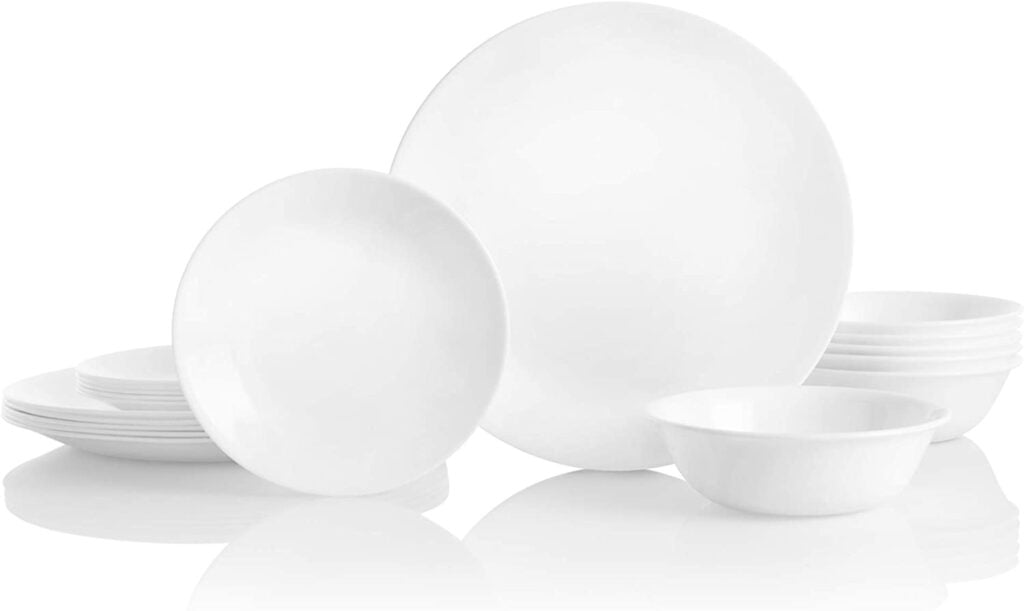
    Corelle Stoneware dinnerware sets

    After firing, most stoneware receives a glaze coating — a liquid glass mixture applied to the surface and fired again — which seals the surface, adds colour and texture, and makes it food-safe and easy to clean.

    Key Characteristics of Stoneware

    The fired clay body gives stoneware its defining characteristics. It is heavy and substantial in the hand, which many people associate with quality.

    It retains heat well, keeping food warm at the table longer than lighter materials.

    It is genuinely oven-safe — most stoneware handles temperatures up to 220°C or higher without issue, and microwave-safe, provided it contains no metallic elements in the glaze.

    Its thick walls make it more resistant to chipping than porcelain, though it will still break if dropped on a hard floor.

    Common Uses of Stoneware

    Stoneware works across virtually every area of the kitchen and table.

    Handmade stoneware dinnerware set

    Dinner plates, pasta bowls, soup mugs, and side plates are all common stoneware formats. It excels in baking and casserole dishes because of its heat retention and oven compatibility.

    Serving bowls in stoneware keep food at a temperature throughout a meal. It is the material of choice for potters, artisan ceramicists, and mainstream manufacturers alike, a rare meeting point between craft and commercial production.

    What Is Melamine Dinnerware?

    Melamine dinnerware sits at the opposite end of the materials spectrum from stoneware. Where stoneware is natural, heavy, and fired, melamine is synthetic, lightweight, and moulded.

    The two materials share a surface function — holding and serving food — but almost nothing else.

    Composition and Manufacturing

    Melamine dinnerware is made from melamine formaldehyde resin, a thermosetting plastic polymer produced from melamine and formaldehyde compounds.

    Melamine dinnerware sets

    The resin is mixed with cellulose fillers, moulded into the desired shape under high pressure and heat, and cured into a rigid, durable form.

    The surface can be printed or decorated during the moulding process, allowing for a wide range of colours and patterns.

    Once cured, melamine is hard, smooth, and resistant to impact — it will bend slightly under stress before breaking rather than shattering like ceramic.

    Key Characteristics of Melamine

    Melamine’s defining advantage is its resistance to breakage. Drop a melamine plate from table height onto a tile floor, and it will almost certainly survive intact.

    This makes it uniquely practical in settings where ceramic breakage would be a constant problem.

    It is also significantly lighter than stoneware, which matters for extended outdoor use, camping, and children’s settings.

    The trade-off is heat sensitivity — melamine should never be used in a microwave or conventional oven, and it should not be used with very hot foods over extended periods, as the resin can begin to degrade under sustained high heat.

    Common Uses of Melamine

    Melamine thrives in outdoor and high-traffic environments.

    Poolside dining, camping trips, beach picnics, and backyard barbecues are all ideal application settings where carrying ceramic would be impractical, and breakage would be a real problem.

    Children’s dinnerware is another major use case: the shatter-resistance makes it far safer for young users.

    White melamine dinnerware sets for indoor and outdoor use

    Commercial settings like fast-food service, cafeteria trays, and hospitality buffets also rely on melamine for its durability and low replacement cost.

    Stoneware vs Melamine: Key Differences

    stoneware vs melamine

    Now that both materials are clearly defined, it is worth putting them directly side by side across the factors that most influence a buying decision.

    For a broader view of how both fit within the full spectrum of available options, the guide on dinnerware materials covers the complete landscape from earthenware to bamboo to bone china.

    Material and Composition

    The fundamental difference is the nature of the material itself.

    Stoneware is a natural ceramic — made from clay extracted from the earth, shaped, and transformed by fire into a mineral-based solid.

    Melamine is a synthetic plastic resin derived from chemical compounds and manufactured through an industrial polymer process.

    This distinction affects safety, recyclability, environmental impact, and how each material behaves over its lifespan.

    Durability and Break Resistance

    These two materials are durable in entirely different ways.

    Stoneware is hard and scratch-resistant, but brittle under impact; it will chip at the rim if knocked and shatter if dropped.

    Melamine is impact-resistant and flexible enough to absorb bumps without breaking, but it scratches more easily on the surface over time and is vulnerable to high heat.

    For everyday indoor use on set tables, stoneware’s durability is more than adequate.

    For outdoor, children’s, or travel use, melamine’s shatter-resistance is a genuinely meaningful advantage.

    Heat Resistance and Microwave Safety

    This is one of the starkest differences between the two materials.

    Stoneware handles oven temperatures, microwave use, and dishwasher cycles without issue. You can serve food straight from the oven to the table in a stoneware dish.

    Melamine cannot go in the microwave as the resin heats unevenly, can warp, and at higher temperatures begins to release compounds into food.

    It is also not oven-safe. For any cooking or reheating application, stoneware is the only appropriate choice.

    Weight and Handling

    Stoneware is noticeably heavy. A full stoneware dinner service feels substantial and grounded, a quality many people appreciate, but a practical challenge for anyone with limited hand strength, young children setting the table, or outdoor situations requiring portability.

    Melamine is dramatically lighter for equivalent plate sizes. If weight is a genuine consideration — whether for mobility, outdoor use, or accessibility melamine has a clear advantage.

    Safety Considerations

    Food Safety and Chemical Concerns

    Both materials raise different safety questions. For stoneware, the main concern historically has been lead and cadmium in glazes, heavy metals that were once common in ceramic colourants and can leach into food under acidic conditions.

    Modern reputable manufacturers produce lead-free and cadmium-free glazes, but it is worth checking certification on older pieces or imports from unregulated markets.

    For more details on this issue as it applies to related ceramic materials, the guide on lead status of porcelain dinnerware covers the testing and regulatory standards in depth.

    For melamine, the concern is melamine and formaldehyde migration — both compounds present in the resin that can transfer into food under certain conditions.

    Studies have found that melamine migration increases significantly when the material is used with hot, acidic, or fatty foods, and when dishes are damaged or worn.

    Regulatory bodies in most markets set maximum migration limits for melamine dinnerware, but the safest approach is to avoid using melamine with very hot foods and to replace worn or scratched pieces.

    Microwave and Heat Safety

    Never microwave melamine. This is not a cautionary preference; it is a material safety issue.

    Melamine resin absorbs microwave energy, heats unevenly, and at sustained temperatures begins to degrade and release compounds.

    Stoneware, by contrast, is ideal for microwave use: it heats evenly, stays cooler than the food it contains (unless the glaze has metallic elements), and does not degrade under the heat.

    For any household that reheats food regularly, this difference alone significantly favours stoneware.

    Pros and Cons of Stoneware

    Advantages

    Stoneware’s heat retention is one of its most practical daily advantages; food stays warm longer at the table without any additional measures. Its aesthetic range is enormous: from rustic hand-thrown pieces with organic textures to smooth, modern glazed sets in any colour.

    It is genuinely oven-to-table versatile. The material does not leach chemicals into food when manufactured to modern safety standards.

    And with proper care, a good stoneware set lasts decades — making the per-use cost over its lifespan very reasonable despite higher upfront prices.

    Disadvantages

    The weight is a real limitation for some users, particularly older adults or anyone with reduced grip strength.

    Stoneware chips at the rim under impact and shatters when dropped, a practical concern in busy households with children.

    It is also not suitable for stovetop use, which limits its cooking versatility compared to some other materials.

    For a full and honest breakdown of where stoneware falls short, the cons of stoneware tableware cover the limitations in detail that most product pages deliberately omit.

    Pros and Cons of Melamine

    Advantages

    Melamine’s shatter-resistance is its headline advantage and the reason it dominates outdoor and children’s dinnerware markets.

    It is significantly lighter than ceramic alternatives, which improves portability and reduces fatigue in high-traffic service settings.

    It is available at a much lower price point than comparable stoneware sets, making it an accessible option for large gatherings, rental properties, or situations where replacement cost matters.

    Its surface holds printed designs well, allowing for a wide range of decorative options.

    Disadvantages

    The microwave and oven restrictions are significant practical limitations for everyday home dining.

    The surface scratches more readily than ceramic over time, and scratched melamine is both less hygienic and more prone to chemical migration.

    As a plastic-based material, it raises sustainability concerns because it is not recyclable in standard streams and does not biodegrade.

    For households prioritizing non-toxic materials and sustainable choices, melamine’s synthetic composition is a genuine drawback.

    The difference between melamine and ceramic tableware resources explores these distinctions further for anyone weighing the two options side by side.

    When to Choose Stoneware vs Melamine

    Best Situations for Stoneware

    Stoneware is the right choice for everyday home dining where durability, heat retention, and versatility matter.

    It is ideal for oven-to-table serving, bringing a casserole or baking dish straight to the dining table without transferring to a separate serving dish.

    It suits formal and semi-formal table settings where the aesthetic weight and texture of the ceramic adds to the experience.

    For households that cook and reheat regularly and value microwave compatibility, stoneware handles all of those demands without restriction.

    If comparing stoneware to other premium ceramic options, is porcelain or bone china better for everyday use? offers a useful side-by-side on durability and practicality across those material types.

    Best Situations for Melamine

    Melamine earns its place in outdoor entertaining, poolside dining, camping, and travel.

    Any situation where ceramic breakage would be a recurring problem or a safety concern is a natural fit for melamine.

    Children’s dinnerware is another clear use case: the shatter-resistance reduces both breakage cost and injury risk.

    For large events or gatherings where loss and damage are expected, the low replacement cost of melamine makes practical sense.

    Just keep it away from the microwave, limit use with very hot foods, and replace pieces once they show significant surface wear.

    Care and Maintenance

    Cleaning Stoneware

    Most modern stoneware is dishwasher-safe, and regular machine washing is perfectly appropriate.

    For hand-washing, warm soapy water and a non-abrasive sponge are all that is needed.

    Avoid sudden temperature changes when washing. Do not plunge a hot dish into cold water or vice versa.

    Rim chips are the most common damage point in stoneware: handle pieces carefully, avoid stacking without cloth or silicone separators, and store heavier pieces on lower shelves.

    Unglazed or partially glazed stoneware may absorb odours over time — a soak in a baking soda solution refreshes it effectively.

    Cleaning Melamine

    Melamine is generally dishwasher-safe on the top rack, though repeated high-temperature dishwasher cycles can dull the surface finish over time.

    Hand-washing in warm, soapy water is gentler and extends the life of printed designs.

    Never use abrasive scrubbing pads — they scratch the surface and increase the risk of compound migration.

    Avoid soaking melamine for extended periods.

    Inspect pieces regularly and retire any that show deep scratches, cracks, or significant surface degradation, as damaged melamine is both less hygienic and more likely to leach compounds into food.

    Conclusion

    Stoneware and melamine are genuinely good at different things, and the better choice is simply the one that matches how you actually use your table.

    Stoneware delivers on heat retention, oven versatility, aesthetics, and long-term durability for everyday home dining — it is a material built to last and perform across decades of use.

    Melamine delivers on portability, shatter-resistance, and affordability for outdoor, family, and on-the-go situations where ceramic would be impractical.

    Many households use both: stoneware inside, melamine outside.

    Match the material to the setting, understand the safety considerations specific to each, and you will get excellent value from whichever direction you choose.

  • Noritake vs Corelle: Which Premium Dinnerware Brand Reigns Supreme?

    You’re hosting a dinner party, and as you set the table, you pause, admiring how the light catches your dinnerware.

    Whether it’s the delicate translucence of fine china or the reassuring durability of everyday plates, your choice of dinnerware speaks volumes about your style and priorities.

    Among the countless options available, Noritake and Corelle stand out as beloved household names, each with passionate devotees.

    But which brand truly deserves a place at your table? Is it the heritage-rich, artistic craftsmanship of Noritake or the innovative, practically indestructible Corelle?

    Let’s dive into this tableware showdown to help you make the perfect choice for your dining needs – because the right dinnerware doesn’t just serve food; it elevates the entire dining experience.

    A BRIEF HISTORY: THE STORIES BEHIND THE BRANDS

    Noritake: A Legacy of Japanese Craftsmanship

    Noritake’s story begins in 1876 when the company was founded in the village of Noritake, near Nagoya, Japan.

    The founders had a vision to create fine porcelain dinnerware that could compete with European brands while showcasing Japanese artistry.

    By 1914, Noritake had perfected its craft and began exporting its now-famous white, hand-painted china to the United States.

    Today, Noritake continues its tradition of excellence, blending time-honoured craftsmanship with modern design sensibilities.

    The company produces everything from casual everyday dinnerware to luxurious formal dining collections, maintaining its reputation for exceptional quality and artistic merit.

    Corelle: American Innovation for Modern Living

    Corelle has a more recent but equally impressive history. Launched in 1970 by Corning Glass Works (now Corning Inc.), Corelle revolutionised the dinnerware market with its unique Vitrelle® glass technology – a triple-layer glass laminate initially developed for television screens.

    best corelle dinnerware sets

    This innovative material created dinnerware that was remarkably lightweight yet extraordinarily durable.

    The brand quickly became famous for its “break and chip-resistant” qualities, making it a practical choice for busy households.

    Over the decades, Corelle has expanded its designs while maintaining the core benefits that made it popular: durability, stackability, and everyday usability.

    MATERIAL COMPOSITION AND DURABILITY: WHAT ARE THEY MADE OF?

    Noritake: Fine Bone China and Porcelain

    Is Noritake a luxury brand? Indeed, Noritake is considered a luxury dinnerware brand, particularly known for its:

    Noritake summit gold Dinnerware set
    • Fine Bone China: Many premium Noritake collections feature bone china, which contains actual bone ash (typically 30-45%). This creates dinnerware with a warm, creamy appearance, translucence, and exceptional strength despite its delicate appearance.
    • Fine Porcelain: Noritake also produces high-quality porcelain made from kaolin, feldspar, and quartz. This results in dinnerware that’s slightly less translucent than bone china but still elegant and durable.

    Are Noritake dishes of good quality?

    Without question. Noritake’s quality control is legendary, with multiple inspection stages throughout the production process.

    Noritake 5 Piece Green Dinnerware

    Their dinnerware is known for uniform thickness, precise detailing, and excellent craftsmanship. While they require careful handling, Noritake pieces are durable for their category and often become family heirlooms passed down through generations.

    CORELLE: REVOLUTIONARY VITRELLE® GLASS

    Corelle’s claim to fame is its patented Vitrelle® glass technology:

    Corelle Kyoto dinnerware set
    • Three-layer Glass Structure: Two layers of clear glass bonded to a central core glass layer.
    • Lightweight but Strong: Despite being remarkably thin, Corelle dinnerware resists chips and breaks under normal use.
    • Non-porous Surface: The glass material prevents staining and bacterial absorption.

    Is Corelle high quality?

    Absolutely, but in a different way than Noritake. Corelle’s quality lies in its functionality, durability, and consistent performance.

    Corelle chip resistant Dinnerware set

    While not as prestigious as fine bone china, Corelle offers excellent value and practical benefits that make it high-quality in the everyday dinnerware category.

    DURABILITY COMPARISON

    Noritake vs Corelle

    When comparing Noritake vs Corelle vs ceramic options, durability differences become clear:

    AspectNoritakeCorelleStandard Ceramic
    Drop ResistanceModerate (bone china) to Low (porcelain)Very HighLow to Moderate
    MaterialPorcelain or Bone ChinaVitrelleMaterial varies
    Chip ResistanceModerateVery HighVaries
    Scratch ResistanceModerate to HighHighVaries
    Heat ResistanceHighHighVaries
    WeightHeavyLightModerate ( varies)
    Typical LifespanDecades (with proper care)Decades3-10 years
    Microwave UseVarieties on the brandPerfectVaries
    PriceExpensiveAffordableVariies on the brand

    For those specifically seeking unbreakable dishes like Corelle, it’s important to note that while no dinnerware is truly unbreakable, Corelle comes remarkably close under normal use conditions.

    Its triple-layer construction distributes impact throughout the piece rather than concentrating it at the point of impact.

    DESIGN AND AESTHETICS: STYLE FOR EVERY TABLE

    Noritake: Artistic Excellence and Refined Elegance

    Noritake excels in design variety and artistic quality:

    • Hand-painted Details: Many Noritake patterns feature delicate hand-painted elements or gold accents.
    • Design Range: From traditional floral motifs to contemporary minimalist styles.
    • Colour Palette: Often features soft, sophisticated colours and gradient effects that showcase the technical skill of their artisans.
    • Edge Work: Scalloped edges, embossed patterns, and other intricate border work.

    Why is the Noritake plate so expensive?

    The price reflects several factors: the high-quality materials, skilled artisanship (many pieces require hand-painting), the brand’s heritage, and the durability of properly cared-for pieces.

    When you purchase Noritake, you’re investing in dinnerware that combines artistic value with functional excellence—pieces that often appreciate over time, particularly limited edition or discontinued patterns.

    CORELLE: CONTEMPORARY SIMPLICITY WITH PRACTICAL CHARM

    Corelle designs typically feature:

    • Clean Lines: Simple, unfussy silhouettes that work in various settings.
    • Versatile Patterns: From classic white to geometric patterns and florals.
    • Consistent Colour Application: Patterns are applied using proprietary techniques that ensure durability.
    • Contemporary Appeal: Designs that blend with various décor styles.

    For those interested in Corelle look-alike options, many brands have attempted to mimic Corelle’s lightweight, durable composition, but few achieve the same balance of weight, strength, and design quality. The specific Vitrelle® technology remains unique to Corelle.

    PRACTICALITY AND EVERYDAY USE: FROM KITCHEN TO TABLE

    Weight and Handling:

    One significant difference between these brands is weight:

    • Noritake: Typically heavier, giving it a substantial, premium feel. Bone china pieces are lighter than porcelain but still have more heft than Corelle.
    • Corelle: Exceptionally lightweight. A typical Corelle dinner plate weighs about half as much as a comparable porcelain plate.

    When considering what is the best lightweight dinnerware, Corelle consistently ranks at the top. This makes it particularly suitable for:

    • Households with children or elderly members
    • Restaurants and catering services
    • People with arthritis or hand strength issues
    • Every day use where convenience matters.

    CARE AND MAINTENANCE

    Maintenance requirements differ considerably:

    Noritake Care:

    • Often requires handwashing (especially pieces with gold or platinum accents)
    • Should be stored with protective separators
    • Generally not suitable for microwave use if metallic accents are present
    • Requires gentle handling and careful stacking

    Corelle Care:

    • Dishwasher safe
    • Microwave, oven, and refrigerator safe
    • Can be stacked in minimal space without special separators
    • Resistant to staining and odour absorption

    The difference between Corelle and Gibson tableware becomes apparent here, as Gibson typically produces stoneware and porcelain that require more careful handling than Corelle’s glass construction, but doesn’t offer the fine dining experience of Noritake.

    PRICE POINTS AND VALUE: INVESTMENT VS PRACTICALITY

    Cost Comparison

    Generally, the price difference between these brands is very visible: Noritake is more expensive than the Corelle dinnerware brand.

    When comparing the difference between Corelle and Lenox tableware, another premium brand, Noritake, often sits in a similar luxury category to Lenox, while Corelle occupies a more accessible price point with different practical benefits.

    Long-term Value

    While Noritake represents a higher initial investment, its value proposition includes:

    • Potential to become family heirlooms
    • Classic designs that remain stylish for decades
    • Replacement piece availability for many patterns

    Corelle offers different but equally compelling values:

    • Extreme durability reduces replacement needs
    • Lower up-front cost
    • Versatility across casual and semi-formal settings.

    GLOBAL REPUTATION: WHERE THEY STAND

    Both brands have earned places among the top 10 dinner set brands in the world, albeit for different reasons:

    Mikasa Cameo Platinum 40 Piece Dinnerware set
    1. Wedgwood (UK) – Historic luxury brand
    2. Royal Copenhagen (Denmark) – Artisanal excellence
    3. Noritake (Japan) – Premium craftsmanship
    4. Lenox
    5. Villeroy & Boch (Germany) – European elegance
    6. Corelle (USA) – Innovative durability
    7. Royal Doulton (UK) – Historic excellence
    8. Mikasa (Japan and China) – Design versatility
    9. Portmeirion (UK) – Distinctive patterns
    10. Rosenthal (Germany) – Modern luxury

    Similarly, for those exploring durable options, Claytan vs Corelle presents a comparison between traditional ceramic durability and Corelle’s innovative glass construction.

    NARUMI VS NORITAKE

    Narumi vs Noritake

    Narumi and Noritake are both prestigious Japanese porcelain manufacturers known for high-quality dinnerware, but they have distinct characteristics.

    Noritake, founded in 1904, is the older and more internationally recognized brand, famous for its fine bone china and elegant traditional designs with gold accents and floral patterns.

    Narumi, established in 1946, specializes in fine china and is known for its modern, contemporary designs and innovative manufacturing techniques.

    Both brands offer excellent craftsmanship and durability. Noritake tends to appeal to those seeking classic, formal dinnerware with timeless elegance, while Narumi attracts customers looking for sleek, modern aesthetics.

    Narumi Dinnerware set

    In terms of quality, both are comparable and represent premium Japanese porcelain craftsmanship, so the choice often comes down to personal style preference and design aesthetics rather than quality differences.

    WHICH SHOULD YOU CHOOSE? MAKING THE DECISION

    Choose Noritake If You:

    • Value artistic craftsmanship and heritage
    • Entertain formally and want to impress guests
    • Building a collection of heirloom-quality pieces
    • Appreciate the warmth and translucence of fine bone china
    • Don’t mind the extra care requirements

    Choose Corelle If You:

    Seek excellent value for everyday use

    Prioritize durability and easy maintenance

    Have a busy household with children

    Want lightweight dinnerware that’s easy to handle

    Prefer dinnerware that can go from freezer to oven to table

    SPECIAL CONSIDERATIONS

    For Special Diets and Food Presentation

    • Noritake: The cream background of bone china provides a warm, flattering backdrop for food presentation, which is particularly important for fine dining experiences.
    • Corelle: The bright white background of Vitrelle® glass makes food colours pop, which can be particularly appealing for vibrant, fresh foods.

    Environmental Impact

    • Noritake: This company uses traditional materials but has implemented energy-efficient firing techniques in recent years.
    • Corelle: Glass production is energy-intensive, but the extreme durability means less frequent replacement and waste.

    Storage Space

    • Noritake: Requires more careful storage and typically more space.
    • Corelle: Ultra-thin design allows for compact storage, with a 20-piece set taking up roughly half the space of traditional ceramics.

    CONCLUSION

    The choice between Noritake and Corelle ultimately reflects your priorities, lifestyle, and the dining experience you wish to create.

    Noritake offers artistic excellence, luxury credentials, and heirloom quality that elevate special occasions. Corelle delivers revolutionary durability, practical benefits, and reliable performance for everyday living.

    Many homeowners find room for both in their cupboards – Noritake for those memorable dinner parties and special occasions, and Corelle for carefree daily use.

    Whichever you choose, both brands have earned their distinguished reputations through decades of innovation and commitment to quality, ensuring that your dining table will be beautifully dressed for years to come.