Tag: lead free kitchenware

  • What is Arcopal Dinnerware? The French Dinnerware Complete Guide

    You’re serving Sunday roast to your family, and as you place the serving dish on the table, someone accidentally knocks it with their elbow.

    Instead of hearing that heart-sinking crash, the dish bounces slightly and remains perfectly intact.

    Your guests are amazed, and you simply smile knowing your secret weapon – Arcopal dinnerware.

    This isn’t just another pretty set of plates; it’s a testament to French engineering that combines elegance with the kind of durability that makes family dining genuinely stress-free.

    But what exactly makes this French dinnerware so special, and why are families across choosing it over traditional ceramics and glass?

    The answer lies in a revolutionary material that’s been quietly transforming dining rooms for over half a century.

    THE FRENCH ART OF OPAL GLASS: WHAT MAKES ARCOPAL SPECIAL

    Arcopal dinnerware represents the pinnacle of French glassmaking innovation. Born in 1958 from the renowned Arc International (formerly Cristal d’Arques), this opal glass dinnerware isn’t your ordinary tableware.

    It’s crafted from tempered opaline glass – a sophisticated material that’s actually fluosilicate-treated through a specialized tempering process.

    Think of it as the difference between a delicate flower and a resilient orchid. Both are beautiful, but one can weather life’s storms whilst maintaining its elegance.

    Arcopal France has mastered this balance, creating dinnerware that’s up to three times more shock-resistant than conventional glass or ceramic alternatives.

    The Science Behind the Beauty

    The magic begins with the tempering process. Each piece undergoes specific heat treatment that fundamentally alters the glass structure. This isn’t just heating and cooling – it’s a precisely controlled transformation that creates internal stresses, making the glass incredibly resilient.

    The result? Tempered glass dinnerware that can withstand:

    • Sudden temperature variations of up to 135°C
    • Accidental drops and bumps
    • Daily family use without showing wear
    • Countless dishwasher cycles whilst maintaining its lustre

    A LEGACY OF FRENCH EXCELLENCE: THE ARCOPAL HISTORY

    The story of Arcopal begins long before its 1958 launch. The parent company, La Verrerie des Arques, was established in 1825 by the Durand family.

    For over a century, they perfected the art of glassmaking in the picturesque town of Arques, France.

    In 1948, the company introduced Luminarc, focusing on transparent glass products. But it was the breakthrough discovery of opal glass technology that led to Arcopal’s birth a decade later.
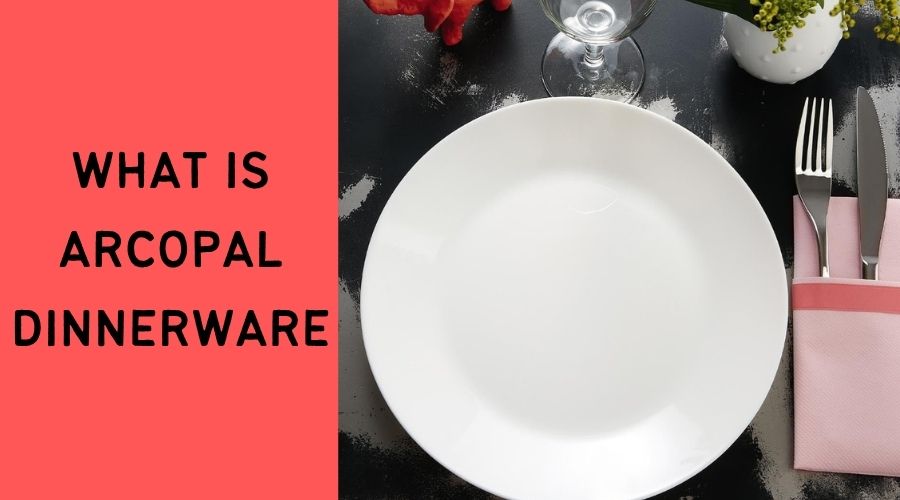
    Arcopal Dinnerware

    The brand was accompanied by “Archibald,” a faithful elephant mascot symbolizing strength and reliability – qualities that perfectly embody the dinnerware itself.

    From French Tables to Global Recognition

    What started as a French family business has evolved into a global phenomenon.

    Arcopal patterns from the 1960s and 70s have become coveted vintage French dinnerware pieces, whilst contemporary collections continue to grace modern tables worldwide.
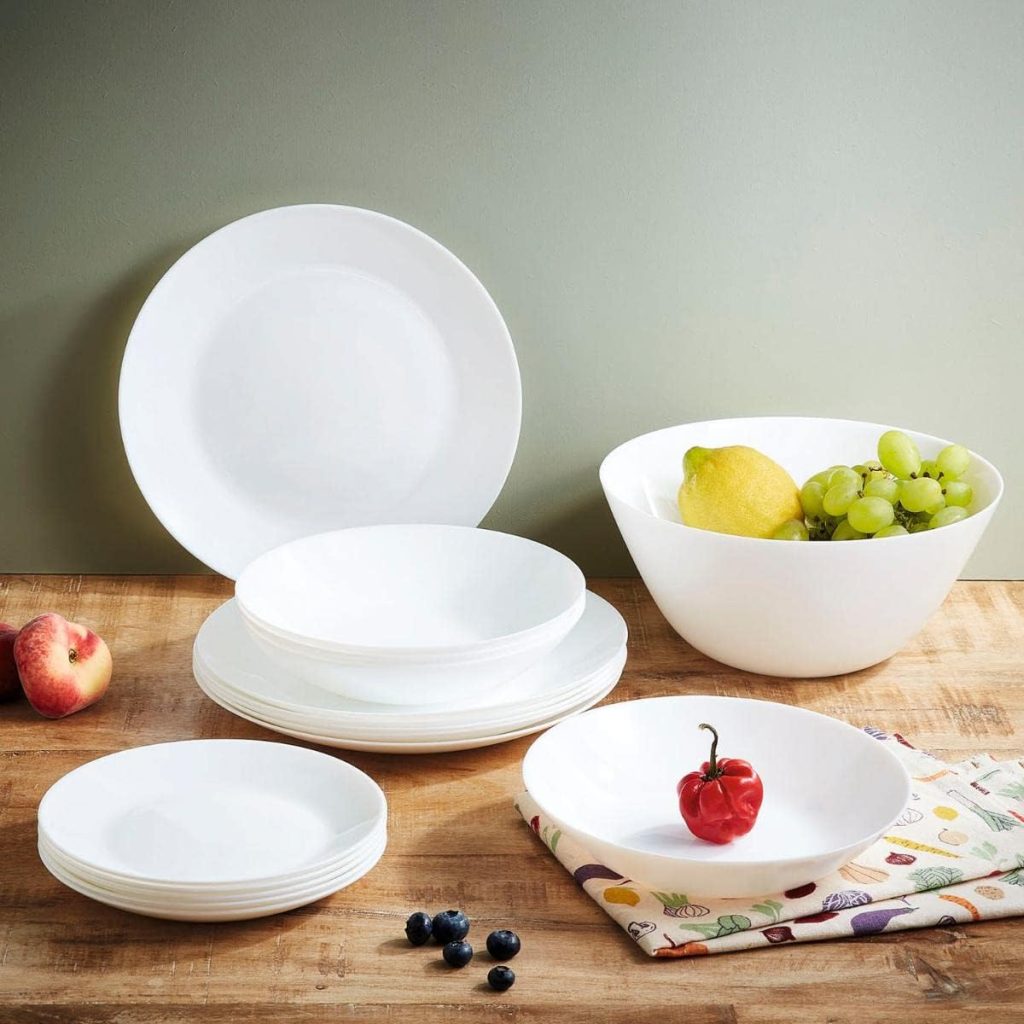
    Arcopal 19 Piece Crockery set

    The brand’s evolution reflects changing tastes whilst maintaining its core values: safety, durability, and timeless elegance.

    It’s this consistency that has made Arcopal collectibles highly sought after amongst discerning collectors.

    UNDERSTANDING ARCOPAL’S UNIQUE MATERIAL COMPOSITION

    Microwave safe dinnerware isn’t automatically a given with all glass products, but Arcopal’s opal glass composition makes it exceptionally versatile.

    The fluosilicate material has several distinctive properties:

    Non-Porous Surface Benefits

    • Prevents bacterial accumulation – crucial for family health
    • Doesn’t absorb odours or stains – maintaining freshness meal after meal
    • Easy to clean – saving time and effort in busy households
    • Hygienic – meeting modern food safety standards

    Thermal Properties

    The heat-resistant nature of Arcopal means you can:

    • Transfer dishes directly from the refrigerator to the microwave
    • Serve hot foods without worry about thermal shock
    • Use in microwaves up to normal cooking temperatures
    • Handle temperature fluctuations that would crack ordinary glass.
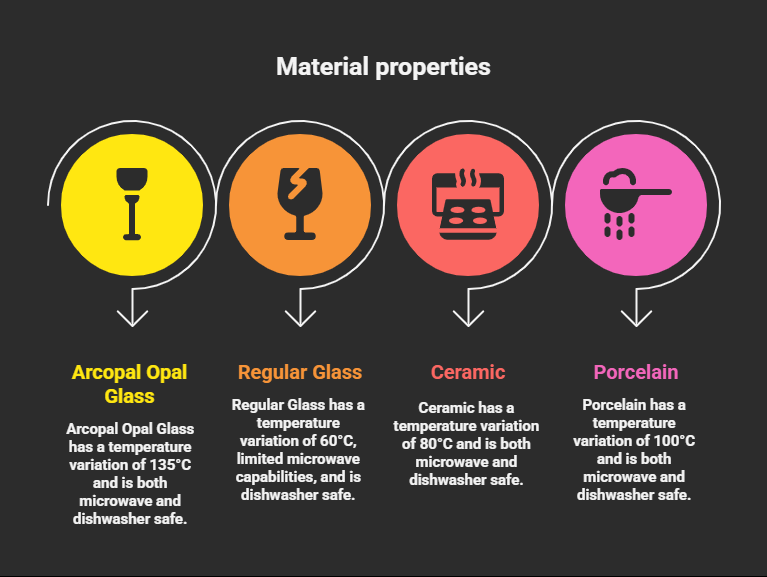
    thermal properties of various dinnerware materials

    MaterialTemperature Shock ResistanceMicrowave SafeDishwasher Safe
    Arcopal Opal Glass135°C variationYesYes
    Regular Glass60°C variationLimitedYes
    Ceramic80°C variationYesYes
    Porcelain100°C variationYesYes

    ICONIC ARCOPAL PATTERNS: FROM VINTAGE TO CONTEMPORARY

    The beauty of Arcopal dishes lies not just in their durability but in their aesthetic appeal.

    Over the decades, the brand has produced numerous patterns that have become synonymous with French elegance and botanical artistry.

    Classic Vintage Patterns Collection

    Anemones

    This pattern remains one of the most beloved Arcopal patterns. The delicate floral motifs capture the essence of French countryside charm with soft, graceful anemone flowers dancing across the milk-white opal glass surface.

    This pattern perfectly balances sophistication with approachability, making it suitable for both casual family meals and formal dining occasions.

    Lotus pattern

    This pattern epitomizes 1970s style with its retro orange and red floral designs.

    This Arcopal Lotus pattern features bold, stylized lotus blooms in warm autumn tones that instantly transport you to the groovy era of its creation.

    The pattern has experienced a remarkable renaissance amongst vintage enthusiasts who appreciate its bold, confident aesthetic and nostalgic charm.

    Domitille Noir
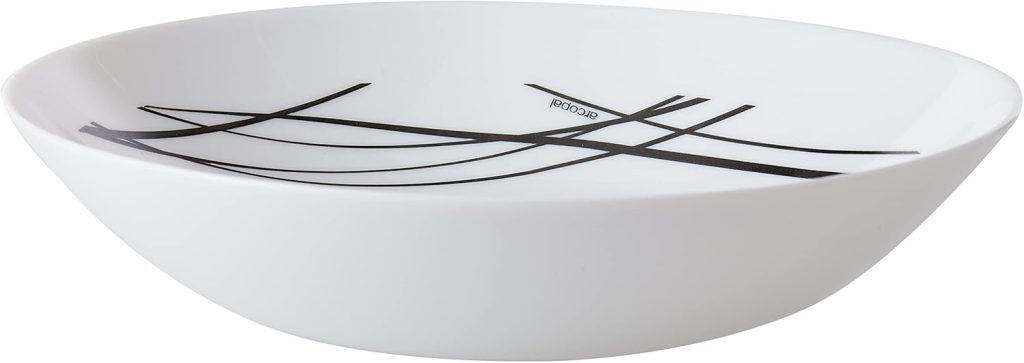
    Arcopal Domitille black Opal 6 Piece dinnerware set

    Offers a more contemporary feel with its elegant black and white floral patterns.

    This sophisticated design features delicate botanical motifs rendered in classic monochrome, perfect for modern homes that favour minimalist colour schemes whilst still appreciating decorative detail.

    Veronica

    Represents the brand’s foray into contemporary floral design.

    This pattern showcases modern botanical interpretation with clean lines and updated colour palettes that bridge traditional French design with current aesthetic trends.

    THE COMPLETE ARCOPAL PATTERN SPECTRUM

    Blue Floral Collections: These patterns feature various botanical motifs rendered in different shades of blue, from soft powder blues to deep cobalt tones. The blue colorway patterns typically showcase:
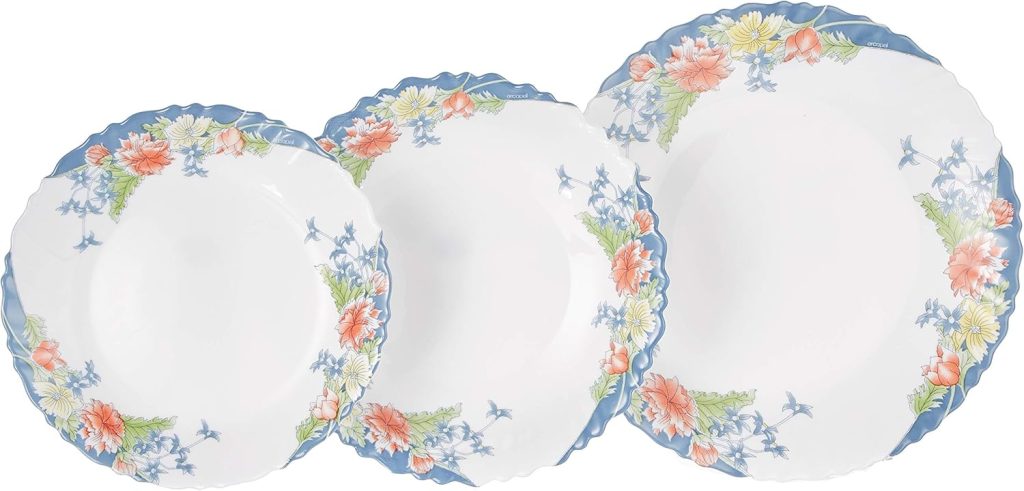
    Arcopal Florine pattern collection
    • Delicate flower sprays across the rim
    • Coordinating blue accent pieces
    • Timeless appeal that complements both traditional and modern table settings

    Orange and Mixed Colorway Florals: The vibrant orange patterns from the 1970s represent some of the most sought-after vintage Arcopal pieces. These designs feature:

    • Bold orange blooms with complementary green foliage
    • Warm, energetic colour combinations
    • Retro charm that’s perfect for eclectic dining spaces
    • Mixed colorway versions combining orange with blues and yellows

    Green Botanical Patterns: Earth-toned designs featuring various shades of green, often combined with natural brown and cream accents. These patterns typically showcase:

    • Leaf motifs and natural botanical elements
    • Earthy colour palettes perfect for country-style homes
    • Organic, nature-inspired designs

    Geometric Collections: Moving beyond florals, Arcopal also produced geometric patterns during the 1960s that reflected the era’s modernist movement:

    • Clean, angular designs
    • Bold colour blocking
    • Minimalist aesthetic appealing to contemporary tastes.

    PATTERN CHARACTERISTICS AND DESIGN PHILOSOPHY

    All Arcopal patterns share common characteristics that reflect French design expertise:

    Botanical Inspiration: The majority of patterns feature floral and botanical motifs, reflecting the French love affair with gardens and natural beauty. Whether it’s delicate wildflowers or bold tropical blooms, each pattern tells a story of nature’s elegance.

    Colour Harmony: Patterns typically employ carefully curated colour palettes that reflect their era whilst maintaining timeless appeal. The 1960s favoured softer pastels, the 1970s embraced bold oranges and earth tones, whilst modern collections focus on versatile neutrals.

    Scale and Proportion: Design elements are carefully scaled to complement the opal glass surface, ensuring patterns enhance rather than overwhelm the dining experience. Rim patterns allow food presentation to shine whilst border designs add visual interest.

    Cultural Reflection: Each pattern era reflects the social and cultural movements of its time – from the flower power movement of the 1960s to the earth-conscious designs of the 1970s and the minimalist trends of recent decades.

    Understanding Pattern Application

    Arcopal patterns are applied through screen printing (sérigraphie), ensuring:

    • Durability – patterns won’t fade with regular washing
    • Precision – consistent quality across all pieces
    • Vibrancy – colours remain true wash after wash
    • Safety – all decorative elements are food-safe
    • Authenticity – each pattern maintains its original design integrity.

    THE DISCONTINUED ARCOPAL APPEAL: A COLLECTOR’S PARADISE

    Discontinued Arcopal pieces have developed a cult following amongst collectors and vintage enthusiasts.

    These vintage Arcopal items aren’t just tableware; they’re pieces of design history that tell the story of changing tastes and French craftsmanship excellence.

    Most Sought-After Discontinued Patterns

    1970s Orange and Red Floral Designs: The bold, vibrant patterns from this era represent the peak of retro dining style. These discontinued pieces feature:

    • Lotus pattern variations in warm autumn tones
    • Mixed floral arrangements combining orange, red, and gold elements
    • Geometric border designs that complement the floral motifs
    • Complete dinner service sets that are increasingly rare to find intact

    1960s Geometric Patterns: The modernist movement influenced these clean, angular designs that are now highly coveted:

    • Bold colour blocking in blues, greens, and oranges
    • Minimalist line work reflecting the era’s design philosophy
    • Abstract motifs that complement mid-century modern décor
    • Limited production runs make them exceptionally rare.

    Seasonal and Limited Edition Releases: These special collections were produced for specific occasions or markets:

    • Holiday-themed patterns featuring seasonal motifs
    • Regional exclusive designs created for specific markets
    • Anniversary commemorative pieces celebrating company milestones
    • Colour variations of popular patterns in unique hues.

    Early Blue Floral Collections: The original blue floral patterns from the 1960s represent some of the most elegant discontinued designs:

    • Powder blue botanical motifs with intricate detailing
    • Cobalt accent pieces that complement the main pattern
    • Delicate flower sprays showcasing traditional French artistry
    • Complete tea and coffee services in matching patterns.

    Identifying Authentic Discontinued Pieces

    Authentic vintage Arcopal pieces can be identified by:

    • Base markings showing “Arcopal France” or “Arc France.”
    • Pattern quality with crisp, well-defined designs
    • Opal glass characteristics including the distinctive milk-white opacity
    • Era-appropriate colours that match documented production periods
    • Condition consistent with minimal wear despite age.

    Where to Find Vintage Pieces

    Savvy collectors know that Arcopal vintage dinnerware can be found through:

    • Etsy – extensive selection of authenticated pieces with detailed descriptions
    • eBay – a competitive marketplace for rare patterns and complete sets
    • Replacements.com – specialized service for discontinued items with authenticity guarantees
    • Antique markets – hidden gems await the patient collector willing to hunt
    • Estate sales – often yield complete sets from original owners
    • Specialist vintage dealers – curated collections with expert authentication.

    Discontinued Arcopal maintains and often increases its value due to:

    • Exceptional durability – vintage pieces often look as good as new after decades
    • Nostalgic appeal – connecting people to memories and design heritage
    • Continued brand recognition – Arc International’s ongoing reputation for quality
    • Scarcity factor – limited availability increases desirability amongst collectors
    • Design significance – patterns representing important decorative arts movements
    • Functional beauty – pieces that can be used and displayed with equal success.

    Collector’s Market Insights

    The most valuable discontinued Arcopal pieces typically include:

    • Complete dinner services in discontinued patterns
    • Rare colour variations of popular designs
    • Serving pieces like tureens, platters, and serving bowls
    • Specialty items such as coffee pots, sugar bowls, and cream jugs
    • Mint condition pieces with no chips, cracks, or pattern wear
    • Documentation, including original packaging or pattern information.

    SAFETY FIRST: WHY FAMILIES CHOOSE ARCOPAL

    For families prioritizing safety without compromising style, Arcopal dinnerware offers peace of mind.

    The dishwasher safe dinnerware eliminates concerns about hand-washing delicate pieces, whilst the microwave safe properties ensure convenient meal preparation.

    Addressing Common Safety Concerns

    Lead-free composition: Unlike some vintage ceramics, Arcopal’s opal glass contains no lead, making it completely safe for daily family use.

    Chemical resistance: The non-porous surface means no absorption of cleaning chemicals or food acids.

    Temperature safety: The thermal shock resistance prevents dangerous shattering from temperature changes.

    Child-friendly: The durability means fewer broken pieces and safer family dining.

    ARCOPAL VS. THE COMPETITION: UNDERSTANDING YOUR OPTIONS

    When choosing quality dinnerware, it’s worth understanding how Arcopal compares to other popular options. Each material has its place, but knowing the differences helps you make informed decisions.

    For those curious about international alternatives, you might want to learn about Corelle USA vs French Arcopal tableware – both offer durability but with different aesthetic approaches and manufacturing philosophies.

    Similarly, Arcopal vs Duralex presents an interesting comparison between two French glass manufacturers, each with distinct strengths and target markets.

    Traditional cookware enthusiasts often wonder about Arcopal vs enamelware – comparing modern glass technology with classic metal coating techniques.

    Finally, many families consider Arcopal vs Pyrex when choosing heat-resistant glassware, as both brands offer thermal performance but serve different purposes.

    CARING FOR YOUR ARCOPAL TABLEWARE

    Arcopal care instructions are refreshingly simple, making maintenance effortless for busy families.

    Daily Maintenance

    Dishwasher safe: Use standard dishwasher detergent and normal cycles. The tempering process ensures patterns won’t fade or surfaces won’t cloud.

    Microwave guidelines: Safe for normal microwave cooking temperatures. Perfect for reheating meals or defrosting frozen foods.

    Hand washing: When preferred, use mild soap and warm water. The non-porous surface makes cleaning effortless.

    Important Safety Notes

    Oven limitations: Whilst heat-resistant, Arcopal isn’t designed for conventional oven use at high temperatures. The glass may break under extreme heat.

    Avoid broiler: Never use under broiler settings, as the intense direct heat can cause thermal stress.

    Temperature transitions: Although highly resistant, avoid extreme temperature shocks like placing frozen dishes directly into very hot water.

    Long-term Care

    Storage recommendations:

    • Stack carefully using plate separators
    • Store in dry environments
    • Keep away from sharp objects that might scratch decorative elements.

    Maintaining appearance:

    • Avoid abrasive cleaners that might dull the surface
    • Use soft cloths for drying to prevent water spots
    • Regular use actually helps maintain the lustre.

    THE MODERN ARCOPAL: CONTEMPORARY COLLECTIONS

    Today’s Arcopal continues the tradition of innovation whilst embracing contemporary design trends. Modern collections reflect current lifestyle needs whilst maintaining the brand’s signature durability and elegance.

    Current Available Patterns

    Contemporary Arcopal patterns focus on:

    • Minimalist designs – suitable for modern décor
    • Versatile colour palettes – complementing various interior styles
    • Functional aesthetics – beauty that serves practical purposes
    • Sustainability – durable pieces that last generations.

    Innovation Continues

    The brand hasn’t rested on its laurels. Recent innovations include:

    • Improved tempering techniques – even greater durability
    • Enhanced pattern application – more vibrant, longer-lasting designs
    • Ergonomic considerations – shapes that feel comfortable in the hand
    • Microwave optimization – even better performance in modern appliances.

    MAKING THE RIGHT CHOICE: IS ARCOPAL RIGHT FOR YOUR FAMILY?

    Arcopal dinnerware particularly suits families who:

    • Value durability – tired of replacing broken dishes
    • Prioritize safety – want non-toxic, family-friendly options
    • Appreciate style – desire elegant dining without pretension
    • Seek convenience – need dishwasher and microwave compatibility
    • Prefer longevity – want pieces that last decades.

    Investment Considerations

    Quality French dinnerware like Arcopal represents value in several ways:

    • Longevity – pieces often last 20+ years with proper care
    • Versatility – suitable for daily use and special occasions
    • Replacements – individual pieces available for years after purchase
    • Resale value – vintage pieces often appreciate over time.

    THE VERDICT: WHY ARCOPAL ENDURES

    In an era of disposable culture, Arcopal dinnerware stands as a testament to the value of quality craftsmanship.

    The combination of French design sensibility, innovative materials science, and practical functionality creates tableware that genuinely enhances family dining experiences.

    Whether you’re drawn to vintage Arcopal pieces that connect you to design history or contemporary collections that serve modern needs, you’re investing in more than just dinnerware.

    You’re choosing a heritage of excellence that has graced family tables for over half a century.

    The next time you’re considering new tableware, remember that Arcopal’s unique combination of beauty, durability, and safety isn’t just marketing speak; it’s the result of French engineering and a commitment to family dining that spans generations.

    Your family deserves dinnerware that works as hard as you do, looks as good as you want it to, and lasts as long as your memories around the dinner table.

    That’s the Arcopal promise, and it’s why families continue to choose French excellence for their most important meals.
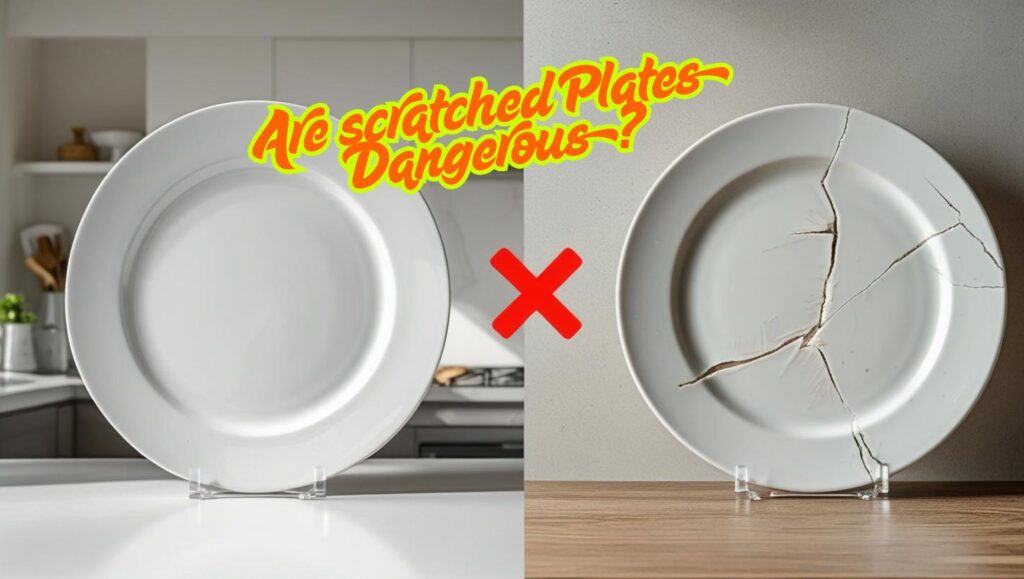
  • Are Scratched Plates Dangerous? Complete Safety Guide

    KEY TAKEAWAY: Yes, truly scratched plates can be dangerous. While most marks on plates are harmless metal traces from cutlery, real scratches in poor-quality ceramic glazes can harbor bacteria and release toxic chemicals like lead into your food. However, not all plate damage poses the same risk.

    You’ve probably noticed marks on your favorite dinner plates. Maybe you’ve wondered if it’s safe to keep using them.

    This concern is more common than you think. Many people worry about the safety of their scratched dinnerware.

    The truth is, some plate damage is harmless. But other types can put your health at risk. In this guide, you’ll learn how to tell the difference.

    You’ll also discover when it’s time to replace your plates and which brands offer the safest options.

    THE TRUTH ABOUT “SCRATCHED” PLATES

    First, let’s clear up a common mistake. Most marks on plates aren’t actually scratches. They’re metal marks from your cutlery.

    These gray or black lines look scary, but they’re just metal traces sitting on top of your plate’s surface.

    You can usually remove these marks easily. Try using a paste made from baking soda and water. Gently scrub the marks with a soft cloth. If they come off, they weren’t real scratches.

    Learning how to remove silvermarks properly can save you from throwing away perfectly good dishes.

    are scratched plates dangerous

    Real scratches are different. They go into the plate’s surface. These create tiny grooves that you can feel with your fingernail. Unlike metal marks, true scratches can’t be cleaned away.

    So how do you know if your plate is truly scratched? Run your finger across the mark. If you feel a groove or indent, it’s a real scratch. If the surface feels smooth, it’s probably just a metal mark.

    True scratches usually happen after years of use. They occur when the protective glaze on your plate wears away. This is when safety concerns begin.

    HEALTH RISKS OF DAMAGED DINNERWARE

    Once your plates develop real scratches or chips, several health risks emerge. These damaged areas create perfect hiding spots for harmful bacteria.

    Even thorough washing can’t always remove germs from these tiny cracks.

    Bacterial Growth Concerns

    Bacteria love to hide in scratched surfaces. Food particles get trapped in these small spaces. Over time, dangerous germs can multiply. When you eat off these plates, you risk getting sick from food poisoning.

    Common symptoms include stomach pain, nausea, and diarrhea. In severe cases, bacterial infections can be life-threatening.

    This risk is especially high for children, elderly people, and those with weak immune systems.

    Chemical Leaching Dangers

    Perhaps more concerning is the release of toxic chemicals. Many ceramic glazes contain lead and cadmium.

    When plates are intact, these chemicals stay locked in the glaze. But scratches and chips can let them escape into your food.

    Lead poisoning is particularly dangerous. It can cause brain damage, especially in children. Cadmium exposure can harm your kidneys and bones.

    Hot and acidic foods make this problem worse. They pull more toxins from damaged plates.

    Special Risk Factors

    Certain foods increase the danger. Tomato-based sauces, citrus fruits, and hot soups are especially risky. These acidic foods can pull lead and cadmium from scratched glazes more easily.

    Pregnant women and young children face the highest risk. Their bodies absorb more lead than adults. Even small amounts can cause serious health problems.

    MATERIAL-SPECIFIC SAFETY GUIDE

    Different plate materials pose different risks when damaged. Understanding these differences helps you make safer choices.

    Ceramic and Porcelain Risks

    Traditional ceramic and porcelain plates are the most concerning when scratched. Many contain lead and cadmium in their glazes. Vintage plates and imported dishes from certain countries are especially risky.

    Bright-colored glazes often contain more toxic metals. Red, orange, and yellow glazes frequently have high lead levels. When these plates get scratched, the risk increases significantly.

    Stoneware Safety Profile

    Stoneware is generally safer than regular ceramic. It’s fired at higher temperatures, making it denser and less porous.

    This reduces the risk of bacterial growth. However, scratched stoneware can still harbor germs if the damage is severe.

    Quality stoneware from reputable brands is usually lead-free. But you should still replace pieces with visible damage.

    Glass Dinnerware Advantages

    Tempered glass plates are among the safest options. They don’t contain toxic metals like lead or cadmium. Glass is also non-porous, so bacteria can’t easily hide in scratches.

    However, glass plates can still chip or crack. Sharp edges from broken glass create injury risks. Replace any glass plates with chips or cracks immediately.

    Materials to Avoid

    Be extra careful with these types of plates:

    • Vintage dishes made before 1978
    • Imported ceramics from countries with loose regulations
    • Handmade pottery with an unknown glaze composition
    • Plates with bright, colorful glazes
    • Dishes that feel rough or chalky.

    WHEN TO REPLACE YOUR DINNERWARE

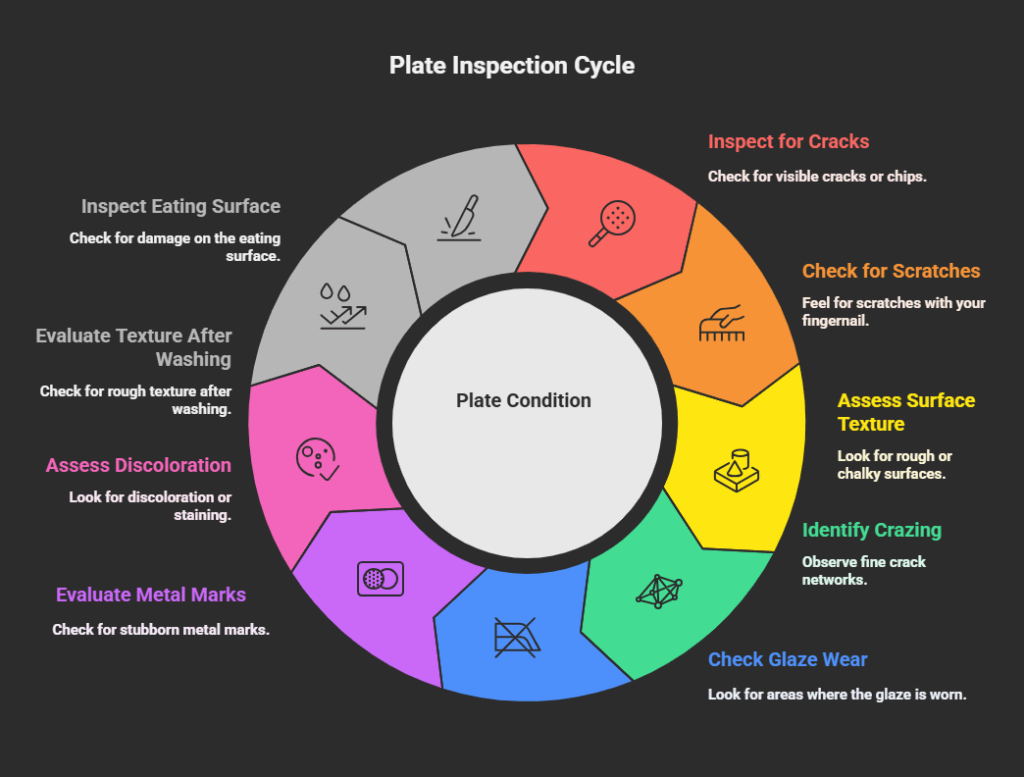
    Knowing when to replace your plates is crucial for safety. Here’s a simple inspection checklist:

    when to replace your Dinnerware

    Replace plates immediately if they have:

    • Visible cracks or chips
    • Scratches you can feel with your fingernail
    • Rough or chalky surfaces
    • Crazing (fine crack networks)
    • Areas where the glaze has worn away

    Consider replacement if plates have:

    • Multiple metal marks that won’t come off
    • Discoloration or staining
    • A rough texture after washing
    • Any damage to the eating surface

    Professional testing is available if you’re unsure. Hardware stores sell lead test kits for affordable prices.

    These can detect lead in your dinnerware. However, they only work on surfaces, not buried lead in glazes.

    SAFEST DINNERWARE BRANDS & MATERIALS

    Choosing the right dinnerware brands can prevent safety issues. Here are the safest options:

    Comparison Table: Dinnerware Safety

    MaterialLead RiskBacteria RiskDurability / Cost
    StonewareLowLowHigh / Medium
    Porcelain (quality)LowLowHigh / High
    Tempered GlassNoneVery LowMedium / Low
    MelamineLowMediumHigh / Low
    Vintage CeramicHighHighMedium / Variable

    HF Coors – Known for commercial-grade stoneware. Their plates resist scratches and are lead-free. Many restaurants use these dishes resistant to cutlery marks.

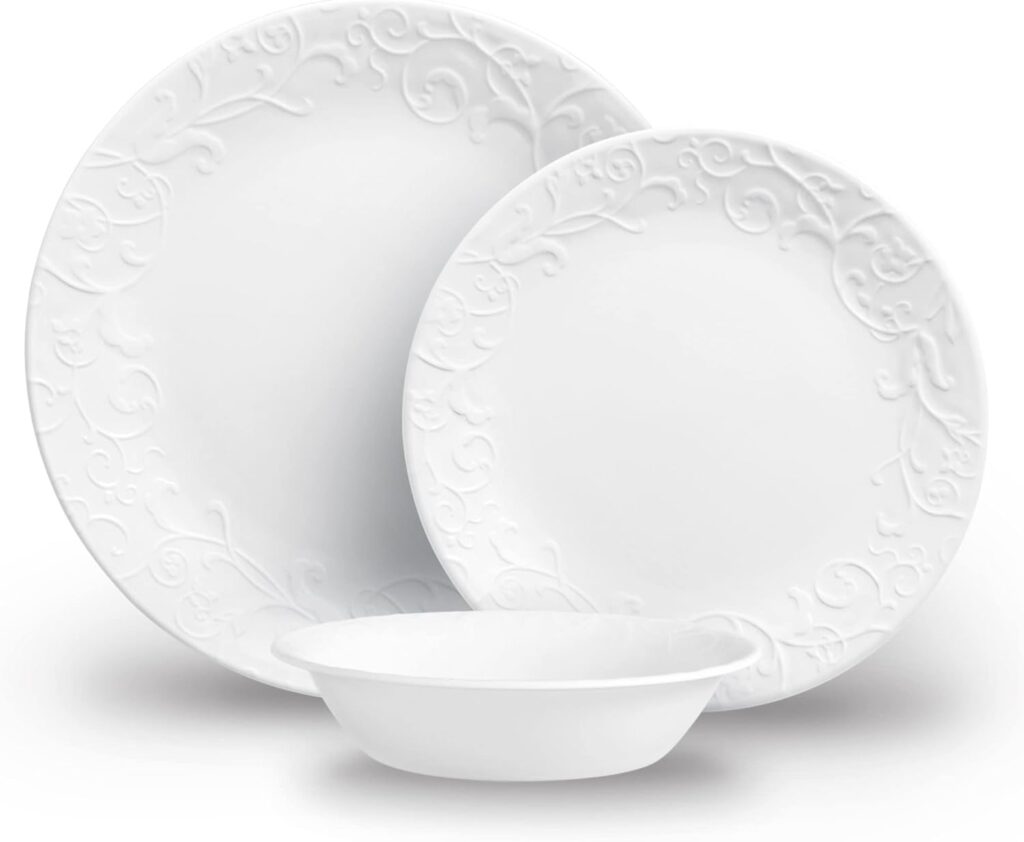
    Corelle Bella Faenza safe bacteria brand from scratches

    Corelle Winter Frost White Collection – Made from tempered glass. Lightweight but durable. No lead or cadmium concerns.

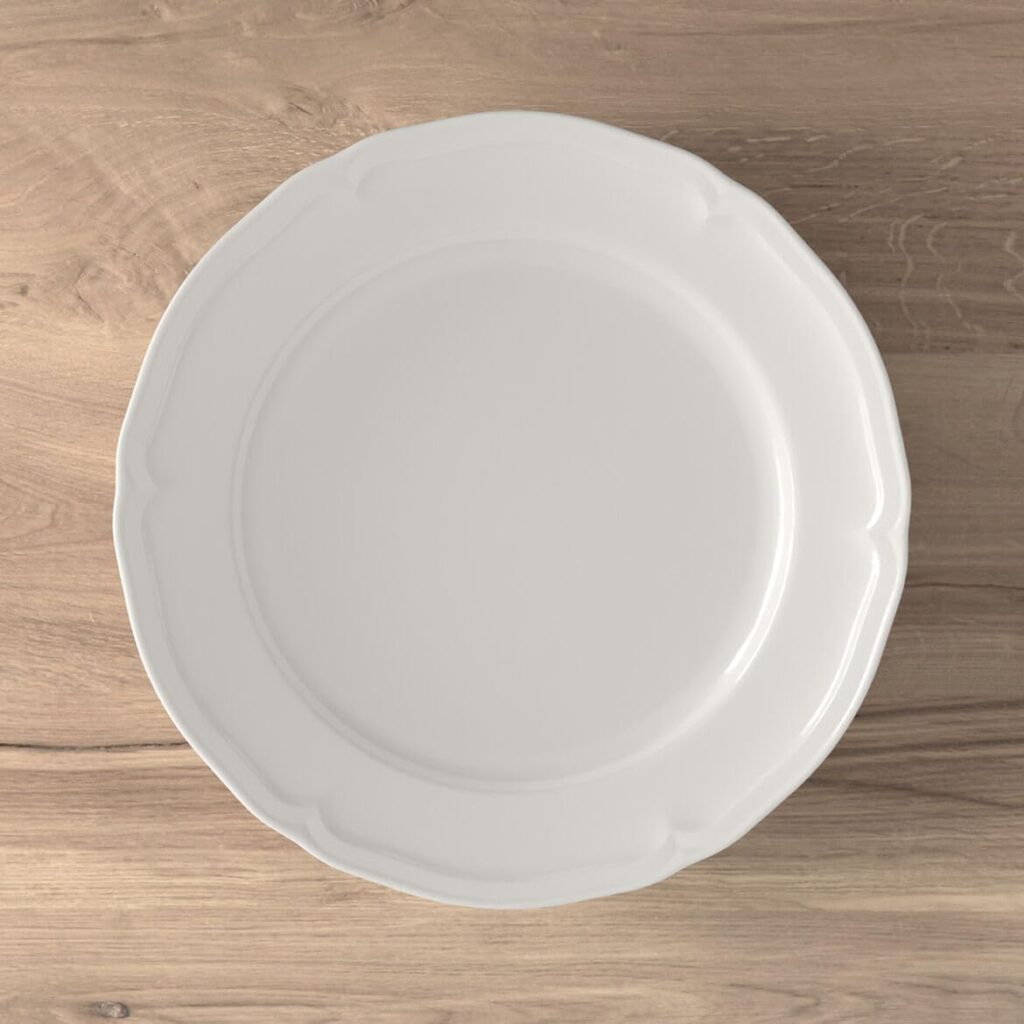
    Villeroy and Boch Porcelain non toxic brand

    Villeroy & Boch – German porcelain brand with strict safety standards. Their glazes are lead-free and highly durable.

    Bormioli Rocco tempered opal glass lead free scratched dinnerware

    Bormioli Rocco Tempered Opal glass – Modern brand focused on non-toxic materials, free from lead and cadmium. Made in Spain.

    What Certifications to Look For

    When shopping, look for these safety marks:

    • FDA approved for food use
    • Lead-free certification
    • Proposition 65 compliant
    • NSF International certified

    Budget-Friendly Safe Options

    You don’t need to spend a fortune on safe dinnerware. Many affordable brands offer lead-free options.

    Check discount stores for white high-quality stoneware, porcelain, Bone china, or ceramic sets. These are often the safest and most affordable choices.

    MAINTENANCE TIPS FOR SAFE DINNERWARE

    Proper care extends the life of your dinnerware and keeps it safe:

    Cleaning Guidelines:

    • Use mild dish soap and warm water
    • Avoid abrasive cleaners or scrubbers
    • Hand-wash vintage or delicate pieces
    • Dry thoroughly to prevent bacterial growth

    Storage Recommendations:

    • Stack plates with protective layers
    • Store in dry, clean cabinets
    • Avoid extreme temperature changes
    • Keep away from direct sunlight

    Preventing Damage:

    • Use plastic or wooden utensils when possible
    • Don’t cut food directly on plates
    • Microwave only microwave-safe dishes
    • Handle with care when moving

    Regular inspection is key. Check your plates monthly for new damage. Address problems early to prevent health risks.

    FREQUENTLY ASKED QUESTIONS

    Can I still use plates with minor scratches?

    Light surface scratches that you can’t feel are usually safe. However, any scratch that catches your fingernail should be cause for concern.

    Are all white plates safe?

    Not necessarily. White glazes can still contain lead, especially in older dishes. Check the manufacturer’s specifications.

    CONCLUSION

    Scratched plates can indeed be dangerous, but not all damage is the same. Metal marks from cutlery are harmless and removable.

    However, true scratches in ceramic glazes can harbor bacteria and release toxic chemicals into your food.

    The key is learning to identify real damage. When in doubt, replace questionable pieces. Your health is worth more than keeping old dinnerware.

    Choose quality brands that prioritize safety. With proper care and regular inspection, you can enjoy safe meals for years to come.

    Remember: when it comes to dinnerware safety, it’s better to be cautious. Replace damaged plates promptly and invest in quality, lead-free options. Your family’s health depends on it.

  • Corelle Dinnerware Recall: The Truth Behind the Viral Safety Scare

    You’re browsing social media over your morning coffee when a shocking headline stops you mid-scroll. “Corelle Dinnerware Recalled Due to Lead!”

    Your heart skips a beat as you glance at the familiar white dishes in your cupboard – the very ones your grandmother passed down, the ones that have survived countless family dinners and kitchen disasters.

    You’re not alone in this moment of panic. Millions of households have experienced this exact scenario. The Corelle “recall” story has become one of the most confusing and widely misunderstood safety scares in recent memory.

    Social media posts have gone viral, family WhatsApp groups have been flooded with warnings, and dinner party conversations have turned into impromptu safety discussions.

    But here’s the twist that might surprise you: there has never been an official Corelle dinnerware recall. Not by the FDA, not by the Consumer Product Safety Commission, and certainly not by any safety authorities.

    So what’s really going on behind this widespread confusion, and more importantly, what does it mean for your lead-free dinnerware aspirations?

    WHAT IS CORELLE DINNERWARE?

    Before we dive into the recall rumours, let’s establish what we’re actually discussing. Corelle dinnerware represents one of the most recognizable brands in kitchen history.

    These lightweight, chip-resistant dishes have graced dining tables since the 1970s, becoming synonymous with durability and practicality.

    The brand’s signature three-layer glass construction – called Vitrelle – made it virtually unbreakable under normal use.

    Corelle vitrelle triple layer glass white frost dinnerware

    This revolutionary design turned Corelle into a household name, particularly popular among families seeking reliable, everyday dinnerware.

    However, like many vintage products, Corelle’s manufacturing processes have evolved significantly over the decades.

    The decorative patterns and glazes used in earlier productions tell a different story from today’s offering, and that’s where our tale begins.

    THE GREAT CORELLE RECALL MYTH: SEPARATING FACT FROM FICTION

    corelle dinnerware recall information

    The Truth About Official Recalls

    Let’s address the elephant in the room with crystal clarity: No government agency has ever issued an official recall for Corelle dinnerware.

    This bears repeating because the misinformation has spread faster than butter on warm toast.

    Official recalls require specific criteria:

    • Violation of safety regulations
    • Documented health hazards
    • Regulatory agency involvement
    • Mandatory consumer notifications

    None of these conditions has been met regarding Corelle products.

    What Actually Happened?

    The confusion stems from Corelle’s own voluntary recommendation in December 2019. The company suggested that consumers use pre-2005 dishes as “decorative pieces” due to concerns about lead levels.

    This recommendation – not a recall – sparked the widespread panic.

    Think of it this way: if recalls were restaurant closures, Corelle’s recommendation was more like a chef suggesting you might prefer the new menu. Voluntary guidance, not mandatory action.

    THE LEAD CONCERN: UNDERSTANDING THE REAL ISSUE

    The Science Behind the Scare:

    Lead contamination in vintage Corelle dishes is a legitimate concern, but the situation is far more nuanced than social media suggests.

    Independent testing by advocate Tamara Rubin using XRF (X-ray fluorescence) technology revealed significant lead content in decorative patterns on older Corelle pieces.

    Here’s what the testing revealed:

    Corelle PatternLead Content (ppm)Year Range
    Butterfly Gold18,7001970s-1980s
    Spring Blossom15,2001970s-1980s
    Snowflake Blue12,8001970s-1990s
    Plain White0-100All years

    Note: ppm = parts per million

    The Manufacturing Timeline

    Corelle dish safety manufacturing timeline

    Understanding when your Corelle was made is crucial:

    Pre-2000 Era: Higher likelihood of lead in decorative glazes. 2000-2005: Transitional period with reduced lead content. Post-2005: Compliant with stricter FDA regulations.

    The golden rule: Plain white Corelle dishes from any era are generally considered lead-free.

    WHY NO OFFICIAL RECALL? THE REGULATORY REALITY

    FDA Standards vs. Health Advocacy:

    Here’s where things get interesting. Current FDA regulations allow certain levels of lead in dinnerware, and vintage Corelle dishes technically meet these standards.

    The controversy highlights a gap between what’s legally compliant and what health advocates recommend.

    It’s like comparing speed limits to driving recommendations – you might legally drive 70mph, but safety experts might suggest 60mph in certain conditions.

    The Corporate Response Evolution

    Corelle’s parent company, Instant Brands, has navigated this situation carefully:

    1. Initial Recommendation (2019): Use pre-2005 dishes decoratively
    2. Testing Programme (2022): Confirmed FDA compliance
    3. Current Position (2025): Products meet regulatory standards

    The company maintains that its testing confirms vintage products comply with FDA lead-safety regulations.

    FREQUENTLY ASKED QUESTIONS ABOUT CORELLE SAFETY

    Is There a Current Corelle Dinnerware Recall?

    No, there is no official Corelle dinnerware recall. Despite widespread social media claims, no government agency has issued a recall for Corelle products.

    The confusion stems from the company’s voluntary 2019 recommendation regarding pre-2005 dishes.

    Which Corelle Dishes Contain Lead?

    Vintage Corelle dishes with decorative patterns (manufactured before 2005) may contain lead in their glazes. Plain white Corelle dishes and newer patterns are generally lead-free.

    The most concerning patterns include:

    Butterfly Gold
    Spring Blossom Green
    Snowflake Blue
    Old Town Blue

    How Can I Tell If My Corelle Is Safe?

    Check the manufacturing date and pattern type. Corelle dishes made after 2005 comply with current FDA regulations.

    Plain white dishes from any era are typically safe. Look for date stamps on the bottom of pieces, and be cautious with heavily decorated vintage patterns.

    Should I Throw Away My Vintage Corelle?

    The decision is ultimately personal. Corelle maintains their vintage products meet FDA standards, but some health advocates recommend avoiding them.

    Consider factors like:

    Dish condition (worn glaze increases risk)
    Usage frequency
    Household members (children are more vulnerable)
    Personal risk tolerance

    THE SOCIAL MEDIA EFFECT: HOW MISINFORMATION SPREADS

    Viral Panic in the Digital Age:

    socia media corelle misinformation date line

    Social media has transformed how safety information spreads, but it’s also amplified confusion. The Corelle story demonstrates how quickly partial information can become accepted fact.

    Consider this timeline:

    • 2019: Company issues voluntary recommendation
    • 2020-2021: Independent testing results circulate
    • 2022: Social media posts claim “recall.”
    • 2023-2025: Misinformation becomes widespread

    The Echo Chamber Effect

    Once misinformation enters social media circulation, it gains momentum through shares, likes, and comments. Each retelling tends to amplify the perceived danger while losing detail.

    EXPERT PERSPECTIVES: WHAT THE PROFESSIONALS SAY

    Health Advocates’ Position

    Independent safety advocates like Tamara Rubin emphasize the precautionary principle: when in doubt, choose safer alternatives.

    Their testing reveals lead levels that, while legally compliant, exceed their recommended safety thresholds.

    Industry Response

    Corelle and Instant Brands maintain their position that vintage products meet current safety standards. They point to extensive testing and regulatory compliance as evidence of product safety.

    Regulatory Stance

    Government agencies haven’t mandated recalls because current lead levels don’t violate existing regulations.

    However, this doesn’t mean the products are risk-free – it means they fall within acceptable legal limits.

    MAKING INFORMED DECISIONS: YOUR LEAD-FREE JOURNEY

    Risk Assessment Framework

    Evaluate your situation using these criteria:

    1. Dish Age and Condition
      • Pre-2005 with decorative patterns: Higher risk
      • Post-2005 or plain white: Lower risk
      • Worn or chipped glazes: Increased concern
    2. Usage Patterns
      • Daily use: Consider alternatives
      • Occasional use: Personal choice
      • Decorative only: Minimal risk
    3. Household Vulnerability
      • Children under 6: Higher risk sensitivity
      • Pregnant women: Increased caution advised
      • Adults only: Standard risk assessment

    Lead-Free Alternatives

    If you’re committed to completely lead-free dinnerware, consider these options:

    MaterialLead RiskDurabilityPrice Range
    Modern CorelleVery LowExcellentModerate
    Certified Lead-Free CeramicNoneGoodModerate-High
    Glass DinnerwareNoneModerateLow-Moderate
    Stainless SteelNoneExcellentModerate

    THE FUTURE OF CORELLE AND KITCHEN SAFETY

    Industry Changes

    Stricter regulations and consumer awareness are driving changes in dinnerware manufacturing. Companies are increasingly moving towards lead-free formulations, even when not legally required.

    Consumer Empowerment

    The Corelle controversy has educated consumers about asking the right questions:

    • When was this manufactured?
    • What materials were used?
    • Are safety certificates available?
    • What testing has been conducted?

    Technology’s Role

    Advanced testing methods like XRF technology are making it easier to identify problematic products. This transparency is forcing manufacturers to be more accountable for their safety claims.

    PRACTICAL STEPS FOR CORELLE OWNERS

    Immediate Actions

    If you own vintage Corelle dishes:

    1. Identify the age and pattern of your pieces
    2. Assess their condition (look for wear, chips, or fading)
    3. Consider your household’s vulnerability (children, pregnancy)
    4. Make an informed decision based on your risk tolerance

    Long-term Considerations

    For those seeking completely lead-free options:

    • Research modern alternatives with safety certifications
    • Gradually replace vintage pieces if desired
    • Stay informed about safety updates from manufacturers
    • Consider professional testing if uncertain

    THE BIGGER PICTURE: KITCHEN SAFETY EVOLUTION

    Historical Context:

    The Corelle situation reflects broader changes in how we approach kitchen safety. What was considered safe decades ago might not meet today’s standards – and that’s actually progress.

    Consumer Awareness:

    Today’s consumers are more informed about potential health risks. The lead-free movement represents a shift towards preventive rather than reactive safety measures.

    Industry Accountability:

    Manufacturers are increasingly transparent about their processes and materials. This transparency, while sometimes concerning, ultimately benefits consumer safety.

    CONCLUSION: NAVIGATING THE CORELLE CONFUSION

    The Corelle dinnerware “recall” story serves as a masterclass in how safety information can be misinterpreted and amplified in our digital age.

    The truth is more complicated than social media suggests: there’s no official recall, but legitimate safety concerns exist for vintage pieces.

    Your journey towards lead-free dinnerware doesn’t require panic or hasty decisions.

    Instead, it calls for informed choice-making based on facts rather than fear. Whether you choose to continue using vintage Corelle, replace it gradually, or switch to certified lead-free alternatives, the key is making decisions that align with your family’s needs and risk tolerance.

    The real victory here isn’t about winning an argument over Corelle’s safety; it’s about becoming a more informed consumer who asks the right questions and makes decisions based on solid information rather than viral headlines.

    What’s your next step? Take a moment to assess your current dinnerware situation.

    Check those date stamps, evaluate your household’s needs, and remember that the safest kitchen is one where you understand what you’re using and why.

    Have you discovered concerning information about your vintage dinnerware? Share your experience in the comments below and help others navigate this confusing landscape.

  • IKEA Dinera Mug

    It’s a crisp Sunday morning, and you’re reaching for your favorite mug to pour that first, glorious cup of coffee. We’ve all been there – searching for that perfect vessel that holds our beloved brew and feels right in our hands.

    The IKEA Dinera Mug is a seemingly simple piece of dinnerware that’s taken the hearts of mug enthusiasts by storm.

    While some might dismiss it as just another coffee cup, those in the know understand that this understated champion of everyday dining holds a special place in Coffee Mugs and casual sippers alike.

    But what makes this particular mug stand out in IKEA’s vast sea of kitchenware? Is it worth adding to your collection, or is it just another pretty face in the cupboard?

    Let’s dive into the world of the Dinera mug and discover why it might just become your new daily companion.

    THE IKEA DINERA MUG: A CLOSER LOOK

    When it comes to everyday mugs, the details matter more than you might think.

    The IKEA Dinera Mug is one of the many parts of the broader IKEA collection which includes IKEA oven-safe Ramekins and other dining essentials, bringing a subtle sophistication to your daily routine.

    IKEA Dinera Mug

    Standing at a height of 9 cm (3 ½ “) and a volume of 30 cl (10 oz), this mug strikes the perfect balance between functionality and aesthetics.

    DESIGN AND AESTHETICS

    The Dinera mug showcases a minimalist design that’s become increasingly popular among modern homeware enthusiasts.

    Its popular patterns are Beige and Dark Gray, not thin or slander but rather a deep solid, well-rounded stable stoneware Mug.

    Mora ceramic modern mugs alternative to the IKEA Mug

    The look is simple yet contemporary, for those with big hands, feel free to grab the body or grip with your two fingers inside the handle of the Mug while your thumb rests on the top of the handle for a comfortable hold so your drink doesn’t spill or Mug fall off your hands.

    The width and curve of the handle accommodate various hand sizes while maintaining stability.

    Furthermore, unlike specialized drinkware, the Dinera mug proves its worth across multiple beverages. From morning coffee to evening herbal teas, the mug’s neutral design complements any drinking occasion.

    Large Morandi Ceramic Coffee Mug set

    Like other pieces in IKEA’s dining collection, such as the stainless-steel dinnerware, the Dinera Mug emphasizes clean and timeless appeal.

    Finally, other ceramic coffee mugs we recommend are the Mora Brand and the Gencywe Morandi Color Coffee Mugs as shown above.

    DIFFERENCE BETWEEN THE IKEA FÄRGRIK AND DINERA MUG

    First, they are made up of the same stoneware material, durable for everyday use, and have the same modern contemporary design.

    IKEA Fargrik stoneware Mug

    The main difference is that the IKEA Färgrik Mug is bigger and has a smaller handle than the Dinera.

    MATERIAL AND CONSTRUCTION

    Crafted from high-quality stoneware, the Dinera mug offers exceptional durability.

    Similar to how IKEA glass plates are designed for everyday use, these mugs are built to withstand the rigors of daily life.

    The stoneware construction provides:

    – Excellent heat retention

    – Resistance to chips and scratches

    – Microwave safety (similar to Microwave-safe Corelle Mugs)

    – Dishwasher compatibility

    PRACTICAL FEATURES AND BENEFITS

    Temperature Retention:

    One of the most impressive features of the Dinera mug is its ability to keep beverages at optimal temperature.

    Thanks to its thick walls and quality stoneware construction, your hot drinks stay warmer longer compared to standard ceramic mugs.

    According to a study by Consumer Reports:

    ceramic mugs like stoneware are better at heat retention, given the thickness of the Mug and the material doesn’t heat up as quickly as glass or metal material.

    DURABILITY AND SAFETY

    Like many wondering “Are IKEA plates oven safe?”, customers often ask about the Dinera mug’s safety features. The good news is that these mugs are:

    FeatureSpecification
    Temperature ResistanceUp to 220°C (428°F)
    Microwave SafeYes
    Dishwasher SafeYes
    Freezer SafeYes
    Lead-FreeYes

    To truly understand the Dinera mug’s value proposition, let’s compare it with similar options in the market:

    FeatureIKEA Dinera MugGeneric Ceramic MugPremium Brand Mug
    Capacity10 oz8 oz12 oz or above.
    Heat RetentionExcellentGoodExcellent
    DurabilityHighModerateHigh
    Dishwasher SafeYesVariesYes
    Design Options4 coloursVariedLimited Edition

    CARE AND MAINTENANCE

    To ensure your Dinera mug maintains its quality over time, proper care is essential.

    While these mugs are designed to be durable, following these maintenance tips will extend their lifespan:

    – First, IKEA Sweden recommends you wash before use.

    – Rinse immediately after use to prevent staining

    – Gently scrub any stubborn stains

    – After washing, rinse thoroughly

    – Use a mild detergent when washing

    – Avoid extreme temperature changes

     – If possible air dry completely before storing

    – Store in a dry place.

    STYLING AND PAIRING SUGGESTIONS

    The Dinera mug’s versatile design makes it an excellent addition to various table settings.

    Whether you’re creating a casual breakfast nook or a formal dining arrangement, these mugs seamlessly integrate into any aesthetic.

    Popular Styling Combinations:

    – Pair with other Dinera collection pieces for a cohesive look

    – Mix and match with textured pieces for visual interest

    – Combine with metallic accessories for modern appeal.

    FREQUENTLY ASKED QUESTIONS

    Q: Are Dinera mugs microwave-safe?

    A: Yes, these mugs are completely microwave-safe and designed to withstand high temperatures without compromising structural integrity.

    Q: Can Dinera mugs be used in the dishwasher?

    A: Absolutely! The mugs are dishwasher safe and maintain their finish even after repeated cycles.

    Q: Do they chip easily?

    A: No, the stoneware construction provides excellent resistance to chipping and scratching under normal use conditions.

    CONCLUSION

    The IKEA Dinera mug stands as a testament to thoughtful design meeting practical functionality.

    While it may not have the premium cachet of luxury brands, it delivers exceptional value through its durability, versatility, and timeless functionality.

    Whether you’re a coffee connoisseur, a tea enthusiast, or simply someone who appreciates well-designed homeware, the Dinera mug deserves a spot in your cupboard.

    Why Choose the Dinera Mug?

    – Excellent value for money

    – Robust construction

    – Versatile design

    – Easy maintenance.

  • IKEA 365 Dishes

    Ever noticed how some things in your kitchen just work better than others?

    That’s exactly what IKEA had in mind when they created their 365 dishes collection.

    These aren’t just plates and bowls – they’re the kind you reach for day after day, whether you’re having a quick breakfast or hosting friends for dinner.

    Simple, sturdy, and cleverly designed, they’re made for real life, not just special occasions.

    From rushed Monday morning cereals to Sunday family dinners, these dishes handle it all.

    They stack neatly in cramped cabinets, survive countless trips through the dishwasher, and look good enough to set out when guests come over.

    It’s like having a reliable friend in your kitchen who’s always ready to help, no matter what you’re cooking up.

    THE EVOLUTION OF EVERYDAY DINING

    The story of IKEA 365 dishes begins with a simple yet ambitious goal: creating tableware that seamlessly blends functionality with contemporary design.

    In an era where IKEA BPA-free products are increasingly sought after, the 365 collection stands as a testament to conscious manufacturing without compromising on style or durability.

    WHAT SETS IKEA 365 APART?

    The IKEA 365 collection isn’t just another line of dishes – it’s a carefully crafted series designed with real-life usage patterns in mind.

    IKEA 365 Dishes

    Made from impact-resistant feldspar porcelain, these dishes offer exceptional durability while maintaining an elegant appearance that rivals more expensive alternatives.

    Key Features:

    – Feldspar porcelain construction for enhanced durability

    – Freezer, Microwave, and dishwasher safe up to 95°C

    – Stackable design for efficient storage

    – Versatile white colour scheme that complements any décor

    – Comprehensive range of pieces for every dining need

    THE COMPLETE IKEA 365 COLLECTION

    Plates and Bowls:

    IKEA 365+ Bowl

    While many appreciate the classic IKEA stainless steel dishes for their durability, the 365 collection’s porcelain offerings bring an extra touch of sophistication. The collection includes:

    ItemDiameterBest Used For
    Dinner Plate27cmMain courses
    Side Plate21cmAppetizers and Desserts
    Deep Plate22cmPasta and Soup
    Bowl13cmCereals and Snacks

    IKEA 365+ FOOD CONTAINER

    Ever opened your cupboard to find stale snacks or struggled with messy leftovers?

    IKEA’s food storage containers are here to solve these everyday kitchen hassles. Just like their popular IKEA camping dishes that bring convenience to outdoor adventures, these containers make food storage a breeze at home.

    IKEA 365+ Food storage container

    Think of these containers as your food’s protective home. They’re made from strong glass that lets you see what’s inside – no more mystery containers in your fridge!

    The lid uses safe polypropylene plastic with a silicone rubber seal that locks in freshness. It’s like giving your food a cozy, airtight blanket that keeps it fresh and tasty.

    Why You’ll Love Using Them:

    1. They’re Super Versatile

       – Pop them in the microwave to heat your lunch

       – Store them in the freezer for meal prep

       – Can handle hot foods up to 100°C

       – Safe to clean in your dishwasher

    2. Smart Design Features

       – Easy-to-use flip-top lid

       – No harmful BPA chemicals

       – Practical rectangular shape fits perfectly in your fridge

       – Light enough to carry to work

       – Clear glass lets you see what’s inside

    3. Makes Your Life Easier

       – Cleanup is a snap

       – Won’t break your budget

       – Keeps bacteria out

       – Food stays fresh longer

       – Perfect size at 750ml – great for leftovers or packed lunches

    When you choose these containers, you’re not just buying another piece of plastic – you’re investing in a smart solution that keeps your food fresh, saves you money, and helps reduce waste.

    They work just as well as expensive brands like Rubbermaid and Sistema, but at a price that makes sense for every budget.

    Ready to get organized? These containers are waiting to transform your kitchen storage game!

    WHAT DOES IKEA 365+ MEAN?

    IKEA 365+ is a product line designed for everyday use, 365 days a year. The name reflects its purpose as durable, versatile items meant to be used daily throughout the entire year.

    These products are specifically designed to withstand regular use while maintaining their quality and appearance.

    IS IKEA 365+ LEAD-FREE?

    IKEA 365+ dinnerware is lead and cadmium-free and complies with strict safety standards.

    The products are made from feldspar porcelain, which is a safe and durable material that doesn’t contain lead or other harmful heavy metals.

    This makes them suitable for daily food service and storage.

    IS IKEA 365+ GLASS MICROWAVE SAFE?

    IKEA 365+ glass products are microwave-safe and can withstand temperatures up to 400°F (200°C).

    The glassware is made from tempered glass, which is specifically designed to handle rapid temperature changes safely.

    However, it’s recommended to avoid sudden temperature changes to extend the product’s lifespan.

    DIFFERENCE BETWEEN IKEA 365 AND IKEA OFTAST

    The key distinction between IKEA 365+ and OFTAST dinnerware lies in their materials and construction.

    IKEA 365+ plates are crafted from feldspar porcelain, a premium material known for its durability and elegant white finish.

    In contrast, IKEA OFTAST plates are manufactured using tempered opal glass, which provides a more affordable yet still sturdy option for everyday use.

    This material difference affects not only the appearance but also the weight, durability, and price point of each collection.

    To learn more about IKEA Oftast, kindly read our guide on the difference between the Corelle brand and IKEA Oftast tableware.

    PRACTICAL BENEFITS AND USAGE

    Unlike the Dinera Mug by IKEA, which caters to specific dining needs, the 365 collection is designed for versatile use across all occasions. The feldspar porcelain construction offers:

    – Impact resistance for daily use

    – Thermal shock resistance

    – Chip-resistant edges

    – Even heat distribution.

    SUSTAINABILITY ASPECTS

    Environmental consciousness is at the heart of the 365 collection:

    – Made from sustainable materials

    Energy-efficient production process

    – Long lifespan reduces replacement needs

    – Recyclable packaging

    STYLING AND VERSATILITY

    Enjoy everyday elegance with the minimalist design of IKEA 365 dinnerware, which makes it perfect for:

    – Casual family meals

    – Professional dinner parties

    – Restaurant service

    – Office cafeterias

    CARE AND MAINTENANCE

    To ensure your IKEA 365 dishes maintain their pristine condition:

    1. Dishwasher Safety

       – Use standard dishwasher detergent

       – Avoid overcrowding

       – Safe up to 95°C

    2. Storage

       – Stack carefully using the designed ridges

       – Store in a dry environment

       – Avoid extreme temperature changes.

    INVESTMENT VALUE

    When comparing cost per use, IKEA 365 tableware and other products offer exceptional value:

    FeatureReduces the need for multiple sets
    DurabilityFewer replacements needed
    VersatilityReduces need for multiple sets
    Style longevityReduces the need for multiple sets
    Warranty365-day return policy for unopened products

    MAKING THE RIGHT CHOICE

    Consider these factors when building your set:

    – Number of household members

    – Entertaining frequency

    – Storage space

    – Specific dining habits

    CONCLUSION

    IKEA 365 dishes represent more than just tableware – they’re an investment in practical luxury that enhances daily living.

    Whether you’re a casual cook or an entertaining enthusiast, this collection offers the perfect balance of durability, style, and functionality.

    Ready to Transform Your Dining Experience?

    Visit your local IKEA store to experience the 365 collections in person, or explore the complete range online.

    Remember, good design isn’t just about aesthetics – it’s about enhancing your daily life, one meal at a time.

  • Is IKEA KALAS BPA Free? (Safety Review for Parents)

    As a parent, you stand in the kitchen aisle holding colorful plastic plates, wondering if they’re truly safe for your child. Is IKEA KALAS BPA free?

    This question weighs heavily on families worldwide who’ve fallen in love with these affordable, vibrant dishes but worry about hidden chemicals.

    Every meal matters when it comes to your child’s health, and the plastic touching their food deserves scrutiny.

    With conflicting information online and constant news about toxic chemicals in everyday products, you need clear, trustworthy answers.

    This comprehensive IKEA KALAS safety review cuts through the confusion, examining the materials, certifications, and real-world safety of these popular kids’ dishes so you can make informed decisions for your family’s well-being.

    What Is IKEA KALAS Tableware?

    IKEA KALAS represents one of the most popular children’s tableware collections globally, recognizable by its bright primary colors and budget-friendly pricing.

    The line includes plates, bowls, cups, and cutlery specifically designed for young children learning to feed themselves.

    Overview of the IKEA KALAS Product Line

    The KALAS collection features six-piece sets in bold red, blue, green, and yellow hues that appeal to toddlers and preschoolers.

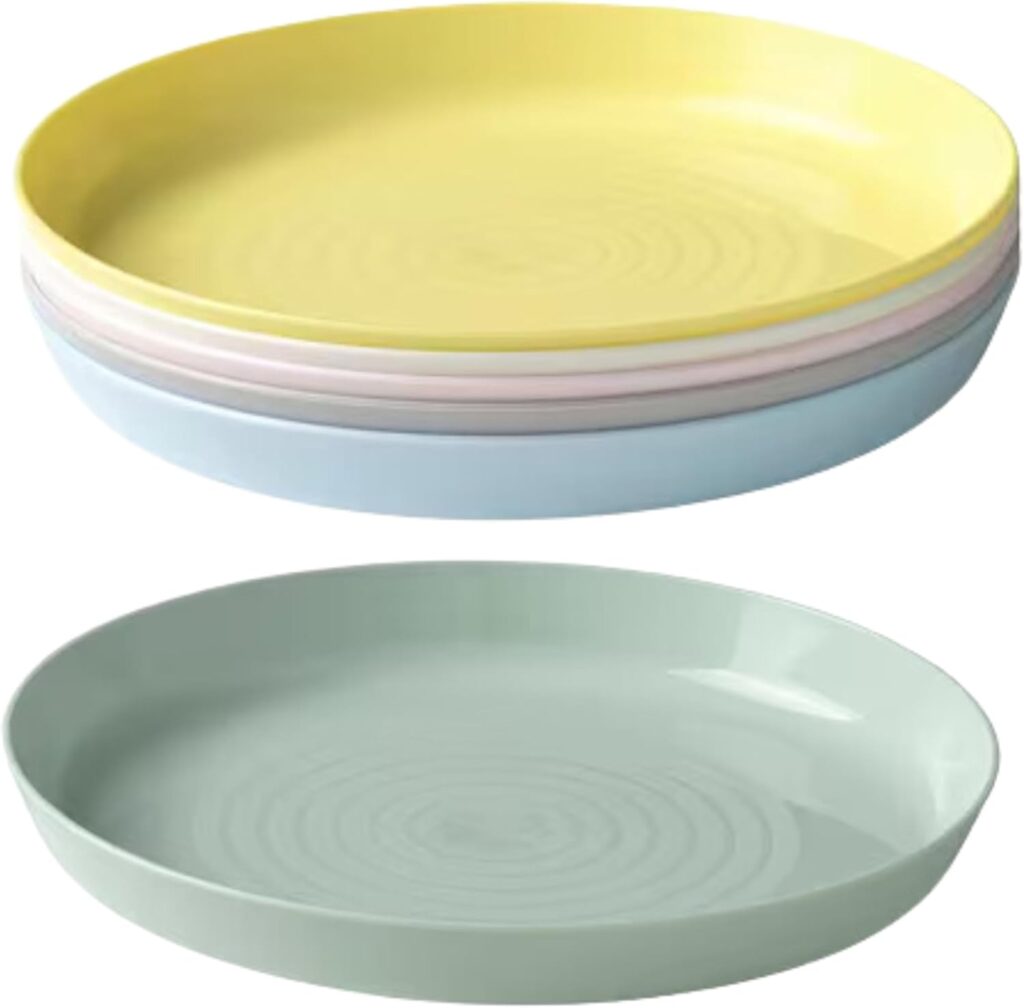
    IKEA Kalas Plate

    Each set typically includes plates in various sizes, small cups with easy-grip designs, bowls with rounded edges, and child-sized utensils.

    The lightweight construction makes these pieces easy for small hands to manage, while the durable plastic withstands the inevitable drops and throws of early childhood.

    IKEA markets KALAS as practical, affordable dinnerware like IKEA 365 that grows with children from their first solid foods through elementary school years.

    Who It’s Designed For

    KALAS tableware targets families with toddlers, preschoolers, and young elementary-aged children, though many households use it for outdoor dining and camping.

    The design considers developmental stages, with shallow plates for learning self-feeding and small cups sized appropriately for little hands.

    Parents appreciate the affordability, allowing them to stock multiple sets without significant expense.

    The cheerful colors also make mealtime more engaging for picky eaters and reluctant diners.

    Materials Used — Polypropylene Plastic

    IKEA manufactures KALAS products from polypropylene plastic, commonly abbreviated as PP, and identified by recycling code number 5.

    This thermoplastic polymer offers several advantages for children’s tableware, including flexibility, impact resistance, and heat tolerance.

    Polypropylene differs significantly from other plastics in its chemical structure, which naturally excludes certain harmful additives.

    The material can withstand repeated washing in dishwashers and maintains its structural integrity through years of daily use.

    Understanding this base material provides essential context for evaluating KALAS’ safety claims.

    What Is BPA and Why Does It Matter

    BPA, or Bisphenol-A, stands as one of the most scrutinized chemicals in consumer products today.

    This industrial compound has sparked widespread concern among parents, health advocates, and regulatory agencies worldwide due to its prevalence and potential health implications.

    What BPA Is and Where It’s Found

    Bisphenol-A is a synthetic compound used since the 1960s to manufacture certain plastics and resins.

    Manufacturers incorporate BPA into polycarbonate plastics (recycling code 7) to create clear, hard plastic products like water bottles, food storage containers, and some baby bottles.

    The chemical also appears in epoxy resins lining metal food cans and certain dental sealants.

    BPA can leach from these products into food and beverages, particularly when heated or scratched, creating pathways for human exposure.

    Why BPA Is Linked to Hormonal Disruption and Child Health Risks

    Scientific research has identified BPA as an endocrine disruptor that mimics estrogen in the human body.

    Studies suggest exposure may interfere with hormonal development, particularly concerning infants and young children whose systems are still developing.

    Research has associated BPA exposure with potential impacts on brain development, behavior, and metabolic processes.

    The compound can affect growth patterns, reproductive development, and immune function.

    Children face heightened vulnerability because their smaller body size means relatively higher exposure levels, and their developing systems lack mature mechanisms to process and eliminate such chemicals efficiently.

    Why Parents Are Shifting Toward BPA-Free Options

    Growing awareness of BPA risks has driven dramatic shifts in consumer behavior, with parents actively seeking certified BPA-free products for their families.

    This movement gained momentum after major studies in the early 2000s revealed widespread BPA presence in consumer products and human populations.

    IKEA Kalas BPA Free Bowls

    Parents recognize that childhood represents a critical window of development where chemical exposures can have lasting impacts.

    The precautionary principle guides many families to choose BPA-free alternatives even as scientific debate continues, preferring to err on the side of safety when protecting their children’s health.

    Is IKEA KALAS BPA Free?

    Is IKEA Kalas BPA Free

    The straightforward answer brings relief to concerned parents: yes, IKEA KALAS tableware is BPA free.

    However, understanding the evidence behind this claim and IKEA’s broader chemical safety policies provides important context for confident purchasing decisions.

    IKEA’s Official Statement on KALAS Safety

    IKEA officially phased out BPA from all children’s products by 2014, establishing company-wide standards that exceed many regulatory requirements.

    The Swedish retailer publicly states that KALAS products contain no bisphenols, including BPA, BPS, or other variants in this chemical family.

    This commitment appears in IKEA’s product documentation, chemical policy statements, and customer service communications.

    When did IKEA stop using BPA? The transition occurred between 2011 and 2014, with KALAS being among the first product lines reformulated to meet the new safety standards.

    Material — Polypropylene Identified as BPA-Free Plastic

    The key to KALAS’s BPA-free status lies in its core material composition. Polypropylene plastic naturally contains no bisphenols because its molecular structure doesn’t require BPA as a manufacturing component.

    Unlike polycarbonate plastics that use BPA as an essential building block, polypropylene achieves its properties through different chemical processes.

    The IKEA polypropylene dinnerware carries a recycling code 5, which consumers can verify on the bottom of each piece.

    This material selection represents a fundamental safety advantage rather than simply removing an additive from an otherwise problematic plastic.

    IKEA’s Compliance with EU and FDA Food-Contact Regulations

    KALAS products meet stringent food contact safety standards established by both the European Union and the U.S.

    Food and Drug Administration. The EU’s food contact materials regulations (EC No. 1935/2004) establish strict migration limits for chemicals that might transfer from packaging or tableware into food.

    The FDA similarly regulates food contact substances under 21 CFR Parts 174-186. IKEA conducts regular testing to verify compliance with these frameworks, ensuring KALAS products don’t leach harmful substances under normal use conditions.

    These certifications provide independent verification beyond company claims.

    KALAS Free from PVC, Phthalates, and Bisphenols

    Beyond BPA exclusion, IKEA KALAS toxic concerns are addressed through the elimination of several problematic chemical families.

    The tableware contains no polyvinyl chloride (PVC), a plastic associated with concerning additives and environmental impacts.

    Phthalates, another class of endocrine-disrupting chemicals used as plasticizers in some flexible plastics, are completely absent from KALAS products.

    This comprehensive approach to chemical safety reflects IKEA’s recognition that parents care about more than just BPA when selecting BPA-free IKEA tableware for their families.

    Are IKEA KALAS Plates Safe for Kids?

    Beyond verifying BPA-free status, parents rightfully question whether IKEA kids’ dishes BPA free means completely safe for daily use.

    Examining independent testing, proper usage guidelines, and potential limitations provides a complete safety picture.

    Testing Data from Consumer Safety Groups

    Independent consumer safety organizations have evaluated IKEA KALAS products with generally positive results.

    Clean Label Project and other advocacy groups that test children’s products for heavy metals and chemicals have not issued warnings about KALAS tableware.

    The products consistently test negative for lead, cadmium, and other heavy metals that sometimes appear in colored plastics.

    However, comprehensive third-party testing data remains less extensive than for some premium brands.

    IKEA’s internal testing protocols and compliance certifications provide the primary safety assurance for these mass-market products.

    Heat Resistance and Dishwasher Safety

    Polypropylene plastic demonstrates excellent heat resistance compared to many other plastics, withstanding temperatures up to approximately 230°F (110°C) before deforming.

    This makes KALAS products dishwasher-safe on both upper and lower racks, surviving the hot water and heated drying cycles that destroy lesser plastics.

    The material maintains its structural integrity through hundreds of wash cycles without cracking, warping, or developing micro-cracks where bacteria can harbor.

    This durability contributes to both safety and longevity, allowing families to use KALAS pieces for years.

    Concerns About Microwaving Plastic Dishes

    Is IKEA KALAS microwave safe? While polypropylene handles heat better than many plastics, experts recommend caution with microwaving any plastic children’s dishes.

    IKEA labels KALAS as microwave-safe for reheating, but research suggests repeated microwave exposure may accelerate plastic degradation over time.

    Even BPA-free plastics can release other compounds when subjected to high heat, particularly oils and fats that reach temperatures above boiling water.

    Conservative safety approaches suggest using glass or ceramic for microwave heating, then transferring food to KALAS plates for serving to children.

    Tips for Safe Use

    Maximize KALAS safety by following these evidence-based guidelines:

    • Inspect plates regularly for scratches, cracks, or cloudiness, indicating degradation
    • Replace pieces showing wear, as damaged plastic may release particles or harbor bacteria
    • Avoid heating fatty or acidic foods directly in KALAS containers if possible
    • Don’t use abrasive scrubbers that create surface scratches
    • Store in moderate temperature environments away from direct sunlight
    • Discard any pieces that develop strong plastic odors or discoloration

    These practices ensure the IKEA plastic kids’ plates’ safety throughout their usable lifespan.

    How to Identify BPA-Free Plastics

    Knowing what IKEA KALAS is made of helps, but parents benefit from understanding how to verify BPA-free status across all plastic products.

    This knowledge empowers informed purchasing decisions beyond single brands.

    Look for “PP” or Recycling Code “#5” on the Bottom

    The simplest method involves checking the recycling symbol typically molded into plastic product bottoms.

    The triangular symbol contains a number from 1 to 7, with number 5 indicating polypropylene plastic.

    Products marked with “PP” or “#5” are inherently BPA-free because this plastic type never contains bisphenols.

    This marking system provides instant verification without relying solely on marketing claims.

    KALAS products clearly display the #5 code, allowing consumers to independently confirm the material composition.

    Avoid Plastics Marked “#7” or “PC”

    Recycling code 7 serves as a catch-all category for plastics that don’t fit other classifications, including polycarbonate (PC), the primary plastic containing BPA.

    While not all #7 plastics contain BPA, the ambiguity warrants caution when selecting children’s products.

    Polycarbonate plastics appear clear, rigid, and often slightly cloudy; historically been used in baby bottles and sippy cups before safety concerns emerged.

    Modern BPA-free alternatives sometimes carry #7 codes, so this category requires additional research rather than automatic avoidance, but it raises a flag for investigation.

    Why Transparent Hard Plastics Are More Likely to Contain BPA

    Clear, rigid plastic products traditionally relied on polycarbonate manufacturing, which requires BPA to achieve transparency and hardness.

    This visual characteristic helped create durable, glass-like food containers that wouldn’t shatter when dropped.

    While manufacturers increasingly use BPA-free alternatives like Tritan copolyester for clear plastics, older products and some budget items may still use polycarbonate.

    Opaque, flexible plastics like polypropylene rarely contain BPA because they achieve their properties through different chemical compositions.

    This simple visual assessment provides a quick screening tool when evaluating unlabeled products.

    IKEA’s Labeling and Packaging Verification Cues

    IKEA provides multiple verification points for conscious consumers beyond recycling codes.

    Product packaging explicitly states “BPA-free” on KALAS boxes, though this varies by market and packaging version.

    The IKEA website’s product specifications list polypropylene plastic as the material composition.

    Customer service representatives can confirm chemical policies and safety certifications upon request.

    Store displays sometimes feature safety information placards. These multiple touchpoints allow thorough verification before purchase, addressing parental concerns about IKEA KALAS’ toxic potential.

    Eco-Friendliness of IKEA KALAS

    Safety consciousness increasingly intersects with environmental awareness as families seek products that protect both children’s health and planetary wellbeing.

    KALAS presents an interesting case study in sustainable plastic use.

    Made from Recyclable Polypropylene

    Polypropylene plastic carries the #5 recycling designation, indicating acceptance at many curbside recycling programs and drop-off centers.

    Unlike some plastics that can only be downcycled into lower-grade applications, PP can be reprocessed into similar-quality products multiple times.

    The recyclability means KALAS pieces don’t necessarily end up in landfills when their service life ends, though actual recycling depends on local infrastructure availability.

    IKEA encourages customers to recycle worn-out KALAS products through municipal programs or in-store take-back initiatives where available.

    Long-Lasting and Reusable Compared to Single-Use Plastics

    The durability distinguishing KALAS from disposable plastic plates significantly reduces environmental impact through repeated use.

    A single KALAS plate might serve hundreds or thousands of meals over several years, replacing countless paper plates or flimsy plastic disposables.

    This longevity means fewer resources consumed in manufacturing, less packaging waste, and reduced transportation emissions per use.

    The environmental calculation strongly favors durable reusable items over single-use alternatives, even when both are plastic.

    Many families pass KALAS sets to younger siblings or donate them, extending useful life beyond initial ownership.

    IKEA’s Sustainability Goals and Plastic Reduction Initiatives

    IKEA has committed to using only renewable or recycled materials by 2030 as part of its broader sustainability strategy.

    The company increasingly incorporates recycled polypropylene into product lines, though KALAS currently uses virgin plastic.

    IKEA has eliminated single-use plastics from restaurants and bistros, demonstrating corporate movement toward waste reduction.

    The company publishes annual sustainability reports detailing progress toward environmental goals. While KALAS represents conventional plastic production, IKEA’s trajectory suggests future iterations may incorporate more sustainable sourcing.

    The current products reflect a middle path: safer chemicals than legacy plastics but still dependent on petroleum-based materials.

    BPA-Free Alternatives to IKEA KALAS

    While KALAS offers safe, affordable children’s tableware, some families seek alternatives made from completely plastic-free materials.

    Understanding options helps parents choose products aligned with their specific priorities and budgets.

    Silicone-Based Kids Tableware

    Brands like EZPZ, Mushie, and Bumkins manufacture children’s plates, bowls, and utensils from food-grade silicone.

    This flexible, rubber-like material offers several advantages: extreme heat resistance allowing microwave and oven use, naturally non-toxic composition without chemical additives, and durability that survives drops without breaking.

    Silicone suction plates help prevent spills during early self-feeding stages. However, silicone products cost significantly more than KALAS, sometimes three to five times the price for comparable pieces.

    The material can stain from colored foods and may retain odors despite thorough washing.

    Environmental credentials remain debated, as silicone isn’t biodegradable, though it’s more stable in landfills than degrading plastics.

    Stainless Steel Kids Plates

    Premium brands, including Avanchy, Ahimsa, and LunchBots, offer stainless steel children’s dinnerware that eliminates plastic.

    These products provide ultimate chemical safety, containing no synthetic materials that could leach compounds into food.

    Stainless steel withstands any temperature, never degrades, and lasts indefinitely with proper care.

    The material is fully recyclable at end-of-life, though its durability means most pieces outlast childhood.

    Drawbacks include a higher initial cost, a heavier weight that challenges very young children, and potential for noise when utensils strike metal plates.

    Some designs incorporate silicone bases to prevent slipping and reduce table noise.

    Bamboo or Bioplastic Options

    Companies like Eco Rascals and WeeSprout market plates made from bamboo fiber composites or plant-based bioplastics.

    These materials appeal to environmentally conscious families seeking renewable, biodegradable alternatives to petroleum plastics.

    Bamboo products often feature appealing natural aesthetics with earthy tones rather than bright colors.

    However, concerns exist about binding agents used to form bamboo fiber into rigid shapes, with some products containing melamine resins.

    Bioplastics vary widely in composition and safety, requiring careful evaluation.

    These alternatives typically cost more than KALAS while offering less durability, and are often recommended for hand-washing rather than dishwasher use.

    Pros and Cons vs IKEA KALAS

    IKEA KALAS Advantages:

    • Extremely affordable, accessible at numerous locations
    • Lightweight and easy for toddlers to handle
    • Dishwasher-safe with proven durability
    • Bright colors appeal to young children
    • Verified BPA-free with a good safety profile

    IKEA KALAS Limitations:

    • Still, petroleum-based plastic, despite being safe
    • Not ideal for repeated microwave use
    • Less premium feel than alternative materials
    • Environmental impact of plastic production

    The choice depends on individual family priorities: budget consciousness, environmental values, or maximum chemical caution. KALAS occupies the practical middle ground for most families.

    FAQs About IKEA KALAS and BPA Safety

    How long do IKEA KALAS products last?


    With proper care, KALAS tableware typically serves families for three to five years of daily use, often longer with occasional use.

    The products maintain functionality until physical damage, like cracks or significant scratching, occurs.

    Many families successfully use KALAS throughout multiple children’s early years before replacement becomes necessary.

    Conclusion — Is IKEA KALAS Safe for Kids?

    IKEA KALAS provides a safe, practical, and affordable solution for families seeking BPA-free children’s tableware.

    The polypropylene construction ensures these colorful plates, bowls, and cups contain no bisphenols, phthalates, or other concerning chemicals associated with problematic plastics.

    Independent certifications confirm compliance with stringent EU and FDA food contact regulations, offering reassurance beyond marketing claims.

    While KALAS represents petroleum-based plastic with attendant environmental considerations, the products deliver excellent durability and reusability that minimize waste compared to disposable alternatives.

    Parents should exercise reasonable precautions, like limiting microwave use and replacing damaged pieces, but can confidently use KALAS for everyday meals.

    For budget-conscious families prioritizing safety without premium pricing, KALAS strikes an excellent balance.

    Those seeking completely plastic-free options may explore silicone or stainless steel alternatives, though at significantly higher cost.

    Ultimately, IKEA KALAS stands as a trustworthy choice backed by transparent material composition and regulatory compliance, making mealtime safer for millions of children worldwide.