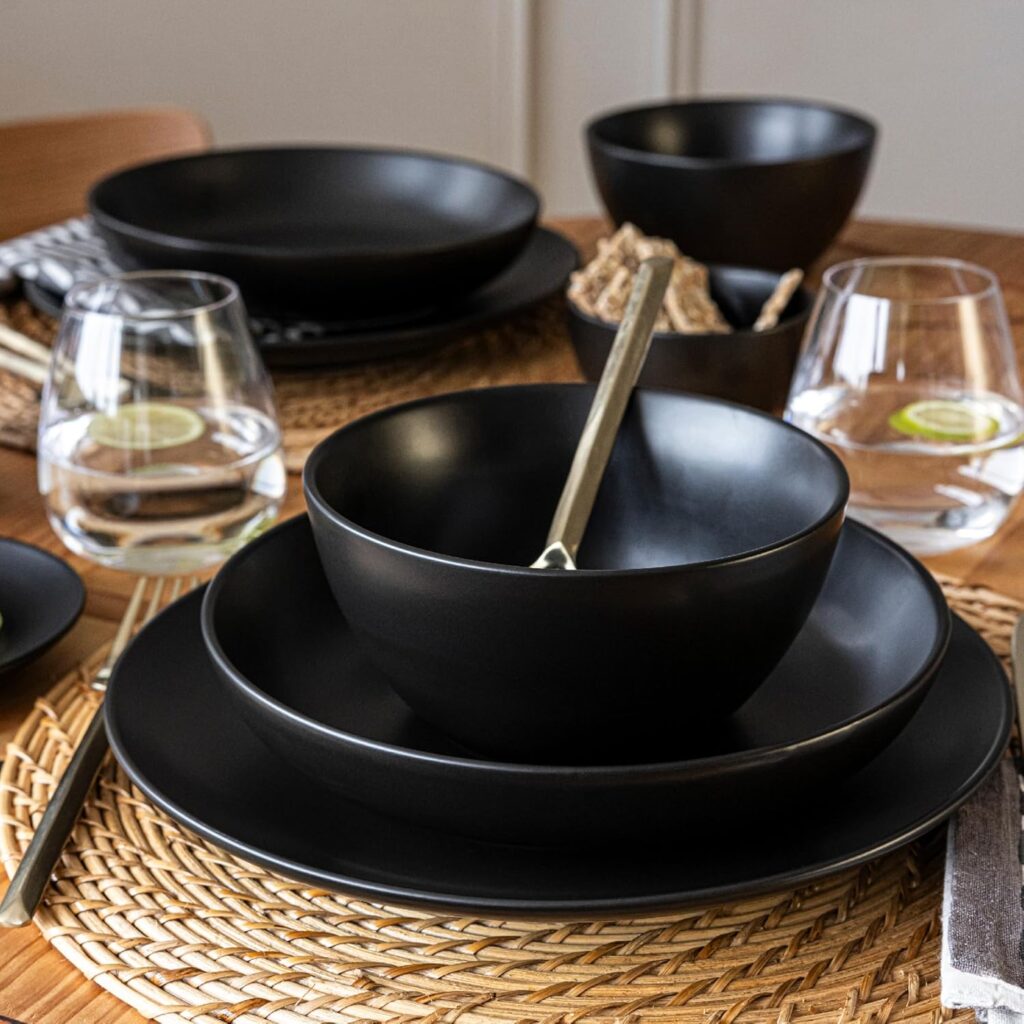
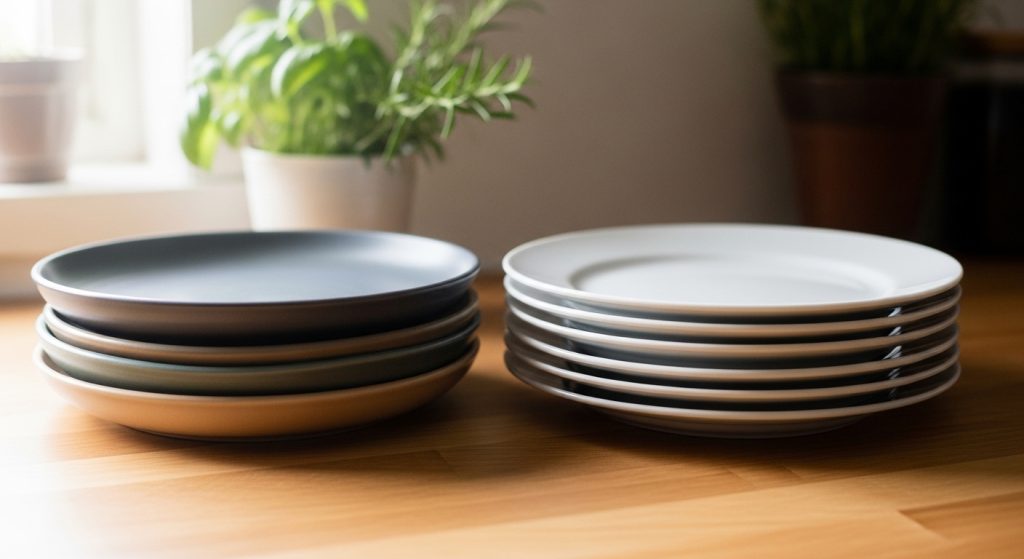
You’re hosting your first proper dinner party, proudly setting the table with your newly acquired stoneware dinner set.
The rustic charm and artisanal appeal are undeniable, but as you lift the hefty serving bowl, your wrists strain under its weight.
Later that evening, a distinct crack echoes through your kitchen as you transfer a piping hot dish straight from the oven to your cold stoneware plate.
While dramatic, this scenario illustrates the real-world disadvantages of stoneware dinnerware and the challenges many enthusiasts face.
While stoneware has earned its place in countless kitchens worldwide, it’s crucial to understand its limitations before making a significant investment.
What if these beautiful pieces aren’t as practical as they seem? Let’s explore the less-discussed aspects of stoneware dinnerware that might make you think twice.
DISADVANTAGES OF STONEWARE DINNERWARE
Below are the common cons of stoneware dishes:
It is heavy when compared to porcelain or Bone China
Susceptible to thermal shock
Susceptible to surface wear and tear
Storage needs protective layers to avoid chips and cracks
The risk of breakage is high
Not ideal for outdoor dining
It is not ideal for heavy usage like weddings or parties
– Difficulty in handling multiple pieces simultaneously
– Potential risks for elderly users or those with arthritis
2. Storage Challenges
– Requires stronger shelving support
– Limited stacking capability due to weight
– Increased risk of cabinet damage
According to ceramic manufacturers, stoneware pieces typically weigh about 30-40% more than their counterparts, making them less practical for daily use.
According to ceramic experts at the International Tableware Institute, proper care can extend the life of stoneware, but certain wear patterns are inevitable.
COST CONSIDERATIONS
The initial investment in quality stoneware can be substantial, with prices ranging from $40-$100 for a basic dinner set (this depends on the brand).
Additional considerations include:
– Replacement costs due to breakage
– Specialized cleaning products
– Professional restoration services when needed
STORAGE AND SPACE REQUIREMENTS
Given its bulky nature, stoneware presents unique storage challenges:
Earthenware is one of the oldest and most common types of ceramic dinnerware, made from clay fired at relatively low temperatures (1,800-2,100°F or 1,000-1,150°C).
Composition & Manufacturing:
Made from natural clay (often red, brown, or buff-colored)
Fired at lower temperatures than stoneware or porcelain
The resulting material is porous and less dense
Usually coated with a glaze to make it waterproof and food-safe
Characteristics:
Feature
Description
Appearance
Often has warm, rustic colors; can be any color when glazed
Weight
Medium weight; lighter than stoneware
Porosity
Porous (without glaze); absorbs liquids
Durability
Less durable; chips and cracks more easily
Texture
Thicker walls; more casual appearance
Translucency
Opaque; not translucent
Pros of Earthenware Dinnerware
✓ Affordable and budget-friendly ✓ Colorful glazes and decorative designs ✓ Warm, homey, rustic aesthetic ✓ Good heat retention ✓ Usually dishwasher and microwave safe (check labels)
Cons of Earthenware Dinnerware
✗ More fragile than stoneware or porcelain ✗ Chips and scratches are more easily ✗ Can crack with thermal shock ✗ Glaze can craze (develop fine cracks) over time ✗ Not as durable for daily heavy use
Popular Earthenware Brands:
Fiesta (USA)
Vietri (Italy)
Anthropologie dinnerware
Sur La Table collections
Many handmade artisan pottery pieces
Best For:
Casual everyday dining
Decorative serving pieces
Light to moderate use
Those who love colorful, artistic table settings.
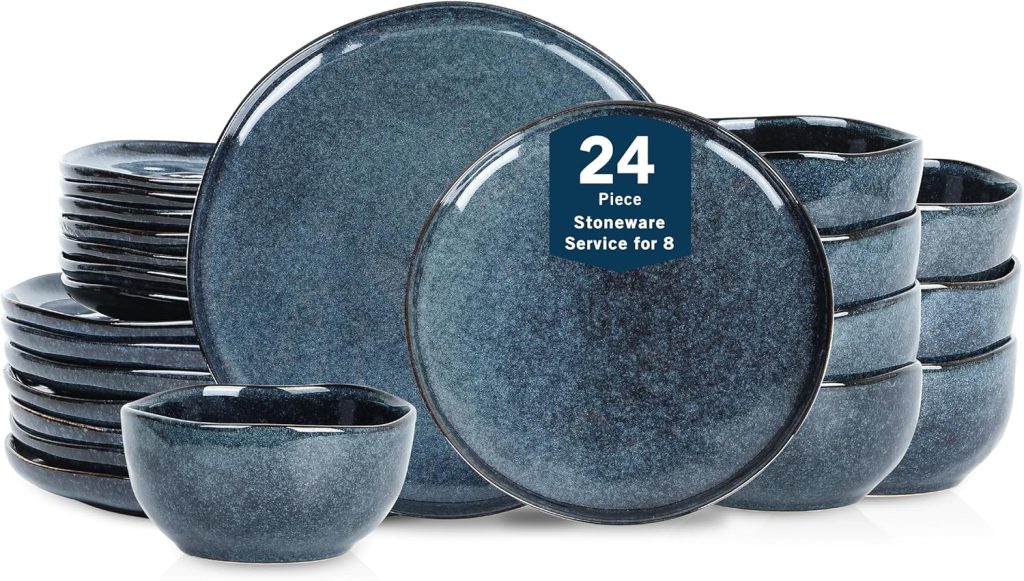
STONE LAIN MIRELLA STONEWARE DINNERWARE
An example of a durable and quality stoneware dinnerware brand is the Stone Lain Mirella stoneware dinnerware is a popular, affordable dinnerware collection known for its rustic, artisan-style aesthetic.
This collection features a distinctive reactive glaze finish that creates unique variations in color and texture on each piece, giving it a handcrafted, organic appearance.
The Mirella line is made from durable stoneware, which is fired at high temperatures to create strong, chip-resistant dinnerware suitable for everyday use.
It’s typically dishwasher-safe and microwave-safe, making it practical for modern households. The collection often comes in earthy, muted tones and is available in various set sizes.
Stone Lain dinnerware, including the Mirella collection, offers good value for budget-conscious shoppers who want stylish, functional dinnerware without premium pricing.
The reactive glaze means no two pieces are exactly alike, adding character to your table setting.
ENVIRONMENTAL IMPACT
While stoneware is natural, its production process raises some environmental concerns:
– Higher firing temperatures require more energy
– Increased shipping carbon footprint due to weight
– Limited recycling options
– Glaze chemical considerations
CARE AND MAINTENANCE CHALLENGES
Daily maintenance of stoneware requires specific attention:
Essential Care Requirements
1. Temperature Management
– Gradual heating/cooling is necessary
– No sudden temperature changes
– Limited microwave compatibility
2. Cleaning Protocols
– Hand-washing recommended
– Specific detergent requirements
– Air-drying considerations
PRACTICAL LIMITATIONS OF STONEWARE DINNERWARE
Understanding the practical limitations helps in making an informed decision:
– Not ideal for outdoor dining
– Challenging for buffet-style service
– Limited portability for potlucks
– Restricted use in commercial settings.
In addition, if you have any physical limitations that make lifting heavier dishes difficult, or if you frequently need to move large sets of dishes (like for catering).
Quick Answer Box: What are most plates made of? Ceramic (60% of households), porcelain (25%), melamine (10%), and glass (5%). Best overall: Porcelain for durability and elegance. Most unbreakable: Melamine and stainless steel. Safest for health: Porcelain and ceramic.
WHAT ARE PLATES MADE OF? (MOST COMMON MATERIALS)
Most dinner plates today are made from these 4 primary materials:
Melamine: Safe for cold foods, avoid hot foods above 160°F
Plastic: Choose BPA-free, avoid microwaving
Bamboo: Natural antibacterial, but may contain binding agents
10 TYPES OF DINNER PLATE MATERIALS (DETAILED GUIDE)
The various types of dinner plate materials common to every home are:
Porcelain
Ceramic
Stoneware
Melamine
Bone China
Wheat Straw
Bamboo
Glass
Stainless Steel
Plastic
Porcelain: The Elegant Classic
Think of porcelain plates as the tough, fancy dishes in your kitchen. They’re made by baking special clay at super-hot temperatures – hotter than a pizza oven!
Porcelain plates are special because they’re slightly see-through – hold one up to the light, and you might notice a faint glow, like when light passes through a thin white curtain.
They’re also really strong and hardly contain any toxic elements, so you don’t have to worry about chips when stacking them in the dishwasher.
Unlike regular plates, porcelain won’t hold onto food smells or stains, so your leftover curry won’t leave a mark.
Stoneware dishes bring a rustic, handcrafted feel to your table. Made from thick clay and fired at high temperatures, these plates are like the heavyweight champions of the kitchen.
Think of them as the cozy sweater of dinnerware – they keep food warm longer and have a natural, earthy look.
Key characteristics: – Dense, opaque material fired at high temperatures (1,200°C to 1,400°C) – Excellent heat retention properties – Naturally non-stick surface that develops over time – Distinctive rustic appearance with unique glazing options – Highly resistant to scratching and chipping (depends heavily on your use and maintenance culture) – Microwave, oven, and dishwasher safe – More substantial weight compared to other materials.
They’re super lightweight and nearly impossible to break when dropped, making them perfect for outdoor picnics and kids’ meals.
While they’re not microwave-safe (they can release harmful chemicals when heated), these dishes are dishwasher-friendly and come in fun, bright colors.
Think of them as the playground-tough dishes that can handle being tossed around but still look nice enough for a family dinner.
This is what has contributed to its remarkable strength and translucency. They are also dishwasher and microwave oven-safe.
Key characteristics: – Exceptional strength-to-weight ratio – Superior chip resistance despite its delicate appearance – Distinctive warm, creamy white colour – The highest level of translucency among all dinnerware materials – Fine, elegant rim detail – Superior thermal conductivity – Excellent resistance to thermal shock – Premium pricing reflecting its quality and craftsmanship.
Ceramic: The Versatile Standard
Ceramic plates are like the trusty old jeans of your kitchen.
Made from clay baked at moderate temperatures, these dishes, one of the healthiest dinnerware materials, don’t contain any harsh chemicals and are safe for all your meals if properly manufactured and meet FDA standards.
They’re great for everyday use, but can chip if dropped – like getting a small tear in your favorite shirt.
Available in countless colors and patterns, ceramic dishes are budget-friendly and keep food warm nicely. Just avoid sudden temperature changes to prevent cracking.
Key characteristics: – Moderate heat retention – Available in various price points – Resistant to scratching and cutlery marks – Generally microwave and dishwasher safe – Can be either glazed or unglazed – Suitable for both casual and formal dining.
Wheat Straw: The Sustainable Innovation
This innovative material represents a sustainable solution in modern dinnerware, made from agricultural by-products that would otherwise be waste.
Key characteristics of wheat straw dinnerware material include: – Biodegradable and eco-friendly composition – Lightweight yet durable construction – Microwave safe up to specific temperatures – Natural antibacterial properties – Break-resistant design – Ideal for both indoor and outdoor use – Available in soft, natural colours – Cost-effective pricing – Free from BPA and other harmful chemicals.
Bamboo: The Eco-Friendly Alternative
Bamboo plates have gained popularity among environmentally conscious consumers seeking sustainable alternatives to traditional materials.
Key characteristics: – Naturally renewable and sustainable resource – Antibacterial and antimicrobial properties – Lightweight and portable – Biodegradable at end of life – Resistant to water absorption – Available in both natural and dyed finishes – Ideal for casual dining and outdoor events – Not suitable for microwave use – Requires careful maintenance to maintain appearance.
Glass: The Pure Choice
Glass plates are like see-through warriors in your kitchen! They’re completely non-toxic and won’t absorb food smells or stains.
Key feature: you can watch your food heat up in the microwave through them. While they can break if dropped, they’re surprisingly sturdy for daily use.
The best part? You can spot any missed spots while washing instantly, making them super easy to keep clean.
Key characteristics: – Completely non-porous and hygienic – No chemical leaching concerns – Microwave and oven safe (check manufacturer specifications) – Easy to clean and maintain – Transparent for easy inspection – Available in various thicknesses and designs – Recyclable and environmentally friendly.
Stainless Steel: The Durable Performer
Think of stainless steel plates as the nearly indestructible tanks of your kitchen.
They’re practically unbreakable, won’t rust, and can handle any temperature without flinching.
Key feature: incredible durability. Perfect for outdoor dining and kids’ meals, they’ll likely outlast all your other plates.
The downside? They can’t go in the microwave, and they might show scratches over time. To know more about the best stainless steel brands, kindly read our guide on American-made stainless steel dishes.
Key characteristics: – Virtually unbreakable construction – Rust and corrosion resistant – Lightweight yet durable – Easy to sanitize – Suitable for outdoor use – Cannot be used in a microwave – May show scratches with heavy use.
Plastic: The Casual Option
These are like the casual, easy-going plates in your collection. Super lightweight and budget-friendly, plastic dishes are perfect for picnics and casual meals.
Key feature: extreme portability. While they’re not microwave-safe and can stain easily, they’re great for kids’ meals and outdoor events where breaking dishes would be a concern.
Just remember, they can warp in high heat.
Key characteristics: – Extremely lightweight and portable – Very affordable option – Available in numerous colors and designs – Break-resistant for safety – Can stain and retain odors – May warp with heat exposure – Choose BPA-free varieties for safety.
MATERIAL COMPARISON CHART
Material
Durability
Microwave & Dishwasher Safe
Best For
Porcelain
⭐⭐⭐⭐⭐
✅ Both
Everyday elegance
Ceramic
⭐⭐⭐
✅ Both
Budget-conscious
Stoneware
⭐⭐⭐⭐
✅ Both
Rustic charm
Melamine
⭐⭐⭐⭐
❌ Microwave / ✅ Dishwasher
Kids & outdoor
Bone China
⭐⭐⭐⭐⭐
✅ Both
Formal dining
Glass
⭐⭐⭐
✅ Both
Health-conscious
Stainless Steel
⭐⭐⭐⭐⭐
❌ Microwave / ✅ Dishwasher
Durability
Plastic
⭐⭐
❌ Microwave / ✅ Dishwasher
Casual use
Bamboo
⭐⭐⭐
❌ Microwave / ✅ Dishwasher
Eco-friendly
Wheat Straw
⭐⭐⭐
✅ Both*
Sustainable
*Limited temperature range for the microwave.
WHAT IS THE BEST DINNERWARE MATERIAL?
The ideal dinnerware material depends on your specific needs:
For Everyday Use:
Porcelain is often considered the best all-rounder because it offers: – Superior durability – Excellent heat retention – Elegant appearance – Versatility for all occasions
For Maximum Durability:
– Vitrified porcelain – Bone china – High-quality stoneware
Most dinner plates are made of ceramic (60%) and porcelain (25%). These clay-based materials offer the best balance of affordability, durability, and appearance for everyday use.
What is the most durable dinnerware material?
Vitrified porcelain and bone china are the most durable materials, followed by high-quality stoneware. For unbreakable options, choose melamine or stainless steel.
Which plate material is safest for health?
Porcelain and ceramic (meeting FDA standards) are the safest materials. They’re non-porous, don’t leach chemicals, and resist bacterial growth.
What are unbreakable plates made of?
Unbreakable plates are typically made of melamine (plastic composite), stainless steel, or heavy-duty plastic. These materials can withstand drops and impacts.
Can dinner plates go in the oven?
Porcelain, ceramic, stoneware, and glass plates are generally oven-safe. Always check manufacturer specifications. Avoid melamine, plastic, and some decorated plates in ovens.
What is the best plate material for everyday use?
Porcelain offers the best combination of durability, elegance, and practicality for daily use. It’s microwave and dishwasher-safe while maintaining an upscale appearance.
What are plates made out of?
Plates are primarily made from clay-based materials (ceramic, porcelain, stoneware), synthetic materials (melamine, plastic), metals (stainless steel), glass, or natural materials (bamboo, wheat straw).
What are most plates made of?
Most household plates are made of ceramic or porcelain. Ceramic is the most common due to its affordability, while porcelain is preferred for its superior durability and elegant appearance.
What is the healthiest dinnerware material?
The healthiest dinnerware materials are porcelain, ceramic (FDA-approved), and glass. These materials are non-reactive, don’t contain harmful chemicals, and maintain food safety standards.
CONCLUSION
Your choice of dinner plate material reflects not just your style but your lifestyle.
Whether you’re drawn to the timeless elegance of porcelain, the durability of melamine, or the rustic charm of stoneware, understanding these materials helps you make an informed decision that enhances your dining experience.
Looking to upgrade your dinnerware? Consider starting with a versatile material that matches your primary usage needs, then perhaps expanding your collection to include specialty pieces for specific occasions.
The best dinner plate material depends on your specific needs:
Daily use: Porcelain
Unbreakable: Melamine or stainless steel
Health-focused: Porcelain or ceramic
Budget: Ceramic
Formal: Bone china
Eco-friendly: Bamboo or wheat straw
Consider your lifestyle, budget, and dining habits when choosing. Most households benefit from having 2-3 different materials for various occasions.
Imagine you’re hosting a dinner party, and as you’re setting the table, that familiar anxiety creeps in.
Will your plates survive the evening? Between your brother-in-law’s notorious butterfingers and your friend’s energetic toddler, ordinary dinnerware feels like a risky proposition.
This scenario plays out in homes across America, driving many to seek more durable alternatives.
Luminarc vs Corelle – two giants in the world of resilient dinnerware that have been battling it out for the top spot in our kitchen cabinets.
But which one truly deserves that precious real estate in your home? Let’s find out.
THE HERITAGE BEHIND THE BRANDS
Corelle: American Innovation Meets Durability
Corelle, born from American ingenuity, emerged in the 1970s when Corning Incorporated revolutionized dinnerware with its patented Vitrelle® glass technology.
What started as a spin-off from a space program material has become a household name, particularly known for its signature lightweight yet nearly indestructible plates.
Luminarc: French Elegance in Glass Making
On the other side of the Atlantic, Luminarc, part of the prestigious Arc International, has been crafting glassware since 1948.
If you’re curious about their earlier iterations, you might want to explore the history of Vaisselle Arcopal.
MATERIAL MATTERS: WHAT SETS THEM APART
Corelle’s Unique Construction
– Made with Vitrelle® glass: a three-layer construction
– Two layers of glass laminated to a core layer
– Thermal shock resistant
– Incredibly lightweight
Luminarc’s Glass Innovation
– Tempered soda-lime Opal glass construction
– Impact and thermal shock resistant
– Slightly heavier than Corelle
– Various thickness options available
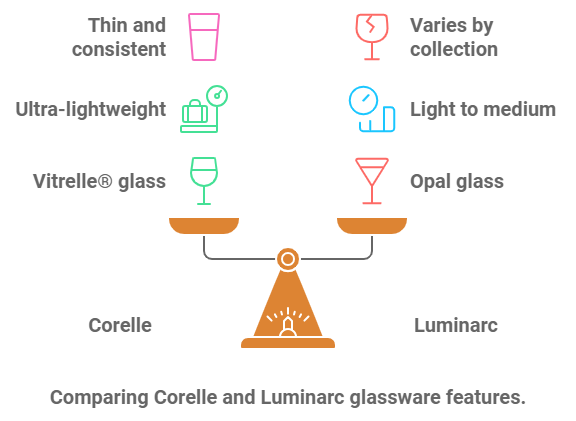
Feature
Corelle
Luminarc
Material
Vitrelle® (3-layer glass)
Tempered soda-lime Opal glass
Weight
Ultra-lightweight
Light to medium
Thickness
Thin and consistent
Varies by collection
Break Resistance
Very high
High
Thermal Shock Resistance
Excellent
Good
Find Your Perfect Dinnerware Match
Your Perfect Match
Copied to clipboard!
DURABILITY FACE-OFF: WHICH BRAND STANDS THE TEST OF TIME?
According to Consumer Reports, both brands excel in durability, but they shine in different areas.
Corelle’s legendary chip and break resistance have earned it a special place in American homes, while Luminarc’s robust construction has made it a favorite in both residential and commercial settings.
Corelle’s Strength
– Nearly unbreakable under normal use
– Chip and scratch-resistant
– Backed by a [3-year warranty]
– Stackable without risk of damage
Luminarc’s Resilience
– Impact resistant
– Less likely to develop micro-scratches
– Maintains clarity over time
– Commercial-grade durability
Style and Design Options
Corelle’s Aesthetic Appeal
– Clean, contemporary patterns
– Classic white options
– Limited but timeless color palette
– Consistent design across pieces
Luminarc’s Design Range
– Modern and traditional styles
– Wider color selection
– Textured options available
– Mix-and-match possibilities
Price Point Analysis
Based on Safekitchn’s market research, here’s how they compare:
Corelle
– Mid to premium pricing
– Higher initial investment
– Excellent long-term value
– Available in sets and individual pieces
Luminarc
– Generally, more affordable
– Budget-friendly options
– Good value for money
– Flexible purchasing options
PRACTICAL CONSIDERATIONS: FROM KITCHEN TO TABLE
Microwave Safety
Both brands excel in microwave safety, but with slight differences:
– Corelle: Completely microwave safe
– Luminarc: Microwave safe with proper handling
Dishwasher Durability
According to tests by Good Housekeeping, both brands maintain their appearance after hundreds of wash cycles, although some users have complained of Corelle dishes turning brown because of the dishwasher.
ENVIRONMENTAL IMPACT AND SUSTAINABILITY
Corelle’s Green Initiative
– Long lifespan reduces waste
– Made in the USA, reducing transport emissions
– Recyclable packaging
– Energy-efficient manufacturing process
Luminarc’s Eco-Efforts
– Sustainable production practices
– Glass is 100% recyclable
– European manufacturing standards
– Reduced carbon footprint initiatives
MAKING YOUR CHOICE: DECISION FACTORS
Consider these key aspects when deciding:
1. Usage Pattern
– Daily family use
– Formal entertaining
– Commercial application
2. Storage Space
– Stackability needs
– Cabinet space
– Weight considerations
3. Aesthetic Preferences
– Design Variety
– Color options
– Pattern longevity
4. Budget Constraints
– Initial investment
– Replacement costs
– Set vs. individual pieces
THE VERDICT
Both Luminarc and Corelle offer exceptional quality, but your choice might depend on specific needs:
Choose Corelle if:
– Lightweight is a priority
– You prefer American-made products
– Maximum break resistance is essential
– You want a guarantee of long-term durability
Choose Luminarc if:
– Budget is a primary concern
– You want more design variety
– European style appeals to you
– You need commercial-grade options
CARE AND MAINTENANCE TIPS FOR CORELLE AND LUMINARC DINNERWARE
To ensure the longevity of either brand:
1. Avoid extreme temperature changes
2. Stack carefully with protective layers
3. Use appropriate cleaning products
4. Handle with reasonable care
FAQ SECTION
Q: Can you microwave Luminarc plates?
A: Yes, Luminarc plates are microwave-safe when used according to instructions.
Q: Which dinnerware lasts the longest?
A: Both brands are known for longevity, but Corelle often edges out with its three-layer construction.
Q: Is Luminarc glass safe?
A: Yes, Luminarc uses food-grade, safety-tested glass that meets international standards.
FINAL THOUGHTS
Whether you choose Luminarc or Corelle, you’re investing in quality dinnerware that will serve you well for years to come.
Consider your specific needs, budget, and style preferences to make the best choice for your home.
Remember, the best dinnerware is the one that fits seamlessly into your lifestyle while bringing joy to your daily dining experience.
Ready to explore more dinnerware options? If you’re also considering Arcopal dinnerware, check out our detailed Arcopal vs Corelle comparison to see how these French and American brands stack up.”
Tired of replacing chipped plates or serving meals on uninspiring dinnerware?
You’re not alone. Many home cooks and entertainers are on the hunt for that perfect balance of elegance and durability in their tableware.
The Pillivuyt Porcelain France brand, with a heritage dating back to the 18th century, Pillivuyt Porcelain offers more than just plates and bowls.
It’s a brand that combines French culinary tradition with unmatched durability and timeless style.
Whether you’re a seasoned chef or a casual home cook, the Pillivuyt Brand provides dinnerware that can withstand daily use while still turning heads at your next dinner party.
But what makes Pillivuyt stand out in the crowded world of dinnerware? Is it worth the investment? And how does it compare to other French porcelain brands?
In this guide, we’ll explore the world of Pillivuyt Porcelain, from its rich history and diverse patterns to practical care tips and value propositions.
Let’s discover why Pillivuyt has been gracing tables for over two centuries.
THE LEGACY OF PILLIVUYT: A TASTE OF FRENCH HERITAGE
Pillivuyt isn’t just another porcelain brand; it’s a piece of French history that you can hold in your hands.
Founded in 1818, this venerable company has been turning heads and gracing tables for over two centuries. But what makes Pillivuyt stand out in a sea of ceramic contenders?
THE PORCELAIN PERFECTIONISTS
Pillivuyt’s reputation is built on a foundation of uncompromising quality. Each piece is a testament to the brand’s commitment to excellence, crafted with a level of precision that would make a Swiss watchmaker nod in approval.
The result? Porcelain that’s not just durable, but downright indestructible (well, almost).
A FRENCH AFFAIR WITH FUNCTIONALITY
While some may argue that French cuisine is all about presentation, Pillivuyt proves that form and function can coexist in perfect harmony.
Their pieces aren’t just pretty faces; they’re workhorses in the kitchen, ready to go from freezer to oven to table without breaking a sweat (or, more importantly, themselves).
PILLIVUYT PORCELAIN: WORTH ITS WEIGHT IN GOLD?
When it comes to Pillivuyt, the question isn’t just about price—it’s about value. Sure, you could stock your kitchen with bargain-bin plates, but would they stand the test of time (and your mother-in-law’s scrutiny)?
THE INVESTMENT PIECE YOU’LL USE
Unlike that designer handbag collecting dust in your closet, Pillivuyt porcelain is an investment you’ll enjoy daily.
Its durability means you won’t be replacing it every other year, and its timeless design ensures it’ll never go out of style. It’s the little black dress of the dinnerware world.
COLLECTOR’S CORNER
For those with a penchant for porcelain, Pillivuyt pieces can become valuable collectibles.
Vintage patterns and limited editions can fetch a pretty penny among enthusiasts. Who knew your dinner plates could double as a retirement fund?
DECODING PILLIVUYT PORCELAIN MARKS: A MINI DETECTIVE GAME
Ever flipped over a Pillivuyt plate and felt like you were deciphering ancient runes? Fear not, amateur archaeologists! Pillivuyt marks are like secret handshakes in the world of fine dining.
The classics timeless white: The quintessential Pillivuyt look is pure, unadulterated white. It’s the little black dress of dinnerware—chic, versatile, and always in style.
Plus, it makes your homemade ratatouille look like it came straight from a Parisian bistro.
Pattern play: For those who like a little jazz with their dinner, Pillivuyt offers patterns ranging from subtle embossments to more elaborate designs.
It’s like choosing between a Monet and a Picasso, but for your dining table.
THE PILLIVUYT EXPERIENCE: MORE THAN JUST PLATES
Pillivuyt isn’t content with just conquering your dinner table—it’s after world domination (of your kitchen, at least).
From Oven to Table: There are various versatile bakeware options; see our recommendations on the Pillivuyt guide on Bakeware.
Why dirty multiple dishes when one can do the trick? Pillivuyt’s oven-to-table pieces are the multitaskers of the culinary world.
They’re like the Swiss Army knives of dinnerware, minus the bottle opener.
It’s like comparing champagne to sparkling wine—they might look similar, but connoisseurs know the difference.
CARE AND MAINTENANCE: TREATING YOUR PILLIVUYT RIGHT
Your Pillivuyt porcelain is like a loyal friend—treat it well, and it’ll stick with you through thick and thin (and all those experimental recipes).
Dishwasher Dilemma: Good news for the dish-washing averse: Pillivuyt is dishwasher safe. It’s like having a suit that’s machine washable—practical luxury at its finest.
Microwave Miracle: Need to reheat last night’s coq au vin? Pillivuyt’s got your back. It’s microwave-safe, proving that even classic French designs can keep up with modern conveniences.
THE PILLIVUYT PROMISE: WHY IT’S MORE THAN JUST DINNERWARE
Choosing Pillivuyt isn’t just about buying plates—it’s about investing in a legacy. It’s the difference between eating a meal and dining.
In an age of disposable everything, Pillivuyt stands as a beacon of sustainability. Its durability means less waste, making it an eco-friendly choice for the environmentally conscious epicure.
Every Pillivuyt piece brings a touch of French elegance to your table. It’s like having a little piece of Paris in your dining room, minus the accordion player and the Eiffel Tower view.
FREQUENTLY ASKED QUESTIONS ABOUT PILLIVUYT PORCELAIN
Still have questions about Pillivuyt? You’re not alone. Let’s address some of the most common queries:
Question: How do you pronounce Pillivuyt in French?
Answer: Ah, the eternal struggle of French pronunciation. It’s “Pee-lee-vwee” – say it with a slight pout, and you’ll nail it every time.
Question: Is Pillivuyt dishwasher safe?
Answer: Indeed, it is! Pillivuyt can handle the heat of your oven and the spray of your dishwasher. It’s like the James Bond of dinnerware – unshakeable under pressure.
Question: What is the most famous French porcelain?
Answer: While Pillivuyt certainly ranks high, France has gifted the world with several renowned porcelain brands. Limoges, Sèvres, and Apilco porcelain are also notable contenders in the porcelain pantheon.
Question: What is the difference between porcelain and bone china?
Answer: Think of porcelain as the strong, silent type, and bone china as its delicate cousin. Porcelain, like Pillivuyt, is made from kaolin clay and fired at high temperatures, resulting in a durable, non-porous material.
Bone china includes bone ash in its composition, making it thinner and more translucent. Both are elegant, but porcelain is generally more robust for everyday use.
Question: Are all Limoges made in France?
Answer: While Limoges is synonymous with fine French porcelain, not all pieces bearing the Limoges name are made in France.
Authentic Limoges porcelain must be produced in the Limoges region of France. It’s like champagne – it’s only real champagne if it’s from the Champagne region.
EXPLORING THE WORLD OF FRENCH PORCELAIN
While we’ve been singing the praises of Pillivuyt, it’s worth noting that France has a rich tradition of porcelain craftsmanship.
If you’re interested in expanding your collection or simply want to explore other options, especially in terms of bakeware, consider the Baking Brilliance of Apilco French Porcelain in the Kitchen.
Discover how Apilco, another stalwart of French porcelain, compares to Pillivuyt. It’s like comparing fine wines – both excellent, but each with its unique bouquet.
Explore how French porcelain brands like Apilco are revolutionizing bakeware. From quiche to crème brûlée, these pieces are ready to help you channel your inner French chef.
Whether you’re team Pillivuyt, an Apilco aficionado, or simply a lover of fine French craftsmanship, there’s a world of porcelain out there waiting to be discovered. So why not dive in? Your dining table (and your taste buds) will thank you.
CONCLUSION: THE PLATE IS LESS ORDINARY
In a world of mass-produced mediocrity, Pillivuyt Porcelain France stands out as a beacon of quality, style, and French savoir-faire.
Whether you’re a seasoned chef or a microwave maestro, Pillivuyt offers something for every table and every taste.
So, why settle for the ordinary when you can dine with the extraordinary? Elevate your dining experience with Pillivuyt—because life’s too short for boring plates.
Ready to add a touch of French elegance to your table? Explore the world of Pillivuyt and discover why it’s been the choice of discerning diners for over two centuries. Bon appétit!
Imagine hosting a dinner party where your tableware steals the show. Picture delicate, translucent plates that catch the light just so, making your culinary creations look like works of art.
Now, what if I told you this tableware isn’t just beautiful, but also incredibly durable? Welcome to the world of Apilco Porcelain France, where elegance meets practicality most delightfully.
THE ALLURE OF APILCO: MORE THAN JUST PLATES
When it comes to fine dining, the French have always been ahead of the curve. It’s no surprise, then, that some of the world’s most coveted porcelain comes from the land of haute cuisine.
Apilco, a name that rolls off the tongue with a certain je ne sais quoi, has been gracing tables with its presence since 1826. But what makes this brand so special?
A LEGACY WRITTEN IN PORCELAIN
Apilco’s story begins in the picturesque town of Mehun-sur-Yèvre, nestled in the heart of France.
For nearly two centuries, skilled artisans have been crafting porcelain that marries traditional techniques with modern innovation.
The result? Tableware that’s as much a conversation starter as it is a vessel for your favourite dishes.
In an age where outsourcing is the norm, Apilco has stayed true to its roots, continuing to produce its signature porcelain in the very place where it all began.
This commitment to French craftsmanship is part of what sets Apilco apart in a sea of mass-produced alternatives.
THE APILCO ADVANTAGE: WHY CHEFS AND HOME COOKS ALIKE SWEAR BY IT
Now, you might be thinking, “It’s just porcelain, right? How different can it be?” Oh, my friend, prepare to have your mind blown.
Apilco isn’t just any porcelain; it’s a cut above the rest. Let’s dive into what makes it so special:
Durability That Defies Expectations: Apilco porcelain is known for its exceptional strength. It’s resistant to chipping and scratching, making it ideal for everyday use.
But don’t just take my word for it, a study on porcelain durability found that high-quality porcelain like Apilco can withstand up to 2,000 uses without showing signs of wear.
2. Temperature Tolerance: Here’s where things get interesting. Apilco porcelain isn’t just for serving; it’s a kitchen workhorse.
But is Apilco porcelain oven safe? You bet it is. These dishes can handle temperatures from freezing to a scorching 250°C (482°F).
This versatility is particularly evident in Apilco bakeware, which seamlessly transitions from oven to table.
3. Timeless Design: Apilco’s designs are the little black dress of the tableware world – eternally chic and always appropriate.
From the classic white of the Tuileries collection to the subtle elegance of their patterned pieces, there’s an Apilco design for every taste.
4. Eco-Friendly: In an age where sustainability is key, Apilco shines. Porcelain is a natural material, and its durability means less waste in the long run.
Plus, Apilco’s production methods adhere to strict environmental standards.
A CLOSER LOOK: APILCO PORCELAIN FRANCE OVEN-SAFE FEATURES
Let’s talk about that oven-safe feature for a moment, shall we? It’s not just a neat party trick; it’s a game-changer in the kitchen.
Imagine taking your dish straight from the oven to the table, all in the same elegant vessel. No more juggling multiple dishes or worrying about transfers ruining your presentation.
But can Apilco go in the freezer, you ask? Indeed, it can! This temperature versatility opens up a world of culinary possibilities.
Prep your meals in advance, store them in the freezer, and pop them straight into the oven when you’re ready. It’s like having a secret weapon in your kitchen arsenal.
THE APILCO COLLECTION: A FEAST FOR THE EYES
Now that we’ve covered the practical aspects, let’s indulge in a little eye candy, shall we? Apilco’s collections are as diverse as they are beautiful. Let’s explore some fan favourites:
The Tuileries collection is Apilco’s crown jewel. Named after the famous Parisian gardens, this line embodies timeless French elegance.
The pure white porcelain features a subtle relief pattern that catches the light beautifully, adding depth and interest to your table setting without overwhelming your culinary creations.
APILCO PORCELAIN GREEN PLATES: A POP OF COLOUR
For those who crave a bit of colour, Apilco’s green plates are a breath of fresh air.
These pieces bring a touch of nature to your table, perfect for everything from springtime brunches to cozy winter suppers.
The soft, sage-like hue complements a wide range of cuisines, making your food look even more appetizing.
APILCO PORCELAIN VINTAGE: A NOD TO NOSTALGIA
If you’re a fan of all things retro, Apilco’s vintage-inspired pieces will make your heart skip a beat.
These designs harken back to the golden age of French dining, with delicate patterns and soft hues that evoke a sense of nostalgia.
It’s like having a piece of history on your table, but with all the modern conveniences of Apilco’s durable porcelain.
APILCO VS. THE COMPETITION: HOW DOES IT STACK UP?
Now, I know what you’re thinking. “This all sounds great, but how does Apilco compare to other brands?”
Both Apilco and Pillivuyt Porcelain are heavyweights in the French porcelain world, each with a loyal following.
While both offer exceptional quality, there are some key differences:
FEATURE
APILCO
PILLIVUYT
Founded
1826
1818
Design Style
More diverse, from classic to modern
Primarily classic, timeless designs
Temperature Range
-30°C to 250°C (-22°F to 482°F)
-25°C to 300°C (-13°F to 572°F)
Signature Collection
Tuileries
Plissé
As you can see, both brands have their strengths. Apilco tends to offer a wider range of designs, while Pillivuyt boasts a slightly higher temperature tolerance.
Ultimately, the choice between Apilco bakeware and Pillivuyt bakeware often comes down to personal aesthetic preference and specific cooking needs.
Investing in Apilco porcelain is like buying a high-quality garment; with proper care, it can last a lifetime. Here are some tips to keep your Apilco looking its best:
1. Dishwasher Safe, But Handle with Care: While Apilco is dishwasher safe, avoid overcrowding to prevent chips and cracks.
2. Temperature Transitions: Although Apilco can handle extreme temperatures, avoid sudden changes. Let hot dishes cool slightly before refrigerating or freezing.
3. Stain Prevention: Rinse off coffee, tea, or red wine stains promptly to prevent discoloration.
4. Storage: Stack plates with care, using felt separators, if possible, to prevent scratches.
5. Avoid Metal Utensils: While Apilco is scratch-resistant, using wooden or silicone utensils can help maintain its pristine appearance.
THE VERDICT: IS APILCO WORTH THE INVESTMENT?
After diving deep into the world of Apilco porcelain, one question remains: Is it worth the investment? In my humble opinion, the answer is a resounding yes. Here’s why:
1. Durability: The longevity of Apilco porcelain means you’ll likely spend less in the long run, replacing your dinnerware less frequently.
2. Versatility: From freezer to oven to table, Apilco’s temperature resistance makes it incredibly versatile.
3. Timeless Style: Apilco’s designs are classic enough to withstand changing trends, meaning you won’t feel the need to replace them simply because they’ve gone out of style.
4. Made in France: By choosing Apilco, you’re supporting European craftsmanship and traditional manufacturing techniques.
5. Eco-Friendly: The durability and sustainable production methods of Apilco porcelain make it an environmentally conscious choice.
FREQUENTLY ASKED QUESTIONS ABOUT APILCO PORCELAIN FRANCE
To help you make an informed decision about Apilco porcelain, we’ve compiled answers to some of the most frequently asked questions:
Q: What is French porcelain called?
A: French porcelain is often referred to as “Limoges porcelain,” named after the city of Limoges, which has been a major porcelain production center since the late 18th century. However, this term specifically refers to porcelain made in the Limoges region. Apilco, while French, is not Limoges porcelain as it’s made in a different region of France.
Q: What is the most expensive porcelain brand?
A: While Apilco is considered high-quality, it’s not typically the most expensive porcelain brand. Some of the most expensive porcelain brands include Meissen, Sèvres, and Royal Copenhagen. The value of porcelain can vary greatly depending on factors such as age, rarity, and craftsmanship.
Q: What is the best quality porcelain?
A: The “best” quality porcelain can be subjective and depend on specific needs. However, Apilco is widely regarded as one of the top porcelain brands due to its durability, chip resistance, and ability to withstand extreme temperatures. Other highly regarded brands include Pillivuyt, Bernardaud, and Wedgwood.
Q: Is the Apilco dishwasher safe?
A: Yes, Apilco porcelain is dishwasher safe. However, as with all fine dinnerware, it’s recommended to handle it with care and avoid overcrowding in the dishwasher to prevent chips or cracks.
Q: Is porcelain better than glass plates?
A: Porcelain, including Apilco, generally offers several advantages over glass plates:
1. Durability: Porcelain is more resistant to chipping and breaking than glass.
3. Versatility: Porcelain can typically go from freezer to oven to table, which isn’t always true for glass.
4. Aesthetic: Many find the look of porcelain more elegant and versatile for various table settings.
However, glass plates have their benefits, such as being generally less expensive and allowing you to see through them, which can be useful in some cooking and serving situations.
A: While both ceramic and porcelain are types of pottery, there are some key differences:
1. Composition: Porcelain is made from more refined clay and is fired at higher temperatures, resulting in a denser, less porous material.
2. Durability: Porcelain is typically more durable and chip-resistant than ceramic.
3. Temperature resistance: Porcelain generally has better heat resistance and can withstand higher temperatures.
4. Appearance: Porcelain tends to have a more translucent, delicate appearance compared to ceramic.
5. Cost: Porcelain is usually more expensive due to its higher quality and more complex manufacturing process.
Apilco, being porcelain, offers the benefits of increased durability and temperature resistance compared to standard ceramic cookware.
CONCLUSION: ELEVATE YOUR DINING EXPERIENCE WITH APILCO
In a world where fast fashion extends to our kitchens, Apilco stands as a beacon of quality and timeless elegance.
Whether you’re a professional chef or a home cook with a penchant for the finer things in life, Apilco porcelain offers a blend of beauty and functionality that’s hard to beat.
So, the next time you’re setting your table or preparing a meal, consider the impact that Apilco could have on your dining experience.
After all, life’s too short for mediocre tableware. Why not elevate your everyday moments with a touch of French elegance?
You’re standing in a kitchen store or scrolling through an endless product page, trying to decide between two options that both look perfectly capable of handling daily life.
One is elegant and refined. The other is thick, chunky, and built like it means business. Is porcelain stronger than stoneware?
It’s a question worth getting right before you spend money on a full dinnerware set you’ll use every single day for years.
And here’s the thing that surprises most buyers: the material that looks tougher isn’t always the one that performs better under pressure.
The technical answer is a little more complex than it appears, and it changes depending on what kind of “strong” you actually need.
Is Porcelain Stronger Than Stoneware?
Yes, porcelain is technically stronger than stoneware.
Porcelain is fired at higher temperatures (between 1,200°C and 1,400°C), which causes complete vitrification of its clay body, resulting in a denser, harder, and less porous material than stoneware.
On the Mohs hardness scale, porcelain typically scores between 6 and 7, compared to stoneware’s 5 to 6.
This means porcelain resists scratching and surface abrasion better than stoneware.
However, stoneware’s greater thickness gives it superior impact resistance in real-world use — it absorbs the force of drops and knocks more forgivingly than thinner porcelain pieces.
So while porcelain wins on material hardness and density, stoneware often holds its own in everyday durability through sheer build and bulk.
What Is Porcelain?
Composition and Raw Materials
Porcelain starts with kaolin — a highly refined, white-burning clay prized for its purity and low iron content.
This is blended with feldspar, which acts as a flux to lower the melting point of the mixture, and quartz or silica, which adds structural stability.
The precise ratios of these three components vary between manufacturers and porcelain types, but the defining characteristic is always the high kaolin content and the refined nature of the raw materials.
This refined starting point is what separates porcelain from earthenware and stoneware at a fundamental compositional level before a single piece ever enters a kiln.
Manufacturing and Firing Process
Porcelain is fired at extreme temperatures — typically between 1,200°C and 1,400°C, depending on the type.
At these temperatures, the feldspar in the clay body melts and fills the spaces between clay particles, creating a dense, glassy structure through a process called vitrification.
The result is a material that is essentially a ceramic glass hybrid: hard, non-porous, and translucent in thin sections.
Understanding vitrified porcelain in detail is useful if you want to appreciate exactly why porcelain behaves differently from other ceramics at the material science level.
The firing process is where its exceptional properties originate.
Key Characteristics of Porcelain
Porcelain is dense, non-porous, and exceptionally smooth.
Its non-porous surface means liquids, oils, and food pigments cannot penetrate it, making it highly resistant to staining and easy to clean.
Despite often being produced in thinner profiles than stoneware, it achieves comparable or superior strength through material density rather than physical mass.
The surface has a fine, refined texture with a bright white or near-white appearance.
It resists scratching from cutlery better than most other ceramic types and holds its finish well over years of regular use.
What Is Stoneware?
Composition and Raw Materials
Stoneware is made from natural clay blends that are less refined than kaolin-based porcelain clays.
The clay body often includes a mix of different clay types — silica-rich clays, earthen clays, and various mineral additives like iron oxide, which gives many stoneware pieces their characteristic warm gray, tan, or brown tones.
The raw materials are more abundant and less processed than porcelain ingredients, which is one reason stoneware is generally more affordable to produce.
The mineral content in the clay body also contributes to stoneware’s characteristic visual variation and the earthy, organic aesthetic that many people find appealing.
Manufacturing and Firing Process
Stoneware is fired at high temperatures — typically between 1,180°C and 1,280°C — which is lower than the peak temperatures used for porcelain but still high enough to produce significant sintering of the clay body.
This firing produces a dense, stone-like ceramic that is partially vitrified but not to the same degree as porcelain.
The result retains more of the natural texture and character of the original clay.
Stoneware pieces are typically cast or thrown with thicker walls than porcelain, which compensates for their slightly lower density with physical mass and bulk.
Key Characteristics of Stoneware
Stoneware is heavy, solid, and visually substantial. It has an opaque, earthy appearance with a matte or semi-matte texture that suits casual, rustic, and contemporary table settings.
When properly glazed, it is non-porous and stain-resistant.
Unglazed stoneware retains some porosity, which can make it more vulnerable to staining and moisture absorption, something to be aware of with decorative or partially unglazed pieces.
Its thick walls and dense body make it remarkably resistant to everyday impacts, and its thermal mass means it holds heat well, making it a favorite for baked dishes, soups, and slow-cooked meals.
Is Stoneware Ceramic?
Yes, stoneware is absolutely a type of ceramic. The term “ceramic” is a broad category covering all materials made from clay that have been shaped and hardened by heat.
This includes earthenware, stoneware, porcelain, bone china, and terracotta.
Stoneware sits in the middle of the ceramic spectrum: fired at higher temperatures than earthenware (giving it superior density and durability) but at lower temperatures than porcelain (resulting in slightly less vitrification).
So when you see stoneware marketed separately from “ceramic” dinnerware, that’s a branding distinction rather than a scientific one.
Technically and compositionally, stoneware is ceramic through and through.
Porcelain vs Stoneware: Strength Comparison
Density and Material Structure
Porcelain’s compact ceramic structure, achieved through high-temperature vitrification, gives it a denser, harder material body than stoneware.
At the microscopic level, porcelain has fewer voids and air pockets within its structure because the feldspar has melted and filled those spaces.
Stoneware’s thicker physical body compensates for its slightly less complete vitrification with mass.
Think of it this way: porcelain achieves strength through material quality, while stoneware achieves durability through material quantity.
Both approaches work; they just produce different real-world performance profiles.
Resistance to Chips and Cracks
Porcelain’s hardness makes it resistant to surface scratching and abrasion, but its typically thinner profile means it can chip at the rim or crack if dropped on a hard surface.
The harder a material, the more brittle it tends to be under sharp impact — this is a fundamental trade-off in material science.
Stoneware’s impact resistance comes from its thickness and the slight flexibility that its less-vitrified structure provides.
It absorbs the energy of a knock or drop better than thin porcelain, which is why many households find stoneware survives the day-to-day realities of family kitchens more forgivingly.
Heat Resistance and Thermal Stability
Both porcelain and stoneware handle heat well, but with different strengths.
Porcelain’s dense, non-porous structure makes it excellent for oven use and resistant to thermal shock in controlled conditions.
Stoneware’s thermal mass, the ability to absorb and retain heat slowly, makes it particularly valuable for baking, casseroles, and dishes that benefit from even, sustained heat.
Neither material should be subjected to sudden extreme temperature changes (moving directly from freezer to oven, for example), but stoneware is generally considered more forgiving of the temperature variations that occur in normal everyday cooking.
Stoneware vs Porcelain Scratches
Porcelain wins clearly on scratch resistance. Its higher Mohs hardness rating means cutlery, serving utensils, and general contact are less likely to leave marks on a porcelain surface than on stoneware.
The glassy, vitrified surface of porcelain is simply harder than stoneware’s slightly softer ceramic body.
Stoneware, particularly in matte or unglazed finishes, can show cutlery marks and surface scratches more readily over time.
That said, a quality glaze on stoneware significantly improves its scratch resistance — the glaze acts as a protective layer over the softer clay body underneath.
For households that notice and care about surface marks, porcelain’s scratch resistance is a meaningful practical advantage.
Stoneware vs Porcelain Microwave
Both porcelain and stoneware are generally microwave-safe, but with important caveats.
Plain, undecorated porcelain and stoneware handles microwave use well.
The issue arises with metallic glazes, gold or silver trim, or metallic oxide pigments in the decoration, which can cause arcing in a microwave and should never be used in one regardless of the base material.
Stoneware’s thermal mass means it can get significantly hotter in a microwave than porcelain of similar size, so handle stoneware pieces with care after microwaving.
Always verify the manufacturer’s microwave-safe labeling on your specific set before use, as glaze formulations vary enough that general rules don’t always apply universally.
Ceramic Dinnerware vs Stoneware
Since stoneware is technically a ceramic, this comparison is most useful when “ceramic” refers to standard earthenware or lower-fired ceramic pieces commonly sold as everyday dinnerware.
Here are the key differences:
Firing temperature: Stoneware is fired at significantly higher temperatures than standard earthenware ceramics, producing a denser, more durable body. Lower-fired ceramics are more porous and fragile.
Strength and durability: Stoneware is considerably stronger and more chip-resistant than standard low-fire ceramics. Earthenware chips and break more easily under impact.
Porosity: Unglazed stoneware has low porosity. Unglazed earthenware is highly porous and absorbs moisture readily, which can lead to cracking and bacterial retention.
Weight: Stoneware is heavier than most standard ceramics, which contributes to its robust, substantial feel.
Appearance: Standard ceramics often have a more rustic, handcrafted look and feel. Stoneware can range from rustic to refined, depending on the glaze and finish treatment.
Price: Standard ceramics are generally cheaper. Quality stoneware commands a mid-range to premium price depending on the brand and craftsmanship.
Ceramic vs Porcelain
Again, technically porcelain is ceramic, but here’s how the two compare in the practical dinnerware context, where “ceramic” typically means earthenware or standard mid-fire clay products:
Material refinement: Porcelain uses highly refined kaolin clay. Standard ceramics use coarser, less refined clay blends that produce a more variable, less predictable result.
Firing temperature: Porcelain fires at the highest temperatures of any common dinnerware ceramic — 1,200°C to 1,400°C. Standard ceramics fire considerably lower.
Density and hardness: Porcelain is denser and harder. Standard ceramics are softer, more porous, and less scratch-resistant.
Appearance: Porcelain has a smooth, bright, refined finish. Standard ceramics have more texture, variation, and an earthier visual quality.
Weight: Porcelain is lighter for equivalent piece sizes due to its density; thinner walls achieve comparable strength. Standard ceramics are often thicker and heavier.
Price: Porcelain is generally more expensive than standard ceramics at comparable quality tiers. The raw materials and manufacturing precision required drive the cost up.
Which Is Better, Ceramic or Porcelain Dinnerware?
For most everyday households, porcelain outperforms standard ceramics on nearly every practical measure: it’s harder, less porous, more stain-resistant, lighter, and easier to maintain.
Standard ceramics have their appeal, the handcrafted aesthetic, the earthy warmth, the lower price point, but they compromise on durability and maintenance compared to porcelain.
If you’re looking for dinnerware that handles daily use well, cleans up easily, and holds its appearance over time, porcelain is the stronger functional choice.
Pure practicality favors porcelain, while aesthetic warmth and budget consciousness might favor standard ceramics or stoneware.
Is Stoneware Stronger Than Ceramic?
Yes, stoneware is significantly stronger than standard earthenware ceramics.
The higher firing temperature of stoneware produces a denser, more vitrified body with considerably less porosity than earthenware.
This makes stoneware more resistant to chipping, cracking, and moisture absorption.
For everyday dinnerware use, stoneware’s practical durability far exceeds that of lower-fired standard ceramics.
The trade-off is weight and cost — stoneware is heavier and more expensive than basic ceramic options.
But if durability in daily use is the priority, stoneware is the clear winner over standard earthenware ceramics.
Which Is More Durable for Everyday Use?
Resistance to Breakage
For breakage resistance in real-world household use, stoneware has a practical edge over standard porcelain profiles.
Its thick walls absorb the energy of drops and knocks better than thinner porcelain pieces, which are more susceptible to cracking on impact despite their superior hardness.
Thick-walled porcelain or vitrified porcelain designed for commercial use can match stoneware’s impact resistance, but standard consumer porcelain dinnerware typically has thinner walls that trade some impact tolerance for elegance and lighter weight.
Weight and Handling
Stoneware is considerably heavier than porcelain; a full stoneware dinner service for four can weigh noticeably more than a comparable porcelain set.
For most adults, this is simply a handling preference, but it’s a meaningful consideration for older users or anyone with reduced grip strength.
Porcelain’s lighter weight makes it easier to handle during service and washing.
The weight question connects directly to the broader dinnerware choice discussion covered in our guide on which is better for daily use, bone china or porcelain — weight is a recurring theme across all premium ceramic comparisons, and it affects daily usability more than most buyers anticipate before they start using a set regularly.
Longevity in Daily Kitchens
Both materials are capable of lasting decades with appropriate care.
The limiting factor for both is usually chipping at the rim rather than cracking through the body, and both porcelain and stoneware accumulate rim chips over years of dishwasher cycles and cabinet storage.
Stoneware tends to show wear more visibly in terms of surface scratching on matte glazes, while porcelain holds its polished appearance longer.
For pure longevity, porcelain’s non-porous, scratch-resistant surface gives it a slight edge in maintaining its appearance, while stoneware’s thickness gives it an edge in surviving physical knocks.
Stoneware or Porcelain for Everyday Use?
Both are excellent choices for everyday use, and the right answer genuinely depends on your household.
If you have a busy kitchen with children, frequent drop incidents, and a preference for a casual, warm aesthetic, stoneware is your material.
It handles rough treatment with good grace, and its earthy look suits relaxed daily dining beautifully.
If you want dinnerware that’s lighter, easier to stack, scratch-resistant, and works seamlessly with the dishwasher and microwave while also looking refined enough for guests, porcelain delivers that.
Many households end up with both: porcelain for everyday use and stoneware for baking dishes, mugs, and casual weekend dining.
Pros and Cons of Porcelain
Advantages
Porcelain packs significant strength into a thinner, lighter profile than stoneware its dense, vitrified structure is genuinely strong despite the elegant, refined appearance.
The non-porous surface resists staining exceptionally well, making it one of the easiest dinnerware materials to keep looking clean and bright over years of use.
Its smooth, refined finish suits both everyday meals and more formal settings without looking out of place in either context.
Most quality porcelain sets are microwave and dishwasher-safe, making them genuinely convenient for modern kitchens.
Disadvantages
Porcelain’s thinner typical wall thickness makes rim chipping a more common failure mode than with stoneware — the edges are the most vulnerable point on any porcelain piece.
Quality porcelain is also more expensive than stoneware at comparable quality tiers, and cheap porcelain can deliver disappointing durability that undermines the material’s reputation.
The stark white surface shows staining from tea, coffee, and some spices more visibly than darker stoneware glazes, requiring consistent cleaning to maintain its bright appearance.
Pros and Cons of Stoneware
Advantages
Stoneware’s thick, substantial construction gives it excellent resistance to the physical impacts of daily kitchen life.
It handles drops, stacking, and rough treatment more forgivingly than thinner ceramic alternatives.
Its thermal mass makes it outstanding for baking and serving dishes that need to retain heat.
The earthy, organic aesthetic of stoneware suits a wide range of interior styles and table settings from rustic farmhouse to modern organic.
At mid-range price points, quality stoneware represents strong value for its durability.
Disadvantages
Stoneware is noticeably heavier compared to porcelain. Over a day of frequent handling, serving, and washing, that weight adds up physically.
Matte-glazed stoneware can show cutlery marks and surface scratches more readily than polished porcelain.
Some stoneware pieces are not dishwasher-safe, particularly those with reactive or artisan glazes that can fade or break down under the detergent and heat cycles of a dishwasher.
Unglazed or partially glazed stoneware retains some porosity, requiring more careful maintenance to prevent moisture absorption and staining.
When to Choose Porcelain vs Stoneware
Best Choice for Everyday Dinnerware
For a household that uses the same set for daily meals, wants dishwasher and microwave convenience, and values a clean, versatile aesthetic — porcelain is typically the stronger recommendation.
It handles the demands of daily use reliably, maintains its appearance well, and is light enough for comfortable everyday handling.
Stoneware is also a solid everyday choice, especially for households that prefer its aesthetic and don’t mind the weight.
Best Choice for Formal Table Settings
Porcelain wins clearly for formal dining. Its refined, bright appearance and elegant proportions create the table presentation that more formal occasions call for.
Fine porcelain or bone china is the standard material for hospitality settings, special occasion dinnerware, and anything where the look of the table is as important as the food on it.
Stoneware’s casual, earthy character is charming, but it’s not the material that elevates a formal table.
Best Choice for Baking and Cooking
For baking, casseroles, and oven-to-table cooking, stoneware is the better choice.
Porcelain bakeware exists and performs well, but stoneware’s thermal properties give it a genuine advantage in this specific application.
What Is the Strongest Type of Dinnerware?
Across all common dinnerware materials, vitrified porcelain and high-fired stoneware are among the strongest options available to consumers.
However, if the category is expanded beyond ceramics, tempered glass and melamine-based materials offer exceptional impact resistance that ceramics cannot match.
Within the ceramic family, commercial-grade vitrified porcelain, the type used in restaurants and hotel settings, is engineered for maximum strength through complete vitrification and controlled thickness, making it the strongest everyday ceramic dinnerware option.
For consumers who want the highest possible durability at home, looking for dishwasher-safe, chip-resistant vitrified porcelain from a manufacturer that caters to the hospitality industry often yields the toughest consumer-grade product available.
Care Tips for Porcelain and Stoneware
Preventing Chips and Cracks
The rim is the most vulnerable point on both porcelain and stoneware.
Place felt or silicone pads between stacked pieces to prevent rim contact during storage. This single habit dramatically reduces the rate of chipping over time.
Avoid stacking too many pieces vertically; the cumulative weight increases pressure at the rim of each underlying piece.
Don’t place either material directly from a cold environment into a hot oven; allow pieces to reach room temperature first to avoid thermal shock cracking.
Safe Cleaning and Dishwasher Use
Most quality porcelain and glazed stoneware is dishwasher safe, but always verify on the manufacturer’s label.
For dishwasher use, load pieces so they don’t contact each other during the cycle — this is the most common cause of dishwasher-related chipping.
Use a quality but gentle detergent and avoid maximum-temperature drying cycles where possible, particularly for stoneware with reactive or artisan glazes.
For hand washing, warm soapy water with a soft sponge is all either material needs.
Avoid abrasive scrubbers on both; they damage glazes over time regardless of the base material.
Proper Storage of Ceramic Dinnerware
Store porcelain and stoneware with padding between pieces, felt dividers, paper towels, or foam separators; all work well.
Vertical storage in a plate rack is gentler on rims than horizontal stacking.
Keep heavier stoneware pieces at the bottom of any storage stack and lighter porcelain pieces above to reduce pressure at contact points.
Conclusion
Porcelain is technically stronger than stoneware at the material level, denser, harder, and more scratch-resistant thanks to its high-temperature vitrification.
But stoneware’s greater thickness makes it more resistant to the everyday impacts that actually break dishes in real kitchens.
The honest answer is that both are excellent dinnerware materials, and the better choice depends entirely on your priorities.
Choose porcelain for elegance, lighter weight, and superior scratch resistance.
Choose stoneware for robust impact tolerance, outstanding baking performance, and a warm, casual aesthetic.
Neither will let you down if you buy quality and care for it properly, and knowing the difference means you can choose exactly what your kitchen and lifestyle actually need.