Tag: lead free kitchenware

  • Where is Gibson Dinnerware Made? – Complete Guide

    You’re hosting a dinner party, and as you set the table with your beautiful Gibson plates, a guest casually asks, “Where is Gibson dinnerware made, anyway?”

    You freeze, realizing you have no idea. Gibson dinnerware has graced countless tables with its stylish designs and affordable prices, but the origin of these popular dishes remains a mystery to many enthusiasts.

    Whether you’re a collector, a homemaker with a passion for tableware, or simply curious about the products in your kitchen cabinet, understanding where your dinnerware comes from adds a layer of connection to your daily dining experience.

    Ready to uncover the journey behind those plates and bowls you use every day? Let’s dive into the fascinating world of Gibson dinnerware manufacturing.

    THE ORIGINS OF GIBSON DINNERWARE

    Gibson Overseas, Inc. is an American company with a rich history dating back to 1979. Founded by Nejat Gabbay, the company has evolved from a small operation into one of the largest dinnerware suppliers in the United States.

    While Gibson is headquartered in Los Angeles, California, this doesn’t necessarily mean all their products are manufactured there.

    Gibson Home Porcelain Dinnerware set

    WHERE IS GIBSON DINNERWARE ACTUALLY MADE?

    Where is Gibson Dinnerware made

    Gibson dinnerware is primarily manufactured in China. While Gibson Overseas Inc. is an American company based in Los Angeles, California, the majority of its production occurs in Chinese factories.

    Some specialty lines of Gibson products may also be produced in other Asian countries ( partnering with over 400 factories worldwide), depending on material expertise and manufacturing capabilities, but China remains their primary manufacturing base for cost-efficiency and production capacity.

    By the 1990s and early 2000s, like many consumer goods companies, Gibson began transitioning much of its manufacturing to China to manage production costs while maintaining competitive pricing.

    Gibson Home Ultra break and chip resistant dinnerware set

    Gibson maintains strict quality control standards for their Chinese-manufactured products, ensuring they meet both international safety regulations and the company’s specifications.

    THE GLOBAL JOURNEY OF GIBSON DINNERWARE

    The path your Gibson dinnerware takes before reaching your table is truly international:

    1. Design: Created by designers in Gibson’s Los Angeles headquarters
    2. Manufacturing: Produced in Chinese factories
    3. Quality Control: Inspected to meet international standards
    4. Distribution: Shipped to distribution centers around the world
    5. Retail: Sold through various retailers globally
    6. Your Table: Finally arriving in your home

    This global production model is similar to many consumer goods today, including luxury brands like Pillivuyt and Aplico, which maintain their design heritage while adapting their manufacturing strategies to remain competitive.

    GIBSON HOMEWARES CHINA: THE MANUFACTURING CONNECTION

    The term “Gibson Homewares China” has a dual meaning in the dinnerware world – it refers both to china (porcelain) products made by Gibson and to the fact that many Gibson products are manufactured in China.

    Gibson’s Chinese Manufacturing Facilities:

    Gibson’s production facilities in China allow the company to:

    1. Scale Production: Manufacturing in China provides access to large-scale production capabilities, enabling Gibson to meet global demand.
    2. Utilize Expertise: China has centuries of ceramic production expertise, particularly in regions like Jingdezhen, historically known as the “Porcelain Capital.”
    3. Control Costs: The cost advantages of Chinese manufacturing help Gibson offer attractive pricing to consumers while maintaining quality standards.
    4. Access Materials: Proximity to raw material sources for ceramics provides logistical advantages.

    While some consumers prefer products made domestically, others appreciate how Chinese manufacturing has made stylish dinnerware more accessible, price-wise.

    For those specifically seeking dinnerware brands that are made in the USA, there are alternatives to Gibson, though often at higher price points.

    Gibson’s approach to global manufacturing represents the modern reality of the housewares industry, where design might originate in one country while production occurs in another.

    This international approach has allowed Gibson to grow into one of America’s leading dinnerware brands despite having most of its physical production outside the U.S.

    ARE GIBSON DISHES LEAD-FREE?

    Safety concerns are paramount when selecting dinnerware for your home, and questions about lead content are both common and important.

    The good news is that modern Gibson dinnerware is designed with safety in mind.

    Gibson provides detailed information about the safety of its products on both its packaging and website to ensure consumer confidence.

    Lead Free Gibson Home Dinnerware set

    For cookware and related items, Gibson Homewares complies with federal regulations, including Title 21 of the Code of Federal Regulations, which governs the safe use of materials that come into contact with food.

    Additionally, they adhere to California Assembly Bill 1200, which mandates disclosure of any intentionally added chemicals in cookware on product labels and websites.

    Gibson enforces strict quality control measures, including factory testing, audits, and in-house testing labs, to ensure product safety and durability.

    These measures are complemented by clear regulatory disclosures and compliance protocols. 

    For further inquiries about specific products or safety details, Gibson encourages consumers to contact their Consumer Relations team.

    Here are a few important distinctions:

    • Modern Production: Contemporary Gibson dinnerware (produced within approximately the last 15 years) follows current safety standards and regulations regarding lead and other potentially harmful substances.
    • Decorative Elements: While the food-contact surfaces are lead-free, some decorative elements on certain patterns (particularly those with bright colors or metallic accents) may contain trace amounts of lead, though still within regulatory limits.
    • Vintage Pieces: If you’re using vintage Gibson pieces (especially those manufactured before the 2000s), they may have been produced under different standards and could potentially contain higher levels of lead than current products.

    Finally, if you have concerns about older pieces in your collection, lead testing kits are available for home use.

    IS GIBSON BONE CHINA?

    When exploring the world of Stoneware and Melamine products, you might wonder where Gibson fits in the spectrum of dinnerware materials.

    Gibson Elite Bone China embossed dinnerware set

    Gibson dishes aren’t predominantly made with Bone China; they are also made with other dinnerware materials like Porcelain, Stoneware, Melamine, and Opal glass.

    Here are examples of Gibson dinnerware using several materials:

    1. Stoneware: Many Gibson collections feature stoneware, a durable ceramic material fired at high temperatures. This creates sturdy, everyday dinnerware that’s typically microwave and dishwasher-safe.
    2. Porcelain: Some of Gibson’s more upscale collections use porcelain, which is similar to bone china but doesn’t contain the bone ash component.
    3. Earthenware: Gibson also produces more casual lines of earthenware, which have a more rustic, less refined finish than porcelain or bone china.
    4. Melamine: For outdoor and casual dining, Gibson offers melamine options, which provide durability and break-resistance.
    5. An example of Gibson dishes that are made of Bone China is the White Gibson Elite Embossed Bone China Double Bowl Dinnerware Set, Service for 4 (16pcs).

    Unlike companies such as Wedgwood or Royal Doulton that specialize in traditional bone china, Gibson has positioned itself as a versatile provider of everyday dinnerware in various materials.

    This distinction becomes evident when comparing Corelle and Gibson tableware – while Corelle focuses on its proprietary Vitrelle glass material, Gibson offers a broader range of ceramic options.

    If you’re specifically looking for bone china, you might want to explore brands that specialize in this material, but Gibson’s diverse range of materials offers solutions for virtually every dining need and style preference.

    GIBSON ELITE DINNERWARE REPLACEMENTS

    One of the challenges of maintaining a complete dinnerware set over time is dealing with the inevitable broken plate or chipped bowl.

    Gibson Elite, the company’s premium line, offers several options for replacement pieces.

    How to Find Gibson Elite Replacements:

    1. Official Website: Gibson’s official website sometimes offers individual replacement pieces for current collections. Check their “Replacements” section or contact customer service with your specific pattern.
    2. Retail Partners: Major retailers that carry Gibson Elite, such as Walmart, Target, and Amazon, often sell individual pieces as well as full sets.
    3. Replacement Services: Specialized replacement services like Replacements, Ltd., frequently carry Gibson patterns, including discontinued ones.
    4. Secondary Markets: Online marketplaces like eBay and Etsy can be excellent sources for finding pieces from discontinued patterns.

    When seeking replacements, it’s helpful to know the exact pattern name and, if possible, when it was purchased. Gibson Elite patterns change over time, and colors may vary slightly between production runs.

    For those comparing different dinnerware options, understanding the difference between Corelle and Noritake dishes can be helpful.

    While Corelle offers virtually unbreakable glass dinnerware and Noritake specializes in fine porcelain and bone china, Gibson Elite positions itself in the middle – offering attractive, durable ceramic options at accessible price points.

    This middle-ground approach makes Gibson Elite popular among those who appreciate design but need practical everyday dinnerware that won’t break the bank when replacements are needed.

    IDENTIFYING YOUR GIBSON DINNERWARE’S ORIGIN

    If you’re curious about exactly where your specific Gibson dishes were made, check for these indicators:

    Style and Period: The style and period of your dinnerware can provide clues about its origin, especially for collectors of Vintage Corelle and other classic dinnerware who might compare different eras of production.

    Backstamp/Maker’s Mark: Turn your plate or bowl over and look for the backstamp, which typically includes “Gibson” and may indicate “Made in China” or another country of origin.

    Packaging: Original packaging often states the country of manufacture, more specifically, sometimes even noting the particular region or factory.

    IS GIBSON DINNERWARE WORTH THE INVESTMENT?

    Understanding where Gibson dinnerware is made helps inform your purchasing decisions. Here’s a balanced assessment of whether Gibson represents a good value:

    Pros of Gibson Dinnerware:

    • Affordable Pricing: Generally more budget-friendly than many competitors
    • Design Variety: Wide range of styles, from contemporary to traditional
    • Practical Features: Many collections are dishwasher and microwave-safe
    • Availability: Widely available through many retailers

    Considerations:

    • Durability: While generally good quality, some lines may not be as durable as premium brands
    • Overseas Production: Those prioritizing locally-made products may prefer other brands
    • Mixed Materials: Quality and features vary significantly across different Gibson collections

    For many households, Gibson represents an excellent balance of style, functionality, and value, making it a popular choice for everyday use.

    CONCLUSION

    Gibson dinnerware offers a fascinating glimpse into the global nature of today’s consumer goods.

    While your Gibson plates and bowls likely began their journey in Chinese manufacturing facilities, they represent an American company’s design vision and quality standards.

    Whether you’re setting a casual weeknight dinner table or hosting a special occasion, knowing the origin story of your dinnerware adds an extra dimension to your dining experience.

    The next time you serve a meal on your favorite Gibson set, you’ll appreciate not just its design but the international journey it took to reach your home.

    What other household items might have similar global stories to tell?

  • IS PORCELAIN LEAD FREE

    As the number of tableware items increases daily, one thing we must keep in mind is the safety of this dinnerware, just as the type of food we eat is crucial.

    The many types of dinnerware materials and production methods all contribute to the level of lead or cadmium.

    One popular and elegant dinnerware we all love to use is Porcelain, but is porcelain lead free? What does Porcelain contain? How do you test for lead in porcelain plates and other ceramic items properly?

    You may wonder why this is significant. We are all accountable for making the world a safer and better place, particularly for yourself, your neighbors, and your family!

    Join me on this adventure as we look at lead and cadmium-free dinnerware brands, the dangers of lead, and the symptoms of lead poisoning.

    IS LEAD IN DISHES DANGEROUS?

    I’m sure you must have heard ugly things about Lead in dishes, but are they true?

    Let’s establish the fact that Lead in dishes is dangerous because it poses a threat to our health when ingested in either small or large quantities over time.

    However, is lead really dangerous? What makes Lead dangerous?

    To understand this, Lead is a soft, dense, and highly malleable metal that is widely known for its toxic properties. These toxic properties are what make it harmful.

    Secondly, as I stated in the introduction, plates, especially ceramics mixed with certain types of glazes, might contain lead; that’s why some dinnerware sets are only recommended for cold food and not hot food, because they can leach dangerous chemicals like Lead into our bodies.

    When lead is ingested into our bodies, it can affect the nervous system, which may lead to developmental issues and even cognitive impairment.

    That’s why, at all costs, it is recommended, especially for children and pregnant women, to avoid lead and cadmium dishes.

    Now that we know that lead in dishes is dangerous, how do we protect ourselves and our families?

    First, look up the FDA recommendations and lead safety levels for dishes.

    Secondly, use safe dinnerware sets that are toxin-free, like stainless steel, glass, and certified lead-free ceramics dishes.

    Finally, pay attention to your damaged dish or signs of chipping or wear, as this might lead to the leaching of Lead into your food. We recommend you do away with chipped ceramic for safety concerns.

    IS PORCELAIN LEAD FREE?

    Is Porcelain lead free

    It is not all Porcelain dishes that are lead free because during manufacturing, certain impurities may be added, ending up as glaze or colors that might contain lead, but Porcelain in its natural state, with no additional toxic material, is lead free.

    SYMPTOMS OF LEAD POISONING FROM DISHES

    Symptoms of lead poisoning from dishes can vary depending on the level of exposure.

    Common symptoms of lead poisoning include abdominal pain, headache, memory loss, fatigue, irritability, and loss of appetite.

    More severe cases may lead to neurological issues, developmental delays in children, and even damage to organs like the kidneys and nervous system.

    If you suspect lead exposure from dishes, it’s crucial to seek medical attention promptly.

    IS BONE CHINA LEAD FREE?

    Yes, bone china is generally considered to be lead-free. However, if the Bone china dish has glaze, it is a potential source of Lead exposure.

    It is a type of ceramic that is composed of bone ash, kaolin, and feldspathic material, and it’s known for its high level of translucency and strength.

    Bone china is considered safe for food use as long as it is manufactured properly and meets regulatory standards.

    Always check for certification labels or information from the manufacturer to ensure its safety.

    LEAD AND CADMIUM FREE DINNERWARE BRANDS

    Above, I have highlighted the dangers of lead and cadmium in dinnerware sets and the importance of using non-toxic dinnerware brands that won’t leach harmful chemicals into your food, so you can freely enjoy your food and live healthily.

    Below are the best non-toxic dinnerware brands that are completely lead and cadmium free:

    CORELLE LEAD-FREE DISHES

    Corelle dinnerware is known for being a USA dinnerware set, non-toxic, lead-free, and cadmium-free, making it a safe and reliable choice for everyday use.

    Its innovative material, Vitrelle glass, offers durability and resistance to chips and breaks.

    This dinnerware is made with a special lamination process that ensures harmful elements like lead and cadmium stay away from the food contact surfaces.

    With Corelle’s non-toxic properties, you can enjoy your meals without worrying about harmful substances leaching into your food, promoting a healthy dining experience for you and your loved ones.

    Corelle lead-free dishes are microwave and dishwasher-safe.

    To learn more about Corelle lead safety, kindly check: is vintage Corelle lead free?

    LIBBEY NON-TOXIC DINNERWARE BRAND

    Libbey non-toxic dinnerware brand

    Libbey, known for its glassware, also offers non-toxic dinnerware brands.

    These products are made without harmful substances like lead and cadmium, ensuring safe use for food consumption.

    Libbey’s non-toxic dinnerware and BPA-FREE features various styles and designs, suitable for everyday use or special occasions.

    With a commitment to quality and safety, the brand’s dinnerware is durable and dishwasher-safe.

    Customers can enjoy peace of mind knowing they are using dinnerware that meets safety standards, making Libbey a reliable choice for healthy dining experiences.

    ANCHOR HOCKING CADMIUM FREE GLASSWARE

    Aside from Corelle lead-free dishes, the Anchor Hocking glassware is proudly made in the USA.

    They prioritize strict manufacturing procedures that guarantee the absence of toxic substances.

    Anchor Hocking Lead and Cadmium Free Dinnerware sets Brand

    Do you want to enjoy your meals without worrying about the potential health hazards associated with harmful chemicals like lead and cadmium?

    Then we recommend you choose Anchor Hocking glassware because it provides a safe dining experience for you, your guests, and your family!

    Finally, the Anchor Hocking safe glassware is dishwasher safe, sturdy, durable, easy to clean, and lightweight, but not microwave safe.

    HF COORS CADMIUM AND LEAD FREE DISH BRAND

    Lead and cadmium free HF Coors dishes

    HF Coors manufactures the finest dinnerware sets, platters, plates, bowls, and drinkware that are made in the USA.

    HF Coors come in beautiful colors and patterns; they are perfect for all seasons and all occasions.

    They are sturdy, durable, microwave and dishwasher-safe.

    HF Coors is lead-free and chip-resistant.

    You will enjoy this elegant, thick design non-toxic dinnerware that can hold heat and cold food with ease.

    DURALEX SAFE DINNERWARE BRAND

    The Duralex glassware brand has been made in France since 1939. It is made with tempered glass, they are resistant to breakage, sudden thermal shock, and chipping compared to normal glass.

    Duralex lead free glassware

    In addition, Duralex glass is lead and cadmium-free, BPA-free, and very hygienic for you and your family.

    It is a good example of a non-porous glass dish that won’t absorb food flavors or liquids.

    Finally, they are dishwasher, fridge, and microwave-safe!

    LUMINARC SAFE DINNERWARE BRAND

    The Luminarc dinnerware brand is made in France, but some are also made in the USA.

    Luminarc safe non toxic dish

    Luminarc safe dishes are made with tempered glass, while others are made with Opal glass. They are versatile, easy to clean, and sturdy.

    These functional safe dishes are stackable, dishwasher-safe, and microwave-safe. They are chip-resistant, non-porous, and lightweight for elders with arthritis, just like Corelle dishes.

    The Opal glass or tempered glass material of the Luminarc dinnerware is what makes them lead and cadmium free which is extra resistant to thermal and mechanical shock!

    Aside from dinnerware sets, Luminarc also exists in plates, glass bowls, glass drinking cups, and food storage sets.

    Other non-toxic dinnerware brands include Oneida, Fiestaware brand, especially the new and improved Fiestaware, which are Lead-safe dishes, Lenox dishes, and Pillivuyt and Apilco dishes. Etc.

    As we highlighted above, always remember to test all your favorite brands in case you are not confident in the manufacturer’s report.

    IKEA CADMIUM FREE DISHES

    Are IKEA dishes safe from harmful toxins? Oh yes, new IKEA dishes are Lead free because as of Late 2010, IKEA has stopped the use of lead-based fittings.

    IKEA Lead free Dishes

    Presently, new IKEA dishes are made with tempered Opal glass (finish type not glaze) combined with ceramic stoneware material, which are resistant to sudden temperature changes, dishwasher, and microwave oven-safe

    They are durable, lightweight, and perfect for all seasons and occasions.

    Examples of IKEA Lead-free dishes are the IKEA OFTAST Kitchen & Dining, Tempered Opal Glass Classic Deep Plates (20cm)

    HOW TO TEST FOR LEAD IN CHINA DISHES?

    test for lead in china ceramic dishes

    There may be several methods on how you can correctly test for the presence of lead in china dishes, but here we are going to explain the two most noted methods.

    The first doesn’t require technical knowledge, while the other requires training. Let’s dive in.

    The BIHYM Lead test kit for dishes can test the presence of lead in china ceramic dishes, toys, metals, wood, and other kinds of painted surfaces in no time (under 45 seconds).

    Lead test kit for dishes

    How do you use the BIHYM Lead test kit?

    • First, wet the lead swab with water for approximately 5-8 seconds.
    • Shake off the excess liquid. When the tip of the lead swab turns mustard yellow, immediately wipe the object with the painted surface/china ceramic you want to test with the lead swab for 30 seconds.
    • If the lead test swab turns red, purple, or pink, it means the china dish contains lead, but if it remains yellow, it means it’s free.

    The second method you can also use to test for lead in china dishes is to employ the use of an XRF instrument (X-ray fluorescence).

    What is an XRF instrument? XRF is a non-destructive testing method that analyzes the elemental composition of a material by bombarding it with X-rays and measuring the emitted fluorescent X-rays.

    Follow the procedures below to correctly test for lead;

    • Contact a specialized laboratory or institution that has XRF equipment.
    • Prepare your china dish by cleaning the surface of the china dish to remove any contaminants that could interfere with your analysis.
    • Place the dish in the XRF instrument in a stable position for accurate readings.
    • The XRF instrument will emit X-rays onto the dish’s surface, causing the atoms in the material to emit fluorescent X-rays unique to each element present, including lead.
    • It’s time to analyze the result. The XRF instrument will provide a spectrum showing the elements detected in the dish. Check the presence and concentration of lead in the results.

    Please note that XRF analysis requires specialized equipment and training.

    If you suspect lead contamination in your dishes, it’s essential to seek professional assistance or consult a testing laboratory to ensure accurate and safe analysis.

    VINTAGE DISHES THAT CONTAIN LEAD

    Vintage dishes refer to tableware, dinnerware, or kitchenware items that were manufactured and used in the past, typically decades ago, and are considered to have nostalgic or historical value.

    These dishes often have unique designs and styles that reflect the trends of their time.

    Yes, some vintage dishes may contain lead, especially those made before the implementation of stricter regulations on the use of lead in glazes and paints on kitchenware.

    Lead was used in some older ceramic glazes to create certain colors and textures, but it can be hazardous to health, especially when the glaze becomes damaged or worn.

    Here are six examples of vintage dishes that may contain lead:

    Old Corelle dishes: Corelle dishes made before pre-1978 contain Lead because they are made with decorated, printed patterns that contain cadmium, mercury, and other harsh substances.

    Vintage Fiesta Ware: Some earlier versions of Fiesta Ware, a popular dinnerware line from the 1930s and 1940s, used lead glazes in their vibrant colors.

    Antique Majolica: Certain types of antique Majolica pottery, which originated in the 19th century, might have lead glazes.

    Old Transferware: Transferware, a style of pottery with transfer-printed designs, may have lead glazes, particularly in older pieces.

    Antique Porcelain: Antique porcelain dishes, especially those from the 18th and 19th centuries, could contain lead in their glazes.

    Vintage Hand-Painted China: Some vintage hand-painted china, particularly those made before lead regulations, might have lead-containing glazes in their artwork.

    If you own or come across any vintage dishes, especially those with visible signs of wear or damage, it’s best to avoid using them for food or drink to minimize any potential health risks from lead exposure.

    HOW CAN YOU TELL IF PORCELAIN HAS LEAD?

    To test if porcelain contains lead, you can use a lead testing kit or have it professionally analyzed by a laboratory.

    It’s essential to ensure your safety, especially if the porcelain is intended for food or drink use, as lead can be harmful if ingested in certain quantities.

    IS FELDSPAR PORCELAIN LEAD FREE?

    Generally, feldspar Porcelain is considered free from toxins, safe, and lead free; however, due to the addition of various materials during manufacturing, some traces of lead can be seen when you test the dinnerware.

    This level of lead might not necessarily be hazardous to the body if it’s below 90ppm, then we say that the Feldspar Porcelain is Lead safe, but not Lead free.

    IS MIKASA PORCELAIN LEAD FREE?

    It is not all Mikasa Porcelain products that are lead free or lead safe. To ascertain the Mikasa Porcelain dishes that are Lead free, a Lead test should be conducted to ascertain if there is any trace of Lead.

    We recommend that you do not use vintage Mikasa Porcelain dishes, as they contain a certain amount of lead and cadmium.

    Secondly, some Mikasa Porcelain dishes with glazes may contain a certain amount of Lead, but in relatively low amounts are considered Lead safe.

    Some examples of Mikasa Porcelain dishes that are Lead safe are: the Mikasa Delray Bone china dinnerware set and Mikasa Platinum Matrix Bone china Dish.

    Finally, stay with high-quality Bone china Mikasa Porcelain with no color design, gold or platinum on the body, or heavy glaze because they might contain some trace of Lead.

    To know more about the Mikasa Brand, check to see if Mikasa is made in China.

    IS VITRIFIED PORCELAIN LEAD FREE?

    Vitrified Porcelain is Lead free because the ceramic or Porcelain is fired at high temperatures to become non-porous and glass-like, ensuring it is hygienic and safe for use, especially for cooking and serving applications.

    Vitrified dishes are commonly used in restaurants, households, and other food service establishments.

    To know more about Vitrified Porcelain, kindly read the definition of Vitrified Porcelain dinnerware.

    IS PORCELAIN TOXIC TO THE BODY?

    Generally, the material composition of Porcelain isn’t toxic to the body; it becomes toxic when impurities and other unhealthy materials are added to Porcelain.

    That’s why it is recommended to only buy high-quality Porcelain from trusted manufacturers who follow FDA strict regulations and safety Procedures.

  • CORELLE VS PYREX

    It is quite difficult in the 21st century not to find Corelle and Pyrex kitchenware in most homes because of their versatility and durability.

    It is because of their use that people think they are the same. In our last post, I carefully unmasked the mystery between Corelle Vitrelle and Livingware.

    Today, we will be looking at Corelle vs Pyrex.

    These two popular household dinnerware products are essential to food enthusiasts and Professional chefs because they make their serving, cooking, or baking work easy and fun.

    Understanding their makeup and the features they both possess will help you decide when to use or how to use each appropriately to avoid injury or time loss.

    Fasten your seat belt as we solve this riddle once and for all.

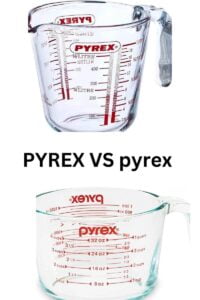
    PYREX VS PYREX

    Pyrex vs Pyrex

    Have you ever seen a glass casserole or baking dish explode in the oven or microwave? It’s a scary sight you wouldn’t want to behold again.

    Pyrex has always been and will remain a go-to cookware and kitchen household item for most American households that love durable and temperature-resistant cookware, food containers, or baking dishes.

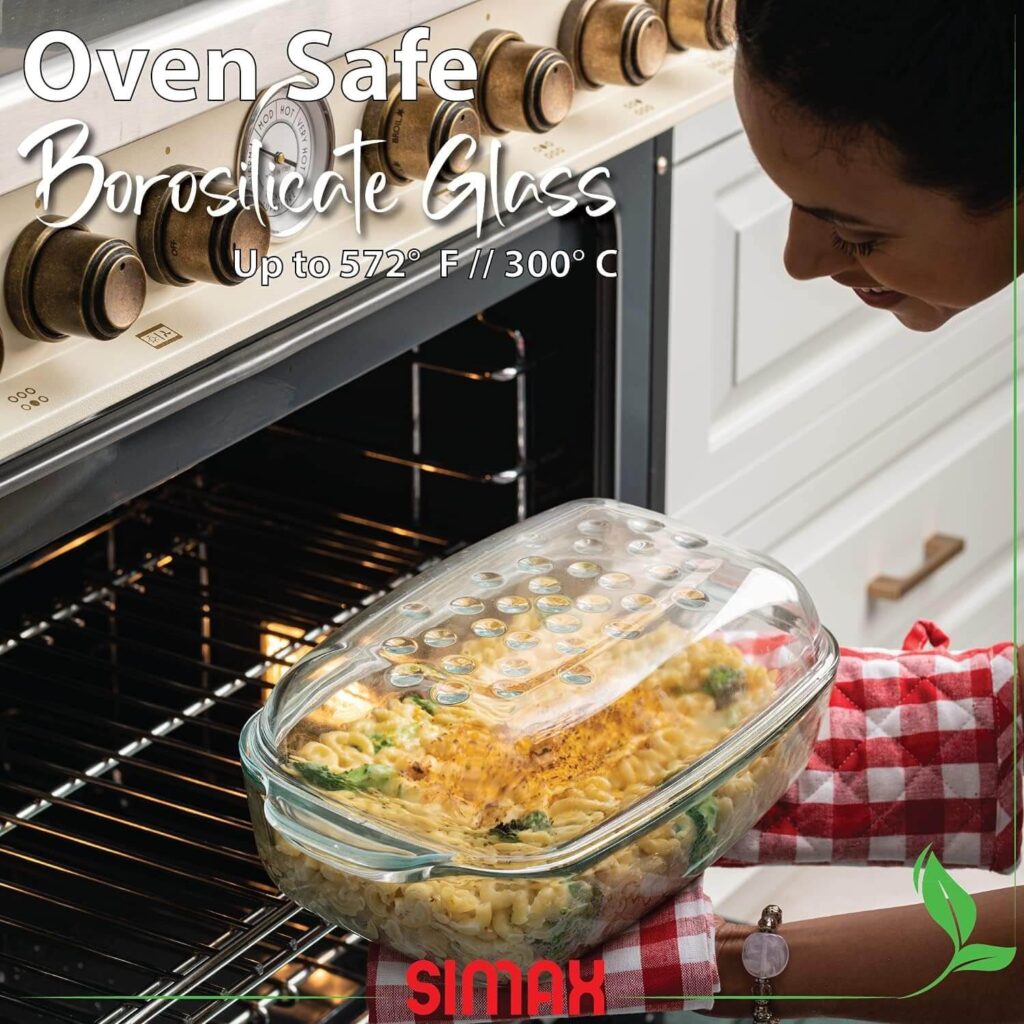
    Pyrex Borosilicate glass baking dish

    Has the Popular Pyrex lived up to what they say? First, to adequately differentiate Pyrex and PYREX, we have to state here that Pyrex has 2 materials it is made up of; we have Borosilicate glass and the one made with soda lime tempered glass.

    Based on this reality, below is the difference between pyrex and PYREX; which also means soda lime glass versus borosilicate glass;

    Pyrex soda lime tempered glass baking and casserole dish
    • First, when you see pyrex (small case letters) logo on cookware or any product, it means that it is made with soda lime tempered glass, while PYREX (upper case letters) means that the said product is made with Borosilicate glass.
    • Soda lime pyrex is not recommended for oven or microwave use, while PYREX Borosilicate glass can handle microwave and oven use effortlessly.
    • PYREX Borosilicate glass contains a higher percentage of boron trioxide, which gives it a lower coefficient of thermal expansion, while pyrex soda-lime tempered glass, on the other hand, contains silica, soda, and lime, making it more susceptible to thermal expansion.
    • PYREX borosilicate glass is harder, stronger, more durable, and more resilient to thermal shock, mechanical stress, and chemical corrosion than pyrex soda-lime glass.
    • PYREX Borosilicate glass has a CTE (coefficient of thermal expansion) of 3 or 4 parts per million per 1 Kelvin change (ppm/K), while pyrex soda-lime glass has a CTE of 9 to 9.5 ppm/K.
    • PYREX borosilicate glass can handle sudden and rapid changes in temperature more than pyrex soda lime tempered glass.
    • Soda lime pyrex glass is cheap, while PYREX Borosilicate glass is expensive.
    • When PYREX Borosilicate glass breaks, it breaks into much larger pieces compared to pyrex soda lime glass, which breaks into many small pieces, like exploding as complained by consumers.
    • PYREX Borosilicate glass has better optical clarity and is more transparent than pyrex soda-lime tempered glass, which can have a slight greenish tint.
    • PYREX Borosilicate glass is commonly used in laboratory glassware, cookware, and high-quality glass products, while Soda-lime tempered glass, branded as pyrex, is often used in kitchenware and bakeware, such as baking dishes and casserole dishes.

    CORELLE VS PYREX

    Corelle vs Pyrex

    Below are the major differences between Corelle dishes and Pyrex glass;

    CORELLE DISHESPYREX GLASS
    Corelle is made of glass, specifically a special type of tempered glass that is lightweight, durable, and chip-resistant.Pyrex glass is either made with Borosilicate or soda lime tempered glass.
    Corelle is primarily used for dinnerware, including plates, bowls, and mugs. It is designed to be stylish, stackable, and suitable for everyday use.Pyrex is primarily used for bakeware and cookware, such as casserole dishes, baking pans, and measuring cups, as it can withstand high temperatures.
    Corelle dishes cannot handle/withstand extreme temperature changes.Pyrex is specifically known for its exceptional ability to withstand extreme temperature changes without breaking, making it ideal for baking and cooking in ovens.
    Corelle offers a wide variety of designs and patterns, making it popular for its aesthetics and versatility in table settings.Pyrex bakeware, on the other hand, is usually clear or has simple designs, focusing more on functionality than aesthetics.
    Corelle dinnerware is lighter compared to Pyrex bakeware, making it easier to handle and suitable for everyday use.Pyrex glass is heavier than Corelle dishes.
    Corelle plates and bowls hardly have plastic lids!Pyrex products are designed with secure plastic lids and perfect for use on the go!

    PYREX CORNINGWARE VINTAGE

    Pyrex and Corningware are both popular brands of glass and ceramic cookware. “Pyrex” is known for its heat-resistant glass kitchenware, while “Corningware” refers to a line of ceramic cookware made by Corning Inc.

    Pyrex Corningware Vintage

    Kitchen lovers always seek out the vintage products of Pyrex and Corningware because of their versatility and endurance to heat and rapid temperature changes.

    These Pyrex Corningware vintage products were made in the 1970s, and to date, they stand the test of time.

    Secondly, we also note that vintage items often have unique designs and quality, and hold sentimental value for some people.

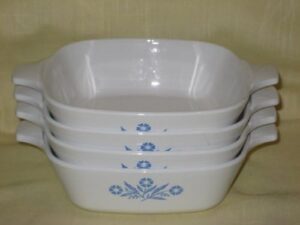
    Vintage Corningware Cornflower Casserole dish

    What makes Vintage Pyrex and Corningware special? It is because they are made of a special glass material known as Borosilicate glass, which is known for its durability, heat resistance, and ability to withstand temperature changes!
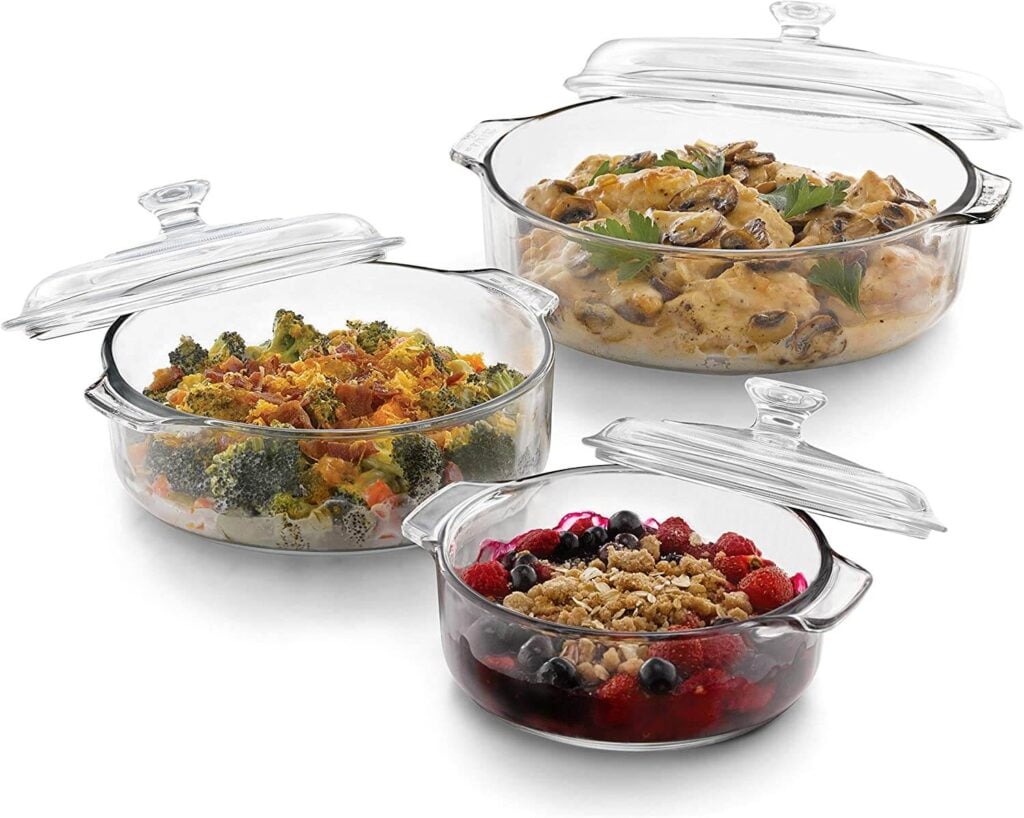
    Vintage Corningware Pyrex is perfect for use in the oven, range top, microwave, Refrigerator, and freezer.

    One distinct quality of Vintage Corningware Pyrex is that it doesn’t react with acid-based foods, unlike some cookware materials.

    They also don’t absorb food odors or flavors because they are a non-porous glass material.

    They are not dishwasher safe; hand washing is highly recommended!

    Examples of vintage Pyrex Corningware cookware are;

    Vintage Corningware Pyrex Visionware

    Vintage Corning Ware SPICE O’ LIFE 3 Quart Covered Casserole w/Lid

    Vintage Corning Ware Cornflower Blue Individual Casseroles

    Vintage Corning Visions Round Lidded Casserole, Cranberry

    Vintage Corning Ware Amana Radarange White w/ Blue Colonial House Browning Skillet Casserole Baking Dish

    Vintage Corning Pyrex Cornflower Blue CorningWare Baking Dish

    Vintage 1970s Corning Ware Pyrex Microwave fast food Dish

    Finally, vintage Pyrex and Corningware cookware are made in the USA.

    WHO OWNS CORELLE BRANDS

    Corelle Brands is presently owned by Instant Brands, the owner of Instant Pot.

    IS CORELLE SAFE?
    Yes, Corelle dishes are safe for everyday use and our health, as they do not leach harmful chemicals into our meals and can withstand the rigors of everyday household and kitchen use.

    CORELLE PYREX PATTERNS

    Corelle and Pyrex are two distinct brands, known for the unique patterns on their products:

    Corelle: Corelle is a brand of dishware known for its durable, lightweight, and chip-resistant dinnerware. Corelle patterns come in various designs and styles, ranging from simple and classic to modern and artistic.

    Corelle winter frost white Pattern

    Some popular Corelle patterns include “Winter Frost White,” “Country Cottage,” and “Old Town Blue.”

    Pyrex: Pyrex is a brand of glassware that is heat-resistant and suitable for baking and cooking.

    While Pyrex is not specifically known for patterns like Corelle, it has produced various colorful designs and patterns on its glass dishes and bakeware over the years.

    Some past Pyrex patterns include “Butter print,” “Primary Colors,” and “Gooseberry.”

    Both brands have a rich history of producing quality kitchenware with unique designs that have attracted collectors and users alike.

    CORELLE BRANDS WORLD KITCHEN

    Corelle Brands, formerly known as World Kitchen, is a company that designs and manufactures kitchenware and household products.

    They are known for their Corelle dinnerware made from tempered glass that is resistant to chips and breaks.

    The company also owns other well-known brands like Pyrex, CorningWare, and Snapware, offering a diverse range of kitchen products and storage solutions.

    CORELLE BRAND PHONE NUMBER

    To see the various Corelle brand phone numbers for Instant Brands EMEA, Australia, Asia Pacific, and India, kindly visit the Corelle Customer Care Center.

    IS CORELLE THE SAME AS PYREX?

    No, Corelle isn’t the same as Pyrex, though they are from the same Parent Company, Instant Brands; they have different features as explained above.

    DOES CORELLE OWN PYREX?

    Both Corelle and Pyrex are under the same Company. Corelle is a standalone brand, just like Pyrex, a cookware brand under Instant Brands.

    Looking for dinnerware alternatives? Our Arcopal vs Corelle guide covers another excellent option for everyday dining.

  • What is the Difference Between Corelle Vitrelle and Livingware: A Comprehensive Guide

    For over five decades, Corelle has established itself as a household name in durable dinnerware.

    According to the World Kitchen Product Information database, Corelle products can be found in more than 40 million homes worldwide.

    But with various product lines and terminology, confusion often arises about what exactly differentiates Corelle Vitrelle from Livingware.

    This comprehensive guide will clarify these differences, explain the material science behind these products, and provide evidence-based information about various Corelle collections.

    We’ll also address common questions about product quality, safety considerations, and how to identify authentic Corelle products.

    WHAT IS CORELLE LIVINGWARE

    Corelle Livingware represents one of the original collections launched when the Corelle brand debuted in 1970.

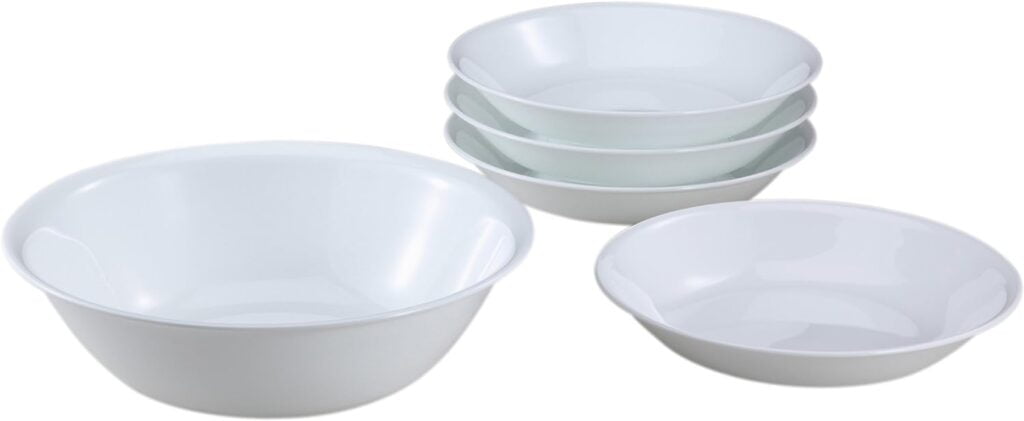
    Corelle Livingware winter frost white 5 Piece Pasta set

    According to Corelle’s corporate archives, Livingware was designed as an everyday dinnerware solution that combined durability with versatility.

    The Livingware collection includes several distinct pattern families developed over different periods:

    Original Livingware (1970-1985)

    • Winter Frost White (solid white design)
    • Old Town Blue (blue floral border pattern)
    • Spring Blossom Green (green floral border pattern)
    • Snowflake Blue (blue snowflake border pattern)
    • Butterfly Gold (gold butterfly border pattern)
    Corelle Glass Livingware Soup and Cereal Bowl

    Expressions Livingware (1980s-1990s)

    • Batik Pattern
    • Woodland Brown
    • Wildflower
    • Meadow
    • Indian Summer
    • April Pattern
    • Blue Heather

    Dimension IV Livingware (1990s)

    • Citrus Pattern
    • Cinnamon
    • Almond

    According to Corelle product specifications, all Livingware collections share these characteristics:

    • Made from Vitrelle glass (triple-layered, thermally bonded glass)
    • Dishwasher, microwave, and preheated oven safe (up to 350°F)
    • Resistant to chips and breaks under normal use conditions
    • Non-porous surface that resists staining
    • Lightweight (30-45% lighter than comparable ceramic dinnerware)
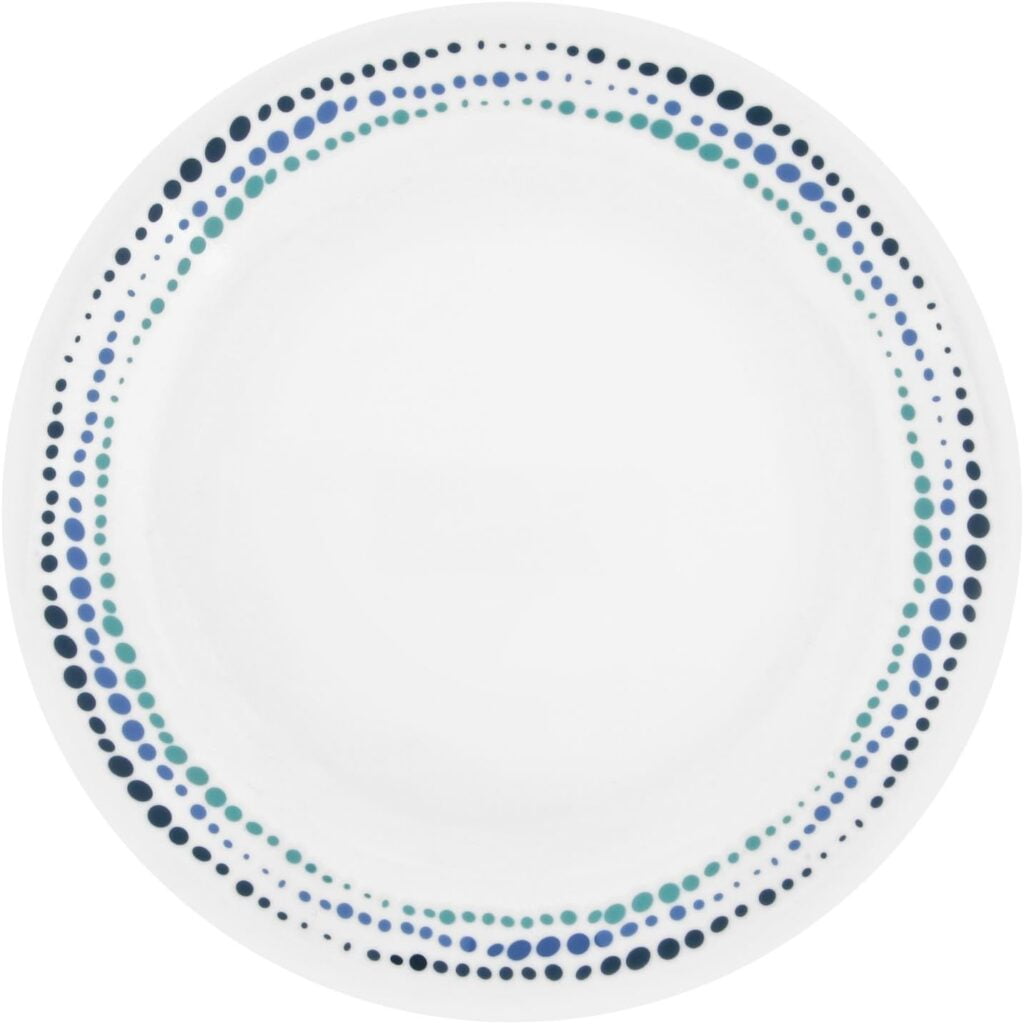
    Corelle Livingware Ocean Blues Lunch Plate

    The Livingware collection comes in various piece types to create complete table settings:

    • Dinner plates (10.25″)
    • Lunch/salad plates (8.5″)
    • Bread plates (6.75″)
    • Soup/cereal bowls (18 oz)
    • Pasta bowls (20 oz)
    • Serving bowls (1-3 qt capacity)
    • Serving platters (12.25″)
    • Divided dinner plates (10.25″)

    While some patterns have been discontinued, the Winter Frost White pattern has remained in continuous production since 1970, making it one of the longest-running dinnerware patterns in the American market.

    WHAT IS THE DIFFERENCE BETWEEN CORELLE VITRELLE AND LIVINGWARE

    what is the difference between Corelle Vitrelle and Livingware

    The fundamental difference between Corelle Vitrelle and Livingware lies in their relationship:

    • Vitrelle: The patented material technology developed by Corning (now World Kitchen/Instant Brands) is used to manufacture Corelle products. According to the manufacturer’s specifications, Vitrelle consists of three layers of glass that are thermally bonded together: two outer layers of clear glass with a middle core layer of glass. This proprietary process creates a thin, lightweight, and exceptionally durable material.
    • Livingware: A specific product collection or line that utilizes Vitrelle material technology. Livingware represents one of several collections in the Corelle brand family, all made using the Vitrelle material.

    To use an analogy that clarifies this relationship: Vitrelle is to Livingware what cotton is to a t-shirt. One is the material, the other is a product made from that material.

    According to materials science experts, the laminated structure of Vitrelle provides several advantages over traditional ceramics:

    • Superior edge strength at thin profiles
    • Increased resistance to thermal shock
    • Enhanced impact resistance
    • Reduced weight while maintaining durability

    All Corelle Livingware products are made from Vitrelle material, which explains why they share the same performance characteristics of durability, lightweight design, and resistance to chips and breaks.

    WHAT IS THE DIFFERENCE BETWEEN CORELLE AND CORELLE VITRELLE

    This question highlights a common source of confusion regarding terminology:

    • Corelle: The brand name for the dinnerware product line manufactured initially by Corning and now by Instant Brands (following several corporate acquisitions and reorganizations). According to corporate records, the Corelle brand was introduced in 1970.
    • Corelle Vitrelle: This term specifically refers to products that use the patented Vitrelle glass technology. While all Corelle dinnerware plates and bowls are made using Vitrelle technology, some accessory items (like stoneware mugs) that carry the Corelle brand name may use different materials.

    The distinction is important because “Corelle” is a brand that encompasses multiple product lines and materials, while “Vitrelle” specifically identifies the triple-layered glass material technology used in most—but not all—Corelle products.

    WHAT IS THE DIFFERENCE BETWEEN CORELLE CLASSIC AND VITRELLE

    Another common area of confusion involves understanding product line naming versus material naming:

    • Corelle Classic: A specific product collection within the Corelle brand family. It includes patterns such as Winter Frost White, Café Blue, Café Red, Splendor, and Cornflower. The Classic collection is known for simpler, more traditional designs compared to other collections.
    • Vitrelle: As established earlier, this is the patented material technology used to manufacture Corelle dinnerware. All Corelle Classic collection pieces (except certain accessories like mugs) are made from Vitrelle material.

    In essence, Corelle Classic represents a design aesthetic and product line, while Vitrelle represents the material technology used to manufacture those products.

    They are not competing alternatives but rather a collection name versus a material name.

    For additional context on differences between Corelle collections, you may also want to explore the difference between Corelle Vitrelle and the Winter Frost white Corelle dish.

    CORELLE EVERYDAY EXPRESSIONS VS CORELLE VITRELLE

    Following the same pattern of clarification regarding collection names versus material technology:

    • Corelle Everyday Expressions: A product collection within the Corelle brand family featuring more contemporary and casual designs. This collection was introduced to appeal to modern aesthetics while maintaining the durability Corelle is known for.
    • Vitrelle: The patented material technology used to manufacture Corelle dinnerware, including pieces in the Everyday Expressions collection.

    The key takeaway is that Corelle Everyday Expressions products (plates, bowls, etc.) are made using Vitrelle material technology.

    They are not competing products but rather represent a specific design collection that utilizes the Vitrelle material.

    To summarize these relationships:

    All three collections use Vitrelle material for their plates and bowls.

    Vitrelle is the material used to make Corelle dinnerware.

    Classic, Livingware, and Everyday Expressions are all collections or product lines.

    CORELLE ULTRA

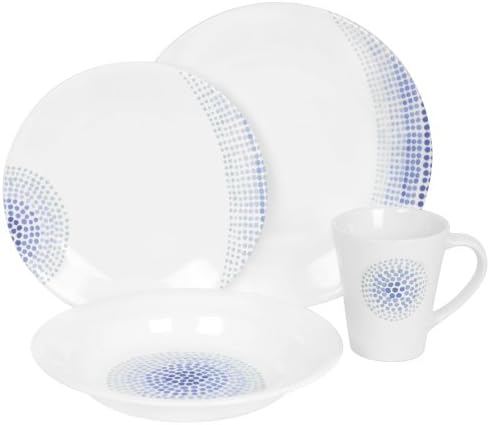
    Corelle Ultra Dinnerware sets

    Corelle Ultra represents a departure from the standard Vitrelle material, introducing an important distinction in the Corelle product family:

    • Material Composition: According to manufacturer specifications, Corelle Ultra uses stoneware ceramic rather than Vitrelle glass. This represents a significant material difference from traditional Corelle products.
    • Design Aesthetic: The most notable pattern in the Ultra collection is Del Norte, featuring a white background with distinctive arrangements of blue dots in a circular silhouette design.
    • Performance Characteristics:
      • Higher heat retention compared to Vitrelle products
      • Greater weight than standard Vitrelle dinnerware
      • Comparable chip and break resistance through specialized formulation
      • Maintains dishwasher, microwave, and oven safety
    • Complete Set Components:
      • 10.25″ Dinner Plates
      • 8.5″ Salad Plates
      • 15 oz Rimmed Soup/Cereal Bowls
      • 11 oz Stoneware Mugs

    The Ultra collection provides an alternative for consumers who prefer the look and feel of traditional stoneware while still benefiting from Corelle’s expertise in durable dinnerware design.

    It’s worth noting that while the Ultra collection carries the Corelle brand name, it does not use the Vitrelle material technology that defines most other Corelle products.

    This distinction is important for consumers with specific material preferences.

    CORELLE CLASSIC

    The Corelle Classic collection represents one of the foundational product lines in the Corelle family:

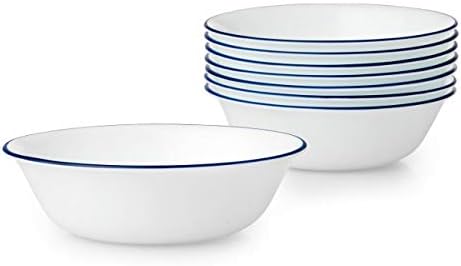
    Corelle Classic Café blue Bowl set
    • Design Aesthetic: The Classic collection features timeless, simple designs intended to complement any table setting. These patterns emphasize versatility and enduring style.
    • Material Composition: Unlike the Ultra collection, Classic collection plates and bowls are made using traditional Vitrelle triple-layer glass material.
    • Notable Patterns:
      • Winter Frost White (pure white design)
      • Café Blue (white with blue border)
      • Café Red (white with red border)
      • Splendor (floral pattern)
      • Cornflower (blue floral pattern)

    An important clarification regarding collection taxonomy: According to Corelle’s product categorization, some Classic patterns were introduced under the Livingware umbrella.

    For example, “Livingware Classic Café Blue” indicates a product that belongs to both the Livingware and Classic collections. This nested categorization has evolved as the company reorganized its product lines.

    Performance testing by consumer organizations has consistently shown that the Classic collection maintains the standard Vitrelle characteristics of exceptional durability, lightweight design, and resistance to chips and breaks under normal use conditions.

    DOES CORELLE VITRELLE CONTAIN LEAD?

    According to Corelle’s official material safety data and confirmed by independent laboratory testing:

    Lead free Corelle Vitrelle dinnerware set
    • Current Production: All Corelle Vitrelle dinnerware produced after 2005 is completely lead and cadmium-free, as verified by X-ray fluorescence (XRF) testing conducted by independent laboratories.
    • Testing Standards: Corelle products undergo rigorous testing according to California’s Proposition 65, FDA standards for food contact surfaces, and international safety regulations.
    • Scientific Evidence: The non-porous nature of Vitrelle glass prevents leaching of potential contaminants. According to materials science analysis, the high-temperature lamination process used to create Vitrelle creates a stable bond between glass layers that does not allow for metal migration.

    Examples of current lead-free Corelle Vitrelle products include:

    Important Historical Note: Certain decorative patterns manufactured before 2000 may contain trace amounts of lead in the decorative elements (not the white base material).

    These older patterns are no longer in production, and current manufacturing processes have eliminated lead.

    HOW TO IDENTIFY AUTHENTIC CORELLE PRODUCTS

    With Corelle’s popularity, counterfeit products have appeared in the marketplace. Here are evidence-based methods to verify authentic Corelle dinnerware:

    1. Brand Identification
      • Genuine Corelle products feature a clear, precisely printed logo on the underside
      • The logo should include the registered trademark symbol (®)
      • Packaging features consistent typography and high-quality printing
    2. Material Characteristics
      • Authentic Vitrelle material has a distinctive ring when tapped lightly
      • Genuine products are noticeably lighter than ceramic alternatives
      • Edge thickness should be uniform and thin (approximately 2mm)
      • Surface should be completely smooth with no visible porosity
    3. Quality Markers
      • Patterns should be crisp and precisely aligned
      • No visible defects in the glass structure
      • Even coloration throughout the product
      • Perfectly flat surfaces without warping
    4. Purchase Channels
      • Authorized retailers (listed on the Corelle website)
      • Official online stores with verified reviews
      • Established department stores with direct manufacturer relationships

    Independent testing by consumer protection organizations has found that counterfeit products often fail basic durability tests and may contain harmful materials not present in authentic Corelle products.

    ARE THERE DIFFERENT GRADES OF CORELLE DISHES?

    Based on manufacturer information and product analysis, Corelle does produce different collections that vary in design, features, and in some cases, materials:

    Collection Hierarchy Based on Material Composition:

    1. Primary Vitrelle Collections (all using the standard triple-layer glass technology):
      • Livingware: The original collection with various patterns
      • Classic: Timeless designs for everyday use
      • Impressions: More decorative patterns and designs
      • Square: Modern square-shaped dinnerware
      • Boutique: Premium designs for special occasions
      • Winter Frost White: Solid white, versatile collection
    2. Alternative Material Collections:
      • Ultra: Uses stoneware rather than Vitrelle
      • Coordinates: Includes accessories that may use different materials (such as stoneware mugs)

    Technical Differences: While the material composition of Vitrelle remains consistent across collections, there are some variations in:

    • Edge finishing techniques
    • Surface texture treatments
    • Pattern application methods
    • Quality control tolerances

    According to product engineers familiar with the manufacturing process, all Vitrelle collections undergo identical strength testing and must meet the same durability standards, regardless of design or collection name.

    The primary differentiators between collections are aesthetic design, piece shapes, and in some cases (like Ultra), the fundamental material used.

    WHAT IS THE DIFFERENCE BETWEEN CORELLE AND CORNINGWARE

    Corelle and CorningWare are distinct product lines with different materials, purposes, and performance characteristics, though both brands are now owned by Instant Brands (previously World Kitchen):

    FeatureCorelleCorningWare
    Primary MaterialVitrelle (laminated glass technology)Stoneware (current); Pyroceram (vintage)
    Primary PurposeTableware/dinnerware for servingCookware for food preparation
    Temperature ResistanceModerate heat resistance (350°F)High heat resistance (up to 450°F)
    Weight CharacteristicLightweight (30-45% lighter than ceramic)Standard weight for cookware
    Typical ProductsSome products are stovetop safe (especially vintage Pyroceram)Casserole dishes, baking dishes, cooking vessels
    Stovetop CompatibilityNot stovetop safeSome products stovetop safe (especially vintage Pyroceram)
    Thermal Shock ResistanceModerateHigh (especially vintage Pyroceram pieces)

    According to materials science analysis:

    • Pyroceram (used in vintage CorningWare from 1958 to 2000) is a glass-ceramic material specifically developed for extreme temperature changes
    • Modern CorningWare primarily uses stoneware, which maintains good heat retention but has less thermal shock resistance than Pyroceram
    • Vitrelle (used in Corelle) prioritizes break resistance and lightweight properties rather than extreme heat resistance

    The fundamental difference lies in their intended purposes:

    • Corelle is designed for serving food at the table
    • CorningWare is designed for cooking and baking food in the oven

    This distinction explains their different material compositions and performance characteristics.

    While both brands fall under the same corporate umbrella, they represent different solutions for different kitchen needs, like Corelle and Pyrex.

    CONCLUSION

    Understanding the relationship between Corelle Vitrelle and Livingware requires recognizing that Vitrelle is the patented material technology, while Livingware is one of several product collections manufactured using this technology.

    Corelle has maintained its reputation for durability and innovation over more than five decades through its proprietary Vitrelle material, which continues to offer advantages in terms of weight, durability, and everyday practicality.

    Various collections like Livingware, Classic, and Everyday Expressions represent different design aesthetics and product groupings within the broader Corelle family.

    For consumers seeking exceptional durability with timeless design, Corelle’s Vitrelle products represent a scientifically engineered solution that has stood the test of time.


    This article was researched and written by our home products testing team, who have over 15 years of combined experience evaluating dinnerware performance, materials science, and household product durability.

  • IS OPAL GLASS BREAKABLE

    Do you remember that moment when your favorite coffee mug slips from your soapy hands during dishwashing, and your heart skips a beat?

    We’ve all been there, experiencing that split-second panic before the inevitable crash.

    Now imagine having a set of dinnerware that makes you feel this way every time you handle it – that’s how some people feel about their precious opal glass collection.

    Is opal glass breakable? This question pops up frequently among homeowners considering this elegant material for their everyday dining needs.

    From vintage casserole dishes that grandmother treasured to modern serving bowls with their distinctive pearly sheen, opal glass has found its way into many kitchens.

    Its creamy white appearance, often with subtle colors that catch the light just right, has made it a favorite for both special occasions and daily use.

    Yet, for all its beauty and widespread presence in homes, questions about its durability continue to spark lively discussions around dinner tables.

    But at the end of this guide, you will be confident in your dinnerware choices.

    GLASS DINNER SET

    Glass dinner set

    Glass is made from a mix of natural materials, mainly sand (silica), soda ash, and limestone. These materials are melted together at very high temperatures and then cooled down to form solid glass.

    Sometimes, other substances are added to the mix to give the glass different colors or patterns.

    Glass is a hard, transparent, and shiny material that looks like ice but is solid and safe to use for eating and drinking.

    A glass dinnerware set is like having a matching group of these see-through dishes for your meals.

    Plus, since they’re see-through, you can easily see the delicious food inside them, making your meals feel even more special!

    Glass dinnerware sets include: dinner plates, Salad plates, Bowls, Cups, Mugs, and Glasses.

    Glass Desserts Plates and Bowls

    Glass dinnerware has several advantages. It’s smooth and easy to clean, so you can see if it’s dirty and make sure it’s sparkling clean after washing.

    Glass is also safe to use with most foods and drinks, as it doesn’t react with them or add any unwanted tastes.

    Additionally, glass is reusable, meaning you can wash it and use it again and again, reducing waste.

    To take care of glass dinnerware, you need to be a bit gentle, as glass can break if it’s dropped or hit hard.

    Also, avoid exposing it to extreme temperature changes, like putting a hot dish directly into cold water, as it could crack.

    Always hand-wash glass dinnerware or use a gentle dishwasher setting to keep it in good condition.

    Finally, two brands that stand out when it comes to glass dinnerware are Vitrelle Glass and Opal Glass.

    For busy households, Vitrelle is ideal because of its remarkable strength, chip resistance, and lightweight feel.

    Opal glass, on the other hand, offers a singular balance of toughness and elegance, making it perfect for both informal and formal parties.

    Now, think about your lifestyle and tastes before using your magic wand to select your glass dinnerware.

    Choose the Vitrelle glass set if you want solidity and style in equal measure. But the Opal glass set is your entrancing option if you want an alluring balance of toughness and sophistication!

    HOW DURABLE IS OPAL GLASS?

    Opal glass is 100% durable because it is very strong and resistant to chips, shattering, and heat stress. It is a great option for long-lasting kitchenware or dinnerware because of its durability and scratch resistance.

    IS OPAL GLASS BREAKABLE?

    Is Opal glass breakable

    Yes, Opal glass is breakable. Compared to regular glasses, opal glass can endure higher temperatures and rapid temperature changes better.

    However, it can still shatter when dropped from a great height or when it comes into contact with a hard surface.

    OPAL GLASS DINNERWARE

    Opal glass dinnerware by Borosil

    Dinnerware made of opal glass is not your typical kitchen accessory; it is a lovely fusion of toughness and alluring elegance.

    Learn how to utilize Opal glass dinnerware in your kitchen and the best Opal glass characteristics for a truly wonderful eating experience!

    Below are the beautiful features of Opal glass dinnerware;

    • STRENGTH

    Dinnerware made of opal glass is super strong, extremely durable, and chip-resistant thanks to the combination of excellent porcelain and tempered glass in its construction.

    • VERSATILE

    Opal glass dinnerware adapts easily to both formal dinner parties and relaxed family meals. It’s ideal for regular use and gives exceptional occasions a dash of refinement.

    • MICROWAVE AND OVEN SAFE

    Take advantage of the ease! Opal glass may be used to bake your favorite foods or reheat leftovers because it is both microwave- and oven-safe. An example is the chinbull heat-resistant glassware.

    • BEAUTIFUL OPALESCENCE

    Dinnerware made of Opal glass is incredibly mesmerizing with its opalescent sheen. Your dining room table is transformed into a place of beauty and elegance by it.

    • EASY TO CLEAN

    Cleaning up after a delicious meal is simple because of the dishwasher-safe nature of opal glass.

    IS OPAL GLASS MICROWAVE SAFE?

    Gibson Opal glass microwave safe, break and chip-resistant dinner plates

    Opal glass is microwave safe because of its strong thermal shock resistance and great chemical endurance, which are attributes of the manufacturing process.

    According to Bormiolirocco, it is microwave and dishwasher-safe, does not absorb fluids, and does not pick up contaminants.

    Opal glass is a good option for every home because the use of microwaves has become a common kitchen device, and it is only normal that we use the safest dishes to prevent health problems.

    IS OPAL A PLASTIC GLASS?

    Opal glass is not plastic glass, to be clear. It is a kind of opaque glass created from silica, soda, and boron, which are all natural materials. It differs from plastic in terms of composition and properties, and is robust and non-toxic.

    WHAT ARE THE BENEFITS OF OPAL GLASS?

    Opal glass has several benefits, such as microwave safety, extraordinary durability, resistance to chips and breaks, heat resistance, scratch resistance, and a refined appearance.

    Additionally, it is non-toxic, environmentally safe, and a flexible alternative for a range of eating and kitchen purposes.

    WHAT ARE THE FEATURES OF OPAL GLASS?

    Opal glass has an opalescent or milky-white look, is microwave safe, has remarkable durability, is chip and shatter-resistant, heat-resistant, scratch-resistant, and chemical-resistant.

    It is non-toxic, environmentally friendly, and excellent for a range of table settings and culinary uses.

    IS TEMPERED OPAL GLASS OVEN SAFE?

    Yes, tempered opal glass is oven-safe because its composition material gives Opal glass the recommended heat resistance capacity.

    I will go further to explain below;

    COMPOSITION MATERIAL

    Tempered Opal glass is created by combining tempered glass with opal particles.

    Tempered glass is heated to strengthen its strength and resistance to fracture, while opal particles give the glass an opalescent luster and elegance.

    Tempered Opal glass is more durable than conventional glass due to its composition.

    HEAT RESISTANCE CAPACITY

    Compared to regular glassware, tempered Opal glass has stronger heat resistance and can sustain higher temperatures. It is safe to use for baking and frying in the oven.

    Although gentle heating and cooling are encouraged, it’s crucial to keep in mind that excessive and abrupt temperature changes can still harm the glass.

    MANUFACTURERS ADVICE

    The fact that their goods are oven-safe is frequently stated openly by manufacturers of Tempered Opal glass.

    They offer recommendations for the highest safe oven temperature and frequently urge staying away from direct contact with flames or extremely hot surfaces.

    TEMPERED OPAL GLASS VS PORCELAIN

    See the differences between tempered opal glass and porcelain.

    Tempered Opal glass is composed of silica, soda ash, and limestone, while Porcelain is primarily composed of clay, feldspar, and other raw materials.

    Tempered opal glass is opaque or translucent, and has a milky-white appearance depending on its thickness and design, while Porcelain is usually dense and has a solid, non-translucent appearance.

    The tempered Opal Glass manufacturing process involves heating regular glass to a high temperature and then rapidly cooling it to induce compressive stresses on the surface, which increases its strength and safety.

    Porcelain is manufactured by forming the clay mixture into the desired shape, drying it, and then firing it at high temperatures in a kiln to achieve the final product.

    Tempered Opal glass dishes are largely lighter in weight than Porcelain dishes.

    Tempered Opal glass is often used in dinnerware sets, lampshades, light fixtures, and decorative glass applications, while Porcelain is commonly used for tableware, bathroom fixtures, tiles, figurines, and decorative items.

    Tempered Opal glass is stronger and more resistant to breakage than regular glass. When it does break, it shatters into small, rounded pieces instead of sharp shards, making it safer for certain applications.

    Porcelain is known for its excellent durability and strength. It is resistant to chipping, scratching, and staining, making it suitable for heavy-use items like dinnerware and bathroom fixtures.

    OPALWARE DINNER SET

    Opalware Dinner Set

    Opalware is a unique type of dinnerware made of tempered glass and excellent porcelain. Opalware’s special characteristics—lightweight, chip-resistant, and highly durable—come from this extraordinary union.

    Opalware brings a touch of refinement and charm to your dining table with its seductive opalescent shimmer.

    Consider a cozy family brunch or a delicious meal with friends as ideal settings for revealing the enchantment of Opalware.

    Its versatility makes it an excellent choice for both ordinary dinners and exceptional occasions. Opalware easily enriches the dining experience, whether it’s a substantial soup, a beautiful pasta dish, or a delectable dessert.

    Finally, because of some similar characteristics between Opalware and Bone China, dinnerware enthusiasts think they are the same, but they are not.

    However, whichever you decide to pick, keep in mind that it should be able to meet your desired outcome.

    WHAT IS OPALWARE MADE OF?

    Opalware is manufactured from a unique material combination of exquisite porcelain and tempered glass.

    Opalware’s unusual traits are due to its unique composition, which makes it a popular choice for dinnerware.

    fine white porcelain
    • FINE PORCELAIN

    Porcelain is a ceramic substance formed of fine clay that is baked at high temperatures. Its smooth and delicate texture lends Opalware an attractive and sophisticated appearance.

    • TEMPERED GLASS
    tempered Opal glass dinner plate by Bormioli Rocco brand

    Tempered glass is a type of safety glass that has been heated to a specific temperature. When compared to conventional glass, this procedure reinforces the glass, making it more durable and resistant to fracture.

    The combination of these materials results in Opalware, a dinnerware that is lightweight, chip-resistant, and microwave-safe.

    The addition of tempered glass to fine porcelain gives Opalware its opalescent shine, making it not only visually appealing but also versatile for both everyday use and special occasions.

    IS OPALWARE MICROWAVE SAFE?

    Opalware is normally microwave-safe, which will please you as a user.

    Its unique combination of tempered glass and exquisite porcelain ensures that it can resist the heating process of the microwave without trouble.

    You can use your Opalware dinner set with confidence to reheat leftovers or warm up wonderful foods, making your dining experience simple and convenient.

    Simply follow the microwave-safe instructions, and you’ll be OK!

    Manufacturers of Opalware take considerable care in designing dinnerware that fits the expectations of their customers.

    They recognize the importance of ease in the modern kitchen, which is why Opalware is microwave-safe.

    CELLO OPALWARE

    Cello Opalware

    Cello Opal dinnerware is a really lovely item that comes in two well-designed patterns and several collections.

    The following are the ranges of Cello Opalware: The Ariana, Dazzle, Divine, Imperial, Royale, Solitaire, and Zarah series are among examples.

    Abstract and flowery patterns can be seen on cello opalware. Cello Opalware is lightweight and practical for everyday use.

    Cello Opal products are chip-resistant, microwave-safe, and free from bone ash.

    Additionally, it is dishwasher-safe, readily stackable, and stain-resistant.

    For further reading, see the difference between Corelle and La Opala dinnerware, which is an alternative to Cello dinnerware.

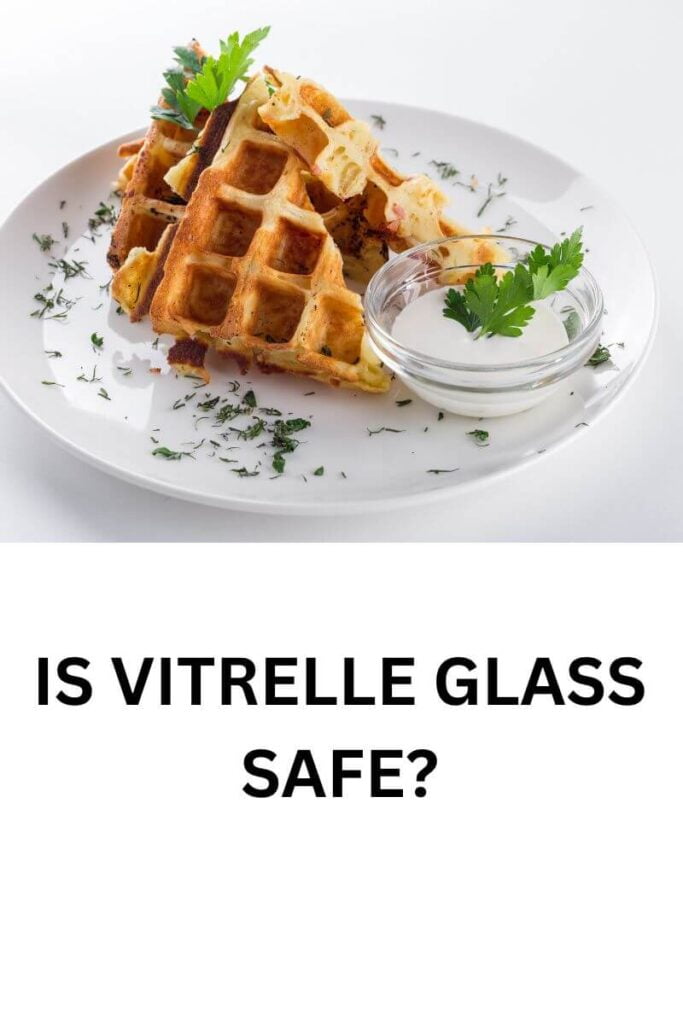
  • IS VITRELLE GLASS SAFE

    Is Vitrelle glass safe? This is a common question that arises when considering the use of Vitrelle glassware in our daily lives.

    Vitrelle is a type of tempered glass known for its lightweight and durable characteristics, making it popular for dishware and kitchenware.

    Its composition provides strength and resistance against breaking. The safety of Vitrelle glass lies in its ability to withstand thermal shocks, making it microwave and dishwasher-safe.

    Who wouldn’t want safe dinnerware to use for the family? As we evolve as humans, so does what we eat, and the food we eat plays a vital role in our health.

    Hence, consumers now focus on healthier alternatives when it comes to dinnerware sets.

    Follow me closely as we learn more about non-toxic dinnerware sets, and in case you need more clarity on Vitrelle glasses, you can check: vitrelle glass vs Porcelain and Vitrelle glass vs Opal glass.

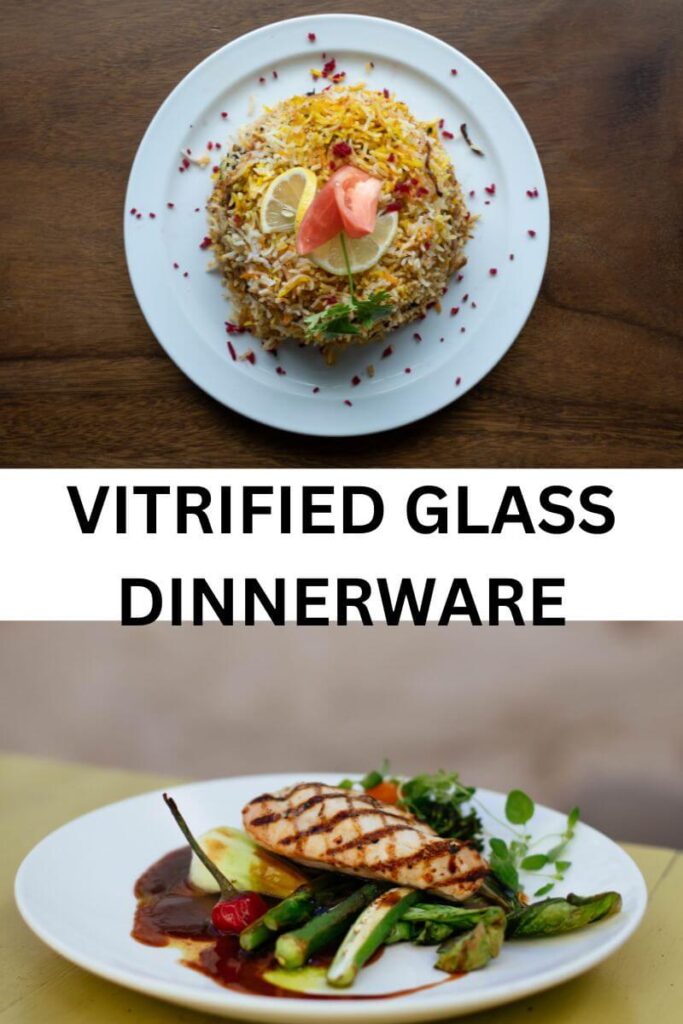
    VITRIFIED GLASS DINNERWARE

    To understand if Vitrelle glass is safe, you need first to understand Vitrified glass dinnerware, so what are Vitrified glass dinnerware sets?

    Imagine melting chocolate to make yummy treats. That is how Vitrelle glass is made by melting various materials together at high temperature, such as sand, soda ash, and some other materials.

    The result is a durable, smooth material called Vitrified glass, they are different from regular plates and bowls you may use at home. It’s like having dinnerware with superpowers!

    vitrified glass dinnerware

    So, what makes Vitrified glass dinnerware special? They are super strong, shiny, and tough, and can handle regular bumps and drops better than regular plates.

    When Vitrified glass dinnerware drops accidentally, it is less likely to break into pieces.

    Vitrified glass dishes look so beautiful and have a sparkling appearance even after many uses and washes.

    Vitrified glass dishes are stain and odor-resistant; they don’t hold onto food stains or food smells, and even after eating something colorful, the dinnerware will stay nice and clean-looking.

    You can easily wash vitrified glass dinnerware so many times, and it won’t get damaged or lose its brilliant shine.

    One popular dinnerware that is made with vitrified glass is Corelle, which doesn’t get too hot when used in the microwave oven.

    This feature indicates that vitrified glass can handle high temperatures well.

    You can also confidently use vitrified glass dinnerware for outdoor picnics without worrying about it breaking.

    So, in simple terms, vitrified glass dinnerware is like having special plates and bowls that are super tough, shiny, safe, and easy to clean. It makes your mealtime even more enjoyable and worry-free!”

    IS VITRELLE GLASS SAFE?

    Is vitrelle glass safe

    Absolutely, Vitrelle glass is safe for you and your family to eat from and also safe for your health because it’s made without harmful chemicals that could leach into your food or drinks.

    You can use Vitrelle glass dishes and cups without any worries because they are designed to keep you safe and your food happy!

    IS VITRELLE GLASS LEAD-FREE?

    Vitrelle glass is 100% lead-free; its material and composition do not contain any trace of Lead or cadmium, and its non-porous surface prevents the absorption of odors and stains, promoting food hygiene, which ensures it remains safe for food contact.

    IS VITRELLE GLASS TOXIC?

    Vitrelle glass is nontoxic. Vitrelle glass doesn’t contain any harmful chemicals that can cause harm to our bodies.

    ARE CORELLE DISHES NON-TOXIC?

    Corelle dishes or Corelle Vitrelle dishes are non-toxic because they do not contain any harmful substances that can pose a threat when used to consume meals.

    Hence, Corelle dishes are safe for health and pose no risk because of the high quality and standard used in manufacturing.

    ARE CORELLE VITRELLE DISHES LEAD-FREE?

    Corelle Vitrelle or Corelle dishes are lead-free because they are made from nontoxic, safe Vitrelle laminated glass material, which also meets the regulatory standards for food contact safety in the United States, Europe, and other countries.

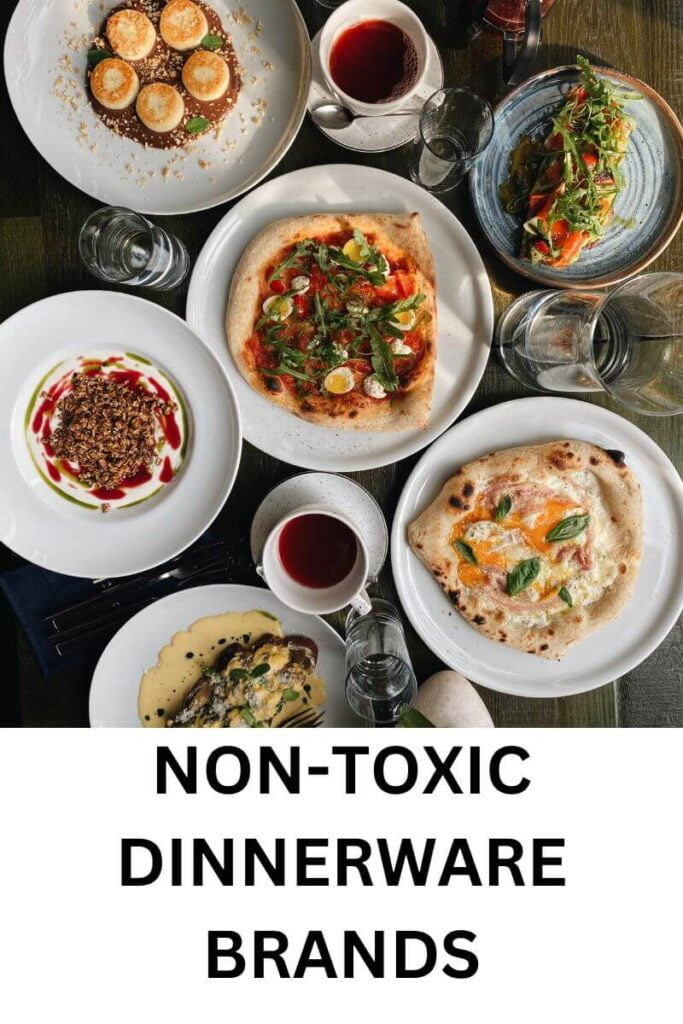
    NON-TOXIC DINNERWARE BRANDS

    We can’t stress enough the advantages of using safe dinnerware brands for your home, and even on very important occasions.

    Non-toxic dinnerware brands

    Non-toxic dinnerware brands are important because they keep us safe and healthy while we eat.

    Non-toxic dinner plates are as important as the food we eat.

    Non-toxic dinnerware simply means that the plates, cups, and bowls are made without harmful chemicals that can seep into our food and make us sick.

    For example, when you draw on paper, you wouldn’t want to use toxic markers because they could be dangerous, right?

    Non-toxic dinnerware sets are designed to be safe for food consumption and are typically made from materials that do not contain toxic elements or compounds.

    Examples of recommended non-toxic dinnerware brands are;

    Corelle Instant Dinner Brand

    Green Life BPA-Free Bamboo

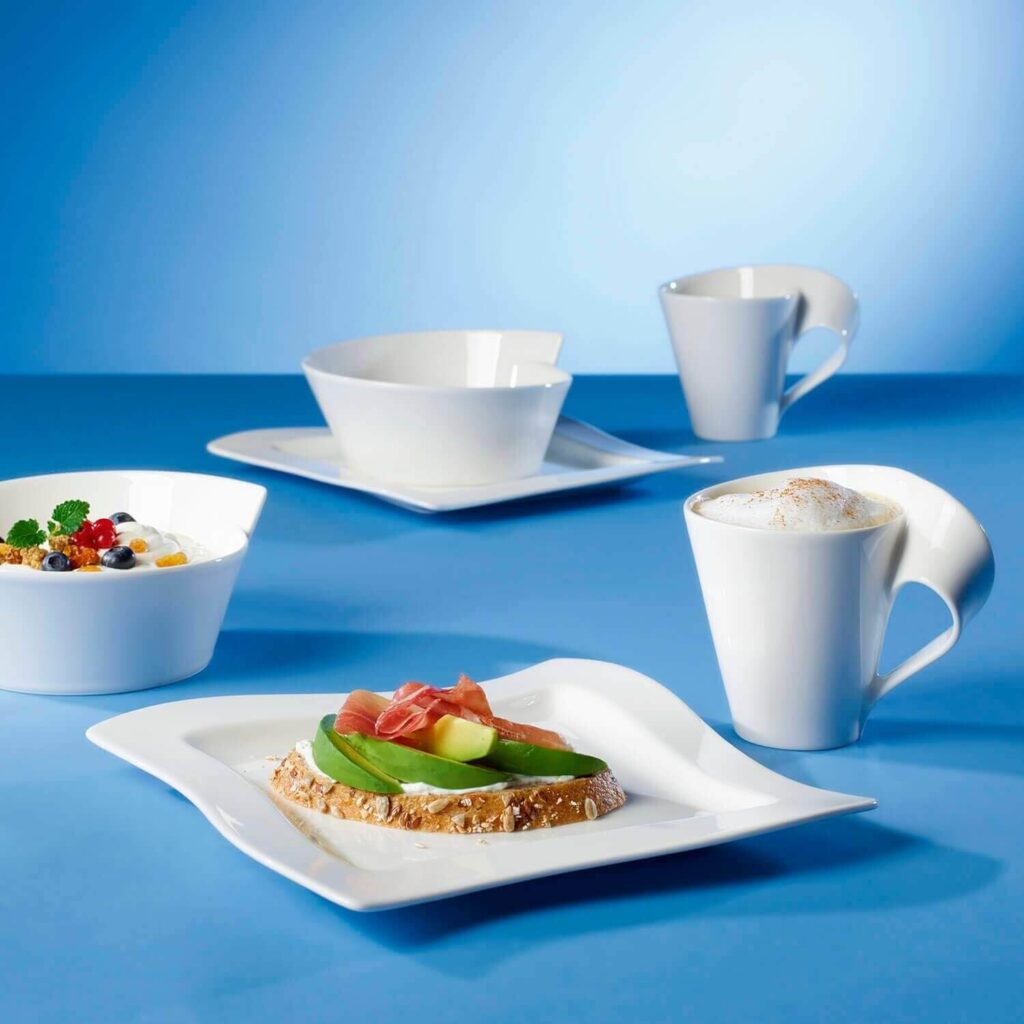
    Villeroy & Boch non-toxic dinner plates

    Pyrex durable glass Brand

    Duralex tempered glass Brand

    Le Creuset

    Oneida

    Bambu eco-friendly dinnerware from Bamboo.

    IKEA non-toxic dinnerware, glass, ceramic, and bamboo dishes.

    Fiesta lead-free ceramic dinnerware.

    EKOBO designs eco-friendly dinnerware.

    BEST NON-TOXIC DINNERWARE SETS

    best non-toxic dinnerware sets

    Examples of the best non-toxic dinnerware sets that are super safe, lead-free, BPA-free, and won’t harm you or your family in any way by allowing harmful chemicals to sneak into your food are;

    Corelle White Frost Vitrelle non-toxic dishes

    Duralex lead-free dinner plate

    Luminarc safe dishes

    Mora ceramic non-toxic dinnerware set

    NON-TOXIC MATERIALS USED IN DINNER PLATES

    To achieve non-toxic dishes, you have to make use of non-toxic materials manufacturing, as they contain composition, examples of non-toxic materials are;

    High-quality ceramic materials

    Stainless steel

    Bamboo or other natural fibers

    Silicone

    Glass

    When using any type of dinner plate, it’s a good practice to follow proper care and handling instructions, such as avoiding extreme temperatures, using non-abrasive cleaning materials, and replacing them if they show signs of wear or damage.

    Always check the product descriptions or labels and do your research when buying dinner plates to ensure they meet your safety standards and are non-toxic.

    LEAD AND CADMIUM-FREE DINNERWARE BRANDS

    Some dinnerware is made with materials that can be harmful to you if they get into your food and then into your body.

    That’s why we recommend lead and cadmium-free brands because they are simply bowls, plates, and cups that are made without any trace of lead or cadmium metals.

    We can’t stress the effects of lead and cadmium enough when they get into our bodies; that’s why you should pay utmost attention to the type of dinnerware materials used in manufacturing to prevent any health risk or loss.

    It’s essential to use dinnerware that is lead and cadmium-free because it keeps you safe and healthy, just like having a superhero protecting your food!

    Below are nine (9) examples of dinnerware brands known for producing lead and cadmium-free products:

    Cadmium and Lead free Corelle Vitrelle dinner sets

    Corelle white frost: Corelle is a popular brand known for its durable and chip-resistant dinnerware made with a special glass composition that is free from lead and cadmium.

    Libbey lead and cadmium free dinnerware brand

    Libbey: Libbey offers a wide range of glass dinnerware, including plates, bowls, and glasses that are free from lead and cadmium.

    Fiesta: Fiesta is a well-known brand for its colorful and vibrant ceramic dinnerware, which is lead and cadmium-free.

    Bormioli Rocco lead and cadmium free dinnerware sets

    Bormioli Rocco: This brand offers lead and cadmium-free glassware and tableware, including plates, glasses, and jars.

    Duralex: Duralex specializes in tempered glass dinnerware and glassware, and its products are free from lead and cadmium.

    Villeroy and Boch lead free dishes

    Villeroy & Boch: Villeroy & Boch is a premium brand that produces lead and cadmium-free porcelain and ceramic dinnerware.

    Lead and cadmium free HF Coors dishes

    HF Coors: lead and cadmium-free glasses and dishes

    Anchor Hocking’s: non-toxic dinnerware brands

    Luminarc: Luminarc is another brand that offers lead and cadmium-free glassware and dinnerware sets.

    WHAT IS THE SAFEST MATERIAL FOR DINNERWARE?

    The safest material or healthiest material for dinnerware plates is the food-grade stainless steel dish because they are made up of inert and non-reactive elements that don’t react with food and don’t leach harmful chemicals or toxins into your food, ensuring that your meals remain safe and uncontaminated.

    Aside from the food-grade stainless steel safe dish, other non-toxic and lead-free healthy and safe materials for dinnerware are tempered glass, lead-free bone china dishes, and high-quality non-toxic ceramic dishes.

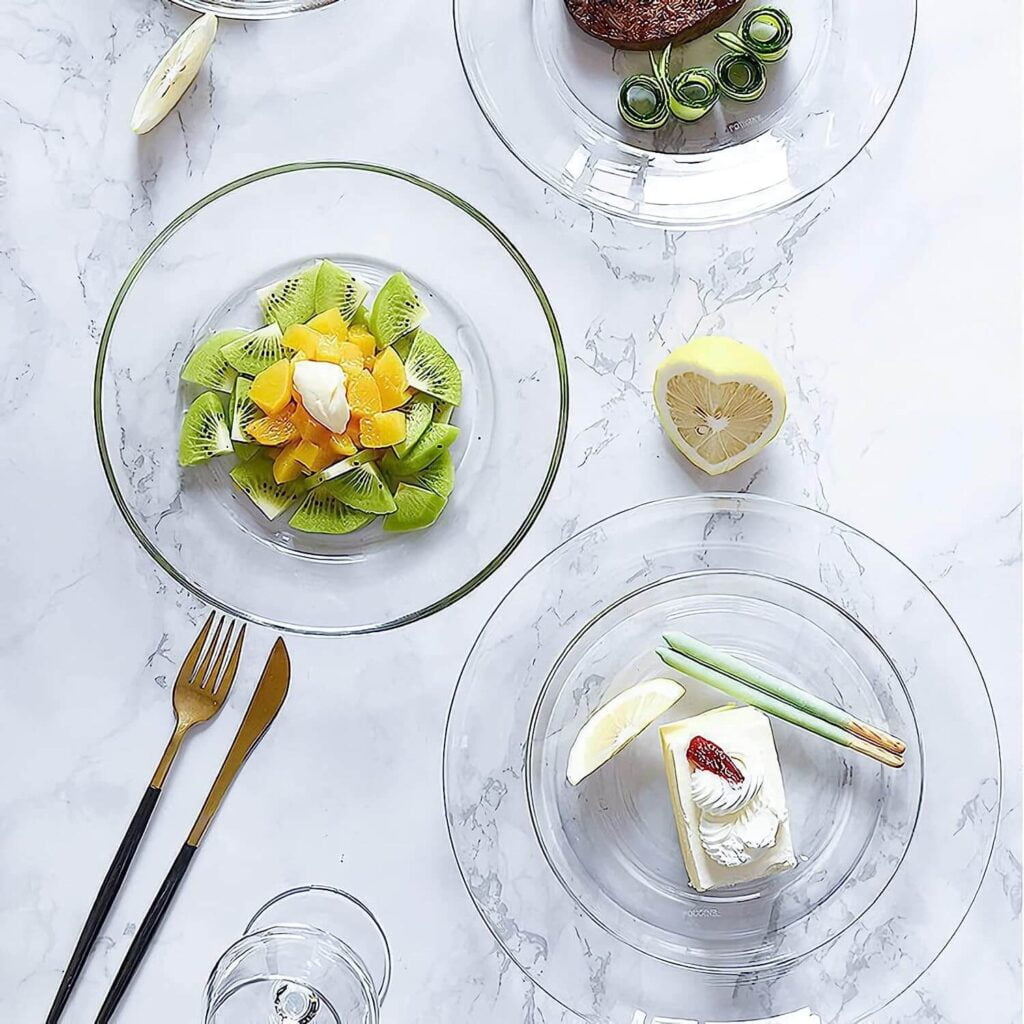
    CLEAR BOROSILICATE GLASS DINNERWARE

    Who wouldn’t want a glass dinnerware set that is heat-resistant and clear enough to see your favorite appetizing dish?

    This is where Clear Borosilicate glass dinnerware comes in; it is a special type of glass called “Borosilicate glass” that is made from a mixture of sand and other special materials.

    Clear Borosilicate Glass Dinnerware

    Another reason it’s called “Borosilicate” is that it contains boron oxide, which makes the glass super strong and resistant to heat. That’s what makes it different from regular glass.

    Borosilicate glass dinnerware, like plates, bowls, mugs, and even baking dishes, is also used in kitchens and restaurants to serve food in a safe and pretty way.

    Aside from the heat-resistivity feature, Clear Borosilicate glass dishes are also microwave and oven-safe, suitable for warming food.

    Borosilicate glass is tougher than regular glass, which means it’s less likely to break when you accidentally drop it. But of course, try not to test it too much!

    IS VILLEROY AND BOCH LEAD-FREE?

    Villeroy and Boch are lead-free because they are made with top-quality raw materials that don’t contain harmful substances, including the double-fired glazes and decorative paints.

    ARE GIBSON DISHES LEAD-FREE?

    It is not all Gibson dishes that are completely lead-free; this is based on their design pattern and the material used during manufacturing.

    For example, the White Gibson Oslo Porcelain Dinnerware set is lead-free because it is made with AB-Grade Porcelain, 100% natural minerals that are heat-resistant and BPA-free.

    The Gibson Elite Hand-Painted Dinnerware Set, 4-Piece Accessory, Luxembourg may contain a few traces of Lead because of its design, mainly the paints and flower-patterned design.

    Finally, we recommend you carefully carry out lead and cadmium testing using an XRF instrument.

    ARE MAINSTAY DISHES LEAD-FREE?

    According to California Prop 65, Mainstay dishes will expose you to lead as they might contain traces of lead.

    Kindly see the above-recommended lead and cadmium-free dinnerware sets listed above.

    According to California Prop 65, Mainstay dishes will expose you to lead as they might contain traces of lead.

    Kindly see the above-recommended lead and cadmium-free dinnerware sets listed above.

    ARE GLASS PLATES SAFE TO EAT FROM?

    Yes, but not all glass plates are safe to eat from because some poorly made or old glassware may contain lead or other toxic substances that can leach into your drink or food, especially if the glassware is damaged, cracked, or scratched.

    Are glass plates safe to eat from

    In addition, it is best to avoid decorative or colored glassware because they might contain heavy metals or dyes that are not food-safe. These substances can also leach into food and pose health risks.

    Thirdly, recycled or upcycled glass materials may have impurities or contaminants that could be harmful when they come into contact with food.

    So, how do you choose safe and healthy glass plates? You simply have to pay attention to glassware labeled as food-safe and have been tested for food contact.

    For health reasons, we confidently recommend glass plates made from tempered glass or borosilicate glass as they are non-toxic, do not leach harmful chemicals, and are therefore safe to eat from.

    Finally, always follow the manufacturer’s guidelines for the proper use and care of glass plates to maintain their safety and longevity.

    If you are unsure about the safety of your glass plates, it’s best to replace them with new ones that are specifically designed for food use.

    CAN GLASS PLATES BE TOXIC?

    Glass plates are generally non-toxic because they are composed mainly of silica, soda, and lime, but the glass plate surface can be contaminated with impurities, leading to transfer to the food or any item placed on the plate.

    Secondly, glass plates with decorative paintings or coatings have been shown to contain toxic substances over time when they are tested; that’s why it’s crucial to ensure you only use glass plates designed for safe food contact.

    In summary, properly manufactured and maintained glass plates themselves are not toxic.