Tag: lead free kitchenware

  • Is Fiestaware Lead and Cadmium Free? (Safety Review & Color Guide)

    If you’ve inherited colorful vintage dishes or recently purchased Fiestaware, you’re probably wondering: Is Fiestaware lead and cadmium free?

    This question matters more than aesthetics—it’s about your family’s health and daily safety.

    The short answer is mixed: modern Fiestaware manufactured after 1986 is lead-free and meets strict FDA standards, but vintage pieces from the original production era (1936–1973) contain concerning levels of both lead and cadmium in their vibrant glazes.

    Understanding which colors and production years are safe can mean the difference between enjoying beautiful dinnerware daily and relegating cherished pieces to display-only status.

    This comprehensive 2025 safety review breaks down everything you need to know about Fiestaware’s heavy metal content, testing certifications, and how to identify safe dishes in your collection.

    What Is Fiestaware and Why It’s Popular

    Fiestaware has been an American kitchen icon for nearly 90 years, beloved for its bold colors and Art Deco design.

    Understanding its history helps explain why lead and cadmium safety concerns exist today.

    Fiestaware’s Origin and Manufacturing (Homer Laughlin China Company)

    The Homer Laughlin China Company introduced Fiestaware in 1936 in West Virginia, creating one of America’s most recognizable ceramic dinnerware lines.

    Originally designed by Frederick Hurten Rhead, Fiestaware was revolutionary for offering affordable, colorful dishes during the Great Depression era, when most dinnerware was plain white or delicate china.

    Fiestaware 3 Piece Classic Dinnerware set

    The company continues manufacturing Fiesta Tableware today in Newell, West Virginia, maintaining its “Made in USA” heritage.

    Homer Laughlin’s production facility has evolved significantly over the decades, particularly in glaze formulation and safety testing protocols.

    Why Fiestaware Is Known for Colorful Glazes

    Fiestaware’s signature feature is its intensely saturated, solid-color glazes that create a distinctive, cheerful aesthetic.

    The original color palette included red, cobalt blue, light green, yellow, ivory, and turquoise—shades that required specific metallic compounds to achieve their vibrancy.

    These bright, opaque glazes were applied to simple, sturdy ceramic shapes with concentric ring designs.

    Lemongrass Fiestaware Classic Dinnerware set

    The bold colors allowed consumers to mix and match pieces, creating personalized table settings.

    This color-driven design philosophy made Fiestaware instantly recognizable and commercially successful, but it’s precisely these vibrant pigments that historically required lead and cadmium compounds.

    Overview of Production Eras (1936–1973, 1986–Present)

    Fiestaware’s production history divides into two distinct eras with vastly different safety profiles.

    The original vintage era (1936–1973) used traditional ceramic glaze formulations containing lead and cadmium to achieve intense colors, particularly in red, orange, and yellow shades.

    Production ceased in 1973 due to declining sales and increasing awareness of heavy metal dangers.

    When Fiestaware relaunched in 1986, Homer Laughlin reformulated all glazes to eliminate lead, responding to new FDA regulations and consumer safety demands.

    Modern Fiestaware (1986–present) uses completely different glaze chemistry, making post-1986 pieces fundamentally safer than their vintage predecessors.

    Understanding Lead and Cadmium in Dinnerware

    Before evaluating Fiestaware specifically, it’s essential to understand why lead and cadmium appear in ceramic dishes and what health risks they pose.

    What Lead and Cadmium Are Used For (Vibrant Glaze Pigmentation)

    Lead and cadmium have been used in ceramic glazes for centuries because of their unique chemical properties.

    Lead acts as a flux, lowering the melting temperature of glaze ingredients and creating smooth, glossy, brilliantly colored finishes.

    Cadmium compounds produce some of the most vibrant yellows, oranges, and reds achievable in ceramics—colors difficult or impossible to create with safer alternatives.

    Lead also enhances color intensity and helps glazes adhere properly to ceramic bodies during firing.

    These metals allowed manufacturers to achieve the bold, saturated hues that made vintage Fiestaware so distinctive and appealing to mid-century consumers.

    Health Risks From Heavy Metal Exposure

    Lead and cadmium are toxic heavy metals with no safe level of exposure in the human body.

    Lead exposure, particularly in children, causes irreversible neurological damage, learning disabilities, developmental delays, and behavioral problems.

    In adults, chronic lead exposure contributes to high blood pressure, kidney damage, reproductive issues, and cognitive decline.

    Cadmium exposure damages kidneys, weakens bones, and is classified as a human carcinogen.

    These metals leach from ceramic glazes into food and beverages, especially when dishes are damaged, when acidic foods are served, or when dishes are heated.

    Even low-level exposure from daily dinnerware use accumulates in the body over time, creating serious long-term health risks.

    FDA and California Prop 65 Regulations for Dishware Safety

    The FDA regulates lead and cadmium levels in ceramic dinnerware through specific leachable limits established in the 1970s.

    Current FDA standards allow no more than 3.0 parts per million (ppm) of leachable lead for flatware and 0.5 ppm for small hollowware like cups.

    California’s Proposition 65 goes further, requiring manufacturers to warn consumers about any detectable lead or cadmium content and setting even stricter acceptable exposure limits.

    These regulations forced dinnerware manufacturers, including Homer Laughlin, to reformulate glazes completely.

    Modern Fiestaware must comply with both FDA testing protocols and Prop 65 disclosure requirements, which means contemporary pieces undergo rigorous independent testing before reaching consumers.

    Does Fiestaware Contain Lead or Cadmium?
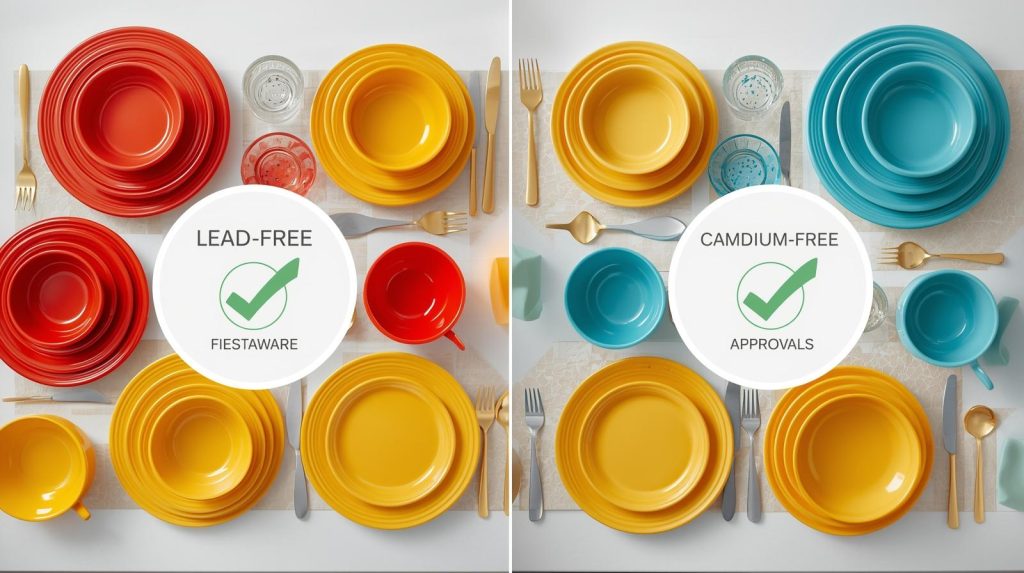
    Is Fiestaware lead and cadmium free

    The answer depends entirely on when your Fiestaware was manufactured. Understanding these distinctions is critical for making safe decisions about which pieces to use.

    Vintage Fiestaware (1930s–1972) — High Lead and Cadmium in Orange/Red Glazes

    Original vintage Fiestaware from 1936 through 1972 contains significant amounts of both lead and cadmium, particularly in certain colors.

    The iconic “Fiesta Red” (also called “Radioactive Red“) used uranium oxide as a colorant until 1943, then switched to cadmium-based pigments that contained extremely high cadmium levels—often exceeding 8,000 ppm.

    Other problematic vintage colors include original yellow (lead-based), old ivory (lead content), and light green.

    Independent testing has confirmed vintage red pieces can leach dangerous amounts of cadmium with every use, especially when serving acidic foods like tomato sauce or citrus.

    Vintage Fiestaware from this era fails modern FDA safety standards and should never be used for food service.

    Post-1986 Fiestaware — Lead-Free but May Contain Trace Cadmium

    When Fiestaware returned to production in 1986, Homer Laughlin eliminated lead from all glaze formulations.

    The company reformulated every color to comply with FDA regulations, making post-1986 Fiestaware lead-free.

    However, some colors produced in the late 1980s and 1990s still contained trace amounts of cadmium to achieve certain vibrant shades, though within FDA-acceptable limits.

    These pieces pass FDA leaching tests but may trigger Proposition 65 warnings in California.

    While significantly safer than vintage ware, early post-1986 pieces with cadmium-containing glazes don’t meet today’s strictest standards.

    The company has continued refining formulations to reduce or eliminate cadmium in recent years.

    Modern (Post-2020) Lines — Certified Lead- and Cadmium-Free

    Current Fiestaware production represents the safest iteration yet.

    Modern lines manufactured from approximately 2020 onward are certified both lead-free and cadmium-free, meeting or exceeding all FDA and Proposition 65 requirements.

    Homer Laughlin invested in developing completely non-toxic glaze chemistry using alternative colorants and stabilizers.

    Today’s vibrant colors—including modern reds, yellows, and oranges—achieve their intensity without any heavy metal content.

    Each production batch undergoes independent laboratory testing to verify safety before distribution.

    Contemporary Fiestaware carries no health risks when used as directed and represents a genuinely safe choice for daily dinnerware needs.

    Statements From Homer Laughlin / Fiesta Tableware Co.

    The Homer Laughlin China Company openly addresses safety concerns on its website and in product documentation.

    The company officially states that all Fiestaware produced since 1986 is “lead-free” and meets FDA standards for food safety.

    They acknowledge that vintage pre-1973 pieces were manufactured under different standards and should be used for decorative purposes only.

    Fiesta Tableware Co. provides specific guidance that vintage red and yellow pieces, in particular, should not be used for food service.

    The company maintains that current production undergoes regular testing and certification, and they publish compliance certificates upon request.

    This transparency represents a significant improvement over earlier decades when heavy metal content was neither disclosed nor regulated.
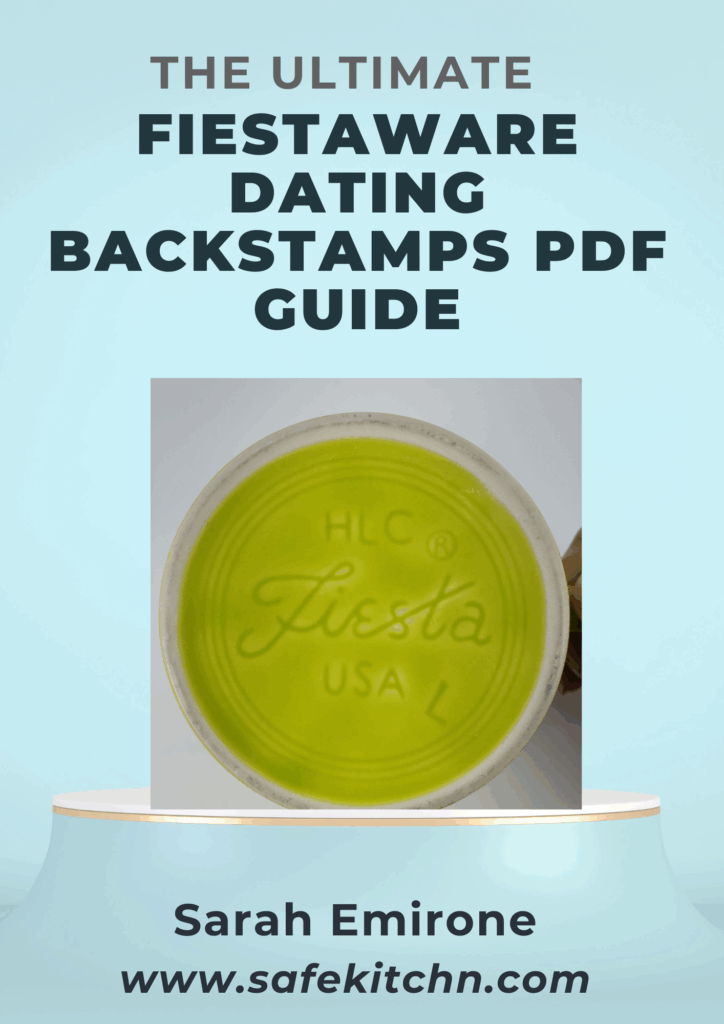
    Fiestaware dating backstamps pdf guide

    How to Identify Lead-Free Fiestaware

    Determining which Fiestaware pieces are safe requires understanding color history, production markers, and testing methods.

    Color Chart — Safe vs. Risky Shades

    Certain Fiestaware colors have historically been safer than others based on their pigment chemistry:

    High-Risk Vintage Colors (1936–1972):

    • Red/Radioactive Red: Extremely high cadmium content
    • Yellow: Lead-based pigments
    • Orange: Lead and cadmium compounds
    • Light Green: Lead content in glaze

    Lower-Risk Vintage Colors:

    • Cobalt Blue: Generally lower heavy metal content
    • Turquoise: Minimal lead when properly fired
    • Ivory: Varies by production year

    Modern Safe Colors (1986–Present):

    • All contemporary colors, including Scarlet, Sunflower, Poppy, Lemongrass, Peacock, and others, are reformulated to be lead-free and increasingly cadmium-free.
    • White, ivory, and neutral shades from any era tend to contain the lowest heavy metal content, though vintage pieces should still be tested.

    How to Check Backstamps and Production Years

    Fiestaware backstamps provide critical dating information to assess safety.

    Vintage pieces (1936–1972) typically show impressed “FIESTA” or “GENUINE FIESTA” marks, sometimes with “HLC” (Homer Laughlin China) or “MADE IN USA.”

    Post-1986 pieces feature redesigned stamps, often with a lowercase “fiesta” logo. The mark style, font, and additional codes indicate the manufacturing era.

    Pre-1986 pieces never carry FDA compliance notices, while modern pieces may include “lead-free” statements or FDA certification marks.

    Examining the backstamp carefully before use is essential—when in doubt about a piece’s age, treat it as potentially hazardous until testing confirms otherwise.

    How to Test Dishes at Home With Lead Test Kits

    Home lead test kits provide an affordable way to check questionable Fiestaware pieces.

    Popular options include 3M LeadCheck Swabs and lead testing solutions available at hardware stores.

    To test, activate the swab according to package directions, then rub it on the glazed surface, particularly on worn areas or the food-contact side.

    A color change (typically pink or red) indicates lead presence. However, standard swabs may not reliably detect cadmium or measure leaching rates—only surface presence.

    For a comprehensive safety assessment, send dishes to a certified laboratory for XRF (X-ray fluorescence) testing, which quantifies both lead and cadmium levels and measures leachable amounts that could transfer to food.

    Testing and Certifications

    Understanding how Fiestaware is tested and what certifications mean helps evaluate safety claims objectively.

    FDA Lead Testing Data

    The FDA conducts random market surveillance testing of ceramic dinnerware to ensure compliance with federal leaching limits.

    Agency reports from various years have tested both vintage and modern Fiestaware.

    Vintage red Fiestaware consistently fails FDA standards, with some pieces showing lead and cadmium leaching rates many times above legal limits.

    Post-1986 Fiestaware samples generally pass FDA protocols, with non-detectable or minimal lead leaching.

    The FDA testing method involves extracting dishes with acidic solutions for 24 hours, then measuring heavy metal content in the leachate.

    These tests simulate repeated exposure from typical food service. Published FDA data confirms modern Fiestaware meets current safety requirements, while vintage pieces do not.

    California Proposition 65 Disclosure Compliance

    California’s Proposition 65 requires businesses to provide warnings before knowingly exposing consumers to listed chemicals, including lead and cadmium.

    Homer Laughlin has faced scrutiny under Prop 65, particularly regarding whether their products require warning labels.

    The company maintains that post-1986 Fiestaware meets Prop 65 safe harbor levels, meaning exposure falls below thresholds requiring warnings.

    However, some retailers selling Fiestaware in California display precautionary Prop 65 notices due to the state’s strict disclosure requirements.

    Compliance with Prop 65 indicates that even if trace heavy metals exist, they don’t leach at levels considered harmful under California’s stringent standards, which are more protective than federal FDA limits.

    Fiesta’s Independent Lab Testing Certifications

    Beyond regulatory compliance, Homer Laughlin conducts independent third-party laboratory testing on current Fiestaware production.

    Fiestaware Bistro dinnerware set

    These tests use XRF spectroscopy and acid extraction methods to verify both total heavy metal content and leachable amounts.

    The company maintains testing records and certificates of compliance available to retailers and consumers. Independent testing provides additional assurance beyond manufacturer claims, as accredited laboratories follow standardized protocols.

    Fiesta 3 Piece set

    Modern Fiestaware consistently shows non-detectable lead levels and cadmium content below detection limits in independent tests.

    This certification process represents best practices in ceramic dinnerware manufacturing and demonstrates Homer Laughlin’s commitment to consumer safety standards that exceed minimum legal requirements.

    Are Vintage Fiestaware Dishes Safe to Use?

    Collectors treasure vintage Fiestaware, but understanding safety limitations is essential for responsible ownership.

    Why Older Pre-1973 Glazes Contained Higher Heavy Metal Content

    Vintage ceramic manufacturing relied on lead and cadmium because safer alternatives didn’t exist or weren’t commercially viable.

    Lead-based glazes were industry standard throughout the mid-20th century, providing the glossy finish and color intensity consumers expected.

    Manufacturers prioritized aesthetics and affordability over health considerations, which weren’t well understood until the 1970s.

    Cadmium produced the most brilliant reds, oranges, and yellows achievable with period technology.

    Environmental regulations and workplace safety standards were minimal, allowing manufacturers to use these toxic materials freely.

    Only when medical research definitively linked household lead exposure to childhood health problems did regulatory pressure force formula changes.

    Vintage Fiestaware simply reflects the manufacturing standards of its era, before modern toxicology and consumer protection laws existed.

    Safe Ways to Handle or Display Vintage Fiestaware

    Vintage Fiestaware can be safely enjoyed as collectible display pieces without health risks.

    Collectors should use vintage dishes for decorative purposes only—displaying them in cabinets, on shelves, or as decorative objects.

    When handling vintage pieces, wash your hands afterward, as lead and cadmium can transfer to skin from surface dust.

    Avoid using vintage ware for any food or beverage service, even for special occasions.

    Never microwave or heat vintage pieces, as heat increases heavy metal leaching dramatically.

    Keep vintage Fiestaware away from children who might handle or mouth items. Some collectors use museum-quality display stands or mount pieces on walls.

    With proper precautions, vintage Fiestaware offers historical and aesthetic value without exposure risks.

    How Glaze Wear or Cracks Can Increase Leaching Risk

    Damaged or worn vintage Fiestaware poses amplified safety hazards.

    Crazing (fine cracks in glaze), chips, scratches, and wear from utensils compromise the glaze barrier, allowing heavy metals to leach more readily.

    Acidic foods penetrate damaged glazes, dissolving lead and cadmium compounds directly from underlying layers.

    Even pieces that might have acceptable leaching rates when intact become dangerous when damaged.

    Dishwasher detergents, temperature cycling, and normal wear accelerate glaze breakdown over decades of use.

    If you discover cracks or significant wear on vintage pieces, they’re unsafe even for display, as metal can transfer through handling.

    Assess vintage Fiestaware condition carefully—any compromise to glaze integrity multiplies heavy metal exposure risks exponentially.

    Modern Fiestaware: What’s Changed

    Contemporary Fiestaware represents a complete transformation in materials and manufacturing philosophy focused on consumer safety.

    Reformulated Glazes (Lead-Free Since 1986)

    The 1986 Fiestaware relaunch required Homer Laughlin to develop entirely new glaze chemistry.

    vintage Fiestaware Dinnerware set

    The company worked with ceramic chemists to create colorants that achieved vibrant hues without lead or unacceptable cadmium levels.

    This involved substituting frits (pre-melted glass compounds), alternative metal oxides, and new pigment technologies.

    Fiestaware Classic Turquoise Dinnerware sets

    Lead-free glazes present technical challenges—they fire differently, may be more expensive, and achieving certain colors is more difficult.

    Homer Laughlin invested significantly in research and reformulation to preserve Fiestaware’s aesthetic appeal while eliminating lead.

    Subsequent refinements have continued to reduce or eliminate cadmium from formulas.

    Today’s glazes use zirconium, titanium, and other compounds considered safe for food contact, demonstrating that beautiful ceramic dinnerware doesn’t require toxic materials.

    Modern Colors Compliant With FDA and Prop 65

    Contemporary Fiestaware’s entire color palette—over 50 shades introduced since 1986—meets or exceeds FDA leaching limits and California Proposition 65 standards.

    Even traditionally problematic colors like reds, oranges, and yellows now use alternative pigment systems.

    Scarlet, Poppy, and other modern reds achieve their intensity with iron oxide and other non-toxic colorants rather than cadmium.

    Yellows like Sunflower and Butterscotch use safer alternatives to lead-based pigments. Each new color introduction undergoes extensive testing before market release.

    Homer Laughlin maintains documentation proving compliance for every shade in current production.

    Consumers can confidently use any modern Fiestaware color for daily meals, hot foods, acidic dishes, and microwave heating without heavy metal concerns.

    Manufacturing Transparency and Quality Testing

    Homer Laughlin has embraced transparency regarding Fiestaware safety, publishing compliance statements and testing protocols.

    The company’s website addresses safety questions directly and provides historical context about vintage versus modern pieces.

    Every production batch undergoes quality control testing, including random sampling for heavy metal content.

    Third-party laboratories conduct regular verification testing to maintain certifications.

    Homer Laughlin responds to consumer inquiries about specific colors or production years, providing testing data when requested.

    This open approach contrasts sharply with the pre-1973 era, when manufacturers disclosed nothing about glaze composition.

    Modern manufacturing transparency allows consumers to make informed decisions and trust that Fiestaware meets rigorous contemporary safety standards.

    Safer Alternatives to Vintage Fiestaware

    If you’re seeking lead-free, cadmium-free dinnerware options beyond modern Fiestaware, several brands prioritize non-toxic manufacturing.

    Corelle (Modern White Glass Vitrelle)

    Corelle dinnerware, manufactured by Corelle Brands, uses triple-layer tempered glass Vitrelle material that contains no lead, cadmium, or ceramic glazes.

    The glass composition makes heavy metal contamination virtually impossible.

    Modern Corelle patterns use non-toxic decorative techniques, though vintage Corelle (pre-2005) should be tested, as older patterns may contain lead in decorative elements.

    Contemporary Corelle offers lightweight, durable, chip-resistant dishes that are completely safe for food contact, microwave use, and dishwasher cleaning.

    The simple, clean aesthetic differs from Fiestaware’s bold colors, but Corelle represents one of the safest dinnerware options available.

    For further reading, read our guide on the difference between the Corelle brand and Fiestaware.

    Anchor Hocking Tempered Glass

    Anchor Hocking produces tempered glass dinnerware that’s inherently lead-free and cadmium-free because it contains no glazes or decorative elements with heavy metals.

    Clear glass plates, bowls, and serving pieces offer complete safety assurance. Anchor Hocking’s vintage patterns should be checked for painted or decorated elements, but plain glass items are universally safe.

    Tempered glass withstands thermal shock, microwave heating, and dishwasher cycles while remaining completely non-toxic.

    For consumers prioritizing absolute safety, undecorated tempered glass eliminates any risk of heavy metal exposure.

    Xtrema Ceramic Dishes

    Xtrema (formerly Ceramcor) produces 100% ceramic cookware and dinnerware specifically marketed as free from lead, cadmium, PFAS, PTFE, and other potentially harmful substances.

    The company uses natural clay bodies and glaze-free ceramic technology, relying on the inherent color and finish of fired ceramic rather than applied glazes.

    Xtrema submits products for independent third-party testing and publishes safety certifications.

    While more expensive than mainstream dinnerware, Xtrema offers certainty for health-conscious consumers.

    The natural ceramic aesthetic differs from Fiestaware’s colorful glazes, but pieces are oven-safe, microwave-safe, and guaranteed non-toxic.

    East Fork Pottery (Non-Toxic Glazes)

    East Fork Pottery, a North Carolina-based manufacturer, creates handmade ceramic dinnerware using lead-free, cadmium-free glazes.

    The company emphasizes transparency, publishing detailed information about clay sources and glaze ingredients.

    East Fork’s aesthetic resembles Fiestaware with solid colors and simple shapes, but all materials meet current safety standards.

    As a smaller artisan manufacturer, East Fork provides traceability and direct accountability.

    Pieces cost more than mass-produced dinnerware but offer craftsmanship combined with guaranteed non-toxic composition.

    For consumers who love ceramic dinnerware’s look and feel but demand safety assurance, East Fork represents a thoughtful alternative to vintage Fiestaware.

    FAQs About Fiestaware Safety

    Is all modern FiestaWare lead-free?


    Yes, all FiestaWare manufactured since 1986 is lead-free.

    Homer Laughlin eliminated lead from all glaze formulations during the 1986 relaunch and has maintained lead-free production ever since.

    Modern Fiestaware meets FDA standards and California Prop 65 requirements for lead content.

    What Fiestaware colors contained lead?


    Vintage Fiestaware colors from 1936–1972 that contained lead include original yellow, old ivory, red (also contained cadmium), orange, and light green.

    The red/radioactive red shade contained the highest heavy metal content, using cadmium-based pigments. All colors from this era should be considered potentially hazardous.

    How do I test my old Fiestaware?


    Use home lead test swabs (like 3M LeadCheck) as a preliminary screening by rubbing the activated swab on the glazed surface and checking for color change.

    For comprehensive testing, send pieces to a certified laboratory for XRF testing that measures both lead and cadmium levels and determines leachable amounts.

    When did Fiestaware become lead-free?


    Fiestaware became lead-free in 1986 when Homer Laughlin relaunched the line after a 13-year production hiatus.

    All Fiestaware manufactured from 1986 onward uses reformulated glazes without lead, though early post-1986 pieces may contain trace cadmium.

    Can I microwave vintage Fiestaware?


    No, never microwave vintage Fiestaware (1936–1972). Heating dramatically increases lead and cadmium leaching from glazes into food.

    Vintage pieces should be used only for decorative display, not for any food service purposes, including microwave heating.

    Are Fiestaware coffee mugs safe?


    Modern Fiestaware mugs manufactured since 1986 are safe for coffee and other beverages. They’re lead-free and meet FDA standards.

    However, vintage Fiestaware mugs from before 1973 contain lead and cadmium and should not be used for drinking.

    Does the new Fiestaware have a lead warning?


    Current Fiestaware production does not require Proposition 65 warnings for lead or cadmium because testing shows heavy metal content below California’s safe harbor levels.

    If you see warnings on Fiestaware packaging, verify the piece’s manufacture date and manufacturing location.

    Is Fiestaware made in China?


    No, all authentic Fiestaware is manufactured in the United States at Homer Laughlin’s facility in Newell, West Virginia.

    Pieces claiming to be Fiestaware but made in China are counterfeit or misrepresented. Check backstamps to verify “Made in USA” marking.

    Conclusion — Is Fiestaware Safe Today?

    Modern Fiestaware, manufactured since 1986, is genuinely safe for daily use, offering the vibrant colors and classic design that made the brand iconic without the heavy metal hazards of vintage pieces.

    Current production is lead-free and increasingly cadmium-free, meeting all FDA and California Proposition 65 standards through reformulated glaze chemistry.

    Vintage Fiestaware from 1936–1972 tells a different story—these colorful pieces contain dangerous levels of lead and cadmium, particularly in red, orange, and yellow shades, making them unsuitable for food service.

    If you own vintage pieces, treasure them as collectible display items but retire them from kitchen duty.

    For daily dinnerware, modern Fiestaware provides beautiful, safe, American-made options. When shopping secondhand, verify production dates carefully using backstamps.

    Understanding the distinction between vintage and modern pieces empowers you to enjoy Fiestaware’s cheerful aesthetic without compromising your family’s health.


    Below are other related artilces about the Fiesta Brand:

    Understanding FiestaWare composition

    FiestaWare Oven safety complete guide

    Understanfing Vitrification process in ceramics manufacturing

    Is it safe to use vintage Fiestaware in the dishwasher?

    Safe Bamboo alternative


  • Arcopal vs Corelle Dinnerware: Complete Comparison Guide 2025

    Choosing the right dinnerware for your kitchen can feel overwhelming with so many options available.

    Two popular brands that often come up in discussions are Arcopal and Corelle – both known for their durability and practicality. But which one deserves a spot in your kitchen?

    Whether you’re replacing broken dishes, setting up a new home, or simply want dinnerware that can handle daily family meals without constant worry about chips and cracks, this comprehensive comparison will help you make an informed decision.

    In this guide, we’ll dive deep into the materials, durability, pricing, and practical features of both brands to help you choose the perfect dinnerware for your needs.

    QUICK COMPARISON: ARCOPAL VS CORELLE AT A GLANCE

    Arcopal vs Corelle
    FeatureArcopalCorelle
    MaterialTempered opal glassVitrelle glass (3-layer laminated)
    OriginFrench (Arc International)American (Instant Brands)
    WeightLightweightUltra-lightweight
    Price Range$25-65 per 16-piece set*$32-60 per 16-piece set*
    Microwave SafeYes (up to 275°F)Yes
    Dishwasher SafeYesYes
    Oven SafeNoYes( up to 350 F(176 C)
    Chip ResistanceHighVery High
    Design OptionsLimited, mostly white with patternsExtensive variety
    AvailabilityLimited in some regionsWidely available globally
    Best ForEuropean-style dining, budget-conscious buyersEveryday use, families, long-term investment

    WHAT MAKES ARCOPAL SPECIAL?

    Brand Background

    Arcopal is a distinguished French dinnerware brand established in 1958 under Arc International. The brand quickly gained recognition for pioneering the use of opal glass in dinnerware production, creating pieces that combine French elegance with practical durability.

    Arcopal Domitille Dinnerware collection

    Material and Construction

    Arcopal dinnerware is crafted from tempered opal glass – a specialized glass-ceramic material that undergoes heat treatment to enhance its strength. This process creates a material that’s significantly more durable than traditional ceramic or porcelain while maintaining an elegant appearance.

    Arcopal Black stripe and white background dinnerware set

    Key Material Benefits: • Durability: 3x stronger than regular glass • Thermal resistance: Handles temperature changes up to 275°F • Non-porous surface: Resists stains and odors • Lead-free composition: Safe for food contact

    Design and Aesthetics

    Arcopal focuses on classic European styling with clean lines and sophisticated patterns. Most collections feature: • White or cream base colors • Subtle decorative patterns • Minimalist designs • Elegant, timeless appeal

    Pricing and Value

    Arcopal dinnerware typically ranges from $25-65 for a 16-piece set ( please note this price depends on the specific pattern/collection, whether it’s new or pre-owned, the retailer (eBay, Amazon, or Walmart), and current availability, positioning it as a mid-range option.

    While more expensive than basic ceramic sets, it offers excellent value considering its durability and elegant appearance.

    UNDERSTANDING CORELLE DINNERWARE

    Brand Heritage

    Corelle, now owned by Instant Brands, has been a household name in American kitchens since 1970. The brand revolutionized dinnerware with its unique Vitrelle glass technology, creating dishes that are both incredibly durable and remarkably lightweight.

    Vitrelle Glass Technology

    Corelle Bowls for Pasta and Salad

    Corelle’s signature material is Vitrelle glass – a proprietary three-layer laminated glass that’s thinner and lighter than traditional dinnerware while being exceptionally strong.

    According to detailed user reviews, Corelle’s unique Vitrelle material makes it a lightweight dinnerware that resists breaking, cracking, chipping, scratching, and permanent staining.

    The plates and bowls are also thinner than china plates and stack better, so you can fit more in the cupboard, with all four plates taking up way less space than standard plates.

    Vitrelle Glass Advantages: • Triple-layer construction: Two clear glass layers sandwich a core layer • Ultra-lightweight: 50% lighter than ceramic • Space-saving: Thin profile for compact storage • Break-resistant: Engineered to resist chips and cracks.

    The non-porous glass surface doesn’t retain food odours and particles, doesn’t stain, and is easy to wash. Users report successful testing in dishwashers several times and use in microwaves with no problems.

    Design Variety

    Corelle offers an extensive range of patterns and styles: • Classic white: Timeless and versatile • Seasonal collections: Holiday and themed designs • Contemporary patterns: Modern geometric and artistic designs • Vintage reproductions: Nostalgic patterns from past decades.

    Pricing and Accessibility

    Corelle sets range from $32-$60 for 16-piece collections (depending on the Corelle pattern and retailer), making them accessible to various budgets.

    The brand’s wide availability in retail stores and online makes it easy to find and purchase.

    RELATED : VAISSELLE ARCOPAL
    RELATED : DIFFERENCE BETWEEN ARCOROC AND LUMINARC DINNERWARE

    HEAD-TO-HEAD COMPARISON

    Durability and Chip Resistance

    Winner: Corelle

    While both brands offer excellent durability, Corelle’s Vitrelle glass technology gives it a slight edge. The three-layer construction makes it exceptionally resistant to chips and cracks.

    Real-world testing shows that Corelle can survive multiple drops without breaking, making it particularly suitable for busy households. Arcopal’s tempered opal glass is also highly durable but may show more wear over time with heavy use.

    Weight and Handling

    Winner: Corelle

    Corelle’s ultra-lightweight design makes it ideal for everyday use, especially for families with children or elderly users.

    The lightweight nature is particularly beneficial for packing lunches, as users report sending meals to work in Corelle containers without adding unnecessary weight to lunch bags. Arcopal, while lighter than ceramic, is still heavier than Corelle.

    Heat Resistance

    Winner: Corelle

    Both brands are microwave and dishwasher-safe, but Corelle is oven-safe, although you MUST follow the safety temperature recommendations above.

    Arcopal can handle temperatures up to 275°F, while Corelle can handle 350°F, higher than the Arcopal brand.

    Design Options

    Winner: Corelle

    Corelle offers significantly more design variety, from classic white to seasonal patterns and contemporary designs. Arcopal focuses on elegant, minimalist European styling with limited pattern options.

    Price Value

    Winner: Corelle

    Corelle provides better value for money, offering similar durability at a lower price point with wider availability and better warranty coverage.

    Brand Reliability

    Winner: Tie

    Both Corelle and Arcopal have become household giants over 50 years in the market, with global availability and a quality focus.

    We can boldly say the Arcopal is just one of many budget-friendly Corelle alternatives worth considering.

    SAFETY AND MAINTENANCE

    Food Safety

    Both brands (Arcopal & Corelle) are completely food-safe: • Lead-free: Neither contains harmful lead • Non-porous: Resist bacterial growth • Stain-resistant: Easy to clean and maintain • Odor-resistant: Won’t absorb food smells.

    The glass construction of both brands offers significant health advantages over plastic alternatives.

    Unlike plastic containers, glass dinnerware doesn’t contain BPA (Bisphenol A) or other hormone disruptors, making it a safer choice for food contact.

    Cleaning and Care

    Daily Maintenance: • Both are dishwasher-safe on all cycles • Hand washing with mild soap is recommended for longevity • Avoid abrasive cleaners that can scratch surfaces.

    Glass (vitrelle & tempered opal) dinnerware comes out of the dishwasher feeling clean, smelling clean, and looking sparkling clean, unlike plastic, which can retain residue and odors even after washing.

    Long-term Care: • Store carefully to prevent impacts • Use trivets for hot items (though both are heat-resistant) • Check for hairline cracks periodically.

    STORAGE AND ORGANIZATION BENEFITS

    Both Corelle and Arcopal offer superior storage advantages compared to traditional dinnerware.

    The stackable nature of these glass materials means they take up significantly less cabinet space, and the consistent sizing allows for better organization.

    Users particularly appreciate how the thinner profile allows for more efficient storage, with some reporting that they can fit twice as many plates in the same space.

    WHERE TO BUY

    Arcopal Availability

    Online: Amazon, specialty kitchenware sites • Retail: Limited availability in US stores • • Shipping: May require international shipping in some regions.

    Corelle Availability

    Online: Amazon, Walmart, Target, official Corelle website • Retail: Widely available in department stores• Shipping: Readily available with standard shipping.

    USER EXPERIENCE AND REVIEWS

    Arcopal User Feedback

    Positive Reviews: • “Elegant design that looks expensive” • “Surprisingly durable for daily use” • “Perfect weight – not too heavy or light”.

    Common Concerns: • “Limited design options” • “Harder to find replacement pieces” • “More expensive than expected”.

    Corelle User Feedback

    Positive Reviews: • “Incredibly lightweight and stackable” • “Survived years of family use” • “Great value for the price” • “Love the variety of patterns”.

    Common Concerns: • “Can shatter dramatically if it does break” • “Some patterns fade over time” • “Very thin feel takes getting used to”.

    MULTI-PURPOSE FUNCTIONALITY

    One of the significant advantages of both Corelle and Arcopal is their versatility. Unlike traditional dinnerware, these vitrelle & opal glass pieces can serve multiple purposes – you can serve, store, and reheat all in the same container.

    This multi-functionality means fewer dishes to wash and more convenient meal preparation and storage.

    WHICH SHOULD YOU CHOOSE?

    Choose Arcopal If:

    • You prefer European-style elegance • You want mid-weight dinnerware (not too heavy, not too light) • You appreciate minimalist design • You’re willing to pay more for unique styling • You don’t mind limited availability.

    Choose Corelle If:

    • You prioritize durability and value • You want ultra-lightweight dinnerware • You prefer variety in design options • You need easily replaceable pieces • You want proven long-term reliability • You’re budget-conscious.

    For Families with Children

    Recommendation: Corelle. The ultra-lightweight design and superior chip resistance make Corelle ideal for households with young children who might drop dishes.

    The material’s resistance to breaking, cracking, and chipping makes it particularly suitable for families, especially those with clumsy members who tend to drop things.

    For Entertaining and Special Occasions

    Recommendation: Arcopal. The elegant European styling and substantial feel make Arcopal perfect for dinner parties and special gatherings.

    For Everyday Use

    Recommendation: Corelle. The combination of durability, lightweight design, and value makes Corelle the practical choice for daily meals.

    FREQUENTLY ASKED QUESTIONS

    Is Arcopal the same as Corelle?

    No, Arcopal and Corelle are different brands with different materials. Arcopal uses tempered opal glass while Corelle uses Vitrelle glass technology. 

    To understand the technical differences between these materials, see our Vitrelle Glass vs Opal Glass comparison.

    Can you put Arcopal in the oven?

    No, Arcopal dinnerware is not oven-safe and should not be used for baking or cooking at high temperatures.

    Does Corelle break easily?

    Corelle is highly resistant to chips and cracks, but when it does break, it can shatter into many pieces due to its tempered glass construction.

    Can you mix Arcopal and Corelle pieces?

    While both are white-based, they have different weights and slightly different styling, so mixing them may not create a cohesive look. However, it depends on your dining style and preference.

    FINAL VERDICT

    Both Arcopal and Corelle offer excellent dinnerware options, but they serve different needs and preferences.

    Corelle emerges as the overall winner for most households due to its superior value, wider availability, extensive design options, and proven durability. It’s particularly ideal for families, everyday use, and budget-conscious buyers.

    Arcopal is the better choice for those who prioritize European elegance, prefer mid-weight dinnerware, and don’t mind paying more for unique styling. It’s perfect for entertaining and special occasions.

    Ultimately, your choice should align with your specific needs, budget, and aesthetic preferences. Both brands will serve you well with proper care and handling.

    If you’re considering other Corelle alternatives, check out our La Opala vs Corelle and Corelle vs Pyrex comparisons


    Looking for more dinnerware comparisons? Since Arcopal and Luminarc are both Arc International brands, you might also want to compare Luminarc vs Corelle and Vitrelle Glass vs Porcelain to make the best choice for your kitchen.

  • ARCOROC VS LUMINARC

    Aside from interior decorations and other items, everyone must use dinnerware and drinkware sets for the home to run correctly.

    While there are many drinkware glassware companies, two that have consistently sparked public interest are Arcoroc and Luminarc glassware, but are they the same?

    As we look into the comparison between Arcoroc vs Luminarc glassware, you will understand the different properties that make them unique, where they are made, durability, pricing, and whether they are glass or crystal.

    Imagine you’re in a grand restaurant. The beautiful plates and sparkling glasses you see might just be from Arcoroc or Luminarc.

    They both make beauty for your kitchen, but they’re different. Like peanut butter and jelly, they each have their unique flavors.

    So, which one should you choose for your dining or drinking adventures? Stick around, and we’ll uncover the secrets of Arcoroc and Luminarc to help you make the tastiest decision!

    ARCOROC FRANCE

    Arcoroc is a well-known brand of glassware and dinnerware. Arcoroc is a subsidiary of the French company Arc International, which specializes in manufacturing glass and tableware products.

    They offer a wide range of glassware and dinnerware items, including drinking glasses, plates, bowls, and more.

    Arcoroc Bowl

    Some examples of Arcoroc France glassware and dinnerware collections are:

    Arcoroc salad plates

    Arcoroc coffee/Teacup

    Arcoroc Cocktail glass

    Arcoroc chef & Sommelier wine glass

    Arcoroc Blooming glass casserole dish

    Arcoroc water drinking glass

    Arcoroc Ice Cream Bowl

    Arcoroc Jug with Lid

    Arcoroc vina Juliet Clear foot glass

    Arcoroc products are renowned for their durability. They are designed to withstand frequent use in both professional and home settings. The materials used are chosen for their resistance to chipping, breaking, and thermal shock.

    Arcoroc drinking glasses for water and juice

    Arcoroc products are commonly used in restaurants, hotels, and catering businesses due to their robustness and timeless design. They are favored by professionals in the hospitality industry.

    Over the years, Arcoroc France has been at the forefront of glassware and tableware innovation. They have introduced various designs, patterns, and materials to meet changing consumer preferences and industry demands.

    Arcoroc chef & Sommelier glass wine cup

    Arcoroc France products typically undergo stringent quality control measures to ensure they meet the company’s high standards. This commitment to quality has contributed to the brand’s reputation.

    Overall, Arcoroc France is synonymous with quality glassware and tableware products with a strong presence in both professional and household settings, backed by the expertise and heritage of the Arc International Company.

    ARCOROC VS LUMINARC

    Arcoroc vs Luminarc

    To begin, Arcoroc and Luminarc glassware brands are under the same manufacturer, which is the Arc International Glassware France Brand.

    Though they are from the same brand, they still have so few differences, see them below:

    Arcoroc typically focuses on professional-grade glassware and dinnerware designed for commercial use in restaurants, hotels, and catering services, while Luminarc glassware, on the other hand, offers a wider range of products, including glassware, dinnerware, and kitchen accessories, primarily targeted at the consumer market.

    Luminarc often emphasizes contemporary and trendy designs that are appealing to home consumers, while Arcoroc, being more geared toward professional use, may have simpler, more utilitarian designs that prioritize durability and functionality over aesthetics.

    Luminarc products are widely available in retail stores and online marketplaces, making them accessible to consumers, while Arcoroc products are less common in consumer-oriented stores but can still be found through specialized suppliers or the company’s website.

    In summary, the main difference between Arcoroc and Luminarc lies in their target markets and product offerings.

    Arcoroc caters more to the professional or commercial sector, while Luminarc offers a broader range of products for the consumer market with an emphasis on design and affordability.

    ARCOROC VS LUMINARC PRICE

    Both the Arcoroc and Luminarc glassware products have affordable products to choose from, depending on your kitchen or household needs.

    You can get Luminarc drinking glasses as low as $15 to $23, while Arcoroc salad plate starts from around $8 and for some products more.

    However, some Arcoroc high-end Professional glassware collections are higher in price than Luminarc commercial and household collections.

    IS ARCOROC GLASS OR CRYSTAL

    Arcoroc is glass; Arcoroc is a brand known for producing glassware, not crystal. Their products are typically made from tempered glass, which is durable and resistant to breakage.

    ARC INTERNATIONAL FRANCE GLASSWARE

    Arc International is a renowned French glassware brand known for its high-quality glass and tableware products.

    Founded in 1825 in Arques, France, by Alexander des Lyons de Noircarm, it has grown to become one of the world’s leading manufacturers of glassware.

    Arc International Glassware


    Arc International’s glassware products are known for their durability, elegance, and functionality.

    They produce a wide range of glass and crystal items, including drinking glasses, stemware, dinnerware, and kitchenware.

    The brand caters to both consumer and professional markets, offering various designs and collections to suit different preferences and occasions.

    One of Arc International’s well-known product lines is the “Luminarc” brand, which specializes in affordable and practical glassware for everyday use and was developed in 1948.

    Arc International Luminarc Pub Glass

    Another popular line is the “Arcoroc” brand, offering shock-resistant, tempered glass collections and versatile glassware suitable for the hospitality and catering industry, which was developed in 1958.

    Other Arc International product lines include the Chef & Sommelier, Cristal d’Arques, and Arcopal.

    The Cristal d’Arques brand was developed in 1960, which is mainly crystal stemware.

    While the Chef & Sommelier brand was developed in 2008, they offer collections that are intended for mostly hotels, restaurants, wine enthusiasts, and Professionals.

    Their designs are elegant and pure.

    Luminarc cachet martini glassware

    Arc International is a multinational company with operations and distribution systems spread across numerous nations.

    They have created environmentally friendly glass products and procedures as a result of their dedication to innovation and sustainability.

    Overall, the Arc International France Glassware Brand is a renowned name in the glassware market for its long history of craftsmanship, excellence, and innovation, making it a reliable option for both customers and professionals.

    IS ARCOROC GLASS OVEN SAFE?

    Arcoroc oven safe glass casserole dish

    Not all Arcoroc glass products are oven safe. The Arcoroc collection that is oven safe is the Arcoroc Blooming glass casserole dish made up of vitro ceramic glass material that can be used in the freezer (resistant up to 35 degrees Celsius) and may resist progressively higher temperatures up to 800 °C.

    In addition, the Arcoroc Blooming casserole oven-safe dish can resist rapid temperature variations up to 450 °C.

    Finally, another brand of Arc International that is suitable for the oven is Luminarc. 

    ARCOROC VS DURALEX

    The Arcoroc and Duralex glassware brands are both French company that specializes in manufacturing glassware and tableware using the tempered glass method.

    The distinction between Arcoroc and Duralex glassware brands is that Duralex produces storage food containers and measuring glasses, whilst Arcoroc does not.

    Second, Arcoroc makes casserole cookware that can be used in the oven and other direct heat sources, but Duralex does not make cookware that can be used in direct heat sources.

    ARCOROC VS ARCOPAL

    Arcoroc and Arcopal are both brand names under Arc International associated with glassware and dinnerware products, but they have some differences:

    Arcoroc offers a wide range of glassware products, including drinking glasses, wine glasses, cookware, and tumblers, while Arcopal specializes only in dinnerware products made from opal glass, which includes plates, bowls, and other tableware items.

    Arcoroc glassware is commonly used for serving various household occasions (food, cooking, and drinking) while Arcopal opal glass dinnerware is often used for serving food.

    To learn more about Arcopal dinnerware sets, kindly check the difference between Arcopal and Corelle dinnerware sets.

    DOES ARCOROC GLASS CONTAIN LEAD?

    Lead Free Arcoroc wine glass

    Vintage collections of the Arcoroc glass may contain traces of lead due to their antique manufacturing method. It is recommended you carry out a Lead test before use.

    However, the new Arcoroc glass products are either Lead-safe or Lead-free based on an improved manufacturing process that pays attention to FDA Certification and quality control.

  • IS LUMINARC GLASS LEAD FREE

    Are you concerned about the safety of the glassware you use every day? You might be wondering if the glass products from a certain renowned brand are entirely free of lead and cadmium elements, known for their potential harm.

    In the world of glass, the question often arises: Is Luminarc glass Lead Free?  Well, today, we’ll delve into the topic of glass purity and the presence of a certain toxic element that’s sometimes a cause for worry.

    Imagine glassware that sparkles with clarity, yet holds a hidden secret within its crystalline structure.

    This secret concerns a substance that, if present, can pose risks to our health. Glass, a material we trust in our daily lives, can vary in its composition.

    Some might use certain materials in their production, while others strive for utmost purity, ensuring that our drinks and meals remain untainted.

    So, let’s explore the world of glass and discover if it truly lives up to the promise of purity.

    HOW TO TELL IF GLASS IS LEAD FREE

    The first point of call to ascertain if your favorite glass or the glass you plan on purchasing has Lead is to carefully research the Manufacturer of the glass, and read about their manufacturing process and the material used.

    Secondly, check for “lead-free” labels on the package of the glassware.

    Thirdly, this is my recommended method of checking for lead in glasses: use a Lead test kit or an XRF Lead instrument to determine the level of lead or cadmium in the glassware before use.

    Some glassware is lead-safe while some is Lead-free.

    However, if the Lead test kit or XRF Lead equipment reveals some traces of lead, please do not use the glassware.

    Furthermore, keep a lookout for older or historical (vintage) glassware because most of them were created using conventional manufacturing methods that may have added Lead or Cadmium components; if you intend to use them for serving food or drinks, reconsider.

    Finally, we urge that you visit a glassware and lead content professional, as they are adept at identifying lead-containing glass based on its features.

    WHAT IS LUMINARC GLASS MADE OF?

    Luminarc drinking glasses are made of tempered 100% recycled glass.

    IS LUMINARC GLASS LEAD FREE?

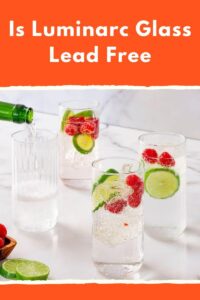
    Is Luminarc glass Lead Free

    Luminarc glass is lead-free because the material used and the manufacturing process don’t involve the addition of lead or cadmium.    

    Luminarc glassware brands do this to make sure their glass products are safe for people to use for eating and drinking, without any risk of lead getting into the food or drinks, which could be harmful to our health.

    IS LUMINARC GLASS TOXIN FREE?

    Yes, Luminarc products or Luminarc glass are free of toxins since they are made from a natural, non-porous, and ultra-resistant glass that is clean and hygienic for drinks and food.

    WHICH COUNTRY MADE LUMINARC GLASS?

    Luminarc glass is proudly made in France, a French Brand based in Arques, in the Pas-de-Calais region.

    Presently, the Luminarc glassware brand has factories in the USA, China, and the UAE and sales in virtually most country.

    LEAD AND CADMIUM FREE GLASSWARE BRANDS

    Glassware brands that prioritize safety and health-consciousness have gained popularity due to their commitment to producing items that are free from harmful heavy metals.

    These brands, often recognized for their commitment to product quality and safety, offer glassware crafted without the presence of substances (lead or cadmium) known for potential health risks.

    These materials are notably absent from their production processes, ensuring the end products are safe for food and beverages.

    As a result, consumers can confidently choose glassware from these reputable brands, enjoying both beauty and peace of mind when it comes to avoiding potentially harmful elements in their drinking and dining experiences.

    See examples of safe glassware brands below:

    LUMINARC ASCOT TUMBLER SET

    Luminarc glasses are versatile glassware, renowned for their quality and design. They are popular for various purposes, including wine consumption and beyond.

    Luminarc Ascot cadmium free glassware Brand

    Luminarc offers a wide range of wine glasses, each tailored to specific varietals, enhancing the drinking experience.

    These glasses are crafted from tempered glass, ensuring durability and resistance to breakage. Beyond wine, Luminarc offers glassware for cocktails, beer, and everyday use.

    Their elegant designs suit both formal gatherings and casual settings. Luminarc’s glasses are dishwasher-safe, making maintenance easy.

    The free toxin and safe Luminarc drinking glass will surely give your house a special touch, affordable and classic!

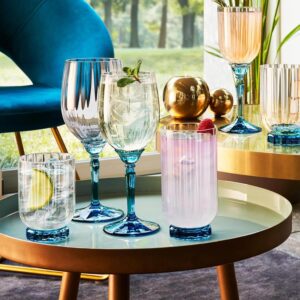
    LEAD-FREE BORMIOLI ROCCO SORGENTE TALL DRINKING GLASSES

    Bormioli Rocco Tall safe drinking glass brand for water juice, beer and cocktails

    The Bormioli Rocco tall drinking glass is a versatile glassware option suitable for various beverages. With a sleek, modern, and elegant design, it’s ideal for bars, adding sophistication to cocktail presentations.

    Its ample capacity accommodates water, juice, beer, and a wide range of mixed drinks and cocktails. Crafted from high-quality glass, it ensures durability and clarity.

    The tall structure provides an excellent grip and beautiful appeal, making it a go-to choice for both professional bartenders and home enthusiasts.

    Whether you’re serving refreshing water, vibrant juices, or crafted cocktails, this glass combines functionality with style.

    Finally, the Bormioli Rocco tall safe drinking glass is also perfect for Christmas, anniversaries, housewarming, and gifts for your loved ones.

    LIBBEY PROVINCE 24-PIECE TUMBLER AND ROCKS GLASS SET

    Libbey Province Tumbler and glass set

    The Libbey Province tumbler is a stylish glassware choice for both home use and parties. Crafted with lead-free glass, it prioritizes safety while offering a modern aesthetic.

    With a capacity of approximately 16 ounces, it accommodates various beverages, making it versatile for cocktails, soft drinks, or water.

    Its sleek design features a sturdy base and a subtly flared top, adding an elegant touch to any occasion.

    The tumbler’s clear and smooth surface showcases drinks beautifully, enhancing the overall presentation.

    Whether for casual gatherings or formal events, the Libbey Province tumbler combines functionality and contemporary design to elevate your drinkware collection.

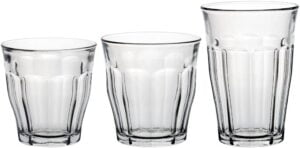
    DURALEX MADE IN FRANCE PICARDIE 18-PIECE GLASS TUMBLER DRINKING SET

    Duralex Tumbler drinking glass set

    The Duralex Picardie is an iconic glass drinking tumbler crafted in France, renowned for its quality and versatility.

    These tumblers are available in a variety of vibrant colors, adding a touch of elegance to your tableware.

    Duralex’s exceptional craftsmanship ensures that they are freezer-safe, allowing you to chill your favorite beverages without worry.

    Moreover, they are heat-resistant, making them suitable for hot drinks and microwave-safe for convenient reheating.

    Their stackable design not only saves space but also ensures easy storage. With timeless beauty and practical features, the Duralex Picardie is a beloved choice for both everyday use and special occasions.

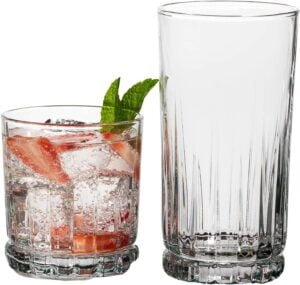
    ANCHOR HOCKING ANNISTON DRINKING GLASSES

    The Anchor Hocking Anniston drinking glasses are a versatile and modern addition to any kitchen or dining set.

    Anchor Hocking Anniston drinking glasses

    With a sleek design, they are suitable for a wide range of beverages, from juice and tea to cocktails and soda.

    These glasses are ideal for various occasions, making them perfect choices for weddings, holidays, and birthday gifts.

    What sets these glasses apart is their health-conscious design. Unlike some glassware, they don’t stain or retain odors, ensuring your drinks taste fresh every time.

    Plus, they are free from harmful chemicals that can leach into your beverages.

    The Anchor Hocking Anniston glasses combine style, versatility, and safety, making them a fantastic choice for both personal use and as thoughtful gifts for special occasions.

    IS SODA LIME GLASS LEAD-FREE?

    Lead Free Soda Lime Glass

    Yes, soda-lime glass is lead-free. Soda-lime glass is composed primarily of silica (sand), soda ash (sodium carbonate), and limestone (calcium carbonate). It does not contain lead as an intentional ingredient.

    That is why Soda lime glass is commonly used for items like bottles, dinnerware sets, and drinking glasses because it is safe for food and beverage contact and does not leach lead into substances it comes into contact with.

    Lead free Borosilicate glass for Baking

    Borosilicate glass food storage container

    IS CLEAR PYREX LEAD-FREE?

    Lead Free Clear Pyrex Glass

    Clear Pyrex glass is free from harmful toxins like Lead; they have a non-porous feature and is widely known for its transparency, durability, and resistance to thermal shock, which is why it is often used in kitchenware, laboratory equipment, and other applications where a transparent and heat-resistant material is needed.

    Finally, clear Pyrex glass won’t absorb stains or odor, and they are commonly used in baking dishes, measuring cups, and test tubes, among other things.

    IS PYREX GLASS LEAD-FREE?

    Yes, Pyrex glass is generally lead-free. In our previous article on understanding the distinction between Corelle and Pyrex brands, we highlighted that the Pyrex glassware is either made up of Borosilicate glass or soda lime glass (new Pyrex glass).

    Both Borosilicate and soda lime Pyrex glass are non-reactive and contain no hidden harmful toxins, making them safe for cooking and food storage.

    However, if you feel you need to perform a Lead test to be double sure, by all means necessary, kindly go ahead or contact the manufacturer directly for product specifications and safety information.

    Finally, always exercise caution with older glassware, especially if it shows signs of wear, as it may have a higher risk of lead leaching into food or liquids.

  • Are IKEA Dishes Lead Free? What You Need to Know

    You’ve just unpacked your stylish new IKEA dinnerware, arranged it beautifully in your cabinet, and are excited to serve your next meal.

    But suddenly, a thought pops into your mind: “Are these dishes safe? Could they contain lead?” It’s a valid concern that many homeowners share, especially with growing awareness about toxic materials in various household items, including dinnerware.

    Even in small amounts, lead exposure can accumulate in the body over time, potentially leading to serious health consequences.

    The good news? IKEA has taken significant steps to ensure its products meet strict safety standards.

    But exactly how lead-free are they? Before your next dinner party, let’s dive into what you need to know.

    WHAT ARE IKEA DISHES MADE OF?

    IKEA offers several dinnerware collections made from different materials, each with its own characteristics and safety profile:

    Are Ikea Plates non toxic
    1. Stoneware – Many IKEA plates and bowls are made from stoneware, a durable ceramic material fired at high temperatures. Collections like FÄRGRIK and DINERA use this material.
    2. Tempered glass – Products like OFTAST plates and bowls are made from tempered glass, which is heat-resistant and durable.
    3. Feldspar porcelain – Higher-end collections like IKEA365+ Dinnerware use feldspar porcelain, which is a refined ceramic material known for its strength and translucence.
    4. Bone china – Some premium IKEA dinnerware options use bone china, which contains bone ash for added durability and a distinct appearance.
    5. Stainless Steel – IKEA offers various ranges of stainless steel plates that can cater to your home needs with ease. An example is the TUVHATTA Stainless Steel collection.

    ARE IKEA DISHES LEAD-FREE?

    IKEA dishes lead free

    This is the burning question many consumers have, and rightfully so. Here’s what you should know:

    IKEA has a strong commitment to product safety and follows strict regulations regarding harmful substances.

    According to IKEA’s official statements and product documentation, its dinnerware complies with all applicable regulations regarding lead content in consumer products.

    In the European Union and many other markets, IKEA adheres to the EU Food Contact Materials Regulation (EC) No 1935/2004, which sets strict limits on lead migration from food contact materials.

    For the US market, IKEA complies with FDA regulations, which also limit lead in food-contact ceramics.

    It’s important to understand the distinction between “lead-free” and “lead-safe”:

    • Lead-free means no lead is used in the manufacturing process
    • Lead-safe means any lead present is within regulatory limits and does not migrate into food at harmful levels

    Most modern IKEA dinnerware is designed to be lead-safe, with many collections being completely lead-free, especially those introduced in recent years as safety standards have become more stringent.

    IKEA’S SAFETY TESTING AND COMPLIANCE

    IKEA's safety testing and compliance

    IKEA subjects its products to rigorous testing before they reach consumers:

    • Internal quality assurance protocols
    • Third-party laboratory testing
    • Compliance verification with international safety standards

    The company regularly tests for lead and other heavy metals to ensure its products meet or exceed safety requirements in all markets where they operate.

    Let’s look at some popular IKEA dinnerware collections and what we know about their safety:

    OFTAST Collection

    The OFTAST collection features white tempered glass dinnerware that’s both affordable and practical.

    Is IKEA 365 Dinnerware Lead Free

    When comparing the difference between IKEA OFTAST and Corelle, both are made from tempered glass materials designed to be durable and resistant to breakage.

    OFTAST products comply with IKEA’s safety standards and are designed for everyday use.

    IKEA365+ Collection

    The IKEA365+ Dinnerware line features minimalist designs made from feldspar porcelain. This collection is particularly popular for its clean design and durability.

    IKEA 365 Plate

    These porcelain products are suitable for everyday use while maintaining safety standards that comply with international regulations.

    FÄRGRIK Collection

    This colorful stoneware collection offers affordability with safety. FÄRGRIK products are tested to comply with safety standards regarding lead and other heavy metals.

    WHAT ABOUT IKEA MUGS AND GLASSWARE?

    IKEA Mugs come in various designs and materials, from ceramic to glass. Like its dinnerware counterparts, IKEA tests its mugs to ensure compliance with safety regulations regarding lead and other potential contaminants.

    IKEA Lead Free Mugs

    For those interested in alternatives, Luminarc lead free glasses offer another option in the market for those particularly concerned about lead content in glassware.

    Both brands emphasize safety in their manufacturing processes.

    IKEA DINNERWARE MATERIALS COMPARISON

    CollectionMaterialHeat ResistanceDishwasher & Microwave Safety
    OFTASTTempered glassUp to 212°F (100°C)Yes
    IKEA365+Feldspar porcelainUp to 350°F (175°C)Yes
    FÄRGRIKStonewareUp to 300°F (150°C)Yes
    DINERAStonewareUp to 300°F (150°C)Yes
    ARVEarthenwareUp to 240°F (115°C)Yes

    Note: About the Lead safety features, all of the IKEA Dinnerware collection above meets the EU and FDA Standards.

    UNDERSTANDING PORCELAIN MATERIAL

    Porcelain is generally considered one of the safer ceramic options. Modern porcelain manufacturing typically uses lead-free glazes, especially for food-contact surfaces.

    IKEA’s porcelain products are designed to comply with all relevant safety standards.

    However, it’s worth noting that antique or decorative porcelain items (not from IKEA) may contain lead in their glazes and should be used with caution for food service.

    BEST MATERIALS FOR LEAD-FREE DINNERWARE

    When considering the best dinnerware-safe material for health, several options stand out:

    1. Tempered Glass – Naturally lead-free and non-reactive
    2. Stainless Steel – Durable and free from lead concerns
    3. Modern Porcelain – When made to current safety standards
    4. Bone China – Modern versions typically meet safety standards
    5. Unglazed Stoneware – Natural option without glaze concerns

    IKEA offers products in several of these categories, particularly tempered glass and modern porcelain, providing consumers with safer options.

    TIPS FOR USING IKEA DINNERWARE SAFELY

    Even with IKEA’s safety standards, here are some best practices for using any dinnerware:

    Store food in dedicated food storage containers rather than decorative dishes.

    Avoid using chipped or cracked dishes, as damaged glaze can potentially expose materials underneath.

    Follow care instructions to maintain the integrity of the surfaces.

    Consider reserving decorative items for display only and using food-grade dishes for meals.

    WHAT THE EXPERTS SAY

    According to the National Library of Medicine and IKEA

    “Modern manufacturing processes have significantly reduced the lead content in consumer ceramics. Many manufacturers now use lead-free or lead-safe glazes, though trace contamination can still occur. Major retailers like IKEA adhere to stringent guidelines, and their dinnerware is generally considered safe for normal use, as they have phased out lead in their products since the 1990s. However, consumers should remain cautious with ceramics from unknown or unregulated sources, especially older or imported items that may still pose a risk of lead leaching”.

    According to Consumer Reports, –

    “The biggest concerns with lead in dinnerware typically arise from antique, vintage, handcrafted, or imported ceramics, especially from regions with less stringent regulations. These items often pose risks due to outdated manufacturing practices, improper glazing, or decorative elements that may contain lead. Modern dinnerware sold by major retailers generally complies with strict regulatory standards like FDA and Prop 65, minimizing lead exposure risks”.

    FAQS ABOUT IKEA DISHES AND LEAD

    Are IKEA ceramic dishes lead-free? IKEA’s ceramic dishes are designed to comply with international safety standards for lead content. While “lead-free” can be a technical term with specific thresholds, IKEA products are manufactured to be safe for food contact, with any potential lead content below regulatory limits.

    How can I test my IKEA dishes for lead? While home lead testing kits are available, they vary in accuracy. The most reliable method is laboratory testing. However, IKEA products undergo extensive testing before reaching consumers to ensure they meet safety standards.

    Is IKEA dinnerware microwave-safe? Most IKEA dinnerware is microwave-safe, but you should always check the specific product information on the packaging or IKEA’s website for confirmation about your particular items.

    How does IKEA ensure its dishes are safe? IKEA employs multiple testing protocols, including internal quality assurance measures and third-party verification, to ensure its products meet all applicable safety regulations in the markets where they operate.

    Which IKEA dinnerware collection is the safest? All IKEA dinnerware collections are designed to meet safety standards. The IKEA365+ collection, made from feldspar porcelain, and the OFTAST collection, made from tempered glass, are both durable options that comply with safety regulations.

    CONCLUSION

    When it comes to IKEA dishes and lead safety, the evidence suggests you can shop with confidence.

    IKEA’s commitment to regulatory compliance, combined with its transparent testing and quality assurance processes, means its dinnerware is designed to meet modern safety standards.

    Whether you’re drawn to the minimalist design of IKEA365+ porcelain or the practical durability of OFTAST tempered glass, you’re investing in products that prioritize both style and safety.

    The next time you set your table with IKEA dinnerware, you can focus on enjoying your meal and your company with one less worry on your mind. Why not take a fresh look at your kitchen collection today?

  • IKEA Oftast vs Corelle: The Ultimate Dinnerware Comparison Guide

    You’re standing in the kitchenware aisle, torn between IKEA’s budget-friendly Oftast plates and the legendary Corelle dinnerware.

    Your current set is chipped and tired, and you’re ready for an upgrade that won’t break at the first sign of trouble.

    Both brands promise durability and style, but which truly delivers? As someone who’s tested countless dinnerware options over the years, I’ve seen the good, the bad, and the shattered across kitchen floors worldwide.

    The battle between IKEA Oftast and Corelle isn’t just about price—it’s about longevity, aesthetics, and whether they’ll survive your toddler’s next mealtime tantrum.

    By the end of this comparison, you’ll know exactly which plates deserve a spot in your cupboard. But first, let me warn you—the winner might surprise you.

    WHAT ARE IKEA OFTAST AND CORELLE DINNERWARE?

    IKEA Oftast: The Affordable Challenger

    IKEA Oftast represents the Swedish furniture giant’s entry-level dinnerware option.

    These white, minimalist plates and bowls are made from tempered opal glass, giving them a surprisingly durable quality despite their budget-friendly price point.

    The Oftast line typically includes basic dinner plates, side plates, and bowls with a clean, simple design that fits nearly any kitchen aesthetic.

    Ikea Oftast Tempered glass Plates

    IKEA Oftast pieces are:

    • Made from tempered glass
    • Microwave and dishwasher safe
    • Budget-friendly
    • Minimalist in design with clean lines
    • Stark white

    Corelle: The Established Champion

    Corelle has been a household name in dinnerware since the 1970s. Known for their virtually unbreakable reputation, Corelle plates and bowls are made from a unique three-layer glass lamination process called Vitrelle.

    Corelle Square Plates

    This patented material gives Corelle its legendary durability while maintaining a surprisingly lightweight feel.

    Corelle dinnerware features:

    • Triple-layer glass construction
    • Chip and break resistance
    • Lightweight design
    • Various patterns and designs
    • Microwave and dishwasher safe
    • Higher price point than IKEA

    While dinner sets comparable to Corelle exist in the market, few have achieved the same level of household recognition and trust.

    MATERIAL AND DURABILITY: THE BREAK TEST

    IKEA Oftast Material

    IKEA Oftast dinnerware is made from tempered glass, which undergoes a treatment process to increase its strength compared to regular glass.

    This gives it decent durability for everyday use, though it’s not invincible. The tempered opal glass construction provides a good balance between durability and affordability.

    Corelle Material

    Corelle’s proprietary Vitrelle glass technology is what sets it apart. This material consists of three layers of glass that are thermally bonded, creating an incredibly strong yet lightweight product.

    The outer layers are made of clear glass, while the core layer contains a special glass material that provides exceptional strength.

    Durability Comparison

    Ikea Oftast vs Corelle

    When it comes to durability, there’s a clear difference between these two options:

    FeatureIKEA OftastCorelle
    Drop resistanceModerateExcellent
    Chip resistanceGoodExcellent
    Thermal shock resistanceGoodExcellent
    WeightMediumLight
    WarrantyLimited3-year limited

    Corelle and IKEA brand legendary durability makes them particularly useful for RV living and travel, where breakage risks are higher due to movement and limited storage.

    The lightweight nature of Corelle also means less weight overall—an important consideration for RV owners concerned about vehicle weight limits.

    In real-world testing, Corelle consistently outperforms IKEA Oftast in drop tests. While Oftast can survive minor falls and bumps, Corelle can often be dropped from counter height onto hard surfaces without breaking—something few other dinnerware options can claim.

    PRICE COMPARISON: BUDGET VS. INVESTMENT

    One of the most significant differences between these two dinnerware options is the price point:

    ProductIndividual Piece Price (approx.)16-Piece Set Price (approx.)
    IKEA OftastLowMedium
    CorelleMedium (varies)Fairly High ( depends on the pattern)

    The price difference is substantial, with IKEA Oftast costing roughly one-third of Corelle’s price. This makes Oftast an attractive option for:

    • University students
    • First homes
    • Temporary accommodations
    • Budget-conscious shoppers
    • Those who replace dinnerware frequently

    Corelle, while more expensive initially, may prove more economical over time due to its exceptional durability and resistance to breaking.

    Dishes comparable to Corelle

    Many Corelle owners report using the same set for 10+ years without replacement, making it a long-term investment.

    DESIGN AND AESTHETICS: STYLE SHOWDOWN

    IKEA Oftast Design

    IKEA Oftast embraces minimalism with its clean, simple design. The collection features:

    IKEA Oftast Plates for kitchen and Dining
    • Stark white colour
    • No patterns or decorative elements
    • Modern, simple shapes
    • Rough-textured back
    • Has straight edges
    • Limited variety in design options

    This simplicity is both a strength and a limitation. While it ensures Oftast will match virtually any kitchen decor, it offers little in terms of personal expression or style.

    Beyond the basic plates and bowls, IKEA also manufactures beautiful mugs and complementary items that can add personality to an Oftast-based collection.

    Corelle Design

    Corelle offers significantly more variety in terms of design:

    • Multiple patterns (floral, geometric, classic, contemporary)
    • Various colour options
    • Different collections for different aesthetics
    • Seasonal and limited edition designs
    • Slight, sleek design on the edges and smooth surfaces
    • Larger in diameter
    • Mix-and-match capabilities

    This variety allows for greater personalization and expression through your dinnerware choices.

    Corelle’s designs range from ultra-minimalist white (similar to Oftast) to elaborate patterns for those who want their dinnerware to make a statement.

    FAMILY-FRIENDLY FEATURES: KID TEST

    For families with young children, dinnerware durability becomes particularly important.

    IKEA Oftast for Families

    IKEA offers dedicated children’s dinnerware options, including the popular IKEA toddler plate collections, which feature fun designs and child-friendly features.

    IKEA Plastic Toddler Plates and Bowls

    However, the standard Oftast line offers several family-friendly benefits:

    • Low replacement cost if broken
    • Dishwasher safe for easy cleaning
    • Lightweight enough for children to handle safely
    • Chip-resistant edges

    The affordability of Oftast means parents don’t need to worry extensively about breakage, making mealtimes less stressful.

    Corelle for Families

    Corelle’s exceptional durability makes it particularly well-suited for households with children:

    • Nearly unbreakable under normal conditions
    • Lightweight for small hands
    • Smooth edges that resist chipping
    • Stain-resistant surface
    • Dishwasher safe

    Many parents report choosing Corelle specifically because it can withstand the drops, bumps, and general chaos that come with family mealtimes.

    The higher initial investment is offset by rarely needing to replace broken pieces.

    PORTABILITY AND STORAGE: SPACE SAVERS

    IKEA Oftast Portability

    IKEA Oftast dinnerware offers decent portability characteristics:

    • Moderately lightweight
    • Stackable design
    • Relatively thin profile for storage
    • Durable enough for occasional transport

    These qualities make Oftast a reasonable choice for picnics or casual outdoor gatherings, especially the IKEA Kalas collection.

    Corelle Portability

    Corelle excels in portability, making it popular for:

    • Camping events and outdoor activities
    • RV and caravan travel
    • Picnics and potlucks
    • Small kitchens with limited storage

    The exceptional lightness of Corelle dinnerware means less weight to carry and less space required for storage.

    A complete set of Corelle dinnerware often weighs less than half of what comparable ceramic or stoneware sets weigh.

    This portability, combined with its break-resistance, explains why Corelle is so frequently recommended for mobile living situations.

    The thin profile allows for efficient stacking, making it possible to store a complete 16-piece set in the space typically required for 8 pieces of standard ceramic dinnerware.

    ENVIRONMENTAL CONSIDERATIONS: ECO-FRIENDLY ANALYSIS

    IKEA’s Oftast Environmental Impact

    IKEA has made company-wide commitments to sustainability, which influence the Oftast line:

    However, the lower durability compared to Corelle means that Oftast pieces may need replacement more frequently, potentially increasing their lifetime environmental footprint.

    Corelle Environmental Impact

    Corelle’s environmental profile benefits from its exceptional durability:

    • An extremely long lifespan reduces replacement frequency
    • Lightweight nature requires less material and less fuel for shipping
    • Made in the USA (for many markets), potentially reducing shipping distance

    The durability of Corelle means fewer replacements over time, potentially making it a more environmentally friendly choice despite the higher initial resource investment in manufacturing.

    SPECIAL USE CASES: BEYOND EVERYDAY DINING

    IKEA Oftast Special Uses

    IKEA Oftast’s affordability makes it ideal for:

    • Rental properties
    • University accommodations
    • Starter homes
    • Backup dinnerware
    • Large gatherings where breakage risk is higher

    The low price point means you can buy in bulk for special events without significant investment.

    Corelle Special Uses

    Corelle’s unique combination of durability and lightweight design makes it perfect for:

    • Useful for RV and Caravan Living
    • Boat galley kitchens
    • Outdoor dining
    • Households with limited mobility (due to light weight)
    • Multi-generational households

    The break-resistant nature of Corelle is particularly valuable in mobile living situations where bumps and vibrations are common, and replacement options may be limited.

    CARE AND MAINTENANCE: LONGEVITY TIPS

    Both dinnerware options are relatively low-maintenance, but there are some differences in care requirements:

    Care AspectIKEA OftastCorelle
    Dishwasher safeYesYes
    Microwave safeYesYes
    Oven safeNoYes ( but adhere to temperature limitations)
    Freezer safeYes, but be cautiousYes, but be cautious
    Stain resistanceGoodExcellent
    Scratch resistanceModerateGood

    To maximize the lifespan of either dinnerware type:

    • Avoid sudden temperature changes
    • Don’t use abrasive cleaning tools
    • Stack carefully with protective layers if needed
    • Handle with reasonable care during washing

    Corelle generally requires less careful handling due to its superior durability, making it more forgiving in busy households.

    CUSTOMER REVIEWS AND SATISFACTION: REAL USER EXPERIENCES

    IKEA Oftast User Feedback

    IKEA Oftast reviews typically highlight:

    • Excellent value for money
    • Satisfactory durability given the price point
    • Appreciation for the minimalist design
    • Reports of breakage from thermal shock (hot/cold transitions)

    Many users express surprise at how well Oftast holds up compared to other budget dinnerware options, though few expect it to last for decades.

    Corelle User Feedback

    Corelle reviews often emphasize:

    • Extraordinary durability, often with stories of accidental drops without breakage
    • Appreciation for the lightweight design
    • Positive comments about stain resistance
    • High satisfaction with longevity (many reporting 10+ years of use)
    • Occasional complaints about the limited thickness for heat retention

    Corelle has developed a devoted customer base, with many households using the same sets for generations. This loyalty speaks to the consistent quality and performance of the product.

    VERDICT: WHICH SHOULD YOU CHOOSE?

    After a thorough comparison, the choice between IKEA Oftast and Corelle comes down to your specific needs and priorities:

    Choose IKEA Oftast if:

    • Budget is your primary concern
    • You prefer to change dinnerware styles frequently
    • You need a large quantity of matching pieces
    • You’re in a temporary living situation
    • You appreciate minimalist aesthetics

    Choose Corelle if:

    • Durability is a top priority
    • You want a long-term investment
    • You have active children or a busy household
    • You need lightweight dinnerware
    • You value variety in patterns and designs
    • You plan to use your dinnerware for travel or outdoor activities

    For many households, the ideal solution might be a combination: Corelle for everyday use and IKEA Oftast as supplementary pieces for large gatherings or specific occasions.

    CONCLUSION

    The battle between IKEA Oftast and Corelle represents a classic case of budget-friendly basics versus premium durability.

    While Oftast offers remarkable value with its clean design and decent performance at an unbeatable price point, Corelle’s legendary toughness and lightweight construction make it worth the extra investment for many households.

    Your lifestyle should guide your choice—students and temporary dwellers will appreciate Oftast’s affordability, while families and long-term homeowners might find that Corelle’s durability pays for itself over time.

    Whatever you choose, both options stand head and shoulders above typical budget dinnerware in terms of quality and performance.

    Consider your priorities—budget, longevity, aesthetics, or weight—and let that guide your decision.

    After all, the perfect dinnerware is the one that seamlessly supports your daily life without drawing attention to itself until you want it to.