Category: Dinnerware Sets

  • Opalware vs Bone China: Which Dinnerware Reigns Supreme?

    You’re hosting a dinner party, and as your guests arrive, their eyes immediately drift to your stunning table setting.

    The gleaming dinnerware catches the light perfectly, setting the stage for an unforgettable evening. But which material should grace your table—the contemporary elegance of opalware or the timeless sophistication of bone china?

    Whether you’re a seasoned collector or simply looking to upgrade your daily dishes, choosing between these popular options can feel overwhelming.

    Both materials offer distinct advantages in durability, appearance, and practicality, yet they differ significantly in composition, price point, and maintenance requirements.

    Ready to discover which dinnerware will best complement your lifestyle and aesthetic preferences? Let’s uncover the differences that make each option unique.

    WHAT IS OPALWARE?

    Opalware, often called opal glass or opal glassware, is a modern dinnerware option that has gained immense popularity in recent years.

    This material is created through a unique manufacturing process that involves the use of tempered opal glass, which consists of three layers of glass laminated together and then heat-strengthened.

    The outer layers are typically clear, while the middle layer contains a special opacifying agent.

    Opalware dinnerware sets

    Opalware’s distinctive milky-white appearance resembles opal gemstones, hence the name. Despite its glass-like qualities, it possesses remarkable strength and durability compared to traditional glass products.

    Most opalware products come with a 2-3 year warranty, highlighting manufacturers’ confidence in their longevity.

    Key Features of Opalware:

    • Lightweight yet sturdy construction
    • Resistant to chipping and breaking
    • Safe for microwave, dishwasher, and refrigerator use
    • Non-porous surface that resists staining
    • Available in a wide range of patterns and designs
    • More affordable than bone china
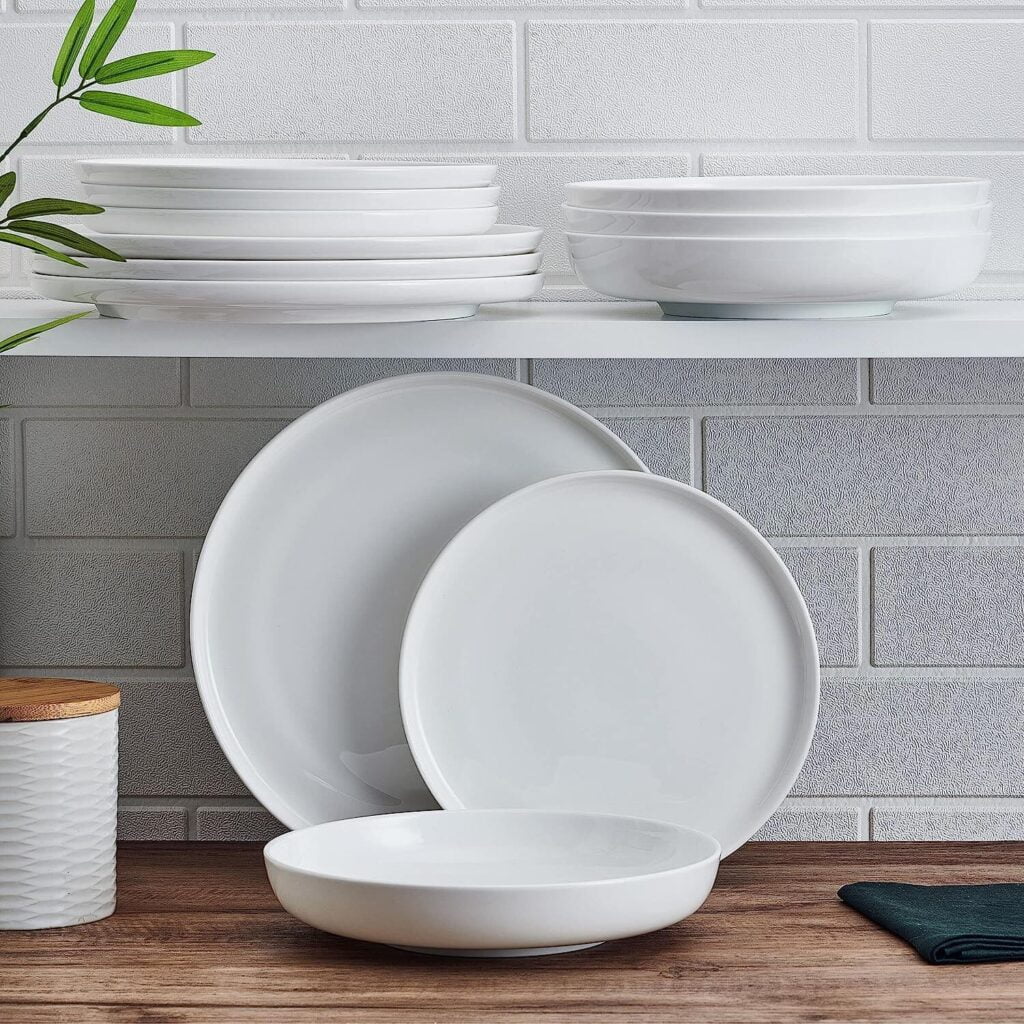
    Opalware Lightweight break resistant dish set

    The manufacturing process of opalware makes it particularly suitable for everyday use, as it can withstand the rigours of daily handling while maintaining its pristine appearance.

    WHAT IS BONE CHINA?

    Bone China represents the pinnacle of fine dinnerware, with a rich history dating back to the 18th century.

    Elegant Bone China dinnerware by Mikasa Ciara

    As its name suggests, this premium material contains actual bone ash—specifically, calcified cattle bones—which gives it its characteristic translucent appearance and exceptional strength.

    Traditional bone china comprises approximately 25-50% bone ash, 25% kaolin (a type of clay), and 25% feldspar (a type of mineral).

    This unique composition creates dinnerware that’s simultaneously delicate in appearance yet remarkably strong.

    Key Features of Bone China:

    • Exceptional translucency when held up to light
    • Elegant, thin profile with a refined appearance
    • Exceptional strength despite its delicate appearance
    • Chip-resistant properties
    • Bright white colour with a warm undertone
    • Premium price point reflecting its quality
    • Often features hand-painted designs or gold/platinum trim
    Embossed Bone China by Gibson brand

    The presence of bone ash in the material makes bone china more expensive than other ceramic options, but many connoisseurs believe the investment is worthwhile for its unmatched elegance and durability.

    Many porcelain and bone china dinnerware for daily use are available for those who appreciate fine dining experiences every day.

    OPALWARE VS BONE CHINA: A COMPREHENSIVE COMPARISON

    Opalware vs Bone China

    When comparing these two distinguished dinnerware materials, several factors come into play—from durability and aesthetics to price and maintenance requirements.

    Let’s explore each aspect in detail:

    Composition and Manufacturing

    Opalware:

    • Made from tempered glass with three fused layers
    • Contains no bone ash or animal products (completely vegetarian-friendly)
    • Machine-manufactured for consistency

    Bone China:

    • Contains 25-50% bone ash from cattle
    • Includes kaolin clay and feldspar
    • Often involves hand-finishing techniques
    • Requires high firing temperatures (over 1200°C)

    Appearance and Aesthetics

    Opalware:

    • Milky-white, opaque appearance
    • Modern, contemporary aesthetic
    • Often features bold patterns and colours
    • Uniform thickness throughout

    Bone China:

    • Translucent when held to light
    • Exceptionally thin profile
    • Traditional, elegant appearance
    • Often features delicate patterns and precious metal accents

    Durability and Strength

    Opalware:

    • Highly resistant to breakage from falls
    • Can opalware break? Yes, but it’s significantly more difficult to break than regular glass or ceramics
    • Less likely to chip than bone china
    • Excellent thermal shock resistance

    Bone China:

    • Surprisingly strong despite its delicate appearance
    • More susceptible to chipping than opalware
    • Excellent resistance to cracking
    • Moderate thermal shock resistance

    Weight and Feel

    Opalware:

    • Lightweight and easy to handle
    • Slightly thicker profile
    • Smooth, cool touch

    Bone China:

    • Lightweight with a delicate feel
    • Thin, refined edges
    • Warm, smooth surface texture

    Price Comparison

    FeatureOpalwareBone China
    Entry-level set priceMostly AffordableHigh
    Premium set priceHighPremium Price
    Individual plate costAffordableFair Price
    Replacement availabilityWidely availableMay be discontinued
    Value retentionModerateHigh (collector potential)

    Maintenance Requirements

    Opalware:

    • Dishwasher safe
    • Microwave safe
    • Refrigerator safe
    • Resists staining and odours
    • Easy to clean

    Bone China:

    • Often dishwasher safe (check manufacturer guidelines)
    • Usually microwave safe unless it has metallic accents
    • Requires gentle handling during cleaning
    • May need special care for pieces with gold or platinum trim

    OPALWARE VS CERAMIC: UNDERSTANDING THE DIFFERENCES

    Opalware vs Ceramic

    While both opalware and ceramic are popular dinnerware choices, they differ significantly in composition, durability, and appearance.

    Ceramic dinnerware encompasses a broad category of materials made from clay that’s been shaped and fired at high temperatures.

    This includes earthenware, stoneware, and porcelain. Each type varies in density, strength, and porosity.

    Key Differences:

    1. Composition: Opalware is made from tempered glass, while ceramic is made from clay.
    2. Durability: Opalware generally offers superior chip and break resistance compared to most ceramic options (except for high-quality porcelain).
    3. Weight: Opalware is consistently lightweight, while ceramic options vary from heavy (stoneware) to relatively light (porcelain).
    4. Heat Retention: Ceramic typically retains heat better than opalware, making it preferred for serving hot foods.
    5. Price: Mid-range ceramic options like stoneware are often less expensive than opalware, while high-end porcelain can be more costly.

    If you’re choosing between these options, consider opalware for durability and lightweight handling and ceramic for traditional aesthetics and better heat retention.

    OPALWARE VS PORCELAIN: MAKING THE RIGHT CHOICE

    Opalware vs Porcelain

    Porcelain is a type of ceramic made from kaolin clay fired at extremely high temperatures (1200-1400°C), resulting in a non-porous, glass-like material.

    Comparing Key Aspects:

    1. Translucency: Fine porcelain offers some translucency but generally less than bone china. Opalware has an opaque, milky appearance.
    2. Durability: High-quality porcelain is quite durable but typically more prone to chipping than opalware. Opalware offers superior resistance to breakage.
    3. Appearance: Porcelain has a refined, elegant look with a bright white finish. Opalware has a contemporary, clean aesthetic.
    4. Weight: Both materials are relatively lightweight, though porcelain can vary in thickness.
    5. Price: Fine porcelain typically costs more than opalware but less than bone china.

    Porcelain might be your ideal choice if you prefer a traditional aesthetic with excellent heat retention. Opt for opalware if you value maximum durability and contemporary styling.

    To learn more about Porcelain, check the difference between vitrelle glass and porcelain, and to see how tempered opal glass performs in real-world use, check our Arcopal vs Corelle comparison.

    OPALWARE VS MELAMINE: SAFETY AND PRACTICALITY

    Opalware vs Melamine

    Melamine dinnerware has become popular for casual dining, particularly for outdoor use or families with young children. But how does it compare to opalware?

    Melamine is a type of plastic resin that’s molded into dinnerware shapes. It’s extremely durable and virtually unbreakable, making it popular for casual settings.

    Important Considerations:

    1. Safety: Opalware is generally considered the safest and healthiest dinnerware option between these two choices. Melamine contains chemicals that can potentially leach into food when heated, making it unsuitable for microwave use.
    2. Durability: Both materials are highly resistant to breaking. Melamine may be slightly more resistant to damage from drops, but can scratch more easily than opalware.
    3. Appearance: Opalware has a more premium, glass-like appearance, while melamine has a distinctly plastic look and feel despite modern improvements in design.
    4. Heat Resistance: Opalware can safely go in the microwave and withstand higher temperatures, while melamine should never be microwaved or exposed to high heat.
    5. Environmental Impact: Opalware is more environmentally friendly, as it’s made from natural materials and is recyclable. Melamine is not biodegradable or easily recyclable.

    For families seeking safe, durable dinnerware that doesn’t compromise on appearance or functionality, opalware offers significant advantages over melamine, despite the slightly higher price point.

    WHICH IS BETTER: BONE CHINA OR CERAMIC?

    When comparing bone china to other ceramic options, bone china consistently stands out for its exceptional quality and refined characteristics.

    Bone China vs General Ceramic Options:

    1. Strength: Despite its delicate appearance, bone china is stronger than standard porcelain or stoneware due to its bone ash content.
    2. Translucency: Bone china offers superior translucency compared to other ceramics, creating a distinctive, elegant appearance when held to light.
    3. Weight: Bone china is typically lighter than other ceramic options of similar thickness.
    4. Resonance: Bone china produces a distinctive ring when tapped, indicating its high quality. Other ceramics produce a duller sound.
    5. Thermal Properties: Bone china retains heat effectively while remaining comfortable to handle.

    For those who appreciate fine dining experiences and are willing to invest in premium tableware, bone china represents the pinnacle of ceramic dinnerware.

    Its exceptional durability-to-weight ratio makes it suitable for both special occasions and daily use, though its higher price point means many households reserve it for entertaining or special meals.

    WHAT IS THE STRONGEST MATERIAL FOR DINNERWARE?

    When it comes to sheer strength and durability, several materials compete for the title of strongest dinnerware option:

    Strength Comparison:

    1. Vitrelle Glass (Corelle): Often considered the strongest option for everyday use, this tempered glass material (similar to opalware) consists of three layers of glass laminated together. It’s highly resistant to breaking and chipping while remaining lightweight.
    2. Melamine: Nearly unbreakable under normal use conditions, melamine excels in drop resistance but can scratch and isn’t suitable for hot foods or microwave use.
    3. Bone China: Surprisingly strong despite its delicate appearance, premium bone china offers excellent chip resistance combined with elegance.
    4. Stoneware: Thick, heavy stoneware provides good durability but is more susceptible to chipping than the above options.
    5. Porcelain: High-quality porcelain offers good durability but typically doesn’t match the strength-to-weight ratio of bone china or the break resistance of opalware.

    For households with young children or those who prioritize maximum durability, opalware and similar tempered glass products typically offer the best combination of strength, versatility, and appearance.

    For those seeking the strongest, elegant option, bone china provides remarkable durability, considering its refined appearance.

    MAKING YOUR FINAL DECISION

    Choosing between opalware and bone china ultimately depends on your lifestyle, preferences, and budget. Consider these factors when making your decision:

    Choose Opalware If:

    • You need dinnerware that can withstand daily use by all family members
    • You prefer lightweight, easy-to-handle dishes
    • You’re looking for microwave, dishwasher, and refrigerator-safe options
    • You have a modern aesthetic and prefer contemporary designs
    • You’re working with a moderate budget
    • You want maximum break resistance

    Choose Bone China If:

    • You appreciate traditional elegance and fine dining experiences
    • You’re willing to invest in premium-quality dinnerware
    • You value the translucent appearance and refined aesthetics
    • You don’t mind taking extra care with handling and cleaning
    • You’re looking for dinnerware with potential collector’s value
    • You want to create a sophisticated table setting for special occasions

    Many households find that having both types serves them well—opalware for everyday family meals and bone china for entertaining and special occasions.

    CONCLUSION

    The choice between opalware and bone china doesn’t have to be an either-or decision. Both materials offer distinct advantages that cater to different needs and preferences.

    Opalware shines with its impressive durability, contemporary aesthetic, and practical features that make it perfect for busy households.

    Meanwhile, bone china continues to represent the gold standard in elegant dining with its translucent beauty, surprising strength, and timeless appeal.

    Whatever you choose, quality dinnerware is an investment in daily pleasure—transforming ordinary meals into special occasions and creating the perfect backdrop for life’s memorable moments.

    Consider what matters most to you—practicality, aesthetics, or a balance of both—and select the option that will bring you joy every time you set the table.
  • What is Tempered Opal Glass: Everything You Need to Know

    Across the table, conversations momentarily pause as you set down your signature lasagna. It’s not just the aroma causing the stir—it’s the stunning white serving dish that has captured everyone’s attention.

    The elegant, milky-white glass with its soft radiance isn’t ordinary tableware—it’s tempered opal glass.

    For generations, this remarkable material has enhanced dining tables worldwide, seamlessly blending elegance with functionality in a way few other materials can achieve.

    But what exactly makes tempered opal glass so special? How does it differ from other popular materials?

    And why have so many dinnerware enthusiasts fallen in love with its unique properties?

    Let’s uncover the secrets behind this beloved kitchen essential that might just revolutionize your dining experience.

    WHAT IS TEMPERED OPAL GLASS?

    what is tempered opal glass

    Tempered opal glass is a specialized type of heat-treated glass that combines the striking aesthetic of traditional opal glass with enhanced durability and safety features.

    At its core, opal glass is created by adding specific materials like fluorides or phosphates to the glass mixture during manufacturing, resulting in its characteristic milky-white appearance and subtle translucency.

    Bormioli Rocco tempered Opal glass dinnerware

    What transforms ordinary opal glass into tempered opal glass is a carefully controlled heating and rapid cooling process known as thermal tempering.

    This process creates a compressed outer layer and a tensioned inner layer, significantly increasing the glass’s strength and changing its breaking behavior.

    Borosil tempered Opal glass dinnerware

    When standard glass breaks, it shatters into sharp, dangerous shards.

    In contrast, tempered opal glass is less likely to break under normal use conditions, and if it does break, it crumbles into small, relatively blunt pieces that pose a reduced injury risk—making it particularly valuable for household items.

    The Science Behind the Strength

    The tempering process involves heating the glass to approximately 620°C (1150°F) and then rapidly cooling the surfaces with high-pressure air blasts.

    Black Lightweight Opal glass dinnerware set

    This creates a permanent state of compression in the outer layers and tension in the inner layers, effectively giving the glass a “memory” that resists breaking under pressure.

    This scientific process results in glass that is typically 4-5 times stronger than untreated glass of the same thickness and composition.

    Ikea Opal glass dish

    The enhanced molecular structure is what gives tempered opal glass its remarkable resilience against:

    • Daily wear and tear
    • Thermal shock
    • Physical impact

    “Tempered opal glass represents one of the most significant innovations in dinnerware materials, combining aesthetic appeal with functional durability in ways that transformed how we approach table setting.” Journal of GarboGlass

    WHAT IS TEMPERED OPAL GLASS USED FOR?

    Tempered opal glass finds its way into numerous applications due to its unique combination of beauty, durability, and heat resistance.

    Here are the most common uses:

    Kitchen and Dining Applications

    • Dinnerware Sets: Plates, bowls, and serving platters that combine elegance with durability
    • Baking Dishes: Casseroles and baking pans that can go from freezer to oven
    • Serving Vessels: Beautiful serving bowls and platters that maintain food temperature
    • Drinkware: Mugs and glasses that resist breaking from daily use

    Beyond the Kitchen

    • Lighting Fixtures: Lampshades and light covers that diffuse light beautifully
    • Bathroom Accessories: Soap dishes, toothbrush holders, and decorative items
    • Decorative Objects: Vases, ornaments, and display pieces
    • Commercial Applications: Restaurant dinnerware and hotel amenities

    The heat-resistant casserole china glassware made from tempered opal glass has become particularly popular for its ability to withstand temperature extremes, making it ideal for both cooking and serving food in the same elegant vessel.

    COMPARISON TABLE: COMMON USES OF TEMPERED OPAL GLASS VS. OTHER MATERIALS

    ApplicationTempered Opal Glass AdvantagesCommon Alternatives
    BakewareDiffuses light beautifully, heat-resistantMetal (less attractive), Ceramic (heavier)
    DinnerwareChip-resistant, lightweight, elegant appearancePorcelain (more fragile), Stoneware (heavier)
    Serving DishesRetains heat/cold, lightweight, dishwasher safePlastic (less elegant), Silver (requires polishing)
    LightingDiffuses light beautifully, heat resistantPlastic (less durable), Clear glass (different aesthetic)

    OPAL GLASS VS. FROSTED GLASS: UNDERSTANDING THE DIFFERENCES

    Though they may appear similar at first glance, opal glass and frosted glass are fundamentally different in both composition and properties.

    Production Process

    Opal Glass: Created by adding specific materials like bone ash, fluorides, or phosphates to the glass mixture during the manufacturing process. These materials create a cloudy, milky appearance throughout the entire glass structure.

    Frosted Glass: Typically starts as clear glass that is later treated by acid etching, sandblasting, or mechanical abrading to create a translucent surface. The frosting is typically only on the surface, not throughout the material.

    Visual Appearance

    Opal Glass: Has a consistently milky, luminous quality throughout the entire material, often with a soft glow when light passes through it.

    Frosted Glass: Features a matte, textured surface that diffuses light but lacks the inner luminosity of opal glass. When viewed from the edge, you can often see that the interior is still clear glass.

    Practical Considerations

    Opal Glass:

    • More elegant appearance for tableware
    • Better heat retention properties
    • More consistent light diffusion for lighting applications

    Frosted Glass:

    • Often less expensive
    • More varied textures available
    • Typically not as durable as tempered opal glass.

    “Research indicates that consumers perceive opal glass as 37% higher in quality and elegance compared to frosted glass alternatives, particularly for dining applications.”

    OPAL GLASS VS. CERAMIC: A DETAILED COMPARISON

    When choosing between opal glass and ceramic for your dinnerware, understanding the key differences can help you make the right decision for your needs.

    Composition and Manufacturing

    Opal Glass: Made from silica, soda ash, and limestone with added opacifiers, formed at high temperatures and potentially tempered for added strength.

    Ceramic: Created from clay that is shaped and fired in a kiln, often with glazes applied for color, design, and to create a non-porous surface.

    Performance Characteristics

    Opal Glass:

    • Lighter weight
    • More consistent appearance
    • Less porous surface
    • More resistant to thermal shock
    • Typically, more resistant to chipping

    Ceramic:

    • Often more scratch-resistant
    • Greater variety of designs and textures
    • Sometimes more affordable
    • Can maintain handcrafted, artisanal qualities
    • May better retain heat for longer periods

    Best Uses

    Opal Glass excels in:

    • Everyday family dinnerware
    • Modern, clean aesthetic settings
    • Situations requiring lighter-weight options
    • Applications requiring thermal shock resistance

    Ceramic performs better for:

    • Rustic or artisanal aesthetics
    • Very hot foods are served for extended periods
    • Applications where weight adds perceived value
    • Settings where a unique, handcrafted appearance is desired.

    OPAL GLASS VS. STONEWARE: CHOOSING THE RIGHT MATERIAL

    Stoneware has become increasingly popular in recent years, but how does it compare to tempered opal glass for your dining needs?

    Material Properties

    Opal Glass:

    • Silica-based material with opacifying elements
    • Lighter weight
    • Consistent appearance across production batches
    • Non-porous without additional treatments

    Stoneware:

    • Dense ceramic material fired at high temperatures
    • Typically heavier and thicker
    • Often features unique variations in appearance
    • Requires glazing to become non-porous

    Practicality for Daily Use

    Opal Glass advantages:

    • Lighter and easier to handle
    • Less likely to chip around edges
    • More consistent appearance across sets
    • Generally better for households with children

    Stoneware advantages:

    • Often more resistant to scratching
    • Perceived as more “premium” by some consumers
    • Better retains heat for serving
    • It has a more rustic, artisanal aesthetic.

    SUSTAINABILITY CONSIDERATIONS

    The Environmental Product Research Institute notes that modern tempered opal glass production is a good choice for health-conscious consumers due to:

    • Lower energy requirements during production compared to stoneware
    • Potentially longer lifespan due to chip resistance
    • Less material is needed due to the thinner construction
    • Fully recyclable at the end of life

    Care and Maintenance

    Both materials require different care approaches:

    Opal Glass:

    • Generally dishwasher safe
    • Less likely to absorb stains or odors
    • Less likely to develop crazing (fine cracks in the surface)
    • Resistant to thermal shock

    Stoneware:

    • May require more careful handling
    • Sometimes not microwave safe if containing metallic elements
    • May develop a patina over time
    • More susceptible to thermal shock.

    WHAT IS TEMPERED OPAL GLASS GOOD FOR?

    Tempered opal glass offers several distinct advantages that make it particularly well-suited for specific applications. Here’s why many dinnerware enthusiasts specifically seek out this material:

    Superior Durability in Daily Use

    The tempering process significantly enhances opal glass’s resistance to:

    1. Impact damage: The compressed surface layer better absorbs everyday knocks and bumps
    2. Thermal shock: It can handle temperature changes that would crack ordinary glass
    3. Edge chipping: Common in regular ceramic and porcelain dinnerware
    4. Daily wear and tear: Maintains its appearance longer with regular use.

    Consumers reviews shows that properly tempered opal glass dinnerware lasted an average of 5.3 years of daily use before showing significant wear, compared to 3.7 years for standard ceramic alternatives.

    AESTHETIC APPEAL COMBINED WITH FUNCTIONALITY

    Tempered opal glass provides a unique combination of:

    • Elegant, luminous appearance that enhances food presentation
    • Consistent coloration across production batches
    • Smooth, non-porous surface that resists staining
    • Versatility from freezer to oven to table

    Health and Safety Benefits

    For health-conscious consumers, tempered opal glass offers important benefits:

    • Non-reactive surface that doesn’t leach chemicals into food
    • Non-porous material that doesn’t harbor bacteria
    • Safer breakage pattern if accidents occur
    • Free from lead and heavy metals, which are often found in some glazed ceramics

    Practical Advantages

    Beyond aesthetics and safety, practical considerations make tempered opal glass appealing:

    • Lightweight compared to stoneware and ceramic alternatives
    • Dishwasher safe for easy cleaning
    • Microwave compatible for convenience
    • Stackable without excessive wear or scratching.

    CARING FOR YOUR TEMPERED OPAL GLASS

    While tempered opal glass is designed for durability, proper care will extend its life and beauty for years to come:

    Daily Care Tips

    • Avoid extreme temperature changes: Though resistant to thermal shock, avoiding extreme transitions (like from freezer directly to hot oven) will extend lifespan
    • Use gentle cleaning products: Avoid abrasive cleaners that might dull the surface
    • Stack carefully: Though chip-resistant, careful stacking prevents unnecessary wear
    • Use appropriate utensils: Metal utensils are generally safe, but avoid cutting directly on the surface

    Addressing Common Issues

    IssueSolution
    Light ScratchesPolish with a mixture of baking soda and water using a soft cloth
    Stubborn StainsSoak in a solution of warm water and white vinegar
    Water SpotsRinse with distilled water or wipe with diluted white vinegar
    Metallic MarksRemove with baking soda paste and gentle rubbing

    When to Replace

    While tempered opal glass is durable, consider replacement if you notice:

    • Deep scratches that could harbor bacteria
    • Chips along edges that could continue to deteriorate
    • Any cracks that compromise the tempered structure.

    CONCLUSION

    Tempered opal glass represents a perfect marriage of beauty and functionality in the world of dinnerware.

    Its unique manufacturing process transforms ordinary glass into a kitchen essential that’s robust enough for daily use while maintaining an elegant aesthetic that elevates any dining experience.

    Whether you’re comparing it to frosted glass, ceramic, or stoneware alternatives, tempered opal glass stands out for its luminous appearance, impressive durability, and practical benefits.

    Next time you’re selecting dinnerware for your home, consider the timeless appeal and modern performance of tempered opal glass—a material that continues to captivate dinnerware enthusiasts with its perfect balance of form and function.

    Why not explore how this remarkable material might transform your own dining experience?


  • The Finest Dinnerware Made in USA: American Craftsmanship at Your Table

    You’ve just invited friends over for dinner. The menu is planned, the wine selected, but something’s missing those plates you’ve been using since college aren’t exactly making a statement.

    Ever noticed how the right dinnerware can transform an ordinary Tuesday night pasta into what feels like a reservation at that impossible-to-book bistro downtown?

    American-made dinnerware isn’t just about patriotic purchasing; it’s about bringing exceptional craftsmanship, rich history, and sustainable manufacturing right to your dining table.

    But with so many options, from gleaming white dinnerware made in the USA to artisanal hand-painted pieces, how do you choose what deserves to grace your next dinner party?

    BEST DINNERWARE MADE IN THE USA

    Dinnerware made in USA

    Experience dining in style with the finest lead and cadmium-free dinnerware made in the USA.

    From rustic farmhouse charm to metropolitan sleekness, these American manufacturers have perfected their craft through generations of dedicated artistry.

    Whether you’re searching for everyday-use ceramic dishes made in the USA or statement pieces for special occasions, these brands deliver both functionality and aesthetic appeal.

    Let’s explore the exceptional American brands that are redefining tableware:

    • Corelle Dinnerware
    • Pickard Fine China
    • Anchor Hocking
    • Nordic Ware
    • Fiestaware Tableware
    • HF Coors
    • Bauer Pottery
    • Rowe Pottery
    • Emerson Creek Pottery
    • Bennington Potters
    • Farm House Pottery
    • Stoneware & Co
    • East Fork Pottery
    • Heath Ceramics
    • Hanselmann Pottery
    • AnnieGlass
    • Mosser Glass
    • Haand Tableware
    • Liberty Tabletop

    CORELLE: AMERICA’S ICONIC WHITE DINNERWARE

    Imagine dropping a plate, and instead of shattering into dangerous shards, it bounces. That’s the Corelle magic.

    As one of the most attractive and sought-after dinnerware options in America, Corelle has revolutionized how we think about everyday dishes.

    Formerly World Kitchen but now owned by Instant Brands (the masterminds behind Pyrex, Corningware, and Chicago Cutlery), Corelle manufactures its signature Vitrelle products in Illinois.

    Corelle Vitrelle made in the USA

    This innovative 3-ply laminated material creates dinnerware that’s remarkably lightweight yet impressively durable.

    What makes Corelle stand out in a crowded market? Their pieces are chip-resistant, non-porous, microwave-safe, dishwasher-safe, and virtually break-resistant.

    For families with young children or anyone who appreciates practical elegance, Corelle offers peace of mind without sacrificing style.

    Their white dinnerware made in the USA provides a perfect canvas for any culinary creation, making your homemade lasagna look like it belongs in a food magazine spread.

    The minimalist aesthetic works equally well for casual Tuesday dinners or weekend entertaining.

    Perfect for compact spaces, Corelle has become the go-to RV kitchen dish option for travelers who refuse to sacrifice style on the road.

    Their stackable design conserves precious cabinet space while still offering full-size functionality.

    Safety Note: While modern Corelle is lead and cadmium free, exercise caution with Corelle’s old antique dishes, particularly those manufactured before 1978, as they may contain trace amounts of these metals.

    READ ALSO: WHEAT STRAW PLATES MADE IN USA

    FIESTAWARE: AMERICAN COLOR REVOLUTION

    Nothing says “I understand the power of a well-set table” quite like Fiestaware’s bold, saturated colors. Manufactured in West Virginia since 1936, these iconic dishes have graced American tables through generations, becoming collectibles as much as kitchenware.

    The secret to Fiestaware’s enduring appeal lies in its vitrified ceramics construction—a process that creates non-porous, incredibly durable dishes that won’t absorb odors or moisture.

    Fiestaware American made dishes

    Their formula of clay, feldspar, silica, and alumina creates dinnerware that transitions seamlessly from oven to table to dishwasher.

    Whether you’re creating a rainbow table setting or sticking to a coordinated color story, Fiestaware offers options ranging from bold scarlet and cobalt to more subtle turquoise and jade.

    Their comprehensive collections extend beyond plates to include pitchers, teapots, vases, and bakeware.

    Modern FiestaWare dishes feature ceramic glazes that are lead and cadmium-free, meeting both FDA standards and California’s strict Proposition 65 requirements.

    However, vintage collectors should note that older pieces may not meet current safety standards.

    PICKARD CHINA: AMERICAN LUXURY ON A PLATE

    When the White House hosts foreign dignitaries, they don’t reach for just any dishes—they serve on Pickard China.

    This Illinois-based company has produced fine porcelain and bone china since 1893, setting the standard for American elegance.

    Elegant America Pickard China dinnerware

    Pickard transforms ordinary meals into occasions. Their precisely crafted porcelain pieces feature translucent bodies, perfectly balanced weight, and meticulous detailing, often accented with 24K gold or platinum.

    The Cameo pattern remains one of their most sought-after designs, representing American craftsmanship at its finest.

    While certainly an investment, Pickard China exemplifies the philosophy that quality dinnerware is purchased once and enjoyed for decades.

    Their pieces transition beautifully between formal occasions and elevated everyday use.

    Care note: While the porcelain itself is dishwasher safe, pieces with metallic accents should be hand-washed to preserve their luster for generations.

    HF COORS: SOUTHWESTERN DURABILITY

    For those who appreciate functional art, HF Coors delivers from their Tucson, Arizona, workshop.

    Their 100% American-made stoneware made in the USA combines exceptional durability with distinctive designs inspired by Southwestern aesthetics.

    Lead and cadmium free HF Coors dishes

    The company’s commitment to safety is evident in its manufacturing process. All HF Coors products pass California’s stringent Proposition 65 standards and meet FDA requirements for lead and cadmium-free dinnerware made in the USA.

    Their versatile collections include everything from dinner plates and bowls to serving pieces and specialty items.

    What truly distinguishes HF Coors is its exceptional durability. These pieces are not just dishwasher and microwave safe, they can handle freezers, conventional ovens, broilers, and virtually any temperature change without cracking.

    For home chefs who plate directly from cooking to table, this versatility is invaluable.

    Popular collections include their minimalist Matte White series, the hotel-inspired American Bistro line, and the intricate Mimbreno pattern that celebrates indigenous artistic traditions.

    ANCHOR HOCKING: AMERICAN GLASS PERFECTION

    There’s something irresistibly clean and classic about glass dinnerware, and Anchor Hocking has been perfecting it in Lancaster, Ohio, since 1905.

    As a healthy choice for lead-free dinnerware, their glass products offer transparency in more ways than one.

    The Anchor Hocking American brand stands apart with glassware that doesn’t leach chemicals, doesn’t retain odors, and maintains its clarity through countless dishwasher cycles.

    Anchor Hocking Lead and Cadmium Free USA Bakeware

    Their collections extend from dinner plates and serving bowls to bakeware that transitions seamlessly from oven to table.

    Beyond practical benefits, glass dinnerware provides a timeless aesthetic that works with any decor style.

    Whether paired with colorful accessories for a casual brunch or dressed up with fine linens for dinner parties, Anchor Hocking’s versatility makes it a smart investment for any kitchen.

    Environmentally conscious consumers appreciate that Anchor Hocking products are 100% recyclable, representing sustainable American manufacturing at its finest.

    ANNIEGLASS: ARTISANAL LUXURY

    When California meets craftsmanship, the result is AnnieGlass—a Watsonville-based company that has been creating handcrafted glass dinnerware since 1983.

    These aren’t just dishes; they’re functional art pieces that elevate everyday dining.

    Annieglass non toxic American brand

    Founder Annie Morhauser has perfected a process that combines hand-forming techniques with precious metal accents, creating distinctive pieces that are simultaneously delicate-looking and surprisingly durable.

    Their signature collections often feature 24K gold or platinum accents that catch the light beautifully across a set table.

    While investment pieces (some collections start at several hundred dollars), AnnieGlass designs have found homes in luxury hotels, fine restaurants, and the tabletops of discerning homeowners who understand that sometimes, the vessel is as important as what it contains.

    Care recommendation: While AnnieGlass pieces are dishwasher safe and chip-resistant, those with metallic details should avoid microwave use.

    MOSSER GLASS: VINTAGE-INSPIRED BRILLIANCE

    In Cambridge, Ohio, the art of hand-pressed glass lives on through Mosser Glass.

    This family operation creates pieces that somehow feel simultaneously vintage and current—the kind of dinnerware that makes guests ask, “Where did you find these?”

    Mosser glass lead and cadmium free mixing bowls

    Mosser’s manufacturing process remains delightfully old-school: raw materials, including soda ash and silica, are heated to approximately 2500°F, then carefully molded, pressed, hardened, and polished to achieve their characteristic shine.

    The resulting pieces are non-toxic and free from lead and cadmium.

    Beyond traditional dinnerware, Mosser has become known for their spectacular cake stands, mixing bowls, and decorative pieces that add color and texture to any table setting.

    Their jewel-toned glass pieces in jade, rose, and cobalt create instant ambiance—even before you’ve served a single bite.

    LIBERTY TABLETOP: AMERICAN FLATWARE EXCELLENCE

    No discussion of American-made tableware would be complete without addressing the stainless steel dishes and flatware that complete your setting.

    Liberty Tabletop, based in upstate New York, stands as America’s only flatware manufacturer, refusing to compromise on quality or materials.

    Liberty Tabletop Flatware made in America

    Using premium 18/10 chromium/nickel stainless steel sourced exclusively from American suppliers, Liberty creates flatware that balances perfect weight, exceptional durability, and elegant design.

    Their commitment to domestic manufacturing supports American jobs while ensuring stringent quality control.

    Liberty’s patterns range from traditional to contemporary, offering options for every aesthetic preference.

    While premium American-made flatware represents an investment, the difference in quality between Liberty’s products and mass-produced overseas alternatives becomes immediately apparent in both appearance and performance.

    NORDIC WARE: BEYOND BAKEWARE

    While primarily known for its revolutionary Bundt pan, Minnesota-based Nordic Ware offers a surprising range of tableware that deserves attention.

    Their commitment to American manufacturing extends beyond bakeware to include serving pieces and specialty items that combine functionality with distinctive design.

    Nordic Ware American made Dinnerware set

    The Nordic Ware brand also manufactures Polypropylene, Melamine, and BPA-free plastic dinnerware made in the USA, which offers a practical alternative for outdoor entertaining, providing the elegance of finer materials with unmatched durability for poolside dinners or picnics.

    Their melamine-free plastic lines provide similar benefits while offering different aesthetic options.

    Nordic Ware Melamine Free Plastic USA Made

    For those who entertain frequently, Nordic Ware’s serving pieces deserve special consideration.

    Their cast aluminum platters and serving stands create dramatic presentation opportunities while supporting local manufacturing traditions.

    BEST POLYPROPYLENE DINNERWARE MADE IN THE USA

    A perfect example of Polypropylene dinnerware that is made in America is the Re-play brand.

    Polypropylene recycled plates made in America

    Made from recycled materials (HDPE and Polypropylene plastics and are BPS free), it offers durable and eco-friendly options for mealtime.

    The dinnerware is melamine, surface-coating free, and BPA-free, making it safe for children, and comes in various vibrant colors.

    Re-Play products include plates, bowls, utensils, and cups, all designed with a focus on sustainability.

    The use of polypropylene ensures long-lasting performance, while the manufacturing process promotes environmental responsibility, making it a popular choice for families looking for both practical and environmentally conscious dinnerware solutions.

    Re-Play products are dishwasher safe and have been tested microwave safe but for best result, they recommend microwaving no more than 20 seconds at a time on Low.

    COMPARING AMERICAN DINNERWARE OPTIONS

    To help you navigate your options, here’s a comparative overview of leading American dinnerware brands:

    BrandMaterialsBest ForSpecial Features
    CorelleVitrelle (glass)Everyday use, familiesLightweight, break-resistant
    FiestawareCeramicColor enthusiasts, collectorsBold colors, comprehensive collections
    Pickard ChinaPorcelain, Bone ChinaSpecial occasions, heirloom qualityWhite House prestige, precious metal accents
    HF CoorsCeramicVersatile cooking/servingExtreme temperature resistance
    Anchor HockingGlassModern minimalistsTransparency, versatility
    AnnieGlassGlassLuxury entertainingHandcrafted, artistic designs
    Mosser GlassPressed glassVintage aestheticsJewel tones, distinctive shapes
    Liberty TabletopStainless SteelComplete table settingsAmerican-sourced materials
    Nordic WareVariousOutdoor/casual entertainingDurability, functionality

    WHY CHOOSE AMERICAN-MADE DINNERWARE?

    Beyond patriotic sentiment, American-made dinnerware offers substantial benefits:

    1. Superior Quality Control: Stricter manufacturing standards ensure consistency and durability.
    2. Environmental Impact: Reduced shipping distances and adherence to U.S. environmental regulations minimize carbon footprint.
    3. Economic Support: Purchasing domestic products supports American jobs and craftsmanship traditions.
    4. Safety Standards: U.S. manufacturers adhere to stringent FDA guidelines regarding materials and production methods.
    5. Distinctive Design: American pottery and glassware often reflect regional aesthetics and traditions.

    CONCLUSION: SETTING YOUR TABLE, AMERICAN STYLE

    The dinnerware you choose does more than hold food, it tells your guests something about your values, attention to detail, and personal style.

    American-made options offer the perfect blend of practicality, craftsmanship, and distinctive design that can transform everyday meals into meaningful experiences.

    Whether you’re drawn to Corelle’s practical durability, Fiestaware’s bold personality, or Pickard’s understated luxury, investing in quality American dinnerware means supporting a tradition of excellence that dates back centuries.

    Ready to elevate your dining experience? Start with a single statement piece or commit to a complete collection—either way, you’ll be bringing home a piece of American craftsmanship that deserves a place at your table.

  • Vitrified Porcelain Dinnerware: The Complete Safety Guide for Smart Kitchen Choices

    You’re standing in the dinnerware aisle, overwhelmed by endless options promising durability, safety, and style.

    Your family’s health is your priority, but how do you distinguish between marketing claims and genuine kitchen safety?

    If you’ve ever wondered whether vitrified porcelain dinnerware lives up to its reputation as a safe, practical choice for families, you’re asking the right questions.

    Choosing the right dinnerware isn’t just about designs or beauty; it’s about making informed decisions that protect your loved ones from harmful chemicals, reduce replacement costs, and simplify your daily routine.

    This comprehensive guide will help you understand exactly what vitrified porcelain dinnerware is, why it matters for kitchen safety, and how to make the smartest choice for your family’s needs.

    Vitrified Glass Dinnerware

    Vitrified glass dinnerware is tableware made from glass that has undergone a vitrification process – heating the glass to extremely high temperatures (typically around 1,200-1,400°F or 650-760°C) until it becomes non-porous and fully fused.

    This process creates a material that is:

    • Extremely durable and chip-resistant
    • Non-porous (doesn’t absorb liquids, stains, or odors)
    • Hygienic and easy to clean
    • Thermal shock resistant (can withstand sudden temperature changes)
    • Dishwasher, microwave, and oven safe

    The vitrification process essentially transforms the glass into a dense, glass-like ceramic material that’s stronger than regular glass or pottery.

    Examples of Vitrified Glass Dinnerware Brands:

    • Corelle (by Corning) – The most famous brand, made from Vitrelle glass (a special triple-layer laminated glass)
    • Duralex (France) – Known for tempered vitrified glass products
    • Luminarc (by Arc International) – Offers vitrified tempered glass dinnerware
    • Arcoroc (by Arc International) – Commercial-grade vitrified glass tableware
    • Bormioli Rocco (Italy) – Produces tempered vitrified glass dinnerware
    • Anchor Hocking – Some lines feature vitrified glass construction
    • Cardinal Glassware – Commercial vitrified glass dinnerware.

    What Is Vitrified Porcelain Dinnerware?

    What is vitrified Porcelain dinnerware

    Vitrified porcelain dinnerware represents one of the safest and most durable options available for modern kitchens.

    The term “vitrified” comes from the Latin word “vitrum,” meaning glass, referring to the glass-like qualities achieved through a specific high-temperature manufacturing process.

    During vitrification, porcelain clay is fired at extremely high temperatures—typically between 2,200°F and 2,400°F (1,200°C to 1,315°C).

    This intense heat causes the clay particles to fuse completely, creating a dense, non-porous surface that’s virtually impermeable to liquids and bacteria.

    The result is dinnerware that’s significantly stronger and more hygienic than standard ceramic plates and bowls.

    The Science Behind Vitrification

    The vitrification process transforms ordinary clay into something extraordinary.

    As temperatures reach their peak, the silica and feldspar in the porcelain mixture begin to melt and flow, filling in microscopic gaps between clay particles.

    Vitrified glass dinnerware

    This creates a uniform, glass-like structure throughout the entire piece, not just on the surface.

    This scientific process directly impacts your family’s safety.

    The non-porous nature of vitrified porcelain means bacteria, food particles, and stains cannot penetrate the surface, making your dinnerware inherently more hygienic than porous alternatives.

    Key Safety Benefits of Vitrified Porcelain

    When you’re prioritizing kitchen safety and smart kitchenware choices, vitrified porcelain dinnerware offers several compelling advantages that directly impact your family’s well-being.

    Chemical-Free Food Contact

    Unlike some plastic dinnerware that may leach harmful chemicals like BPA or phthalates, vitrified porcelain is completely inert.

    This means it won’t react with acidic foods like tomatoes or citrus fruits, eliminating concerns about chemical migration into your meals.

    Vitrified china dinnerware

    For families with young children who are particularly vulnerable to chemical exposure, this peace of mind is invaluable.

    Superior Hygiene Standards

    The non-porous surface of vitrified porcelain prevents bacterial growth and eliminates microscopic hiding places for germs.

    This is particularly crucial for families dealing with food allergies or immune system concerns.

    Unlike wooden cutting boards or porous ceramics that can harbor bacteria even after washing, vitrified porcelain can be truly sanitized with standard dishwashing practices.

    Heat and Thermal Shock Resistance

    Quality vitrified porcelain can safely transition from freezer to oven to dishwasher without cracking or breaking.

    This thermal stability means you can serve hot foods without worrying about sudden temperature changes causing dangerous breaks or chips that could injure family members.

    Is Vitrified Porcelain Dinnerware Safe?

    Yes, vitrified porcelain is very safe when properly manufactured:

    Safety Benefits:

    • Chemical-free: No BPA, phthalates, or harmful plastics
    • Non-reactive: Won’t leach chemicals into food
    • Non-porous: Prevents bacterial growth and contamination
    • Lead-free: Modern pieces from reputable manufacturers
    • Heat-stable: Safe temperature transitions

    Safety Considerations:

    • Choose certified manufacturers with FDA compliance
    • Avoid antique or unknown-origin pieces (potential lead content)
    • Replace chipped or cracked pieces immediately
    • Follow manufacturer guidelines for temperature limits

    Compared to Alternatives:

    • Safer than plastic (no chemical leaching)
    • More hygienic than porous ceramics
    • Less breakage risk than regular glass

    Different Types of Porcelain Plates

    Manufacturing Process:

    • Hard-paste porcelain: Traditional European-style, highest quality
    • Soft-paste porcelain: Lower firing temperature, more decorative
    • Bone china: Contains bone ash, very durable and translucent
    • Vitrified porcelain: Glass-like, non-porous, maximum durability

    By Finish:

    • Glazed porcelain: Shiny, easy-to-clean surface
    • Matte porcelain: Non-reflective finish, modern aesthetic
    • Textured porcelain: Raised patterns or surfaces

    Intended Use:

    • Fine dining porcelain: Thin, elegant, formal occasions
    • Everyday porcelain: Thicker, more durable for daily use
    • Commercial porcelain: Extra-thick, designed for restaurant use
    • Oven-to-table porcelain: Heat-resistant for cooking and serving.

    How Vitrified Porcelain Compares to Other Dinnerware Materials

    Understanding how vitrified porcelain stacks up against other popular dinnerware options helps you make the most informed decision for your family’s safety and budget.

    Vitrified Porcelain vs. Regular Ceramic

    Regular ceramic dinnerware often has a more porous structure, making it more susceptible to staining, bacterial growth, and gradual deterioration.

    While both are fired clay products, the higher temperatures and longer firing times used in vitrification create a significantly superior product for kitchen safety.

    Standard ceramic may also be more prone to chipping and cracking under normal use, potentially creating sharp edges that pose safety risks, especially in households with children.

    For more comparison, see our guide on the difference between vitrelle glass and porcelain dinnerware.

    Vitrified Porcelain vs. Glass Options

    While both vitrified porcelain and quality glass dinnerware offer excellent safety profiles, they each have distinct advantages.

    Glass is completely transparent to microwave energy and offers unmatched visibility for food presentation, but it can be more susceptible to thermal shock and breakage.

    Vitrified porcelain typically offers better heat retention for serving hot meals and often provides superior durability for everyday family use.

    The choice between these materials often comes down to personal preference and specific family needs rather than safety concerns.

    See more comparison here: vitrelle glass vs opal glass distinctions, and is porcelain stronger than regular glass?

    Difference between Stoneware and Vitrified Porcelain

    Stoneware:

    • Made from coarser clay fired at lower temperatures (2,100°F-2,300°F)
    • More porous structure, though still durable
    • Thicker, heavier construction
    • More rustic, casual appearance
    • Good heat retention, but more prone to thermal shock
    • Less expensive to manufacture
    • More susceptible to staining and bacterial absorption

    Vitrified Porcelain:

    • Made from fine clay fired at higher temperatures (2,200°F-2,400°F)
    • Non-porous, glass-like structure
    • Thinner, lighter construction with superior strength
    • Elegant, refined appearance
    • Better thermal shock resistance
    • More expensive but longer-lasting
    • Completely non-porous, preventing bacterial growth and staining

    Key Safety Difference: Vitrified porcelain’s non-porous nature makes it significantly more hygienic for food safety.

    Vitrified China vs Bone China Comparison

    FeatureVitrified ChinaBone China
    CompositionMade from a mixture of clay, feldspar, and quartz/silica; fired at very high temperatures (1,200-1,400°C)Contains 25-50% bone ash (from animal bones), plus kaolin clay and feldspar
    PorosityIvory-white with a warm tone; highly translucent when held to lightLow porosity but slightly more porous than vitrified china
    DurabilityExtremely durable, chip-resistant, and impact-resistant; ideal for commercial useMore delicate and prone to chipping; requires careful handling
    WeightHeavier and thickerLighter and thinner while maintaining strength
    AppearanceWhite to off-white; less translucent; more opaqueTraditionally, England, now also China, Japan
    Price PointMore affordable; budget to mid-rangePremium to luxury pricing; more expensive
    Best UseCommercial settings (restaurants, hotels, cafeterias); everyday home useFine dining, special occasions, elegant table settings
    Dishwasher SafeYes, highly dishwasher safe and resistant to harsh detergentsTraditionally England, now also China, Japan
    Microwave SafeYes, excellent for microwave useUsually yes, but check manufacturer guidelines
    Thermal Shock ResistanceExcellent; can withstand sudden temperature changesModerate; more susceptible to thermal shock
    Stain ResistanceExcellent; non-porous surface resists stainingGood, but may stain over time with heavy use
    Manufacturing OriginWorldwide; mass-producedGenerally, yes, but requires a gentle cycle and careful handling
    Longevity in Commercial UseExcellent; 3-5+ years in heavy useFair; chips and breaks more easily in commercial settings

    What is Vitrified Porcelain Dinnerware Used For?

    Primary Uses:

    • Daily meal service: Plates, bowls, cups for family dining
    • Food storage: Non-reactive surface safe for refrigerator storage
    • Serving: Platters and serving dishes for entertaining
    • Baking dishes: Oven-safe varieties for cooking and serving

    Specific Applications:

    • Hot beverage service: Coffee cups and tea sets
    • Acidic food service: Safe for tomatoes, citrus, vinegar-based foods
    • Children’s meals: Non-toxic, easy-to-clean surface
    • Special dietary needs: Ideal for families with food allergies (non-porous prevents cross-contamination)

    Commercial Uses:

    • Restaurant and hotel dining
    • Healthcare facilities (easy sanitization)
    • Catering services
    • Institutional dining.

    Disadvantages of Porcelain Plates

    Cost Considerations:

    • Higher initial investment compared to ceramic or melamine
    • Replacement costs can be significant for quality pieces

    Handling Concerns:

    • Can chip or crack if dropped, especially on hard surfaces
    • Broken pieces can create sharp edges (safety hazard)
    • Requires careful storage to prevent damage

    Practical Limitations:

    • Not suitable for extreme temperature changes without a gradual transition
    • Some pieces may not be microwave-safe if they contain metallic elements
    • Can be slippery when wet, increasing drop risk

    Weight Factor:

    • Heavier than some alternatives, like melamine or lightweight ceramics
    • It may be challenging for elderly users or children to handle safely.

    Vitrified Porcelain Brands (Examples)

    Villeroy & Boch Premium  Porcelain Dinnerware

    Premium Brands:

    Mid-Range Quality:

    • Gibson: Affordable vitrified porcelain options
    • Pfaltzgraff: Brand with safety certifications
    • Mikasa: Wide variety of vitrified porcelain collections

    Commercial/Restaurant Grade:

    • Homer Laughlin: Professional-grade vitrified china
    • International Tableware (ITI): Commercial foodservice focus
    • World Tableware: Heavy-duty vitrified porcelain

    Budget-Friendly Options:

    • 10 Strawberry Street: Basic vitrified porcelain sets
    • Mainstays (Walmart brand): Entry-level vitrified pieces

    Key Selection Tip: Always verify FDA compliance and look for “lead-free” certifications regardless of brand or price point. Quality vitrified porcelain should clearly state its safety standards and the manufacturing country.

    Identifying Quality Vitrified Porcelain Dinnerware

    Not all products labeled as “vitrified porcelain” meet the same quality standards. Learning to identify truly high-quality pieces ensures you’re making a smart investment in your family’s kitchen safety.

    Visual and Tactile Inspection

    High-quality vitrified porcelain has a smooth, glass-like surface with a subtle translucent quality when held up to light.

    The edges should be perfectly smooth without rough spots that could indicate incomplete vitrification.

    When you tap quality vitrified porcelain with your fingernail, it should produce a clear, ringing sound rather than a dull thud.

    Manufacturer Standards and Certifications

    Look for dinnerware that meets or exceeds FDA standards for food contact surfaces.

    Reputable manufacturers will clearly state their compliance with safety regulations and often provide additional certifications from organizations like NSF International or similar food safety authorities.

    Weight and Thickness Considerations

    Quality vitrified porcelain feels substantial without being overly heavy. The walls should be thick enough to provide durability but not so thick that the pieces become unwieldy for daily use.

    This balance indicates proper manufacturing processes and quality control.

    Maintenance and Care for Maximum Safety

    Proper care of your vitrified porcelain dinnerware ensures it maintains its safety benefits and extends its lifespan, making it a truly smart kitchen investment.

    Daily Cleaning Best Practices

    Despite being dishwasher safe, hand washing vitrified porcelain with warm, soapy water often provides the best results for maintaining its appearance and safety properties.

    Use non-abrasive sponges to avoid microscopic scratches that could potentially compromise the surface integrity over time.

    For stubborn stains or food residue, a paste made from baking soda and water provides gentle yet effective cleaning without harsh chemicals that could affect food safety.

    Long-term Maintenance Strategies

    Regularly inspect your vitrified porcelain for chips or cracks, especially around edges and handles.

    Even small damage can compromise the non-porous properties that make this material so safe for food contact.

    Replace damaged pieces promptly to maintain your kitchen’s safety standards.

    Store pieces carefully with adequate padding between stacked items to prevent chips that could create safety hazards during use.

    Common Concerns and Misconceptions

    Many families have questions or concerns about vitrified porcelain dinnerware based on outdated information or confusion with other materials.

    Lead Content Worries

    Modern vitrified porcelain dinnerware from reputable manufacturers is lead-free, especially pieces manufactured after current safety regulations took effect.

    However, antique or imported pieces of unknown origin may contain lead in glazes, so stick to certified, contemporary products from established manufacturers.

    Microwave and Oven Safety

    Quality vitrified porcelain is generally safe for microwave use, though pieces with metallic trim should be avoided.

    For oven use, gradually preheat the dinnerware with the oven to prevent thermal shock, and always verify manufacturer recommendations for temperature limits.

    Durability Expectations

    While vitrified porcelain is highly durable, it’s not indestructible. Setting realistic expectations helps prevent disappointment and ensures proper care.

    Vitrified ware for salad and Desserts

    With reasonable care, quality vitrified porcelain can last decades, making it an excellent long-term investment for family kitchen safety.

    Making the Smart Choice for Your Family

    Selecting vitrified porcelain dinnerware represents a commitment to both safety and practicality in your kitchen.

    This material offers the perfect balance of chemical safety, durability, and ease of maintenance that busy families need.

    When shopping, prioritize pieces from established manufacturers with clear safety certifications over cheaper alternatives of questionable origin.

    Consider starting with basic place settings to test the quality and gradually building your collection as your budget allows.

    Remember that investing in quality dinnerware is ultimately more economical than repeatedly replacing inferior products that chip, crack, or pose safety concerns over time.

    Your family deserves dinnerware that supports both safety and convenience in your daily routine.

    Vitrified porcelain dinnerware delivers on both fronts, providing peace of mind with every meal while standing up to the demands of active family life.

    Ready to explore safer kitchenware options? Check out our detailed comparisons of different dinnerware materials and discover which lead-free porcelain dinnerware brands offer the best combination of safety and value for your family’s needs.

  • Where is Gibson Dinnerware Made? – Complete Guide

    You’re hosting a dinner party, and as you set the table with your beautiful Gibson plates, a guest casually asks, “Where is Gibson dinnerware made, anyway?”

    You freeze, realizing you have no idea. Gibson dinnerware has graced countless tables with its stylish designs and affordable prices, but the origin of these popular dishes remains a mystery to many enthusiasts.

    Whether you’re a collector, a homemaker with a passion for tableware, or simply curious about the products in your kitchen cabinet, understanding where your dinnerware comes from adds a layer of connection to your daily dining experience.

    Ready to uncover the journey behind those plates and bowls you use every day? Let’s dive into the fascinating world of Gibson dinnerware manufacturing.

    THE ORIGINS OF GIBSON DINNERWARE

    Gibson Overseas, Inc. is an American company with a rich history dating back to 1979. Founded by Nejat Gabbay, the company has evolved from a small operation into one of the largest dinnerware suppliers in the United States.

    While Gibson is headquartered in Los Angeles, California, this doesn’t necessarily mean all their products are manufactured there.

    Gibson Home Porcelain Dinnerware set

    WHERE IS GIBSON DINNERWARE ACTUALLY MADE?

    Where is Gibson Dinnerware made

    Gibson dinnerware is primarily manufactured in China. While Gibson Overseas Inc. is an American company based in Los Angeles, California, the majority of its production occurs in Chinese factories.

    Some specialty lines of Gibson products may also be produced in other Asian countries ( partnering with over 400 factories worldwide), depending on material expertise and manufacturing capabilities, but China remains their primary manufacturing base for cost-efficiency and production capacity.

    By the 1990s and early 2000s, like many consumer goods companies, Gibson began transitioning much of its manufacturing to China to manage production costs while maintaining competitive pricing.

    Gibson Home Ultra break and chip resistant dinnerware set

    Gibson maintains strict quality control standards for their Chinese-manufactured products, ensuring they meet both international safety regulations and the company’s specifications.

    THE GLOBAL JOURNEY OF GIBSON DINNERWARE

    The path your Gibson dinnerware takes before reaching your table is truly international:

    1. Design: Created by designers in Gibson’s Los Angeles headquarters
    2. Manufacturing: Produced in Chinese factories
    3. Quality Control: Inspected to meet international standards
    4. Distribution: Shipped to distribution centers around the world
    5. Retail: Sold through various retailers globally
    6. Your Table: Finally arriving in your home

    This global production model is similar to many consumer goods today, including luxury brands like Pillivuyt and Aplico, which maintain their design heritage while adapting their manufacturing strategies to remain competitive.

    GIBSON HOMEWARES CHINA: THE MANUFACTURING CONNECTION

    The term “Gibson Homewares China” has a dual meaning in the dinnerware world – it refers both to china (porcelain) products made by Gibson and to the fact that many Gibson products are manufactured in China.

    Gibson’s Chinese Manufacturing Facilities:

    Gibson’s production facilities in China allow the company to:

    1. Scale Production: Manufacturing in China provides access to large-scale production capabilities, enabling Gibson to meet global demand.
    2. Utilize Expertise: China has centuries of ceramic production expertise, particularly in regions like Jingdezhen, historically known as the “Porcelain Capital.”
    3. Control Costs: The cost advantages of Chinese manufacturing help Gibson offer attractive pricing to consumers while maintaining quality standards.
    4. Access Materials: Proximity to raw material sources for ceramics provides logistical advantages.

    While some consumers prefer products made domestically, others appreciate how Chinese manufacturing has made stylish dinnerware more accessible, price-wise.

    For those specifically seeking dinnerware brands that are made in the USA, there are alternatives to Gibson, though often at higher price points.

    Gibson’s approach to global manufacturing represents the modern reality of the housewares industry, where design might originate in one country while production occurs in another.

    This international approach has allowed Gibson to grow into one of America’s leading dinnerware brands despite having most of its physical production outside the U.S.

    ARE GIBSON DISHES LEAD-FREE?

    Safety concerns are paramount when selecting dinnerware for your home, and questions about lead content are both common and important.

    The good news is that modern Gibson dinnerware is designed with safety in mind.

    Gibson provides detailed information about the safety of its products on both its packaging and website to ensure consumer confidence.

    Lead Free Gibson Home Dinnerware set

    For cookware and related items, Gibson Homewares complies with federal regulations, including Title 21 of the Code of Federal Regulations, which governs the safe use of materials that come into contact with food.

    Additionally, they adhere to California Assembly Bill 1200, which mandates disclosure of any intentionally added chemicals in cookware on product labels and websites.

    Gibson enforces strict quality control measures, including factory testing, audits, and in-house testing labs, to ensure product safety and durability.

    These measures are complemented by clear regulatory disclosures and compliance protocols. 

    For further inquiries about specific products or safety details, Gibson encourages consumers to contact their Consumer Relations team.

    Here are a few important distinctions:

    • Modern Production: Contemporary Gibson dinnerware (produced within approximately the last 15 years) follows current safety standards and regulations regarding lead and other potentially harmful substances.
    • Decorative Elements: While the food-contact surfaces are lead-free, some decorative elements on certain patterns (particularly those with bright colors or metallic accents) may contain trace amounts of lead, though still within regulatory limits.
    • Vintage Pieces: If you’re using vintage Gibson pieces (especially those manufactured before the 2000s), they may have been produced under different standards and could potentially contain higher levels of lead than current products.

    Finally, if you have concerns about older pieces in your collection, lead testing kits are available for home use.

    IS GIBSON BONE CHINA?

    When exploring the world of Stoneware and Melamine products, you might wonder where Gibson fits in the spectrum of dinnerware materials.

    Gibson Elite Bone China embossed dinnerware set

    Gibson dishes aren’t predominantly made with Bone China; they are also made with other dinnerware materials like Porcelain, Stoneware, Melamine, and Opal glass.

    Here are examples of Gibson dinnerware using several materials:

    1. Stoneware: Many Gibson collections feature stoneware, a durable ceramic material fired at high temperatures. This creates sturdy, everyday dinnerware that’s typically microwave and dishwasher-safe.
    2. Porcelain: Some of Gibson’s more upscale collections use porcelain, which is similar to bone china but doesn’t contain the bone ash component.
    3. Earthenware: Gibson also produces more casual lines of earthenware, which have a more rustic, less refined finish than porcelain or bone china.
    4. Melamine: For outdoor and casual dining, Gibson offers melamine options, which provide durability and break-resistance.
    5. An example of Gibson dishes that are made of Bone China is the White Gibson Elite Embossed Bone China Double Bowl Dinnerware Set, Service for 4 (16pcs).

    Unlike companies such as Wedgwood or Royal Doulton that specialize in traditional bone china, Gibson has positioned itself as a versatile provider of everyday dinnerware in various materials.

    This distinction becomes evident when comparing Corelle and Gibson tableware – while Corelle focuses on its proprietary Vitrelle glass material, Gibson offers a broader range of ceramic options.

    If you’re specifically looking for bone china, you might want to explore brands that specialize in this material, but Gibson’s diverse range of materials offers solutions for virtually every dining need and style preference.

    GIBSON ELITE DINNERWARE REPLACEMENTS

    One of the challenges of maintaining a complete dinnerware set over time is dealing with the inevitable broken plate or chipped bowl.

    Gibson Elite, the company’s premium line, offers several options for replacement pieces.

    How to Find Gibson Elite Replacements:

    1. Official Website: Gibson’s official website sometimes offers individual replacement pieces for current collections. Check their “Replacements” section or contact customer service with your specific pattern.
    2. Retail Partners: Major retailers that carry Gibson Elite, such as Walmart, Target, and Amazon, often sell individual pieces as well as full sets.
    3. Replacement Services: Specialized replacement services like Replacements, Ltd., frequently carry Gibson patterns, including discontinued ones.
    4. Secondary Markets: Online marketplaces like eBay and Etsy can be excellent sources for finding pieces from discontinued patterns.

    When seeking replacements, it’s helpful to know the exact pattern name and, if possible, when it was purchased. Gibson Elite patterns change over time, and colors may vary slightly between production runs.

    For those comparing different dinnerware options, understanding the difference between Corelle and Noritake dishes can be helpful.

    While Corelle offers virtually unbreakable glass dinnerware and Noritake specializes in fine porcelain and bone china, Gibson Elite positions itself in the middle – offering attractive, durable ceramic options at accessible price points.

    This middle-ground approach makes Gibson Elite popular among those who appreciate design but need practical everyday dinnerware that won’t break the bank when replacements are needed.

    IDENTIFYING YOUR GIBSON DINNERWARE’S ORIGIN

    If you’re curious about exactly where your specific Gibson dishes were made, check for these indicators:

    Style and Period: The style and period of your dinnerware can provide clues about its origin, especially for collectors of Vintage Corelle and other classic dinnerware who might compare different eras of production.

    Backstamp/Maker’s Mark: Turn your plate or bowl over and look for the backstamp, which typically includes “Gibson” and may indicate “Made in China” or another country of origin.

    Packaging: Original packaging often states the country of manufacture, more specifically, sometimes even noting the particular region or factory.

    IS GIBSON DINNERWARE WORTH THE INVESTMENT?

    Understanding where Gibson dinnerware is made helps inform your purchasing decisions. Here’s a balanced assessment of whether Gibson represents a good value:

    Pros of Gibson Dinnerware:

    • Affordable Pricing: Generally more budget-friendly than many competitors
    • Design Variety: Wide range of styles, from contemporary to traditional
    • Practical Features: Many collections are dishwasher and microwave-safe
    • Availability: Widely available through many retailers

    Considerations:

    • Durability: While generally good quality, some lines may not be as durable as premium brands
    • Overseas Production: Those prioritizing locally-made products may prefer other brands
    • Mixed Materials: Quality and features vary significantly across different Gibson collections

    For many households, Gibson represents an excellent balance of style, functionality, and value, making it a popular choice for everyday use.

    CONCLUSION

    Gibson dinnerware offers a fascinating glimpse into the global nature of today’s consumer goods.

    While your Gibson plates and bowls likely began their journey in Chinese manufacturing facilities, they represent an American company’s design vision and quality standards.

    Whether you’re setting a casual weeknight dinner table or hosting a special occasion, knowing the origin story of your dinnerware adds an extra dimension to your dining experience.

    The next time you serve a meal on your favorite Gibson set, you’ll appreciate not just its design but the international journey it took to reach your home.

    What other household items might have similar global stories to tell?

  • WHERE IS MIKASA MADE

    Everyone notices your beautiful table setting when you invite friends over for dinner.

    Those elegant white plates with silver edges make your homemade food look fancy and special. “Where did you get these?” a friend asks while admiring a plate. “They’re Mikasa,” you say proudly.

    But as you wash up later, you spot something on the bottom of the plate: “Made in…” and you wonder where these lovely dishes come from.

    For many people who love nice dinnerware, Mikasa means beautiful dishes that work for both special occasions and everyday meals.

    But these days, it’s hard to know exactly where your China comes from. Your grandmother’s old Mikasa set might have been made somewhere completely different from the new set you just bought.

    The big question—is Mikasa made in China?—isn’t just about location. It’s about quality, real value, and how luxury products are made in today’s world.

    THE HISTORY OF MIKASA: AMERICAN ROOTS

    From American Design to Global Production

    When George Aratani founded Mikasa in California in 1948, the company’s vision was distinctly American—bringing European-inspired dinnerware design to post-war American homes at accessible prices.

    For decades, Mikasa built its reputation on innovative designs that balanced elegance with practicality, becoming a staple in American households.

    Originally, Mikasa products were primarily manufactured in Japan, reflecting Aratani’s Japanese-American heritage and Japan’s expertise in fine ceramics and porcelain.

    This origin story is central to understanding Mikasa’s evolution as a brand, beginning as an American company that sourced its products from skilled Japanese craftsmen.

    THE EVOLUTION OF MANUFACTURING LOCATIONS

    Like many heritage brands, Mikasa’s production geography has evolved significantly over its 75+ year history.

    Through the latter half of the 20th century, Mikasa maintained its manufacturing primarily in Japan, with some production in other countries known for ceramic expertise, including Germany and England.

    By the 1990s, however, the global manufacturing landscape was transforming rapidly.

    Rising production costs in traditional manufacturing centres pushed many brands, including those in the tableware industry, to reconsider their manufacturing strategies.

    Mikasa, like countless other companies, began diversifying its production locations.

    The question “Is Mikasa made in China?” isn’t one with a simple yes or no answer—it requires understanding the brand’s complex manufacturing history and current practices.

    MIKASA TODAY: WHERE IS IT MADE?

    Lifetime Brands Acquisition and Manufacturing Changes

    A significant turning point in Mikasa’s manufacturing story came in 2008 when the brand was acquired by Lifetime Brands, a global provider of kitchenware and tableware that owns several other familiar names in the industry.

    This acquisition accelerated changes in Mikasa’s production strategy.

    where is mikasa made

    Today, Mikasa products are manufactured in multiple countries around the world, with significant production occurring in China.

    However, depending on the specific collection and product line, Mikasa items may also be produced in:

    • Indonesia
    • Bangladesh
    • Thailand
    • Vietnam
    • Portugal
    • Turkey

    The manufacturing location often depends on the materials, techniques, and price points of different Mikasa collections.

    Fine bone china collections may be produced in different facilities than everyday stoneware or crystal glassware.

    WHERE IS MIKASA FLATWARE MADE?

    Where is Mikasa Flatware Made

    Mikasa Flatware is made in various countries, including Vietnam, China, and others.

    HOW TO IDENTIFY WHERE YOUR MIKASA WAS MADE

    Curious about where your specific Mikasa pieces were manufactured? Here’s how to find out:

    1. Check the backstamp: Turn over your Mikasa piece and look for the marking on the underside. Modern Mikasa items typically include a “Made in [Country]” marking.
    2. Consider the age: Vintage Mikasa pieces (pre-1990s) are more likely to have been made in Japan.
    3. Collection matters: Different Mikasa collections are manufactured in different locations. The production country may change even within the same pattern, depending on when it was made.
    4. Consult customer service: For pieces without clear markings, Mikasa’s customer service can sometimes provide manufacturing information based on the pattern name and item number.

    IS MANUFACTURING LOCATION IMPORTANT FOR QUALITY?

    Beyond Geography: What Determines Mikasa Quality

    When discussing whether dishes made in China are safe, it’s important to focus on manufacturing standards rather than geography alone.

    Modern manufacturing has evolved to the point where high-quality products can be produced in virtually any country, provided the right quality control measures are in place.

    For Mikasa specifically, quality is determined by several factors:

    • Design specifications and materials
    • Manufacturing processes and quality control standards
    • Finishing techniques and inspection protocols

    Lifetime Brands, Mikasa’s parent company, maintains quality control standards across its global manufacturing network.

    The company’s reputation depends on maintaining consistency regardless of where items are produced.

    IS MIKASA A GOOD BRAND?

    Even before you realize what a good dinnerware brand should be like, the overwhelming finish of some dinnerware brands might entice you into acceptance.

    The attributes of the Mikasa dinnerware brand are listed below to help you decide if it is a good brand.

    Mikasa chip resistant good brand

    LIGHTWEIGHT

    Because it is constructed of non-heavy materials like bone china and porcelain, Mikasa dinnerware is lightweight.

    The plates feel delicate and exquisite, thanks to these materials, which also make them simpler to handle and use at the table.

    DURABILITY

    Due to the solid materials used in its construction, Mikasa dinnerware is long-lasting. Even with frequent usage, the dishes are made to withstand breaking, chipping, and wear.

    Mikasa Porcelain elegant Platinum Dinnerware set

    As a result, they retain their quality over an extended period, making them a dependable option for both regular meals and special events.

    VERSATILITY

    Due to its vast selection of styles and designs that are appropriate for a range of events, Mikasa tableware is adaptable.

    Mikasa provides solutions that go with various table settings and individual preferences, whether you’re holding a formal dinner party or enjoying a relaxed family supper.

    Because of its adaptability, you can use their dinnerware for a variety of occasions, making it a useful and fashionable option for your eating requirements.

    COMPARING MIKASA FROM DIFFERENT MANUFACTURING LOCATIONS

    Is there a noticeable difference between Mikasa pieces made in different countries?

    While some collectors insist they can tell the difference, controlled comparisons suggest that for most consumers, the differences are minimal when comparing pieces from the same collection and era.

    What may be more noticeable are changes in design aesthetics and materials over time, which might coincide with changes in manufacturing location but aren’t necessarily caused by them.

    Manufacturing LocationTypical CharacteristicsCommon Collections
    Japan (Vintage)Thinner rims, lighter weight, hand-painted detailsItalian Countryside (older versions), Antique White (vintage)
    China (Modern)Consistent glaze, durable construction, machine-perfect detailsFrench Countryside, Italian Countryside (newer versions), Parchment
    IndonesiaKnown for skilled handwork, delicate detailingSelect bone China collections
    PortugalDistinctive earthenware, vibrant glazesVarious seasonal collections

    MIKASA COLLECTIONS: ORIGIN AND QUALITY CONSIDERATIONS

    Fine China vs Everyday Collections

    Mikasa offers various product lines with different quality levels and price points:

    Mikasa China
    1. Fine China Collections: These premium collections often feature bone china, which is known for its translucence and delicacy. Bone china requires specific expertise and may be manufactured in locations with this particular skill set.
    2. Everyday Dinnerware: Typically made from porcelain or stoneware, these collections balance durability with aesthetics and are produced in various global locations, including China.
    3. Crystal and Glassware: Mikasa’s crystal collections have different manufacturing requirements from ceramics and may be produced in countries with glassmaking traditions.

    Spotlight on Popular Collections:

    Mikasa Porcelain Regent Dinnerware set

    Let’s examine a few popular Mikasa collections and their typical manufacturing origins:

    Italian Countryside is one of Mikasa’s bestselling patterns. It features a cream-colored base with architectural motifs.

    Newer productions are typically made in China, while vintage pieces were often made in Japan.

    Mikasa Italian Ivory Porcelain Dinnerware set

    French Countryside: This classic white pattern with fluted rims is now primarily manufactured in China, though earlier versions were produced elsewhere.

    Antique White: Depending on when your set was purchased, this simple, elegant white pattern may have been made in Japan, China, or Indonesia.

    ADDRESSING COMMON CONCERNS ABOUT CHINESE-MADE DINNERWARE

    Quality and Safety Standards:

    Many consumers have questions about dinnerware produced in China. It’s important to understand that reputable brands like Mikasa maintain strict quality and safety standards regardless of manufacturing location.

    Mikasa dinnerware, whether manufactured in China or elsewhere, must meet international safety standards for:

    • Lead and cadmium content
    • Durability and chip resistance
    • Food safety compliance

    Lifetime Brands subjects its products to rigorous testing to ensure they meet or exceed safety requirements in all markets where they’re sold.

    AUTHENTICITY CONCERNS

    Another common concern involves authenticity—are Chinese-made Mikasa pieces “real” Mikasa? The answer is an unequivocal yes.

    When purchased from authorized retailers, Mikasa products are authentic regardless of manufacturing location.

    Counterfeit dinnerware does exist in the marketplace, but this is an issue of unauthorized reproduction rather than manufacturing location. To ensure authenticity:

    • Purchase from authorized retailers
    • Check for proper Mikasa markings and packaging
    • Be wary of deals that seem too good to be true
    • Register your product with Mikasa when possible.

    COLLECTOR’S PERSPECTIVE: VINTAGE VS. MODERN MIKASA

    Value Considerations for Collectors

    For serious Mikasa collectors, the manufacturing location can be significant from an investment perspective:

    • Vintage Japanese-made Mikasa pieces often command premium prices in the secondary market, particularly for discontinued patterns.
    • Limited edition collections have value regardless of manufacturing location.
    • Rarity and condition typically impact value more than the country of origin.

    Mixing Old and New in Your Collection

    Many Mikasa enthusiasts maintain collections that span different manufacturing eras. If you’re building a Mikasa collection:

    • Consider focusing on patterns rather than manufacturing locations
    • Learn to identify manufacturing periods through backstamps and markings
    • Understand that slight variations between old and new pieces are normal
    • Appreciate the unique qualities of pieces from different eras.

    MAKING INFORMED PURCHASING DECISIONS

    What to Consider When Buying Mikasa:

    When purchasing Mikasa dinnerware, consider these factors beyond manufacturing location:

    1. Intended use: Is it for Fine dining, everyday use, or display?
    2. Material preferences: Bone china, porcelain, stoneware, or crystal?
    3. Maintenance requirements: Dishwasher and microwave compatibility
    4. Design continuity: Will the pattern remain available for replacements?
    5. Budget considerations: Price point relative to quality

    Where to Find Authenticated Mikasa Products

    To ensure you’re getting authentic Mikasa pieces:

    • Shop at authorized retailers, including department stores and Mikasa’s official website
    • For discontinued patterns, consider reputable secondary marketplaces with buyer protections
    • Review seller ratings and product reviews carefully
    • Request certificates of authenticity when available, particularly for vintage pieces

    CARING FOR YOUR MIKASA, REGARDLESS OF ORIGIN

    Maintenance Tips for Longevity:

    Proper care will help your Mikasa dinnerware last for generations, regardless of where it was manufactured:

    • Follow the specific care instructions for your collection
    • Handle with care, particularly fine china and crystal
    • Store properly with protective dividers between plates
    • Consider hand-washing delicate pieces, even if they are labeled dishwasher-safe
    • Avoid extreme temperature changes that can cause crazing or cracking

    Repair and Replacement Options:

    If pieces from your collection become damaged:

    • Check Mikasa’s replacement program for current patterns
    • Consider specialty repair services for valuable pieces
    • For discontinued patterns, search secondary markets for replacements
    • Document your collection with photographs and pattern information.

    CONCLUSION

    The question “Is Mikasa made in China?” reveals a complex story about global manufacturing evolution and a heritage brand adapting to changing times.

    While many contemporary Mikasa pieces are indeed manufactured in China, the brand maintains its design integrity and quality standards across its global production network.

    Rather than focusing exclusively on manufacturing location, discerning collectors and everyday users alike would do well to consider the specific attributes of each collection—material quality, design aesthetics, durability, and craftsmanship.

    These factors ultimately determine the value and enjoyment you’ll derive from your Mikasa dinnerware.

    Whether you’re inheriting your grandmother’s vintage Japanese-made set or purchasing a new collection manufactured in China, Indonesia, or elsewhere, you’re participating in the continuing story of a brand that has graced dining tables for generations.

    The true value of Mikasa lies not just in where it was made but in the memories created around the tables it adorns.


    For further reading:

    Difference between Mikasa and Corelle Tableware

    Difference between Corelle glass and Porcelain dinnerware

    Bone China or Porcelain: Which is better in terms of Durability?