Category: Dinnerware Sets

  • Types of Dinner Plate Materials: Complete Guide (2025)

    Quick Answer Box: What are most plates made of? Ceramic (60% of households), porcelain (25%), melamine (10%), and glass (5%). Best overall: Porcelain for durability and elegance. Most unbreakable: Melamine and stainless steel. Safest for health: Porcelain and ceramic.

    WHAT ARE PLATES MADE OF? (MOST COMMON MATERIALS)

    Most dinner plates today are made from these 4 primary materials:

    1. Ceramic (60% of households)

    • Most affordable and widely available
    • Made from clay fired at moderate temperatures
    • Good for everyday use, but it can chip

    2. Porcelain (25% of households)

    • Premium ceramic fired at higher temperatures
    • Stronger and more elegant than regular ceramic
    • Translucent appearance, restaurant-quality

    3. Melamine (10% of households)

    • Plastic-like material, virtually unbreakable
    • Popular for outdoor dining and kids
    • Not microwave safe

    4. Other Materials (5%)

    • Glass, stainless steel, bamboo, wheat straw
    • Specialty uses and eco-friendly options

    BEST PLATE MATERIALS BY USE CASE

    Best Material for Everyday Use

    Winner: Porcelain

    • Durable enough for daily use
    • Dishwasher and microwave safe
    • Elegant appearance for any occasion
    • Resistant to staining and odors

    Best Material for Durability

    Winner: Vitrified Porcelain

    • 3x stronger than regular ceramic
    • Commercial kitchen grade
    • Chip and crack-resistant
    • Long-term investment

    Best Material for Formal Dining

    Winner: Bone China

    • Finest dinnerware material available
    • Lightweight yet incredibly strong
    • Distinctive warm, translucent appearance
    • Premium choice for special occasions

    Best Budget-Friendly Material

    Winner: Ceramic

    • Most affordable option
    • Available in countless designs
    • Suitable for basic daily needs
    • Easy to replace if broken

    UNBREAKABLE PLATE MATERIALS

    For households with kids, outdoor dining, or high-traffic use:

    Truly Unbreakable Options:

    1. Melamine Plates

    • Virtually shatterproof plastic composite
    • Lightweight and colorful
    • Perfect for picnics and children
    • ❌ Not microwave safe

    2. Stainless Steel Plates

    • Completely unbreakable metal construction
    • Ideal for camping and outdoor use
    • Easy to clean and sanitize
    • ❌ Can’t use in the microwave

    3. Heavy-Duty Plastic Plates

    • Thick plastic construction
    • Dishwasher-safe varieties available
    • Very affordable
    • ❌ Can warp with heat

    Nearly Unbreakable Options:

    4. Tempered Glass Plates

    • 5x stronger than regular glass
    • Shatter-resistant design
    • Microwave and oven safe
    • Clear, elegant appearance

    5. High-Quality Stoneware

    • Thick, dense ceramic construction
    • Excellent chip resistance
    • Retains heat well
    • Rustic, handcrafted appearance

    SAFEST PLATE MATERIALS FOR HEALTH

    Healthiest Materials (No Chemical Concerns):

    1. Porcelain – Top Choice

    • A non-porous surface prevents bacteria
    • No harmful chemical leaching
    • Lead-free when properly manufactured
    • Temperature stable

    2. Ceramic (Glazed)

    • Safe when meeting FDA standards
    • Non-reactive with foods
    • Easy to sanitize
    • Avoid vintage pieces (may contain lead)

    3. Glass

    • Completely non-toxic
    • No chemical leaching ever
    • Easy to clean thoroughly
    • See-through for easy inspection

    4. Stainless Steel (Food Grade)

    • No coating to wear off
    • Naturally antibacterial
    • No chemical concerns
    • Commercial kitchen standard

    Materials to Use Carefully:

    • Melamine: Safe for cold foods, avoid hot foods above 160°F
    • Plastic: Choose BPA-free, avoid microwaving
    • Bamboo: Natural antibacterial, but may contain binding agents

    10 TYPES OF DINNER PLATE MATERIALS (DETAILED GUIDE)
    types of dinner plate materials

    The various types of dinner plate materials common to every home are:

    1. Porcelain
    2. Ceramic
    3. Stoneware
    4. Melamine
    5. Bone China
    6. Wheat Straw
    7. Bamboo
    8. Glass
    9. Stainless Steel
    10. Plastic

    Porcelain: The Elegant Classic

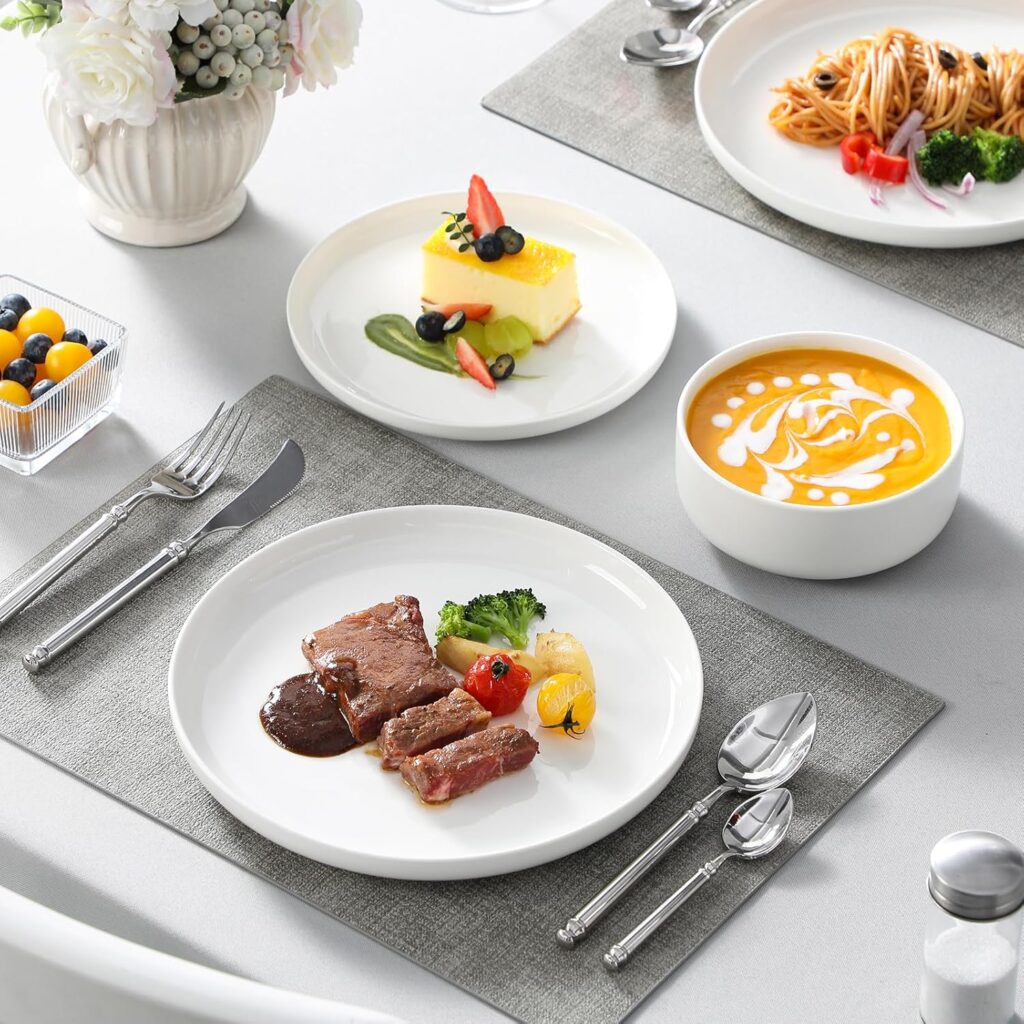
    Think of porcelain plates as the tough, fancy dishes in your kitchen. They’re made by baking special clay at super-hot temperatures – hotter than a pizza oven!
    Porcelain Plates and Bowls

    People often ask between porcelain and ceramic dinnerware which is better for home use? We have answered in another guide.

    Porcelain plates are special because they’re slightly see-through – hold one up to the light, and you might notice a faint glow, like when light passes through a thin white curtain.

    They’re also really strong and hardly contain any toxic elements, so you don’t have to worry about chips when stacking them in the dishwasher.

    Unlike regular plates, porcelain won’t hold onto food smells or stains, so your leftover curry won’t leave a mark.

    You can find these plates in many sizes and styles, from plain white to ones with pretty patterns.

    Key characteristics are: – Non-porous surface resistant to staining – Excellent heat retention – Microwave and dishwasher safe – Elegant translucent appearance.

    Stoneware: The Rustic Charmer

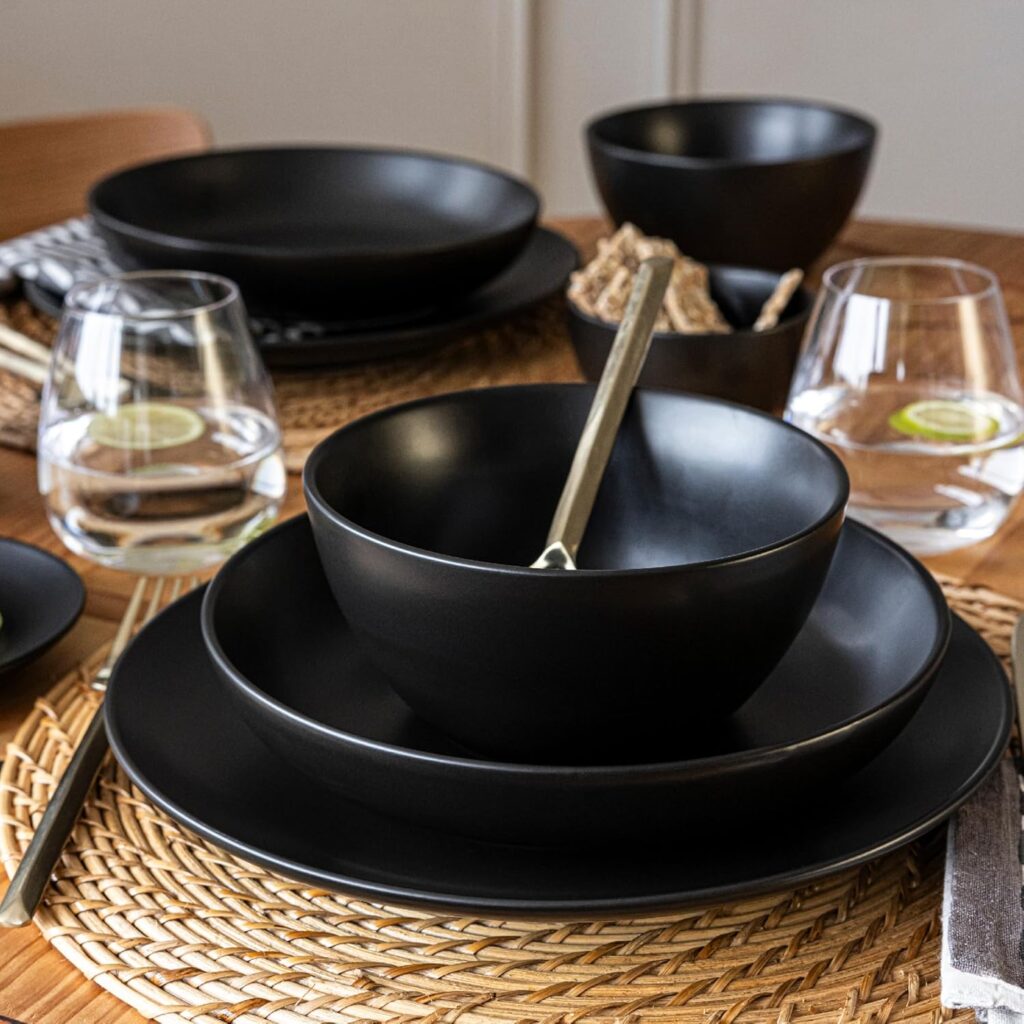
    Stoneware dishes bring a rustic, handcrafted feel to your table. Made from thick clay and fired at high temperatures, these plates are like the heavyweight champions of the kitchen.

    Think of them as the cozy sweater of dinnerware – they keep food warm longer and have a natural, earthy look.
    Stoneware dinnerware material

    While they’re heavier than other plates, stoneware resists scratches and can handle hot food straight from the oven.

    Each piece often has unique speckles or subtle color variations, making your dinner set one-of-a-kind.

    To know more about the Stoneware dinnerware material, read our guide on the disadvantages of stoneware and porcelain vs stoneware.

    Key characteristics: – Dense, opaque material fired at high temperatures (1,200°C to 1,400°C) – Excellent heat retention properties – Naturally non-stick surface that develops over time – Distinctive rustic appearance with unique glazing options – Highly resistant to scratching and chipping (depends heavily on your use and maintenance culture) – Microwave, oven, and dishwasher safe – More substantial weight compared to other materials.
    types of crockery PDF

    Melamine: The unbreakable choice

    For casual dining and outdoor entertainment (camping and RV), melamine has revolutionized the market.

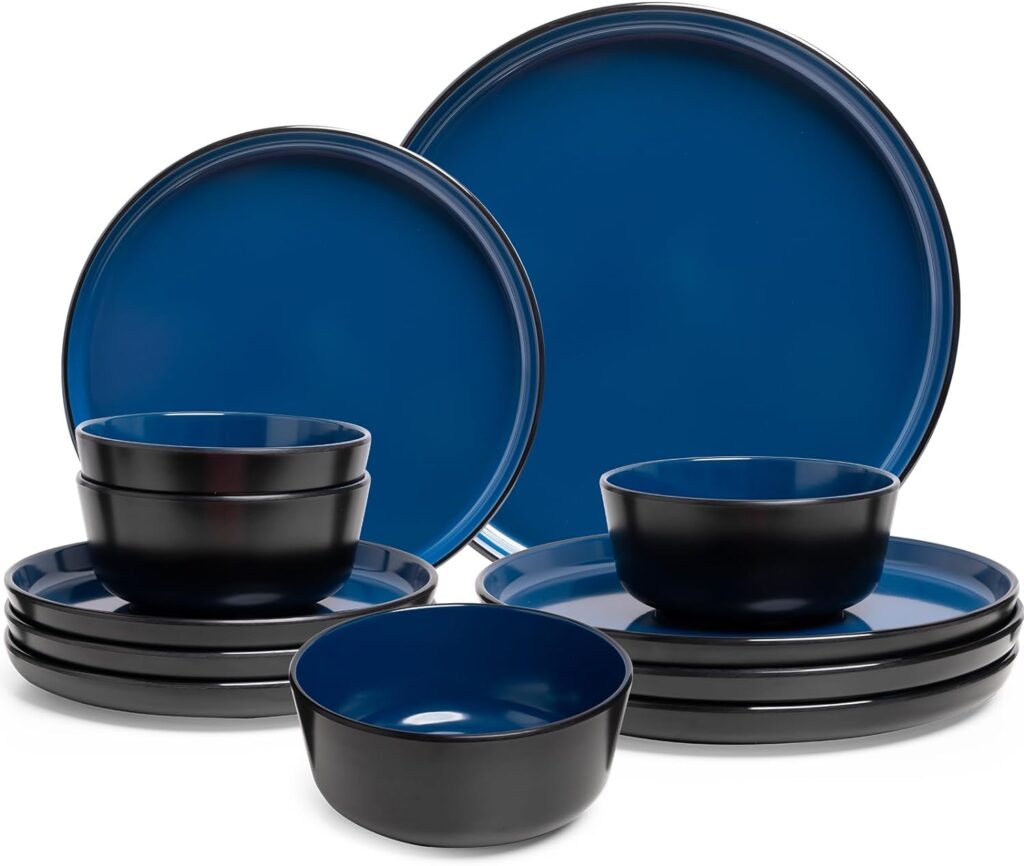
    Melamine plates are like plastic’s tougher cousin – imagine if plastic and ceramic had a baby!
    Melamine unbreakable dinnerware sets

    They’re super lightweight and nearly impossible to break when dropped, making them perfect for outdoor picnics and kids’ meals.

    While they’re not microwave-safe (they can release harmful chemicals when heated), these dishes are dishwasher-friendly and come in fun, bright colors.

    Think of them as the playground-tough dishes that can handle being tossed around but still look nice enough for a family dinner.

    To learn more about melamine, see our guide on the difference between stoneware and melamine dishes.

    Some of its key characteristics are: – Lightweight construction – Virtually unbreakable design – Kid-friendly safety features – Affordable pricing.

    Bone China: The Luxury Choice

    Bone China represents the pinnacle of formal dinnerware, commonly called China dishes.

    Bone China dishes earned the name “Bone China” because of their constituents of bone ash, which is about 30%; other brands might have a higher amount.

    Bone China lightweight Mikasa dinnerware set

    This is what has contributed to its remarkable strength and translucency. They are also dishwasher and microwave oven-safe.

    Key characteristics: – Exceptional strength-to-weight ratio – Superior chip resistance despite its delicate appearance – Distinctive warm, creamy white colour – The highest level of translucency among all dinnerware materials – Fine, elegant rim detail – Superior thermal conductivity – Excellent resistance to thermal shock – Premium pricing reflecting its quality and craftsmanship.

    Ceramic: The Versatile Standard

    Ceramic plates are like the trusty old jeans of your kitchen.

    Made from clay baked at moderate temperatures, these dishes, one of the healthiest dinnerware materials, don’t contain any harsh chemicals and are safe for all your meals if properly manufactured and meet FDA standards.
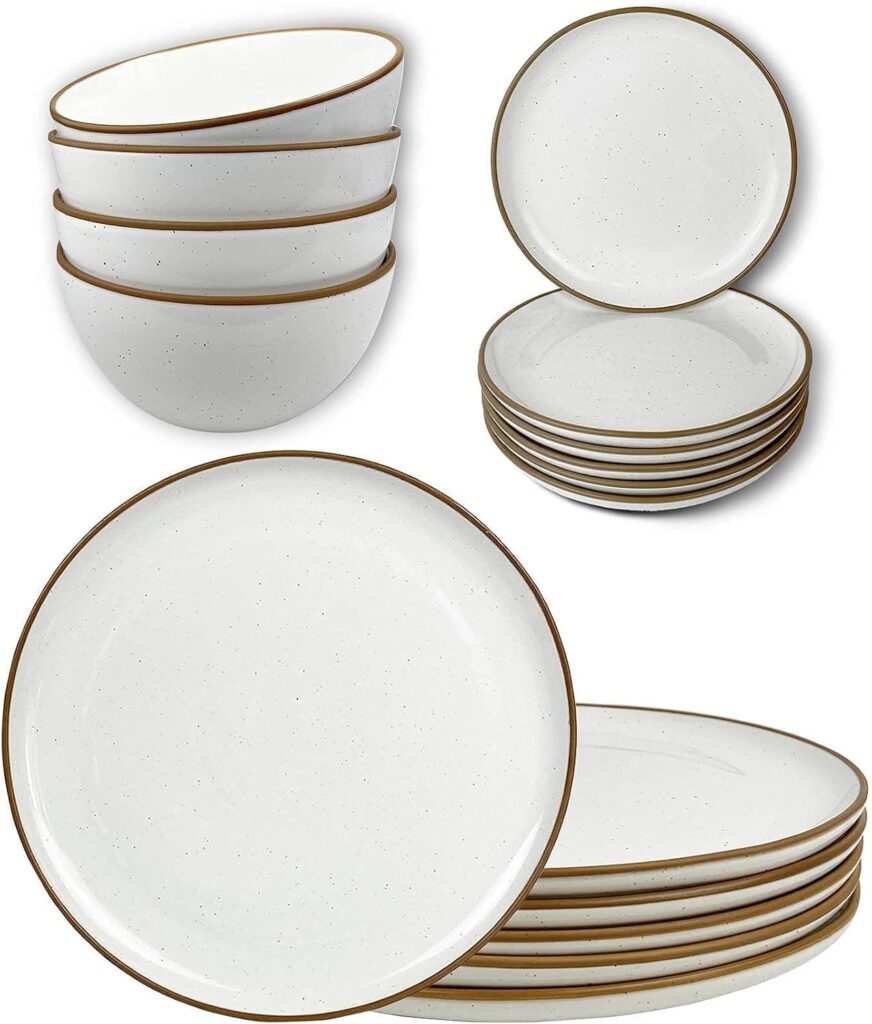
    Modern ceramic dinner plates and Bowls by Mora

    They’re great for everyday use, but can chip if dropped – like getting a small tear in your favorite shirt.

    Available in countless colors and patterns, ceramic dishes are budget-friendly and keep food warm nicely. Just avoid sudden temperature changes to prevent cracking.

    Key characteristics: – Moderate heat retention – Available in various price points – Resistant to scratching and cutlery marks – Generally microwave and dishwasher safe – Can be either glazed or unglazed – Suitable for both casual and formal dining.

    Wheat Straw: The Sustainable Innovation

    This innovative material represents a sustainable solution in modern dinnerware, made from agricultural by-products that would otherwise be waste.

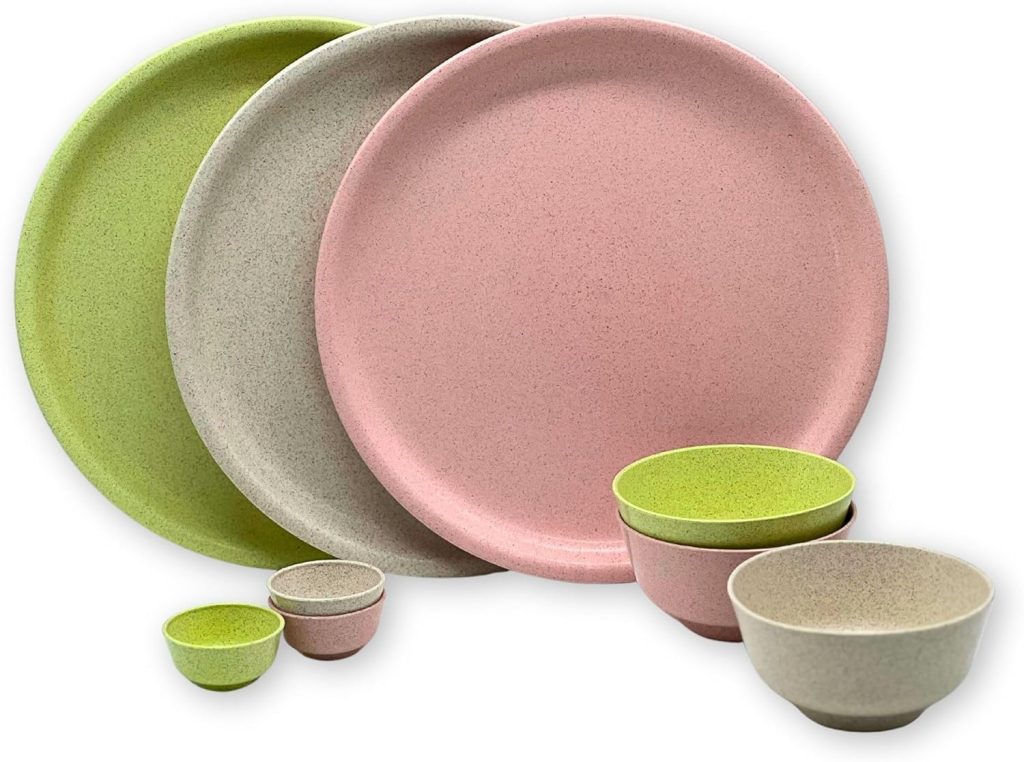
    18pcs wheat straw dinnerware set

    Key characteristics of wheat straw dinnerware material include: – Biodegradable and eco-friendly composition – Lightweight yet durable construction – Microwave safe up to specific temperatures – Natural antibacterial properties – Break-resistant design – Ideal for both indoor and outdoor use – Available in soft, natural colours – Cost-effective pricing – Free from BPA and other harmful chemicals.

    Bamboo: The Eco-Friendly Alternative

    Bamboo plates have gained popularity among environmentally conscious consumers seeking sustainable alternatives to traditional materials.
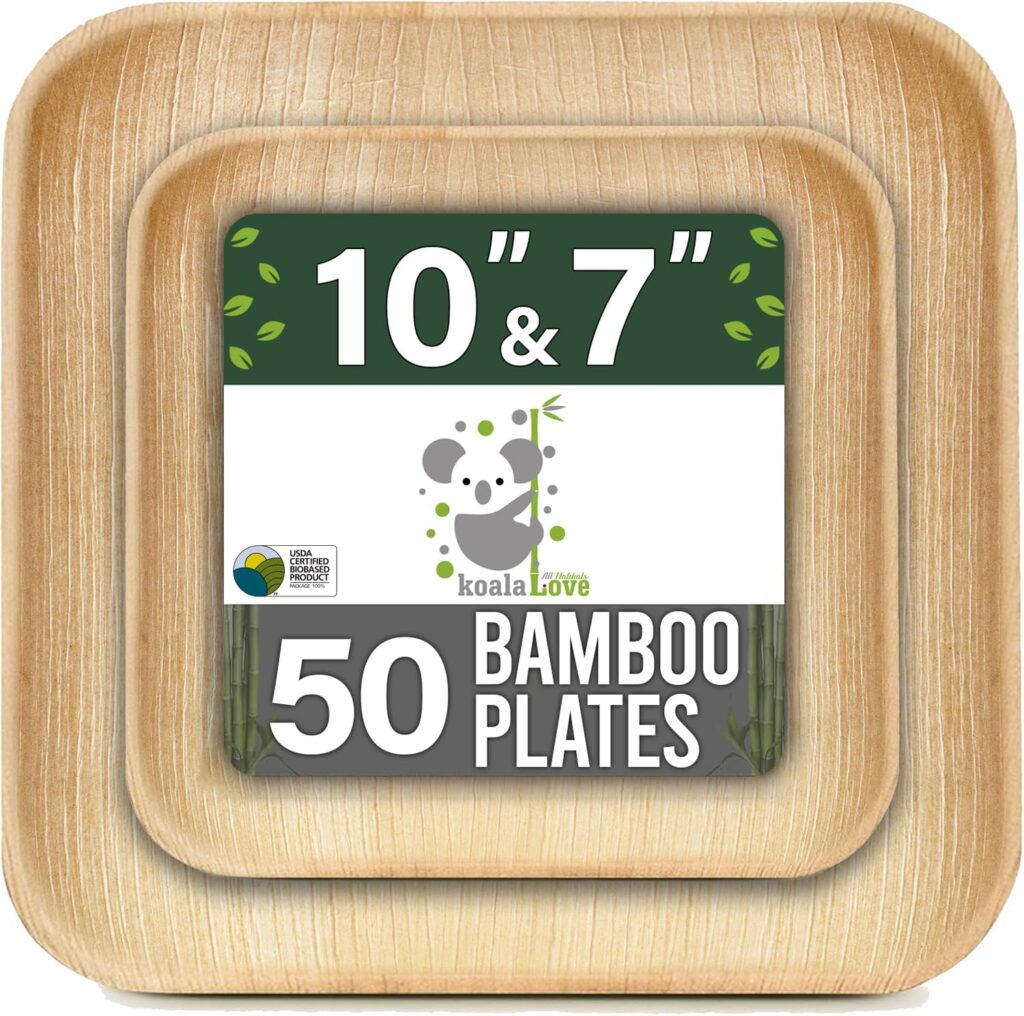
    Bamboo biodegradable Plates

    Key characteristics: – Naturally renewable and sustainable resource – Antibacterial and antimicrobial properties – Lightweight and portable – Biodegradable at end of life – Resistant to water absorption – Available in both natural and dyed finishes – Ideal for casual dining and outdoor events – Not suitable for microwave use – Requires careful maintenance to maintain appearance.

    Glass: The Pure Choice

    Glass plates are like see-through warriors in your kitchen! They’re completely non-toxic and won’t absorb food smells or stains.

    elegant textured glass dinner plates

    Key feature: you can watch your food heat up in the microwave through them. While they can break if dropped, they’re surprisingly sturdy for daily use.

    The best part? You can spot any missed spots while washing instantly, making them super easy to keep clean.

    Key characteristics: – Completely non-porous and hygienic – No chemical leaching concerns – Microwave and oven safe (check manufacturer specifications) – Easy to clean and maintain – Transparent for easy inspection – Available in various thicknesses and designs – Recyclable and environmentally friendly.

    Stainless Steel: The Durable Performer

    Think of stainless steel plates as the nearly indestructible tanks of your kitchen.

    They’re practically unbreakable, won’t rust, and can handle any temperature without flinching.

    Stainless steel Dinnerware

    Key feature: incredible durability. Perfect for outdoor dining and kids’ meals, they’ll likely outlast all your other plates.

    The downside? They can’t go in the microwave, and they might show scratches over time. To know more about the best stainless steel brands, kindly read our guide on American-made stainless steel dishes.

    Key characteristics: – Virtually unbreakable construction – Rust and corrosion resistant – Lightweight yet durable – Easy to sanitize – Suitable for outdoor use – Cannot be used in a microwave – May show scratches with heavy use.

    Plastic: The Casual Option

    These are like the casual, easy-going plates in your collection. Super lightweight and budget-friendly, plastic dishes are perfect for picnics and casual meals.
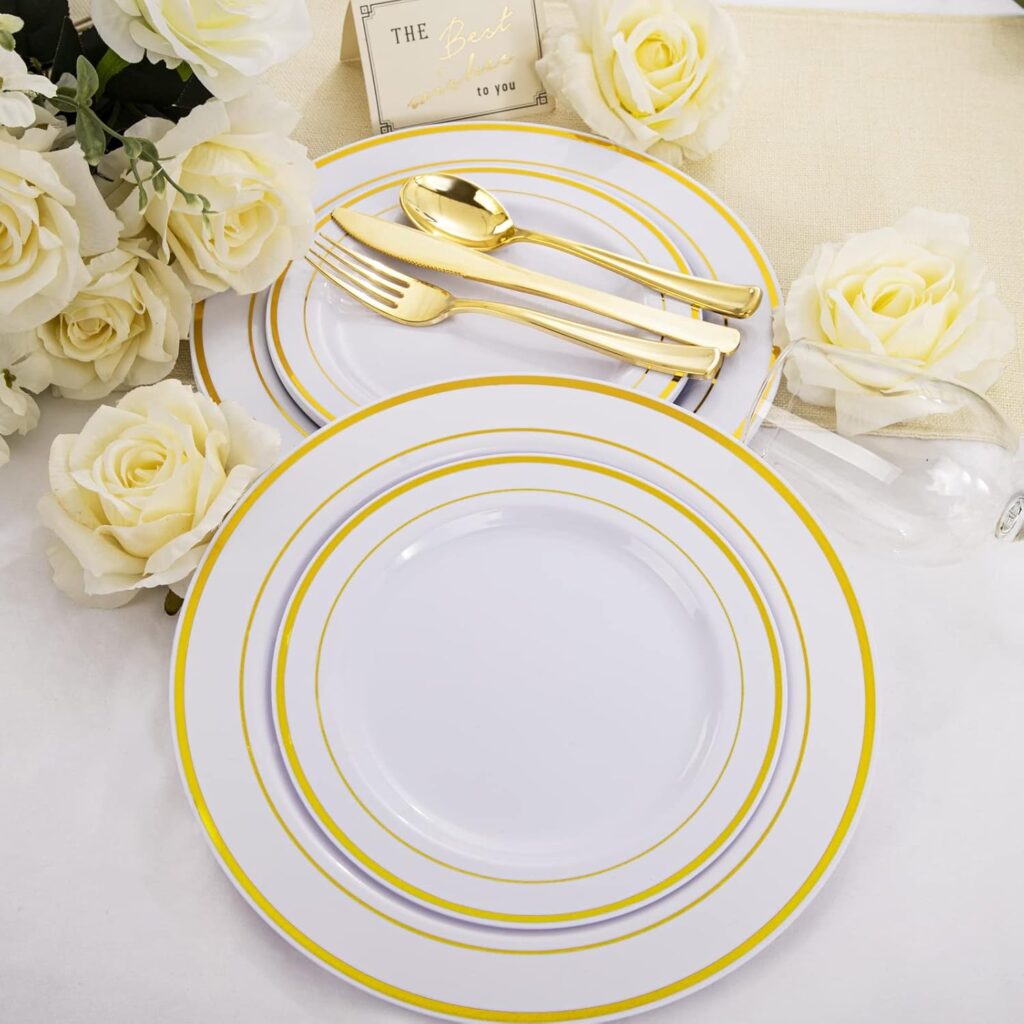
    Plastic Dinnerware sets

    Key feature: extreme portability. While they’re not microwave-safe and can stain easily, they’re great for kids’ meals and outdoor events where breaking dishes would be a concern.

    Just remember, they can warp in high heat.

    Key characteristics: – Extremely lightweight and portable – Very affordable option – Available in numerous colors and designs – Break-resistant for safety – Can stain and retain odors – May warp with heat exposure – Choose BPA-free varieties for safety.

    MATERIAL COMPARISON CHART

    MaterialDurabilityMicrowave & Dishwasher SafeBest For
    Porcelain⭐⭐⭐⭐⭐✅ BothEveryday elegance
    Ceramic⭐⭐⭐✅ BothBudget-conscious
    Stoneware⭐⭐⭐⭐✅ BothRustic charm
    Melamine⭐⭐⭐⭐❌ Microwave / ✅ DishwasherKids & outdoor
    Bone China⭐⭐⭐⭐⭐✅ BothFormal dining
    Glass⭐⭐⭐✅ BothHealth-conscious
    Stainless Steel⭐⭐⭐⭐⭐❌ Microwave / ✅ DishwasherDurability
    Plastic⭐⭐❌ Microwave / ✅ DishwasherCasual use
    Bamboo⭐⭐⭐❌ Microwave / ✅ DishwasherEco-friendly
    Wheat Straw⭐⭐⭐✅ Both*Sustainable

    *Limited temperature range for the microwave.

    WHAT IS THE BEST DINNERWARE MATERIAL?

    The ideal dinnerware material depends on your specific needs:

    For Everyday Use:

    Porcelain is often considered the best all-rounder because it offers: – Superior durability – Excellent heat retention – Elegant appearance – Versatility for all occasions

    For Maximum Durability:

    – Vitrified porcelain – Bone china – High-quality stoneware

    For Casual Dining:

    – Melamine – Stoneware – Ceramic

    For Formal Settings:

    – Bone china – Fine porcelain – Premium ceramic

    For Eco-Conscious Users:

    – Bamboo composites – Wheat straw – Recycled glass

    Remember that the “best” material ultimately depends on your specific needs, lifestyle, and preferences.

    Consider how you’ll primarily use the dinnerware, your maintenance habits, and your budget when making your selection.

    IMPORTANT FACTORS TO CONSIDER WHEN CHOOSING DINNERWARE

    – Intended use (daily vs special occasions)

    – Care/cleaning requirements

    – Budget constraints

    – Storage space

    – Lifestyle needs

    Scratch resistivity

    – Environmental impact

    – Dishwasher and microwave compatibility

    – Weight preferences

    – Design preferences

    – Typical meal types.

    FAQ: CHOOSING THE RIGHT MATERIAL

    What are most dinner plates made of?

    Most dinner plates are made of ceramic (60%) and porcelain (25%). These clay-based materials offer the best balance of affordability, durability, and appearance for everyday use.

    What is the most durable dinnerware material?

    Vitrified porcelain and bone china are the most durable materials, followed by high-quality stoneware. For unbreakable options, choose melamine or stainless steel.

    Which plate material is safest for health?

    Porcelain and ceramic (meeting FDA standards) are the safest materials. They’re non-porous, don’t leach chemicals, and resist bacterial growth.

    What are unbreakable plates made of?

    Unbreakable plates are typically made of melamine (plastic composite), stainless steel, or heavy-duty plastic. These materials can withstand drops and impacts.

    Can dinner plates go in the oven?

    Porcelain, ceramic, stoneware, and glass plates are generally oven-safe. Always check manufacturer specifications. Avoid melamine, plastic, and some decorated plates in ovens.

    What is the best plate material for everyday use?

    Porcelain offers the best combination of durability, elegance, and practicality for daily use. It’s microwave and dishwasher-safe while maintaining an upscale appearance.

    What are plates made out of?

    Plates are primarily made from clay-based materials (ceramic, porcelain, stoneware), synthetic materials (melamine, plastic), metals (stainless steel), glass, or natural materials (bamboo, wheat straw).

    What are most plates made of?

    Most household plates are made of ceramic or porcelain. Ceramic is the most common due to its affordability, while porcelain is preferred for its superior durability and elegant appearance.

    What is the healthiest dinnerware material?

    The healthiest dinnerware materials are porcelain, ceramic (FDA-approved), and glass. These materials are non-reactive, don’t contain harmful chemicals, and maintain food safety standards.

    CONCLUSION

    Your choice of dinner plate material reflects not just your style but your lifestyle.

    Whether you’re drawn to the timeless elegance of porcelain, the durability of melamine, or the rustic charm of stoneware, understanding these materials helps you make an informed decision that enhances your dining experience.

    Looking to upgrade your dinnerware? Consider starting with a versatile material that matches your primary usage needs, then perhaps expanding your collection to include specialty pieces for specific occasions.

    The best dinner plate material depends on your specific needs:

    • Daily use: Porcelain
    • Unbreakable: Melamine or stainless steel
    • Health-focused: Porcelain or ceramic
    • Budget: Ceramic
    • Formal: Bone china
    • Eco-friendly: Bamboo or wheat straw

    Consider your lifestyle, budget, and dining habits when choosing. Most households benefit from having 2-3 different materials for various occasions.


    Resources and Further Reading:

    Ceramic Tableware – Manufacturing and Material Constituents

    Melamine Dinnerware Questions

  • Kosher Glass

    You’re standing in your kitchen, holding your grandmother’s cherished glass baking dish.

    For years, it’s been the vessel for both dairy and meat dishes, and suddenly, a thought crosses your mind – is this actually kosher?

    You’re not alone in this contemplation. As modern kitchens become more complex and diverse, questions about the kosher status of glass items have become increasingly common among observant Jews and those interested in maintaining kosher practices.

    The intersection of ancient Jewish law and modern kitchen materials creates a fascinating puzzle that affects millions of households worldwide.

    While some materials like metal and ceramic have clear-cut rules, glass presents a unique case that has sparked centuries of rabbinic debate and continues to influence how we organize our kitchens today.

    But here’s the burning question: Could your beloved glass dishes be compromising your commitment to kosher practices without you even realizing it?

    Join me on this journey to know the answer.

    THE UNIQUE NATURE OF GLASS IN JEWISH LAW

    When it comes to kosher laws, glass stands apart from other materials in fascinating ways.

    Glass dinnerware for Kosher Jewish Laws

    Unlike metal or ceramic items, glass possesses distinct properties that have led to extensive rabbinic discussions throughout history.

    The Talmud (Pesachim 30b) addresses the unique characteristics of glass, noting its smooth, non-porous surface – a feature that would become central to modern interpretations.

    KOSHER GLASS

    Kosher Glass

    Kosher glass refers to glass utensils and containers that comply with Jewish dietary laws (kashrut).

    Glass is unique in Jewish law because of its non-porous, smooth surface that doesn’t absorb or retain flavors.

    According to most rabbinic authorities, glass items can be used for both dairy and meat products after proper cleaning, though some communities maintain stricter practices requiring separate sets.

    Unlike other items, glass generally doesn’t require formal kashering (ritual cleansing) except during Passover, when special rules apply.

    Key characteristics:

    – Non-absorbent material

    – Easy to clean thoroughly

    – Different rules than metal/ceramic

    – Variable customs across Jewish communities

    THE SCIENTIFIC PERSPECTIVE

    Modern science supports many traditional views about glass:

    PropertyScientific ExplanationKosher Implication
    Non-porosityGlass molecules are tightly packedLess likely to absorb flavors
    Thermal behaviorEven heating and coolingReduced risk of flavor transfer
    Surface qualitiesSmooth, non-reactive surfaceEasier to clean thoroughly

    DIFFERENT TYPES OF GLASS AND THEIR KOSHER STATUS

    Before diving deeper into specific rulings, it’s crucial to understand that not all glass is created equal.

    While kashering corelle vitrelle dinnerware follows specific guidelines, traditional glass has its own set of rules.

    Similarly, when comparing glass to koshering bone china dish or koshering chinaware, we find distinct differences in their treatment under Jewish law.

    Common Glass Types in Modern Kitchens:

    1. Borosilicate Glass (Pyrex)

       – Heat-resistant properties

       – Widely used in baking dishes

       – Special considerations for Pesach

    2. Tempered Glass

       – Enhanced durability

       – Common in drinking glasses

       – Generally, more lenient rulings.

    PRACTICAL GUIDELINES FOR KOSHER GLASS USE

    Understanding how to maintain kosher standards with glass items is essential for any Jewish kitchen.

    Here’s what you need to know:

    Daily Use Guidelines

    * Regular cleaning requirements

    * Separation protocols

    * Storage recommendations

    Special Considerations for Pesach: According to the Jewish Vues on if one can kasher drinking glasses for Pesach, this was their answer :

    “According to the Shulchan Aruch, glass doesn’t absorb substances, so it doesn’t require kashering. However, Ashkenazi tradition (per the Rama) prohibits using glass that held hot chametz during Pesach, even after kashering, for two reasons:

    1. Glass is made from sand, similar to earthenware (made from clay), which cannot be kashered

    2. People might not kasher glass properly, fearing it could break.

    The Chayei Adam offers a practical exception: if getting new Pesach drinking glasses is difficult, glasses used mainly for cold drinks can be kashered through hagalah (immersion in boiling water).”

    VARIATIONS IN GLASS KASHRUT

    Different Jewish communities worldwide and Contemporary authorities have provided valuable guidance on glass usage.

    The practical ruling varies by community and specific circumstances, with most following either the lenient view or middle ground position for year-round use.

    Below is their argument and submission:

    Core Debate:

    • Shulchan Aruch: Glass doesn’t absorb, needs no kashering
    • Rema: Ashkenazi custom forbids using chametz glass on Pesach even after kashering

    Three Main Positions on Year-Round Glass Use:

    1. Strict View (Taz, Rav Belsky):

    Glass absorbs and can’t be kashered year-round

    Exception: Wine-related cases (yayin nesech)

    Limited allowance: May kasher glass with other mitigating factors

    • Lenient View (Pri Megadim, Minchas Yaakov, Igros Moshe):

    Glass absorption rules only apply to Pesach

    Year-round, glass doesn’t absorb non-kosher/meat/dairy

    • Middle Ground (Minchas Yitzchok):

    Glass absorbs year-round

    But can be kashered outside of Pesach

    Reference: [The OU Guide to Koshering Glass Utensils]

    MODERN INNOVATIONS REGARDING GLASS MANUFACTURING

    Today’s manufacturing processes have introduced new considerations:

    * Smart glass technology

    * Nano-coatings

    * Hybrid materials

    BEST PRACTICES FOR MAINTAINING KOSHER GLASS

    Daily Maintenance

    1. Regular cleaning protocols

    2. Storage recommendations

    3. Usage tracking systems

    FAQ SECTION

    1) Can you use glass (like Pyrex) for both meat and diary?

    Sephardic tradition allows using glass for both meat and dairy after thorough cleaning, as glass doesn’t absorb flavors.

    Ashkenazi customs vary – some require separate sets, especially for hot foods.

    For Pyrex specifically, many follow the stricter approach of keeping separate sets due to its use with hot foods.

    2) How is Glatt Kosher different from Kosher?

    Glatt Kosher refers specifically to meat where the animal’s lungs were found perfectly smooth (glatt means “smooth” in Yiddish) after slaughter.

    Regular kosher meat may have minor adhesions on the lungs.

    While technically “Glatt” only applies to meat, it’s commonly used to indicate stricter overall kosher supervision.

    3) How to kosher glass for Passover?

    Most Ashkenazi authorities don’t permit kashering glass for Passover due to two concerns:

    – Glass’s similarity to earthenware

    – Risk of improper kashering due to fear of breakage

    If following Sephardic customs or in cases of necessity, the process involves:

    – Thorough cleaning

    – Three-day non-use period

    – Immersion in boiling water (hagalah)

    4) What is the difference between kosher and kosher for Passover?

    Kosher for Passover requires:

    – No chametz (leavened grains)

    – Stricter production supervision

    – Special certification

    – Separate utensils and equipment

    – More rigorous cleaning standards

    Regular kosher allows chametz and has less stringent requirements.

    5) How do you kosher cutlery for Passover?

    The process involves:

    1. Thorough cleaning and 24-hour non-use

    2. Remove rust/stains

    3. For your kitchen setup, please refer to our guide on [koshering a non-kosher oven].

    4. Immersion in boiling water (hagalah)

    5. Immediate rinse in cold water

    Note: Silver or stainless steel can be kashered; plastic handles may be problematic.

    6) What is surprisingly not kosher?

    Common unexpected non-kosher items:

    – Red food coloring (carmine from insects)

    – Some vitamin D supplements (from sheep lanolin)

    – Worcester sauce (contains anchovies)

    – Castor sugar (processed with bone char)

    – Many cheese snacks (contain rennet)

    – Soft drinks requiring certification

    – Some medications with gelatin capsules

    7) Can Pyrex be kashered for Pesach?

    Ashkenazi tradition generally prohibits kashering Pyrex for Pesach, following Rama’s ruling.

    Sephardic authorities may permit it.

    For year-round use, most authorities allow kashering Pyrex through hagalah.

    8) Does glass need to be kosher for Passover?

    Yes, glass needs special treatment for Passover:

    – Ashkenazi custom: Use new or designated Passover glassware

    – Sephardic custom: May use regular glass after proper cleaning/kashering

    – Many buy separate Passover sets to avoid complications

    – Drinking glasses used only for cold may have more lenient rules.

    CONCLUSION: EMBRACING CLARITY IN KOSHER PRACTICE

    Understanding the complexities of kosher glass doesn’t have to be overwhelming.

    By following established guidelines and consulting with qualified authorities, you can maintain a properly kosher kitchen while enjoying the convenience and beauty of glass items.

    Take Action:

    * Consult your local rabbi for specific guidance

    * Review your current glass inventory

    * Implement appropriate labeling systems

    * Consider community standards.

  • Kosher China

    Imagine standing in a gorgeous homeware store, admiring an exquisite set of bone china that would perfectly grace your Shabbat table.

    The intricate blue and white pattern reminds you of your grandmother’s cherished collection, but a question nags at your conscience: Is this china truly kosher?

    Can it be used in your kosher kitchen? As more Jewish families embrace the elegance of fine dining while maintaining their religious observance, the intersection of traditional Chinese porcelain and kosher laws has become increasingly relevant.

    What makes this question particularly intriguing is that the answer isn’t as straightforward as you might think – it involves a fascinating blend of ancient Jewish law, modern manufacturing processes, and cultural traditions that span continents and centuries.

    UNDERSTANDING CHINESE DINNERWARE: MORE THAN JUST PLATES

    Before delving into the kosher aspects, it’s essential to understand what makes Chinese dinnerware unique. Why do we call dishes China?

    Casual Porcelain China Dinnerware

    The answer lies in its rich history dating back to the Tang Dynasty (618-907 CE).

    The term “China” became synonymous with fine porcelain because China was the birthplace of this sophisticated ceramic art form.

    WHAT IS KOSHER CHINA

    Kosher China refers to Chinese porcelain or ceramic dinnerware that meets Jewish dietary laws (kashrut) requirements for use in a kosher kitchen.

    Kosher China

    To be considered kosher, the china must either be new and unused or, if previously used, properly kashered (ritually purified) according to halachic guidelines.

    The term encompasses both the material composition of the dinnerware (ensuring it contains no non-kosher ingredients) and its status for kosher food service (whether it can be used for meat, dairy, or pareve dishes).

    Key factors determining its kosher status include manufacturing processes, previous usage history, and the ability to undergo ritual purification.

    TYPES OF CHINESE DINNERWARE

    Modern Chinese dinnerware broadly falls into several categories:

    1. Bone China

    – Contains actual bone ash (usually from cattle)

    – Known for its translucency and strength

    Is bone China dinnerware kosher? This question requires careful consideration of both manufacturing processes and halachic principles.

    2. Fine China/Porcelain

    – Made from kaolin clay

    – Free from animal products

    – Generally easier to Kasher

    3. Stoneware

    – More durable than porcelain

    – Often used in casual dining settings

    KOSHER CONSIDERATIONS FOR CHINESE DINNERWARE

    The Halachic Perspective: According to Jewish law, several factors determine whether china can be used in a kosher kitchen:

    1. Manufacturing Process

    – Raw materials used

    – Firing temperatures

    – Glazing components

    2. Previous Usage

    – Whether the items are new or pre-owned

    – Type of food previously served

    3. Absorption Properties

    Most leading authorities in Jewish law address the porosity of china in their response, suggesting that modern manufacturing techniques create less porous surfaces than traditional ceramics.

    KASHERING CHINESE DINNERWARE

    Just as koshering a non-kosher oven requires specific procedures, Chinese dishes have their own kashering requirements. The process varies depending on several factors:

    1. New Items

    – Generally, don’t require kashering if purchased directly from the manufacturer

    – May need tevilah (ritual immersion)

    2. Used Items

    Can Corelle glass be kashered? While Corelle is a different material, the principles are similar.

    How to kosher glass items differs from China, but understanding the process helps comprehend how to kasher Chinese dishes.

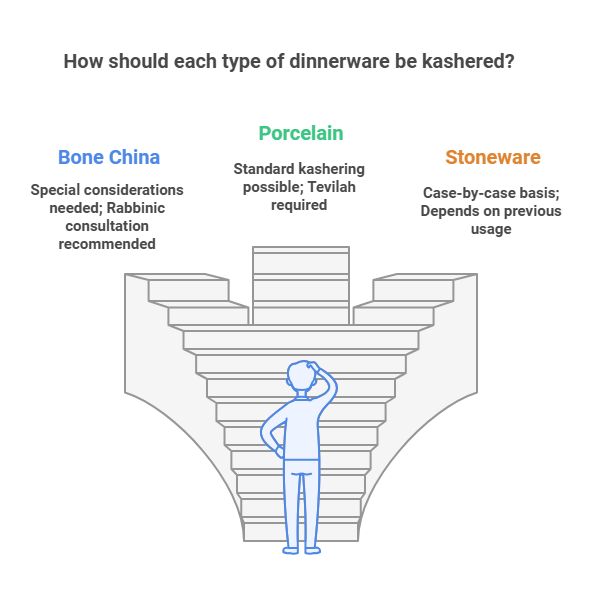
    TypeKashering MethodAdditional Requirements
    Bone ChinaSpecial considerations neededRabbinic consultation recommended
    PorcelainStandard kashering possibleTevilah required
    StonewareCase-by-case basisDepends on previous usage

    how to kasher different types of dinnerware

    SAFETY AND PRACTICAL CONSIDERATIONS

    Modern manufacturing standards have raised questions about the safety of traditional Chinese dinnerware.

    Are all china dinnerware safe for food use? This concern intersects with both kosher requirements and general food safety standards.

    Ensuring Safe and Kosher Usage;

    1. Quality Verification

    – Check for reputable manufacturers

    – Look for safety certifications

    – Verify kosher certification when available

    2. Maintenance

    – Proper cleaning methods

    – Storage recommendations

    – Regular inspection for chips or cracks

    MAKING AN INFORMED CHOICE

    When selecting Chinese dinnerware for your kosher home, consider:

    1. Intended Use

    – Meat or dairy

    – Special occasions or daily use

    – Decorative purposes

    2. Religious Requirements

    – Consult with your Rabbi

    – Understanding your community’s standards

    – Personal level of observance

    3. Practical Aspects

    – Budget considerations

    – Durability needs

    – Aesthetic preferences

    EXPERT RECOMMENDATIONS

    According to Rabbi Dovid Cohen, author of Tevillas Keilim (Kosher Food Helpful guides and instructions & modern utensils) said that  contemporary manufacturing processes have significantly impacted the halachic status of China. He suggests that most new, unused fine China can be safely used in kosher homes after proper tevilah.

    Rabbi Dovid Cohen ( Co-ordinator Halachic Policy for OU Kashrus Dept (7 years)

    FREQUENTLY ASKED QUESTIONS ABOUT KOSHER GUIDELINES

    See below common questions regarding various China dishes and other related customs:

    What countries use kosher?

    While kosher laws originate from Judaism, kosher food products are widely available in many countries, with the largest markets being:

    – United States (largest kosher market outside Israel)

    – Israel (most extensive kosher food system)

    – United Kingdom

    – France

    – Canada

    – Australia

    – Argentina

    – Brazil

    Additionally, many other countries have growing kosher markets due to increasing demand from both Jewish and non-Jewish consumers who view kosher certification as a mark of quality and food safety.

    Is chinaware considered Kosher?

    New, unused chinaware is inherently kosher. However, used chinaware must meet specific conditions:

    – Must be properly kashered (ritually purified) if previously used for non-kosher food

    – Cannot have been used with hot non-kosher food within 24 hours before kashering

    – Must undergo tevilah (ritual immersion) if purchased from non-Jewish manufacturers

    – Different rules apply for bone china due to its animal-derived components

    Can Chinese food be kosher?

    Yes, Chinese food can be kosher when prepared following kosher guidelines:

    – All ingredients must be kosher-certified

    – No mixing of meat and dairy

    – No shellfish, pork, or non-kosher seafood

    – Vegetables must be properly checked for insects

    – Cooking equipment must be kosher-certified

    Several kosher Chinese restaurants exist worldwide, particularly in areas with large Jewish populations.

    Can you kosher Teflon?

    Yes, Teflon-coated cookware can be kashered through:

    – Libun kal (light heating)

    – Not using the item for 24 hours before kashering

    – Thorough cleaning to remove all residue

    However, some rabbinical authorities recommend against kashering Teflon due to:

    – Concerns about coating degradation

    – Difficulty in ensuring complete cleaning

    – Potential for trapped particles in scratches

    What makes dinnerware kosher?

    Dinnerware becomes kosher through several requirements:

    1. Material suitability (must be kasherable)

    2. New items must undergo tevilah (ritual immersion)

    3. Used items require a proper kashering process

    4. No absorption of non-kosher substances

    5. Separate sets for meat and dairy

    6. Proper maintenance of kosher status through use

    Can Plastic and Porcelain be Kashered?

    Porcelain:

    – Can be kashered through hagalah (boiling water method)

    – Must wait 24 hours after last use

    – Requires complete cleaning before the process

    Plastic:

    – Most authorities permit kashering hard plastics

    – Soft plastics generally cannot be kashered

    – Disposable plastics don’t require kashering

    – Some recommend against kashering any plastic due to porosity concerns

    Do the Chinese use halal meat?

    While China’s Muslim population (particularly in Xinjiang and Ningxia regions) uses halal meat:

    – Most Chinese cuisine traditionally does not use halal meat

    – Halal restaurants exist in major Chinese cities

    – Growing halal food market in China due to:

      – The Muslim population needs

      – International trade requirements

      – Tourism industry demands

    Why is soda not kosher?

    Not all soda is non-kosher. Soda may be non-kosher due to:

    1. Ingredients:

       – Natural flavors derived from non-kosher sources

       – Glycerin (may be animal-derived)

       – Carmine (red coloring from insects)

    2. Processing concerns:

       – Shared equipment with non-kosher products

       – Cleaning agents used in production

    However, many major soda brands are kosher-certified, including:

    – Coca-Cola (with proper certification)

    – Pepsi (with proper certification)

    – Many other mainstream brands (when bearing kosher symbols)

    Note: Different kosher certifications may have varying standards, and certification requirements can change seasonally (especially during Passover).

    CONCLUSION

    Choosing the right Chinese dinnerware for your kosher home doesn’t have to be overwhelming.

    By understanding the intersection of traditional Jewish law and modern manufacturing processes, you can make informed decisions that honor both your religious commitments and aesthetic preferences.

    Call to Action:

    Have questions about specific pieces in your collection? Consult with your local Rabbi or join our community discussion forum where experts and fellow kosher-keeping enthusiasts share their experiences and insights.


    Resources and Further Reading:

    – The OU Guide to Kashering Dishes

    – Chabad.org’s Guide to Kitchen Kashrus

    – The Journal of Halacha and Contemporary Society

  • Are Bamboo Plates safe for Babies

    It’s mealtime, and your little one has mastered the art of self-feeding.

    As you watch them gleefully toss another plastic plate across the kitchen (along with most of their dinner), you can’t help but wonder if there’s a better option.

    Something safe for your baby and kind to our planet: bamboo plates.

    They’re the trendy, eco-friendly alternative that’s been catching the eye of environmentally conscious parents across the world, but the BIG question is: Are Bamboo plates safe for Babies?

    But before you jump on the bamboo bandwagon, there’s a plot twist that might surprise you. The safety of these seemingly perfect plates isn’t as straightforward as you might think.

    THE RISE OF BAMBOO DINNERWARE: WHY PARENTS ARE MAKING THE SWITCH

    The growing concern over plastic pollution and chemical exposure has sparked a revolution in baby dinnerware.

    According to the European Environmental Agency report, the average annual plastic consumption in Western Europe is around 150 kilograms per person, which is more than double the global average of 60 kilograms, with children’s products contributing significantly to this waste.

    What is even more troubling is that the Global plastic waste generation has more than doubled from 2000 to 2019 to about 353 million tonnes, and only about 9% of the plastics ever produced have been recycled.

    This startling statistic has led many parents to seek sustainable alternatives.

    ARE BAMBOO PLATES SAFE FOR BABIES?

    are bamboo plates safe for babies

    Pure bamboo plates are safe for babies when they meet specific safety criteria. 100% natural bamboo plates without melamine or other synthetic binders are safe for serving cold and room-temperature foods to babies.

    For maximum safety, choose bamboo plates that are:

    Made from 100% natural bamboo

    Free from BPA and phthalates

    Certified by recognized testing bodies

    Specifically labeled for baby use

    Replace bamboo plates if they show signs of wear, deep scratches, or discoloration to maintain optimal safety for your baby.

    BEST BAMBOO PLATES FOR BABIES?

    The best bamboo plates for babies should have these essential characteristics:

    Best Bamboo Plates for Babies

    Safety Features:

    – 100% pure bamboo construction

    – No melamine, BPA, Phthalate, or synthetic binders

    – Certified food-safe

    – Smooth, splinter-free surface

    Design Elements:

    – Divided sections for portion control

    – Raised edges to prevent spills

    – Lightweight for small hands

    – Non-slip base

    – Child-friendly colors/patterns

    Quality Indicators:

    – Proper certifications (EU, FDA)

    – Clear manufacturing origin

    – Detailed care instructions

    – Quality finish and construction.

    BAMBOO TODDLER PLATES WITH SUCTION

    Bamboo toddler plates with suction

    Bamboo toddler plates with suction are specialized feeding plates that combine bamboo construction with a silicone suction base:

    kids and toddlers bamboo eco-friendly self feeding plate with suction

    Key Features are:

    – Natural bamboo-eating surface

    – Silicone suction cup bottom

    – Stays firmly attached to the table/highchair

    – Prevents tipping and throwing.

    Benefits:

    – Reduces mealtime mess

    – Teaches independent eating

    – Environmentally friendly

    – Safe for toddlers

    Usage Tips:

    – Works best on smooth, clean surfaces

    – Suction strength varies by brand

    – May need occasional suction base replacement

    – Should be checked regularly for wear

    These plates are particularly useful for:

    – Self-feeding toddlers

    – Active children

    – Developing motor skills

    – Reducing cleanup time

    UNDERSTANDING BAMBOO PLATES

    Before diving into safety considerations, let’s understand what bamboo plates are made of.

    As discussed in our article about the safety of bamboo dinnerware, these products typically fall into two categories:

    1. 100% Natural Bamboo

    – Made from compressed bamboo fibers

    – Minimal processing

    – No synthetic binders

    – Natural colour variations

    2. Bamboo-Melamine Composite

    – Bamboo powder mixed with melamine resin

    – Synthetic binding agents

    – Uniform appearance

    – More durable finish

    SAFETY CONSIDERATIONS FOR BABY’S DINNERWARE

    Let’s now take a look at the temperature sensitivity and chemical leaching of Bamboo dinnerware.

    The research conducted by the Food Standards Agency (FSA), highlights several crucial factors when considering bamboo plates for babies and general usage:

    TemperaturePure BambooBamboo-Melamine Composite
    Cold FoodsSafeSafe
    Warm Foods (< 40°C)SafeGenerally Safe
    Hot Foods (> 70°C)Safe but may warpRisk of chemical leaching
    Microwave UseNot recommendedStrictly prohibited

    BPA AND OTHER CHEMICAL CONCERNS

    Studies in Environmental Health have found that pure bamboo products contain:

    – No BPA

    – No phthalates

    – No formaldehyde

    However, bamboo-melamine composites may release:

    – Melamine particles, when heated

    – Formaldehyde under certain conditions

    – Synthetic binding agents

    BENEFITS OF USING BAMBOO PLATES FOR BABIES

    Environmental Impact:

    Bamboo’s sustainability credentials are impressive:

    – Grows up to 1 meter per day

    – Requires no pesticides

    – Biodegrades naturally

    – 35% more oxygen production than equivalent trees

    PRACTICAL ADVANTAGES OF BAMBOO PLATES

    1. Durability

    – Lighter than ceramic

    – More resistant to drops than plastic

    – Less likely to chip than traditional materials

    2. Child-Friendly Features

    – Naturally antibacterial properties

    – Non-toxic when properly manufactured

    – Lightweight for small hands

    When choosing bamboo plates for babies, opt for products certified by reputable testing bodies like SGS or Intertek. Look for items specifically tested for food contact and avoid heating them in microwaves.”

    Expert Recommendation

    BEST PRACTICES FOR BAMBOO PLATE CARE

    1. Cleaning:

    – Hand wash with mild soap

    – Avoid harsh detergents

    – Air dry completely

    2. Storage:

    – Keep in dry conditions

    – Avoid direct sunlight

    – Stack with care to prevent scratches

    3. Regular Inspection:

    – Check for signs of wear

    – Replace if deep scratches appear

    – Monitor for any material breakdown.

    MAKING THE RIGHT CHOICE: WHAT TO LOOK FOR

    Certification and Safety Standards: When shopping for bamboo plates, verify these certifications:

    – EU Food Contact Materials Regulation

    – FDA approval (if importing)

    – BS EN 14372:2004 safety standard

    Red Flags to Watch For

    Avoid products that:

    – Don’t specify material composition

    – Lack of safety certifications

    – Make unclear manufacturing claims.

    COMMON QUESTIONS FROM PARENTS

    Below are some of the most popular questions regarding the use of bamboo plates for toddlers and kids:

    Are bamboo baby plates hygienic?

    Yes, bamboo baby plates are naturally hygienic due to their inherent antibacterial properties. Bamboo contains an organic agent called “bamboo kun” that naturally inhibits bacterial growth.

    However, proper care is essential:

    – Must be thoroughly cleaned after each use

    – Should be completely dried to prevent mold

    – Need regular inspection for cracks where bacteria could grow

    – Should be replaced every 1-2 years with regular use

    Are bamboo plates Better than Plastic for Kids?

    Yes, bamboo plates are generally better than plastic plates for kids for several reasons:

    – No harmful chemicals like BPA or phthalates

    – More environmentally sustainable

    – Naturally antibacterial

    – More durable than standard plastic

    – Biodegradable at the end of life

    – Better temperature resistance

    – No microplastic shedding

    Is Bamboo better than Silicone?

    The choice between bamboo and silicone depends on specific needs:

    Bamboo is better for:

    – Environmental impact (biodegradable)

    – Natural antibacterial properties

    – Aesthetic appeal

    – Lighter weight

    Silicone is better for:

    – Durability

    – Heat resistance

    – Dishwasher safety

    – Flexibility

    – Longevity

    What are the cons of Bamboo plates?

    Key disadvantages of bamboo plates include:

    1. Maintenance Requirements:

       – Need careful hand washing

       – Cannot be dishwasher cleaned (depends on the manufacturer)

       – Must be thoroughly dried

    2. Durability Issues:

       – Can crack if dropped repeatedly

       – May warp with exposure to heat

       – Prone to scratching over time

    3. Cost Considerations:

       – More expensive than plastic alternatives

       – Need more frequent replacement

    4. Usage Limitations:

       – Not microwave-safe

       – Not suitable for very hot foods

       – May stain from certain foods

    Are silicone plates safe for Babies?

    Yes, high-quality silicone plates are safe for babies when they meet specific criteria:

    Safety Features:

    – Made from food-grade silicone (FDA-approved)

    – Free from BPA, PVC, and phthalates

    – Heat-resistant up to 230°C

    – Non-porous surface prevents bacterial growth

    Key Benefits:

    – Dishwasher-safe

    – Microwave-safe

    – Highly durable

    – Resistant to staining

    – Won’t break if dropped.

    CONCLUSION: MAKING AN INFORMED DECISION

    The safety of bamboo plates for babies ultimately depends on several factors:

    – Manufacturing quality

    – Usage practices

    – Proper care and maintenance

    For eco-conscious parents, pure bamboo plates from reputable manufacturers offer a safe, sustainable alternative to plastic. However, it’s crucial to:

    – Research thoroughly

    – Check certifications

    – Follow care instructions

    – Monitor for wear and tear

    Your Next Steps:

    Ready to make the switch to bamboo? Remember to:

    1. Choose certified products

    2. Establish proper care routines

    3. Monitor your plates’ condition

    4. Replace when necessary


    Author’s Note: This article is regularly updated to reflect the latest safety research and recommendations. Last updated: December 2024

    Disclaimer: While we strive to provide accurate information, always consult with your pediatrician about specific feeding equipment for your child.

  • Are Bamboo Plates Safe

    You’re hosting a garden party, proudly serving appetizers on your newly purchased bamboo plates.

    As your guests admire their eco-friendly charm, someone raises an eyebrow and asks, “But are bamboo plates safe?”

    It’s a fair question that’s likely crossed your mind, too. After all, we’re increasingly conscious about what comes into contact with our food, aren’t we?

    While bamboo plates have surged in popularity as a sustainable alternative to plastic, their safety has become a hot topic of discussion in eco-conscious circles.

    The good news? We’ve done the heavy lifting for you, diving deep into scientific research and expert opinions to uncover the truth about bamboo plate safety.

    And what we’ve discovered might surprise you…

    THE RISE OF BAMBOO DINNERWARE: UNDERSTANDING THE BASICS

    When it comes to eco-friendly dining options, bamboo has emerged as a frontrunner.

    Pure Bamboo compostable dinnerware Bowls

    But before we delve into safety concerns, let’s understand what bamboo plates actually are.

    If you’re wondering about the differences between various eco-friendly options, our guide on “the difference between melamine and wheat straw dinnerware” provides valuable context.

    Bamboo plates typically come in two varieties:

    1. 100% natural bamboo

    2. Bamboo fibre composite materials

    These plates have gained popularity because bamboo is:

    – One of the fastest-growing plants on Earth

    – Naturally antibacterial

    – Biodegradable

    – Renewable and sustainable.

    THE SAFETY PROFILE OF BAMBOO PLATES: WHAT SCIENCE SAYS

    are bamboo plates safe

    Pure bamboo plates without additives are generally safe for food contact. However, the safety profile can vary depending on manufacturing processes and additional materials used, according to the European Report on the Enforcement Action on Plastic Food Contact Materials.

    NATURAL VS. COMPOSITE BAMBOO: THE CRITICAL DISTINCTION

    If you are considering lightweight options, particularly for elderly users, you’ll be interested to know that “bamboo is an example of lightweight dinnerware for seniors” that combines safety with practicality.

    Now, let’s break down the safety aspects of different bamboo plate types:

    TypeSafety ProfileBest Use CasesConsiderations
    100% Natural BambooVery HighHot and cold foodsMay wear faster
    Bamboo-Melamine CompositeModerateCold foods onlyAvoid high heat
    Bamboo-Corn Starch CompositeHighMost food typesCheck temperature limits

    WHAT ARE THE BENEFITS OF BAMBOO DINNERWARE?

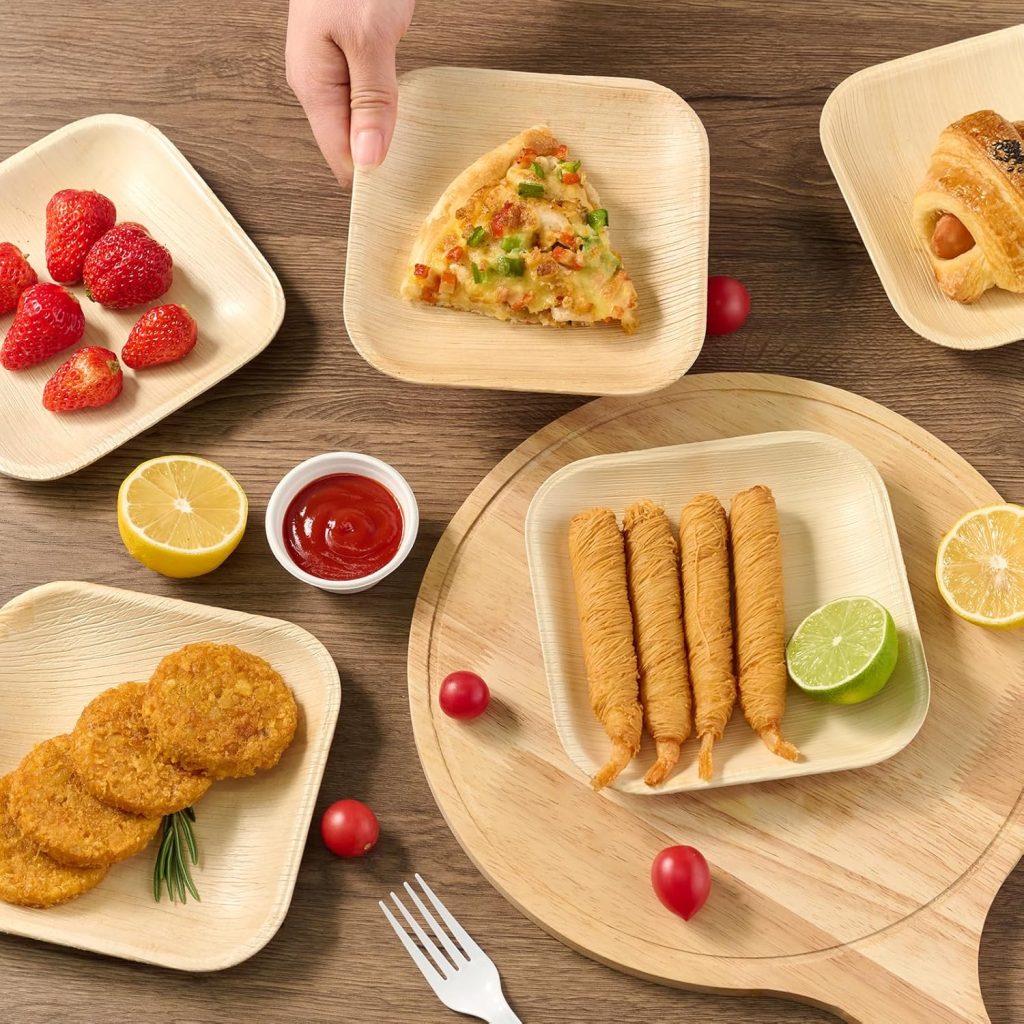
    Bamboo biodegradable eco friendly square plates

    Bamboo dinnerware offers numerous advantages:

    – Environmentally sustainable and biodegradable

    – Naturally antibacterial properties

    – Lightweight and durable

    – Free from harmful chemicals (when properly manufactured)

    – Aesthetically pleasing natural appearance

    – Heat-resistant (within reasonable temperatures)

    – Cost-effective long-term solution

    ARE BAMBOO FOOD CONTAINERS SAFE?

    Bamboo eco friendly food safe glass storage containers

    Yes, properly manufactured bamboo food containers are safe for food storage, provided they:

    – Are certified food-grade

    – Don’t contain harmful additives

    – They are used within recommended temperature ranges

    – Are maintained properly

    – Show no signs of damage or degradation

    ARE NATURAL DISPOSABLE PLATES SAFE?

    Natural disposable plates have gained popularity as eco-friendly alternatives to plastic and Styrofoam.

    These plates are made from various plant-based materials, including bamboo, palm leaves, sugarcane bagasse (the fibrous residue left after sugarcane is crushed), wheat straw, and areca palm leaves.

    Generally, natural disposable plates are safe for food contact when manufactured properly and certified by food safety authorities.

    The safety of natural disposable plates depends on several factors. First, they should be made from food-grade materials that do not contain harmful chemical additives, dyes, or coatings.

    natural disposable compostable plate

    Second, they must be manufactured without toxic adhesives or binding agents. Most reputable brands use natural binding processes that don’t require synthetic glues.

    Third, they should be free from bleaching chemicals, as some manufacturers use chlorine bleach, which can leave harmful residues.

    Natural disposable plates offer several advantages over conventional options. They’re biodegradable and compostable, typically breaking down within 60-180 days in commercial composting facilities.

    They don’t leach harmful chemicals into food, especially when exposed to heat or acidic foods—a common problem with plastic plates.

    They’re also sturdy enough for hot and cold foods, microwave-safe (check manufacturer guidelines), and free from PFAS (per- and polyfluoroalkyl substances) that are often found in conventional disposable plates.

    However, consumers should look for certifications such as FDA approval for food contact, compostability certifications (BPI or ASTM D6400), and ensure products are labeled as free from harmful chemicals.

    While natural disposable plates are generally safe, it is best to purchase them from reputable manufacturers that provide transparent information about their materials and production processes.

    RICE HUSK AND BAMBOO FIBER PLATES: WHICH IS SAFER?

    Both rice husk and bamboo fiber plates are considered safe alternatives to conventional disposable plates, but they have distinct characteristics that may influence your choice.

    RICE HUSK PLATES

    Rice husk plates are made from the protective outer layer of rice grains, an agricultural byproduct that would otherwise be discarded or burned.

    These plates are naturally antibacterial, durable, and heat-resistant. Rice husk is compressed with natural binders to form rigid plates that can handle both hot and cold foods.

    Rice husk and bamboo fiber plates

    The material is completely food-safe, biodegradable, and typically breaks down within 90-180 days in composting conditions.

    Rice husk plates are particularly safe because they require minimal processing. The husks are cleaned, ground into powder, mixed with natural binders (often plant-based resins), and then molded under heat and pressure.

    This simple process reduces the risk of chemical contamination. Additionally, rice husk plates are gluten-free, which makes them suitable for people with celiac disease or gluten sensitivities.

    BAMBOO FIBER PLATES

    Bamboo fiber plates are made from bamboo pulp or bamboo powder mixed with food-grade binding agents.

    Bamboo is naturally antimicrobial, strong, and grows rapidly without pesticides, making it an excellent sustainable material.

    These plates are lightweight yet sturdy, microwave-safe, and can withstand temperatures up to 248°F (120°C).

    The safety concern with bamboo plates primarily relates to the binding agents used. Some manufacturers use melamine-formaldehyde resin as a binder, which can release formaldehyde when exposed to high heat or acidic foods.

    However, reputable manufacturers use food-safe, formaldehyde-free binders such as cornstarch or other plant-based resins.

    Always check product labels and certifications to ensure your bamboo plates are made without harmful chemicals.

    WHICH IS SAFER?

    Both materials are safe when properly manufactured, but rice husk plates have a slight edge in terms of minimal processing and fewer concerns about binding agents.

    Rice husk’s natural structure requires less modification to achieve plate strength, while bamboo fibers need more processing and binding to form cohesive plates.

    For maximum safety with either option:

    • Choose certified products with FDA approval or equivalent food safety certifications
    • Verify the manufacturer uses food-grade, non-toxic binding agents
    • Avoid products with melamine or formaldehyde in the ingredients
    • Look for third-party testing certifications
    • Check that plates are labeled as BPA-free, PFAS-free, and free from heavy metals

    Both rice husk and bamboo fiber plates are significantly safer than plastic or Styrofoam alternatives and represent excellent eco-friendly choices for disposable tableware.

    Your choice may ultimately depend on availability, price, and personal preference rather than safety differences, as both materials offer comparable food safety profiles when sourced from reputable manufacturers.

    POTENTIAL CONCERNS AND HOW TO ADDRESS THEM

    1. Chemical Additives

    The primary safety concern with bamboo plates isn’t the bamboo itself but potential additives. For durability comparable to popular brands, see our guide on bamboo unbreakable dishes like Corelle.

    Research from the European Food Safety Authority (EFSA) suggests monitoring:

    – Melamine content in composite plates

    – Formaldehyde emissions

    – Adhesives used in manufacturing

    2. Temperature Sensitivity

    For those interested in outdoor dining solutions, our article on “Corelle dinnerware suitable for RV” offers specific insights into temperature-resistant options.

    Temperature guidelines for safe use:

    – Maximum safe temperature: 70°C (158°F)

    – Optimal temperature range: 10-60°C (50-140°F)

    – Avoid microwave use unless specifically marked as microwave-safe

    MAKING THE SAFE CHOICE: WHAT TO LOOK FOR

    When purchasing bamboo plates, consider these factors:

    1. Certification and Standards

       – Look for FDA approval

       – Check for EU food contact material certification

       – Verify BPA-free status

    2. Manufacturing Transparency

       – Research the manufacturer

       – Check for detailed product information

       – Review third-party testing results

    If you’re weighing different eco-friendly options, our detailed analysis “comparing bamboo and wheat straw plates” can help you make an informed decision.

    BEST PRACTICES FOR SAFE USAGE

    To ensure the safest possible use of your bamboo plates:

    1. Initial Preparation

       – Wash thoroughly before first use

       – Check for any damage or irregularities

       – Season if recommended by the manufacturer

    2. Regular Maintenance

       – Hand wash in warm (not hot) water

       – Use mild, eco-friendly detergents

       – Dry thoroughly after washing

       – Store in a cool, dry place

    ENVIRONMENTAL IMPACT AND SAFETY CONNECTION

    The environmental safety of bamboo plates extends beyond personal health.

    According to the Environmental Protection Agency, choosing biodegradable dinnerware can reduce plastic waste significantly.

    A 2023 lifecycle assessment published in the Journal of Cleaner Production found that bamboo plates have:

    – 60% lower carbon footprint than plastic alternatives

    – 40% less environmental impact than melamine options

    – Zero microplastic leaching

    MAKING AN INFORMED DECISION

    Bamboo plates are generally safe when:

    1. Purchased from reputable manufacturers

    2. Used according to guidelines

    3. Maintained properly

    4. Replaced when showing signs of wear

    FREQUENTLY ASKED QUESTIONS ABOUT BAMBOO PLATES

    See below the common questions about the bamboo dinnerware material:

    1. What are the black spots on bamboo plates?

    Black spots on bamboo plates typically indicate one of two things: mold growth from improper drying/storage, or natural bamboo markings.

    If the spots appear gradually, they’re likely mold resulting from moisture retention. Natural bamboo markings are present from the start and pose no safety risk.

    However, if you notice new black spots developing, discontinue use and replace the plates.

    2. How long do bamboo plates last?

    With proper care and maintenance, bamboo plates typically last 2-3 years with regular use. However, their lifespan can vary significantly based on:

    – Usage frequency

    – Care and maintenance routine

    – Quality of manufacturing

    – Storage conditions

    – Exposure to heat and moisture

    3. Can bamboo plates be washed and reused?

    Yes, bamboo plates are designed for multiple uses and can be washed and reused. For optimal longevity:

    – Use mild, eco-friendly soap

    – Wash in warm (not hot) water

    – Dry thoroughly immediately after washing

    – Store in a well-ventilated area

    – Avoid soaking for extended periods

    4. Do Bamboo dishes scratch?

    While bamboo dishes are generally scratch-resistant, they can develop surface marks with regular use. To minimize scratching:

    – Avoid using sharp utensils

    – Don’t stack plates without protective layers

    – Clean with soft sponges or cloths

    – Handle with care during washing and storage

    5. Do bamboo plates stain easily?

    Bamboo plates have moderate stain resistance, but they can absorb colours from strongly pigmented foods like turmeric, tomato sauce, or beetroot. To prevent staining:

    – Wipe spills immediately

    – Apply a food-grade mineral oil coating periodically

    – Clean thoroughly after each use

    For a comparison of stain resistance, check out our guide on “Does wheat straw dinnerware stain easily?

    If you’re particularly concerned about the use of bamboo plates for kids or toddlers, you might want to read “Are bamboo plates safe for babies?”

    6. Can you put bamboo plates in the dishwasher?

    While some manufacturers claim their bamboo plates are dishwasher-safe, hand washing is strongly recommended. Dishwashers can:

    – Expose plates to excessive heat

    – Subject them to harsh detergents

    – Create prolonged moisture exposure

    – Cause warping or cracking

    – Reduce the product’s lifespan

    7. Does bamboo crack over time?

    Bamboo can develop cracks if exposed to:

    – Extreme temperature changes

    – Excessive dryness or moisture

    – Physical impact

    – Improper storage conditions

    – Natural aging

    To prevent cracking:

    – Avoid extreme temperature changes

    – Maintain proper humidity levels during storage

    – Handle with care

    – Apply food-grade oil periodically

    8. Do bamboo plates hold bacteria?

    Natural bamboo has inherent antibacterial properties. However, bamboo plates can harbour bacteria if:

    – Not cleaned properly

    – Stored while damp

    – Developed cracks or deep scratches

    – Exposed to contaminated food

    Regular cleaning and proper drying are essential to maintain their antibacterial benefits.

    9. Does bamboo contain formaldehyde?

    Pure bamboo itself doesn’t contain formaldehyde. However, some bamboo products might contain trace amounts due to:

    – Manufacturing processes

    – Adhesives used in composite materials

    – Treatment chemicals

    Always choose products from reputable manufacturers who comply with food safety standards and clearly state their manufacturing processes.

    10. How long does it take for bamboo to decompose?

    Bamboo products typically decompose within 4-6 months in proper composting conditions. Factors affecting decomposition include:

    – Environmental conditions

    – Product thickness

    – Additional materials present

    – Composting method

    – Presence of natural decomposers

    Note: Composite bamboo products containing synthetic materials may take significantly longer to decompose or may not be fully biodegradable.

    CONCLUSION: THE VERDICT ON BAMBOO PLATE SAFETY

    After thorough research and expert consultation, we can confidently say that bamboo plates are safe when chosen and used correctly.

    Their safety profile, combined with environmental benefits, makes them an excellent choice for eco-conscious consumers.

    Ready to make the switch to bamboo plates? Remember these key takeaways:

    – Choose certified products

    – Follow usage guidelines

    – Maintain properly

    – Replace when necessary

    By making informed choices about your bamboo dinnerware, you’re not just protecting your health – you’re contributing to a more sustainable future.

    Have you made the switch to bamboo plates? We’d love to hear about your experience in the comments below!

    References:

    Environmental Protection Agency Waste Reduction Studies

    Journal of Cleaner Production (2023).

  • Chinbull heat resistant opal glassware

    You’re hosting a dinner party, and just as you’re about to serve that piping hot casserole, your serving dish cracks dramatically under the thermal stress.

    We’ve all been there, that heart-stopping moment when our beloved dishware betrays us at the worst possible time.

    But what if I told you there’s a solution that combines exceptional heat resistance with elegant design?

    The Chinbull heat resistant opal glassware is a Chinese brand revolutionizing kitchen essentials with its remarkable durability and versatility.

    Whether you’re an ambitious home chef or a careful homemaker, this guide will reveal why Chinbull’s offerings might be the game-changer your kitchen needs.

    And here’s the interesting part: it’s not just about what these pieces can withstand but also about how they’re transforming everyday dining experiences.

    UNDERSTANDING THE MAGIC BEHIND CHINBULL HEAT RESISTANT OPAL GLASSWARE

    Chinbull’s heat resistant opal glassware represents a technological advancement in kitchen essentials.

    If you’re wondering about different dining materials, our comprehensive guide on the “difference between opalware and bone china” explains why opal glass stands out in the market.

    Chinbull heat resistant opal glassware

    The science behind it is fascinating – it’s a specially treated glass that creates a unique crystalline structure, offering both durability and elegance.

    When we talk about heat-resistant glassware, we’re not just discussing any ordinary glass product.

    Chinbull’s opal glassware represents a perfect marriage of science and style. Unlike traditional ceramic dinnerware or standard glass, heat-resistant opal glass offers superior thermal shock resistance.

    Below are examples of Chinbull’s product range and features:

    1. Casserole Collection:

    – Round-shaped designs with Pyrex or borosilicate glass lids

    – Oven-safe construction

    – Microwave and dishwasher safe

    – Temperature-resistant lids

    – Comparable to brands like Simax and Pyrex

    simax borosilicate casserole dish for oven

    2. Dinnerware Sets:

    – Pristine white coloration

    – Complete sets including plates, bowls, cups, and saucers

    Similar characteristics to American Corelle dishes

    – Competitors include Bormioli opal glass dinnerware, Arcopal, La Opala, and Cello.

    cello opalware mixing bowls

    In addition, Chinbull opal glass dinnerware sets enhance food presentation, are elegant and translucent, have a modern minimalist design, and a versatile style that complements any table setting.

    THE SCIENCE OF OPAL GLASS

    At its core, Chinbull’s heat resistant opal glassware is crafted using a sophisticated process that involves treating glass with specific materials to create a unique crystalline structure.

    This isn’t your grandmother’s china; it’s a modern marvel that combines the best aspects of various materials.

    Understanding the strength of this material is crucial, as detailed in our article about “understanding what is tempered opal glass“.

    Chinbull’s key features that set them apart are:

    – Exceptional thermal shock resistance

    – Temperature tolerance from freezer to oven

    – Impact resistance

    – Scratch-proof surface

    – Chip-resistant properties

    – Withstands temperatures from -20°C to 350°C.

    DURABILITY AND STRENGTH

    Chinbull’s opal glassware isn’t just heat-resistant; it’s built to last.

    While many wonder about its fragility, our investigation into durability factors in modern dinnerware reveals why these pieces are surprisingly robust.

    The manufacturing process creates a material that’s:

    – Impact-resistant

    – Chip-resistant

    – Scratch-resistant

    FeatureChinbull Opal Glass CasseroleRegular GlassCeramic
    Heat ResistanceUp to 350°CUp to 200°CUp to 250°C
    Impact ResistanceHighLowMedium
    Scratch ResistanceVery HighMediumHigh
    Thermal Shock ResistanceExcellentPoorGood

    ENVIRONMENTAL IMPACT AND SUSTAINABILITY

    In today’s eco-conscious world, it’s worth noting that Chinbull’s heat resistant opal brand offers several environmental benefits. Is Opal Glass Sustainable? Yes, opal glass is sustainable because:

    – Long-lasting durability reduces replacement frequency

    – Made from recyclable materials

    – Energy-efficient production process

    – Reduced carbon footprint compared to traditional ceramics

    – Minimal environmental impact

    MAKING THE RIGHT CHOICE: BUYING GUIDE

    When investing in Chinbull opal glassware, consider these factors:

    1. Set Composition:

    – Evaluate your cooking and serving needs

    – Consider family size and entertaining frequency

    – Look for versatile pieces that serve multiple purposes

    2. Budget Considerations:

    – Compare long-term value versus initial cost

    – Factor in potential replacement savings

    – Consider energy efficiency benefits.

    IS OPAL GLASS SEE-THROUGH?

    No, opal glass isn’t transparent like regular glass. It features a translucent white appearance that enhances food presentation while maintaining its structural integrity.

    WHAT IS THE DIFFERENCE BETWEEN GLASS AND OPALWARE?

    Regular glass is transparent and typically less durable, while opalware is:

    – Translucent white in appearance

    – More resistant to thermal shock

    – Generally, more durable

    – Lighter in weight

    WHAT TEMPERATURE CAN OVEN GLASS WITHSTAND?

    Oven glass, like popular casserole dishes, can typically withstand temperatures up to 350°C (662°F), making them suitable for most cooking applications.

    HOW DO YOU CLEAN OPAL GLASS?

    Cleaning opal glass is straightforward:

    – Dishwasher safe

    – Hand washing with mild detergent is recommended

    – Avoid abrasive cleaners

    – Regular cleaning maintains the appearance

    – Hand washing is recommended for optimal longevity

    WHAT IS THE MAXIMUM TEMPERATURE FOR OPAL GLASSWARE?

    The maximum safe temperature for opal glassware is 350°C (662°F), though it’s recommended to avoid sudden extreme temperature changes.

    IS OPALWARE SAFE FOR HOT FOOD?

    Yes, Opalware is specifically designed for hot food service. As explored in our article “is opal glass truly unbreakable?”, while no glass is completely unbreakable, opalware excels in handling hot foods safely.

    HOW DO YOU KEEP OPAL GLASS FROM CRACKING?

    Prevention tips include:

    – Avoid sudden temperature changes

    – Use appropriate heat settings

    – Follow manufacturer guidelines

    – Store properly to prevent impacts

    CAN CRACKED OPAL GLASS BE REPAIRED?

    No, cracked opal glass cannot be safely repaired. Any cracks compromise the structural integrity, and the piece should be replaced.

    WHAT CAN DAMAGE OPAL GLASS?

    Potential dangers include:

    – Extreme temperature shock

    – Physical impacts

    – Improper storage

    – Abrasive cleaning materials

    IS OPAL heat-resistant?

    Yes, opal glass is highly heat-resistant, making it perfect for:

    – Oven cooking

    – Microwave use

    – Hot food service

    – Temperature variations

    WHAT IS OPAL GLASS USED FOR?

    Opal glass has numerous applications:

    – Cooking and baking

    – Food storage, Freezer storage

    – Serving dishes

    – Everyday dinnerware

    – For serving formal dining, casual meals, outdoor entertaining, buffet presentations

    – Commercial food service

    IS OPAL GLASS OVEN SAFE?

    Yes, opal glass casseroles are oven safe up to 350°C compared to ceramic and glass materials, making them versatile for various cooking methods.

    FeatureOpal glassRegular glassCeramic
    Maximum Temperature350°C200°C or lower250°C
    Thermal Shock ResistanceExcellentPoorGood
    Microwave SafeYesVariesYes
    Oven safeYesLimitedYes

    CARE AND MAINTENANCE TIPS

    To ensure the longevity of your Chinbull opal glassware:

    1. Follow temperature guidelines

    2. Use appropriate cleaning methods

    3. Store properly with protective layers to prevent damage

    4. Handle with reasonable care

    5. Store in a stable environment

    6. Avoid extreme temperature storage locations.

    CONCLUSION

    Chinbull heat resistant opal glassware represents more than just another kitchen purchase; it’s an investment in quality, functionality, durability, and style.

    Whether you’re a passionate home cook or someone who enjoys entertaining, these pieces offer the perfect blend of functionality and elegance.

    Are you choosing casseroles for cooking or dinnerware for serving? These pieces provide reliable performance and elegant presentation.

    The unique properties of opal glass, combined with Chinbull’s commitment to quality, make this an excellent choice for modern households.